Amidst the mounting tensions between India and China at the Line of Actual Control (LAC) in Ladakh, the Indian Railways in a significant decision on Thursday decided to terminate the contracts given to Chinese companies in the Dedicated Freight Corridor (DFC).
According to the reports, the Indian Railways has decided to cancel a signalling contract worth Rs 471 crore awarded to a Chinese company named Beijing National Railway Research & Design Institute of Signal & Communication in the year 2016.
Dedicated Freight Corridor Corporation of India (DFCCIL), a public sector undertaking corporation run by the Indian Railways, has begun the process to cancel the project contracts awarded to Beijing National Railway Research and Design Institute of Signal and Communication Group, citing poor work progress.
The signalling contract, which was awarded on the 417-km long Kanpur-Deen Dayal Upadhyay (DDU) section, is being funded by the World Bank.
Chinese firm did not furnish technical documents, failed to provide engineers
The Indian Railways said the contracts are being cancelled due to “reluctance of the company to furnish technical documents, as per contract agreement, such as logic design of electronic interlocking”. The decision was taken because the Chinese firm had only completed 20 per cent of the work in four years.
The Indian Railway officials said the Chinese company has not been able to provide engineers/authorised personnel at the site which was a serious constraint.
“There is no improvement in progress despite repeated meetings with them at every possible level,” DFCCIL said in its order as it decided to terminate this contract.
The cancellation of the contract given to Chinese firm comes at the backdrop of a face-off between India and China in the Ladakh region in which 20 Indian soldiers were killed by the aggressive Chinese side.
The Chinese PLA had reportedly held firearms to faces of Indian soldiers, brutally tortured some Indian soldiers to death. The sources to IANS added that the Indian soldiers did not retaliate with guns and followed government directions not to use firearms.
Following the deliberate aggression from China, India is mulling to respond to Beijing, which includes both economic and political measures.
Government advises telcos to stay away from Chinese equipments
Earlier, The Telecom Ministry had asked state-run telecom giants BSNL, MTNL and other subsidiary companies to not buy equipment from Chinese companies.
The Centre may also plan to ask private operators to reduce their dependence on equipment made by China. The decision by the Telecom ministry could play a major role in the 4G up-gradation purchases by BSNL and its subsidiaries.
The official Doctor of IPL Franchise Chennai Super Kings D. Madhu Thottapillil, who had shared a post with derogatory remarks mocking on the martyrdom of soldiers and PM CARES Fund was suspended by the Chennai Super Kings team administration on Wednesday.
Dr Madhu Thottapillil has now issued an apology for his controversial tweet and said that he had tweeted inadvertently and mistakenly and it has nothing to do with his association with any individual or organization.
Apology …. On 16th June, I had put out a tweet, and after I realised that the words used by me was inappropriate and unintended. I deleted the same. But by then there were screenshots of my tweet being circulated and shared in social media. It was never my intention to .1/5 pic.twitter.com/nvC7FjMFGl
Thottapillil in his official statement posted from his twitter handle, said, “On 16 June I had put out a tweet, and after I realized that the words used by me were inappropriate and unintended. I deleted the same. But by then there were screenshots of my tweet being circulated and shared in social media. It was never my intention to belittle the great and herculean efforts taken by our hon’ble Prime Minister and the government of India in taking care of all the citizen’s obligations of this great nation and its army or our brave martyrs.”
He added, “I’ve always respected the efforts of the government in its valiant war on COVID-19 pandemic armed forces and the valor of the armed forces standing and fighting under adverse conditions.”
He apologized for the tweet and added that he regrets the hurt and anguish he caused due to his tweet. He said, “I regret the hurt and the anguish I may have caused too many people who read my tweet and wholeheartedly apologize for the same.”
Mocked the martyrdom of soldiers and PM CARES Fund
On 16 June evening, after the news of the Indian soldiers losing their lives while fighting Chinese forces in Galwan valley, Ladakh broke, Dr Madhu Thottappillil had shared a tweet saking whether the coffins of the martyred soldiers will come with a “PM CARES” sticker on them. Thotapillil was the official team doctor of the Chennai Super Kings team.
Thottappillil made the distasteful comment to make fun of the PM CARES fund which is being utilized to manufacture ventilators and help the patients during the coronavirus pandemic. Following the controversy, Chennai Super Kings had on Wednesday shared that they regretted the tweet which was in poor taste and said that they have disassociated themselves from Thottapillil. The CSK added that they have suspended Thotapillil from his position as the team doctor.
The Chennai Super Kings Management was not aware of the personal tweet of Dr. Madhu Thottappillil. He has been suspended from his position as the Team Doctor.
Chennai Super Kings regrets his tweet which was without the knowledge of the Management and in bad taste.
A violent face-off took place between Indian and Chinese troops on the intervening night of 15th and 16th June which led to casualties on both the sides. While India has confirmed 20 casualties, the Chinese authorities have not given official figures. However, it is believed that the casualties of Chinese troops would be above 40.
It was reported that the Chinese troops had attacked on unarmed Indian soldiers with barbed wire, stones and batons studded with nails. Many of the soldiers had succumbed to the harsh environment following injuries and the fall down the river during the bloody skirmish.
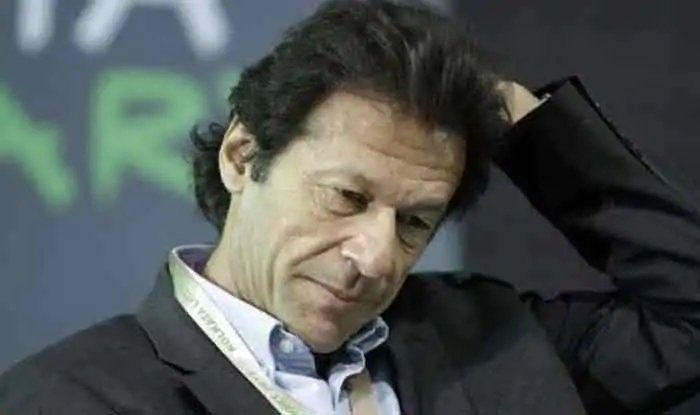
Last week, Pakistan Prime Minister Imran Khan, fantasising the idea of posturing his terrorist country as the new global power, had made a ridiculous offer to India saying that he was ready to help and share Pakistan’s successful cash transfer programme for the Modi government to provide relief to Indian citizens, who according to Khan will not survive more than a week without any such assistance.
Taking to Twitter on June 11, the Prime Minister of the terror-state of Pakistan Imran Khan had shared a report by a Pakistani news daily The Express Tribune which had claimed that nearly 84% Indian households suffered a decrease in monthly income since lockdown.
Citing this report, the Prime Minister of Pakistan said that at least ‘34% of households across India would not be able to survive for more than a week without additional assistance’.
Image Source: Imran Khan
The Pakistani PM had offered to help Indians by means of its “successful cash transfer program” through which his government had supposedly transferred Rs 120 billion in nine weeks to over 10 million poor families in a transparent manner to deal with the coronavirus pandemic.
The assertion of the Prime Minister Imran Khan ‘Niazi’ was that there was no cash assistance or package provided by the Modi government to the poor of the country and he went on to claim that people would not able to survive next one week without any assistance.
The audacious offer by the Pakistan Prime Minister Imran Khan, which came at a time when his terrorist country was itself pleading with the international community to rescue itself from the economic onslaught of the Chinese pandemic.
Pakistan Prime Minister Imran Khan has been begging for some sort of aid from the international community ever since Wuhan virus struck his country. He had, in fact, whined about the economic crisis back home, while urging the international community to consider for a debt waiver for his extremely poor country.
Khan reminded of his ‘1-week’ claim made 8 days ago
Imran Khan’s 1-week time has come and gone, but his dreams of India becoming poor have not come true. However, the Pakistani PM has not bothered to delete his tweet. Perhaps he has assumed that just like his ‘standing up for Kashmir’ campaign, that did not last beyond the first week, this propaganda will be forgotten too.
However, Indian Army veteran and TV host Major Gaurav Arya reminded Khan that his ‘1-week’ deadline is already up and he is free to do with the article as he pleases.
Pakistani PM @ImranKhanPTI quoted this https://t.co/ahCrIXYtM5 article dated 10 June and said that 34% of Indian households will not be able to survive for more than a week.#KatoraKhan it is 8 days now. I suggest you take a printout of this article and use it as toilet paper. https://t.co/Z4wMZqldKe
— Major Gaurav Arya (Retd) (@majorgauravarya) June 18, 2020
No takers for Pakistan Prime Minister’s fantasy, even among his own people
However, this outlandish proposal by the Prime Minister of a cash-strapped nation, where poverty and deprivations are the general norms, had no takers not only in India but also among Pakistanis, who lambasted him for daydreaming about providing aid to India and advised him to rather focus on Pakistan’s own vulnerabilities.
Perhaps, Imran Khan was not aware of the fact that at a time when his government was busy begging richer economies to write off the debts of Pakistan, the Indian government had launched one of the largest ever cash transfer schemes, which included the deposit of over Rs 30,000 crore into the account of woman Jan Dhan account holders. Moreover, Rs 5,000 crore was deposited into the linked accounts of eight crore poor households with LPG connections provided under the ‘Ujjwala’ scheme.
In addition to that, the Narendra Modi government had also announced a Rs 20 lakh economic revival package to boost the economy that had seen a down sliding due to the coronavirus lockdown.
While the tyranny of Islamic rulers and the atrocities they inflicted upon countless Hindus is often discussed, one aspect of the onslaught of Islamic rule in India is often forgotten. Worse, it is even revered, deified and put forth as the face of the tolerant, forgiving and loving side of Islam. It is Sufism. Sufism is described as the mystic, musical Islamic belief where saints and followers seek closeness with Allah through direct personal experience, so the popular definitions claim.
In India, while the deification of Mughals as tolerant, loving, kind rulers who brought prosperity to India is rampant, Sufism has been portrayed by Bollywood and popular culture as the “cool” version of Islam. Countless Bollywood songs, Ghazals and Shayaris have been made hailing Sufi saints, music, and dance. Most of them immensely popular. From Khwaja Mere Khwaja in Jodha Akbar to Kun Faya Kun in Rockstar, the list goes on. While Sufism itself may have been tolerant at one point, it evolved in a manner most violent and some who held on to Sufi roots were also persecuted by Islamists.
Among the Sufi shrines, the shrine of Sufi saint Moinuddin Chishti in Ajmer, Rajasthan is one of the most popular. The shrine invites devotees, Muslims and Hindus both, from all over the world. While the Ajmer Dargah is an important religious centre for Muslims, and even some Hindus, who visit there to get their wishes fulfilled, the history behind Sufi saint Moinuddin Chishti is rather violent, and not very tolerant either.
MA Khan’s book ‘Islamic Jihad, A Legacy of Forced Conversions, Imperialism and Slavery sheds some light upon what the Sufi saints were actually like.
Sufism and orthodox Islam
MA Khan’s book Islamic Jihad
Khan writes that Sufism was not accepted among most Muslims till Imam Ghazzali weaved tenets of Islamic orthodoxy into the body. The sects of Sufism that did not follow the orthodox ways, like the Bishariya Sufis, were brutally persecuted by Islamic rulers.
In India, Firoz Shah Tughlaq has recoded how he had punished the Sufi Shaykh Ruknuddin of Delhi, who had called himself a ‘Mahdi’ (messenger of God). Tughlaq had recorded that the people had torn Ruknuddin and his followers ‘into pieces’ and had ‘broke his bones into fragments’.
Indian Sufism was ‘Ghazzali’s orthodox Sufism
Khan further writes that Sufi leaders had poured into India along with the Turkic invaders and most of them, Nizamuddin Aulia, Aamir Khasrau, Nasiruddin Chiragh, Moinuddin Chishti and Jalaluddin etc, were all known for holding the Ulemas, orthodox Islamic scholars in high esteem. Khan further writes that though Nizamuddin Aulia and Moinuddin Chishti were among the most unorthodox when it came to music and dance, in the matters of Islam and Islamic supremacy, they held the words of the Ulema as sacrosanct.
“What the Ulema seeks to achieve though speech, the Sufis achieve by behaviour,” Nizamuddin Aulia had said. The great Sufi saint Nasiruddin Chiragh had reportedly banned all practices that were deviant from the Sharia.
Sufis, Jihad and ‘infidels’
Khan quotes Prof KA Nizami to describe what the Sufi leader Ghazzali had told in terms of Jihad, the Islamic religious war against Kafirs.
Islamic Jihad by MA Khan
Ghazzali had written that his followers must go on Jihad at least once in a year and should bring down the fortresses of non-Muslims, they should cut down their throats and drown them and burn their holy books. Jihadists may take whatever booty they desire.
Toeing the orthodox line, Nizamuddin Aulia had condemned the Hindus of India to the ‘fires of hell’. He had also written that even if the non-Muslims embrace Islam, the faith will not benefit them, because they had been unbelievers. He had added, “He, (Allah) has created paradise and hell for the believers and the infidels respectively to repay the wicked they (infidels) have done.”
Khwaja Moinuddin and his Hindu hate
Records say that the much revered Khawaja of the Ajmer Dargah had a deep-seated hatred towards Hindus. He was among the very first Sufi saints to arrive in India where Delhi was under the rule of Sultan Iltutmish. Having arrived in Ajmer, Chishti reportedly saw a number of temples near the Anasagar lake and promised that he will have them razed to the ground.
Khan writes further that every day, Khwaja’s followers used to bring a cow and they used to slaughter it near a prominent temple where the local Raja and Hindus used to pray, cook kebabs from the cow’s meat to eat, just to show contempt towards the local Hindus.
MA Khan’s Islamic Jihad
Chishti had come to India to fight Jihad on the side of the Sultan Muhammad Ghauri against the Hindu King Prithviraj Chauhan. Chishti had credited himself for Prithviraj’s capture, writing, “We have seized Pithaura (Prithviraj) and handed him to the army of Islam.”
Moinuddin and forced conversions of Hindus
Khan writes that none of the Sufi saints had come to India with the idea of ‘peace and love’. Instead, they had come as a part of invading armies or had participated in Jihadi wars against Hindu kings, aimed at capturing their kingdoms and wealth and enslavement of their people. While Moinuddin fought for Mohammad Ghauri, Nizamuddin Aulia had fought for Sultan Alauddin.
‘Islamic Jihad’, a book by MA Khan
Khan writes, Moinuddin and Nizamuddin were among the most revered of the Sufi saints. However, instead of adapting a missionary approach towards spreading Islam, they were the spiritual and moral supporters of bloody Jihad waged by Islamic invaders. In Kashmir, it was the Sufis who had inspired the wholesale level destruction of Hindu temples, the slaughter of Hindus and their forced conversions.
Not a single Sufi saint ever objected to the brutal mass slaughter and forced conversion of Hindus
Khan further writes that while Muslim rules were incessantly undertaking bloody wars against Hindus, calling it Jihad, resulting in the slaughter and enslavement of tens of thousands of Hindus, not a single Sufi saint ever objected to this cruel practice. They never asked the Islamic rulers to stop conversions by the sword and said that they can achieve it by peaceful means. Instead, they went on lending the rulers unflinching support, and even actively participated in their wars.
MA Khan’s book
Moinuddin and Ajmer
Khwaja Moinuddin is said to have played an active role in the war by Ghauri against Prithviraj Chauhan. It is also said that he had encouraged forced conversions, slavery and kidnapping of Hindu women.
Popular Twitter user True Indology has shared a snippet from the Translation of Sufi Biography by Siyar Al Aqtab where he has pointed out how Moinuddin had forcibly taken the daughter of the local Hindu king who was ‘gifted’ to him by a follower who had captured the princess after attacking the Hindu king’s fort at night.
Moinuddin Chisti had a follower named Malik khitab.
He abducted daughter of a Hindu Raja and presented her as a gift to Chishti.
Chishti gladly accepted the gift and gave her the name “Bibi Umiya”
The reverence that the shrine of Khwaja Moinuddin Chishti inspires among his followers is remarkable. Yesterday, journalist Amish Devgan had to apologise on social media after he had mistakenly pronounced ‘Chishti’ instead of Khilji in one of his news debates.
Not just Devgan’s social media timeline was soon filled with hate messages, and even death threats for daring to insult the revered Khwaja, multiple FIRs have now been registered against him by several Muslim individuals and organisations.
Ajmer and the India’s own ‘Rotherham’ scandal
In the early 1990s, a brutal, widespread rape gang had operated in the Ajmer city. Most of the perpetrators were from the families of ‘Khadims’, the families of traditional caretakers of the Ajmer Dargah. Khadims claim to be the direct descendants of the first followers of Khwaja Moinuddin Chishty and hold significant influence in the local communities. The police had stalled the case because the local politicians warned action against the accuse would lead to massive communal tension. The targeted rape and prolonged sexual exploitation of Hindu girls had gone on for years and while the case lingered, many victims, most of them minor girls, had committed suicide or chose to remain silent, for the fear of repercussions.
While the perpetrators may or may not have been the followers of Chishti, the institutionalised hatred against infidels and the religious sanction to treat infidel women as slaves and objects to be ‘owned’ comes from the deep-seated orthodox ideas that remain in the core of most political Islamist ideologies. It is not very different from what Alauddin Khilji did against Rajput kingdoms and what ISIS has done to Yazidis.
Conclusion
Islamist appeasement has reached to such levels in India that even the slightest criticism invites condemnation, and even legal, and judicial ramifications. In 2015, Kamalesh Tiwari, a former leader of the Hindu Mahasabha had commented on the sexuality of Prophet Mohammad. Though criticism and condemnation of statements are as democratic as the freedom to make those statements itself, in case of Kamlesh Tiwari, there were massive rallies taken out by thousand of Muslims where they had openly demanded his beheading. Rallies were taken out with placards literally calling for his head and finally in 2019, he was brutally killed (and beheaded) by some radical Islamists in his office.
While Sufism has been successfully popularised as a mystic, musical and ‘cool’ version of Islam, the ideas sold commercially by music maestros and Bollywood, one cannot ignore the other historical details of slavery, brutality and bloodshed that was heaped upon countless of Hindus to erect the monuments of this notion.
Amid the wave of the anti-racism protests followed by the custodial death of African-American citizen George Floyd, where several statues of historical persons perceived as ‘racists’ have been demolished and vandalised by activists, another similar incident has been reported from Amsterdam. Unknown miscreants vandalized the statue of Mahatma Gandhi with graffiti and spray painting in the capital of the Netherlands.
As per reports, the statue of Mahatma Gandhi located at the Churchilllaan in Amsterdam was desecrated by the unknown miscreants with red paint, and just like other similar incidents, the word ‘racist’ was found written on the pedestal of the statue.
Mayor of Amsterdam Alderman Rutger Groot Wassink said the municipality will file a declaration on the matter. The official was quoted by saying by the Ad.nl, “Obviously, we are opposed to any form of vandalism and daubing of these things is completely unacceptable. It is logical that we will file a declaration, the image will be cleaned.”
As per reports, an old man who noticed the daubs on the statue called the municipality. He said, “I have lived here for forty years and I have never experienced this. I have been watching the statue for years.” An employee of the Kunstwach, who takes charge of repairing and maintenance of the statue said the cleaning work can take hours.
Embassy of India in Hague expressed displeasure
On the incident, the official Twitter handle of Embassy of India in Hague tweeted, “We are sad and distressed to know about the vandalization of the statue of Mahatma Gandhi in Amsterdam. We strongly condemn those responsible for this incident and call upon concerned authorities to take action against culprits responsible.”
We are sad and distressed to know about the vandalization of the statue of Mahatma Gandhi in Amsterdam. We strongly condemn those responsible for this incident and call upon concerned authorities to take action against culprits responsible.@DrSJaishankar@MEAIndia
1/3
— IndiainNetherlands (@IndinNederlands) June 17, 2020
Statues of Mahatma Gandhi vandalized earlier amid the BLM protests
Amid the #BalckLivesMatter protesters in the US and elsewhere, some unruly elements vandalized the statue of Mahatma Gandhi outside the Indian Embassy in Washington DC. The statue was inaugurated in 2000 in front of the Indian Embassy in Massachusetts Avenue. Former PM Atal Bihari Vajpayee had inaugurated the statue in September 2000 in the presence of the then US President Bill Clinton.
After this incident, miscreants desecrated another Mahatma Gandhi statue on Parliament Square, London. The miscreants defaced the statue with scribbling ‘racist’ on its plinth and splattering it with white paint. They also taped placards with anti-racism messages on it.
Dutch Activist wrote ‘killer’ and ‘thief’ on the statue of Piet Hein
It is pertinent to note that since the controversial death of George Floyd in Minneapolis followed by the Worldwide protests, the debate on naming the streets and monuments by the name of those linked with a colonial past is going on.
As per reports, recently dutch activist scribbled ‘killer’ and ‘thief’ on the statue of Piet Hein in Rotterdam and daubed the statue with red paint.
The Dutch newspaper metro reported that these are the expressions that follow the death of George Floyd in the custody of White police officers. Gandhi was a champion of human rights and non-violence but in his twenties when he was in South-Africa, he made regressive remarks against black people.
The statue on Churchilllaan was installed on October 2, 1990, in light of Mahatma Gandhi’s 121st birthday. The design of the statue was made by the sculptor Karel Gomes, who died in 2016. The plans for the statue was given by the Hindu organization Trivedi.
Mahatma Gandhi is depicted walking, featuring robes around the body, slippers on the feet, a book in one hand and a stick in the other.
After the violent clash between the armed forces of India and China at the Galwan Valley near the LAC in Ladakh, which saw the death of more than 50 soldiers from both the sides in a fight without firearms, the Congress party has launched an attack on the Modi government questioning operational decisions made by the armed forces. The party leaders and workers have started asking why the Indian side went to confront the Chinese military without carrying guns.
Today former Congress President Rahul Gandhi also asked the same question, when he asked who and why Indian soldiers sent unarmed to a dangerous a situation, and who was responsible for this decision.
Although it is natural that the general public will not know the details of the India-China border issue, it is a surprise that Rahul Gandhi is surprised about soldiers not carrying arms at the LAC. Because it is agreements signed by governments led and supported by his party that prevents the soldiers from using firearms on the border with China.
Rahul Gandhi headed the party that ruled India for half a decade, he keeps meeting Chinese officials behind the curtains often, and therefore, he should know why Indian soldiers were unarmed.
The reason for the same is a slew of agreements signed between India and China, in an effort to keep the tension at the border under check. Both the nations have signed border agreements in 1993, 1996 and 2005, which defines the activities which are allowed and not allowed along the Line of Actual Control between India and China.
The first agreement signed in September 1993 says that both the sides entered into the agreement based on five principles, mutual respect for sovereignty and territorial integrity, mutual non-aggression, non-interference in each other’s internal affairs, equality and mutual benefit and peaceful coexistence, and with a view to maintaining peace and tranquillity in areas along the line of actual control in the India-China border areas. The main focus of this agreement was to maintain peace along the LAC and reduce aggression both the sides.
Screenshot from the 1993 India-China border agreement
The second agreement signed in November 1996, defined the detailed protocols to achieve the goals set in the first agreement. And this is that agreement that bars soldiers from both the sides from using firearms on each other. The Article I of the agreement says that “neither side shall use its military capability against the other side. No armed forces deployed by either side in the border areas along the line of actual control.”
The most relevant provision in the context of the current situation is Article VI of the 1996 agreement. Section (1) of Article VI says that neither side can open fire guns or use explosives within two kilometres of the LAC. This means that both sides have agreed to not use weapons within the two kilometres of the LAC on both sides.
Screenshot from the 1996 India-China border agreement
The Article III of the agreement says that both sides will reduce or limit combat tanks, infantry combat vehicles, guns (including howitzers) with 75 mm or bigger calibre, mortars with 120 mm or bigger calibre, surface-to-surface missiles, surface-to-air missiles and any other weapon system mutually agreed upon along the LAC.
A detailed reading of the 1996 agreement shows that it was aimed at avoiding a full scale war erupting between India and China by reducing use of weaponry an aggression at the border. And being one of the most professional armed forces in the world, the Indian security forces were not carrying firearms to respect the agreement signed by the government of India. It may be noted that although the Chinese sides showed barbarism by attacking Indian soldiers using primitive weapons like stones, sticks studded with nails and wrapped with barbed wire, even they technically respected the agreement by not firing shots.
Another agreement between India and China was signed in 2005 when Manmohan Singh led UPA-I govt was in power, and this agreement had reiterated the commitment of both the nations to abide by and implement the 1993 and 1996 agreements.
External affairs minister S Jaishankar also fact-checked Rahul Gandhi by informing that it is a long-standing practice to not use firearms as the agreements signed by India and China. He informed that the soldiers do carry arms while leaving their posts, but they don’t use them as per agreed protocols.
Let us get the facts straight.
All troops on border duty always carry arms, especially when leaving post. Those at Galwan on 15 June did so. Long-standing practice (as per 1996 & 2005 agreements) not to use firearms during faceoffs. https://t.co/VrAq0LmADp
Rahul Gandhi’s party was in power when the 1993 agreement was signed, and his party was supporting the HD Devegowda government when the detailed 1996 agreement was signed. Moreover, not only Rahul Gandhi keeps meeting Chinese officials secretly, his party actually signed an agreement with the Chinese Communist Party to ‘consult each other on important issues’. During UPA1 in 2008, the Congress party and the Communist Party of China (CPC) had signed a deal in Beijing for exchanging high-level information and co-operation between them. The memorandum of understanding (MoU) also provided the two parties with the “opportunity to consult each other on important bilateral, regional and international developments”.
The MoU was signed by the then Congress general secretary Rahul Gandhi and on the Chinese side, it was signed by none other than Xi Jinping himself, who was then the Chinese vice-president and standing committee member of the CPC’s politburo. The MoU was signed in the presence of his mother and party president Sonia Gandhi. Therefore, Rahul Gandhi should not pretend that he does not know about the agreements between the two countries to ask why the Indian soldiers were unarmed.
At present, Indian soldiers are following the agreements signed between the two sides, and the soldiers should be respected for that, not question their judgement like Rahul Gandhi is suggesting. Given the recent aggression by China, it is possible that Government of India may decide to not follow the disarmament provisions of the agreement. But until such a decision is taken by the union government, the armed forces will act on the established protocols agreed between the sides.
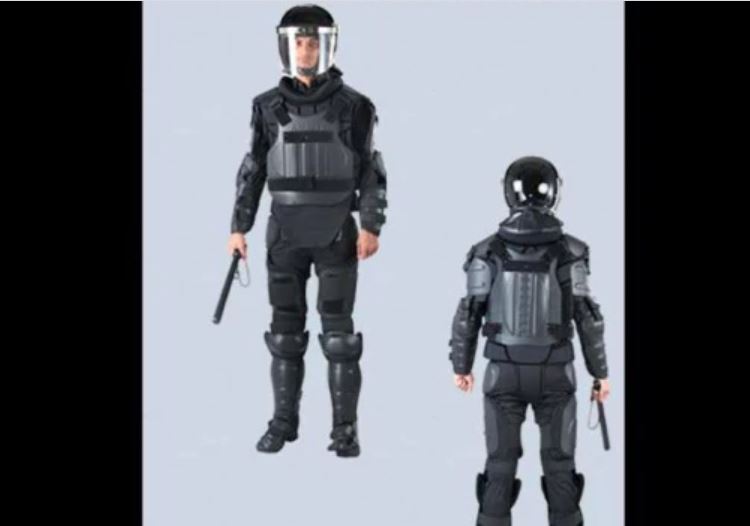
In view of the treacherous and deceptive attacks by the Chinese troops on the Indian soldiers on Monday night, the Northern Command has begun equipping its soldiers with lightweight riot gear.
According to a report on India Today by defence journalist Sandeep Unnithan, the first consignment of 500 sets of full-body protectors was airlifted from the Mumbai-based supplier to Leh where it is to be distributed among troops deployed along the LAC.
Indian soldiers along LAC to be provided full-body lightweight riot gear and spiked clubs
The report says that the new bodysuit which would be provided to our soldiers along the LAC would comprise of padded polycarbonate inserts and would protect wearers from, significantly, sharp objects and stones. It is being said that the army also plans to equip its troops along the LAC with spiked clubs.
One senior military analyst who did not want to be named worried over the optics of gearing the army with riot control protectors said: “It means changing an army man’s mindset into a policeman’s.”
Chinese troops ruthlessly attacked unarmed Indian soldiers with rods studded with spikes and nails
This decision has come in the aftermath of the June 15 ambush, in which, the Chinese People’s Liberation Army (PLA) had ruthlessly attacked our soldiers with rods studded with spikes and nails.
PLA had, on Monday night, launched savage and deceptive attacks, many to a ‘point of mutilation’ against the Indian troops. The Chinese troops reportedly trapped and encircled around 120 Indian unarmed soldiers and attacked them with iron-studded and fence wire wrapped rods type objects.
The Chinese PLA reportedly held firearms to faces of Indian soldiers, brutally tortured some Indian soldiers to death. The sources to IANS added that the Indian soldiers did not retaliate with guns and followed government directions not to use firearms. The hand-to-hand fight between the two forces erupted. However, PLA troopers used all kinds of weapons against the Indian soldiers, who bravely fought and tried to control the situation.
The Indian Army troopers, who confronted the Chinese troops near the patrolling point number 14 at the Galwan valley were also outnumbered by 1:5 ratio when they came under attack from the Chinese People’s Liberation Army soldiers.
Reportedly, China is also said to have used thermal imaging drones to trace the Indian Army soldiers scattered on the treacherous terrain before brutally attacking them.
Indian soldiers were attacked to the “point of mutilation”
Colonel Santosh Babu, who martyred during the Monday night clashes at PP-14, along with a small team was patrolling at the spot to check whether Chinese troops had withdrawn from the standoff position, as promised by them. However, the Chinese had trapped the Indian soldiers and brutally attacked them to the “point of mutilation”.
The Indian Army added that the Indian troops had reached the spot where the clashes happened without any animosity and were displaying friendly gestures to the Chinese side that they were there to check if the de-escalation agreement was being followed as promised. “But they trapped and carried out the attacks, a purely savage act,” the Indian Army official said to IANS.
India lost 20 of its brave soldiers in the skirmish, while the Chinese troops also suffered severe casualties as at least 43 Chinese troops are either injured or dead during the attacks that took place on Monday night.
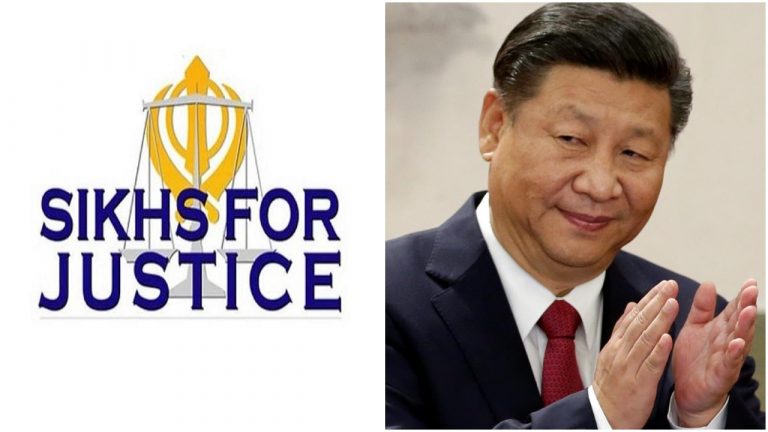
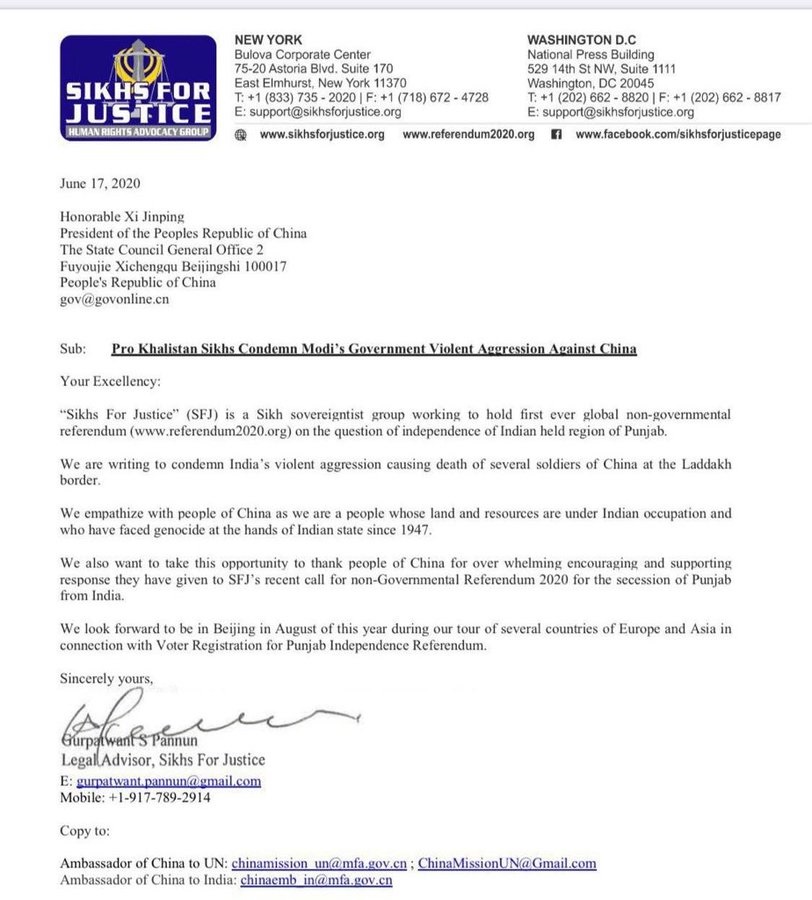
The UK-based Khalistani separatist group ‘Sikhs for Justice’, backed by Pakistan’s ISI, has written a letter against India to the Chinese President Xi Jinping condemning ‘Modi government’s violent aggression against China’ causing death to several soldiers of China at Ladakh along the Line of Actual Control (LAC).
In a letter written to Chinese President, the Sikh separatist group ‘Sikh for Justice’ (SFJ) said that they emphasised with the people of China and claimed as they themselves are a group of people who land and resources are under Indian occupation and who have faced “genocide at the hands of Indian state since 1947”.
It is pertinent to note the ‘Sikh for Justice’ is a pro-Khalistan separatist group, sponsored by Pakistan to create instability in India, especially in Punjab by pushing for the secession of Sikh-majority state by organising ‘Sikh Referendum in 2020’. Last year, the Modi government had finally banned the pro-Khalistan outfit for its separatist agenda.
Image Source: Amaan(@amaanbali)
Further, in the letter, the separatist group said that they thanked the people of China for the overwhelming encouragement and support they have given to SJF’s call to hold a non-governmental referendum 2020 for the secession of Punjab from India.
The ‘Sikh for Justice’, which proclaims itself to be a Sikh sovereignist group, said they were looking forward to visiting Beijing in August in connection with Voters Registration for Punjab Independence Referendum.
Savagery heaped by China on India, Indian soldiers were tortured to a point of mutilation
The Indian Army on Tuesday released a statement saying that at least 20 Indian soldiers had martyred, including the Commanding Officer of a battalion at Galwan valley in a violent faceoff on Monday night. The Indian soldiers were killed in action in an unprecedented violent clash with PLA troopers in the Galwan Valley on Monday night. Reportedly, over 50 soldiers of the Chinese Army were deemed casualties in the clash while India defended its land, however, China has refused to confirm the number of casualties on their side.
The official statement said that it took place during the de-escalation process underway in the Galwan valley. It reported that no bullets were fired but the Chinese troops pelted stones and clubs.
The Chinese PLA reportedly held firearms to faces of Indian soldiers, brutally tortured some Indian soldiers to death. The sources to IANS added that the Indian soldiers did not retaliate with guns and followed government directions not to use firearms. The hand-to-hand fight between the two forces erupted. However, PLA troopers used all kinds of weapons against the Indian soldiers, who bravely fought and tried to control the situation.
Colonel Santosh Babu, who martyred during the Monday night clashes at PP-14, along with a small team was patrolling at the spot to check whether Chinese troops had withdrawn from the standoff position, as promised by them. However, the Chinese had trapped the Indian soldiers and brutally attacked them to the “point of mutilation”.
The Indian Army added that the Indian troops had reached the spot where the clashes happened without any animosity and were displaying friendly gestures to the Chinese side that they were there to check if the de-escalation agreement was being followed as promised.
“But they trapped and carried out the attacks, a purely savage act,” the Indian Army official said to IANS.
Amid the calls for boycott of Chinese products in wake of the violent standoff at Ladakh owing to aggression by Chinese forces, the Chinese mobile company Oppo on Wednesday cancelled its live telecast on the launch of its new 5G smartphone. Oppo had said it would live telecast the launch of its X2 smartphone on Wednesday through YouTube.
However, the livestreaming of the launch was cancelled and a prerecorded clip was uploaded instead. As per reports while Oppo did not make any official statement regarding the same, some reports suggest it was done in view of the online protests where netizens gave a call to boycott the Chinese mobile phone brand.
On Wednesday, netizens took to Twitter to urge Indians to boycott Chinese products, especially the mobile phones.
India smartphone market Share (Q1 2020):
Xiaomi (China): 30% Vivo (China): 17% Samsung (S Korea): 16% Oppo (China): 12% Realme (China): 14% Others: 11%
# China's BBK Electronics sells under different brands including Vivo, Oppo, OnePlus & Realme.#HindiCheeniByeBye
#HindiCheeniByeBye I am requesting to all boycott all Chinese product but government of india will be also ban all contract and company who belongs to china like vivo, oppo, xiomi, STEC, Lenovo etc .
On Thursday it was reported that nail-studded rods were used by the Chinese PLA soldiers on Indian soldiers at the violent standoff in Ladakh. The treacherous attack by the Chinese troops on the Indian soldiers along the Line of Actual Control (LAC) near Indian territories of Galwan valley at Ladakh seems to be premeditated as new reports emerging out has indicated that the Chinese troops had well prepared to unleash deliberate savage attacks on the Indian troops at the LAC.
The Indian Army on Tuesday released a statement saying that at least 20 Indian soldiers had martyred, including the Commanding Officer of a battalion at Galwan valley in a violent faceoff on Monday night. The Indian soldiers were killed in an unprecedented violent clash with PLA troopers in the Galwan Valley on Monday night.
During the clashes, the Chinese troops have also suffered severe casualties as at least 43 Chinese troops are either injured or dead during the attacks that took place on Monday night.
The annual Jagannath Rath Yatra which was slated to take place in Odisha on June 23 has been stalled by the Supreme Court this year citing the Covid-19 pandemic situation.
Supreme Court stays the annual Rath Yatra at Puri’s Jagannath Temple in Odisha on June 23 pic.twitter.com/lEoWjBYipn
The bench headed by CJI SA Bobde ordered: “We consider it appropriate that in the interest of public health and safety of citizens to restrain the respondents from holding the Rath Yatra this year. We direct that no Rath Yatra will be held in the temple area of Odisha”.
The bench was hearing pleas seeking to cancel or postponement of the historic ‘Rath Yatra’ at Puri in Odisha.
Bhubaneswar-based NGO filed PIL against holding of annual Rath Yatra
The PIL filed on June 15 by Bhubaneswar-based NGO ‘Odisha Vikas Parishad’ through advocate Ranjeeta Rohatgi argued that holding the annual chariot festival, which attracts almost 10 lakh people from across the country and abroad would be an open invitation to infect lakhs of devotees given the spiralling number of Covid-19 patients in India, including Odisha.
Hearing the plea, the CJI observed: “We are not allowing this. Lord Jagannath will not forgive us if we allow this to continue. Activities related to the Rath Yatra is injuncted, ordered CJI SA Bobde.
The non-profit said allowing the rath yatra would violate the state government’s order. “This is a serious matter,” the Chief Justice of India has remarked.
It is pertinent to note here, that despite the central government guideline of opening places of worship since June 8. Odisha government had issued a blanket ban on places of worship and religious congregations till June 30 in view of the rising coronavirus cases in the state.
Temple administration had decided to take out the Yatra under Section 144 imposition
Meanwhile, in Odisha, the construction of Raths for the Yatra are underway in full swing after the temple administration had decided to take out the Yatra under Section 144 imposition, without the presence of devotees.
Rath Yatra in Puri, Odisha
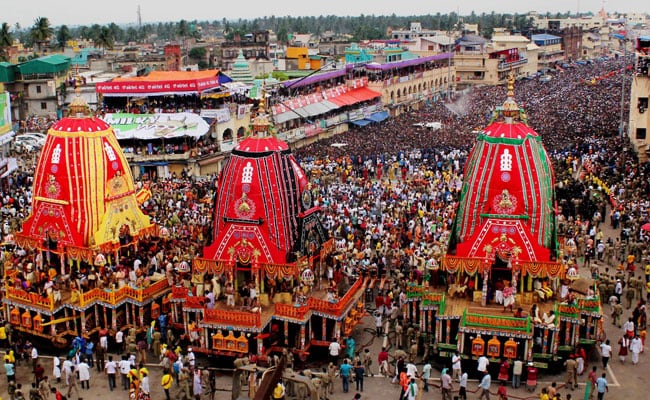
Jagannath Rath Yatra is a Hindu festival associated with Lord Jagannath held at Puri in the state of Odisha. During the annual event, devotees from all over the world throng to Puri with an earnest desire to help to pull the Lords’ chariots. It is a colourful festival which is celebrated every year in Puri. Lord Jagannath, with his siblings Lord Balabhadra and Devi Subhadra, comes out of his sanctum sanctorum in the 12th-century temple to give darshan to all Devotees belonging to all sects and communities.
Believed to be the oldest chariot procession in the world, this festival marks the annual ceremonial procession of Lord Jagannath, his elder brother Balabhadra and younger sister Subhadra, from their home temple to the Gundicha Temple in Puri, believed to be their aunt’s home.