Home Blog Page 552

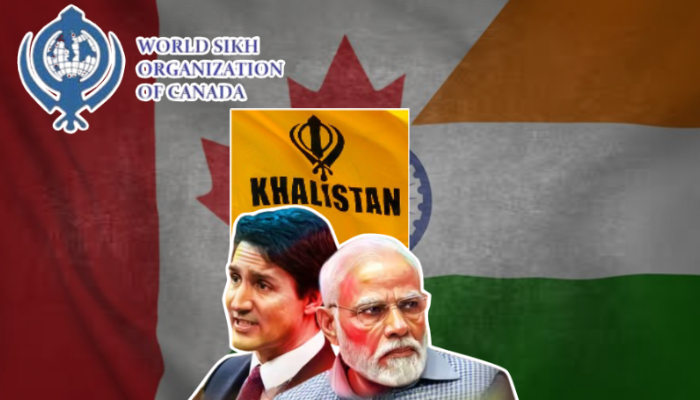
Canada doomed: How World Sikh Organisation, a Khalistani terror group, has say in ongoing liberal party discussions on Justin Trudeau’s replacement

Canada, once celebrated for its maple syrup, longest coastline, and beautiful national parks and lakes, is now more widely acknowledged as a home ground of Khalistani terrorists. The nation, noted for its explicit and vocal support of separatist elements, drew global attention when Prime Minister Justin Trudeau announced his resignation, marking the end of his nine-year leadership. The development transpired amidst deepening frustrations amongst voters, a surge of his opponents especially Pierre Poilievre and a split among his own party.

His tenure as Prime Minister was overshadowed by numerous scandals, which included breaches of federal conflict of interest regulations during a corruption investigation, strained relations with international leaders such as President-elect Donald Trump and sinking diplomatic ties with fellow democracies particularly India. His legacy, fraught with flaws, is defined by a split nation and a party in turmoil, as his supporters have distanced themselves from him including his Khalistani ally Jagmeet Singh Dhaliwal, leading to Trudeau’s isolation and a reputation as a divisive figure.

The Liberal Party of Canada has now come together to address the leadership vacuum and it is apparent that the Khalistanis will be given an important role in the decision-making process. The caucus meeting, initially convened by Liberal Members of Parliament that led to Trudeau’s removal from his position, will now shift its focus towards establishing a consensus on the rules for selecting his replacement. Some members are expected to advocate for stricter criteria regarding voter eligibility to prevent foreign interference.

Notably, last October, Trudeau directed a fresh wave of criticism towards the Indian government, accusing the country’s diplomats in Canada of being connected to ‘criminal activities,’ including the killing of Khalistani terrorist Hardeep Singh Nijjar. Meanwhile, the National Security and Intelligence Committee of Parliamentarians (NSICOP) disclosed extensive Chinese meddling in Canada’s electoral and legislative matters in its report, a few months prior in June.

The Canadian government evidently sought to divert attention towards India by alleging foreign interference, despite the fact that its own Members of Parliament were colluding with the Communist nation. Parm Bains, a Liberal MP who accused India of the same had been identified as a collaborator with the Chinese Communist Party (CCP). India had already denied the outrageous charges as “baseless.”

According to alleged findings from a public inquiry into foreign interference, indicated that India, alongside China and Iran, was involved in influencing nomination races and leadership contests. It is important to highlight that India has been requesting evidence, however, the only responses it has received are rhetorical statements from government officials and further catering to Khalistani elements.

On the other hand, Canadian officials have asserted that India did not engage in interference during the elections held in 2019 and 2021, countering the claims made by Canadian intelligence agencies. Canadian authorities conducting an investigation into these charges country’s elections reported that there was no evidence to suggest that New Delhi attempted to influence the electoral process.

Trudeau even conceded that his administration possesses no evidence, yet his administration’s discourse regarding “credible allegations” remains unabated. Furthermore, despite the assertion from the Liberal government that Khalistanis in Canada do not represent the Sikh community, they have a closer association with separatists than with the latter. Unsurprisingly, their union is poised to become more intense in the near future, owing to the strong bond shared by the two groups and their fervent endorsement of one another.

Liberal Party and World Sikh Organization

According to Balpreet Singh, legal counsel for the World Sikh Organization (WSO), his group would advocate for the restriction of the Liberal leadership vote to Canadian citizens and permanent residents. The WSO has a documented history of promoting narratives and propaganda that are anti-Hindu and anti-India. Additionally, this organization, based in Canada, consistently interferes in the internal matters of India and has both provided support to and received backing from pro-Khalistani factions.

The WSO was established in July 1984 in the aftermath of Operation Bluestar. Presently, its X (previously Twitter) account is restricted in India. It has been vocal in its support for Khalistani movements and has actively participated in related activities. Didar Singh Bains, an important member of the WSO, has been a strong advocate for the independence of Punjab from India, calling for the creation of Khalistan. Notably, the group helped the Liberal Party campaign before the federal polls in 2014-15.

The Citizenship Amendment Act (CAA) has been described as a contentious piece of legislation by the outfit that blamed Hindus for anti-Hindu riots that occurred in Delhi in 2020. Interestingly, it echoes the sentiments expressed by Trudeau on these matters. “India has consistently witnessed assaults on minorities, including Sikhs, Muslims, and Christians, which have either been endorsed by the state or overlooked,” it alleged.

Ironically, the law is not aimed at Indian minorities but rather those in Pakistan, Afghanistan, and Bangladesh, which are mercilessly oppressed and tortured by the Islamists with the tacit support of the respective governments. WSO’s objection, lacking in substance, seemed to serve only the interests of its separatist audience. Ironically, this radical group has been urging the Canadian government to establish laws that would provide refuge for minorities from Afghanistan.

An intervener status was conferred upon it by the Commission of Inquiry established to investigate the Air India 182 bombing. A user on X informed that the WSO publicly challenged the Canadian police in an effort to defend the individuals responsible for the attacks. It was during the founding convention of the outfit at Madison Square in New York on 28th July 1984, that the Babbar Khalsa terrorist Ajaib Singh Bagri openly urged for the extermination of Hindus, stating, “Until we kill 50,000 Hindus, we will not rest.”

WSO has also collaborated with the radical group referred to as the National Council of Canadian Muslims (NCCM). The two parties presented four requests to the Canadian government, which encompassed the expulsion of the Indian High Commissioner to Canada, the recall of the Canadian envoy, the cessation of trade with India and the prohibition of the Rashtriya Swayam Sevak Sangh (RSS).

The anti-India demands were presented in the House of Commons, indicating that the Trudeau administration not only harboured but also cultivated propagandist entities for vote-bank politics. WSO also communicated with Public Safety Minister Ralph Goodale in 2019 to claim the influence of Indian interests in Canada and their impact on the Sikh community as well as to demonize RSS and attack Bharatiya Janata Party.

Now, Trudeau’s ouster has hastened the timeline, suggesting that the individual who assumes leadership of the Liberal Party will resume pandering to Khalistanis who are already hand in glove with the party. They will further be tasked with addressing the challenges posed by the incoming US administration led by Donald Trump, particularly regarding his warnings of imposing high tariffs on Canadian exports, amid the souring relationship between the two nations.

Who is Anita Anand, a frontrunner to replace Trudeau

Anita Anand has been emerging as a formidable candidate, positioned alongside prominent figures like Pierre Poilievre, Chrystia Freeland and Mark Carney. Her background in governance and public service, coupled with her growth in the country’s politics, has made the 57-year-old attorney a strong contender within the Liberal Party since her entry into politics in 2019, representing Oakville, a suburb of Toronto. She is the first Hindu woman to be elected as a member of Parliament and the first Hindu to become a cabinet minister in Canada.

She was born in Kentville, Nova Scotia. Her parents, Saroj D. Ram and S.V. (Andy) Anand, were both Indian physicians of Tamil and Punjabi descent. She has two siblings, Gita Anand and Sonia Anand. She is married to John Knowlton, a Canadian lawyer and business executive, and together they have four children.

Anand has a Bachelor of Arts in Political Studies from Queen’s University, a Bachelor of Arts (Honours) in Jurisprudence from Oxford University, a Bachelor of Laws from Dalhousie University, and a Master of Laws from the University of Toronto. Her academic career includes positions at renowned institutions including Yale, Queen’s University, and Western University, and she was a law professor at the University of Toronto before transitioning into politics.

She was called to the Bar of Ontario in 1994 and had the position of Professor of Law at the University of Toronto, where she occupied the JR Kimber Chair in Investor Protection and Corporate Governance. Additionally, she has served as Associate Dean at the University of Toronto, as a member of the Governing Board of Massey College and as the Director of Policy and Research at the Capital Markets Institute within the Rotman School of Management.

She is frequently recognized as one of the more driven members of the Liberal caucus. She held the position of Minister of Public Services and Procurement from 2019 to 2021, in addition to serving as President of the Treasury Board and Minister of National Defence. During the Covid pandemic, she led an initiative to secure vaccines and personal protective equipment. She also directed Canada’s efforts to provide assistance to Ukraine amid its conflict with Russia and managed a personnel crisis within the Canadian Armed Forces, which was plagued by sexual misconduct allegations.

When she was transferred from the Department of Defence to the Treasury Board, many interpreted this move as a demotion, while others speculated that it was a punitive measure due to her ambitions to lead the party in the future. However, she was once again reassigned during a cabinet shuffle, taking on the roles of Minister of Transport and Minister of Internal Trade, in last December. It is anticipated that she will assume the role of interim prime minister until the elections are conducted as she remains a favored individual within the cabinet.

India-Canada ties and endorsement of Khalistanis

The ties between India and Canada have suffered as a consequence of the latter’s conspicuous alignment with Khalistani terrorists. Trudeau and his political party have perpetuated the legacy of his father, the late Prime Minister Pierre Trudeau, by appealing to separatist sentiments. The latter had also refused to extradite Talwinder Singh Parmar, the terrorist responsible for the Kanishka bombing, to India, despite repeated appeals.

Trudeau’s approach has involved the troubling glorification of the murderers of Indira Gandhi through provocative tableaux and anti-India speeches, all framed as freedom of expression. Additionally, he has provided sanctuary to Khalistani extremists who aim to partition India and organize referendums for Punjab’s separation. This has culminated in his unfounded allegations of Indian interference in Canada, revealing a pattern of prioritizing the appeasement of terrorists over solidarity with a democratic partner.

India dismissed the allegations and retaliated, resulting in the expulsion of Canadian diplomats from New Delhi and even recalled its High Commissioner. Canada enacted similar measures against Indian diplomats, leading to a major rift between the two nations, primarily driven by the Khalistani community’s role as a voting block in the country. Trudeau even enacted a series of visa restrictions affecting Indian students after the dampening relationship which prompted significant dissent within his own party, resulting in more than 20 members of the Liberal Party publicly demanding his resignation.

Besides functioning as a safe haven for terrorists, separatists, and criminals as well as labelling Indian diplomats as “Persons of Interest” the Canadian government went so far as to mention Union Home Minister Amit Shah in their unsubstantiated allegations, which elicited sharp response from India. Ottawa unambiguously demonstrated a disregard for its relationship with the world’s largest democracy.

The backing provided by the ruling Liberal Party prompted attacks on Indian diplomatic mission, an escalation of Hinduphobia, frequent temple assaults, and the normalization of anti-Hindu narrative. Significantly, even the Canadian Parliament comprises individuals who identify as Khalistani separatists, promoting ideologies that pose a threat to the safety and lives of Hindus, their properties and religious places, in the Western country.

This issue is not exclusive to the Liberal Party, as politicians from various parties cater to Khalistani interests to secure electoral support. Additionally, numerous Khalistanis hold significant political influence in the country, promoting the separatist agenda. Consequently, under the new leadership of the liberals or any other party, this issue is unlikely to be resolved, which will further exacerbate relations with India. However, the Liberal Party appears to be the preferred choice among these separatist factions.
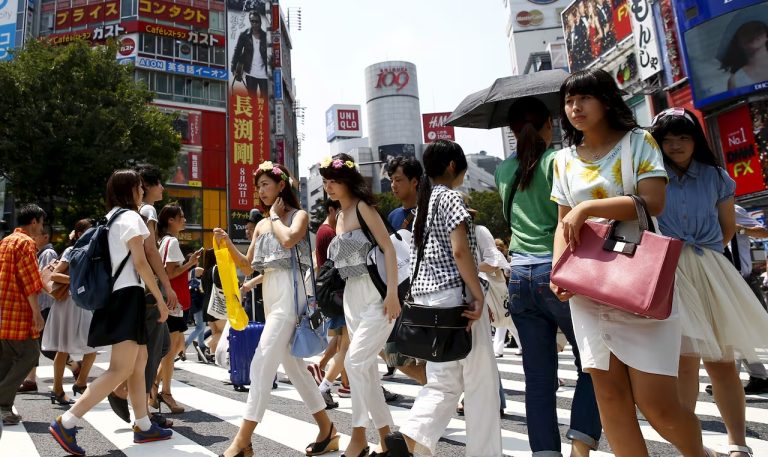

‘Japan will go extinct’: Expert warns that low birthrates will wipe out Japanese population soon, develops a ‘ticking clock’ to display data

The country of Japan is usually revered for the advances it makes in technology and science. However, a novel concern has come to the fore regarding the country where the experts claim that the country might go extinct if the birth rate continues to decline. Hiroshi Yoshida, a professor at Tohoku University’s Research Center for Aged Economy and Society says that by January 5th, 2720, the country will have just one child under the age of 14.

As per the reports, the professor has been maintaining a conceptual clock that reveals that the fertility rate in the country is rapidly declining. The real-time numerical data studied by the authority shows the number of children in the current year and the previous years and tracks the diminishing trend. Based on every year’s data, the clock projects the year when the child population would shrink to only one.

As per recent calculations, around 695 years from now, the country will be left with no people, just a minor aged below 14. The projection, updated annually since April 2012 is part of Professor Yoshida’s effort to draw attention to Japan’s population crisis. The estimate released recently reflects an annual decrease of 2.3% in the child population, raising concerns over the diminishing numbers in the upcoming years.

The birth rate in Japan reached low to the mark of 1.20 in 2023. The reasons attributed to this are loss of interest in people, fewer marriages, and a huge number of people choosing the lives of singles. The government data released by the country revealed that the number of birth rates fell more in the first half of 2024, the lowest since 1969. “Between January and June last year, Japan recorded 350,074 births, a 5.7 percent drop from the same period in 2023,” a report by the health ministry added.

Reports mention that the downward trend in births is concerning forcing the Japanese policymakers to strive to implement extraordinary measures to prevent the declining birth rates. The national leaders and experts meanwhile are describing the trend as deeply alarming.

Kerala court sentences NRI man to double life imprisonment for raping his daughter for 7 months causing pregnancy

In Kerala’s Kannur, a court has sentenced an NRI man to double life imprisonment and imposed a fine of ₹15 lakh for raping his daughter for 7 months resulting in her pregnancy. The accused runs a restaurant in Qatar. After the case came to light, the police called him to India and arrested him and now the court has given its verdict in this case. Meanwhile, the rapist father disappeared after getting bail. The girl’s mother also changed her statement in this case.

Reports say that an NRI family came to Kannur, Kerala in 2020. Due to Covid restrictions, the man was kept in a separate room and the responsibility of giving him food and water was given to his eldest daughter who was 13 years old. When his daughter went to give him food, her father raped her. This continued for the next 7 months. Due to continuous rape, the minor became pregnant. Following this, the man returned to Qatar.

The girl started feeling sick and one day she fainted and when she was taken to the doctor, she was found to be pregnant. The hospital informed the police about this matter. When the police questioned her, the girl first blamed her cousin for the rape without naming her father. The minor said that her brother used to rape her by showing her porn. However, later she told the whole matter to one of her aunts, based on which the police started taking action.

The police later caught the accused when he returned to India. The DNA test made it clear that the pregnancy was her father’s. After this, a case was filed against him. However, during the trial, he got bail and fled. Earlier, her mother had the minor aborted after obtaining permission from the High Court. Later, the mother also turned back from her testimony and started supporting her husband. Due to this, the case got delayed and its final decision could not come in July 2023.

Meanwhile, the minor was kept in a different protection centre. On January 5, 2025, the police received information that the accused had come to his house and was staying there. After this, the police caught him and within two days the court gave this verdict. The court sentenced him for raping his own daughter to 2 life imprisonments and 2 twenty years of imprisonment under the POCSO Act. Apart from this, he was sentenced to another 7 years. The court also imposed a fine of ₹ 15 lakh on him which will be given to his daughter.

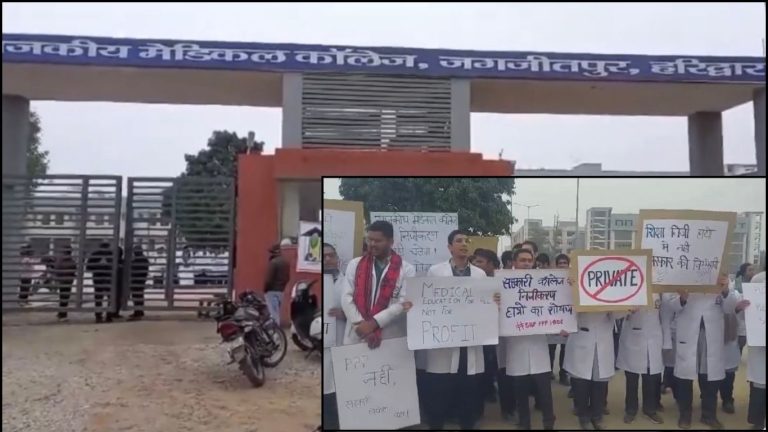
Uttarakhand: Why are students of govt medical college in Haridwar protesting? Know why alleged privatisation news has sparked outrage

Students of the newly inaugurated Government Medical College, Jagjeetpur in Haridwar are outraged over the state government’s decision to allegedly ‘privatise’ the medical college.

According to reports, the Uttarakhand government has decided to hand over the medical college to ‘Sharda Educational Trust’. The college is reportedly going to be run on the Public-Private Partnership (PPP) model after the handover.

However, the students of the college are unhappy with the decision of the government. Calling for the rollback of the decision, the students are staging protest in the college premises.

The protesting students said that they worked hard to get admission into a government medical college, as admission into a ‘government’ college requires better ranks. Therefore, it is unfair towards them to change the status of the medical college from government to private, because if the government’s plans for handing over the college to a private trust are finalised, their certificates will have medical degrees from a private college, not a government college as they hoped for.

They accused the authorities of keeping them in the dark regarding the privatisation of the college. “We don’t want the tag of a private college”, said a protesting student of the college. “ There is no value of all the hard work that we put in to get admission into the college. We were not even informed about the decision to privatise the college”, she added.

Why the whole controversy over PPP?

Uttarakhand government’s decision to run the Government Medical College, Haridwar on the PPP model has caused outrage among the students of the college. A PPP model involves drawing an agreement between the government and the private party in which responsibilities including financing, revenue and services, etc. are divided between the two. The students are worried that the decision might result into increased fees of the medical course as well a loss of ‘status’ that is often attached with a government medical college.

Government medical colleges provide medical education to their students at highly subsidised costs. This is the reason that every year lakhs of students willing to study medicine appear for the NEET exam, which is a national level entrance exam for admission into government medical colleges. Considering that there are less than 400 government medical colleges in India, admission into a government medical college is not just a matter of prestige for a medical student but also a great financial relief. Out of lakhs of candidates appearing for the NEET exam every year only few thousand make it.

While private medical colleges provide similar and sometimes better educational facilities, they charge exorbitant fee which takes them out of the financial range of a lot of students.

That is the reason that the students of GMC Haridwar are unhappy with the decision of privatisation of the college. However, it has been assured by the government that privatisation will not affect the educational facilities and the fee structure for currently enrolled students. Besides, the degrees and certificates of the students will bear the name of the government medical college only.

Dr Ashutosh Sayana, Director of Medical Education, confirmed that the privatisation will not result in increased fees for the medical course at the college for enrolled students. He added that 100 seats have been approved for MBBS for this session. Supporting the PPP model, Dr Sayana said that the intention behind opting for a PPP model is to equip the hospital and the medical college with better medical facilities.

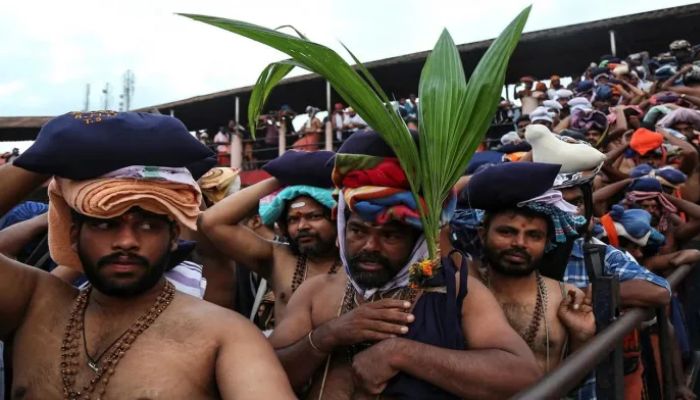
‘Not wearing a shirt while visiting temples is Brahminical mindset’: ‘Reformer Mutt’ and Left government in Kerala join hands to attack Hindu faith

Kerala, the state with the highest literacy rate in India, is said to be vigilant about its religious freedom. However, the leftist government of Kerala is once again accused of interfering with Hindu traditions. The latest dispute concerns the temple dress code, which requires men to enter without a shirt. The leader of the Shivgiri Mutt, Sachchidananda Swami, has urged that this tradition be abolished, referring to it as a kind of casteism. The controversy around his demand has escalated, with the leftist government of Kerala now attempting to target Hindu practices.

Reports say that Sachchidananda Swami, the head of the Sivagiri Math, put forward a proposal in the presence of Kerala Chief Minister Pinarayi Vijayan during the annual event of Sivagiri Peetha. He demanded to end the tradition of men going to temples without shirts. During this, Chief Minister Vijayan supported Sachchidananda Swami’s point, calling it positive, but said that it is necessary to build a consensus among all the concerned parties to implement it. He made this statement very cautiously because earlier his government had tried to implement the Supreme Court’s order on the entry of women of all age groups into the Sabarimala temple, which turned into a big controversy.

In fact, Sachchidanand Swami says that the dress code is a symbol of Brahminical thinking and its purpose is to keep non-Brahmins away from temples. He alleged that this tradition is part of the rules imposed by priests and religious gurus. The Chief Minister has talked about building a consensus to end this tradition.

It is notable that in the year 1982, a similar controversy erupted against the practice of ‘Brahmin food’ in the Guruvayur temple. At that time, Anand Tirthan, a disciple of social reformer Narayan Guru, had challenged this practice, after which the then Chief Minister Karunakaran had abolished it. Today the same history is being repeated again. Hindu organizations allege that this issue is deeper than the dress code. This is a well-planned attempt to separate the Hindu society from its traditions and culture.

Meanwhile, the Nair Service Society (NSS) has strongly opposed Sachchidananda Swami’s demand and the government’s stance. The NSS said that the traditions of temples cannot be changed at the behest of any government or outsider. The NSS General Secretary G. Sukumaran Nair raised the question as to what right Sachchidananda Swami has to challenge the traditions of the temple. He says that every temple has its own traditions, and the dress code is also one of them.

At the same time, self-proclaimed ‘reformist’ organisations like SNDP Yogam are supporting this stance of the leftist government. SNDP Yogam General Secretary Vellappally Natesan, while criticizing this stance of the Nair Service Society, said that such issues should not be made a means to divide the Hindu society. He also said that changes in traditions may be necessary, but this process should be done thoughtfully and after consulting everyone.

Historian M.G. Sasibhushan said that this dress code was probably made so that people maintain discipline in temples and do not consider them tourist places. However, this practice is limited only to Kerala and some selected temples, especially Sri Mookambika Temple in Karnataka. Most Indian temples do not have such dress codes.

Historians state that this dress code was introduced to maintain discipline, but the leftist government is trying to undermine Hindu beliefs by giving it the colour of Brahmanism and casteism. Diversity and traditions have deep roots in Hinduism, but the leftist government has repeatedly targeted them in the name of modernity.

This, however, is not the first time that the Left government of Kerala is interfering with Hindu traditions. Earlier, the issue of women’s entry into Sabarimala temple, the attempt to end the practices of Guruvayur temple and now the proposal of Sivagiri Math – all the incidents show a pattern. This government is repeatedly accused of involvement in targeting Hindu traditions and beliefs.

By the way, to understand the root of this entire controversy, you also need to know about Sivagiri Math and Sachchidananda Swami. Sivagiri Math was founded by Narayana Guru in the year 1904. He was against the appointment of Brahmins as priests in temples. However, the Ezhava community he himself belonged to is also an upper caste and is dominant in the Malabar region.

Narayana Guru, who called himself a reformist, always had an anti-Brahmin stance and later it also became a tradition of the Sivagiri Math. It is another matter that many temples run by this Math, which associates the tradition of going shirtless to ‘Brahminism’, also require the upper part of the body to be kept bare for entry. Similarly, the leftists have always opposed Hindu traditions by calling them conservative and backward. Therefore, it is not surprising that this time too Chief Minister Pinarayi Vijayan immediately stood up in support of Sachchidananda Swami’s proposal.

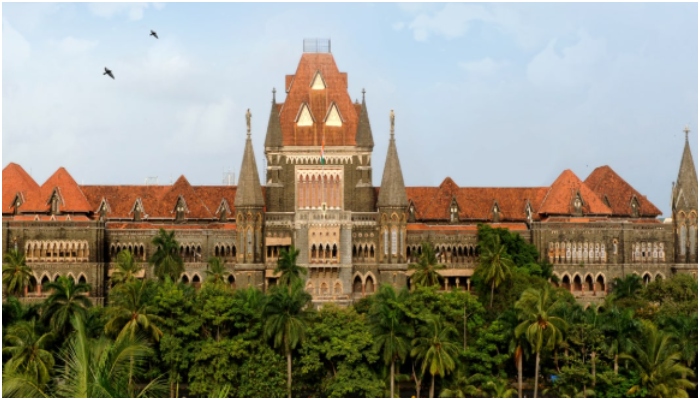
Bombay HC rejects plea by Hindu, Muslim families to quash FIRs against each other, says ‘communal frenzy led to scuffle’

0

In the first week of January 2025, the Bombay High Court refused to quash two FIRs filed by a Hindu and Muslim family against each other saying that the communal frenzy between the two communities forced both families to launch cross cases against each other. This is after both the families belonging to the two different communities in the same locality in Mumbai decided to withdraw the cross complaints and live peacefully. However, the court said that specific contentions of offences were found in both the FIRs, and hence, the case needed to be heard.

“It appears that the communal frenzy between the two communities has led to the scuffle. Offenses are clearly made out in both the FIRs. Thus, both the petitions are dismissed,” a division bench of Justice Ravindra Ghuge and Justice Rajesh Patil said on January 4th. “Communal frenzy between the two communities led to a scuffle and thus, both the families ended up lodging cross cases against each other,” it added.

The bench considered both the petitions, one filed by the Hindu family and the other one filed by the Muslim family. Both petitions pleaded to quash the FIRs filed on 12th October last year. In the FIR filed by the Muslim family, one of the girls stated that the neighbouring Hindu family abused the women of her family and also assaulted folk men from the community when they were heading towards the market for wedding preparations scheduled in the Muslim family.

The complaint by the Muslims stated that the Hindu men also termed the Muslim women as prostitutes and attacked their male relatives resulting in the lodging of an FIR. The complaint by the Muslims was filed under sections 115 (2), 352, 79, and 3 (5) of the Bharatiya Nyaya Sanhita, 2023. A religious function was conducted in the neighboring Hindu home. The woman from the Muslim community told one of the members of the Hindu family that whatever was happening was not good. This allegedly irked the male members of the Hindu family who abused them and launched an attack on their men.

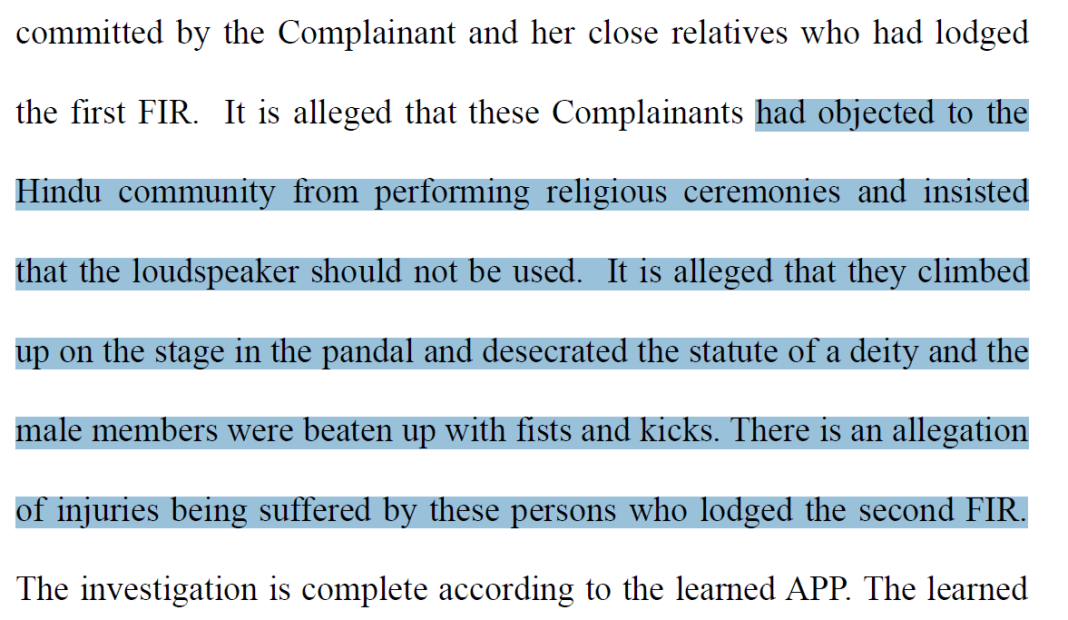
On the other hand, the Hindu family filed a complaint saying that the Muslim family objected to the religious event being conducted at their place. “They (Muslims) had objected to the Hindu community from performing religious ceremonies and insisted that the loudspeaker should not be used. It is alleged that they climbed up on the stage in the pandal and desecrated the statute of a deity and the male members were beaten up with fists and kicks. There is an allegation of injuries being suffered by these persons who lodged the second FIR (Hindus),” the Court was informed.

Court order obtained by OpIndia

However, on 2nd January, both the parties filed a petition saying that they now wanted to live peacefully and had resolved their issues amicably. They requested the court to quash the FIRs and terminate the criminal proceedings. However, the court refused to quash the FIRs and dismissed the petition instead. The court noted that the offenses in question are not mere personal disputes or family disagreements but are crimes against society.

The court further rejected the claim by both families stating they had resolved the issue and intended to stay peacefully. Acknowledging the specific allegations in both FIRs, the bench concluded that the legal process should proceed through trial.

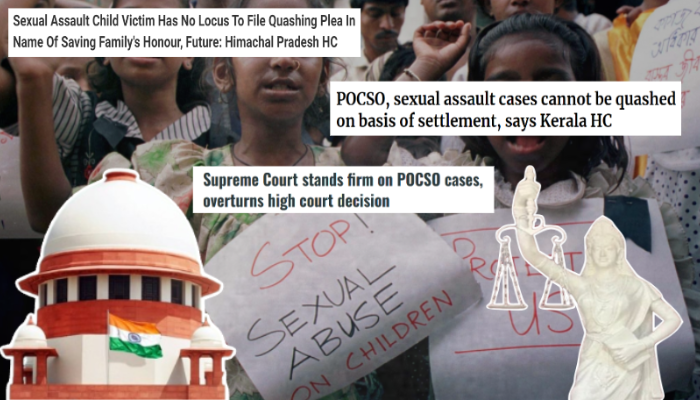
POCSO cases cannot be ‘settled’ on pleas of family honour, and ‘compromise’: How courts have been firm on cases of sexual crimes against children

Each year, countless girls and boys globally encounter sexual abuse and exploitation. Sexual violence is a pervasive issue, affecting every nation and all sectors of society. Children may experience such violations in various environments, including their homes, schools or communities. Additionally, the extensive use of digital technologies can further expose children to potential risks.

The ongoing discourse surrounding the involvement of Pakistani Muslim grooming gangs in the United Kingdom in severe crimes against little girls and minors has underscored the urgent nature of this matter, which extends beyond national and continental boundaries. India is similarly confronted with this challenge, leading to the introduction of various stringent legal measures to secure justice for the affected individuals. The judiciary has also consistently taken a strong stance in favour of the victims and even overturned previous judgments as well as decisively dismissed appeals for ‘compromise’ in the name of ‘family honor’ or shame in order to close such cases.

In that aspect, Indian Courts have certainly fared better than the administration in UK, ensuring that the perverse crimes of sexual exploitation of children does not get brushed under the carpet and culprits face the fullest extent of justice for their crimes.

‘family reputation’ cannot be the ground to quash POCSO case: Himachal Pradesh HC

The Himachal Pradesh High Court has recently ruled that after the initiation of criminal proceedings, the role of the complainant is effectively concluded. As such, neither the complainant nor the child victim has the legal standing to file a petition for the quashing of a POCSO (Protection of Children from Sexual Offences) case, especially in the context of safeguarding the “family’s reputation.” The bench presided over by Justice Virender Singh further indicated that the decision to quash is contrary to the legislative objectives of the POCSO Act.

The court rightly pointed out, “Since, the offence is against the society and if such type of cases are quashed, on the basis of the grounds, as taken in the petition, it would encourage the other accused, who had committed such offence, to adopt the extra-constitutional means to settle the matter i.e. influencing the witness by fiduciary relationship, using the money power or threatening the victim/complainant and to settle the matter in the name of honour of the family.”

The bench articulated these points while dismissing a petition from the father of the victim, who requested the cancellation of the FIR (First Information Report) he had previously registered against the accused under Sections 363, 354-A, and 506 of the Indian Penal Code, in conjunction with Section 8 of the POCSO Act. He contended that the FIR should be quashed due to a compromise reached with the latter.

He also maintained that the FIR created a barrier to his daughter’s imminent marriage ceremony, as the family of the prospective husband had imposed a condition that no legal actions should be pending regarding the girl. However, the court declared that the complainant’s involvement ceases once the criminal process is initiated, and therefore, a request to drop the serious charge cannot be considered on behalf of the victim or the complainant.

It pronounced, “This court is of the view that the petitioner, being complainant/father of the child victim, has no locus standi to file the present petition, seeking the quashing of FIR, in question, mainly on the ground to save the honour of the family. In the name of honour of the family, the heinous offence, as committed, in the present case, cannot be quashed or swept under the carpet.”

The bench made reference to the Supreme Court’s decision in a recent case which held that sexual assault-related issues cannot be considered private matters that can be quashed based on ‘compromise’. The court then noted that granting the request for quashing would effectively allow the accused to evade legal consequences, provided the prosecution can establish the case against him beyond a reasonable doubt. As a result, the plea was denied.

Sexual assault under POCSO can’t be quashed just because victim’s family has ‘settled’ the matter: Supreme Court

Last November, the Supreme Court ruled that a sexual abuse case cannot be junked following a settlement between the conflicting parties, due to the grave repercussions such violations have on society. The apex judicial body expressed that the Rajasthan High Court’s decision to annul a POCSO case against a school teacher, which had been resolved through an agreement between him and the father of the 16-year-old victim. It had dismissed the FIR against the teacher accused of sexually assaulting the underage girl at a school in Sawai Madhopur district of Rajasthan.

The high court had utilized its inherent powers under Section 482 of the Code of Criminal Procedure (CrPC) “to make such orders as may be necessary to give effect to any order under this code, or to prevent abuse of the process of any court or otherwise to secure the ends of justice.” A panel of justices, C T Ravikumar and Sanjay Kumar, stated that the high court had incorrectly interpreted and applied the legal principles relevant to the quashing of the FIR and all subsequent proceedings.

The court cited the Supreme Court’s 2012 verdict in Gian Singh v. State of Punjab, which clearly established that “prior to invoking the authority under Section 482 of the CrPC, the high court must carefully consider the nature and severity of the offense.” It further asserted that “serious and heinous crimes cannot be dismissed, even if an agreement has been reached between the victim or the victim’s family and the perpetrator.”

Justice Ravikumar stated that the court has determined that such offenses are not of a private nature and significantly affect society. He highlighted that it is the court’s essential responsibility to evaluate whether the compromise is equitable and just, as well as free from any undue influence, before proceeding to further examine the matter. The bench remarked that a cursory examination of the high court’s order dated 4th February 2022, indicated a significant oversight in failing to give adequate consideration to the applicable law.

It conveyed that the contested order does not address the allegations presented in the FIR prior to its dismissal. “We are at a loss to understand how the high court arrived at the conclusion that in the case on hand a dispute to be resolved exists between the parties and further that to maintain harmony the FIR and all further proceedings thereto should be quashed even without adverting to the allegations raised in the FIR,” the bench stated.

The highest court also refuted the claims made by the teacher and the victim’s father, who contested the locus standi of the petitioner in the Public Interest Litigation. “When by quashing the FIR by invoking the power under Section 482, CrPC, the accused was relieved of the liability to face the trial coupled with the aforesaid circumstances and the position of law qua locus standi of third party to maintain a petition under Article 136 of the Constitution of India, as revealed from the decisions referred above, we have no hesitation to hold that the challenge based on the appellants’ locus standi got no merit at all.”

It mentioned that when an incident of such nature and severity allegedly takes place in a higher secondary school, particularly involving a teacher, it cannot be regarded merely as a private matter devoid of serious societal consequences. “In view of the nature of the offences alleged, one can only say that if they are proved they could be treated only as offences against the society and at any rate, it cannot be said that prosecuting an offender against whom such allegations are made is not in the interest of the society,” the court added.

It pronounced, “We have no hesitation to hold that in cases of this nature, the fact that in view of compromise entered into between the parties, the chance of a conviction is remote and bleak also cannot be a ground to abruptly terminate the investigation, by quashing FIR and all further proceedings pursuant thereto, by invoking the power under Section 482, CrPC.” The court stated that the actions carried out by the defendant would amount to an offense of ‘sexual assault’ as defined under Section 7 of the POCSO Act, which carries a penalty of imprisonment for a term not less than three years and potentially extending to five years, along with a monetary fine.

“They would reveal that the commission of such offences against the children should be viewed as heinous and serious. Needless to say, the commission of such offences cannot be taken lightly as offences of a private nature. In fact, such offences are bound to be taken as offences against society,” the court declared and further conveyed, “We make it clear that we shall not be understood to have made any observations on the merits of the case.”

The bench remarked that “the objects and reasons for the enactment of the POCSO Act would undoubtedly show that quashing of proceedings initiated under POCSO Act abruptly would go against the very intention of the legislature behind the enactment.”

A PIL was initiated by Ramjilal Bairwa, a resident of Gangapur city in Rajasthan, in 2022 challenging the high court’s decision to dismiss a serious non-compoundable criminal case where the accused had not been arrested. On 2nd December 2022, the Supreme Court transformed the plea into a Special Leave Petition under Article 136 of the Constitution. The petition asserted that the teacher mentioned in the FIR had not been taken into custody, and it was alleged that a ‘compromise’ had been made between the victim’s family and the accused.

After reviewing the compromise submitted to the high court, it granted the petition of the accused and dismissed the proceedings. It was observed that despite the public prosecutor’s objections, the high court concluded the case by referencing a ruling from the Supreme Court, which indicated that even non-compoundable offenses may be resolved through a compromise between the involved parties.

Supreme Court slams the Calcutta High Court’s order allowing ‘settlement’ between 14-year-old victim and accused 

The Supreme Court in a historic ruling on the quashing of POCSO charges by the Calcutta High Court held that the latter could not have cancelled the prosecution even if the 14-year-old victim, who is now an adult, and the culprit had reached a settlement, in August of last year.

It voiced its disapproval of the high court regarding the inappropriate comments made by the division bench while delivering the disputed judgment related to the conviction of the accused under Section 6 of the POCSO Act, 2006, along with Sections 363 and 366, and clause (n) of sub-sections (2) and (3) of Section 376 of the Indian Penal Code, 1860. The Supreme Court had previously expressed disapproval of the high court’s “objectionable” comments and “sweeping observations.”

The Calcutta High Court, in its judgment dated 18th October 2023, overturned the conviction of the accused under the aforementioned provisions. It stated that, while the law aims to protect all individuals under 18 from sexual exploitation, it inadvertently results in the restriction of liberty for young individuals engaged in consensual relationships. The apex court conveyed its dissatisfaction with the observations and rationale employed by the high court in rendering the contested decision.

The division bench comprising Justice Abhay S. Oka and Justice Ujjal Bhuyan, overturned the high court’s judgement and remarked that “the division bench has introduced a rather unusual notion of ‘non-exploitative sexual acts’ in the context of offenses punishable under Section 376(2)(n) of the IPC and Section 6 of the POCSO Act. We find it difficult to comprehend how a sexual act, which is a grave offense, can be classified as non-exploitative.”

“When a girl who is fourteen years old is subjected to such a horrific act, how can it be termed as non-exploitative,” it further asked. It added that the bench introduced a novel and undefined category termed “older adolescents” and expressed concern regarding the insufficient acknowledgment of consensual actions among this group. It stated, “We are unable to comprehend the notion of older adolescents.”

Concerning the high court’s assertion that equates Suo Motu Writ Petition (C) no.3 of 2023, among others, with consensual and non-exploitative sexual conduct alongside rape and aggravated penetrative sexual assault, the Supreme Court commented that “what is shocking is the observation made in paragraph 23 of the impugned judgment where the high court observed that while achieving ostensible objectives to protect all children below 18 years from sexual exploitation, the law’s unintended effect has been the deprivation of liberty of young people in consensual relationship.”

“Surprisingly, carved out a non-existing category of romantic cases in the rape cases. While dealing with the offences under the POCSO Act, shockingly, the court observed that the law undermines the identity of adolescent girls by casting them as victims, thereby rendering them voiceless,” it mentioned. The bench, while voicing its disagreement with the high court’s statements, articulated, “The judges ought to have avoided expressing their personal views even assuming that there was some justification for holding the views. While the high court observed this, it forgot that in the facts of the case, the court was not dealing with the sexual acts involving adolescents above sixteen years, as the age of the victim was fourteen years and the accused was twenty-five years at the relevant time.”

“The duty of the high court was to ascertain on the evidence whether the offences under Section 6 of the POCSO Act and Section 376 of the IPC were made out. In view of ‘sixthly’ in Section 375 of the IPC, penetrative intercourse with a woman under eighteen years of age, with or without her consent, constitutes an offence of rape. Therefore, whether such offence arises from a romantic relationship is irrelevant. Therefore, whether such offence arises from a romantic relationship is irrelevant. How can an act that is an offence punishable under the POSCO Act be described as a romantic relationship,” the highest court questioned.

It further added, “The high court went to the extent of observing that the case of criminalisation of a romantic relationship between two adolescents of opposite sex should be best left to the wisdom of the judiciary. The courts must follow and implement the law. The courts cannot commit violence against the law. The findings and observations in the impugned judgment, except the finding on the applicability of Sections 363 and 366 of the IPC, cannot be sustained.”

“This extraordinary situation was created because the state machinery did not follow the provisions of law starting from sub-section (6) of Section 19 of the POCSO Act. The importance of rehabilitation of the victims of offences under the POCSO Act, which is a mandatory requirement of law, is being overlooked by all stakeholders. Perhaps, at levels, there is a need for introspection and course correction. We include even the judiciary in that,” the Supreme Court chastised.

It also restored the District Court’s (Baruipur) conviction which convicted the man under Sections 363 (kidnapping), 366 (kidnapping with the intention to compel to marry), 376(3) (rape of minor girl below sixteen years of age), and 376(2)(n) (repeated rape of the same woman) of the IPC, and Section 6 (aggravated penetrative sexual assault of POCSO victim) of the POCSO Act. He was sentenced to twenty years in prison. 

Further recommendations in the case

A directive was issued for the Government of West Bengal to establish a committee comprising three experts, including a clinical psychologist and a social scientist. This committee was tasked with aiding the victim in making an informed decision about her future. Additionally, it had to evaluate the support provided by the state to both the victim and her child. The court instructed the state to create the panel with information regarding the support measures and to ensure that its recommendations were submitted by 18th October 2024.

The Supreme Court underscored the importance of self-reflection and necessary adjustments by all parties involved, including the judiciary, in the management of cases pertaining to the POCSO Act. It observed that the state machinery had failed to deliver prompt assistance and protection to the victim, resulting in this exceptional circumstance.

The court instructed state governments to enhance the effectiveness of the implementation of Section 19 (6) of the POCSO Act. This provision requires the police to report offenses to the Child Welfare Commission (CWC) within a 24-hour timeframe. It remarked that Section 19(6) is not merely a procedural formality and insisted that the CWC must take immediate action. The Supreme Court also advocated for a more vigorous enforcement of Sections 30 to 43 of the Juvenile Justice (Care and Protection of Children) Act, 2015, which relate to the care, protection, rehabilitation, and social integration of victims.

Additionally, the order instructed the Secretaries of Law and Justice Departments across all states and Union Territories to organize discussions aimed at ensuring the effective implementation of the POCSO and JJ Act provisions. It seized the opportunity to establish guidelines regarding the composition of judgments. According to the court’s order, a judgment addressing an appeal against a conviction must include a succinct summary of the case’s facts, an overview of the evidence presented by both the prosecution and the defense, if applicable, the arguments put forth by the parties involved, a thorough analysis based on a reevaluation of the evidence, and the rationale for either upholding the accused’s guilt or granting acquittal.

It further stipulated that judgments should refrain from reflecting the judge’s “personal opinions on various matters,” a concern raised regarding the high court’s judgment, which purportedly offers advice to younger generations and the legislature.

Sexual crimes can’t be settled on compromise: Kerala High Court

The Kerala High Court in July 2024 determined that offences such as rape and violations under the Prevention of Children from Sexual Offences (POCSO) Act, which undermine a minor girl’s dignity and honor, cannot be dismissed through compromise or settlement. It added that the court might, however, take into consideration quashing the case on humanitarian grounds in extraordinary circumstances where the victim and the accused have married and are cohabitating amicably.

Justice A. Badharudeen rendered a decision that dismissed the case against a man accused of sexually assaulting a 17-year-old girl, which resulted in her pregnancy. The accused faced allegations of kidnapping and rape under the Indian Penal Code (IPC) and the POCSO Act in 2021. Furthermore, the victim’s mother was charged for not reporting the crime.

The accused and the victim claimed to have reached a private settlement when they petitioned the High Court to stop the criminal proceedings in 2024. The victim, now an adult, provided the court with an affidavit and a marriage certificate attesting to their union. The Public Prosecutor and the victim’s lawyer both approved the settlement, stating that the couple’s marital and family life were happy and satisfying.

In such cases, the tough nut standing in the way of settlement shall be crushed with humanitarian consideration as the hammer, so as to ensure the peaceful family living of the parties and most importantly to ensure the well being of the children born to them. Hence, there is no necessity to continue criminal proceedings so as to retain them in the hazards of litigation and to collapse their married life and the well being of the children,” the court declared.

Notably, it underscored that grave offenses, such as rape and those under the POCSO Act, cannot be invalidated solely on the basis of a settlement reached between the accused and the victim. “Dignity of a woman is a part of her non-perishable and immortal self and no one should ever think of painting it in clay. There cannot be a compromise or settlement as it would be against her honour which matters the most. It is sacrosanct,” the court conveyed.

The court, while aware of the potential societal consequences of permitting settlements in serious cases, stated that humanitarian factors in this instance justified the dismissal of the charges to preserve the family’s stability. It noted, “Considering the situation, this case represents a departure from the general principle, where dismissal is justified.” As a result, the plea was accepted, and all actions against the accused were terminated.

The Kerala High Court in the same month ruled that cases concerning sexual assault against minors, along with those registered under the Protection of Children from Sexual Offences (POCSO) Act and the Scheduled Castes and the Scheduled Tribes (Prevention of Atrocities) Act, 1989, cannot be annulled merely on the basis of a settlement. Justice A. Badharudeen made the observation while refusing to entertain a petition filed by Ivin, a dance educator in Thiruvananthapuram, who sought to invalidate a case against him for the sexual assault of a minor. The dismissal was based on his assertion that the case had been resolved with the victim’s parents, who had provided affidavits endorsing the settlement.

The court pronounced that “effacing abominable offences through quashing process would not only send a wrong signal to the community but also may accord an undue benefit to unscrupulous habitual or professional offenders who can secure a settlement through duress, threats, social boycotts, bribes or other dubious means.” It also quoted the phrase, “Let no guilty man escape, if it can be avoided.”

The court stated that grave offences, especially those that entail moral turpitude or have detrimental effects on the social and moral structure of society, should not be interpreted as solely involving two parties. These offences have the potential to affect the broader community. “Heinous and serious offences involving mental depravity or offences such as murder, rape, and dacoity cannot appropriately be quashed though the victim or the family of the victim have settled the dispute. Such offences are, truly speaking, not private in nature but have a serious impact upon society. The decision to continue with the trial in such cases is founded on the overriding element of public interest in punishing persons for serious offences,” it mentioned.

Conclusion

The issue of sexual abuse of children is a worldwide concern with certain cultures and societies being more susceptible to it than others. It is estimated that at least 120 million girls under the age of 20, approximately 1 in 10, have been forced to participate in sexual activities or perform other similar acts, although the actual figures are likely to be significantly higher. Most often, such abuse is perpetrated by individuals whom the child knows and trusts. About 90 percent of adolescent girls who report the crime indicate that their initial abuser was someone familiar to them.

Furthermore, many victims of sexual violence, including millions of boys, remain silent and do not disclose their experiences to anyone, adding to their trauma. It is the collective responsibility of all, including the judiciary, government, media, and community, to protect children. However, the alarming rise in these reprehensible acts indicates that society has failed to safeguard kids from predators. A case in point is the criticism directed at the British government and politicians for their complicity instead of actively addressing the issue of grooming gangs.

This matter must be approached with a level of seriousness that transcends minor vote bank politics or ideologies, as it deserves to be handled with the sensitivity it requires. The influence of social pressure and stigma especially in extremely conservative societies can drive victims to request closure regarding their cases. However, it is crucial to recognize that sexual assault against minors is a grave offence that requires a more nuanced perspective along with significant attention, comprehensive legal framework and diligent implementation.

In India, unfortunately, many families see marriage as the conclusion for cases of sexual assault, ignoring the enormity of the crime involved. In many instances, the idea of ‘settlement’ is the rape accused agreein to marry the rape victim, as if the act of marrying the ‘tainted’ girl somehow washes off the crimes of the rapist.

Everyone must acknowledge that bringing these cases to their logical conclusions is vital not only for the victims but also serves as a precedent for others in similar circumstances, providing them with hope and the courage to pursue justice. Moreover, it is the perpetrators who need to be ashamed, not the victims.

As Gisele Pelicot has famously said, “Shame must change sides”.

The lack of such consequences will not only embolden potential criminals to continue their vile conduct, but work as a catalyst for others with similar inclinations and result in even more detrimental ramifications for the society. More importantly, beyond the enforcement of rigorous laws and holding offenders accountable, it is imperative for the community to come together as a unified entity to ensure the safety of their children’s lives and futures.

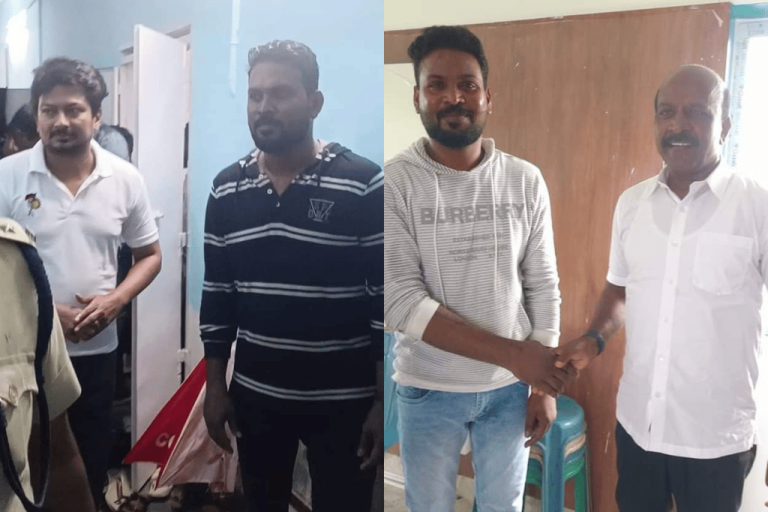
Anna University sexual assault case: House of accused is built on encroached temple land where he lives with 2 wives, reveals probe

A new development has come to the fore in the Anna University sexual assault case, wherein the accused Gnansekaran is reportedly found to have encroached on land belonging to the Prasanna Venkatesa Perumal temple.

According to a report of the Commune, an investigation has been initiated by the Hindu Religious and Charitable Endowments (HR&CE) department along with the revenue department in this regard against Gnansekaran, an alleged DMK functionary. During the initial investigation, the revenue department found that 26 buildings had been built on the encroached temple land, including the house of Gnansekaran. An assessment work of the land is currently being done by the departments.

The encroachment of the temple by Gnansekaran was reportedly uncovered during an investigation by the Special Investigation Team (SIT). Gnansekaran has constructed a three-story building on the encroached temple land in which he lives along with his two wives. As per the report, it was revealed after an inspection led by Guindy Tahsildar Manimekalai and a review of the land records, that the encroached land is spread across 1 acre and 17 cents.

Further investigations carried out by HR&CE officers including Tahsildar Thirubenkadam and Temple Administration Officer Narayani disclosed that 26 other families have also been illegally occupying the temple land and carrying out construction on temple property.

Gnansekaran, a biryani-vendor from Kottapuram, is a history sheeter and is wanted by the police in several cases including robbery, abduction and the use of stolen funds for acquiring assets. An investigation has been initiated by the police against Gnansekaran. The process of removing the encroachments and reclaiming the temple property has also been started.

“Sufficient material to show terror activity”: What Madhya Pradesh HC said rejecting bail of Zakir Naik inspired ISIS terrorist, who formed WhatsApp group to “establish Sharia in India”

The Madhya Pradesh High Court recently denied bail to Mohammed Shahid Khan, an Islamic terrorist who was arrested by the National Investigation Agency in 2023 when it busted the ISIS Jabalpur module. While denying the bail, the court noted that accused Shahid and other co-accused were “not only supporting the activities of terrorist organization but also they wanted to stand their own organization with the intention to ruin the Constitution of India.”

In an order pronounced on 6th January 2025, a division bench of Justices Sushrut Arvind Dharmadhikari and Anuradha Shukla observed that religious terrorism is “tragic and dangerous” and the court cannot express “undue leniency” to a person accused of terrorism and other unlawful activities. The bench rejected Shahid Khan’s plea against the decision of a trial court denying bail to the accused ISIS Jihadi.

Before delving into what the court said in its judgement, the Jihadi Mohammed Shahid Khan’s arguments and the prosecution’s opposition, it is pertinent to recall who exactly is Mohammed Shahid Khan and his terror activities.

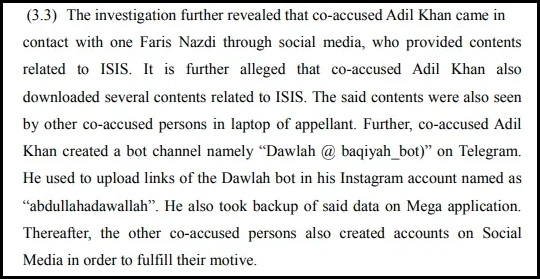
Mohammed Shahid Khan was arrested by the NIA and ATS from Jabalpur, Madhya Pradesh in May of 2023. He and two others, Syed Mamoor Ali and Mohammad Adil Khan, were nabbed for being part of an ISIS module in the state. The agencies had recovered weapons, ammunition, incriminating documents and electronic gadgets during their search. The plot was connected to ISIS’s operations to radicalise naive Muslim youth via social media and on-the-ground “Dawah” (invitation to embrace Islam) initiatives.

The three were the subject of a case filed under multiple sections of the Unlawful Activities (Prevention) Act and the Indian Penal Code. Kasif Khan, another suspect, was later apprehended by the NIA in August of the same year. NIA then filed a chargesheet against all of them. According to the inquiry, they were aggressively targeting democratic institutions and people, including well-known politicians, since they were motivated by the ideology of the terrorist group.

“The module had been conducting meetings in local religious places and houses, and hatching plans to spread terror in the country by unleashing violent attacks at the instance of the ISIS leadership. They had also been engaged in collecting funds, disseminating ISIS propaganda material, motivating and recruiting youth, and procuring deadly weapons,” the NIA unveiled. The module was a component of the worldwide ISIS network that used sleeper cells and localized units spread throughout several states to destabilize India.

The criminal appeal was filed before the Madhya Pradesh High Court by accused Mohammed Shahid Khan through his counsel under Section 21(4) of the National Investigation Agency Act of 2008, challenging the ruling that denied the appellant bail. The appellant was arrested for committing an offence punishable under Sections 120-B (Punishment of criminal conspiracy), 153-A (Promoting enmity between different groups on the grounds of religion, race, place of birth, residence language, etc., and doing acts prejudicial to maintenance of harmony), 153-B (Imputation assertions prejudicial to national integration), and 295A (Deliberate and malicious acts, intended to outrage religious feelings of any class by insulting its religion), 17 (Punishment for raising funds for terrorist act), 18 (Punishment for conspiracy, etc), 20 (Punishment for being member of terrorist gang or organisation), 38 (Offence relating to membership of a terrorist organisation), 39 (Offence relating to support given to a terrorist organisation) and 40 (Offence of raising fund for a terrorist organisation) of Unlawful Activities (Prevention) Act, 1967.

Zakir Naik’s Jihadist Influence, Dawah to Hindus, WhatsApp groups and terror conspiracy: The revelations made in the NIA investigation into the ISIS Jabalpur module

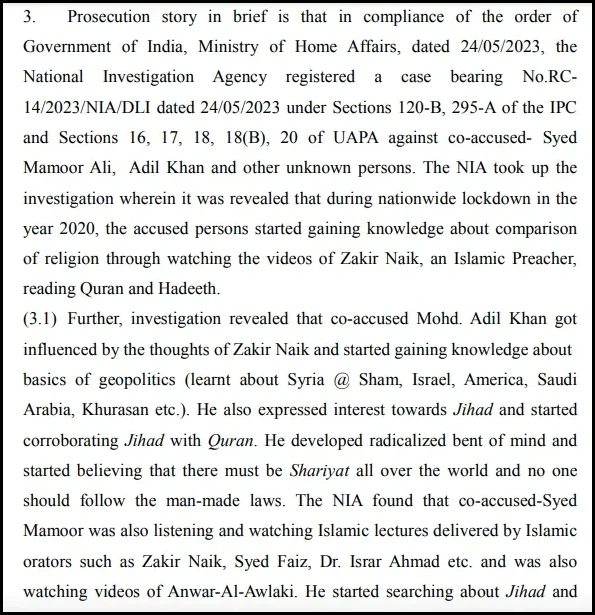
The NIA found that during the nationwide lockdown in the year 2020 in the wake of Covid pandemic, the accused persons Syed Mamoor Ali, Adil Khan and others started learning about comparison of religion through watching the videos of Zakir Naik, an Islamic hate preacher, reading Quran and Hadees. Accused Jihadi Adil Khan was influenced by fugitive Zakir Naik’s jihadist rhetoric to a great extent and gained knowledge about the geopolitical landscape pertaining to countries like Syria, particularly Sham, Israel, United States, Saud Arabia and Khurasan among others. The accused drew a Quranic significance to Jihad and became convinced that Shariyat or the rule of Sharia must be imposed all over the world and people should not follow man-made laws.

Similarly, the NIA found that co-accused Syed Mamoor was “listening and watching Islamic lectures delivered by Islamic orators such as Zakir Naik, Syed Faiz, Dr. Israr Ahmad etc. and was also watching videos of Anwar-Al-Awlaki. He started searching about Jihad and corroborated the same with Quran for developing Jihadis ideology as he wanted to spread Sharia law all over the world,” the court order reads.

Excerpt from the MP High Court’s order dated 6th January 2025 (Source: mphc.gov.in)

The NIA probe revealed that Syed Mamoor was giving Dawah to Hindus and accused Jihadi Syed Mamoor was distributing pamphlets carrying Islamist propaganda. It is pertinent to note that Dawah in Islam means to proselytise or call upon non-Muslims to convert to Islam. In June 2023, OpIndia reported about the NIA seizing Dawah documents titled “Dawah to Hindus” from the possession of Jihadi Adil Khan. This document divided into 12 chapters contains extremely derogatory language for Hindu Devi-Devtas and misquoted Hindu scriptures.

Adil Khan who was on the agency’s radar since August 2022 and his aides were promoting ISIS propaganda through social media and on-ground ‘Dawah’ programmes to carry out terrorist activities at the behest of ISIS. The NIA had stated the arrested terrorists were receiving funding for carrying out Dawah programmes and disseminating ISIS propaganda. Jihadi Adil Khan also ran a YouTube channel with around 92,000 subscribers. Most of his subscribers were not based in India. The cover picture of terrorist Adil Khan’s YouTube channel read, “Religion of Truth (Islam) to prevail over all religion”. As the NIA launched an investigation into the matter the said YouTube channel spreading Islamic Jihadist propaganda was deleted.

The NIA investigation uncovered that present appellant Mohammed Shahid Khan and co-accused Kashif Khan were also listening to the speeches of Islamic hate preachers like Zakir Naik and were involved in the unlawful activities of other accused persons.

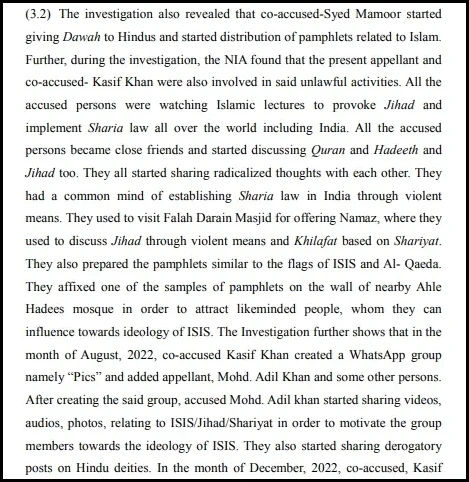
“All the accused persons were watching Islamic lectures to provoke Jihad and implement Sharia law all over the world including India. All the accused persons became close friends and started discussing Quran and Hadeeth and Jihad too. They all started sharing radicalized thoughts with each other. They had a common mind of establishing Sharia law in India through violent means. They used to visit Falah Darain Masjid for offering Namaz, where they used to discuss Jihad through violent means and Khilafat based on Shariyat,” the court order reads.

The accused prepared pamphlets similar to the ISIS and Al-Qaeda flags and pasted one such pamphlet on the wall of a mosque named Ahle Hadees to attract their co-religionists of a similar Jihadist mindset.

In August 2022, accused terrorist Kashif Khan created a WhatsApp group named “Pics” and added Shahid Khan, Adil and other people. The accused Jihadis began sharing videos, audio and other material related to ISIS, Jihad and Shariyat to radicalise the group members. In addition, the Jihadists also began sharing derogatory materials on Hindu deities. In December 2022, Kashif added Mamoor to the WhatsApp group and changed the group’s name to Fisabilillah which means for the sake of or the cause of Allah and its display picture to a flag similar to that of ISIS. The accused were discussing Jihad, Shariyat and Khilafat in the group.

“In order to escape themselves from the radar of  Investigation Agency, they decided to use code names for ISIS such as “eye S”, “eye ass”, “eye as”, “eye sis”, “eye see”, “Dhadiwale”, “Dawlah”, “1515”, “15”, “Mujahideen” and “Eye s fisabilillah”. They also decided that present appellant would be the Ameer of the group,” the court order reads.

The NIA investigation further exposed that the jihadi Mohammed Shahid Khan and other co-accused were conspiring to attack the Ordnance Factory in Jabalpur, Madhya Pradesh to procure large quantities of weapons to carry out terror activities. The accused jihadists had planned to blast the factory upon failing to “capture” the factory. Addressing each other as “Mujahids” (soldiers of Islam), accused Syed Mamoor had planned to deploy three ‘Mujahids’ against each security personnel at the factory. Meanwhile, Kashif Khan was assigned the task of preparing an explosive. Jihadi Kashif shared a YouTube video link in the said WhatsApp group which gave a tutorial on how to make highly inflammable explosives using daily use items.

It also emerged that these Jihadis did not t believe in the concept of Nationalism, Democracy, Constitution and Voting system and motivated others to do so.

“They wanted to recruit like-minded people in large number to  strengthen their organization. They also decided to make monthly contribution for their cause and they also wanted to raise funds through Bait-ul-mal. During the course of investigation, various audios/videos/PDFs of ISIS publications as well as incriminating handwriting diary, digital devices, literature, pamphlets, mobile phones were seized from possession of the accused persons. The investigating agency also procured CDR between the accused persons. The accused persons got arrested by the investigating agency,” the court order mentions.

The arguments presented by jihadi Mohammed Shahid Khan’s counsel in the criminal appeal before the Madhya Pradesh HC

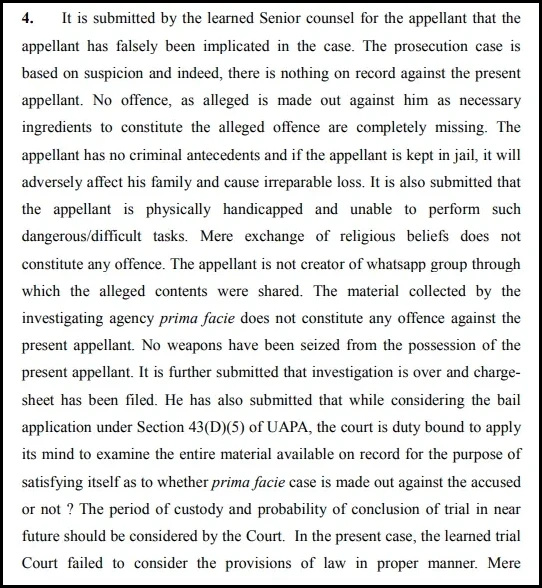
The advocate representing accused Mohammed Shahid Khan argued that he has been “falsely implicated” in the case and that the prosecution’s case is based on suspicion. The appellant’s counsel contended that since has no criminal antecedents, keeping him in jail will “adversely affect” his family.

Emphasising his alleged disability,  the jihadi Mohammed Shahid Khan’s counsel contended that Shahid is physically handicapped and unable to perform such dangerous/difficult tasks. “Mere exchange of religious beliefs does not constitute any offence,” jihadi Shahid’s counsel said.

The counsel further argued that Shahid Khan did not create the contentious WhatsApp group “Fisabillilah” and no weapons were seized from his possession.

It was argued that the Trial Court did not accurately assess the provisions of the law, and that mere association with a terrorist organisation is not sufficient to attract Section 38 of UAPA, nor does mere support for a terrorist organisation entitle one to Section 39. The association and support have to be with an intention and in furtherance of the activities of the terrorist organization.

“Mere association with terrorist organization is not sufficient to attract Section 38 of UAPA and mere support to a terrorist organization is not sufficient to attract Section 39 of UAPA. The association and support have to be with an intention and in furtherance of the activities of the terrorist organization,” the appellant’s counsel argued adding that accused Shahid is a permanent resident of Jabalpur district and is “no likelihood of his absconding or tampering with the prosecution evidence.”

Prosecution’s strong counter

Appearing for the NIA, which is the respondent in this case, the counsel strongly opposed the accused Jihadi’s appeal and contended that the accused person’s crime is of serious nature and against India’s integrity and peace.

The counsel informed the court that the NIA has collected incriminating material viz. audio clips, video clips, objectionable literatures, pamphlets, handwritten documents from the possession of all the accused persons including the appellant Mohammed Shahid Khan indicating his complicity in the crime.

“He [Shahid Khan] has further submitted that Section 43 D(5) of UAPA imposes restrictions upon the Court in granting bail to accused person. The statements of witnesses recorded under Sections 161 and 164 of Cr.P.C., clearly establishes the complicity of present appellant in the alleged crime. He further submitted that it is not necessary that every person who are involved in terrorist activities must have criminal antecedents,” the prosecution argued adding that appellant Shahid Khan was fully aware of the banned terrorist outfit ISIS and its jihadist activities in India and the world.

The prosecution also refuted the claims made by the appellant about the alleged delay in the proceedings and said that “as per Section 19 of NIA Act, 2008, the trial will be conducted having precedence over other matters and therefore, there is no delay in trial proceedings,” the counsel said adding that if the accused is released on bail there is a high possibility that may flee.

The observations made by the Madhya Pradesh High Court while rejecting jihadi Shahid Khan’s appeal

Following the hearing of the opposing parties, the court referred to the Supreme Court’s decisions in Zahoor Ahmad Shah Watali (2019) and K.A. Najeeb Vs. Union of India (2021), and extensively explained the scope and interpretation of Section 43D(5) of UAPA.

The court noted that the allegations made by the prosecution against appellant Mohammad Shahid Khan are “grave and a serious threat to societal harmony.”

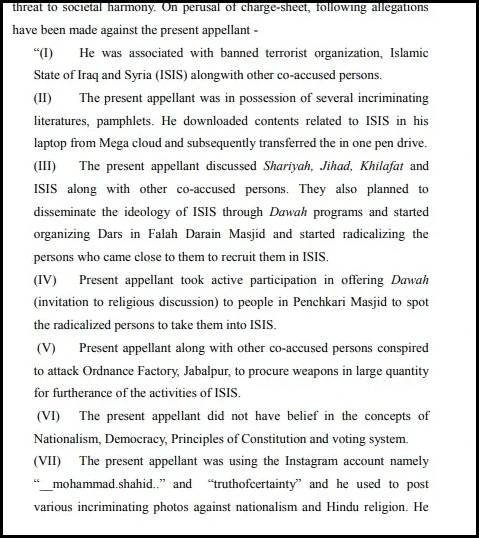
The bench listed the accusations made against Mohammad Shahid Khan based on the perusal of the NIA chargesheet. The court said that Shahid Khan was associated with ISIS alongside other accused persons and was in possession of incriminating materials related to Jihad and ISIS. The court noted that Shahid Khan alongside the co-accused persons was planning on disseminating the jihadist ideology of ISIS through Dawah programs and was involved in radicalising those who came into their contact to recruit them into ISIS eventually.

He was associated with banned terrorist organization, Islamic State of Iraq and Syria (ISIS) alongwith other co-accused persons. The present appellant was in possession of several incriminating literatures, pamphlets. He downloaded contents related to ISIS in his laptop from Mega cloud and subsequently transferred the in one pen drive. The present appellant discussed Shariyah, Jihad, Khilafat and ISIS along with other co-accused persons. They also planned to disseminate the ideology of ISIS through Dawah programs and started organizing Dars in Falah Darain Masjid and started radicalizing the persons who came close to them to recruit them in ISIS,” the bench said.

In addition to participating in offering Dawah, the appellant Mohammad Shahid Khan was also involved in the conspiracy to attack the Jabalpur Ordnance Factory to procure weapons for the violent furtherance of ISIS activities. Moreover, the accused was posting contentious pictures against Hinduism and nationalism on his Instagram profile. The accused was also searching about ISIS, Jihad, suicide bombings, slain terrorist Osama Bin Laden and the Islamic terror outfit Taliban.

“Present appellant took active participation in offering Dawah (invitation to religious discussion) to people in Penchkari Masjid to spot the radicalized persons to take them into ISIS.  Present appellant along with other co-accused persons conspired to attack Ordnance Factory, Jabalpur, to procure weapons in large quantity for furtherance of the activities of ISIS. The present appellant did not have belief in the concepts of Nationalism, Democracy, Principles of Constitution and voting system. The present appellant was using the Instagram account namely “__mohammad.shahid..” and “truthofcertainty” and he used to post various incriminating photos against nationalism and Hindu religion. He was constantly searching about ISIS, Jihad, Taliban, Osama Bin Laden, Suicide Bombing etc,” the bench noted.

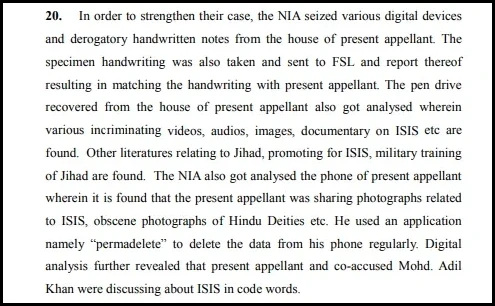
The Madhya Pradesh High Court further noted that NIA seized digital devices including a pen drive and derogatory handwritten notes belonging to the present appellant Mohammad Shahid Khan. Through forensic examination, it was confirmed that the notes were indeed written by the accused Shahid. Upon analysing the seized pen drive, the NIA found inflammatory videos, audio, images, and documentary on ISIS in addition to materials pertaining to jihad, promoting ISIS, military training for Jihad and so on.

The probe agency also examined Mohammad Shahid Khan’s mobile phone and found obscene pictures of Hindu deities alongside pro-ISIS material.

While the appellant’s counsel argued that “Mere association with terrorist organization is not sufficient to attract Section 38 of UAPA and mere support to a terrorist organization is not sufficient to attract Section 39 of UAPA”, the High Court bench noted that statements of the multiple witnesses recorded by the NIA demonstrate that Mohammad Shahid Khan and other accused were involved in the entire conspiracy.

“The witnesses also stated that the present appellant and other co-accused persons decided to make explosives from household material wherein present appellant actively participated to prepare the same. They wanted to attack Ordnance Factory, Jabalpur. The NIA also procured the CDR report of all the accused persons to show interconnection between them,” the court order reads.

Based on the evidence presented by the prosecution, the court said that there is sufficient material in the NIA chargesheet indicating Mohammad Shahid Khan’s active participation and commission of the unlawful activities that attract relevant UAPA sections.

Pertinently, the court noted that there are specific evidence showing that Mohammad Shahid Khan actively participated in activities defined unlawful in the UAPA.

“In view of the above discussion, it is clear that there is sufficient material available in the charge-sheet showing that the appellant has actively participated in and has committed unlawful activities as defined in the UAPA. There is specific material to show that the appellant advocated, abetted, or incited commission of many unlawful activities,” the court said.

After describing the definition of terrorist act as mentioned in Section 15(I) of UAPA, the court said that the evidence collected by the NIA shows that appellant Mohammad Shahid Khan was an active member of the conspiracy to attack the Jabalpur Ordnance Factory, which the court noted is an entity of defence. The court found that the conspiracy to attack the ordnance factory was to commit a terrorist act and Shahid Khan was an active participant of this conspiracy.

In addition, jihadi Shahid was also involved in other alleged terrorist acts and preparatory activities.

“The accused persons were not only supporting the activities of terrorist organization but also they wanted to stand their own organization with the intention to ruin the Constitution of India,” the court said.

While the court asserted that “no religion inherently supports violence or terror”, the bench cannot be lenient to a person accused of carrying out terrorist and other illegal activities.

“This Court cannot express undue leniency to a person who is facing serious charge of terrorism and unlawful activities. The trial is also set at full motion and there is every possibility of trial being completed in its due course. Therefore, considering the overall facts and circumstances, at this stage, we are not inclined to grant bail to the appellant,” the division bench of Justice Sushrut Arvind Dharmadhikari and Justice Anuradha Shukla noted.

The High Court dismissed jihadi Mohammad Shahid Khan’s criminal appeal and affirmed the trial court’s order denying bail to the ISIS Jabalpur module terrorist.

‘Chasing rumours abroad risks critical alliances with key partners’: US Congressman slams Biden govt’s decision to investigate Adani

A US Congressman has strongly opposed the outgoing Biden administration’s decision to investigate Indian business conglomerate Gautam Adani, stating that ‘selective prosecution’ over rumours abroad risks critical alliances with America’s key partners. 

Republican Congressman Lance Gooden penned a sharply worded letter to U.S. Attorney General Merrick B. Garland, criticizing the indictment of industrialist Gautam Adani and labelling it a “selective action” that could jeopardize Washington’s vital partnership with India. 

“The Department of Justice’s selective actions threaten to harm critical alliances with key partners like India, one of America’s strongest allies in the Asia-Pacific region,” Gooden, a member of the House Judiciary Committee, said in his January 7 letter, according to news agency PTI. He further urged the DOJ to prioritize addressing domestic misconduct over pursuing cases with limited jurisdiction and minimal relevance to U.S. interests.

On November 20, 2024, U.S. prosecutors charged Gautam Adani, his nephew Sagar Adani, and several executives from the Adani Group with orchestrating a $250 million bribery scheme to secure solar power project contracts in India. The indictment includes securities and wire fraud accusations, alleging the company misled U.S. investors about its anti-bribery policies while engaging in corruption.

A day later, the spokesperson for the Adani Group rubbished allegations against the Directors of ‘Adani Green’ by the US Department of Justice and the SEC.

“The allegations made by the US Department of Justice and the US Securities and Exchange Commission against the directors of Adani Green are baseless and denied,” it stated.

“The Adani Group has always upheld and is steadfastly committed to maintaining the highest standards of governance, transparency and regulatory compliance across all jurisdictions of its operations,” it pointed out.

The spokesperson for the Adani Group concluded, “We assure our stakeholders, partners and employees that we are a law-abiding organisation, fully compliant with all laws.”