Home Blog Page 6364

Video: Arvind Kejriwal does nothing as his supporters thrash the man who slapped him

A video has gone viral on social media where the AAP supporter who slapped Delhi Chief Minister Arvind Kejriwal at a roadshow in Delhi is being beaten to a pulp by Kejriwal supporters and he is just standing there, watching it unfold.


As can be seen above, the scene is from right after the man had slapped Kejriwal. Kejriwal supporters jumped off the vehicle and started beating up the man. More and more people joined in beating him up even as Delhi Police tried to stop the mob. In the video which is almost 2 minutes long, the man gets beaten up and not once is Kejriwal seen asking his supporters to refrain and not take law in their own hands.

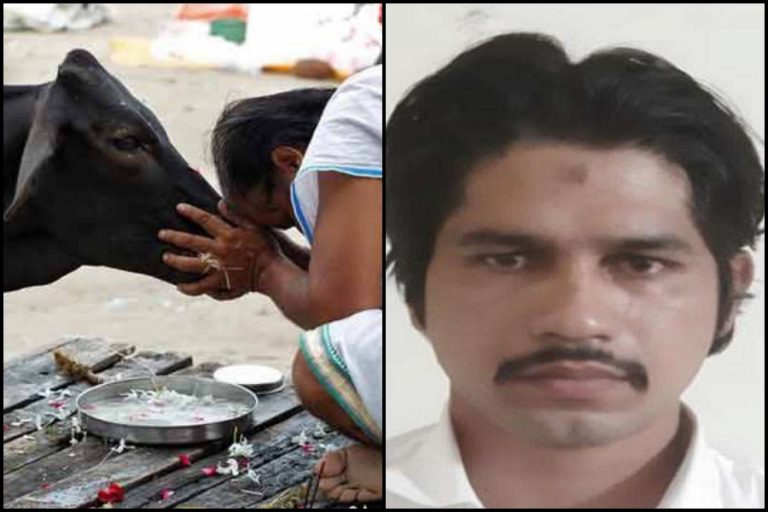
In fact, when Kejriwal was slapped, AAP leaders and supporters had put the blame on BJP and accused that Suresh, the man who slapped Kejriwal, was a ‘Modi Bhakt’ and part of a BJP conspiracy to attack him. Senior AAP leader Manish Sisodia even claimed that Amit Shah and Narendra Modi have conspired to get Arvind Kejriwal killed. Terming it as a conspiracy by the BJP, AAP leader Sanjay Singh asked the Delhi Police to increase the Chief Minister’s security.

Recently, Tripura Congress chief Pradyot Deb Burman had slapped and threatened a man inside the police station. On the other hand, when a shoe was hurled at BJP spokesperson GVLN Rao during a press briefing, the security guards sprung into action and escorted him out before handing him over to the police. In Kejriwal’s defence, he just stood as a mute spectator and didn’t get off the car to join the mob.

How Modi govt’s strategic plan helped open 5,000 Jan Aushadhi Kendras and deliver 1,000 medicines at less than half the market price

How the Modi government’s strategic plan helped open 5,000 Jan Aushadhi Kendras and deliver 1,000 medicines at less than half the market price.

Medicines account for nearly 70% of treatment costs, putting access to basic healthcare out of reach of the majority of the public. To tackle escalating costs, Pradhan Mantri Bharatiya Jan Aushadhi Yojana was introduced in 2008 but failed to overcome challenges and make a difference in the lives of citizens. A renewed attempt under the Modi government has resulted in opening 5,000 stores, providing more than 1,000 medicines. This strategic push under PM Narendra Modi’s leadership has resulted in an estimated savings of more than Rs. 1,000 Crores for the public.

Introduction and Need for affordable medicines in India

Medicare is becoming significantly expensive year-on-year. Medicines account for nearly 70% of total treatment costs. Branded medicines are sold at higher prices due to the associated patent protection, advertising expenses and high-profit margins. It is estimated that branded medicines cost anywhere between 30-90% more than their equivalent generic medicines. Such high prices mean that quality branded medicines are out of reach for more than 40% of the Indian public, considering mainly the poor and disadvantaged. Guaranteeing fair prices for medicines has always been a major concern for the Government of India. Despite several regulatory and fiscal measures, the cost of medicines is still on the rise.

To combat the escalating costs of medicines, ‘Pradhan Mantri Bharatiya Jan Aushadhi Kendra’ was launched by the Government of India in the year 2008. The first Kendra was opened in Amritsar in Punjab. The initial target for implementation during the 11th five-year plan starting in 2008-09 was to cover 630 districts of the nation. Further subdivisional major towns and village centres were to be covered by 2012.

The objective of the scheme

This scheme aims to bring down the cost of medicines and make it affordable for each and every citizen. The objective of the scheme is:

“Making quality medicines available at affordable prices for all, particularly the poor and disadvantaged through exclusive outlets ‘Pradhan Mantri Bharatiya Jan Aushadhi Kendra’, so as to reduce and redefine the unit cost of treatment per person.”

Mission

The Mission of the Pradhan Mantri Bharatiya Jan Aushadhi Parriyojana is as follows:

  • Create awareness among the public regarding generic medicines
  • Create demand for generic medicines through medical practitioners
  • Create awareness through education and awareness programme that high price need not be synonymous with high quality
  • Provide all commonly used medicines covering all therapeutic groups
  • Provide all related healthcare products under Pariyojana

Status of work done under Jan Aushadhi Pariyojana from 2008 to 2015

In house production of CPSU’s led to supply of only 139 medicines out of 319 that were supposed to be made available. Only 85 products covering 11 therapeutic groups were made available. As per the original plan, Jan Aushadhi kendras were aimed to be opened in each and every one of the 630 districts in India. But as on 2012, only 157 such kendras were opened with many of them nonfunctional.

The causes of failure were identified to be overdependence on support from State Government, poor medicine stock management, nonprescription by Doctors, lack of awareness about medicinal availability and competition with other State free medicine distribution schemes.

To overcome the initial challenges faced and provide a boost to the scheme, a new business plan was formulated with a target to open a minimum of 500 kendra’s during 2013-14. The results in 2015 also did not match initial expectations. By the end of 2014-15, only 99 Kendra’s were opened, and a number of medicines to be provided were only 200 with less than 50% availability.

Strategic overhaul and implementation by NDA

A Strategic Action Plan (SAP 2015) was prepared after the NDA Government’s complete analysis of the reasons behind the failure of the scheme. Areas studied were availability, acceptability, accessibility, affordability, awareness and effective implementation of the scheme. The scheme was later renamed as Pradhan Mantri Bharatiya Jan Aushadhi Pariyojana (PMBJP). BPPI (Bureau of Pharma PSUs of India) was established for coordinating procurement, supply and marketing of generic medicines.

The new strategy of Jan Aushadhi Kendra under the Modi government laid emphasis on the sustainability of the initiative with no dependence on government subsidies beyond the initial support. To make the scheme successful and sustainable, the government had sought collaboration with private pharmaceutical companies. Substantial incentives were also provided for entrepreneurs who were willing to open Jan Aushadhi Kendras. The budget was also allocated to create awareness regarding this initiative, and achieve scheme penetration in all villages.

Timeline of Pradhan Mantri Bhartiya Jan Aushadhi Pariyojana (PMBJP), from 2012 to 2018. Half of the stores were closed in 2012-13, since the inception of the scheme in 2008. After 2014, the pace of establishing Jan Aushadhi Kendra’s was increased exponentially. As on 22nd March 2018, 3,214 stores were established.

As a result, as on 10th March 2018, the following changes had occurred:

  • Product basket contained 1,000 medicines and 154 surgical products
  • Supply chain from suppliers to agents was streamlined for timely delivery of medicines.
  • Central warehouses were launched in Gurgaon.
  • 8 C&F agents and 55 distributors were appointed to cover all states and UT’s.
  • More than 3,200 Kendra’s were established across 33 States/UT’s.

Factors for success during NDA tenure

To enable more Jan Aushadhi Kendra’s across India, the NDA Government provided support to operating agencies. Financial support in the extent of Rs. 1 lakh for free medicines at start of Kendra, Rs. 1 lakh reimbursement for furniture & fixtures, and Rs. 50 thousand as reimbursement for computer & peripherals was provided. 2% of total sales or actual loss compensation against the expiry of medicines were also provided to stores. The credit facility was provided upto 30 days against post-dated cheques, with 60 days facility available for distributors. The government has also increased the margins from 16% to 20% for retailers and from 8% to 10% for distributors.

Indian Medical Association, an organization with 3 lakh doctors spread across 1,700 local and 30 State branches were contacted for collaboration. This association which stands for affordable, accessible and quality healthcare; collaborated with PMBJP and started promoting medicines available through Jan Aushadhi Kendra’s.

Indian Railways was roped in to open Jan Aushadhi Kendras at 1,000 railway stations and PSU-run petrol pumps.

The success of Jan Aushadhi Kendra’s under NDA Government

Due to effective strategies and successful implementation of this initiative, the following positive changes have occurred throughout the nation:

  • Currently, over 5,000 Jan Aushadhi stores have been opened, with additional 2,500 to be inaugurated by 2020
  • Jan Aushadi stores across the country are serving 10-15 lakh people per day
  • A decision has been made to celebrate March 7thas ‘Janaushadhi Diwas’ across India
  • Under the PMBJP, the government provides more than 1000 medicines and 154 surgical through Jan Aushadhi kendras
  • Average sales per store per month of Rs 1.50 lakh
  • 4 big warehouses opened at Delhi, Guwahati, Bengaluru, Chennai to ensure adequate medicine availability

The road ahead

The successful implementation of the Jan Aushadhi Yojana during the NDA tenure has led to reduction of medicinal costs of treatment. Medicines available through Jan Aushadhi Kendra’s are 4-15 times cheaper than alternative sold in the market. Anti-diabetic drug glimepiride priced at Rs 4.02 under the government scheme costs a whopping Rs 54 under a branded disguise. This anti-diabetic drug alone can save 13 times the amount if bought through Jan Aushadhi Kendras. A cap was placed on prices of stent and knee implants after they were lowered by more than 50%.

Comparison chart of medicines available through PMBJP verses similar medicines sold by leading brands. The difference between prices can be seen to be a minimum of twice the cost of medicines sold by brands. In some cases, the difference between prices is an astronomical 15 times.

PM Narendra Modi promised a legal framework to ensure that doctors prescribed low-cost generic medicines instead of expensive branded medicines. Prescribing a medicine by its molecular name rather than its brand name improves the possibility of a customer opting for a cheaper alternative to the prescribed medicine rather than buying one from a branded manufacturer with high costs.

Annual turnover of PMBJP has also increased to Rs 73.66 crore in 2017-18 (as on October 30, 2017) from Rs 33.4 crore in 2016-17 and Rs 12.43 crore in 2015-16, increasing rise in the adoption rate of this scheme. Rs. 74.16 Crores were allocated during the budget of 2017- 2018 to further boost the progress of the scheme.

The Modi Government is putting major efforts towards completing the initial vision of opening at least 1 Jan Aushadhi Kendra store in every block. As such plans are in place to open additional 2,500 Jan Aushadhi stores by 2020.

Jan Aushadhi Yojana has also resulted in the reduction of costs of Cancer treatment. As of now, the government is conducting talks with various companies to take the plan forward. Health experts, oncologists and institutes like Tata Memorial Cancer Hospital have suggested that prices of drugs for the treatment of cancer should be regulated by the government. Presently, the cost of only 51 such drugs is under price control of the government. Bringing more cancer-related medicines under price control of the government will help bring down cancer treatment costs extensively.

The endeavour of this project is to make all commonly used medicines available at all Jan Aushadhi Kendra’s and to provide a complete spectrum of healthcare products at all outlets. Accessibility to basic healthcare and medicines is a birthright of every human on the planet. PMBJP has taken bold steps towards enabling the right to medicine for every citizen and has led to savings worth Rs. 1,000 Crore for the Indian public until now. The NDA Government under the leadership of PM Narendra Modi is ensuring no step is left unturned towards providing health and medicines to every citizen of this nation.

From sewage worm, Gangu Teli to mad dog and rabies stricken monkey: PM Modi recounts the abuses hurled at him by Congress

Prime Minister Modi, while addressing an election rally in Kurukshetra, Haryana, recalled the abuses hurled at him by the various opposition leaders. He said that such abuses are hurled at him by the Congress Party and its allies because he stopped corruption and also exposed their nepotism.

The Prime Minister recounted all sorts of derogatory terms that have been used by the opposition leaders against him like sewage worm, Gangu Teli, Mad dog, Bhasmasur, Virus and even Dawood Ibrahim.


Reciting the list of abuses he said that he had also been compared with Hitler, called a worthless son, rabies stricken monkey, mouse, and Lahu (Blood) Purush. He said that Congress even called him Ravana, Scorpion, filthy man, and also one who does the farming of poison.


The list did not end there and the Prime Minister counted more abuses including the infamous ‘trader of death‘ jibe by former Congress Sonia Gandhi, mentally ill, lowlife, and a comment by a Congress leader questioning who his father was.


Listing down all the abuses, Modi said that the opposition leaders are exposing their dictionary of love and yet no one is questioning them.


Modi said that despite such attacks by the opposition he was still serving the country with all his strength and that Haryana is a witness to it.

She accepts Pakistan’s PM but not India’s PM, Narendra Modi hits back at Mamata’s ‘not my PM’ remark

Prime Minister strongly reacted to the non-stop criticism and abuses that he has been receiving from opposition leaders, particularly West Bengal CM Mamata Banerjee. He also talked about the increase in abuse and criticism that he is facing from opposition parties.

Talking to Times Now, when asked about the difference in the Lok Sabha elections of 2014 and 2019, Modi said that his digestion power has increased in these five years. Elaborating, he said that before 2014, he had to face criticism only from political leaders in Gujarat and few leaders from Delhi. But now, he is forced to prepare for digesting all kinds of false allegations, dirty abuses that he receives from all over the country.


In the context of abuses, when the reporter asked about Mamata Banerjee saying that she does not consider Narendra Modi as her PM, Modi said that the West Bengal CM is disrespecting the mandate given by the voters of the country. Last week when it was reported that Mamata Banerjee did not receive two phone calls made by the PM to talk about cyclone Fani, the TMC leader had said that she does not consider Modi to be her PM, and she will talk to a new Prime Minister after 23rd May, when the results of the ongoing Lok Sabha elections will be declared.

The PM also said that after the incidents of Pulwama and Balakot, she had addressed the Pakistan PM as the prime minister. She accepts the PM of Pakistan, but does not accept the PM of India. So now the voter of Bengal and India will decide whether such people respect the Indian constitution and the mandate of people, or whether they are capable of respecting the same. People in the country will decide whether these people are eligible for the democracy, the prime minister said.

When asked about how he would like to respond to Priyanka Gandhi comparing him with Duryodhan and saying that he has high ego, Modi said that he would like to respond by keeping silent. He said he will not react to Priyanka Gandhi’s attack and remain silent.


Reacting to Congress criticism that Modi broke tradition and culture by attacking Rajiv Gandhi who is no more, the PM said that Congress party has been abusing dead persons for a long time. He said that a Congress minister, who is a guru of the namdar, had removed and kicked out the nameplate of Veer Savarkar from the Cellular in Andaman. He also gave the example of how persons like Shyama Prasad Mukherjee, Manohar Parikar etc persons are being abused by Congress leaders.

When asked how China finally agreed to declare Masood Azhar as a global terrorist, the PM said that India has become successful in convincing the world about India’s point of view regarding terrorism.

The anatomy of a d*ck pic: Why its politicization ought to concern us more than politicization of Surgical Strikes

Not so long ago, people on Twitter were shocked, bemused, angry and disgusted, all at the same time, when they were greeted by an image of circumcised male genitalia on their Twitter feed thanks to ’eminent journalist’ Barkha Dutt. Now that the storm over it has died down, it is perhaps time to analyse the events and phenomena surrounding it.

When Barkha Dutt shared the d*ck pick, what amused, annoyed and angered people in equal measure was the fact that Barkha somehow blamed it on nationalism. According to her, the obscene picture was sent to her in the name of nationalism. There was absolutely nothing in the image, which contained only the male organ, to remotely suggest that it had anything to do with nationalism at all. However, Barkha, in her infinite wisdom, did not appear to hesitate to link it to the ‘ism’ she appears to have the most disdain for.

People have put that whole morbid episode behind them by now. However, there is a deeper issue at hand here. We ought to ask ourselves here if the political climate of the country is such that people are willing to politicize a d*ck pick, what else would they be willing to politicize? We ought to ask ourselves, how did we end up in a situation where people are willing to politicize a d*ck pic, a bloody d*ck pic of all things.

When we look back, we will find that d*ck pics are only the latest in a long list of things that have been politicized which, on the face of it, have nothing to do with politics at all. If we look at society, Friendships, Romance, entertainment, every facet of our lives has been scarred by politics. And it has been a gradual progression, matters escalating with every passing day.

Initially, it began with how we evaluated public policy. How many times have we found ourselves defending a policy merely because the politicians we prefer were backing it? How often have we found ourselves obsessively critiquing a policy decision merely because it was proposed by a political entity we are averse to?

Things have reached a point where we cannot evaluate the policy on its own merit. The debates around any policy are tainted with political partisanship. I want to be clear, I am not pointing my fingers at any particular political faction here. Fueling political partisanship is not the objective of this article. Again, I want to ask my readers, how did we get here?

In a previous article, I had elaborated on the fundamental flaws of Democracy. In this article, again, I argue that the politicization of every single aspect of our lives is the inevitable consequence of democracy. Democratic politics thrives on dividing people along various lines. Thus far, Indians, and primarily Hindus, have been divided along the lines of caste, class, creed, region, language and even food choices. Now, due to various aspects of modernity, numerous factors are being added into the equation.

Let me add a clarification here. Barkha Dutt is not the first person to politicize the phallus. Feminism, at its very core, is politics over genitalia. Nor is Barkha Dutt the first person to associate penises with nationalism. Academics in the West have long argued for the intimate links between Toxic Masculinity and Nationalism. However, the now infamous alleged journalist quite probably has earned herself the distinction of being the first person to associate d*ck pics with Nationalism. In many ways, it’s even worse than the ‘All Men Are Trash’ narrative.

It will be hard for any of us to imagine a single aspect of our life that has not been politicized. Even prostitutes have ended up being victims of this highly politicized climate. Under normal circumstances, prostitutes are the last people who could be expected to be affected by politics. But such are the times we live in. The incident I am referring to happened in the United States when ‘Incels’ (Involuntary Celibates), that is, people who cannot ‘get laid’ in colloquial terms despite having the desire to went after ‘Online Thots’ who earned money by engaging in nudity and sexually provocative behaviour online. The allegations were that these ‘Thots’ were not paying taxes and the organized campaign against them was called #ThotPatrol.

Therefore, it’s quite amusing when people bemoan the politicization of national security and military operations like Surgical Strikes. We are quite obviously missing the forest for the trees here. These events are meant to be politicized and their politicization ought not to concern us too much. However, we aren’t paying sufficient attention to politicization of things which really ought to concern us.

Take, for instance, the politicization of sexual assault and harassment allegations. Certain quarters have attempted to use such allegations to achieve political ends. Take the events during the US Presidential Elections, people believed them or discarded them based on their political inclinations. Not many people bothered to actually evaluate the evidence at hand and make informed decisions. The overwhelming majority of people made their decision based on their political opinions. If we permit politics to determine our assessment of sexual assault allegations, then surely, we have hit the bottom of the pit.

Entire fields of Academia have been hijacked and subverted by political dogma. Mental health professions are dubbing people mentally unfit for public office without performing any psychological tests on the individuals concerned. Efforts are also underway to classify an entire brand of political opinion as a symptom of underlying psychological issues. These are things which ought to concern us all.

Entertainment is one aspect of life that has perhaps been most affected. Movie reviewers now blame people of a particular political dispensation for a movie they enjoyed getting bad reviews from people. Celebrities have imposed themselves on political discourse. More than that, an increasing number of movies are getting released across the world which is blatant propaganda aimed at politicizing issues that ought not to be politicized.

The most devastating impact on society, however, has been the politicization of gender and biological sex. For thousands of years of human civilization, it has been a known and accepted fact that there are only two genders. Scientifically speaking, it’s still accepted that there are only two genders. However, we have an entire brand of politics, which has complete acceptance across Western Europe and among one of the two major parties in the United States and the largest opposition party in India, that is based on the negation of a property as fundamental as biological sex.

The consequence of the above brand of politics has been permitting hormone blockers for children as young as 7 years old to prevent the normal development of puberty based on subjective feelings of the child at the time. It is ruining the lives of little children. Another consequence of it has been the regular efforts at normalization of paedophilia, perhaps the most heinous crime imaginable.

Public Health hasn’t been left untouched either. ‘Body Positivity’ is apparently a movement now. On the face of it, there appears to be nothing wrong with urging people to feel comfortable in their own skin. However, in its disguise, morbid obesity is being normalized and should you disagree with it, you shall be labelled a ‘fat-phobic misogynistic pig’ or worse. Fat Acceptance is actually a huge movement in the West. Could we imagine any other political setup under which people would be politicizing obesity and politicking for its normalization?

If people believe obesity is the most unimaginable thing to have been politicized, well, you may be in for a surprise. Great political battles have been fought in recent times over Body Hair and gender-specific toilets. Air conditioning and subjects like Mathematics and Grammar have been politicized as well. The Gods up there surely have a very weird sense of humour.

Thus, more than the politicization of national security or military operations, these are the things which ought to concern us all. The politicization of a d*ck pick was but only the natural culmination of a series of events and we have not reached the end of the road when it comes to politicizing matters. Only the Gods know the things which will be politicized in the next 10 years.

As bad as things are in India, the situation in the United States is even worse. People have divorced, broken up, cut off their friends and family over their personal preferences in the Presidential Elections in 2016. These are not exaggerations, these things have actually happened.

When we think of Democracy, we imagine it to be the manifestation of the highest human ideals. We imagine great intellectual debates over public policy and related matters. We imagine the victory of human rights and individual liberty. In reality, however, there are booth captures and people killing each other mindlessly over political differences. We have state governments refusing to cooperate with the central government for mere politics. We have endless chaos and division of society along multiple identitarian lines. And eventually, the anticipation of the manifestation of the highest form of human ingenuity devolves into politics over obesity, body hair, genitalia and who gets to enter which toilets.

Therefore, all of us need to take a deep breath and introspect on the course we have set ourselves upon. Currently, it’s a runaway train and we have no idea how to get off it. We need to set our differences aside, everyone across all sections of the political spectrum, and deliberate upon the measures we could take to avoid what appears to be a pending unmitigated disaster. We are on a highway to hell and the only way this ends is in a catastrophe.

Karni Sena threatens Javed Akhtar over his remark equating Ghoonghat with Burqa, demands apology

Rajasthan based fringe group Karni Sena, miffed with Javed Akhtar’s recent remarks on the practice of ‘Ghoonghat'(veil) in Rajasthan have threated the veteran lyricist with dire consequences if he doesn’t issue an apology on his comments on the same.

Jivan Singh Solanki, president of the Maharashtra wing of the Karni Sena, was quoted as saying, “The burqa is associated with terrorism and (is a question of) national security. We have asked Akhtar to render an apology within three days or face the consequences.”

In a video recording, Solanki says, “We will gouge out your eyes and pull out your tongue if you don’t apologise. We will enter your house and beat you.”

This warning is a chain reaction following Javed Akhtar‘ remark at an event in Bhopal, where he stated, “If you want to bring a law banning burqa here and if it is someone’s view I have no objection. But before the last phase of election in Rajasthan, this government should announce a ban on the practice of Ghoonghat in that state. I feel that Ghoonghat should go and the burqa should go. I will be happy.”

The lyricist had stirred up an honest’s nest with his comment to ban ‘Ghoonghat’ too if ‘burqa’ is being outlawed by the government. This remark had come in the backdrop of Shiv Sena mouthpiece, Saamna asking the government to follow the Sri Lankan government order, banning burqa for national security.

The Sri Lankan government had banned the burqa, amongst all other means of covering the face, ensuring public safety, in the aftermath of the dastardly Easter Sunday blast which killed more than 250 people and left the island nation devastated.

Later, Akhtar attempted to clarify his stand on the issue.


It is notable here that the Karni Sena had gained national attention during the row regarding the release of Sanjay Leela Bhansali’s movie Padmaavat. The fringe group had also threatened violence against Bhansali and the movie’s lead actress Deepika Padukone.

Indian Air Force likely to buy ‘bunker-buster’ version of the Spice-2000 bomb used in Balakot strikes

The Indian Air Force (IAF) is planning to buy advanced ‘bunker-buster’ version of Spice-2000 bombs, which can completely destroy buildings and bunkers. The Spice-2000 bombs were successfully used against the Jaish-e-Mohammed terror camps in Balakot, Pakistan.

During the Balakot strikes, a pack of 12 Mirage 2000 fighter aircraft flew across the Line of Control and dropped the Spice-2000 bombs hitting the Jaish facility in the Khyber Pakhtunwa province.

The Spice-2000 bombs used in Balakot strikes were of the penetrator version which does not destroy the buildings. The guided bomb enters the target building by making a hole on the roof, followed by an explosion within the building to kill enemies with the mix of 70-80 kg explosives with shrapnel.

“The IAF is now planning to acquire the bunker buster or the building destroyer version with Mark 84 warhead which can decimate targeted buildings,” said government sources.

The three armed services have been granted emergency powers to acquire equipment of their choice worth up to Rs 300 crore to prepare for any hostilities. The Spice-2000 bomb is likely to be acquired by these emergency powers.

The Army has already planned to acquire Spike anti-tank guided missiles to be deployed against any possible armoured threat posed by the enemy troops.

The Spice-2000 bombs are supplied by Israel which is a key weapon and ammunition supplier for the IAF.

The bombs are manufactured by Israel’s Rafael Advanced Defence Systems. Each Spice-2000 is approximately a 1000 kg air to ground bomb that can be launched from a distance of 100 km. It has also been reported that IAF would also be equipping Sukhoi-Su 30MKI combat aircraft with the Spice bombs. In a dossier submitted by the IAF to the government, it has been proved that during the Balakot 80% of the bombs had hit the target.

I am a Bengali ‘Jai Shri Ram wala’, and I am offended at Pritish Nandy’s disdainful attempt to divide Hindus in the name of Gods

After dividing Hindus along the lines of caste, class, creed, region and language, it appears attempts are underway to divide Hindus along the lines of the Gods we worship. ‘Eminent journalist’ Pritish Nandy took to Twitter today to vent his frustration towards ‘Jai Shri Ram walas’.


First things first, it’s really annoying when you have people of a particular political dispensation claiming to speak for an entire community, especially when the individual concerned is a bald idiot.

It’s not too difficult to see what Nandy is trying to do here. It’s quite a sneaky attempt to pit Bengalis against Hindus from other regions of the country on the basis of the Gods we worship. Of course, the probability of him succeeding in his endeavour is a thousand times less than that of Rahul Gandhi becoming the Prime Minister in 2019, but that’s beside the point.

The reason why Nandy makes no sense is that for Hindus, the Multiplicity of the Divine is not a mere platitude but words we live by every single day. We are polytheists, we believe in the plurality of Gods and we worship Them all. Nandy gives the impression that Hindus worship Maa Saraswati and Durga but not Shri Rama. That’s quite evidently false. Rama has as many devotees among Bengal as any other Hindu community.

The disdain with which Nandy refers to devotees of Shri Rama is infuriating. Because I am a Bengali and I am very much one of those ‘Jai Shri Ram walas’ that he speaks so lowly of. To give people a hint of how popular Shri Rama is among Bengalis, there is a popular four-line rhyme that is taught to children who are afraid of ghosts. It was taught to me as well when I was a kid. It goes, “Bhoot amar poot, Petni amar jhee, Ram Laxman shaatey aachhey, korbey aamay ki?” It roughly means, “Rama and Laxman are with me, what could ghosts ever do to harm me?”

To give further context to the intimate relationship that Bengalis share with Shri Rama, the Krittivasi Ramayana, a rendition of the Ramayana in Bengali, was composed by the famed Bengali poet Krittibas Ojha in the 15th century. Then there is a neighbourhood in Howrah, Ramrajatala, where the residents conduct a three months long worship dedicated to Shri Rama and Sita Mata every year at the local Ram Mandir. The tradition dates back centuries. There are numerous Ram Mandirs in Bengal as well. More significantly, Hanuman has always been immensely popular in Bengal. Where there is Hanuman, could his Lord ever be absent?

Nandy also gives the impression here that it’s only the Feminine forms of the sacred that we worship. It’s quite evidently false. Narayan is still worshipped, Hanuman is immensely popular among Bengalis. Ganesha is worshipped as well and so is Shri Krishna. Mahadeva creates quite the fervour among Bengalis too. Therefore, the impression that Bengalis only worship Goddesses is demonstrably false. We are Hindus, We worship Gods in their many forms.

There’s also an arrogant insinuation in the tweets that people who raise slogans of ‘Jai Shri Ram’ do not worship Goddesses and don’t respect women. Again, it’s a false assertion. Narendra Modi, a ‘Jai Shri Ram wala’ himself, is an ardent devotee of Maa Bagalamukhi. Navratri is celebrated with great fervour by ‘Jai Shri Ram walas’.

To give a hint of the invisible threads of Dharma that bind our country together, Maa Bagalamukhi is one of the Dasa-Mahavidya, the ten aspects of Adi-Parashakti and a form of Maa Parvati. In Tripura, Bengalis and the resident tribal communities, worship with great devotion Maa Tripura Sundari, another manifestation of Shakti, at the Temple known locally as Matabari.

Then, we have Maa Kali and Maa Tara, extremely popular among Bengalis, who are aspects of Shakti as well. There is Maa Chinnamasta, Bhairavi, Bhuvaneshwari, Dhumavati and others who are worshipped all across India by every single community. There are Temples dedicated to all the Goddesses across the lengths and breadths of India. Therefore, to make the assertion that Bengalis are somehow different from ‘Jai Shri Ram walas’ because we worship Goddesses is mental retardation of the highest order.

To give further context, Yogi Adityanath, the Peethadhish of the Gorakhnath Mandir in Uttar Pradesh, is a revered Monk of the Nath Sampradaya. There is a huge number of followers of his sect among Bengalis in Tripura where he is widely revered due to the association. Thus, only a fool or a clown would attempt to insinuate that the Bengali community has fallen from the skies without having many commonalities with our fellow Indians.

As for ‘Jai Shri Ram walas’, too, the traditional slogan is, of course, ‘Jai Siya Ram’ where the name of Sita Mata is taken before Prabhu Rama. Another popular slogan is ‘Siyavar Ramachandra ki Jai!’ Again, Shri Rama is referred to as the Husband of Sita Mata. Therefore, to claim that people who raise chants to Jai Shri Ram do not worship Goddesses is plainly false.

More importantly, where there is Shri Rama, there will be Sita Mata. They cannot ever be viewed in isolation. Their destinies, their fate, their lives were forever entwined with each other. The Gods themselves cannot separate them, we are mere mortals. Therefore, unless Shri Rama is depicted in his warrior aspect, Sita Mata is always by His side along with Laxman. And when we eventually build the Bhavya Ram Mandir at Rama Janmabhoomi, Sita Mata will reside there as well and will be worshipped because we hold her in regard just as high as we do Rama.

The elitist disdain that people like Nandy hold for North Indians and Gujaratis and Marathis is quite obnoxious. Will Nandy ever accuse the Abrahamic of not respecting women because they worship a male god? Of course, he won’t. Because he is a hypocrite.

As a ‘Jai Shri Ram wala’ myself, however, I have much more in common with fellow Hindus regardless of their community than I could ever have with liberals like Nandy. I am much more comfortable in the company of South Indians, North Indians, Odiyas, Delhiites and others who worship the same Gods that I do than I would ever be in the company of liberals. The crux of the matter is, Bengalis, like people from every other community, may be different on the outside but the core of the matter, our beliefs are just the same.

I can agree with Nandy on the point that the slogan ‘Jai Shri Ram’ has become politicized. But that is because Hinduism is currently facing an existential threat from political forces. Under such circumstances, it’s natural for Hindus to rely on our Gods to see us through. What actually frustrates Nandy is the fact that ‘Jai Shri Ram’ has become Bengal’s ‘Bidrohor Chitkar’ (Cry of Protest) amidst a saffron surge in the state.

It could very well have been ‘Joy Maa Tara’ or ‘Joy Maa Kali’ instead, however, Shri Rama has become a symbol of political solidarity cutting across every fissure within Hindu society. Therefore, we chant ‘Jai Shri Ram’. But Nandy need not worry, Bengalis have nothing to worry about. Because we do not worship jealous Gods.

FIR registered after a bunch of people chanted ‘Modi, Modi’ at Digvijaya Singh’s roadshow

In a major embarrassment to Congress, during senior Congress leader Digvijaya Singh’s roadshow in Bhopal, pro-Modi slogans were raised by the people.

According to Madhya Pradesh Police’s DIG Irshad Wali, if a rally is passing by and if anyone tries to create a ruckus, they would take action against them.

An FIR has now been registered against a group of people for chanting ‘Modi, Modi’ at the roadshow. According to News18, the police has claimed that Digvijaya Singh and Computer Baba had a permission for the rally, but the group which was standing there chanting pro-Modi slogans did not have the permission and hence that could be considered violation.

As per Republic TV, at least twice Digvijaya Singh’s supporters came across people who chanted pro-Modi slogans against Singh. Meanwhile, the BJP has alleged that posters of Sadhvi Pragya and Amit Shah have been taken down by the Nagar Nigam for the roadshow.

Rabri Devi calls PM Modi a ‘Jallad’, says PM has got judges and journalists murdered

Former Bihar CM and wife of fodder scam convict Lalu Yadav has joined the club of opposition leaders who resort to hurling derogatory personal statements and abuses on PM Modi. Rabri Devi has called PM Modi a ‘Jallad’ (Executioner)


Speaking in the reference of Congress Uttar Pradesh General Secretary Priyanka Gandhi calling PM Modi ‘Duryodhan’, Rabri Devi said that he shouldn’t be called ‘Duryodhan’, instead he should be called a ‘Jallad’. Rabri made unsubstantiated allegations against PM Modi, claiming that he has got judges and journalists killed. She also added that the PM has a brutal and heinous mind.

Earlier, taking political discourse to another low, Priyanka Gandhi in an election rally had likened PM Modi to Duryodhan, the main villain in Mahabharata and warned him that his ‘arrogance’ will take him down. Her brother and Congress party chief Rahul Gandhi have been regularly levelling baseless allegations against PM Modi. He had recently lied that PM Modi has legislated a law allowing gunning down of Tribals. Congress has also been attacking the PM with a derogatory ‘Chowkidar Chor Hai’ slogan this election.

There have been concerted attempts made by the opposition leaders to cast a dent in popularity enjoyed by PM Modi among the masses. From casteist slurs to chor barbs, the opposition has been ruthless in attacking the BJP leaders, in particular, the Prime Minister. The desperation to somehow remove PM Modi and BJP from the power is palpable as seemingly disparate political parties have come together to form unholy alliances to take on the might of the BJP.

Derogatory remarks and abuses are something the Lalu Yadav clan is quite apt at. Apart from Lalu Yadav’s conviction, the family is facing multiple probes on corruption and many of their properties have been seized by central agencies investigating the corruption cases. Rabri Devi had earlier made violent threats against PM Modi. She had stated that many in her state are ready to slit the PM’s throat and chop off his hands. He son Tej Pratap Yadav had stated once that he will skin the prime minister alive.