Home Blog Page 740

Bangladesh govt reverses decision to ban export of Hilsa to India, approves export of 3000 tons of the fish on the occasion of Durga Puja

0

The interim government of Bangladesh has approved the export of 3,000 metric tons of Hilsa fish to India ahead of Durga Puja, the commerce ministry said in a statement on Saturday. Earlier, the government had decided against exporting hilsa to India this year to boost domestic supply amid a shortage of supply.

“The Ministry of Commerce has approved the export of Hilsa fish to India in light of the upcoming Durga Puja,” stated a statement issued by the Bangladesh Commerce Ministry.

According to the order signed by Sultana Akhtar, Deputy Secretary of the Ministry of Commerce, this decision aims to cater to the requests of various exporters. The statement specified that the export of 3,000 metric tons of Hilsa fish has been approved, provided that all prescribed conditions are met.

The approval for export came after India reportedly sent a letter to Bangladesh requesting to import Hilsa fish from the country on the occasion of Durga Puja.

The ministry has instructed applicants to submit their requests to the Deputy Secretary of the Exports-2 Branch by noon on September 24. It emphasized that applications submitted after this deadline will not be accepted, and those who have already applied need not resubmit.

Hilsa fish, known as the national fish of Bangladesh, is highly regarded for its flavour and is celebrated through Hilsa festivals in various supermarkets across Dhaka. It is also popular in West Bengal, India.

The export of Hilsa fish adds a significant cultural touch to the Hindu festival of Durga Puja. In recent years, Bangladesh has practised “Hilsa diplomacy” by permitting exports of this delicacy during the festival, strengthening ties with its neighbouring country.

Bangladesh was exporting around 5000 tons of Hilsa every year since 1996. But this was suddenly stopped in 2012 for unknown reasons. Some years ago, the Sheikh Hasina govt started the Hilsa diplomacy by approving exports of specific quantity during Durga Puja. In 2023, the ministry had permitted 79 companies to export 50 tonnes of hilsa each—totalling around 4,000 tonnes—to India on the occasion of Durga Puja.

The interim govt had earlier announced that they will be stopping this and won’t approve Hilsa exports to India. But now they have changed their decision and allowed export of 3000 tons.

GCMMF files FIR for fake news that Amul supplied ghee adulterated with animal fat to Tirupati temple, Mumbai Congress leader, ‘Spirit of Congress’ and others delete tweets

Amid the ongoing controversy over animal fat including beef fat and pig fat found in ghee used to make famous laddus of Tirupati Balaji temple in Tirumala, Gujarat Cooperative Milk Marketing Federation has filed an FIR against several social media users for spreading fake claim that Amul supplied the adulterated ghee. Yesterday, Amul had clarified that it never supplied to Tirupati temple after several X users including Congress supporters claimed that Amul replaced Nandini to supply ghee and it was Amul ghee where several animal and plant based fats were found.

Hemant Gauni, Deputy General Manager (Sales) at GCMMF, filed the complaint with the Cyber Crime department of Ahmedabad police, saying that on 20 September, he spotted several users claiming on X that Amul supplied ghee with animal fat to Tirupati temple. He said that the posts on the social media site were made in enmity, to defame and cause harm to the Gujarat Cooperative Milk Marketing Federation (GCMMF), which owns the Amul brand, by spreading rumours.

As per police, the FIR mentioned seven X handles as accused, which are ‘Spirit of Congress’, ‘Banjara1991’, ‘chandanAIPC’, ‘SecularBengali’, ‘rahul_1700’, ‘profapm’ and ‘prettypadmaja’. Dr. Lavina Sinha, DCP Cyber Crime, said that during investigation, more accounts were found who had posted the fake news, action will be taken against all of them.

She said that police will be seeking details from ? and Meta about the accounts. The DCP added that the FIR has been registered under BNS sections 336 (4) (forgery), 196(1A) (Promoting enmity), and relevant sections of the IT Act.

Jayen Mehta, Managing Director of GCMMF (Amul), said that the FIR has been filed to stop people from spreading fake news about Amul products. He reiterated that Amul never supplied ghee to Tirupati temple.

After the FIR was filed, several of the X users have deleted the posts spreading the fake news. This included a handle named Spirit of Congress and Mumbai Congress social media general secretary Vidya. However many tweets with the claim are still present on the social media platform.

Mumbai: BMC cancels demolition of illegal construction in mosque in Dharavi after local Muslims block road in protest

0

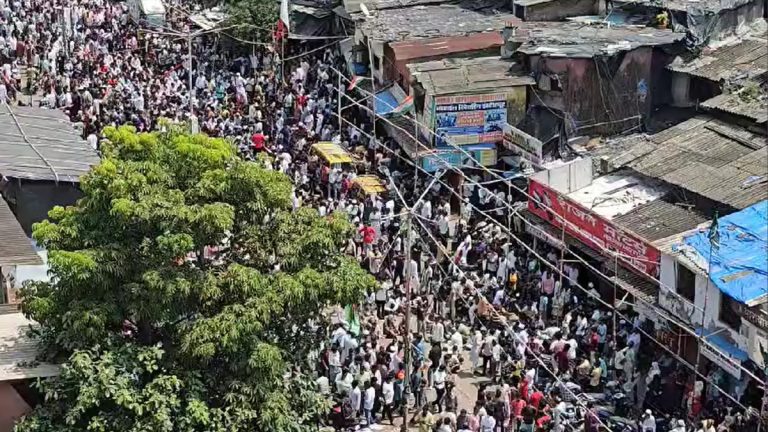
Brihanmumbai Municipal Corporation’s (BMC) drive to demolish the alleged illegal section of a mosque in Dharavi, which is considered Asia’s largest slum, has been cancelled after huge numbers of locals gathered on the streets.

Speaking on the case, Mumbai Congress chief Varsha Gaikwad said, “Action scheduled for today has been cancelled. We met the Chief Minister last night. We had urged him for this. Everyone kept forth their views here peacefully. It has been cancelled and everyone has gone home. I appeal to the people to maintain peace.”

Deputy Commissioner of Police, Zone 5, Mumbai, Tejaswi Satpute, said that the environment is peaceful in Dharavi.

“A huge crowd had gathered in Dharavi on 90-foot road and after they were requested, they left the area. The environment is peaceful in Dharavi. There are a lot of messages that are misleading on social media. I appeal to everyone not to trust any such messages,” she said.

According to the BMC, it had issued a notice to the concerned to remove the construction of the encroached mosque on the 90-foot road in Dharavi.

“Also action was taken according to this notice. However, the BMC administration should give a deadline of 4-5 days to remove the encroached construction from the said place. The trustees of the mosque have submitted a written request to the Deputy Commissioner of Circle 2 of the BMC and the Assistant Commissioner of G North Division that the construction will be removed on its own during this period. The BMC has accepted the request after the concerned have written a request to remove the construction on their own. It is clarified by the municipal administration that the trustees have also been instructed to remove the encroached construction within the stipulated time,” it said.

Maharashtra Deputy Chief Minister Devendra Fadnavis said that there is a court decision in this regard.

“The decision talks about demolishing unauthorized construction. BMC had also started action a few days ago. At that time, it was requested that this unauthorized construction be removed after Eid. Even today, when the BMC team went there, they said that they would remove the encroachment in the next four to five days, so the team has returned. In any situation, it will not be right if someone creates a law and order situation and creates an obstacle. I am sure that they will do the same as they have written to BMC,” he said.

Shiv Sena (UBT) leader Aditya Thackeray said, “These people are planning to start a Hindu Muslim riot, there is a plan to divide Hindus and Muslims. This has never happened in our government, they are talking in terms of caste and religion and their children are running ICC and BCCI, they are abroad.”


(This news report is published from a syndicated feed. Except for the headline, the content has not been written or edited by OpIndia staff)

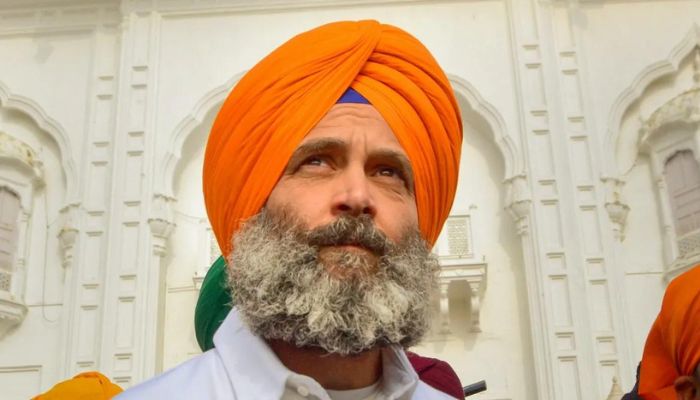
Rahul Gandhi tries to blame BJP after claiming Sikhs have no religious freedom in India, his comments were used by terrorist Pannun for Khalistani propaganda

Days after casting aspersions on the religious freedom of the Sikh community in India during his trip to the United States, Rahul Gandhi has now blamed the Bharatiya Janata Party (BJP) for quoting him out of context.

In a tweet on Saturday (21st September), he claimed, “The BJP has been spreading lies about my remarks in America. I want to ask every Sikh brother and sister in India and abroad – is there anything wrong in what I have said?”

“Shouldn’t India be a country where every Sikh – and every Indian – can freely practice their religion without fear? As usual, the BJP is resorting to lies. They are desperate to silence me because they cannot stand the truth,” the Gandhi scion brazened out.

“But I will always speak up for the values that define India: our unity in diversity, equality, and love,” he claimed. Rahul Gandhi is the leader of the Opposition from the Congress party, which orchestrated the genocide of the Sikh community in 1984.

On 10th September this year, the Gandhi scion stirred the hornet’s nest during his address to the Indian diaspora in Herndon city in Virginia State of the US. He painted a doomsday image of India and cast aspersions on the religious freedom, enjoyed by the Sikh community, in the country.

First of all, you have to understand what the fight is about. Fight is not about politics. That is superficial. The fight is about whether he as a Sikh is going to be allowed to wear his turban in India or as a Sikh is going to be allowed to wear a kada in India. Or he as a Sikh is going to be able to go To Gurdwara? That’s what the fight is about and not just for him (but) for all religions,” Rahul Gandhi had claimed.

Comments of Rahul Gandhi used to further Khalistani propaganda

The Gandhi dynast thus effectively played into the hands of the Khalistanis, who are always on the prowl to demonise India as an unsafe place for the Sikh community.

Gurpatwant Singh Pannun, the founder of the banned terror outfit ‘Sikhs for Justice (SFJ)’, claimed that the statement made by Rahul Gandhi was “firmly grounded in the factual history of what Sikhs have been facing under successive regimes in India since 1947 and also corroborates SFJ’s stance on the justification for Punjab Independence Referendum to establish Sikh homeland Khalistan.”

Source: X

In his official statement, Gurpatwant Singh Pannun said, “While addressing the gathering in Washington DC where many pro-Khalistan Sikhs were in attendance, Rahul Gandhi justified SFJ’s global Khalistan Referendum campaign when he stated: ‘Fight in India is whether a Sikh will be allowed to wear turban and kada, go to gurudwara’.

Source: X/Sikhs For Justice

Rahul’s statement on ‘existential threat to Sikhs in India’ is not only bold and pioneering but is also firmly grounded in the factual history of what Sikhs have been facing under successive regimes in India since 1947 and also corroborates SFJ’s stance on the justification for Punjab Independence Referendum to establish Sikh homeland Khalistan,” he added.

AAP leader Atishi takes oath as new Chief Minister of Delhi, five others sworn in as ministers

0

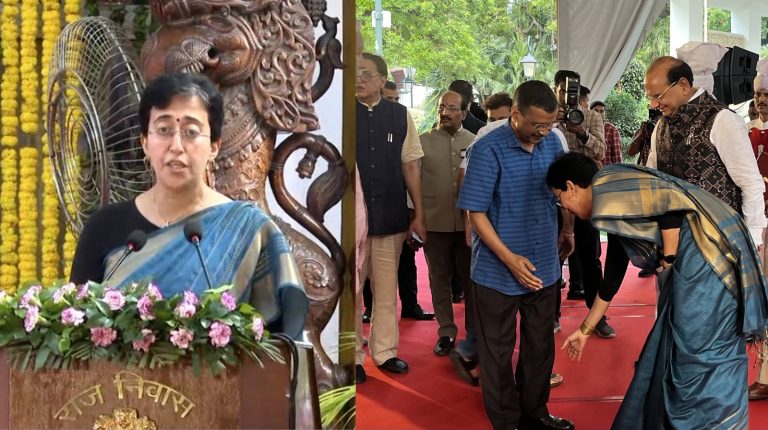
Aam Aadmi Party leader Atishi took oath as Delhi Chief Minister on Saturday at Raj Niwas. Other AAP leaders, including Saurabh Bharadwaj, Gopal Rai, Kailash Gahlot, Imran Hussain and Mukesh Ahlawat also took oath as council of ministers in the Atishi-led Delhi cabinet.

At 43, Atishi has become the third woman Chief Minister of Delhi, following in the footsteps of Sushma Swaraj and Sheila Dikshit. A prominent leader of AAP, Atishi has played a key role in improving education in Delhi’s government-run schools during her time as an advisor to the former Education Minister, Manish Sisodia.

Atishi expressed mixed feelings about the change in leadership. She said that she is happy about the trust placed in her by outgoing CM Arvind Kejriwal but is also sad that he has resigned from his post. Speaking to the media, she added that she would work hard to bring Kejriwal back as Chief Minister after the upcoming assembly elections.

“First of all, I would like to thank the popular CM of Delhi, AAP national convener, and my guru – Arvind Kejriwal. He gave me such a huge responsibility and trusted me for it. This can be done only in AAP, only under the leadership of Arvind Kejriwal, that a first-time politician becomes the CM of a state. I come from an ordinary family. Had I been in any other party, perhaps I would not have been given even an election ticket,” Atishi said.

After taking oath as Delhi Minister, AAP MLA Mukesh Ahlawat said, “It’s all because of Arvind Kejriwal and Baba Saheb that people like me become the Minister. We will work as much as possible – the priorities will be to work for the people of Dalit and backward communities.”

AAP leader and Delhi minister Kailash Gahlot said, “Arvind Kejriwal’s guidance as party’s national convenor will remain. Our only goal is to continue to work for the people of Delhi like before and to bring back Arvind Kejriwal.”

Atishi currently represents the Kalkaji constituency in the Delhi Assembly and holds the most portfolios in the Delhi government. She joined the Delhi cabinet in March 2023 and is now set to lead AAP as it prepares for the upcoming assembly polls.

Additionally, the Delhi Chief Minister’s parents, Tripta Wahi and Vijay Singh were also present during the ceremony at Raj Niwas.


(This news report is published from a syndicated feed. Except for the headline, the content has not been written or edited by OpIndia staff)

“Voter turnout in first phase, testament to transformation happening in Jammu and Kashmir”: Amit Shah

0

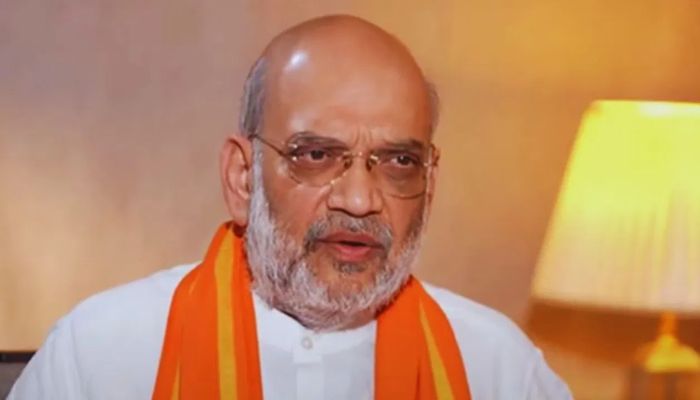
 Union Home Minister Amit Shah said on Saturday that the voter turnout in the first phase of the assembly polls in Jammu and Kashmir is a testament to the transformation happening in Jammu and Kashmir.

Addressing a public rally here today, Amit Shah said that the Congress, National Conference and People’s Democratic Party are responsible for all the chaos and issues in the Union Territory.

“The voter turnout in the first phase of elections is a testament to the transformation happening in Jammu and Kashmir, and the strengthening of democracy in the state. Congress, NC and PDP seized the rights of people here for years by not conducting elections. The Congress, NC and PDP are responsible for all the chaos and issues in Jammu and Kashmir. There was no reservation for the Gurjar and Bakarwal communities. Nor was it provided to OBCs and Dalits. There were no signs of development, and the Gandhis-Abdullahs brought nothing but dissatisfaction and deterioration in the state,” Shah said.

Notably, a voter turnout of 61.13 percent was registered in the first phase polling in Jammu and Kashmir assembly polls, which were held on 24 constituencies in seven districts.

Kishtwar district recorded the highest turnout at 80.14 per cent followed by Ramban at 70.55 per cent, Doda at 71.34 per cent, Kulgam at 62.60 per cent, Anantnag at 57.84 per cent and Shopian at 55.96 per cent. Pulwama district recorded the lowest at 46.65 per cent.
Further, sharpening his attacks on the opposition, the Union Home Minister said that for years, Congress, National Conference, and PDP deprived the people here of their rights and kept them away from democracy.

“They didn’t allow elections for village panchayats, block councils, or district councils. These three families ran their rule here. But when Modi Ji came, their dreams were shattered. Today, by electing sarpanchs, block, and district representatives, 30,000 youths have become beneficiaries of democracy. This is a huge achievement,” he said.

Shah also emphasized that this is the first election happening after the abrogation of Article 370 and after the reservation was granted to Dalits, backward classes, Gujjars, Bakarwals, and Pahadis.

“This is a historic election. I have seen the mood across Rajouri, and this time, Congress and the National Conference are going to be wiped out,” he said.

Targeting the Congress MP Rahul Gandhi over his remarks in the USA on the reservation, Shah said that as long as the BJP is there, no one can even touch it.

“Rahul Gandhi goes to America and says, ‘We will end reservation in the country.’ Oh, Rahul Baba, your party has always been against reservation, but as long as BJP is here, no one can even touch the reservation,” he said.

Quad summit in USA to expand Indo-Pacific maritime security cooperation to include the Indian Ocean region, White House thanks India for leadership

0

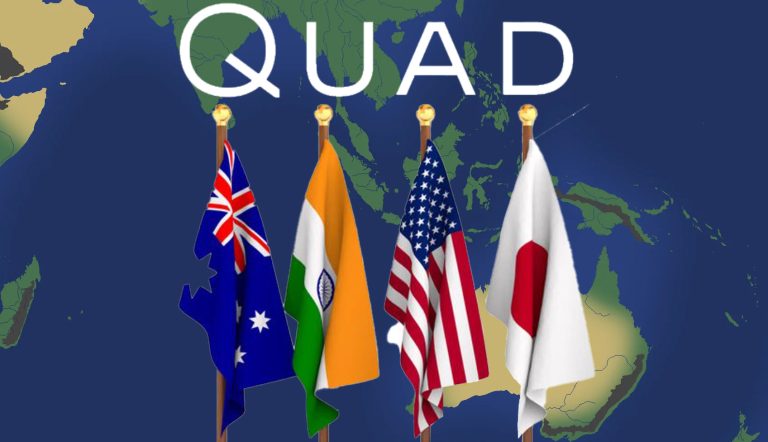
The Quad Summit on Saturday in Delaware is poised to announce the expansion of their joint maritime security operations in the Indian Ocean and closer coastguard integration throughout the Indo-Pacific.

Leaders of the United States, Australia, India and Japan are set to announce on Saturday the expansion of the Indo-Pacific Partnership for Maritime Domain Awareness (IPMDA) initiative from Southeast Asia into the Indian Ocean Region (IOR), the White House said.

The maritime initiative which seeks to keep a check on illegal activities on seas was first launched at the Quad Leaders Summit in Tokyo two years ago.

Thanking India’s leadership, the White House further said that this expansion will help monitor illegal fishing and other illegal activities in waters where China’s influence is growing. The development comes amid rising tensions in the East and South China seas in the face of an increasingly aggressive Chinese military.

A senior Biden administration official, while elaborating on the IPMDA initiative said, “In addition to the coverage, IPMDA is already providing to our partners in Southeast Asia and the Pacific Islands to help them monitor their water for illegal fishing and other illegal activities. It will also expand that coverage to include the Indian Ocean region, thanks to India’s leadership.”

The White House official said that the initiative “will include new sophisticated technologies to improve the maritime domain picture that our partners are seeing.”

“And third, it will provide new training programmes to ensure that all the partners who are receiving this important project are maximally well positioned to use it,” the official said.

The expectations from the Summit in Wilmington is to demonstrate that the Quad partners are more strategically aligned than they have ever been, that they remain committed to putting real resources behind this effort to provide public goods for the Indo Pacific and most importantly, that the “Quad is here to stay” an US administration official said.

Another White House official informed reporters that the coast guards of Japan, the United States, Australia and India will start carrying with one another’s personnel on their vessels that patrol the Indo-Pacific.

A framework will be announced to coordinate support measures for third-country coastguards to improve their capabilities.

The four countries aim to strengthen the rule-based maritime order by further advancing their cooperation in maritime security.

“What you can expect to see on Coast Guard cooperation coming out of the global leaders summit is …for the first time, a US Coast Guard vessel will welcome Japanese, Australian and Indian counterparts on board that vessel for a period of time in the Indo Pacific, and that that type of cooperation will continue, including on a rotational basis as appropriate, going forward,” the official elaborated.

A bipartisan group of US Senators and members of the US House of Representatives on September 21 announced the formation of a caucus to promote the Quad on the eve of the summit-level meeting in Wilmington.

“The launch of the Quad caucus, demonstrates that Capitol Hill is just as invested in the Quad as we are, and that, on a bipartisan basis, both parties support and understand that the quad will be a fixture of the Indo Pacific for years to come, a US administration official said.

Another significant announcement would be on US President Joe Biden’s ambitious project – the Cancer Moonshot Initiative.

“This year’s announcement is going to showcase contributions by all four Quad countries in combating cervical cancer, which is a preventable form of cancer, and with vaccine screening and increased treatment donated by all these four countries, you’re really going to be able to make a dent in what is the second leading cause of women’s death, a senior White House official added.

The gathering will be the first time as president that Biden has ever asked a foreign leader to visit Wilmington, a reflection of his closeness with each dignitary, Indian Prime Minister Narendra Modi, Australian Prime Minister Anthony Albanese and Japanese Prime Minister Fumio Kishida.

Biden has also had each prime minister to the White House for official state visits, an honor reserved for the closest allies.

With the hometown summit in Delaware, the White House hopes to project a strong alliance with Indo-Pacific partners, especially at a time when countering China’s rising influence is a top priority for the Biden administration. The joint statement is expected to include stronger language than during previous meetings about the South China Sea and about North Korea’s threats, officials said.

It will be the sixth time the leaders have all met — the fourth time in person — since Biden promoted the “Quad” to the leader level in 2021. This summit would mark Bidens final summit of the “Quad,” an alliance he decided to elevate during his first year in office.

During both group discussions and individual conversations this weekend, Biden is likely to proudly showcase his home, known by aides as “Lake House” because of the manmade lake on its grounds. He expects to share with them significant milestone moments during his career that have been marked there, including where he learned four years ago that he had been elected president.

Originally, it was India’s turn to hold the event this year, but when the dates appeared too close to the United Nations General Assembly in New York, the US and India decided to swap responsibilities. India is now scheduled to host the next summit in 2025, raising the possibility that Vice President Kamala Harris, whose mother immigrated from India, would make a significant symbolic return if she is elected in November.


(This news report is published from a syndicated feed. Except for the headline, the content has not been written or edited by OpIndia staff)

Karnataka BJP files formal complaint with police against Rahul Gandhi for his controversial remarks in the USA

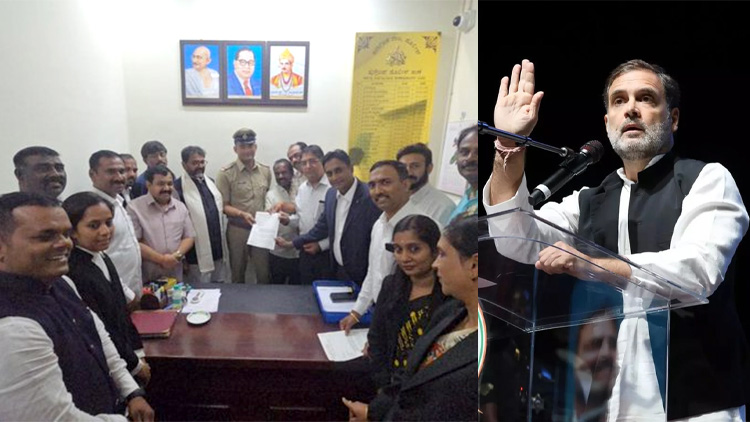
Karnataka BJP leaders filed a formal complaint with Police Inspector of High Ground Police Station in Bengaluru against Lok Sabha Leader of Opposition (LOP) Rahul Gandhi over his remarks in USA over SC, ST and OBC communities.

The state unit accused LOP Rahul Gandhi of making divisive and provocative remarks targeting the SC, ST and OBC communities, endangering India’s internal security, sovereignty, unity and integrity.

The state unit also sought an investigation into the statements and legal action for the same.

Earlier this month, Rahul Gandhi, while interacting with students and faculty at Georgetown University in Washington, DC, said that the Congress Party will think of scraping reservations when India becomes a ‘fair place’.

Rahul Gandhi, when asked about reservations during his conversation at Georgetown University, said that the Dalits, Adivasis and OBC communities are still not getting participation in the system, adding that India is not a ‘fair place’.

He also reiterated the need to conduct a caste census while saying that 90 per cent of the country’s population — OBCs, Dalits and Adivasis– not having proper representation in the country is the “elephant in the room.”

“There’s an elephant in the room. When we talk about the capture of institutions, businesses, and the media, the elephant in the room is that 90% of India–OBCs, Dalits, Adivasis–aren’t even part of the game. That’s really the elephant in the room,” Rahul Gandhi said.

“Out of the top ten businesses in India, almost none are owned by the 90 per cent of the population. In the highest courts of the country, there is almost no participation from this 90 per cent. In the national media–anchors and journalists–there is zero participation from lower castes, OBCs, Dalits, and Adivasis,” the Congress leader said.

Following these remarks in USA, the LOP Lok Sabha came under heavy scanners from BJP leaders.


(This news report is published from a syndicated feed. Except for the headline, the content has not been written or edited by OpIndia staff)

Ambani’s ‘Antilia’ is Waqf property: Absconding Indian hate preacher Zakir Naik unfurls a bouquet of lies on Pakistani YouTuber’s podcast

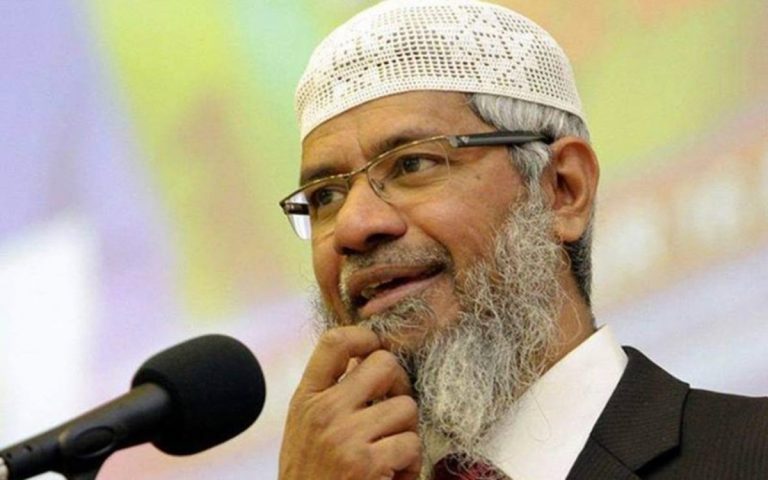
Zakir Naik, an Islamist hate religious preacher, and a fugitive in India, who has taken refuge in Malaysia, is once again making controversial statements against India. Let us analyze the claims made by Zakir Naik in his recent podcast with a Pakistani YouTuber, where he claimed to have met a person sent by Indian Prime Minister Narendra Modi, commented on the properties of the Waqf Board, and gave his opinion on the condition of Muslims in India.

However, most of Zakir Naik’s claims are proven to be baseless and false. Let us discuss in detail the truth of his statements in this article.

Claim of meeting Modi: Truth or lie

The biggest and most controversial claim made by Zakir Naik in the podcast was that in 2019, before the removal of Article 370, Prime Minister Narendra Modi had sent one of his representatives to Malaysia. This representative met Zakir Naik and invited him to visit India. According to Naik, this meeting took place because there was talk of improving relations between the Government of India and Zakir Naik.

However, the question arises here that if Zakir Naik’s claim is true, then why would the Government of India declare him a fugitive? There are serious allegations against Zakir Naik of having links with terrorist organizations in India, pushing youth towards radicalism and spreading hatred. In view of his activities, the Government of India has considered him a criminal by law. In this context, the claim of meeting the person sent by PM Modi seems to be completely false.

Zakir Naik also claimed that PM Modi’s representative had asked him to support the government on Article 370. He said that he supports the freedom of Kashmiris and the removal of Article 370 is against the Constitution. This statement clearly shows Zakir Naik’s anti-India thinking, where he is challenging the unity and integrity of the country. After the removal of Article 370, Kashmir is an integral part of India, and creating any kind of controversy on it is a part of anti-national activities.

Claims on Waqf Board properties: A mix of lies and truth

Zakir Naik also spoke at length on the Waqf Board and its properties. He said that the Waqf Board has the third largest property in India, with the largest land holding after Defence and Railways. There is no doubt that the Waqf Board has a large amount of land, which is useful for the Muslim community. However, Naik distorted the facts behind this.

He claimed that the government wants to take over the properties of the Waqf Board and is trying to amend the Waqf Act for this. This claim is completely fabricated. The Indian Constitution protects the rights of every religion and the government has no plans to take over Waqf properties illegally. Zakir Naik has only tried to spread confusion in the Muslim community to further his false agenda.

Zakir Naik said, “Some Muslims took advantage of Waqf, using this as an excuse, Modi government wants to change the Waqf law so that it can usurp it. You might not know that the world’s most expensive house is in Mumbai owned by Mukesh Ambani. The most expensive house in the world, which is a 27-storey house. There is a helipad on the roof. His property belongs to the Waqf Board. Some Muslim must have done something wrong with the land he owns. A case was filed against him. Due to the case, he could not even enter his house, but due to the law, nothing can be done.”

Naik clearly claimed that Mukesh Ambani’s 27-storey house, which is considered the world’s most expensive house, is built on Waqf land. This claim is also completely false and sensational. Zakir Naik has only tried to create controversy by making such statements without any proof. Waqf properties have religious and social importance for the Muslim community, but by linking it to big industrialists like Ambani without any basis, Naik has only tried to grab media headlines.

The condition of Muslims in India: A veil of illusion over truth

Zakir Naik also discussed the status of Muslims in India in his podcast. He said that India is the best country for Muslims, which is correct. India is a secular country, where every religion has equal rights. For Muslims, there are institutions like Personal Law Board, Waqf Board, which protect their religious and social rights.

However, Zakir Naik used this truth to hide his lie. He said that if the Modi government changes the Waqf law, it will threaten the properties of the Muslim community. This statement is a fear-mongering strategy so that the Muslim community can stand against the government.

The Indian Constitution has given equal rights to all religious institutions and the purpose of any step of the government is to maintain the well-being of the society and the unity of the country. Zakir Naik deliberately made such statements so that he could provoke the Muslim community and make them stand against the government.

Zakir Naik a religious leader or a fundamentalist

Zakir Naik has repeatedly stressed in his podcast that he is innocent and the Indian government has made false allegations against him. He claimed that he is working for the propagation of Islam and his aim is to promote peace and harmony. But the truth is far different from this.

Zakir Naik’s speeches and sermons have pushed many youths towards radicalism. Influenced by his sermons, many youths have tried to join terrorist organizations. Naik’s speeches contain hate, which promote religious tension in the society. With his statements, he has worked to increase the distance between Islam and other religions, not only in India, but around the world.

Many criminal cases are registered against him in India, including charges of having links with terrorist organizations and spreading hatred. To say that Zakir Naik is innocent is a misleading statement. It is clear from his speeches and actions that he is a person spreading radical ideology, who does the politics of hatred and division in the society.

Waqf Board Controversy: Government’s objective or Zakir Naik’s conspiracy

Regarding the changes made on the Waqf Board and its properties, Zakir Naik said that the Modi government wants to take over the properties of the Muslim community. He said that if the Waqf law is changed, then thousands of mosques and graveyards of the Muslim community will be taken away from their hands.

This statement is not only without any factual basis but is another lie spread by Zakir Naik. The management and protection of Waqf properties is protected by the Indian Constitution and the purpose of any step of the government is in the interest of the society. Zakir Naik has spread a wrong message in the Muslim community regarding this issue, so that he can present himself as a leader and mislead the society.

In fact, some changes may be needed to better manage and protect the properties of the Waqf Board, but this does not mean that the government wants to usurp those properties. Zakir Naik has raised this issue in his podcast only to make it controversial so that he can hatch a new conspiracy against the government.

Zakir Naik is a delusional person

Most of Zakir Naik’s claims are false and misleading. In his podcast, he made baseless allegations against the Modi government, made false claims on the properties of the Waqf Board and tried to mislead the Muslim community. His true face has come to the fore as a fundamentalist and a person doing politics of division in the society.

Zakir Naik’s aim is only to spread religious frenzy and hatred in the society. He has pushed many youth towards radicalism through his speeches and tried to establish links with terrorist organizations. Presenting such a person as a religious scholar is dangerous for both the society and the country.

The claims made in Zakir Naik’s podcast are mostly fabricated and false. He falsely claimed to have met a person sent by the Modi government, gave incorrect information on Waqf Board properties and attempted to spread fear in the Muslim community. Zakir Naik’s main aim is to create religious division in society and promote his radical ideas.

In a democratic and secular country like India, every religion has equal rights, and the aim of the government is to maintain the well-being of the society and unity of the country. It is extremely important to expose people like Zakir Naik and expose his lies.

Citizens have no ‘right to truth’, factchecking by govt restricts fundamental right: How Bombay High court verdict in IT Amendment Rules case may embolden fake news peddlers

In a major setback to preventing the dissemination of fake news in India, the Bombay High Court on Friday (20th September) struck down crucial amendments made by the Modi government to the Information Technology (Intermediary Guidelines and Digital Media Ethics Code) Rules, 2021.

A split verdict

The development came 8 months after a Division Bench of the Bombay High Court delivered a split verdict on the constitutional validity of Rule 3(1)(b)(v) of 2021 and its subsequent amendment two years later (also called IT Rules 2023). The new rule in question stated

3. (1) Due diligence by an intermediary: An intermediary, including 1[a social media intermediary, a significant social media intermediary and an online gaming intermediary], shall observe the following due diligence while discharging its duties, namely:

(b) the intermediary shall inform its rules and regulations, privacy policy and user agreement to the user in English or any language specified in the Eighth Schedule to the Constitution in the language of his choice and shall make reasonable efforts 1[by itself, and to cause the users of its computer resource to not host], display, upload, modify, publish, transmit, store, update or share any information that

(v)deceives or misleads the addressee about the origin of the message or knowingly and intentionally communicates any misinformation or information which is patently false and untrue or misleading in nature 3[or, in respect of any business of the Central Government, is identified as fake or false or misleading by such fact check unit of the Central Government as the Ministry may, by notification published in the Official Gazette, specify];

Essentially, the said rule allowed the Union government to set up a fact-checking unit (FCU) to identify any false or misleading information about it on social media platforms.

In January 2024, a Division Bench of the Bombay High Court, comprising Justices G.S. Patel & Dr. Neela Gokhale, heard arguments challenging Rule 3(1)(b)(v). One of the petitioners in the case happened to be controversial comedian Kunal Kamra.

Justice G.S. Patel struck down the amendment to the Rule in 2023, claiming it to be violative of Section 79 of the Information Technology Act, 2000, Articles 14, 19(1)(a) and 19(1)(g) of the Indian constitution and the principles of natural justice.

Justice Dr. Neela Gokhale upheld the constitutional validity of Rule 3(1)(b)(v) and added that it did not violate Articles 14 and 19(1)(a) of the Constitution of India.

Modi govt constitutes Fact-checking unit

On 20th March this year, the Union government notified the Fact Check Unit (FCU) under the Press Information Bureau (PIB as its fact check unit. For the unversed, PIB is a nodal agency of the Union Ministry of Information and Broadcasting (I&B).

The Fact Check Unit under PIB was established in November 2019 with a stated objective of acting as a deterrent to creators and disseminators of fake news and misinformation.  It also provides people with an easy avenue to report suspicious and questionable information pertaining to the Government of India,” it said in its notification.

The Supreme Court of India intervened in the matter and stayed the notification until the competition of proceedings by the Bombay High Court.

The requirement of a Tie Breaker Judge

On Friday (20th September), a third (‘Tie-Breaker’) judge of the Bombay High Court, Justice Atul Chandurkar, gave his verdict on the constitutionality of Rule 3(1)(b)(v) of the Information Technology (Intermediary Guidelines and Digital Media Ethics Code) Rules, 2021 and its subsequent amendment in 2023.

Such a provision for a third judge to opine in case of a split verdict is provided under Clause 36 of the Letters Patent.

The law in this regard is therefore clear and it is only the point/points of difference that would fall for consideration by the third Judge to express his opinion on the same. It thus follows that on a point/points on which one learned Judge of the Division Bench has not expressed any opinion whatsoever, the opinion on such point/points as expressed by the other learned Judge would not be the subject matter of consideration by the Reference Judge under Clause 36 of the Letters Patent read with Rule 7 Chapter-I of the BHCAS Rules,” Justice Atul Chandurkar noted (Page 44-45 of the verdict).

The present verdict and contentious observations

In a 99-page judgment [pdf], the ‘Tie-Breaker’ Judge of the Bombay High Court sided with the verdict delivered by Justice G.S. Patel of the Division Bench on 31st January this year.

On Page 70-71, Justice Atul Chandurkar stated, “I would agree with the view of Patel, J that under the right to freedom of speech and expression, there is no further “right to the truth” nor is it the responsibility of the State to ensure that the citizens are entitled only to “information” that was not fake or false or misleading as identified by the FCU.

The Bombay High Court judge stated that the fact-checking unit (FCU) of the government sought to restrict the fundamental right of freedom of speech and expression, guaranteed under Article 19(1)(a). It added that the government had no responsibility to ensure that citizens are not exposed to ‘fake or false information.’

Rule 3(1)(b)(v) seeks to restrict the fundamental right guaranteed under Article 19(1)(a) by seeking to place restrictions that are not in consonance with Article 19(2) of the Constitution,” the court noted.

Justice Atul Chandurkar further added, “I agree that the impugned amendment of 2023 to Rule 3(1)(b)(v) is ultra-vires Article 19(1)(a) and Article 19(2) of the Constitution.

The ‘Tie-Breaker’ Judge stated that there was no logic behind the scrutiny/ determination of fake information on social media by the Indian government when a similar exercise was not being done for print media.

There is no basis or rationale for undertaking the exercise of determining whether any information in relation to the business of the Central Government is either fake or false or misleading when in the digital form and not undertaking a similar exercise when that very information is in the print form. The Editors Guild of India is justified in its grievance that it is concerned with both, the print media as well as digital platforms. There is thus an infringement of the right guaranteed under Article 19(1)(g) of the Constitution of India,” he ruled (Page 73 of the verdict).

Justice Atul Chandurkar also claimed that the Union government would be an arbiter in its case through its Fact-Checking Unit (FCU). He stated that the challenge of FCU decisions in constitutional courts is not an ‘adequate safeguard.’

Taking into consideration all aspects including that the basis on which the information with regard to the business of the Central Government is to be identified for being categorized either to be fake or false or misleading, the FCU in a sense is the arbiter in its own cause. By contending that the decision of the FCU can be subjected to challenge before a constitutional Court, the same cannot be treated as an adequate safeguard and it would not be of much consequence in the light of the decision in A. K. Kraipak & others (supra). I am therefore inclined to agree with the view of Patel J that as the Central Government itself would constitute the FCU, it is an arbiter in its own cause.

(Page 76 of the verdict)

While objecting to the IT Amendment Rules of 2023, the Bombay High Court said, “I would therefore endorse the view expressed by Patel J that in the absence of any guidelines under the Rules of 2021 as amended to indicate the scope and applicability of the expression “fake or false or misleading”, the impugned Rule is vague and overbroad rendering it liable to be struck down.(Page 83 of the verdict).

The amended Rule seeks to impose restrictions beyond those permissible under Article 19(2) of the Constitution. It also suffers from manifest arbitrariness for not being in conformity with the Act of 2000 on the principles laid down by the Constitution Bench in Association for Democratic Reforms and another (supra),” it continued.

On Page 91 of the verdict, Justice Atul Chandurkar agreed to the notion that the IT Rules of 2021 and its amendment in 2023 had the potential to cause a chilling effect – a term previously referred to in the split verdict of Justice G.S. Patel to describe factors invariably leading to ‘self-censorship.’

In conclusion, the ‘Tie Breaker’ judge noted that, “In my view, the challenge raised to the impugned Rule as not satisfying the proportionality test has to be upheld especially when it seeks to abridge fundamental rights guaranteed under Article 19(1)(a) and 19(1)(g) of the Constitution of India. Absence of sufficient safeguards against the abuse of the Rules that tend to interfere with the aforesaid fundamental rights are shown to be absent. Having found that the validity of the impugned Rule cannot be saved by reading it down as urged, the contention raised on behalf of the Union of India of having adopted the least restrictive mode to prevent the spread of “fake or false or misleading information” by relying upon the decisions in that regard cannot be accepted. I therefore find that even on the ground
of proportionality, the impugned Rule cannot be sustained as observed by Patel J.

(Page 96-97 of the verdict)

Challenges for fact-checkers and potential harm caused by fake news peddlers

The judgment delivered by Justice Atul Chandurkar has effectively struck down the amendment made to Rule 3(1)(b)(v) of the Information Technology (Intermediary Guidelines and Digital Media Ethics Code) Rules, 2021.

The power of the Union government to establish a fact-checking unit (FCU) to identify any false or misleading information about its ‘business’ on social media platforms has also been withheld.

The ruling comes at a time when social media is rife with disinformation campaigns targeting the Indian government, its various policies and the use of fake news to create law and order discord in society.

We have seen it in action first-hand following the implementation of the Citizenship Amendment Act (CAA) by the Indian Parliament.

‘Activists’, ‘journalists’ and habitual fake news peddlers made outrageous claims about Indian Muslims losing their citizenship to being sent to detention camps.

The result of large-scale fearmongering was the infamous squatting at Shaheen Bagh and the deadly riots in Delhi, which claimed more than 50 lives.

The disinformation continued during the implementation of farm laws, leading to the loss of lives and the desecration of the tricolour at the Red Fort. The High Court ruling that individuals are only entitled to free speech and expression and no right to truth is thus alarming.

The government’s initiative at fact-checking could have deterred those, who now make a living through the amplification of fake news, and creating mass hysteria.

While one might debate whether the 2023 IT Rules Amendment was broad, it was a step in the right direction (especially in a nation plagued by politically motivated disinformation campaigns). The verdict delivered by the Bombay High Court thus has the potential to embolden fake news peddlers.