Home Blog Page 74

Pune Vat Purnima row: Maharashtra Archaeology issues fresh notice, backs continuation of old rituals at Mahatma Phule Wada after Hindu advocacy groups raise concern

UPDATE: In a fresh letter dated 23 June 2026, the Assistant Director (Archaeology), Pune Division, asked the police to maintain law and order while ensuring that the pre-existing tradition and customary practice associated with Vat Purnima at Mahatma Phule Wada continue.

A fresh controversy has erupted in Pune after the Maharashtra Archaeology Department issued an order effectively barring women from performing Vat Purnima rituals at the historic Mahatma Phule Wada in Ganj Peth on 29 June 2026. The order, which asks the Pune Police to ensure that no religious programme is held at the site, has now been challenged through a detailed legal objection petition that accuses the authorities of acting arbitrarily, violating constitutional rights, and misusing heritage protection law to stop a long-standing religious practice.

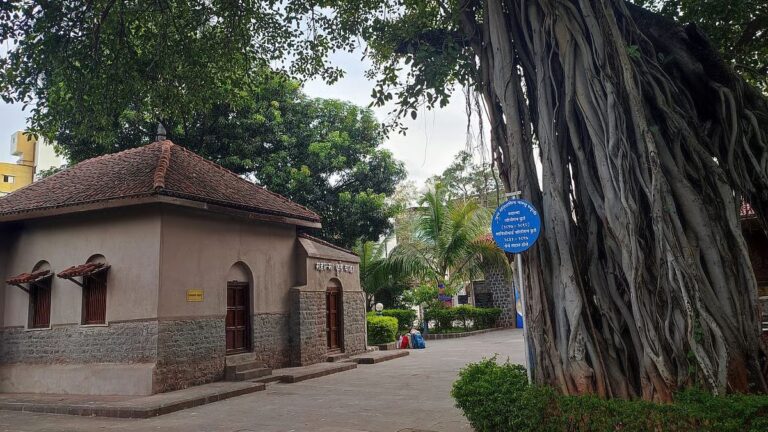
At the heart of the row is a banyan tree located inside the protected premises of Mahatma Phule Wada, where local married women have for years observed Vat Purnima by tying sacred threads around the tree and offering prayers. However, in a communication dated 2 June 2026, the office of the Assistant Director (Archaeology), Pune Division, wrote to the Pune Police Commissioner asking for police deployment from morning till evening on 29 June to ensure that no such religious activity takes place inside the protected monument premises. The order was issued after a representation by Prashant Yatish Phule and invoked Rule 8(f) of the Maharashtra Ancient Monuments and Archaeological Sites and Remains Rules, 1962.

Archaeology Department cites Phule legacy, seeks police action to stop ritual

In its letter to the police, the Archaeology Department stated that Jyotirao Phule and Savitribai Phule had dedicated their lives to “social reform” and were opposed to what it described as ritualism and religious orthodoxy. It also referred to an incident from last year, when ‘activists’ associated with Mahatma Phule Samata Pratishthan objected to women performing Vat Purnima rituals at the banyan tree, allegedly creating a law-and-order issue that had to be handled by the police. Citing this background and the representation received, the department asked the police to ensure that women do not perform the ritual at the tree on Vat Purnima this year.

The department’s reasoning, as reflected in the order, is that Mahatma Phule Wada is not merely a protected monument but also a site associated with Phule’s “anti-ritual social reform legacy”, and therefore such rituals ought not to be allowed there. It further cited Rule 8(f), which bars violation of any custom, usage or practice applicable to or observed in a monument, and used it to justify preventing the observance of Vat Purnima within the protected premises.

12-page legal objection says order based on ideology, not law

The order has now been met with a 12-page legal objection and representation dated 19 June 2026, addressed to the Director of Archaeology and Museums, the Assistant Director of Archaeology, the Pune Police Commissioner and the Pune District Collector. Filed on behalf of women who traditionally observe Vat Purnima at the site and citizens described as admirers of Mahatma Phule, the petition seeks immediate withdrawal of the 2 June order and permission for the ritual to be performed peacefully on 29 June.

The petition argues that the Archaeology Department acted solely on the basis of a private representation submitted by one individual and issued a blanket prohibition without hearing the women affected by the decision, without giving them prior notice, and without relying on any archaeological or structural assessment showing that the ritual damages the monument. It contends that the order is not based on conservation concerns but on an ideological reading of Jyotirao Phule’s views, which, the petition says, cannot be used by the state as a legal basis to prohibit a peaceful religious observance.

Petition says Vat Purnima ritual is longstanding, peaceful and causes no damage

According to the objection, the banyan tree inside the Phule Wada premises has been worshipped on Vat Purnima for several years and the practice has never caused any harm to the monument. In fact, the petition points out that the Archaeology Department’s own order acknowledges that the ritual had taken place in previous years and that the police had only been deployed to maintain law and order when objections were raised by activists. The petition underlines that the order does not cite any expert report, structural assessment, archaeological finding or scientific study to show that tying threads around the tree or performing prayers at the spot causes any actual damage to the protected structure.

Rule 8(f) has been twisted to ban, rather than protect, existing practice: Petition

One of the central legal arguments in the objection is that the Archaeology Department has wrongly interpreted Rule 8(f) of the 1962 Rules. The petition says the rule merely prohibits violation of customs, usages or practices applicable to a monument; it does not empower the state to abolish a practice that is already being observed there. In other words, if women have been performing Vat Purnima prayers at the banyan tree inside Mahatma Phule Wada for years, then the continuation of that practice would be in line with the rule, whereas banning it would amount to disrupting an existing custom.

The petition further argues that neither the Maharashtra Ancient Monuments and Archaeological Sites and Remains Act, 1960 nor the Rules framed under it grant the Archaeology Department any explicit power to completely prohibit a peaceful religious observance of this nature. It cites provisions of the 1960 Act to claim that protected status does not automatically extinguish traditional religious usage, especially where no damage to the monument is shown.

Petition invokes Articles 14, 19, 21, 25 and 26, says state cannot ban rituals based on ideological preference

The legal objection invokes multiple constitutional guarantees, including Article 14 (equality before law), Article 19 (freedom of expression and assembly), Article 21 (right to life and dignity), and Articles 25 and 26 (freedom of religion and management of religious affairs). It argues that the state cannot stop women from observing a religious practice simply because an official or complainant believes that Mahatma Phule opposed ritualism.

The petition also accuses the administration of selectively targeting one religious practice at one monument while similar observances at other protected sites are not interfered with. On that basis, it alleges discrimination and arbitrariness. It further says that if the state’s real concern was crowd management, preservation or public order, it could have imposed narrowly tailored restrictions such as regulating the number of participants, fixing a time window, preventing any act that might physically damage the tree or monument, and maintaining adequate police deployment. Imposing a complete ban, the petition argues, fails the test of proportionality and is legally indefensible.

‘Natural justice violated’: Petition says women were not heard before order was passed

The objection also attacks the process followed by the Archaeology Department, saying the order was passed after considering only the complaint made by Prashant Yatish Phule while completely ignoring the women and devotees who would be directly affected by the prohibition. No notice was issued to them, no hearing was granted, and no opportunity was given to present their side before the administration acted. The petition therefore alleges violation of the principles of natural justice and says the order is liable to be set aside on that ground alone.

Petition seeks withdrawal of order, warns of High Court move

In its final prayers, the objection petition demands that the 2 June 2026 order be immediately withdrawn and that women be explicitly allowed to perform Vat Purnima rituals peacefully at Mahatma Phule Wada on 29 June. It also asks that the police be directed not to stop the ritual but to maintain law and order during the observance and prevent any disruption. The petition further demands that in future, no such order be passed without first issuing notice to the affected women and hearing their side.

Significantly, the petition warns that if the administration does not revoke the order within time, the petitioners would be free to move the High Court under Article 226 of the Constitution. With Vat Purnima only days away, the matter has now escalated from a local dispute into a larger battle over religious freedom, administrative overreach, and the use of Mahatma Phule’s legacy to justify state intervention in a traditional Hindu observance.
Pakistan court sentences Baloch activist Mahrang Baloch to life imprisonment: From a doctor to the fiercest voice of Balochistan freedom

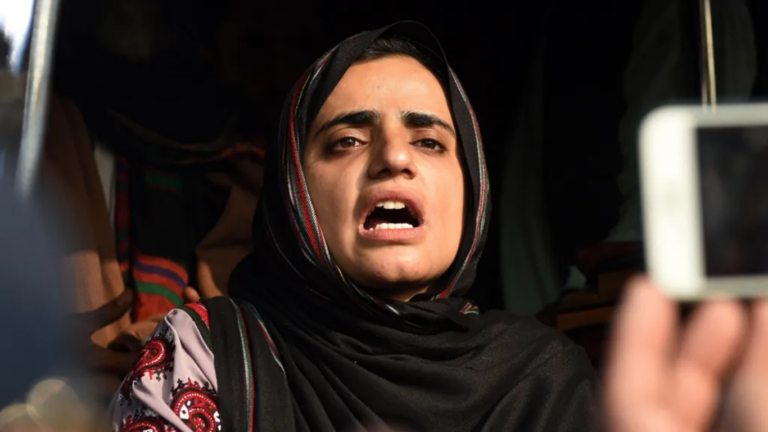
Irony died a painful death when an ‘Anti-Terrorism Court’ in Pakistan, the state sponsor of Jihadi terrorism, sentenced Baloch rights activist Mahrang Baloch to life imprisonment. On 22nd June, Judge Muhammad Ali Mobin of the Anti-Terrorism Court in Quetta, Balochistan, pronounced the verdict aimed at silencing Mahrang Baloch, snatching her freedom, and crippling the Baloch freedom struggle.

Alongside Dr Mahrang Baloch, the “Lioness of Balochistan”, the court sentenced fellow Baloch Yakjehti Committee (BYC) leader Sibghatullah Shah to a life sentence, in addition to a fine of PKR 200,000 each.

Mahrang Baloch and Sibghatullah Shah were convicted of terrorism, sedition, and murder over bogus accusations of ‘inciting’ a mob during the 29th July 2024 “Baloch Raji Muchi” (Baloch National Gathering) protest in Gwadar. The occupying Pakistani authorities arrested Mahrang Baloch after a Frontier Corps troop, Sepoy Shabbir Ahmed, was killed in the stone-pelting incident.

The BYC leaders have been convicted and given life sentences, even as there is no direct evidence linking them to the death of Shabbir Ahmed.

The Pakistani authorities blamed the rising Baloch freedom activism, both in violent and non-violent forms, due to Pakistan’s oppression of the Baloch people, on Mahrang Baloch. The movement was called against the Baloch genocide by the Pakistani Army and enforced disappearances of Balochi people.

Back then, activist Mahrang had said that the Baloch people have been raising their voices for over the last seven decades against the “atrocities and injustices” committed by the Pakistani state.

Fearing Dr Mahrang’s dauntless and intrepid quest to secure rights, dignity and freedom for Balochistan, the Pakistani authorities filed multiple cases against her.

Mahrang was initially arrested on 22nd March 2025 and detained under the Balochistan Maintenance of Public Order (MPO) for 30 days. Since then, the Pakistani authorities extended her detention twice for 30 days each. However, before the expiration of the third detention order, Mahrang Baloch was taken into custody in connection with another of the many bogus cases filed against her.

During her detention period, multiple cases were filed against her other BYC leaders under different sections of the Anti-Terrorism Act and the Pakistan Penal Code.

An FIR was filed against Mahrang Baloch and several other BYC leaders on 21st March 2024, in Quetta’s Sariab Police Station. It was claimed that Baloch protestors led by Mahrang Baloch, Beberg Baloch, Gulzadi, Sabiha Baloch, and Sibghatullah Shah gathered on Sariab Road and raised “anti-state” slogans.

Pakistan’s military leadership and its puppet civilian government is so scared of a 33-year-old Dr Mahrang Baloch that even as the Baloch Yakjehti Committee is not banned by the National Counter Terrorism Authority, Mahrang Baloch is included in the list of proscribed persons.

Mahrang Baloch boycotted hearing, her sister and BYC called the life sentence “expression of Pakistani hatred for Balochistan”

The Baloch activists, already in detention, boycotted the video-linked trial from jail since 12th June 2026. Their legal team, including Mahrang’s lawyer, Israr Jatak, called it a biased “kangaroo court” of contradictory police reports. They stated that Marang Baloch and Sibghatullah Shahji were denied a fair trial.

Meanwhile, Mahrang’s sister Nadia Baloch rejected the court verdict. She described the so-called Anti-Terrorism Court as a “faceless court”.

Speaking to BBC Urdu, Nadia Baloch said that the Pakistani government appointed lawyers to represent Mahrang, Sibghatullah, and other accused BYC leaders during the boycott. However, the Baloch activists rejected the state-appointed lawyers.

Mahrang Baloch: The ‘Lioness of Balochistan’ and Pakistan’s nightmare

Born in 1993, Mahrang Baloch is a doctor by profession and is recognised globally as a human rights activist. Mahrang completed MBBS from Baloch Medical College. She has spent over a decade fighting for the rights of the people of Balochistan.

Mahrang Baloch lost her father, Abdul Ghaffar Langove, in this struggle and endured the pain of her brother’s sudden disappearance. She began speaking out for the Baloch people in 2006, but her father was abducted shortly thereafter, and his mutilated body was found in 2011.

Until then, Mahrang had not been actively involved in Baloch rights activism; however, when her brother was also suddenly kidnapped in 2017, she had an epiphany and decided to raise her voice. Mahrang Baloch rose in protest for her brother, participated in marches, and attended meetings. Her voice ultimately led to the kidnappers returning her brother in 2018.

Although Mahrang Baloch got her brother back, she had realised and fully gauged the extent to which the Pakistani state was forcibly abducting, torturing, and even killing Baloch people, children and adults alike. Dr Mahrang decided to become the voice of numerous Baloch families who were not fortunate enough to have their loved ones back from the brutal clutches of the Pakistan Army.

In 2019, Mahrang formed her own organisation, the Baloch Yakjehti Committee (BYC). After forming the party, he began holding small meetings. He went door-to-door, connecting with people. Gradually, everyone from elderly women to daughters began to join him. The convoy that followed him began to grow.

Mahrang’s influence in Balochistan is such that lakhs of Baloch people take to the streets at her one call. Back in 2023, Mahrang led hundreds of Baloch women on a 1,000-mile (1,600km) march to Pakistan’s capital, Islamabad to seek justice for missing family members.

Dr Baloch’s fiery speeches and warnings to the occupying state of Pakistan about the atrocities united and gave hope to the Baloch people. Before her detention in 2025, a march was held, estimated to have attracted around 200,000 people. Police resorted to lathicharge and tear gas to stop the crowds, but the people refused to give up.

While Pakistan vilified and jailed her, the world recognised Mahrang Baloch as an inspiration. In 2024, TIME magazine included Dr Mahrang in its “TIME100 Next” list.

International human rights bodies call out Pakistan against the unlawful life sentencing of Mahrang Baloch and other BYC leaders

The Pakistani court’s verdict against the Baloch leaders has received sharp criticism from various human rights organisations and activists.

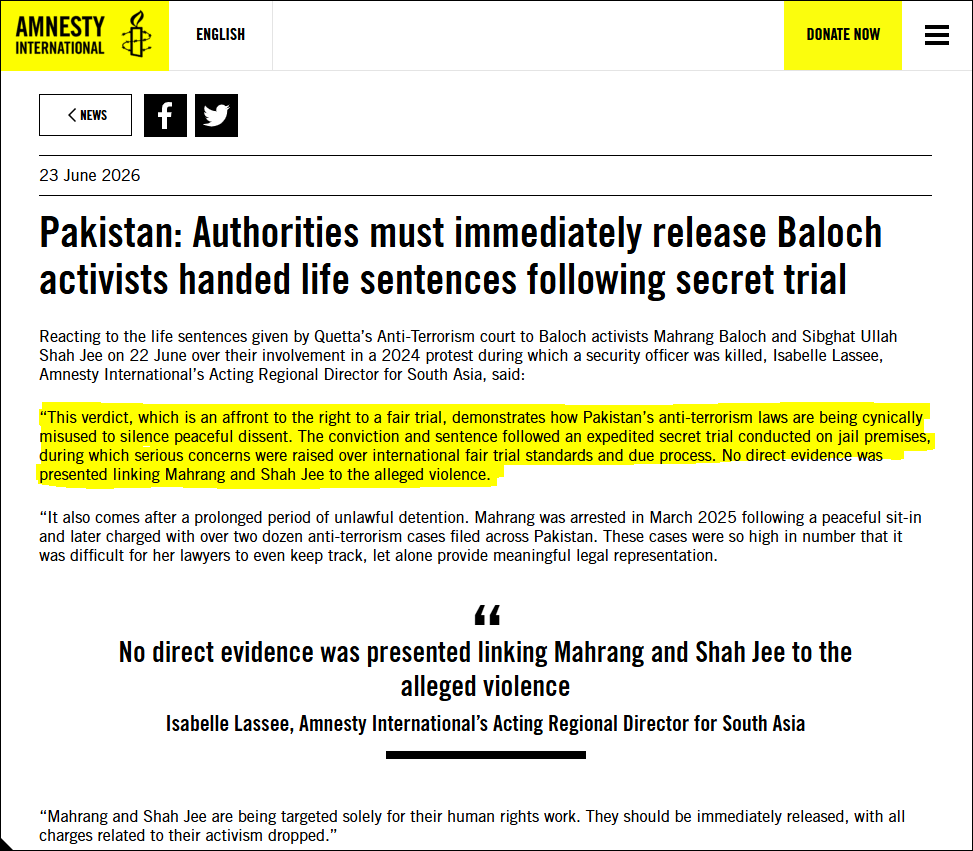
Amnesty International described the life sentencing of Dr Baloch and Sibghatullah Shah as a miscarriage of justice and cynical misuse of anti-terrorism laws against peaceful activists.

The organisation demanded the immediate release of Dr Mahrang Baloch and Sibghatullah Shah.

“This verdict, which is an affront to the right to a fair trial, demonstrates how Pakistan’s anti-terrorism laws are being cynically misused to silence peaceful dissent. The conviction and sentence followed an expedited secret trial conducted on jail premises, during which serious concerns were raised over international fair trial standards and due process. No direct evidence was presented linking Mahrang and Shah Jee to the alleged violence. It also comes after a prolonged period of unlawful detention. Mahrang was arrested in March 2025 following a peaceful sit-in and later charged with over two dozen anti-terrorism cases filed across Pakistan. These cases were so high in number that it was difficult for her lawyers to even keep track, let alone provide meaningful legal representation,” Isabelle Lassee, Amnesty International’s Acting Regional Director for South Asia, said.

While Malala Yousufzai, the Pakistani human rights activist, who earlier raised her voice for Mahrang Baloch after detention, has remained silent on the BYC leader’s life imprisonment sentence so far, Swedish climate activist Greta Thunberg has commented.

In a video message, Greta said, “Yesterday, an anti-terrorism court in Pakistan sentenced Dr Mahram Baloch and a few other activists to life imprisonment. Dr Mahram Baloch has spent years peacefully advocating for the families of the disappeared, speaking up against extrajudicial killings, and demanding justice for the people of Balochistan, an occupied territory by Pakistan.”

Meanwhile, the Baloch National Movement called Pakistan a terrorist state. The BNM stated that Pakistan is using its institutions to spread fear and terror in Balochistan.

Similarly, the Human Rights Council of Balochistan called the verdict a blatant miscarriage of justice. The HRCB stated that the verdict against BYC leaders was blatant criminalisation of peaceful Baloch human rights advocacy and stifling voices speaking out against alleged state-sponsored rights violations.

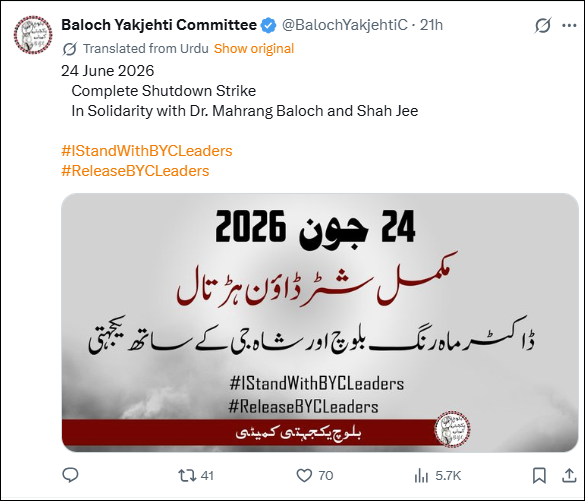
The Baloch Yakjehti Committee not only condemned the Pakistani anti-terrorism court’s verdict but has called for a Balochistan shutdown on 24th June, to demand reversal of the verdict and release of the BYC leaders.

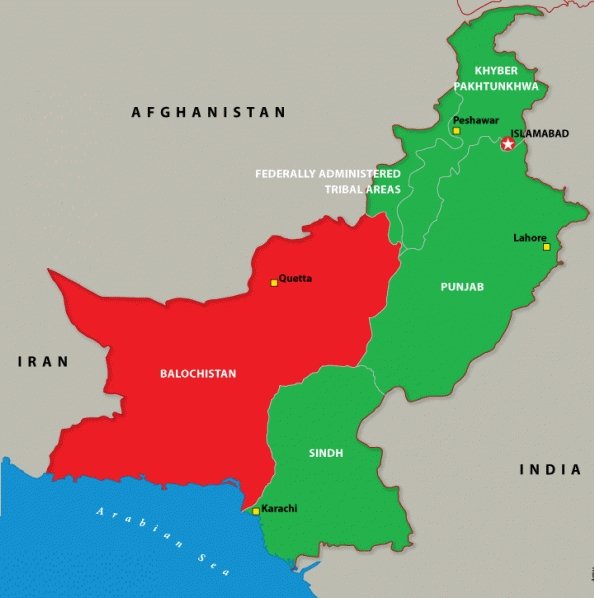
Balochistan: The treasure trove of natural resources infected by Pakistan’s greed, occupation, and brutality

The Baloch people are an ethnic group across Pakistan, Iran and Afghanistan, with Balochistan being the largest region they inhabit. Founded around 2000, the Baloch Liberation Army is said to be a resurgence of the Independence Balochistan Movement of 1973-77.

Historically, Balochistan was an independent entity under the Khan of Kalat until its coercive accession to Pakistan in March 1948 following the British withdrawal. However, in 1948, Pakistan forced the Khan to merge Balochistan into Pakistan. Pakistan wanted Balochistan to be merged into its federation. 

Pakistan’s first Governor-General and Muslim League leader Mohammad Ali Jinnah presented this proposal to the Khan of Kalat and offered him to join their federation. The Khan of Kalat established the House of Commons and the House of Lords in Balochistan within 24 hours after the country’s proclamation of independence in 1947. The conference of Balochistan’s two houses was convened by the Khan of Kalat on December 16th, 1947, to examine the prospect of joining Pakistan. The lawmakers of both Houses opposed joining Pakistan. The Khan of Kalat and his family were then imprisoned within the palace while Pakistan invaded Balochistan and seized power. 

Over the past 78 years, Balochistan has witnessed five major insurgencies during 1948, 1958, 1962, 1973-77 and the ongoing conflict since the early 2000s. These protests have erupted, driven by grievances of the Baloch people over political marginalisation, violent and torturous suppression and resource exploitation by the Pakistani state.

Although Mahrang Baloch and her Baloch Yakjehti Committee mainly pursued the path of peaceful agitations, groups like Balochistan Liberation Army (BLA), its Majeed Brigad, among others, have been pushing back against Pakistani oppression and unfair resource extraction, through violent means.

Balochistan is the most resource-rich region Pakistan has a hold on, having vast reserves of natural gas, oil, coal, copper and gold. However, despite the region’s resource affluence, its people have got nothing but economic exploitation from the Pakistani establishment. Balochistan’s resources are squeezed to the last drop to sustain Pakistan’s economy and life in Panjab and other provinces, and yet the Balochi people themselves are deprived of access to their own resources. The case of Sui Gas Field perfectly exemplifies this.

Found in 1952, this gas field in Balochistan supplies much of Pakistan’s energy needs, yet Balochistan itself has very limited access to it.  The excuse often given for this neglect is the rough terrain of Balochistan. However, Sui gas is supplied to the remote areas of Sindh and Punjab. While the CPEC promised billions in revenue, the Baloch people expect nothing to reach their pockets, as evidenced by the high unemployment and profits being funnelled to Punjab-dominated elites or Chinese investors. 

The people of Balochistan have resisted Pakistan’s attempts to plunder their resources for decades. From student uprisings to armed insurgencies, the demand has been consistent: recognition of Balochistan’s sovereignty and control over its natural wealth. Every time Islamabad signs a new contract with a foreign investor, it does so under the shadow of army guns and enforced disappearances.

Several international and local human rights organisations have repeatedly highlighted the human rights abuses in Balochistan. However, the Pakistani military and subservient political establishment dismiss these concerns either as India’s ‘propaganda’ or the West’s ‘ignorant misinformation’.

Over 70% of Balochistan’s population is identified as multidimensionally poor, which is the highest in Pakistan. Moreover, Balochistan makes up 4% of Pakistan’s GDP and 40% of natural gas is supplied to other provinces. Balochistan is reported to be using only 17% of its resources, while the rest 83% are sent to other provinces of Pakistan.

The Baloch people have their own language, Balochi, traditions, and tribal structure. However, the Panjab-dominated power centre of Pakistan harbours disdain from the Baloch people. Similar their approach towards Pashtuns.

From rigged elections, forcing the Urdu language instead of the local Balochi, killing Baloch activists and freedom fighters by attaching fake India/Hindustan labels, the Islamist fanatic regime in Pakistan is imposing a homogenous identity to destroy the unique identity of Balochistan, deepen its occupation of the Baloch land, and exploit its resources to fill the coffers of the Pakistan army and political top echelons.

Guwahati’s lost summit: As Japan PM’s Assam visit is cancelled, here is how Comrade Marshall Baruah’s activities from CAA protests to Zubeen mural traffic jam show a pattern

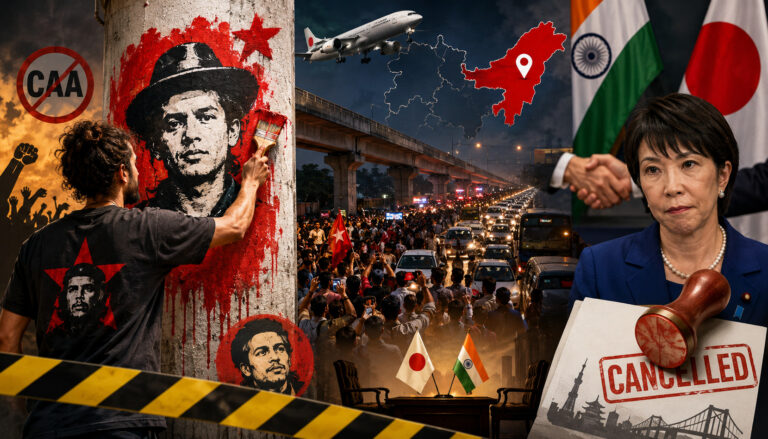
On the evening of June 17, scaffolding was put up on a Ganeshguri flyover pillar. Marshall Baruah painted a mural of Zubeen Garg with the words ‘Comrades Never Die,’ but a Public Works Department worker whitewashed it. It was a part of an effort to beautify the city in advance of the first India-Japan summit to be held in the Northeast, which Assam expected would be a significant diplomatic achievement.

Police at Panbazar had warned Baruah the day before not to repaint till July 3. He disregarded the warning. He came back on June 18 with a red background and new paint. As traffic slowed and occasionally stopped on one of Guwahati’s busiest corridors, a crowd assembled below the flyover and sang Zubeen’s songs till around 9:30 p.m. What was initially portrayed as cultural remembrance turned into an open display that state government officials would subsequently connect directly to a diplomatic disaster.

Chief Minister Himanta Biswa Sarma announced on June 23, five days later, that Japanese Prime Minister Sanae Takaichi would not be travelling to Guwahati. The whole summit was shifted to New Delhi. The official justification mentioned the logistical challenges of hosting a summit outside of the capital as well as Japan’s ongoing Diet session. However, sources in the Assam government, as reported by The Economic Times, say that the cancellation was related to the recent controversy. During the mural demonstration and replacement, the Japanese advance delegation inspecting Guwahati was trapped in traffic for two hours. According to the sources, that disturbance contributed to worries regarding preparedness.

Assam had been planning for weeks. The renovated airport terminal was personally visited by the Chief Minister. The streets were cleaned. The corridors were made more aesthetically pleasing. Investment pipelines, Japanese corporate interest, and the visibility that transforms long-standing JICA initiatives into new manufacturing and jobs were all much expected. Rather, the visit did not happen. A Japanese prime minister’s visit to Guwahati was cancelled for an unprecedented second time in seven years.

Comrade Marshall Baruah’s record: CAA protests, direct attacks on CM Himanta, and repeated defiance

Born in a quiet village in Kakilaguri, Gohpur in Biswanath district, in 1994, Baruah relocated to Guwahati to study mass communication and converted public spaces into his permanent art canvas.  He mentions Guernica by Picasso and Banksy as examples of how art can be used as a political tool. In reality, he has continuously attacked the state and its development program with his actions.

He gained notoriety in 2019 and 2020 amid the anti-CAA protests. In addition to opposing a central law, such protests caused the kind of protracted disruption that led to the cancellation of then Japanese Prime Minister Shinzo Abe’s scheduled visit to Guwahati. Due to violence, curfews in place, and constant disputes with the government, Assam lost the opportunity it had. That ecosystem of activists included Baruah.

During protests over the removal of trees for a Bharalumukh flyover in November 2024, he painted ‘Kick Himanta Save Nature,’ a direct and personal insult directed against the Chief Minister. He was taken into custody for 14 days after being held, and has been summoned by a Guwahati court to appear on June 25 for the same case.

The repainting on June 18 followed the same pattern: the disturbance occurred at the precise moment Japanese inspection teams were on the scene, a crowd assembled on an important traffic route during a delicate diplomatic window, and police warnings were disregarded. These links related to the cancellation have now been made by state government sources. Opposition leaders have called any connection ‘speculative’ and denied it. However, the Japanese delegation’s traffic bottleneck has been reported, and the timing cannot be disregarded.

Why a Japanese PM landing in Assam would’ve changed things

The majority of people outside of the region are unaware of Japan’s significant impact on northeastern India. For almost 20 years, the Japan International Cooperation Agency has been one of the most important development partners in the region, and its efforts are evident in the actual landscape. When it is finished, the 19-kilometre Dhubri-Phulbari Bridge, which crosses the Brahmaputra and was largely funded by Japanese financing, would be the longest river bridge in India.

Additionally, JICA has funded the construction of highways in Nagaland, Meghalaya, and Assam, Guwahati’s water supply and sewage systems, and a variety of urban infrastructure that, while seldom making national news, decides whether or not everyday life in the region improves.

Throughout successive governments, this partnership has been maintained through the Act East Forum, a bilateral Japan-India setup with a specific focus on the Northeast. A Japanese industrial township in Assam, which would provide manufacturing jobs, technical training, and corporate networks to a state that has long been trying to move beyond insurgency and towards economic growth, has been openly talked about by the authorities in the state.

The kind of high-profile event that turns aspiration into a road map would have been a prime ministerial visit accompanied by business delegations. Investors take these events seriously and change their risk calculations if necessary.

At the Hinge of Asia’s great power contest, no brushstroke is accidental

Japan’s involvement in India’s Northeast is no accident. The ‘Free and Open Indo-Pacific‘ framework, which Tokyo and New Delhi have jointly developed, is a pragmatic strategic architecture that presents Japanese investment in the region as an obvious counterweight to China’s Belt and Road presence in adjacent Bangladesh, Nepal, and Myanmar. These clashing perceptions are especially noticeable and significant in the Northeast. Any obstacle to a high-profile Japan-India partnership gains resonance in that tense atmosphere, so it wouldn’t be considered elsewhere. It is unclear whether the occurrences of June 18 were a coincidence of timing or something else that the official record does not yet reveal.

On June 25, Marshall Baruah is scheduled to appear in court. At Ganeshguri, the Zubeen Garg mural reappears, this time in a redder background. Delhi, which is far from the Brahmaputra, will host the India-Japan summit. As in the past, Assam is left with the peculiar disappointment of a territory that consistently reaches the verge of international attention, only to discover that the event has been shifted to another place.

For the time being, the scenario that links the paint on the pillar to the ministry’s phone call is told solely through questions and the deliberate sequencing of matters that were never officially disclosed.

‘USAID was influencing elections around the world, making corrupt politicians rich, created COVID in Wuhan and even caused the Ukraine-Russia war’: Elon Musk

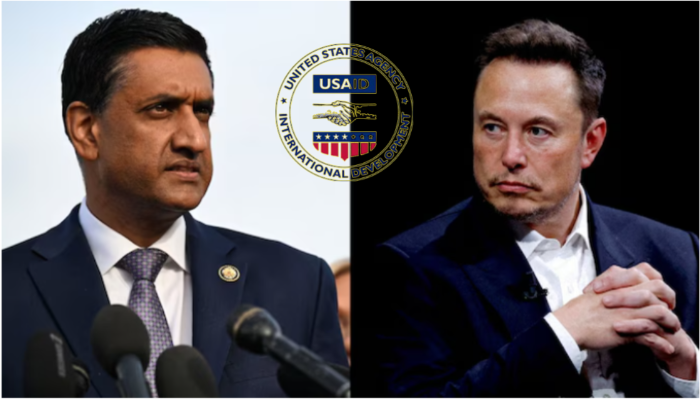
A public spat has erupted between Elon Musk and Democratic Congressman Rohit “Ro” Khanna over the United States Agency for International Development (USAID), Department of Government Efficiency (DOGE) and wealth taxes. Khanna referenced a study published in “The Lancet” and attributed the potential deaths of millions of kids globally to his involvement in the Trump administration.

Afterwards, a series of fiery exchange took place between the two as Musk labelled him “Ro the Robber,” insinuating that he profits inappropriately from the stock market. He warned that it was “time to sue this liar” for spreading misinformation and firmly rubbished the Khanna’s remarks.

Musk, the world’s richest man, who ran the Department of Government Efficiency (DOGE) in the first few months of the new Trump administration to check unnecessary spending, refuted Khanna’s allegations and stated, “All DOGE required was contact information of the recipients to confirm that funding was not fraudulent. No validated medical funding was stopped.” He mentioned that the State Department currently supervises anything that appeared to be valid life-saving funding and added, “If anyone had actually died as a result of DOGE, their names would be worldwide headline news.”

He also emphasised the dubious history of the federal agency and wrote, “On the other hand, USAID did help fund the Wuhan Virology Institute, which caused the deaths of millions, and the revolution that started the Russia-Ukraine war.”

Musk reiterated, “The standard applied by DOGE was very simple and easy: Provide contact information for the recipients of aid, so that we can confirm it is not fraudulent.” He accused that this monetary assistance was, in fact, “being sent to corrupt politicians under the guise of aid” and declared that “liars and stock insider traders” such as “Ro the Robber” should be incarcerated.

The Tesla CEO similarly outlined, “All DOGE did was require contact with the aid recipients to confirm that funds were being used legitimately. Anything less than this is insane.” He pointed out that the Justice Department has charged many individuals from USAID with “stealing money” and stressed that “they pled guilty.”

“Four men, including a government contracting officer for the USAID and three owners and presidents of companies, have pleaded guilty for their roles in a decade-long bribery scheme involving at least 14 prime contracts worth over $550 million in US taxpayer dollars,” divulged US Department of Justice in 2025.

“I do believe once we take power, there has to be accountability. There needs to be accountability for Elon Musk. You know, they’re celebrating that he created 4,400 millionaires, but they don’t talk about the 4.5 million children around the world who he possibly sentenced to death by dismantling USAID. He needs to answer for that. He needs to be subpoenaed. He needs to face an investigation. He needs to answer for what he did with DOGE,” Khanna had targeted the billionaire entrepreneur during a conversation with host Jennifer Welch at “IHIP News” podcast on 20th June (Saturday).

“The world’s richest person has spent all day tweeting, going after me. Why? Because I cited an academic study that his DOGE cuts may lead to the deaths of millions of children overseas. You know, Elon, I thought you were a free-speech guy. Why not debate me on these issues instead of threatening lawfare? You’re not going to be able to intimidate me,” Khanna later challenged in a video amid Musk’s rebuttals.

USAID was known as the biggest foreign aid agency in the world. However, it was shut down during President Donald Trump’s second term due to multiple grave accusations including fraud and regime change plots. Later, the US State Department absorbed much of its remaining operations.

USAID’s intervention in the name of supporting democracy and providing help

Samantha Power, who was the US Ambassador to the United Nations, after which she was appointed as the administrator of the USAID, conveyed, “We are establishing the Partnerships for Democracy fund and using our alliances and convening power to support the locally led ambitions of pro-democratic movements and governments,” in June 2022 at an official event.

She informed that a “Coalition for Securing Election Integrity” was formed which involved both governmental and nongovernmental organisations to “set norms for what constitutes a free and fair election.” She unveiled, “We’ll draw from our new Defending Democratic Elections Fund to help strategically important elections meet these agreed standards throughout the election cycle.”

Power announced the establishment “of an insurance fund for investigative journalists called Reporters Mutual” to “defend journalists and media organisations from legal harassment.” She expressed that earlier the work concentrated on instructing these journalists in investigative methods, acquiring evidence and factchecking to assist their probes within the country. However, the regional program has been introduced for cross-border collaboration among journalists.

Power’s statements reflect an acknowledgement of the critical USAID role in deploying a wide range of tactics to sway elections in their favour, particularly those deemed “strategically important.” They founded a committee to determine what qualifies as a free and fair election, which implies that the process would only be recognised as such if it aligned with their self-serving criteria and not otherwise. People were even trained to promote certain narratives that supported this overt interference, masquerading as investigative journalism and fact-checking.

“Notice the pattern? Since the 2025 USAID cuts, 7 conservative candidates swept presidential elections across Latin America: Ecuador, Bolivia, Honduras, Chile, Costa Rica, Colombia, and Peru. If USAID was still in place, Lula most likely wouldn’t have won in Brazil”, a popular X handle posted.

According to Wikileaks, nearly half a billion dollars were transmitted via the international media non-governmental organisation, Internews Network. USAID contributed to media outlets in over 30 nations. It financed training and resources for about 6,200 journalists as early as 2003, backed 707 non-state news groups and aided 279 civil society entities. Jeanne Bourgault who is the President and CEO of Internews spent 6 years with USAID before she made the switch.

The disclosers were made in a deleted fact sheet of the agency that exposed the scale of direct American involvement in global media systems over the previous 20 years. Additional leaked data unveiled that Internews collaborated with 4,291 media platforms, generating 4,799 hours of programming in a single year and reaching an estimated 778 million people. It reportedly pushed for media control and covert censorship.

Similarly, USAID reportedly funded and trained thousands of attorneys, judges and election workers. It also carried out surveys that cast doubt on the validity of elections, released reports alleging fraud and took part in supervising fresh elections both domestically and internationally.

From virus to regime change: US, USAID breeds and nurtures havoc around the world

USAID awarded the EcoHealth Alliance more than $1 million between 2009 and 2019 which was used for research on bat coronaviruses at the Wuhan Institute of Virology. “It is deeply disturbing that American taxpayers footed the bill for over $1 million to support dangerous and potentially deadly research at the WIV, a laboratory run by the Chinese Communist Party (CCP) and tied to military biological research. I thank my colleagues for including my amendment to end the flow of federal dollars to the WIV,” stated Congressman Guy Reschenthaler in 2021.

Moreover, Tulsi Gabbard, the former US director of national intelligence (DNI), recently shared a collection of declassified documents about Covid-19’s origins and Chief Medical Advisor to President Joe Biden, Dr Anthony Fauci, exposing “years of lies, censorship and cover-ups.”

“I’m releasing never-before-seen communications and documents exposing how Dr Fauci provided millions in US taxpayer dollars to fund dangerous gain-of-function research at the Wuhan lab, worked with politicised elements within the Intelligence Community to suppress the truth about his actions and hide the virus’s lab-leak origins, and lied to Congress while under oath in 2024. It’s time you know the truth,” she asserted.

Gabbard recounted that the pandemic “caused tremendous hardship and pain for millions of our fellow Americans and for countless people around the world.” She underscored, “The tactics used to hide the truth are straight from the deep state playbook: politicised self-serving leaders like Dr Fauci covered up their own wrongdoing and abuses of power, manipulated intelligence, lied to Congress and undermined a duly elected President by restricting his access to vital facts needed to keep the country safe.”

OpIndia had extensively covered Dr Fauci’s claims and the suppression of legitimate concerns regarding coronavirus origins and research at the hands of the administration under his influence. It is notable here that US government documents have shown that it was US government funding that was carrying out gain-of-function research at the Wuhan Institute of Virology in China.

The installation of puppet governments that adhere to the directives of Washington has been a longstanding and ambitious project of the US and its agencies, including USAID. These dangerous and violent schemes have manifested numerous times in different parts worldwide, including the regime change operation in Ukraine.

A leaked cable obtained by Drop Site News reinforced concerns that Khan’s government was toppled in 2022 due to American support. It drew a link between US disapproval of his policy on Russia and the internal no-confidence vote that removed him from office. Additionally, it recorded a direct signal that Washington would “forgive everything” if Khan were replaced.

American diplomat and Central Intelligence Agency (CIA) asset Victoria Nuland, who partnered closely with USAID has often been reported as the mastermind of the regime change in Ukraine. She and the late US Senator John McCain fuelled and frequently participated in demonstrations in Ukraine that eventually evolved into the violent Euromaidan revolution, which claimed the lives of over 100 protestors and 13 police officers.

This movement pressured President Viktor Yanukovych, who was democratically elected in 2010 to flee because he had refused to sign Association Agreement and Free Trade deal with the European Union. He refused to join the EU and opted to seek closer ties with Russia alongside a $15 billion bailout. However, neither the US nor its friends were pleased with his choice and orchestrated the uprising.

Nuland was a major motivator for the agitation and guided the selection of the post-revolution authorities. These actions of the United States and its Western allies in the backyard of Russia raised heckles in Moscow and ultimately set off the ongoing conflict in the region.

Bangladesh’s former home minister, Asaduzzaman Khan Kamal also outlined the involvement of the CIA in the downfall of Sheikh Hasina government in 2024. Interestingly, Nuland’s name had come to light in association with this conspiracy as well.

Conclusion

From Asia to the Arab states and Europe, the United States has been proactive in subverting and uprooting governments under the guise of advancing democracy, despite their actual intentions being completely disconnected from their claims. The nation has employed both violent and diplomatic strategies, including protests and coups.

USAID was one such agency that was at the forefront in pursuing these nefarious goals. Nevertheless, the repercussions of its wicked aims also affected American citizens. These alarming activities have been extensively documented and exposed, which also encompassed massive corruption, resulting in the Trump administration’s decision to disband it.

Supreme Court stays Delhi HC order directing release of 1993 Bowbazar blast ‘mastermind’ Rashid Khan who ‘intended to kill Hindus in Kolkata’: Read what happened and how Mamata Banerjee govt pushed for premature release

On 22nd June, the Supreme Court stayed the Delhi High Court order granting remission and directing the release of Md Rashid Khan, the TADA convict described by the West Bengal government as the mastermind of the 1993 Bowbazar blast.

Notably, Khan financed a planned bomb-making operation amid communal tensions following the December 1992 demolition of the disputed structure at Ayodhya. He had intended “to kill the Hindus in Calcutta” using bombs through “Muslim brothers”. An accidental detonation at the bomb workshop killed 69 people, none of whom were Hindus, injured dozens and brought down buildings in the densely populated central Kolkata neighbourhood.

A bench of Justices PK Mishra and Sanjeev Sachdeva passed the interim order while hearing the West Bengal government’s challenge to the Delhi High Court judgment dated 5th June. Khan, now around 77 years old, has spent more than 33 years in prison.

Additional Solicitor General SV Raju questioned the High Court’s reliance on the reformative theory of punishment in a case involving a massive explosion and widespread casualties. He also pointed out that the State Sentence Review Board had ultimately advised against Khan’s premature release.

Senior Advocate MR Shamshad, appearing for Khan, referred to his long incarceration, prison conduct, age and poor health. He also invoked the release of co-convict Pannalal Jaiswara in March 2014.

The bench, however, distinguished Khan’s case by observing that he was the “mastermind”. When Shamshad argued that Khan had been released on parole several times and had always returned, the court noted that he had been punished for an act that was “almost a terrorist act”.

The Supreme Court stayed the release order after observing that the appeal could become infructuous if Khan was freed before the challenge was examined. The apex court has scheduled the next hearing in the matter for 28th July.

Delhi High Court granted remission and ordered immediate release

Justice Neena Bansal Krishna of the Delhi High Court had allowed Khan’s petition on 5th June and directed that he be released forthwith if he was not wanted in any other case.

The High Court acknowledged that the Bowbazar blast was not an individual crime and had affected society at large. It nevertheless held that the gravity of the offence could not remain the sole ground for denying remission when the applicable policy did not expressly exclude TADA offences or crimes affecting national security.

A character certificate issued by the Superintendent of Presidency Correctional Home in February 2020 described Khan’s behaviour as “very very good” and stated that he had remained free from prison punishment.

The judgment recorded that he spent 93 days on parole without a police escort, returned within the prescribed period and faced no complaint of threats or communal hostility. Khan was also stated to be suffering from diabetes, hypertension, chronic metabolic disease, benign prostatic hypertrophy, a cataract and other age-related ailments.

The High Court concluded that the possibility of Khan committing another offence was very low. It held that keeping him imprisoned after more than 33 years would serve no fruitful purpose and that his sentence had already achieved its deterrent and reformative objectives.

Instead of directing the government to reconsider his case, the court granted remission itself, saying that sending the matter back to the executive would serve no purpose once the circumstances justified release. The Chief Minister Suvendhu Adhikari-led West Bengal government approached the Supreme Court to challenge the judgment of the Delhi High Court.

Mamata government’s board backed Khan’s release in 2015

In 2007, the CPI(M)-led West Bengal government initiated the process for Khan’s premature release after the prisons department recommended his case following his completion of 14 years in prison. However, the proposal did not result in his release. The Supreme Court subsequently clarified in 2014 that the Union government, and not the State, was the appropriate authority to grant remission to a TADA convict.

The Mamata government later revived the effort, with the State Sentence Review Board recommending his release in March 2015. The West Bengal State Sentence Review Board considered 32 cases and recommended five life convicts, including Khan, for premature release. There were attempts to paint him as a “good person” in media as well because he had “taken up art”.

The Board examined reports from the police, correctional authorities and probation officials. It also considered the duration of imprisonment, physical and mental condition, age, prison conduct, possibility of reoffending, social acceptance and prospects of rehabilitation.

A formal release order was not issued because the Supreme Court had temporarily restrained state governments from exercising remission powers in certain categories of cases while hearing the Union government’s petition in the V Sriharan matter.

Khan’s case became caught in a dispute over whether the State or the Centre was the appropriate authority to grant remission to a convict sentenced under a central law such as TADA.

The Delhi High Court noted that the 2015 recommendation had not been reversed because of any subsequent misconduct by Khan. The judgment described the later denial of remission as a “change of heart” arising from legal confusion over jurisdiction.

Notably, West Bengal’s position changed in subsequent years. The State Sentence Review Board rejected Khan’s request on 29th May 2017 and again on 8th August 2018 after Kolkata Police raised strong objections based on the gravity of the crime, its social impact and Khan’s role.

In February 2019, West Bengal sent an unfavourable recommendation to the Union government. The Ministry of Home Affairs also refused his request, citing the TADA conviction and the effect of the crime on national security.

The West Bengal government, whose Sentence Review Board had recommended Khan’s release in 2015, eventually approached the Supreme Court in 2026 to stop the Delhi High Court’s release order. The main difference was that power in the State was in the hands of a BJP-led government instead of a TMC-led government.

Why Khan approached the Delhi High Court

Khan’s son used the Right to Information Act in 2016 to obtain details about the stalled remission process. The West Bengal government confirmed that the State Sentence Review Board had recommended Khan’s premature release on 25th March 2015, but the decision was subsequently reviewed because of the Supreme Court’s orders restricting states from granting remission in certain cases. A second RTI response in July 2016 again stated that the State had been prevented from implementing the recommendation.

Khan then submitted a representation to the Union Home Ministry on 8th August 2016, citing the release of his co-convict and West Bengal’s earlier recommendation. His son sent several reminders, while the Home Ministry stated in September and November 2017 that the application remained under consideration.

Khan eventually approached the Delhi High Court because TADA was a central law, and he argued that the Union government, based in New Delhi, was the appropriate authority for deciding his remission. He challenged the State Sentence Review Board’s 2017 and 2018 rejections and sought directions for his premature release.

Bombs manufactured above a satta den in Bowbazar

The case arose from a devastating explosion on the night of 16th March 1993 at premises in the 266-268-A and 267 BB Ganguly Street area of Bowbazar in central Kolkata. The records describe the location as a clandestine bomb-making workshop operating above or alongside illegal gambling premises linked to Khan.

According to court documents and media reports, Md Khalid acted under Khan’s instructions and procured nitro-glycerine and other chemicals used to manufacture bombs and grenades. Khan financed the procurement and processing of the explosive material.

Khan’s gambling establishment provided cover for the activities. The movement, noise and late-night operations associated with satta betting allowed explosive materials to be brought in and devices to be assembled without immediately drawing attention.

During the hearing at the Sessions Court, investigators stated that the accused had accumulated quantities of volatile explosive substances far beyond what could be safely handled or stored. Khalid was accused of functioning as the principal bomb-maker, while Khan was presented as the financier, organiser and central figure directing the operation.

The prosecution said that the bombs were being manufactured for later terrorist operations. The blast itself was not the planned attack. It reportedly occurred when the stockpiled explosives and assembled devices detonated accidentally inside the workshop.

The initial ignition reportedly triggered a chain of explosions through the stored material. The force demolished the workshop and tore through surrounding buildings in the congested neighbourhood. Closely packed structures and narrow streets increased the scale of the casualties.

The Bowbazar explosion therefore differed from a timed bombing at a selected public target. According to the prosecution, it exposed an operating bomb factory after explosives intended for future use went off prematurely.

69 killed and buildings reduced to rubble

The First Information Report registered on 17th March initially recorded the deaths of 40 people and grievous injuries to several others. The toll later rose. A New York Times report from March 1993 stated that Kolkata Police stated it was a bomb blast but one officer was quoted saying that a large cache of explosives were stored in the building. According to the officer, the blast happened because of “careless handling” of the explosives.

During subsequent proceedings, the State placed the final figure at 69 people killed and 46 injured. Eight buildings were stated to have been destroyed or damaged. Victims included residents of adjoining multi-storey buildings and people present in the area. The blast wave, falling masonry, shattered debris and fires caused extensive devastation.

Two multi-storey structures were reportedly reduced to rubble, while surrounding buildings were badly damaged. Police personnel and fire brigades reached the site during the night. Rescue operations were complicated by the confined streets, unstable debris and the possibility that further explosive material remained at the location.

Police removed injured people to hospitals and collected material from the wreckage. The complaint lodged by Sub-Inspector BK Chattopadhyay stated that unknown persons, acting pursuant to a criminal conspiracy, had caused the explosion using explosive materials.

Forensic evidence shifted probe towards a bomb factory

The case was initially registered under Sections 120B, 436, 326 and 307 of the Indian Penal Code and provisions of the Explosive Substances Act. Murder charges were added as the casualties mounted.

According to the prosecution, forensic examination of the debris revealed explosive residues, fragments, wiring and materials associated with bomb assembly. Investigators rejected the possibility that the destruction had resulted from a gas leak or an ordinary accident.

Witness accounts and material recovered from the premises also connected the site to Khan’s illegal gambling operations.

TADA provisions were added in May 1993. The police submitted the charge sheet before the Designated Court on 14th June 1993 for offences including criminal conspiracy, murder, destruction by explosives, violations of the Explosive Substances Act and Sections 3 and 4 of TADA.

The prosecution said that Khan had declared an intention to kill Hindus in Kolkata using bombs through Muslim associates. It argued that this demonstrated an intention to disturb communal harmony and strike terror amid the tensions that followed the demolition of the disputed structure at Ayodhya in December 1992.

An earlier Calcutta High Court proceeding concerning the validity of the TADA sanction observed that the explosion itself did not prove an intention to kill Hindus because no Hindu was reportedly killed in the accidental detonation. That proceeding dealt with the sanction and cognisance under TADA, not the final determination of Khan’s guilt.

TADA court convicted Khan and his associates

A designated TADA court convicted Khan and several associates in 2001. Khan was held guilty of offences including murder, criminal conspiracy, violations of the Explosive Substances Act and offences under TADA.

The prosecution identified Khalid as the bomb-maker and Khan as the organiser who financed and directed the operation. West Bengal continued to describe Khan as the mastermind while opposing his premature release.

The Supreme Court subsequently dismissed the appeals filed by Khan and the other convicts and upheld their convictions and sentences.

Conclusion

The case has now returned to the Supreme Court, which will examine whether the Delhi High Court was justified in granting remission to a convict described as the mastermind of a bomb-making operation that killed 69 people. Until then, Khan will remain in prison, with the apex court’s stay preventing the implementation of the release order.

‘Purificatory ceremonies in temples should comply with Shastras’: Maharashtra court stays restoration of idols in Shri Vitthal-Rukmini Temple using chemicals

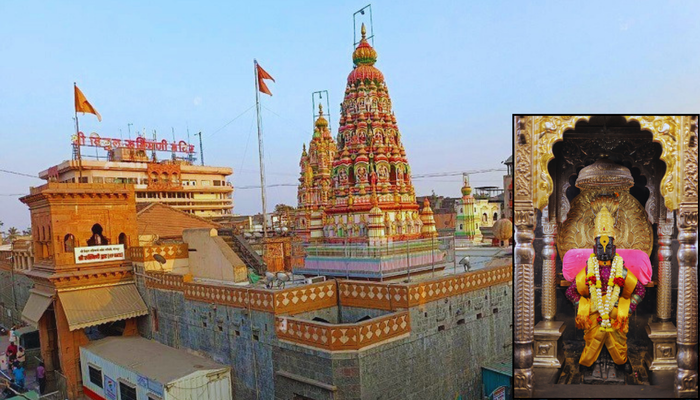
A Maharashtra court on Monday (22nd June) passed an interim order restraining the Shri Vitthal-Rukmini Temple committee from applying a protective chemical coating on the vigrahas (idols) of Shri Vitthal and Goddess Rukmini. Joint Civil Judge SS Raul, Junior Division, Pandharpur, passed a temporary injunction on 22 June 2026, observing that the application of chemicals on the murtis placed in Shri Vitthal Rukmini Temple in Pandharpur, Maharashtra, in the name of restoration would hurt the sentiments of devotees, who want the restoration process to comply with the Shastras.

“When devotees consider that god himself resides in the idol, such use of chemicals upon it adversely affects the sentiments of devotees.” The court examined the report of the Archaeological Survey of India (ASI) on the status of the idols and noted that the idols showed no signs of deterioration and that any delay in restoration would cause no damage.

The court rejected the temple administration’s claim that private individuals have no right to file a suit to stop the restoration process, as the temple administration is governed by the Pandharpur Temple Act. The court held that the plaintiffs are devotees and that any act affecting the idols would affect the sentiments of devotees.

Why the opposition

The plaintiff, representing the Maharashtra Mandir Mahasangh, which works for the protection of Hindu Temples, had approached the court seeking to stop the temple administration from carrying out a proposed restoration of the Shri Vitthal murti, scheduled for June 23–24, 2026. The restoration process would involve coating the murti with epoxy resin as suggested by the Department of Archaeology. The restoration process was last carried out in 2020, despite opposition. At that time, it was assured to the people opposing the process that no restoration would be carried out for the next 10 years. However, the Department of Archaeology has again suggested the process, within 6 years of the last restoration.

The procedure involves cleaning the idols with chemicals, followed by filling the gaps or holes in the murti using stone powder combined with binding agents. The plaintiff has opposed the restoration of the murti using chemicals and has advocated for the traditional method of restoring the murti using ‘Vajralep’ as prescribed in the Shashtras.

Temple administration is merely a custodian of the temple: Court

The defendants opposed the pleadings of the plaintiffs, claiming that the temple administration is governed by the Pandharpur Temple Act and therefore, the plaintiffs have no locus standi in the case. After examining the question of locus standi, the court rejected the defendants’ argument that the plaintiff had no right to file the present suit. The court also noted that the temple committee itself treated the plaintiffs as stakeholders by inviting them to a meeting of stakeholders held before taking the final decision regarding the restoration process.

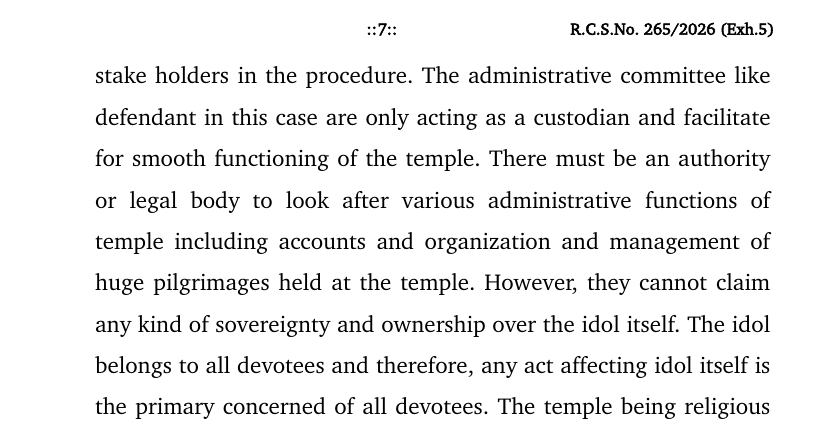
The court further said that the temple administration is merely a custodian of the temple, and it exists for the smooth functioning of the temple. It added that the temple administration cannot claim any sovereignty or ownership over the temple idols. The court acknowledged the plaintiff’s right to file the present suit, saying that plaintiffs are devotees and any act affecting the idols is the concern of all devotees.

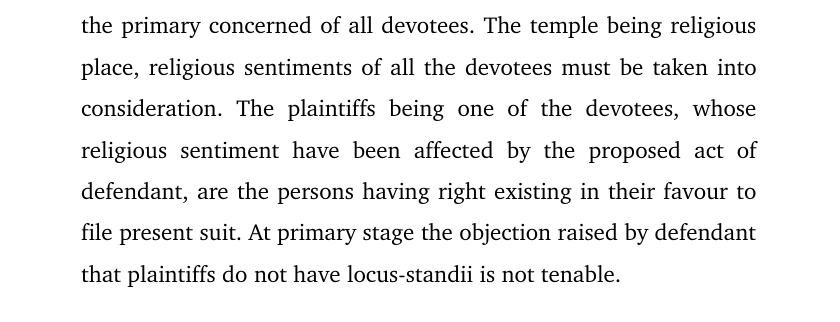
“The temple being a religious place, religious sentiments of all the devotees must be taken into consideration. The plaintiffs, being one of the devotees, whose religious sentiments have been affected by the proposed act of the defendant, are the persons having a right existing in their favour to file the present suit. At the primary stage, the objection raised by the defendant that the plaintiffs do not have locus-standi is not tenable,” the court asserted.

Restoration of idols should conform to the Shastras: Court

The plaintiff had submitted before the court that the chemicals to be used in the proposed restoration are prohibited in the Shastras. He argued that Vajralep prepared using Ayurvedic and natural herbs should be applied on the idols for restoration after the prescribed ritual. The plaintiff said that the objections regarding the proposed restoration were not taken into account by the defendants, who made the decision regarding restoration ex parte.

In light of precedents on the protection and restoration of temple idols, the court said that any departure from the rules prescribed in the Agamas (Shastras) relating to worship and purificatory ceremonies for restoring the sanctity of the shrine results in the defiling of the idols.

The court noted the defendant failed to prove that the proposed restoration would conform to the Shastras. “Any departure from such procedure will result in defilement of the idol itself. This will strongly affect the religious sentiment of devotees, including plaintiffs. Thus, the plaintiff’s right in respect of the idol of having religious sentiment and their faith that the divine spirit rests in the idol, is going to be affected by the proposed act of the defendant. Thus, plaintiffs have proved the existence of a right in their favour which requires adjudication on merit. Thus, they have a prima facie case established in their favour,” the court stated.

The court issued the temporary injunction, observing that if the injunction is refused, the sentiments of plaintiffs and other devotees will be affected.

BBC sanitises Antifa terror: British broadcaster calls Antifa attackers ‘protestors’ after US court hands them 450 years in prison over Texas ICE attack, cop shooting

The BBC has a penchant for humanising Islamic terrorists and stirring sympathy for ideologically aligned individuals, regardless of how heinous a crime they may have committed. The state broadcaster of the United Kingdom gave ‘protestors being incarcerated’ victimhood spin to the conviction and sentencing of eight Antifa terrorists who ambushed an Immigration and Customs Enforcement (ICE) facility in Alvarado in the US’s Texas, and shot a police officer in the neck.

Eight Antifa terrorists collectively sentenced to 450 years in prison; BBC portrays convicts as ‘protestors’ being jailed for their activism

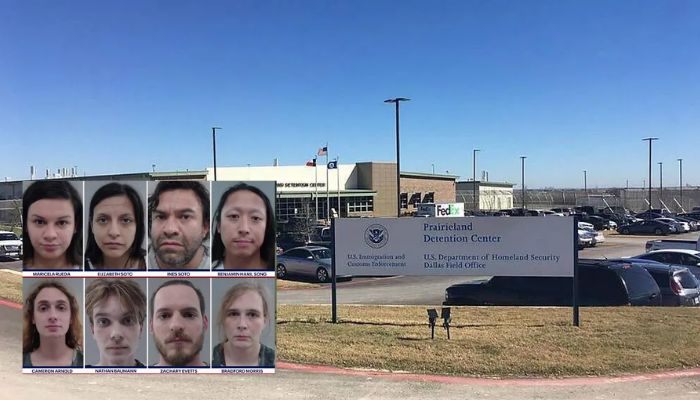
On the 23rd of June 2026, eight members of a North Texas Antifa cell were sentenced in federal court in Fort Worth, Texas, to a combined 450 years in jail. The accused persons Benjamin Hanil Song, Maricela Rueda, Cameron Arnold, Savanna Batten, Zachary Evetts, Bradford Morris, and Daniel Rolando Sanchez Estrada were convicted in February-March 2026 for their roles in the attack on 4th July 2025 on the Prairieland ICE Detention Centre in Alvarado. The facility housed immigrants awaiting deportation to their home countries.

With 46 witnesses and 210 exhibits, the prosecutors proved at trial that the accused persons formed a coordinated Antifa cell. The Antifa ‘activists’ used encrypted applications, monikers, Faraday bags, and reconnaissance to plan a violent attack. The US Justice Department said that at least eleven Antifa terrorists arrived in black bloc attire, had their faces covered. They were armed with at least 11 firearms, body armour, and military-grade first-aid kits with tourniquets. The Antifa terrorists also carried explosives/fireworks.

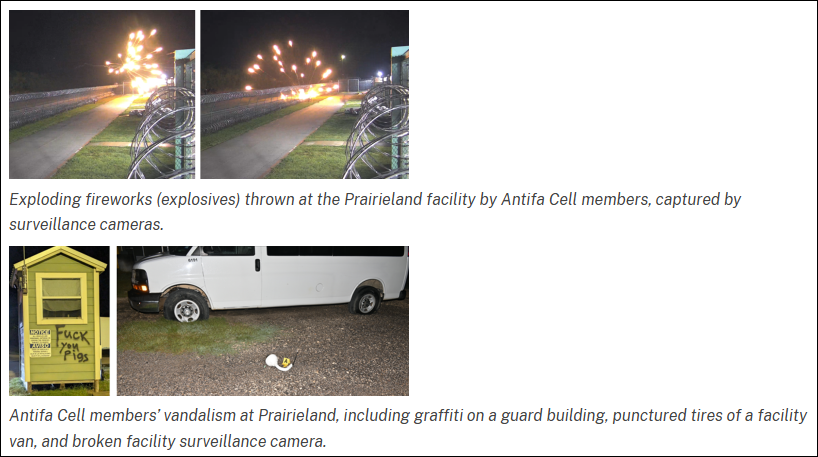
After arriving at ICE’s detention facility, the Antifa terrorists began shooting off and throwing fireworks (explosives) at the facility and vandalising vehicles and a guard shack on Prairieland property.

“Trial testimony reflected that, late at night on July 4, 2025, at least eleven of the defendants rioted and attacked the Prairieland Detention Centre in Alvarado, Texas, which the U.S. Department of Homeland Security was using to house illegal aliens awaiting deportation.  The defendants dressed in “black bloc”—dark clothing with head and face coverings that concealed their identities—designed to hide each individual’s identity but also to aid and abet those members engaged in illegal acts by making members indistinguishable from one another to law enforcement,” the US Justice Department said.

The Antifa terrorists attacked the detention facility by shooting off and throwing fireworks, vandalising vehicles and a guard shack, slashing tyres, breaking surveillance cameras, and spray-painting derogatory graffiti.

When an Alvarado police officer responded to the 911 call from correctional officers, the Antifa cell leader Benjamin Hanil Song, who is a former US Marine Corps reservist and  Nathan Baumann, shouted “get to the rifles” on bodycam audio and opened fire. The bullet fired by Song struck the police officer in the neck/shoulder. Although Song fled the scene immediately, he was captured on 15th July 2025.

The prosecutors presented evidence showing how the Antifa operatives were working in an organised fashion to attack the detention centre in Alvarado. These included numerous chats of the members, who used an encrypted messaging app to coordinate with each other that had auto-delete functions, permanently deleting some Antifa Cell members’ communications.

The court convicted eight of the Antifa terrorists involved in the Alvarado ICE detention centre attack on the charges of rioting, using weapons and explosives, providing material support to terrorists, obstruction, and attempted murder of a law enforcement officer.

The federal court sentenced Benjamin Hanil Song, who was convicted of the attempted murder of a police officer, to 100 years in prison.

Convict Maricela Rueda was sentenced to 70 years in prison; Cameron Arnold was sentenced to 50 years in prison; Savanna Batten was sentenced to 50 years in prison; Zachary Evetts was sentenced to 50 years in prison; Bradford Morris was sentenced to 50 years in prison; Elizabeth Soto was sentenced to 50 years in prison; and Daniel Rolando Sanchez-Estrada was sentenced to 30 years in prison.

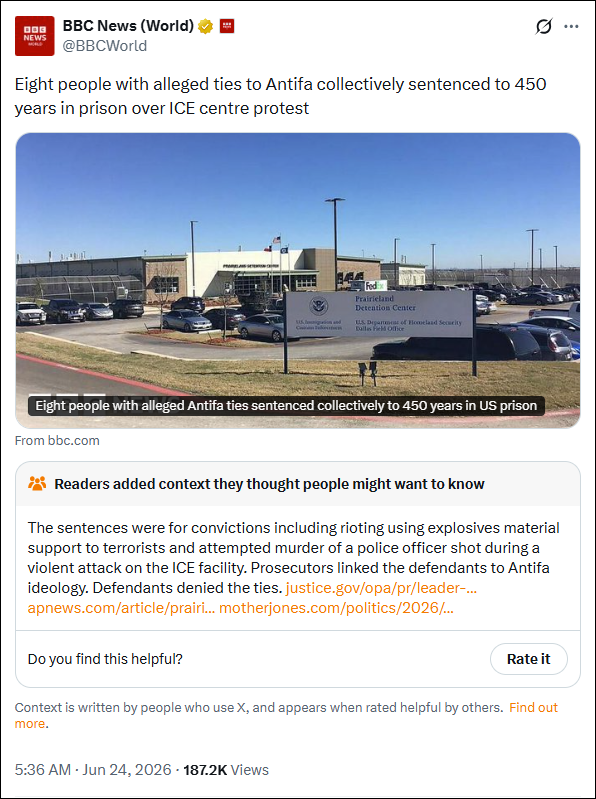
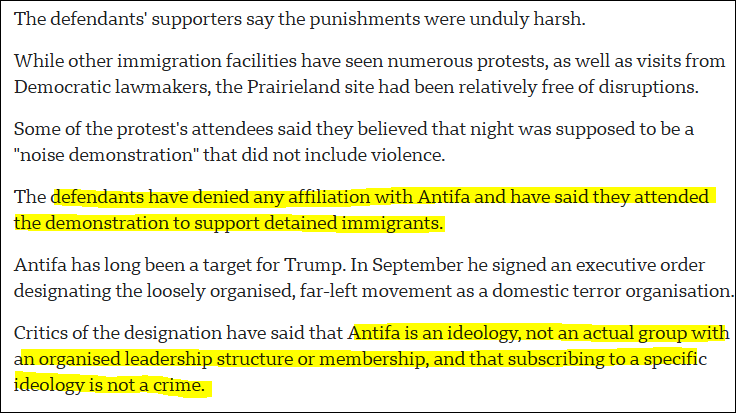
Despite there being evidentiary proof establishing that the convicts not only subscribed to the Antifa ideology but also worked in a coordinated manner to carry out a violent attack on an ICE detention centre, the BBC described the Antifa links of the convicts as “alleged”.

The Islamo-leftist propaganda outlet passed off a planned armed ambush with gunfire on police as a “protest”.

“Eight people with alleged ties to Antifa collectively sentenced to 450 years in prison over ICE centre protest,” the BBC wrote on X on 24th June.The

The BBC’s blatant attempt at sympathetically contextualising the attack and conviction of the Antifa terrorists, decoupling the convicts and the Antifa ideology, and giving a victimhood spin to the left-aligned perpetrators attracted severe backlash online.

Many said that while the Antifa terrorists were sentenced for planning a terrorist attack, shooting a law enforcement officer in the neck, the BBC framed their sentencing as an unfair outcome of ‘protesting’.

In fact, some X users added context to the BBC’s post and wrote, “
The individuals were sentenced for a terrorist attack involving explosives and the attempted murder of a police officer, not a protest. Following their convictions, their ties to the group are no longer alleged.”

The “alleged” dodge and the erasure of the police officer’s shooting show that leftist media outlets like the BBC have no qualms about downplaying even the attempted murder of an ideological adversary or a police officer simply doing his job to whitewash those ideologically aligned with them.

Further humanising the attempted murder convict Benjamin Song, the BCC cited an Associated Press report quoting Song’s mother Hope disputing ‘claims’ that Benjamin shot the officer and claiming that her son “didn’t intend to hurt anyone”. How utterly shocking and believable it is that the family members of a murder convict claim that he/she did not commit any crime.

In one single article, the BBC not only decoupled Antifa or “anti-fascist” ideology from the convicted individuals but also whitewashed the far-left extremist ideology itself. In short, the BBC said, “Look, the protestors who attacked the ICE facility and shot a police officer were not linked to Antifa ideology, even though one of them shot a police guy in the neck, they did not intend to hurt anyone. Also, Antifa is just an ideology and subscribing to it is not a crime.”

The BBC, however, has exhibited a well-documented pattern of inserting sympathetic ‘context’, using the “alleged” framing to downplay even legally proven crimes of ‘activists’ aligned with their leftist ideology.

Such is their institutional bias and commitment to shielding those the left liberals across the world usually portray as victims, despite their predatory antecedents, that the BBC chose to humanise Antifa terrorists in the US but did not cover the recently released Rape Gang Inquiry Report in its home country the UK, because around 87 to 95% rapists were identified as Pakistani Muslim men victimising non-Muslim girls due to religious hatred.

Back in 2022, the BBC’s anti-Hindu Leicester violence reportage was riddled with anti-Hindu bias, with a deliberate attempt at villainising Hindutva and the BJP-RSS, even though there was nothing linked to RSS, BJP, or so-called Right-Wing extremists or fascist orientation to the violence at all. The BBC had conveniently shifted the blame for the Muslim-orchestrated violence and hatred to Hindus.

In August 2024, when Hindus were being singled out, raped, looted, and killed by Muslim mobs in Bangladesh, the BBC had claimed that the “far-right” was spreading false claims about Muslims targeting Hindu minorities. Driven by the ideological imperative of Muslim saviourism, the BBC framed the Islamist onslaught against Hindus, and the desecration of their temple,s as “political violence” or political retribution for supporting the ousted PM Sheikh Hasina’s party.

In May this year, the BBC ran the headline “Selling children to survive: Afghan fathers forced to make impossible choices.” In this story, the BBC profiled Afghan men who were selling their daughters as young as five-year-old daughters into marriage or servitude in exchange for money.

OpIndia reported on how the BBC humanised the “impossible choices” of Afghan fathers and desperation. Instead of highlighting the blatant child trafficking and victimisation of minor girls, the BBC invoked sympathy for men selling off their daughters to pay bills.

Clearly, when violence of depravity comes from ideological or religious groups/individuals aligned with leftist causes, be it Antifa or Islamism, the BBC inserts soft language, passes off its sympathetic narrative as context, and downplays their crimes regardless of convictions, sentences, or the naked truth.

Bangladesh hunts for $230 billion stashed abroad: As its economy struggles, a look at how Indian liberals once cited it to attack the Modi government

Bangladesh is intensifying its efforts to recover assets worth over $230 billion allegedly siphoned from the country during the 15-year rule of ousted Prime Minister Sheikh Hasina. Earlier, the interim government led by Muhammad Yunus had said that over $234 billion was ‘stolen‘ from Bangladesh, and even claimed that the United Kingdom was “morally obliged” to help in recovery. Now, the PM Tarique Rahman-led government is desperately chasing the mirage of $230 billion as Bangladesh grapples with economic challenges exacerbated by the West Asia crisis.

Muhammad Yunus-led interim government had claimed that over $16 billion was being drained out of Bangladesh annually in the later years of Hasina’s rule.

Reports say that the new government has “doubled down” on recovery efforts. The Rahman government is actively seeking international support and lodging cases against tycoons and Hasina-era figures. The government, though desperate, is not delusional. Bangladesh lacks the requisite expertise in complex cross-border asset tracing and prosecution, which, anyway, is like searching for a needle in a haystack. Bangladeshi officials say that it will take years, if not decades, to claw back any significant amounts.

Since Sheikh Hasina was forced out of power and her country, the economy of Bangladesh has hollowed out.

The Bangladeshi government officials admit that the country’s economy is in shambles. Recent reports indicate that Bangladesh’s banking sector is in a near-collapse state, with non-performing loans (NPLs) surging to around 30 to 35% of total credit, making it among the highest globally.

Several banks have become technically insolvent or forced into mergers.

Meanwhile, Bangladesh’s Foreign Exchange Reserves, which peaked under the Hasina government near $48 billion in 2021, slumped to the $20 billions range by 2024. Experts attribute this sharp decline partly to mismanagement and looting.

Bangladesh’s GDP growth crashed to 3.49% in FY 2024-25, although the GDP is projected to grow by 4.6% to 4.9% for the 2025–2026 fiscal year.

The US-Israel war against Iran and consequent energy crisis have severely impacted Bangladesh, which imports 95% of its oil and fuel. Bangladesh’s Finance Minister Amir Khosru Mahmud Chowdhury recently said that the country’s treasury “bled” around $4 billion over the last three months due to higher energy prices resulting from the blockade of the Strait of Hormuz.

The country is forced to request a $3 billion loan from international lenders, including the IMF, World Bank, and the Asian Development Bank. This move came after Bangladesh’s fiscal deficit rose to a projected 3.6 per cent in the current financial year.

In this wake, Minister Mahmud Chowdhury said that the BNP-led government in Bangladesh is doubling down on recouping what it describes as “plundered assets”.

“Whatever we may be able to recover at a time like this, when we are really having serious fiscal issues, any amount of money helps,” he said.

In April this year, PM Tarique Rahman informed the Bangladeshi Parliament that recovery efforts are being bolstered “through information exchange, asset identification and enhanced mutual legal assistance with the concerned countries”.

He emphasised that the Rahman government is “placing the highest priority on recovering laundered assets abroad.”

Bangladesh is pursuing its allegedly siphoned assets in the UK, US, United Arab Emirates and Singapore, among other countries. A task force has been formed under the new central bank governor, Mohammed Mostaqur Rahman, to trace and retrieve the missing Bangladeshi funds abroad.

Further lamenting the alleged loot of Bangladesh’s funds, Mahmud Chowdhury said, banks’ balance sheets were “nil or in the minus” territory, forcing the government to recapitalise them.

“They (Sheikh Hasina-linked businessmen and politicians) took $234bn out of the country, laundered out, so the banks are in distress,” Chowdhury said.

Earlier in June 2026, the Rahman government was compelled to earmark $3.2bn for an emergency lifeline to help revive the banking sector.

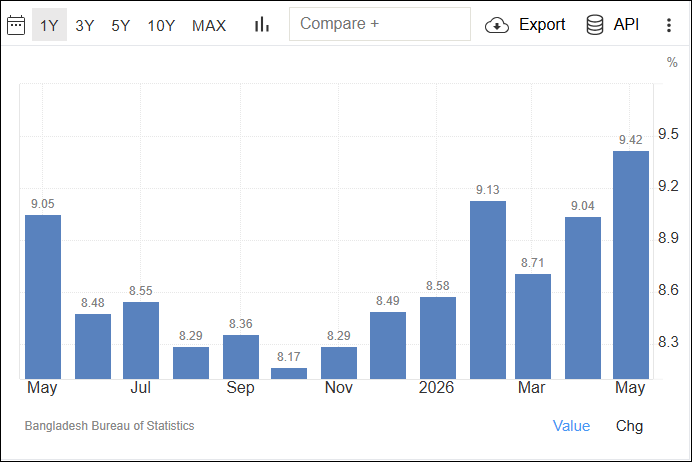
Inflation has also remained a perpetual challenge for Bangladesh’s economy. Even after months of monetary tightening by the new central bank governor, inflation is still above 8%, making it the highest in South Asia. As of May 2026, Bangladesh’s inflation rate stands at 9.42%, rising from 9.04% in April 2026.

Before, during, or after the Iran war, the cost of food, fuel, rent, and essential services kept surging for ordinary households in Bangladesh. The country was still struggling to recover from the impact of the COVID-19 pandemic when political instability engulfed Bangladesh. The country’s overall poverty rate stands at an estimated 27.9%, with extreme poverty at 9.3%, meaning that approximately 27.9% of the population lives below the national poverty line, meaning over a quarter of the country is considered poor.

A significant section of Bangladeshi families who were earlier considered “just above” the poverty line are now slipping back into poverty because their earnings can no longer keep up with rising prices. 

In addition, the government borrowing rates have also been troubling. Bangladesh’s total public debt burden has exceeded Tk 22 lakh crore, representing approximately 40.2% to 41.8% of the country’s GDP. Earlier this month, the Bangladeshi media reported that even if the government does not take fresh loans in the next financial year, which is highly unlikely, “it will still have to spend approximately BDT 4.35 trillion solely on repaying the principal and interest of previously incurred debt.”

The political instability in the country over the past two years has resulted in a steep drop in investment in Bangladesh. The new government is working to attract foreign investments; however, Bangladesh’s tendency to descend into communal anarchy still remains a concern for investors, who continue to not feel confident enough to inject fresh capital or start new projects in the country.

Bangladesh’s textile industry, once booming, is now in shambles. The country’s textile industry, valued at around $23 billion, forms the backbone of the nation’s economy, supplying yarn to the ready-made garments sector, which accounts for approximately 85% of the country’s total export earnings. However, the political instability and senseless hostilities towards India added to Bangladesh’s troubles.

With India set to ink deals with the European Union and the US, the country’s textile and apparel industry will get a massive boost. The US is already the largest export market for Indian textiles and textile products, with exports valued at $10.5-11 billion annually. In February 2025, the Modi government allocated Rs 5272 crores to the Ministry of Textiles this year as compared to Rs 4417.03 crores in the Financial Year 2024-25, in a clear bid to take advantage as businesses try to move away from Bangladesh. This has further added to Bangladesh’s troubles.

Imposed in May 2025 in an unannounced response to Muhammad Yunus’s hostile behaviour towards India. New Delhi imposed port restrictions on Bangladeshi goods, estimated to cost Bangladesh over $770 million.

While Bangladesh may not have been an economic Utopia under Sheikh Hasina, the period between 2022 and 2025 has been described by experts as a phase of “reversal,” meaning Bangladesh is undoing years of progress in poverty reduction and other such aspects.

Clearly, Bangladesh is in a deep financial quagmire and is taking desperate measures, including efforts to recover the siphoned $230 billion worth of assets stashed abroad.

Ironically, this is the same Bangladesh, Indian liberal commentariat hailed as an economic Utopia, much smaller but way ahead of an economic giant India. From Germany-based YouTuber Dhruv Rathee, anti-Modi parties, to Indian leftist media outlets, all of them repeatedly cherry-picked numbers and concocted a ‘Bangladesh is ahead of India’ narrative based on half-truths and exaggerations.

They would lend credence to and amplify the “Bangladesh miracle” narrative to target the Modi government, conveniently ignoring the stark differences between the nature of the economies, the population size and political realities of India and Bangladesh. While Bangladesh has a GDP of $450 billion, India is roughly 8-9 times larger, standing at nearly $4 trillion.

Undoubtedly, India did not fully tap its textile potential earlier, and Bangladesh had an edge in this sector. However, India is such a massive and diverse economy that it could, and now is, exerting dominance in this arena as well.

Indian liberals highlight Bangladesh’s slight edge in nominal GDP per capita ($2,911) compared to India ($2,812) as a shame on New Delhi that even an unstable country like Bangladesh is ‘ahead of us’. However, they conveniently forget that Bangladesh sometimes surpasses India in terms of per capita income due to currency fluctuations and its export-centric model.

Beyond cherry-picked numbers, India remains a spectacularly larger, wealthier, and more diversified economic superpower. India remains the fastest-growing major economy, while the Indian liberals’ favourite, Bangladesh, significantly depends on India for rice, power, and other essential supplies.

However, nothing better can be expected from those driven by ideological-political disdain from Modi/BJP, who earlier attacked the Modi government with ridiculous arguments like “even Taliban-ruled Afghanistan’s currency is stronger than ours”.

Smart locks turning into death traps? From Delhi to Lucknow, biometric doors jammed during power outages: Why is ‘fail-secure’ technology costing innocent lives?

Several tragic incidents reported across the country in recent years have highlighted a major safety issue linked to biometric and smart locks. From the basement flooding in Old Rajinder Nagar, Delhi, to the hotel fire in Malviya Nagar and the library fire in Lucknow, these incidents had one common factor. During the emergencies, power failures caused biometric and smart-lock doors to stop working, trapping people inside. As a result, many people were unable to escape in time and lost their lives.

According to the experts, the problem is linked to the way some smart doors are designed. At present, biometric doors mainly work on two systems: “fail secure” and “fail safe.” Among these, the fail-safe system can become dangerous during emergencies. In this system, the door remains locked whether electricity is available or not.

Such doors need power to open. Under normal conditions, when a person scans their fingerprint or face, an electrical signal activates a mechanism inside the lock, which pulls back a spring and unlocks the door. However, if the power supply is cut, the system stops working, and the door remains locked.

Fail-safe locks work differently. In this system, a magnet keeps the door locked. When a fingerprint or other biometric key is used, the power to the magnet is switched off, and the door opens. Because of this design, fail-safe doors automatically unlock when there is a power outage, allowing people to exit safely during an emergency.

Experts believe that one reason fail-safe technology is not widely used in India is the fear of theft. Many people worry that if doors automatically unlock during a power cut, their homes or businesses could become vulnerable to break-ins. As a result, protecting property is often given more importance than emergency safety.

Safety guidelines clearly state that fail-secure doors should only be installed in places where highly valuable assets need protection and not in areas where large numbers of people regularly enter and exit. The rules also require every such door to have a mechanical override or manual unlocking system so that it can be opened during emergencies,s even if there is no electricity.

However, safety experts say these guidelines are often ignored. The incidents in Delhi and Lucknow have once again raised concerns about the use of smart locks without proper emergency systems. These tragedies have also sparked questions about whether enough attention is being given to human safety when installing such security systems.

Why are Asiatic Lions, which once roared from Greece to the Ganges, confined to Gir? A journey from the brink of extinction to a resilient population of 891

On the road connecting Junagadh and Amreli in Gujarat, mornings often reveal a scene that is difficult to imagine in most parts of the world. Cattle graze in open fields, Maldhari herders begin their daily routine, and somewhere nearby, an Asiatic lion may be resting under a tree or moving through agricultural land. In many countries, large predators and people are separated by fences, protected zones or vast distances. In Gujarat’s Gir, however, humans and lions have shared the same environment for generations.

Today, the Asiatic lion survives naturally only in Gujarat. Anyone hoping to see these lions roaming freely in the wild must visit the Gir region and the surrounding areas of Kathiawad, also known as Saurashtra. While this achievement is a source of pride, it also raises an important question. How did a species that once occupied a vast territory across continents disappear almost everywhere, yet survive in one corner of western India?

The answer lies in a unique combination of history, geography, community participation and decades of conservation efforts.

A Lion that once ruled a vast territory

The Asiatic lion was not always limited to Gujarat. Historical records and scientific studies show that lions once ranged across a huge area stretching from parts of Europe and North Africa to West Asia and the Indian subcontinent.

Their presence was recorded from the Mediterranean region through present-day Iran and Iraq and into northern India. Within India, lions were found across regions that now include Rajasthan, Haryana, Punjab, Uttar Pradesh, Bihar and Madhya Pradesh. Ancient texts and historical accounts suggest that lions were familiar animals to people living across much of the subcontinent.

The lion also occupied an important place in Indian culture. It appeared in mythology, religious traditions and royal symbolism. Goddess Durga is depicted riding a lion, while lions are frequently mentioned in ancient literature as symbols of courage and strength. The four lions of the Ashoka Pillar, which today form India’s national emblem, reflect this long-standing association.

Yet cultural importance alone could not guarantee the species’ survival.

The decline of the Asiatic lion

By the nineteenth century, the future of the Asiatic lion had become uncertain. Large-scale hunting and habitat loss pushed the species towards extinction.

For kings, nawabs, princes and British officials, lion hunting became a symbol of status and power. At the same time, forests were cleared to make way for agriculture and expanding human settlements. As natural habitats shrank, lions lost both space and prey.

Large predators require extensive territory to survive. As forests disappeared and human activity increased, lion populations declined rapidly across their historic range. One region after another lost its lions until only the forests of Gir remained.

By the end of the nineteenth century, estimates suggested that only a small number of Asiatic lions survived. Some accounts placed the population at little more than a dozen animals. A species that had once roamed thousands of kilometres was suddenly fighting for survival in a single landscape.

Why Gir became their last refuge

Many forests have water, vegetation and wildlife, but Gir offered something more. The region developed a stable ecosystem capable of supporting lions over a long period.

The Gir landscape includes dry deciduous forests, thorn scrub, grasslands, riverine habitats and open spaces. This variety creates suitable conditions for large carnivores. Lions require shelter, breeding areas and access to prey, and Gir provided all three.

The forest’s ecological diversity helped maintain a healthy balance between predators and prey. As a result, lions were able to continue surviving even when populations elsewhere disappeared.

The Animals that sustained the Lions

The survival of any large predator depends on the availability of prey. Gir’s rich wildlife population became one of the biggest reasons behind the lion’s continued existence.

Species such as chital, sambar, nilgai, wild boar, chinkara and chausingha formed the foundation of the ecosystem. Over time, the numbers of these animals increased significantly. The growth of the chital population was particularly important because it ensured a stable food source for lions.

Conservation experts often point out that protecting predators alone is not enough. The entire food chain must remain healthy. In Gir, the steady growth of prey populations strengthened the chances of lion recovery.

The Maldharis and a rare example of coexistence

One of the most remarkable aspects of the Gir story is the relationship between lions and the Maldhari community.

The Maldharis are traditional pastoralists who have lived in and around the Gir region for centuries. Their settlements, known locally as ‘nes’ (nesda), are spread across the landscape. Livestock rearing has long been their primary way of life.

In many parts of the world, conflicts between humans and large predators often lead to hostility. Livestock losses can result in retaliation against wildlife. In Gir, however, a different relationship evolved over generations.

This does not mean conflicts never occur. Lions do sometimes prey on livestock, causing losses for herders. Yet many Maldharis view lions as a natural part of their surroundings rather than as outsiders. Their attitude combines caution, respect and familiarity.

Older residents often speak about lions as they would speak about long-known neighbours. They understand lion behaviour, know when to remain alert and have learned how to share the landscape with them. This knowledge has been passed down through generations and has helped maintain a balance between people and wildlife.

A living culture, not just a conservation idea

The coexistence seen in Gir is not simply the result of government policies. It is part of everyday life.

As dawn breaks in a Maldhari settlement, cattle are taken out for grazing, milk is collected, and routine activities begin. Throughout these daily tasks, the presence of lions remains an accepted reality.

Over the years, some Maldhari families were relocated as part of conservation efforts. Even so, their connection with Gir remains strong. Their contribution to the region’s identity is deeply rooted and continues to be an important part of the lion conservation story.

Conservation efforts gain momentum

While coexistence played a major role, the recovery of the Asiatic lion also required organised conservation measures.

After Independence, it became increasingly clear that hunting restrictions alone would not save the species. Protecting the entire habitat was essential. In 1965, Gir was declared a wildlife sanctuary, marking a major step in conservation planning.

During the 1970s, detailed scientific studies were carried out to understand lion behaviour, habitat use and ecological needs. Researchers examined how lions moved across the landscape, how much territory they required and how prey populations influenced their survival.

At the same time, several Maldhari settlements were relocated from parts of the forest. Although the process was challenging, it allowed certain areas to regenerate naturally. Grasslands improved, vegetation recovered, and prey species benefited from the reduced pressure on the ecosystem.

Conservation efforts later expanded beyond Gir itself. Authorities began treating Gir, Girnar and neighbouring regions as a connected landscape capable of supporting a growing lion population.

Forest officials introduced regular monitoring systems, communication networks, community engagement programmes and safety measures such as covering open wells that posed risks to wildlife. These initiatives strengthened protection across the region.

The numbers from 177 to 891 tell the story

Perhaps the clearest evidence of success can be seen in the lion population figures.

The 1968 census recorded only 177 lions. Although the species had escaped extinction, its future remained uncertain.

The population gradually increased over the following decades. The count rose to 180 in 1974, 205 in 1979, 239 in 1984, 284 in 1990 and 327 in 1995. By 2005, the number had reached 359, while the 2010 census recorded 411 lions.

Growth accelerated in the following years. The population reached 674 in 2020, demonstrating that conservation efforts were producing results on a larger scale.

According to the latest count released by the Gujarat government in 2025, the number of Asiatic lions has reached 891. For a species that had once been reduced to a tiny surviving population, this represents one of the most remarkable wildlife recoveries in modern conservation history.

Lions beyond Gir

The growing population has also changed the geography of lion distribution. Earlier, most lions were concentrated within the Gir forests. Today, they occupy a much larger area across the Kathiawad region.

Lions are now regularly found in Girnar, coastal belts, agricultural landscapes and districts such as Amreli and Bhavnagar. Many animals live outside the traditional core forest area and have adapted to a broader landscape that includes human settlements.

This expansion brings new management challenges, but it also demonstrates the recovery of the species. The Asiatic lion is no longer confined to a small pocket of habitat.

A legacy preserved

The story of the Asiatic lion is not only about a predator. It is also a story about forests, prey animals, local communities, scientists, forest staff and decades of consistent conservation work.

Gir provided shelter when the species had nowhere else to go. Healthy prey populations ensured food. The Maldharis offered an example of long-term coexistence, while government agencies and conservationists created systems that helped the population recover.

At a time when the Asiatic lion seemed destined to disappear from the world, Gujarat helped keep the species alive. Today, every roar heard across the Gir landscape stands as a reminder that wildlife can recover when habitat protection, community support and scientific conservation work together.

The survival of the Asiatic lion is not simply a conservation achievement. It is proof that a species on the verge of extinction can return when people choose to protect it.