Home Blog Page 1056

Bhavish Aggarwal vs LinkedIn: Ola co-founder snubs big tech censorship on ‘pronoun illness’, snaps ties with Microsoft Azure

On Saturday (11th May), Ola co-founder Bhavish Aggarwal announced that his company Ola Cabs would end their business with Microsoft-run cloud computing operating system Azure.

The development comes days after the professional networking site LinkedIn, also owned by Microsoft, censored his posts on woke culture and ‘pronoun illness.’

In a statement, Bhavish Aggarwal informed, “I want to confront this forced ideology as a free thinking Indian and do what I can in my capacity. So here are the actions I’m taking. Putting my money where my mouth is.”

He pledged support to create a social DPI social media framework with the Indian developer community, end business with Microsoft Azure and shift Ola’s cloud server to Krutrim and support any developer willing to move out of Azure.

“Since LinkedIn is owned by Microsoft and Ola is a big customer of Azure, we’ve decided to move our entire workload out of Azure to our own @Krutrim cloud within the next week. It is a challenge as all developers know, but my team is so charged up about doing this,” the Ola co-founder emphasised.

“Any other developer who wants to move out of Azure, we will offer a full year of free cloud usage. As long as you don’t go back to Azure after that! Mail us on [email protected]. Offer is perpetually open!” he further added.

Bhavish Aggarwal also highlighted the steps taken by his ride-sharing service to promote genuine inclusivity and diversity. “On the other hand, the pronouns issue I wrote about is a woke political ideology of entitlement which doesn’t belong in India. I wouldn’t have waded into this debate but clearly Linkedin has presumed Indians need to have pronouns in our life, and that we can’t criticise it. They will bully us into agreeing with them or cancel us out. And if they can do this to me, I’m sure the average user stands no chance,” he concluded.

The Background of the Controversy

On 6th May, Ola co-founder and entrepreneur Bhavish Aggarwal slammed the Western woke culture and the invasion of ‘pronoun illness’ in India.

In a tweet, he talked about LinkedIn’s new Artificial Intelligence (AI) bot and its reference to him with pronouns such as ‘they/ their.’ Bhavish Aggarwal then raised alarm about multinational companies indoctrinating unsuspecting Indians with ‘pronoun illness.’

He wrote, “Hoping that this “pronoun illness” doesn’t reach India. Many “big city schools” in India are now teaching it to kids. Also see many CVs with pronouns these days. Need to know where to draw the line in following the west blindly!”

“(The) screenshot is from LinkedIn’s AI bot. This “pronouns illness” is being perpetuated in India by MNCs without us Indians even realising it,” the OLA co-founder cautioned.

He further emphasised, “Most of us in India have no clue about politics of this pronouns illness. People do it because it’s become expected in our corporate culture, especially MNCs.”

“Better to send this illness back where it came from. Our culture has always had respect for all. No need for new pronouns,” Bhavish Aggarwal concluded.

Netizens were amazed that a top Indian entrepreneur finally took a firm stand against the mass indoctrination of Indians in the name of inclusivity.

Delhi anti-Hindu riots case: Supreme Court turns down Special Leave Petition of accused Salim Malik after Delhi High Court rejected his bail plea

On Saturday, 11th May, the Supreme Court dismissed the Special Leave Petition (SLP) of Salim Malik alias Munna in the 2020 anti-Hindu riots case. A SLP is a remedy available under Article 136 of the Constitution of India, which grants special powers to the Supreme Court of India to grant leave (permission) to appeal against any judgment or order in any matter passed or made by any court or tribunal in the territory of India. The Delhi High Court on 22nd April refused him bail in the “larger conspiracy case” related to the 2020 anti-Hindu riots in northeast Delhi and noted that “witness statements” clearly show the accused had an “active part” in hatching conspiracy to carry out the violence.

According to the High Court, Salim Malik and other individuals had set up a tent and a banner and had been delivering hateful statements to the throng that had been attending the demonstration. He and his associates encouraged people to participate in protests in the name of religion and against the Central Government. They used to run the stage, present the speaker, hand out langar and instigate the Muslim population to rebel against the government. Saleem Khan, Salman Siddiqui, D.S. Bindra, and Saleem Malik were the protest organisers who used to receive funding from Tahir Hussain to manage the rallies.

The court highlighted, “The appellant was one of the protesters who had provoked the people present there to indulge in violence and consequently, there was pelting of stones and attack on the police personnel with sticks, rods etc. and the government and non-government property was extensively damaged.” During a covert meeting that took place at midnight, Salim Malik reportedly discussed creating a traffic bottleneck for United States President Donald Trump’s arrival to intensify the demonstration against CAA (Citizenship Amendment Act).

“Even though the appellant (Salim Malik @ Munna) may not be a part of the WhatsApp group but is quite obvious from the statement of various witnesses that he had attended the meetings and took an active part in relation to hatching conspiracy of committing riots. At this initial stage of the case when the court has yet to ascertain charges and then to embark on trial, the statements of witnesses examined by the prosecution during the investigation, have to be taken at their face value,” observed a division bench of Justice Suresh Kumar Kait and Justice Manoj Jain.

The judgement pointed out that Salim Malik was a co-conspirator in a deep-seated plot that resulted in the anti-Hindu riots that took place in 2020 in Delhi, the nation’s capital. The rioters who planned and orchestrated these events had taken a cue from the riots that had previously taken place in December 2019. The Court observed, “The objective of the conspirators was to escalate protests to chakka jam and once crowd in large number was mobilised, lead and incite them against the police and others. In order to give a secular look, secular names/Hindu names were given to protest sites to give secular colour.”

The plan was to move the protest site to predetermined locations, block the main road and highways, incite conflict between groups, attack law enforcement and paramilitary forces, and cause damage to both public and private property through the use of deadly weapons, firearms, petrol bombs, acid bombs, stones, chilli powder, and other items. Furthermore, financial arrangements were made and employed to organise the unrest.

The bench also noted the testimony of a “protected witness” known as “Radium,” who claimed to have attended a meeting at Chand Bagh on the evening of 23rd February 2020, where it was decided that “since the area CCTV cameras were installed, the riots could not be carried out at the intended scale” and Salim Malik had been assigned to be one of the people “in charge to either destroy the CCTV or to cover those” which he duly accomplished.

The information in the Supplementary Charge Sheet illustrated how the rioters carried out atrocities that resulted in the death of Head Constable Rattan Lal and serious injuries to multiple police officers, including DCP Shahdara of Delhi, within ten minutes of moving or disconnecting the last CCTV camera placed in the Chand Bagh and New Mustafabad areas. The prosecution’s video evidence further demonstrated the planned plot to execute riots to attack law enforcement officials in addition to starting the chaos.

The High Court mentioned, “Articles 19(1)(a) and (b) give the constitutional right to all citizens freedom of speech and expression which includes carrying out public demonstration also but public demonstration when becomes violent and damages the public and private properties and harm lives of people it goes beyond fundamental rights guaranteed under Article 19(1) and becomes an offence punishable under law. Thus, though the citizen of this country has a right to protest but it has to be in a peaceful manner and without resorting to violence.”

However, the court added that Salim Malik and other perpetrators attended meetings on 20th, 21st and 22nd February at Chand Bagh when topics pertaining to riot-like violence and the burning of Delhi were discussed in public. Moreover, there were conversations about money, procuring weapons, obtaining petrol bombs to kill people, setting fire to nearby property and destroying CCTV that had been placed. Such discussions are unacceptable in any democratic country, the Court noted.

The court also invoked the Gurwinder Singh (Supra) case and asserted that “Jail is the norm and bail is the exception” regarding (Unlawful Activities Prevention Act) UAPA cases. “The conventional idea in bail jurisprudence vis-à-vis ordinary penal offences that the discretion of Courts must tilt in favour of the oft-quoted phrase, ‘bail is the rule, jail is the exception’ – unless circumstances justify otherwise – does not find any place while dealing with bail applications under UAPA. The exercise of the general power to grant bail under the UAPA is severely restrictive in scope.”

The court pointed out that charges against the accused in Gurwinder Singh (Supra) revealed different members were recruited for multiple roles, and the mere fact that the offender did not receive any funds or that nothing incriminating was recovered from him did not absolve him of his role in the crime, per the Supreme Court. On the other hand, in this case, there is sufficient evidence in the file to establish that Salim Malik was a co-conspirator and that the offence for which he was charged was committed.

The court concluded, “Therefore, in view of the bar provided under Section 45 D (5) of UAPA, we do not find any merit in the present appeal and the same is accordingly dismissed, while making it clear that any observation made hereinabove shall not be construed as an expression on the merits of the case and the learned Trial Court, while deciding the charges, shall not be influenced, either way, by any observation made herein above.”

Salim Malik, Umar Khalid and several others were named the “masterminds” of the riots in February 2020 that resulted in over 700 injuries and 53 fatalities, and charged under the UAPA Act and the Indian Penal Code (IPC).

After SC grants interim bail to Arvind Kejriwal for ‘campaigning’, Khalistani terrorist Amritpal Singh can cite it to seek bail: How bail on grounds of ‘campaigning’ can set dangerous precedence

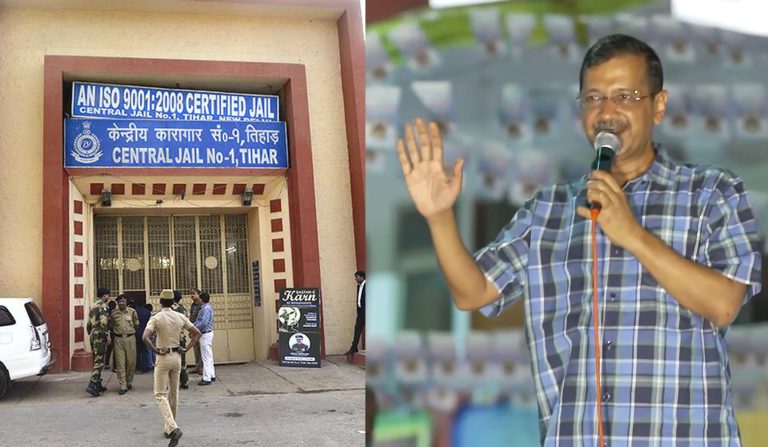
The Supreme Court of India on 10th May granted Interim bail to Aam Admi Party supremo Arvind Kejriwal till 1st of June allowing him to campaign for the Lok Sabha elections. However, the court set 5 conditions on its bail order for the AAP Chief, who was arrested in the Delhi Liquor Policy scam case by the ED. The court has barred him from visiting the CM’s office or signing any files, except where his signature is necessary for obtaining approval from the Lieutenant Governor of Delhi. He is also barred from visiting the Delhi secretariat in the bail period. 

Additionally, he has also been ordered not to make any comments on the current case, not to meet any witnesses in the excise policy case, and to surrender himself on 2nd June. Notably, the court, in its order, found his case to be special as he is a sitting CM and needed to do campaigning for his party. The court categorically noted that it did not grant him Interim bail based on the merits of the case but solely for “campaigning” in the ongoing Lok Sabha elections. 

During the hearing, Solicitor General Tushar Mehta, representing the ED, argued that the right to campaign for an election is neither a fundamental right nor a constitutional right and not even a legal right. He argued that there can’t be any deviation only because Kejriwal is the Chief Minister. He stressed that this violates Article 14 of the constitution which underscores the need to treat everyone equally before the eyes of the law. He asked if the Supreme Court is carving out exceptions for politicians. 

Granting Interim bail to Kejriwal, the court turned out SG Mehta’s objections claiming that bail to Kejriwal does not amount to privilege for politicians and that bails are determined as per the merit of individual cases. 

However, there are concerns that this could set a precedent for lawyers to seek bail for their clients during the election period. Incidentally, elections in India are a regular affair, with some parts of the country going to the polls every few months. 

Evidently, Khalistani separatist and “Waris Punjab De” chief Amritpal Singh had recently sought similar relief from the Punjab and Haryana High Court. The Khalistani terrorist, who is currently lodged in Assam’s Dibrugarh Jail, had approached the high court on Thursday. His lawyer appealed to the court to temporarily release Singh for seven days to file his nomination. Singh is contesting as an independent candidate from Punjab’s Sri Khadoor Sahib constituency that goes to poll on 1st June.

Responding to his plea for relief citing polls and nomination, the Punjab government on Friday informed the High Court that it had facilitated the Khalistani terrorist to file his nomination to contest the Lok Sabha polls from jail. Accordingly, his nomination was filed from Khadoor Sahib constituency in Punjab after his signatures were obtained on necessary documents in the jail, and his bail plea was dismissed as it became infructuous.

However, he can now cite the example of Keriwal’s bail to seek bail to campaign for the elections. And, his claim will be stronger, as he is a candidate himself, while Arvind Kejriwal is not contesting the Lok Sabha polls. Moreover, he can argue that while he was able to file nomination from jail, campaigning from jail will not be possible and he should be granted bail like Kejriwal.

Increasing an extra ground for politicians or individuals guised as politicians to seek bail for campaigning or be a part of the electoral process could set a dangerous precedence

It is pertinent to note that rulings of High Courts and the Supreme Court have an overarching impact on the judiciary, with their rulings used as well-established precedents in law. The Supreme Court’s acceptance of campaigning as a ground for granting bail could open Pandora’s box for lawyers representing more politicians and criminals posed as politicians to exploit this loophole. They may use the election period and the pretense of campaigning in elections to any of the three-tier system – Centre, state, or local level elections as a fatal flaw to avoid a jail term. 

The newly carved-out ground for bail has raised apprehensions that hardcore criminals could infiltrate elections and seek relief from the court based on this ground, which has now been deemed one of the legitimate grounds for relief by the court. While it may not be a clinching ground for courts to grant bail, it may establish it as an extra ground to seek relief and cast aspersions on the trial process and tilt the balance of scale in favour of the appellant. 

It could trigger a wave of new litigations from jailed politicians, including incarcerated AAP leader Manish Sisodia and JMM leader and former Jharkhand CM Hemant Soren, among others. While the courts have generally inclined to adjudicate cases based on individual merits, the judiciary especially the subordinate judiciary may lean towards granting bail for the campaigning/electoral process during the early phases of several cases. This could occur in cases where agencies, constrained by time since the commencement of the investigation, fail to gather conclusive evidence, in time, to outweigh this newly established ground for relief. 

Incidentally, even when considering individual cases, jailed politicians such as AAP leader Manish Sisodia, JMM leader Hemant Soren, and TMC leaders Sheikh Shahjahan and Partha Chatterjee, among others, have not been proven guilty in a court of law and stand on equal footing with their colleague Arvind Kejriwal. They too may seek temporary relief during the election period, as bypassing the merits of the case renders every defense of the probing agency futile in preventing relief or bail on grounds of campaigning. 

Strikingly, AAP leader Sisodia is behind bars in exactly the same case as Arvind Kejriwal, and the same litigation process and arguments can be juxtaposed in both AAP leaders’ cases. On applying the same yardsticks, the counsel of Sisodia may also achieve success in getting temporary relief. However, in this regard, jailed Khalistani terrorist Amritpal Singh, now a candidate in the political fray, stands a step higher on the pedestal as he needs to campaign for himself. While AAP is an established party that is in government in two states, Singh, being an independent has limited people to campaign for himself. 

Furthermore, this could create a new category of litigation, as both ordinary citizens and hardened criminals may be inclined to contest elections. They might then include an additional argument in their bail pleas, which is often challenging for ordinary citizens due to limited resources and for criminals due to stringent laws. Needless to say, if hardcore politicians happen to exploit this loophole, it may end up hampering the merits of the case permanently including putting influence on witnesses, evidence tampering and quid-pro-quo.

Parliament suspended in Kuwait, the Middle East’s last semi-democratic nation, Emir suspends unspecified constitution articles citing ‘political tumult’

Kuwait’s emir once again dissolved the nation’s parliament on Friday, citing the prolonged political deadlock that has persisted in recent years. Sheikh Meshal Al Ahmad Al Jaber made this announcement in a televised address, also indicating the suspension of unspecified sections of the constitution for up to four years, without providing further details.

The 83-year-old Sheikh Meshal expressed concerns about the detrimental effects of the political atmosphere on Kuwait, leading to widespread corruption infiltrating various state institutions, including security, economic, and judicial bodies. He emphasised his commitment to safeguarding the interests of the Kuwaiti people, prioritising their welfare above all else.

In April, Kuwait conducted national elections for the fourth consecutive year to break the enduring political deadlock. However, internal political disputes, including disagreements over welfare system reforms, have persisted, hindering Kuwait from accessing debt and managing its finances despite its substantial oil wealth.

Kuwait, with a population of approximately 4.2 million and vast oil reserves ranking it sixth globally, has maintained a close alliance with the United States since the 1991 Gulf War. The nation hosts a significant American military presence, including around 13,500 personnel, as well as the regional headquarters of the U.S. Army.

Notably, Kuwait stands out among Gulf Arab states for its democratically elected parliament, which holds some oversight over the ruling family. Nevertheless, the ruling family retains the authority to appoint the government and dissolve the assembly as deemed necessary.

The move, however, has stoked wariness among the public, who fear the dissolution of the parliament and the suspension of some constitutional articles for four years would accelerate the dismantling of the semi-democratic traditions of the country, the only nation with some semblance of democracy in the Gulf region. Only Israel is an exception to the countries in the Middle East, where democracy has firmly taken ground and is flourishing. For the rest of the countries, many of whom often interfere in the internal affairs of other countries, including democracies, it is either the Islamic monarchy or some form of totalitarianism that rules the roost.

Laila Khan murder case: Stepfather Parvez Tak convicted in the 2011 killing of actor Laila and 5 others

On Friday, the Mumbai Sessions Court handed down a conviction to Parvez Tak, father of actor Laila Khan, for the murder of Laila, her mother, and four siblings.

This verdict stems from the horrifying incident that took place in February 2011 at their residence in Igatpuri. According to the prosecution’s case, the property dispute, primarily held in Shelina’s name, led to Parvez Tak fatally assaulting his wife. Subsequently, he eliminated Laila, her elder sister Amina, twin siblings Zara and Imran, and cousin Reshma, presumably to silence witnesses to his heinous act.

For months, the investigation into their disappearance unfolded, marked by fluctuating theories. Authorities delved into a farmhouse in Igatpuri, near Nashik, owned by the family, which had suffered partial damage from a fire. Additionally, several months later, a vehicle owned by the family surfaced in Jammu and Kashmir. However, despite these leads, it failed to provide any substantial clues regarding their whereabouts.

The initial breakthrough in the case occurred when investigators discovered that the actress’s mobile phone records indicated her last presence in Nashik in February 2011, just before she vanished. Suspicion surrounding Tak deepened when a vehicle belonging to the family was located in Jammu and Kashmir, Tak’s place of origin.

As per the police, Tak is Khan’s stepfather, the third spouse of her mother, Shelina. Allegedly, Tak’s murderous spree began with Shelina, following a dispute over property at the Igatpuri residence. Subsequently, he eliminated Khan, her elder sister Amina, twin siblings Zara and Imran, along with cousin Reshma, purportedly to silence witnesses to his actions. Additionally, authorities claimed that Tak guided them to the burial site where he had interred the victims’ remains in a pit at the farmhouse.

The gruesome killings remained concealed until several months later when Parvez Tak came under the scrutiny of Jammu and Kashmir Police for unrelated criminal charges, leading to the discovery of the decomposed bodies at a farmhouse in Igatpuri. During the trial, approximately 40 witnesses, including Selina’s previous spouses, provided crucial testimony. Parvez Tak maintained his innocence, alleging flaws in the police investigation and claiming he was wrongly accused.

It’s a tragic conclusion to the mysterious disappearance of Laila Khan, whose father Nadir Patel had initiated a search for her in 2011. Now, as the court prepares to determine Parvez Tak’s sentencing on May 14, the full weight of this harrowing ordeal weighs heavily on those involved and the memory of the lives lost.

Telangana: Congress CM Revanth Reddy raises questions over surgical strikes, doubts airstrikes on Pakistan terror camp post Pulwama attack

Amid the furore and consternation from the BJP over an old video where veteran Congress leader Mani Shankar Aiyar is heard advocating the need to show respect to Pakistan while pointing to its nuclear arsenal; Chief Minister Revnath Reddy on Friday raised fresh questions over the Pulwama terror attack in 2019 and the retaliatory airstrikes on a terror hideout in Balakot, deep inside Pakistan.

Speaking to reporters in Telangana on Friday, CM Reddy accused Prime Minister Narendra Modi of trying to reap ‘political benefits’ from the horrific ambush of a CRPF convoy that left 40 personnel dead and the airstrikes that followed.

Laying the blame on the BJP-led NDA at the Centre for ‘failing’ to prevent the Pulwama attack, the Telangana CM said, “For Modi, everything is political. Everything is about winning elections. His way of thinking is not good for the country. The time has come for the country to be rid of Modi and the BJP. Ask them anything and they will respond with ‘Jai Shri Ram’ (glory to Lord Ram). They failed to prevent the Pulwama attack. What was the IB doing? What was our intelligence network doing?”

Claiming that PM Modi tried to derive political and electoral benefits from the Pulwama attack and the retaliatory action by the Indian Air Force (IAF), Reddy said, “Modi-ji attempted to extract political and electoral benefits from the airstrikes after the Pulwama incident. I want to ask him: What were you doing? Why did you let it happen? What did you do to boost the country’s internal security? Why did you not take the help of the agencies at your disposal such as the IB and R&AW? It was your failure. Nobody knows for sure if the airstrike, as was claimed, took place. If the responsibility of ensuring the country’s internal security was with us, we wouldn’t have left it in anyone’s hands.”

Earlier, on Friday, veteran leader Aiyar found himself in the soup again after a clip of an old interview surfaced in which he is heard saying that Pakistan, as a nuclear-armed country, deserves respect. He also advocated the need for India to reengage with its neighbour.

Earlier, senior Congress leader and Karnataka Chief Minister M Veerappa Moily questioned the Pulwama attack and labelled the country’s retaliatory action as a ‘bogus’ claim, adding that PM Modi used them for political mileage.

“The 2024 elections are different from 2014 and 2019. In 2019, Modi (government) claimed to have carried out the airstrikes. One of the former governors of Jammu and Kashmir, Mr. (Satyapal) Malik, who was with the BJP earlier, called the claim of the airstrikes post Pulwama as bogus. Riding on this bogus strike claim, Modi came back to power in 2019,” Moily said.

The Pulwana attack went down on February 14, 2019, after a suicide bomber rammed an IED-laden vehicle into a CRPF bus. Days after the attack, on February 26, the Indian Air Force carried out airstrikes on a JeM terror hideout in Pakistan’s Balakot, killing a ‘large number’ of terrorists and destroying their infrastructure.

Pakistan’s efforts to launch counter-strikes on Indian military installations in Jammu and Kashmir were thwarted by an alert IAF.
Striking back on February 26, 2019, IAF fighters targeted an advanced terror training camp of Jaish-e-Mohammed in Balakot. 

(This news report is published from a syndicated feed. Except for the headline, the content has not been written or edited by OpIndia staff)

What are donkey flights? An unfulfilled ‘American Dream’ and 2 incidents of deportation of Indians travelling to Jamaica and Nicaragua

A chartered flight carrying 253 Indian nationals from Dubai to Jamaica was returned from the Norman Manley International Airport in Kingston after immigration officials found issues with their travel documents, thereby bringing the spotlight on ‘Donkey flights.’

The development was confirmed by the Indian Ministry of External Affairs (MEA) on Thursday (9th May). Spokesperson Randhir Jaiswal said, “We are given to understand that a chartered flight from Dubai landed in Jamaica with several Indians onboard. They had prior travel and hotel bookings. However local authorities were not satisfied with their documents. They were sent back to Dubai on 7th May.”

The incident took place on 2nd May. The Jamaican immigration officials found that some Indians onboard the chartered flight were on a 5-day tour to the island nation but had itineraries for only 1 day.

This altered the immigration officials who refused the Indian nationals entry into the nation. The passengers were temporarily allowed to stay at ROK Hotel in Kingston before being sent back to Dubai.

This is not the first time that such an incident has come to light. In December last year, a flight bound for the Central American nation of Nicaragua was grounded at the Châlons Vatry airport in France. A total of 303 Indians were onboard that flight.

Following concerns about human trafficking, the flight was returned by French immigration officials to the Chhatrapati Shivaji International Airport in Mumbai. There have been reports about Indians travelling en masse to Nicaragua as a shortcut to enter the United States illegally.

The ‘Donkey route’

The situation has been worsened by Nicaragua President Daniel Ortega, who is considered an arch nemesis of the US. He facilitates illegal immigration to the US through Nicaragua and makes money in the form of landing taxes, visa costs and tourist cards from the travellers.

Reportedly, those planning to enter the United States illegally first travel to Nicaragua, followed by Honduras, Guatemala and Mexico before reaching the porous Southern border of the US. This is often called the ‘donkey route (dunki route).

The illegal immigrants often pay lakhs of rupees to smugglers and travel agents. Many of them die in the process of reaching the Southern border of the United States, thereby failing to fulfil the ‘American dream.’

The concept of Donkey or Dunki

Donkey or Dunki is a term popularly used by traffickers from Punjab to describe illegal immigration to Western nations, particularly the United States. Jamaica and Nicaragua have emerged as prominent destinations for such travellers due to their proximity to the US.

This form of human smuggling is voluntary, facilitated by unscrupulous travel agents who promise visas to developed nations in exchange for exorbitant fees.

The objective behind risking one’s life to reach the US is rooted in the mirage of the ‘American dream’ – a fantasy of a bright future, promising life abroad equipped with better facilities.

However, they tend to overlook the fact that life as an illegal immigrant in a foreign nation is not a bed of roses. The journey to the final destination is often marred with long and dangerous routes.

Illegal immigrants find themselves stranded in unsafe situations and often pay a hefty price with their lives. According to the US Customs and Border Protection (UCBP), a total of 96, 917 Indians were caught entering the US unlawfully between October 2022 – September 2023.

A Bollywood movie by the name of ‘Dunki’ was released in December 2023, featuring actor Shah Rukh Khan, Vicky Kaushal and Taapse Pannu.

Congress leader Nana Patole talking about purifying Ram Mandir after President Draupadi Murmu’s visit is insult to Hindus, say priests

0

After Maharashtra Congress chief Nana Patole stirred controversy with his remarks that the Ram Janmabhoomi Mandir will be purified when the INDIA bloc comes to power at the Centre, several priests have opposed and condemned the statement and called it an insult to the people.

Mahant Narayan Giri, Juna Akhara spokesperson said, “Nana Patole has given a very absurd statement. This is an insult to all the Sadhus of the country… The way he talked about purification after the President (Droupadi Murmu) worshipped the Ram Temple is an insult to the backward communities. He is also insulting the Hindus. It is necessary to punish people like him. The statement by Nana Patole is very bad and we strongly condemn it.”

Spiritual leader Swami Dipankar also condemned the remarks of Nana Patole and said, “I am very surprised by the statement of Nana Patole on Ram Mandir… I cannot understand what purification is he talking about. I cannot understand what kind of mindset is this… I would say that this is the Mandir of Ram and it has no place for this kind of mindset.”

He added further, “I believe that this is a very cheap mindset. This is a mindset of dividing the society on the basis of caste… I believe the time has come to boycott this kind of thinking that divides the society.”

Acharya Dr. Chandranshu, National storyteller and Hindu religious leader in Ayodhya said, “The statement of Nana Patole on the purification of Ram Temple is an insult to the 140 crore of Indians. The construction of Ram Mandir was done by people of all castes… The invitation was extended to Congress as well but they didn’t like it… The statement comes after President Droupadi Murmu visited the Garbhagriha and worshipped Ram. Does Congress want to say that this purification is required because Droupadi Murmu visited the place?”

Nana Patole triggered a political storm with his controversial statement that the Shankaryacharyas would be purifying the Ram Janmabhoomi Mandir following religious protocols when the Congress-led INDIA bloc comes to power at the Centre.

Maharashtra Congress president Nana Patole had said, “We are going to purify Ram Mandir in Ayodhya after INDIA Alliance comes to power. Shankaracharyas were opposing this (Pran Pratishtha), all four Shankaracharyas will purify the Ram Temple. Ram Darbar will be established in that place. It is not Lord Ram’s idol there, but the child form of Ram Lalla. Narendra Modi has acted against protocol in Ram Temple construction. We will do it through rectifications and religion.”

The ‘Pran Pratishtha’ of Shri Ram Lalla at Ayodhya’s historic temple was held on January 22, with Prime Minister Narendra Modi performing the Vedic rituals, led by a group of priests.

The ceremony was attended by representatives of all major spiritual and religious sects in the country. People from all walks of life, including representatives of various tribal communities, attended the ceremony.

The Shri Ram Janmbhoomi Mandir is constructed in the traditional ‘Nagara’ style. Its length (east-west) is 380 feet; width is 250 feet and height is 161 feet; and is supported by a total of 392 pillars and 44 doors.


(This news report is published from a syndicated feed. Except for the headline, the content has not been written or edited by OpIndia staff)

Government directs telecom operators to block 28,200 mobile handsets and re-verification of associated 20 lakh mobile connections

Telecom companies have been ordered by the government to disable 28,200 mobile phones that were used in cybercrimes. Furthermore, it has also asked telecom companies to re-verify 2 million mobile numbers associated with these handsets. The Ministry of Communications stated that these numbers would be disconnected if the second verification is unsuccessful, in a statement. The government is combating cybercrimes by collaborating with various ministries including the Ministry of Home Affairs as well as state authorities. Notably, one device was used to run over 70 phone numbers.

The official press release released on 10th May read, “Department of Telecommunications (DoT), Ministry of Home Affairs (MHA) and State Police have joined hands for curbing the misuse of telecom resources in cyber-crime and financial frauds. This collaborative effort aims to dismantle networks of fraudsters and protect citizens from digital threats. Analysis carried out by MHA and State Police has revealed that 28,200 mobile handsets were misused in cybercrime.”

It added, “The DoT further analyzed and found that a staggering 20 lakh numbers were used with these mobile handsets. Subsequently, DoT issued directions to telecom service providers for pan India blocking of 28,200 mobile handsets and to carry out immediate re-verification of 20 lakh mobile connections linked to these mobile handsets and disconnect failing re-verification. The unified approach demonstrates a shared commitment towards public safety and to safeguard the integrity of telecommunications infrastructure and ensure a secure digital environment.”

In 2019, the National Cyber Crime Reporting Portal was established by the government to allow anyone to report incidences of cyber fraud. Concerned about the increasing number of fraud and impersonation incidents targeting smartphone users, the government released an advisory in late March cautioning citizens not to accept WhatsApp calls from foreign mobile numbers. The warning also included threats of number disconnection made under DoT’s name.

The Ministry of Communications noted, “DoT has issued an advisory to citizens that calls are being received by the citizens wherein callers, in the name of DoT, are threatening that all of their mobile numbers would be disconnected or their mobile numbers are being misused in some illegal activities. The DoT has also issued an advisory about WhatsApp calls from foreign-origin mobile numbers impersonating government officials and duping people.”

According to the government, cybercriminals attempt to threaten or steal personal information through these calls to commit financial fraud and other cybercrimes. Under the Secure India project, the government has been steadfastly working to combat cyber fraud on three fronts: the national, organizational, and individual levels. This was confirmed by Communications Minister Ashwini Vaishnaw who added that DoT has launched numerous campaigns to raise awareness.

The government introduced the Digital Intelligence Platform (DIP) a few months ago to facilitate partnership amongst stakeholders to reduce the misuse of telecom resources in financial fraud and cybercrime. The DIP, created by DoT, is a safe and comprehensive platform that facilitates coordination, information sharing, and real-time intelligence sharing amongst various stakeholders, including telcos, law enforcement, banks and financial institutions (FIs) as well as social media and identity document issuing authorities. Only stakeholders can access the DIP through secure connectivity and pertinent data is delivered according to their individual roles. Citizens cannot access the platform.

The Chakshu portal was introduced by the DoT two months ago to address complaints about telecom fraud. The government has barred 348 mobile phones nationwide, blacklisted 52 organizations implicated in sending harmful and phishing messages and identified 10,834 suspicious cell numbers for further investigation since the portal’s introduction. In addition, 1.58 lakh unique mobile device identification numbers (IMEIs) have been prohibited by the DoT because of their relation to financial fraud, cybercrimes and mobile connections obtained using bogus or falsified documentation.

According to official data, up to 30th April 30 of this year, the DoT cancelled 1.66 crore mobile connections, of which 30.14 lakh were disconnected due to user input and 53.78 lakh for exceeding the individual limit to purchase new SIM cards.

The government instructed SIM card vendors to register with telecom companies in August of last year to target dealers who were supplying phoney SIM cards. Additionally, the government no longer offers mass connection issuance and in its place, companies can now receive connections for their staff members and other uses following a rigorous know-your-customer (KYC) procedure. The dealership will be shut down and placed on a three-year blacklist if any unlawful activity is discovered. The government had previously stated that the verification procedure should be completed in a year.

From doubting EVMs to questioning voter turnout- How Congress has constantly tried to undermine the Election Commission of India

On Friday (10th May), the Election Commission of India gave a detailed 21-page rebuttal to dismiss the allegations leveled by Congress President Mallikarjun Kharge over the electoral process. The poll body termed his allegations around voter turnout data as “baseless” and stressed that such attempts could create an “anarchic situation, besides doubts and disharmony” among the voters and common Indians. Notably, on 7th May, Kharge wrote a post on X, addressing the leaders of the I.N.D.I. alliance regarding the alleged discrepancies in the voting data released by the ECI.

Regarding Kharge’s post, ECI said, “Through innuendos and insinuations, the contents of the post tend to create disharmony in respect of the delicate space of election management, can plant doubts in the mind of voters and political parties.” It added that the charges were meant to “create confusion, misdirection, and impediments in the conduct of free and fair polls”. 

Additionally, the ECI assured that there has been no lapse or deviation in the collection and dissemination of voter turnout data and gave detailed point-by-point counters to reject his contentions.

However, it is pertinent to note that over the past several years, the grand old party and its I.N.D.I. Alliance partners have escalated their attempts to undermine the authority of the polling body. They have raised questions about every step, person, and instrument involved in the electoral process, virtually making a case for an overhaul of the Constitutional body and everything within the electoral process according to their whims and electoral outcomes of the Congress and their I.N.D.I. Alliance partners.   

Incidentally, in his post, Kharge alleged a “high increment” and “inordinate delay” in the final voter turnout, that is, he raised questions and doubts about one part of the electoral process. However, he went further to allege that the final results could be farce stating, “Could this be an attempt to doctor the final results”. He further alleged that the credibility of the ECI is at an “all-time low”. He brazened it out alleging that could the ‘bump in voting in final turn out’ be in areas where the government is weak, alluding that the ECI is compromised to fracture a win for the NDA government. 

Strikingly, from raising unfound allegations against EVMs, and the sanctity of electoral rolls – the key instrument in the electoral process, the I.N.D.I. alliance leaders have ramped up their efforts and effectively launched a smear campaign against the ECI and the integrity of the Election Commissioners. 

Allegations on EVMs, questioning the integrity of the Election Commissioner, and assault on ECI

Allegations of “faults” within the Electronic Voting Machines (EVMs) have been at the forefront of the opposition’s political strategy including to criticise the Modi government or to explain its recurrent electoral defeats. For nearly a decade, the I.N.D.I. alliance leaders have run pillar to post, from courts in India to people’s court – Election rallies, poll campaigns to foreign soil – Kapil Sibal joining Press conference on “EVM hacking claims” in London. However, there has been no shred of evidence presented before the courts, and no attempts were made to join ECI’s hackathon over EVMs.   

Incidentally, the grand old party and its allies dominated the electoral landscape, appointing persons of questionable integrity and those who later swore allegiances to Congress, the benefactor political party from those elections, as Chief Election Commissioners without qualms, thus controlling the one-member body. 

For those unaware, Former Chief Election Commissioner Manohar Singh Gill joined the Indian National Congress after his retirement. He held the post of CEC from 1996 to 2001 and served as a Congress Rajya Sabha MP from 2004 to 2016. Interestingly, it was M.S. Gill, the Former CEC turned Congress leader, who introduced EVMs in the Indian electoral system. According to opposition allegations, if the EVMs, despite numerous checks added later on, can produce entirely different electoral outcomes, was their introduction by the former CEC turned Congress leader an attempt to manipulate final results in favour of the party he later joined?

However, after being ousted from power, Congress and I.N.D.I. alliance leaders have been hell-bent on blasting the ECI as a ‘compromised body’ and ‘political arm’ of the ruling political party. This criticism is based solely on allegations that the Election Commissioner, first appointed by a system that existed for decades and later through a reformed system of a three-member panel comprising the Leader of the Opposition, may not have a spine. 

It is pertinent to note that with the advancement of technology and judicial interventions, the electoral process has only been enriched over time. The latest system of appointment of Election Commissioners is also in line with the Supreme Court’s recent directions and has been upheld in the top court. Evidently, in March 2024, SC refused to stay the appointment of Election Commissioners, junking all the baseless allegations of the opposition and its ecosystem. 

The political propaganda is driven by narrow self-interest of hiding their own flaws, to keep the political parties, their leadership, and organisational structure intact despite the electoral route. It has started to brainwash not only the less informed voters but also the educated students in esteemed colleges. For example – recently, students of National Law University (NLU) Delhi conducted “mourning prayers” for the ECI and wrote an obituary of the ECI. 

The expanding allegations against every step of the electoral process, based on hearsay, unfounded claims, falsehoods, and political propaganda, may very well lay the groundwork for an Indian redux of the January 6th riots witnessed in the United States over the issue of ‘Electoral fraud’ in the Presidential election. 

Incidentally, several Congress leaders, including Rahul Gandhi, have already threatened violence linked with the electoral outcomes of the Congress party. Such threats are an assault on the greatest positive Indian democracy has experienced over the past seven-and-a-half decades: a smooth transition of power. The threat of violence, should an undesirable outcome emerge on June 4th, is nothing but blackmail. It’s akin to demanding a blank cheque for the opposition parties to form a government at the center, in order to quell violence and silence the hoarse cries of ‘death of democracy.’