Home Blog Page 1188

Delhi CM Arvind Kejriwal withdraws plea against arrest from Supreme Court, likely to seek recourse through a lower court

Delhi Chief Minister Arvind Kejriwal, who had ignored nine summonses by the Enforcement Directorate before his dramatic arrest late yesterday in connection with the alleged liquor policy scam, has reportedly withdrawn his petition from the Supreme Court against his arrest.

Reports suggest that Mr Kejriwal will seek recourse through a lower court, following the proper protocol.

This move by the Aam Aadmi Party chief comes shortly after Bharat Rashtra Samithi leader K Kavitha, who was arrested last week in the same case, had her petition rejected by the apex court. Interestingly, the same bench that handled Ms Kavitha’s case was assigned to consider Arvind Kejriwal’s plea.

Ms. Kavitha was advised to seek relief, including bail, from the trial court. The bench comprising Justice Sanjiv Khanna, Justice MM Sundresh, and Justice Bela Trivedi declined to entertain the petition, stating that individuals, regardless of their influence such as being a senior political figure or Chief Minister, cannot directly approach the Supreme Court without going through the lower courts.

On the other hand, sources within Mr Kejriwal’s legal team as cited by reports have asserted that no legal impediment prevents the AAP leader – whose arrest just weeks before a general election has triggered widespread protests – from continuing as the Delhi Chief Minister. These sources pointed out that Mr Kejriwal has not been convicted, only accused.

The protests against Mr Kejriwal’s arrest have seen vocal support from nearly all opposition parties, particularly those in the INDIA bloc, of which the AAP is a part. Congress MP Rahul Gandhi is reportedly scheduled to meet with Mr Kejriwal’s family later today.

The AAP has alleged that the Chief Minister’s family is effectively under house arrest.

As Zomato launches pure veg service, Wokes and Liberals resort to vilifying Brahmins over their food choices, again

Deepinder Goyal, CEO of food aggregator Zomato, would have had no idea that his decision to launch a “Pure Veg Mode” would trigger an online attack for trying to cater to pure vegetarian customers. Despite Zomato’s explicit statement that “anyone who prefers pure veg food can avail the service and this Pure Veg Mode, or the Pure Veg Fleet does not serve or alienate any religious or political preference,” the online woke/liberal mob launched a scathing attack on Zomato and its CEO.

To no surprise, the leftists and wokes somehow linked Zomato’s move to cater to the pure vegetarian market to a move that empowered and “encouraged Brahminism and casteism”. The perennially Brahmin-despising lot equated launching a “Pure Veg fleet” to the preservation of “untouchability”. Their far-fetched insinuations also included that a pure veg service would encourage neighbourhood policing.

Recently, a fake advertisement “Eviction Safe Food Delivery” attributed to Zomato’s competitor Swiggy surfaced online. The sarcastic ad was created by a ‘Swiggy fan’ to take a jibe at Zomato for introducing the pure veg delivery fleet which would wear a green colour t-shirt instead of the trademark red. The ad featured an AI-generated image showing a food delivery man at a customer’s door with an order, while in the background, a few men appear to be following another delivery person wearing a green t-shirt with sticks in their hands.

The text in the fake ‘advertisement’ read, “Eviction-safe food delivery. In Indian neighbourhoods, your dietary preferences are best kept private. Our delivery fleet doesn’t leak your private habits to the world. You also save some money as we don’t have to pay for the life insurance of our delivery staff against mob lynchings.”

The usual players resorted to fearmongering, stoking ‘apprehensions’ that after rolling out the green-coloured pure veg fleet, Zomato’s original red-coloured t-shirt-wearing delivery partners will be assaulted and mob lynched by pure veg-preferring people. This, however, is nothing more than a figment of their imagination, as even the strictest adherents of pure vegetarianism have the basic common sense to respect the food preferences of non-vegetarians and those who may not be strict vegetarians; thus, there is no question of attacking or lynching the usual red t-shirt wearing delivery fleet simply doing their job.

It is pertinent to mention here that Zomato has often faced criticism for sending food orders that mistakenly mix up non-veg items. This is a concern with restaurants that serve both veg and non-veg food. Sometimes, vegetarian customers have even complained of finding bones and meat pieces in their food orders, bringing much condemnation to the delivery service and its standards.

Zomato had introduced the pure veg service to tackle this problem, however, the ever-metastasising “Wokeism” compelled Zomato to cave in. While the company earlier decided that its pure veg fleet would wear green colour, it backtracked and said that its delivery fleet would continue to wear Zomato’s trademark.

“All our riders — both our regular fleet, and our fleet for vegetarians, will wear the colour red,” Deepinder Goyal said adding that the fleet meant for vegetarian orders will not be identifiable on the ground although it will show on the app that veg orders will be served by the veg only fleet.

As reported earlier, Goyal said that “this will ensure that our red uniform delivery partners are not incorrectly associated with non-veg food, and blocked by any RWAs or societies during any special days… our rider’s physical safety is of paramount importance to us. We now realise that even some of our customers could get into trouble with their landlords, and that would not be nice if that happened because of us.”

Ironically, the same left-liberals and wokes who talk about freedom, choice and whatnot do not want to respect the food preferences of pure vegetarians. In fact, the very word “pure” riles them up as they believe that pure in “pure vegetarian” implies caste especially Brahmanical superiority and a marker of discrimination against others. However, contrary to their warped sense of understanding of the concept, the term pure simply signifies the strictness in adherence to vegetarianism and not superiority or discrimination.

Outrage on Pure Veg, silence on Halal: Hypocrisy and wokes/liberals go hand in hand

It’s amusing to observe the stoic silence of ever-outraged wokes and liberals on Halal food certification. This lot loves criticising Brahmins for their pure vegetarian food preferences but has no objections to Halal, which is discriminatory in the sense that only Muslims can perform the Sharia-compliant Halal slaughter of animals, implying that non-Muslims are automatically denied employment at a Halal firm. This, however, does not appear to discriminate or foster religious supremacy to the wokes and liberals, most likely because they realise the difference between the reaction of Brahmins and Muslims to their ‘outrage’

Being a “pure vegetarian” or a Brahmin can be arduous in the land of Hindus as Brahmins are under perpetual scrutiny by those despising them. The pernicious wokes leave no opportunity to vilify Brahmins in the pursuit of their ultimate goals to eradicate what they assume ‘Brahmanical superiority’, ‘patriarchy’ and whatnot as well as ostracise the Brahmins.

It is worth recalling the case of Kerala’s famous culinary expert Pazhayidom Mohanan Namboothiri who last year refused to participate in the tender for serving food at school fests in the state. Namboothiri had taken this decision after he was attacked for his Brahmin identity even though he had been serving food at school fests for over 16 years and has served over two crore students to date. Back then, many along with Congress leader VT Balram had objected to serving veg food only that too by a “Brahmin cook”. Apparently, food has no religion but it has ‘caste’.

A lot of people eat both veg and non-veg food, while many prefer not to eat non-veg on specific days, and then some people do not eat non-veg food at all for religious beliefs like Ahimsa, or Satvik or for health-related reasons. The Brahmin-hating lot is rattled over the “pure vegetarian” food preference of a section of people calling it discriminatory, encouraging untouchability and whatnot completely ignoring that these people are not forcing their preferences on others.

It is also crucial to note that pure vegetarians do not impose their dietary preferences on others. Furthermore, they are not demanding or pressuring non-vegetarians to give up their food preferences; instead, they simply want to uphold their choice without harming or affecting others in any manner.

It must here be recalled how Sudha Murthy, the former chairperson of Infosys Foundation, writer, and philanthropist was criticised last year by the same wokes/liberals for saying that carries her own bag of food and cooking items when travelling abroad because she is a pure vegetarian. She was even labelled a ‘casteist’ for being a pure vegetarian. These same wokes who accuse Brahmins of preserving and practising “untouchability” have over the years spearheaded vicious campaigns against Brahmins, ostracising them for their pure veg food and other lifestyle preferences.

Electoral bonds: Data reveals BRS received largest donation from MEIL, busts leftist ecosystem’s narrative that MEIL has ‘quid pro quo’ ties to BJP

According to the electoral bond data submitted by the State Bank of India on the orders of the Supreme Court on Thursday, March 21, Megha Engineering and Infrastructures Ltd. (MEIL) was the biggest donor for the Bharat Rashtra Samithi (BRS) while Vedanta Ltd. was the biggest donor of electoral bonds for the Congress.

The data further revealed that the Congress party encashed Rs 1,422 crore in total, of which Vedanta Limited contributed RS 125 crore, followed by Rs 110 crore that came from Western UP Power Transmission Company limited, a subsidiary of MEIL, and Rs 91.6 crore from MKJ Enterprises.

Similarly, K Chandrasekhar Rao’s Bharat Rashtra Samithi encashed Rs 1,214 crore in total, of which Rs 195 crore came from MEIL, Rs 94 crore from Yashodha Super Speciality Hospital, and Rs 50 crore from Chennai Green Woods Private Limited.

BJP singled out for criticism over electoral bonds

Interestingly, Supreme Court advocate Prashant Bhushan, who hosted the anti-Hindu Delhi riots conspiracy meeting, had recently tried to mislead people by spreading fake news that Megha Engineering, the second-largest purchaser of electoral bonds, contributed the maximum to the BJP in return for the huge infrastructure contracts.

In an X post on 14th March 2024, Bhushan wrote, “On 11 April 23, Megha Engineering gives 100s Crs in Electoral Bonds to whom? But within a month it gets a 14,400 cr contract from BJP’s govt! Though SBI has hidden Bond numbers from the info, some of the donors’ & parties’ matches can be guessed. Most donations seem a quid pro quo.”

He stated that the BJP was illegally taking ‘bribes’ in the form of electoral bonds from the Megha Engineering Company and giving them huge infrastructural contracts in return.

Leftist ecosystem alleges Megha Engineering which made largest donation to BRS, siphoned off money to Congress and DMK, has ‘quid pro quo’ ties to BJP

OpIndia then detailed how BRS is the fourth largest beneficiary of the electoral bond scheme after the BJP, TMC, and the Congress. We also showed how Megha Krishna Reddy, who runs Megha Engineering is known to be close to the Bharat Rashtra Samiti chief K Chandrasekhar Rao (KCR), information conveniently withheld by Prashant Bhushan and coterie to suit their precise agenda.

MIEL not only donated the biggest sum to KC Rao’s BRS but also donated cash amounting to more than Rs 100 crore to the Congress party in 2019. Additionally, the company donated to DMK, Aam Aadmi Party (AAP), JD(S) and YSRCP.

Meanwhile, the electoral bond data submitted by the State Bank of India also disclosed the amounts received by other regional parties and the BJP, the largest national party.

Santiago Martin’s Future Gaming and Hotel Services contributed Rs 542 crore, or 33.7% of all donations made to the All India Trinamool Congress, which encashed Rs 1,609.50 crore through this technique. Haldia Energy Limited accounted for 17.5% of all donations received by the Trinamool Congress, or Rs 281 crore, making it the second-largest donor.

With Rs 174.5 crore from Essel Mining, Rs 100 crore from Jindal Steel and Power Limited, and Rs 70 crore from Utkal Alumina International Limited, the Biju Janata Dal has encashed a total of Rs 775 crore.

Additionally, the statistics revealed that MEIL contributed Rs 584 crore to the BJP, or 9% of its overall donations. Qwik Supply Chain Private Limited contributed Rs 375 crore, or 6% of the total funds. In the same vein, the party also received significant donations from Vedanta Limited (Rs 229 crore) and Bharti Airtel (Rs 197.4 crore).

Ever since the Supreme Court directed the Election Commission of India to publish all the details of donors and political parties that received donations via electoral bonds, the Bharatiya Janata Party became the apparent target for propagandists, opposition parties and certain sections of the media. This particular segment went at BJP hammer and tongs, calling them out for being the biggest recipients of these bonds.

Here, however, it is important to understand that BJP is the biggest national party, while the other parties that have received donations via electoral bonds are mostly state-level parties, or are national parties that are confined to one or a handful of states.

The BJP’s critics deliberately overlooked the obvious fact that, naturally, BJP gets maximum donations, considering the national ruling party is at the centre and more than a dozen other states. Interestingly, regional parties which are ruling a single state, such as the DMK and Trinamool Congress, were able to raise over a thousand crore in electoral bond donations between them. Congress got less funding than TMC for the past two years while having a bigger influence on state and national politics.

TMC’s Mahua Moitra whines about BJP getting donations through electoral bonds, ignores her party TMC getting Rs 1609 crores with just one state government

For example, All India Trinamool Congress leader Mahua Moitra became the torchbearer of this narrative being spun against the BJP ahead of the Lok Sabha elections. She claimed that “55% of the total bonds” were received by the BJP and that the Centre was using national agencies to its benefit.

However, Moitra forgot to mention that the party to which she belongs, the All India Trinamool Congress is the second largest beneficiary with Rs 1,609 crore, followed by Congress (Rs 1,422 crore) and BRS (Rs 1,215 crore). The party that is in power in just one state has managed to benefit to the extent of Rs 1,610 crores which accounts for 13% of the total amount.

In fact, after Mahua Moitra’s shenanigans over the donation received by BJP through electoral bonds several Netizens took to X to clear her air. They stated that the BJP is at present ruling several Indian states and is also at the Centre which reasonably justifies the benefit it has availed via the electoral bonds. However, they pondered how TMC, a regional party that is in power in just one state managed to benefit to this extent, surpassing the Indian National Congress (Rs 1,422 crore) and BRS (Rs 1,215 crore).

Kapil Sibal tacitly threatens judiciary after relief to K Kavita in liquor scam is denied, Judge says, ‘We will see’: Here is what happened

The Supreme Court on Friday, 22nd March, denied relief to Bharat Rashtra Samiti (BRS) leader K Kavitha in the Delhi excise policy scam case. The daughter of the former Telangana Chief Minister and BRS Chief K Chandrasekhar Rao (KCR) was arrested a week ago in the case.

A Special Bench of Justices Sanjiv Khanna, MM Sundresh and Bela Trivedi heard the writ petition filed by K Kavitha, represented by Advocate Kapil Sibal.

Sibal requested that this client not be sent back to the High Court. “Only one request, please don’t tell me to go back to High Court. See what is happening in our country. all statements are of approvers..I am very upset what is happening,” he said.

The bench responded to Sibal saying that he shouldn’t get emotional. “Don’t get emotional, we are hearing the Vijay Madanlal challenge..as fair as bail is concerned, WE ARE VERY CLEAR YOU HAVE TO GO THROUGH THE TRIAL COURT…All of us are clear that only because it is a political person, we cannot grant relief..,” the Court said.

“What you are asking us to do is not possible, what is going to happen is everyone is going to come under Article 32..you cannot make submissions on merits..we cannot hear it..we will issue notice and hear it with the main challenge..”, the bench added.

The Court directed K Kavitha to move Trial court for relief citing that the case concerns a political person and the practice is uniform in such case. Ordering the BRS leader to approach Trial court, the Apex Court ordered that the bail application, if filed, should be decided expeditiously.

To this, Kapil Sibal said that the history of the Supreme Court will be written and it will not be a golden period.

“May I say something? I hope your Lordships don’t mind. History of this Court will be written, this will not be a golden period,” Sibal declared. Justice Khanna responded saying, “Let’s see.”

The Opposition has a habit of demonising all such State institutions whenever a decision or action goes against their interests. Sibal’s tacit threat to the judiciary shows how even the highest Court of justice in India has become a target for the Opposition as the verdicts are paving the way for their accountability.

Meanwhile, the Supreme Court will hear the plea filed by Delhi Chief Minister Arvind Kejriwal against his arrest by the Enforcement Directorate in the liquor policy case.

TMC candidate Sujata Mondal threatens voters with ‘consequences’ before Lok Sabha elections, had earlier called Dalits ‘beggars’

On Thursday (21st March), Trinamool Congress candidate (Bishnupur constituency) Sujata Mondal courted controversy after she tried to intimidate villagers into voting for her party.

The incident took place during her election campaign in the Ondha Vidhan Sabha constituency in the Bankura district of West Bengal. While speaking to the local women, Mondal threatened them with consequences for casting their votes in favour of the rival BJP.

“You are casting your vote for the BJP during the times of elections. You are clicking on the Loutus (big flower). Let me say this straight,” she cautioned.

“I do not care if the media or other people are listening to this. If I see that Trinamool Congress did not get a lead from here, we will not come here to listen to your grievances,” Sujata Mondal threatened.

She further mocked the villagers, “This is the truth. I am telling it now. No one from our party is going to come here to listen to your problems. You figure it out with the BJP.”

“It cannot happen that TMC will work here when BJP keeps getting elected from this seat. Wherever Trinamool Congress will be in the lead, I will even come there even in the darkness of the night to listen to your problems,” the TMC candidate continued.

We will not come to listen to your problems: Sujata Mondal

Sujata Mondal was heard saying, “Where Trinamool Congress will not get any lead, forget about me, my party workers also will not come…As a TMC ‘soldier’, I will not tolerate that Mamata Banerjee will keep giving but only getting treachery in return.”

This is not the first time that a TMC candidate has issued threats ahead of the 2024 Lok Sabha elections. Recently, party candidate (North Malda) Prasun Banerjee was heard threatening the central paramilitary forces and officials of the Election Commission.

When Mondal abused Dalits as ‘beggars’

Prior to the 2021 Vidhan Sabha elections, Sujata Mondal stirred the hornet’s nest by referring to the Dalit community as ‘beggars.’

While speaking to News 18 Bangla, Sujata Mondal claimed, “Even though Mamata Banerjee has helped the poor Scheduled Castes, yet their scarcity will never mitigate.”

Furthermore, the TMC leader remarked, “Mane ekta kotha thake na ki keu thake sobhabe bhikari aar keu thake obhabe bhikariEkhaner Scheduled Caste gulo holo Sobhabe bhikari. (There is a saying that some are beggars by nature while others are beggars by circumstance. The Scheduled Castes here are beggars by nature).”

She also accused the Dalit community of being ungrateful and siding with rival BJP. “Mamata Banerjee has done so much for them but they have now sold themselves to the BJP in exchange for money. And now, they are committing atrocities on us,” Sujata Mondal alleged.

It must be mentioned that the TMC candidate was thrashed by people of the Arambagh constituency, where she was fielded as a candidate in the 2021 Vidhan Sabha elections. She lost out to Madhusudhan Bag of the BJP by over 7,142 votes.

Trachea, skull cut, shoulder bone sliced: Postmortem report of Badaun double murder case reveals brutality executed by Sajid on two Hindu children

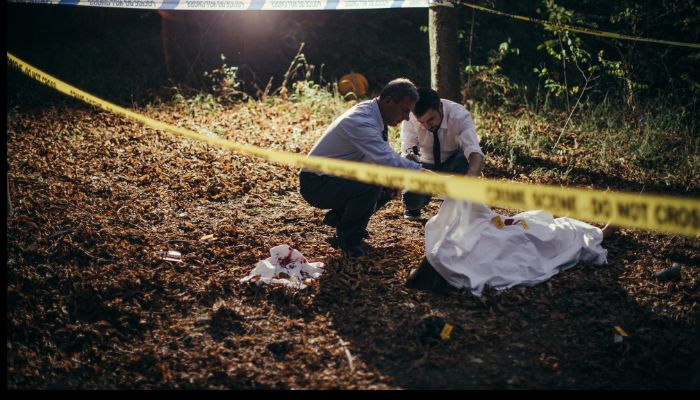
The post-mortem report in the Ayush and Ahaan murder case in Badaun has been obtained by OpIndia which details how the children were slain mercilessly. As per the postmortem report, it is believed that the accused not only cut Ayush’s and Ahaan’s throats but also attacked them a further 23 times.

Several cut marks could be seen on the victim’s body. The postmortem report further added that the victim struggled a lot to save himself from being attacked by the accused. The postmortem for both children was performed on the morning of 20th March. Simultaneously, a post-mortem of the accused Sajid was also performed who was killed in a police encounter on the same day. 

According to the post-mortem investigation, murderer Sajid stabbed the three children, Ayush (13), Yuvraj (10), and Ahaan (8), in the neck with a knife. Meanwhile, Yuvraj managed to escape, but before anyone could intervene, he killed Ayush and Ahaan. Ayush’s body exhibited 14 wounds, whilst killer Sajid had attacked 8-year-old Ahaan on 9 parts.

At the time of the massacre, Ayush, the eldest child, had opposed aggressively but he was killed. According to the OpIndia ground report, blood was found on the walls at the murder scene, as well as fingerprints of minors were also discovered. Since Ayush continued to battle even after his throat was cut off, several attacks were made on his hand, shoulder, chest, neck, fingers, and wrist. Wounds ranging from 2 cm to 7 cm deep were located on his body, with wounds up to 15 cm deep on his neck. The post-mortem report very well describes the cruel treatment imposed upon Ayush.

The report further mentions that the injuries on the body of the victim were caused by a single stroke. However, some of the injuries are so wide and brutal that they don’t seem to have been caused by a single stroke attack. 

First mark: The biggest wound of 15cmx5cm on the neck from the front, due to which many organs related to the throat were cut off. The trachea also looked damaged. This particular attack was akin to that of a butcher butchering an animal.

Second mark: 6cm x 1cm wound on the back side of the right shoulder. Deep into the muscles.

Third mark: 7cm deep and 4cm wide wound on the right shoulder joint, deep inside the bones, as if multiple brutal attacks had been executed here.

Fourth wound: Injury on the upper side of the right hand, deep inside the muscles.

Fifth wound: 4cm x 2cm wound on the outside slightly above the right wrist.

Sixth mark: A 5cm x 3cm wound on the inside of the right wrist, deep inside the muscles that connect the wrist to the hand.

Similarly, the seventh wound has also been executed on the hand, in which a 4 cm cut has been discovered on the lower palm. The eighth attack is on the ring finger of the right hand, which is 2 cm deep. Ninth attack on the middle finger of the left hand, this finger was also almost cut off. The tenth attack was on the palm of the left hand, the wound was deep inside the bones.

The eleventh attack was on the inner muscles of the left shoulder, which is 6cm deep.

The twelfth one is a 3 cm deep wound that was found below the left ear up to the bones.

The thirteenth attack is 6cm deep and 1.5cm wide, on the back of the head.

The fourteenth mark was found in the form of a large wound of 6cm x 4cm from the back side of the right lung, in which the knife reached the inner muscles tearing it wide open.

Post-mortem report obtained by OpIndia

Javed arrested from Bareilly

Javed, who had been on hiding since the murder of two Hindu youngsters in Badaun, Uttar Pradesh, was apprehended in Bareilly on 21st March. The UP Police had also announced a reward of Rs 25,000 for anyone who would find Javed.

Later, a video of the accused also surfaced on the internet in which he could be seen confessing that he had fled to Delhi after executing the murder. According to the FIR, Javed arrived on a bike with Sajid and attacked a child. However, the police are currently interrogating Javed, and further information will soon be revealed in this case.

It is important to note that on the evening of March 19, 2024, Sajid, who operated a barbershop in Badaun, murdered two Hindu youngsters, Ayush and Ahaan, with a knife. Sajid ran away after committing the murder however he was killed in an encounter by the UP Police. 

Sajid’s brother Javed, who was there during the incident, meanwhile managed to escape. Police teams carried out raids to look for him. The police also had offered a Rs 25,000 reward for Javed. However, he was eventually apprehended near Bareilly.

Italian PM Giorgia Meloni sues creators of deep fake video for defamation, will appear in court to seek €100,000 in damages

Italian PM Giorgia Meloni has filed a lawsuit and is seeking compensation to the tune of 100,000 Euros after deep fake videos of her were uploaded on a pornographic site in the USA and garnered millions of views for several months.

She is scheduled to appear personally and provide testimony on July 2 in a court in Sassari, in Italy’s Sardinia region, as reported by BBC.

Meloni’s face was reportedly swapped with a porn actress and pornographic videos were uploaded on an adult site. A 40-year-old man, and his 73-year-old father are currently under investigation in the case. They are facing charges that include defamation.

Meloni’s lawyer Maria Giulia Marongiu has informed that the pornographic videos with Meloni’s face morphed into an adult film actress were uploaded before she became the PM of Italy in 2022. They have been circulated in the US-based porn site for months and have garnered millions of views.

Maria Giulia Marongiu has also stated that the compensation Meloni is seeking will be ‘symbolic’, and the amount will be donated to charities that help women victims of male violence. The lawsuit is intended to encourage other victims to not be afraid and seek justice.

“The compensation was meant to send a message to women who are victims of this kind of abuse of power not to be afraid to press charges,” Marongiu said.

As per reports, under Italian law, defamation suits can also result in criminal charges and result in imprisonment.

In India too, several celebrities, including Rashmika Mandanna, Katrina Kaif and Sachin Tendulkar’s daughter Sara Tendulkar have been victims of deepfake videos. The menace has become all the more serious after the widespread availability of AI image editing and generative tools.

Judicial verdicts, if ill-conceived or plain wrong, can have serious consequences: Judicial activism, Electoral Bonds verdict and ramifications

With all due respect, the Supreme Court led by our Hon. CJI, Justice Chandrachud, has created a serious situation by its activism on the Electoral Bonds issue. Before we get into the details of this case, let us agree that judicial verdicts, if ill-conceived or plain wrong, can have serious consequences. 

We all know the recent upheaval in Manipur – the rioting, civil unrest and numerous deaths that followed the local High Court’s decision. Quint, no fan of Modi or the BJP government called it the “tinderbox that led to the conflagration” It was withdrawn suddenly, and one can be 400% certain the judges involved won’t face any consequences. That is not our objective anyway. 

In economic matters too there are bad precedents. Renowned lawyer Harish Salve went to the extent of blaming the economic slowdown on the Supreme Court’s judgement on the 2G spectrum case. The court had wiped out, with one stroke of pen, all licences allotted. 

When it comes to matters involving the judiciary itself we have the NJAC saga where a law passed with a massive majority by duly elected Parliament and approved by state assemblies was cast aside in favour of an opaque system invented by judges with little accountability. And it’s been defended by the legal equivalent of “trust me, bro, don’t ask for details”. The contrast with the transparent process of selecting judges in the USA can’t be any sharper.

The point is not to blame individual members of the judiciary – they are after all human. But the point is, when judicial activism and the heady feeling of “making a difference”, “leaving a mark” or “showing them who is the boss” sentiments take precedence over all other considerations, disaster is usually the result. Unlike with politicians, we have no recourse. 

But most importantly, what sort of India are we building and what is the signal to foreign investors and others watching all this drama?

In the case of the Electoral Bonds (EB) issue, in my very humble opinion, the Supreme Court should have directed the Union to come out with a better law that fixes the issues identified. Make it time-bound. At worst, make any invalidations prospective, not retrospective.

Let me explain why and also some of the other points about this affair.

  1. First – it is a clear case of reversal of the usual 80-20 rule that good corporate managers follow – spend most of the time on the big stuff and forget the small ones. Lordships have done exactly the opposite. As the article in The Print by N Gopalswami explains quite nicely, cash expenses over and above the ceiling are much, much higher than “official” expenses, funded partly by EB. So if transparent funding of elections is the goal, SC has scored a self-goal.
  2. Second, some on the right see all this activism through the prism of party politics and judicial bias. That is not good. I don’t think the Court was out to “get Modi”. I am convinced their intentions were for the good. The joke is that, even if you assume that to be incorrect and attribute bias, the entire saga has created more problems for the opposition than the BJP. How can small regional parties get so much? Why is the funding not by genuine business that builds factories and provides jobs but something as undesirable as lotteries?! As the saying goes “is hamam mein sab nange hein”. Getting a few percentages less than BJP doesn’t make a party holy.
  3. Sections of Pidi media tried to focus solely on the fact that BJP got more than others. YouTube journalist Ravish Kumar Pandeyji even tried to argue that everyone should get the same! This is nonsensical and unprecedented in any democracy. Firstly BJP has far more MPs and rules more states. Secondly, businessmen are not fools. No one funded ABV’s BJP “equally” when IG/RG’s Congress was enjoying 300-400 seats in Parliament and BJP had all of 2 MPs. They will give more to the party they think will come to power in the Center and give somewhat less to others to keep everyone happy especially as they rule some states. This is exactly what happened. And will happen in future too, EB or no EB.
  4. Such was the shock of the Pidi ecosystem when they realised their long-awaited Brahmastra was a dud that they went completely unhinged and resorted to white lies and pathetic low-quality excuses when their lies were exposed. That made things far worse for the anti-Modi ecosystem. We saw that in the Tek Fog & Facebook sagas too. In a bizarre display of propaganda masquerading as journalism, a team of 25 anti-BJP “journalists” advised by another 10 “experts” pored over the EB data but didn’t find it fit to question the lottery tycoon’s donations to DMK. Lol.

Let us get back to the question of retrospective changes. Let me be clear – the judiciary is not the only one that does such things – our tax laws are often changed retrospectively causing mayhem and chaos.

Nani Palkhivala, the eminent jurist who passed away recently, used to refer to Indira Gandhi’s decision to cancel the privy purses of Maharajas in his post-budget speeches. His point was that Governments can’t go back on their words. Whatever the justification. It signalled that GOI can’t be trusted. That’s what cheats and unreliable small-time businessmen do. One expects better from a democratic state.

On this Electoral Bonds matter, I do hope the Lordships ponder over this simple fact – combined with the 2G judgements and various others, what exactly does this signal to the sincere donors who thought their privacy was secure because the law said so

That India is a banana republic where nothing is ever certain and everything is up for change on whims? That even passage of time is no guarantee that something won’t be raked up years after?

How will an overseas investor look at this? Can he trust any law, contract or winning bid? And invest on that basis? Can a board of directors answer shareholders that point to all these retrospective verdicts, laws, notifications and ask why they’re throwing good money into this casino roulette wheel? Can he book any revenue as final? Any assessment order or tax paid as a closed chapter? Or assume some profits because costs are paid for, hence immutable? Will he have to get them all validated by the Supreme Court as well as signed off by all political parties? Or worry that some street “action” will make even that pointless, like it happened with farm laws?

Remember, the requirement of privacy cuts both ways – it also protects the weaker parties. After all, if I were to donate to the underdog because I strongly believe in their ideology, I do not want the party in power to punish me for that. That is exactly what EB delivered. Now the baby has been thrown out with the bath water. 

In this chaos, one big casualty is the genuine, patriotic donor – who will never again trust the system or Parliament’s laws and will resort to safe, secret cash funding, along with all the ills that go with it. After all, to donate cash illegally, you must raise and store that cash illegally and outside the books. There is no other way. Which also means no tax is paid on that. That culture seeps through the entire supply chain and business ecosystem – negating all the gains of UPI, GST, demonetisation etc. Everyone gives you unsigned bills written with pencil on plain paper, not formal invoices. There are two or three sets of books – one for the lala, one for the taxman and one more for the bankers. 

Or as our liberals love to say, the India we all grew up in. 

Now who is going to square this circle and how? I don’t know and no one does. Who pays the price? – we know. It is us the citizens. A huge opportunity for genuine reforms is lost in theatrics and virtue signalling.

It is not mine or anybody’s case that EB is perfect. It is also obvious 100% cash is far worse. There are dozens of things the Hon. Court could have done, and brought us closer to real change – let me just throw one. Why not a committee or empowered advisory team like they did for the BCCI saga? Alas, no. It had to be thrown out lock stock and barrel, without any replacement and that too retrospectively.

We are destined to suffer even more under the table deals. Assuming reasonable inflation over the figures cited in The Print article mentioned earlier, close to ONE LAKH CRORES will likely be spent on GE 2024. EB’s issued over several years cover hardly 20% of that. And we are not even counting the numerous state polls which will add to even bigger numbers. In any democracy, corrupt or otherwise, elections are expensive. That is not going to go away.

The more things change the more they stay the same – or in this case, regress.

“What prevented you from arresting him?” Delhi High Court asked ED after examining proof provided against Arvind Kejriwal. Details

0

Enforcement Directorate’s (ED) arrest of Delhi Chief Minister Arvind Kejriwal late on Thursday,21st March, night followed the Delhi High Court’s refusal to grant protection to Kejriwal from arrest.

The two-judge bench headed by Justices Suresh Kumar Kait and Manoj Jain on Thursday refused to grant interim protection to the AAP Chief from arrest saying that the court is not inclined to grant relief to Kejriwal at this stage.

Kejriwal had moved court after refusing to appear before the ED in the wake of the ninth summons that he was served in the liquor policy scam case. Kejriwal refused to appear citing various excuses.

Appearing on behalf of the ED, Additional Solicitor General (ASG) SV Raju said that Kejriwal’s petition is not maintainable. “The petition is not maintainable that was our main ground. And according to us, it’s not maintainable, it’s a desperate attempt for him to file the petition. Delhi HC stated that we are not inclined to grant an interim relief.”

The Delhi High Court asked the ED to provide it all the proof it has against the Delhi Chief Minister. Upon examining the same, the court refused to grant interim protection to Kejriwal.

“What prevented you (ED) from arresting him, why are you issuing summons back to back?” the court asked ASG SV Raju. He responded saying, “We never said that we are going to arrest. The power is there. You come join the investigation, we may or may not arrest you.”

Representing Kejriwal, advocate Abhishek Manu Singhvi sought that no coercive action should be taken against him submitting that summons did not reveal whether he was summoned as a witness or suspect or accused.

“I have apprehension that my arrest would be for political purposes,” Singhvi said. ED alleged in its statement that arrested BRS leader K Kavitha in the case conspired with top AAP leaders including Kejriwal and Manish Sisodia to get favours in the Delhi Excise policy formulation and implementation.

“She was involved in paying Rs 100 crore to AAP leaders,” ED said further claiming that illegal funds as kickbacks from wholesalers was generated for AAP.

“Kavitha and her associates were to recover the proceeds of crime paid in advance to AAP and to further generate profits/proceeds of crime from this entire conspiracy,” the central agency alleged.

Merely hours after the HC’s order refusing interim protection, the Enforcement Directorate arrested Kejriwal from his residence on Thursday night.

As Congress creates furore over arrest of Arvind Kejriwal in liquor policy scam, here is how the party sought investigation against him in 2022

Hours after the arrest of Arvind Kejriwal in connection to the liquor policy scam on Thursday (21st March), it came to light that the Congress filed a police complaint against the Delhi Chief Minister in 2022.

The development was confirmed by the official X (formerly Twitter) handle of the All India Professionals’ Congress (AIPC).

In a tweet (archive) on 3rd June 2022, it said, “This is the complaint letter handed over to the Delhi Police by DPCC President Anil Chaudhary and other senior Delhi Congress leaders. Kejriwal’s fraudulent liquor policy must be reversed immediately!”

Screengrab of the 2022 tweet by the All India Professionals’ Congress

In its complaint, the Congress said, “Aam Aadmi Party lead (sic) Delhi govt. bring out New Excise policy 2021-22, through said policy govt. promised citizen of Delhi that the priority of the government is keeping in check the emergence of monopolies and cartels.”

“Although Excise policy enumerates several checks and balances to curtail emergence of monopolies and cartels. But During the tendering processes and license distribution several shell companies violating the terms and conditior has been able to get licenses in collusion with high level officers of Excise department and ministers by ignoring the mandatory conditions,” the grand-old-party had claimed.

It further emphasised, “Delhi CM Arvind Kejriwal ji with nexus with Former Shiromani Akali Dal MLA Shri Deep Malhotra has formed cartels and created monopolies in Delhi by illegal tendering.” The Congress had sought thorough investigation into what it called a ‘multi-crore scam’.

In the meantime, a 2023 video of veteran Congress leader Ajay Maken explaining the role of the AAP-led-Delhi government in the liquor policy scam went viral on social media.

“It is now established that at least a bribe of ₹100 crore was taken,” he had said a year ago. Maken had also claimed that AAP and Arvind Kejriwal made 6% kickbacks on sale of liquor and used it against the Congress party during the Goa elections.

“Kejriwal has executed a scam of ₹100 crore just to defeat the Congress party,” he stated while seeking the resignation of the Delhi CM and his deputy Manish Sisodia.

In March 2023, Congress spokesperson had boasted about the party kickstarting an investigation into the liquor policy scam. He had said, “It was Congress which had made the complaint about the scam.”

Congress defends Arvind Kejriwal

Soon after the arrest of Arvind Kejriwal by the Enforcement Directorate on Thursday (21st March), Congress scion Rahul Gandhi came to his rescue.

“A scared dictator wants to create a dead democracy. While capturing all the institutions including the media, breaking up the parties, extorting money from companies, freezing the account of the main opposition party was not enough for the ‘devilish power’, now the arrest of the elected Chief Ministers has also become a common thing. INDIA will give a befitting reply to this,” he brazened out.

Delhi Congress chief Arvinder Singh Lovely had said, “They (BJP) are doing this kind of thing as they are afraid of the elections…Congress’ accounts were seized, Hemant Soren was arrested and today in Delhi, just before the elections, the arrest has been done. Using the agencies is shameful.”

“We want to make this clear that Congress will not be afraid of all these things and we will strongly fight the elections. AAP is the partner of the alliance (INDIA alliance), we are strongly standing with them and we support them…”

Congress leader Shashi Tharoor claimed, “Shocked by the news of the arrest of Delhi chief minister Arvind Kejriwal. Coming hard on the heels of the crippling freeze on Congress’ bank accounts, it is clear that a systematic effort is on to subvert Indian democracy during our general elections.”

He pleaded the Supreme Court to take suo motu cognisance of the matter.

Sandeep Dikshit, who was seen accusing Kejriwal of running the liquor scam until last year, also alleged that the BJP was killing democracy by arresting the Delhi Chief Minister.

The grand-old-party, which accused the Delhi government of orchestrating the liquor policy scam, has now thrown its weight behind the party in the run-up to the 2024 Lok Sabha elections.

Liquor policy scam explained

The Delhi Excise Policy 2021-2022 was first proposed in September 2020 but came into effect only in November 2021. It changed how alcohol was being sold in the National Capital. Introduced private players in the market and marked the exit of government-owned liquor vendors.

Delhi was divided into 32 zones and a total of 27 private vendors were to ply in each zone. Every municipal ward had 2-3 liquor vendors operating in the area. Proposals such as home delivery of liquor, allowing liquor vendors to offer unlimited discounts, opening of stores till 3 am were also tabled before the Delhi Cabinet.

The drastic policy change resulted in a 27% increase in government revenue to ₹8900 crores. At the same time, it marked the complete exit of the Delhi government from the liquor business. While the objective of Excise Policy 2021-2022 was to end black marketing and the liquor mafia, the Delhi government soon came under fire over allegations of corruption.

Chief Secretary of Delhi, Naresh Kumar, found irregularities and procedural lapses in the new liquor policy. Lieutenant Governor VK Saxena ordered a CBI probe on the recommendation of Naresh Kumar. Manish Sisodia waived off ₹144.36 crores on the license fee, to be paid by the private liquor vendors, under the garb of the Coronavirus pandemic.

Incurred loss to the Excise Department and benefitted liquor licensees by waiving the import pass fee of ₹50 per beer case. All these changes were made without the final approval of the Lieutenant Governor and thus considered illegal under the Delhi Excise Rules of 2010 and Transaction of Business Rules of 1993.

Thus, the Delhi government made a U-turn on its new excise policy in July 2022. A month later, CBI booked Manish Sisodia, ex-Only Much Louder (OML) CEO Vijay Nair and 13 others in an FIR for irregularities in the implementation of the Delhi Excise Policy 2021-2022.

Sisodia was arrested in February 2023 while Kejriwal was arrested on 21st March 2024. Not until long ago, AAP supremo Arvind Kejriwal was out with all guns blazing against corruption, trying to portray himself as an anti-corruption crusader in this process.