Home Blog Page 1231

Rameshwaram cafe blast: NIA releases fresh CCTV visuals of the suspect, seeks help of citizens in identifying him

0

The National Investigation Agency (NIA), the premier anti-terror probe agency in the country, on Saturday released two videos and pictures of the suspect in Rameshwaram cafe blast case, seeking the cooperation of citizens to identify him.

In a 49-second video released by the NIA, the suspect is seen boarding a BMTC bus.

He is shown further to be getting up from the middle seat he sat on, moving towards the rear end of the vehicle and settling into another seat.

In another nine-second video of the suspect released by the NIA, the suspect, who hasn’t been identified, is seen strolling at a bus stop in Bengaluru.

Releasing CCTV footage, the NIA, in a social media post, urged citizens to identify the suspect.

“NIA seeks citizen cooperation in identifying the suspect linked to the #RameswaramCafeBlastCase. Call 08029510900, 8904241100 or email to [email protected] with any information. Your identity will remain confidential,” the NIA posted from its official X handle on X.

Earlier this week, the NIA announced a cash prize of Rs 10 lakh for anyone who comes forward with information on the suspected bomber in connection with the incident at Rameshwaram cafe.

“NIA announces a cash reward of 10 lakh rupees for information about the bomber in Rameshwaram Cafe blast case of Bengaluru. Informants’ identity will be kept confidential,” the agency posted from its X handle.

The cafe blast case was handed over to the NIA on March 3, following the visit of an NIA team to the blast site.

The cafe in Bengaluru’s Whitefield area was jolted by a low-intensity blast on March 1, leaving several people, who gathered at the popular eatery in the rush hour, injured.


(This news report is published from a syndicated feed. Except for the headline, the content has not been written or edited by OpIndia staff)
Nigeria: Gunmen kidnap over 280 school students days after Boko Haram terror group abducted dozens of women and children

More than 250 to 280 students were kidnapped from their elementary school in the north-western region of Nigeria early on the morning of 7th March (Thursday) by unknown assailants on motorcycles in one of the biggest mass kidnappings for the second time in a week in the Kaduna state. In the latest incident in Kuriga town, numerous armed individuals on motorbikes passed by the school as the students were in the assembly ground at approximately 08:30 (7:30 GMT), according to a witness who added that a teacher and the pupils, who ranged in age from eight to fifteen, were taken away.

The abduction occurred days after reports of numerous women and children being feared kidnapped by the Boko Haram Islamist group while they were gathering firewood in northeastern Nigeria.

Nigeria’s president, Bola Ahmed Tinubu, dispatched forces to rescue the youngsters. Heavily armed criminal gangs on motorbikes target people in villages, schools, and along highways in the hopes of receiving ransom payments. He declared, “I have received briefing from security chiefs on the two incidents, and I am confident that the victims will be rescued,” in a statement ordering armed forces to track down the kidnappers and added, “Nothing else is acceptable to me and the waiting family members of these abducted citizens. Justice will be decisively administered.”

Officials from Kaduna’s local government confirmed the kidnapping at Kuriga school were still determining the exact number of pupils taken hostage and could not provide an exact count. Locals reported that during the attack, at least one person was shot and killed.

Teachers at the GSS Kuriga school in the Chikun district, Sani Abdullahi, stated that when the gunmen known as bandits in the area attacked and opened fire in the air, several pupils and staff fled from there. He informed the local authorities that 187 students had been abducted from the junior high school and an additional 100 students from the elementary courses. In addition, three locals reported that 200–280 instructors and children had been kidnapped.

Musa Mohammed, a resident revealed, “Early in the morning we heard gunshots from bandits. Before we knew it they had gathered up the children. We are pleading to the government, all of us are pleading, they should please help us with security.”

Governor of Kaduna state, which encompasses Kuriga, Uba Sani, corroborated the mass kidnapping. He disclosed that 25 of the 187 pupils who disappeared from a secondary school and 125 from a local primary school had since returned. One student, who was being treated in a hospital after being shot by the gunman and was believed to be 14 years old, has subsequently passed away.

President Bola Tinubu claimed he was “confident that the victims will be rescued.” The President expressed his condolences to the families of those abducted and stated that he has “directed security and intelligence agencies to immediately rescue the victims and ensure that justice is served against the perpetrators of these abominable acts.”

Locals attempted to save the kids, but the shooters thwarted them and one person was killed in the gunfight, according to a teacher who was able to get away. Zakariyya Nasiru, whose sister and brother were kidnapped complained that the family had trouble falling asleep on Thursday night. “All of us couldn’t sleep as we kept thinking about them. We are here praying for their safe return.” He claimed that a child who had escaped the previous evening had returned with horrifying tales of their living circumstances, including starvation.

It is believed that among those abducted are children from almost every family in the community. An effort has been made by the armed forces to locate them. “No child will be left behind,” the governor declared. A local school principal was assassinated by bandits in January and his widow was taken captive.

Notably, Islamic terrorists abducted dozens of people near a camp for internally displaced people in northeast Nigeria while gathering firewood. Local media outlets reported that a large group of young girls and some boys were surrounded by armed assailants who then headed back into the surrounding bushland with their captives. The crime was reportedly committed by Ansaru, a breakaway faction of jihadi outfit Boko Haram. Almost 200 schoolgirls from the town of Chibok in Borno state were abducted by them in 2014. Surrounding territories are under Ansaru’s control.

Interestingly, no organization has claimed responsibility for either of the kidnappings. It is believed that criminal groups attempting to profit from ransoms are responsible for the majority of kidnaps in northwest Nigeria, particularly Kaduna state.

Conflicting reports have surfaced regarding the time and number of victims of the mass kidnapping that terrorists carried out last week in Borno, targeting women and children in camps for those displaced by violence. Over 100 people are currently listed as missing.

A contentious law that criminalizes ransom payments was passed in 2022 to stop Nigeria’s rapidly expanding and profitable kidnapping business. Although there is a minimum 15-year jail penalty, no one has ever been arrested for it. The family of a group of sisters who were abducted in Abuja earlier this year rejected a police claim that the girls had been freed by security forces, claiming they were forced to pay the ransom.

Furthermore, in September 2021, gunmen kidnapped 30 people from a university in Zamfara State, including 24 female students. A similar occurrence took place in February 2021 in the Zamfara town of Jangebe, when around 300 students were abducted from a boarding school for girls.

The armed forces of Nigeria are fighting on multiple fronts, such as the persistent jihadist insurgency in the northeast that has resulted in over two million displacements and 40,000 fatalities since 2009. They are also fighting armed criminals in the northwest.

Telangana: Police lathi charge on devotees at Komuravelli Temple on Mahashivaratri, earlier mismanagement had led to violence in Sabarimala

On Friday (8th March), a disturbing incident unfolded at the revered Komuravelli Temple in Siddipet district of Telangana. As devotees gathered to observe Mahashivaratri, a sacred occasion celebrated with great fervour, the atmosphere turned tense due to mishandling by the police authorities.

According to reports, after the priests performed the traditional pujas, devotees eagerly sought the darshan of the deity. However, the situation escalated when devotees attempted to cross the barricades surrounding the temple to participate in the Yellow Bandari ritual, a customary practice at the Shiva temple.

Despite the peaceful intentions of the devotees, law enforcement officers resorted to aggressive tactics, including baton-charging the crowd just because some of them tried to cross the barricades. Shockingly, this indiscriminate use of force extended even to women devotees, sparking outrage among witnesses.

The lack of proper crowd management and empathy from the police led to chaos and unnecessary violence, tarnishing what should have been a joyous occasion of spiritual observance. Many devotees expressed anger and dismay over the excessive force employed by the authorities.

Telangana BJP’s treasurer Shanthikumar posted from his X handle, “Atrocities of Revanth Reddy’s government against Hindus! At Komuravelli Temple in Siddipet district of Telangana, police baton-charged innocent devotees. The police didn’t even spare the women devotees. This is an attack on the fundamental rights of Hindus. Why such inhuman behaviour with the Hindus in the state, Revanth Reddy?”

Popular X user Mr Sinha posted, “Hindu devotees are being beaten like this inside Komuravelli Temple in Congress-ruled Telangana. How can this be acceptable? They weren’t blocking roads, they weren’t causing inconvenience to common people, they were doing Puja inside their own temple.”

It is noteworthy to mention that callous treatment meted out to Hindu devotees in Komuravelli Temple is not the first instance where worshippers were lathi-charged. Earlier in December 2023, the Ayyappa devotees in Sabarimala were treated with similar brute force as authorities rained lathis on them.

NCB arrests Former DMK leader and Tamil Film producer Jaffer Sadiq, the mastermind of Rs 2,000 Crore international drug racket

On Saturday (9th March), the Narcotics Control Board (NCB) along with the Delhi Police Special Cell arrested absconding Tamil film producer Jaffer Sadiq. Former Dravida Munnetra Kazhagam (DMK) functionary and film producer Sadiq is the accused mastermind of a Rs 2000 Crore international drug racket which the agency busted last month. Since then, the agencies have been on the lookout to arrest the absconding former DMK politician.  

According to reports, Jaffer Sadiq, wanted in the smuggling of pseudo-Ephedrine drugs to foreign countries, was arrested from a hideout in Jaipur, Rajasthan. 

NCB Deputy Director General (operations) Gyaneshwar Singh confirmed Sadiq’s arrest. Singh said, “He (Sadiq) is the kingpin of the India-Australia-New Zealand drug trafficking network, which we were probing.” 

Sadiq is a Tamil film producer and a former office bearer of the DMK NRI wing who was expelled from the party recently.

NCB officials said that Sadiq is a prominent movie producer who has produced or co-produced at least four movies. Additionally, his fifth movie is set for release later this month.

Another senior NCB officer, asking not to be named, said, “We are probing if drug money was used in his production company. It looks like his production company was a front to launder money. He was on the run for the past two weeks.” 

Meanwhile, reacting to the arrest of the main accused Sadiq, Tamil Nadu BJP President K Annamalai said Jaffar Sadiq acted as their (DMK politician’s) conduit for Money laundering. He also urged the law enforcement authorities to comb deeply and ensure that Jaffar Sadiq’s network is exposed and busted to ensure the free flow of Drugs in TN under the DMK regime is curtailed.

Drug bust that led to the expose of International drug racket

The NCB in Delhi busted the sprawling drug trafficking network on 15th February this year, however, the officials shared this information on Saturday (24th February). 

The operation was led by NCB officials in conjunction with the Delhi Police Special Cell. Three accused hailing from Tamil Nadu were arrested and the agencies seized 50 kilograms of pseudoephedrine, a key chemical used in the production of methamphetamine. It was revealed that the Tamil film producer Jaffer Sadiq is the mastermind of the racket who went absconding.

On 24th February, Gyaneshwar Singh said, “We received information from New Zealand customs authorities and Australian police that large quantities of pseudoephedrine concealed in desiccated coconut powder were being sent to both countries. Further inputs from the US DEA (Drug Enforcement Administration) indicated that the source of the consignments was Delhi.” 

Subsequently, the three men from Tamil Nadu were caught red-handed while packing around 50 kg of pseudoephedrine in a health supplement packet, resulting in the expose of a large International drug racket allegedly led by mastermind Jaffer Sadiq who served as office bearer of the DMK NRI wing until his expulsion following massive criticism.

Elon Musk’s X to launch YouTube’s rival app for smart TVs by next week: Report

Billionaire and X’s Chief Executive Elon Musk has said that long-form videos will soon be available on smart televisions. He made the confirmation following a report in Fortune magazine. In its exclusive report, the outlet stated that the micro-blogging site has planned to launch a TV app for Amazon and Samsung users by next week. The move is seen as a bid to compete with YouTube and recast X as a video platform. 

Citing sources, the Fortune report added that the app looks “identical” to YouTube’s TV app. 

Evidently, on Saturday (9th March), responding to an X user who asked when would people be able to watch their favourite X long-form videos directly on their SmartTVs, Musk said, “Coming soon.”

So far, X has not immediately responded to requests for further details on the app.

In October last year, the micro-blogging site X rolled out an early version of video and audio calling for some users. The development came after Musk announced his plan to turn the platform into a super app that offers services from messaging to peer-to-peer payments. 

As part of his super-app plan, Musk has said that X could soon get approval for a money transmitter licence in New York, Reuters reported. He also said that X could receive its license in California in the next month or so adding that getting the New York approval could be “a few months away”. Apart from this, some states including Pennsylvania and Utah have already granted money transmitter licenses to X.

Earlier in January this year, X announced that it had transitioned as “now a video-first platform,” highlighting a new video feature reminiscent of TikTok’s engaging full-screen infinite scroll experience.

Twitter (re-branded as X now) was formally launched as a short-text-based platform. However, the current bid is not the first plan by X (formerly Twitter) to extend its reach from smartphones to living room television screens. Earlier, Twitter launched TV apps on at least three other occasions, Fortune report highlighted. In 2010, the first version came on the now-defunct Google TV platform, and later in 2011 on Samsung’s Smart Hub platform for its SmartTVs. 

Subsequently, in 2016, the company launched video streaming apps for Amazon Fire TV, Apple TV, and Xbox One after Twitter had struck a $10 million deal to stream 10 NFL games.

The report further highlighted that as a platform, Elon Musk-helmed X has struggled to retain advertisers despite recurrent controversies ever since he bought the platform in 2022. Last month, X said it would enable advertisers to run video ads next to certain content creators. Further, under Elon Musk, X has been forging partnerships with the likes of former Fox commentator Tucker Carlson and former CNN anchor Don Lemon.

YouTuber Faisal Abdul Mutallib Khan, accused of luring Indians into the Russia-Ukraine conflict by promising lucrative jobs, comes under scrutiny

A YouTuber named Faisal Abdul Mutallib Khan has come under intense scrutiny after reports emerged of his alleged involvement in luring several Indians into the Russia-Ukraine conflict, resulting in the deaths of two individuals. Khan, known for his YouTube channel Baba Vlogs and his manpower consultancy firm, is accused of promising lucrative jobs in non-combat roles within the Russian army to unsuspecting individuals. The victims were reportedly led to believe they would be working in support roles but were later coerced into participating in the conflict.

According to media reports, Faisal Abdul Mutallib Khan, operating his YouTube channel under the alias Baba Vlogs, enticed numerous Indians with promises of high-paying positions within the Russian army. These individuals were assured of employment in non-combat roles and were even promised government cards facilitating permanent residency and other benefits in Russia. However, many of them found themselves thrust into the midst of the war between Russia and Ukraine, with tragic consequences.

Who is this Faisal Abdul Mutalib Khan?

Faisal Abdul Mutalib Khan, a resident of Mumbai’s Dadar in his mid-30s, established himself as a fishmonger before venturing into the manpower consultancy business in 2016. YouTube channel Baba Vlogs run by this class 6 drop-out gained popularity, amassing over three lakh followers, as Khan promoted job opportunities abroad, particularly in Gulf Cooperation Council countries.

However, Khan faced controversy in 2018 after allegations surfaced regarding forced conversions to Islam among individuals he sent to Dubai. Despite these accusations, Khan continued his consultancy operations and expanded his services to include job placements in various countries, including Russia.

Media reports suggest that Khan, through his YouTube channel and consultancy firm, misled individuals into believing they would secure lucrative employment opportunities in Russia. Khan allegedly assured recruits of non-combat roles within the Russian army, promising salaries ranging from ₹40,000 to ₹1 lakh after undergoing three months of training.

However, upon reaching Russia, many individuals were allegedly coerced into frontline combat, resulting in casualties. In response to these allegations, Khan claimed that the individuals he sent to Russia were aware of the risks involved and asserted that events beyond his control unfolded once they arrived in the country.

According to a report by The Indian Express, Faisal Abdul Mutalib Khan said, “I have sent a total of 35 people to Russia. I am also a victim here. I was told by the other agents and the handlers in Russia that these men would not be deployed on the front lines. What happened after these men reached Russia was beyond my control. When I got to know that some of the men had been sent to the front lines, I desperately tried to get them back.”

He added, “The contract explicitly explained the risks involved with the job. While they were not to be deployed on the frontlines, being associated with military work in a war zone does have risks involved. My intent has not been to dupe anyone and send them in harm’s way. If I was duping people, would I have left any trace? All my videos explaining the work that people would have to do in Russia are still online and I have not pulled them down as I am not guilty.”

CBI busted the human trafficking racket

On Thursday, the Central Bureau of Investigation (CBI) dismantled a human trafficking ring accused of deceiving Indians with false promises of job opportunities in Russia, only to allegedly coerce them into participating in the conflict with Ukraine. This development followed the tragic deaths of two Indians, hailing from Telangana and Gujarat, who lost their lives while engaged in warfare in Russia against Ukraine. Additionally, a plea circulated by a collective of Indians on social media, urging governmental intervention to ensure their safe return from Russia, garnered widespread attention on social media.

The Central Bureau of Investigation (CBI) has uncovered a far-reaching conspiracy involving an overseas foundation based in Delhi collaborating with visa agents spanning from Ambala in the north to Madurai in the south. The agency has filed a case under sections related to cheating, criminal conspiracy, and human trafficking.

On 8th March, MEA Spokesperson Randhir Jaiswal said, “Several Indian nationals have been duped to work in the Russian army. We have strongly taken up the matter for the early discharge of such Indian nationals. Strong action has been initiated against agents who recruited them on false pretexts…We remain committed to the early release of our nationals serving as support staff with the Russian army and then eventually return home…”

In a coordinated operation, the CBI conducted raids at 13 locations across Ambala, Mumbai, Trivandrum, Chandigarh, Madurai, and Chennai. Investigations revealed that the network extracted exorbitant sums from victims under the guise of facilitating employment opportunities within the Russian army, including roles as security guards or domestic help in Russia. Many were also promised admission to Russian universities and the prospect of a better life. The CBI suspects that at least 35 more Indians may be ensnared in similar circumstances in Russia. Baba Vlogs Overseas Recruitment Solutions Pvt Ltd is among the companies mentioned in the CBI FIR.

CBI FIR mentions Faisal Abdul Mutalib Khan

The CBI FIR said, “Credible information has been received from reliable sources that a company, namely M/s24x7RAS Overseas Foundation, registered at 501, Ambadeep building KG Marg New Delhi and its Director Suyash Mukut, in conspiracy with Tanu Kant Sharma r/o Ashram, Delhi,; Srividhya, r/o Chennai; Rakesh Pandey r/o Mumbai; Director of M/s O.S.D Bros Travels & Visa Services Pvt Ltd; O.S.D Bros Travels & Visa Services Pvt Ltd; Manjeet Singh r/o Barnala, Sangrur, Punjab; Adventure Visa Services Pvt Ltd; Christina r/o Russia; Faisal Abdul Mutallib Khan @ Baba based in Dubai; Mohd. Sufiyan Dawood Ahmad Darugar r/o Palghar, Mumbai; Baba vlogs Overseas Recruitment Solutions Pvt Ltd; Pooja w/o Md Sufiyan; Ramesh Kumar Palanisamy r/o Tamilnadu; Md Moinuddin Chhipa r/o Rajasthan, presently based in Russia; Santhosh based in Russia Tomy r/o Kerala; Robo r/o Kerala; and Job r/o Kerala and unknown others are engaged in trafficking of gullible Indian Nationals to Russia and duping them for better employment and high paying jobs.”

It adds, “It has also been informed that these agents/human traffickers are duping Indian students/citizens for admission in dubious private universities in Russia instead of Govt/public known universities by offering them free discounted visa extensions, fee structure, etc. and thereafter they are left at the mercy of visa agents and college authorities.”

ABP journalist who was booked by Mamata govt for reporting on Sandeskhali now makes Hinduphobic ‘cow urine’ jibe at ex-Judge Abhijit Ganguly

On Thursday (7th March), ABP Ananda journalist Suman Dey courted controversy for making Hinduphobic gaumutra (cow urine) jibes during an interview with former Calcutta High Court judge Abhijit Gangopadhyay.

The development came two days after Gangopadhyay resigned as a judge and joined the West Bengal unit of the Bharatiya Janata Party (BJP).

He gave a 50-minute interview to ABP Ananda during which journalist Suman Dey asked him to choose between ‘Darjeeling Tea’ and ‘cow urine.’

At about 46:18 minutes into the programme, Suman Dey conducted a rapid-fire round with retired Justice Abhijit Gangopadhyay. While most questions asked during the segment were harmless, one question in particular raised eyebrows.

“Darjeeling tea na gaumutra (Darjeeling tea or gaumutra),” he asked with a mischievous smile. The ABP Ananda journalist did not have any qualms about making casual, Hinduphobic remarks. Instead, he was seen smirking about it during the interview.

Gaumutra jibe – A Hinduphobic slur

It is worth noting that the ‘Gaumutra’ jibe has been popularised by Islamists and their apologists as a racist, derogatory slur against Hindus.

In 2019, a Pakistan-backed Jaish-e-Muhammad terrorist in a suicide attack, killed as many as 40 CRPF soldiers in Pulwama, Kashmir. Following the attack, a video was released in which the terrorist could be heard saying he wanted to punish and kill the ‘cow urine drinkers’ in the name of Allah.

The terrorist, identified as Adil Ahmed Dar was seen admitting that he had joined the Jaish-e-Mohammad a year ago. In the video, he referred to Indians as “Gae ka Peshab Peene Wale” (People who drink cow urine).

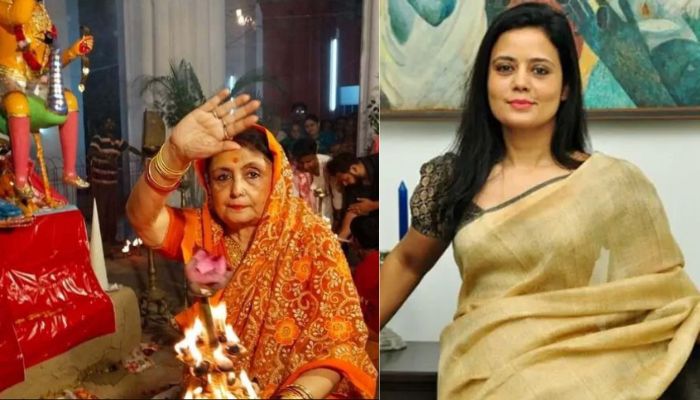
TMC leader Mahua Moitra, UBT leader Uddhav Thackeray and DMK politician DNV Senthilkumar S has made gaumutra jibes in the past to settle political scores with the BJP.

ABP journalist Suman Dey booked by Mamata govt

Recently, ABP Ananda journalist Suman Dey was booked by the Mamata Banerjee-led-government for reporting on unrest and violence in Sandeshkhali village in North 24 Parganas district of West Bengal.

The case was registered based on a complaint by Sandeshkhali police Sub-Inspector Mohd Monaim Hassan on 17th February this year.

In his complaint, he alleged, “It has come to my notice that during the telecast of an episode of “Ghanta Khanek Sange Suman” hosted by Suman Dey on 12.02.24, it was repeatedly mentioned that while forwarding two arrestees, Susanta Sardar alias Uttam Sardar and Bikas Singh, to the Basirhat Court in Sandeshkhail PS, police custody was not sought for the said two arrested persons.”

While alleging provocation on part of Suman Dey, Hassan claimed, “The fact is that the Investigating Officer of the concerned case, while forwarding the two arrestees, had submitted a prayer to the Ld. Court seeking 10 days’ police custody for both the arrested accused persons.”

The ABP journalist was thereafter booked under Indian Penal Code (IPC) Sections 153 (provocation) and 505 (statements conducing public mischief).

PM Narendra Modi inaugurates Sela Tunnel: Know about the world’s longest bi-lane passageway in Arunachal Pradesh near China border

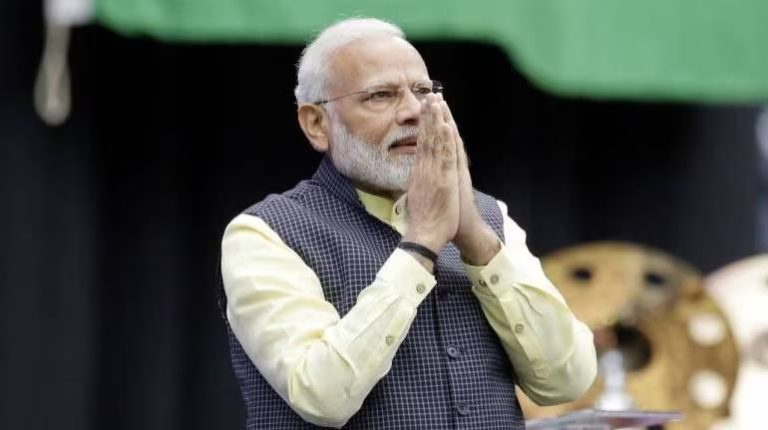
Prime Minister Narendra Modi inaugurated the Sela Tunnel, the world’s longest twin-lane tunnel, in Arunachal Pradesh on 9th March where he is slated to spend the day. Constructed at an expense of Rs 825 crore by the Border Roads Organisation (BRO), the tunnel is located at a height of 13,700 feet in the West Kameng district on the road that links Tezpur and Tawang in Arunachal Pradesh.

“You must have heard of ‘Modi Ki Guarantee’ (Modi’s guarantee). You will understand its significance once you visit Arunachal. The entire Northeast bears witness to this. I laid the foundation of the Sela Tunnel here in 2019, and today it has been inaugurated,” the prime minister declared following the inauguration. It is the nation’s highest tunnel, among other things, and offers all-weather communication to the Tawang region, which is strategically important, and other forward locations that border China close to the Line of Actual Control (LAC).

Additionally, the tunnel will shorten the drive time from Tezpur to Tawang by more than an hour. A statement from the Prime Minister’s office stated that travellers would be able to bypass the treacherous Sela peak, which is 13,700 feet high and covered in snow. ​The tunnel, which is close to Sela Pass, was necessary because snowfall and landslides brought on by intense rains forced the Balipara-Charidwar-Tawang Road to stay blocked for a significant portion of the year. It is believed that the project will advance both the socio-economic growth of the area and the nation’s defence capability.

The project is the longest twin-lane tunnel in the world to be constructed above 13,000 feet in altitude. It consists of two tunnels, Tunnel 1, a single-tube tunnel of 1,003 meters, and Tunnel 2, a twin-tube tunnel measuring 1595 meters. There is one escape tube for emergencies and one bi-lane tube for traffic in Tunnel 2. T2, the longer tube, spanning 1,594.90 meters, is accompanied by a narrower, parallel tunnel measuring 1,584.38 meters in length, designed to facilitate escape in case of a cave-in.

Additionally, it entails building a 1.3-kilometre connection road to connect Tunnel 1 to Tunnel 2 as well as a seven-kilometre access road to Tunnel 1, which begins at Balipara-Chardwar-Tawang (BCT) Road. The project also includes two roads measuring 8.6 kilometres. The tunnel has been designed for a traffic density of 3,000 cars and 2,000 trucks per day, with a maximum speed of 80 kmph.

According to a Prime Minister’s Office (PMO) statement, it is an engineering marvel that would allow access to Tawang through the Sela pass on the Balipara-Chariduar-Tawang Road in Arunachal Pradesh in any weather conditions. The tunnel was built with the most advanced safety measures and the recently developed Austrian Tunnelling Method. The statement mentioned, “The project will not only provide a faster and more efficient transport route in the region but is of strategic importance to the country.” The tunnel will be a lifeline as it will provide all-weather connectivity to Tawang.

One of India’s clear disadvantages over China along the northeast frontier was the absence of motorable roads and rail connections in Arunachal Pradesh. Additionally, experts noted that China gained a strategic edge from building access roads and other infrastructure all the way to the Indian border.

This move guarantees the quick deployment of soldiers and heavy armament, including artillery guns, from 4 Corps headquarters in the Assam plains to Tawang, ensuring the prompt handling of any emergency scenarios. This tunnel will save travellers around ninety minutes of travel time in each direction by reducing the distance between Tawang and Dirang in the West Kameng region of Arunachal Pradesh by twelve kilometres.

The northeast now has better infrastructural connectivity owing to new airports and train connections that have been built in the last few years under the leadership of PM Modi’s Union government. One such project that is crucial from a strategic standpoint is the Sela Tunnel.

The project enables all-weather access to the Tawang region, which China claims to be its ancient territory. The Sela Pass has historically been closed during a few winter months. However, the project will offer a fresh alignment on the axis heading towards the LAC, guaranteeing the smooth passage of military troops and equipment all year round.

The path leads through Sela, a mountain pass tucked away in Arunachal Pradesh at a height of almost 14,000 feet, and is the location of recent skirmishes between Indian and Chinese troops. This area has extremely harsh weather, with temperatures as low as -20 degrees Celsius that cause diesel to freeze and severe snowfall that makes movement impossible. The Indian Army will now have a key link between Tawang and Guwahati, Assam, due to the building of the all-weather Sela Tunnel, which will provide continuous connectivity year-round.

On 9th February 2019, Prime Minister Narendra Modi placed the project’s foundation stone, however, its completion was delayed due to the COVID-19 pandemic. The excavation operations on Tunnel 1 started on 15th January 2021, following the first explosion. Tunnel 2’s breakthrough burst took place on 14th October 2021 and was carried out by Defence Minister Rajnath Singh during an e-ceremony from India Gate, signalling the end of Tunnel 2’s excavation. The project has a total length of almost 12 kilometres which consists of two tunnels and more than eight kilometres of approach roads.

Notably, many tunnels, bridges and highways are now being built in forward areas as part of a major effort to reduce the enormous border infrastructure gap with China. The government gave its approval in February of last year to build a 4.1-kilometre tunnel under the challenging Shinkun La pass, which separates Ladakh and Himachal Pradesh. The tunnel is expected to cost Rs 1,681 crore.

Furthermore, he also launched the UNNATI scheme worth over Rs 10,000 crore. He also unveiled multiple development projects in various states including Meghalaya, Manipur, Nagaland, Sikkim, Tripura and Arunachal Pradesh during the ‘Viksit Bharat Viksit North East’ programme.

During the ‘Viksit Bharat Viksit North East’ programme in Arunachal Pradesh today, PM Modi is expected to inaugurate, dedicate, and lay the foundation stone of several other development projects worth approximately Rs 55,600 crore in Meghalaya, Nagaland, Tripura, Sikkim, Manipur, and Arunachal Pradesh, as per the PMO’s press release.

Moreover, he is going to visit Jorhat in the adjacent state of Assam, where he will dedicate a statue honouring the late Ahom general Lachit Borphukan. Furthermore, the PM will introduce and officially launch several development initiatives in Assam valued at over Rs 17,500 crore.

Madras High Court makes changes in judgment that said ‘Varnas can’t be blamed’, now says ‘caste categorisation is a recent phenomenon’

On Thursday (7th March), the Madras High Court condemned State Minister Udhayanidhi Stalin for his remarks about Sanatana Dharma and said that the caste system as we know it now is less than a century old, and the caste difference cannot be linked only to the ancient Varna system. Now, the court has made changes to its order and said that the categorisation of castes, as we know them today, is a far more recent and modern phenomenon.

In the original judgment, Justice Anita Sumanth recognised that caste disadvantages persist, but added that the caste system as we know it today dates back less than a century. She said, “Origins of the caste system as we know it today are less than a century old. Can’t lay blame on the ancient Varna system alone.”

The latest version of the judgment uploaded on the website of the Madras High Court omitted the line “origins of the caste system as we know today are a century old”. The line is replaced with “categorisation of castes as we know them today, is a far more recent and modern phenomenon”.

What’s there in the original judgment?

The Court stated in its original judgment that Tamil Nadu has 370 registered castes and recognized tensions amongst castes. She went on to say that this hostility between people of different castes is due in part to the benefits provided to them.

“This Court agrees unequivocally that there are inequities based on caste present in society today and that they are to be eschewed. However, the origins of the caste system as we know it today are less than a century old. The State of Tamil Nadu has 370 registered castes and the State is a cacophony of pulls and pressures by groups of persons claiming allegiance to one caste or the other. This ferocity among persons belonging to different castes is also, in part, on account of the benefits made available to them,” the Court said.

What was the case?

The order was issued in response to a petition brought by the Hindu Munnani against Stalin, State Minister PK Sekarbabu, and Member of Parliament (MP) A Raja, which questioned their continued office despite such statements. On September 2, 2023, at a conference hosted by the Tamil Nadu Progressive Writers Artists Association in Chennai, Stalin stated that certain things should not only be resisted but abolished.

“Just as dengue, mosquitoes, malaria, and coronavirus must be eradicated, we must eradicate Sanatana,” he had stated, causing considerable indignation. Officers of the right-wing outfit Hindu Munnani then filed three writ petitions in the High Court, objecting to Stalin’s remarks. They requested the issuing of a writ of quo warranto, requesting an explanation from Stalin, Sekarbabu, and A Raja as to why they were still holding public office after participating in a conference calling for the extinction of the Sanatana Dharma.

What did the court opine?

Stalin insisted that his remarks were not directed at Hindus or Hinduism, but rather against the caste system. On Wednesday, the Court condemned Stalin’s remarks but declined to remove him as a Minister. The Court stated that it could not issue such a directive unless Stalin was legally disqualified from holding the position.

The Court also stated that making unproven statements about Sanatana Dharma constituted promoting misinformation, but declined to issue a writ of quo warranto to remove Stalin as minister.

The High Court said that Udhayanidhi Stalin was wrong in attacking the Sanatan Dharma over the current caste system. “The restrictive meaning attributed to the phrase Sanatana Dharma is clearly erroneous as Sanatana Dharma connotes that eternal, perpetual and universal code of conduct that is uplifting, noble and virtuous,” the court said.

Other remarks by the court in the original judgment

The Court accepted that people have attacked one another throughout history in the name of caste and ruled unambiguously that such acts are unacceptable. To address past injustices, the Court stated that constant repair and damage control, as well as honest introspection on potential solutions to correct injustices and create equality, are required.

Regarding whether these problems might be put wholly on the ancient Varna system, the Court stated, “This Court agrees unequivocally that there are inequities based on caste present in society today and that they are to be eschewed. However, the origins of the caste system as we know it today are less than a century old. Can one lay the blame for these torturous circumstances entirely on the ancient Varna system? The answer is emphatically in the negative.”

Furthermore, the Court held that the Varna system considers a vocation rather than birth as the basis for partition. “The varna system does not contemplate division based on birth, but based on avocation. The system was designed to work towards the smooth functioning of society centuries ago where the chief avocations were identified based on the then needs of society. The relevance of such a system today is itself moot,” it stated.

Indian tourists in Maldives drop by one-third after derogatory comments against India and PM Modi by Maldives’ ministers

0

The number of Indian tourists visiting the Maldives has dropped by 33 per cent as compared to last year, Maldivian website Adhadhu reported, citing data from the Maldives Tourism Ministry.

This comes as the diplomatic row between New Delhi and Male continues to deteriorate.

According to Tourism Ministry statistics for 2023, 41,054 Indian tourists visited the Maldives by March 4 last year. The number of Indian tourists recorded as of March 2 this year was 27,224. This was 13,830 lesser than last year, Maldives-based Adhadhu reported.

In the same period last year, India was the second largest source market for tourists to the Maldives with a 10 per cent market share. However, India is now in sixth place on the list with a six percent market share.

The row erupted after three Maldivian deputy ministers made derogatory comments against Prime Minister Narendra Modi, over his pictures from the visit to Lakshadweep. PM Modi had called for the Indian island cluster to be developed as a destination for beach tourism and promotion of domestic tourism.

The matter snowballed into a major diplomatic row, with New Delhi summoning the Maldivian envoy and registering a strong protest against the viral posts.

The three deputy ministers were suspended and they remain under suspension with pay.

Earlier this year, Maldives tourism industry stakeholders expressed concern as the boycott campaign in India grew momentum and gained the support of popular Indian film stars.

The Maldives Association of Travel Agents and Tour Operators (MATATO) conducted a survey to determine the impact of booking cancellations by Indian guests. But the findings were not made public, as reported by Adhadhu.

India remained the top tourist market for the Maldives through 2021-23 with more than 2,00,000 tourists each year.

However, China is the top market now with more than 54,000 tourist arrivals so far this year. 

(This news report is published from a syndicated feed. Except for the headline, the content has not been written or edited by OpIndia staff)