Home Blog Page 1446

Another scam brewing under Kejriwal Govt? Delhi LG VK Saxena seeks a CBI probe into allegations of fake medicines being used in Delhi govt-run hospitals

0

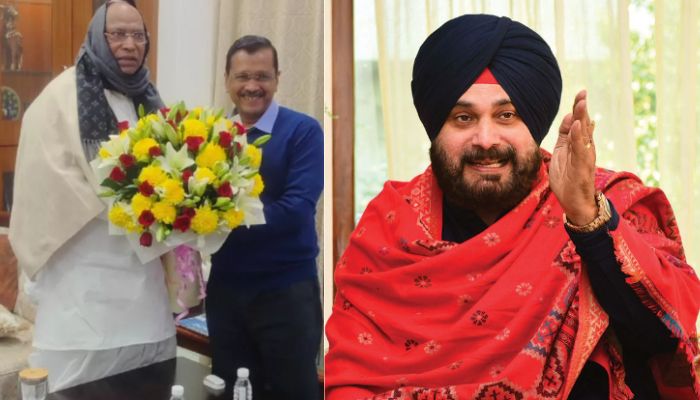
Arvind Kejriwal is in for yet another big trouble as Delhi LG VK Saxena has sought a CBI probe against his government in the spurious drugs in Delhi Govt hospitals case. According to reports, the Lieutenant Governor has written a letter to Chief Secretary Naresh Kumar, directing him for an investigation and CBI inquiry into the allegations.

Accusing the Delhi Government of procuring and supplying non-standard drugs to government hospitals and Delhi Mohalla clinics, he directed to immediately remove the fake medicines from these places.

Notably, India Today reported that the Vigilance Department collected 43 samples from various government-run hospitals in Delhi after complaints were received regarding substandard drugs supplied. The report stated that five of the 43 samples did not meet quality standards, which raised serious health concerns for the thousands of citizens receiving treatment at these government-run hospitals and Mohalla clinics.

Punjab: 43,000 calls made from Ferozepur jail by smugglers, seven jail officials face inquiry

0

Punjab’s Prisons Department has launched an investigation about seven jail officials in Ferozepur, including the current superintendent, for major administrative lapses that resulted in three smugglers making over 43,000 phone calls while incarcerated. Two of the smugglers also reportedly received Rs 1.35 crore online in their spouses’ accounts while being in prison. It is being investigated whether the accused sent or received money using phones within the jail.

Reports say that two serving and three retired jail superintendents are among those under investigation. They are Satnam Singh, superintendent of the Central Jail in Ferozepur, Arvinder Pal Singh Bhatti, former superintendent (now suspended), Parvinder Singh, principal of the Punjab Jail Training School in Patiala, and Gurnam Lal, superintendent of the District Jail in Ropar. Parvinder and Gurnam had previously served as superintendents of the Ferozepur jail. Baljeet Singh Vaid, Karanjit Singh Sandhu, and Surinder Singh are the three retired superintendents under investigation.

Even though the government claims that phone jammers are installed in jails, the three smugglers Raj Kumar (Raja), Sonu Tiddi, and Amrik Singh used mobile phones from inside the jail. The phone use was so blatant and unregulated that of the total 43,432 phone calls made by the smugglers, 38,850 were made from Raj Kumar’s phone in just one month (March 1-31, 2019). This equates to an average of 1,295 calls every day and 53 calls every hour. The other phone calls, totaling 4,582, were made over the course of nearly 28 months, between October 9, 2021, and February 14, 2023.

Meanwhile, the Punjab and Haryana High Court slammed State Special Operation Cell (SSOC) officers and the Investigating Officer (IO) for failing to investigate the role of jail officials in the alleged multi-crore narcotics ring running from the Ferozepur Central Jail.

LiveLaw reported that while questioning the SSOC head, Special DGP, IPS R.N Dhoke, Justice N.S. Shekhawat said, “Can there be any crime more serious than this, Court has reason to believe that the multi-crore drug racket is running from prison…I will send the matter to CBI and ED to investigate…you are party to it. 43,000 calls are being made from jail (in 4 years), not even one jail official is arrayed in FIR.” 

The High Court bench while expressing concern over SSOC’s careless approach noted that meetings held by Special Cells, which are attended by AIGs, are limited to “tea and samosa” only.

PornHub’s parent company admits it made profit by coercing women into performing sex acts on camera and posting it without their consent, fined 1.8 million dollars

The Parent company of one of the biggest pornographic content websites in the world, PornHub, has acknowledged profiting from sex trafficking. It acknowledged having hosted adult videos in which women were forced to engage in sexual acts on camera; the business subsequently shared the videos online without the women’s consent.

As part of a deferred prosecution agreement reached with federal prosecutors, Aylo, formerly known as MindGeek, would pay a fine of 1.8 million Dollars and compensate the victims of sex trafficking. Aylo, who entered a not-guilty plea to participate in illegal financial transactions involving proceeds from sex trafficking, will be under observation for three years, according to the agreement. The accusations against the corporation will be withdrawn if it abides by the conditions of the contract.

The accusations originate from the fact that the company hosted content and took money from a third party, Girls Do Porn (GDP).

According to court documents, Aylo continued to accept money from the GDP channel even after it was aware of sex trafficking allegations from some of the women appearing in the videos.

Court records stated that Aylo failed to comply with all removal requests and independently checked consent, even after receiving requests from multiple women in 2016 and learning of federal action against the production business in 2017.

The victims said that the GDP forced them to have sex on camera and misled them about how the footage would be disseminated.

According to prosecutors, the company received more than $100,000 from GirlsDoPorn and roughly $764,000 in payments from advertisers attributable to the production company.

In 2021, Aylo, then known as MindGeek, settled with 50 women out of court.

“Aylo received money that Aylo knew or should have known was derived from the GDP Operators’ sex trafficking operations,” the US Attorney’s Office for the Eastern District of New York alleged.

In all, there were over 400 victims, and GDP producer Ruben Andre Garcia was given a 20-year federal jail sentence in 2021 for forcing women to appear in pornographic recordings.

Later that year, the women gained the rights to the videos in which they had starred, and Garcia was forced to make amends by giving them $18 million.

Notably, in the year 2020, the New York Times published an article levelling allegations that MindGeek’s sites were hosting material depicting rapes and sex involving minors.

The NYT‘s 2020 article read, “Its site is infested with rape videos. It monetizes child rapes, revenge pornography, spy cam videos of women showering, racist and misogynist content, and footage of women being asphyxiated in plastic bags. A search for “girls under18” (no space) or “14yo” leads in each case to more than 100,000 videos. Most aren’t of children being assaulted, but too many are.”

The article sparked intense scrutiny from regulators in several countries, and Visa and MasterCard suspended payment processing.

It may be recalled that at the beginning of the year, Ethical Capital Partners (ECP), a Canadian private equity firm, bought MindGeek, the parent company of PornHub, bringing with it a stable of additional websites including YouPorn. The acquisition has also resulted in a slew of legal issues. 

In June this year, the new owner of PornHub said that the government should take pride in sexual expression instead of cracking down on porn websites. It further urged the governments to help make porn “normal and boring.”

Connecting students with India’s rich, ancient culture: Gujarat to introduce Bhagavad Gita in school syllabus from Class 6 onwards

In a major development, Bhagwad Gita will soon be a part of school cirriculum in Gujarat. On the occasion of Gita Jayanti, Minister of State for Education Praful Pansheriya has declared that schoolchildren will be taught the fundamentals of the sacred text. He disclosed that kids from 6th to 8th grade learn it starting with the upcoming academic session next year.

He also launched books for classes VI to VIII on 22nd December. The minister informed that the teachings of Lord Krishna concerning the universe and the environment will be available for students to learn. He informed that the decision is in line with the National Education Policy launched by the Central Government three years ago.

The cabinet minister also took to X and wrote, “Another education-related decision made by the Gujarati government’s Education Department falls under the purview of the National Education Policy 2020. Thank you very much, Chief Minister, Mr. Bhupendra Patel for incorporating the spiritual ideas and ideals found in the “Shrimad Bhagavad Gita” as an additional textbook into the curriculum for classes 6 to 8.”

He added, “This academic decision will make students feel proud and connected to India’s rich, diverse, ancient culture and knowledge systems and traditions through the teachings of “Shrimad Bhagavad Gita.” This decision taken under the ‘National Education Policy 2020’ under the guidance of Hon’ble Prime Minister Mr Narendra Modi will play an important role in developing exemplary life values among students.”

The Bharatiya Janata Party leader stated during the book launch that a person’s memory of their early schooling lasts a lifetime. Mahatma Gandhi attended a play by Raja Harishchandra when he was a young man. It had a profound impact on his life. He embraced the truth and made it his weapon.

According to the minister, the greatest text in Sanatan Dharma “Shrimad Bhagavad Gita” is the essence of our entire life in which the conscience of spirituality, management, leadership, creativity, culture and karmic excellence are the unique tools for building a superior society. He stressed that the lessons of the Bhagavad Gita are still relevant today.

The material of the Bhagavad Gita for classes 9 to 12 was in the process of completion and would be included in the Gujarati language textbook soon. The government sources reported that rather than receiving a grade for their comprehension of the Bhagavad Gita, pupils “will just be assessed without assigning any marks.”

The state administration previously declared last year that starting with the 2022–2023 academic year, Indian culture and knowledge systems will be taught in schools. The first step is to teach the ideals and concepts of the holy scripture to students in classes ranging from 6th to 12th and they will receive an explanation of the same. Reading the book will be required in accordance with the new school policy. According to a statement issued by the government, elocution competitions, verse singing and literature will also be organised on Bhagavad Gita to help school children understand the text, its knowledge and values.

Jammu and Kashmir: Three individuals found dead after they were questioned by army following Poonch terror attack, massive search operations launched

0

Authorities in Jammu and Kashmir’s Poonch district stated that three men were discovered dead under strange conditions on 22nd December close to the scene of a terrorist attack on Army trucks that killed five troops and injured two others the day before. According to sources, the Army had detained eight individuals including the deceased three for questioning over the incident that occurred on 21st December near Dhatyar Morh which is under the Surankote police station’s jurisdiction and is situated between Dhera Ki Gali and Bufliaz. However, later the three persons were found dead under mysterious circumstances.

43-year-old Safeer Hussain, 27-year-old Mohammad Showket and 32-year-old Shabir Ahmad all residents of Topa Peer village of Bufliazwere identified as the deceased. The cause of their deaths was not immediately established.

Locals protested in the area following the death of the 3 civilians. Internet services have been suspended in the area following the terror attack.

Officials said that while Director General of Police R R Swain and Lieutenant General Sandeep Jain, General Officer Commanding of the White Knight Corps based in Jammu examined the ambush scene and assessed the security situation, a massive search operation is underway in the dense forests to find the assailants.

The location was also examined by a team from the National Investigation Agency (NIA), led by a deputy inspector general-rank officer. However, a senior official stated that the agency has not yet been tasked with investigating the matter. Following the news of the local fatalities, Poonch Deputy Commissioner Choudhary Mohammad Yasin and Senior Superintendent of Police Vinay Kumar arrived in Bufliaz. Meanwhile, Jammu Divisional Commissioner Ramesh Kumar is on his route to Surankote, per the officials.

Late in the afternoon of 21st December, three to four highly armed terrorists attacked an Army vehicle and a Maruti gypsy which resulted in the deaths of five troops and wounded two more. The terrorists stole some of their weapons and disfigured the bodies of at least two soldiers after the attack.

Along with senior Army and police personnel, Lieutenant General Sandeep Jain visited Ground Zero to take stock of the current state of affairs. The officials mentioned that Director General of Police R R Swain went to Poonch and evaluated the security situation along with other top officers such as the Inspector General of Police, Jammu Zone, Anand Jain.

An officer revealed that sniffing dogs have been sent to locate the terrorists and helicopters are also being used to aid with aerial monitoring. “A massive cordon-and-search operation began this morning after a night cordon in the area.” The operation is underway. According to the officer, more troops have been deployed into the region to hunt out the terrorists. Meanwhile, the People’s Anti-Fascist Front or PAFF which is an offshoot of Pakistan-based terrorist outfit Jaish-e-Mohammed (JeM) has claimed responsibility for the terror attack.

Several groups in Jammu, including the Jammu Statehood Organisation staged anti-Pakistan demonstrations and set fire to Pakistan’s effigy. Protests against Pakistan were also organised by the Shiv Sena Dogra Front which also called for a full-scale campaign to drive out terrorists from the region. They pushed for the government to bolster the intelligence network and conduct special operations near forest regions.

Gujarat lifts liquor ban in GIFT City before the 10th Vibrant Gujarat Summit, will allow ‘wine and dine’ facilities

0

On Friday (22nd December), Gujarat’s prohibition department lifted the ban on liquor in the Gujarat International Finance Tech-City (GIFT City), exempting it from the statewide prohibition. Gujarat has upheld a prohibition on the production, storage, sale, and consumption of alcohol. However, in a historic move, the state has decided to allow an exemption for GIFT City, lifting this ban to promote an international business climate. This marks the first such exception in Gujarat’s history.

This easing of restrictions occurred just three weeks before the 10th edition of the three-day Vibrant Gujarat Summit. This event is anticipated to feature the inauguration of the offshore campus of Australia’s Deakin University in GIFT City among others.

Gujarat’s prohibition department said in its statement, “The GIFT City has emerged as a global financial and technological hub which is bustling with economic activities. An important decision has been taken on Friday to change rules to allow `wine and dine’ facilities in the GIFT City area to provide a global business ecosystem to global investors, technical experts, and national and international companies.”

It further said, “Under the new system, hotels, restaurants and clubs (existing and that will come up) in the GIFT City area will be given permits for wine and dine facilities. Those officially working in the GIFT City area and their official guests will be able to go to such hotels, restaurants and clubs for wine and dine facilities.”

Owners and employees of firms in GIFT City will be eligible for liquor access permits, while their visitors can obtain temporary permits. These permits will allow them to consume alcohol in designated hotels and restaurants. The state’s prohibition and excise department will oversee the import, storage, and sale of liquor within the city. Currently, visitors from outside Gujarat can purchase alcohol from approved outlets by acquiring a temporary permit.

An official highlighted that, as a global initiative, Gujarat International Finance Tech-City needs to conform to international business norms. He said, “Such rules were previously applicable only to Special Economic Zones (SEZ) and SEZ employees, and the new notification represents a progressive step.”

Hotels, restaurants, and clubs located in or coming to GIFT City will be able to obtain an FL3 license for wine and dine facilities.

The initial proposal to lift the prohibition in Gujarat International Finance Tech-City was submitted in September 2020, emphasising the importance of developing a vibrant evening social life. This move aimed to bring GIFT City’s social offerings in line with those available to professionals in other major financial and tech centres globally.

Tamil Nadu: ‘Homosexual’ quack, who used to treat men for impotence, murders his victims, cooks their body organs with masala

The Tamil Nadu police have apprehended a 47-year-old self-styled Siddha (traditional medicine) practitioner named T Kesavamoorthi in connection to the murder of two young men.

As per a report by Hindustan Times, the accused is a resident of Cholapuram in the Thanjavur district of Tamil Nadu. Although he studied till 10th Std, he claims to have learnt the practice of Siddha from a man in Chennai. Kesavamoorthi is popular in Cholapuram for his treatment of ‘impotency.’

Many young men used to visit him for treatment and eventually became his targets. One such case happened to be that of 27-year-old Ashok Rajan, who was a native of Cholapuram but worked as a driver in Chennai.

Police investigation leads them to homosexual ‘quack’

He went missing on 13th November 2023. Rajan’s grandmother M Padmini filed a missing complaint with the Cholapuram police on 15th November. She informed the cops that although Rajan left home for Chennai, he did not resume his job and that his phone was switched off.

During the investigation, the police found that the victim went to the house of T Kesavamoorthi after leaving his home. They interrogated the self-styled Siddhi practitioner who confessed to murdering Rajan.

“On sustained questioning and (after) pointing (to) inconsistencies in his statement, he confessed to murdering Rajan…“He also confessed to being a homosexual and in a sexual relationship with Rajan,” the Thanjavur district police said in a statement on 27th November 2023.

Accused killed Rajan as he was getting married

The accused admitted that he killed Rajan because he was getting married. According to the victim’s grandmother, Rajan’s engagement was fixed for February 2024 by the family.

During the investigation, the police found the body of the victim in the backyard of Kesavamoorthi’s house. “We started digging and found chopped parts of the body buried in his backyard, and in a garden where he grew herbs. All internal organs were missing. Initially, we thought it was to be a case of organ trade,” a cop told The Hindustan Times.

Kesavamoorthi also confessed to cannibalism and cooking the organs of the 27-year-old Ashok Rajan. Another police officer told the newspaper, “Initially, he did not speak and kept quiet. On sustained interrogation and after showing him all circumstantial evidence, he confessed that he cooked the organs and ate them.”

Kesvamoorthi resorted to cannibalism

The accused reportedly bought masala from the market in advance as part of his plan to kill Rajan and cook his body parts. He gave the victim a sedative tablet and then had sexual intercourse with him.

Kesavamoorthi then used machetes and a grinding machine to cut the ribs of Rajan and take out the organs. He also watched surgery videos on YouTube and learnt to make incisions. He ate the body parts and fed the rest to his dog.

The cops also found a jawbone in the backyard of Kesavamoorthi. A forensic examination revealed that it belonged to another man.

The discovery of another victim

The police began tracking missing complaints and confirmed the identity of the victim as Mohammed Anas. A resident of Cholapuram, he had been missing since 2021. His family informed that Anas frequently visited Kesavamoorthi’s house.

“When we questioned Anas’s family, they confirmed that he used to visit Kesavamoorthi’s house regularly. The accused’s phone records showed that he used speak with Anas regularly. We had strong evidence to link Kesavamoorthi with the disappearance of Anas. Confronted with evidence, he confessed,” the police said.

Ashish Rawat, DSP (Thanjavur district), told Hindustan Times, “He was in sexual relationship with both the victims. In both the cases, he killed the victims after they informed him they were getting married.” Kesavamoorthi however did not eat the organs of Mohammed Anas after killing him.

Police hunt continues

The Cholapuram police are actively investigating whether Kesavamoorthi killed more victims, who used to seek treatment from him. “A list of people who were treated by Kesavamoorthi is being prepared,” the police said in a statement.

While reacting to the development, Cholapuram village Head A Namibrajan told Hindustan Times, “When I warned some of them to not spend too much time in Kesavamoorthi’s house, the families would come out in their support. So, I stopped interfering…His estranged elder brother lives a street away from him.”

“No five-judge bench of Supreme Court can represent 140 crore Indians”: BJD MP Sasmit Patra on clashes between the Judiciary and Legislature

On Thursday (December 21), Biju Janata Dal (BJD) MP Sasmit Patra made a strong case for Parliament’s independence in drafting legislation, saying that the Supreme Court cannot dictate the legislative powers of Parliament. The BJD MP said that no five-judge bench of the Supreme Court can represent 140 crore Indians.

In his speech during the discussion on the Bharatiya Nyaya (Second) Sanhita 2023; Bharatiya Nagarik Suraksha (Second) Sanhita 2023; and Bharatiya Sakshya (Second) Bill 2023 in Rajya Sabha, BJD MP Sasmit Patra said, “I want to tell the parliament about a special topic, it is not merely about the three laws…I don’t know how many of us have gone to the Supreme Court’s court number one and stood among lawyers there…when a constitutional bench was formed on same-sex marriage issue then as an intervenor I was appointed to present my side. I noticed an interesting aspect there…some advocates there opined that the Parliament may pass the bills and make laws but here we can challenge and strike it down, what will the Parliament do (Sansad kya ukhaad lega)? This is the mindset.”

Welcoming the proposed bills (now passed) BJD MP went on to emphasise the importance of parliamentary sovereignty. “The constitution is supreme, it is a fact. Just the way we don’t go into the judiciary and make judicial pronouncements and the way we legislate in the parliament our [MP’s] rights should also remain intact,” Patra said.

He further discussed the legislative competence in the context of the same-sex marriage issue saying that if such a major change is to be brought about, and a five-judge bench decides it and imposes on the population of 140 crore Indians will there be same-sex marriages in every household, or states or cities. Patra said that he argued that the matter be handed over to the Parliament.

“The Parliament reflects the true conscience and mandate of the people of this country. We [MPs] have come here with the support of 140 crore citizens. Many a time when MPs are briefed by the law department, the Kesavananda Bharti case is mentioned to emphasise that the Parliament has no right of the basic structure… we [MPs] cannot legislate on that…” Patra said.

The BJD MP then quoted Vice President Jagdeep Dhankhar’s address during the 83rd All India Presiding Officers Conference about the basic structure, separation of powers and parliamentary sovereignty. “We are Members of Parliament, making laws for the country is our duty. But today Judiciary is undertaking the legislation and after sending the legislation we say this is pending in court….so what? The court will do its job and we will do ours. Will Parliament rely on the Judiciary? This needs to be discussed,” Patra stressed.

Quoting Vice President Dhankar’s speech, Patra said democracy blossoms when the legislature, executive and judiciary act in tandem and fructify the constitutional goals and fulfil the aspirations of the country. He highlighted that the three pillars of democracy should not intervene and perform functions of one another. Patra, thus, asserted that bringing up Kesavananda Bharti case to raise questions over the Parliament’s rights to legislate over certain matters is wrong as both the houses of the Parliament – the Lok Sabha and the Rajya Sabha have the complete rights to legislate. “This clarity should be there.”

Notably, the Kesavananda Bharti Vs State of Kerala, 1973 case verdict founded the Basic structure doctrine of the Indian Judiciary which meant that some basic features of the Indian constitution could not be altered even by means of amendment under article 368.

Furthermore, he questioned how can the Parliament or its legislations stand in contempt of court. “Can the courts give us rights and directives? What’s this fear? We [MPs] are relinquishing our rights that is why they are going there [to the Judiciary]” Patra said concluding his fierce speech reiterating that the Judiciary, the Legislature and the Executive are three equal parts of the basic structure of power with the Constitution at the helm.

As reported earlier, three momentous Bills to replace the Indian Penal Code, Code of Criminal Procedure and Indian Evidence Act were passed by the Rajya Sabha on Thursday. Replying to the debate in Rajya Sabha on bills that seek to replace the Indian Penal Code (IPC) of 1860, the Code of Criminal Procedure (CrPC) and the Indian Evidence Act, Union Home Minister Amit Shah said the implementation of new criminal laws will ensure an end to ‘tareekh pe tareekh’ era and justice will be given in three years.

The House earlier took up discussion on the Bharatiya Nyaya (Second) Sanhita, 2023, the Bharatiya Nagarik Suraksha (Second) Sanhita, 2023 and the Bharatiya Sakshya (Second) Bill, 2023. The three bills were passed by Lok Sabha on December 20.

‘The incident has hurt the sentiments of the Indian community’: India strongly condemns the attack on Swaminarayan Mandir in California by Khalistani extremists

0

The Indian consulate in San Francisco on Saturday strongly condemned the defacement of the Swaminarayan Mandir Vasana Sanstha with anti-India and pro-Khalistani graffiti in California’s Newark city, saying the incident has “hurt sentiments of the Indian community”. The embassy also called for a quick probe into the matter and prompt action against the accused.

“We strongly condemn the defacing of SMVS Shri Swaminarayan Mandir at Newark, California with anti-India graffiti. This incident has hurt the sentiments of the Indian community. We have pressed for quick investigation and prompt action against the vandals by the US authorities in this matter,” the consulate wrote in a post on X.

In another attack on a Hindu temple in the US, the Swaminarayan Mandir in California’s Newark city was defaced with anti-India and pro-Khalistani slogans. The Hindu American Foundation took to X on Saturday, December 23, to share pictures, showing slogans against India and Prime Minister Narendra Modi scribbled on several walls of the temple. Alongside there were slogans exalting Khaliatsni terrorist Bhinderwala sprayed on the walls of the Hindu temple.

Condemning the vandalisation of the Hindu temple, the Hindu American Foundation said that the hateful messages may have been written to traumatise people visiting the temple and also create a “fear of violence”. The foundation insisted that the incident should be investigated as a hate crime and said the Newark Police Department and the Department of Justice Civil Rights Division were informed about it.

It’s worth mentioning here that such acts of vandalism of Hindu temples by Khalistani extremists have become very common in the United States and its neighboring Canada. India has already voiced alarm over the increasing activities of Khalistani terrorists and has asked countries to cracked down on groups and people attempting to incite separatism in India.

J & K: Jaish-e-Mohammed’s proxy People’s Anti-Fascist Front (PAFF) claims responsibility for the terrorist attack in Rajouri

0

The People’s Anti-Fascist Front or PAFF, an offshoot of Pakistan-based terrorist organisation Jaish-e-Mohammed (JeM), has claimed responsibility for the Poonch terror attack in Jammu and Kashmir in which four soldiers of the Indian Army were killed. The attack took place in the forest of Dera ki Gali in the Rajouri district of the Poonch sector. Two Army vehicles were ambushed by heavily armed terrorists during the attack. A comprehensive search and cordon operation has been initiated in the Dera ki Gali forest area, utilising both ground forces and aerial support.

Following the ambush, the People’s Anti-Fascist Front (PAFF), a group believed to be a proxy for Jaish-e-Mohammed (JeM), claimed responsibility for the attack. Masood Azhar, the leader of the Pakistani terrorist organisation JeM, reportedly established PAFF. Additionally, it is reported that Mufti Azgar Kashmiri leads the group, while Mufti Abdul Rauf Azhar, Masood Azhar’s brother, manages the organisational aspects of the terrorist group.

Home Ministry has already banned PAFF

In January 2023, the PAFF was officially banned by the Union Home Ministry under the Unlawful Activities Prevention Act (UAPA) due to its involvement in various terrorist activities in Jammu and Kashmir. The Home Ministry’s notification highlighted that this terror outfit consistently issued threats to security personnel, political figures, and civilians from other states working in Jammu and Kashmir.

The ministry’s statement further mentioned that PAFF, along with other groups, was actively plotting to execute violent terrorist attacks in Jammu and Kashmir and major Indian cities. The conspiracy took place both physically and on social media.

Additionally, it was revealed that PAFF plays a significant role in radicalising and recruiting youth, training them in the use of firearms, ammunition, and explosives. Security officials have observed an increasing involvement of PAFF in terrorist activities, with the group being linked to several incidents in the Jammu-Kashmir region.

Terrorists from PAFF are infamous for employing body cameras during their assaults to record the events. These recordings are then utilised for propaganda purposes. An instance of this tactic was observed in April 2023, when PAFF terrorists attacked an Indian Army truck in Poonch and captured the incident on film.