Home Blog Page 1495

‘Temple means the path of mental slavery’: RJD puts up an anti-Hindu poster outside Lalu-Rabri’s residence ahead of Pran Pratistha in Ram Mandir

Weeks ahead of the much-awaited Pran Pratishtha in Ram Mandir, Ayodhya, Rashtriya Janata Dal (RJD) has put up a poster outside the residence of Lalu-Rabri and their son Tejaswi Yadav in Patna. Attacking the Hindu faith, the poster describes temple worship as a path to mental slavery.

Among the many posters put up outside the Lalu-Rabri residence, this controversial poster pits education against temple worshipping describing the latter as a path towards mental slavery. There is a picture of Lalu Yadav and Rabri Devi on one side while on the other side, there is a picture of Deputy Chief Minister Tejashwi Yadav. Additionally, pictures of Buddha, Ashoka, Savitri Bai Phule, and others can also be seen at the top of the poster. 

(Video Courtesy – TV9 Bharatvarsh)

The content on the poster reads, “Temple means the path of mental slavery and school means the path of light in life. When the temple bell rings, it gives us the message that we are moving toward superstition, hypocrisy, stupidity, and ignorance, and when the school bell rings, we get the message that we are moving toward rational knowledge and scientific light. Now you have to decide which direction you should go” attributing the quotation to Savitri Bai Phule.

As per the poster, the party is going to host an event on 7th January in Rohtas to mark the birth anniversary of Savitri Bai Phule. Reportedly, Education Minister Chandrashekhar will inaugurate the program in attendance of Minister Anita Devi, former Union Minister Kanti Singh, and former Speaker Uday Narayan Choudhary who will be present as chief guests in the event. 

Reportedly, the poster degrading temple worship has been put up by the RJD MLA from the Dehri Assembly constituency of Rohtas district Fateh Bahadur Singh Kushwaha. He has been unabatedly giving vitriolic remarks on Hindu Goddesses. As per reports, he has a history of making deplorable remarks on Sanatan Dharma, Hindu Gods, and Goddesses. 

A few days back, Fateh said, “It is written in your scripture that Surasati (Saraswati) is the daughter of Brahma and Brahma ji has given birth to his own daughter. The intention went wrong and he (Brahma) married her. You understand for yourself… Who is worshipped, the one with character or the one without character?”

He continued his tirade stating, “I am not saying this about character and characterless, this is what Saint Kabirdas has said. I am saying what he said. He further said that there is no statue of Saraswati ji in schools. Should be installed.” 

Notably, Maa Saraswati is called the goddess of knowledge and in Sanatan Dharma, she is worshiped in every house.

Previously, on 27th October, a video clip of Rashtriya Janata Dal MLA Fateh Bahadur Singh became viral on social media in which he went on a bizarre rant against the Hindu deity Maa Durga. In his contentious remarks, Fateh Bahadur Singh claimed Lord Shiva created Maa Durga and married her, sparking outrage from Hindus who demonstrated against Singh’s derogatory remarks against Hindu Gods. Continuing his bizarre rant, Singh asked where was the goddess when the Britishers were committing atrocities. The incident took place at Rohtas in Bihar.

Back then, he said, “Durga is an imaginary character of an imaginary story.” He also raised questions about the birth of Goddess Durga and the vermilion (Sindur) of Maa Durga. The RJD MLA asked on which ground Durga killed Mahishasura.

He had said, “Manuwadis say that Durga was created by all the gods. So, Durga is the daughter of all the gods. On the other hand, they say that Durga is the wife of Lord Shiva. But Shiva is one of the gods who created Durga. So, Shiva married his daughter Durga. And why Durga was fighting Mahishasur in the night only? Why would she go there at night?”

The opposition has gone on a tirade against the Ram Mandir consecration ceremony set to be held on the 22nd of January 2023. Chairman of Indian Overseas Congress Sam Pitroda on 26th December said that “too much importance is being given to religion through the Ram Mandir and that democracy is being undermined. His statement came just weeks before the country is due to celebrate the inauguration of and the consecration ceremony at the Ram Mandir at Shri Ram Janmabhoomi in Ayodhya, Uttar Pradesh. Sam Pitroda is one of Rahul Gandhi’s most trusted advisors and aides. His statement about Ram Mandir adds to a series of anti-temple jibes he has taken in the past.

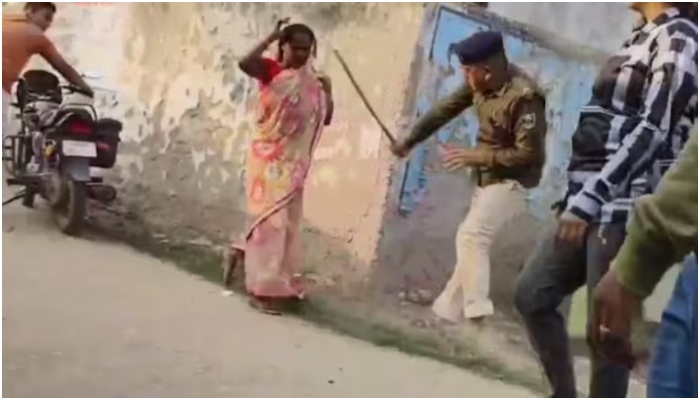
Bihar: Cop thrashes Dalit woman in public in viral video, claims traffic jam after two groups clashed over kidnapped girl prompted his action

On Monday (1st January), a video of a Dalit woman being beaten in public by a police officer in Bihar’s Sitamarhi went viral on social media.

The video showed a police officer in uniform, Raj Kishore Singh, thrashing a woman with a stick multiple times in full public display. The cop reportedly charged at the victim after she and another woman were involved in a public brawl.

However, the footage has not been validated by the police. Sitamarhi SP Manoj Kumar Tiwari told the media that if the officer is proven guilty, suitable action will be taken against him. OpIndia could not independently verify the validity of the footage.

Meanwhile, BJP national spokesperson Shehzad Poonawalla stated that civilians in Bihar were being “lathi-charged” while criminals roamed freely.

The event sparked a public outcry, particularly because the cop was in uniform at the time. The Sitamarhi Police have announced an official investigation into the event. Vinod Kumar, the Sub-divisional Police Officer (SDPO) meanwhile claimed that the incident was connected to the kidnapping of a girl.

He added that once the girl was rescued, both parties went to the police station and clashed outside. According to Kumar, the argument caused traffic congestion on the road, causing the police officer to use his baton to disperse the crowd.

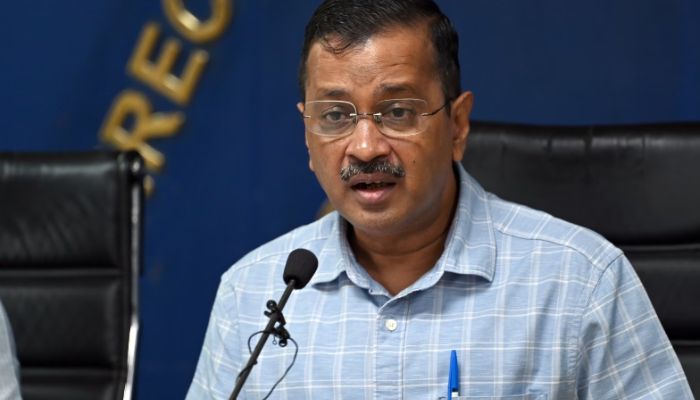
‘Our five leaders in jail are our heroes, we are very proud of them’: Arvind Kejriwal asks party workers to be ready to go to jail

On 31st December (Sunday), AAP National Convener and Delhi Chief Minister Arvind Kejriwal asked his party workers to be ready to go to jail arguing that the good work they are doing land people behind bars. He told party workers that five AAP leaders are in jail in connection with the alleged Delhi liquor policy scam asserting that they are heroes and the party is proud of them. 

Notably, Kejriwal returned from Anandgarh village in Punjab’s Hoshiarpur district on 30th December after completing the 10-day Vipassana course.

On his return, he chaired the party’s 12th National Executive and National Council meeting where Punjab’s CM Bhagwant Mann and AAP’s National General Secretary Organisation Sandeep Pathak were also present.

Addressing party leaders virtually, Kejriwal said, “I think we are facing a struggle, but there’s no need for us to be saddened. Our five leaders who are in jail today are our heroes. We are very proud of all of them.” 

At the party meeting, the AAP Supremo asked party workers to be ready to go to jail as the path they have chosen will take them to jail. According to the AAP Supremo, leaders who are on the path to do welfare of the people, give education to children, and provide free treatment to the poor, will have to go to jail. 

He said, “We have chosen paths for the welfare of the people; hence we will have to go to jail. If you give good education to children, you will have to go to jail; if you provide free treatment to the poor, you will have to go to jail. Therefore, all of us need to decide whether we want to go to jail or not. If you are prepared to go to jail, then continue on the path of providing good education to children and free treatment to the poor.”

He added, “If we were not successful and did not do anything good, then none of our party leaders would have gone to jail and everyone would have been happy with their families today.” 

It is important to note that AAP has been alleging foul play and a political witch hunt in the incarceration of its leaders arguing that senior party leaders and Former Ministers Manish Sisodia, Satyendra Jain, and Sanjay Singh have been framed for working for the welfare of the people. However, the courts, on numerous occasions, have declined the bail pleas of the jailed AAP leaders in the Delhi Liquor policy scam case. Further, the Supreme Court during a bail hearing in the case noted that a money trail of Rs 338 crore has been tentatively established in the case. 

Additionally, Kejriwal’s appeal to party workers “to be ready to go to jail” comes at a time when the Enforcement Directorate (ED) has summoned him for the third time on 3rd January in connection with a money laundering case linked to the Delhi excise policy. 

On 22nd December, ED issued the third summons to Kejriwal asking him to appear before the agency on 3rd January. He had skipped the previous two summonses citing his personal commitments as a party campaigner in state assembly elections and “pre-scheduled” Vipassana programme along with extending self-certification of innocence in the case. 

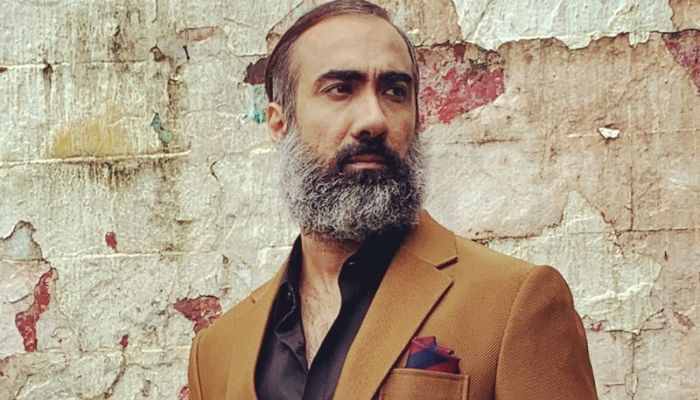
Ranvir Shorey has a change of heart on Ram Mandir, leftists-Islamists abuse him but cry victim when the Bollywood actor gives befitting reply

On Saturday (30th December), Bollywood actor Ranvir Shorey took to X (formerly Twitter) to narrate his change in perspective about the construction of the majestic Ram Mandir in Ayodhya.

He expressed his disgust over his willingness to let go of Ram Mandir in exchange for a hospital at the Ram Janmabhoomi. “I was one of the many Hindus who were willing to sacrifice the temple at #Ayodhya, and have a monument or hospital in its place, just so we can end this long standing conflict between the communities,” conceded Ranvir Shorey.

“Today I feel ashamed that I was willing to sacrifice righteousness at the altar of peace. Ashamed that I didn’t stand up for Maryada Purushottam Shri Ram and his values. My heartfelt congratulations and felicitations to everyone who fought this long and hard battle for truth and justice,” he sought repentence.

The Bollywood actor concluded, “I pray to Lord Ram for forgiveness and satbuddhi for the future. I pray that Dharma prevails in this great land of ours for eternity, and brings with it a lasting peace and prosperity for all the people of #India. Jai Shri Ram.”

His heartfelt note resonated with many Hindus who have witnessed a similar change of perspective about the construction of the Ram Mandir in Ayodhya. Ranvir Shorey’s tweet was shared over 12000 times and liked by 55000 X (formerly Twitter) users.

Leftists, liberals and Islamists also descended on the X timeline of Ranvir Shorey and abused him for endorsing Ram Mandir’s construction at Ram Janmabhoomi.

Ranvir Shorey gives befitting replies after being targeted

Some dubbed his post as ‘marketing gimmick for an upcoming movie’ while others rejoiced at the idea of his divorce from actress Kankan Sen Sharma. One Altaf wrote, “Ok so this is for his upcoming new movie.”

While it is true that Shorey is an actor in the upcoming movie‘ Accident or Conspiracy: Godhra’, it is scheduled to be released well after the consecration ceremony of Ram Mandir.

“Dear Altaf, the movie you and many others are accusing me of promoting by sharing my feelings on the #AyodhyaRamTemple is expected to release after more than 3 months! In film marketing terms that’d be like promoting it 500 years too early,” stated Ranvir Shorey.

A similar comment was made by a user ‘Tweet Shark’, only to receive a befitting response from the actor.

One leftist mocked, “Ranvir Shorey is the best example of why you should be weary (sic) of men who get divorced by intelligent women.” The Bollywood actor lamented that a supposedly woman intelligent woman did not the spelling of the word ‘wary.’

“That would be more fake history. I have a 12 year old that says she didn’t dodge it,” he gave a witty response to a user who tried to shame him over his divorce.

On being told that his ex-wife dodged a bullet by divorcing him, Ranvir Shorey responded, “You sound like you have one stuck inside your skull, Nidhi. Go see a doctor.”

“Konkana does not know the name of your father as well,” he shut down another troll.

Ranvir Shorey also slammed controversial radio jockey Sayema, who was virtue signalling about ‘inclusivity’ and ‘secularism’ at his expense. “Sorry to break it you, sis, but we can tell you are using your “voice” to obfuscate, manipulate and subvert the idea and identity of India. Jai Hind,” he wrote.

When ‘film writer’ Darab Farooqui claimed that Ranvir Shorey is ‘radicalised’, the Bollywood actor pointed out that Farooqui could not even muster the courage to keep his replies section open to the public.

“Replies are off again. This guy wants to only be heard, but not listen. A writer who doesn’t want to read. No wonder he thinks his problems are “minority” problems, while they are “stupidity” problems!” emphasised Ranviry Shorey.

He also shut down one X (formerly Twitter) user who was hoping for the death of his parents. “No need for that, rakshas (demon). They are already with Bhagwan Ram,” the Bollywood actor said.

He also shut down another troll who was making insinuations about his political affiliations before 2014.

Ranveer Shorey also slammed a ‘journalist’ named Neeraj Jha for siding with Darab Farooqui.

“Sometimes you say something from the heart, and it touches so many other hearts.. But it hurts a few butts too. As they say: “With the rice comes the chaff,” the Bollywood actor concluded.

Ranvir Shorey has been unapologetic about his stance on Ram Mandir and no social media mud-slinging campaign has so far been able to intimidate him into silence.

ISIS handler Farhatullah Ghori, suspected chief of Hizb-Ut-Tahrir backed by Pakistan ISI, was raising ‘Maal-e-Ghanimat’ to build a ‘home-grown’ terror network: Report

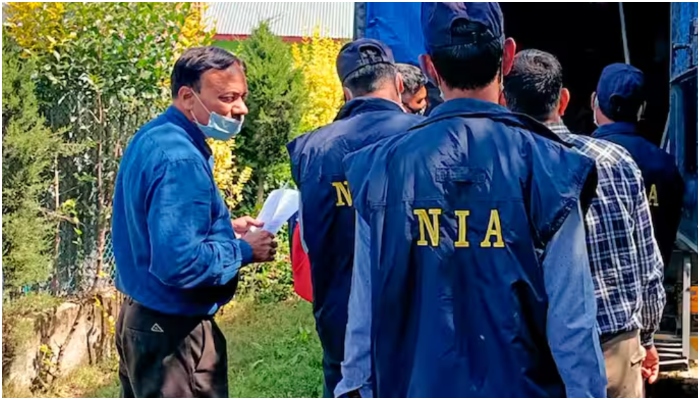
Abu Sultan, Abu Suleman, Mohammad@Bhai, Abu, Abu Sufiyan, Sardar Saheb, and Faru. These are some of the aliases which the NIA suspects were donned by absconding terrorist Farhatullah Ghori, who is a key accused in the ISIS terror module case.

According to an exclusive report by the Free Press Journal (FPJ), the National Investigating Agency (NIA) suspects that Ghori was operating as a handler pulling strings for ISIS operations in Delhi, Maharashtra and Kerala under these aliases.

Moreover, it is suspected that arrested terrorist Saquib Nachan, the mastermind of the Maharashtra ISIS terror module case, was linked with ISIS handlers Abu Suleman and Abu Sultan.

Ghori is reportedly perceived as the ISIS handler by all those arrested accused who had taken ‘Bayath’ (oath) through Ghori’s associates. Saquib Nachan was one such associate who used to record the ‘Bayath’ process with a mobile camera.

He then used to send the video through VPN (virtual private network) with several email ids, Telegram, Snapchat, and several third-party apps to Abu Sultan and Abu Suleman.

The NIA is reportedly awaiting data retrieval from Nachan’s phone and other digital devices, along with the VPN recovered from him at the Forensic Science Laboratories, to confirm their suspicions.

In the Pune ISIS terror module case, the mastermind Imran Khan was in touch with Mohammad@Bhai. It is alleged in the NIA charge sheet that Imran briefed Mohammad@Bhai about their terrorist mission, training, IED testing, reconnaissance and other activities.

NIA suspects Mohammad@Bhai too, like Abu Sultan and Abu Suleman, is none other than Ghori.

The India-focused ISIS module was created by Pakistan’s ISI by using Pakistan-based Ghori and his son-in-law Shahid Faisal, according to the probe by Delhi special cell and NIA in the Delhi terror module case.

The NIA found traces of Ghori working as an ISIS handler in terror modules in Uttar Pradesh, Uttarakhand, Jharkhand and Maharashtra.

The NIA found that Ghori held the title of ‘Ameer’ and engaged radicalised youth in terror plans. Moreover, he never affiliated himself with any jihadist group and leveraged personal connections and networks to link operatives to al-Qaeda and ISIS.

He was backed by Pakistan’s ISI and aimed to raise funds through criminal activities (Maal-e-Ghanimat). As per the FPJ report, Ghori’s objective is to represent it as a “home-grown” and “self-radicalised” network.

His focus was largely on Delhi, Pune and other areas in Maharashtra. Before the Delhi terror modules was busted by the special cell, central agencies received input that Ghori shared shared updates about his operation to radicalised groups saying that he is very close to complete his operation.

Ghori also mentioned that his cadre had reached their designated targets to execute such operations. According to sources his plan was linked to Sahahnaz, arrested in the Delhi ISIS terror module case.

FPJ anonymously quoted a senior officer who shared that Ghori was attempting to motivae and radicalise several aggressive youths for lone-wolf attacks.

He shared speeches and literature by radicals. Ghori was trying to incite Indian Muslims by asking them to eulogise Aurangzeb and Ahmed Shah Abdali as their heroes.

He circulated videos of the Indian Mujahideen (IM) on his chat platform on the dark web. He intended to indoctrinate and radicalise the youth to create communal tension and potential riots.

Ghori and his network laced with sleeper cells are currently using gaming apps for communication. Some of their chats have been tracked revealing conversation about “love jihad”-related operations and planning terror activities. He has been using the chat groups to evade security agencies.

The Central Intelligence Agency recently received inputs that Ghori was allegedly inciting motivated and radicalised youth and advising such individuals that they should not surrender if they are apprehended by authorities.

He instructed them to instead launch fidayeen attacks on the police, law enforcement agencies and the government.

As per sources quoted by the FPJ, Ghori is a key member of Lashkar-E-Taiba and Jaish-E-Mohammad. He leads the global Islamic fundamentalist terrorist organisation Hizb-Ut-Tahrir (HUT).

In July and August 2023, the NIA apprehended HUT affiliates in Hyderabad. A total of 16 youths linked to the HUT were arrested in operations across locations including Bhopal, Chhindwara, and Hyderabad.

All accused are reportedly educated professionals working corporate companies, holding designated positions. Some were software engineers and others were associated with international consultancy firms and some were students.

Ghori had resurfaced in 2022 with a series of audio-visual messages and on social media platforms including X (formerly Twitter), YouTube, Facebook and Telegram alarming the Indian security agencies.

Ghori along with two of his associates namely Siddique Bin Osman alias Rafique alias Abu Hamzala and Abdul Majeed alias Chotu from Hyderabad and wanted in several cases are now settled in Pakistan.

The three absconding terrorists executed a blast near Sai Baba Temple, Dilsukhnagar in 2002, a bus blast at Ghatkopar in Mumbai, and a Task Force office blast at Begumpet in 2005. They also attempted to cause blasts near Ganesh Temple Secunderabad in 2004. Ghori was investigated by the Gujarat Police in Akshardham Temple terror attack (2002) case. He was declared an individual terrorist by the MHA in 2022.

625 arrests including 65 ISIS terrorists, 1040 raids, 513 chargesheets, 74 convictions: How NIA battled terrorists and achieved 94.7% conviction rate in 2023

In 2023, the National Investigation Agency (NIA) attached assets valued at approximately Rs 56 crores and achieved an astounding conviction rate of 94.70 percent in its battle against terrorism.

The overall number of arrests made by the NIA this year was 625, representing a roughly 28% increase over the 490 suspects apprehended in 2022. These include 114 accused of jihadi terror, 45 accused of human trafficking, 28 accused of terrorism and organized crime, 76 accused of Left-Wing Extremism (LWE), and 65 accused of ISIS crimes.

In 2023, the anti-terror organization reported 68 cases in total, encompassing a variety of terror-related occurrences.

These include 18 cases of Jihadi terror throughout several states, 3 cases from Jammu and Kashmir, 12 cases of LWE, 7 cases with terrorist and organized crime connections in Punjab, 5 cases from the Northeast, and 2 cases with Fake Indian Currency Notes (FICN).

The number of persons chargesheeted and convicted stood at 513 and 74, respectively, as against 459 and 79 in 2022. The 74 defendants found guilty in 2023 received punishments including varying terms of “rigorous imprisonment” and “fines.”

NIA’s fight against absconders

As far as the absconders are concerned, the NIA found and apprehended 47 suspects in 2023, which was 14 higher than the previous year. The arrest of major absconding accused in the Attari border heroin seizure case, which involved transporting over 102 kg of the drugs from Afghanistan via the India-Pak border—was one of the largest developments in this respect.

Furthermore, arrests made in connection with extradition and deportation demonstrate NIA’s dedication to pursuing criminals outside its borders. Vikram Brar was detained upon expulsion from the United Arab Emirates, while Amritpal Singh alias Ammy, Amrik Singh, Manpreet Singh alias Peeta, and Mandeep Singh were deported from the Philippines.

The number of NIA searches and raids increased from 957 in 2022 to 1,040 in 2023, a notable rise over the previous year. The agency had attached 37 properties totalling Rs 10.53 crore in 2022; by 2023, that number increased to 240 (including 156 bank accounts) with a total value of Rs 55.90 crore. These properties belonged to the suspects and accused in high-profile cases involving explosives, LWE, terrorism, and other matters. The attachments, made under the UA(P)A provisions, include 12 properties (four of which were bank accounts) valued at Rs 1.5 crore belonging to six “Individual Terrorists”.  

Multiple ISIS cells dismantled through widespread searches and raids

The NIA further achieved a great deal in 2023 as a result of the crackdowns on violent jihad throughout India, as multiple ISIS cells were dismantled through widespread searches and raids.

Following raids at 44 locations in Maharashtra and Karnataka, which also resulted in the seizure of massive amounts of evidence, a total of 15 accused were taken into custody in December. Eight members of the ISIS Ballari module were apprehended on December 18 as a result of a similar operation, which allowed the NIA to thwart the plans of the outlawed international terrorist groups to carry out several terror attacks, including IED explosions, throughout the nation. Jabalpur and Bhopal separately saw crackdowns against such radicalized ISIS and HUT modules in September. 

Another top focus of the NIA’s investigations has been breaking the link between terrorists and gangsters. In 2023, the NIA filed two cases, charged 55 people, carried out 253 raids, detained 27 people, and attached 18 assets as part of its campaign against this network.

Additionally, constant cooperation with foreign authorities has led to the Syndicate’s foreign nodes being targeted for action. One of the most important successes of the NIA’s campaign against terrorist-gangster syndicates has been the arrest of Deepak Ranga, the main suspect in the RPG attack on the Punjab Police intelligence headquarters.

Ranga was the chief executioner of the terrorist activities of Lakhbir Singh Landa, based in Canada, and Harwinder Singh Sandhu, alias Rinda, based in Pakistan. Both are designated “Individual Terrorists” and members of the banned terrorist organization Babbar Khalsa International (BKI). Ranga was wanted in multiple cases of terrorism and criminal acts.

Action against human trafficking

The NIA also sharply increased its focus on human trafficking at the Indo-Bangladesh border in 2023, involving citizens of Bangladesh and Myanmar. After conducting nationwide raids on transnational Human Trafficking Syndicates implicated in the case, the NIA detained 29 key operatives in November. The arrest of four more accused from Tripura in December was a significant victory for the agency.

6 new terrorists identified, 4 terrorist organizations outlawed

Six people—Mohammed Amin Khubaiab alias Abu Khubalab alias Pinna alias Muhammed Amin Butt, Arbaz Ahmad Mir, Or Asif Maqbool Dar, Arshdeep Singh Gill alias Arsh Dala, Harwinder Singh Sandhu alias Rinda, and Lakhbir Singh Landa were named “Individual Terrorists” by the Indian government during the year, marking yet another significant victory for the NIA.

Furthermore, in reaction to the NIA’s recommendation, four terrorist organizations namely, The Resistance Force (TRF), People’s Anti-Fascists Front (PAFF), Jammu and Kashmir Ghanzavi Force (JKGF), and Khalistan Tiger Force (KTF) were outlawed. The agency is vigorously pursuing the appropriate actions against these identified individuals and terrorist groups to effectively counter their operations.

Action against anti-India activities abroad

Throughout the year, the NIA conducted over 50 raids and searches in an attempt to uncover the conspiracy behind the attacks on Indian Missions abroad. These operations were focused on offences against Indian interests abroad, with particular attention paid to the attacks on the Consulate General of India in San Francisco, USA, and the High Commissions of India in Ottawa and London.

Vandalism, illegal trespass, destruction of public property, and attempts to harm Indian officials and inflict arson damage to the Consulate building were all part of the attacks.

In the process of looking into the bigger conspiracy of attacks against Indian Missions, the NIA has employed several cutting-edge investigative techniques, such as crowd-sourcing information, which has led to the identification of 43 individuals. In recent months, the NIA has also intensified its probe into these cases and questioned around 80 Indian citizens who may have been involved in the assault plot.

Overall, compared to the previous year, the NIA increased the scope of its operations throughout India significantly this year.


ISIS Jihadi awarded UK citizenship as court rules that deporting him back to Sudan would violate his ‘human rights’, MI5 warning ignored: What happened

An illegal immigrant from Sudan who supports ISIS has been awarded permanent residency in the UK after his lawyers successfully argued that returning him to his home country would violate his human rights.

Judges in the United Kingdom have disregarded Home Office fears about the threat posed by a Sudanese immigrant who entered the country illegally in 2005 and again in 2018 after having his British passport revoked. According to security services, the migrant had actively spread propaganda for the Islamic State (ISIS) and has now been granted UK citizenship and lifelong anonymity.

Reports on Sunday (31st December) stated that attorneys representing the Sudanese national, who has only been allowed to be referred to as “S3,” were successful in convincing judges that deporting him would violate his human rights as doing so would subject him to torture and detention should he return to the African country. The justices appeared to be persuaded by this argument even though S3 had returned to his native country several times without encountering any problems.

The illegal migrant started actively disseminating ISIS propaganda on social media during one of his four-month stays in Sudan, according to the MI5 security service. Thus, the government contended that S3 was a risk to the British public’s national security.

The Sudanese man “had demonstrated a commitment to the extremist ideology of ISIS,” according to court documents seen by the MoS. Additionally, as per MI5, there was a realistic possibility that he would seek to radicalize other individuals and encourage them to engage in Islamist extremist activities. 

In their defence against his deportation, the illegal immigrant’s legal team referenced the European Convention on Human Rights (ECHR). Brexit has no bearing on the European Convention on Human Rights (ECHR) or its Strasbourg-based court, even though the UK has left the EU. This is because the ECHR is an institution that exists independently of the EU.

Brexiteers, such as Nigel Farage and former Home Secretary Suella Braverman, have maintained that for the administration of Rishi Sunak to fulfil its pledge to retake control of the country’s borders, it must leave the European Convention on Human Rights. According to the reports, there were rumours in February 2023 that the government was using the ECHR as a defence to keep at least 53 terrorists who had been found guilty of their crimes from being deported.

The verdict this month will allow the suspected Islamist to stay in the country indefinitely, and the people who live near him will not be entitled to know that they might be cohabiting with a possible terrorist.

Former leader of the Conservative Party Sir Iain Duncan Smith criticized the decision, calling it “ridiculous.” Judges should be aware that a person has given up his human rights to be in the UK when the Security Services determine that he poses a threat to the public in Britain, he said. 

Alp Mehmet, the chairman of the Migration Watch UK think tank also commented on the matter and said, “Either our immigration judges are gullible or they derive a perverse pleasure from siding with chancers, crooks, and terrorists, and putting their interests before those of the British people. If terrorists are to roam freely among us, we have a right to know who they are and what harm they could potentially do.”

British judges have a long and gross history of obstructing the deportation of terrorists and foreign criminals. In a contentious instance, judges in the UK halted the deportation of the majority of convicts from Jamaica, including a rapist and a killer convicted of a crime, because the inmates had been temporarily denied access to cell phones while in custody.

Also, in 2020, a judge in Scotland ruled that a terrorist from the Taliban should not be sent back to Afghanistan because he had PTSD from fighting against Western allies, possibly including British soldiers, and should instead receive free medical treatment in the UK because the same level of care was not available in his home country.

China wants to open ‘gates of hell’: Builds deep drilling ship with aim to penetrate earth’s crust and reach the mantle

China has unveiled its ‘best in class’ ocean drilling vessel named ‘Mengxiang’ to penetrate the earth’s crust and extract samples from the mantle. As per reports, the ultra-deep ocean drilling vessel Mengxiang, whose name means ‘dream’ in Mandarin, has been built to carry out one of humanity’s most challenging missions till date, to drill through the earth’s outer crust.

As per a report in SCMP, Mengxiang has been built by China Geological Survey, in collaboration with over 150 research institutes and companies. It measures 179 meters in length and 32.8 meters in width. It can carry over 33,000 tons of cargo and can travel over 15,000 nautical miles for 120 days between port calls.

The ship has been built to withstand the strongest of tropical cyclones, and travel anywhere in the global waters. It is fitted with drilling equipment that is reportedly ‘best in class’, with capabilities to drill up to 11,000 metres, that is 6.8 miles below the earth’s surface.

Why does China want to reach the mantle

The outer crust, mantle and the core constitute the 3 main layers of the planet Earth. So far, human activity has been limited to outer levels of the crust, which has an average thickness of 15,000 meters or roughly 15 km, a tiny thickness compared to the 6371 km radius of the earth.

A ‘boundary’ of sorts, called the Mohorovicic discontinuity, or just ‘Moho’ separates the crust from the mantle. No human endeavor so far has been able to breach the Moho. The Moho lies about 7000 meters below the ocean’s surface at certain locations, and on average at a depth of 40,000 meters from ground level on dry land. In the 1960s, American scientists had tried to beach the Moho, but their efforts were unsuccessful.

China has stated that it wants to understand plate tectonics, ocean crust evolution, and seabed resources. Li Chun Feng, a marine geologist from the Zhejiang University told SCMP that studying the ocean floor has revealed startling facts about the earth’s climatic history. For example, exploration of the seabed in the Mediterranean Sea revealed that the entire area was a dry salt desert about 6 million years ago. And the Arctic Ocean was a warm freshwater lake full of plant life about 50 million years ago.

The Moho, often pictured as the ‘gates of hell’ in sci-fi stories and fantasy fiction novels, will provide crucial data for research, China believes. Samples from the earth’s mantle, if successfully obtained, will open a whole new frontier of exploration and research to understand the planet better, as per Chinese scientists.

Opposition leaders need to learn how to accept defeat: How shady YouTubers and politicians are hurting India’s democracy with their EVM lies

The spirit of a vibrant democracy, like India, is not limited to voting only. It expands to the grace with which the outcomes of elections are accepted. A concerning pattern has emerged in the political landscape of India, especially since the Bharatiya Janata Party (BJP) under Prime Minister Narendra Modi started its journey of electoral victories in 2014.

In the wake of the upcoming Lok Sabha Elections 2024, several opposition parties, including that of Congress, Aam Aadmi Party (AAP), Samajwadi Party (SP) and Communist Party of India (CPI), among others, have repeatedly levelled accusations of Electronic Voting Machine (EVM) tampering. Sadly, their knee-jerk reaction lacks substantial proof in all the cases. In a sense, it is nothing but a blunt refusal to accept the electoral defeat. Such intentional denial of the voters’ sentiments signifies a deeper issue among the losing parties, which is a disrespect of the democratic choice of the electorate.

The narrative is that EVM hacking or VVPAT hacking has a problematic foundation. First things first, there is no credible evidence presented by those who raise suspicion. These allegations not only question the integrity of the electoral process of the world’s largest democracy but also insinuate that the choice that voters have made is somehow invalid or manipulated. The narrative is slowly creating a sense of erosion of the trust in democratic institutions that have worked tirelessly to ensure the elections run smoothly in the country.

Figures like Prashant Bhushan, Manmohan Mishra, Rahul Mehta, Pragya Mishra, and Abhisar Sharma provide a foundation for political leaders to raise suspicion over the authenticity of the EVM machines.

Take the example of Prashant Bhushan. He first shared a video of Rahul Mehta, who happens to be the founder of the “Right to Recall Party”, where Mehta was seen raising questions on VVPAT. In the video, Mehta claimed the black glass on VVPAT machines gives the BJP a chance to siphon off the votes from opposition parties in their favour.

Mehta insinuated that the light in VVPAT machines is on for a few seconds and does not record the actual vote but shows a dummy vote as the paper does not fall in front of the eyes of the voter. He did it using a mock or fake VVPAT machine that he had created himself. Interestingly, when we look at the videos explaining the process given by the Elections Commission, it is clear that the voters can see the slip coming out and falling irrespective of the light being on or off.

His claims were on the lines of one of the bizarre showcases of “engineering skills” and fear-mongering by AAP leader Saurabh Bharadwaj, who claimed EVMs could be tampered with in the Delhi Assembly. He used a mock EVM machine to demonstrate his “theory”, only to become a laughing stock.

Recently, Congress leader Digvijay Singh also raised questions over the working of EVM machines and VVPATs. He quoted a video of controversial YouTuber Mummohan Mishra, known for creating anti-BJP and anti-Modi videos, and thanked him for raising the questions on EVM. Not to forget, Mishra was arrested by UP Police in 2021 for using derogatory language against the Chief Minister of Uttar Pradesh, Yogi Adityanath.

It is funny that these activists and political leaders who claim EVM tempering change their notion when the BJP loses in any state. For example, in the recent assembly elections, the BJP stood victorious in Rajasthan, Chhattisgarh, and Madhya Pradesh. However, the party lost elections in Telangana. The activists claimed that the BJP tempered EVM machines in the three states where they won but did not temper the EVM machines in the state where they lost to “ensure trust is maintained over the credibility of the machines”.

The selective scepticism casts doubt on the credibility of their assertions and suggests that they follow a pattern of scapegoating rather than being a substantive critique of the electoral process. Their idea appears to be less about safeguarding democracy and more a face-saving tactic after losing the elections. It is highly problematic to insult the intelligence and choice of the voters. Going by the results of the elections in the last couple of years, it is evident that voters do not care about the allegations of EVM tempering, and they come out to use their democratic right to choose the candidate of their choice.

The leaders of the losing parties need to understand that democracy is fundamentally about respect – respect for the process, the institutions and most importantly, the choice of the electorate. When they refuse to accept their defeat gracefully, the leaders are not only failing themselves but the spirit of the democratic process of India. It is consistently weakening the very foundation of the democratic process, making voters more upset with the losing candidates.

Such attempts to whitewash the defeat with baseless allegations may result in long-term detrimental effects on the political landscape. It creates a risk of a cynical electorate, disillusioned with the political process and sceptical of every election result. It may become the antithesis of democratic engagement, leading to apathy, a dangerous trend in any democracy.

The political leaders need to realise, too quickly, that the strength of a democracy is measured not only by the enthusiasm of the campaigning or the promises they have made but by the humility and grace with which they acknowledge the electoral defeats. Since BJP started its victorious journey, none of its leaders disrespected the electorate’s choice the way other parties have. The grace missing in acknowledging defeat is laying down the foundation of defeat after defeat for the opposition parties in future elections.

It is high time that political leaders across the spectrum commit to upholding the dignity of the electoral process, respect the mandate and work constructively in the role of a responsible opposition when called upon to do so.

One of the best examples is Union Minister Smriti Irani. She did not abandon the constituency when she lost the Lok Sabha election from Amethi in 2014. Irani consistently stood for the people of Amethi and worked hard to get projects for the region, and when she fought the elections again in 2019 against Rahul Gandhi, the unimaginable happened. The people of Amethi chose Smriti Irani over Gandhi. The “family constituency” of the Gandhi family slipped out of their hands only because Smriti Irani gracefully accepted defeat and continued to work for the constituency.

The health of a democracy is contingent on the behaviour of the leaders. Respect the mandate is about accepting the defeat and reaffirming faith in the democratic process. It is about honouring the electorate’s choice and maintaining the sanctity of the institutions based on democratic values. For the sake of the democratic future of Bharat, it is of utmost importance that leaders learn this lesson in respect.

ISRO launches X-ray Polarimeter Satellite, which will measure X-ray emissions from celestial bodies

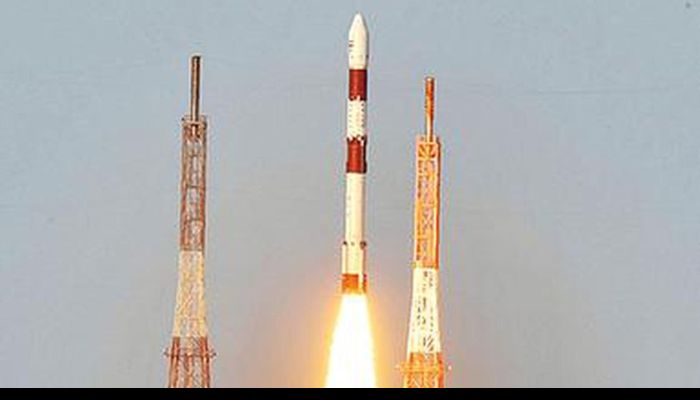
The Indian Space Research Organisation (ISRO) has successfully launched the X-ray Polarimeter Satellite on the very first day of the New Year, in continuation of its stellar space odyssey from the previous year.

The satellite that was launched from Sriharikota spaceport on Monday at 9.10 am, as scheduled, among others, would offer insights into space-based polarisation measurements of X-ray emission from various celestial sources.

ISRO’s PSLV-C58 Mission is to launch XPOSAT Satellite into an Eastward low inclination orbit. After injection of XPOSAT, the PS4 stage will be re-started twice to reduce the orbit into 350 km circular orbit to maintain in 3-axis stabilized mode for Orbital Platform (OP) experiments. The PSLV Orbital Experimental Module-3 (POEM-3) experiment will be executed meeting the objective of 10 identified payloads, supplied by ISRO and IN-SPACe.

The XPOSat (X-ray Polarimeter Satellite) is India’s first dedicated polarimetry mission to study various dynamics of bright astronomical X-ray sources in extreme conditions.

According to ISRO The XPOSAT satellite has two payloads:

POLIX: This will measure the polarimetry parameters (degree and angle of polarization) in medium X-ray energy range of 8-30 keV photons of astronomical origin. The payload is being developed by Ramam Research Institute (RRI), Bangalore in collaboration with U R Rao Satellite Centre (URSC). The instrument is made of a collimator, a scatterer and four X-ray proportional counter detectors that surrounds the scatterer. The scatterer is made of low atomic mass material which causes anisotropic Thomson scattering of incoming polarised X-rays. The collimator restricts the field of view to 3 degree x 3 degree so as to have only one bright source in the field of view for most observations. POLIX is expected to observer about 40 bright astronomical sources of different categories during the planned lifetime of XPoSat mission of about 5 years. This is the first payload in the medium X-ray energy band dedicated for polarimetry measurements.

XSPECT: Will give spectroscopic information in the energy range of 0.8-15 keV. An X-ray SPECtroscopy and Timing payload onboard XPoSat, which can provide fast timing and good spectroscopic resolution in soft X-rays. Taking advantage of the long duration observations required by POLIX to measure X-ray polarization, XSPECT can provide long-term monitoring of spectral state changes in continuum emission, changes in their line flux and profile, simultaneous long term temporal monitoring of soft X-ray emission in the X-ray energy range 0.8-15 keV. An array of Swept Charge Devices (SCDs) provide an effective area >30 cm2 at 6 keV with energy resolution better than 200 eV at 6 keV. Passive collimators are used to reduce the background by narrowing the field of view of XSPECT. XSPECT would observe several types of sources viz X-ray pulsars, blackhole binaries, low-magnetic field neutron star (NS) in LMXBs, AGNs and Magnetars.

The objective of the mission is to measure polarisation of X-rays in the energy band 8-30keV emanating from about 50 potential cosmic sources through Thomson Scattering by POLIX payload. To carry out long term spectral and temporal studies of cosmic X-ray sources in the energy band 0.8-15keV by XSPECT payload. To carry out polarisation and spectroscopic measurements of X-ray emissions from cosmic sources by POLIX and XSPECT payloads respectively in the common energy band.

The emission mechanism from various astronomical sources such as blackhole, neutron stars, active galactic nuclei, pulsar wind nebulae etc. originates from complex physical processes and are challenging to understand. The exact nature of the emission from such sources still poses deeper challenges to astronomers. The polarimetry measurements add two more dimension to understanding, the degree of polarization and the angle of polarization and thus is a diagnostic tool to understand the emission processes from astronomical sources.

In a stellar display of prowess, India soared to new heights in 2023 with the successful soft landing of Chandrayaan-3 on the south pole of moon and the launch of Aditya-L1, India’s first solar mission.

The primary objective of the Chandrayaan-3, the country’s first successful lunar landing mission, was to demonstrate a soft landing near the lunar south polar region and perform experiments using the instruments onboard the lander ‘Vikram’ and rover ‘Pragyaan’.

On August 23, Vikram Lander made its historic touchdown on the Moon and subsequently, the Pragyan rover was deployed to survey the uncharted lunar south pole.

These milestones not only secured India’s standing in the global space economy but also fueled the engines for the private space sector in India.

Among other feats India now aims for are the Gaganyaan Mission, setting up ‘Bharatiya Antariksha Station’ by 2035, and sending the first Indian to the Moon by 2040.

(This news report is published from a syndicated feed. Except for the headline, the content has not been written or edited by OpIndia staff)