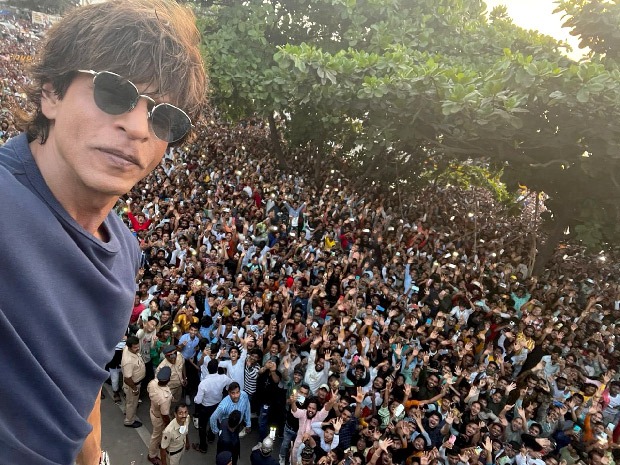
Three persons named Imran, Mohammed Ali and Shubham Jamnaprasad have been apprehended by Bandra Police in connection with the theft of mobile phones that were gathered outside Bollywood actor Shah Rukh Khan’s residence, Mannat, on the occasion of his birthday, per a report in ANI. Police have found nine devices from the accused after reviewing CCTV footage from the area and surrounding locations.
Shah Rukh Khan celebrated his birthday on 2nd November (Thursday) and each year he extends greetings to his adoring audience who assemble in large numbers outside his Mumbai home. This year was no exception, however, upon discovering that their phones had been stolen on Thursday night, at least thirty of his fans lined up at the Mumbai police station to register a complaint.
In the meantime, the ‘Badshah of Bollywood’ took to social media to express gratitude for the kind birthday messages.
It’s unbelievable that so many of u come & wish me late at night. I am but a mere actor. Nothing makes me happier, than, the fact that I can entertain u a bit. I live in a dream of your love. Thank u for allowing me to entertain you all. C u in the morning…on the screen & off it
The superstar stepped out onto the balcony of his mansion and waved to his cheering admirers who were mesmerised by his presence. He also celebrated the event by striking his famous arms position in front of the crowd. He was wearing camouflage pants, a basic black T-shirt and a black cap to complete his nice outfit.
Source: The Indian Express
Fans lined up from different cities since early in the morning to wish the ‘Chak De! India’s actor in their own unique ways. Many brought large posters of him, candies and t-shirts with them. They congregate outside his house in significant numbers each year in hopes of catching sight of the ‘King Khan’ of Bollywood and it was the same this year.
Shah Rukh Khan is known for starring in movies like Baazigar, Kabhi Haan Kabhi Na, Dilwale Dulhania Le Jayenge, Kuch Kuch Hota Hai, Kal Ho Naa Ho, Veer Zara and many more. Basking in the glory of two massive blockbusters, Pathaan and Jawan, he is now getting ready for the release of his next project which is Rajkumar Hirani’s Dunki and is slated for release in December.
It is the first collaboration between Shah Rukh Khan and Rajkumar Hirani. The movie also features actor Vicky Kaushal. According to the teaser, SRK appears to be paired opposite Tapsee Pannu in the movie.
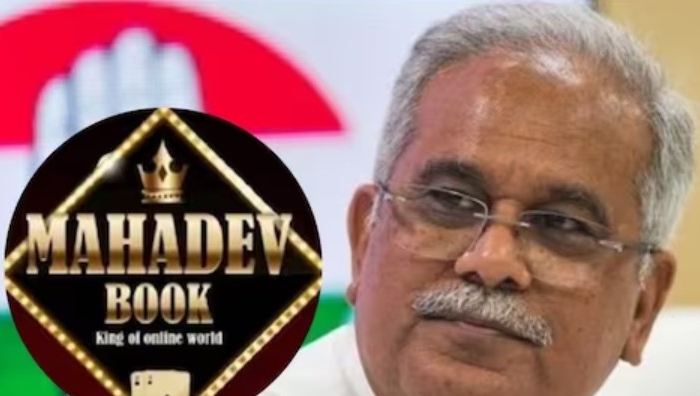
On November 3, the Enforcement Directorate, probing the Mahadev app for alleged money laundering activities, said that according to fresh evidence following a search operation on November 2, it came to light that regular payments were made in the past and so far around Rs 508 crore has been paid by Mahadev App Promoters to Chhattisgarh Chief Minister Bhupesh Baghel.
The ED received credible inputs and conducted successful search operations on November 2 in Chhattisgarh in which Rs 5.39 crore in cash was intercepted in the poll-bound state.
Notably, under the Constitution of India, betting and gambling are under the purview of state governments.
The ED is investigating the Mahadev Book Online Betting App syndicate in which the promoters of this betting syndicate are based abroad and remotely running thousands of panels across India with the help of their friends and associates who are mainly from Chhattisgarh and have earned thousands of crore of proceeds of crime.
The ED has already arrested four accused persons and seized proceeds of crime worth more than Rs 450 crore. The federal agency has also filed a prosecution complaint against 14 accused persons.
What is the Mahadev App and the money laundering scandal associated with it
The Mahadev app is an online betting platform that operates illegally and launders the money it receives from users who are not located in India. The Mahadev betting application was created by four people including key accused Saurabh Chandrakar and Ravi Uppal from Madhya Pradesh and it gradually replaced at least 10 similar illicit betting apps that were being used all over the country. Lotus 365 and ReddyAnna are a couple of the applications that were once part of the Mahadev betting fold.
Mahadev Online Book (MOB) has networked from its UAE headquarters to India, Sri Lanka, Nepal and Pakistan.
According to the ED, the app makes money by franchising “Panel/Branches” to its known associates at a profit margin of 70-30 per cent. It allegedly creates IDs, enrols new users, and launders money through a tiered network of Benami bank accounts utilizing the online book betting program.
The Mahadev App scam is thought to have involved a huge sum of money, estimated to be approximately Rs 5,000 crore. The ED during the probe revealed that Saurabh Chandrakar and Ravi Uppal established around 4,000-panel operators in India for betting, with each panel having 200 customers who place bets. With this, Chandrakar and Uppal had been making Rs 200 crore daily.
Some major participants in the money laundering operations have been identified by the ED, most notably Kolkata-based Vikash Chhaparia.
The Mahadev app grabbed headlines after the ED summoned Bollywood A-listers like Ranbir Kapoor, Shraddha Kapoor, Huma Qureshi, and Hina Khan, who along with several Bollywood personalities attended and performed at the wedding ceremony of Saurabh Chandrakar, one of the founders of the Mahadev Betting app.
According to sources, the agency learnt about many celebrities endorsing these betting entities and doing promotional work in return for hefty fees.
As of now, as many as 34 Bollywood celebrities including actors, singers, dancers etc. have come under the Enforcement Directorate ED scanner in connection with the scam. Raftaar, Sonu Sood, Hardy Sandhu, Sonakshi Sinha, Malaika Arora and Amit Trivedi some of the names.
Rapper Badshah quizzed for promoting ‘Fairplay’ betting app, a subsidiary app of D-company linked Mahadev App
On 30th October, the Cyber Cell of Maharashtra Police called rapper Badshah for interrogation in connection with the illegal screening of the Indian Premier League (IPL) cricket tournament on an online betting app named ‘FairPlay’ he promoted. Subsequently, he appeared at the Maharashtra Cyber office in Mumbai.
Notably, the Fairplay app which has come under the scanner is a subsidiary app of the Mahadev app, promoters of which have links with Dawood Ibrahim’s D-company and are being probed in a money laundering case by the Enforcement Directorate.
The recent investigation into the Mahadev Betting app and its subsidiary apps for alleged money laundering activities has opened up Pandora’s box and brought attention to how, over the years, many such offshore gaming and betting businesses have profited millions of rupees through money laundering and tax law violations.
How do these offshore apps function
The investigation into the Mahadev Betting App scam once again brought tax evasion by offshore betting and gambling platforms under the scrutiny of the watchdogs.
Broadly, these illegal offshore gambling companies, use three methods to interact with potential customers:
1. They draw the attention of unsuspecting consumers through advertisements.
2. They use dubious financial channels to huge illicit sums of money from consumers.
3. Finally, they circumvent government monitoring through a huge number of mirror websites.
How do these offshore gambling platforms evade taxes
According to the source, there are many offshore entities providing platforms for online betting and gambling in the country but are not GST-registered and hence are not paying the required GST.
Let us understand how these offshore gambling companies have been evading paying taxes and its impact on the Indian economy.
Majorly, the platforms evading GST are offshore and not registered under GST law. Despite not being registered under the relevant legislation, the gambling apps are available for free download to customers on Google Play and App Store.
Since these offshore betting and gambling platforms are operating illegally, none of the powerful platforms, that receive thousands of crores of rupees in deposits each month from Indian citizens, pay taxes.
This obviously, has a severe adverse impact on the Indian economy.
How is the government losing money?
The online gaming industry across India was valued at around 135 billion Indian rupees in the year 2022, however, it is estimated that offshore gambling sites such as Dafabet, Betway, Bet365, Parimatch, Fairplay and 1xbet are making the Indian online gaming industry poorer by at least $25-30 billion.
According to a written reply given by the Finance Ministry in Parliament in December last year, GST officers are investigating tax evasion of about Rs 23,000 crore by gaming companies between April 2019 and November 2022.
Notably, right now, there are significant differences between the GST laws for “games of skill” and “games of chance” (betting or gambling). While games of chance are subject to a 28 per cent GST on the contest entry fee, games of skill are subject to an 18 per cent GST on the platform cost.
This means such apps are expected to generate revenue to the tune of $400-500 million, but a significant portion of this amount never lands in the public exchequer’s account.
According to the Tax Department, while these companies are required to pay GST for their domestic operations and transactions, it is difficult to issue notices to them because they lack an established presence or physical footprint in India.
The majority of offshore betting companies are based in tax havens like Gibraltar, Belize, Curacao, Malta, and the Isle of Man. Despite having ties to India, the owners are based there.
Furthermore, it has been observed that many of these organisations frequently change their offshore bank accounts, making it difficult to track and identify them.
Offshore gambling giants lure celebrities by offering huge compensation
Even though fake marketing for these offshore gambling organizations has previously been outlawed by the Indian government, these companies nevertheless exploit sports and entertainment media to advertise their brands.
According to some media sources, these websites bring in around Rs 5,000 crore or 50 billion each month in India. With that kind of money, they can easily court larger broadcasters and reserve their spots on TV, digital, and over-the-top (OTT) platforms—albeit through proxy means. It is even easier to rope in celebrities, actors and social media influencers to endorse their brands,
These offshore gambling platforms have, reportedly, launched ‘news’ websites, partnered with organizations as sponsors, resulting in the placement of their insignia on team jerseys, and deluged popular websites with clickable banners.
In fact, due to their continued appearance in advertising for betting websites and apps, as well as their surrogate news sites, over a dozen celebrities, including top actors, cricket players, and other macro and mid-tier influencers, may be in breach of a government recommendation.
In October 2022, the Ministry of Information and Broadcasting forbade the use of surrogates and online betting advertisements on television and internet platforms. Despite the ministry’s advisory naming Fairplay, PariMatch, Betway, Wolf 777 and 1xBet, many popular influencers, actors and celebrities continued appearing in online gambling ad campaigns for Parimatch News and Betway.
In fact, in a video posted on Instagram on November 9, 2022, online betting site Fairplay continued with its ads featuring Ranbir Kapoor, Kiara Advani, Sunil Narine, Mithali Raj, Saina Nehwal, Mary Kom and Eoin Morgan.
Rannvijay Singh Singha and Kevin Pietersen are advertising on Betway’s homepage.
Actor Esha Gupta was signed on as the online betting app Khelraja’s brand ambassador in January this year.
100 online gaming apps on DGGI radar for Rs 1 lakh-crore tax evasion
In 2017-18, after the change in the tax regime and introduction of GST, the investigation into offshore gaming platforms regained steam, redirecting the government’s attention to the massive tax fraud being carried out with impunity by several such offshore betting apps.
In October this year, as many as 100 online gaming applications operating in India have been under the scanner of the Directorate General of Goods and Services Tax Intelligence (DGGI) for alleged tax evasion to the tune of around Rs 1 lakh crore.
Dream11, the unicorn fantasy sports app, has been issued two show cause notices for alleged tax evasion amounting to Rs 28,000 crore, the highest indirect tax demand notice to date. The notices were served in September – one each by the state and Central GST departments.
Similarly, in April, the Directorate General of GST Intelligence (DGGI) sent notices to as many as 38 such platforms for allegedly laundering money and syphoning off taxes.
These sites have been investigated several times for tax evasion. The Enforcement Directorate (ED) also recovered Rs 212.91 crore in connection with money laundering investigations involving online gaming platforms through December 2022.
The government, on its part, is trying to detect and plug tax evasion by offshore entities providing online betting and gambling, costing the exchequer crores of rupees. However, if broadcasters and product advertisers refrain from taking part in these campaigns and cease providing such offshore illicit websites with any advertising real estate, at the very least, the attempts to entice customers by these offshore betting giants can be put an end to.
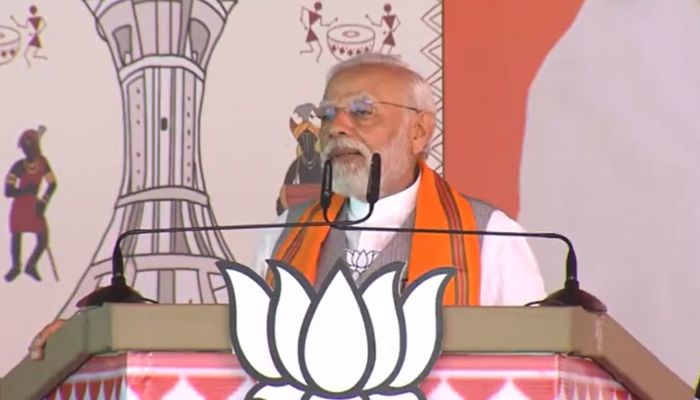
On Saturday (4th November), PM Narendra Modi addressed an election rally at Pandit Ravi Shankar Shukla Stadium in Durg, Chhattisgarh. In this rally, he accused the Congress government in the state of corruption. He called it a government of 30 per cent commission. This is PM Narendra Modi’s second visit to Chhattisgarh in two days. The first phase of polling for the state assembly elections will be held on 7th November.
PM Narendra Modi said in Durg, “The BJP has a track record of fulfilling the promises. Chhattisgarh was created by the BJP and I guarantee you that the BJP will develop Chhattisgarh. The Congress party’s ‘bundle of lies’ is standing in front of BJP’s ‘Sankalp Patra’. The Congress party’s priority is to fill its coffers through corruption.”
Talking more about the election manifesto published by the Chhattisgarh state BJP, PM Narendra Modi said, “I would like to congratulate the entire team of Chhattisgarh BJP for releasing the Sankalp Patra yesterday. This manifesto is made in order to make your dreams come true. In this manifesto, the biggest priority has been given to the mothers and sisters of Chhattisgarh, the youth here and the farmers here.”
Attacking the Congress government in the state, PM Narendra Modi said, “Congress’ priority is to distribute jobs to the loved ones of its leaders, and to throw your children out of jobs. When you go to government offices here, you say the same thing – “30 taka Kakka, Aap ka Kaam Pakka” (which means your task is ensured if you pay a commission of 30 per cent). In every announcement of the Congress, there is a 30 per cent game. Chhattisgarh wants to get rid of this government, which is why Chhattisgarh is saying – ‘We won’t tolerate anymore, we will change the government now’.”
छत्तीसगढ़ के जन-जन का कल्याण ही भाजपा की प्राथमिकता है। दुर्ग में विशाल जनसभा को संबोधित कर रहा हूं। https://t.co/7zZF9xHd3g
PM Narendra Modi slammed the state government while referring to the Mahadev online betting app. He said, “The Congress government in Chhattisgarh has not even spared Mahadev’s name. Two days ago, a big action was taken in Raipur, and a huge amount of money was received. People are saying that this money belongs to the bookies, those who play the game of gambling and that they have collected this money by looting the poor and youths of Chhattisgarh. Congress leaders are filling their houses with this looted money. It is being reported in the media that the connections of this money are linked to Chhattisgarh.”
Criticising Chhattisgarh’s chief minister Bhupesh Baghel on the issue of corruption, he said, “The government and the Chief Minister of the state should tell the people of Chhattisgarh what is their relationship with the accused of this scam who is sitting in Dubai. After all, why is the Chief Minister of the state irritated after this money is caught?”
Lamenting the Congress government on other alleged corruption scandals, PM Narendra Modi said, “The poor people of Chhattisgarh have been looted, and strict action will be taken against those who did this. The corrupt government of Chhattisgarh has broken your trust by committing one scam after another. The PSC and Mahadev app scam is in the discussion, but there is no shortage of scams in the report card of the Congress government.”
Enlisting other scams, he added, “Rs 2,000 crore liquor scam, Rs 500 crore cement scam, Rs 5,000 crore rice scam, Rs 1,300 crore Gauthan (grazing land for cows) scam, Rs 700 crore DMF scam. Congress has not missed any opportunity to loot Chhattisgarh, but I assure you that after the formation of the BJP government in the state, such scams will be strictly investigated, and those who loot your money will be sent to jail.”
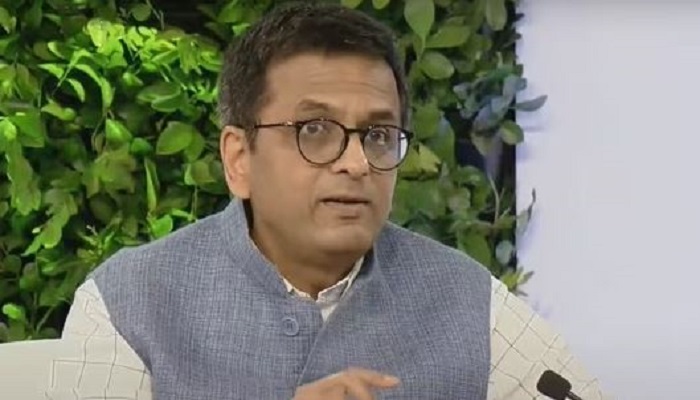
On 4th November (Saturday), Chief Justice of India DY Chandrachud opined that there should be a dividing line between what the legislature can and can’t do when there is a judgment of the court. He argued that if a judgment points out a deficiency in law, it is always open for the legislature to enact a fresh law to cure the said deficiency. He, however, stressed that in that case the legislature can’t term the judgement as ‘wrong’ and ‘overrule’ it.
In a conversation with Utkarsh Anand, national legal editor of Hindustan Times, the CJI further argued that while pronouncing judgements, the Justices are guided by constitutional morality rather than public morality. He emphasised that judges decide cases, they don’t think about how the society would respond. According to him, that is the difference between the elected arm of the government and the judiciary.
At the Hindustan Times Leaders Summit, the CJI Chandrachud said, “There is a dividing line between what the legislature can do, and what the legislature can’t do when there is a judgment of the court. If a judgment decides a particular issue and it points out a deficiency in law, it is always open for the legislature to enact a fresh law to cure the deficiency.”
The CJI added, “What the legislature cannot do is to say that we think the judgment is wrong and therefore we overrule the judgment. The judgment of a court cannot be directly overruled by the legislature.”
He also said judges are guided by constitutional morality and not public morality while adjudicating cases. “We have disposed of at least 72,000 cases this year and there’s still a month and a half to go,” the CJI noted.
Regarding the retirement age of judges, CJI said that it is for Parliament to decide, however, he maintained that it is important that judges must retire. He highlighted the difference in the Indian judicial system vis-a-vis the American Supreme Court. Notably, unlike India, the American judicial system has no age of retirement for judges.
CJI Chandrachud said, “The retirement age of judges is for Parliament to decide. American Supreme Court provides judges have no age of retirement. We follow a different model. It is important that judges must retire. It is too much of a responsibility for human beings. Judges are human beings…you must pass on the mantle to succeeding generations as issues change. Source of change and transformation of legal principles develops that way.”
Explaining the challenges faced by judges, the CJI said, “Judges of the Supreme Court here decide 200 cases in a week. The real challenge of a judge is to balance competing requirements. On one hand huge inflow of work and the need to create mental space to decide seminal issues. That’s the challenge before a contemporary judge.”
Redefine ‘merit’ in an inclusive way, asserts CJI DY Chandrachud
Regarding participation of women in the judicial system, CJI asserted that more women will enter into judiciary if there is a level playing field. He emphasised that there is need to redefine “merit” in a more inclusive sense and ensuring opportunities for the marginalised.
CJI said, “We need to redefine merit in an inclusive sense… If you open a level playing field for entry, you will have more women in the judiciary. Unless we start increasing the inflow of marginalised persons at the entry level, we cannot achieve their fair share.”
Speaking on barriers for LGBTQI and women, CJI noted, “We recently prepared two handbooks – one for LGBTQI…barriers they experience in courts. Second, a handbook on the language we employ against women… This handbook is on gender stereotypes to ensure there is some form of discourse that is just not acceptable in our judicial system.”
During the conversation the Chief Justice also highlighted the push for the usage of regional langauges and technology in the justice delivery system.
Meanwhile, he also extended best wishes to the Indian men’s cricket team for the World Cup and said that they inspire him.
Amid the ongoing Israel-Hamas war, it has now come to light that the Palestine-based Islamist outfit tried to put their injured terrorists on departure lists meant for the evacuation of US nationals through the Rafah gate crossing into Egypt.
As per a report by The New York Times, an official of the Biden administration informed on Friday (3rd November) that the evaluation of US nationals was delayed due to Hamas and its nefarious attempt.
The evacuation process was delayed by several weeks and finally commenced on Wednesday (1st November). The Rafah crossing remained closed for a long time since October 7 when Hamas launched an unprovoked attack on Israel, killing 1400 people in the process.
A Biden admin official said efforts to get Americans and others out of Gaza were held up by Hamas trying to get its wounded terrorists included on departure lists.
About a third of the wounded included on an initial list were Hamas terrorists.
“For most of that time, American officials said only that Hamas was preventing the departure of foreign nationals, and that the group was making unreasonable demands,” the NYT report noted.
Hamas reportedly provided a list of ‘wounded’ Palestinians to Egypt, Israel and the United States, reiterating that they should be evacuated along with US nationals and others. However, almost 1/3rd individuals on the list included injured Hamas terrorists.
The matter came to light only during the vetting process. When Israel, Egypt and the US turned down the list, Hamas kept providing new lists of ‘wounded’ Palestinians (that included its terrorists).
Egypt concerned about possible flow of Hamas terrorists into the country
According to The New York Times, the negotiations between the United States and Hamas took place through representatives of the Qatar government.
“The official who spoke to reporters on Friday said that Hamas eventually relented in its demands for the passage of its fighters. The prospect of Hamas fighters leaving Gaza was especially troubling for Egypt, which remains concerned about the possibility of terrorists flowing into its country,” the report added.
Later, Hamas provided a list of injured Palestinians that did not include Hamas terrorists. As such, the evacuation process was delayed by several weeks
Reliance Industries chairman Mukesh Ambani received fresh threat emails, warning him of serious consequences for ignoring previous messages of Rs 400 crore as extortion demand, Mumbai police said on Saturday.
As per police, two threatening emails were received between October 31 and November and the sender introduced himself as Shadab Khan.
“Industrialist Mukesh Ambani received two threat emails once again between October 31 and November 1, warning him of serious consequences for ignoring previous emails wherein the person (sender of the mail) had demanded Rs 400 crore,” police said.
Earlier Ambani received death threats via email threatening to shoot him if he failed to pay Rs 20 crore. The ransom subsequently kept increasing to Rs 200 crore and Rs 400 crore each time a fresh email was sent.
“The sender cites a lack of response to the previous email and increases the ransom, Mumbai police had said, adding that the first such threatening mail was sent on October 28.
After receiving the email, based on the complaint of Mukesh Ambani’s security in-charge, the Gamdevi Police of Mumbai registered a case against an unknown person under section 387 (putting a person in fear of death or of grievous hurt in order to commit extortion) and 506 (2) (criminal intimidation) of the Indian Penal Code (IPC).
(This news report is published from a syndicated feed. Except for the headline, the content has not been written or edited by OpIndia staff)
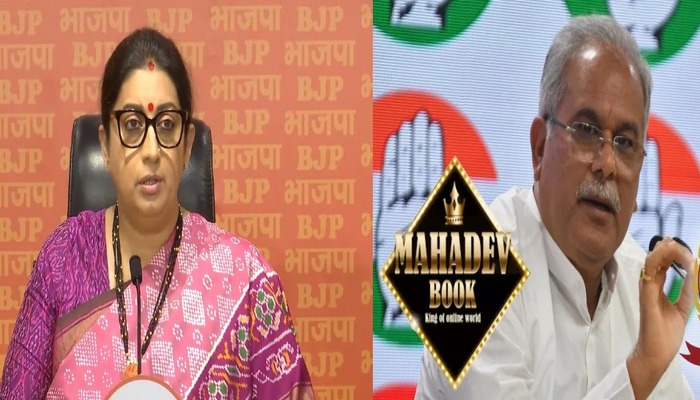
On Saturday (3rd November), Union Minister and BJP leader Smriti Irani slammed Chattisgarh CM Bhupesh Baghel for allegedly receiving kickbacks to the tune of Rs 508 crores to fund the Congress party’s poll expenses. The minister asked whether the Congress party is using hawala operators with connection to the Mahadev betting app to campaign in Chhattisgarh.
In a press conference on Friday, Smriti Irani stated that one of the most volatile and shocking pieces of evidence regarding the use of Hawala operations and illicit money flowing from Dubai by illegal betting operators to fund the Congress party’s electoral expenses in Chhattisgarh has come to the fore.
“Yesterday, shocking facts regarding Bhupesh Baghel emerged before the country. More than Rs 5.30 Crores was seized from a man called Asim Das. Is it true that Congress leaders received money from Asim Das, via Shubham Soni? Is it true that Shubham Soni was ordered by Asim Das over a voicemail to go to Raipur and give money to Baghel as election expenses?” Minister Irani said.
The union minister also questioned the Congress party if money was recovered from Asim Das at a hotel on 2nd November.
“Is it true that money was recovered from Asim Das at Hotel Trident on November 2? Is it true that Rs 15.50 crore from different bank accounts were frozen under the Prevention of Money Laundering Act?” Irani asked.
It is with a deep sense of outrage that I pose the following questions to Bhupesh Baghel:
Is it true that Aseem Das, who has been arrested, was under instructions to take money and help fund the elections of the Congress party?
Highlighting Asim Das’s confession that he did come to Raipur from Dubai and that he was ordered to provide funds to Congress for poll expenses, Minister Irani questioned CM Baghel and Congress leadership. She alleged that CM Baghel and Congress played the game of betting while being in power as she said: “Satta (government) mein baith ke Satta (betting) ka khel khela hai Bhupesh Baghel ne.”
“What is extremely shocking is the belief that the investigation agencies are in receipt and possession of a recorded message from Shubham Soni to specifically and urgently go to Raipur to supply funds to Baghel for the elections of Chhattisgarh. Shubham Soni, in his written admission, has stated that till now over ₹500 crores have been given in bribes for political protection by the illegal Betting Racket, namely the Mahadev Online Book Promoters in Chhattisgarh,” Irani said.
What is extremely shocking is the belief that the investigation agencies are in receipt and possession of a recorded message from Shubham Soni to specifically and urgently go to Raipur to supply funds to Baghel for the elections of Chhattisgarh.
“Today I am asking all these questions to Bhupesh Baghel ji and the Congress leadership. Asim Das has admitted in his statement that he came to Raipur from Dubai as per orders and he had received orders to give money for the election expenses of Congress. Asim Das admitted that the money was from illegal betting operations of the Mahadev App. Asim Das confessed that Shubham is involved in the top-level management of the Mahadev online app,” the minister continued.
As reported earlier, ED has reportedly found that regular payments have been made in the past and so far around Rs 508 Crore have been paid by Mahadev App Promoters to Bhupesh Baghel.
“But this is not the only such information, rather another shocking fact has come to the fore. The promoters of the Mahadev App, who wanted protection from the administration and Congress leaders, also used to send protection money through an officer named Chandrabhushan Verma, who has so far managed a bribe of Rs 65 crore,” the BJP leader added.
This comes after the Enforcement Directorate recently said that regular payments have been made in the past and so far around Rs 508 crore has been paid by Mahadev App Promoters to Chhattisgarh Chief Minister Bhupesh Baghel. The ED received credible inputs and conducted successful search operations on November 2 in Chhattisgarh in which Rs 5.39 crore in cash was intercepted in the poll-bound state.
The Congress is opposed to portraying any member of the I.N.D.I. Alliance as a prime ministerial candidate to challenge Prime Minister Narendra Modi in the 2024 Lok Sabha election, according to Congress President Mallikarjun Kharge in an exclusive interview with NDTV.
It is preferable, according to him, to be contest elections without a common PM candidate so that parties can convene and choose a candidate. He stressed, “This will ensure all are together in the run-up to the general election.” So evidently, Kharge admitted that even as the 2024 elections are just months away, there is no consensus among the I.N.D.I.Alliance partners regarding a PM candidate and there is a risk of the coalition breaking apart over the issue.
The Congress has revealed that it is in communication with all of its partners in the coalition, including Chief Minister Nitish Kumar of Bihar to clarify that the party needed to take a break from the opposition meetings because the state elections are also important to it. He alleged that confronting the Bharatiya Janata Party required forging an alliance and cooperating as a unit.
Bihar Chief Minister Nitish Kumar recently accused Congress of ignoring the opposition bloc in a CPI (Communist Party of India) rally. The Congress party, he emphasised, is not paying attention to the alliance because it is too consumed with preparing for the assembly polls that are coming up in five states.
The Bihar CM added, “We have been speaking to them, pushing them forward in I.N.D.I. Alliance. But, of late, there has not been much progress on that front. The Congress seems to be more interested in the five assembly polls.”
Congress President Mallikarjun Kharge also pointed out that his party’s state divisions oppose any cooperation with the Aam Aadmi Party (AAP). He added that despite the fact that the Congress and the Left parties are fierce rivals in Kerala, the AAP ought to consider supporting and fighting alongside the coalition in a manner similar to what the Left parties are doing across the country.
It is evident from his unambiguous stance against endorsing a prime ministerial candidate that Wayanad MP Rahul Gandhi is not a serious contender for the prime ministerial position. NDTV quoted anonymous party sources to add that the Gandhi scion does not particularly want to be considered for the post.
All is not well in the Congress-led coalition as regular infighting and tussle are witnessed between the alliance partners. Congress is continuously under fire from Samajwadi Party leader Akhilesh Yadav. He recently slammed them for promising him six seats in the upcoming Madhya Pradesh assembly election but failing to give even one seat to his party. He charged that even after this arrangement was agreed upon, Congress fielded candidates for every seat and left no space for the Samajwadi Party.
Yadav then took a jab at his coalition partner for demanding a nationwide caste census and contended that it was being done for political reasons. He remarked that the fact that Congress is now requesting a caste census is a ‘miracle.’ The former Uttar Pradesh Chief Minister emphasised that the grand old party has come to the realisation that voters in backward areas do not support them.
Ahead of the state assembly elections, Rajasthan’s senior Congress leader and former MP Karan Singh Yadav resigned from the party on Friday (3rd November). In a letter addressed to Congress National President Mallikarjun Kharge, he expressed his discontent with the allocation of Congress tickets in the Alwar district. The assembly elections in Rajasthan are scheduled to be held on 25 November. Karan Singh Yadav’s resignation from the party comes as a big blow to the Congress organisation facing the challenge of defending the Ashok Gehlot government.
Karan Singh Yadav urged for a reassessment of the party candidates declared for the Kathumar and Rajgarh-Laxmangarh, as well as Behror seats. He further cautioned that if these changes are not implemented, his letter should be considered as his resignation from Congress and that this resignation should be accepted.
On Friday, Karan Singh Yadav and his supporters also held a massive protest outside Congress leader Sonia Gandhi’s residence over ticket distribution for Rajasthan assembly elections. At this time, his supporters raised slogans against Congress leader Bhanwar Jitendra Singh who is considered a close aide of Rahul Gandhi.
#WATCH | Delhi: Former Congress MP Karan Singh Yadav and his supporters hold a protest outside Congress leader Sonia Gandhi's residence over ticket distribution for Rajasthan assembly elections pic.twitter.com/NMjW1Jwlgv
Former Member of Parliament Karan Singh Yadav is currently in disagreement with the Congress party’s decision to nominate Sanjay Yadav from Behror, Mangelal Meena from Rajgarh-Laxmangarh, and Sanjana Yadav from Kathua constituency. He emphasised that Johrilal Meena from Rajgarh-Laxmangarh and Babulal Bairwa from Kathua have previously served as three-time MLAs, and it is not appropriate to deny tickets to such experienced leaders.
Yadav is advocating for the Congress ticket to be given to long-standing activist Advocate Bastiram Yadav from Behror. Additionally, Yadav stated his intention to meet the party’s organisational General Secretary, KC Venugopal, on Saturday.
The dissatisfaction among Congress leaders regarding the allocation of tickets appears to be ongoing. In addition to Yadav, several former MLAs have publicly voiced their discontent with the ticket distribution and have declared their intentions to contest the elections if the tickets are not reconsidered. Johrilal Meena, an MLA representing the Rajgarh-Laxmangarh assembly constituency, has submitted his nomination as an Independent candidate, despite being denied a ticket by the party.
A coordination committee was established by the Alwar district Congress president to handle ticket distribution row within the Congress party. The committee had the task of meeting with disgruntled leaders and managing the situation. However, even after two days had passed, the committee did not achieve significant success in this endeavour. The matter has now reached Delhi.
The 2017 Unnao rape survivor has accused her mother, sister, and her incarcerated uncle, who is currently serving a 10-year term in Tihar Jail, and a female friend of her uncle, of extorting money and causing immense distress in her life. According to the victim, these individuals have reportedly seized money (over Rs 1 crore) provided by the government and different organisations as aid following the rape incident.
Former BJP and SP MLA Kuldeep Singh Sengar was eventually convicted and awarded a life sentence in the 2017 Unnao rape case. Since the victim was a minor in 2017, Sengar has been convicted under POCSO charges. The rape survivor’s FIR against her family members was filed on 19th October.
Furthermore, the victim has alleged that these individuals also took over the apartment allocated to her in Delhi. The mother of this rape victim is a Congress leader. The victim has filed a complaint with the police in this regard. The victim said that despite being eight months pregnant, she was thrown out of the flat.
In her complaint, filed after releasing a video on social media in September, the victim said, “My sister is trying to implicate my husband in a rape case and threatening to file an FIR so that my last resort is also taken away.” The Unnao rape victim has submitted an application to the SP demanding action against the four accused.
According to the victim, her uncle, who has a history of criminal behaviour, is presently serving a 10-year sentence in Tihar Jail for attempted murder. Simultaneously, her mother holds significant political influence, having contested the previous assembly elections on a Congress ticket. The victim alleged that these individuals are persistently tormenting her and have unlawfully appropriated the huge sum of money she received as helped from the government and several NGOs.
The victim has claimed that during the time of the incident, she was considered a minor, resulting in all the funds being deposited into her uncle’s and mother’s accounts. They allegedly took possession of all these funds. The victim further stated that when she requested money from her uncle, he cited additional expenses incurred in the legal battle.
As per the FIR accessed by OpIndia, the victim asserted that her spouse has provided unwavering support by understanding her situation. The family members are now targeting the couple. The victim has appealed to the police to safeguard herself and her husband. Additionally, she has requested the recovery of all the funds. Notably, the victim, who is eight months pregnant, expressed concerns that her influential mother and uncle could potentially pose a threat to her well-being.
The Unnao rape case gained significant attention, with the former BJP MLA Kuldeep Singh Sengar being apprehended as the primary suspect. Subsequently, he was convicted and handed a life sentence by the court. Sengar, a former SP leader, was convicted in 2019. As a BJP candidate, Kuldeep Sengar had won the state Assembly polls from the Bangarmau Assembly seat of Unnao in 2017. After his conviction in the rape case, he was expelled from the party.
Sengar is also facing murder and attempt to murder charges in related cases. In July 2019, 2 of the victim’s aunts were killed and the victim herself and her lawyer were critically injured after a truck rammed their car. Earlier, the victim’s father was beaten by the police and mysteriously died under police custody. The case had grabbed much media attention and was an issue of intense political mudslinging in UP.