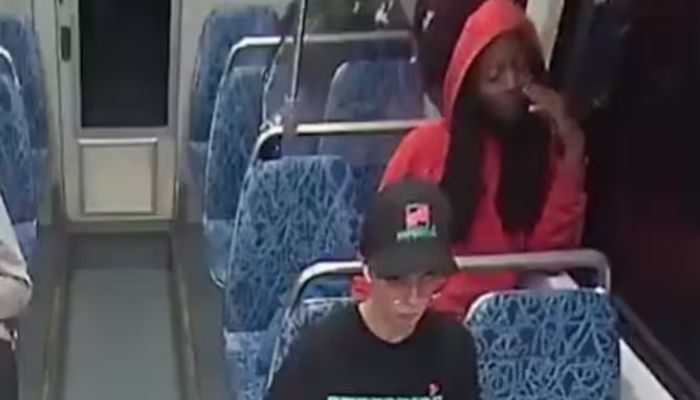
On Tuesday (12th August), the Enforcement Directorate (ED) arrested a social media influencer named Sandeepa Virk in connection with a money laundering case. Virk is a staunch supporter of Congress party and its leader Rahul Gandhi.
According to reports, the accused is 32 years old and has more than 12 lakh followers on Instagram. Sandeepa Virk ran a company called ‘HybooCare’, wherein she claimed to sell FDA-approved beauty products.
As per the ED, the company was not a real business and more of a ‘cover.’ HybooCare reportedly had no user registration system, a dysfunctional payment gateway and WhatsApp contact on its website.
The Enforcement Directorate has arrested Sandeepa Virk, the owner of hyboocare. com, a website purportedly selling FDA-approved beauty products, during searches conducted August 12 and 13 at multiple locations in Delhi and Mumbai under the provisions of the Prevention of Money… pic.twitter.com/myd4DIWDqP
At the same time, the company had no details about the team or its operations, besides poor engagement on social media. This first raised suspicions about ‘HybooCare’ being a front to move ill gotten wealth.
Sandeepa Virk solicited money from people by making false promises and through fraudulent pretences and used it purchase properties and fund a lavish lifestyle.
She was connected with a former director of Reliance Capital (now defunct) named Angarai Natarajan Sethuraman, who conducted illegal liasion work and diverted funds.
Involvement in 40 crore money laundering scam
Sethuraman also approved loans worth ₹18 crore in one case and ₹22 crore in another in violation of norms. As per the Enforcement Directorate, the loans were never repaid and the funds were siphoned off.
The revelations were made during raids conducted by the central agency in Delhi and Mumbai between 12th and 13th August.
The Enforcement Directorate informed that Sandeepa Virk benefitted from these illegal transactions made by Sethuraman. She was taken into custody on 12th August and was remanded to custody till 14th August.
Virk was booked under relevant provisions of the Prevention of Money Laundering Act (PMLA), 2002. The investigation in the case begun after a First Information Report (FIR) was filed by the Punjab police.
Sandeepa Virk was born and raised in Delhi. She had started her career in modelling before featuring in Punjabi, Malayalam and Kannada films. Later, Virk shifted her focus entirely on social media.
While her social media posts are largely apolitical, her X (formerly Twitter) account shows her heartfelt support for Congress party and Rahul Gandhi.
Sandeepa Virk peddles anti-Modi propaganda
Since 2020, Sandeepa Virk had been at the helm of anti-Modi propaganda. She has been relentless in amplifying lies and falsehoods of Congress-sponsored trolls and party workers.
The money laundering accused had shared tweets of Swara Bhaskar and Sanjay Jha, mocking Prime Minister Narendra Modi.
Screengrab of the tweet by Swara Bhaskar
Screengrab of the tweet by Sanjay Jha
Love for Congress party
As evident from her activity on X (formerly Twitter), Sandeepa Virk had retweeted several tweets of Congress leaders including Rahul Gandhi and amplified the ideological stance of the party on an array of issues.
Virk, accused in high-profile money laundering case, was seen misleading the public on issues of inflation and fuel hike by sharing tweets of the Gandhi scion.
Active supporter of anti-farm law protests
The social media influencer had extended her support to the politically motivated anti-farm law movement, which attempted to undermine the Indian State in the garb of their Opposition to 3 revolutionary farm laws.
Amid the debate over Supreme Court ordering removal of stray dogs from Delhi-NCR region, the Bombay High Court has ordered a study on impact of pigeons on human health. The high court on Wednesday constituted an expert committee to examine the health impact on human beings due to feeding pigeons in public Kabutarkhanas or pigeon feeding zones.
A bench of Justices GS Kulkarni and Arif Doctor issued the order while hearing several petitions challenging the Brihanmumbai Municipal Corporation’s (BMC) decision to prohibit the feeding of pigeons in some public places. The bench also directed the expert committee to ascertain whether such feeding can be permitted in a regulated manner.
The court stated that it relates to health issues, it would not be appropriate for the Court to form any final opinion on the matter. The bench said that it does not have the expertise to examine such materials and form any final opinion.
Therefore, the court directed the formation of an expert committee comprising members with domain knowledge to provide guidance on the issue. Accordingly, the state govt submitted the names of 12 experts for the committee, which was accepted by the court. The members include health dept officials, municipal officials, doctors and veterinarians.
The committee will look into two aspects.
First, it will consider the impact on public health arising from the feeding of pigeons, including the effect that pigeon droppings may have on public health. Secondly, the committee will examine whether specific places can be designated for such feeding of pigeons and to consider the nature of any regulations that may be required for the same.
In a shocking case from Bihar’s Nawada district, a man named Junab Hussain lured a minor Hindu girl and her sister into a fake love trap. He trafficked them from West Bengal to Nawada, where he married one of them in a mosque through a nikah ceremony and then forced her to convert to Islam. Things got even worse when the girl ended up pregnant and had to go through a risky abortion.
It turns out, Junab had lured her to Bihar under the pretence of an orchestra job, but really, he was making her available to customers for Rs 2,500 per night. And this wasn’t just one isolated incident, Junab and his gang had apparently done this to more than nine girls from different parts of India, trapping them in this horrible trafficking network.
Now, Junab has finally been caught as part of a major Bihar police operation called ‘Naya Savera’. This major crackdown was launched after the instructions from Priyank Kanoongo, Chairperson of the National Commission for Protection of Child Rights (NCPCR), who pushed for swift action to rescue the victims and bring the culprits to justice.
सांप्रदायिक लैंगिक अपराध ❤️? ? जुनाब हुसैन नाम का यह आरोपी नाबालिग हिंदू बच्ची और उसकी बहन को प्रेम ? जाल में फँसा कर ट्रैफ़िकिंग कर के पश्चिम बंगाल से बिहार ले कर आया मस्जिद ? में धर्म परिवर्तन करवा कर लड़की के साथ निकाह किया उसको गर्भवती ? किया फिर असुरक्षित गर्भपात करवाया… pic.twitter.com/Dbnl0UtKv7
— प्रियंक कानूनगो Priyank Kanoongo (@KanoongoPriyank) August 14, 2025
Under this operation, the Saran police in Bihar rescued 10 minor girls from four different orchestra groups in the district. Thie operation took place on early Wednesday, 13th August, about 10 a.m., and the entire raid was conducted under the supervision of Senior Superintendent of Police (SSP) Kumar Ashish.
The rescued girls include six from West Bengal, one from Odisha, one from Jharkhand, and two from Bihar itself. The police are now contacting their families so that they can be safely handed over and return home.
Along with Junab, the police arrested seven people in total for exploiting these girls. The others are Neeraj Yadav (son of Lalbabu Rai) from Gopal Badi in Masrakh, Saran, Talib Khan (son of Narhum Alam Mian) from Khaira, Saran, Shubham Kumar (son of Shivnarayan Prasad) also from Gopal Badi in Masrakh, Ankit Kumar (son of Kanhaiya Bhagat) from Mirzapur in Madhaura, Saran, Mohammad Bittu Hashmi (son of Mohammad Minsharif Hashmi) from Isuapar, Saran, and Chandan Kumar Tiwari (son of Gautam Tiwari) from Sunauli in Masrakh, Saran. Junab himself is from Sahva Nawada in Isuapar, Saran, and his father’s name is Abdul Hussain.
Right now, the police are questioning all of them to get leads on any other guys involved in this conversion racket. The arrested folks will be taken to the district court soon for the next legal steps.
This raid came after orders from the National Human Rights Commission (NHRC). They put together three teams from the Mahila Thana (women’s police station) and one from Isuapur station, and they hit four spots at the same time: Rahul Orchestra, Sangeeta Orchestra, Muskaan Orchestra, and Vipin Orchestra. These orchestras were running in the Masrakh and Isuapur areas.
SSP Ashish said the girls were being tortured and made to dance against their will. The police have filed an FIR, its number 74/25, at the women’s police station, and they are undertaking more raids to catch anyone else who is absconding.
Operation Naya Savera kicked off back in August and is set to keep going until 14th August. The SSP is asking everyone to inform them if they know about any similar case happening, so the cops can follow it up. Additionally, the district police are monitoring this interstate gang involved in trafficking operating in the region to close it down for good.
The Kerala Higher Education Department has issued a directive prohibiting the observance of the Partition Horrors Remembrance Day in colleges across the state. In an email circular, the department stated that such events could disturb communal harmony and foster religious rivalry. Universities have been instructed to notify all affiliated colleges to comply with the order urgently.
Reacting to the directive, SFI State Secretary PS Sanjeev said that the SFI will oppose the event wherever it is held. College units have been instructed to prevent such programmes.
Meanwhile, at the Central University of Kerala in Kasaragod, the Partition Horrors Remembrance Day was observed early this morning at 12:30 AM under the leadership of ABVP National Executive Member Abhinav Thooneri. The university has decided to mark the entire day as Partition Horrors Remembrance Day.
Earlier, Kerala University Vice-Chancellor Mohanan Kunnummal had issued a circular to affiliated colleges, instructing them to observe August 14 as Partition Horrors Remembrance Day and organise events, including a programme in the Senate Hall. The directive followed Governor Rajendra Vishwanath Arlekar’s instruction to universities in the state to conduct special programmes on August 14 to commemorate the horrors of the Partition.
Kerala Chief Minister Pinarayi Vijayan called the Governor’s directive “unconstitutional”. He said that the state would not allow a “divisive agenda” on campuses.
August 15 is a reminder of India’s anti-imperialist struggle and the brutalities unleashed by the British to suppress it. The Sangh Parivar, which had no role in the freedom movement and served the British Raj, now seeks to undermine Independence Day by promoting divisive…
Sharing an X post, Vijayan wrote, “August 15 is a reminder of India’s anti-imperialist struggle and the brutalities unleashed by the British to suppress it. The Sangh Parivar, which had no role in the freedom movement and served the British Raj, now seeks to undermine Independence Day by promoting divisive agendas. The Governor’s directive to universities to observe August 14 as “Partition Horror Day” is unconstitutional and unacceptable. Kerala will never allow its campuses to be turned into stages for their divisive agenda.”
This year on 15th August, India will celebrate its 79th Independence Day. It is because of a sustained freedom movement and the sacrifices of lakhs of freedom fighters that we are able to see this day. While the names of many such freedom fighters found a place in history, several others remained anonymous.
One of the major freedom movements launched was the ‘Quit India Movement’ in 1942. The movement started in 1942 after Mohandas Karamchand Gandhi called it and was a major turning point in India’s freedom struggle. The British made every possible effort to suppress this movement, in which thousands of innocent Indians sacrificed their lives. The first martyr of this Quit India Movement was Umakant Kadia of Ahmedabad. He was a volunteer of Rashtriya Swayamsevak Sangh (RSS).
In 1942, on one hand, the Second World War was going on, and on the other hand, Mohandas Gandhi launched the Quit India Movement against the British in the Congress session held in Bombay on August 8, 1942. As soon as the movement was launched, Indians started countrywide demonstrations against the British government. The British government, as usual, put all the top Indian leaders in jail and used unprecedented force to suppress the movement.
After Gandhi announced ‘Quit India’ in Bombay on 8th August, its impact was felt across the country, including Ahmedabad in Gujarat. On the morning of 9th August, the British government started arresting Indian leaders in Ahmedabad. However, the protests still took place with marches taking place at various places. To suppress this protest, the police started using force on the orders of the British government and even opened fire.
21-year-old Umakant Kadia, who lived in Dariyapur, was the Mukhya Shikshak of a Shakha of the Rashtriya Swayamsevak Sangh. Remembering him, volunteers who had worked at his Shakha say that Umakant was fully committed to the ideology of the RSS and was devoted to the work of the Shakha.
स्वाधीनता आंदोलन में 9/8/1942 के दिन #RSS की शाखा के मुख्य शिक्षक, अपने माता-पिता के एकमात्र पुत्र ऐसे श्री उमाकांत कडियाने 1942 'भारत छोडो आंदोलन' में बलिदान' दिया, उस उनके साथ 14 वर्ष के चिनुदादा आज वीर बलिदानी उमाकांत की बात बताते है। @vskgujarat@editorvskbharat@RSSorgpic.twitter.com/aee5B7WGML
When the protest started on 9th August, Umakant was at the forefront of the crowd of protestors. The police opened fire to disperse the crowd. Someone from the crowd warned Umakant that why are you moving forward, but Umakant kept moving forward. A bullet fired by the police then hit him directly on the forehead as Umakant made the supreme sacrifice.
Years later, a memorial was built in the Khadia area, in Ahmedabad, where the incident took place. The memorial says that Umakant Motiram Kadia attained martyrdom here. He was the first martyr of the Quit India Movement.
The British government’s repression continued even after the incident. The next day, the students of Law College held a rally in the area. When the rally reached Gujarat College, other students also joined in. The police started a lathi-charge to disperse the rally. As the students hoisted the Indian flag, a British officer shot a young man named Vinod Kinariwala.
Umakant Kadia who sacrificed his life on 9th August, and Vinod Kinariwala who did it on 10th August, became heroes of the movement in two days. This is the reason Umakant is known as the ‘First Balidani‘.
The sacrifice of Umakant Kadia shatters the propaganda of the Congress and the Left against the Rashtriya Swayamsevak Sangh. Contrary to the baseless claim that the RSS did not contribute to India’s independence, the truth is that many such volunteers played a vital role in the Indian freedom struggle, and many RSS members like Umakant made the supreme sacrifices, but they were forgotten by history, which was written years later.
In Karnataka, a controversy has erupted over reports of the Congress government planning to transfer 45 acre Hebbal prime land to private builders. The Bhartiya Janata Party has alleged that the CM Siddaramaiah-led government is “auctioning the future of Bangloreans” by colluding with real estate mafias, estimating a loss of Rs 1,728 crore public money.
Taking to X on 13th August, BJP’s Karnataka unit called Congress “Scamgress” and said, “Congress is auctioning Bengaluru’s future. Metro needed 45 acres for a multi-modal hub. Congress cut it to 9 acres & handed 37 acres to builders at ₹12.1cr/acre vs ₹60+ cr market rate. Public loss: ₹1,728 crore. Real estate mafia aka Congress wins, Bengalureans lose.”
Congress is auctioning Bengaluru’s future.
Metro needed 45 acres for a multi-modal hub. Congress cut it to 9 acres & handed 37 acres to builders at ₹12.1cr/acre vs ₹60+ cr market rate.
? Public loss: ₹1,728 crore ? Real estate mafia aka Congress wins, Bengalureans lose.… pic.twitter.com/2ZnGcfvdLd
The BJP questioned the Congress based on a Deccan Herald report, which says that the Karnataka Industries Area Development Board (KIADB) has “initiated the process of issuing a demand notice to Lake View Tourism Corporation, a private entity, for compensating the original landowners.”
The report says that Bengaluru Metro is set to lose control over 45 acres of prime land in Hebbal due to KIADB’s move. It added that despite Lake View Tourism Corporation’s failure to pay compensation for 20 years, KIADB’s notice would legitimise the corporation’s contested claim over the land.
Citing sources, the DH report says that the notice seeks payment of Rs 12.10 crore per acre for 37 acres, amounting to a total of Rs 448 crore, adding that this price was fixed about two-and-a-half years ago when the government extended the corporation’s expired lease agreement. Currently, the KIADB controls this land.
Meanwhile, the landowners are outraged over the low compensation payouts since the current market value in Hebbal is no less than Rs 60 crore per acre.
In March this year, the Congress government allegedly bowed down before the real estate lobby and slashed Namma Metro’s demand for 45 acre land to just 9 acres. The BJP had opposed this decision and demanded that the entire 45 acre land in question should be allocated for Metro’s depot. However, despite public outrage, and requirement of land for reducing Metro’s operational costs and improve frequency on the proposed Hebbal–Sarjapura Metro line, the Congress government allocated only 9 acres land to Bengaluru Metro.
Meanwhile, Leader of Opposition in Karnataka Legislative Assembly, R Ashoka called the Congress government a “Builder Sarkara”. He alleged that the Siddaramiah government is “gifting” Metro’s land to builders.
“Congress Sarkara = Builder Sarkara Land for Metro stolen, gift-wrapped for builders!The @INCKarnataka government has betrayed Bengaluru once again. Instead of using the 45 acres in Hebbal for a Metro depot – which would have reduced costs and improved frequency for lakhs of commuters – they have handed over prime public land to private builders at throwaway prices. This is not governance, this is daylight robbery. A private company that defaulted for 20 years is now being rewarded with land worth hundreds of crores, while Namma Metro and the people of Bengaluru are left stranded,” Ashoka wrote on X.
Congress Sarkara = Builder Sarkara
Land for Metro stolen, gift-wrapped for builders!
The @INCKarnataka government has betrayed Bengaluru once again. Instead of using the 45 acres in Hebbal for a Metro depot – which would have reduced costs and improved frequency for lakhs of… pic.twitter.com/CrrGLuL4ZR
“Even MPs urged the government to allocate the land for Metro, but the Congress chose to serve their builder friends over public interest. Why this special love for defaulters and real estate lobby?@BJP4Karnataka will expose this loot of public land and fight to ensure that Bengaluru’s future is not sold off for political kickbacks,” the BJP leader added.
On 13th August, the Supreme Court order on the stray dog menace in Delhi-NCR was published on its website. In the 11th August order, the apex court directed authorities in Delhi, Ghaziabad, Noida, Faridabad and Gurugram to start removing stray dogs from all locations at the earliest and house them in pounds and shelters rather than release them back. Notably, the court did not ask to round up all the dogs from Delhi-NCR. It is going to be a phased process with 5,000 dogs to be picked up and placed in shelters in the next eight weeks.
Source: Supreme Court of India
The bench comprising Justice J B Pardiwala and Justice R Mahadevan was hearing the suo motu matter on the stray dog menace in Delhi-NCR. They called the situation “extremely grim” and demanded decisive action to protect public safety.
Though the case has been referred to a larger bench and its first hearing is scheduled for 14th August (Thursday), it is essential to examine the order passed by the Supreme Court regarding the problem people are facing due to the large number of stray dogs in the country.
Data presented to the court shows a sharp rise
The court recorded data placed during the hearing that India witnessed 37,15,713 reported dog bite incidents in 2024. In the same year, Delhi reported 25,210 cases. In January 2025, Delhi saw 3,196 reported dog bite cases. This indicated a significant year-on-year rise. The increase was linked to a growing stray dog population with victims often undergoing multiple injections and, in some cases, suffering painful deaths on the spot or soon after attacks.
Source: Supreme Court of India
The court also pointed out that stray dogs cause large number of road accidents resulting in serious injuries to road users.
Source: Supreme Court of India
ABC framework and rerelease under scrutiny
The submission highlighted that under the Animal Birth Control Rules, 2023, local authorities capture, sterilise and immunise stray dogs and then rerelease them at the same spot. Even if the dog has bitten a person, it is observed and, if found without rabies, is handed to an animal welfare organisation for treatment and rerelease after ten days.
Source: Supreme Court of India
The note argued that this scheme violates Articles 19(1)(d) and 21 of the Constitution of India as putting dogs back on streets where they can harm people infringes the rights to move freely and to life. It added that the 2001 Rules had failed to control populations and that it is unclear how the 2023 Rules would address the crisis.
‘Streets should not prove to be vulnerable places’
The court emphasised public safety and said, “streets should not prove to be vulnerable places”. The bench took “pains to take cognisance” of the experiences of visually impaired persons, young children, elderly persons and people from humble backgrounds who cannot afford medical care. The court spelt out the dangers for those who sleep on the streets and noted the impossibility of distinguishing a rabid dog from others. It affirmed a basic rule of law principle with a pointed reminder that “no person is below the law either”.
Source: Supreme Court of India
Court urged interveners to adopt and take care of the strays
Responding to concerns raised by interveners, the court urged those who profess love for animals to adopt and give shelter to stray dogs at their homes. However, the court made it clear it was not virtue signalling.
Source: Supreme Court of India
The court said, “In light of the concerns of the interveners, we urge all to adopt and give dogs a shelter in their homes. However, we do not ascribe to the virtue signalling of all those who share love and concern for the animals. A virtual divide is being attempted to be created between ‘animal lovers’ and persons indifferent towards animals. But the heart of the problem remains unanswered, for all practical reasons. As a court, our heart pains equally for everyone. We condemn those who, beneath the cloak of ‘love and care’ for the voiceless, pursue the warmth of self-congratulation. The directions given by us, as a court which functions for the welfare of the people, are both in the interest of humans as well as dogs. This is not personal.”
Immediate removal and creation of shelters across NCR
As an immediate step, the court directed the Government of NCT of Delhi, the Municipal Corporation of Delhi, the New Delhi Municipal Council and authorities in Noida, Ghaziabad, Gurugram and Faridabad to start picking up stray dogs from all localities, especially vulnerable areas and the outskirts. These dogs are to be placed in designated shelters and pounds. The authorities must create shelter infrastructure across the NCR and file a report within eight weeks.
Humane standards and continuous monitoring
The court further passed strict orders to maintain humane standards at dog shelters and pounds. The shelters must have sufficient personnel for sterilisation, deworming, immunisation and day-to-day care. The dog shelters and pounds must be monitored by CCTV to ensure that no dog is released or taken out without authorisation.
The authorities must prevent overcrowding, ensure regular feeding, provide timely veterinary care and maintain constant supervision with at least two responsible personnel present at all times. The vulnerable and weak animals are to be kept separately wherever possible.
Records, identification and a complete ban on rerelease
The bench made it clear that not a single dog picked from any locality is to be released back on the streets or public spaces. The bench warned of stern action for any violation. Authorities must keep daily records of captures and of dogs housed, and must earmark captured dogs for later identification so that none are rereleased.
The bench made it clear that not a single dog picked up from any locality is to be released back on the streets or public spaces, warning of stern action for any violation. Authorities must keep daily records of captures and of dogs housed, and must earmark captured dogs for later identification so that none are rereleased.
Bite complaints to trigger 4-hour capture
The court directed that a dedicated helpline be created within a week so that bite incidents can be reported immediately. On receiving a complaint, authorities must round up and capture the dog within four hours. Any resistance by individuals or organisations will be viewed strictly and may lead to contempt.
Source: Supreme Court of India
Capture, sterilisation and immunisation without release
The order requires that all captured dogs be sterilised, dewormed and immunised as per the 2023 Rules and, crucially, that they “shall not be released under any circumstances”. The bench reiterated that picking up and the creation of shelter capacity must proceed together and warned that any lethargy would invite strict action.
Adoption is possible but cannot be used to push dogs back on streets
The court left it to authorities to decide on an adoption scheme. However, the court insisted that any adoption must follow the Animal Welfare Board of India’s protocols. Furthermore, it should not become a backdoor for rerelease of dogs on the streets. Any such infraction will draw the strictest action against both officials and individuals.
Source: Supreme Court of India
Ensure vaccine stocks and treat victims promptly
Recognising vaccine availability as a major concern, the court directed the Government of NCT of Delhi to publish details of vaccine locations, stocks and monthly treatment numbers. It further ordered that victims be connected to medical authorities for immediate treatment.
Obstruction will invite contempt
The bench warned that any hindrance or obstruction in implementation would be treated as contempt of court and dealt with in accordance with law. This warning accompanied the earlier mandate to begin picking up dogs across the NCR without delay.
Source: Supreme Court of India
Bench warns against complacency and consolidates related case
Explaining why the court had stepped in, the judges wrote that this was not a casual exercise and that two decades of systemic failure had brought public safety to a critical point. “If we fail to act with urgency, we risk allowing yet another two decades to slip into the ledger of neglect,” the order reads. The court also called for the transfer of a related case from the Delhi High Court concerning a proposed dog shelter, so that the issue can be addressed comprehensively.
The legal position the submissions relied on
The amicus note placed before the court pointed to a recent Constitution Bench ruling in Animal Welfare Board of India v Union of India which stated that the Constitution does not recognise any fundamental right for animals, and that animal welfare statutes are to be tested by human petitioners. The note also highlighted that several municipal and police laws in India already provide for confinement or even destruction of stray dogs, and that similar provisions exist abroad when no owner or adopter comes forward.
What happens next
The authorities have been asked to file a status report within eight weeks detailing the creation of shelter infrastructure across NCR. The matter will be listed thereafter, with the bench reiterating that shelters for about 5,000 dogs must be created in the coming six to eight weeks as part of a progressive and expanding exercise.
OpIndia is doing a series on Stray Dog Menace in India which can be checked here.
The Election Commission of India (ECI) on Wednesday again fact checked “vote theft” claims made by Rahul Gandhi, and asserted that no one can force to remove the name of a voter from final electoral rolls without following proper procedure laid down in law.
“Electoral rolls are prepared in accordance with law. Any correction, deletion or inclusion in Electoral Roll can always be made as per procedure laid down in law. No one can force to remove YOUR NAME from final Electoral Rolls without following the procedure laid down in law,” ECI posted on X.
The EC clarified that an Electoral Registration Officer (ERO) can “suo moto inquire” into a few cases, but can’t issue thousands of notices merely based on allegations made by someone on Print, TV or social media that might lead to “harassing thousands of Eligible Electors without any material evidence.”
“If any person, who is not an elector of YOUR Assembly Constituency, alleges wrongful inclusion of YOUR name, he can only do so by becoming an applicant before ERO, who can take applicant’s Oath under Rule 20(3)(b) of Registration of Electors Rules, 1960 which requires that: ‘The evidence tendered by any person shall be given on oath and administer an oath for the purpose,'” the poll body argued.
“Any such list of name(s) from such person(s) has to be submitted with the Declaration/Oath as per law,” it said, adding that If someone believes in their analysis or claims of wrongful inclusion of any name, they can easily share the evidence with the ERO along with a signed Declaration/Oath as per Rule 20(3)(b).
“This Rule protects Eligible Elector(s) from any person(s) from outside YOUR Assembly Constituency who may have an intent of cutting YOUR precious vote,” the EC said.
This comes after Gandhi on Sunday doubled down on his claims of “vote chori” during the 2024 Lok Sabha elections and noted that a “clean” voter roll is imperative for free and fair elections. The Congress MP linked his stand to a fight to “protect” democracy.
“Vote Chori is an attack on the foundational idea of ‘one man, one vote’. A clean voter roll is imperative for free and fair elections. Our demand from the EC is clear – be transparent and release digital voter rolls so that people and parties can audit them. This fight is to protect our democracy,” the Congress MP posted on X.
After Congress leader and Lok Sabha Leader of Opposition Rahul Gandhi told a Pune court on Wednesday that he faces threat to life, the party’s IT cell chief Supriya Shrinate has claimed that the statement was filed by a lawyer without authorisation. She claimed that the written statement was submitted without Rahul Gandhi’s consent, and he strongly disagrees with this.
Supriya Shrinate added in a post on X that the lawyer will withdraw this written statement from the court tomorrow. She also enclosed a press release by Advocate Milind Dattaraya Pawar, saying that the Pursis (statement) was filed without instructions from the client.
The statement says, “The Pursis dated 13.08.2025 was filed by me in the Court without Instructions from the client. The contents of the Pursis were drafted by me without consulting my client Shri. Rahul Gandhi. My client has taken strong exception to filing of this Pursis dated 13.08.2025 and has expressed his disagreement with the contents of the Pursis. I shall file a formal application tomorrow for withdrawal of the said Pursis before the Hon’ble Court.”
Shri Rahul Gandhi's lawyer had filed a written statement (pursis) in the court citing threat to his life without Rahul ji’s consent.
Rahul Gandhi strongly disagrees with this.
The lawyer will withdraw this written statement from the court tomorrow.
The statement filed at a Pune court on behalf of Rahul Gandhi had claimed that he was facing threats to his life for his recent political battles and over his controversial comments against Vinayak Damodar Savarkar. The submission was made to the court hearing a defamation case against him over the Savarkar comment.
Referring Rahul Gandhi’s recent allegations against Election Commission of India, Lawyer Milind Pawar alleged, “two MPs from the BJP threatened Rahul Gandhi, telling him to ‘step aside’ and warning that in the future, he would meet the same fate as his grandmother. They also threatened him by calling him the biggest terrorist.”
The lawyer further said, “In this background, we felt that since this case is pending before this court for evidence, and given the entire genealogy in question and the fact that these are Savarkar’s followers – combined with the stand Rahul Gandhi has now taken – he could be betrayed or harmed.”
The lawyer on behalf of Rahul Gandhi also alleged that the complainant in the defamation case is a direct descendant of Nathuram Godse. He alleged that there is a “documented history of violence and anti-constitutional tendencies linked to the complainant’s lineage.”
The advocate added that the application was submitted to “record certain material facts and grave apprehensions directly connected to the safety of Rahul Gandhi and to the integrity of these proceedings.”
The NIA court acquitted 7 people, including Sadhvi Pragya Singh Thakur, Lieutenant Colonel Prasad Purohit and Major Ramesh Upadhyay in 2008 Malegaon blast case. Afterward, startling revelations came to the fore following the landmark verdict. Now, a similar disclosure has been made by Mehboob Mujawar, who participated in the investigation of the explosion, during a conversation with Dainik Bhaskar.
He stated, “ATS unlawfully arrested three persons linked to RSS. They were subjected to torture and subsequently killed but their status was misrepresented as absconding in official records.” The individuals are Sandeep Dange, Ramji Kalsangar and Dilip Patidar. Notably, Kalsangar became the focus of attention after the ruling. He has been missing for over the past 17 years, however, his wife continues to live as a married woman.
Mujawar asserted that after the killing, it was showcased as if they were all alive. Officers were dispatched to their residences for inquiry to substantiate this claim. This led the public to believe that the cops lacked information about them and the latter were evading capture. “The effort to present Sandeep, Ramji and Dilip as alive was orchestrated at the direction of (former Police Commissioner of Mumbai) Param Bir Singh. A scene was created to conceal the deaths of all three,” he outlined.
Mujawar, formerly associated with ATS, reiterated his statement regarding the conspiracy to trap Mohan Bhagwat in the case. He mentioned that one of the two tasks assigned to him was the instruction to arrest Mohan Bhagwat. According to him, the aim was to create a false narrative of “saffron terrorism.”
However, the former ATS officier refused to comply and pointed out that he did not possess the authority to apprehend a significant individual like Bhagwat without a valid reason. Consequently, he endured the fallout and Param Bir Singh implicated him in a bogus case, which led to the end of his 40 year police career.
Mujawar emphasised that the entire probe was conducted by a “bogus officer” which was founded on falsehoods. He remarked that the court’s decision has demonstrated that there was no “saffron terrorism” and it was entirely a fabrication.
“The authorities concocted the narrative of 600 kg RDX and attempted to associate Sadhvi Pragya and Colonel Purohit with it,” Mujawar further conveyed. He also referenced this in the affidavit he submitted in 2016 in relation to the ongoing case against him in Solapur Court.