Home Blog Page 192

BJP questions Congress govt’s land allocation in Bengaluru: Metro multimodal hub cut to 9 acres, 37 acres handed over to builder nexus?

In Karnataka, a controversy has erupted over reports of the Congress government planning to transfer 45 acre Hebbal prime land to private builders. The Bhartiya Janata Party has alleged that the CM Siddaramaiah-led government is “auctioning the future of Bangloreans” by colluding with real estate mafias, estimating a loss of Rs 1,728 crore public money. 

Taking to X on 13th August, BJP’s Karnataka unit called Congress “Scamgress” and said, “Congress is auctioning Bengaluru’s future. Metro needed 45 acres for a multi-modal hub. Congress cut it to 9 acres & handed 37 acres to builders at ₹12.1cr/acre vs ₹60+ cr market rate. Public loss: ₹1,728 crore. Real estate mafia aka Congress wins, Bengalureans lose.”

The BJP questioned the Congress based on a Deccan Herald report, which says that the Karnataka Industries Area Development Board (KIADB) has “initiated the process of issuing a demand notice to Lake View Tourism Corporation, a private entity, for compensating the original landowners.”

The report says that Bengaluru Metro is set to lose control over 45 acres of prime land in Hebbal due to KIADB’s move. It added that despite Lake View Tourism Corporation’s failure to pay compensation for 20 years, KIADB’s notice would legitimise the corporation’s contested claim over the land.

Citing sources, the DH report says that the notice seeks payment of Rs 12.10 crore per acre for 37 acres, amounting to a total of Rs 448 crore, adding that this price was fixed about two-and-a-half years ago when the government extended the corporation’s expired lease agreement. Currently, the KIADB controls this land. 

Meanwhile, the landowners are outraged over the low compensation payouts since the current market value in Hebbal is no less than Rs 60 crore per acre.

In March this year, the Congress government allegedly bowed down before the real estate lobby and slashed Namma Metro’s demand for 45 acre land to just 9 acres. The BJP had opposed this decision and demanded that the entire 45 acre land in question should be allocated for Metro’s depot. However, despite public outrage, and requirement of land for reducing Metro’s operational costs and improve frequency on the proposed Hebbal–Sarjapura Metro line, the Congress government allocated only 9 acres land to Bengaluru Metro. 

Meanwhile, Leader of Opposition in Karnataka Legislative Assembly, R Ashoka called the Congress government a “Builder Sarkara”. He alleged that the Siddaramiah government is “gifting” Metro’s land to builders.

“Congress Sarkara = Builder Sarkara Land for Metro stolen, gift-wrapped for builders!The @INCKarnataka government has betrayed Bengaluru once again. Instead of using the 45 acres in Hebbal for a Metro depot – which would have reduced costs and improved frequency for lakhs of commuters – they have handed over prime public land to private builders at throwaway prices. This is not governance, this is daylight robbery. A private company that defaulted for 20 years is now being rewarded with land worth hundreds of crores, while Namma Metro and the people of Bengaluru are left stranded,” Ashoka wrote on X.

“Even MPs urged the government to allocate the land for Metro, but the Congress chose to serve their builder friends over public interest. Why this special love for defaulters and real estate lobby?@BJP4Karnataka  will expose this loot of public land and fight to ensure that Bengaluru’s future is not sold off for political kickbacks,” the BJP leader added.

Did Supreme Court order removal of all stray dogs in 8 weeks? Why ABC Rules are not working, street safety and more. Read details of order

0

On 13th August, the Supreme Court order on the stray dog menace in Delhi-NCR was published on its website. In the 11th August order, the apex court directed authorities in Delhi, Ghaziabad, Noida, Faridabad and Gurugram to start removing stray dogs from all locations at the earliest and house them in pounds and shelters rather than release them back. Notably, the court did not ask to round up all the dogs from Delhi-NCR. It is going to be a phased process with 5,000 dogs to be picked up and placed in shelters in the next eight weeks.

Source: Supreme Court of India

The bench comprising Justice J B Pardiwala and Justice R Mahadevan was hearing the suo motu matter on the stray dog menace in Delhi-NCR. They called the situation “extremely grim” and demanded decisive action to protect public safety.

Though the case has been referred to a larger bench and its first hearing is scheduled for 14th August (Thursday), it is essential to examine the order passed by the Supreme Court regarding the problem people are facing due to the large number of stray dogs in the country.

Data presented to the court shows a sharp rise

The court recorded data placed during the hearing that India witnessed 37,15,713 reported dog bite incidents in 2024. In the same year, Delhi reported 25,210 cases. In January 2025, Delhi saw 3,196 reported dog bite cases. This indicated a significant year-on-year rise. The increase was linked to a growing stray dog population with victims often undergoing multiple injections and, in some cases, suffering painful deaths on the spot or soon after attacks.

Source: Supreme Court of India

The court also pointed out that stray dogs cause large number of road accidents resulting in serious injuries to road users.

Source: Supreme Court of India

ABC framework and rerelease under scrutiny

The submission highlighted that under the Animal Birth Control Rules, 2023, local authorities capture, sterilise and immunise stray dogs and then rerelease them at the same spot. Even if the dog has bitten a person, it is observed and, if found without rabies, is handed to an animal welfare organisation for treatment and rerelease after ten days.

Source: Supreme Court of India

The note argued that this scheme violates Articles 19(1)(d) and 21 of the Constitution of India as putting dogs back on streets where they can harm people infringes the rights to move freely and to life. It added that the 2001 Rules had failed to control populations and that it is unclear how the 2023 Rules would address the crisis.

‘Streets should not prove to be vulnerable places’

The court emphasised public safety and said, “streets should not prove to be vulnerable places”. The bench took “pains to take cognisance” of the experiences of visually impaired persons, young children, elderly persons and people from humble backgrounds who cannot afford medical care. The court spelt out the dangers for those who sleep on the streets and noted the impossibility of distinguishing a rabid dog from others. It affirmed a basic rule of law principle with a pointed reminder that “no person is below the law either”.

Source: Supreme Court of India

Court urged interveners to adopt and take care of the strays

Responding to concerns raised by interveners, the court urged those who profess love for animals to adopt and give shelter to stray dogs at their homes. However, the court made it clear it was not virtue signalling.

Source: Supreme Court of India

The court said, “In light of the concerns of the interveners, we urge all to adopt and give dogs a shelter in their homes. However, we do not ascribe to the virtue signalling of all those who share love and concern for the animals. A virtual divide is being attempted to be created between ‘animal lovers’ and persons indifferent towards animals. But the heart of the problem remains unanswered, for all practical reasons. As a court, our heart pains equally for everyone. We condemn those who, beneath the cloak of ‘love and care’ for the voiceless, pursue the warmth of self-congratulation. The directions given by us, as a court which functions for the welfare of the people, are both in the interest of humans as well as dogs. This is not personal.”

Immediate removal and creation of shelters across NCR

As an immediate step, the court directed the Government of NCT of Delhi, the Municipal Corporation of Delhi, the New Delhi Municipal Council and authorities in Noida, Ghaziabad, Gurugram and Faridabad to start picking up stray dogs from all localities, especially vulnerable areas and the outskirts. These dogs are to be placed in designated shelters and pounds. The authorities must create shelter infrastructure across the NCR and file a report within eight weeks.

Humane standards and continuous monitoring

The court further passed strict orders to maintain humane standards at dog shelters and pounds. The shelters must have sufficient personnel for sterilisation, deworming, immunisation and day-to-day care. The dog shelters and pounds must be monitored by CCTV to ensure that no dog is released or taken out without authorisation.

The authorities must prevent overcrowding, ensure regular feeding, provide timely veterinary care and maintain constant supervision with at least two responsible personnel present at all times. The vulnerable and weak animals are to be kept separately wherever possible.

Records, identification and a complete ban on rerelease

The bench made it clear that not a single dog picked from any locality is to be released back on the streets or public spaces. The bench warned of stern action for any violation. Authorities must keep daily records of captures and of dogs housed, and must earmark captured dogs for later identification so that none are rereleased.

The bench made it clear that not a single dog picked up from any locality is to be released back on the streets or public spaces, warning of stern action for any violation. Authorities must keep daily records of captures and of dogs housed, and must earmark captured dogs for later identification so that none are rereleased.

Bite complaints to trigger 4-hour capture

The court directed that a dedicated helpline be created within a week so that bite incidents can be reported immediately. On receiving a complaint, authorities must round up and capture the dog within four hours. Any resistance by individuals or organisations will be viewed strictly and may lead to contempt.

Source: Supreme Court of India

Capture, sterilisation and immunisation without release

The order requires that all captured dogs be sterilised, dewormed and immunised as per the 2023 Rules and, crucially, that they “shall not be released under any circumstances”. The bench reiterated that picking up and the creation of shelter capacity must proceed together and warned that any lethargy would invite strict action.

Adoption is possible but cannot be used to push dogs back on streets

The court left it to authorities to decide on an adoption scheme. However, the court insisted that any adoption must follow the Animal Welfare Board of India’s protocols. Furthermore, it should not become a backdoor for rerelease of dogs on the streets. Any such infraction will draw the strictest action against both officials and individuals.

Source: Supreme Court of India

Ensure vaccine stocks and treat victims promptly

Recognising vaccine availability as a major concern, the court directed the Government of NCT of Delhi to publish details of vaccine locations, stocks and monthly treatment numbers. It further ordered that victims be connected to medical authorities for immediate treatment.

Obstruction will invite contempt

The bench warned that any hindrance or obstruction in implementation would be treated as contempt of court and dealt with in accordance with law. This warning accompanied the earlier mandate to begin picking up dogs across the NCR without delay.

Source: Supreme Court of India

Bench warns against complacency and consolidates related case

Explaining why the court had stepped in, the judges wrote that this was not a casual exercise and that two decades of systemic failure had brought public safety to a critical point. “If we fail to act with urgency, we risk allowing yet another two decades to slip into the ledger of neglect,” the order reads. The court also called for the transfer of a related case from the Delhi High Court concerning a proposed dog shelter, so that the issue can be addressed comprehensively.

The legal position the submissions relied on

The amicus note placed before the court pointed to a recent Constitution Bench ruling in Animal Welfare Board of India v Union of India which stated that the Constitution does not recognise any fundamental right for animals, and that animal welfare statutes are to be tested by human petitioners. The note also highlighted that several municipal and police laws in India already provide for confinement or even destruction of stray dogs, and that similar provisions exist abroad when no owner or adopter comes forward.

What happens next

The authorities have been asked to file a status report within eight weeks detailing the creation of shelter infrastructure across NCR. The matter will be listed thereafter, with the bench reiterating that shelters for about 5,000 dogs must be created in the coming six to eight weeks as part of a progressive and expanding exercise.

OpIndia is doing a series on Stray Dog Menace in India which can be checked here.

Election Commission again fact-checks ‘Vote theft’ claim of Rahul Gandhi, says “no one can force to remove YOUR NAME from final Electoral Rolls”

The Election Commission of India (ECI) on Wednesday again fact checked “vote theft” claims made by Rahul Gandhi, and asserted that no one can force to remove the name of a voter from final electoral rolls without following proper procedure laid down in law.

“Electoral rolls are prepared in accordance with law. Any correction, deletion or inclusion in Electoral Roll can always be made as per procedure laid down in law. No one can force to remove YOUR NAME from final Electoral Rolls without following the procedure laid down in law,” ECI posted on X.

The EC clarified that an Electoral Registration Officer (ERO) can “suo moto inquire” into a few cases, but can’t issue thousands of notices merely based on allegations made by someone on Print, TV or social media that might lead to “harassing thousands of Eligible Electors without any material evidence.”

“If any person, who is not an elector of YOUR Assembly Constituency, alleges wrongful inclusion of YOUR name, he can only do so by becoming an applicant before ERO, who can take applicant’s Oath under Rule 20(3)(b) of Registration of Electors Rules, 1960 which requires that: ‘The evidence tendered by any person shall be given on oath and administer an oath for the purpose,'” the poll body argued.

“Any such list of name(s) from such person(s) has to be submitted with the Declaration/Oath as per law,” it said, adding that If someone believes in their analysis or claims of wrongful inclusion of any name, they can easily share the evidence with the ERO along with a signed Declaration/Oath as per Rule 20(3)(b).

“This Rule protects Eligible Elector(s) from any person(s) from outside YOUR Assembly Constituency who may have an intent of cutting YOUR precious vote,” the EC said.

This comes after Gandhi on Sunday doubled down on his claims of “vote chori” during the 2024 Lok Sabha elections and noted that a “clean” voter roll is imperative for free and fair elections. The Congress MP linked his stand to a fight to “protect” democracy.

“Vote Chori is an attack on the foundational idea of ‘one man, one vote’. A clean voter roll is imperative for free and fair elections. Our demand from the EC is clear – be transparent and release digital voter rolls so that people and parties can audit them. This fight is to protect our democracy,” the Congress MP posted on X.

Rahul Gandhi distances himself from ‘threat to life’ plea filed in Pune court, claims lawyer filed application without his consent, to be withdrawn

After Congress leader and Lok Sabha Leader of Opposition Rahul Gandhi told a Pune court on Wednesday that he faces threat to life, the party’s IT cell chief Supriya Shrinate has claimed that the statement was filed by a lawyer without authorisation. She claimed that the written statement was submitted without Rahul Gandhi’s consent, and he strongly disagrees with this.

Supriya Shrinate added in a post on X that the lawyer will withdraw this written statement from the court tomorrow. She also enclosed a press release by Advocate Milind Dattaraya Pawar, saying that the Pursis (statement) was filed without instructions from the client.

The statement says, “The Pursis dated 13.08.2025 was filed by me in the Court without Instructions from the client. The contents of the Pursis were drafted by me without consulting my client Shri. Rahul Gandhi. My client has taken strong exception to filing of this Pursis dated 13.08.2025 and has expressed his disagreement with the contents of the Pursis. I shall file a formal application tomorrow for withdrawal of the said Pursis before the Hon’ble Court.”

The statement filed at a Pune court on behalf of Rahul Gandhi had claimed that he was facing threats to his life for his recent political battles and over his controversial comments against Vinayak Damodar Savarkar. The submission was made to the court hearing a defamation case against him over the Savarkar comment.

Referring Rahul Gandhi’s recent allegations against Election Commission of India, Lawyer Milind Pawar alleged, “two MPs from the BJP threatened Rahul Gandhi, telling him to ‘step aside’ and warning that in the future, he would meet the same fate as his grandmother. They also threatened him by calling him the biggest terrorist.”

The lawyer further said, “In this background, we felt that since this case is pending before this court for evidence, and given the entire genealogy in question and the fact that these are Savarkar’s followers – combined with the stand Rahul Gandhi has now taken – he could be betrayed or harmed.”

The lawyer on behalf of Rahul Gandhi also alleged that the complainant in the defamation case is a direct descendant of Nathuram Godse. He alleged that there is a “documented history of violence and anti-constitutional tendencies linked to the complainant’s lineage.”

The advocate added that the application was submitted to “record certain material facts and grave apprehensions directly connected to the safety of Rahul Gandhi and to the integrity of these proceedings.”

‘Sandeep, Ramji and Dilip people were tortured and killed to frame Sadhvi, Lt Col Purohit’: Ex-ATS officer blows lid off Malegaon Blast cover-up

The NIA court acquitted 7 people, including Sadhvi Pragya Singh Thakur, Lieutenant Colonel Prasad Purohit and Major Ramesh Upadhyay in 2008 Malegaon blast case. Afterward, startling revelations came to the fore following the landmark verdict. Now, a similar disclosure has been made by Mehboob Mujawar, who participated in the investigation of the explosion, during a conversation with Dainik Bhaskar.

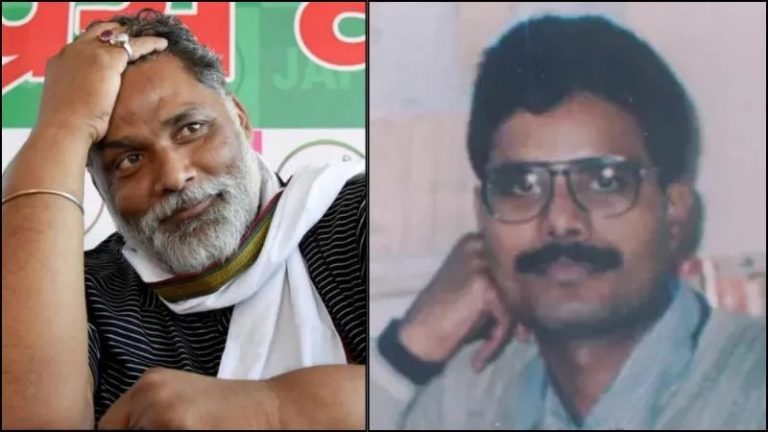
He stated, “ATS unlawfully arrested three persons linked to RSS. They were subjected to torture and subsequently killed but their status was misrepresented as absconding in official records.” The individuals are Sandeep Dange, Ramji Kalsangar and Dilip Patidar. Notably, Kalsangar became the focus of attention after the ruling. He has been missing for over the past 17 years, however, his wife continues to live as a married woman.

Mujawar asserted that after the killing, it was showcased as if they were all alive. Officers were dispatched to their residences for inquiry to substantiate this claim. This led the public to believe that the cops lacked information about them and the latter were evading capture. “The effort to present Sandeep, Ramji and Dilip as alive was orchestrated at the direction of (former Police Commissioner of Mumbai) Param Bir Singh. A scene was created to conceal the deaths of all three,” he outlined.

Mujawar, formerly associated with ATS, reiterated his statement regarding the conspiracy to trap Mohan Bhagwat in the case. He mentioned that one of the two tasks assigned to him was the instruction to arrest Mohan Bhagwat. According to him, the aim was to create a false narrative of “saffron terrorism.”

However, the former ATS officier refused to comply and pointed out that he did not possess the authority to apprehend a significant individual like Bhagwat without a valid reason. Consequently, he endured the fallout and Param Bir Singh implicated him in a bogus case, which led to the end of his 40 year police career.

Mujawar emphasised that the entire probe was conducted by a “bogus officer” which was founded on falsehoods. He remarked that the court’s decision has demonstrated that there was no “saffron terrorism” and it was entirely a fabrication.

“The authorities concocted the narrative of 600 kg RDX and attempted to associate Sadhvi Pragya and Colonel Purohit with it,” Mujawar further conveyed. He also referenced this in the affidavit he submitted in 2016 in relation to the ongoing case against him in Solapur Court.

West Bengal: Mamata Banerjee govt orders mandatory prime time Bengali movie screening in every cinema hall and every screen of multiplexes every day

As the elections come near, the Trinamool Congress government in West Bengal is whipping up the ‘Bengali pride’ to fetch political clout. In bid to burnish its pro-Bengali pride credentials, the CM Mamata Banerjee-led government has issued an order mandating 365-day screening of Bengali films in cinema halls and multiplexes. 

In order dated 13th August 2025, the West Bengal government stated that the screenings of Bengali films shall mandatorily be held throughout the year, with at least one Bengali show per day for all 365 days during the year. The order states that Bengali movies must be shown on every screen every day in multiplexes. If there are 4 screens in a multiplex, all four screens must show a Bengali movie every day during the prime time.

“In every Cinema hall, and in all screens (each screen) of every multiplex situated in this State, 365 prime time shows/screenings of Bengali films shall mandatorily be held throughout the year, with at least one Bengali show per day for all 365 days during the year. Explanation: Prime time shows shall mean shows held between 3:00 PM to 9.00 PM,” the order signed by Santanu Basu, the Principle Secretary to the West Bengal Government reads. 

As per the notification, the daily screening comes into effect immediately and will remain in force until further notice. The state government also added that necessary amendments will be made to the West Bengal Cinemas (Regulation of Public Exhibitions) Rules, 1956.

Notably, in a 2018 directive, the TMC government had ordered cinema halls to screen one Bengali film for a minimum of 120 days annually during prime time (noon to 9 PM). However, now the government has extended this for all 365 days during the year. 

While the TMC argues that this move will boost regional Bengali cinema by ensuring equitable showtimes for Bengali movies in theatres, it is economically unsustainable. In desperation to send out a political message, the TMC government is essentially is forcing theatres to dedicate screen time for Bengali films, regardless of audience demand or film availability. Even in 2018, theatre owners had raised concerns about financial losses in areas with limited Bengali-speaking audience. Now, this full year mandate poses a risk of stifling theatre owner’s flexibility, reducing viewership which would translate into financial losses. 

In addition, the Bengali film industry would also be overburdened to produce enough quality content to fill daily slots across the state. The modern audience looks for diverse content, while forcing screening of Bengali films on a daily basis could result in flooding of screens with subpar films. The West Bengal government is also working on setting up mini-cinemas to promote Bengali films. 

The timing of this move suggests that the TMC government is using all tactics at hand to bolster its ‘Bhasha Andolan’. On 12th August, TMC MPs gathered at Makar Dwar outside the Parliament to voice their opposition against the alleged insult to Bengal. Prominent among the demonstrators were TMC MPs, including Yusuf Pathan, a former cricketer and current MP for Murshidabad, alongside Jaya Bachchan from the Samajwadi Party (SP). 

They protested to highlight the importance of preserving and promoting the Bengali language within the national discourse. Last week on Wednesday, TMC MPs carried out a protest in the Parliament premises over the alleged insult to Bengal. They held placards that read “Stop Insulting Bengal”. They also held portraits of national icons from Bengal, including Rabindranath Tagore and Subhas Chandra Bose. 

Trinamool Congress has been conducting protest marches in West Bengal against the alleged targeting of migrants in the BJP-ruled States. The first such marches were conducted across the State on 27th July, after Chief Minister Mamata Banerjee had called for protests every weekend until the next year’s Assembly polls at a Martyrs’ Day rally on 21st July. 

Mamata Banerjee had alleged that the National Register of Citizens (NRC) notices are being issued to legitimate Indian citizens simply because they are from her State. “It is deeply unfortunate that a deliberate, systematic attempt is now being made to criminalise our language. Questions are being raised on whether Bengali is even a language,” the Chief Minister said in a post on X. 

“Bengali-speakers are being hounded, hunted, and humiliated in BJP-ruled states. NRC notices are being issued to legitimate Indian citizens simply because they are from Bengal. They seem to have forgotten that without Bengali, there would be no National Anthem or National Song,” she said. Earlier, West Bengal Chief Minister Mamata Banerjee accused the Delhi Police of describing Bengali as a “Bangladeshi language”, calling it scandalous, anti-national and unconstitutional.

Earlier this month, Mamata Banerjee alleged that that Bengali-speaking citizens were being harassed and evicted from Jai Hind Colony in BJP-ruled Delhi’s Vasant Kunj, in the name of identifying and detaining illegal Bangladeshi immigrants. However, the Centre debunked CM Banerjee’s claim and informed TMC MP June Maliah in the Lok Sabha that no such eviction drive was undertaken by the Delhi government.

OpIndia reported recently, how the CM Banerjee has been training her guns against the BJP as BJP-ruled states, are witnessing action by the authorities against illegal Bangladeshi and Rohingya inflitrators. From linking action against illegal Bangladeshi immigrants to Bengali pride to ordering 365-days compulsory screening of Bengali films in theatres across the state, it seems that the TMC is using Bengali pride as a political tool by rallying cultural sentiment, portraying itself as the ‘defender’ of Bengali heritage and linguistic pride against the BJP. 

UP: Sharaf poses as Samrat to lure and rape a Hindu woman, extorts Rs 5 lakhs and forces her to convert

A young man from Chini village in Uttar Pradesh’s Farrukhabad lied about his faith and tricked a Hindu girl from the Sarnath police station area into marrying him. He also sexually assaulted her and extorted Rs 5 lakh from her. He even pressured her to embrace Islam. The accused has been identified as Mohammad Sharaf Rizvi. A case has been filed against him under charges of rape, fraud and Uttar Pradesh Unlawful Conversion of Religion Act, among others.

The victim stated in her complaint that she was looking for a partner on a matrimonial website, in July when the perpetrator reached out to her, introducing himself as Samrat Singh and initiated discussions regarding marriage. He finalised the union with her family members. On 13th July, he visited her flat in an enclave situated in Ashapuri where he sexually exploited her in the name of marriage.

Afterward, the offender also extracted Rs 5 lakh from her at the Canara Bank located at Ashapuri Chauraha, for alleged wedding preparations. He then took her to Lucknow where he took advantage of her, in multiple hotels. The girl mentioned that after several days she came to know about his real identity. Sharaf resides in front of the primary school in Chini Gram. When she confronted him, he began to force her into converting and marrying him. She also asked him to return her money but he threatened to murder her in response.

Vivek Tripathi, the officer in charge of the police station informed that a case has been filed on the girl’s complaint. Two teams have been established to apprehend the accused and raids have been conducted. The authorities are making every effort to arrest him and ensure that the complainant receives justice. This case not only pertains to fraud but also raises serious concerns regarding force to change one’s religion, which is troubling for society. The cops are actively investigating the situation and will take necessary action.

Sarnath police has registered a case under Section 69, 316 (2), 318 (4), 352, 351 (3) of the Indian Penal Code and Section 3/5 (3) of the Uttar Pradesh Prohibition of Unlawful Conversion of Religion Act 2021.

Rahul Gandhi cited voters with house number 0 as proof of “vote theft”, now several real voters with house number 0 on their voter IDs speak out: Read details

Congress leader Rahul Gandhi recently levelled massive allegations on the integrity of the Election Commission of India (ECI) and the fairness of elections during a press conference in Delhi. Harping on his same old diatribe about the ECI acting in collusion with the BJP and rigging elections in favour of the ruling party, Gandhi presented some electoral data, which he claimed was collated during an “internal survey” of his party, to support his allegations.

The Congress scion presented the electoral rolls of Karnataka and alleged that a massive vote theft took place in the constituency because his party won fewer seats than expected. Gandhi displayed what he claimed were the electoral rolls of Mahadevapura in Karnataka’s Bangalore Central constituency, which the Congress lost to the BJP. He claimed that his party analysed the Mahadevapura electoral rolls over 6 months and found that of 1,00,250 alleged bogus voters, 40,009 had “fake and invalid addresses” and 10,452 were “bulk voters” registered at common addresses.

He pointed out voter entries with house numbers marked as ‘0’ and voters registered at the same house number to allege that the ECI had added fake voters in the voter list to rig elections in favour of the BJP.

Notably, some media reports later pointed out the same pattern in the electoral rolls of Rahul Gandhi’s own constituency, Rae Bareli, Uttar Pradesh. The voter list there also has a large number of entries with “House Number 0” and even clusters of dozens of voters registered at the same address.

Why the ECI allots ‘0’ house numbers to voters

‘House Number 0’ and multiple voters registered at the same residential addresses are not fake votes, as claimed by the Leader of the Opposition. The Election Commission often assigns ‘House Number 0’ or ‘notional addresses’ to include voters without well-defined or permanent residential addresses, such as homeless people, those whose houses have no official numbering, or those who failed to enter their full addresses in electoral forms.

Similarly, multiple voters having the same residential addresses can be found in cases of joint families, shared housing or rented accommodations, particularly in rural and semi-urban areas.

Videos of several such voters have emerged, who have voter ID cards with House Number 0 mentioned in the address fields. These voters have explained that they are living in their places for 10-15 years, and have valid voters IDs. The voters said that as their houses were not numbers, ECI officials 0 in place of house number in their voter IDs. They also displayed their Electoral Photo Identity Card (EPIC) mentioning house number 0 in the address field.

A woman in the video can be heard saying that she is being harassed for having house number 0 in their voter cards.

With a vast population comprising people who constantly migrate within the country for various reasons, mostly for job opportunities, maintaining fixed or standardised addresses poses a challenge for the authorities. The problem was highlighted by the Department of Posts in May this year in its policy document, wherein it proposed the creation of digital public infrastructure to standardise addresses. “Despite the centrality of address information in everyday life, frictions exist in how such data is managed, shared and used across India,” the policy document reportedly stated.

Speaking to The Indian Express, some current and former Election Commission officials said the that the in cases where voters lack proper addresses of leave the field blank, they are assigned “notional” addresses to ensure that they are not excluded from the electoral rolls. Election Commission instructions, which date back to 2011, reportedly direct the allocation of addresses in such a manner. These addresses are clearly marked as “notional” in the electoral roll. The instructions were followed in the recent Special Intensive Revision (SIR) in Bihar, as well as in the poll-bound states of Chhattisgarh, Madhya Pradesh, Mizoram, Rajasthan and Telangana, in May 2023.

The officials further added that the practice of notional addresses, which arises from the ECI’s policy of inclusion, not exclusion, is followed across the country. Citing the example of homeless persons, the EC officials said that the guidelines instruct the Booth Level Officers (BLOs) to verify the address given in Form 6 at night by checking on multiple occasions to confirm that the person sleeps at the given location. In such cases, if the address of a homeless person is verified in this manner, no documentary proof of residence is needed.

According to The Indian Express, a 2011 Election Commission instructed the BLOs that where house numbers have been assigned by the Municipality, those should be used as they also appear on Electors Photo Identity Cards (EPICs) that double as address proof for other government schemes. However, where no official house numbers exist, BLOs are instructed to assign notional numbers to houses starting from 1 in each section. These notional numbers are computer-generated and do not mandatorily match the numbers allotted by the municipality. Oftentimes, municipalities allot ‘0’ as house numbers in illegal colonies to avoid conferring legal status.

Telugu Department Professor in Banaras Hindu University hires contract criminals through students to assault Head of the Dept, two accused arrested

Varanasi police on the night of Tuesday,12th August, arrested a contract killer involved in the brutal assault on Banaras Hindu University (BHU) Telugu Department head, Professor C.S. Ramachandra Murthy. The accused, identified as Pramod Kumar alias Ganesh Pasi, was shot in the leg during a brief encounter before being taken into custody.

Police said Pasi confessed to the attack on after being hired by another professor from the same department, Professor Budati Venkateswarlu, who is former Head of the Telugu Department. According to officials, the assailant revealed that the contract was given through a former research scholar from South India, who had personal ties to the professor.

An internal dispute sparked the attack

Investigations suggest the motive behind the attack stemmed from a heated dispute between Professor Murthy and Professor Venkateswarlu. Upset over certain matters, the former Head of Department decided to “teach him a lesson” and sought the help of two of his former research students from Telangana. He told the students, Bhaskar and Modgu Kasim Babu, that the current HoD was harassing him, and was not letting him work.

The former students then contacted an acquaintance named Mohammed Kasim in Prayagraj for the job. The three arrived at Varanasi on 25 July, and met with Ganesh Pasi, who engaged two other contract criminals to carry out the assault. The attackers were given a motorbike near the BHU campus to approach their target.

The brutal assault

On the evening of 28th July, as Prof. Murthy was heading home to Brij Enclave Colony from the campus around 6:30 p.m., the two assailants waited near the Birla Hostel crossing. Armed with steel rods, they brutally beat the professor, leaving him with multiple fractures in both arms. After the attack, they escaped via the highway.

Bystanders rushed the injured professor to BHU Trauma Centre, where he was treated. Following his complaint, police registered an FIR and formed three teams to track down the attackers.

The arrest and encounter

DCP Crime Saravanan T. said that during a late-night vehicle checking operation in the Nuaav area, police spotted Pasi. On seeing officers, he tried to flee through a different route. When police ordered him to stop, he fired at them with a locally made gun.

In retaliatory fire, a bullet struck Pasi’s leg, causing him to collapse. He was taken to BHU Trauma Centre for treatment and later formally arrested. Police recovered a pistol from his possession.

According to police, the original plan was to attack Prof. Murthy outside the university premises. However, after conducting reconnaissance, the attackers decided to strike inside the campus. The entire assault was orchestrated jointly by the former Head of the Department of Telugu, the former student, and the contract killer.

On the next day of the incident, 29th July, BHU professors held a protest at Singh Dwar (main gate), seeking arrest within the police station itself. The protest occupied the entry gate for a while, which resulted in a confrontation between the police and the protesters. The senior officers, including the ACP, managed to calm down the crowd, promising prompt action.

Pasi is currently in custody, and Bhaskar, one of the students who contacted the criminals, have been arrested. His Aadhaar card details were found from a hotel where they had stayed, and this led to his arrest. Police have also traced online financial transactions used in the crime. The officials stated they are attempting to arrest everyone implicated in the conspiracy.

The arrested persons have confessed that they were asked to attack the professor to intimidate him, and not to kill him.

A silent confession of losses? US dodges questions on number of F-16s downed during Operation Sindoor, deflects with “ask Pakistan” for answers

The United States has refused to answer questions about whether Pakistan lost any of its F-16 fighter jets during Operation Sindoor the fierce 88-hour battle fought between India and Pakistan from 7th May to 10th May.

According to a report by NDTV, when it asked the US State Department about the matter, the reply was brief: “We refer you to the Government of Pakistan to discuss its F-16s.”

The US has detailed agreements with Pakistan about its F-16 fleet. Under these “end-use” agreements, US contractors called Technical Support Teams (TSTs) are stationed in Pakistan round the clock. Their job is to track and monitor the use of Pakistan’s American-built F-16s at all times. This arrangement ensures the US always knows exactly how many jets are operational, where they are, and what condition they are in.

This latest US response stands in contrast to what American officials had said in 2019. Back then, shortly after India’s airstrikes on Balakot, Foreign Policy magazine quoted two senior US defence officials saying that they had counted all of Pakistan’s F-16s and found none missing contradicting India’s claim that it had shot one down.

Now, three months after Operation Sindoor, Indian authorities believe the situation is different. According to Indian assessments, the Pakistan Air Force lost several F-16s during the fighting either destroyed on the ground in Indian Air Force (IAF) strikes or shot down in aerial combat.

On Saturday, 9th August, in a significant claim three months after the end of hostilities in May, the Indian Air Force chief said, ”Shahbaz Jacobabad airfield (was) one of the major airfields that was attacked. Here, there’s an F-16 hangar.” He added, “One half of the hangar is gone. And I’m sure there were some aircraft inside which have got damaged there.”

While talking about the IAF ground strikes, Air Chief Marshal AP Singh said, “Three hangars that we attacked: Sukkur – UAV [Unmanned Aerial Vehicle] hangar, the Bholari hangar of the AEW&C [Airborne Early Warning and Control aircraft] and Jacobabad – the F-16 hangar. We have an indication of at least one AEW&C in that AEW&C hangar and a few F-16s, which were under maintenance.”

The IAF also claims it shot down six Pakistani aircraft during the battle: five fighters and one larger aircraft, which could have been either an electronic intelligence (ELINT) or AEW&C aircraft. However, the Air Chief did not name the exact fighter types destroyed.

Pakistan has strongly rejected these claims. Defence Minister Khawaja Muhammad Asif challenged India to allow an independent verification of both countries’ aircraft inventories. “If the truth is in question, let both sides open their aircraft inventories to independent verification though we suspect this would lay bare the reality India seeks to obscure,” he said.

This is not the first time the US has stayed quiet on the issue. Earlier, NDTV had filed a Freedom of Information Act (FOIA) request to the US Department of Defence with the same set of questions. The reply was that FOIA does not require US agencies to compile new information or answer direct questions, it only obliges them to release existing records. Later queries to the Pentagon and to the Office of the US Secretary of Defence’s Public Affairs division also went unanswered.

For now, the exact number of F-16s Pakistan may have lost, if any, during Operation Sindoor remains unconfirmed. The US, despite having teams in Pakistan monitoring the jets 24/7, is staying officially silent, and both India and Pakistan are sticking to their own versions of events.