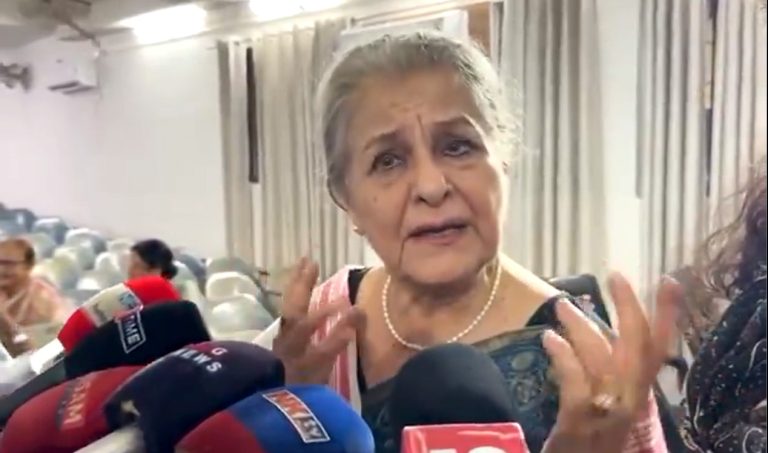
Activist Syeda Saiyidain Hameed, who was a member of the Planning Commission during the Manmohan Singh government, has said that Bangladeshis have the right to live in India. She made the comment while visiting Assam in the backdrop of ongoing efforts of the state government to evict illegal encroachers from government lands and push-back illegal immigrants from Bangladesh.
Syeda Hameed is visiting Assam as part of the team comprising well-known leftist activists like Prashant Bhushan, Harsh Mandar, Jawahar Sircar and others. Talking to reporters, she said that Assam government has brought doom on Muslims in Assam, accusing them of being Bangladeshis.
She then added, “What is wrong if they are Bangladeshis? Bangladeshis are also humans. Earth is so large, Bangladeshis can live here. Not depriving anyone’s rights.” She claimed that to say that illegal immigrants are depriving rights of legal citizens is very very troublesome, extremely mischievous and very detrimental to humanity.
This is Syeda Hameed, former member of the Planning Commission during congress era. Just look at the audacity! If she feels so strongly about the “rights” of illegal Bangladeshis in Assam, why doesn’t she accommodate them in her own home? Perhaps her like-minded friends can also… pic.twitter.com/7ZVdtx3uDc
Syeda Hameed further added, “Allah has made this earth for humans, not for devils, if a person is standing on earth, to evict them is quamat on Muslims.” She added that everyone have stand together for ‘Ganga-Jamuni Tehzeeb’ and composite culture of India.
While Syeda Hameed acknowledged that Assam government is deporting illegal immigrants from Bangladesh, Prashant Bhushan alleged that Indian Muslims are being sent to Bangladesh. He said, “It is clear that the Assam government of Himanta Biswa Sarma is engaged in every kind of lawless and illegal activity, particularly illegally pushing out citizens to Bangladesh and outside this country, illegally evicting people from their land and demolishing their homes.”
Bhushan said they visited Assam to talk to the local people to find out what is happening. However, he alleged that they were prevented from going to Goalpara district, where evictions have taken place from forest land.
The team has visited the state on the invitation of a group called Asom Nagarik Sanmilan. Rajya Sabha MP Ajit Kumar Bhuyan, who is a member of the forum, said they invite eminent personalities from outside to deliver talks and present their views on various recent developments.
Earlier in the day, Assam chief minister Himanta Biswa Sarma said that Aafter Jamaat-e-Hind’s outburst demanding his dismissal yesterday, a Delhi-based team is camping in Assam. He said that Harsh Mander, Wajahat Habibullah, Fayaz Shaheen, Prashant Bhushan, and Jawahar Sircar are part of the team.
After Jamaat-e-Hind’s outburst demanding my dismissal yesterday, a Delhi-based team — Harsh Mander, Wajahat Habibullah, Fayaz Shaheen, Prashant Bhushan, and Jawahar Sircar — is now camping in Assam.
Their sole aim is to paint the lawful evictions as so-called “humanitarian…
He said, “Their sole aim is to paint the lawful evictions as so-called “humanitarian crisis.” This is nothing but a planned attempt to weaken our fight against illegal encroachers. We are alert and firm — no propaganda or pressure will stop us from protecting our land and culture.”
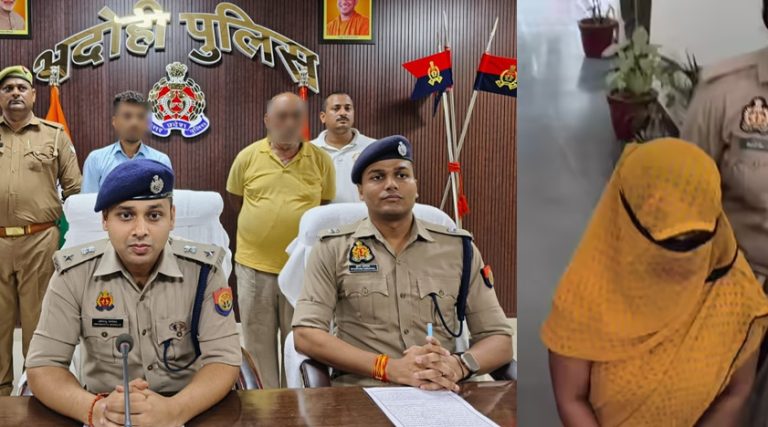
In Bhadohi district of Uttar Pradesh, the police have exposed a conspiracy to implicate a BJP leader in a fake gangrape case. The police have attested three persons including a woman for filing a false rape case against BJP leader Virendra Shukla and government advocate Pravesh Tripathi.
Bhadohi SP Abhimanyu Manglik, while giving information about the case in a press conference, said that this case was part of a completely planned conspiracy. This plan to implicate BJP leader Virendra Shukla was hatched by his own brother Ashok Shukla and nephew Kailashpati Shukla. His associate Sushil Dubey was also involved in this conspiracy. Police said that the accused had used a woman named Suman Pandey, a resident of Ayodhya, to file a false complaint.
During the investigation, it was found that the allegation was false, and there were two motives behind it. The accused persons planned to extort money from the BJP leader, and they also wanted to pressurise him in a property dispute.
दिनांक: 24.08.2025 श्री अभिमन्यु मांगलिक, पुलिस अधीक्षक भदोही के निर्देशन में थाना गोपीगंज पुलिस टीम द्वारा थाना गोपीगंज क्षेत्र अंतर्गत फर्जी अभियोग में फंसाने की साजिश एवं पुलिस को गलत सूचना/आपराधिक धमकी देने के 02 अभियुक्त एवं 01 अभियुक्ता गिरफ्तार।@Uppolice@adgzonevaranasi… pic.twitter.com/M6UMx9RpwF
According to the police, this gang used to extort money from people by trapping them in false cases in a professional manner.
As part of the plan, the woman Suman Pandey was continuously threatening Virendra Shukla over the phone. At the same time, other conspirators were trying to create pressure by making an old obscene audio viral. However, instead of surrendering to the threats, Shukla lodged a complaint in Gopiganj police station against the conspirators.
He told police that his brother Ashok Shukla, nephew Kailashpati Shukla and brother’s friend Sushil Dubey have filed a fake gangrape case against him and advocate Pravesh Tiwari through a woman Suman Pandey.
When the police investigated the matter deeply, it became clear that the whole matter was a well-planned ploy to trap the BJP leader and advocate in a false case.
The police have arrested conspirator Ashok Shukla, his associate Sushil Dubey and woman Suman Pandey and sent them to jail. Ashok Shukla’s son Kailashpati Shukla, another accused in the case, is absconding. A case against the four accused under sections 217, 351(3), 308(7) and 61(2)A of the BNS.
According to Virendra Shukla, the gang had tried the same conspiracy earlier also, as they had filed a false rape case against him and Pravesh Tiwari in 2014. During investigation, that case was found to be false.
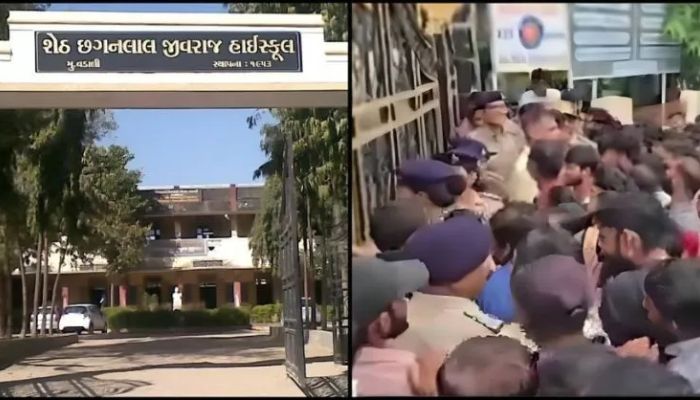
A few days after the shocking case in Ahmedabad, where a Hindu student was murdered by a Muslim minor, another disturbing incident has now come to light from Sheth C.J. High School in Vadali of Sabarkantha district in Gujarat.
This time, a Hindu boy studying in Class 7 was attacked by four Muslim minors inside his school premises in Vadali. The boy’s family has said that the attackers not only assaulted their child but also threatened to kill him.
Coordinator of Vadali Bajrang Dal, Rameshbhai Sagar told Opindia that the attack took place on the evening of Thursday, 21st August, shortly after school hours. The victim’s family and Hindu organisations claim that around 4:30 pm, four Muslim minors cornered the Class 7 boy inside the campus of the School and assaulted him. The accused warned the boy that they would kill him if he dared to resist them in the future.
The incident instantly angered the community. Upon the circulation of news of the assault, Hindu groups and locals assembled outside the school, calling for severe action against the accused.
Protests by locals and Hindu groups
On Saturday, 23rd August, two days after the attack, protests were held at the school. Residents, along with Hindu groups, accompanied the victim’s family and sought action against the accused students. The protesters asserted that the school authorities had first assured them of giving a Leaving Certificate (LC) to the accused minors, practically getting them out of the school. Nevertheless, no solid action has been taken up to now, which has further infuriated the locals.
“They Came With Weapons Before Too”: Victim’s father said
The victim’s father, Manibhai, told Opindia that the four Muslim minors had been harassing his son repeatedly. When the boy objected to their behaviour, they attacked him after school. He further claimed that when his family approached the accused minor’s parents, they refused to take responsibility. According to him, the main accused’s father dismissed the matter by saying that his son was not under his control.
The victim’s family also alleged that this was not the first such incident. They claimed the same group of Muslim minors had earlier come to school carrying sharp weapons like knives. Six months ago, they had reportedly attacked the Hindu boy once before. At that time, teachers gave verbal assurances that such an incident would not be repeated, but no action was taken.
Currently, the injured student is undergoing treatment and since the child was brutally beaten, he has sustained serious injuries on his back and is currently unable to walk. “Despite repeated complaints, the school administration has done nothing. They promised action but never kept their word,” the father said.
School’s principal denied the boy’s family’s allegations
When Opindia contacted, Amitbhai, the principal of Sheth C.J. High School’s primary section, admitted that four Muslim minors had indeed assaulted the Hindu student. However, he described the incident as a “small fight among children” and denied the family’s allegations that the accused had previously brought weapons to school.
The principal also rejected claims that the school had promised to issue Leaving Certificates to minor Muslims. He further explained that under the Right to Education (RTE) Act, primary school children cannot be expelled unless their parents request it or a higher authority orders it. “We cannot simply give an LC. There is a legal process under RTE which has to be followed,” he said.
The incident has created tension in Vadali, with Hindu groups pressing for strict action. The victim’s family is demanding that the accused minors be removed from the school. They have also warned that they will lodge a police complaint if the administration continues to remain inactive.
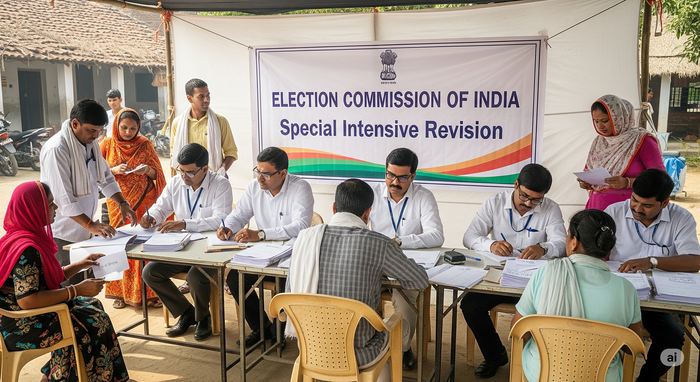
The Election Commission of India (ECI) said on Sunday (24th August) that it has received documents of 98.2% voters, while 8 more days are left till the deadline of the ongoing Special Intensive Revision (SIR) in Bihar.
In its statement, the ECI praised the efforts of the Chief Electoral Officer, District Election Officers, Electoral Registration Officers, and Assistant Electoral Registration Officers and lakhs of volunteers in the state in the humongous exercise. “The Election Commission of India commends the ongoing efforts by the CEO of Bihar, DEOs of all 38 Districts, 243 EROs, 2,976 AEROs, 90,712 BLOs, lakhs of volunteers and involvement of the field representatives of all the 12 major political parties, including their District Presidents and as many as 1.60 lakh BLAs appointed by them,” said the ECI statement.
Verification of documents of voters likely to be completed ahead of time
The ECI said that between June 24, 2025 and August 24, 2025, i.e. in 60 days, 98.2 % electors submitted their documents, and therefore, just like the collection of the Enumeration Forms was completed before time, the work related to the collection of documents is also likely to be completed ahead of time. “This means an average of about 1.64 % per day. There are still 8 days to go till 1 September, with just 1.8 % Electors remaining for submission of the documents,” the poll body stated.
The Enumeration phase, which was the first phase of the exercise, commenced on June 24, 2025 and ended on July 25, 2025. This was followed by the publication of draft Electoral Rolls on August 1, 2025. The period of submitting claims, objections and documents started on August 1, 2025 and will continue till September 1, 2025. The verification of documents will go on till September 24, 2025. And lastly, after the final checking of the documents, the final Electoral Rolls will be published on September 30, 2025.
The ECI explained that the period of submitting claims and objections provides an opportunity to the voters for the correction of any mistakes in the Electoral Roll. Besides, voters can submit their necessary documents, which they might have failed to furnish at the time of submitting their Enumeration Forms.
Over 3 lakh young voters to be enrolled this time
The Block Level Officers (BLOs) and volunteers are currently engaged in the collection of documents. Concurrently, the verification of the collected documents is being conducted by the EROs and the AEROs. According to the ECI statement, out of a total of 7.24 crore voters in the draft rolls, 0.16% have submitted Claims and Objections so far, of which 10 have been submitted by the Booth Level Agents (BLAs) of 12 recognised political parties in Bihar and 1,21,143 by Electors within their Assembly Constituency. Over 3 lakh (3,28,847 precisely) young voters, who have attained the age of 18 years and above on 1 July or will attain the age of 18 years and above on 1 October, have also submitted their Enumeration Forms and Declaration.
The SIR is a routine exercise conducted by the Election Commission to update the Electoral Rolls and remove bogus, deceased or ineligible voters to ensure fair elections. But the opposition parties have been vehemently opposing the SIR in Bihar, alleging that this was the ruling BJP’s conspiracy to disenfranchise their voter base. Several opposition leaders and some so-called social organisations moved the Supreme Court to stop the constitutionally-backed exercise. To their disappointment, the top court refused to stay the exercise, citing the ECI’s competence to conduct it.
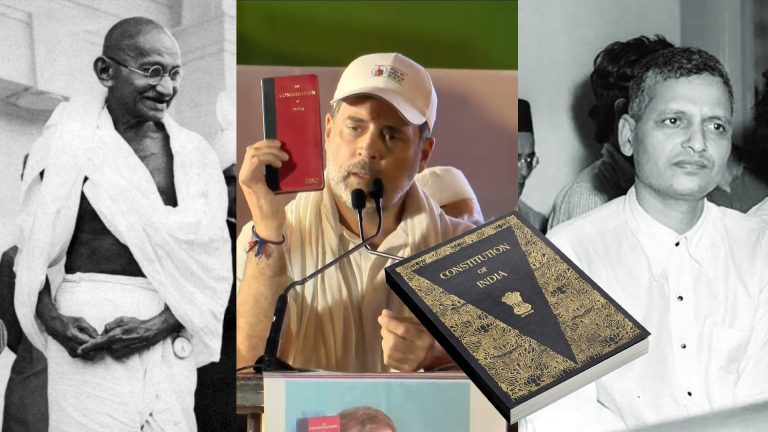
Rahul Gandhi on Saturday was heard peddling lies on the Constitution of India, MK Gandhi and Nathuram Godse. Speaking at an event in Katihar, he claimed Godse killed Gandhi because Godse hated the constitution. Rahul Gandhi also claimed that MK Gandhi gave his live for the constitution. He was holding his trademark red cover constitution copy while making the comments.
However, these comments by Rahul Gandhi as completely false and baseless, and Godse killing Gandhi had nothing to do with the constitution. In fact, the constitution of India didn’t even exist when Gandhi was killed. Moreover, Godse was also executed before the constitution was adopted by Republic of India.
Rahul Gandhi said, “this constitution was not brought by RSS and BJP. The person who gave his life for this constitution, Gandhiji, he was assassinated. Godse shot Gandhiji to death, Godse was against the constitution. When he shot Gandhiji, why he had hatred for Gandhiji in his heart, because Gandhiji gave his entire life for this constitution, the ideology behind it”.
महात्मा गांधी जी ने इस देश और संविधान के लिए अपनी जिंदगी दे दी।
गोडसे संविधान के खिलाफ था, उससे नफरत करता था, इसलिए उसने गांधी जी की गोली मारकर हत्या कर दी।
देश में इन दो विचारधाराओं की लड़ाई चल रही है।
: 'वोटर अधिकार यात्रा' में नेता विपक्ष श्री @RahulGandhi
Every line in this paragraph Rahul Gandhi is a lie. BJP didn’t exist when the Constitution was written, therefore the claim that it didn’t bring the constitution is meaningless. RSS is a social organisation and it could not have any role to play in drafting the constitution.
But Akhil Bharatiya Hindu Mahasabha was part of the Constituent assembly. Godse was a member of the organisation. Therefore, contrary to Rahul Gandhi’s claims, Godse’s organisation actually took part in the debates of the constituent assembly.
Nathuram Godse killed MK Gandhi on 30 January 1948. He was executed for this crime on 15 November 1949. Both these events occurred before the adoption of the constitution of India. The Constitution of India was adopted by the Constituent Assembly of India on 26 November 1949, and it became effective on 26 January 1950.
The drafting committee of the constitution headed by Ambedkar was appointed in August 1947, days after the independence. The committee took almost 3 years to complete the constitution, which was extensively debated at the constituent assembly. Therefore, at the time of assassination of MK Gandhi by Godse in January 1948, not even preliminary draft of constitution was ready. The first draft was presented a month after Gandhi’s assassination, on 21 February 1948.
Therefore, Nathuram Godse could not hate something that did not exist at that time. Similarly, MK Gandhi could not defend something that did not exist when he was alive. It is notable that after it was announced that British will leave India, MK Gandhi was completely sidelined from the transition process. He was not part of the interim government, not part of the constituent assembly.
Importantly, Gandhiji had made some specific proposals for the constitution, which were ignored. This included for a village-based governance model.
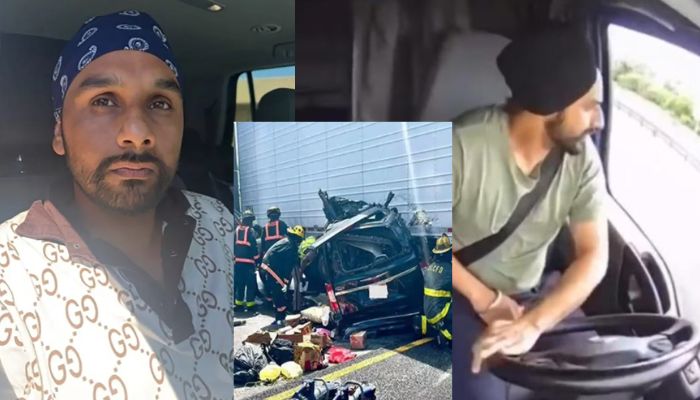
On 12th August, three people lost their lives in Florida, when an 18-wheeler trailer truck driven by Harjinder Singh, an ‘asylum’ seeker in the US, made an illegal U-turn on the Florida Turnpike. The people in the minivan that slammed into the truck had no chance of survival. The video of the crash went viral across social media, not only because of the horrific impact but also because Singh appeared almost unfazed as he calmly switched off the engine after blocking the entire highway.
(1) UPDATE: These are the alleged semi-truck drivers who k*lled three people while making a U-turn at an “Official Use Only” turn on the Florida Turnpike
The Florida Highway Patrol is describing the wreck as a homicide investigation pic.twitter.com/QqYhuidXoD
28-year-old trucker Harjinder Singh hails from Tarn Taran, Punjab in India. He was denied bail following the incident. Singh has been labelled an “unauthorised alien” and a “substantial flight risk”. He now faces three counts of vehicular homicide which will put him in prison for decades and eventual deportation. However, Singh’s story is not merely about the reckless road accident. It also throws light on how the immigration loopholes in America, particularly during the Biden administration, allowed an illegal entrant to work for years despite his asylum being earlier rejected during Trump administration 1.0.
Furthermore, there is another uncomfortable lurking question beneath this case which, if exposed during the investigation, will throw light on the use of the ‘Khalistan card’ by Punjabi youth to secure asylum abroad. By using the ‘Khalistan card’, Punjabi youth often exploit Western concerns about religious persecution in India. Notably, there are videos on his TikTok account that directly links his ideological leaning towards
The use of ‘Khalistan card’
There is a strong possibility that in his asylum application, Harjinder used the ‘Khalistan card’. Though there are no asylum documents available publicly, when he claimed he might face persecution, it leads to the belief that he might have claimed he was a ‘pro-Khalistani’ and that going back to India would lead to his persecution by the Indian government. The belief gets stronger by going through his TikTok account which connects him directly to Sikhs for Justice (SFJ). The connection was first discovered by Independent journalist who goes by “OnTheNewsBeat” on social media platform X.
Videos posted to his social media show the Florida truck driver, Harjinder Singh, taking part in events belonging to the group Sikhs for Justice (SFJ)
SFJ is an outlawed group in India and given sanctuary in USA and Canada. Now it's members are murdering Americans. pic.twitter.com/bEShBppfMX
For those who are unaware, SFJ, a Khalistani terrorist outfit, is banned by the Government of India. Its founder Gurpatwant Singh Pannun is a designated terrorist in India and wanted for several crimes.
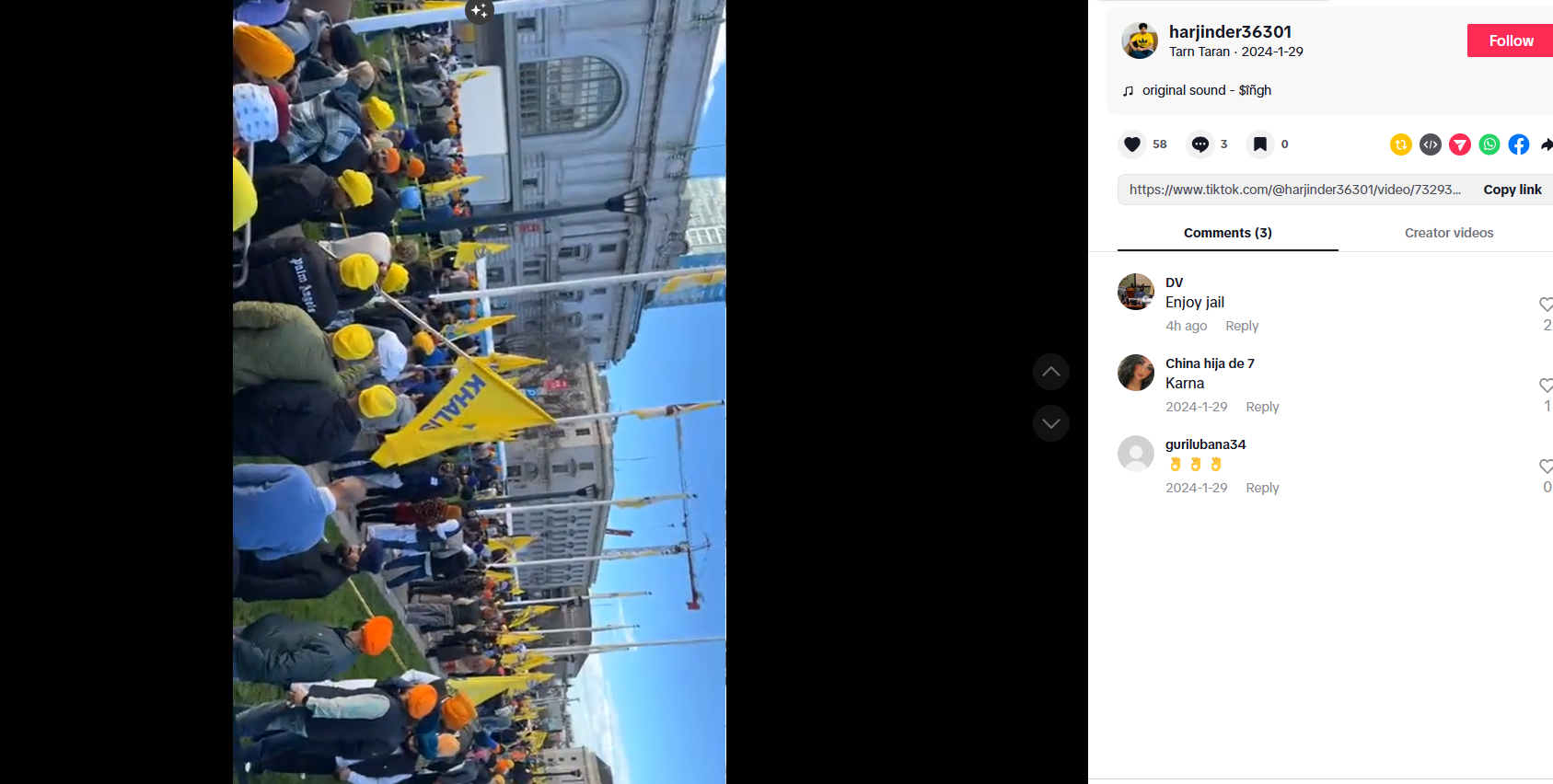
On 29th January 2024, Harjinder posted a video which was shot at SFJ’s so-called ‘Khalistan referendum’ held at Civic Center Plaza in San Francisco.
Soure: TikTok
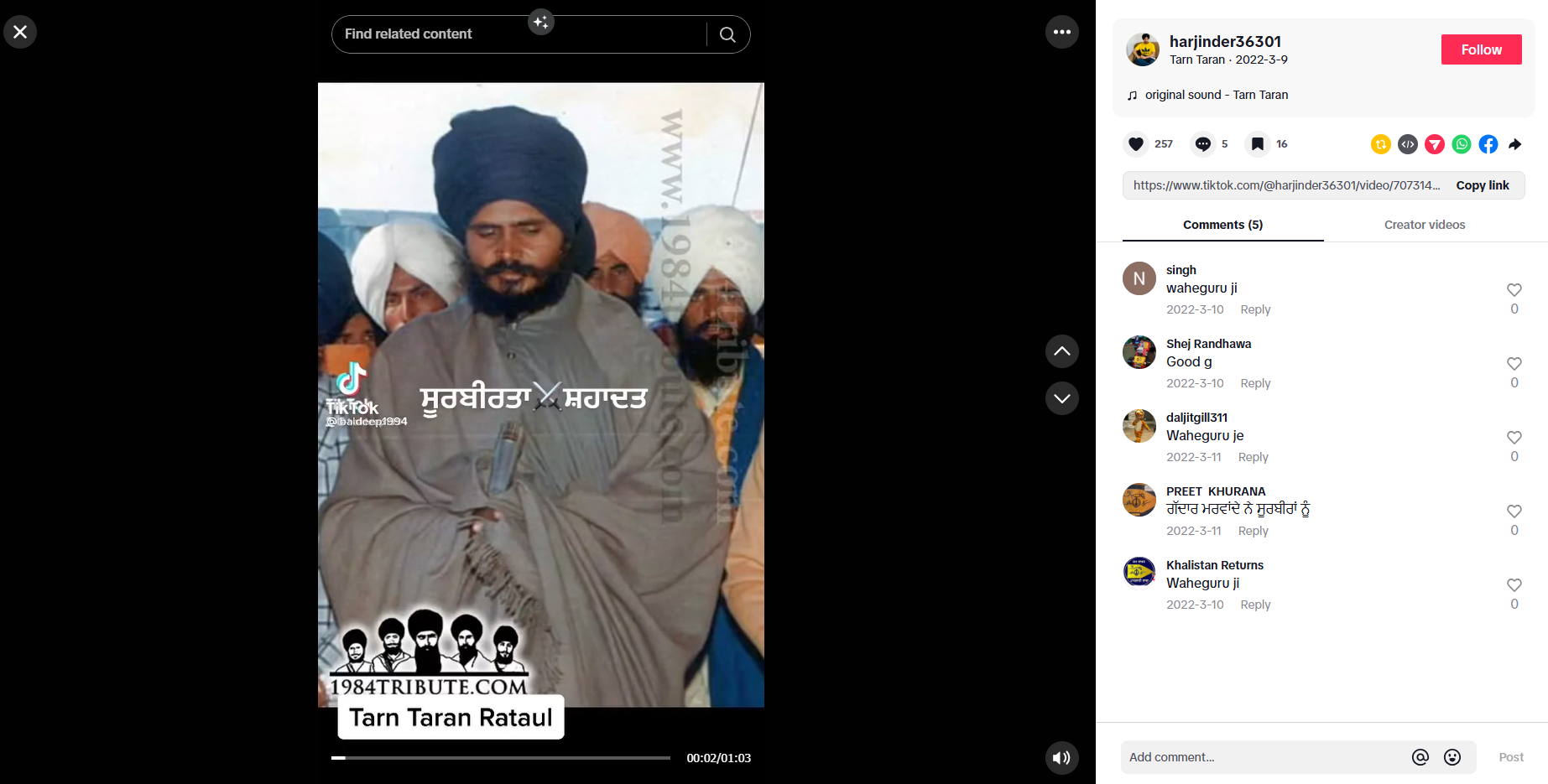
In another post, he shared a video about Khalistani terrorist Gurbachan Singh Manochahal, who was Jathedar of Akal Takhat Sahib and founder of the Bhindranwale Tiger Force of Khalistan in 1984. He was responsible for over 1,000 murders and was killed in a police encounter by Punjab Police in March 1993.
Source: TikTok
Notably, tens of thousands of Punjabi youth have played the same trick. They apply for asylum by citing fear of persecution in India on religious or political grounds, even if they have no connection with separatist movements.
Former Sangrur MP Simranjit Singh Mann himself once boasted of issuing nearly 50,000 letters supporting such asylum pleas in exchange for money. These letters claimed that the applicants faced possible persecution in India as sympathisers of the Khalistan movement. For many, it was nothing more than a ticket to bypass the legal immigration process.
Singh’s asylum case fits this pattern. Though we could not confirm it and no court filings spell it out in black and white, it is not unreasonable to assert that he might have invoked the same Khalistan-linked persecution narrative that thousands of others have used successfully. Such claims often gain sympathetic ears, especially in countries where governments are keen to present themselves as protectors of minorities.
This abuse of asylum, cosplaying as human rights protection, has now become full-fledged in several countries including the US, Canada, Australia and many others. Agents in Punjab guide youths on which story to tell, which vocabulary to use, and which community organisations abroad will back their claims. There are many attorneys in those countries who help such “asylum seekers” to file their applications, of course in exchange for hefty fees.
The tragedy is that, while genuine asylum seekers do exist, the sheer volume of fraudulent cases undermines them and sometimes leads to disastrous outcomes for host countries, just as the case of Harjinder Singh has turned out to be.
Illegal entry through the dunki route
Notably, Harjinder Singh did not enter the United States via the legal channel of a visa. He chose the ‘dunki route’ and spent one and a half months to reach the US via Mexico. The dunki route is basically a human smuggling network that ferries desperate migrants through countries like Dubai, Nicaragua, and Mexico before slipping them across the porous southern border into the US.
According to family and friends, Singh paid around Rs 22 lakh to an agent. His journey reportedly took a month and a half. He first reached Dubai, then Nicaragua, and finally Mexico, from where he crossed into California on foot. Like thousands of young men from Punjab who dream of an American life, Singh did not flee poverty or persecution. His family owns between 12 and 13 acres of farmland which is enough to have a healthy and luxurious lifestyle in India. His friends admit he went abroad simply to “build a better life”.
His family has urged not to subject him to harsh punishment. His relative, Dilbagh Singh, said, “His age is 28 years, and if he gets 45 years of jail, then you can imagine what will be the condition of his family. We are also saddened over the death of three persons in the accident. Similar incidents have taken place earlier as well.”
This is the story of countless Punjabi families. Their sons are sent overseas by any means possible, debts pile up, and there is an unspoken hope that remittances will justify the risks.
Trump administration denial of asylum and work papers
When Singh reached the US, he applied for asylum, as it is a standard practice for illegal entrants hoping to avoid deportation. Under the Trump 1.0 administration, he did not succeed.
By 2019, Singh had already been processed for fast-track deportation. He was detained and later released on a $5,000 immigration bond. In September 2020, his request for work authorisation was flatly rejected by the then Trump administration.
It is not a surprise that his application was rejected as, according to media reports, he could barely respond to basic English questions. He managed to identify only 2 answers correctly out of 12 in a language proficiency test. Furthermore, on a driving test, he recognised only 1 out of 4 traffic signs. Yet, somehow, while his asylum application lingered, he managed to slip through cracks at the state level and secure commercial driving licences in Washington and later California.
Biden administration reversal and approval
What changed was the arrival of Joe Biden in the White House. On 9th June 2021, the very same asylum application that had been effectively frozen under Trump was suddenly given a new life. Singh’s work permit was approved, which gave him access to lawful employment. That authorisation opened the door for him to apply for state-level commercial driver’s licences or CDLs.
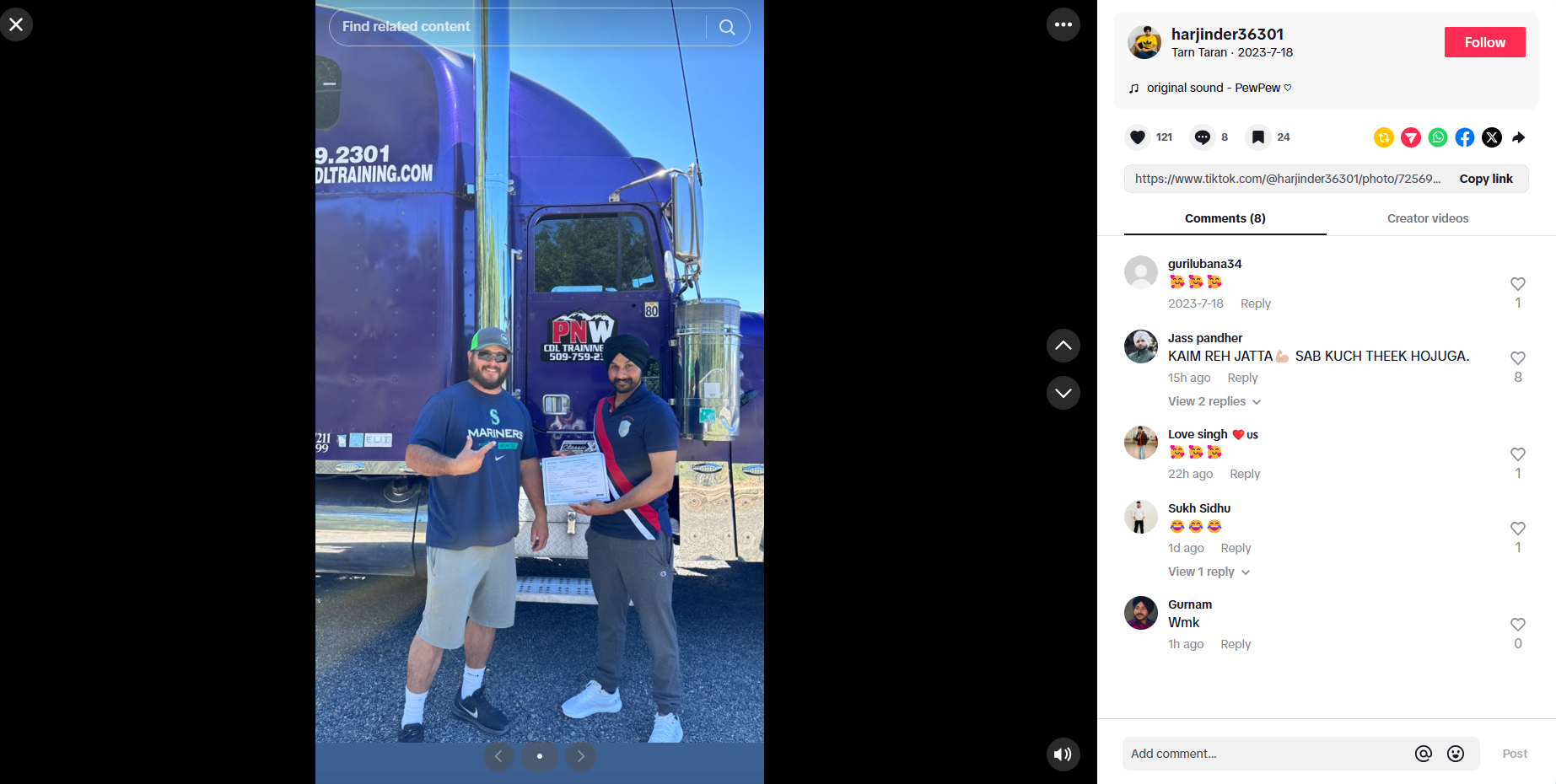
Another post on his TikTok account shows him holding s certificate with a person. In the background, it says, “PNW CDL Training”. The post is from 18th July 2023.
Source: TikTok
PNW CDL Training LLC is a Washington-based training institute owned by Brandon and Crystal Tatro. The person Harjinder is standing with looks strikingly similar to Brandon, whose photograph is available on the website.
Source: pnwcdltraining
This is where policy laxity led to dangerous, life-ending consequences. While it is the duty of the federal government to withhold work permits until asylum claims are granted, the Biden-era Department of Homeland Security extended such permissions anyway. This effectively armed an illegal immigrant with the right to operate a 40-ton truck across American highways.
UPDATE: Harjinder Singh, an illegal alien from India who killed three innocent people, FAILED an English Language Proficiency assessment. Singh provided correct responses to just 2 of 12 verbal questions and only accurately identifying 1 of 4 highway traffic signs.
In this reversal lies the real controversy. Singh was on the path of deportation. However, it was stalled not because he proved genuine grounds of persecution but because he claimed that returning to India would endanger his life.
Life in the US and work as trucker
Once Harjinder’s work permit was cleared in June 2021, Singh slipped further into the American system. California issued him a commercial driver’s licence. Later, even Washington gave him one, despite his questionable immigration status.
According to federal law, only US citizens or lawful permanent residents are supposed to obtain such licences. But in practice, several states have allowed anyone with work authorisation to apply. Since Singh had Biden-era work papers, states like California had no barrier in issuing him a licence. The result… an illegal entrant from Tarn Taran was suddenly driving a 40-ton truck across American highways.
Ironically, despite his newfound “legal” work life in America, Singh remained an outsider in both worlds. He never returned to India, not even for his father’s funeral in 2020. That tells its own story, that the fear of losing his asylum status outweighed the pull of family duty. According to family members, he was planning to come back to India to visit after another two years, which means he had hopes his asylum status would have been cleared by then.
Florida crash and aftermath
Following the 12th August accident, Singh and his brother, who was travelling with him, initially fled Florida for California. They were later arrested in Stockton and extradited back. Judge Lauren Sweet denied him bail and called him an “unauthorised alien” and “flight risk”. He now faces up to 50 years in prison before deportation proceedings begin.
The fallout has been swift. The US suspended visas for foreign truck drivers, with Secretary of State Marco Rubio warning that “foreign workers on American roads” were endangering lives and undercutting local livelihoods. There are around 1.5 lakh Punjabi truckers in the US. The crackdown could be devastating.
Meanwhile, petitions in favour of Harjinder have surfaced. One of them has over two million signatures seeking “fair sentencing” for him. Counter-petitions demand deportation not just for him but for those defending him.
Interestingly, Punjab MP from Shiromani Akali Dal (SAD), Harsimrat Kaur Badal, came in support of the Punjabi drivers in the US and urged Minister of External Affairs (MEA), Dr S Jaishankar, to intervene. In a post on X, she claimed that “Any mass level action against them would be discriminatory in nature considering the fact that Punjabis have built and sustained trucking logistics and trucking networks over decades” and added, “Also stressed that a grave mistake by one driver which had resulted in a fatal accident should not be used to punish the entire community”.
Today I appealed to @DrSJaishankar to take up the issue of freezing the work visas of all foreign truck drivers following a fatal crash involving a Punjabi trucker with the US govt. Also urged the external affairs minister to take steps to allay the fears of Punjabis that those… pic.twitter.com/9SzRw61a31
Harjinder’s case is no longer just about the tragic crash. It is about the immigration system that let asylum seekers slip in without following the lawful process, based on convenient stories of persecution.
Singh entered illegally, failed in tests, was denied by one administration, but managed to survive in the US by playing the persecution card, quite possibly the ‘Khalistan persecution’ narrative. Under Biden, he was granted a work permit. That single act opened the door for him to obtain state licences, take up a high-risk job, and ultimately cause a tragedy that claimed three innocent lives.
The cost of such loopholes is borne by host societies. Three Americans died. Thousands of Punjabi truckers now face an uncertain future. US-India diplomatic channels are being dragged into the mess. And Harjinder Singh himself, once a farmer’s son from Tarn Taran, is staring at decades behind bars before an inevitable deportation.
However, the larger question remains. How many more such “asylum success stories” are out there, built not on genuine persecution but on exploitation of Western guilt narratives?
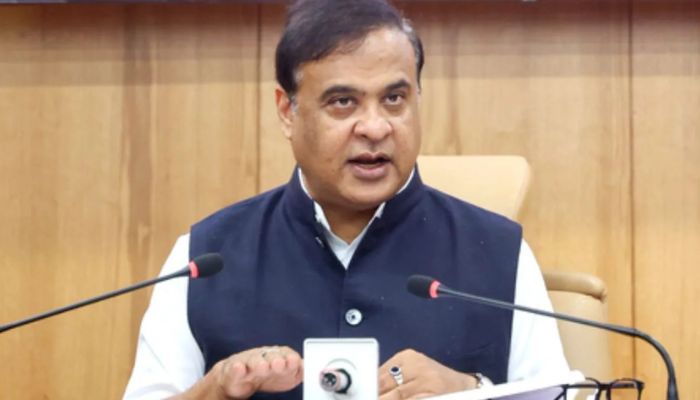
Assam Chief Minister Himanta Biswa Sarma has brushed aside calls for his removal by the Jamiat Ulama-e-Hind, saying he does not care about what the Muslim organisation wants. Sarma made the comments on Saturday, 23rd August, while reacting to the group’s demand that he be removed and booked under hate speech laws following the recent eviction drives in the state.
“If I get Jamiat President Mahmood Madani, I will send him to Bangladesh,” Sarma told the media on the sidelines of a programme in Morigaon.
घुसपैठियों पर हुए अतिक्रमण से पीड़ित Jamiat Ulema-e-Hind और उसके मित्र दल कांग्रेस, असम में सत्ता परिवर्तन करना चाहते हैं। लेकिन यह निर्णय असम की जनता का होगा, जमीयत का नहीं।
He went on to show his “burha anguli” (thumb) and added, “I’m showing the Jamiat Ulama-i-Hind a thumbs-down officially, right now. In this thumb, there is an Assamese blood, strength and courage.”
CM slams Congress and Jamiat
The Chief Minister said that the Congress had become the “B team” of the Jamiat and was siding with them against the people of Assam.
“If anyone attacks the Assam Chief Minister, whether from Congress or any other party, we will protest. Because it is the people of Assam who elected me, not the Jamiat,” he said.
Sarma also criticised the Congress leadership in the state, calling them “sardars of unknown people” and not representatives of indigenous Assamese communities. He pointed to earlier protests by Congress leaders against a new semiconductor plant in Jagiroad, saying this exposed their misplaced priorities.
He further claimed that Jamiat President Mahmood Madani had, during the Congress regime, blocked appointments of teachers who had cleared the Teacher Eligibility Test (TET) by putting pressure on officials. He said, “This Madani, at one point, when I was the education minister, he didn’t allow TET teachers to be appointed.”
“We Are Protecting Assam’s Land”
Defending the eviction drives that have affected thousands, Sarma said the action was necessary to protect Assam’s land for indigenous people.
“Indigenous people have the right to their lands, and those who need to be evicted are being removed. We are clearing encroachments from forest areas, grazing reserves, prayer houses, and monasteries. This land belongs to Assam and cannot be taken away,” Sarma stated.
The CM revealed that since his government took office in May 2021, more than 160 square km of land has been cleared of encroachments, affecting around 50,000 people, most of them Bengali-speaking Muslims.
“These people wanted to occupy Assam with the help of the Congress. Now they are frustrated because we have stopped Aadhaar cards for people above 18 who don’t deserve it and directly push back identified Bangladeshis without sending them to courts or detention centres,” he added.
What triggered the row
Sarma’s sharp response came after the Jamiat Ulama-e-Hind passed a strong resolution against him on Thursday, 21st August.
In the meeting of its Working Committee chaired by Mahmood Madani, the Muslim organisation accused Sarma of running eviction drives in an “inhuman and discriminatory manner.”
Remove #Assam Chief Minister forthwith and book him under hate speeches law Jamiat Ulama-i-Hind Working Committee passes resolutions on #displacement of 50,000 families in Assam and ongoing genocide in #Palestine New Delhi, 21 August 2025: The Working Committee of Jamiat… pic.twitter.com/t6ZUFAwCMQ
The Jamiat Ulama-e-Hind said, “…The Committee emphasised that the current actions in Assam are being carried out in an inhumane and discriminatory manner, motivated by religious prejudice and hate-filled rhetoric.”
The Jamiat demanded that the Assam Chief Minister be immediately removed from office and that criminal proceedings under hate speech laws be initiated against him. They also appealed to India’s constitutional authorities, including the President of India and the Chief Justice of India, to step in.
Jamiat’s concerns over evictions
The Jamiat claimed that more than 50,000 families, mostly Bengali-speaking Muslims, had been rendered homeless due to the state’s eviction drives. They argued that while the organisation has always opposed illegal encroachments on government land, the current operations were being carried out in a discriminatory way.
Their view was that the evictions did not conform to Supreme Court rules, and that the government should rather rehouse and rehabilitate those displaced, particularly the Miya Muslim community.
The eviction problem is now one of Assam’s hottest political controversies. Sarma maintains that the drives are needed to save land owned by indigenous people and religious institutions such as Satras (Vaishnavite monasteries) and Namghars (community prayer halls). Critics, though, say that the actions unfairly target poor Muslims who live in flood-prone riverine belts, many of whom say their families inhabited these areas decades ago after being driven out of land lost to erosion from the Brahmaputra River.
“I don’t even compare the Jamiat to my thumb”: Sarma
Despite the uproar, Sarma made it clear that he is not backing down. “I don’t even compare the Jamiat to my thumb. They can say what they want, but it is the people of Assam who will decide,” he stated.
The CM has time and again presented the eviction and Aadhaar policies as part of an overall initiative to protect the rights of original Assamese and ward off illegal migration from Bangladesh. His position has won him widespread support from nationalist groups within Assam but also irate criticism from Muslim organisations and human rights activists.
Jamiat’s wider resolutions
Additionally, the Jamiat Ulama-e-Hind passed a resolution on Palestine and dubbed Israel’s counter-offensive as ‘genocide’ in Gaza.
“The Committee called upon the Arab world and the international community to unite against Israeli aggression, block its expansionist agenda, safeguard sacred sites, and compel Israel to open humanitarian corridors, allow unrestricted aid delivery, and implement an immediate ceasefire,” it brazened out.
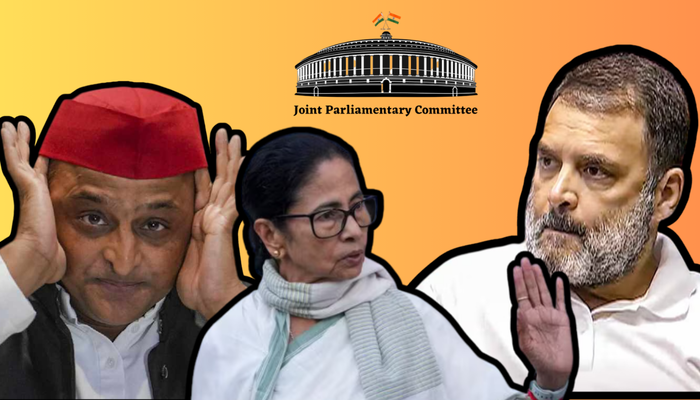
Three Congress allies, the All India Trinamool Congress (AITC), the Samajwadi Party, and the Aam Aadmi Party (AAP) have decided not to join the Joint Parliamentary Committee (JPC) set to examine the three bills introduced by the central government in the Lok Sabha on 20th August. While the INDI Alliance parties are opposing the bill related to removing PM and CMs accused of crimes, and had disrupted parliament over it, they are distancing themselves from the JPC.
The three bills – the Constitution (130th Amendment) Bill, 2025, The Jammu & Kashmir Reorganisation (Amendment) Bill, 2025 and The Government of Union Territories (Amendment) Bill, 2025, propose that a sitting minister, chief minister or even the Prime Minister will be removed from office if they are arrested and detained in custody for 30 consecutive days for an offence that carries a jail term of five years or more.
The parties have refused to be a part of the JPC by rejecting the bills as unconstitutional, and part of the ruling BJP’s conspiracy to throttle the opposition. The decision of the three opposition parties stands in contrast with the stance by other INDI Alliance parties, including the Congress, which have been in favour of the bills being examined by the JPC. The move comes as a setback to the efforts of the opposition’s alliance to put up a unified front against the bills.
After three allies refusing to join the JPC, now it is not confirmed whether Congress party will join the committee, even though it was in favour of discussions at the JPC. The party leadership will have to decide now whether to give priority to opposition unity or will it stick to its original plan.
This is a unconstitutional bill to put opposition leaders in jail: AAP
The AAP announced that it will not be joining the Joint Parliamentary Committee, to scrutinise the bill. Terming the bills as ‘unconstitutional’, AAP leader Sanjay Singh accused the government of introducing the bill with the motive of putting the opposition leaders behind the bars. “The Modi government is bringing a bill that is unconstitutional. The purpose of this bill is to put opposition leaders in jail and topple the governments of opposition parties,” said Singh.
मोदी सरकार एक ग़ैर संवैधानिक बिल लेकर आ रही है। इस बिल का मक़सद विपक्ष के नेताओं को जेल में डालना और विपक्षी दलों की सरकारें गिराना है। इस बिल का मकसद देश में लोकतंत्र को खत्म करने का है।
इस बिल के लिए सरकार द्वारा जो JPC बनाई जा रही है, उसमें आम आदमी पार्टी शामिल नहीं होगी। इस… pic.twitter.com/izg2A9MqDh
“The purpose of this bill is to end democracy in the country. The JPC that the government is forming for this bill will not include the Aam Aadmi Party. The purpose of this bill is not to end corruption because the BJP loves corruption and the corrupt,” he added.
The JPC is an exercise in futility: TMC
In a blog post, senior TMC leader and Rajya Sabha MP Derek O’Brien informed about his party’s decision not to nominate a member to the JPC. Calling the JPC a ‘farce’, O’Brien wrote, “The All India Trinamool Congress (AITC) and the Samajwadi Party (SP), the second largest Opposition parties in Parliament, decided not to nominate any of its members to the Joint Parliamentary Committee (JPC) being proposed to examine the Constitution (One Hundred and Thirtieth Amendment) Bill, calling the committee a ‘farce’.
Describing the idea of a JPC as “an exercise in futility”, O’Brien listed three reasons behind his party’s decision not to join the committee. Firstly, he said that the chairperson of the committee is jointly decided by the Speaker of the Lok Sabha and the Chairperson of the Rajya Sabha, and the committee’s members are nominated by all the parties in proportion to their strength. This, according to the Rajya Sabha MP, skews the committee in favour of the ruling party due to its large number in the Parliament.
Secondly, he said, the committee fails to reach a consensus on the final report and the amendments proposed by the opposition members are defeated by the ruling majority. And lastly, O’Brien alleged that JPCs, which were originally “democratic and well-intentioned mechanisms”, have lost their purpose since the BJP came to power in 2014. Terming the bills introduced by the government as “unconstitutional”, the TMC accused the Modi government of pushing to form the JPC to distract from the Special Intensive Revision (SIR), which the opposition has been vehemently opposing.
TMC Supremo, Mamata Banerjee, also opposed the bills at the time of the introduction of the bills in the Lok Sabha, calling them a ‘draconian step’.
The bills go against India’s federal structure: SP
Speaking to the Times of India, Samajwadi Party Chief Akhilesh Yadav also announced his decision to align with the TMC. “SP stands with Mamata Banerjee and the TMC on the issue of not being a part of the JPC,” Yadav reportedly said. He claimed that the idea of the faulty as Union Home Minister Amit Shah, who tabled the bill in the Lok Sabha, has said many times that he was falsely implicated in criminal cases.
“The very idea of the bill is flawed because the person who has moved the bill (Home Minister Shah) had, on several occasions in the past, cited his own case to claim that he was falsely implicated in criminal cases. It means anyone can be framed for criminal offences. So, what is the point of the bill then?” Yadav added.
Criticising the bills, Yadav said that ministers would bypass the legislation by withdrawing cases filed against them in their respective states. “Like it has happened in UP, CMs will be able to withdraw criminal cases filed against them in their respective states, and the Centre will have no control because law and order is primarily a state subject. Centre will only be able to handle cases filed by central agencies like CBI, ED and the likes,” Yadav claimed.
The bills were introduced by the Union Home Minister Amit Shah amid a huge ruckus created by opposition parties in the Lok Sabha. Copies of the draft laws were torn and flung by members of the opposition. Some TMC MPs even charged towards Shah when he tabled the bills. Subsequently, a resolution was passed in both houses to refer the bills to a JPC comprising 31 members, 21 from the Lok Sabha and 10 from the Rajya Sabha. The committee will submit its report in the Winter Session.
Defence Research and Development Organisation (DRDO) successfully conducted the maiden flight-tests of Integrated Air Defence Weapon System (IADWS) off the coast of Odisha on August 23, 2025. IADWS is a multi-layered air defence system comprising all indigenous Quick Reaction Surface to Air Missiles (QRSAM), Advanced Very Short Range Air Defence System (VSHORADS) missiles and a high-power laser-based Directed Energy Weapon (DEW).
Integrated operation of all the weapon system components is controlled by a Centralised Command and Control Centre developed by Defence Research & Development Laboratory being nodal laboratory of the programme. VSHORADS and DEW are developed by Research Centre Imarat & Centre for High Energy Systems and Sciences respectively.
Maiden flight Tests of Integrated Air Defence Weapon System (IADWS) was successfully conducted on 23 Aug 2025 at around 1230 Hrs off the coast of Odisha.
IADWS is a multi-layered air defence system comprising of all indigenous Quick Reaction Surface to Air Missile (QRSAM),… pic.twitter.com/Jp3v1vEtJp
During the flight-tests, three different targets including two high-speed fixed wing Unmanned Aerial Vehicle targets and a multi-copter drone were simultaneously engaged and destroyed completely by the QRSAM, VSHORADS and High Energy Laser weapon system at different ranges and altitudes, said Ministry of Defence in a statement.
The ministry stated that all the weapon system components including the missile systems and drone detection & destruction system, weapon system command & control along with communication and radars, performed flawlessly which was confirmed by Range instruments deployed by Integrated Test Range, Chandipur to capture the flight data. The test was witnessed by senior scientists from DRDO and representatives from the Armed Forces.
Defence Minister Rajnath Singh complimented DRDO, Armed forces and the industry for successful development of IADWS. He stated that this unique flight-tests has established the multi-layered air-defence capability of the country and is going to strengthen area defence for important facilities against enemy aerial threats.
After the passage of Online Gaming Bill in the parliament, fantasy sports platform Dream11 has decided to back out as the lead sponsor of the Indian cricket team. The decision comes just days before the start of Asia Cup 2025.
The ‘Promotion and Regulation of Online Gaming Bill, 2025’ got the assent of President Droupadi Murmu on Friday. The new law bans all kinds of online games involving real money. It imposes penalties of up to three years imprisonment and fines reaching ₹1 crore for violations.
The bill was passed by Lok Sabha on Wednesday and by Rajya Sabha on Thursday without much discussion, as opposition continued to disrupt proceedings.
According a report by NDTV, Dream11 is not willing to continue its deal with BCCI, but an official announcement has not been made yet.
BCCI secretary Devajit Saikia on Friday said that the board will follow the laws of the country. He said, “If it’s not permissible, we’ll not do anything. The BCCI will follow every policy of the country that is framed by the central government.”
BCCI is expected to invite new bids to sponsor the Indian cricket team. The Asia Cup starts on 9 September, and if a new sponsor is not found before that, the team will have to play without a lead sponsor. As per reports, jerseys for the team with Dream11 logo have already been printed, but they won’t be used at the tournament.
Dream11 had become the Team India sponsor in 2023 by winning the bid for ₹358 crore. The company was paying ₹3 crore per home match and ₹1 crore per away game. The sponsorship deal was to expire in 2026.,
Notably, after the bill was passed, Dream11 discontinued all paid contests on its platform. It has said that now it will operate solely as a free-to-play online social game.