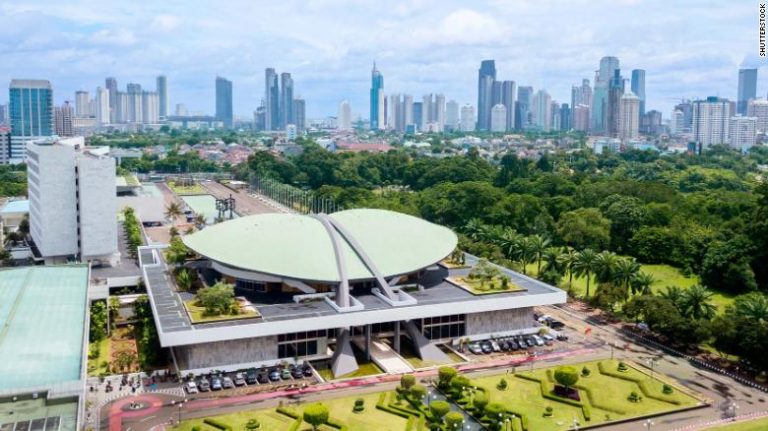
In the next few days, the Indonesian Parliament is expected to enact a Draft Criminal Code that will penalize sex outside marriage with up to a year in prison. The law will also ban men and women living together without marriage.
“Anyone who has intercourse with someone who is not their husband or wife shall be punished for adultery with a maximum imprisonment of 1 (one) year or a maximum fine of category II,” reads article 413, paragraph 1 of the proposed legislation. The rule will be applicable to both Indonesian citizens and foreigners living in the country, including tourists and business travellers. Business organizations have meanwhile expressed worry that the proposed laws might harm Indonesia’s image as a tourism and investment destination.
The draft criminal code, known as Kitab Undang-Undang Hukum Pidana or KUHP, is expected to be passed within December, and according to lawmakers, this law could be passed as early as next week.
This new law marks the increasing influence of conservative Muslims in the country. Indonesia is the largest Muslim country, but it is known as a fairly liberal country with no nationwide application of Sharia Laws. But now that is changing, and Islamist groups are supporting this new law banning sex before marriage. However, the country has hundreds of local laws discriminating against women, religious minorities, and LGBT individuals.
According to the reports, the legislation will take effect if a complaint is received from the perpetrator’s spouse, or from the parents of their unmarried children. Furthermore, article 144 says that complaints may be retracted as long as examination at the trial court has not commenced.
A previous version of the code was intended to be enacted three years ago, but it sparked widespread protests as tens of thousands of people took to the streets to oppose the bill, which they said would have limited their freedom of speech and expression. “We’re proud to have a criminal code that’s in line with Indonesian values,” Indonesia’s deputy justice minister, Edward Omar Sharif Hiariej was quoted. The development has come after the Deputy Minister of Law and Human Rights met with Commission III of the Indonesian Parliament in the Parliament Complex in Senayan, Jakarta in November.
Apart from banning sex outside marriage, the new criminal code will also introduce several new provisions. The legislation will an insulting the president or state institutions, and expressing any views counter to Indonesia’s state ideology will also be a punishable offence. While sex outside marriage and premarital sex will be punished with one year in jail, insulting the president will result in a jail term of three years.
Abortion remains banned even in the new code, except for rape victims. ‘Black Magic’ is also banned under the new criminal code. There were apprehensions that blasphemy will also be included, but it has not been done.
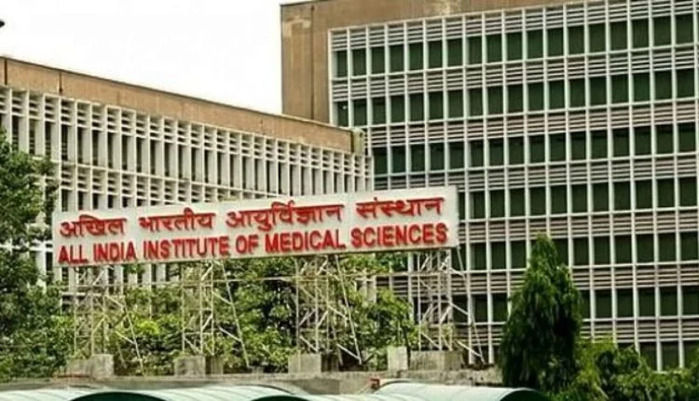
The cyber attack on the servers of the All India Institute of Medical Sciences (AIIMS), Delhi, which rendered them dysfunctional for days on end was targeted by Chinese hackers, a report published on Friday said.
The attack may have resulted in the theft of data; India Today citing Intelligence Fusion and Strategic Operations (IFSO) sources reported that the stolen data may have been sold on the dark web, putting the personal information of lakhs of patients at risk.
Notably, the dark web is a section of the internet that is inaccessible via standard search engines such as Google, Bing, Baidu, and others. The dark internet is kept hidden behind advanced layers of encryption designed to keep communication private.
Over 1,600 searches for stolen AIIMS data were discovered on the dark web. VVIP information, including politicians and celebrities, was stolen.
Five servers were hacked, according to Intelligence Fusion and Strategic Operations (IFSO) officials. The data leak is being investigated by the forensic team.
Officials from the IFSO, who are dealing with a hacking case for the first time, believe no data was lost. According to them, the hackers’ primary goal was to extort money. The hackers have allegedly demanded Rs 200 crore in cryptocurrency from AIIMS. Delhi Police, however, has denied any ransom demand being made.
Over 1,600 searches for stolen AIIMS data were discovered on the dark web. VVIP information, including politicians and celebrities, was stolen.
Five servers were hacked, according to Intelligence Fusion and Strategic Operations (IFSO) officials. The data leak is being investigated by the forensic team.
Officials from the IFSO, who are dealing with a hacking case for the first time, believe no data was lost. According to them, the hackers’ primary goal was to extort money. AIIMS has allegedly demanded Rs 200 crore in cryptocurrency from hackers.
The breach, discovered on Wednesday, is suspected to have compromised the personal information of 3-4 crore patients.
Because the servers are down, patient care services in the emergency, outpatient, inpatient, and laboratory wings are being managed manually.
The AIIMS network is currently being cleaned up. Antivirus software has been installed on 1,200 of 5,000 computers, and 20 of 50 servers are being scanned regularly.
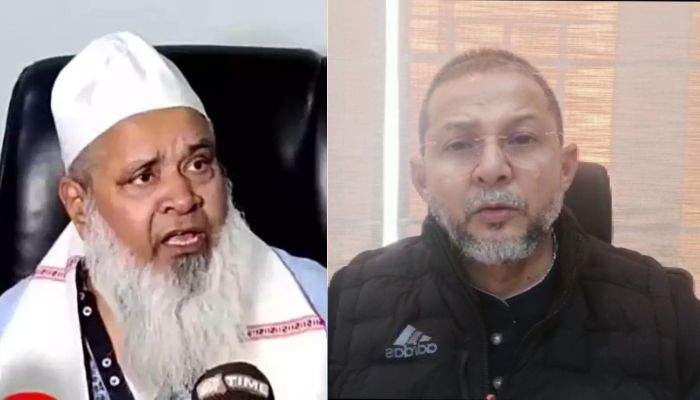
On Friday, December 2, 2022, Assam BJP MLA Diganta Kalita gave a befitting reply to All India United Democratic Fund (AIUDF) leader and MP Badruddin Ajmal’s statement on Hindu women. Diganta Kalita said that India is the country of Lord Ram & Goddess Sita and that Hindus need not learn from Muslims. It is notable that AIUDF leader Badruddin Ajmal held a press conference earlier in the day in which he said that Hindus should adopt the formula of marrying girls at an early age to ensure a higher rate of population growth. He said that this is the formula used by Muslims and Hindus should adopt the same.
Assam BJP MLA Diganta Kalita said, “You’re a Muslim & we’re Hindus. Do we’ve to learn from you? It’s the country of Lord Ram & Goddess Sita. There’s no place for Bangladeshis here. We don’t have to learn from Muslims.”
You’re a Muslim & we’re Hindus. Do we’ve to learn from you? It’s the country of Lord Ram & Goddess Sita. There’s no place for Bangladeshis here. We don’t have to learn from Muslims: Assam BJP MLA D Kalita on AIUDF Pres & MP Badruddin Ajmal’s statement on Hindu women pic.twitter.com/T8UMPvdzWQ
He added, “By saying such things, you’re putting allegations about your mother & sister. I condemn it & warn you not to do it otherwise go to Bangladesh & do it. Hindus won’t accept it. Don’t stoop so low for politics&sell your mother&sister, don’t trample upon their dignity.”
By saying such things,you’re putting allegations about your mother&sister. I condemn it&warn you not to do it otherwise go to Bangladesh & do it.Hindus won’t accept it.Don’t stoop so low for politics&sell your mother&sister,don’t trample upon their dignity:D Kalita, Assam BJP MLA pic.twitter.com/ucH3YL006Y
Diganta Kalita said that the law is very strict for Hindus, unlike Muslims who can just say Talaq to divorce their wife and marry a different woman, and it is completely wrong that Hindus keep 2-3 illicit relations. He asked Ajmal to go to Bangladesh to make such comments, saying that such remarks won’t be tolerated in India. He said that it is Muslims who insult women by marrying 3-4 women, and Hindus do not do that.
Earlier, Badruddin Ajmal said in a press conference, “Girls can marry at the age of 18 as permitted by the government. But they (Hindus) keep 1 or 2 or 3 illicit relationships till the age of 40. They don’t give birth to any child in that relationship. They save the expenses of the child and use that money to enjoy. After that, at the age of more than forty, they are forced to marry someone under their parents’ pressure or they are trapped by someone. How can they be able to give birth to kids after the age of forty? How can they even expect of growing the number of children then?”
#WATCH वो(हिंदु) 40 साल से पहले 2-3 गैरकानूनी तरीके से बीवियां रखते हैं। 40 साल के बाद बच्चा पैदा करने की क्षमता कहां रहती है…उनको मुसलमानों के फॉर्मूले को अपनाकर अपने बच्चों की 18-20 साल की उम्र में शादी करा देनी चाहिए: जनसंख्या वृद्धि पर मौलाना बदरुद्दीन अजमल, AIUDF अध्यक्ष pic.twitter.com/pPZQHttrrv
Badruddin Ajmal added, “Those who add soil and fertilizers to the fertile land at an appropriate time, will grow huge crops and have good produce. They will flourish and prosper. They should also adopt this formula used by Muslims. Get your boys married at the age of 20 or 22. Get your girls married at an age of 18 or 20. Then you see how many kids are born at your home. But don’t do illicit acts.”
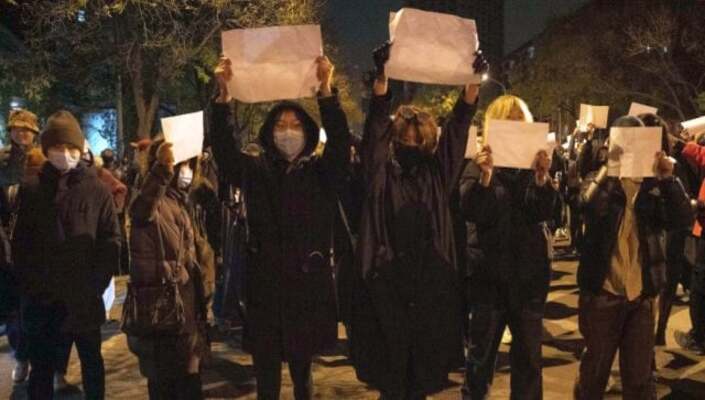
China, a country where dissent is intolerable and protests are a rare sight, the Chinese people are employing unique ways to protest against the repressive measures being taken by the Chinese government to impose lockdown as a part of its zero-Covid policy. As the anti-lockdown protests have been going on for weeks now, the protestors are now holding white blank papers to register their protest.
The blank A4 papers have no symbols, pictures, or text written on them, metaphorically criticising the ruling Chinese Communist Party’s censorship of dissent. The protestors are using blank sheets to express their displeasure with the government’s efforts to silence dissenting voices, as well as to throw shade at the authorities because they cannot be arrested for holding blank papers.
Protestors, particularly university students are leading the protests in Wuhan, Chengdu, Beijing, Shanghai, and other prominent cities.
People in Beijing marching on the third ring road… singing… and holding up empty white papers…
The empty white paper symbolizes their protest against censorship in China. ???
Students at the prestigious Peking University in Beijing held a protest shouting slogans demanding the end of lockdowns and implored the government to look at the rest of the world moving on from Covid-19 restrictions. In the city of Lanzhou, protestors destroyed the PCR testing booths set up by the authorities as the anger against the zero-covid policy grew.
Protests against C0VID restrictions are continuing and growing in China. Residents destroy PCR test booths tonight in Lanzhou. pic.twitter.com/SrL3u1HqYy
What started as a symbolic protest in a bid to compel the Chinese government to ease its zero Covid measures including snap lockdowns, mass testing, quarantines, buildings, and even neighbourhood being locked out in the event of infection, has now turned into a larger movement seeking freedom and democracy. Protesters in some parts of China are also seeking the ouster of Xi Jinping.
Since past few weeks, in an unprecedented challenge to Xi Jinping’s leadership, protestors are raising anti-Xi slogans like ‘Xi Jinping, step down’, Communist Party, step down’ and ‘Unlock Xinjiang, unlock China.’
Other than Blank Page Revolution, people are calling it White Paper Revolution and A4 Revolution, referring to the size of the blank paper being used.
Even though the possibility to change China’s political system, the protests have definitely sent out a strong message to the Communist regime that too without saying or writing a word.
In an op-ed published in the American magazine National Review, columnists Jianli Yang and Bradley Thayer asserted that “the legacy of the blank page revolution will be long and have multifaceted implications, lighting the fuse of a larger revolution that will yield a free China.”
Notably, the protests in China were sparked after a building in Urumqi in Xinjiang caught fire on November 24, 2022. People could not easily escape the inferno because of the strict lockdown that has been imposed as part of China’s zero-Covid policy.
Other “secondary disasters” have occurred as a result of COVID restrictions; for example, a bus carrying quarantined people crashed in Guizhou. In another case, a pregnant woman miscarried after being refused admission to a hospital in Xian. In Lanzhou, a young boy died as a result of gas poisoning during a lockdown.
Hong Kong blank paper protests
The blank paper protests in China appear to be inspired by the 2020 Hong Kong protests against Beijing’s stringent National Security Laws.
In 2020, activists in Hong Kong raised blank sheets of white paper in protest to avoid slogans prohibited under the city’s new national security law, which was imposed following massive and sometimes violent protests the previous year. Blank paper was used during the Hong Kong protests after authorities banned dissident and subversive activities, with punishments up to life sentences.
Freedom House report on protests in China
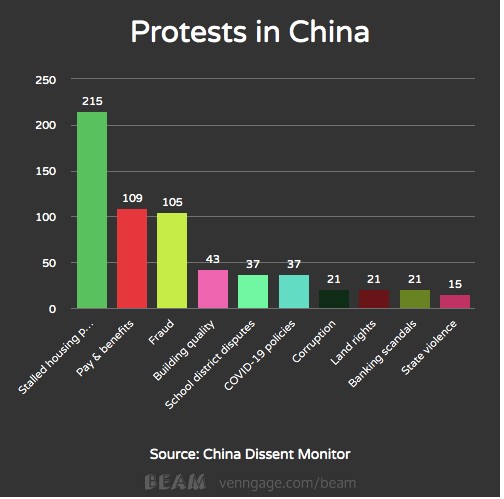
According to China Dissent Monitor, a new database and research tool from Freedom House, protests have occurred there in recent months despite the government’s strict measures to crush dissent.
Protests in China (Data by China Dissent Monitor)
From June to September of this year, China saw 668 instances of dissent, with people protesting stalled housing projects, labour rights violations, fraud, COVID-19 policies, and state violence, among other subjects.
Arvind Kejriwal’s Aam Aadmi Party (AAP), which is contesting for the first time on all the seats in the Gujarat assembly elections, left no stone unturned to create an atmosphere till the end. From mainstream media to social media, the Aam Aadmi Party has been in discussion everywhere. But after the first phase of polling on December 1, one has to wonder if AAP would even claim the second place.
Outside Gujarat and especially in the media circles of Delhi, there are talks of the Aam Aadmi Party moving towards Gujarat now. But the truth is that after the first phase of voting yesterday, it became clear that the party is not getting a good response on the ground. Even in the seats where the Aam Aadmi Party had a little bit of existence, the discussions are revolving around if it will be able to remain in second or third place.
All the important seats of the Aam Aadmi Party were in Saurashtra and South Gujarat, on which voting was held on December 1. In none of these seats, there seemed to be an atmosphere in favour of the Aam Aadmi Party.
BJP has the upper hand in both the Varachha and Katargam seats of Surat
The Aam Aadmi Party had the highest focus on Varachha Road and Katargam seats in Surat city and two well-known faces were fielded on the seats. In the Katargam seat, the party’s state president Gopal Italia himself contested, while in the Varachha seat, Alpesh Kathiria, who became famous for the PAAS movement, was made the candidate.
The Aam Aadmi Party had created some atmosphere here in the initial stages and the rest of the work was done by mainstream media and social media. But sources interested in local politics say that in the last five days, the situation had completely changed and the atmosphere had turned pro-BJP, which was also seen in the voting.
Prime Minister Narendra Modi’s roadshow and Varachha rally took place in the last five days. Apart from this, PM Modi also held some meetings in Surat, which also had a big impact on the political atmosphere.
On the voting in the Varachha seat, sources said that there was some voting in favour of the Aam Aadmi Party for two-three hours in the morning, but later their tables were seen empty throughout the day. Also, there was a lack of enthusiasm among the local workers about voting.
Talking about the Katargam seat, there was no public favor for Gopal Italia or Aam Aadmi Party here too. Local sources say that it will not be surprising if the BJP wins the Katargam seat with the biggest lead in Surat city.
In such a situation, the two seats in Surat where the Aam Aadmi Party (AAP) had some hopes, also seem to have slipped from AAP after the voting.
Will Isudan Gadhvi – the CM candidate of AAP – be able to save his seat?
The party’s CM face Isudan Gadhvi contested the Khambhaliya seat. However, he had yesterday announced that the AAP is going to win 51 of the 89 seats. But given the local equations, it is a big question whether Isudan Gadhvi will be able to save his seat in the first place. A detailed analysis of this meeting has already been given by OpIndia.
In short, whatever little air was in favour of the Aam Aadmi Party completely disappeared after this poll. However, the second phase of polling is yet to take place, but if such a situation is there from where the party emerged, then there does not seem to be any major achievement in the north and central Gujarat where voting is yet to take place.
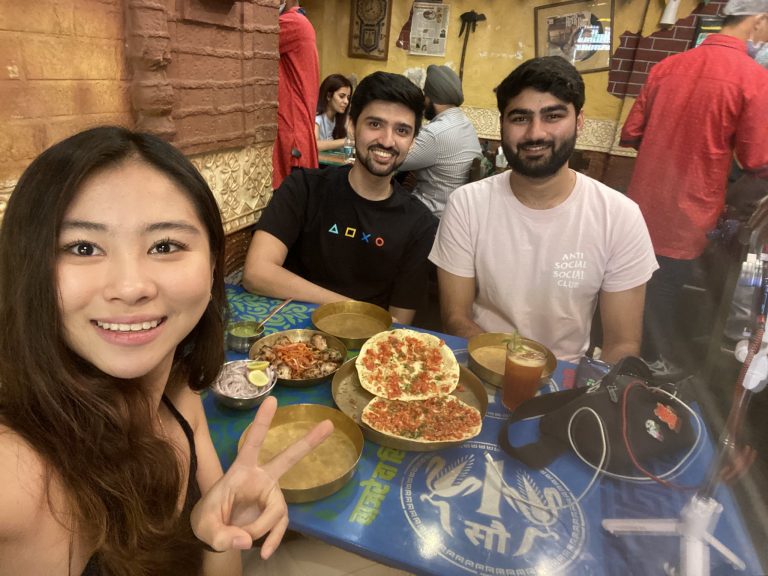
Korean Twitch streamer Hyojeong, who goes by the handle ‘Mhyochi’ on the streaming platform and social media, recently shared pictures from her lunch with Aditya and Atharva, the two men who saved her from harassers on a Mumbai street earlier this week.
“Lunch with two Indian gentlemen who help me to post the video and save me on the street. Aditya & Atharva,” the Korean vlogger tweeted along with her picture with the duo.
Lunch with two Indian gentlemen who help me to post the video and save me on the street? Aditya & Atharva pic.twitter.com/Cu9IYOjBMb
In yet another tweet, Hyojeong shared a video of her meeting with the two gentlemen who came to her defence after Mobeen Chand Mohammad Shaikh and Mohammad Naqeeb Sadrealam Ansari harassed her on a street in Mumbai’s Khar West.
In yet another tweet, the Korean vlogger shared her pictures with Atharva and referred to him as an Indian ‘Gigachad’, internet slang for muscular men and often used in memes.
Mobeen Chand Mohammad Shaikh and Mohammad Naqeeb Sadrealam Ansari arrested for harassing Korean YouTuber
On December 1, Mumbai Police arrested Mobeen Chand Mohammad Shaikh and Mohammad Naqeeb Sadrealam Ansari for harassing a Korean woman vlogger in Khar. In a statement, the police said, “Two youths – Mobeen Chand Mohammad Shaikh and Mohammad Naqeeb Sadrealam Ansari – arrested for allegedly molesting a Korean woman YouTuber during a live streaming. Khar Police registered an FIR u/s 354 IPC and arrested both of them.”
On November 29, Korean Twitch streamer Hyojeong, who goes by the handle ‘Mhyochi’ on the streaming platform and social media, was harassed in Khar, Mumbai, by two young men who have been identified as Mobeen Chand Mohammad Shaikh and Mohammad Naqeeb Sadrealam Ansari. Mhyochi is currently on a trip to India and regularly streaming her journey on her Twitch channel.
@MumbaiPolice A streamer from Korea was harassed by these boys in Khar last night while she was live streaming in front of a 1000+ people. This is disgusting and some action needs to be taken against them. This cannot go unpunished. pic.twitter.com/WuUEzfxTju
The clip of the incident was shared by a Twitter user, Beaver_R6 (Aditya), who said, “A streamer from Korea was harassed by these boys in Khar last night while she was live streaming in front of 1000+ people. This is disgusting, and some action needs to be taken against them. This cannot go unpunished.”
Quoting Aditya, Mhyochi said, “Last night on stream, there was a guy who harassed me. I tried my best not to escalate the situation and leave because he was with his friend. And some people said that it was initiated by me being too friendly and engaging in the conversation. Makes me think again about streaming.”
Sweden-based The V-Dem (Varieties of Democracy) Institute, known for its bizarre democracy reports, has come up with another such report. The George Soros funded group recently released a report on Academc Freedon, and according to them, India is behind Pakistan, Iraq and Taliban-ruled Afghanistan in academic freedom.
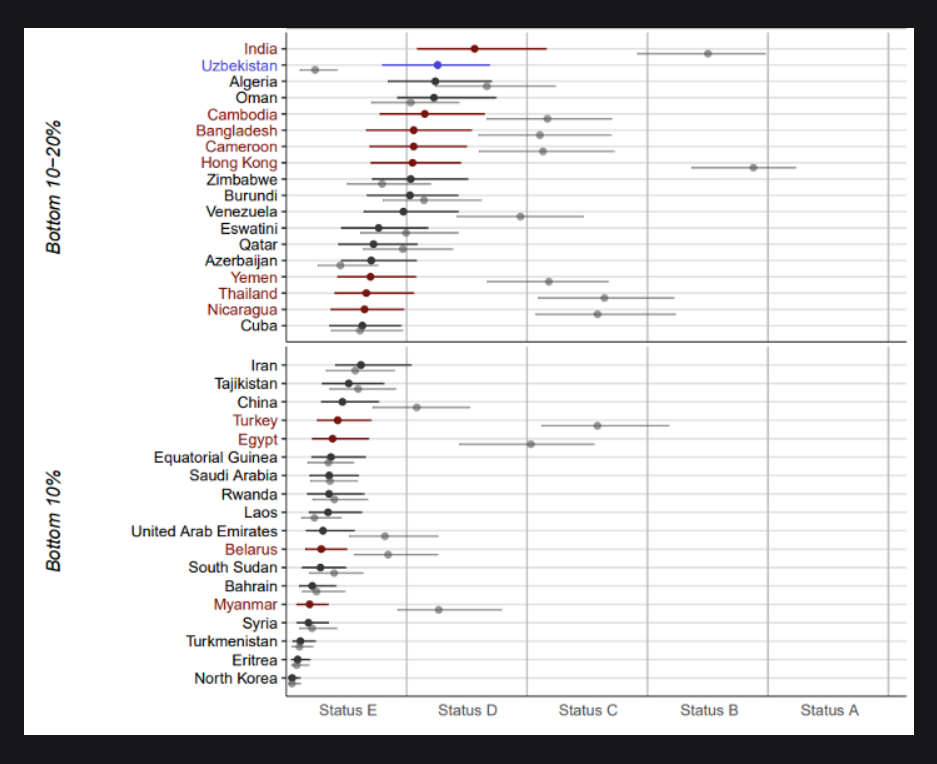
V-Dem Institute released updates to its Academic Freedom Index, where they compared academic freedom scores in 2005 with those in 2021. The Swedish Institute placed India in the Botton 20% group out of 177 countries.
The report stated, “Populous countries such as Brazil, China, India, and Russia exhibit substantially less academic freedom today than in 2011.” According to the paper titled ‘Academic Freedom Index Update 2022,’ the fall in academic freedom is accompanied by an increasing and deepening wave of ‘autocratization.’
Ranking of India.
V-Dem Institute and the Academic Freedom Index
V-Dem stands for Varieties of Democracy, and the Institution was founded in 2014 as an independent research institution by Professor Staffan I. Lindberg. It promises to usher in a new way of thinking about and evaluating democracy. It offers a number of studies that rank countries on a variety of criteria.
The Academic Freedom Index (AFi) initiative was founded in 2019 by academics from Friedrich-Alexander-Universität Erlangen-Nürnberg (FAU), the V-Dem Institute, Scholars at Risk Network, and Global Public Policy Institute (GPPi), according to their website. V-Dem and FAU are now working on the project with funding from the German Volkswagen Foundation.
Academic Freedom Index Update 2022
According to the V-Dem website, this year’s Academic Freedom Index update gives an overview of academic freedom in 177 nations and territories. It reveals two findings based on an examination of the de facto protection of academic freedom as of December 2021.
“First, the latest data reveal a substantial and statistically significant decline in academic freedom in 19 cases, with improvements registered in only two cases compared with 2011. Thirty-seven per cent of the world’s population live in these 19 countries and territories with major recent drops in academic freedom. Second, the decline in academic freedom accompanies an accelerating and deepening wave of autocratization,” the website notes.
It is in this update, India has been ranked in the Bottom 10-20% among 177 countries included in the study. Interesting to note is that the Indian ranking falls below Iraq, Pakistan, and Taliban-ruled Afghanistan.
Pakistan, Afghanistan and Iraq are placed in the Bottom 30-40% group. From the subcontinent, Nepal is ranked way above, in the top 20-30% group.
North American and European countries dominate the top rankings in the report, with the inclusion of several countries in Africa, like Senegal, Nigeria, Burkina Faso etc, which are ranked in the top 20-30% group.
The dubious method of ranking
It is vital to mention that these reports are based on the impressions or opinions of a small number of professionals. There are numerous significant flaws with the techniques used by organisations such as V-Dem, as stated in a working paper of the Economic Advisory Council to the Prime Minister. Notably, these indexes are mostly based on the views of a tiny handful of unidentified self-proclaimed experts.
The questions asked for surveys are subjective and structured in such a way that they are hard to answer objectively even for a single nation, let alone compare across countries. There are certain inquiries that should be asked but are not. Furthermore, several questions employed by these indexes do not provide an accurate estimate of the specified attributes across all nations.
Democracy Report 2022
In March this year, OpIndia reported how the V-Dem Institute ranked India in the top ten autocratic countries in the world. Continuing with baseless anti-India propaganda by western organisations, V-Dem also stated that the country’s democratic orientation would deteriorate. According to the research, India stood in the bottom 40% to 50% of countries on V-Dem’s Liberal Democracy Index (LDI).
As per the research, polarization is on the rise in India and the country was ranked 93rd on the Liberal Democracy Index. They also published a report last year in which they branded India as an electoral autocracy. According to V-Dem, India had ‘lost’ its status as an electoral democracy and had devolved into an electoral autocracy.
Who funds V-Dem Institute?
Though V-Dem institute is an independent research organization, they are funded by many other institutions and governments. The contributors of funds to the institute range from the Canadian International Development Agency to the World Bank Group.
Surprisingly, the Open Society Foundation, which is led by George Soros, also funds the institute. Soros is a self-proclaimed philanthropist and Hungarian-American investor who has sworn to ‘fight nationalists’ and conservative governments throughout the world, which he commonly refers to as ‘authoritarian governments.’
George Soros’ sponsorship of the V-Dem Institute reveals a lot about the organization’s intentions toward India. Soros has publicly expressed his hatred for India and has often denounced the Indian government led by Prime Minister Narendra Modi. His support for an organization that ranks India as a dying democracy highlights the hollowness of the institute’s findings.
About Open Society Foundation and George Soros
In 1999, the Open Society Foundation began activities in India by providing scholarships and fellowships to pursue studies and research at Indian colleges. Through the OSF, George Soros made significant contributions towards the spread of instability in India.
By actively supporting anti-India groups operating within India, the left-wing international organization led by Soros stretched its claws across the country in the pretext of undertaking humanitarian initiatives. Since its inception in India, OSF has attempted to meddle in the country’s internal affairs through a wide and linked network of organizations sponsored by George Soros. These organizations play a critical role in distorting the actual narrative and using the judiciary and the media to obstruct the national interest.
George Soros has fostered a class of intellectuals that fight steadfastly against the Indian state, particularly the nationalist government led by Prime Minister Narendra Modi, through his web of NGOs.
The Open Society Foundation has been a beneficiary to left-leaning intelligentsia who have regularly put forth false narratives against the present government, in addition to sponsoring media. Harsh Mander, Pratap Bhanu Mehta, Indira Jaising, and Amartya Sen are among the most well-known among them. George Soros has repeatedly demonstrated his eagerness to wage war against India’s nationalist government over the last few decades.
The V-Dem Institute is generally known to be a puppet of individuals like George Soros, acting on their directions to destabilise growing economies like India. These reports may have been generated using a number of statistical sources, but the collection of data to achieve well-intentioned results is rather obvious in the endorsements and affiliations of the groups that make them.
The plethora of facts and links presented above demonstrate unequivocally how propagandistic reports published by organisations such as the V-Dem Institute exemplify how international powers and non-state actors intervene in the internal workings of other democracies in order to achieve their policy agenda.
A horrific incident occurred in Mumbai where a woman was reportedly assaulted by a Zepto delivery boy at her home. The delivery boy has been identified as Shahzade Shaikh and has been arrested by the police. Sabeena, the victim woman, detailed the experience on her Instagram feed.
The incident happened on November 30, Wednesday, at her Khar West home. She said that the delivery boy, Shahzade Shaikh, attempted to videotape her as he handed her the package before shoving her and trying to storm inside her house. He then allegedly mistreated her and yelled profanities at her.
By making a call for assistance from the kitchen, Sabeena said she was saved by the security guard of her society. “I felt so horrible and I quickly ran into my kitchen to call my security through the kitchen window after the security came also the delivery guy is not listening he was coming onto me and finally my security stopped him and took his phone and gave it to me, I saw the video he recorded,” Sabeena wrote in the Instagram post.
Alleging carelessness by the platform, she wrote, “@zeptonow is responsible for all this, you sent such a kind of person to my doorstep hence I had to go through all this, There is no safety for women who placed an order from your platform.”
Sabeena also shared about the incident on Twitter. Zepto took to her post and responded, “Hi Sabeena, We take such matters with utmost seriousness. We are partaking in a thorough investigation of the incident with the local law enforcement bodies. We condemn such behavior. Stringent action will be taken on perpetrators based on facts.”
Hi Sabeena, We take such matters with utmost seriousness. We are partaking in a thorough investigation of the incident with the local law enforcement bodies.
We condemn such behavior. Stringent action will be taken on perpetrators based on facts.
Sabeena also alleged that the company was forcing her to compromise. Replying to the tweet by Zepto, she wrote, “Like how? Your local team has been contacting me by saying “please let’s communicate and compromise” like seriously? Because of you @zeptocares @ZeptoNow I had to go through such a horrible incident.”
Like how? Your local team has been contacting me by saying “please let’s communicate and compromise” like seriously? Because of you @zeptocares@ZeptoNow I had to go through such a horrible incident.
On December 1, Mumbai Police arrested Mobeen Chand Mohammad Shaikh and Mohammad Naqeeb Sadrealam Ansari for harassing a Korean woman vlogger in Khar. In a statement, the police said, “Two youths – Mobeen Chand Mohammad Shaikh and Mohammad Naqeeb Sadrealam Ansari – arrested for allegedly molesting a Korean woman YouTuber during a live streaming. Khar Police registered an FIR u/s 354 IPC and arrested both of them.”
Maharashtra | Two youths – Mobeen Chand Mohammad Shaikh and Mohammad Naqeeb Sadrealam Ansari – arrested for allegedly molesting a Korean woman YouTuber during a live streaming. Khar Police registered an FIR u/s 354 IPC and arrested both of them: Mumbai Police
On November 29, Korean Twitch streamer Hyojeong, who goes by the handle ‘Mhyochi’ on the streaming platform and social media, was harassed in Khar, Mumbai, by two young men who have been identified as Mobeen Chand Mohammad Shaikh and Mohammad Naqeeb Sadrealam Ansari. Mhyochi is currently on a trip to India and regularly streaming her journey on her Twitch channel.
Hours after Prime Minister Narendra Modi held a 27-km long roadshow in Surat city of Gujarat, Aam Aadmi Party (AAP) leaders took to social media on Monday (November 28) to peddle disinformation.
They falsely claimed that chants hailing AAP supremo Arvind Kejriwal were raised by people, who in fact had gathered to watch Prime Minister Narendra Modi. Pankaj Singh wrote, “This is the second video where chants of ‘Kejriwal’ were heard during PM Modi’s roadshow. Gujarat is ready for change.”
The archived version of the tweet can be accessed here. Pankaj is the President of the Madhya Pradesh unit of the Aam Aadmi Party.
गुजरात में मोदी जी के रोड-शो में केजरीवाल जी के नारे लगने वाला दूसरा वीडियो भी सामने आया है। बदलाव के लिए गुजरात तैयार है। इंकलाब जिंदाबाद।। pic.twitter.com/rLUK30Ns2V
Similar claims were made by the two-time Delhi AAP MLA, Gulab Singh Yadav. “Chants of Kejriwal raised in the Surat road show of the saheb (referring to PM Modi). Wow, what a spectacle.” The archived version of the tweet can be accessed here.
केजरीवाल केजरवाल केजरीवाल सूरत में साहेब के रोड़ शो मे लगे केजरीवाल के नारे – वाह क्या नजारा हैं। pic.twitter.com/3XQzXsoQQj
AAP’s student wing leader, Vashraj Dubey, wrote, “Roadshow was organised for Modi but chants were being raised of Arvind Kejriwal. Zindabad Gujarat, Jai Ho!” The archived version of the tweet can be accessed here.
लो भाई गुजरात के सूरत का दूसरा वीडियो भी आ गया…….रोड शो मोदी का, नारे केजरीवाल जी के।।
The said video was first uploaded on Twitter by the popular user, Nandita Thakur on Sunday (November 27). In the video, it could be clearly heard that the people who gathered to watch PM Modi were chanting his name in unison and not that of Arvind Kejriwal.
A similar video posted by veteran journalist, Kanchan Gupta, on the same day also contained no chants hailing Arvind Kejriwal, as claimed by AAP leaders.
A longer version of the video, posted on the Youtube channel of PM Modi, also makes it evident that chants of ‘Kejriwal, Kejriwal’ were superficially to claim mass support for the AAP supremo before the 2022 Gujarat Assembly polls.
The disinformation peddled by the Aam Aadmi Party leaders was also debunked by the likes of Boom and SM Hoax Slayer.
AAP IT cell spreads fake video to mock BJP
Earlier on November 12 this year, one Praatik Innamdar of Aam Aadmi Party’s IT cell in Gujarat tweeted an old video from West Bengal. He falsely claimed that the disturbing video was from Gujarat and that BJP workers were being thrashed by an angry mob.
He added the “Morbi Bridge Collapse” hashtag to his tweet to insinuate that the assailants were miffed with BJP workers because of the Morbi tragedy, which claimed over a hundred lives.
The video shared by AAP’s IT cell in Gujarat. Image Source: Twitter Handle of Praatik Innamdar
However, the video turned out to be from West Bengal and not remotely connected to the Morbi tragedy. Opindia found that the video was initially shared by BJP leader Suvendu Adhikari on August 6 this year.
In his tweet, Adhikari has written, “Yesterday Asit Mazumdar; TMC MLA from Chinsurah; Hooghly, thrashed a BJP Karyakarta for campaigning democratically. Those who questioned the NHRC, India’s post-poll violence report, citing ‘Law of the ruler, not Rule of law’ in WB haven’t seen Mamata Banerjee’s GOONDA Raaj.”
Yesterday Asit Mazumdar; TMC MLA from Chinsurah; Hooghly, thrashed a BJP Karyakarta for campaigning democratically. Those who questioned @India_NHRC‘s post poll violence report, citing ‘Law of ruler, not Rule of law’ in WB haven’t seen @MamataOfficial‘s GOONDA Raaj.@narendramodipic.twitter.com/MI0iElQWdO
— Suvendu Adhikari • শুভেন্দু অধিকারী (@SuvenduWB) August 6, 2022
Praatik Innamdar, who shared this video claiming that it is from Gujarat, is a member of the Gujarat IT cell of Arvind Kejriwal. He has also shared his photographs with the party chief Arvind Kejriwal from his Twitter handle in the past.
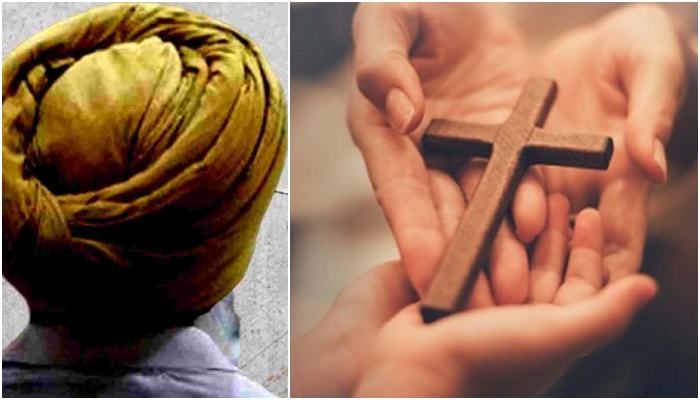
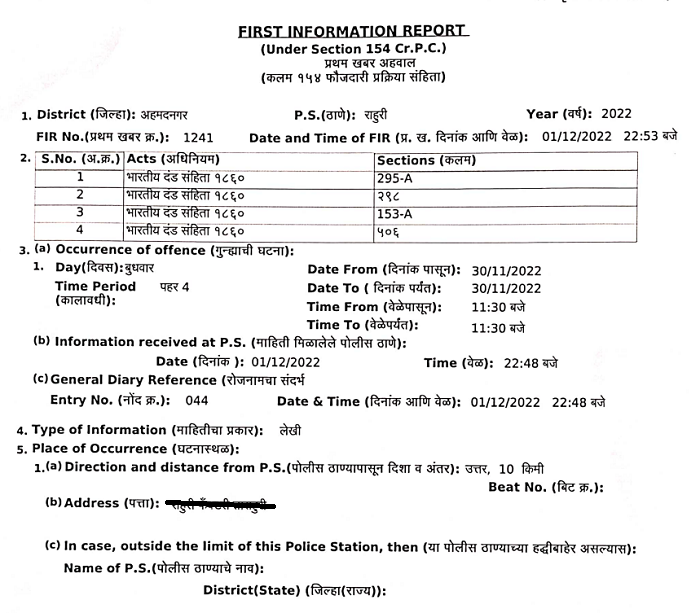
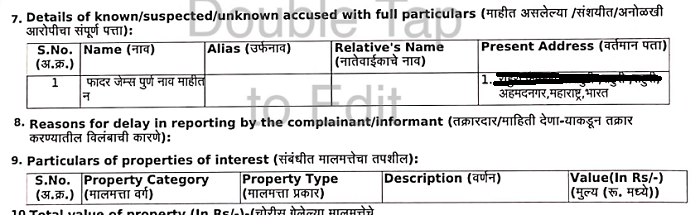
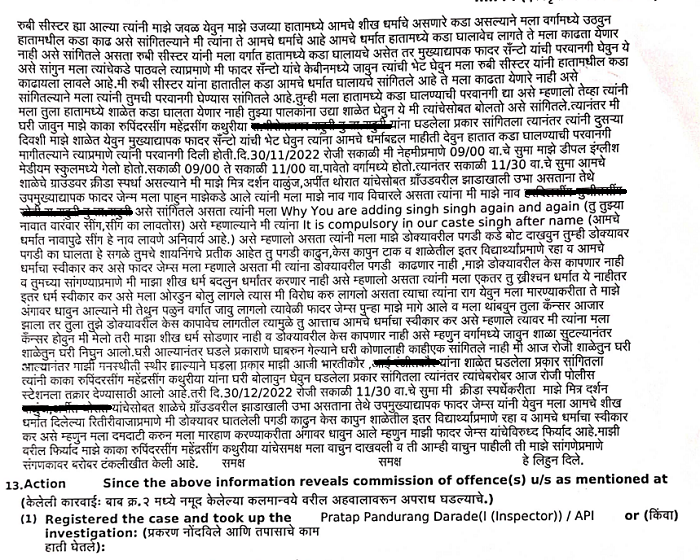
On Thursday, Maharashtra Police registered an FIR against Father James, Vice Principle of De Paul English Medium School in Rahuri, Ahmednagar, for allegedly threatening a 14-year-old Sikh boy and forcing him to convert his religion to Christianity. The case has been registered under sections 295(A), 298, 153A, and 506 of the Indian Penal Code.
According to the FIR obtained by OpIndia, the incident is said to have happened on November 30 this year when the minor victim boy was with his friends on the playing ground of the school. Father James happened to arrive at the spot and saw the victim wearing a turban on his head. Father asked him his name and criticized it saying, “Why are you adding Singh again and again to your name.” On this, the victim stated that he belonged to the Sikh community and that it was mandatory in his religion to add Singh after the names.
FIR Copy obtained by OpIndia
The Vice Principal then pointed at his turban and said that wearing a silver religious kada (bangle), and turban (pagdi), all were to show off fashion and had nothing to do with religion. He then asked the boy to cut his hair short, remove the turban and be like the other students in the class. According to the FIR, Father James also asked the boy to convert his religion to Christianity.
14 y/o Sikh student of De Paul English Medium School, Rahuri Factory, Ahmednagar dist coerced to convert to Christianity by cutting hair n throwing Pagdi, when kid refused he was threatened! FIR u/s 295A, 298, 153A, 506 registered against Father James, Father Santo @NagarPolicepic.twitter.com/zywF6DZWm7
“I told them I would never cut my hair short, remove the pagdi and convert my religion to Christianity. I ran away to my class. However, he followed me and asked me if would I not cut my hair if ever was diagnosed with cancer. On this I told him that my religion was important to me and that I would die of the disease but would never cut my hair,” the victim boy mentioned in the FIR.
Father James named in the FIR copy obtained by OpIndia
The complaint further states that Father James constantly kept on pressuring and threatening the child to either change his religion to Christianity or cut his hair short. The De Paul English Medium School is located in the Rahuri Factory area of the city. The Principal of the school as mentioned in the FIR is Father Santo while Vice Principal is Father James who has been accused in the case.
FIR Copy obtained by OpIndia
Notably, the victim boy who studies in 9th standard was also criticized in the past for following the Sikh religion at the school. In August this year, the boy was asked by one of the teachers named Sister Rubi to remove the religious kada (bangle) that he was wearing. The boy said, “At that time she had asked me to get the Principal’s permission to wear the Kada while at the school and also had called my parents. My uncle, Rupinder Singh Kathuria then had attained the permission and had told the school that religion is important to us and that we would follow it everywhere.”
OpIndia tried to contact the school for its comment on the issue but the calls remained unanswered. However, Rupinder Singh Kathuria, the uncle of the boy talked to OpIndia and said that the matter had been resolved at the local level and that the school had issued an apology for their actions.