On 2nd November 1990, Karsevaks were fired at in Ayodhya. The then government led by Chief Minister Mulayam Singh Yadav had ordered to open fire at Ram bhakts. Now it has been 32 years since this brutal incident. It is the result of the sacrifice of these karsevaks gathered in Ayodhya that today we are seeing a grand temple of Lord Shri Ram being built there and not the disputed Babri structure. It was Kartik Purnima when the Mulayam Singh Yadav government got ram bhakts, who were protesting peacefully, killed.
There were no mobile phones or internet then, but some videos of this incident recorded with cameras occasionally come out on social media. One such video is available on Facebook, in which both the brutality of the police and the dedication of Ram bhakts can be seen together. At the beginning of the video, the police can be seen clashing with a sadhu. A Rambhakt is taken away by the police, to which a person says – ‘Woh Dekho, le gaye’ which means, see, they took him away.
In this video, the police can also be seen charging lathis on the saints and seers and firing bullets from their guns. A Ram bhakt can be heard saying, “Come, lathi-charge, kill. We won’t go, even if you shoot.” One can find arson at various places and people collecting stones in this video. People are also chanting ‘Jai Shri Ram’. In many places, unconscious people are lying on the ground.
In many places in this video, police personnel can also be seen dragging devotees of Lord Ram on the road. The elderly were also not spared in the lathi charge and were also beaten up. On this day alone, 40 Ram bhakts were killed in indiscriminate firing on karsevaks. Kothari brothers who were killed by the police in Hanumangarhi were also among these people. Many Ram devotees also died due to a stampede on the Saryu bridge caused due to police brutality. A journalist present there put the death toll at 45.
60 people were also badly injured in this incident. In fact, there was no account of the injured. The devotees were not only killed but were not even allowed to be cremated as per Hindu rituals. They were buried. In another rare video, people were seen saying that the police barged into the houses of karsevaks and caught them, and brutalized them. A sadhu is seen saying in this video that more than 100 people have died in the firing of UP Police so far.
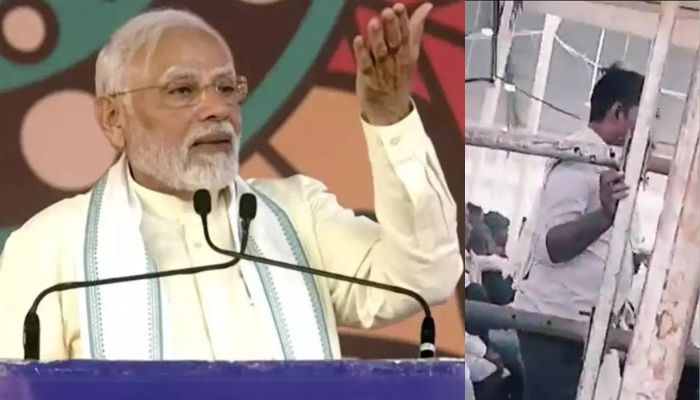
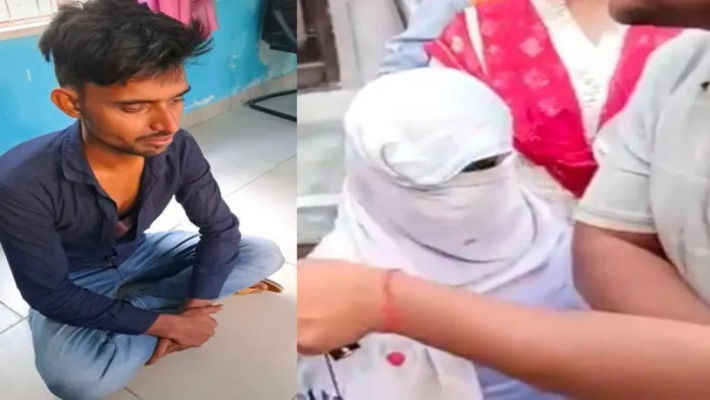
On 2nd November 2022, one person was arrested in connection with a viral video from the public meeting of PM Narendra Modi held in Tharad on 31st October 2022. The video went viral on the internet in which the person was seen unscrewing and removing a bolt of the mandap set for the public meeting that was being addressed by PM Modi. It is notable that PM Modi’s voice is clearly heard in the viral video as the arrested person was removing the bolt as the PM went on delivering his speech.
After the video went viral, the Banaskantha police came into action. They nabbed the person seen in the video and he is now being investigated by the police in order to ascertain the purpose of removing the bolt. The arrested individual is a resident of the village named Tharad.
PM Modi was addressing the public meeting as he laid the foundation stone of several water projects worth over Rs 8000 crores in Banaskatha’s Tharad. The projects would benefit around 1000 villages in the six districts of Gujarat.
PM Modi visited Gujarat on the occasion of the birth anniversary of Sardar Vallabhbhai Patel. He addressed the nation from the Statue of Unity at Kevadiya in Gujarat. He also visited the hospital where the people injured in the bridge collapse accident in Morbi were admitted. He also visited the bridge where the accident took place. PM Modi also visited the families of those deceased in this accident. PM Modi was joined by Gujarat Chief Minister Bhupendra Patel.
PM Modi also spoke to people involved in rescue and relief efforts at the site of the unfortunate incident in Morbi. Following a walkover around the site, Prime Minister Modi visited the civil hospital in Morbi to meet the survivors of the tragedy. The Prime Minister is closely monitoring the situation from the day of the incident. The PM also visited the Superintendent of Police’s Office in Morbi and took stock of the situation with senior police and administrative officials of the zone.
The Morbi mishap
On Sunday, October 30, 2022, over 130 people were killed when the cable bridge spanning the Machchhu River collapsed and everyone on the bridge plunged into the water. Laughter changed to screams of despair as dozens of people enjoying on the bridge drowned in an instant. The rescue efforts are still ongoing in and around the river.
According to the reports, the 150-year-old bridge located 300 km from Vadodara could take the weight of only about 125 people but there were around 400 people on the bridge when the incident happened. A total of 180 were successfully rescued by the National Disaster Response Force (NDRF) teams.
The state government has announced a compensation of Rs 4 lakh for each of those killed in the accident and Rs 50,000 for those injured. The Prime Minister also has announced monetary assistance of Rs. 2 lakh for each of the victims’ families.
The bridge was closed for operational use about 7 months ago. A private company by the name of Oreva Group (Ajanta Manufacturing Private Limited) was given the contract in March of this year to renovate and maintain the said bridge. The suspension bridge, which is also known as the Jhoolta Pul, was reopened on the occasion of Gujarati New Year Day on October 26 this year after the completion of the renovation task of the bridge.
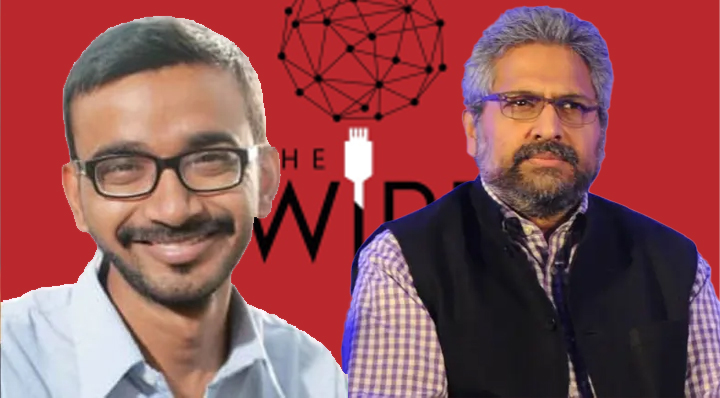
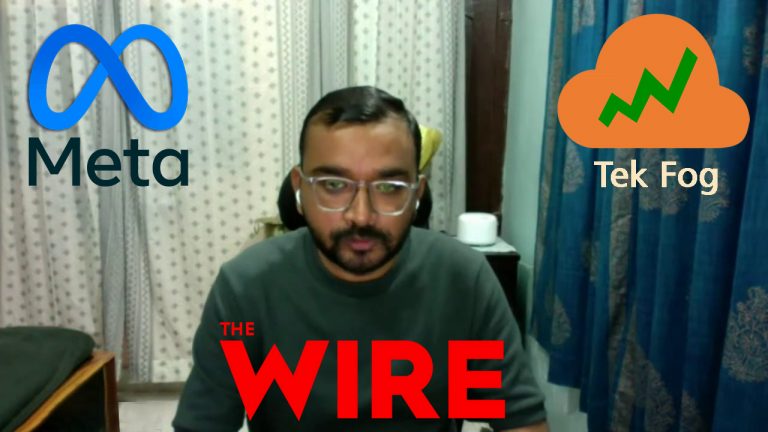
Devesh Kumar, the ‘tech expert’ behind the Tek Fog and Meta stories by The Wire which have been pulled down now after they were found to be fake, has made the first public appearance after the Meta controversy blew up. Appearing on Times Now, Devesh Kumar denied the claim by The Wire that he is mentally unstable, and said he accepts there were ‘errors’ in the story, but blamed his ‘sources’ for the fraudulent documents based on which the story was published.
Talking to Times Now on 2nd November 2022, Devesh Kumar said that he is cooperating with the police in this case, and informed that police have seized two computers and a phone from him in the case. He denied facing any mental health issues, responding to a claim by his former employer The Wire. It is notable that The Wire put Devesh Kumar under the bus after it was forced to retract the Meta and Fog stories, claimed that Devesh Kumar had defrauded them by supplying fake evidence, and also alleged that he is mentally disturbed. He said that The Wire has used the wrong language for him in the complaint filed against him with the police.
Devesh Kumar said, “No. I am not mentally unstable. This is the first time something like this is happening in my life. I am not troubled. The people of ‘The Wire’ and I are facing several difficulties right now. I was nervous and stressed. But the language that has been used is wrong, according to me.”
However, he refused to divulge any details about the matter. He added, “The investigation is currently ongoing. I don’t think I can reveal any details on this. At least not without consulting the police. For now, my statement is the same as that of ‘The Wire’, which tells the overreaching story of what happened.” Devesh also refused to reveal any detail about his background like his educational background. He said he does not want to be the story, therefore he does not want to share personal details.
Devesh Kumar, Ex-Reporter with #TheWire speaks to TIMES NOW.
“We are all disturbed but the language branding me ‘mentally unstable’ is not correct at all. I have cooperated with the Police fully,” Mr. Kumar says. pic.twitter.com/ba3gJTEb4r
On being asked about the investigation initiated by the police, Devesh Kumar further said, “I don’t know enough about the law to comment on this. I have completely cooperated with the police ever since ‘The Wire’ released its statement. Even when they seized my phone and computers, I cooperated with the police. I had requested the police for a hash value to make sure no tempering occurs. But so far, I have not received it. They gave me a document stating that they have seized certain devices and will be looking into the email IDs I had used to conduct the research.”
However, he added that he is not considering any legal recourse now as he is not named in any FIR, and police are questioning him only to gather information. It is notable that the complaint filed by Amit Malviya, based on which the FIR was registered, did not name Devesh Kumar. On the other hand, The Wire has filed a complaint against him, but the police are yet to register any FIR on it. He also pointed out that most of the reports were published in the names of others, not him. Of the three main reports where The Wire had made the claims about Amit Malviya and Meta, all three had Jahnavi Sen as one of the co-authors. Apart from her, Siddharth Varadarajan was a co-author in two reports, and Devesh was a co-author in just one of them.
I'm not taking any legal recourse as I have not been mentioned in any FIR. I'm not required to take the legal route & am not planning to take any. I'm not the main story, it's about Meta: Devesh Kumar, Ex-Reporter with #TheWire speaks to TIMES NOW pic.twitter.com/3mJpkSQmxU
Interestingly, Devesh Kumar said that he agrees with Wire’s statement that there were mistakes in the Meta story, and said his stand is the same as the Wire’s stand. This is a surprising statement because The Wire has claimed that Devesh Kumar defrauded them by supplying forged documents.
On October 29, The Wire filed a complaint at the Economic Offence Wing of the Delhi Police against its former employee and so-called ‘researcher’ Devesh Kumar, claiming he provided forged documents with “an intent to malign The Wire’s reputation”. Furthermore, it was noted by The Wire in its complaint that Devesh named Philip Chua, APAC Head of Public Policy at Instagram as the person who provided him with a ‘Post Incident Review Report’ that had pointed fingers at Bharatiya Janata Party’s Amit Malviya as the person responsible for the post takedown.
Devesh seemed ‘highly disturbed mentally’, claims The Wire.
The Wire claimed in its complaint that following the internal investigation and review of the material sent by Devesh by ‘reputed’ outside sources when they tried to contact Devesh, he did not revert. However, he called The Wire’s Product and Business Head Mithun Kidambi on October 27 and “confessed to fabricating all the material” that The Wire used in its Meta stories. “The impression Kidambi gathered was that Devesh Kumar seemed highly disturbed mentally,” claimed The Wire.
The complaint was sent to the Special Commissioner of Police (Crime) Ravinder Singh Yadav on Saturday (October 29). The Print quoted Yadav saying that he received the complaint and the Police were “looking into the matter”. Police were yet to send a confirmation of the receipt of the complaint to The Wire’s founding editor Siddharth Varadarajan.
FIR lodged against The Wire
On October 29, BJP’s Amit Malviya filed a complaint with Delhi Police against The Wire, its editors, and reporters and said they published a series of stories with the intent to tarnish his reputation. Based on his complaint, an FIR was registered under Sections 420 (cheating), 468 (forgery with the purpose of cheating), 469 (forgery for harming reputation), 471 (using forged document), 500 (defamation), 120B (criminal conspiracy) and 34 (common intention) of the Indian Penal Code. The FIR was lodged after The Wire took down Meta stories that claimed Malviya was able to take down Instagram posts critical to the government, no questions asked.
Pakistani fans on Twitter lost their cool on umpire Marais Erasmus as India defeated Bangladesh in a close rain-stricken thriller at the T20 world cup, taking India one step closer to qualification for the semis and all but eliminating Pakistan from the next leg of the tournament.
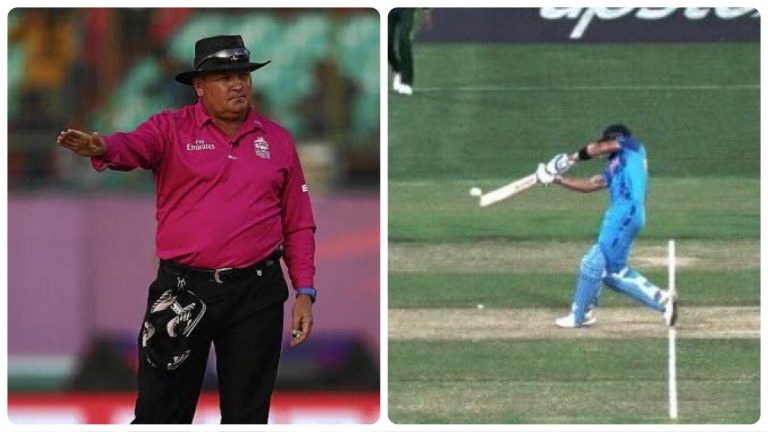
Marais Erasmus, former South African cricketer and veteran ICC umpire who umpired in India vs Bangladesh encounter earlier today, attracted the wrath of disgruntled Pakistanis, who were perhaps fishing for a scapegoat to cover up for their team’s underwhelming performance at the world cup. A raft of Pakistanis took to Twitter to target Erasmus and accuse him of favouring India and helping it to be at a place where its qualification for the semis appears almost certain.
Pakistanis, who are still smarting the no-ball call given by Erasmus in the last over bowled by Nawaz in the Indo-Pak clash that tipped the treacherously poised game in India’s favour, started attacking Erasmus after he called a no-ball by a Bangladesh quickie to Virat Kohli.
Pakistanis vent their spleen against Marais Erasmus as India’s victory over Bangladesh diminishes Pakistan’s chances of qualification
Ihtisham Ul Haq, a Pakistani ‘journalist’, shared images of Marais Erasmus from India vs Pakistan and today’s Indo-Bangaldesh encounter to congratulate India for entering semis.
Several other Pakistani attacked Erasmus as India clinched a thrilling victory over Bangladesh, diminishing Pakistan’s chances of qualifying for the semis.
Some Pakistanis were particularly angry with Erasmus for resuming the match between India and Bangladesh that led to the latter’s defeat. Before the rain obstructed the game, Bangladesh was coasting comfortably, poised to chase down India’s target. And when the rain stopped the play, Bangladesh was well ahead of India as per the D/L method.
Earlier last month, Pakistanis resorted to attributing a fake quote to Nasser Hussain over the last-over no-ball that was hit for a six by Virat Kohli. As retweets mounted and deluded Pakistani fans expressed their frustration on the loss, Nasser promptly clarified, saying that he had not issued the said quote and it was a fake quote and fake news. But Pakistani fans remained inconsolable as they continued sulking over their team’s loss against India.
India currently sits on the top of the points table in its group with 6 points and a match to go. South Africa is positioned 2nd in the group with 5 points and two matches to go, one with Pakistan scheduled for November 3. Pakistan will have to beat South Africa to remain alive in the contest and then emerge victorious in its last match against Bangladesh, all the while hoping South Africa and India lose their matches against Netherlands and Zimbabwe respectively.
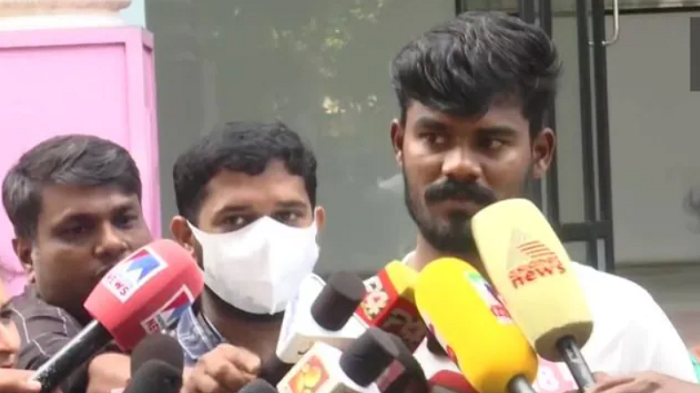
Days after a disturbing case of human sacrifice and black magic was uncovered in the state of Kerala, the son of one of the victim women who were killed brutally by the accused, alleged that the state is not taking the matter seriously. Selvaraj, son of Padma who was found to have been murdered as a part of a gruesome black magic ritual carried out by Md Shafi, said that he has been waiting for the mortal remains of his mother but the government is not helping him in the matter.
Two women named Padma and Rosily were murdered in September and June respectively and their body parts were severed and buried at Elanthoor in the Pathanamthitta district. The two were murdered by Mohammed Shafi (agent), BhagavalSingh, and his wife Laila to gain economic prosperity in life. However, both incidents had come to light on October 11.
As reported earlier, Padma worked as a lottery dealer and the entire case of human sacrifice had come to light after Sevalraj filed a missing complaint about her mother, who he said hadn’t called for the past several days. The complaint was filed by Sevalraj on September 28. After arriving in Kerala on September 28 in search of his mother, Selvaraj, a native of Tamil Nadu’s Dharmapuri, has been sharing rented accommodation with his aunt Palani Amma in Kochi.
Kerala government not taking the matter seriously
“I have met Kerala chief minister twice. He is not taking the case seriously. Even after filing a complaint, the officials are not helping us. DNA test should be done and the dead body should be released soon”, Sevalraj said on October 31.
According to reports, the mortal remains of Padma (killed in September) and another victim Roselin (killed in June) are kept in the Kottayam Medical College Hospital mortuary. The dead bodies will be handed over to their family members after DNA tests are completed. However, Sevalraj said that there is no clarity on when the DNA tests will be done.
“Mine and my elder brother’s blood samples were taken for the DNA test on October 13. Since then I have been enquiring to the police when will the tests be finished. Till now, I haven’t received any information regarding a date”, Sevalraj was quoted. The DNA test was just being performed to confirm Padma’s identity after her body was sliced into 56 pieces by the defendants.
Sevalraj also accused the state government and said that the accused would continue to commit these types of crimes when they would be released. “We came from Tamil Nadu and are suffering in Kerala. After the death of my mother, there was no help from the government. I am sure that the killers of my mother will commit these types of crimes when they come out”, he said.
Sevalraj has no money to even afford a lawyer
Selvaraj, who used to work in an IT firm in Chennai, has lost his job as a result of the lengthy leave he had to take after his mother went missing in September. After reports of Padma’s murder surfaced, more than ten of her family members traveled to Kochi. Others have returned, but the son of the deceased said that he will not return without his mother. He also said that he has no money to hire a lawyer for the case.
He has written a letter to Kerala’s Chief Minister, stating that he has been struggling to survive without work and money. He has also asked the government to release his mother’s body as soon as possible. “I don’t have the ability to pay for a lawyer for the case. It is not even possible to perform the last rites of my mother. Already lost over Rs 60,000 to stay in Kerala. I also lost my job due to pursuing the case”, Sevalraj said.
The accused in the shocking human sacrifice case in Kerala had subjected the two women to gruesome tortures, including chopping off one of their breasts and cutting the other’s body into 56 pieces. While investigating the case, the Special Investigation Team discovered 40 grams of gold taken from the body of the second victim Padma and mortgaged with a pawnbroker in Ernakulam by the main accused Shafi.
A case of rape of a minor girl has been reported in Faridabad, Haryana. The victim is an 11-year-old fourth-grade student. The name of the accused is Sajid, who is originally said to be a resident of Mewat. Sajid, who is about 32 years old, is married and the father of three children, according to the information received. After filing an FIR on Monday (October 31), police apprehended Sajid.
According to media reports, the incident occurred in Faridabad’s Sector 58 police station area. The 11-year-old Hindu girl lives here with her five siblings and father. The child’s mother has already died. Sajid, the accused, lives in the victim’s neighborhood and works as a welder. He has been sexually exploiting the girl for about six months, as per the complaint. According to the complaint, Sajid invited the victim to his home by luring her with food and then raped her for the first time. Later, he kept threatening the girl and continued to sexually exploit her.
Reportedly, the victim also got pregnant. When the minor girl’s grandmother became concerned about the changes in her body, she questioned the victim. Then the victim narrated her ordeal to her family members. When the victim’s family members confronted the accused Sajid about it, he pushed them away and fled. A police report was eventually filed. Sajid was nabbed by Faridabad’s Sector 65 Crime Branch and Mahila Thana Police. According to the police, Sajid has been charged under Section 506 of the IPC and the POCSO Act.
While speaking to the media, the victim’s family and neighbors revealed Sajid’s horrific crime. Hindu organizations and the victim’s family have called for the accused to be hanged.
Faridabad Hindu organizations have expressed their outrage at this incident. Bittu Bajrangi of the ‘Gau Raksha Bajrang Force,’ a Faridabad resident, told OpIndia that he and the victim’s family worked tirelessly to have the accused arrested.
The Wire has accused one of its former employees and ‘tech expert’ of duping them by providing forged documents and evidence in the Meta stories. Devesh Kumar, who has worked on multiple stories for The Wire, is currently AWOL after he deleted his presence from the Internet entirely.
Since his name started to appear frequently following the Meta stories and fell apart, some disturbing and concerning facts about his history have come to light. Devesh also worked on Tek Fog “investigation” for The Wire. Those stories have also been pulled down by the portal. Interestingly, Devesh appeared on several platforms after Tek Fog stories and “explained” the investigation.
One such session with Devesh was done by the left-wing student organisation All India Students Association or AISA. On January 21, after Tek Fog’s story “shook” the nation, Devesh was called for an online session by AISA titled “Is the BJP-RSS regime turning skilled Young people into Criminals?”
In the session, Devesh explained the investigation he did with Ayushman for The Wire over a period of 20 months. He claimed that they found how trends were being run during the investigation. However, in the middle of QA during the session, he said, “We do not have any proof if these trends were being run via Tek Fog.” He added that BJP leader Kapil Mishra had quoted the story and said he should have been approached to know if he uses Tek Fog. Devesh said he told Mishra there was no proof, but it was about the network.
He further explained how Kapil Mishra and OpIndia were two main accounts that were the base points of the discussions on social media during the Delhi Riots. It was obvious OpIndia would have come up while checking trends on Delhi Riots as we were consistently covering the riots. Our stories exposed the biased of the mainstream media. OpIndia busted several misleading reports and propaganda against Hindus in the aftermath of the Delhi Riots 2020.
Devesh claimed that the content of OpIndia was non-verifiable, and portals like Alt News had raised questions over our coverage. However, the investigation into the Delhi Riots by the agencies, as well as remarks by different courts, proved on several occasions that our reporting was spot on about the larger conspiracy behind the riots.
The curious history of Devesh Kumar
Twitter user Herin Maru, who goes by the handle her1n on the platform, published a detailed thread on the curious history of Devesh. Here is what he pointed out in his thread. We are adding only those details that we could independently verify.
Adopting a girl child at the age of 19
In 2016, Devesh claimed in a blog post that he had adopted a girl child from a dead mother and HIV-positive parents. The timeline that Devesh mentioned was the time when he was only 19 years old and unmarried. Legally it was not possible for Devesh to adopt a child, that too a girl at the age of 19 while being single. It is possible that by adoption, he meant he was paying for the child’s day-to-day expenses, including food, schooling etc by way of sponsorship.
During his TEDx talk in 2014 titled – “The addiction of doing things”, it’s mentioned that he volunteered for NACO for 6 yrs, and AID India for 3 yrs.
He claims a baby girl died in his arms, whose parents died due to AIDS.
Devesh named the girl child Manjiri. In 2019, he claimed in a blog post that the girl child died. Manjiri, according to him, was only eight years old. He said that she died as a construction brick fell on her and crushed her head. Devesh claimed he did not go to see her one last time.
In his 2019 blogpost, he claimed that Manjiri (8) had passed away and he couldn’t find the courage to see her the last time.
In a Quora post around five years ago, he mentioned that a 19-year-old woman named Rabya died in front of him in 2011. He claimed that he wanted to pay for her breast cancer treatment, but she passed away only 15 minutes after he promised to cover her bills.
In his Quora post, Devesh claims that his colleague Manvi all of a sudden passed away after a week of fever, typhoid and brain hemorrhage; just some before their project’s presentation.https://t.co/se9KC8v8X8pic.twitter.com/rwm2MqmgVc
According to another Quora post, Devesg said that another woman named Manvi died in 2011. She died after getting typhoid and a brain haemorrhage. Both Rabya and Manvi were talented women who died at an early age, he claimed.
In his Quora post, Devesh claims that his colleague Manvi all of a sudden passed away after a week of fever, typhoid and brain hemorrhage; just some before their project’s presentation.https://t.co/se9KC8v8X8pic.twitter.com/rwm2MqmgVc
In a 2016 post, Devesh claimed to have met a 12-year-old girl named Radhika in 2009. She passed away four years later, in 2013, due to HIV. She was allegedly abused by a police officer.
In his 2016 blogpost, Devesh claimed he met Radhika (12) at NACO. She was sexually abused by a policeman, and passed away 4 years later due to HIV.
She also had a colleague named Snigdha who had passed away for reasons not mentioned in the blog post. However, he mentioned that another colleague who was drug-addicted fixed her life and named her child Snigdha.
It is unclear why so many women around him had such deep troubles, deaths and whatnot. Men around him seem to have lived a happy life.
A lot of money spent at a young age
Devesh claimed to have spent quite a large amount at a very young age. However, his posts where he boasted about spending money stopped at one point. Herin pointed out that this was when he started posting about running parallel servers to run bots to defeat BJP IT cell and allegedly organising conferences to raise funds.
If you have read between the lines, there is a possibility that he has many lenders, who were due.
But his flow of money stopped, and this is where his Reddit and Meta journey started, by asking for more monetary support.
OpIndia has a detailed report on Devesh’s claims about running a parallel IT cell to counter “BJP’s attempts to use social media for political gains”. He had claimed that he was spending lakhs of Rupees from his pocket to run up to 40 servers on Amazon Web Services to run and manipulate bots on Twitter. He had claimed that he was hijacking Twitter trends and polls using these bots. Essentially, he was doing the same thing using Twitter bots that he had claimed BJP was doing using Tek Fog, and he had justified his actions.
Devesh stole credit for illustrations
Another Twitter user Banbreach published a Tweet thread on October 31, explaining how illustrations credited to Devesh Kumar were created by someone else. A story written by Devesh on the Pegasus application is still available on The Wire. The story featured an artwork that was previously credited to Devesh. However, later it was credited to absurd.design and a footnote was added, “The article has been edited to reflect that the featured illustrations, previously credited to Devesh Kumar, are by illustrator Diana Valeanu, from absurd.design.”
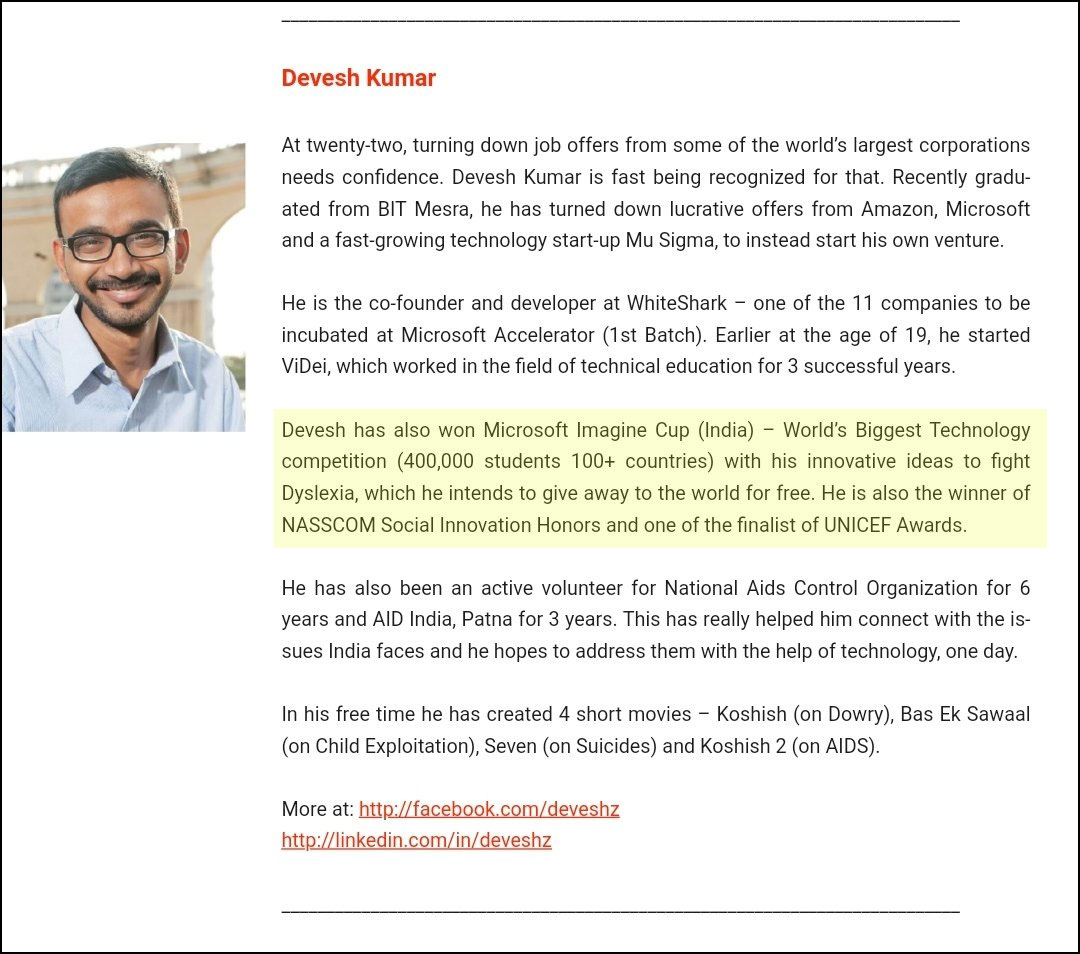
In the TedX speaker’s description, it was mentioned he won Devesh has also won the prestigious Microsoft Imagine Cup (India). However, the description failed to mention that his team, D Labs, had won the “people’s choice award”. It is clearly mentioned on the Microsoft website as well. Herin quoted a Twitter user saying Devesh lied about the award in the college and allegedly used scripts to get votes for his team. OpIndia could not verify the tweets as they seemed to have been deleted.
Source: Archive.org
In a report, OpIndia’s editor Nirwa Mehta explored an AMA session on Tek Fog hosted by The Wire’s Siddharth Vardarajan. The session meted out how conveniently Devesh, Ayushman and The Wire kept on building a story based on an app that “never existed”. You can check the details here.
On Wednesday 2nd November 2022, North Korea fired as many as 23 missiles into the sea. The missiles were directed toward South Korea and Japan. One of the missiles landed less than 60 km off South Korea’s coast—a first in the enduring conflict between the two neighbours.
South Korean president Yoon Suk-yeol termed the unwarranted provocation as territorial encroachment. The missile made landfall south of the Northern Limit Line (NLL), a contentious maritime boundary between North and South Korea, but outside of South Korea’s territorial seas.
It was also the most missiles launched by the North in a single day, and it was the first time a ballistic missile had fallen in close proximity to South Korean seas since the peninsula was divided in 1945. Rare air raid warnings were sent by South Korea, who also responded by launching its own missiles.
TENSIONS RISE ON KOREAN PENINSULA – North Korea fires 18 missiles into sea – In response to US-South Korean drills – Biggest volley of missiles since 1953 – Triggering air raid sirens in South – 100 artillery rounds fired into buffer zone – South fires 3 missiles in show of force
In retaliation, three air-to-ground missiles were fired into the sea north across the NLL by South Korean jets, according to the South’s military. AGM-84H/K SLAM-ER, a 360 kg warhead, “stand-off” precision strike weapon produced in the United States, was among the weapons deployed, according to an official. After Yoon’s administration promised a prompt and decisive reaction, the South launched its attacks.
His office said in a statement, “President Yoon Suk-yeol noted North Korea’s provocation today was an effective act of territorial encroachment by a missile intruding the NLL for the first time since (the two Koreas’) division.”
When questioned if the missile was headed towards South Korean soil and should have been destroyed, a top presidential official responded, “Strictly speaking, it did not land in our territory but in the Exclusive Economic Zone under our jurisdiction, therefore it was not subject to interception.”
South Korea’s Joint Chiefs of Staff (JCS) said, “That missile was one of three short-range ballistic missiles fired from the North Korean coastal area of Wonsan into the sea. As many as 14 other missiles of various types had been fired from North Korea’s east and west coasts. At least one of the missiles landed 26 km south of the NLL, 57 km from the South Korean city of Sokcho, on the east coast, and 167 km from the island of Ulleung, where air raid warnings were sounded.”
According to a report by Reuters, an Ulleung county official said, “We heard the siren at around 8:55 a.m. and all of us in the building went down to the evacuation place in the basement. We stayed there until we came upstairs at around 9:15 after hearing that the projectile fell into the high seas.”
Moreover, the North launched about 100 artillery rounds into a military buffer zone created by a military accord with the South off its east coast. According to the South Korean JCS, an agreement from 2018 prohibiting aggressive conduct in border regions is broken by the firing. Due to the fact that the 1950–1953 Korean War concluded in an armistice rather than a peace treaty, North and South Korea are officially still at war. North Korea, which has nuclear weapons, has conducted a record number of missile tests this year, and authorities in Seoul and Washington claim the country is now ready to test nuclear weapons for the first time since 2017.
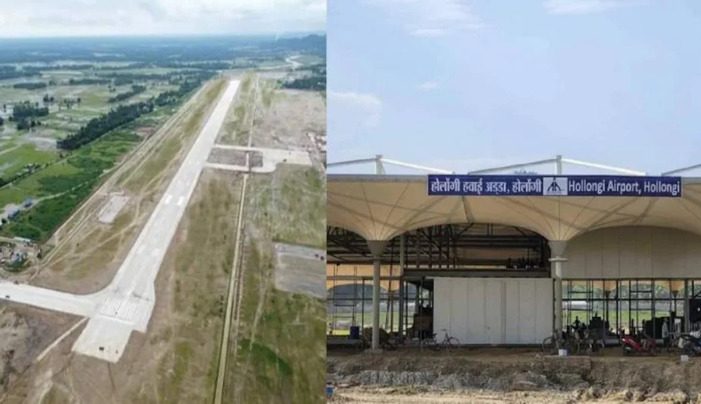
On Wednesday (November 2), Union Cabinet headed by Prime Minister Narendra Modi approved the naming of Greenfield Airport at Hollongi, in Itanagar, Arunachal Pradesh as Donyi Polo Airport.
The Airports Authority of India (AAI) is developing a greenfield airport in Itanagar with the aid of the Centre and the state government at an expense of Rs 646 crore.
The Cabinet, chaired by Prime Minister Narendra Modi, approved the naming of the greenfield airport as ‘Donyi Polo Airport, Itanagar,’ according to an official release.
The Arunachal Pradesh government passed a resolution naming the airport ‘Donyi Polo Airport, Itanagar.’ It reflects the people’s reverence for the Sun (Donyi) and the Moon (Polo) to symbolize the state’s traditions and rich cultural heritage,’ according to the press release.
Modi government’s decision to name the airport Donyi Polo after the religious and cultural heritage of Arunachal Pradesh will certainly not go well with the left-liberal ecosystem which has always blamed the Modi government for honouring indigenous traditions and native sentiments.
Interestingly, Arunachal Pradesh’s local media has already been using the Donyi Polo name ever since the proposal for its naming came up for consideration.
Union Minister Nitin Gadkari took to Twitter to inform about the naming of Donyi Polo Airport. “Towards the Progress of North East India. Today’s Cabinet chaired by PM Shri @/narendramodi Ji approved the naming of the Greenfield Airport at Hollongi, Itanagar, in Arunachal Pradesh as Donyi Polo Airport, Itanagar,” he tweeted.
In another Tweet he wrote, “Symbolising the traditions and rich cultural heritage of the State, the name reflects the Arunachal people’s reverence of the Sun (Donyi) and the Moon (Polo).”
Symbolizing the traditions and rich cultural heritage of the State, the name reflects the Arunachal people’s reverence of the Sun (Donyi) and the Moon (Polo).#CabinetDecisions
In January 2019, the central government accorded ‘in-principle‘ approval for the development of the Greenfield Airport.
The greenfield airport, with a 2,300-metre runway, would be the first in Arunachal Pradesh to be capable of landing huge aircraft. The airport which is the state’s third after Pasighat and Tezu covers an area of 4,100 square meters. Donyi Polo is the 16th airport in northeast India.
Notably, the AAI undertook the airport development project to improve air connectivity in the mountainous state as the airport holds strategic significance. IndiGo’s Airbus A320 successfully completed a test landing at Donyi Polo airport. During peak hours, the Donyi Polo airport, which has eight check-in counters, can accommodate up to 200 passengers.
The Government of India devised a Greenfield Airports Policy in 2008, which outlines the guidelines, procedures, and conditions for the establishment of new Greenfield Airports in the country. The Government of India has given ‘in-principle’ approval for the establishment of 21 Greenfield Airports across the country under the Greenfield Airports Policy. As of now, there are 15 operational airports in the northeastern region which are Guwahati, Silchar, Dibrugarh, Jorhat, Tezpur, Lilalabari, and Rupsi (Assam), Tezu and Pasighat (Arunachal Pradesh), Agartala (Tripura), Imphal (Manipur), Shillong (Meghalaya), Dimapur (Nagaland), Lengpui (Mizoram) and Pakyong (Sikkim).
An exclusive series of reports by the Hindi daily Dainik Bhaskar reported that in Rajasthan, minor girls were being sold off by their family members to pay off loans and the system is prevalent in some districts where certain ‘caste’ Panchayats control the locals. The reports shared heartbreaking testimonies of victims.
As the Indian statutory bodies like the National Commission for Protection of Child Rights (NCPCR) and the National Commission for Women (NCW) initiate their action against this scandal a day after National Human Rights Commission (NHRC)issued a notice to the Congress government in the state, it becomes evident to recollect the facts and go through the details of this heinous crime.
The modus operandi
The Bhaskar reports alleged that the loan traps are deliberate and targeted families are made to fall into it. The ‘caste’ panchayat members notice some poor families who have minor girls. They set quarrels between two families and when the aggrieved people approach the ‘caste’ panchayat members assuming them to be the responsible ones, the panchayat burdens such families with a fine of lakhs of rupees. In many settlements in the Bhilwara district of Rajasthan, even today, if there is a dispute or quarrel between two parties, they do not go to the police. A caste panchayat is set up to settle disputes. This is where the process of enslaving girls begins.
The families end up taking loans from private money lenders. Many times, the powerful members of the panchayat provide this loan. For repayment of these loans, these poor families are forced to sell their daughters to these ‘caste’ panchayat members who in turn sell these girls at yet higher prices and earn heavy commissions – the amount of which depends on multiple factors. These girls are then drawn into sexual slavery and prostitution. There have been instances where mothers and sisters are brutalised if the girl refuses to be taken away, as per the reports.
Types of ‘sale’
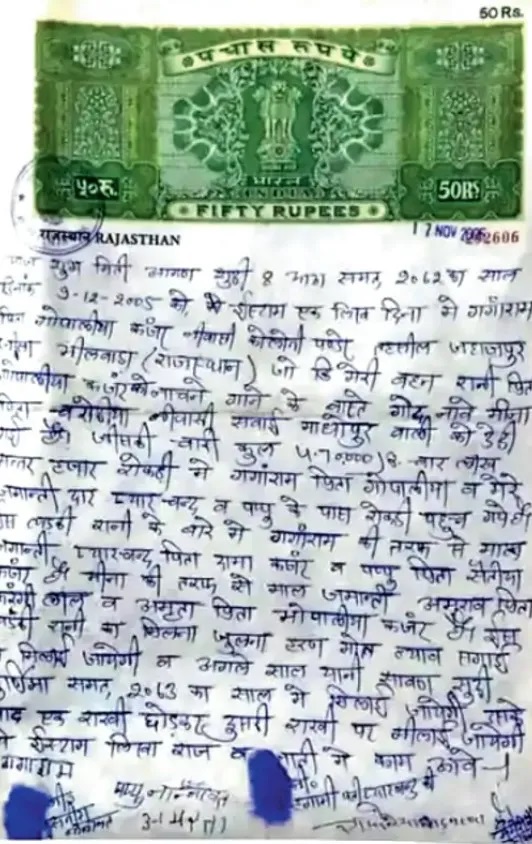
The ‘caste’ panchayat members often work as dealers and these ‘deals’ take place in two different ways. Either the girls are sold for a few years or they are sold for a lifetime. In the first type, the dealers sell the girls for 5 to 10 years. On stamp paper, buyers deal with the pretext of adopting a girl. In this, the girl is allowed to come home once a year at the festival of Rakhi. Buyers make girls ‘work’ as sex slaves, prostitutes and domestic helps for years, during which the tip that the customer gives, the girls send the money to their homes. Brokers get less commission in this deal. If a girl gets a deal for Rs 8 lakh, the broker gets Rs 2 lakh.
In the second type of ‘deal’, the girls are sold for a lifetime. The girl can never come back to her house. She can’t contact her family all her life. Buyers pay a higher commission to the broker to get this deal done. If someone sells a girl for Rs 8 lakh, then the broker gets a commission of Rs 3 to 4 lakh. Brokers get this deal done by promising the parents of the girls to get extra money. Agents associated with the panchayat have built luxurious houses in the village. No one dares to speak in front of the police and administration because they fear these powerful agents.
Training the girls
Buyers get girls of their choice in the age group of five to eight years. As minor girls, these girls are given specialized training for many years. The training brainwashes the girls to identify the buyer as their family member and refuse to divulge the details of their original family.
Girls from 4 districts including Bhilwada are purchased on stamp paper and sent across the country. The price of girls is decided according to age. After buying, they are kept hungry until the girls agree to obey every order of the broker. Special training is given to these girls to woo customers. Injections of oxytocin are given to these girls, which makes the body develop quickly. When these girls are caught in the police raid, the brokers cleverly take them back posing as their families.
Where exactly in Rajasthan?
Bhilwara, Tonk, Sawaimadhopur, and Bundi have been named as the districts with the highest number of cases of trafficking and selling of girls, as per the report. This gang is most active in the villages of Pander, Tola, Piplu, Sui, Sartala, Thamaniya, Mandalgarh, Surana’s Kheda, Kuchlwada, Badliawas, Udliyawas, Basni of Bhilwara. Apart from this, girls are also sold in Jaisinghpura, Manhatwas, Pozgarh, Ghuni, Kholiyada, Rajmahal, and Kakod villages of Tonk.
After buying girls from the villages of Bhilwara, Tonk, Sawaimadhopur, and Bundi the ‘dealers’ bring them all to Sawai Madhopur and Bundi. Here girls are kept in secret houses. As per the age, and physical appearance of the girls, they are auctioned and sent out of the state. The auction is done in lakhs of rupees. Touts have set up secret hideouts in Chauth Ka Barwada, Udalwada, Sonf, Mandawara, Vanobhabasti of Sawai Madhopur, and Dablana, Ramnagar of Bundi. From here, girls are sold to buyers across the country. After this, they are sent to Mumbai, Delhi, Bengaluru, Pune, Nashik, Goa, Vapi, Daman-Island in Gujarat, Meerut, Ghaziabad in UP, Gwalior, Neemuch, Mandsaur in MP, and Nagpur in Maharashtra.
The brokers make huge money while the victim girls’ families are deprived
Agents and brokers reportedly keep a track of girls from families struggling with finances. They offer loan s themselves or arrange for a loan from their contacts, ans convince the family to sell their daughters for the money. After the daughter’s family agrees, they call the buyers and get the deal done on stamp paper.
Even after selling daughters and sisters, the burden of the loan does not come down, because the amount of interest is very high. Apart from this, brokers take one-third of the amount received on selling the girl as a commission. For example, if a girl’s deal is for Rs 6 lakh, the broker takes a commission of Rs 2 lakh, the Bhaskar report says. Only interest is paid from the rest of the amount, the principal amount remains as it is. People living in these localities do not even have land for farming. They earn a living by daily wages or by selling daughters.
Suresh, a resident of Pander village in Bhilwara, said, “Our ancestors fought the British in the freedom struggle. That’s why I’ve always been in the forests. We never had land, and because of this, we could not even do farming. After independence, many people opted for theft to live. On this, the police launched a campaign and gave us land to settle outside the cities and motivated our people to work as laborers. This is the reason that be it a village or a city, our settlements are on the outskirts of the city. Most people work as laborers to feed themselves.”
Girls rescued in the last raid are sent to the Child Welfare Committee
In 2019, the police conducted a raid in the Pander village of Bhilwara and rescued 20 girls who were sold and drawn into prostitution. Dr. Suman Trivedi is a former chairperson of the Child Welfare Committee of Bhilwara and a judicial member of Standing ‘Lok Adalat’. Bhaskar quoted her saying, “During the counseling of the girls, it was revealed that capsules were given to the girls every day to make them ‘mature’ quickly. They also gave injections of oxytocin. We were also shocked to see a girl. She told her age to be 14 years, while she looked 25 years old. He was given several injections and daily capsules. At the age of just 14, she had had an abortion twice.
Dr. Suman Trivedi told, “Even after being rescued by the police, most of the girls are not able to go to their homes. The biggest problem is seen among those girls, who are either sold by their families in childhood or who are kidnapped. Due to the brainwashing of these girls in childhood, they do not remember the names of their parents and village. When asked, they tell the exploiters as their parents. In such a situation, these girls have to be sent to a juvenile home or Nari Niketan after counseling.”
She added, “When girls come to us, they do not say anything for many days. In the early days, they don’t believe us. They think the police will put them in jail or send them back to the buyer if they talk. Usually, it takes extensive counseling.”
Connecting the dots
Dr. Suman Trivedi also told how difficult it is to draw information from brainwashed girls. She said, “Counselling minor girls is the most difficult. They change their statements every time. As they don’t remember much, they forget most of the old things, what happened to them. Every statement of these girls has to be noted and talked about again and again. They remember everything in pieces, all these dots have to be connected.”
She added, “Many times girls just remember that they were lost at the fair. I don’t remember the village and the address. In such a situation, which fair was there, what was the atmosphere there, how was the path, whose temple was, try to find out by connecting these small links. All this sometimes takes months.”
Routing back to normal life
After rescuing the minor girls, the police have to hand over the girls to the Child Welfare Committee in a span of 24 hours. After this, the Child Welfare Committee sends the minor to the children’s home and the adult girls to Nari Niketan after counseling the girls. The Child Welfare Committee counsels minor girls and traces their parents. After this, the minor girl is sent home.
After finding out about the parents of many minor girls, it is revealed that it was their parents who sold them in the first place. In such a situation, the Child Welfare Committee does not hand over those girls to their parents. Such girls are sent to children’s homes, where they are taught. When they become adults, they are sent to Nari Niketan.
The Child Empowerment Department also provides skill development courses to many girls on behalf of the government. So that girls can be self-reliant. For this, a loan is also given by the department. The adult girl is kept in Nari Niketan, although due to being an adult, the girl can leave if she wants. However, many girls do not have identity cards or they have fake identity cards. In such a situation, they do not get to work anywhere and unfortunately, after leaving Nari Niketan, they are entangled in the dark world of prostitution once again.
Presidents of the state and the national commission for women visited the spot
National Commission for Women chairperson Rekha Sharma, along with state women’s commission chairperson Rehana Riaz Chishti, came for an investigation in Pander, Mandalgarh, Jahajpur, and Bhojgarh in the Bhilwara district on Monday along with the team. Both teams went to the villages and talked to the people and tried to know the truth. Apart from this, the administration and the police also briefed them about the case. After the investigation, both officers noted different observations.
Two days ago, National Commission for Women chairperson Rekha Sharma visited Bhilwara. She said, “In Bhilwara, an entire gang is working to drag young girls to sex work. Girls are being sent out of here.” She also accused the Bhilwara administration and police of working blindly. She said, “The police know all in which area the girls are being forced into sex work and which family is involved in it.”
Rekha Sharma said, “I went with a reporter in his car before my team arrived. As soon as the reporter went to those girls, they started wooing him like a client. I also have photos of it. I then called the Bhilwara SP. He conducted a survey there at night. The next day my team went everywhere. They didn’t find those girls there. But apart from the forced prostitution, there were a lot of complaints from villagers.”
On the arrival of the team the next day, the girls were not seen in the village. People in the suspected localities spoke of their daughters studying outside. When asked about whether their daughters were studying in colleges, schools, and educational institutions and in any district, there was no response from these people. State Women’s Commission Chairman Rehana Riyaz Chishti visited Bhilwara Collector and SP. The authorities ignored the issue as an old matter, as per Bhaskar. The report also stated that the flesh trade goes on without any hindrance on the highways. Makeshift shops and huts are visible on highways where vehicles stop and girls invite customers in full public view. When inquired, the pimps inform that the local police is aware and they give a part of their earnings to local policemen to keep the business running.