Home Blog Page 321

IMF imposes 11 new conditions on Pakistan, bringing the total to 50 conditions for $7 billion loan, says sustained tensions with India can heighten risks to the program

A week after the International Monetary Fund (IMF) approved $1 billion for Pakistan under the Extended Fund Facility (EFF), the lending body has imposed 11 new conditions on the country. A Staff Level report unveiled by IMF on Saturday listed the new conditions, reported The Express Tribune.

The new conditions include approval of a new Rs17.6 trillion budget, increasing debt servicing surcharge on electricity bills, and lifting restrictions on the import of more than three years old used cars. With the new 11 conditions, the total number of conditions for the $7 billion loan has gone up to 50.

The report also said that “rising tensions between India and Pakistan, if sustained or deteriorate further, could heighten risks to the fiscal, external and reform goals of the programme”. It states that Pakistanโ€™s defence budget for the next fiscal year at Rs2.414 trillion, which is higher by 12%. In contrast, the Pakistan govt has indicated that it will allocate over Rs2.5 trillion, up by 18%, after Indiaโ€™s operation Sindoor. Notably, Pakistanโ€™s financial year is July to June.

One of the important conditions is obtaining parliamentary approval for the budget of financial year 2026, in line with IMF staff agreement, to meet targets of the program by end of June 2025. As per IMF, total federal budget will be Rs17.6 trillion.

A new condition has also been imposed on the provinces, where the four federating units will implement the new Agriculture Income Tax laws through a comprehensive plan. This includes the establishment of an operational platform for processing returns, taxpayer identification and registration, a communication campaign, and a compliance improvement plan.

As per another condition, the government will publish a governance action plan based on the recommendations of the Governance Diagnostic Assessment by the IMF. The government will also have to give annual inflation adjustment of the unconditional cash transfer programme to maintain people real purchasing power. The fifth condition is that the government will prepare and publish a plan outlining the government’s post-2027 financial sector strategy, outlining the institutional and regulatory environment from 2028 onwards.

Four new conditions have been added in the energy sector, relating to govt actions needed to maintain tariffs at cost recovery levels, making the captive power levy ordinance permanent, and removal of cap on the debt service surcharge.

As per IMF, Pakistan is also required to prepare a plan to fully phase out all incentives in relation to Special Technology Zones and other industrial parks and zones by 2035. The finance body has also asked Pakistan govt to lift all quantitative restrictions on import of used vehicles.

In addition to imposing new conditions, the IMF has also made adjustments in the earlier conditions.

Body of Muhammad Sinwar, de-facto leader and military commander of Hamas in Gaza, found in tunnel in Khan Younis struck by Israeli forces

Days after Israeli forces bombed an underground structure near a hospital in Gaza targeting Hamas chief Muhammad Sinwar, his body has been reportedly found. European Hospital in Khan Younis. Saudi channel Al-Hadath has reported that the body of Muhammad Sinwar, the de facto commander of Hamasโ€™s military wing in Gaza, was found in a tunnel in Khan Younis.

The report added that the bodies of 10 of Sinwarโ€™s aides were found with him. Al-Hadath reported, โ€œafter the mystery surrounding his fate, Al Arabiya/Al Hadath sources confirmed that the body of Muhammad Sinwar and 10 of his aides was found inside a tunnel in Khan Yunis, in the southern Gaza Strip.โ€

The report further added, โ€œSources also revealed on Sunday that it has been confirmed that the commander of the Khan Yunis Brigade, Mohammed Sinwar, who heads the Qassam Brigades, the military wing of Hamas, was killed in Israeli airstrikes a few days ago on the vicinity of the European Hospital east of Khan Yunis.โ€ Mohammed Shabana, commander of the Rafah Brigade, also died in the strike.

The underground Hamas base near the European Hospital in Khan Younis was targeted on Tuesday afternoon by the Israeli forces. Their target was Muhammad Sinwar, the de facto leader of the Hamas terror group in Gaza. While Hamas run health authorities had said that 16 people died in the strike, it was not confirmed whether Sinwar was among them.

Now, the Saudi media has confirmed his death. Sinwar is the younger brother of the former Hamas leader in Gaza, Yahya Sinwar, who was killed by the IDF in southern Gaza in October 2024. After the killing of former Hamas military commander Muhammad Deif in July last year, Muhammad Sinwar became the head of the terror groupโ€™s military wing. Later when his elder brother Yahya Sinwar was killed, he became the de facto leader of the terror group in the Gaza Strip.

Notably, majority of senior Hamas leadership lives outside the Gaza Strip. Therefore, Sinwarโ€™s death can cause a leadership vacuum for the terror group in the strip. Mohammad Shabana, commander of the Rafah Brigade, could have replaced him, but the Al-Hadath report said that he has also died in the IDF strike. Therefore, Izz ad-Din Haddad, commander of Hamasโ€™s Gaza City Brigade, may lead the group.

Trump administration appoints two ‘former’ Islamic terrorists to advisory Board of White House: Read about their connection to Pakistan and conspiracy to target India

On Friday (16th May), the White House issued a press release (archive) informing about the appointment of Ismail Royer and Shaykh Hamza Yusuf as members of the Advisory Board of Lay Leaders. Both of them happen to be ‘former’ Islamic terrorists.

The revelations were first made by journalist Laura Loomer on X (formerly Twitter). It has come to light that Ismail Royer (previously known as Randall Royer) had travelled to Pakistan to train in an Islamic terror camp.

He was even sentenced to 20 years in prison for Jihadi terror activities. Royer had pleaded guilty to carrying explosive and discharging a firearm during a ‘crime of violence’ as part of international criminal conspiracy.

A document released by US Department of Justice in January 2004 says,

In his plea agreement, Royer admitted to aiding and abetting co-defendant Masoud Khan, Yong Ki Kwon, Muhammed Aatique, and Khwaja Mahmoud Hasan in gaining entry to a terrorist terrorist training camp in Pakistan operated by Lashkar-e-Taiba where they trained in the use of various weapons, including semi-automatic pistols. Royer also admitted to helping co-defendant Ibrahim Ahmed Al-Hamdi gain entry to the Lashkar-e-Taiba camp, where Al-Hamdi received training in the use of a rocket-propelled grenade in furtherance of a conspiracy to conduct military operations against India.

Royer acknowledged that he committed his efforts to help other jihadists gain entry to the Lashkar-e-Taiba training camp following a meeting on Sept. 16, 2001, at which an unindicted conspirator said that the terrorist attacks on Sept. 11, 2001, would be used as an excuse to trigger a global war against Islam, and that the time had come for them to go abroad and, if possible, join the mujahideen. Two other individuals attending that meeting, Yong Kwon and Khwaja Hasan, who previously pled guilty, stated that a purpose in going to the Lashkar-e-Taiba camp was to obtain military training for the purpose engaging in jihad elsewhere, including Afghanistan.

It thus becomes evident that Ismail Royer, appointed by the Trump administration, was part of the Pakistan-based Lashkar-e-Taiba (LeT) terrorist camp and had planned to target India.

According to journalist Laura Loomer, the Islamic terrorist spent 13 years in prison between 2004 and 2017. She informed that Ismail Royer wanted to levy war against the United States and even provided support to Osama bin Laden-led- terror oufit Al Qaeda.

The Islamic terrorist also wanted to support the Taliban in Afghanistan and was instrumental in the ‘Virigina Jihad Network.’

Laura Loomer concluded, “His activities with LeT, a U.S.-designated terrorist organization, included propaganda, firing at Indian positions in Kashmir, and possessing weapons, demonstrating a commitment to violent jihadist causes.”

The terror background of Shaykh Hamza Yusuf

Shaykh Hamza Yusuf is the co-founder of Zaytuna College (which teaches Sharia law) in California and is also a ‘former’ Islamic terrorist.

According to journalist Laura Loomer, Shaykh Hamza Yusuf is associated with both Hamas and Muslim Brotherhood.

“Two days before 9/11, Yusuf spoke at a fundraiser for Jamil al-Amin, who was on trial for murdering a police officer. During his speech, Yusuf accused the United States of being a racist country and suggested that al-Amin was framed. Al-Amin was convicted of murder the following year,” she informed.

Laura Loomer added, “Yusuf also said that Sheikh Omar Abdel-Rahman, convicted in a conspiracy to bomb New York landmarks in the 1990s, was unjustly tried.”

A report [pdf] by the IPT (Page 12) states, “In a speech to the Islamic Circle of North America, Yusuf warned the United States was headed for a war with Islam – a conflict America was likely to lose. U.S. policies were on a collision course with Iran and Pakistan, he said, and this could lead to a larger war with Islam.

This country cannot win a war with Islam – I swear to God,โ€ Yusuf says. โ€œIt must be stopped.โ€ U.S. foreign policy is โ€œthe greatest recruiting tool for al-Qaida,โ€ it adds.

Shaykh Hamza Yusuf was interrogated by the Federal Bureau of Investigation (FBI) in the aftermath of 9/11 attacks carried out by Al Qaeda. His fantasy of building a ‘British Islam’ is almost successful.

Shaykh Hamza Yusuf has also been opposed to sale of arms to the Jewish State of Israel by the Uk government. This explains why he has been ranked among the top 500 influential Muslims in the world.

Despite his terror background, Shaykh Hamza Yusuf has been appointed as a member of the Advisory Board of Lay Leaders of the White House by the Trump administration.

Shashi Tharoor to visit US, RS Prasad to UK,Baijayant Panda to Saudi, Supriya Sule to Qatar: India’s all-party delegation to expose Pakistan’s support for terrorism on global stage

Union Parliamentary Affairs Minister Kiren Rijiju has released the list of seven multi-party delegations who are set to visit various countries in an effort to expose Pakistan’s support for terrorism and highlight India’s policy of zero-tolerance on terrorism on the global stage.

The list include Member of Parliaments from multi-parties which have been divided into seven groups consisting of 8-9 members. A leader has been assigned for each group who will lead the delegation on global level.

Union Minister Kiren Rijiju, while posting the list on Saturday, also highlighted how the Members of Parliament have shown a united stance of “One mission. One message. One Bharat.”

“One mission. One message. One Bharat. Seven All-Party Delegations will soon engage key nations under Operation Sindoor, reflecting our collective resolve against terrorism. Here’s the list of MPs & delegations representing this united front,” Rijiju said in a post on X.

Group 1, led by Bharatiya Janata Party MP Baijayant Panda will be visiting Saudi Arabia, Kuwait, Bahrain, and Algeria. Three more BJP MPs–Nishikant Dubey, Phangnon Konyak, Rekha Sharma are part of the group. AIMIM chief Asaduddin Owaisi, former Jammu and Kashmir Chief Minister Ghulam Nabi Azad, nominated Rajya Sabha member Satnam Singh Sandhu and Former Foreign Secretary Harsh Shringla will be part of the group.

Group 2, led by BJP’s Ravi Shankar Prasad will be going to certain European countries, including to United Kingdom, France, Germany, Italy, Denmark and others. BJP’s Daggubati Purandeswari and Samik Bhattacharya, along with Shiv Sena (UBT)’s Priyanka Chaturvedi, nominated Rajya Sabha member Ghulam Ali Khatana, Congress’ Amar Singh, former Minister of state for External Affairs MJ Akbar will be part of this group.

Group 3 is led by Sanjay Kumar Jha, Janata Dal (United)’s National Working President. The nine member group will be visiting Indonesia, Malaysia, Republic of Korea, Japan, and Singapore. BJP’s Aparajita Sarangi, Brij Lal, Pradan Baruah, Hemang Joshi, along with Trinamool Congress’s Yusuf Pathan, CPI(M)’s John Brittas, former External Affairs Minister Salman Khurshid and Mohan Kumar are part of the group.

Group 4 will be led by Shiv Sena MP Shrikant Eknath Shinde, who will be visiting United Arab Emirates , Liberia, Congo, and Sierra Leone. BJP’s Bansuri Swaraj, Atul Garg, Manan Kumar Mishra, along with Opposition members including Indian Union Muslim League MP Mohammed Basheer, BJD’s Sasmit Patra, and Sujan Chinoy will be part of the group.

Group 5 is led by Congress’ Shashi Tharoor, with them slated to go to United States, Panama, Guyana, Brazil, and Colombia. BJP’s Shashank Mani Tripathi, Bhubaneswar Kalita, and Tejasvi Surya, along with LJP (Ram Vilas)’s Shambhavi Choudhary, TDP’s GM Harish Balayogi, Shiv Sena’s Milind Deora, JMM’s Sarfaraz Ahmad will be accompanied along with former Ambassador to US, Taranjit Singh Sandhu.

Group 6, led by DMK MP Kanimozhi Karunanidhi will be going to a second group of European countries, such as Spain, Greece, Slovenia, Latvia, and Russia. Samajwadi Party’s Rajeev Rai, National Conference’s Mian Altaf Ahmad, BJP’s Brijesh Chowta, RJD’s Prem Chand Gupta, AAP’s Ashok Kumar Mittal will be accompanied by Manjeev S Puri, and Jawed Ashraf.

Group 7, led by NCP (SCP) MP Supriya Sule will be representing India’s stand in Egypt, Qatar, Ethiopia, and South Africa. BJP’s Rajiv Pratap Ruddy, Anurag Singh Thakur, V Muraleedharan along with Congress’ Manish Tewari, Anand Sharma, TDP’s Lavu Sri Krishna Devarayalu, AAP’s Vikramjeet Singh Sahney, and former permanent representative of India to UN, Syed Akbaruddin will be putting forth India’s policy of zero-tolerance against terrorism.

Operation Sindoor was launched on May 7, targeting terror bases in Pakistan in retaliation for the deadly Pahalgam terror attack on April 22.
The operation targeted terror infrastructure deep inside Pakistan and Pakistan-occupied Jammu and Kashmir, eliminating over 100 terrorists linked to Jaish-e-Mohammed, Lashkar-e-Taiba, and Hizbul Mujahideen.

Following the strikes, Pakistan retaliated with cross-border shelling and attempted drone attacks. In response, India launched coordinated airstrikes that damaged key military infrastructure across 11 Pakistani airbases. On May 10, both sides announced an understanding on cessation of hostilities.

(This news report is published from a syndicated feed. Except for the headline, the content has not been written or edited by OpIndia staff)

Modi government bans import of readymade garment, processed food, cotton, plastic items and wooden furniture through land ports from Bangladesh

A month after the Indian Government withdrew the transshipment facility extended to Bangladesh, now port restrictions have been imposed on import of certain goods from the country. The Directorate General of Foreign Trade under Department of Commerce of the Ministry of Commerce & Industry issued a notification on 17th May imposing port restrictions on the import of certain goods such as Readymade garments, processed food items etc, from Bangladesh to India. 

The port restrictions have been imposed on import of all kinds of Ready-Made Garments, Fruit/ Fruit flavoured and Carbonated Drinks; Processed food items; Cotton and Cotton Yarn Waste; Plastic and PVC finished goods and Wooden Furniture.

The detailed notification states that Import of all kinds of Ready-Made Garments from Bangladesh shall not be allowed from any land port. However, it will be allowed only through Nhava Sheva and Kolkata seaports.

Import of Fruit/ Fruit flavoured and Carbonated Drinks, Processed food items like Baked goods, Snacks, Chips and Confectionery, Cotton and Cotton Yam Waste, Plastic and PVC finished goods, and Wooden Furniture will not be permitted through any Land Customs Stations (LCSs)/ Integrated Check Posts (ICPs) in Assam, Meghalaya, Tripura and Mizoram; and Land Customs Stations of Changrabandha and Fulbari in West Bengal.

However, import of pigments, dyes, plasticisers and granules that form input for own industries will be allowed. Moreover, the port restrictions do not apply to the import of Fish, LPG, Edible Oil, and Crushed stone from Bangladesh. These port restrictions will also not apply to Bangladeshi goods exported to Nepal and Bhutan transiting through India.

Earlier on 9th April, Indian govt announced the withdrawal of the transshipment facility previously extended to Bangladesh, citing logistical challenges and congestion at Indian ports and airports. Under this facility, Bangladesh was allowed to send container trucks from the Petrapole Land Port located on the India-Bangladesh border, the largest land port in South Asia, to Kolkata port, Kolkata Airportโ€™s air cargo complex, Nhavasheva Port in Maharashtra, and Delhi airport.

Similarly, Bangladeshi exporters could ship their products from Petrapole Land Port, Gede Land Port or Ranaghat Land Port using freight trains to Nhavasheva Port, also known as Jawaharlal Nehru Port. From the ports and airports in India, the cargo was then shipped to their final destination countries.

Echoes of the enemy: Rahul Gandhiโ€™s reckless distortion of EAM S Jaishankarโ€™s words undermines India and aids Pakistan

By deliberately misquoting Indiaโ€™s External Affairs Minister (EAM) S. Jaishankar and parroting false Pakistani narratives, Congress MP Rahul Gandhi has once again demonstrated an alarming recklessness that undermines Indiaโ€™s national security and morale. His recent remarks about Operation Sindoorโ€”a successful surgical strike against terror infrastructure across the borderโ€”are not just factually incorrect but disturbingly aligned with enemy propaganda.

Operation Sindoor, conducted by Indian forces on the night of May 7โ€“8, 2025, was a swift, precise, and successful operation that dismantled nine major terror bases in Pakistan-occupied territory. The operation, lasting just 23 minutes, was a testament to the precision of Indian intelligence, the professionalism of the armed forces, and the decisiveness of the political leadership.

In the aftermath of the operation, most of Indiaโ€”including many in the oppositionโ€”rallied behind the government, applauding the armed forces for their effectiveness. But Rahul Gandhi chose a different path: one that casts doubts, spreads misinformation, and gives ammunition to Indiaโ€™s adversaries.

On May 10, Rahul Gandhi posted a video snippet of EAM S. Jaishankar with the caption:

โ€œInforming Pakistan at the start of our attack was a crime. EAM has publicly admitted that GOI did it. Who authorised it?โ€

This statement is a gross distortion of Jaishankarโ€™s actual words. What the EAM clearly said was:

โ€œAt the start of the operation, we had sent a message to Pakistan saying we are striking at terrorist infrastructure. We are not striking at the military. So, the military has an option of standing out, and not interfere in this process. They chose not to take this good advice.โ€

Nowhere in this does Jaishankar admit that Pakistan was informed before the strikes began. In fact, the timeline confirmed by Indian defence authorities and fact-checked by the Press Information Bureau (PIB) proves that by the time the message reached Pakistani officials, the operation was already over. This is not โ€œinforming Pakistan in advanceโ€; this is a classic post-strike diplomatic moveโ€”intended to prevent escalation by clarifying intent and scope.

Rahul Gandhiโ€™s twisting of this narrative reveals either a shocking ignorance of military protocol or a willful attempt to discredit Indiaโ€™s institutions. Worse still, he parrots Pakistani disinformation by asking,

โ€œHow many aircraft did our airforce lose as a result?โ€

There is no official report or credible evidence of India losing any aircraft during Operation Sindoor. Yet, Pakistanโ€™s military establishmentโ€”embarrassed by their inability to stop or even detect the strikeโ€”has floated unverifiable claims of shooting down Indian jets. These claims have been widely dismissed as face-saving lies, much like their infamous denial after the Balakot airstrikes.

By repeating such claims, Rahul Gandhi is not โ€œasking questionsโ€ in a democratic spiritโ€”he is legitimizing enemy propaganda, sowing distrust among the Indian public, and attempting to defame the armed forces. When the leader of Indiaโ€™s oldest political party begins to echo the disinformation spread by a hostile neighbour, it ceases to be a political critique and becomes a serious national concern.

This is not the first time Gandhi has played into the hands of hostile foreign interests. His past statements on Pulwama, Balakot, and even the Galwan clash have often served as talking points for Pakistan and China. But with Operation Sindoor, he has crossed a red lineโ€”undermining the credibility of our External Affairs Minister, casting aspersions on a successful military operation, and echoing the lies of the Pakistani deep state.

National security cannot be held hostage to petty political games. Leadersโ€”especially those with the privilege of a Parliament seatโ€”must rise above partisan instincts and speak with responsibility, especially in matters of war and peace. Misquoting ministers, doubting the armed forces, and legitimizing enemy propaganda is not opposition politicsโ€”it is sabotage from within.

Itโ€™s time for Rahul Gandhi to introspect: Does he want to be a leader who strengthens India, or one whose words embolden its enemies? Because when facts are twisted and falsehoods are spread from within, the damage is far worse than any attack from across the border.

Operation Sindoor: Modi government approves emergency powers for defence forces to buy arms and ammunition, โ‚น40,000 crore to be allocated

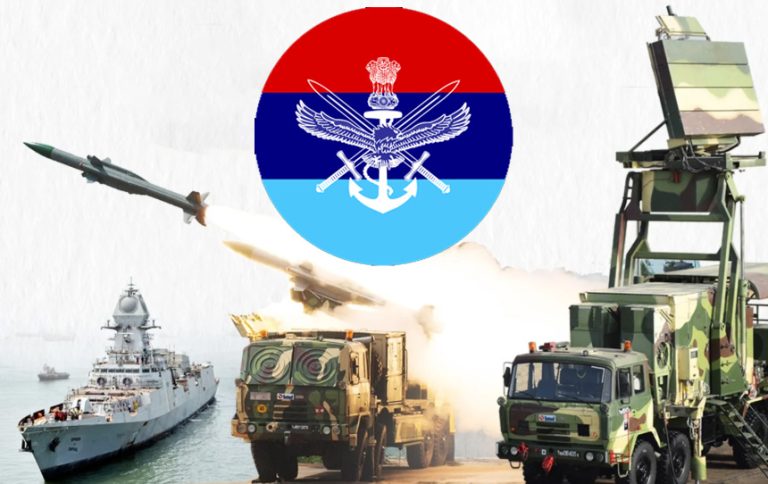
Amid the ongoing Operation Sindoor against Pakistan, the defence forces are set to get a big boost of around Rs 40,000 crore to buy arms and ammunition.

The approval for the acquisitions under emergency powers was granted recently by the Defence Acquisition Council in its meeting attended by top defence ministry and military brass, defence officials told ANI.

Under the emergency powers, the forces are focusing on buying equipment like surveillance drones, kamikaze drones, long range loitering munitions and ammunition for artillery, air defence and missiles and rockets of different types.

The forces rained lot of heavy duty missiles including the BrahMos and Scalp cruise missiles at targets in Pakistan.

The forces will have to receive the equipment for which the deals are getting signed under emergency powers within a stipulated time period.

This is the fifth tranche of emergency procurement powers given to the defence forces in the last five years.

The procurements would be done by the forces involving the financial advisors from the defence finance wing, the sources said.

The Defence Ministry is also working on the long term projects for the forces and senior officials are meeting industry leadership in this regard.

The Defence Ministry officials have already held meetings with senior leadership from the public sector units and private industry including Solar Defence and Aerospace.

The emergency procurement powers have helped the defence forces in a big way by allowing them to procure required spares and ammunition to tackle security challenges.

The Rampage missile which was used to attack targets in Pakistan was also acquired under emergency procurement powers by the Indian Air Force and Indian Navy. The forces later placed a larger order for these missiles and are now going to be produced within the country.

The Indian Army and Indian Air Force acquired their Heron Mark 2 drones which were used to keep a watch on live operations during Operation Sindoor were also acquired under the emergency powers only.

The public sector units like the Bharat Electronics Limited is expected to bag an order for 10 more low level radars for drone detection during operations.

This would be in addition to the locator order for six radars, the official said.

A lot of Indian companies engaged in drone manufacturing are also expected to bag orders from all three services.

The Indian government may also consider granting extra funds to the forces to meet their requirements in the budgetary allocations.

The approval has come when the Operation Sindoor is still on. Indian armed forces have dealt a severe blow to the Pakistan Air Force by hitting its 11 out of 12 air bases and causing heavy damage to their infrastructure and aircraft.


(This news report is published from a syndicated feed. Except for the headline, the content has not been written or edited by OpIndia staff)

240 books, 50 research papers: Read why was Swami Rambhadracharya awarded the Jnanpith Award – Not the saint but the award itself has been honoured

Do scholars belong to any particular group? Will only a person who quotes the writers of America and Europe be called a scholar, a person engaged in Indian philosophy has no right to get a certificate of scholarship? Certificate, because there is a special gang in India which keeps distributing it. It is the gang that decides who is a writer and who is not, who is an intellectual and who is not, who is a scholar and who is not. After Swami Rambhadracharya received the ‘Gyanpeeth Award’, it has become clear that he does not fall in the list of scholars imagined by this gang.

President Draupadi Murmu on Friday (May 16, 2025) honoured Jagadguru Swami Rambhadracharya of Ramanandi sect with the 58th ‘Gyanpeeth Award‘. Established in 1944 by industrialist Sahu Shanti Prasad, every year ‘Bharatiya Gyanpeeth’, has been honouring writers who have made significant contributions in the field of literature. This award was started in 1965. Big names like Sumitranandan Pant, Ramdhari Singh Dinkar, Amrita Pritam, Mahasweta Devi, Nirmal Verma, Kedarnath Singh and Krishna Sobti have been honoured with this award. Now the name of Swami Rambhadracharya, founder of ‘Tulsi Peeth’ located in Chitrakoot, has also been added to this league.

Why did Swami Ramabhadracharya get the ‘Gyanpeeth Award’?

After Jagadguru Swami Rambhadracharya received the ‘Gyanpeeth Award’, it is being repeatedly asked as to why this honour was given to him? Most of the people asking this question are those who do not even know the names of the bigwigs in Indian literature, or the names of important books or the types of works that have dominated the field of Indian literature in different periods. Those who are not aware form their opinion on the basis of social media. If they have not seen the literary works of Swami Rambhadracharya on social media, then they will definitely ask questions.

It is not that the people asking these questions are ignorant because they do not have money or access to the mainstream, they have themselves chosen to live in the well of ignorance. The reason is โ€“ they hate Indian culture, traditions and history. This hatred leads them to ignorance and this ignorance provokes them to oppose anyone doing serious work. In this article, I am not going to reply to them, but I am going to explain to the common people, to trap whom in the web of delusion the ignorant gang plans all the conspiracies.

Again the same question โ€“ why was a blind sadhu wearing saffron clothes given the ‘Jnanpith Award’? Is there no secularism left in India? How can a Hindu saint be honoured by the President? I am going to answer all such questions through this article. The direct answer to the first question is โ€“ Swami Rambhadracharya, a scholar of 22 languages, has written more than 240 books and more than 50 research papers. The direct answer to the second question is โ€“ no jargon can prevent a person who has taken the religion and culture of this land forward from being honoured.

Contribution of Jagadguru Swami Rambhadracharya in the field of literature

Swami Rambhadracharya writes mostly in Sanskrit, a language in which our Vedas, Upanishads, Puranas, Ramayana and Mahabharata were written. A language that needs preservation. A language whose literature has influenced the practices of upbringing of many generations. From respect for parents and teachers to war to protect religion, we have been inspired by this literature. Swami Rambhadracharya is one of the rare scholars of this cultural language in the present era.

He also writes in Hindi, which is the official language of India and is spoken and understood by most people in the country. He has also been creating literature in Awadhi and Bhojpuri, the languages โ€‹โ€‹spoken in Uttar Pradesh-Bihar, the most populous states in the country. The works of Swami Rambhadracharya are referred by researchers and also influence the common people. His study on Goswami Tulsidas is so extensive that he is considered the undeclared final authority on Ramcharitmanas. Following the eternal principles of curiosity, review, faith and belief, he presented the authentic sanskar of Ramcharitmanas. Ramcharitmanas is the poem that re-established the Ramkatha in our lives in North India.

Since childhood, Jagadguru Swami Rambhadracharya has preached Ramcharitmanas Katha in India and abroad for about 5000 times. After 8 years of intensive research and study of 27 editions of this immortal literature, he presented his version through ‘Tulsi Peeth’ . Although, there were protests against him in 2008-09 due to tampering with the book, but there has been a tradition of Shastrartha in Indian history and Shankaracharya also became Jagadguru only when he won the hearts of scholars across the country through debate. Therefore, it is important that our ancient literature does not become extinct and research work continues on it with devotion.

9000 pages, 50000 verses and 9 volumesโ€ฆ The Mahabhashya written by him on the Sanskrit grammar ‘Ashtadhyayi’ written by Panini is unprecedented. Prime Minister Narendra Modi himself unveiled it. ‘Ashtadhyayi’ is not an ordinary book, Patanjali referred to it as ‘Sarvaved-Parishad-Shastra’. Prime Minister Narendra Modi, who went to Chitrakoot in February 2025, unveiled 3 books of Swami Rambhadracharya – Panini’s ‘Ashtadhyayi’ Mahabhashya, Ramanandacharya Charitam and Rashtra Leela of Lord Shri Krishna. PM Modi follows the policy of ‘development as well as heritage’, in such a situation, the works of Swami Rambhadracharya automatically get established as the main pillar of that ‘heritage’.

‘Ashtadhyayi’ is a book of Sanskrit grammar written hundreds of years before the birth of Christ, on the basis of which literature succeeding the Vedic period was written. Even in ancient foreign languages โ€‹โ€‹like Greek and Latin, there is no example to match this work. Swami Rambhadracharya should have received many awards like Jnanpith for just this work. He did many times more than that.

Apart from the critical edition of Ramcharitmanas and ‘Ashtadhyayi’ Mahabhashya, his another important work is ‘Shriraghavakripabhashyam’ based on Brahmasutra, Bhagvadgita and 11 Upanishads. Most of those who are targeting Swami Rambhadracharya ji today were either not even born 27 years ago or would have been playing in diapers when the then Prime Minister Atal Bihari Vajpayee launched this book in April 1998. Brahmasutra, Upanishad and Gita are called ‘Prasthanatrayi’, no Sanskrit commentary had been written on them for 500 years, but this was done by Swami Rambhadracharya.

Along with religion and culture, they also run a university for the disabled

For many decades, the society has been benefiting from his historical and spiritual knowledge through Ram Katha, is this contribution any less? And yes, he has done all this despite being a Pragya Chakshu. He lost his eyesight, but he acquired vision through hard work and penance. He did PhD in 1991 and DLitt in 1998 โ€“ most of those who abuse him are still surviving on taxpayers’ money. Additionally, he got the post-doctorate degree from the then President of India KR Narayanan, who was from the Dalit community. Those who are hatching the conspiracy of Dravid vs Aryan to break the Hindu unity will not like this.

His testimony and the evidence given by him were mentioned in the judgment of the Shri Ram Janmabhoomi case in the Allahabad High Court. He gave such evidence from the scriptures regarding the Ram temple that even the judges were stunned. He opened an entire university for disabled students. He established ‘Tulsi Peeth’ for the service of spirituality and society. Not only in India, but in the entire world there was no university for the disabled. Through the ‘Viklang Seva Sangh’ he started many programs for the welfare of disabled men and women.

Rambhadracharya ji has written so many works that one can go on talking about them from morning till evening. Just imagine how many years it will take to read, understand and analyse them or comment on them. Just imagine, those who have not read even the basics of Swami Rambhadracharya’s literature are raising questions on his contribution. His contribution in all three fields – literature, society and culture – is unprecedented. The ‘Tulsi Peeth Seva Nyas’ that he has founded will continue the campaign started by him for many years to come. Swami Rambhadracharya’s works are on Sanatan, and are Sanatan.

Table of compositions of Swami Ramabhadracharya

Here I am presenting the compositions of Swami Ramabhadracharya with details:

YearTitleLanguagePublisherSummary
1994ArundhatiHindiShri Raghav Literature Publication Fund, HaridwarEpic poem of 1,279 verses divided into 15 cantos based on the life of Vasistha and Arundhati.
2002Sri Bhargava RaghaviyamSanskritJagadguru Rambhadracharya 
Divyanga University 
Epic of 21 cantos and 2,121 verses. With Hindi commentary. Received many awards.
2010AshtavakraHindiJagadguru Rambhadracharya 
Divyanga University 
Composed in 864 verses in 8 cantos, based on sage Ashtavakra.
2011Geeta RamayanaSanskritJagadguru Rambhadracharya 
Divyanga University 
A musical rendition of the Ramayana consisting of 1,008 songs in 28 cantos.
1980Kaka VidurHindiShri Geeta Gyan Mandir, RajkotShort poem on Vidur of Mahabharata.
1980Mukunda SmaranamSanskritShri Geeta Gyan Mandir, RajkotA short poem in two parts in praise of Krishna.
1982Ma ShabriHindiGiridhar Koshalendra Chintan Committee, DarbhangaA short poem based on the character Shabari from Ramayana.
1996Azad Chandrashekhar CharitamSanskritShri Tulsi Peeth Seva TrustShort poem on revolutionary Chandrashekhar Azad. With Hindi commentary.
2000SarayulhariSanskritShri Tulsi Peeth Seva TrustShort poem based on Saryu river.
2001LaghuraghuvaramSanskritShri Tulsi Peeth Seva TrustShort poem on child Rama, in short letters only.
2004BhringadutamSanskritJagadguru Rambhadracharya 
Divyanga University 
Depiction of the message sent by Rama to Sita, in Mandakranta verse.
1991RaghavgeetgunjanHindiShri Raghav Literature Publication Fund, HaridwarLyrical poem.
1993BhaktigeetasudhaHindiShri Raghav Literature Publication Fund, HaridwarA poem of 438 songs based on Rama and Krishna.
1997Sri RamabhaktisarvasvamSanskritShri Tulsi Peeth Seva TrustA poem of 100 verses.
โ€”Arya ShatakamSanskritโ€”A poem of 100 verses in Arya Chhand.
โ€”Chandi ShatakamSanskritโ€”A poem of 100 verses in praise of the goddess Chandi.
โ€”Raghavendra ShatakamSanskritโ€”A poem of 100 verses in praise of Rama.
โ€”Ganapati ShatakamSanskritโ€”A poem of 100 verses in praise of Ganesha.
โ€”Sri Raghavacharana Chihna ShatakamSanskritโ€”100 verses in praise of Rama’s footprints.
1987Sri Janaki Kripakataksha StotramSanskritShri Tulsi Peeth Seva TrustPraise of Sita’s kind glance.
1992Sri Ramavallabha StotramSanskritShri Raghav Literature Publication Fund, HaridwarPraise of Sita.
1994Sri GangamahimnastotramSanskritShri Raghav Literature Publication Fund, HaridwarPraise on the glory of river Ganga.
1995Sri Chitrakuta Vihara AshtakamSanskritShri Raghav Literature Publication Fund, HaridwarPraise of Ram’s Chitrakoot Vihar in 8 verses.
2002Sri RaghavbhavadarsanamSanskritShri Tulsi Peeth Seva TrustPraise of Rama’s birth through similes; with Hindi commentary.
2003KubjapatramSanskritJagadguru Rambhadracharya Divyanga University Letter written by Kubja to Krishna.
2008Sri SitaramkelikaumudiHindiJagadguru Rambhadracharya 
Divyanga University 
A riti kaavya based on childhood pranks in 327 verses.
2009Sri SitaramasuprabhatamSanskritJagadguru Rambhadracharya 
Divyanga University 
Dedicated to Sita and Rama. With Hindi translation.
1996SriraghavabhyudayamSanskritShri Tulsi Peeth Seva TrustA one-act play based on the rise of Ram.
โ€”UtsaahHindiShri Tulsi Peeth Seva Trustโ€”

See some other works of Swami Ramabhadracharya here:

YearTitleSubjectPublisherComment
1998Sri Raghavakripabhashyam BrahmasutrasShri Tulsi Peeth Seva TrustCommentary on Prasthanatrayi in Sanskrit
1998Shrimadbhagavadgitasu
Sri Raghavakripabhashyam
BhagavadgitaShri Tulsi Peeth Seva Trustโ€“
1998Sri Raghavakripabhashyam kathopanishadShri Tulsi Peeth Seva Trustโ€“
1998Sri Raghavakripabhashyam KenopanishadShri Tulsi Peeth Seva Trustโ€“
1998Sri Raghavakripabhashyam The Mandukya UpanishadShri Tulsi Peeth Seva Trustโ€“
1998Sri Raghavakripabhashyam The Ishavasya UpanishadShri Tulsi Peeth Seva Trustโ€“
1998Sri Raghavakripabhashyam Prashna UpanishadShri Tulsi Peeth Seva Trustโ€“
1998Sri RaghavakripabhashyamThe Taitriya UpanishadShri Tulsi Peeth Seva Trustโ€“
1998Sri Raghavakripabhashyam The Aitareya UpanishadShri Tulsi Peeth Seva Trustโ€“
1998Sri Raghavakripabhashyam The Swetasvatara UpanishadShri Tulsi Peeth Seva Trustโ€“
1998 Chฤndogyopanishadi Sri RaghavkripabhashyamChandogya UpanishadShri Tulsi Peeth Seva Trustโ€“
1998Sri Raghavakripabhashyam The Brihadaranyaka UpanishadShri Tulsi Peeth Seva Trustโ€“
1998 Sri RaghavakripabhashyamThe Mundaka UpanishadShri Tulsi Peeth Seva Trustโ€“
1991Sri Raghava Kripa Bhashyam Narada Bhakti SutraShri Tulsi Peeth Seva Trustโ€“
1997Ashtadhyayapratisutram ShabdhabodhsameekshanamResearch on the Ashtadhyayi SutrasRashtriya Sanskrit Sansthan (under publication)D.Litt Dissertation
2001Sri Rama Stavaraja Stotram Sri Raghava Kripa BhashyamSri Ram Stavraj StotraShri Tulsi Peeth Seva Trustโ€“
1983MahaveeriCommentary on Hanuman ChalisaShri Krishna Birth Service Institute, Mathuraโ€“
1985Sri Gita TattvaBhagavadgitaShri Raghav Literature Publication Fund, Haridwarโ€“
2005BhavarthbodhiniRamcharitmanasJagadguru Rambhadracharya Handicapped Universityโ€“
โ€“Shri Raghavakripa Bhashya (in 9 volumes)Ramcharitmanasโ€“โ€“
1981Adhyatmaramayane Apaniniyaprayo Ganam VimarshahA review of the anti-Panini tendencies of Adhyatma Ramayanaโ€“PhD dissertation
1982Manas mein Tapas PrasangDiscussion of the story of an ascetic in Ayodhya Kand of RamcharitmanasShri Geeta Gyan Mandir, Rajkotโ€“
1988Sanatan Dharma ki Vigrahaswaroop GaumataDiscussion on the status of cow in Sanatan DharmaShri Raghav Literature Publication Fund, Haridwarโ€“
1988Sri Tulsi Sahitya mein Krishna KathaReview of Krishna’s character in Tulsidas’ literatureShri Raghav Literature Publication Fund, Haridwarโ€“
1990Sita Nirvasan NahiA critical treatise that proves that Sita’s exile in Valmiki Ramayana is a figment of UttarakandShri Raghav Literature Publication Fund, Haridwarโ€“
2007ShripanchadhyayivimarshaDiscussion on Raas Panchadhyayi of BhagwatJagadguru Rambhadracharya Handicapped Universityโ€“
1980Bharat MahimaNavahanika discourse on the glory of Bharata in RamayanaShri Geeta Gyan Mandir, Rajkotโ€“
1985Sugreeva ka Agh aur Vibhishan ki KartutiNavahanika discourse on two characters of RamayanaShri Krishna Birth Service Institute, Mathuraโ€“
1989Sumitra in ManasNavahanika discourse on the role of Sumitra in RamacharitmanasShri Raghav Literature Publication Fund, Haridwarโ€“
1992Prabhu Kari Kripa Panvari Diโ€“โ€“Incomplete sermon texts

Just imagine, the child who lost his eyesight at the age of just 2 months, touched the pinnacle of wisdom and gave the message that there is no excuse for not being successful. Everything is possible with hard work and dedication. The child who was considered a bad omen and was not even allowed to participate in marriages and other auspicious events of the family and society, became a walking symbol of good fortune. That is why during his early works, he addresses himself before God by saying ‘Anatham Jadam Mohapashen Bandham’, meaning – “one who is orphan, inert, and bound in the bondage of attachment.”

(This article is a translation of the original article published in OpIndia Hindi.)

Rahul Gandhi misquotes EAM Jaishankar to claim it was crime to inform Pakistan about Operation Sindoor at the start, peddles Pakistani propaganda that India lost multiple jets

During and after the Operation Sindoor, several opposition parties and major opposition leaders have supported the government, and praised the armed forces for the successful operation. But, some leaders continue to doubt the government version, and raise baseless allegations. Congress MP Rahul Gandhi is one of such leaders, who on Saturday claimed that it was a crime to inform Pakistan about the operation after it had started.

Sharing video of External Affairs Minister S Jaishankarโ€™s comments, Rahul Gandhi posted on Twitter, โ€œInforming Pakistan at the start of our attack was a crime. EAM has publicly admitted that GOI did it.โ€ He further asked, โ€œWho authorised it?โ€

Shockingly, Rahul Gandhi also claimed that India lost several aircraft during the conflict, as he wanted to know, โ€œโ How many aircraft did our airforce lose as a result?โ€

Rahul Gandhiโ€™s claim that India informing Pakistan at the start of the attack was a crime is misleading and wrong. By this claim, he is implying that Pakistan govt was informed before the strikes began. But that is not what โ€˜at the start of the operationโ€™ means.

EAM Jaishankar said, โ€œAt the start of the operation, we had sent a message to Pakistan saying we are striking at terrorist infrastructure. We are not striking at the military. So, the military has an option of standing out, and not interfere at this process. They chose not to take this good advice.โ€™

Earlier, several social media users had distorted Jaishankarโ€™s comments to claim that India informed Pakistan about the operation before it began. PIB has fact-checked those comments, saying that EAM is being misquoted and he has not made such a statement.

It is notable that Indian forces destroyed 9 terror bases in the Operation Sindoor using missiles and drones. Visuals show extensive damage to the terror sites, with reportedly over 100 deaths, including some of the top terrorist leaders. From the results of the operation and the ministerโ€™s comments, it is clear that India informed Pakistani government when it had started, not before.

As per Indian defence forces, Operation Sindoor on the night of 07-08 May 2025 was completed in just 23 minutes. By the time Indian authorities informed the Pakistani counterparts about the mission, it was already over.

Therefore, Rahul Gandhiโ€™s claim that informing Pakistan was a crime is completely wrong and misleading. India told Pakistan, โ€˜We are hitting terror bases in your country, keep your military awayโ€™, which is an important part of diplomacy, and it was not an advance warning, as Rahul Gandhi is implying.

Moreover, Rahul Gandhiโ€™s claim that S Jaishankar admitted to GOI informing Pakistan is also completely misleading. What India did was a standard procedure, it was done when the operation had already started.  

Rahul Gandhiโ€™s second question is very worrying, as he is directly supporting the Pakistani claim of shooting down several Indian fighter jets, by asking the number of jets lost by India. Indian forces have repeatedly said that Operation Sindoor is on a pause, it has not ended, and therefore no such strategic information that can help the enemy will be revealed.

Moreover, Indian Government has asserted that โ€œall strikes were executed without loss of Indian assets, underscoring the effectiveness of our surveillance, planning, and delivery systems.โ€ Despite this official stand of the government, Rahul Gandhi is peddling Pakistani and Chinese claim of shooting down multiple Indian aircraft.

Importantly, there is no evidence so far that India lost any jet in the conflict. The debris found in some places are actually external fuel tanks of fighter jets, which can be dropped by the pilot during the operation after the fuel is used up. French experts have concluded that one such drop tank found on the ground in Kashmir is from a Mirage 2000 aircraft.

Shashi Tharoor stands by decision to lead MP delegation despite Congress objection, says party leadership entitled to opinion of his abilities

Congress MP Shashi Tharoor will lead one of the seven delegations of project for the India’s continued fight against cross-border terrorism. Tharoor stated that he will diligently fulfill his assigned responsibilities, emphasizing that while the party leadership is entitled to its opinions, his commitment remains steadfast.

“My party leadership is entitled to its opinion of my abilities or lack thereof, and I think that is really for them to explain. I have absolutely no comment to make on that. I am honoured to have been entrusted with the responsibility, and I will fulfil that responsibility just as I have fulfilled every responsibility entrusted to me in my rather long working life, whether at the United Nations or in the Congress Partyโ€ฆWe have a Parliamentary Standing Committee meeting on Monday and Tuesday on various issues, including this particular issue. Certainly, I informed them (the party) of the first call I got, which was two days ago. I also mentioned to the parliamentary affairs minister that I assumed that he would be talking to the party leaderships of opposition parties, and he assured me that he would be. I found it entirely appropriate, as I said, that the country should rally together on this particularly important issueโ€ฆ,” he said.

Tharoor expressed his commitment to the cause, and emphasised that the mission transcends party politics and reflects national unity.

“As a citizen, being called upon to serve the nation at a time of crisis is a matter of duty for all of us. It is an honour that I’ve been asked to lead the delegation, and I look forward to playing my part. I had no hesitation in accepting the kind invitation of the government,” he said.

“To my mind, this has nothing to do with party politics. It’s all to do with what our country has been through in recent times and the need for us to present a united frontโ€ฆIt is a good reflection of national unity at a time when unity is important,” he added.

Earlier on Saturday, Congress leader Jairam Ramesh criticised the government for not accepting all the names given by Congress party, and said that this is “dishonest on the government’s part.”

This comes after the government named Congress leader Shashi Tharoor in the list of 7 MPs who would represent India at world forums, where they would brief world leaders on Operation Sindoor.

“We were asked for names. We expected that the names we had given would be included. We hoped that the names given by the party would be included. But when we saw the press release of PIB, we were surprised. I cannot say what will happen now. Asking four names, giving four names, and announcing another name is dishonest on the government’s part. It is possible that’ Mr Rijiju had talked to Rahul ji and Kharge even after the government had made up their mind, but I am giving him the benefit of the doubt. But what happened is dishonest. We are not going to change these four names,” Jairam Ramesh said.

The All-Party Delegations will project India’s national consensus and resolute approach to combating terrorism in all forms and manifestations. They would carry forth to the world the country’s strong message of zero tolerance against terrorism.

Members of Parliament from different parties, prominent political personalities, and distinguished diplomats will be part of each delegation.

India launched Operation Sindoor on May 7 in response to the April 22 Pahalgam terror attack in which 26 people were killed. India’s precision strikes in Pakistan and PoJK on May 7 killed over 100 terrorists.

(This news report is published from a syndicated feed. Except for the headline, the content has not been written or edited by OpIndia staff)