On Thursday (3rd July), Parliamentary Affairs Minister Minister Kiren Rijiju said that the opposition has extended in-principle support to the impeachment motion against Allahabad High Court judge Yashwant Varma. The motion will be brought in the upcoming monsoon session starting from 21st July.
Minister Rijiju said that it is yet to be decided whether the impeachment motion will be brought in the Rajya Sabha or the Lok Sabha.
Minister Rijiju added that once the decision is taken about where the motion will be brought, the process of taking signatures of MPs would begin. The minister further stated that since it is a matter of corruption, the government want support of all political parties.
In response to a question concerning the committee’s report that proved the discovery of unaccounted cash at Justice Varma’s home, he stated that the three-judge panel’s report was intended to suggest further steps because Parliament could only dismiss a judge. Several burned sacks of cash were found in the outhouse during a March fire incident at Justice Varma’s Delhi residence.
In June this year, a panel consisting of three judges from the Supreme Court has proposed the dismissal of Justice Yashwant Varma. The committee recommended the dismissal of Varma from his position which is detailed in a 64-page report that was forwarded to both the President and the Prime Minister. The report explicitly mentioned that the burnt notes were discovered in the storeroom of his official residence.
Only Varma and his family were allowed access to the storeroom as no outsiders could access it. The investigation uncovered that during the process of extinguishing the fire, the firefighters observed “partially burned notes.” A witness even remarked that he had encountered such a vast pile of cash for the first time in his life.
The committee acknowledged that such a large quantity of notes could not have been kept there without the permission of Varma or his family.
How judges are impeached
Notably, the Judges (Inquiry) Act of 1968 states that if a motion to remove a judge is accepted in any House, the speaker or chairman, as the case may be, will appoint a three-member committee to investigate the reasons behind the request for removal or impeachment. The committee comprises the CJI or a Supreme Court judge, the chief justice of one of the 25 high courts and an eminent jurist.
The Committee frames charges and asks the judge to give a written response. The judge also has the right to examine witnesses. After the inquiry, the committee determines whether the charges are valid or not. It then submits its report.
If the inquiry committee finds that the judge is not guilty, then there is no further action. If they find him guilty, then the House of Parliament which initiated the motion may consider continuing with the motion. The motion is debated. The judge (or his representative) has the right to represent his case. After that, the motion is voted upon.
If there is two-thirds support of those voting, and majority support of the total strength of the House, it is considered to have passed. The process is then repeated in the other House. After that, the Houses send an address to the President asking that the judge be removed from office.
Indians have carved out a notable identity for themselves and are recognized for their potential to excel and prosper in any country they move to, regardless of the circumstances or challenges they may face. This is illustrated by the numerous success stories of the Indian community in the United States, the United Kingdom, Europe and other parts of the world.
Indians are characterized by their strong work ethic, conquering obstacles and their ability to flourish wherever they settle. They also stay true to their beliefs and culture while embracing and assimilating into their new environment. Notably, Indians have been migrating to various regions across the globe for centuries. Nowadays, they do it for work, education and better opportunities, among other reasons.
However, there was a time when they were forcibly taken to other countries as laborers and servants for the imperialists. Nevertheless, they survived the horrors inflicted on them and triumphed over the traumatic reality to broke free from the boundations of subjugation, pain and suffering to thrive and make a name for themselves.
PM Modi lauds Trinidad and Tobago’s Indian community
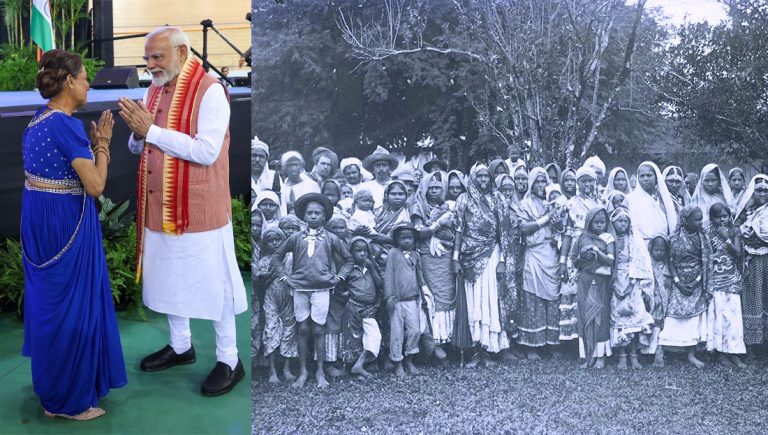
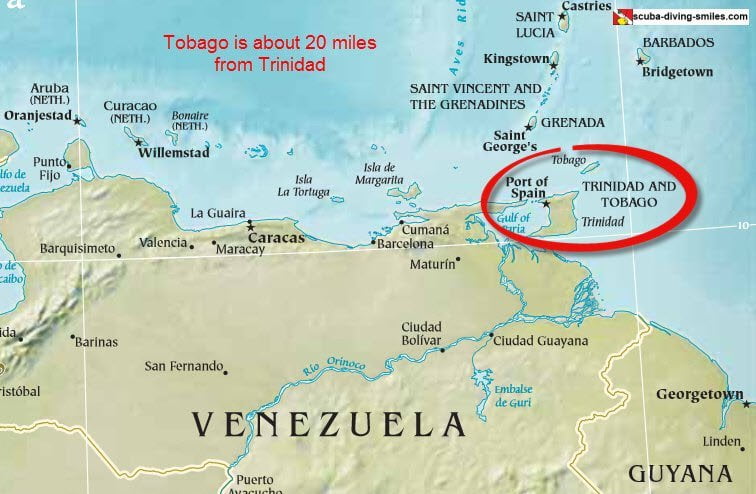
The history of the Indian community in Trinidad and Tobago, a dual-island Caribbean nation near Venezuela, is similar. Prime Minister Narendra Modi, who is presently there as part of his five-nation tour, highlighted the same as well. “I know the story of the Indian community in Trinidad and Tobago is about courage,” he stated in his speech at an event at the National Cycling Velodrome in Couva.
He conveyed, “The circumstances your ancestors faced could have broken even the strongest of spirits. But they faced hardships with hope. They met problems with persistence. They left the Ganga and Yamuna behind but carried the Ramayan in their hearts. They left their soil, but not their soul.”
Image via Focus2Move
PM Modi reffered to them as “messengers of a timeless civilization whose contributions have benefitted this country, culturally, economically and spiritually,” and emphasised, “Just look at the impact that you have all had on this beautiful nation.”
Notably, the country’s first female and current prime minister, Kamla Susheila Persad-Bissessar, is a Hindu who traces her heritage to both South and North India. Her ancestors arrived in the country through the Indian indenture system and later settled there.
Splendid atmosphere at the community programme in Trinidad & Tobago. https://t.co/qlW5JqaCCl
PM Modi conveyed, “People in India consider Prime Minister Kamla as the daughter of Bihar. Like her, there are many people here whose roots lie in Bihar. The heritage of Bihar is a matter of pride for all of us.” He also mentioned the names of eminent figures in the country, including politicians, cricketers, and monks, to underline the incredible journey of Indians and the outstanding milestones they have reached.
“You, the children of girmitiyas (indentured labourers from British India), are not defined by struggle anymore. You are defined by your success, your service and your values,” he remarked and humorously added, “Honestly, there must be something magical in the doubles and dal poori because you have doubled the success of this great nation.”
“During my last visit 25 years ago, we were all captivated by the cover drives and pull shots of Brian Lara. Presently, it is Sunil Narine and Nicholas Pooran who evoke the same enthusiasm in the hearts of our youth. Over the years, our friendship has deepened,” he noted, aware of the craze for cricket in India and the Caribbean nation.
PM Modi additionally underscored the profound and historical connection shared by the two countries and stated, “Benaras, Patna, Kolkata, Delhi may be cities in India. But they are also names of streets here. Navratra, Mahashivratri, Janmasthmi are celebrated here with joy, spirit and pride. Chowtal and Baithak Gana continue to thrive here.”
He also invoked Lord Ram and spoke about the strong belief of the Indian community in the deity. “I am sure you all welcomed the return of Ram Lalla to Ayodhya after 500 years with great joy. We remember, you had sent holy water and Shilas for building the Ram Mandir in Ayodhya,” he recounted.
“I have also brought something here with a similar sense of devotion. It is my honour to bring a replica of Ram Mandir and some water from the river Sarayu in Ayodhya,” he stated as India reciprocated the heartwarming gesture.
“We deeply value the strength and support of our diaspora. With over 35 million people spread across the world, the Indian diaspora is our pride. As I have often said, each one of you is a Rashtradoot, an ambassador of India’s values, culture and heritage,” he reiterated regarding the vital role the Indian community plays globally.
Indian indenture system of the British Raj
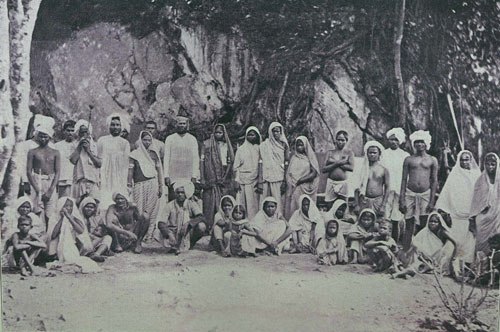
An often overlooked facet of the history of slavery and Indian migration is the transition of indentured or bound labour. Indentured labourers from India were brought to several imperial colonies in the 19th century by the British Raj as a reliable and affordable source of labour, which marked the beginning of the contemporary Indian Diaspora.
It started with Mauritius in 1834. The 87-year British colonial indentureship system brought more than 1.5 million Indians to other countries as bound labourers. After their contracts were terminated, many of these immigrants decided to remain on foreign soils, creating prosperous settlements and carrying on their traditions.
More than 1.6 million workers from British India were brought to work in European colonies as part of the Indian indenture system, which replaced slave labour after the trade was outlawed in the early 19th century.
Image via mpm.edu
The system expanded when slavery was abolished in the British Empire in 1833, the French colonies in 1848 and the Dutch Empire in 1863. Indian indentured servitude in Britain continued until the 1920s. This led to the growth of Indo-South African, Indo-Caribbean, Indo-Mauritian and Indo-Fijian communities, as well as the formation of a significant South Asian diaspora in the Caribbean, Natal (South Africa), Réunion, Mauritius and Fiji.
Therefore, while the Westerns claimed to have abolished slavery in the 19th century, it actually continued till the 20th century, for around a hundred years, in another name. Slaves and then indentured labourers were needed to sustain the economic activities of the colonial powers across the world.
The white colonizers were evidently not content with plundering, killing, raping and enslaving the indigenous people in their own land. Hence, they also transported them overseas to exploit them further and subject them to inhumane treatment for the welfare of the British Empire.
The International Day for Remembrance of the Slave Trade and Abolition was established by UNESCO (United Nations Educational, Scientific and Cultural Organization) in 1998 to honour “the tragedy of the slave trade in the memory of all peoples.”
Additionally, it created the global, cross-cultural initiative known as “The Slave Route” to record and carry out a “analysis of the interactions to which it has given rise between Africa, Europe, the Americas and the Caribbean.”
Brief history of Indian diaspora in Trinidad and Tobago
Before Christopher Columbus set foot on Trinidad and Tobago’s coastlines in 1498, not much is known about their past. Little tangible evidence of the Arawak and Carib Indian populations that predominated on the island by the 1300s is left.
The Spanish encomienda system, which pressured people to submit to Christianity and work as slaves on Spanish Mission lands in return for “protection,” essentially wiped off these communities. The Spanish Empire included Trinidad until 1796.
The territory was turned over to the British Crown in 1802, making it a recognised colonial subsidiary. English investors were eager to boost Trinidad’s sugar sector, which proved to be incredibly profitable. The majority of the employees on the island’s sugar and cocoa plantations were African slaves who had been brutally transported there in the 17th century.
Trinidad’s agricultural economy was on the brink of collapse when an act of Parliament in 1838 outlawed slavery in all British colonies. The freshly liberated Africans refused to continue to sweat it out at the plantations and departed the fields in large numbers.
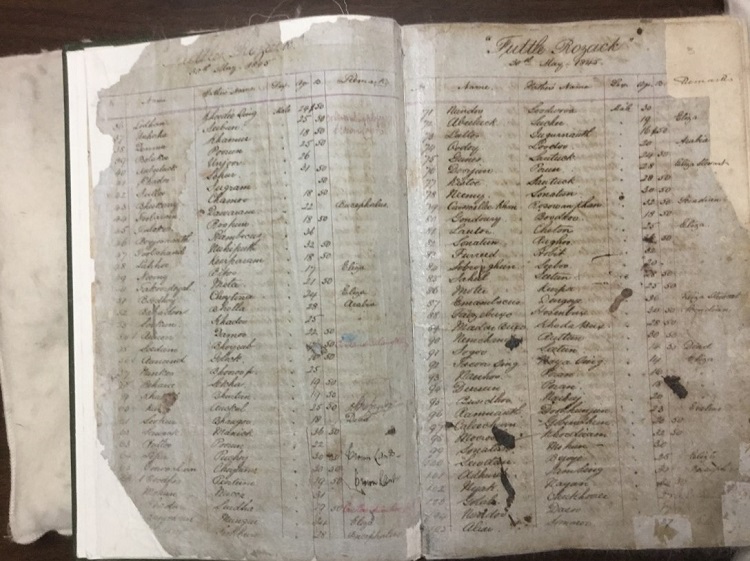
The original passenger log of the first indenture ship Fatel Razack (1845) still available for viewing at the National Archives. (Source: canadaindiaresearch.ca)
The sugar and chocolate industries started experimenting with new labour sources to save them from completely collapsing. Therefore, Chinese, Portuguese, African-Americans, and, most significantly, Indians were brought to Trinidad as indentured servants in an attempt to improve the flagging economy of the island. Indians were the most tenacious and prepared workers and were reportedly termed as “valuable steady labourers.”
As a result, they were hired in more numbers than anybody from any other nation, and by 1891, there were more than 45,800 Indians living on the islands. The indentureship system was terminated by the Indian Legislative Assembly in 1917.
In truth, the abolition of the slave trade was merely a facade, as a similar, if not more brutal, practice was enforced in the ruled territories. Indians were forced to cross over Indian Ocean and the Atlantic Ocean and cover thousands of kilometres in perilous as well as life-threatening conditions, only to serve British interests.
Life of Indian indentured labourers
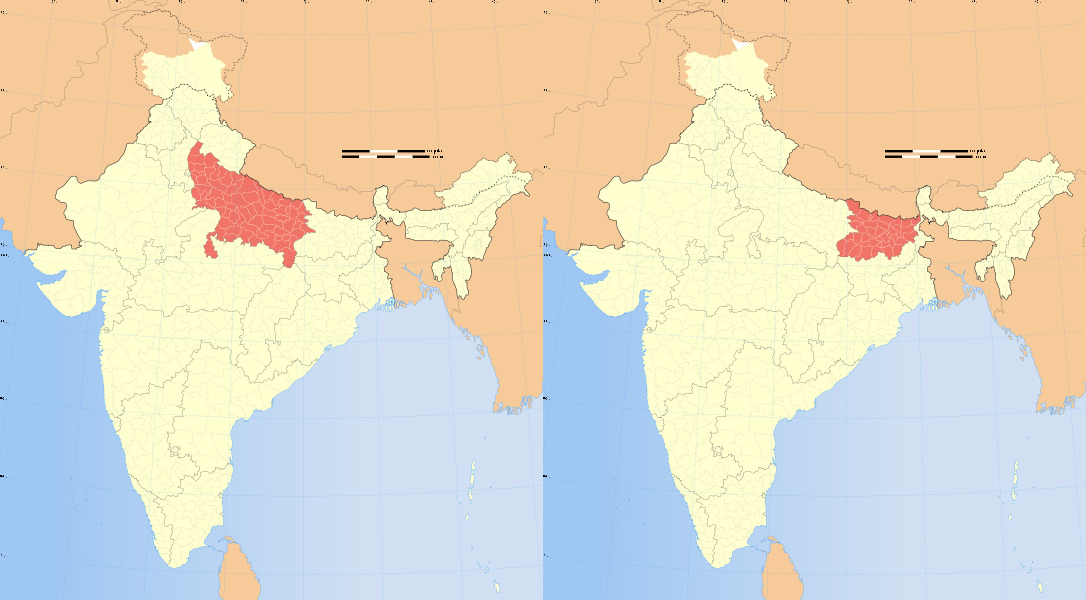
The first ship carrying 217 Indian labourers arrived at Trinidad’s Port-of-Spain in 1845, signalling the beginning of the enormous movement of the community around the world. Most Indians in Trinidad came from the ports of Calcutta (Kolkata) and Madras (Chennai), which are located in the Gangetic Heartland of India, which includes the present-day provinces of Bihar, Uttar Pradesh, and Bengal. Many ships carried thousands of Indians from India to the Caribbean between 1845 and 1917.
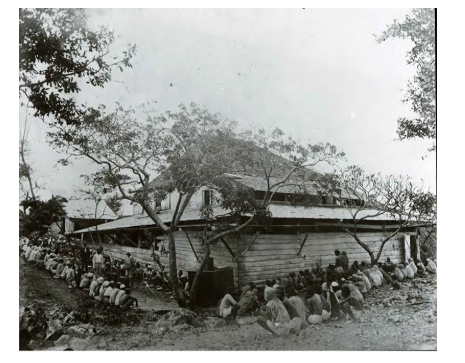
Living circumstances were appalling and the voyage was gruelling and difficult. The Indians faced mistreatment, substandard food and hazardous weather. However, these unfavourable circumstances allowed them to develop a kinship that transcended their differences. They were fed and allowed to rest for a few weeks after disembarking at Nelson Island before they were dispatched to the various estates that had originally asked for them.
The majority of migrants to Trinidad came from the areas marked in red: the states of Uttar Pradesh (left) and Bihar (right). (Source: Wikipedia)
Peasants were drawn from the countryside, frequently by dishonest recruiting agents and then sent to different crown territories. They were facing a bleak future, oppressive systems of exploitation, rising rents and crashing local handicraft economies as well as devastating famines. British Guiana and Trinidad were the Caribbean territories that received the most Indian labourers, with 240,000 and 144,000, respectively.
“There can be no history of Trinidad and Guyana that is not also a history of the humanization of those landscapes by Indian labor,” highlighted famous Barbadian novelist George Lamming. Many bonded labourers found that their lives on Trinidadian plantations were not at all better than those they had left behind in India. “The indentured ‘coolies’ were half slaves, bound over body and soul by a hundred and one regulations.”
They were pushed to sign a five-year labour contract called girmityas (a perversion of the word agreement) that severely limited their personal liberties following a three-month sea voyage, during which many of them perished. Indians had to reside on estate lands, fulfil a set amount of labour and put in long, exhausting hours harvesting sugarcane.
Return transit to their homeland was provided to all migrants who lived in the colony for ten years, in part by the plantation owner. As a result of the creation of communities in their new countries, this practice, which was common in the early years when a large number of Indians and other Asian groups returned home, significantly decreased over time.
Image via natt.gov.tt
Later, a legislation was established that gave labourers royal lands rather than return passage. Many Indians embraced this offer and settled in their new adopted nation. Until the 1960s, a large number of Indo-Trinidadians endured illiteracy, seclusion and extreme poverty.
As expected, the Christian missionaries saw their miserable condition as a golden opportunity for conversion and the first attempts to educate and westernise immigrant populations was made by the Canadian Presbyterian Mission in 1875. The Mission founded Hindi language schools in Indian areas and converted a large number of people to their religion. Indian groups would eventually embrace Western clothing, general habits and Creole English.
Indians were actively involved in their local businesses and politics by the early 20th century. They formed cohesive political organisations that have contributed to the transformation of Trinidad’s administration and policies, regardless of their continued symbolic marginalisation in society during the 1960s.
Conclusion
Celebrated on the 30th of May, Indian Arrival Day recognizes the first Indian indentured labourers who landed in Trinidad in May 1845 on board the ship Fatel Razack, but they did not come willingly but were compelled to embark on this journey with no alternatives. However, similar to other countries, Indians embraced the foreign land as their home, enriching it with the colors and traditions of India.
As PM Modi outlined, the children of girmitiyas have indeed made history. They showcased that their strength, resilience, and determination to survive and succeed were greater than all forms of British oppression and atrocities. Now, akin to Indians in others nations, they have also risen to prominent positions, making significant contributions to the achievements of not just their own community but also Trinidad and Tobago, just as their ancestors did, while continuing to honor their Indian heritage and roots.
A 19-year-old US pilot, Ethan Guo, who is on a mission to fly solo to every continent, is being held by Chilean authorities after flying into a Chilean-claimed section of Antarctica without permission.
Guo, who is also an Instagram social media influencer with more than one million followers, departed Punta Arenas, a city in southern Chile, last week. He was flying by himself in a Cessna 182Q aeroplane with registration N182WT. He had filed a flight plan indicating he would travel close to the city of Punta Arenas, but along the way, he diverted and flew directly to Antarctica instead.
Ethan Guo landed at Lieutenant Rodolfo Marsh Base, a Chilean airfield in the region of Antarctica. Chilean authorities say that Guo was not authorised to land there and that he provided false flight details. Cristian Crisosto Rifo, the Regional Prosecutor of the Magallanes and Chilean Antarctica region, mentioned that Guo’s act violated a number of national and international regulations and also threatened the safety of other flights.
Guo’s lawyer says that the teen did not mean to end up in Antarctica and only did so because he experienced technical issues during the flight. Prosecutors, however, say that he hides his true intentions from aviation officials.
Guo started his “Flying Solo” journey in September 2023 to travel to all seven continents solo. The trip is also a fundraiser for cancer research, and he aims to raise $1 million. His most recent post on Instagram was from the Philippines on June 24, and fans were eagerly awaiting an update since reports of his arrest came through.
For now, Guo remains in the Chilean part of Antarctica and can’t leave until officials permit him to return to Punta Arenas. Even after that, a Chilean court has said he must stay in the country for 90 days while they investigate the case.
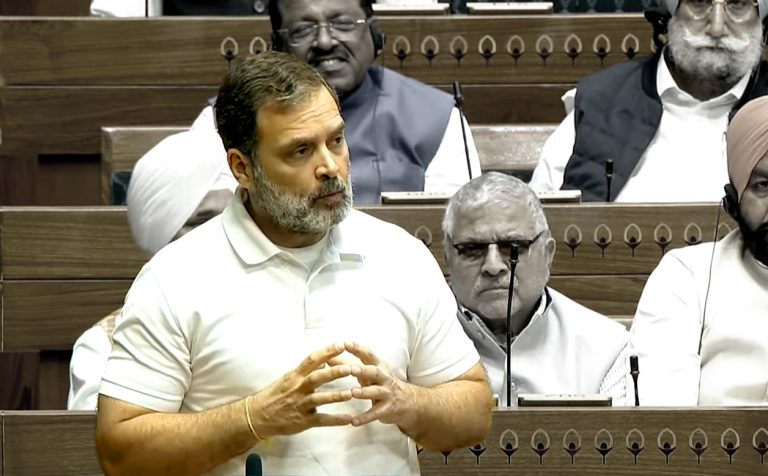
The Congress party recently (2nd July) celebrated a year of Rahul Gandhi’s tenure as the Leader of the Party (LoP) in Lok Sabha. Gandhi, the forever-young leader of the Congress party, earned the position of LoP after a third consecutive defeat of his party in the 2024 Lok Sabha elections.
While his political career has been a combination of relaunches and consistent failures, he continues to be Congress’s torchbearer. After not getting a chance to celebrate any major electoral success in a decade, Rahul Gandhi is consoling itself by celebrating a year of Gandhi’s tenure as LoP, a direct consequence of the party’s defeat in the 2024 Lok Sabha elections.
Shri @RahulGandhi's memorable year as the LoP in Lok Sabha.
Here are the memories, experiences and his continuous struggle over the year.
The Party also released a ‘Newsletter‘ highlighting how Gandhi championed the “politics of love” and will continue to do so. On the contrary, this one year of Rahul Gandhi, as LoP, has not been any different from his entire political career, which is full of recurring failures and incompetence. Congress’s political journey under Rahul Gandhi has been a loop of propaganda-defeat-repeat. Here is a look at the highlights of a year of Gandhi’s term as LoP-
Rahul Gandhi’s repetitive electoral failures
The Congress scion, whose primary job is to lead his party to electoral victory, continues to deliver failure after failure in elections. Had he not been a ‘Gandhi’, his political career would have ended long ago with such consistency of failures. If one looks at last year’s elections alone, Congress, a national party, failed to win a single election on its own.
Apart from the Lok Sabha elections, elections for the assemblies of eight Indian states, viz. Andhra Pradesh, Arunachal Pradesh, Sikkim, Odisha, J&K, Haryana, Maharashtra, and Jharkhand were held last year. Just like the Lok Sabha elections, Congress lost in all the states except Jharkhand, where it was able to form a government in coalition.
In the Haryana Assembly elections, Congress lost to the BJP. Rahul Gandhi’s Bharat Jodo Yatra in 12 assembly constituencies failed to leave any impact as his party won only 4 out of those 12 assembly seats. A similar performance was replicated by the Congress-led alliance, Maha Vikas Aghadi, in the Maharashtra elections, where it suffered a humiliating defeat. Congress secured fewer than 40 seats in the elections. Congress even lost the Delhi MCD elections. This is a continuation of his party’s performances in the assembly elections of Rajasthan, Madhya Pradesh and Chhattisgarh the year before.
Congress party under Rahul Gandhi’s leadership has been reduced to the status of a mere ‘vote katwa’ party, which does not have the competence to win an election and can, at most, influence the election result by a few seats. This is a consequence of Rahul Gandhi treating politics like a part-time job. For most of the year, Gandhi remains occupied with his trips to foreign countries, where he makes controversial and false statements against India. The only time he is seen actively participating in politics is around elections. His lack of leadership and absenteeism have led Congress to its current place in national politics.
However, despite these electoral defeats, neither the Congress party nor Rahul Gandhi introspected and instead blamed the entire election process, displaying a typical bad loser behaviour.
Rahul Gandhi’s mysterious foreign visits and absence in Parliament
Rahul Gandhi is the leader of the opposition in the Lok Sabha, but his attendance is lower than the average attendance of other members of Parliament. He is often seen missing from important debates in Parliament. In the last year, Gandhi took part in only 8 debates in Parliament, which is almost half the national average of 15 debates. Besides, Gandhi also lags behind in the average number of questions asked in the Parliament. He did not move a single private member bill. His combined attendance in the monsoon session and the winter session was less than 50%.
Interestingly, attending a Parliament session, where he can raise the issues of the “90%”, whom he claims to represent, does not seem to be on Gandhi’s priority list. It is not difficult to understand why Gandhi fails to resonate with the people of the country, despite the entire Congress machinery toiling hard to project him as the ‘messiah of the masses’.
During the last year, Rahul Gandhi spent more than 40 days on his foreign trips. His foreign visits are often surrounded by mystery and controversy. Gandhi is not a government representative, who might have to visit foreign countries to sign bilateral deals or MoUs. Yet, every year, he is seen visiting some country or the other for undisclosed or unconvincing reasons.
In June last year, Rahul Gandhi was in London to attend the graduation ceremony of his niece, while his party was grappling with defection issues in Goa. Subsequently, in September 2024, Rahul Gandhi was on his highly controversial visit to the US, where he launched sharp attacks on the BJP, the RSS and PM Modi. He went to compare Indian democracy with that of the war-torn countries of Syria and Iraq. He also met US Congresswoman Ilhan Omar, who is famously anti-India. Rahul Gandhi also made controversial statements on the Sikh community and reservations. This was followed by Gandhi’s visit to Vietnam in March 2025. Congress defended his visit, saying that he went to Vietnam to study their economic model.
Either Rahul Gandhi does not attend the Parliament sessions, or when he does, he ends up creating trouble for himself and his party with his controversial statements or activities. In December last year, Rahul Gandhi pushed BJP MP Pratap Chandra Sarangi on the stairs of the Parliament causing embarrassment to his party. Sarangi was pushed so hard by Gandhi that he had to be admitted to the hospital.
Rahul Gandhi expelled from Hinduism by Shankaracharya
In another embarrassing incident, Rahul Gandhi was expelled by Jyotirmath Shankaracharya Swami Avimukteshwarananda Saraswati from Hinduism for his derogatory remarks on Manusmriti. The Shankaracharya said that he waited for months seeking clarification from Gandhi for his remarks. But when he did not receive any response from Gandhi, he decided to excommunicate him for insulting the Sanatan Dharma.
This came after Rahul Gandhi claimed in Lok Sabha in December 2024, that Manusmriti protects rapists, contrasting the Hindu book with the constitution. He further claimed that for the BJP, the Manusmriti is superior to the Constitution. He made the remarks in reference to the Hathras rape incident.
Gandhi said that he visited the victim’s house where he was told that the rapists were roaming freely, while the victim’s family was confined to their house. “Where is this written in the Constitution? It is written in your book, it is written in the Manusmriti. It is not written in the Constitution. And if you say that you rule in UP, and the Constitution does not apply there. Manusmriti applies there,” Rahul Gandhi had said.
Rahul Gandhi rebuked by the SC for his remarks against Savarkar
In April this year, the Supreme Court of India reprimanded Rahul Gandhi for calling freedom fighter Veer Savarkar a British agent. The top court warned Gandhi that it would take suo motu action against him if he made any more remarks criticising freedom fighters like Savarkar. Gandhi made certain remarks in December 2024 claiming that Veer Savarkar was an agent of the British Raj and received a pension from them. A defamation suit was filed against him for his remarks.
The court stayed a defamation suit pending before Gandhi relating to his remarks about Savarkar, but reminded him that Mahatma Gandhi used the phrase “your faithful servant” in his correspondence with the Viceroy. The Court questioned if that made Gandhi a British agent.
Rahul Gandhi and Pakistan
Rahul Gandhi’s political moves seem to benefit Pakistan more than his party and India the least to India. His comments often provide ammunition to Pakistani propaganda and sabotage India’s international standing. In the aftermath of Operation Sindoor, which concluded in a ceasefire understanding between India and Pakistan, reached at the latter’s request, Rahul Gandhi peddled fake news by claiming that the ceasefire was brokered by the US.
He continued to spread the fake narrative despite the Indian government clarifying that the ceasefire was a bilateral decision. Gandhi falsely presented India’s agreement for a ceasefire as a “surrender” before the US, and the same was further propagated by his party. Gandhi’s irresponsible and misleading comments were picked up by Pakistani media, which utilised them to advance their malicious narrative.
Rahul Gandhi’s one year as the leader of opposition as well as his entire political career has been full of failures and disappointments. The political revival of the grand old party can clearly not happen with ‘Gandhi Parivar’ at the helm of the affairs. It is high time that the Congress party got a fresh leadership comprising full-time politicians instead of part-time ones.
In a brazen display of political hooliganism, Maharashtra Navnirman Sena (MNS) workers assaulted a 48-year-old sweetshop owner in Mumbai’s Mira Road suburb on 29th June, sparking statewide outrage over escalating language-based violence and the tacit endorsement of such tactics by regional parties. The incident, captured on video and circulated by the perpetrators themselves, reveals a disturbing pattern of intimidation tactics employed by Raj Thackeray’s party as elections approach.
The violent confrontation
The victim, Babulal Khimji Chaudhary, owner of Jodhpur Sweets and Namkeen, was targeted when seven MNS members, including identified assaulters Karan Kandangire (MNS deputy city chief), Pamod Nilekat (Vaahtuk Sena district organiser), and Akshay Dalvi (MNS worker), Sachin Salunkhe and Amol Patil, and others entered his shop demanding transactions in Marathi. The confrontation escalated when Chaudhary questioned their claim that the state assembly mandated Marathi usage in businesses and that the shopkeeper needs to hire all Marathi-speaking staff by a government order.
Tonight I name and shame the 5 MNS cowards who mercilessly slapped a Mumbai shopkeeper for not speaking Marathi.
Won’t rest till these 5 mindless thugs of Raj Thackeray’s “party” are dragged to jail.
• Chaudhary stating “I didn’t know Marathi was compulsory” before being slapped repeatedly • One attacker threatening: “Maar khayega?” (Do you want to be beaten?) • Another warning he wouldn’t be allowed to operate his 20-year-old business in the area
While police registered an FIR under Bharatiya Nyaya Sanhita (BNS) for assault, intimidation, and promoting enmity, no arrests have been made in 72+ hours later, despite clear video evidence. More alarming was the political response:
• MNS Leadership’s Justification: Mumbai chief Sandeep Deshpande declared the assault a legitimate response to “insulting Marathi,” warning critics: “If Raj Thackeray is criticised… we will definitely respond”. • Aaditya Thackeray’s Ambiguous Stance: The Shiv Sena (UBT) leader refrained from condemning the violence, instead stating: “We want that our mother tongue Marathi is not insulted and no language is forcefully imposed… We don’t want anybody to take the law into their hands, but when it is the other way round and Marathi or Maharashtra is insulted, things can escalate…“. His comments came amid another controversy involving his party leader Rajan Vichare summoning traders over language disputes. • Government Complicity: Junior Home Minister Yogesh Kadam focused on language “disrespect,” not the assault: “In Maharastra you have to speak Marathi, If you don’t know marathi your attitude shouldn’t be that you won’t speak marathi”.
#WATCH | Mumbai | On Hindi language row, Shiv Sena (UBT) MLA Aaditya Thackeray says, "We want that our mother tongue Marathi is not insulted and no language is forcefully imposed… We don't want anybody to take the law into their hands, but when it is the other way round and… pic.twitter.com/sDx1DlGY7v
MNS’ has been using ‘gundagardi’ for political relevance
This incident is another example of the MNS’s political strategy over the years, which has been about street-level violence and threats, creating local-level conflicts to gain notoriety and media attention to justify their political relevance.
Moreover, the attack coincided with MNS plans for a July 5 “victory rally” after forcing the state to roll back a three-language education policy, positioning itself as Marathi’s defender before BMC polls. With zero seats in the 2024 assembly elections, the party resorts to violence for visibility. As social media users noted: “His entire politics is built on gundagardi”. Raj Thackeray had previously threatened to “slap” non-Marathi speakers, with MNS workers attacking bank officials earlier this year.
Language wars rekindled
The violence unfolds against a contentious linguistic politics that has been brewing in Maharashtra for quite a while.
MNS and Shiv Sena (UBT) recently allied to protest against making Hindi compulsory in schools, forcing Chief Minister Devendra Fadnavis to form a review committee. Despite ample explainations by the centre and relevant ministries that the NEP does not mandate Hindi, politicians in Tamil Nadu, and now Maharashtra have been hell bent on making a controversy out of it, often at the cost of students and their respective state electorate’s larger benefit.
Legal experts emphasise that Article 19 guarantees Indians the right to speak any language, making the demands of these so-called language warriors unlawful. Moreover, the consistent incidents of violence over ‘language’ perpetuate a culture of fear. Traders shut shops in protest, citing intimidation. Chaudhary, a Rajasthan native running his business for two decades, now lives in fear: “Mumbai is my ‘karmabhoomi’… but now I am living in fear”, he told to media.
MNS’s consistent strategy of alienation, which is unfortunately finding a silent political support from Shiv Sena (UBT) for political reasons, displays a sad picture of misplaced priorities and needless controversy by regional-level parties.
The police and government’s reluctance to act speaks volumes. The accused are still roaming free. Kandangire even brazenly told the media: “We will not tolerate insult to Marathi. File FIRs… we are not afraid”. Days later, MNS workers again assaulted Pune resident Kedar Soman over a social media post about Raj Thackeray, with police taking the victim into custody.
Conclusion
These incidents reveal Maharashtra’s political fractures. While parties like MNS weaponise language for relevance, constitutional rights are trampled. With authorities enabling vigilantes through inaction and rhetoric, Mumbai’s cosmopolitan ethos faces its gravest threat in decades. As traders mobilise and citizens protest, the state must choose between the rule of law and linguistic extremism.
After months of delay and anticipation, Bengaluru is expected to inaugurate its Yellow line remotest metro route in early August. The 19.15 km long route will help to connect people to its area.
The new route will connect the RV road to Bommasandra via the bustling electronic city corridors. The project is nearly in the completion phase. As the city’s problem of dealing with traffic congestion, the long stretch of land is likely to ease commute times for lakhs of residents in the southern tech belt.
MP Tejasvi Surya calls for a march demanding operationalisation of the critical public transport the city needs.
Bengaluru is choking in traffic. But the Yellow Line is still not open.
The lifeline of our IT corridor lies idle – years after construction began. Broken promises, missed deadlines, and no answers from BMRCL.
The delay has been caused by to shortage of trains. The train will be also running driverless in this line. Currently, the Bengaluru Metro Rail Corporation Limited (BMRCL) has only three stations. It will knock on the doors of 16 stations and will run every 25 minutes.
Since the train in the yellow line will run driverless, it needs an independent safety assessment (ISA) certification, a very crucial document to validate signalling tests.
The yellow line’s signalling contractor, Siemens India Ltd- Siemens AG, has submitted a draft report to a third-party assessor for the clearance of the certification, which is expected by July 7 to 8. The next step will be the BMRCL approach to the commissioner of Metro Railway Safety to conduct a thorough inspection of safety. ‘The expected date for the safety inspection is July 15. The statutory exercise will take three to four days, as this is a long route with many stations’ says a senior official of BMRCL.
The inspection will include a visit to all 16 stations, track checks, and various operational tests. One day will be dedicated to visiting the Operational Control Centre (OCC) at the Baiyappanahali depot, according to the official
The discussion has been made to the CMRS, and the progress report is being shared by ISA.
Critical traction and braking system tests have now been completed, and all trains meant for this corridor have undergone extensive trial runs, as per a report by Bangalore Mirror. The BMRCL gave confirmation that civil works, including all 16 elevated stations across the Yellow Line, have been completed. Interior station finishing, platform installations, passenger amenities, and Communication-Based Train Control (CBTC) signalling systems are now fully in place.
Prime Minister Narendra Modi is likely to inaugurate the ceremony, and it will be noted that the dates do not clash with the monsoon session of parliament. For now, the BMRCL plans to hold the ceremony at the KSRP Grounds near Silk Route.
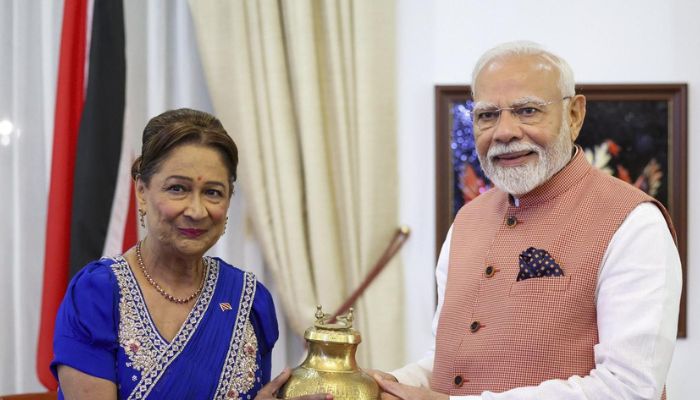
Prime Minister Narendra Modi, on his first official visit to Trinidad and Tobago, addressed the Indian diaspora in the capital city Port of Spain and referred to the deep cultural and ancestral roots between the two nations. This was not only ceremonial, this was an emotional gesture to honour India’s centuries-old spiritual and cultural connection with the Indian diaspora in the Caribbean country.
During his speech, PM Modi remembered that the people of Trinidad and Tobago had previously sent holy water and ‘shilas’ (holy stones) to be used for the Ram Mandir in Ayodhya.
He added that it was a subject of great pride and dedication for him to present a replica of the Ram Mandir and holy water of the Sarayu River in Ayodhya as a present for the Indian community there.
“I know how much you all revere Prabhu Shri Ram. Your Ram Leelas are just wonderful. I am sure you were all pleased to witness Ram Lalla returning to Ayodhya after 500 years,” PM Modi added.
The Indian Prime Minister also spoke about his previous visit to Trinidad and Tobago some 25 years ago. He mentioned how Indian culture there still flourishes, with festivals such as Navratri, Mahashivratri, and Janmashtmi being celebrated enthusiastically, and traditional songs such as Chautal and Bhaitak Gana are still popular.
PM Modi complimented the courage and resilience of the Indian-origin people, stating, “Your ancestors abandoned the Ganga and Yamuna, but took the Ramayana in their hearts. They were not mere migrants; they were bearers of an ageless culture.”
Referring to the Indian diaspora as “our pride,” the Indian PM continued, “Each one of you is a ‘Rashtradoot’, an ambassador of India’s values and heritage.”
He also said that Trinidad and Tobago Prime Minister Kamla Persad-Bissessar is originally from Buxar, Bihar, and she is a “Bihar ki Beti” to many. PM Modi appreciated Bihar’s history in democracy, education, and politics.
Notably, last year, on 22nd January 2024, a grand ceremony was organised in Trinidad and Tobago to commemorate the consecration of Ram Lalla in Ayodhya. More than 5,000 people attended the ceremony, watched cultural performances and devotional songs dedicated to Lord Ram. The Ram Janmbhumi Sthapana Samiti, together with Indian community organisations, lit 550 lamps during the ceremony.
#WATCH | Ram Janmabhoomi Sthapna Samiti, Trinidad and Tobago in association with Overseas Friends of Ram Mandir and the Indian diaspora celebrate ahead of the Pran Prathishtha in Ayodhya. pic.twitter.com/jiEZmyUYyp
The Indian High Commission shared on X at the time, “Indeed, an honour to be part of the grand celebrations by the Indian Diaspora in Trinidad & Tobago on the eve of Pran Pratishtha of Shri Ram Lalla in Ayodhya.”
Indo-Trinidadians and Tobagonians comprise roughly 42% of the population and have maintained their link with Indian culture through generations.
Bangladesh is witnessing a rapid increase in crimes against women under the watch of ‘chief advisor’ to the interim government, Muhammad Yunus. More than 24 cases of rape have been reported in the country within a span of just 9 days.
According to a report by Dhaka Tribune, the heinous crimes were committed between 20th June and 29th June this year. The situation has become so grim that Sharmeen S Murshid described the sexual violence as ‘pandemic-level crisis.’
Murshid, who serves as the adviser to the Ministry of Women and Child Affairs in Bangladesh, informed that her Ministry’s toll-free number has received 2.81 lakh complaints over the past 10–11 months of the Yunus regime.
She added that only about 100 women have so far received support. Murshid did not mince words before highlighting the deplorable state of affairs under the ‘chief advisor.’
“Violence is being committed in families, workplaces, public spaces, and online. Despite Section 14 of the Women and Children Repression Prevention Act and the High Court’s directives, victims’ photos are still being published in the media. Offensive video clips are aired, which is a violation of the law. Instead, it is the perpetrators—rapists and abusers—whose identities must be exposed,” Sharmeen S Murshid remarked.
She also talked about the rising cases of sexual violence in madrassas by Islamic clerics, who have been bolstered under the Yunus regime.
“Madrasas often remain out of sight, but child sexual abuse is taking place there too. We’re not getting the data. Our officials will now go directly to schools and madrasas to ensure accountability,” Sharmeen S Murshid pointed out.
The adviser to the Ministry of Women and Child Affairs in Bangladesh later attempted to divert focus from the current law and order situation under Muhammad Yunus.
She had claimed, “I have been working on violence against women and children for 40 years. Governments have come and gone, but none have been able to tackle the issue.”
The recent brutal rape of a Hindu woman in Muradnagar in Cumilla by BNP leader Fazor Ali and subsequent attempts to character assassinate the victim has left the minority Hindu community of Bangladesh in a state of shock and trauma.
Deteriorating law and order situation in Bangladesh
In March this year, the Human Rights Support Society (HRSS) published its report exposing the deteriorating law and order situation in Bangladesh
The report revealed the grim human rights situation in Bangladesh. Human rights violations highlighted by HRSS include mob lynching, extrajudicial killings, political violence, child abuse, harassment of women and journalists and attempts to suppress freedom of speech.
The report highlighted an atmosphere of anxiety and fear among the common people due to increase in crimes such as murders, rapes, extortion, theft, snatching, and robbery.
The human rights body reported that at least 9 people were killed and 755 others were injured in political violence in February. A total of 104 incidents were found by HRSS for the same period.
HRSS also reported 10 deaths and 13 injuries in 17 different incidents of mob violence. It also pointed out that at least 107 children and women were tortured. 53 (comprises of 38 children) of them were subjected to brutal rape.
On 12th February this year, the Office of the United Nations High Commissioner for Human Rights (OHCHR) published a 104-page report detailing atrocities committed against vulnerable Hindu minorities in Bangladesh.
The report titled ‘Human Rights Violations and Abuses related to the Protests of July and August 2024 in Bangladesh.’ Its publication becomes crucial since the interim government in Bangladesh, led by Muhammad Yunus, is pandering to Islamists.
The findings of the OHCHR expose the grim reality that Muhammad Yunus tried to brush under the carpet. He has largely remained a ‘mute spectator’ to targeted attacks, aimed at erasing the history of Awami League in the context of Bangladesh’s independence and politics.
Bangladesh is witnessing a drastic rise in vigilante Muslim mobs, unleashing violence under the pretext of protecting the tenets of Islam. These mobs are largely unorganised but they call themselves ‘Tawhidi Janata (meaning Revolutionary People).’
They have come under the spotlight over recent acts of vandalism and harassment of people. Following the undemocratic ouster of former Prime Minister Sheikh Hasina in August 2024, violent Muslim mobs operating under the banner of ‘Tawhidi Janta’ have become bolstered.
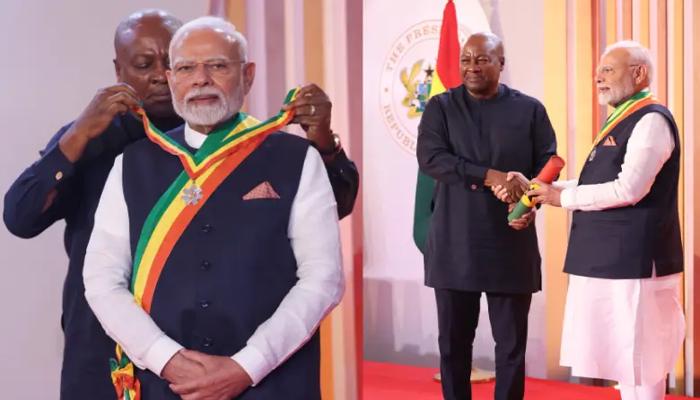
Prime Minister Modi is on an official five-nation visit, which will last 8 days. He landed in Ghana and was welcomed by President Dr John Mahama. The visit to Ghana marks a turning point in India’s engagement with West Africa. From trade to defence, culture to healthcare, the agreements signed and the conversations held reflect how New Delhi is repositioning itself as a trusted partner in Africa’s development story. Let’s break down why this matters, what was agreed upon, and how it could shape the future for both countries.
Doubling trade: Ambitious targets and new opportunities
One of the most important announcements during the visit was India and Ghana setting a target to double bilateral trade from $3 billion to $6 billion in the next five years. This is a big leap, but not an unrealistic one.
Ghana is rich in gold, cocoa, and oil, while India exports pharmaceuticals, machinery, and textiles. By improving trade logistics and reducing barriers, this target can be met. For Indian companies, Ghana is a gateway to the wider Economic Community of West African States (ECOWAS) market of over 400 million people. For Ghana, India is an enormous market for its raw materials and agricultural products.
Defence cooperation: Building security together
Another important aspect of the visit was Ghana’s interest in acquiring Indian defence equipment and training. This shows growing trust between the two nations and India’s defence capabilities.
Ghana faces challenges like piracy in the Gulf of Guinea and terrorism threats in the Sahel region. Indian naval training and counter-terrorism expertise could strengthen Ghana’s capacity to protect its people and economy. Unlike many Western defence partnerships that come with political strings attached, India’s defence cooperation is often seen as more respectful of sovereignty. This is why more African countries are looking towards India for military partnerships.
Ghana’s BRICS aspirations: India’s support
Ghana expressed its interest in joining BRICS, the group comprising Brazil, Russia, India, China, and South Africa. During the visit, India’s Ministry of External Affairs officials said they would be “happy to support Ghana’s aspiration.”
However, there is a legal hurdle—BRICS works on consensus, meaning all current members must agree before a new country joins. So, while India’s endorsement is valuable, Ghana will also need to engage with China, Russia, and others. Still, this public expression of support is a signal: India wants emerging economies like Ghana to have a bigger role in global governance. For Ghana, BRICS membership would mean more investments, technology exchanges, and diplomatic clout.
Health and Agriculture: Priorities for Ghana’s development
India also promised support for Ghana’s ambition to become a vaccine manufacturing hub. This is crucial in a post-COVID world where African countries want to reduce dependence on imports for critical medicines. India, being the “pharmacy of the world,” is well-placed to help with technical know-how and capacity building.
Additionally, India has committed to supporting Ghana’s agriculture sector. Agriculture still provide source of living in large part of Ghana’s population. By sharing Indian practices in irrigation, storage, and value addition, Ghana can improve food security and create rural jobs. This collaboration is not just charity—it opens up markets for Indian agro-technology and machinery companies.
Four MoUs: Building blocks of a comprehensive partnership
During the visit, both nations elevated their relation to the Comprehensive level and four Memoranda of Understanding (MoUs) were signed:
Cultural Exchange Programme – to promote deeper people-to-people ties through art, education, and tourism.
Standardization and Certification – to make it easier for goods to meet each other’s quality standards, boosting exports.
Traditional and Alternative Medicines – allowing Ayurveda and other Indian systems to contribute to Ghana’s healthcare.
Joint Commission Meeting – a formal mechanism for regular high-level dialogue, ensuring that promises do not remain on paper.
These MoUs may sound technical, but they are vital. When two countries sign such agreements, it means they have committed to regular engagement and follow-up. This turns warm diplomatic statements into practical cooperation.
Maritime security and counter-terrorism
The Gulf of Guinea is now considered one of the world’s most dangerous regions for piracy. Indian help in anti-piracy operations may assist Ghana protect its maritime trade routes. This not only benefits Ghana but also secures Indian shipping routs in West Africa.
Similarly, counter-terrorism cooperation is increasingly important. As the Sahel region is one of the largest hotspots of religious terrorism, Ghana’s stability could be threatened. Indian experience in counter-terrorism, such as intelligence sharing, surveillance, and capacity building, will be crucial in fighting such threats.
Why this matters for India’s Africa policy
PM Modi’s visit is part of a broader effort to reset India-Africa relations. For decades, India was seen as a partner primarily in capacity building and development assistance. Now, India is also positioning itself as a strategic partneroffering defence, technology, and infrastructure investments.
Ghana is an influential democracy in Africa with strong institutions and economic ambitions. Elevating ties to a “Comprehensive Partnership” shows India recognizes Ghana’s growing role and wants to anchor its West Africa engagement here.
It can also be seen as a geopolitical move to counter Chinese influence. At a time when China has made deep inroads into Africa through large-scale investments and loans, India’s approach is different—less about debt and more about partnerships built on mutual respect.
Challenges remain
While this visit has laid a solid foundation, the real challenge is implementation. Trade targets require improvements in logistics and banking systems. Defence cooperation must be respectful of Ghana’s sovereignty concerns. The BRICS aspiration will need patient diplomacy.
Still, there is no denying that the visit has injected fresh momentum into India-Ghana relations. As both countries look to diversify their partnerships in an uncertain world, this comprehensive partnership is timely, necessary, and full of potential. In the coming years, expect India-Ghana ties to become a model for how emerging economies can build modern, respectful, and mutually beneficial partnerships.
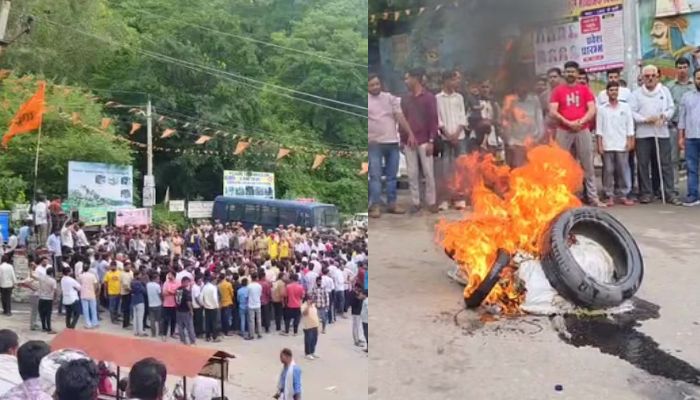
On 3rd July 2025, the Kelwara town of the Rajsamand district in Rajasthan remained closed as Hindu rights organisations protested against permission for Tajiya procession to be taken out on Muharram (6th July) in Kumbhalgarh Fort. The local Hindu activists expressed discontent against the Archaeological Department as Kumbhalgarh Fort is a protected monument and demanded a ban Muharram procession inside the fort.
In compliance with the Bandh called by Hindu groups, all the shops in the market were found locked throughout the day. On Thursday evening, many people gathered and surrounded the Kumbhalgarh fort. They protested and demanded a ban on Muharram Tajiya procession. At the same time, more than 200 policemen reached the spot to control the situation. But people started moving forward by breaking the barricades.
The Hindu Sangharsh Samiti member Rajneesh Sharma said that according to the Archaeological Department, permission is not given to enter the fort after 5 pm. In such a situation, permission should not be given to take tajias in the evening. Permission is also not given to enter the fort for organising events on Hanuman Jayanti and Maharana Pratap Jayanti.
He further said that the protest will continue on 5th of July as well. Sharma added that shops will be opened in the market from 6 am to 8 am and from 6 pm to 8 pm for buying essential goods. Apart from this, the markets will remain closed for the whole day.
On the other hand, Kumbhalgarh MLA Surendra Singh Rathore has assured the Hindu organization that the problem will be resolved. If this does not happen, the MLA will retire from politics and join the protest.
In view of the prevailing tension in the area, the police department has also deployed a large police force in Kumbhalgarh Fort and Kelwara town.