Home Blog Page 3296

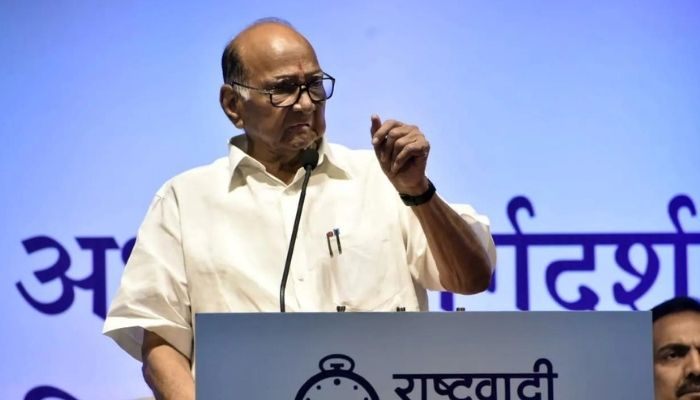
Sharad Pawar summoned by the Bhima-Koregaon enquiry commission to appear for recording his statement: Here is why

0

NCP leader Sharad Pawar has been directed by the independent enquiry commission on the Bhima-Koregaon 2018 violence to appear before it for recording a statement. The development comes after the senior NCP leader was accused of giving disturbing statements to the media in view of the violence.

The Enquiry Commission now seeks Pawar’s presence to record a statement in connection with the January 2018 violence on May 5 and 6. Pawar had earlier been summoned on February 23 and 24 for which demanded an extension. This is the third time, the fact-finding committee has asked Pawar his presence to record his statement since 2020 wherein he could not appear due to Coronavirus lockdown restrictions.

The NCP chief has sought a new date as he wanted to submit a fresh affidavit regarding the case. Pawar had also filed an affidavit previously before the commission on October 8, 2018, the year in which the violence took place. Pawar had alleged that the rioting took place when some anti-social elements instigated people for their own political mileage. Soon after the violence broke out in 2020, Vivek Vichar Manch, a Hindu rights group filed an application before the commission to seek Pawar’s interrogation over his involvement in sparking caste-based violence in Maharashtra.

Allegations against Pawar

In February 2018, Sagar Shinde, a member of the Vivek Vichar Manch filed an application after alleging that the NCP chief had made disturbing statements in his press conference on February 18 in Pune. Shinde alleges that during the press conference Pawar wrongfully attributed the reason behind the violence to some ‘right-wing’ activists. Pawar alleged that right-wing activists Milind Ekbote and Sambhaji Bhide had created a “different” atmosphere in Koregaon-Bhima, that led to the skirmishes during the gathering.

Shinde said in the plea, “In the press conference, Pawar alleged that the role of Pune city police commissioner is doubtful and must be investigated. These statements are within the purview of the terms of reference of this commission and therefore, they are relevant.”

What is the Bhima-Koregoan case?

Violence broke out on January 1, 2018, between different caste groups near the Bhima-Koregoan War memorial near Pune when Dalit activists planned to celebrate the two hundredth anniversary of the 1818 battle of Koregaon-Bhima. One person had died and many others including 10 policemen were injured in the incident. The investigation by Pune Police concluded that it was the provocative speeches at the ‘Elgar Parishad‘ held at Shaniwarwada on December 31, 2017, that triggered the violence. The Pune Police has also ascertained the role of Maoist groups in organising the Elgar Parishad conclave.

The following day, i.e on January 1, 2018, large scale violence broke out at Bhima Koregaon near Pune, where lakhs of Dalits had gathered to celebrate the 200th anniversary of the Battle of Bhima Koregaon, won by the British Army against the Peshwas in 1818. The investigation was transferred to the National Investigation Agency in January 2020.

As elements from the USA pontificate to India, American Islamist body CAIR says discrimination against Muslims in the USA increased by 9%

The Islamist organisation – Council on American-Islamic Relations (CAIR) has recently claimed that discrimination against Muslims in the United States increased by nine per cent in 2021.

In a recently released report titled “Still Suspect: The Impact of Structural Islamophobia”, the controversial Islamist body Council on American-Islamic Relations (CAIR) has said that there has been a rise in discrimination against Muslims living in the United States.

CAIR identifies itself as a Muslim civil rights organisation in the United States that claims to protect ‘civil rights, enhance understanding of Islam, promote justice, and empower American Muslims’.

The CAIR, which has links with the Islamic terrorist organisation Hamas, in its report claimed that it had received 6,720 complaints nationwide last year involving a range of issues, including immigration, travel discrimination, law enforcement, government overreach, hate and bias incidents, custody rights, school incidents, and free speech incidents.

“This represents the highest number of cases reported to CAIR in 27 years. This milestone is alarming,” said CAIR’s National Executive Director Nihad Awad.

Islamophobia is structural and deep in our society, added Awad, saying, “Islamophobia has become mainstream in America. It made its way into the government institutions and public sphere through laws, policies, political rhetoric, and other manifestations”.

The CAIR had claimed that the government discrimination and bias continue to have a disproportionate effect on American Muslims and further demonstrate that our communities continue to be viewed with suspicion. The report also listed the impacts of severe structural and interpersonal Islamophobia in the United States.

Ironically, CAIR, which is now crying over alleged Islamophobia in the US, has been vehemently pushing Hinduphobia and anti-Hindu propaganda in India. Recently CAIR had extended support for the extremely Hinduphobic ‘Dismantling Global Hindutva‘ conference.

Though either the Islamist organisation CAIR or its reports have no credibility, however, the discrimination claim against Muslims, especially in the United States, comes at a time when various entities in the US pontificate other countries on religious discrimination against minorities.

CAIR reports come amidst US pontification at India

This report comes at a time when several influential bodies associated with the United States government have been interfering with the domestic politics of democracies such as India to fear-monger that there has been a considerable worsening of religious freedom in India and attacks have increased against Muslims in the country.

Recently, the US Commission on International Religious Freedom (USCIRF) had claimed that the state of religious freedom in India is “significantly worsened” and had called for “targeted sanctions” against the country over alleged abuses. The US panel had accused India of “engaging in and tolerating systematic, ongoing, and egregious violations of religious freedom”.

“The government continued to systemise its ideological vision of a Hindu state at both the national and state levels through the use of both existing and new laws and structural changes hostile to the country’s religious minorities,” the USCIRF had said in its purported report.

Well, this is not the first time that the USCIRF has indulged in fanning baseless rumours and leftist propaganda against India. The controversial body, which had hired sexual offenders, paedophiles as its commissioners, had also ranted against India and its laws in the past by claiming that minorities will face threats in the country.

Ironically, the USCIRF, which claims to be standing for religious freedom and rights, resorted to peddling false propaganda against the Indian government on CAA, a law which was implemented to guarantee rights in the country by granting Indian citizenship.

It is not just the US government bodies that often ‘advise’ India on how to treat minorities. The far-left lawmakers, politicians, and media in the US, which often assumes that they are morally-intellectually superior to other countries, pontificate India on religious tolerance, especially in favour of Muslims.

However, if believed to be accurate, the latest report by CAIR only shows the faultlines that exist in the US. The United States, the fountainhead of ‘democracy’, is now accused of showing intolerance towards minorities and being Islamophobic by Islamist groups.

Different yardsticks for Hindus and Muslims: How acquittal of Noor Mohammad and conviction of Dinesh in Delhi Riots raise questions

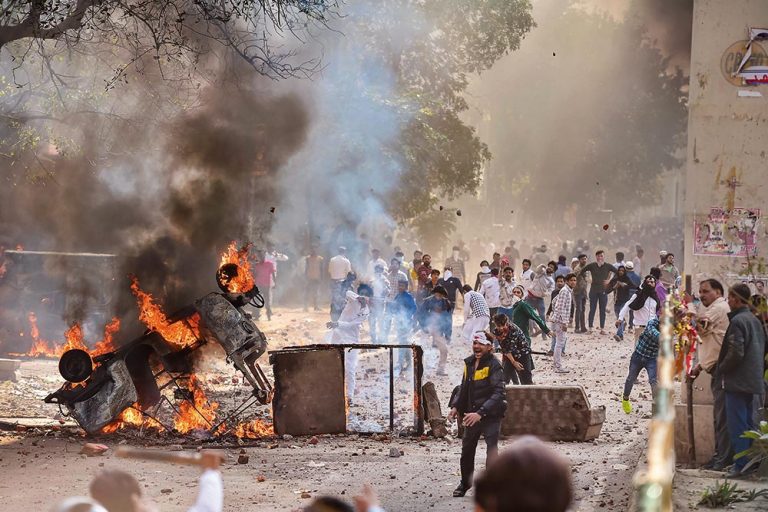
A Delhi Court on Wednesday acquitted one Noor Mohammad alias Noora of all charges in relation to the Delhi anti-Hindu riots of February 2020 stating that there was no cogent and reliable evidence on record to hold him guilty. An FIR (129/2020) in this regard was registered at the Khajuri Khas Police Station. 

Delhi Police had booked Noor Mohammad under various sections related to rioting, unlawful assembly, arson and vandalism in Bunny Bakery Shop at Chand Bagh Pulia on February 25, 2020. The court observed that when there is an unlawful assembly or a large gathering of people takes place and take part in arson or clashes take place between two groups, in order to convict the accused, at least two prosecution witnesses have to support and identify the role and involvement of the person concerned.

While acquitting Noor Mohammad, the court said:

“When a criminal Court has to deal with the evidence pertaining to the commission of an offence involving a large number of offenders and a large number of victims, the normal test is that the conviction should be sustained only if it is supported by two or more witnesses who give a consistent account of the incident in question. When an unlawful assembly or a large number of persons take part in arson or in a clash between two groups, in order to convict a person, at least two prosecution witnesses have to support and identify the role and involvement of the persons concerned.”

Therefore, it appears that the following points were kept in mind by the Court:

  1. There was no clear evidence of Noor Mohammad’s involvement in the arson and vandalism of Bunny Bakery Shop at Chand Bagh Pulia on 25th February 2020
  2. In such a case, to convict an accused, the court needs 2 prosecution witnesses that have cogent and consistent statements identifying the accused identifying his role and involvement in the incident.
  3. The accused was arrested based on his own disclosure statement.
  4. The proprietor of the vandalized/burnt shop of M/s Bunny Bakers had nowhere stated in his entire deposition that he had gone to the Police Station on April 2, 2020, and had identified Noor there when he was being interrogated by the IO.
  5. The police beat constable identified Noor Mohammad as a rioter on April 2, 2020, during the interrogation in the police station. The constable’s identification, the court said, appears to be absolutely doubtful and devoid of trustworthiness.
  6. From the deposition of the investigating officer (IO) and a sub-inspector, ‘it was evident’ that the accused was not arrested on the identificatory statement of the constable.
  7. The court further stated that the IO in his deposition said that the complainant Gyanendra Kumar also identified Noor Mohammad as one of the rioters on April 2, 2020, in the police station. However, the same has not been affirmed by the complainant himself. 
  8. The beat officer had not apprised his senior officers or his colleagues that he has identified one of the rioters Noor Mohammad and to arrest him. And that he waited for March 31, 2020, to identify and arrest the accused.

From available reports, it seems the crux of the acquittal of accused Noor Mohammad is based on the 8 aforementioned points, as detailed by the sessions court.

However, when one does an analysis of one of the previous judgements in the Delhi Riots case, which convicted Hindu accused Dinesh Yadav and sent him to prison for 5 years, there are several questions raised about the consistency of the judgements and whether there is an element of partiality as far as judgement regarding Hindu and Muslim accused are concerned.

In January, the ongoing Delhi anti-Hindu riots saw their first conviction. A Hindu man, Dinesh Yadav, was convicted of burning the house of a Muslim woman, Majori, and sentenced to 5 years in prison.

The case in which Dinesh Yadav was convicted pertains to a case of alleged violence on the 25th of February 2020 where a mob of Hindus had allegedly barged into the house of an old Muslim woman called Manori, stole and vandalised the house. According to the prosecutors, the woman had jumped to the adjacent building to save her life, along with a child, and was rescued by the police who had then escorted her to her relative’s house. An FIR in the case was registered on 3rd March 2020 and witnesses were examined.

The case itself had several inconsistencies. For example, while it is said that Manori jumped at her neighbour’s house when the vandalisation happened, it was later revealed that Manori and her family were not even present in the house when the violence broke out. In fact, in their own testimony, Manori said that she and her children had left the house hours before the violence had erupted. To add insult to injury, during the trial, Manori and her sons had turned hostile. While earlier they had claimed that they were present in the house when the violence broke out, they changed their statements and said they had left hours ago.

Regardless of this glaring inconsistency, Dinesh Yadav was convicted. In fact, this was not the only inconsistency. As explained in a previous analysis of the judgement in the case, the court document presented the following points:

  1. Manori, the old woman whose house was vandalised, was not present in the house when the vandalised took place. She said she had left the house at around 4 PM on the 25th and the vandalisation, according to the police personnel (who were also witnesses in the case), began at about 11 PM. 
  2. Manori, her family members Ashiq and Asif could not identify any of the rioters, leave alone Dinesh Yadav, since they were not present when the vandalisation took place. In fact, these witnesses were declared hostile by the prosecution where during cross-questioning, they said that they had never told the police that they were in the house when the vandalisation took place. Essentially, it would appear that the police were under the impression that they were present in the house when the vandalisation took place. The family itself had alluded to it several times, even in an Indian Express interview after the verdict was out. 
  3. The police personnel, Vipin and Sanoj, named Dinesh because they saw him in the vicinity of the mob. They have admitted that Dinesh was in no way involved in the violence. They said they him with a wooden danda, however, no such danda was recovered from Dinesh. In fact, there was no incriminating material found on his person. 
  4. The court in its wisdom said that even though there is no evidence to suggest that Dinesh was involved in the violence, he was a part of the mob and therefore, assumed his intention to further the common goal of the illegal mob – vandalise and commit violence against Muslims. 
  5. The court predicated this conclusion on two factors – a) Section 149 applies, which basically says that even if a person is not committing violence but is a part of an illegal assembly creating violence and if he has the intention to further the same illegal goal of the illegal crowd, he should be held liable, b) the mob was Hindu and since he was Hindu too, it can be assumed that he wanted to further the same cause as that of the rest of the mob. 
  6. One has to keep in mind that other than this assumption, based on the fact that he is a Hindu, there is no evidence on record to suggest that he was not a bystander and wanted to further the cause of the illegal mob, yet, the court sentenced Dinesh to 5 years in prison. 

The full article analysing the Dinesh Yadav judgement and the miscarriage of justice can be read here.

In the acquittal of Noor Mohammad and the conviction of Dinesh Yadav in the Delhi riots case, the judicial system clearly does not cover itself in glory, given the glaring inconsistencies in judicial logic in the two cases.

While Noor was acquitted saying that there is no consistent testimony elucidating his involvement in the crime, Dinesh Yadav was acquitted even though the witnesses themselves said Yadav was not involved in the violence and the victims could not recognise any of the rioters given they were not even at the spot of the violence when the incident happened. There were no weapons or stolen goods recovered from Dinesh Yadav, in fact, while in Noor’s case, the court relied on Supreme Court judgement and claimed that 2 prosecutorial witnesses are required for conviction, there was not even one consistent testimony in the case of Dinesh Yadav, yet, he was convicted.

In the case of Dinesh Yadav, the judgement was clear – there was no evidence to convict him. There were no witnesses who said that Dinesh Yadav was a part of the mob indulging in vandalisation and theft. The witnesses who took the stand categorically said that they could not place Yadav doing anything illegal. The court merely convicted him because he was a Hindu in the vicinity of a mob, that comprised of Hindus.

In the case of Noor Mohammad, there was a witness who recognised him, however, the court said that it was not sufficient evidence to convict him of the crime. In fact, there was a disclosure statement from Noor as well, on the basis of which he was supposedly arrested, but the court in its wisdom said that there was insufficient to convict him in the Delhi anti-Hindu riots.

Not the only inconsistency in Delhi Riots judgements – the court displayed double standards in giving bail to those accused in the Dilbar Negi case

On January 18th, the Delhi High Court granted bail to six persons named Mohd Tahir, Shahrukh, Mohd Faizal, Mohd Shoaib, Rashid and Parvez in the Gokulpuri murder case related to the Delhi Riots of February 2020. The bail was granted by Justice Subramonium Prasad. The six were accused of vandalism and setting Anil Sweet Corner on fire “resulting in the death of 22-year-old Dilbar Negi”.

In the case of bail granted to the accused in the Dilbar Negi case, the very tenets that were used to convict Dinesh Yadav were interpreted differently to grant bail to the Muslim accused.

The foundational element in both these cases, the bail order in the Dilbar Negi case and the conviction judgement in the Dinesh Yadav case, was the application of Section 149. This section and its interpretation were used differently in both cases, in one, to convict the Hindu boy Dinesh Yadav in the other, to give bail to the Muslim perpetrators in the Dilbar Negi murder case. 

In the case of Dinesh Yadav, where he was convicted, the court said that for Section 149, it does not need to be proved that the individual was a part of the violence at all. The mere fact that Dinesh was allegedly a part of the mob, goes to show that he showed a common goal with the illegal assembly. In fact, the court convicted Dinesh on the basis of this mere assumption. Going further, the court said that because the crowd was Hindu, and Dinesh was Hindu, it is a reasonable assumption that he was a part of the mob sharing their goal to harm Muslims. Keep in mind, that while interpreting Section 149 and throwing Dinesh in jail for 5 years, the court categorically admitted that there was absolutely no evidence to prove that Dinesh was a part of the violence that ensued and led to the house of the Muslim woman being burnt. 

In the case where Md Tahir was given bail, the court also interpreted Section 149 but in a manner diametrically opposed to the interpretation used by the court in the Dinesh Yadav case. 

In the case of giving bail to the Muslim accused in the Dilbar Negi case, the court said categorically that “…clear finding needs to be given by the Court regarding the nature of an unlawful common object. Furthermore, if any such finding is absent or if there is no overt act on behalf of the accused, the mere fact that the accused was present or armed would not be sufficient to prove common object”.

It went so far as to say that the court has to be circumspect of the personal liberty of individuals and therefore, granting bail is the norm that the court must follow. 

As evident, in the two cases, the court interpreted the provision of the law differently using one to convict a Hindu boy and using the other to grant bail to the Muslim accused. 

One has to also bear in mind that in the case of the Muslim accused, the court judgement says that there are over 70 witnesses to examine but in the case of Dinesh Yadav, where he was convicted on the basis of a flawed interpretation of the law, there were witnesses who could not identify anyone from the mob because they were not even there when the violence took place and two other police officers, who merely said they identified Dinesh standing around in the crowd and had no evidence that he participated in any violence. 

This was not an average situation where any individual who was a part of the mob was there to further the common objective of the illegal assembly. There were widespread riots in the national capital on those fateful days and incidents of violence aplenty. There were several individuals who were bystanders or stuck in the violence-affected areas. Further, there were people also moving around in groups to ensure some sort of safety for themselves. With no proof that Dinesh was a part of the violence, on the say-so of two police officers, with no evidence like weapons recovered or CCTV footage, the court incarcerated him on the basis of the fact that he was a Hindu, standing near a Hindu mob. Whereas, in the case of the Muslim convicts, they have been granted bail on the basis of a completely different interpretation of Section 149.

While it is true that at the stage of the bail hearing, there is a presumption of innocence, the glaring difference in interpretation of Section 149 and the standard of burden of evidence points towards a gross miscarriage of justice as far as Dinesh Yadav is concerned. While the miscarriage of justice already existed in the case of Dinesh Yadav when juxtaposed with the bail granted to the accused in the Negi case, the acquittal of Noor Mohammad only lends credence to the suspicion that the judicial system has been flawed in the dispensation of justice and different yardsticks are being employed as far as Muslim and Hindu accused are concerned in the Delhi anti-Hindu riots.


Jahangirpuri violence: Two more accused, Jafar, Babuddin arrested, minor given bail by Juvenile Justice Board

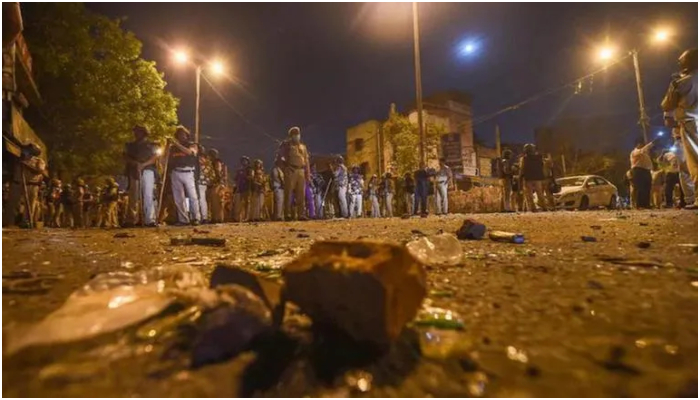
On Thursday, the Delhi Police arrested two more accused in the case of Jahangirpuri violence which broke out on April 16 during Hanuman Jayanti procession. The accused have been identified as Jafar and Babuddin. According to the Police, the accused were primarily involved in escalating the violence on April 16.

Earlier the Police had arrested Mohd Ansar and Mohd Aslam as prime accused in the case. The police also arrested 23 others and had apprehended two juveniles in the case. However, according to the reports, the Juvenile Justice Board on April 27 granted bail to one of the minors as the counsel maintained that he was falsely implicated in the matter.

As reported earlier, Mohd Ansar, the key conspirator in the case is being interrogated in the money laundering case. The Enforcement Directorate (ED) on April 23 registered a money laundering case against Ansar and other suspects under the criminal sections of the Prevention of Money Laundering Act (PMLA). The ED began its probe based on several complaints registered by the police officers against the accused.

Mohd Ansar has been showing off his wealth on social media. Delhi Police suspect that gambling money was used by Ansar to purchase land and properties in various places. While the probe of illegal funds is underway, the ED is also scanning his properties and bank details and has mentioned that the case is no longer only rioting.

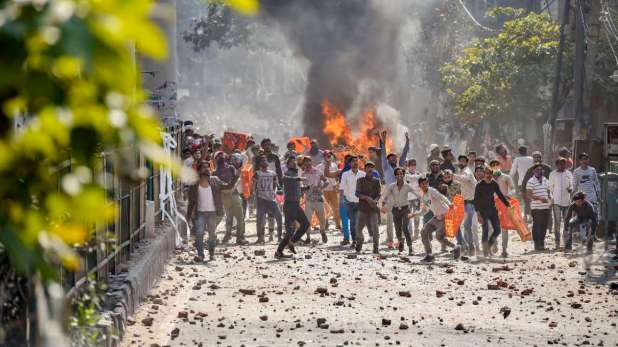
The Jahangirpuri violence saga began on April 16 when the Hanuman Jayanti procession was attacked by Islamists who pelted stones and glass bottles at the procession. Several people got injured as the violence escalated after 6 pm. They (Islamists) also fired gun stots amid the violence and injured Police personnel.

It is important to note that Ansar, the prime accused in the case is suspected to be associated with the ruling Aam Aadmi Party (AAP) in Delhi. He had actively campaigned for the Party during Delhi Elections. Further, while AAP has denied Ansar’s association with the party, West Bengal BJP leader Suvendu Adhikari stated that Ansar had close ties with the Trinamool Congress party and that he was actively involved in the acts of political violence by the TMC goons.

The Delhi Police has so far arrested 25 people and apprehended two juveniles in the case. One of the minors has been granted bail. The Police have lodged an FIR against the accused under the provisions 147 (Rioting), 148 (Armed rioting), 186 (Obstructing duty of public servant), 353 (Assault on public servant), 307 (Murder attempt), 427 (property damage), and 436 (Attack by explosives) of the Indian penal code along with section 27 of the Arms Act 1959.

Alwar: Muslim group files case against Congress, alleges party incited unrest using temple demolition drive

On April 27, a Muslim group filed a complaint against Congress District Head Yogesh Mishra, alleging the party used the temple demolition drive to cause communal disharmony in the region. A Muslim youth identified as Sahoon filed the complaint. He alleged that Congress MLA was responsible for the demolition, and local Muslims had nothing to do with it. He added that the Congress leaders were aware of the development as MLA had visited the temple site.

Speaking to Republic World, a Muslim youth said, “The entire role behind the demolition of the temples in Rajgarh is that of the Congress. A Congress MLA is responsible. We Muslims do not have anything to do with this, we did not want the temples to be demolished. Congress was responsible for this, it was their administration, their MLA had gone there.”

Another Muslim youth said further added that Alwar was a peaceful place, and no such riots had happened there. “They are worried about why this is not happening. How will they benefit politically without riots? Who will need them? This is why this is happening.”

Sahoon used to be a Congress worker. He resigned from the party over the temple demolition matter. He said, “Congress District Head Yogesh Mishra gave an unconstitutional speech. He provoked people with his speech. He had said, ‘You cannot remove two stones from a mosque. Try and see what would happen.’ If anything happens to any religious site, a mosque or something else, who would be responsible?”

Sahoon claimed that after he lodged his protest, the party sought a reply from him. Mishra released a video the next day in which he alleged that his speech was misinterpreted by the people, but he did not apologize for what he had said. Sahoon tried to save the party and put all the blame on Mishra.

Speaking to Republic, Sadar Police Station in-charge Rajesh Sharma said the Police will investigate the matter based on the complaint and take appropriate action.

Alwar Temple demolition

On April 22, the Rajasthan government demolished a 300-year old Shiv Mandir on the pretext of development in the area. The administration used a bulldozer to bring down the temple. The ancient Shiva Linga in the temple was cut out using a drill, and the old sculptures were broken during the demolition drive.

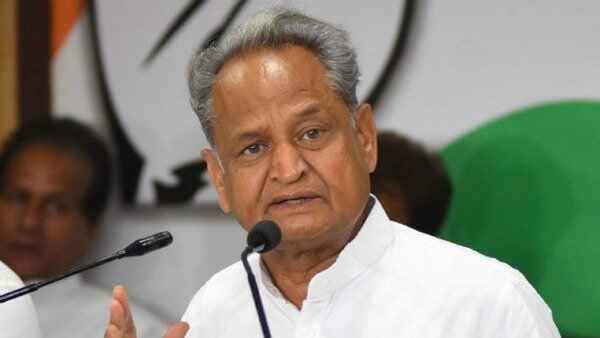
Congress MLA Ramkesh Meena alleged notice was issued to the locals in the matter, which was refuted by the locals. The residents around the temple blamed the Ashok Gehlot-led Rajasthan government for running a vendetta against the area as they had elected BJP councillors.

After Twitter takeover, Elon Musk jokes he wants to buy Coca-Cola to ‘put cocaine back’

Ever since Elon Musk took over the micro-blogging site Twitter, he has been aggressively tweeting about his future ideas and plans of action to make the world a better place.

In his latest, the billionaire investor-inventor Elon Musk jokingly announced that he would soon buy Coca-Cola to put the ‘cocaine back in’.

He tweeted, “Next, I’m buying Coca-Cola to put the cocaine back in.”

While the above tweet is seemingly a joke, sometimes it is hard to guess as back in 2017, when Musk had tweeted about asking price of Twitter, no one really thought it would come true five years down the line.

Elon Musk’s tweet from 2017

Earlier, Musk had also tweeted a parody tweet asking him to buy McDonald’s ‘and fix all of the ice-cream machines’. 

However, Musk quoted the tweet and wrote, “Listen, I can’t do miracles ok”, suggesting that McDonald’s ice-cream machines can never be fixed.

On Monday, Elon Musk bought the social media platform Twitter for roughly $44 billion, promising to make it more open and adhere to the principles of free speech. The world’s richest person had said he wanted to own and privatise Twitter because he thinks it is not living up to its potential as a platform for free speech.

The South African-born billionaire had made an offer to the Twitter board at 54.20 US Dollars per share, a 54% premium over the day before Musk began investing in Twitter and a 38% premium over the day before Musk’s investment was publicly announced.

Elon Musk, who is already the largest individual shareholder of Twitter, holding 9.2% of the company, had earlier stated that he has no faith in the current management and can’t fulfil Twitter’s true potential under them. He aimed to take the company private to have complete control over it and direct Twitter to achieve its full potential.

Twitter’s board had tried its best to resist Elon Musk’s takeover bid, including trying to trigger the poison pill strategy. However, the price Musk offered, coupled with the mood of the majority of Twitter shareholders, eventually forced the Twitter board’s hand.

Prashant Kishor responsible for party’s ‘humiliating’ loss in Goa elections, alleges TMC state chief as he resigns

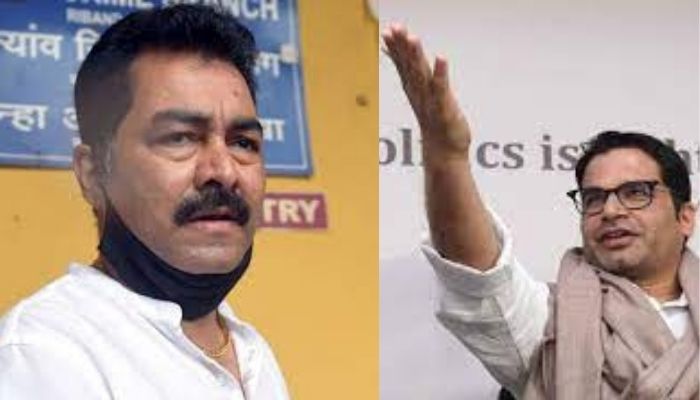
Goa state chief of the Trinamool Congress Party Kiran Kandolkar resigned on Wednesday 27th April 2022 alleging that the political strategist Prashant Kishor is responsible for the ‘humiliating defeat’ of the party in the recent assembly elections. It is notable that though the TMc has a major stronghold in West Bengal, it had attempted the recent assembly polls in Goa only to lose all the seats it contested in.

Kiran Kandolkar who was the working president of the Goa Forward Party had quit his party and joined the TMC in the run-up to the polls held in February this year.

Kiran Kandolkar addressed a press conference in which he alleged, “Prashant Kishor was responsible for the TMC’s humiliating defeat in Goa polls. He was in Goa to blackmail the Congress and eventually ended up helping the BJP to form the government again.”

When asked if joining TMC was a mistake, he said, “We did what we felt right at that time. It’s human to commit a mistake. We did commit a mistake.” Along with Kiran Kandolkar, Tarak Arolkar, and Sandeep Vazarkar have resigned from the primary membership of the TMC. Days before, Kandolkar’s wife Kavita Kandolkar had also resigned from the party owing to the pressure of the supporters.

As Kavita Kandolkar resigned, the Goa TMC tweeted, “We have decided to restructure the entire AITC Goa State Committee, with immediate effect. A newly constituted ad hoc committee will be announced shortly. We take this opportunity to reiterate our solemn commitment towards working for the people of Goa and their well-being.”

Kiran Kandolkar fought the recent assembly elections from Aldona while his wife Kavita fought from Thivim. Both of them lost in this election. Kandolkar called all the parties to unite against the Bharatiya Janata Party. He said that the BJP won only because the split of votes went in its favor. In the recently held assembly elections, the BJP secured 20 out of 40 seats. It was supported by 2 MLAs of the Maharashtrawadi Gomantak Party and three independent MLAs to form the government.

Delhi 2020 riot accused Noor Mohammad acquitted because of lack of evidence

A Delhi Court on Wednesday acquitted one Noor Mohammad alias Noora of all charges in relation to the North East Delhi riots of February 2020 stating that there was no cogent and reliable evidence on record to hold him guilty. An FIR (129/2020) in this regard was registered at the Khajuri Khas Police Station.

Delhi Police had booked Noor Mohammad under various sections related to rioting, unlawful assembly, arson and vandalism in Bunny Bakery Shop at Chand Bagh Pulia on February 25, 2020. The court observed that when there is unlawful assembly or a large gathering of people takes place and take part in arson or clashes take place between two groups, in order to convict the accused, at least two prosecution witnesses have to support and identify the role and involvement of the person concerned.

In its order, the court said, the police beat constable identified Noor Mohammad as a rioter on April 2, 2020 during the interrogation in the police station. The constable’s identification, the court said, appears to be absolutely doubtful and devoid of trustworthiness. The court further stated that from the deposition of the investigating officer (IO) and a sub-inspector, ‘it was evident’ that the accused was not arrested on identificatory statement of the constable. The court further said that in this case, Noor Mohammad was arrested on the basis of his alleged disclosure statements recorded by the sub-inspector on March 31, 2020.

The court further stated that the IO in his deposition said that the complainant Gyanendra Kumar also identified Noor Mohammad as one of the rioters on April 2, 2020 in the police station. However, the same has not been affirmed by the complainant himself. The court said that Gyanendra Kumar in his deposition has not mentioned that he had gone to police station on April 2, 2020 and identified the accused there.

Further, the court also noted that the beat officer had not apprised his senior officers or his colleagues that he has identified one of the rioters Noor Mohammad and to arrest him. And that he waited for March 31, 2020 to identify and arrest the accused.

UP Police remove over 11,000 loudspeakers, 35,000 lower volume as per guidelines: Details

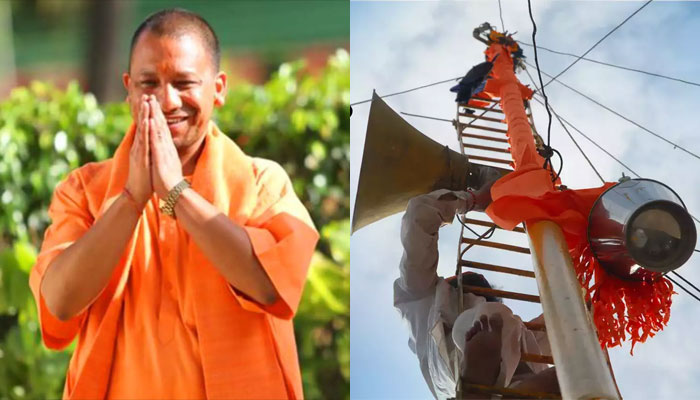
The Uttar Pradesh Police has removed over 11,000 loudspeakers from religious places across the state. The volume of 35,000 loudspeakers has been reduced to the permissible levels as per the guidelines. The action by the UP Police is being taken based on the CM Yogi Adityanath-led state government’s order in which all states were asked to comply with the UP Pollution Control Board on loudspeakers by April 30.

The maximum number of loudspeakers (2,395) was removed from Lucknow. Other cities that saw the maximum impact of the order were Gorakhpur (1,788), Varanasi (1,366), Meerut (1,204), Prayagraj (1,172) and Bareilly (1070). Lucknow topped in terms of reducing the volume of the loudspeakers (7,397) as well. Other prominent cities on the list include Bareilly (6,257), Meerut (5,976), Gorakhpur (5561) and Varanasi (2,417).

Additional Director General (Law & Order) Prashant Kumar said, “A statewide drive is being undertaken to remove loudspeakers from religious places and set their volume within permissible limits. As part of this exercise, 10,923 loudspeakers were removed, and the volume of 35,221 others was reduced to permissible limits so far.”

Speaking to Republic Media, he said, “We are following the high court, which has set the specific decibel for loudspeakers. The order regarding this has been sent to district administrations. A committee has been formed to look after this. We are also talking to religious leaders as most of the loudspeakers are mounted at religious places. The drive has received a positive response.”

Last week, CM Yogi held a meeting with senior officials to discuss the law and order situation in the state. CM Yogi said that while everyone has the right and freedom to follow the religion of their choice but they should ensure that while worshipping in the method they like, others should not get disturbed. He said, “Though microphones can be used, make sure the sound does not come out of any premises. Other people should not face any problem.”

After the order was issued by the state government, many religious leaders from both Hindu and Muslim communities agreed to reduce the volume of the loudspeakers. The first one to bring down the volume was Sri Krishna Janmabhoomi in Mathura. They decided not to broadcast the famous ‘Manglacharan Aarti’ that was played every day for an hour from 5 AM on the loudspeaker at Bhagwat Bhawan on the temple premises.

Later, Shaktipeeth Devipatan Tulsipur Temple in Balrampur reportedly removed three out of four loudspeakers from its premises and reduced the volume of the remaining loudspeaker as per the guidelines. Gorakhnath Temple in Gorakhpur also lowered the volume of the loudspeakers. Rajeshwari Temple and Kali Paltan Temple in Meerut also agreed to follow the guidelines and act accordingly. Similar steps have been taken in Kanpur and Ayodhya by the temple authorities.

On the other hand, Maulana Khalid Rasheed Farangi Mahali, Imam, Eidgah, had said directives had been issued to all Sunni mosques to reduce the volume of the loudspeakers. He said, “We have directed all the mosques here to limit the sound of loudspeakers to ensure that it does not come out of the premises.”

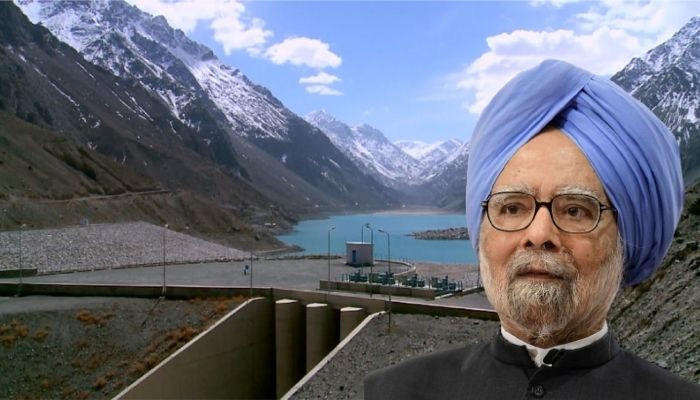
Did you know that USA funded a dam project in PoK in 2011 and UPA govt, led by Congress, remained a mute spectator? Details

The visit of US Congresswoman Ilhan Omar to Pakistan Occupied Kashmir (PoK) in April this year has created political upheaval in India, with the Ministry of External Affairs (MEA) condemning her for trying to legitimise the demands of Pakistan.

Omar is the first member of the US Congress to visit the country after a new coalition government came into power in Islamabad. The Somalia-born Islamist politician had received a red-carpet welcome in Gilgit Baltistan, which is an Indian territory occupied by Pakistan.

India took strong objection to the visit of the US Parliamentarian, given that it violated the territorial integrity of the country. “She visited a part of Jammu and Kashmir currently illegally occupied by Pakistan. If such a politician wishes to practice her narrow-minded politics at home that may be her business, but violating our territorial integrity in its pursuit makes this ours. Condemnable”, MEA spokesperson Arindam Bagchi said without mincing any words.

This prompted the United States to quickly distance itself from the actions of Ilhan Omar. Derek Chollet, Counselor to US Secretary of State Antony Blinken stated on April 22 that Omar’s visit was unofficial and personal and it did not represent any policy change on behalf of the US Government.

Given the strong response of the Modi government over the visit of Ilhan Omar to Gilgit Baltistan, one would anticipate that this must have been the policy of India at all times. However, in 2011, when USAID funded the construction of Satpara Dam in PoK, the response of the Congress-led-UPA government was largely muted. This is despite the fact that the dam construction undermined the sovereignty and territorial integrity of the country.

US funding of Satpara Dam

On January 6, 2011, the United States announced that it would provide 66 million dollars to support the construction of two dams to help Pakistan meet its energy needs. One of the dams included the Satpara dam, which is located in Skardu town of Gilgit-Baltistan (territory under illegal occupation of Pakistan).

While speaking about the matter, that then-Acting Special Representative for Pakistan frank Ruggiero remarked, “Last year’s devastating floods demonstrated the need for flood control infrastructure. These two multipurpose dams will control floodwaters, provide electricity and store water for irrigation and household use for downstream villages.”

He had even assured that the US would continue to help Pakistan in projects that bring about economic development in ‘critical areas.’ While Powerhouse Units No. 1 and 2 of the Satpara dam were operational by 2008, the US helped fund Power House Units No. 3 and 4 (which became operational by June 2013) and major canals of the irrigation system.

The Underrepresented Nations & Peoples Organisation (UNPO) had noted that the US support for the dam was controversial, given that Gilgit Baltistan is an internationally recognised disputed territory. It had pointed out that the dam construction could destroy ancient rock carvings and displace the local population.

“The completion of the Satpara Dam aims to add 17.6 megawatts of power generating capacity to the local power grid­­enough power to supply electricity to about 40,000 households,” the United States Agency for International Development (USAID) said in its report [pdf].

It further added, “The dam will also mitigate flooding in the region, store water to irrigate downstream land, and provide 3.1 million gallons per day of water for domestic use.”

The agreement was signed between Aga Khan Foundation and USAID on March 12, 2012, for the Satpara Development Project (SDP). Power House Unit No.3 became operational in May 2013 while Power House Unit No. 4 became operational in June 2013.

Contrary to the current response of the Modi government to Ilhan Omar’s visit, there was a negligible condemnation of US adventure in India’s territory between 2011 and 2013. By helping construct dams and developing the region without India’s consent, the United States violated the territorial integrity of the nation. However, the response of the then UPA government was meek and muted.