Home Blog Page 33

Who is Munna Jhingada: The Dawood aide, Bangkok fugitive and the ISI operative behind a foiled terror conspiracy

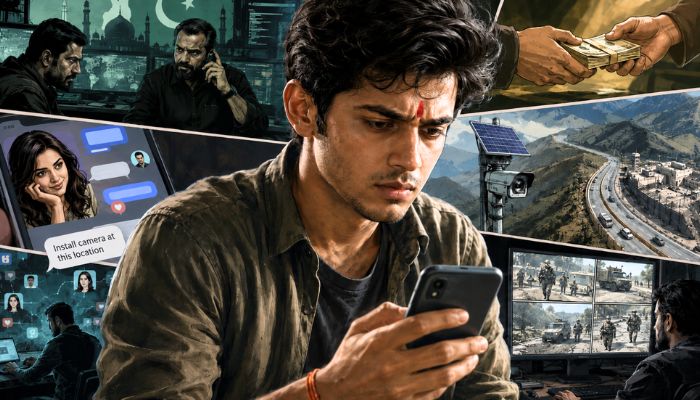
On 30th May (Saturday), 8 members of a module connected to the criminal underworld of Mumbai and Inter-Services Intelligence (ISI) of Pakistan have been apprehended by the Delhi Police’s Special Cell. The module mobilised a group of terrorists to assault key regions around the nation, especially Delhi and Mumbai.

Anil Shukla, Commissioner of Police, Special Cell, informed, “Major attacks have been averted with the arrests of these individuals. We have collected evidence, including some pictures, videos, and coordinates of specific government and non-government buildings and security establishments at which these attacks were being planned.”

The police pointed out that the perpetrators were assigned to assault vital installations, security units and security personnel. Their targets included power plants, airports, railroads and nuclear facilities. They intended to execute grenade attacks and shootings. The authorities have confiscated a significant amount of ammunition and weapons.

An operation took place over the course of 17 days, which was jointly carried out by the Delhi Police’s Special Cell from Delhi, Maharashtra and Jharkhand. The arrested people were linked to Shahzad Bhatti, a criminal from Pakistan and Munna Jhingada, a close accomplice of fugitive Dawood Ibrahim, who was imprisoned in Bangkok in 2000 after he was sent there to kill Chhota Rajan on a bogus passport.

The police noted that Bhatti has been operating out of Pakistan for the last 5 years, while Jhingada spent 17 years in prison in Bangkok before he was brought back to the country. According to other reports, the police asserted that Munna Jhingada, Dilawar Khan Shahzad Bhatti and Amir Jatt were the 4 primary handlers of the module and the minds behind the terror conspiracy. They are all based in Pakistan at the moment.

Security agencies revealed that Jhingada has been operating from a Karachi safe house. The location is near a posh hotel and just a few kilometres from an area attributed to Dawood’s apartment in the city. They suspect that Jhingada used digital communication to stay in contact with terrorist recruiters and operatives based in India. He was actively interacting with them via encrypted conversations and video calls.

Evidence that suggested he wanted to arrange and set up a new group of these deadly operatives within the country is under inquiry by agencies. Jhingada was in regular communication with people involved with the nefarious network and exchanged recent pictures of himself with associates.

He originally entered the spotlight after the breakup between Dawood Ibrahim and Chhota Rajan following the 1993 Mumbai riots and serial bombings. After the explosions, Rajan left D-Company and formed his own criminal organisation in Southeast Asia because he disapproved of Dawood’s strong bond with ISI. 

Who is Munna Jhingada

Sayyad Muzzakkir Muddasar Hussain, infamously known as Munna Jhingada, is a prominent aide of Dawood Ibrahim and has long been an associate of his trusted deputy, Chhota Shakeel. He is from the Jogeshwari neighbourhood of Mumbai and is charged with orchestrating major terrorist assaults in India.

Dawood had asked him to reach Pakistan through Nepal in 1997, after which he commenced working for the D-company network. The former regularly utilised Jhingada, a dreaded shooter, to kill his fiercest adversaries since he was incredibly confident in his shooting abilities. He was even told to go after mobster Arun Gawli. He also became one of Chhota Shakeel’s most dependable actors.

Jhingada killed a significant Akhil Bharatiya Sena leader allegedly tied to Arun Gawli in October 1997. He was captured with a small arsenal, which put an end to his murderous rampage. However, he was able to secure bail and departed for Pakistan in 1999. Jhingada has been staying and running terror modules in Karachi, as those allied with the D-company and ISI fled him there in 2019. He has a lot of critical information on Dawood and the ISI.

Jhingada was a second-year Bachelor of Arts student at a Jogeshwari (East) college when he first embraced the criminal world on 12th February 1990. He witnessed a fight involving his friends over an eve-teasing incident and then fatally stabbed a man named Wazir. He gained bail in November 1991 after turning himself in to the police.

Jhingada was pulled into violence again after briefly going back to work in his father’s plumbing company. Nazir, Wazir’s brother, and his friends attacked him on 31st March 1994 for revenge. He attacked Nazir during the face-off and surrendered at the Meghwadi police station.

Jhingada was booked for many crimes between 1990 and 1995, including murder and attempted murder. He escaped to his hometown in the Gonda district of Uttar Pradesh after Nishar Ahmed’s murder in August 1995. He practised with country-made firearms for about six months before starting as a sharpshooter for Chhota Shakeel’s gang in Mumbai.

His arrest on 24th March 1996 marked a crucial turning point. Jhingada met Ismail Malabari, Chhota Shakeel’s confidant, while incarcerated at Arthur Road Jail, who introduced him to their network and helped in obtaining his bail. Jhingada executed multiple contract killings for the cartel between 1994 and 1999. He was accused of killing Sunil Jain, a hawala operator who was suspected of managing money connected to rival criminal Chhota Rajan and fostering links with a well-known Mumbai encounter specialist. Pakistan’s intelligence agency also became aware of his rising proximity to Shakeel.

Dawood Ibrahim and Chhota Rajan gang war

The gang war between Dawood Ibrahim and his erstwhile subordinate Chhota Rajan is directly related to Jhingada’s criminal past. His reputation soared after the unsuccessful attempt on Rajan’s life in Bangkok in 2000. He and other gang members went to Thailand to eliminate him on Shakeel’s orders after the killing of Dilshad Mirza Beg, an Indian-born Nepali politician and Dawood’s primary coordinator in the landlocked nation. The contract value of the operation stood at Rs 4 crore.

However, Rajan survived with wounds while his trusted companion Rohit Verma died. The former was compelled into hiding for almost two years following the attack, which greatly intensified the violent dispute between the warring underworld groups. Afterwards, Jhingada was apprehended by Thai authorities and awarded a 10-year prison sentence for the murder of Rohit Verma.

He was housed in a high-security prison in Bangkok. New Delhi argued that Jhingada was from Mumbai, integral to the Dawood-Shakeel gang and deserved to be extradited to India due to the criminal offences that have been lodged against him after completion of his sentence. He had been accused of more than 70 serious violations, including gang warfare, extortion and murder.

On the other hand, Islamabad argued that he was Mohammad Salim, the name on his fictitious passport and a Pakistani citizen. Indian agencies had presented DNA proof and documentation about his family. Birth certificates, criminal case files and fingerprint evidence were submitted by the Mumbai Crime Branch. Police officials believed that forensic tests carried out in Thailand matched Jhingada’s fingerprints with those given by Indian authorities.

The submission prevailed in the Bangkok lower court, which acknowledged the assertion in 2018. Mumbai Police produced a new dossier in 2019 with information about Jhingada’s criminal background, fingerprints, 6 non-bailable warrants issued by Mumbai courts and an Interpol Red Corner Notice after he contested the verdict before a higher court.

Pakistani officials endorsed Jhingada’s claim by presenting a Pakistani passport and paperwork related to the birth and education of his children. Additionally, he declined to take a DNA test. The case was overturned after a protracted diplomatic battle and legal proceeding at the Bangkok appeals court on 16th September 2019. He was handed over to Pakistan as their claim was accepted, which hampered India’s efforts to drag him back for trial.

His name also grabbed headlines when Uttar Pradesh Anti-Terrorism Squad (ATS) exposed an espionage network working on behalf of Pakistan’s ISI in 2023. He had sent money to Sayyed Armaan, his maternal uncle, to bring in individuals and promote anti-Indian activities.

Armaan and his friend Mohammad Raees were arrested after they gathered photographs and private information about Indian military locations in Uttar Pradesh and shared them with ISI handlers. Jhingada transferred money to Raees via another accused, Mohammad Salman Siddique, who was also caught while he was declared a wanted accused in the case.

The ISI-linked terror module

The module was busted earlier last month. The Special Cell captured 23-year-old Mirzapur native Vijay alias “Shooter” from Pune and Nitish Paswan from Sahibganj in Jharkhand. Their affiliation to Bhatti’s syndicate, which functions out of Pakistan and Dubai, came to light during interrogations.

Shukla stated, “Vijay was in regular contact with members of Bhatti’s network and performed several criminal and terror activities in Delhi, Punjab, Haryana, Rajasthan and Uttar Pradesh. He was also tasked with undertaking these acts in various parts of the country and executing attacks in Delhi NCR (National Capital Region).”

27-year-olds Taoqeer Rizwan Ahmed Sheikh and Arbaz Khan, associated with ISI handlers Yahwar Khan and Jhingada, were taken into custody from Mumbai on 27th May after further questioning and technical surveillance. They were recruited by Huzaifa, who is evading capture. He was acting on behalf of Khan, Jhingada and Bhatti.

The top cop mentioned, “Scrutinising their social media accounts, we found that they had been in touch with the handlers via Instagram and WhatsApp groups, and had already formed a team for carrying out major attacks in Delhi, Mumbai, Punjab and Chandigarh.” Rizwan and Arbaz Khan’s interrogation disclosed that another faction from Punjab was scheduled to travel to Delhi and launch strikes at their command.

Ludhiana residents, 23-year-old Manjeet Singh, along with Gagandeep Singh and Harvinder Singh, both 28 years old, were caught by the police on the Mehrauli-Badarpur route in Delhi.

4 hand grenades, 2 Glock handguns with 24 rounds, 2 stolen two-wheelers and a cell phone with incriminating conversations with handlers in Pakistan and Dubai have been obtained. Pistols and cartridges were manufactured in the Islamic Republic, and grenades were also produced in an ordnance plant there.

The senior official unveiled, “From them, we recovered four hand grenades, two Glock pistols, and 25 live cartridges. We also received other incriminating evidence, laying down the details of locations at which they were planning to attack.”

After examining these men, the authorities uncovered that they were related to Ang Kami Lama, a 66-year-old arrested Nepali national who came into contact with Jhingada while incarcerated in Bangkok. The police highlighted, “He had been serving time in prison for the illegal sale and transportation of drugs from 2001 to 2018.”

According to the cops, Jhingada, who is believed to be based in Pakistan at the moment, sent Lama to Delhi to handle the attack’s financing and logistics. “Preliminary investigation reveals the weapons were dropped by drones,” he outlined. The part played by other Nepali-origin nodes tied to the module and other Nepali citizens is under probe.

Senior police officers conveyed that the New Delhi Range (NDR) team of the special cell received details that handlers of Bhatti’s ISI network in Pakistan and Dubai were preparing terror hits in Delhi, Mumbai, Punjab and Chandigarh while tracking some cadres of his ring.

Moreover, the agencies came across discussions in which the terrorists sought funding to conduct attacks in India. Chats were recovered in which appeals for money totalling lakhs of rupees were addressed. They are also looking into the allegations that weapons and hand grenades were provided through international channels, including their movement in the Gurdaspur district of Punjab.

The operation might have been an element of a larger initiative to revitalise the moribund underworld ring in Mumbai and other regions of the nation. Officials are examining whether the network was trying to expand its arms by enrolling the youth. A possible untoward occurrence has been prevented, but further searches in the matter are transpiring, and raids are taking place in Mumbai and other places to nab other accused.

Uttar Pradesh: Aligarh police book Qasim, Nasir, Salman, their mother Parveen and others for assaulting Dalit couple over ₹500, hurling casteist slurs and issuing death threats, read exclusive details

A Dalit youth, Lavkush, was brutally thrashed by a Muslim family living nearby because he could not pay ₹500 for the construction of a paved lane in the Aligarh district of Uttar Pradesh. He disclosed that his wife, Prabha, was attacked inside their home with sticks, kicks and punches. Her clothes were also torn in the brutal assault. He tried to protect her but was subjected to a severe beating by the assailants. 10 perpetrators are identified in the First Information Report (FIR), including Akbar Khan’s four sons, Mohammad Qasim, Nasir, Salman and Aas Mohammad, as well as his wife Parveen.

The matter pertained to Jadaula village, which falls under the jurisdiction of the Harduaganj police station. The young man also went to the police station to narrate his ordeal, but there was a delay in registering the FIR, which was only filed after the Vishva Hindu Parishad (VHP) became involved.

The accused have been booked under several sections, including the Scheduled Castes and the Scheduled Tribes Prevention of Atrocities (SC/ST) Act, rioting and the molestation of a woman, among others. Afterwards, the opposing side lodged a counter FIR against Lavkush, his sibling Deepak, Prabha, alongside 11 named and 15 to 20 anonymous persons, levelling multiple allegations such as assault and criminal intimidation. OpIndia has copies of the 2 FIRs, and we also spoke to Lavkush.

Lavkush recounts the attack

Lavkush, who lives in the aforementioned hamlet, works as a daily-wage labourer to provide for his family and earns ₹700 each day. He has 2 sons: a 4-year-old and a 5- to 6-month-old. Prabha stays at home to look after their children. The Dalit man revealed that his elder son has recently been diagnosed with typhoid, which has prevented him from working for the past 10 days, deteriorating the family’s economic condition due to the loss of income.

Uprooted paved lane and then demanded money for reconstruction

Lavkush stated that the village Pradhan (chief) had initiated the construction of a road. As a result, the paved pathway’s level became lower than the road. This led to flooding in the area with drainage water, causing inconvenience for the residents. A Muslim family then completely removed the pathway, further worsening the situation.

Thus, the locals decided to pool their money to restore the pathway. Each household was required to contribute ₹500. Lavkush was similarly asked to pay the amount. However, he requested them to postpone for a few days, citing his son’s illness. This triggered an intense argument between Prabha and Parveen.

Prabha assaulted inside her home

Lavkush recounted that Parveen forcefully entered their residence and started demanding money at 8:00 am on 27th May. However, Prabha detailed their challenging financial circumstances and her son’s health issues, but Parveen responded, “Well, your son isn’t dead yet, is he? Why doesn’t he just die?” The gravely insensitive comments angered the former, prompting a heated face-off between the two women. However, Parveen called for her sons during this confrontation.

Her sons and daughters-in-law jointly targeted Prabha. She was struck with sticks and rods, kicked and punched, and violently thrown to the ground. Her clothes were torn in the process. Lavkush intervened to protect her and was attacked with sticks. Neighbours, alerted by the screams and commotion, rushed to the scene and rescued the couple. “You ba*ta*d Chamars, you got away this time, but if we catch you again, we will either kill you or drive you out of the village,” the culprits threatened as they departed.

Bricks and stones hurled by Muslims from their rooftop

The Muslim side continued to harass the Dalit victims. On 30th May, bricks and stones were launched from their rooftop. Parveen, her sons and their wives coordinated an attack with bricks and stones aimed at Luvkush’s home. OpIndia has a video of the incident, which features them assembling bricks and pelting stones.

Meanwhile, Luvkush and Deepak suffered injuries during this assault. Their hands and heads were sore. The footage shows a visibly distressed Luvkush trying to protect himself while the Muslims locked their house from the inside. On the other hand, the villagers who were in their close proximity merely observed the event as it transpired. The police reached the location after they were informed, but failed to take any action.

Lavkush files FIR against 10 Muslim individuals

Lavkush went to the Harduaganj police station to file a complaint, but the police were reluctant. He then contacted VHP, which provided assistance at the police station and ensured that the FIR was recorded. The Hindu outfit conveyed that Lavkush is a member of the Jatav community and was assaulted by Muslims.

The police have filed an FIR in accordance with the relevant sections against Mohammad Qasim, Nasir, Salman, Aas Mohammad, Parveen, Akbar Khan’s brother-in-law Anees, Aas Mohammad’s spouse Gulfasa, Aslam (the son of Iqbal), Sheru (the son of Badshah) and Yameen (the son of Lalkhan).

Section 3(2)(va) of the Scheduled Castes and Scheduled Tribes (SC/ST) Act and sections 191(2), 333, 76, 351(3), and 115(2) of the Bharatiya Nyaya Sanhita (BNS) have been invoked against them. These charges consist of committing offences motivated by caste, trespassing and assault, attacking with the purpose of disrobing a woman, criminal intimidation, and willfully causing injury.

Muslims side also lodges FIR

Shortly after Luvkush’s FIR, the Muslims also arrived at the Harduaganj police station to file their complaint, and the police swiftly launched an FIR. It claimed that their neighbour Luvkush and his brother Deepak had attacked them with sticks and clubs. They had also thrown bricks and stones at their house.

The police have booked Luvkush, Prabha, Deepak and his Kranti, Sherpal, Guddu, Sonu, Pirmukhi, Devendra and Rajkumar, along with 15-20 unidentified people. They have been charged under sections 115(2), 125, 190, 191(2), 191(3), 324(4), 333 and 351(2) of the BNS for intentionally causing injury, rioting, damage to property and trespassing into a house, as well as assault.

Read the original report in Hindi here.

Rajasthan: Hindu man from Udaipur accuses Adil and Safin of brainwashing his wife for religious conversion, taking her away with 9-year-old daughter in Mumbai; read what FIR says

On 24th May, a Hindu man registered a complaint at Sukher police station in Udaipur stating that his wife, who works at a senior post in the State Bank of India in Mumbai, was brainwashed by two Muslim men, identified as Adil and Safin Goldal, and pushed towards converting to Islam. He accused the duo of taking away his wife with their 9-year-old daughter. Both Adil and Safin also worked at the same bank.

Based on his complaint, an FIR has been registered under Sections 3 and 5 of the Rajasthan Prohibition of Unlawful Religious Conversion Act, 2025 against Adil, Safin and the complainant’s wife. A team from Sukher police station has reached Mumbai to investigate the matter. OpIndia accessed copy of the FIR.

Source: Rajasthan Police

The complainant, identified as Vikas (name changed), said in his complaint that his wife Sakshi (name changed) and the two accused, Mohammad Adil and Safin Goldal, were part of a conspiracy that started in Mumbai and later affected his family in Udaipur. He said that his wife left the house with his daughter and took away a gold chain and around Rs 5 lakh in cash on 18th April.

According to Vikas, he and Sakshi got married in Udaipur on 20th November 2013 as per Hindu customs. Their daughter was born on 21st October 2017. Vikas stated that he and Sakshi worked in Mumbai, while their parents lived in Udaipur. They frequently travelled between the two cities.

Adil and Safin threaten victim

According to the complaint filed by Vikas, the family was in Udaipur in March 2026 when he received a call from Safin Goldal. Vikas stated that Safin threatened him and told him to send Sakshi back to Mumbai immediately. Vikas added that Safin warned him that he would not be able to return to Mumbai and would be killed if he did.

Furthermore, Safin reportedly told Vikas that while he had saved his wife from Adil, he would not be able to save her from him. Vikas said Safin claimed that Sakshi would do whatever he told her to do and would soon convert to Islam along with her daughter.

The complainant further added that he later received a call from a woman who identified herself as Neha Sharma. According to him, she asked him to send Sakshi to Mumbai quickly and warned that Sakshi could lose her job if he did not do so. Vikas stated that Neha was known to Safin and was aware of the matter.

Allegations against wife

In his complaint, Vikas stated that when he confronted Sakshi about the calls and threats, she supported Safin and became angry at him. She reportedly told him that Safin was calling him on her instructions. She added that she would marry him, convert along with their daughter, and keep the child with her.

Vikas further added that she told him that if he wanted their daughter, he would have to pay a heavy price. He said Sakshi had earlier demanded money from him on several occasions and threatened that she would kill herself if he approached the police. She showed him two books in Urdu, saying that she would destroy him and leave for Mumbai with Safin.

Vikas stated that he informed both families about the matter. After the families intervened, she assured them that she would not take any such step and would stay in Udaipur with their daughter so that the child’s education could continue. She also said that she would seek a transfer from Mumbai to Udaipur. Vikas then returned to Mumbai for work.

Wife allegedly left with daughter, jewellery and cash

The complainant stated that he was scheduled to return to Udaipur from Mumbai on 18th April 2026. According to him, after Sakshi came to know about his travel plan, she left the house at around 5.45 am with their daughter and went with Safin Goldal.

Vikas stated that Sakshi also took a gold chain and around Rs 5 lakh that had been kept at home for construction related expenses after breaking open a lock. His parents later informed him that Sakshi and the child were missing from the house.

He claimed that Sakshi later sent him a message saying that she was going to their Mumbai home with their daughter. However, when Vikas checked at their Borivali residence, he was told that neither Sakshi nor the child had reached there. Vikas said this led him to suspect that Safin had taken both of them somewhere else.

Earlier allegations involving Mohammad Adil

In the FIR, Vikas also made allegations regarding an earlier incident from 2022. He alleged that Mohammad Adil, who worked as a contractual employee in the same bank as Sakshi, had brainwashed her and pushed her towards religious conversion.

According to Vikas, Sakshi started adopting Muslim customs and practices, including wearing hijab, after coming under Adil’s influence. He also accused Adil of taking around Rs 2.59 lakh from the joint account and Sakshi’s salary account by misleading her.

Vikas further alleged that Adil had physical relations with Sakshi and got her pregnant. He claimed that on 11th May 2022, Adil allegedly posed as Vikas and got Sakshi’s abortion done at a hospital. The complainant claimed that he and Sakshi had not shared physical relations for about a year before the pregnancy.

Vikas said that due to the seriousness of the situation and keeping the child’s welfare in mind, he brought his wife and daughter to Udaipur. He stated that Sakshi later assured him that such an incident would not happen again. However, he alleged that Adil had threatened him at the time as well, saying that Sakshi would not be able to escape their influence. In his complaint, Vikas also expressed fear that some serious harm could be caused to the child.

Accusations of involvement of Muslim religious organisation

Vikas raised suspicion in his complaint that Adil and Safin worked for a Muslim religious organisation whose aim was to trap Hindu women, convert them and sexually exploit them. The police are reportedly investigating that angle as well.

We have changed the name of the victim and his wife for privacy purposes.

The Red Horrors: Remembering the 1990 Bantala case in West Bengal, when CPI(M) goons brutally gang-raped 3 female medical officers

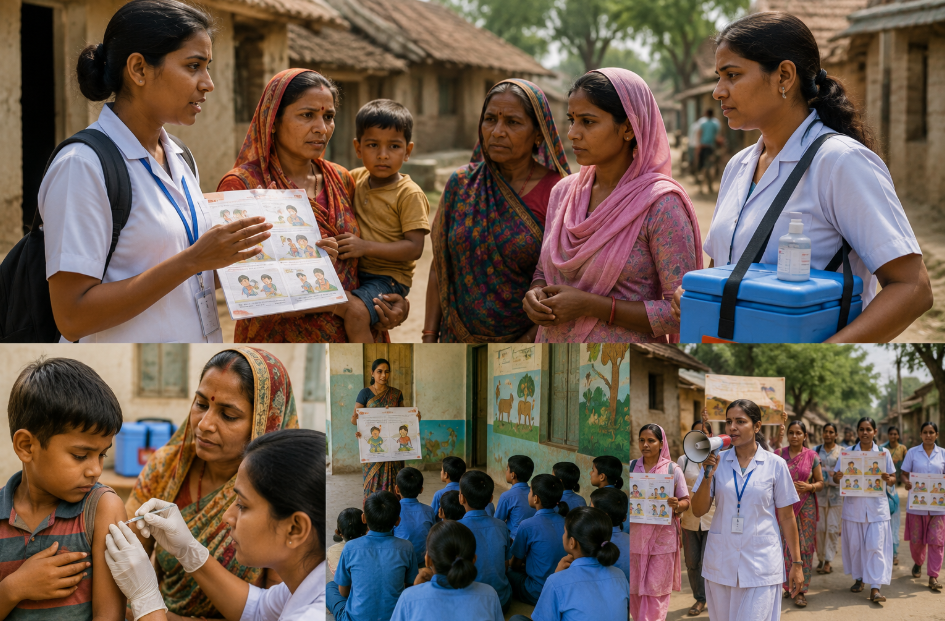
36 years have passed since the horrific Bantala rape and murder case shook West Bengal, yet the brutality of that night remains one of the darkest chapters in the state’s history. On 30th May 1990, three women health officials and their driver were returning to Kolkata after completing a vaccination programme in Gosaba when they were attacked by local CPI(M) goons in Bantala, then a CPI(M) stronghold on the outskirts of Kolkata. What followed was an unimaginable act of brutality that continues to haunt Bengal’s collective memory even today.

The victims were Anita Dewan, Deputy District Extension Media Officer; Uma Ghosh, a senior official in the West Bengal Health Department; Renu Ghosh, associated with UNICEF and WHO programmes; and their driver Avni Naiya. Around 6:30 pm, their car was intercepted near a CPM party office in Bantala. Sensing danger, the driver did not stop and tried to escape. However, the speeding vehicle overturned while attempting to flee. Within moments, a larger mob gathered around the vehicle.

The horror of Bantala

The attackers dragged the women government officers out of the car and set the vehicle on fire. Driver Avni Naiya tried to protect the women, but the mob brutally assaulted him. Reports later revealed that his genitals were crushed and his body bore 43 injury marks. He succumbed to his injuries on 4th June 1990 at SSKM Hospital.

The three women officers were dragged into nearby paddy fields where they were gang-raped by the CPI(M) members. Anita Dewan died due to the brutal assault, while Uma Ghosh and Renu Ghosh survived with severe injuries. Reports from that time described shocking levels of brutality. During Anita Dewan’s post-mortem examination, the doctor fainted after discovering a one-foot-long metallic torch inserted into her private parts.

Police arrived nearly five hours later. The victims were shifted to the National Medical College in Kolkata, where doctors initially believed all three women had died before realising that two of them were still alive.

Following the incident in which the rapists were linked to the CPM, the then West Bengal Health Minister Prasanta Sur attempted to defend the culprits and said that the villagers had mistaken the women officers for child kidnappers and traffickers. Furthermore, the then Chief Minister Jyoti Basu said, “Such things keep happening!”

Later, the ex-Director of the Asian Development Bank (ADB), D Bandhopadhyay had claimed that Anita Dewan was the main target in the infamous Bantala gangrape case as she had collected evidence of misappropriation of funds by the CPM-led panchayats. Bandopadhyay said that in villages, CPM-led panchayats were misusing funds for rural development sent by UNICEF.

He added that Anita Dewan learned about this misappropriation of funds and when she collected necessary evidence from Gosaba, the communist goons attacked her when she was on her way back to Kolkata. He added that the goons torched the car in which all the evidence was also burnt to ashes.

Following the investigation into the case, six culprits in this infamous 1990 case were awarded life imprisonment

1990: A dark year for women in West Bengal

The Bantala case was not an isolated incident. 1990 can be considered as one of the darkest years for women’s safety in West Bengal under the CPI(M) regime.

Just days after the Bantala incident, between 6th and 8th June 1990, another horrifying case emerged from Singur police station in Hooghly district, where three policemen allegedly raped a young girl inside the police station itself. When local residents protested against the crime, police reportedly opened fire, killing one protester.

Then, on 18th July 1990, another brutal incident took place near Birati railway station in North 24 Parganas. A gang of smugglers and hooch operators attacked nearby shanties and gang-raped several women, many of whom were refugees from Bangladesh. In both Bantala and Birati rape case, local police stations, despite being located nearby, failed to act in time.

These incidents created a widespread perception that crimes against women were being ignored, downplayed or politically shielded during that period.

CPI(M) locals goons involvement

Over the years, allegations surfaced that CPI(M)-linked local goons were involved in the Bantala attack. Though courts mainly treated the case as a criminal matter, political allegations surrounding the role of local CPI(M) elements continued to dominate public discussions.

Former Asian Development Bank official D Bandopadhyay later claimed that Anita Dewan had been specifically targeted because she had gathered evidence regarding misuse of UNICEF rural development funds by CPM-controlled panchayats in Gosaba. According to these claims, the attackers destroyed the car to burn all documentary evidence collected by Dewan.

While some aspects of these claims remain debated and were never fully established in court, the allegations significantly shaped public perception of the case.

Senior CPI(M) leaders downplayed the heinous crime

One of the reasons the Bantala case remains politically sensitive even today is because of the statements made by senior CPI(M) leaders after the incident.

Then West Bengal Health Minister Prasanta Sur attempted to defend the incident by claiming that villagers had mistaken the women officers for child kidnappers and traffickers. The explanation was heavily criticised at the time as an attempt to dilute the seriousness of the crime.

Even more controversial was the statement attributed to then Chief Minister Jyoti Basu, who said, “E shob toh hoeyi thakey (Such things keep happening).” The remark triggered outrage across political and civil society circles, with critics accusing the Left government of showing shocking insensitivity toward rape victims.

For many in Bengal, these statements became symbols of how the administration tried to minimise or politically manage horrific crimes instead of ensuring accountability.

Convictions, but lingering questions

Following investigation and legal proceedings, six accused persons were sentenced to life imprisonment in connection with the case in 2003. The punishments never fully answered larger questions regarding political patronage, delayed police response and the atmosphere of fear prevailing at the time.

The Bantala case also exposed the dangers faced by frontline women workers who travelled to remote parts of the state for public health programmes. Anita Dewan, Uma Ghosh and Renu Ghosh were not political activists or public figures. They were health officials working to improve vaccination coverage in rural Bengal. 

From Bantala to RG Kar: Has anything changed?

More than three decades later, West Bengal still struggles with the same questions around women’s safety and political accountability.

After the CPI(M) regime ended, hopes were raised that the situation would improve under the Trinamool Congress (TMC) government. However, more incidents under the TMC era prove that the situation has not changed at all.

The 2024 RG Kar Medical College rape and murder case once again brought national attention to women’s safety in Bengal. The brutal rape and murder of a young doctor inside a government hospital triggered massive protests across the country and raised serious concerns about administrative failure, political influence and institutional silence.

The memory of Bantala returned during the RG Kar protests. The names and governments may have changed, but the anger over women’s safety, delayed justice, and political defensiveness continues to remain painfully familiar in West Bengal even after 36 years.

Mamata Banerjee claims her nephew Abhishek could have died after being hit by eggs: Read how the TMC supremo downplayed the murders of BJP workers in 2021 post-poll violence case as ‘small-time incident’

On Saturday (30th May), Trinamool Congress MP Abhishek Banerjee was egged and heckled by angry locals in Sonarpur in the South 24 Parganas district of West Bengal. The nephew of Mamata Banerjee, who had threatened BJP workers with post-poll violence before the election result, was seen wearing a helmet to brave incoming eggs from the public.

Trinamool Congress supremo, who built her career on street drama and political theatrics, created a hullabaloo at the Belle Vue Hospital in Kolkata after the facility refused to admit Abhishek Banerjee. As a matter of fact, doctors had ruled out any serious sign of physical injury. They informed that the TMC leader was fully conscious, oriented and had only minor bruises on his chest.

Mamata Banerjee and TMC attempted to capitalise on the incident by first dubbing the angry locals as ‘BJP-backed miscreants’ and claiming that ‘rulers became killers.’

Thereafter, the TMC supremo made an outrageous remark that Abhishek Banerjee could have been killed by eggs if he did not wear a helmet. “One local guy gave a helmet to him or else he would have been spot dead.” She also peddled conspiracy theories about the BJP government in Bengal not allowing a private hospital to admit her nephew with no serious injuries.

What Mamata Banerjee said about 2021 post-poll violence

While Mamata Banerjee is busy portraying this stray case of outburst of public resentment against her corrupt nephew as a ‘big incident’, the TMC supremo had, in fact, downplayed the 2021 post-poll violence in Bengal as ‘choto choto ghotona.’

For the unversed, more than a dozen BJP workers were killed, women were raped, and thousands had to suffer exodus at the hands of Trinamool Congress goons following the 2021 Vidhan Sabha election.

But these atrocities and the outbreak of targeted political violence against rival party workers appeared trivial to Mamata Banerjee.  She suggested that those were ‘small-time incidents’ that supposedly occurred everywhere after elections.

In April 2023, she had claimed, “Koyekta choto choto ghotona ghote chilo election er porsamanno ghote thake sob jaigai (Some small-time incidents took place after elections. These happen all the time at other places).” 

She also lamented how the Centre sent several fact-finding teams to the State, which had supposedly led to the ‘arrest’ of several TMC workers in false cases. “If something happens in Bengal, then, it does not mean that the government is responsible,” Mamata Banerjee refused to showcase accountability.

 “Some incidents happened small-small (after elections) but the Centre sent all the teams (from Delhi). They arrested all of our boys and girls through agencies such as CBI, ED and Commissions,” Mamata Banerjee brazened out.

Back in 2021, she attempted to rationalise the post-poll violence by TMC goons as retribution for alleged torture by BJP and Central Armed Police Forces (CAPFs).

 “Bengal is a peace-loving place. During the elections, there has been some heat and dust and calm. The BJP did a lot of torture, also the CAPF,” she had said while making a token appeal for ‘calm’.

The Spy Club: How Delhi Gymkhana Club became the favourite playground of CIA agents to steal top military secrets by trapping Indian officials

If someone wants to breach the national security of a nuclear-armed nation or an emerging global superpower, there is no need to drop bombs on its military bases. It is enough to simply obtain membership of that country’s most influential colonial-era elite club, where, as soon as evening falls, the country’s policymakers dissolve their security and dignity in pegs of Scotch.

These are stories based on real events. They show how an elite club located right in the heart of India’s capital, Delhi, remained a playground for foreign spies for decades. At the centre of this entire saga is the Delhi Gymkhana Club (DGC), which its influential members have been fighting hard to save with all their power.

Chapter 1: Lutyens Delhi’s ‘Drinking Den’ and the National Security Alarm

The year 2026 began with a major jolt for the Delhi Gymkhana Club. The Land & Development Office (L&DO) of the Government of India issued a strict order directing the 113-year-old club to vacate its premises. Behind this firm step were grave reasons – national security, strengthening defence infrastructure, and public interest.

The club is spread over 27.3 acres in an extremely sensitive and strategic area, located just a few metres away from the Prime Minister’s residence at 7 Lok Kalyan Marg. For the common public, it may appear to be merely a den of entertainment for the wealthy, but for the Government of India, it has always been a major national security risk.

In 2020, the Ministry of Corporate Affairs had given a very sharp statement in court regarding the club’s functioning, saying, “This club has turned from a gymnasium into a drinking den.” It had become a sort of ‘princely state’ where there was such unrestricted mingling of the country’s elite bureaucracy and foreign diplomats that it was sufficient to throw dust in the eyes of the security apparatus.

During the Cold War, the Delhi Gymkhana Club functioned as a contact zone where foreign spies operating under diplomatic cover could easily meet Indian generals and bureaucrats,  bypassing government rules forbidding contact with foreign nationals. They did so without coming under the scrutiny of government restrictions or intelligence agencies like the Intelligence Bureau (IB).

Chapter 2: T-72 Tank and the Magical ‘Drop’ at the Tennis Court

This incident dates back to 1978. The Indian Army had, for the first time, procured the then most modern and lethal T-72/T-72M tanks from the Soviet Union. This 41-ton steel behemoth had become a major mystery for the US Department of Defense (Pentagon) and the CIA. What exactly was it about this tank that had robbed America of its sleep? There were three main reasons:

  • Strong Front Armour (Glacis Armour): It was not merely a sheet of steel but a sloped protective shield made of multiple layers of high-carbon steel and polyurethane, which was considered extremely difficult to penetrate.
  • Laser Rangefinder and Auto-loader System: The tank could automatically measure target distance and load shells, enabling it to engage the enemy with great speed and eliminating the need for a fourth crew member.
  • 125mm Smoothbore Gun: In that era, this was counted among the world’s deadliest tank guns, capable of reducing enemy tanks to scrap metal within seconds. It fired kinetic energy rounds at 1,800 meters per second, several hundred meters per second more than Western tanks.

The Cold War was then at its peak, and the CIA was determined to acquire complete details of this tank, which was referred as ‘SOVMAT’ (Soviet military manuals) in intelligence parlance. They had even planned to bribe an Indian military officer to smuggle the tank across the border to Pakistan, but the attempt failed.

It was then that CIA’s cunning field agent Robert Baer, stationed at the US Embassy in New Delhi, stepped in. Baer has recounted this dangerous episode in detail in his famous 2002 autobiography See No Evil.

One of Baer’s Indian agents had stolen highly confidential T-72 manuals from an army locker, but there was a critical condition, the manuals had to be returned to the military safe within just two hours, before the sergeant’s duty changed and the theft was discovered. Baer fled with the duffel bag filled with the manuals and drove straight to the American Embassy. He asked his agent to meet him in two hours behind guest house number three at Delhi’s Gymkhana Club.

At the embassy, he copied the T-72 tank manuals, and hurried back to the club. Time was ticking away rapidly, with only 17 minutes remaining. However, he was followed by five cars, indicating that IB was tailing him. Showing great presence of mind, Baer drove his car straight through the gates of the Delhi Gymkhana Club. The IB vehicles followed close behind. Without stopping, Baer drove the car onto the narrow gravel pedestrian path running between the tennis courts, a route where the IB vehicles would not follow. The IB officers started to follow him on foot.

Without stopping the car, he quickly pulled the duffel bag with original manuals from the tennis bag and threw it towards the agent, who was hiding in the bushes near Guest House Number Three, behind the tamarind trees. The agent was waiting at the exact place where he was asked to be, and Baer saw that he picked the bag and walked away.

To confuse the pursuing IB officers, Baer then walked straight into the club’s bar. There, he sat down next to a highly respected and completely innocent-looking Indian gentleman dressed in a three-piece suit and ordered two double Scotches from the waiter.

When the panting IB officers burst into the bar, they found Baer engaged in serious conversation with the distinguished Indian. Their entire attention shifted to the innocent Indian gentleman, wondering what urgent matter had brought Baer to him in such haste. This little drama gave the CIA agent enough time to safely return the manuals to the army sergeant to bring it back to the locker.

As a result of this theft, in 1982 the CIA concluded from the manual that the early versions of the T-72 had limited night-fighting capability compared to their Western counterparts. The CIA immediately shared this strategic weakness with the US defence industry and its frontline partner, the Pakistani Army.

Chapter 3: Punjab Jungles, the ‘Back Door’ and Illegal Peacock Hunting

Rules for military officers were extremely strict. They could not meet foreign nationals directly and were required to report any such meeting to the government immediately. This made it almost impossible for the CIA to directly entrap military officers.

On page 75 of his book, Robert Baer wrote that he discovered a ‘back door’ in this rigid system. He learnt that Indian military officers had a great passion for hunting.

Baer then created a hunter’s identity for himself, purchased a military jeep with civilian number plates, and set up camp in the jungles of Punjab. There, he met an influential Indian military officer named ‘Singh’, who was strongly opposed to Indo-Soviet friendship. Their friendship grew deep. On weekends, they began illegally hunting India’s national bird, the peacock, in the Punjab jungles and even inside the private estate of the then Prime Minister Indira Gandhi.

Baer gifted Singh an expensive Italian Browning double-barrel shotgun. Later, the CIA Station Chief in New Delhi, ‘Wild Bill’, was also included in these hunting expeditions, and ‘Singh’ was fully recruited. Unwittingly, Singh then passed on all sensitive information regarding Indian Soviet military equipment and defence vulnerabilities to the CIA.

Chapter 4: Honeytrap and the Bitter Reality of the Madras Cafe

The CIA’s elite network was not confined to Delhi or Punjab alone. In the mid-1980s, when the Sri Lankan civil war was at its peak, K.V. Unnikrishnan was the head of RAW’s Madras station.

During his posting in Colombo, Sri Lanka, the CIA cleverly trapped Unnikrishnan in a honeytrap using an air hostess. They recorded compromising photographs and videos of him, after which a prolonged blackmail operation began that inflicted deep wounds on India’s national interests.

Unnikrishnan worked for the CIA for nearly two years. He handed over complete files containing India’s most secret policies, including training given to Tamil militants (LTTE) and the Indian government’s strategy regarding the Sri Lankan peace accord.

The CIA passed this sensitive information to the Sri Lankan government, which later caused heavy military and human losses to the Indian Peace Keeping Force (IPKF). By the time IB’s counter-intelligence wing arrested him in Mumbai, massive damage had already been done. He was subsequently dismissed from service and sent to Tihar Jail. Unnikrishnan had confessed to the high treason.

This incident was depicted in the movie Madras Café.

Chapter 5: Other Favourite Haunts of Spies and the Karachi Connection

National security agencies had not only the Delhi Gymkhana Club on their radar. Several other elite venues of this culture were also favourite spots:

  • Delhi Golf Club: Spread over 170 acres in the heart of Lutyens Delhi, this golf club has long served as an informal meeting point for retired generals, intelligence chiefs, and bureaucrats. Here, through ‘soft cultivation’, foreign diplomats would extract national policy secrets over games.
  • Jaipur Polo Ground (Delhi): Located right in front of the Prime Minister’s residence, this ground was a major centre where sports and power intersected. The Modi government recently took strong action here on national security grounds.
  • Karachi Gymkhana Club (Pakistan): Like its Delhi counterpart, this colonial-era club located in the heart of Karachi was used by American and Western diplomats to influence local officials and military personnel and build intelligence networks through social networking.

In addition, bungalows in elite Lutyens Delhi areas such as Golf Links have always remained primary centres of intelligence surveillance. Former RAW officer Malay Krishna Dhar revealed in his book Open Secrets how, during Rajiv Gandhi’s government, even Rashtrapati Bhavan was bugged to record the tensions between President Giani Zail Singh and the Home Minister.

However, it is not that India never adopted such tactics. Dhar writes that liquor was often used as a tool to extract information from militants in Manipur and even from a police constable.

Exploiting this lax elite security system like the Gymkhana, in 2004, RAW Joint Secretary Rabinder Singh, with the help of CIA agent David Vakala, successfully escaped to America via Kathmandu on a fake passport. He had escaped after he was discovered acting as a double agent for the CIA. This incident has been described in detail by former RAW Special Secretary Amar Bhushan in his well-known book Escape to Nowhere.

Why are these Elite Clubs Sensitive for National Security?

Why have elite clubs like the Gymkhana remained the biggest ‘soft targets’ for foreign powers? There are three main strategic reasons:

  1. No Fear of Protocol: In a government office, there are strict rules for meetings with foreign diplomats, but on the green lawns of the Gymkhana or Golf Club, with a glass of Scotch in hand, diplomats and defence officials freely share sensitive security policies without any written permission.
  2. Soft Cultivation: Foreign agencies gradually make officers indebted to them by using personal hobbies such as tennis, polo, golf, or hunting. It starts with borrowing golf sticks or gifting guns and often ends in treason.
  3. Strategic Proximity: All these elite clubs are located right next to the Prime Minister’s residence and sensitive defence headquarters in the heart of Delhi. Allowing unrestricted movement of foreign nationals in such sensitive areas without security audits is suicidal for any country.

This is precisely why, in 2026, the Indian Government took this major decision to terminate the lease of this colonial-era privileged safe haven and have it vacated. After all, for any sovereign nation, national security is far more important than the entertainment and drinking parties of a few chosen elites. No privilege can be greater than the country’s security.


This article is a translation of the original article published in Hindi

Who is Ashok Ozha? The AAP leader seen with Kejriwal, Bhagwant Mann and Sisodia, now arrested in the fake ‘IB call’ case

What began as a political controversy over alleged intimidation of AAP workers in Gujarat has now taken an unexpected turn, with the investigation leading directly back to the party itself. AAP leaders, including Arvind Kejriwal, Gopal Italia, and Durgesh Pathak, had publicly alleged that party workers were receiving threatening phone calls from individuals claiming to be officers of the Intelligence Bureau (IB). The issue was amplified on social media, with questions raised about the alleged misuse of government agencies against political workers.

However, as the police investigation progressed, the narrative changed dramatically. The very case that AAP leaders had used to target the government and administrative machinery has now resulted in the Vadodara city president of the party, Ashok Ozha, being named as an accused.

Notably, Ashok Ozha is not an obscure figure within the Aam Aadmi Party. He has been associated with the party in Gujarat for several years and played an active role in its organisational expansion across the state. Throughout the period when AAP was attempting to establish itself as a major political force in Gujarat, Ozha was frequently seen alongside the party’s top leadership and enjoyed direct access to senior leaders.

Arvind Kejriwal with Ashok Ozha

Photographs and records from various party events show Ozha in the company of AAP national convenor Arvind Kejriwal, Gujarat leaders Isudan Gadhvi and Gopal Italia, Punjab Chief Minister Bhagwant Mann, senior leader Manish Sisodia, and several other prominent faces of the party. He was also actively involved in organisational work and reportedly travelled to Delhi on multiple occasions to coordinate party activities.

Ozha with Gopal Rai and Bhagwant Mann

Ozha’s proximity to the party’s top leadership was not limited to occasional appearances. He was regularly present at key organisational events and maintained close working relationships with senior leaders. He was often seen with Gopal Rai, who previously served as AAP’s Gujarat in-charge, and was considered an influential organisational figure within the state unit.

Ozha with Manish Sisodia and Manoj Sorathiya

He also shared close ties with several Gujarat AAP leaders, including state president Isudan Gadhvi, Gopal Italia, and Manoj Sorathiya. Numerous photographs and public appearances over the years reflect his deep integration within the party structure.

What is the controversy?

The controversy began when several AAP leaders claimed that party workers and office-bearers in Gujarat were receiving suspicious phone calls from individuals introducing themselves as officers of the Intelligence Bureau (IB).

The issue gained significant attention after former Delhi MLA and AAP leader Durgesh Pathak publicly alleged that party workers in Gujarat were being contacted from a particular mobile number by a person claiming to be an IB officer.

Soon afterwards, Arvind Kejriwal himself raised the matter on social media. He claimed that one of the party’s workers had received such a call and further stated that he personally dialled the number in question. According to Kejriwal, when he asked whether the caller was from the IB, he received an affirmative response. However, after identifying himself as Arvind Kejriwal, the caller allegedly disconnected the call.

Kejriwal subsequently questioned under what law the Intelligence Bureau could conduct verification of citizens travelling from one state to another for political activities. Other AAP leaders echoed similar concerns, portraying the episode as evidence of political surveillance and harassment. The issue quickly evolved into a broader political controversy, with allegations that a government agency was targeting opposition workers.

The matter eventually reached the police after Anand-based AAP worker Keshav Chauhan reported receiving a similar call. A complaint was registered with the Anand Cyber Crime Police Station, which initiated an investigation using call records, mobile data, and technical evidence.

The first breakthrough came when investigators traced the controversial phone number to Nitin Dobariya, a resident of Anand. During questioning, Dobariya allegedly admitted that he had made the calls at the instruction of Vadodara AAP president Ashok Ozha and had, on some occasions, falsely identified himself as an Intelligence Bureau officer.

Following this revelation, police expanded the investigation and questioned Ozha. According to findings that subsequently emerged, the episode was not linked to any government agency or political rival but instead stemmed from internal factionalism and organisational rivalries within the Aam Aadmi Party.

Reports suggest that discontent had surfaced within sections of the Gujarat unit after senior Delhi leader Durgesh Pathak was assigned a more active role in the state. Investigators reportedly believe that Ozha feared growing intervention from the central leadership could weaken his influence within the local organisation.

According to the investigation, the alleged fake IB-call operation was orchestrated to create pressure on certain leaders and shape internal power dynamics within the party.

The development has turned the controversy on its head. What was initially projected by AAP’s top leadership as an example of alleged state intimidation has now led to the arrest of one of the party’s own city presidents and his associate. The same case that was used to raise questions about government agencies has ultimately exposed what investigators describe as an internal political tussle within the party itself.

The Hindware-Google trademark dispute explained: Why the Delhi HC held Google liable for trademark infringement and how the ruling could reshape digital marketing in India

In a landmark judgment that could change the way online advertising works in India, the Delhi High Court has ruled against Google in a trademark dispute filed by bathware company Hindware. The Court held that allowing competitors to use the trademark “HINDWARE” as a keyword in Google Ads amounted to trademark infringement and unfair commercial exploitation of the company’s brand reputation.

Delivering its verdict on 22nd May, Justice Mini Pushkarna imposed a ₹30 lakh penalty on Google and permanently restrained the tech giant from allowing the use of “HINDWARE” and similar trademark-related combinations as advertising keywords within its AdWords system.

The 163-page judgement [pdf] also directed Google to stop auctioning Hindware’s trademark and ordered the company to pay the damages within eight weeks.

The ruling is being viewed as one of the most important judgments in India’s digital advertising space because it directly addresses how trademarked keywords are used in search engine advertising and whether platforms like Google can escape liability by calling themselves “intermediaries”.

What was the dispute between Google and Hindware?

The case began after Hindware, formerly known as HSIL Ltd, discovered that rival sanitaryware companies were bidding on its trademark “HINDWARE” through Google Ads.

According to Hindware, whenever customers searched for “Hindware” products online, advertisements of competing brands started appearing prominently in search results. The company argued that this practice diverted potential customers and unfairly benefited competitors by exploiting the goodwill attached to the Hindware brand.

The dispute was part of two commercial suits filed during 2013 and 2014 against Google entities, along with rival companies including Grohe India, Cera Sanitaryware and Omkara Infoweb.

Hindware told the Court that keyword combinations such as “Hindware Sanitary”, “Hindware Sanitaryware” and similar phrases were being purchased by competitors to redirect online traffic.

The company argued that Google was not merely a passive platform but an active commercial participant because it suggested keywords, conducted auctions, ranked advertisements and earned revenue from every click generated through those ads.

Hindware also pointed out that its trademark had already been recognised as a well-known trademark by the Delhi High Court and that the company had been using the mark since 1991.

What Google argued in court

Google strongly opposed the allegations and argued that keywords are invisible backend tools that users cannot directly see.

The company claimed advertisers independently selected the keywords and created advertisements, while Google merely operated a neutral advertising platform.

Google also attempted to shield itself under Section 79 of the Information Technology Act by claiming intermediary protection.

“Since users can neither see nor otherwise perceive the keywords provided by the advertiser, such use of trademarks as keywords, being imperceptible or invisible to consumers, cannot be said to amount to ‘use’ under the Trade Marks Act,” Google argued before the Court.

The company maintained that it played only a technical role and therefore could not be held responsible for trademark infringement committed by advertisers.

Court rejects Google’s intermediary defenc.e

The Delhi High Court, however, rejected Google’s argument completely.

Justice Mini Pushkarna held that Google was actively involved in the AdWords ecosystem through keyword suggestions, ad ranking systems, monetisation mechanisms and advertising auctions.

“The present issues are decided in favour of the plaintiff (Hindware) and against the defendants (Google),” the Court ruled.

The Court said Google could not continue earning money from trademark-linked searches while simultaneously claiming it had no responsibility for the resulting infringement.

“Google cannot be permitted to shrug off responsibility by making available a tool that leads to infringement, and then turning around to claim that the said tool was not mandatory,” the judgment stated.

An excerpt from the judgment

The Court further observed that Google actively monetised trademark searches and therefore could not seek safe harbour protection as a passive intermediary.

“It has been admitted by Google that it allows use of trademarks as keywordtoto seek out users interested in the goods or services covered by the registered trademark,” the Court noted.

An excerpt from the judgment

The bench added that Google’s advertising programme actively encouraged advertisers to use trademarked search terms.

“The Ads Programme of Google encourages the users to use various search terms, including trademarks as keywords for display of the advertisements to the target audience,” the Court observed.

Invisible keyword use is also trademark infringement, says the Court

One of the most significant aspects of the judgment was the Court’s finding that even invisible use of trademarks as keyword triggers amounts to trademark infringement under Indian law.

The Court compared keyword advertising to unlawful meta-tagging practices and held that redirecting online traffic using hidden trademark usage could still manipulate consumer behaviour.

“It is clear that the use of the mark as meta-tags was held to be infringement of trademark,” the judgment stated.

The Court added that invisible use of a trademark to divert traffic from the trademark owner’s website to a competitor’s website would qualify as “use in advertising” under Section 29 of the Trade Marks Act.

An excerpt from the judgment

“Google suggests, offers, and sells words, including trademark terms, as keywords to advertisers. This active offering and selling of trademark terms to advertisers is not mere internal use of the trademark term, and is clearly a commercial use,” the Court observed.

This part of the judgment is particularly important because it establishes that even backend keyword use, which users cannot directly see, can still violate trademark rights if it commercially exploits brand reputation.

Settlements with rival companies

During the long legal battle, rival companies, including Grohe India, Cera Sanitaryware and Omkara Infoweb, settled their disputes with Hindware through mediation and consent decrees.

After those settlements, the litigation continued only against Google India and Google LLC. Although the Court described the matter as one deserving “nominal damages”, it still awarded ₹15 lakh in each of the two suits, bringing the total compensation to ₹30 lakh.

“Accordingly, this Court awards nominal damages of Rs. 15,00,000/- (Rupees Fifteen Lacs only) each in the present suits, totalling to Rs. 30,00,000/- (Rupees Thirty Lacs only) in favour of the plaintiff,” the court said. 

An excerpt from the judgment

The court also clarified that the amount was not meant to compensate the actual losses and said, “The aforesaid amount shall be paid by the defendants, i.e., Google LLC/Google India, jointly and severally, within a period of eight weeks. The said amount has been awarded not towards the actual loss or damages suffered by the plaintiff, but as a minimal compensation in the light of the finding of this Court regarding infringement by the defendants.”

Why this verdict matters for India’s digital marketing industry

The judgment is now being viewed as a possible turning point for India’s digital advertising ecosystem.

Competitor keyword bidding has become a common strategy across industries, including e-commerce, fintech, travel, food delivery, banking and direct-to-consumer brands. Companies regularly bid on rival brand names so their advertisements appear whenever users search for competitors online.

Following the verdict, several industry leaders and marketing experts said the judgment could completely reshape performance marketing strategies in India. Vijay Shekhar Sharma reacted to the verdict on X and wrote, “Competitor keyword bidding on your brand name is now legally actionable in India.”

Prashant Puri, Co-founder and CEO of AdLift, told MoneyControl that the judgment addressed a long-standing concern among brands. “For years, brands have raised concerns that competitors could bid on their trademarked names, effectively using brand equity built over decades to intercept high-intent customers at the final stage of their purchase journey,” he said.

Puri also explained how many companies were forced into “defensive spending”, where they had to purchase advertisements on their own brand names simply to stop competitors from hijacking traffic. “One brand bidding on another’s name often forces companies to spend defensively on their own trademarks, increasing auction competition and costs,” he explained.

Could Google’s ad business model face changes in India?

The ruling may also create serious challenges for Google’s advertising business in India.

Trademark-linked searches represent some of the most commercially valuable searches in digital advertising because users searching for a brand often have very high purchase intent.

According to industry estimates, branded keywords often generate significantly higher conversion rates than generic advertisements. The judgment now raises questions about whether Google will need to redesign parts of its advertising system in India if more trademark owners begin filing similar cases.

Several brands across sectors like finance, consumer goods, electronics and travel may now seek legal protection against competitors using their trademarks as advertising triggers.

Nithin Kamath also reacted to the verdict and pointed out that competitor ads had appeared alongside searches for Zerodha for many years. “Even today, if you search for Zerodha, you will see search results from competitors. This has been happening for well over a decade,” Kamath wrote.

Despite those concerns, the Hindware judgment is likely to become a landmark precedent in India’s digital economy. It signals that Indian courts are increasingly willing to treat trademark-linked search advertising as a serious intellectual property issue rather than merely a technical advertising practice.

For brands, advertisers, regulators and tech platforms alike, the ruling may now force a complete rethink of how digital marketing works in India’s rapidly expanding online economy.

From Narendra Modi Stadium to SVP Sports Enclave: Read how Ahmedabad is building a world-class ecosystem to become India’s sports capital

On 28th May, Union Home Minister Amit Shah reviewed preparations related to the 2030 Commonwealth Games, the 2036 Olympics, and other major international sporting events planned for Ahmedabad. During the meeting, he once again said that work is moving quickly to develop Ahmedabad as India’s sports capital.

Usually, such statements are seen as political promises that may or may not become reality. But Ahmedabad’s case appears different. Over the last few years, the city has witnessed the construction of world-class sports infrastructure, large-scale investments in sporting facilities, and several projects designed specifically to support future international competitions.

From the Narendra Modi Stadium in Motera to the Veer Savarkar Sports Complex in Naranpura, from new sports facilities across different neighbourhoods to major events such as the Khel Mahakumbh and National Games, Ahmedabad’s sports journey is no longer limited to a few isolated projects. Instead, an entire sports ecosystem is taking shape.

Today, sports are becoming a major part of Ahmedabad’s identity, just as industry and business once were.

A city that has reinvented itself before

Ahmedabad has a long history of changing and expanding its identity. Decades ago, it was known across India as the “Manchester of India” because of its textile mills. The textile industry played a huge role in the city’s growth and economy.

As time passed, Ahmedabad evolved into one of India’s major centres for trade, manufacturing, finance, and modern urban development. It became the economic powerhouse of Gujarat and developed a strong reputation for business and entrepreneurship.

Now, the city is entering another phase of transformation. This new chapter is not centred on factories or trade. Instead, it focuses on sports, youth participation, international competitions, tourism, and world-class infrastructure. Looking at the developments that have taken place during the last five to six years, it is becoming increasingly clear that Ahmedabad is trying to build a unique identity around sports.

How the sports city vision started

The year 2022 became a turning point in Ahmedabad’s sports journey. That year, Gujarat hosted the National Games, bringing athletes, coaches, officials, and sports enthusiasts from across the country. The event generated fresh excitement about sports throughout the state.

During the National Games, Amit Shah stated that Ahmedabad would become the world’s largest sports city in the future. At that time, many people considered the statement ambitious. However, the speed at which sports-related projects have moved forward since then has made that vision look far more realistic.

The National Games also highlighted an important reality. Hosting large sporting events requires much more than stadiums. A city needs training facilities, athlete accommodation, transport systems, medical support, recovery centres, practice venues, and modern urban infrastructure.

Several projects that were already underway in Ahmedabad received fresh momentum after the National Games. From that point onward, the idea of turning Ahmedabad into a sports capital became more visible and more structured.

Narendra Modi Stadium: The symbol of Ahmedabad’s sports ambition

If one structure represents Ahmedabad’s sports transformation, it is undoubtedly the Narendra Modi Stadium in Motera.

Narendra Modi Cricket Stadium

With a seating capacity of more than 100,000 spectators, it is the largest cricket stadium in the world. But its importance goes beyond numbers and records.

The stadium has helped place Ahmedabad on the global sports map. It has hosted major international cricket matches, ICC tournaments, World Cup games, and other large sporting events that attracted visitors from across India and abroad.

The stadium has shown how sports can contribute to a city’s image, economy, tourism sector, and international recognition. It has been demonstrated that sports are not only about competition and entertainment. They can also become a tool for branding a city and attracting investment.

For Ahmedabad, the Narendra Modi Stadium was not the final goal. It was the starting point of a much larger vision.

SVP sports enclave: the heart of the sports city project

While the Narendra Modi Stadium opened the door, the Sardar Vallabhbhai Patel (SVP) Sports Enclave is being viewed as the centrepiece of Ahmedabad’s long-term sports strategy.

Spread across more than 236 acres in Motera, the project is much more than a sports complex. It is being developed as a complete sports city designed to support future international events, including the Commonwealth Games and the Olympics.

The Sports Enclave will include an aquatics centre, indoor arenas, tennis facilities, athlete accommodation, training centres, and several other modern sports amenities. The idea is to create a complete ecosystem where athletes can train, compete, stay, recover, and improve performance without needing to move between different locations.

Many successful Olympic cities around the world have adopted this model. Ahmedabad is trying to build something similar by integrating multiple sports facilities within a single large campus.

SVP Sports (Image via TOI)

One of the most important aspects of the Sports Enclave is that it combines sports development with urban planning. Instead of constructing isolated stadiums, the city is building an interconnected sports ecosystem. This approach makes the project one of the most important pillars of Ahmedabad’s sports vision.

Veer Savarkar Sports Complex turns vision into reality

Large plans and announcements often take years to become visible on the ground. The Veer Savarkar Sports Complex is one project that has helped turn Ahmedabad’s sports vision into reality.

Built at an estimated cost of around ₹825 crore, the complex is considered one of the largest and most modern sports facilities in India. It includes swimming facilities, indoor sports infrastructure, training areas, and several other amenities designed for athletes.

Veer Savarkar Sports Complex

When the complex was inaugurated in September 2025, Amit Shah said that Ahmedabad was moving steadily toward becoming a sports capital. The statement carried weight because the infrastructure was already standing before people’s eyes.

Unlike projects that exist only on paper, the Veer Savarkar Sports Complex demonstrates how large-scale investment in sports infrastructure is becoming a reality in Ahmedabad.

Sports infrastructure is expanding across the entire city

Building a single stadium or one large sports complex is not enough to become a sports capital. For sports to become part of a city’s identity, facilities must be available across neighbourhoods so that children and young athletes can easily access them.

This is where the Ahmedabad Municipal Corporation (AMC) has played an important role. Over the last few years, the civic body has focused on expanding sports infrastructure throughout the city.

Plans are underway to develop 10 new sports complexes and 27 new playgrounds. These facilities are being spread across areas such as New Wadaj, Ranip, Nikol, Naroda, Vatva, Sarkhej, and several other localities.

The goal is to ensure that sports opportunities are not limited to premium or central areas. Instead, sports infrastructure should be available to residents in different parts of Ahmedabad.

According to AMC data, the city already has numerous gymnasiums, tennis courts, skating rinks, sports centres, and recreational facilities. The new projects are expected to strengthen this network even further.

This broader expansion is important because a sports capital is not defined only by international tournaments. It is also defined by how easily ordinary citizens can participate in sports.

Khel Mahakumbh: Creating athletes along with infrastructure

Sports infrastructure alone cannot create a sports culture. Stadiums and complexes need athletes, and athletes need opportunities to compete and develop their skills. This is where Gujarat’s Khel Mahakumbh has played a major role.

For years, the event has provided a competitive platform for millions of students and young participants across the state. It has encouraged grassroots participation and helped identify sporting talent from different regions.

The importance of Khel Mahakumbh lies in the fact that it complements infrastructure development. While Ahmedabad is building world-class facilities, programs like Khel Mahakumbh are helping create the next generation of athletes who will use those facilities.

The combination of infrastructure and grassroots participation is what makes a sports ecosystem sustainable in the long run.

Sports Zone and the Changing City

Ahmedabad’s sports strategy is not limited to stadiums and training centres. Urban planning is also being shaped around sports. One important example is the Sports Precinct Corridor project.

This planned 7-kilometre corridor connecting different parts of the city with the SVP Sports Enclave is not simply a transportation project. It is designed to make sports a visible and permanent part of Ahmedabad’s urban identity.

Many leading sports cities around the world have dedicated sports districts where sporting activities influence public spaces, city design, tourism, and community life. Ahmedabad is trying to adopt a similar model.

By integrating sports into urban planning, the city hopes to create an environment where sports become a regular part of everyday life rather than something limited to major events.

International events are strengthening Ahmedabad’s position

Hosting international competitions is another important requirement for any city that wants to become a sports capital.

In recent years, Ahmedabad has made significant progress on this front as well. The city has hosted events such as the Asian Aquatics Championships and demonstrated its ability to manage large international sporting competitions. Looking ahead, Ahmedabad is also preparing to host the World Police and Fire Games in 2029.

Asian Aquatics Championship, Ahmedabad

Such events bring multiple benefits. They improve infrastructure, strengthen event-management capabilities, expose local athletes and officials to international standards, and increase global visibility.

Every successful event helps Ahmedabad move one step closer to its long-term goal of becoming a globally recognised sports destination.

Preparing for the Commonwealth Games and Olympics

Perhaps the most ambitious part of Ahmedabad’s sports journey lies in its plans for future mega-events.

Preparations related to the 2030 Commonwealth Games and the 2036 Olympics are already influencing infrastructure development in the city. These preparations involve much more than sports venues. They include transportation networks, athlete housing, public spaces, urban development, logistics systems, and various support facilities needed to host international competitions.

When viewed together, projects such as the SVP Sports Enclave, athletes’ village, aquatics infrastructure, sports precinct developments, and citywide sports facilities clearly show that Ahmedabad is planning not just for the next few years but for the coming decades.

A City building a new identity

When all the developments are viewed together, a clear picture emerges.

The world’s largest cricket stadium, the massive SVP Sports Enclave, the ₹825 crore Veer Savarkar Sports Complex, citywide sports infrastructure projects, plans for 10 new sports complexes and 27 playgrounds, grassroots initiatives like Khel Mahakumbh, international sporting events, and preparations for future Commonwealth Games and Olympic ambitions are all connected pieces of a much larger vision.

This is no longer a story about a few standalone sports projects. It is the story of a city trying to build an entire sports ecosystem.

Ahmedabad’s journey is still underway. Several projects remain under construction, and many goals are yet to be achieved. But the direction is now clear. Over the last few years, the city has moved beyond being known only for cricket or commerce.

Today, Ahmedabad is steadily building a reputation as a city where sports, youth development, international events, and modern infrastructure come together. That is why the idea of Ahmedabad as India’s sports capital is no longer just a slogan. It is becoming a reality that is taking shape year after year.

Norwegian propagandist Helle Lyng endorses The Wire: How foreign ‘activists’ and India’s left-wing media collaborate to push anti-India narratives

Fresh controversy has erupted online after pro-China propagandist and Norwegian journalist Helle Lyng publicly endorsed far-left propaganda portal The Wire, a platform notorious for spreading misinformation and pushing politically motivated narratives against India. The endorsement has once again triggered discussion on how India’s left-liberal media ecosystem uses foreign commentators and publications to amplify propaganda targeting India’s democratic institutions and leadership.
The latest controversy began after The Wire posted on X on Friday, 29th May, to celebrate 11 years of its existence, despite being marred with fake news and disinformation like the Tek Fog and Meta controversies. Sharing the post, Norwegian journalist Helle Lyng wrote, “I cannot recommend The Wire enough. Will be relying on them for reading about India moving forward.”

The post quickly attracted attention because Lyng herself had become a controversial figure earlier this month after she attempted to publicly heckle PM Modi during his visit to Norway.

Who is Helle Lyng, and why did she suddenly become famous?

Helle Lyng, who works with Norwegian publication Dagsavisen, was largely unknown outside a limited social media circle until 18th May, when she tried to confront PM Modi during a joint India-Norway statement event.

At the time, Lyng had barely 800 followers on X, and her account had remained inactive for months. However, after she shouted questions at PM Modi regarding alleged “human rights violations” in India, clips of the incident rapidly went viral across Indian opposition circles and left-liberal social media networks.

Screengrab via X

As PM Modi walked away after the joint statement without taking questions, Lyng shouted, “Prime Minister Modi, why don’t you take some questions from the freest press of the world?” She later proudly posted online that she had not expected him to answer.

Soon after, several opposition leaders and anti-Modi commentators amplified her videos. Congress leader Rahul Gandhi shared the clip and wrote, “When there is nothing to hide, there is nothing to fear.”

Screengrab via X

TMC MP Mahua Moitra and propagandist Rana Ayyub also praised Lyng’s actions. Rana Ayyub posted, “Indian democracy on display as Prime Minister Modi visits Norway.”

The Indian Embassy in Norway later pointed out that the event was never meant to be an open press conference. It was a joint statement by the Prime Ministers of India and Norway, while a separate media briefing by Ministry of External Affairs officials had already been scheduled later in the evening.

Lyng comes out of the woodwork to express her sudden interest in India

Interestingly, Lyng’s own publication had rarely focused deeply on India earlier. Most of its coverage on India revolved around routine global developments such as tariffs, trade or earthquakes. Yet suddenly, during PM Modi’s visit, the publication aggressively pushed stories questioning India’s democracy and political system.

Critics also pointed to Lyng’s social media activity, noting that she had recently purchased X Premium verification in May 2026, just before the controversy exploded online. It clearly proved that the viral campaign around her was not organic and carefully amplified for political messaging. She had barely posted about India on her social media accounts before suddenly developing an intense interest in the country’s politics and democracy, fuelling speculation about who or what might be driving her newfound activism on Indian affairs.

Screengrab via X

MEA officials firmly responded to Lyng’s allegations

The Indian Embassy in Norway later invited Lyng to attend the official media briefing organised by the Ministry of External Affairs. During the interaction, Lyng again attempted to corner Indian officials with loaded questions regarding democracy and human rights.

However, MEA Secretary Sibi George firmly responded and repeatedly reminded her not to interrupt while he was answering.

“You asked me a question, let me answer it,” George said.

When Lyng continued interrupting, he added, “Please don’t interrupt me. This is my press conference.”

George defended India’s democratic credentials by pointing to India’s constitutional framework, massive voter participation and the country’s global contributions during the Covid pandemic and G20 presidency.

“We are proud that we are a civilisational country of 5,000 years old,” he said.

He also criticised those who form opinions about India through selective reporting and “ignorant NGOs.”

“People read one or two news reports published by some godforsaken, ignorant NGOs and then come and ask questions. Don’t worry about it. We are proud to be a democracy,” George remarked.

By the time George completed his detailed response, reports suggested that Lyng had already left the room.

The Wire’s long history of peddling fake news and narrative building

Lyng’s endorsement of The Wire has also revived criticism of the publication’s own journalistic track record. Over the years, The Wire has repeatedly faced accusations of publishing misleading reports, half-verified claims and politically charged narratives targeting the Indian government and Hindu organisations.

The platform often prioritises narrative-building over factual reporting, especially in sensitive communal or political issues. The publication has previously faced legal notices, defamation cases and public rebuttals over several controversial reports.

One of its most high-profile controversies involved a report targeting Jay Shah, son of Home Minister Amit Shah. The report led to a ₹100 crore defamation case against The Wire.

In another major editorial failure, the platform published an investigative piece alleging significant financial misconduct by Union Minister Piyush Goyal regarding his investments with the Piramal Group, claiming he kept the PMO completely in the dark. The Piramal Group immediately issued an official statement calling the report ” completely “baseless” and “devoid of merit.” Independent media watchdogs later dismantled the financial premises of the report, exposing significant structural irregularities in the writing. The portal targeted Goyal again in a piece written by Rohini Singh regarding a defaulting company named Shirdi Industries, but basic fact-checks revealed that the corporate loans in question were taken years before Goyal ever assumed public office.

The Central Board of Excise and Customs (CBEC) had also publicly criticised The Wire in the past over what it described as “factually and legally incorrect” reporting regarding the Adani Group.

The platform has also repeatedly faced criticism for the conduct and reporting style of some of its associated journalists and commentators.

The publication also has a predictable routine of prioritising narrative-building over objective reporting, especially when it involves heinous crimes committed by members of the Muslim community. For years, the organisation has consistently worked to whitewash such incidents, often flipping the script to portray the perpetrators as victims and the actual victims as the aggressors. 

This pattern is not new; from downplaying the 2002 Godhra carnage and the 2020 anti-Hindu Delhi Riots to the brutal murder of Kanhaiyalal in Udaipur, The Wire has a track record of framing reactionary Hindu outrage as a greater threat than the Islamist attacks that caused the outrage in the first place. 

Questions over coordination and global narrative-building

The latest endorsement by Helle Lyng has once again raised broader questions about how certain international propagandists, so called journalists and sections of leftist Indian media like The Wire and Newslaundry, frequently amplify anti-India narratives together.

During the Norway controversy, Lyng’s content was rapidly promoted by opposition politicians, left-liberal influencers and media figures who are often critical of PM Modi and the BJP government.

Questions were also raised over the visible coordination between some Indian journalists and Lyng during the Norway visit. While Lyng shared videos involving the Hindu journalist Suhasini Haider, Haider also amplified Lyng’s clips online.

Screengrab via X

Such incidents show how global anti-India ecosystems increasingly rely on selected Indian media platforms to reinforce narratives portraying India as authoritarian or anti-democratic.

Outlets like The Wire and some similar digital platforms frequently become reference points for foreign commentators who wish to target India at the Global stage.

The controversy surrounding Lyng’s endorsement has therefore gone beyond a simple social media post. It reflects a larger ecosystem where foreign commentators, opposition politicians, activist journalists and ideological media platforms work together to create global narratives against India’s image and institutions.