A political spectacle has been unfolding at Jantar Mantar for several days under the pretence of a youth protest. The Cockroach Janta Party (CJP) founded by Abhijeet Dipke, has been leading this demonstration allegedly to safeguard the future of Indian students and to seek accountability from the central government regarding multiple lapses in the education system, including paper leaks.
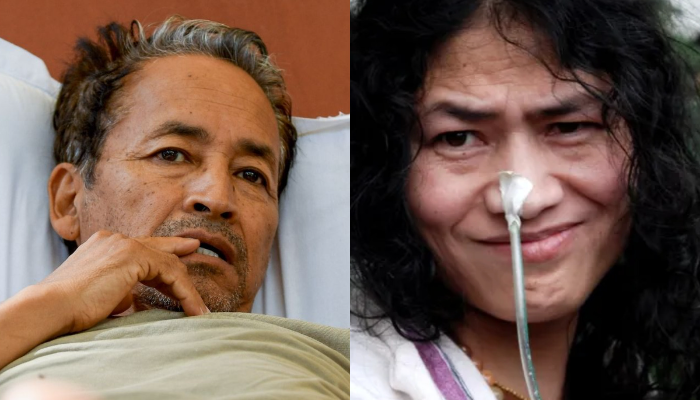
However, the spotlight has been primarily on Sonam Wangchuk, who is on a hunger strike in support of the aforementioned submissions. He has been on a water-only fast since 28th June. Hence, the usual suspects, including the CJP, which is reportedly associated with the Aam Aadmi Party (AAP), other opposition parties and their entire ecosystem, are attempting to portray him as a hero for a cause that casts the Modi government as the antagonist. However, they have all intentionally ignored a crucial question.
What constructive solutions, alternative proposals, or viable criticisms is he offering? It is true that the government must be scrutinised for its shortcomings, especially regarding the nation’s future. Nevertheless, these challenges are neither novel nor unprecedented. It is a systemic issue that requires a thorough and careful approach, devoid of political theatrics and genuinely focused on the students without any vested intentions or goals. However, this does not seem to apply to Wangchuk, who has a notably controversial history.
There has been an evidently orchestrated effort of false glorification rather than inquiring clarity on his roadmap to tackle the problems endured by students, or what he can actually contribute to their settlement. Wangchuk, the son of a late Congress MLA, has recently been proclaimed the real-life embodiment of Phunsukh Wangdu from Rajkumar Hirani’s movie 3 Idiots despite his own earlier statement to the contrary. Furthermore, the filmmaker and Amir Khan, who took on the role, also confirmed that their movie was not inspired by Wangchuk’s life.
When Leh burned amid Wangchuk’s hunger strike
The gravity of the difficulties related to students has been reduced to mockery, political stunts and an obvious farce. However, this seems to be a recurring theme with Wangchuk, who has also employed similar methods previously. He initiated a hunger strike in Leh to demand statehood for Ladakh and its inclusion under the Sixth Schedule of the Indian Constitution last September.
However, he had to be arrested under the National Security Act (NSA) as deadly protests erupted in which the local Bharatiya Janata Party (BJP) office was torched, and 4 people died while many others were wounded.
“We arrested a Pakistan PIO (Pakistan Intelligence Operative) in the recent past who was reporting back across. We have a record of this. Wanghchuk had attended a Dawn event in Pakistan. He also visited Bangladesh. So, there is a big question mark on him. Investigation is being done,” revealed SD Singh Jamwal, who was Ladakh’s Director General of Police (DGP) at the time.
He highlighted that his protest platform created an environment conducive to violence, which was planned and coordinated in advance. He added, “Wangchuk has had a history of instigating. He has referred to the Arab Spring, Nepal and Bangladesh. The investigation into his funding is going on for FCRA (Foreign Contribution Regulation Act) violation.”
“Wangchuk had been indulging in activities prejudicial to the Security of the State, Maintenance of Public Order and Services essential to the community, as mentioned in the grounds of detention. I was satisfied and continue to be satisfied with the detention of the detainee,” District Magistrate of Leh had informed the Supreme Court.
The Ministry of Home Affairs also pointed out how he continued his hunger strike in spite of repeated appeals from fellow leaders, akin to his present adamancy and “misled the public by making incendiary references to protests similar to the Arab Spring and Gen Z protests in Nepal.” Wangchuk was eventually released from Jodhpur jail after 170 days in March.
His actions are a clear reflection of his agenda and even serve as a potential warning of what might lie ahead.
There was Irom Sharmila before Sonam Wangchuk
While supporters of Wangchuk are mistakenly likening him to fictional movie characters and even to the hunger strike of Anna Hazare, there exists a remarkably similar figure who engaged in such tactics to exert pressure on New Delhi for 16 years. Her name is Irom Sharmila Chanu, and she is from Manipur.
On 5th November 2000, the Assam Rifles shot dead 10 civilians at a bus stop in Malom following a bomb attack by assailants that targeted a nearby paramilitary convoy. This tragedy was utilised by Irom as a platform to embark on a political charade that lasted for 16 years.
She refused to eat and commenced a hunger strike against the Armed Forces Special Powers Act (AFSPA) in the sensitive state that has experienced decades of violent insurgencies, deeply impacting both civilians and security personnel. Her aim was to urge the central government to repeal the law, which is important for maintaining public order and peace in such regions.
However, both the NDA (National Democratic Alliance) led by the Bharatiya Janata Party and the United Progressive Alliance headed by the Indian National Congress governments refused to buy into her ploy, which would have threatened regional security and stability as well as increased cross-border militancy and ethnic tensions.
Certainly, no individual can endure even a few weeks without any sustenance. Therefore, a nasogastric tube was inserted into Irom’s nose to feed her. Interestingly, these tubes can be self-dislodged, but a narrative was created around how the government was “force-feeding” her to exalt her agitation.
Of course, this would not have reached such a point, but Irom exploited an indispensable subject to construct her public image which she later used to set her unsuccessful political career, handing a prime opportunity to global anti-India forces to intervene in its affairs.
Anyone who believes that Irom Sharmila’s fasting was genuine, needs a reality check. The Ryles tube is ridiculously easy to remove. Patients with both hands tied to the bed have managed to do it. But somehow it was “forced” on her for a dozen years without any restraints. https://t.co/ijjeAzzvA8
It is noteworthy that the special laws and provisions are imposed based on the circumstances present in particular regions. The changes in these ground realities have also led to the gradual removal of special acts over time under the Modi government. AFSPA has been considerably rolled back throughout the northeast, attributed to improved security and a substantial decrease in insurgency incidents. It has been completely rescinded in Tripura and Meghalaya, while its enforcement has been confined to particular districts and police stations in Assam, Nagaland, Manipur and Arunachal Pradesh.
However, Irom’s performative activism, which strayed significantly from the facts, persisted as she tirelessly endeavoured to make the Indian state acquiesce to her wishes. However, all facades eventually conclude sooner or later and hers was no exception after it paved the way for her political debut.
On 9th August 2016, she ended her hunger strike and stepped into the political area. She established “People’s Resurgence and Justice Alliance” (PRJA) and participated in the 2017 Manipur Legislative Assembly elections from the Thoubal constituency, where she faced off against former Chief Minister Okram Ibobi Singh.
The 54-year-old popular as the “Iron Lady of Manipur” was only able to secure 90 votes, as her aspiration to become a legislator encountered a substantial blow just a few months later in March 2017. During the campaign, she had declared her intention to run in the 2019 general elections if she did not succeed, but afterwards asserted that she was “fed up with this political system” and then exited active politics. She is married to a British national and lives a quiet life with him and their twin daughters in Bengaluru.
Conclusion
Irom’s pursuit for relevance culminated in a jarring realisation of a failed political career and Wangchuk is apparently on a similar mission to continuously grab the headlines. Otherwise, he might have begun a constructive dialogue or at least provided a positive direction to deal with the difficulties brought forth by students. However, he chose to side with CJP and turn a student matter into a political one, generating controversy and redirecting the attention that should have been on those genuinely impacted towards himself.
Wangchuk’s showmanship has only complicated the matter that should have been between the government and the students and resolved amicably without any politicisation, but it has now been reduced to one man and his shenanigans. Moreover, the sincerity of the protest has been illustrated after CJP leaders, including Dipke, were caught relishing pakodas, kachoris and other snacks while he continues to fast in their company.
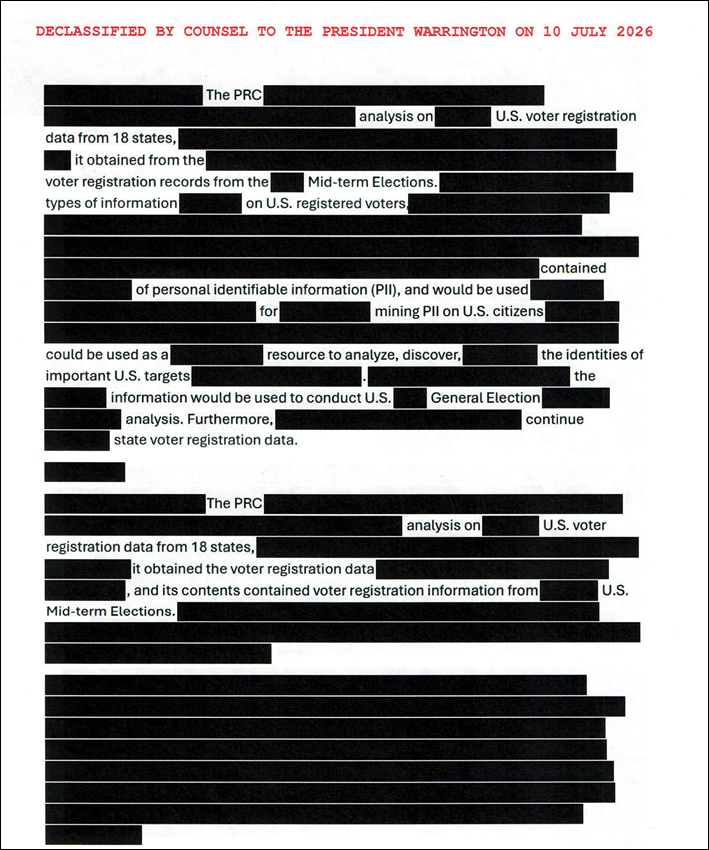
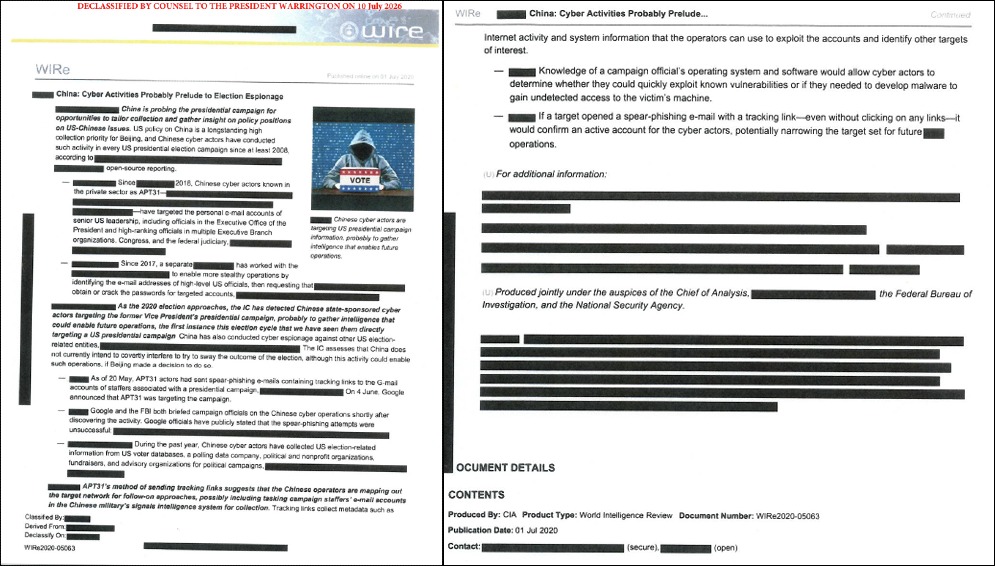
China has long faced accusations of meddling in and influencing elections in key democracies through various means. The Trump administration in the US has declassified and publicised several intelligence and law enforcement documents from 2020, alleging that China acquired 200 million American voter data and exploited vulnerabilities in the US election system to influence the poll in Joe Biden’s favour.
China acquired and exploited American voter data: Trump makes explosive claims citing declassified files, orders probe
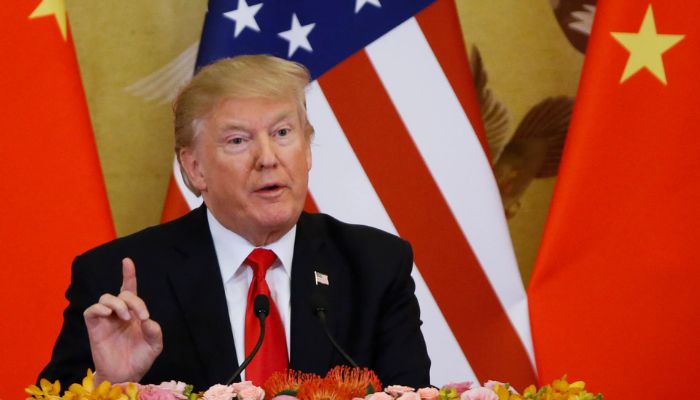
In a nationally televised address on 16th July 2026, US President Donald Trump called the disclosures vulnerabilities in America’s election infrastructure, and called for a probe into why the intelligence inputs flagging the Chinese election interference manoeuvres were allegedly withheld or suppressed during his first term.
“Tonight, I’m announcing the immediate declassification and release of critical intelligence, revealing shocking vulnerabilities in our election infrastructure. This evidence shows that the election system we have dangerously exposes and really exposes, like levels never thought possible, to hacking, exploitation, and foreign interference. Just as disturbingly, this vital information has for many years been covered up and hidden from you, the American people,” President Trump said.
US President Donald Trump: Newly declassified documents show that over a period of years starting during the 2020 election cycle, the People’s Republic of China carried out what is believed to be the largest compromise of election data in history — resulting in China’s illicit…
In addition to accusing the US intelligence community of suppressing information on China’s alleged election interference activities aimed at ensuring Trump’s defeat, the US President directed the Office of the Director of National Intelligence, the Department of Justice, the Federal Bureau of Investigation (FBI) and the Central Intelligence Agency (CIA) to launch an investigation into why the information was allegedly withheld.
“But that all changes right now. The documents we will release starting tonight have been gathered by the White House Government Transparency Task Force, a great group of people, along with the staff of the president’s Intelligence Advisory Board, supported by our top intelligence agency chiefs who have all personally reviewed the findings we are presenting this evening and fully confirmed their authenticity,” Trump stated.
Trump claimed that the declassified and publicised documents cover five key areas of concern. He claimed that during the 2020 election cycle, China carried out what is believed to be the largest compromise of election data in history, resulting in China’s illicit acquisition of 220 million US voter files.
This data included names, addresses, phone numbers, political party preferences and other sensitive data that “would be needed to register to vote and engage in other nefarious activities…”
Calling the supposed data loss an “unprecedented election security nightmare”, Trump cited intelligence to claim that China assigned a data exploitation unit specifically to this new project.
The second set of documents released on Thursday is reported to reveal that members of the Deep State in the American intelligence agency “worked to actively suppress and downplay information about the extent of China’s sinister election meddling, covering it up from both the president and the American people as nobody thought was possible.”
Citing the declassified memos, Trump alleged that in 2020, tens of millions of voter data across 18 states were bought, stolen or hacked by China.
“They did not disclose to me as president or to anyone else. And to the best of our knowledge, they did not inform Congress. In fact, all they kept saying is, this is the most secure election in the history of our country — a standard, very pat line that was divvied out to say,” he said.
The declassified files indicate that Chinese intelligence officials analysed multiple datasets related to the US states registration from around April 2020 onward. A zip file released by the White House includes several declassified memos referencing access or compromise of voter registration files.
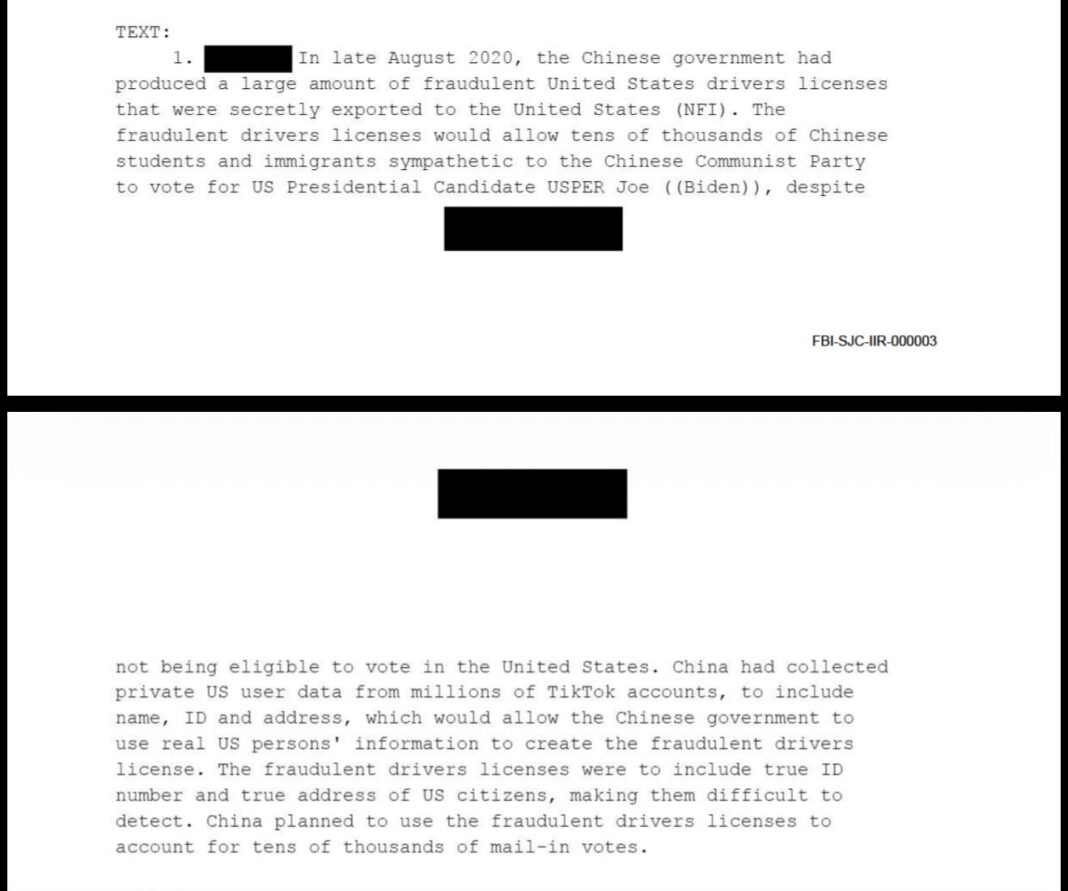
One of the released documents mentions that in August 2020, the Chinese government had produced massive fake US drivers’ licenses and had them exported secretly to the US. These counterfeit driving licenses allowed “tens of thousands of Chinese students and immigrants sympathetic to the Chinese Communist Party to vote for US Presidential Candidate USPER Joe ((Biden)), despite not being eligible to vote in the United States.”
“China had collected private US user data from millions of TikTok accounts, to include name, ID and address, which would allow the Chinese government to use real US persons’ information to create the fraudulent driver’s license. The fraudulent driver’s licenses were to include true ID number and true address of US citizens, making them difficult to detect. China planned to use the fraudulent driver’s licenses to account for tens of thousands of mail-in votes,” a declassified document reads.
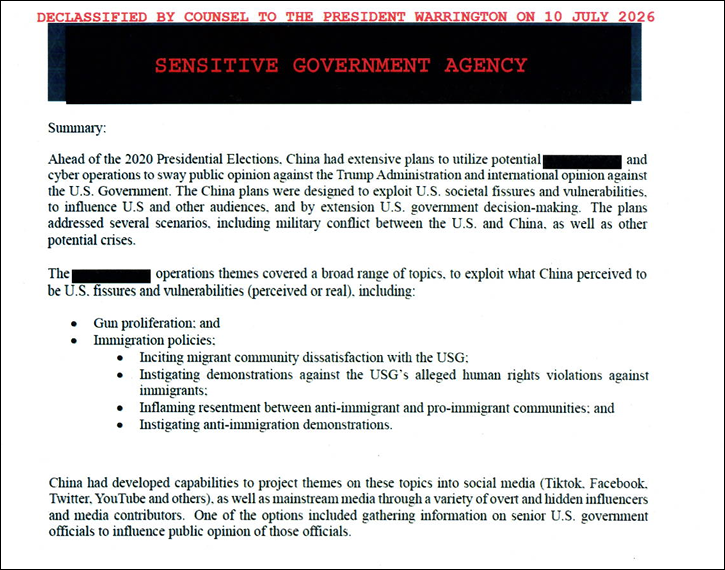
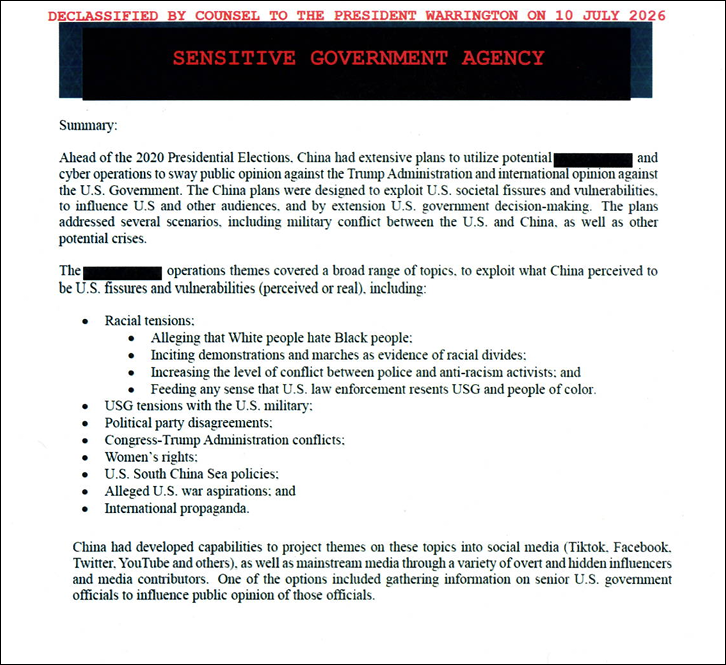
The declassified documents reveal that China had allegedly developed capabilities to push its own narrative on various mainstream issues, including fuelling anti-government discontentment among immigrants in the US and inciting the Black Lives Matter Movement, through social media platforms like TikTok, Facebook, YouTube, Twitter, and others, in addition to mainstream media via influencers and journalists and other CCP-cultivated assets.
“The Chinese government sought to identify US journalists who had reported negatively on the US president and pay them large sums of money to write more negative articles about him,” President Trump said, although he did not name any such ‘compromised’ journalists.
The CCP analysed and picked America’s internal issues that could be exploited to sow divisions or widen existing fissures. The documents indicate that China used its assets in the US and social media propaganda to incite migrant community dissatisfaction with the US government, instigate anti-government protests over alleged human rights violations, inflame resentment between anti-immigrant and pro-immigrant communities, and instigate anti-immigration demonstrations.
China also allegedly incited racial tensions by peddling a narrative that the White House under Trump hated black people. The CCP instigated demonstrations and marches as evidence of racial divides. China also floated a narrative that the US government and law enforcement establishment had fundamental disagreements.
The files also cover other key topics like non-citizen registrations identified in some state rolls. As per the White House, the declassified documents indicate that the Department of Homeland Security opines that at least 250,000 non-citizens were on the voter rolls in several key states.
Overall, the Trump administration believes that declassified and publicised documents indicate that China may not have directly altered ballots (although Trump cited the FBI’s 2020 “raw intelligence” to claim that China attempted to manufacture ballots for Joe Biden), changed vote totals, or interfered with tabulation in a way that flipped the 2020 election outcome, China did meddle in the American elections to ensure Trump’s defeat and Biden’s triumph.
While Trump’s critics, including the American legacy media, are framing the US President’s presentation as an overstretching of the data-access findings for his own political gains, China’s broader pattern of attempting to influence foreign domestic politics and elections makes his claims plausible.
OpIndia reported about how the CCP created a transnational network of non-profits, activist groups, think tanks, and media outlets, operating as its propaganda machinery. The CCP orchestrated a pro-China information laundering network helmed by Neville Roy Singham, the US-born tech tycoon who sold his IT consulting firm Thoughtworks for about $785 million in 2017 before relocating to Shanghai.
This information laundering network modifies raw activism into polished propaganda, which is then amplified by the Roy-Singham-funded network to sow discord in the US and other democracies while burnishing China’s image as a ‘benevolent’ counterweight to ‘imperialism’, particularly American imperialism, with the ongoing left-wing activism in Cuba being a textbook case of this.
From pro-Palestine activism in the US, influx of far-left activists in Cuba amidst President Trump’s rising interest in the country, to ‘No War’ activism over the Iran war, these seemingly spontaneous and genuine anti-war protests are in reality, a part of well-organised, well-funded, and politically-motivated campaign, orchestrated by organisations and activists all finding their roots in the Neville Roy Singham’s network of philanthropic organisations, think thanks, media, and activists, intellectuals, celebrities, political organisers and comrades.
Neville Roy Singham funnelled over $278 million directly into his pro-China propaganda network since 2017, with total money flows exceeding $591 million across 223 transactions spanning five continents through the year 2025. The massive amount was pumped into over a thousand interconnected organisations, of which around 200 are directly involved in generating and propagating pro-China and anti-America messaging at the behest of the CCP.
China meddles in internal politics and elections of other countries: The ‘United Front’ strategy
For China, narrative is the key to power and self-interest not only within the country but also on foreign soil. From suppressing the truth of the Tiananmen Square massacre to firewalling anti-government criticism, the CCP regime believes that its survival and unquestioned rule is contingent on narrative control.
In fact, the CCP has a political strategy called “United Front”, which is designed to isolate enemies and co-opt allies from business groups, non-communist and minority populations.
The CCP’s United Front Work Department (UFWD) is a well-funded unit that operates through several front organisations in foreign nations to serve China’s interests and expand its influence. These front organisations do not overtly declare their affiliation to the CCP. Front organisations tasked state-owned enterprises, Chinese-registered private companies, Chinese student organisations, foreign cultural organisations, foreign media, members of Chinese ethnocultural communities, and prominent businesspeople and political figures to support the CCP’s goals through democratic institutions and processes.
Under the “United Front” strategy Mao Zedong used to call his “magic weapon”, the CCP influences operations, manufactures and disseminates disinformation, traps elites, uses economic coercion, cyber espionage, and erects proxy networks to shape narratives, policies and opinions to advance CCP interests in foreign countries.
This tactic involves funding or influencing media, think tanks, academia, and diaspora organisations, exploiting the systemic vulnerabilities in foreign government and democratic infrastructure, sometimes even inciting unrest. China leverages United Front Work for intelligence collection and repression.
Though countries interfering in or attempting to influence election results in other countries is not unique to China, no country attempts to execute such regime change operations at scale by the CCP’s centralised apparatus.
Chinese interference in Canadian federal elections
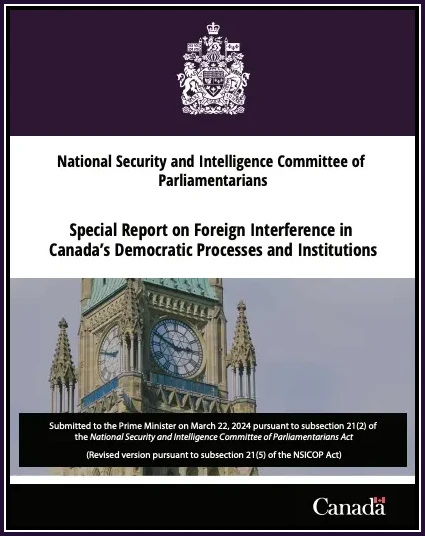
Before the US, China faced accusations of meddling in Canadian elections as well. In June 2024, a Canadian intelligence watchdog, the National Security and Intelligence Committee of Parliamentarians (NSICOP), released a report titled: Special Report on Foreign Interference in Canada’s Democratic Processes and Institutions. It uncovered the extensive interference of China in Canada’s electoral and legislative affairs. The redacted report mentions how certain Canadian MPs colluded with China.
The report revealed that some Chinese nationals, supported by the Chinese Communist Party, had and continue to engage in sophisticated efforts to break into and influence all levels of Canadian governance and economy.
It highlighted the CCP’s illegal attempts to intervene in Canadian elections, bribing Canadian officials, and using covert techniques to exploit Canada’s indigenous people for resource extraction, as mentioned in the non-redacted 2019 version of the report.
China had even set up Overseas Police Stations in Canada and other countries. Akin to the allegations levelled by Trump regarding Chinese influence in American elections, the NSICOP report stated that China used social media alongside the legacy media to influence the opinions of Canadian voters, ethnocultural groups and parliamentarians.
During the 2021 federal election in Canada, the Security and Intelligence Threats to Elections Task Force (SITE) noted that mainstream media and social media activities aimed at discouraging voters from supporting the Conservative Party. While a direct link to the Chinese government did not emerge, the pattern indicated a coordinated campaign orchestrated by China.
The Canadian Security Intelligence Service (CSIS) assessments and the public Hogue Commission inquiry (2024) indicated that Beijing clandestinely and deceptively interfered in Canada’s 2019 and 2021 federal elections. China backed the then Justin Trudeau-led liberals, through favourable social media propaganda, proxy agents in the Chinese-Canadian community, funding the campaign of favourable nominees, etc.
The CCP influence over Canadian parliamentarians expanded to such an extent that it was rewarding and punishing Canadian MPs based on their pro or anti-China opinions expressed in the House.
China’s election interference goes as far as the US and Canada to ‘rival’ neighbour India.
Chinese interference in Indian politics: The NewsClick saga
The fresh allegations of CCP interference in American elections warrant recalling China’s continued meddling in India’s electoral politics. For years, Chinese-linked influence operations, be it media outlets, politicians, dubious NGOs, etc, have been shaping narratives against the Modi government with the ultimate aim of regime change.
None exemplifies this better than the NewsClick scandal. The pro-China propaganda portal first made headlines when it came under the radar of the Enforcement Directorate in 2021. The portal was reportedly accused of fraudulently receiving foreign funds amounting to around Rs. 38 crores.
In 2023, the Delhi Police Special Cell filed an FIR and later an extensive chargesheet under the Unlawful Activities (Prevention) Act (UAPA) against NewsClick founder Prabir Purkayastha, HR head Amit Chakraborty, among others.
The same Neville Roy Singham, who ran a pro-China information laundering network in the US, has also expanded his tentacles to India. Roy Singham’s Justice and Education Fund donated $10.5 million to Delhi-based pro-China propaganda outlet, NewsClick.
One of the most prominent members of Roy Singham’s evil empire is Vijay Prashad. He has contributed several propaganda anti-India articles to NewsClick. Prashad is the nephew of Brinda Karat, a CPI(M) leader and wife of Prakash Karat, also a senior CPI(M) leader, whose email exchanges with Neville Roy Singham earlier revealed their close ties in the NewsClick Chinese funding scandal.
Vijay Prashad has also been a council member of the Progressive International, an international organisation that mobilises leftist activists and groups globally. OpIndia earlier highlighted how this outfit persistently publishes propaganda articles and statements peddling the insidious Muslim victimhood narrative to slander the Modi government. It regularly platforms notorious anti-Hindu and Islamist apologists like Harsh Mander, and has Islamo-leftist cheerleaders like Jayati Ghosh and former Labour MP Jeremy Corbyn as its council members.
Roy Singham’s propaganda network has a connection with pro-Hamas Tides Foundation. Tides Foundation is notorious for funding several anti-Hindu, anti-India organisations and elements. The Foundation gave grants to Hindus for Human Rights (HfHR), which has links to Islamists and Khalistanis, and was formed in 2019 by two Islamist advocacy groups, the Indian American Muslim Council (IAMC) athe nd Organisation for Minorities of India (OFMI).
Tides also funded AMAN Public Charitable Trust (AMAN). This trust is connected to the NewsClick-China funding scandal, where it is alleged that Chinese entities funded NewsClick to disrupt Indian sovereignty.
Among Indians introduced by Neville Roy Singham to his larger team, who worked with Tricontinental, one of the nonprofits that the New York Times said was involved in pushing Chinese talking points, were Prabir Purkayastha, Srujana, Prasanth, and Vijay Prashad.
Prashad also has close ties with Urban Naxal P Sainath, whose propaganda portal PARI recently removed references to Singham after his connection with the Chinese propaganda arm had come to light.
OpIndia has regularly called out Newsclick’s anti-Hindu propaganda. Moreover, Newsclick has also faced scrutiny for its alleged connections with the Chinese Communist Party (CCP). In 2023, an investigation by the New York Times uncovered an ecosystem of activist organisations, non-profits, shell corporations, and their intimate ties to China and Chinese propaganda, with Neville Roy Singham at its helm. A Delhi Police chargesheet filed in 2024 called the Chinese state the “ultimate paymaster”, with funds routed to stoke anti-India narratives, especially regarding Kashmir, and farmers’ protests. The case is ongoing in the court.
Back in 2021, OpIndia conducted a detailed investigation into the links of NewsClick and uncovered how it was linked to several individuals who regularly spew venom against India, from Urban Naxals to those like Teesta Setalvad, Abhisar Sharma and several others.
There are many Roy Singham network-backed pro-China propaganda factories actively peddling anti-India and anti-government narratives. OpIndia has reported about such entities, including People’s Dispatch, TriContinental, People’s Forum, among others.
From Kashmiri separatism, anti-Hindu tropes, glorification of Kerala’s ‘communist’ model, to Muslim victimhood, and propaganda maligning India’s global image, these CCP asset Roy Singham-backed entities are dedicated to weaponising issues, nonprofit laws, digital media, and every other resource at hand to undermine rival states, influence policy decisions, weaken India, and deliver a geopolitical edge to China.
In February this year, the Enforcement Directorate fined NewsClick and its founder-editor Prabir Purkayastha Rs 184 crore under the Foreign Exchange Management Act (FEMA) for violating foreign funding regulations.
The NewsClick founder faced allegations of conspiring with Chinese Communist Party (CCP) member Neville Roy Singham to defame the Indian government and its efforts to contain the spread of COVID-19 and cast aspersions about the efficacy of Indian vaccine ‘Covaxin’ developed by Bharat Biotech.
China-funded NewsClick platformed anti-India voices, gave funds to Islamist rioters behind 2020 anti-Hindu Delhi Riots
NewsClick has been accused of having obtained funds from China to provoke disturbances in India, especially amid the anti-CAA (Citizenship Amendment Act) protests to topple the Modi government, and has links to anti-India voices like Gautam Navlakha.
Its founder faced allegations of having ties to LeT (Lashkar-e-Taiba) terrorists, giving money to anti-Hindu 2020 Delhi riots accused Sharjeel Imam and Naxals in Delhi Police’s chargesheet.
On the 17th, an email marked ‘Share Notes on CAA docs’ was sent by Rajamanikam P, AIPSN (All India Peoples Science Network). AIPSN was founded by Prabir Pukayastha. The email content spread disinformation and fearmongered against CAA and NRC. It said that NRC was bound to persecute Muslims, even as there was not even a draft of NRC and the CAA had nothing to do with any Indian citizen at all.
OpIndia reported about how Teesta Setalvad, Harsh Mander, Prabir Purkayastha, Githa Hariharan and others strategised about instigating violence and stone pelting as well as arranging funding for ‘protestors’ during anti-CAA protests.
The 8000-page chargesheet also noted that NewsClick deliberately distorted the map of Arunachal Pradesh and Jammu and Kashmir to show that these territories belong to China.
NewsClick founder and Neville Roy Singham discussed how they could ally with separatist movements in India and other countries.
The chargesheet traced the beginning of the conspiracy from an email dump that ED shared with the Special Cell. One email from the 29th of June 2016 sent by Prabir Purkayastha to Neville Roy Singham marks the beginning of the conspiracy according to the Special Cell.
The subject of the email recovered by ED was “Social Media Group in India”. In the email, Prabir tells Neville that a group in ‘their’ media project should focus only on tools – which is collating and analysing data. Second, he suggests a dedicated team for social media campaigns. The budget he allocates for the social media campaigns is anywhere between $60,000 and $80,000.
Soon after, a NewsClick article was shared over email on the 17th of September 2016, which spoke of creating mass movements in the typical Maoist style.
The email exchanges between Roy Singham and Purkayastha showed that they discussed how to effectively ally with ‘separatist’ or identity movements.
SIR is a necessity to protect election integrity against domestic irregularities and foreign interference
From the case of Chinese interference and/or influence in electoral politics and outcomes in the US, Canada and India, it is evident that the CCP prefers liberals in power in rival or adversarial countries for a smooth advancement of its geopolitical and economic interests.
It is also interesting how the pro-China propagandists and politicians, be it in India, the US, or Canada, almost always dub the unfavourable government (from China’s perspective) as fascist, authoritarian, regressive, intolerant, racist, religious supremacist, and whatnot.
For India, the recent US allegations against China that it acquired and exploited 200 million American voter data to influence 2020 election results, and growing threats of adversarial foreign entities attempting to influence elections, point to the necessity of the Special Intensive Revision (SIR) of electoral rolls.
In the recent past, the Election Commission of India conducted the Special Intensive Revision of electoral rolls across various states ahead of elections, including Bihar and West Bengal. Under this exercise, the ECI officials conducted door-to-door enumeration, cross-checking, removal of duplicate voters, removal of names of deceased persons and migrants who have shifted, and illegal voters.
While the SIR exercise aimed to clean and update electoral rolls, it triggered a political storm in India after lakhs of illegal or fake voters were weeded out from voters’ lists. The opposition parties alleged targeted disenfranchisement of Muslims, the ECI denied any religious targeting while numerous illegal immigrants, mainly Muslims from Bangladesh went into panic.
The US allegations show that voter data is a high-value target, and compromised or manipulated rolls enable fake voter entries. At the same time, proxy influence through media and social media propaganda consolidates votes against the unfavourable government a foreign government or entity wants to oust from power.
The SIR exercise, stricter implementation of FCRA rules, and thorough investigation into the anti-India activities of so-called ‘intellectuals’ and ‘activists’ regularly pushing anti-India and pro-China propaganda need to be conducted to protect Indian democracy and territorial integrity against foreign narrative warfare and regime change operations.
The Special Intensive Revision may not be a silver bullet against foreign electoral interference; however, it directly addresses and fixes vulnerabilities in the electoral infrastructure.
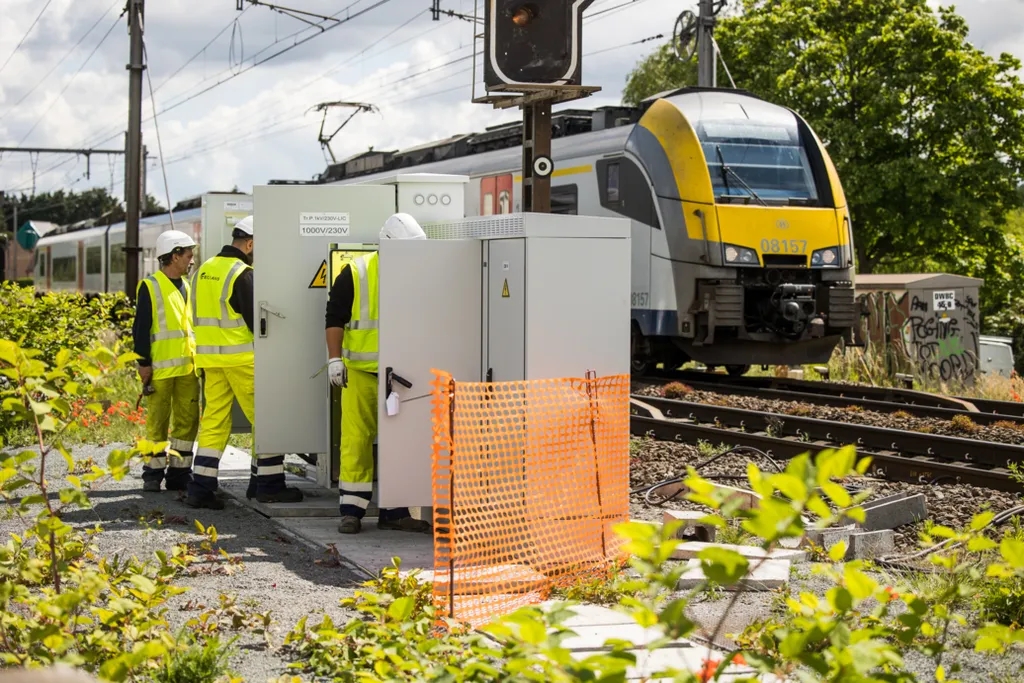
A recent tweet by former Japanese Justice Minister Hideki Makihara, sharing an article from Toyo Keizai Online by railway consultant Isao Tsujimura, has been widely circulated on social media. His words about Indians “pushing their own self-interest” and the bullet train project being a “failure” are being presented by many as proof of something shady, as if Makihara is talking about the personal interests of ministers or officials.
That interpretation is completely off the mark. Both Makihara and Tsujimura are speaking from the Japanese side of the table. They are frustrated that Japan is losing out on lucrative contracts for trains and, especially, the critical signalling system, in India’s high-speed rail system. What they describe as Indian “recklessness” or “not keeping promises” is simply India negotiating hard for its own national interest, getting a high-speed rail corridor built sooner, at a more reasonable cost, while developing domestic manufacturing capability.
Tsujimura, a Japanese railway engineer living and working in Delhi as a metro vehicle consultant, has followed the project closely even though he has no direct involvement. In his July 2026 Toyo Keizai article, he describes how things gradually diverged from the original Japanese vision. He claims that the “Indian Shinkansen” project has failed despite PM Takaichi’s recent visit to India. His major opposition to the project is due to the fact that the Japanese signalling system has been excluded from the project.
Original plan and diversion
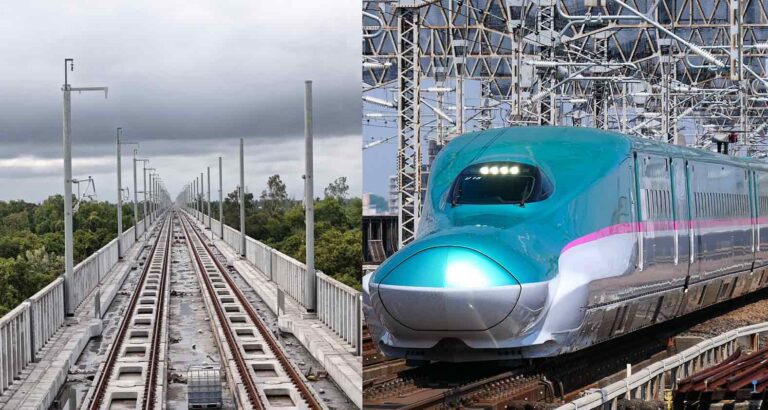
The original 2015 agreement between India and Japan for the 508-kilometre Mumbai-Ahmedabad High-Speed Rail corridor was designed around Japanese Shinkansen technology. Japan offered a soft loan covering most of the cost at an almost negligible 0.1 per cent interest, repayable over 50 years. In return, India was supposed to import everything from Japan: Japanese trains, Japanese signalling (Digital Shinkansen Automatic Train Control or DS-ATC), and Japanese systems. Initially, even civil works were supposed to be carried out by Japanese companies, it was opened to Indian contractors to control overall costs. The groundbreaking took place in 2017 with great fanfare. The original target of full opening by 2023 was always optimistic, which was missed due to various reasons.
Now, the project is progressing smoothly, but with several changes from the original plan. India is not using the Japanese signalling system, nor the older version of Japan’s Shinkansen trainset, and various Indian systems are being integrated into the project. This has been viewed as ‘betrayal’ by Makihara and Tsujimura, and they think the project is a ‘failure’ because of this. They also think the Japanese Shinkansen can’t run on non-Japanese signalling systems.
The Trainset
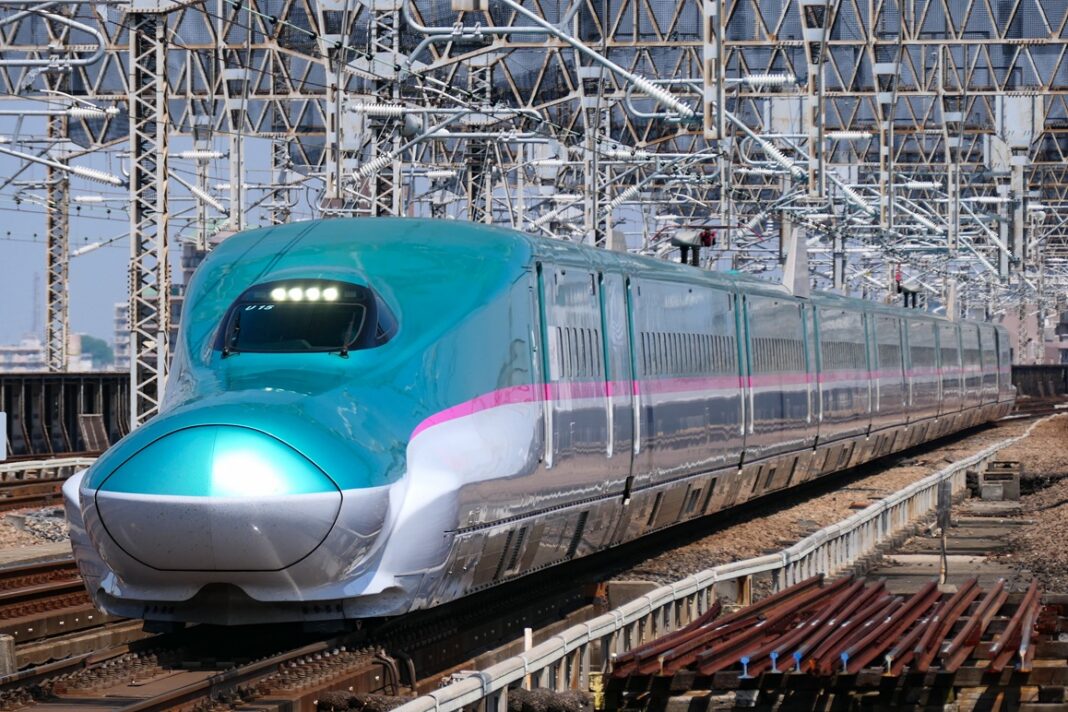
While the original plan included starting with Japan’s E5 trainset, it has been rejected by India, and it has selected the E10 train, which is still under development. Tsujimura admits that the E5 price refused to come down, making it prohibitively costly for India. Talks over the older E5-series trains stalled because India found them too expensive, and also over India’s demands for modifications in the train. As a result, negotiations on the E5 trainset were terminated in 2024.
E5 trainset
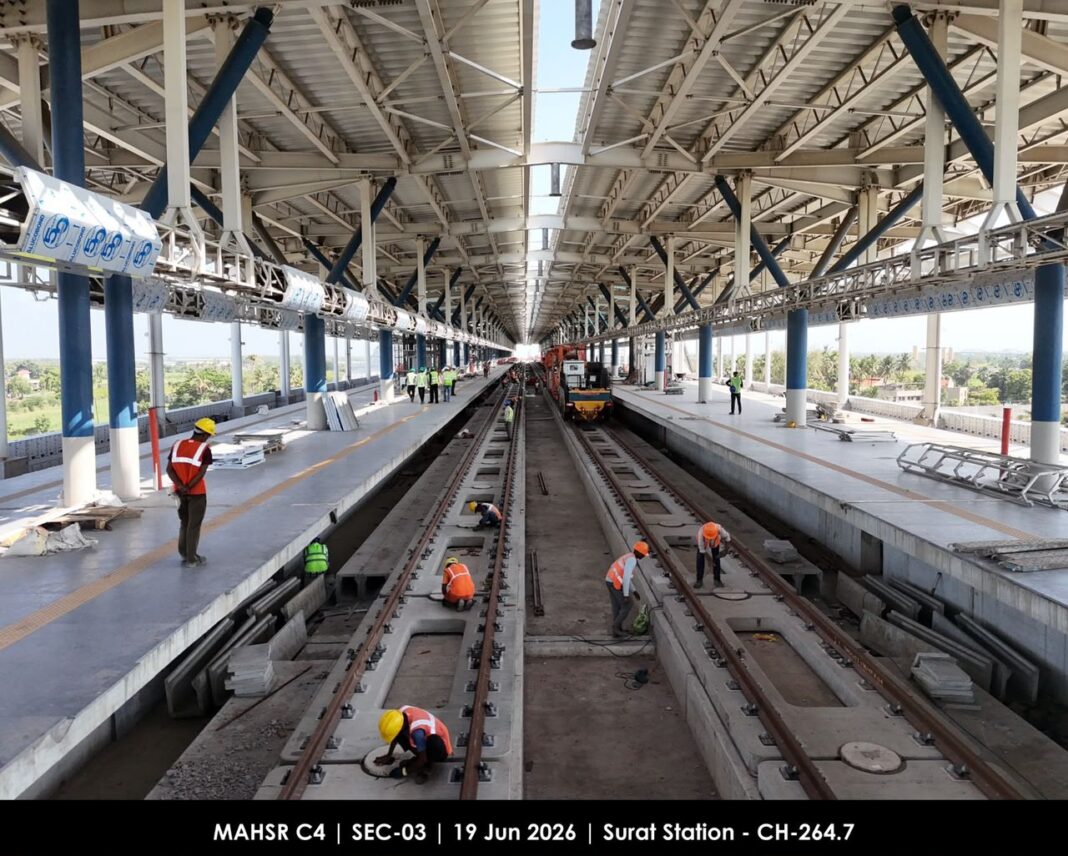
The newer E10 series that Japan later offered is still under development and not expected to be ready for Indian conditions for years; it will be operational by early next decade. While the project was delayed, it has now progressed considerably, and the track and civil infrastructure are almost completed. India did not want a nearly completed, extremely expensive corridor sitting idle, waiting for Japanese E10 trains.
So, the Indian government decided to start commercial operations with its own trains first. Success with Vande Bharat trains meant that India now has the capability to build high-speed trains, giving confidence to the government to start the high-speed rail system with indigenous trains.
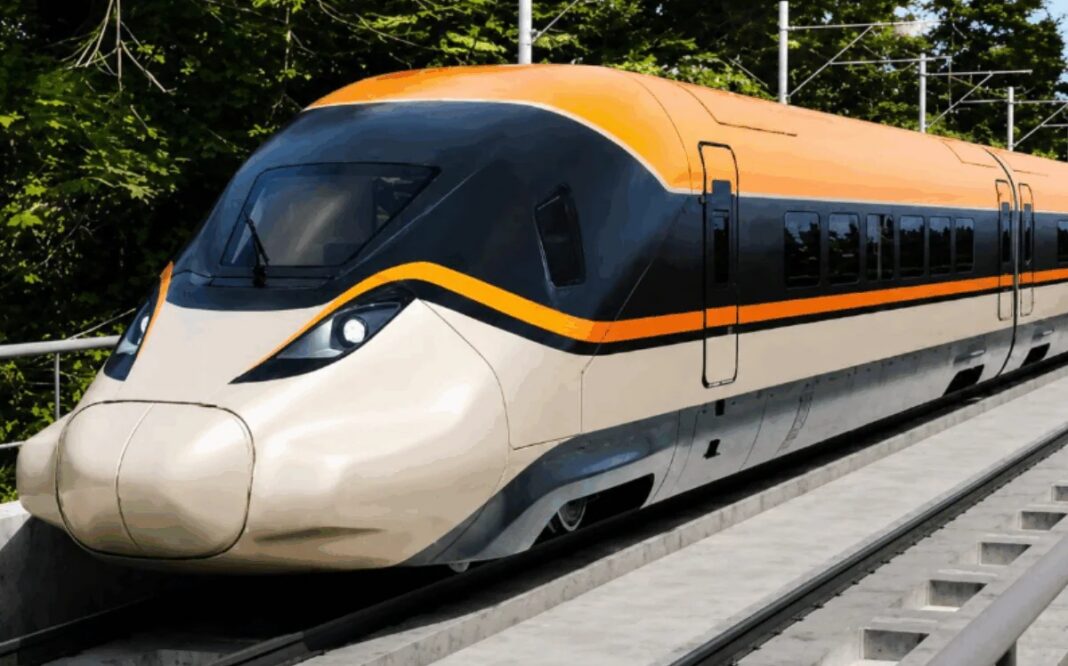
Rendering of E10 trainset, currently in development
Isao Tsujimura says that Vande Bharat trains rarely run at speeds over 130 km per hour, but that is due to the limitations of existing track and signalling systems, not due to any deficiency of the trains, as they have achieved higher speeds in trial runs. Therefore, the scepticism about India’s ability to make high-speed trainsets is misplaced. As the Mumbai-Ahmedabad track is a dedicated high-speed network, trains will not face the limitations faced on existing old tracks.
Therefore, BEML in Bengaluru was given the order to build indigenous high-speed B28 trainsets capable of hitting a speed of 280 kmph. BEML has stated that each coach for the trains will be manufactured at a cost of ₹27.9 crore, which is significantly lower than the price of each Shinkansen E5 coach, approximately ₹46 crore. The E5 train can hit 320 kmph, B28 will be slower, but still much faster than any other Indian train. Globally, most high-speed trains run at above 250 kmph.
Rendering of B28 trainset
The first section is targeted for next year with Indian trains. According to the Government of India sources, Japan also agreed to start the project with India-made trains.
It is important to note that while India refused to purchase the E5 trainset, the country is committed to acquiring Japanese E10-based trains to turn the project into a true high-speed rail network. The train is still under development, and India is expected to acquire it in the early 2030s.
Signalling System
Tsujimura and Makihara are most concerned about dropping the Japanese signalling system from the Indian project, and called it a ‘betrayal’ by the Indian side. While Japan was expecting that India would buy their Digital Shinkansen Automatic Train Control (DS-ATC) signalling system for the project, India insisted on internationally certified standards, and also wanted interoperability with existing networks in the country.
Using the Japanese signalling would have meant it could be used only with Japanese bullet trains. As the E5 train was ruled out and the E10 train is not yet in production, this would have meant that the track completed with all systems would be lying idle till E10 trains arrive. Therefore, the Japanese System, which has an impeccable record of no passenger deaths due to accidents, unfortunately, didn’t meet India’s requirements.
Therefore, India decided to invite a global tender for the signalling system. The tender specifications effectively favoured the European Train Control System (ETCS) Level 2. A Siemens-led consortium with Indian partner DRA Infracon won the roughly ₹4,100-crore contract. The ETCS Level 2-based signalling and train control technologies are being installed to support train operations at speeds up to 350 kmph, enabling real-time train supervision, continuous wireless communication, and centralised traffic management.
India already has operational experience with ETCS Level 2 on the Delhi-Meerut Regional Rapid Transit System (Namo Bharat), supplied by Alstom. That system is a widely used international standard, supports high speeds, and offers better interoperability and potential for future Indian exports. Japanese DS-ATC is proprietary and tied tightly to Japanese rolling stock. From India’s point of view, switching to ETCS made commercial and operational sense: it allowed earlier utilisation of the infrastructure with Indian-made trains and avoided locking the entire project into a single expensive supplier for the critical safety system.
ETCS Level 2 signalling system
Tsujimura and Makihara see this as Japan being “excluded” from the heart of the project. They argue that Japanese Shinkansen trains are not designed to run on ETCS and that mixing systems creates safety and operational risks. That concern is not baseless. Pure Japanese trains would need onboard modifications or dual systems, and coexistence studies are still being discussed. Yet the claim that bullet trains simply “cannot” run on different signalling is overstated.
Technical adaptations, retrofits, and parallel installations are possible, as seen in other rail networks around the world. Siemens Mobility Sales Head Pankaj Rastogi has said that Japanese trains will need to be retrofitted to use ETCS signalling systems, which means it is possible.
India, a better negotiator
The Japanese side is not happy about the loss of the signalling package and E5 trainset supply. Their frustration is understandable from an industrial and national perspective. Japan provided the cheap, long-term money, expecting its companies to supply the high-value technology packages. India took the money for the infrastructure and then insisted on better terms and greater self-reliance for the systems that run on it.
This is not a story of corruption or betrayal. It is a case of India using its leverage. Soft loans almost always come with expectations of tied procurement. India renegotiated, limited Japanese participation in civil works, chose a different signalling standard that is not locked to one system, and ordered its own trains so the line can open in phases starting in 2027.
India has long been known as a tough negotiator. Even Donald Trump has publicly called Prime Minister Narendra Modi a tougher and better negotiator than himself. That reputation is not a flaw; it is a feature when a large developing country is dealing with advanced industrial partners in projects worth billions.
Japan’s engineering excellence, particularly the unmatched safety record of the Shinkansen, deserves respect. The soft loan terms remain highly favourable to India. But India had its own reasons not to use some parts from Japan. However, the entire corridor is being built according to the Japanese specifications.
Delayed but progressing well
Isao Tsujimura also talked about delays in the project, which is true. A major reason for earlier delays was land acquisition, especially in Maharashtra. Under the previous non-NDA Maha Vikas Aghadi government in the state, progress on land and clearances slowed significantly. Once the NDA government took over, approvals moved, and work accelerated. Gujarat, under continuous NDA rule, progressed faster throughout. These political and administrative realities on the ground matter more than any accusation of “not keeping promises.”
At present, work on the project is progressing rapidly, large stretches of viaducts and piers are complete, land acquisition for the entire corridor is finished, and work continues at pace. The government is certain that the first made-in-India high-speed trainsets will run on the completed sections of the network by next year.
Therefore, the claim that the project is a ‘failure’ is completely incorrect. Yes, it will not be a true Shinkansen, as Japan was expecting, but it will be India’s own high-speed rail network, with technology and systems from Japan, Europe, and India.
As the corridor is being built, the Indian industry is gaining experience in high-speed rolling stock and systems integration. The project is not a failure; it is evolving into something more balanced for the Indian side.
Makihara’s experience of difficult Indian negotiations and Tsujimura’s technical disappointment are genuine from their viewpoint. But framing them as evidence of Indian betrayal or project collapse misses the larger picture. India is protecting its taxpayers’ money, accelerating useful infrastructure, and building its own capability. In international deals, the country that can push hardest for its own long-term benefit usually ends up better off. India is doing exactly that.
The Balochistan freedom struggle has evolved into a significant crisis for Pakistan as armed rebel factions have exhibited extraordinary organisational strength in the fight against their occupation. The conflict continues to escalate due to enduring grievances related to political marginalisation, resource exploitation and state oppression. Similarly, the locals have also persistently resisted foreign resource extraction and the regular deprivation of the wealth produced in the southwestern region.
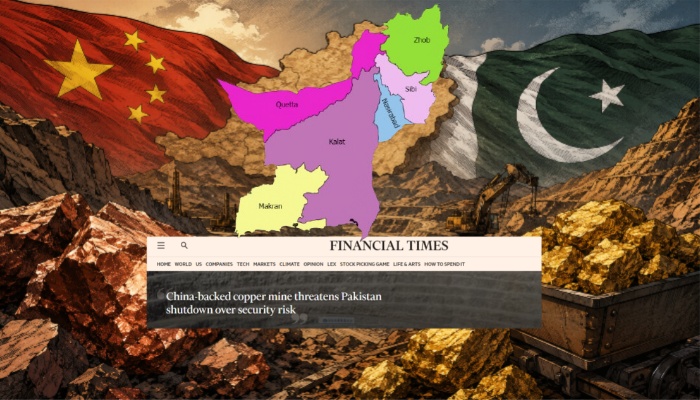
On the other hand, Islamabad has unsuccessfully tried to suppress the movement through brutal violence and bloodshed, an approach that has taken a heavy toll on both its economy and troops leading to further deterioration of an already volatile affair. Its latest casualty could be the largest Chinese-run copper and gold mine in Pakistan. Saindak Metals Limited (SML) warned that the growing uprising in the unstable area might compel it to shut down its operations.
The concerns were conveyed by its managing director in a letter to Pakistan’s energy ministry, reported Financial Times on 15th July. Predictably, the article was first dismissed as “questionable” and then an attempt was made to evade the pertinent inquiry with “assurances” regarding the security of the Chinese people present there.
When a journalist asked about it, Ministry of Foreign Affairs spokesperson Tahir Andrabi responded, “We are not obliged to talk about news stories whose facts remain questionable. Pakistan and China have an active dialogue on all aspects of their relation, including the security of Chinese nationals in Pakistan working on various economic projects, including those in Balochistan,” during a press briefing.
He asserted that as the host nation, it ensures “impeccable security” for their Chinese guests, including technicians, workers and others participating in these ventures.
Weekly Press Briefing by the Spokesperson @TahirAndrabi
— Ministry of Foreign Affairs – Pakistan (@ForeignOfficePk) July 16, 2026
What is inside the FT report
The FT article on Saindak Metals Limited, published on July 15, quotes the company’s MD Raziq Sanjrani stating, “The prevailing law and order situation in the province has severely affected the transportation of essential project cargo,” in the communication to the minister, per the media house. “If this situation continues unabated, the uninterrupted operation of the Saindak Copper-Gold Project may become unsustainable, and there is a serious likelihood that its operations may be forced to cease within a month owing to the non-availability of essential production materials and logistical support,” he highlighted.
The state-controlled Metallurgical Corporation of China leased Saindak in 2001 and it has been run as a joint venture with Pakistan’s state-owned SML. The license was renewed for an additional 15 years in 2022.
According to the letter, road travel has become “increasingly hazardous” due to the strikes carried out by Baloch freedom fighters, making it the primary problem for its operations. “The situation in Balochistan is far worse than many in Islamabad realise. Security is especially bad in the area where major projects like (the Barrick Mining-backed) Reko Diq and Saindak are located,” an insider revealed to FT.
Islamabad maintains that it can put an end to the armed dispute and provide “foolproof security” for international investors. Unsurprisingly, it has decided to blame India, rather than confronting its own actions and step-motherly treatment towards Balochistan. The latter has strongly rebutted the bogus allegations.
The onslaught on foreign assets and staff by Baloch freedom fighters has affected the ties between Pakistan and its closest economic and defence partner, as well as “all-weather friend,” China, after dozens of its citizens have lost their lives in recent years. Senior officials, including President Xi Jinping, have told their Pakistani counterparts that higher security is necessary to secure future funding in light of these precarious circumstances.
Pakistan’s economic objectives rooted in the abuse of Balochistan
According to official data, the output of the project represented a major portion of Islamabad’s approximately $750 million in copper products last year but nearly all of it has been delivered to Beijing. The latter also played the part biggest bilateral lender to its “Muslim ally.” It has awarded billions of dollars in grants and loans to build electricity and transport infrastructure as part of the Belt and Road Initiative. It is Xi’s global strategy to expand his country’s influence across nations and push expansionist polices.
While the Pakistani government continues to profit from the resources extracted from Balochistan, the region’s residents do not often see the benefits of those profits. On 8th July, Pakistan’s Director General of the Inter-Services Public Relations (ISPR), Lieutenant General Ahmed Sharif Chaudhry, announced that Baloch fighters have killed 42 persons, including law enforcement and security officials.
More than 20 people were killed in an explosion near a railway track in its capital Quetta in May. The incident happened just after a shuttle train carrying soldiers and officials left the army cantonment for Eid holidays. Baloch fighters earlier hijacked “Jaffar Express” with 400 passengers on board as it was travelling from Quetta to Khyber Pakhtunkhwa’s Peshawar in March. The train was targeted because it serves as a crucial route for the mobility of Pakistani troops.
A few months before, a coordinated attack against the Pakistani forces and military installations spanning the region claimed the lives of over 200 personnel and captured 17 others in January. Meanwhile, the country’s media media alleged that over 100 persons from Islamist and separatist groups have been neutralised since 5th July.
The latest development has dealt a severe setback to Pakistan’s aspirations to transform its western frontier into a site for the extraction of natural resources and a source of vital export income. Barrick Mining had previously delayed the construction of the $9 billion Reko Diq gold and copper mine after it assessed the security condition in the area and the interruption to the supply chain brought on by the tensions in West Asia. Saindak and Reko Diq are about 50 kilometres apart and both have several shared transportation connections.
Notably, another Chinese firm had to cease its operations in the Gwadar North Free Zone in May. A private limited entity named “Hangeng Trade Company,” had built the first large-scale donkey slaughterhouse and processing facility in the country under the China-Pakistan Economic Corridor (CPEC) framework. The move was prompted after the modern export-oriented plant was plagued by bureaucratic obstacles, blocked exports despite complete regulatory compliance and spiking financial losses.
Baloch people’s repeated opposition to appropriation of their resources to outsiders
Speaking to OpIndia, Dr. Allah Nazar Baloch, the present chief of the Balochistan Liberation Front had emphasised the malicious alliance between Islamabad and Beijing in an interview with OpIndia in 2019. He stated that the two wanted to take advantage of the resource-rich region, appropriate its natural wealth and implement an artificial demographic shift by displacing the indigenous population.
“Balochistan has more than 100 minerals. Pakistan has exploited and now is plundering gold, copper, uranium, copper, silver and other resources with the help of China. As the demographic change is concerned, thousands of Baloch are shifted by force along the CPEC route to other places, and initially 0.5 million Chinese are being settled in Gwadar, and three thousand acres of land are legislated and allocated to them. Now we are a double colony as China has officially joined Pakistan to continue the occupation of Balochistan,” he pointed out
He further charged, “China wants to build and raise its empire in Gwadar. At first, China is building a naval base in Jewani near Strait of Hormuz. This colonial act not only effects Baloch but also whole the world will suffer from its subsequent consequences. China is settling more than half a million of people in Gwadar. In the same fashion, Punjabis will bring their five million people here, which is bound to cause a major demographic change in the area.”
He also discussed the Chinese takeover of mining activities in the area, remarking, “China has already seized Saindak’s gold and copper project in Balochistan. Now the whole Balochistan is opened for China to explore oil, gold, and copper, etc.”
Pakistan faced similar backlash in September when Prime Minister Shehbaz Sharif and Field Marshal Asim Munir made a personal presentation of a polished tray containing ‘rare earth minerals’ to United States President Donald Trump in a desperate effort to curry favour with the White House.
Baloch activists denounced the action as a theatrical endeavour to market the stolen treasure right after the pictures were made public. They accused Islamabad of stealing their land, claiming it as its own and trying to mortgage the region’s riches to Washington , much as it had done with Beijing.
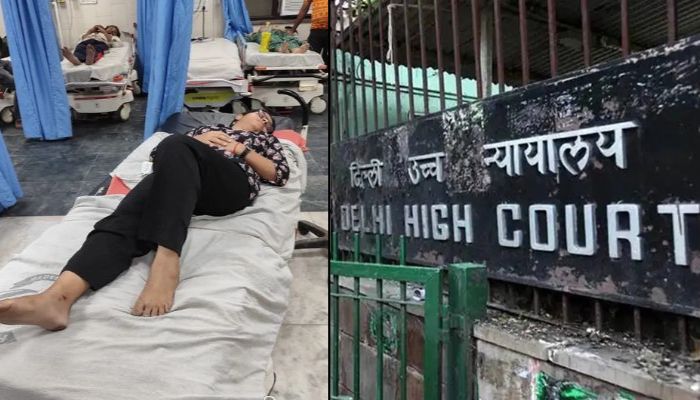
On Thursday (16th July), the Delhi High Court granted bail to one Abid Ali and Furkan, who were involved in attacking journalists during their coverage of an anti-encroachment drive in Seemapuri last year.
For the unversed, reporter Supriya Pathak and her cameraman, Shyam, were brutally attacked by a mob of Islamic extremists on 4th July 2025. The incident occurred when the duo were reporting on illegal encroachments and slum settlements built on government land near a mosque in Bengali Market, Delhi. The area fell under the jurisdiction of the Seemapuri police station.
According to the victims, a mob of burqa-clad women and underage boys not only beat them up mercilessly, but also looted their equipment, cash and personal belongings. While speaking to OpIndia, the victims said that they were assaulted separately. They were chased by a Muslim mob, which resorted to pelting stones and whipping belts.
दिल्ली सीमापुरी इलाके की बंगाली बस्ती में All India News की रिपोर्टर सुप्रीया पाठक कैमरामैन श्याम के साथ अवैध झुग्गी वाले मुद्दे पर कवरेज के लिए गईं थीं। सड़क के बीच बनी मस्जिद के पास कैमरा देखते ही जिहादियों की भीड़ ने दोनों पर हमला बोल दिया। भीड़ ने लिंचिग करने की कोशिश की।… pic.twitter.com/kDmqR5HWec
The matter came up for hearing before a Single-Judge Bench of Justice Girish Kathpalia. During the hearing, the accused Abid Ali claimed that he never entered the bus, where the two journalists took refuge to escape the brutal assault by the marauding mob. In his defence, he alleged that his mother prevented him from boarding the bus.
Interestingly, the counsel of Abid Ali tried to de-legitimise the assault on the journalists by claiming that the victims were not from a ‘formal media house’ but ‘only freelancing for a YouTube channel.’ On the other hand, the accused Furkan has claimed that he was not present in the area at the time of the attack. His counsel had suggested that the victims suffered only ‘minor abrasions.’
The Delhi High Court noted that 4 other accused in the case have already been granted bail. Only Furkan and Abid Ali have been behind bars since 5th July 2025.
With the Investigating Officer/SI Virender Kumar absent from the court proceedings and certain ‘discrepancies’ existing in the chargesheet (colour of shirt worn by Furkan), Justice Girish Kathpalia granted bail to him and Abid Ali with a paltry bond of ₹10,000. The court ruled, “The accused/applicants cannot be kept in jail endlessly.“
During the court proceedings, the Assistant Public Prosecutor (APP) had submitted that Abid Ali and Furkan do not deserve bail as they had assaulted press reporters when they were trying to flee from the mob.
Justice Girish Kathpalia decided to double down on determining who qualifies to be a ‘journalist’ in a case about assault on 2 reporters by a violent mob.
“Despite sensitivity of the issue, the complainant apparently opted not to take the local police into confidence before starting their venture, though that cannot at all justify attack on them by the agitated locals. But the larger issue, as raised by prosecution side, being that the assault on the complainant was assault on freedom of press, I have deliberated upon this aspect,” he noted.
The Delhi High Court Judge then proceeded to dedicate 3 pages of his judgment to mouth platitudes on the state of Indian media. Justice Girish Kathpalia stated,
“…A significant section of the media has become largely unregulated and unorganized. Today, virtually anyone armed with a mobile phone and a microphone can proclaim themselves to be a “reporter”…”
He then went on to question ‘self-styled reporters’ who supposedly thrust microphones at citizens and, in the absence of an answer, declare that the ‘individual is evading questions’. Justice Girish Kathpalia claimed that it leads to the creation of ‘misleading public narrative’ and ‘unwarranted public pressure’.
The Delhi High Court further stated, “Equally disturbing is the tendency of some media actors to target or malign a particular social group through selective reporting, sensationalism or unverified allegations.” He claimed that such reporting could deepen social divisions, trigger communal disharmony and public disorder.
It is important to remember that the case under discussion concerns illegal encroachment in Seemapur, which was reported by Supriya Pathak and her cameraman, Shyam. Besides being assaulted for engaging in citizen journalism, these victims are now being virtue-signalled about ‘journalistic ethics’ by the same court that granted bail to the accused involved in violence against them.
The patronising, preachy attitude could have been reserved for another judgment. This reeks of borderline victim-blaming. To make matters worse, the court chose this case to suggest the creation of a regulatory framework for journalists.
“The time has come for the legislature to consider an appropriate regulatory framework that preserves freedom of press, while ensuring professional accountability, ethical standards, and respect for the rule of law, the rights of citizens and the larger public interest,” Justice Girish Kathpalia stated.
All accused in the case are now out on bail, the victims got assaulted, and now, a year later, their journalistic credentials are being downgraded as mere ‘freelancers working for a YouTube channel.’
A leaf from the Nupur Sharma case
This is not the first time that the Judiciary has resorted to targeting the victim instead of putting the onus of violence on the actual perpetrators.
In July 2022, the Supreme Court (SC) came down hard on former BJP spokesperson Nupur Sharma, saying that she was responsible for the brutal Udaipur killings with her comments on Prophet Muhammad and said she should “apologise to the whole country”.
A bench headed by Justices Surya Kant and J.B Pardiwala observed, “The way she has ignited emotions across the country. This lady is single-handedly responsible for what is happening in the country.”
By blaming Nupur Sharma, the apex court of the country had conveniently ignored the hatred and violence unleashed by Islamists and has instead targeted the woman who had stated merely what is written in Islamic hadiths, and affirmed by Islamic scholars all over the world.
At that time, the Supreme Court of the so-called secular, democratic country, which is supposed to be the conscience of the nation, had shockingly chosen to behave like a Church figure in a medieval witch trial. The recent Delhi High Court judgment is no different from this matter.
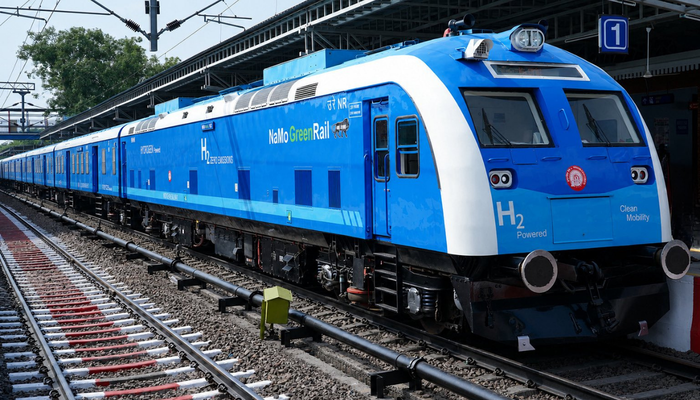
Marking a major step towards clean mobility in the railway sector, Prime Minister Modi will inaugurate India’s first hydrogen-powered train in Haryana today. The indigenously developed 10-coach trainset will run along an 89-km stretch between Jind and Sonipat, marking a significant leap towards sustainable train travel in the country.
The train will connect Jind Junction, Gohana Junction and Sonipat while serving intermediate stations. The proposed halts of the train include Jind City, Pandu Pindara Junction, Lalit Khera Halt, Bhambhewa, Isapur Kheri Halt, Butane Halt, Khandrai Halt, Rabrah Halt, Lath Halt, Mohana, Barwasni Halt and Sonipat New. The rail project serves the dual purpose of promoting clean energy and enhancing regional connectivity.
— Ministry of Railways (@RailMinIndia) July 17, 2026
The project places India among a select group of nations
The rail project uses hydrogen fuel cell technology, which has emerged globally as a sustainable alternative to fossil-fuel-based traction systems. With the project, India has joined the league of countries, including Germany, Japan, China and the United States, which have been exploring hydrogen-powered rail transportation.
Since Hydrogen fuel cell technology is currently in its nascent stage, the project, which was developed as a pilot initiative, will provide valuable operational experience and support future applications of hydrogen-powered mobility in the railway sector.
#WATCH | Jind, Haryana | The first hydrogen-powered train between Jind and Sonipat tomorrow reached the Jind Railway Junction. Prime Minister Narendra Modi will flag off the train later today. (16.07) pic.twitter.com/qv8OIiI9Cv
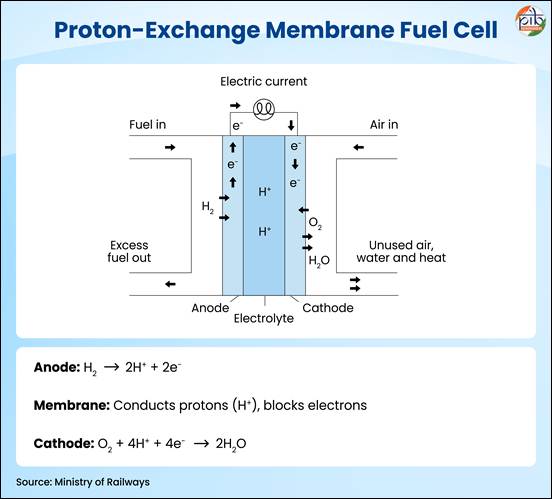
While conventional electric trains that draw power from overhead wires or diesel locomotives that burn fuel, this hydrogen-powered trainset generates its own electricity onboard through Proton Exchange Membrane (PEM) fuel cells.
The Hydrogen Fuel Cell Technology used in the rail project is a clean and sustainable method of generating power. The technology produces electricity through a chemical reaction using hydrogen. The main component of the system is a Proton Exchange Membrane Fuel Cell (PEMFC), which is the primary source of energy. The fuel cell generates energy by reacting hydrogen and oxygen across a proton-conducting Perfluorosulfonic Acid (PFSA) polymer membrane. The membrane allows only hydrogen ions (protons) to pass through while blocking electrons. The electrons are forced to travel through an external circuit, creating an electric current. This electricity is then used to run the train’s electric motors.
The train is equipped with two Hydrogen Driving Power Cars (DPCs) and eight Trailer Coaches (TCs). In every DPC, there are fuel cells, lithium iron phosphate (LFP) batteries and hydrogen storage cylinders and produces 1,200 kW (around 1,600 hp) of power. Together, the two power cars provide sufficient propulsion for the full train set.
Only water vapour and heat are produced as byproducts in the process. No harmful emissions take place during the process, as no fuel is burned. This makes hydrogen the cleanest propulsion technology currently available for rail transport. Hydrogen is a high-energy fuel (120 MJ/Kg (megajoules per kilogram)) compared to diesel (43 MJ/Kg). It is low maintenance with a manageable carbon footprint.
An integrated rail project for reliable and safe travel
The project will be supported by the country’s largest railway hydrogen storage and refuelling facility been established at Jind, Haryana. The facility stores nearly 3,000 kg of hydrogen at a time. The Petroleum and Explosives Safety Organisation (PESO) has granted the required licence, which covers the storage and dispensing of compressed hydrogen gas at the site.
The entire hydrogen ecosystem has been designed in accordance with internationally accepted standards, including the NFPA-2 (National Fire Protection Association) and ISO (International Organisation for Standardisation) 19880 Series. It has undergone an independent third-party safety assessment by TÜV SÜD, Germany, one of the world’s leading technical inspection and certification agencies.
The project has been developed as per the design and technical features approved by the Research, Design & Standards Organisation (RDSO). It combines advanced propulsion technology with dedicated hydrogen storage, refuelling and operational infrastructure. It emits only water vapour, requires no overhead electrification, and reduces noise and fossil fuel dependence.
For ensuring reliable and safe rail operations, the facility has an integrated infrastructure. It has been equipped with a hydrogen compression system for refuelling operations, technical support and critical spares for reliable functioning and a standby compressor to ensure uninterrupted refuelling.
As hydrogen is highly inflammable and cannot be seen or smelled, great emphasis has been given in the rail project on detecting even the smallest leak instantly. A multi-layered “defence-in-depth” approach has been adopted in the project by installing continuous detection systems to monitor for hydrogen leaks, heat, flames and smoke on the train and at the plant.
The project aligns with the National Green Hydrogen Mission
The train project aligns with the National Green Hydrogen Mission and Indian Railways’ broader journey towards net-zero carbon emissions. After achieving more than 99 per cent electrification of broad-gauge routes and sharply reducing diesel dependence, the introduction of hydrogen propulsion represents the next logical step in clean mobility.
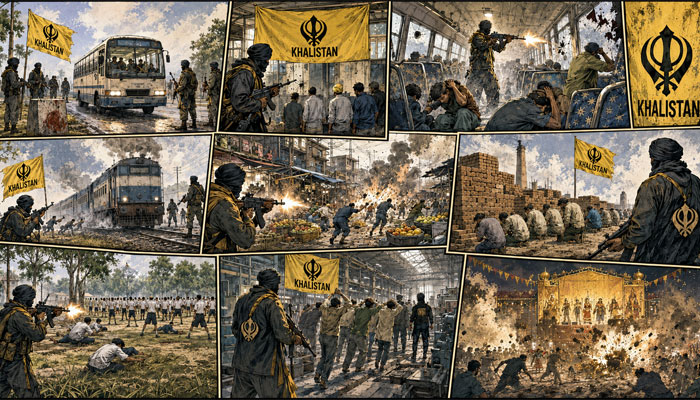
The Punjab insurgency is often remembered through political assassinations, Operation Blue Star and the counterterrorism campaign that followed. But another part of that history lies in attacks on ordinary Hindu civilians. Khalistani terrorists repeatedly targeted buses, trains, markets, workplaces and public gatherings, sometimes separating passengers by religious identity before killing them. The pattern had emerged even before Operation Blue Star and continued through the bloodiest years of the insurgency.
One of the earliest notorious incidents took place near Dhilwan in October 1983, when six Hindu passengers were taken off a bus and shot after their religion was identified. Another four Hindu passengers were killed in Kapurthala the following month. In February 1984, months before the Army entered the Golden Temple complex, multiple attacks on buses and trains left 11 Hindus dead in a single day. In May, terrorists hijacked a bus near Moga and killed four Hindu passengers. These incidents show that the communal targeting of civilians had already become part of the insurgency before June 1984.
The attacks became increasingly brutal. Near Muktsar in July 1986, terrorists reportedly ordered women, children and identifiable Sikh passengers to leave a bus before firing on those who remained. At least 14 of those killed were believed to be Hindus. Four months later, near Khuda in Hoshiarpur district, Hindu passengers were ordered off another bus and shot as they descended. Twenty-four people were killed. Contemporary reports linked such killings to an attempt to divide Hindus and Sikhs and frighten Hindus into leaving Punjab.
The Lalru massacre of 6th July 1987 became one of the most horrifying examples of this strategy. Armed men stopped a Haryana Roadways bus travelling from Chandigarh towards Rishikesh, drove it away from the highway, looted passengers and opened fire from both ends. Thirty-eight people, including five women and four children, were killed. The next day, two buses were attacked near Fatehabad in Haryana, killing 34 Hindu passengers. By 1991, trains too had become killing grounds. At least 80 people were killed in attacks on two passenger trains in Ludhiana district in June, while more than 50 passengers who reportedly appeared to be Hindu were shot on a train near Sohian in December.
Public transport was not the only target. Around 20 labourers were killed at Mallian near Jalandhar in March 1986. In June 1989, terrorists opened fire on an RSS morning gathering at Nehru Park in Moga, killing at least 24 people, with later counts putting the toll higher. In March 1990, gunmen opened fire in a crowded Abohar market and killed 22 Hindus. The violence also travelled beyond Punjab. More than 40 people were reported killed in bomb explosions during Ram Lila celebrations in Rudrapur in October 1991, while 16 Hindu factory workers were reportedly killed at Harkishanpura in March 1992.
The victims were pilgrims, labourers, commuters, shopkeepers, factory workers, women and children. In several attacks, visible religious markers such as turbans and beards became the difference between being allowed to leave and being killed. The objective, as contemporary officials and reports repeatedly suggested, was larger than the immediate death toll: create fear among Hindus in Punjab, provoke retaliatory violence against Sikhs elsewhere and break the everyday coexistence between the two communities.
The strategy belonged to Khalistani terrorist organisations, not the Sikh community. Sikh politicians, policemen, civilians and opponents of separatism were themselves murdered by terrorists. Harchand Singh Longowal, who signed the Rajiv-Longowal Accord in 1985, was assassinated within weeks. Remembering the massacres of Hindus, therefore, does not mean blaming Sikhs. It means acknowledging a documented part of the insurgency in which ordinary civilians were deliberately selected for death because of their religious identity.
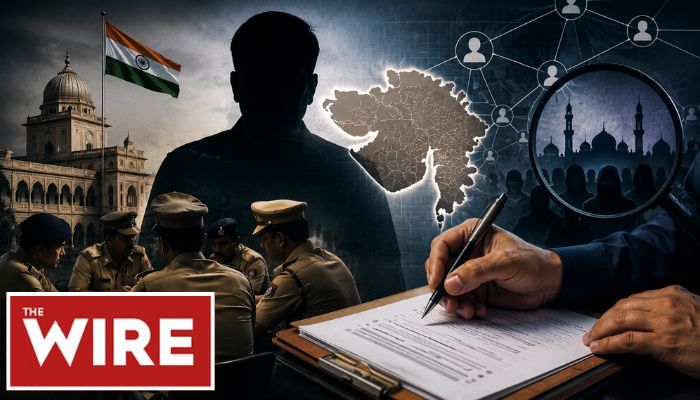
The Gujarat government has formally moved ahead with the operationalisation of its Anti-Radicalisation Cell (ARC), with the Gujarat State Police Service (SPS) circulating a detailed Standard Operating Procedure (SOP) to district and commissionerate offices across the state. On Tuesday, 14th July, the communication, issued by the State Intelligence Bureau from Gandhinagar and signed by D.C.I. (C) Praful Vaniya with the approval of the competent authority, was forwarded to police units across Gujarat for implementation.
OpIndia has learned that the circular sent to district Superintendents of Police and senior range officers stated that the newly established ARC would begin functioning in coordination with local police units, prison authorities, Special Operations Groups (SOG), and State Intelligence Bureau officers. Along with the SOP, the state government also circulated monthly reporting formats that district units would be required to submit to the Intelligence Headquarters by the fifth day of every month.
The move comes months after the Gujarat Home Department approved the creation of more than a hundred new posts for the ARC structure across district and commissionerate offices as part of the 2026-27 service year.
Gujarat government creates a dedicated anti-radicalisation framework
According to the official communication, the Gujarat Home Department approved the creation of 136 new posts across various cadres for establishing the Anti-Radicalisation Cell network throughout the state. Recruitment and deployment for these positions are currently underway.
The ARC has been tasked with preventing the spread of extremist ideologies, identifying individuals vulnerable to radicalisation, carrying out counselling and de-radicalisation interventions, facilitating rehabilitation, and ensuring that individuals do not relapse into extremist networks.
The SOP defines a “radicalised person” as an individual who, driven by extremist ideologies, engages in anti-national activities, attempts to damage the unity and integrity of the country, spreads fear among citizens, or seeks to influence others into accepting extremist beliefs. The document also refers to individuals who attempt to promote hostility towards members of other faiths or propagate the idea that only their religion is correct while others are wrong.
Officials say the framework is intended to provide district police officers with a structured mechanism to detect early warning signs and intervene before individuals become involved in criminal or terrorist activities.
Five-stage model: Prevention, Detection, Intervention, Rehabilitation and Monitoring
As per sources, the SOP lays out a five-stage model for dealing with radicalisation.
The first stage, termed “Prevention”, focuses on monitoring online spaces and preventing the spread of extremist propaganda. Police units have been instructed to monitor social media platforms, online forums, messaging applications and suspicious networks where extremist content may be circulated.
The document specifically calls for monitoring extremist preachers, communal organisations, radicalised prisoners and individuals linked to extremist ideologies. It also mentions maintaining vigilance on influencers associated with Salafi and Wahhabi schools of thought that investigators believe may be exploited by radical networks for recruitment purposes.
District units have additionally been directed to develop intelligence sources in vulnerable areas and maintain close contact with local communities to identify potential threats at an early stage.
The second stage, “Detection”, lays down behavioural, financial and digital indicators that officers should take into account while identifying possible cases of radicalisation.
Among the behavioural indicators mentioned in the SOP are sudden Suddenly growing a beard, wearing a niqab, frequent use of Arabic words, reducing contact with friends and family, expressing intense protest against global events affecting the Muslim community, glorifying terrorists, or exhibiting altered behaviour following foreign travel to conflict-prone regions.
The document also lists certain suspicious activities that may warrant closer scrutiny in conjunction with other intelligence inputs, including procurement of explosive precursors such as ammonium nitrate or potassium nitrate, unexplained visits to isolated locations, frequent communication with individuals located in conflict zones or terror-affected regions, and unusual cash withdrawals.
On the digital front, the SOP asks officers to monitor the use of encrypted communication platforms, participation in extremist online groups, dissemination of extremist propaganda material, and unexplained use of cryptocurrencies by individuals lacking any visible source of income.
The ARC has also been directed to maintain records of radical elements, open dossiers on identified individuals, update those dossiers on a monthly basis and preserve records of criminal cases registered against such persons.
Focus on counselling and reintegration
Unlike purely punitive counter-terror approaches, the Gujarat ARC SOP devotes considerable space to counselling and rehabilitation.
Under the “Intervention” phase, district authorities have been directed to identify influential community leaders, religious scholars, psychologists, educators, social media influencers and non-governmental organisations who could assist in de-radicalisation efforts.
The SOP recommends counselling sessions involving family members, religious experts, psychiatrists and trained departmental personnel. It also specifically mandates that the identity of individuals undergoing counselling be kept confidential.
Authorities have further been instructed to facilitate the return of such individuals to education or employment opportunities and maintain regular contact with them following intervention.
However, the document clarifies that if an individual proceeds to commit or prepare for a cognisable offence despite counselling and intervention efforts, legal action must be initiated under relevant provisions of the Bharatiya Nyaya Sanhita (BNS) and the Unlawful Activities (Prevention) Act (UAPA).
The fourth phase of the framework focuses on rehabilitation and reintegration through seminars, community policing programmes, sports competitions, skill development initiatives and job fairs.
The final stage involves long-term monitoring of individuals who have undergone de-radicalisation programmes to prevent re-radicalisation. Monthly activity reports are to be maintained initially, with periodic monitoring continuing thereafter.
Monthly reporting system introduced
The SOP has also introduced a detailed reporting structure for district ARC units.
Police authorities will now have to provide monthly data on counselling sessions conducted, the number of individuals undergoing de-radicalisation programmes, new dossiers opened during the month, criminal cases registered against radical elements, seminars and awareness programmes organised, and lecture sessions held in educational or religious institutions.
District units have also been directed to report social media interventions carried out to counter extremist narratives, as well as details of objectionable content identified online and the action taken against such activity.
The Wire raises objections, alleging targeting of Muslims
Soon after details of the SOP surfaced on social media, leftist rag The Wire published a report sharply criticising the guidelines and alleging that the framework disproportionately focuses on Islamist radicalisation while remaining silent on other forms of extremism. The article titled, “For Gujarat Police, Beard, Niqab Make ‘Radicalisation’ Checklist, Cow Vigilantism Doesn’t”
The publication argued that several indicators mentioned in the document, including keeping a beard, wearing a niqab, using Arabic words frequently or undertaking religious practices such as Itikaf, could lead to ordinary Muslims being viewed with suspicion.
Quoting Surat resident Firuz Khan, The Wire wrote: “Should we shave our beards, start punishing ourselves for being born Muslim?”
The publication further argued that the SOP conflates religious identity with security concerns and questioned why the document specifically refers to travel to Afghanistan or the Middle East, the use of encrypted messaging applications such as Signal and Element, and interaction with certain religious institutions or scholars.
The report also criticised the inclusion of instructions requiring police officers to maintain records of madrasa teachers and ascertain whether they have links with extremist organisations.
According to The Wire, the SOP appears “designed to penalise common Muslims” and does not contain similar indicators relating to what it described as “Hindu radicalism” or cow vigilante violence witnessed in different parts of the country over the years.
The publication additionally reported that Gujarat-based journalist Sahal Qureshi claimed he had been warned by police officials after his social media posts about the SOP gained traction online. According to the report, he alleged that he was asked to remove the posts because they could potentially disturb communal harmony in the state.
ARC traces its origins to earlier de-radicalisation discussions
Although the Gujarat ARC formally took shape only recently, the idea itself is not new.
The concept of dedicated de-radicalisation mechanisms gained prominence nationally during a conference of Directors General and Inspectors General of Police held in Gujarat’s Rann of Kutch in 2015, where Telangana Police’s de-radicalisation model was discussed as a possible template for other states.
The issue reportedly came up again during subsequent conferences of senior police officers attended by Prime Minister Narendra Modi and Union Home Minister Amit Shah.
The BJP later included the establishment of an Anti-Radicalisation Cell in its Gujarat Assembly election manifesto and initiated groundwork for its implementation. A task force involving police officials, anti-terror experts and academics was reportedly constituted to study the issue and prepare an institutional framework.
After administrative approvals and budgetary allocations were secured earlier this year, the ARC structure was finally operationalised, culminating in the circulation of the SOP to district units.
Conclusion
With the issuance of the SOP and the creation of dedicated personnel positions, Gujarat has become one of the few states to establish a formal, state-wide anti-radicalisation framework that combines intelligence gathering, counselling, rehabilitation and long-term monitoring under a single mechanism.
While the leftist propaganda outlet alleged that the indicators listed in the SOP disproportionately affect Muslims, the document itself does not identify any particular community as inherently radical or subject to special scrutiny. Instead, the ARC framework is aimed at individuals who engage in or promote extremist ideologies, anti-national activities, religious supremacism, violent mobilisation or attempts to radicalise others, irrespective of their identity.
Many of the behavioural and digital indicators mentioned in the SOP, including glorification of terrorists, association with extremist organisations, participation in online propaganda networks, use of encrypted communication channels by extremist groups, foreign links with conflict regions, and sudden behavioural changes accompanying radicalisation, have featured in several terror investigations and de-radicalisation cases handled by security agencies in India and abroad over the years.
The Gujarat Police SOP seeks to incorporate such patterns into an early-warning framework rather than wait for individuals to graduate from extremist sympathies to criminal action.
The criticism that the document does not mention cow vigilantism or so-called “Hindu radicalism” also overlooks the fact that the ARC SOP operates within a specific definition of radicalisation laid down in the document itself.
The framework is designed around identifying organised ideological radicalisation, extremist recruitment, and pathways that may culminate in terrorism or anti-national activities. Offences arising out of vigilantism, mob violence or communal clashes continue to fall under existing criminal laws and policing mechanisms unless they meet the criteria laid down under the ARC definition.
That question has dominated public discourse ever since Bihar-based YouTuber Manish Kashyap alleged that his Toyota Innova Hycross developed engine problems despite being fully compatible with E20 petrol. Toyota Kirloskar Motor (TKM) dismissed the allegation that E20 damaged the vehicle and instead attributed the issue to contaminated fuel.
Now, fresh statements by petrol pump owners and a recent consumer court order in Raipur have brought renewed attention to the issue. Additionally, the explanation offered by petrol pump owners suggests that the contamination blamed by automakers may, in some cases, originate at the petrol pump itself, not because ethanol is inherently harmful, but because the infrastructure used to store and dispense E20 may not be fully equipped to handle it.
Petrol pump owners explain how E20 can become contaminated
A report published by The Hindu, quoting three petrol pump owners who spoke on condition of anonymity, sheds light on a possible source of contamination.
According to them, ethanol’s hygroscopic nature; its tendency to absorb moisture from the atmosphere—poses challenges because many underground fuel storage tanks were originally designed for conventional petrol rather than higher ethanol blends.
The dealers explained that underground storage tanks frequently accumulate small quantities of water due to rainwater ingress, condensation or even moisture introduced through fuel tankers. Under normal circumstances, this may not pose a significant issue. However, if water content exceeds around 0.5 per cent, ethanol readily binds with the water.
This results in phase separation, where the ethanol-water mixture settles at the bottom of the underground tank while petrol forms a separate layer above.
Since dispensing units draw fuel from the bottom of these tanks, some vehicles may end up receiving the water-rich ethanol layer instead of properly blended E20 petrol.
According to the petrol pump operators, such contamination can cause vehicles to refuse to start or break down after travelling some distance.
They further claimed that the problem becomes more severe during the monsoon and in coastal regions where underground water ingress is more common if storage tank seals are compromised.
One of the dealers also warned that underground tanks and pipelines made from mild steel could become more vulnerable to corrosion because ethanol absorbs moisture, potentially worsening contamination over time.
Is this an indirect admission that pump-level contamination exists?
The significance of these admissions extends beyond explaining ethanol’s chemistry.
India has been rolling out E20 petrol since 2023, while pilot projects involving higher ethanol blends had begun even earlier. Vehicle manufacturers have also gradually transitioned towards producing E20-compatible models following the Centre’s mandate that all newly manufactured petrol vehicles from April 2023 onwards must support E20 fuel.
Yet, more than three years after E20 entered widespread circulation, petrol pump owners themselves admit that much of the storage infrastructure continues to consist of underground tanks originally built for conventional petrol.
Ironically, while some dealers have cited ethanol’s moisture-absorbing properties to explain contamination, the explanation simultaneously points towards another reality, that contamination may actually be occurring at the retail outlet because infrastructure has not been comprehensively upgraded.
In other words, the problem, if these claims are correct, lies less with ethanol blending itself and more with the ability of existing fuel storage systems to safely handle higher ethanol blends. Or perhaps it is an attempt by petrol pump owners to shift the blame of pump-level contamination onto ethanol-blending instead of upgrading their infrastructure to ensure fuel sold to car users isn’t adulterated.
Dealers say awareness was discouraged
The anonymous petrol pump owners also claimed that oil marketing companies discouraged dealers from displaying boards informing customers that E20 petrol was being dispensed under government policy.
According to them, motorists should be made aware of precautions such as preventing water ingress into vehicle fuel tanks during heavy rain or while washing vehicles. However, they alleged that OMCs preferred not to highlight the presence of E20 at retail outlets.
Dealers further stated that they are instructed to inspect underground tanks multiple times every day using dipsticks coated with water-finding paste. During the monsoon, the frequency reportedly increases to once every two hours. Whenever contamination is detected, oil marketing companies are informed, following which personnel drain the water-rich layer from the tanks.
However, dealers complained that they bear the financial losses arising from contaminated stock, with some claiming to have discarded hundreds or even thousands of litres of fuel.
Indian Oil maintains zero-tolerance towards contamination
Indian Oil Corporation has rejected any suggestion that fuel contamination is being ignored.
The public sector oil major said it follows a zero-tolerance policy towards contamination and carries out regular inspections, surprise checks and scientific quality testing across retail outlets. It added that thousands of surprise inspections and quality tests are routinely conducted and strict action is initiated whenever contamination or adulteration is established.
Raipur consumer court order revives debate
The issue of contaminated fuel has also figured prominently in a recent consumer dispute decided by the District Consumer Disputes Redressal Commission in Raipur.
The commission directed Maruti Suzuki India to replace a customer’s Grand Vitara Strong Hybrid with a new E20-compatible vehicle after repeated breakdowns.
Dr Premraj Debta had purchased the SUV in June 2024. However, the vehicle had been manufactured in January 2023, months before the government’s April 2023 mandate requiring all newly manufactured petrol vehicles to be E20 compliant. In other words, although the customer bought the vehicle nearly 16–17 months after the nationwide transition towards E20-compatible manufacturing had begun, he was sold a vehicle produced before the mandate came into force.
Within months of purchase, the SUV reportedly began developing repeated stalling problems. According to the complaint, the authorised service centre cleaned the fuel tank several times after detecting contamination.
The complainant also submitted a laboratory report from a government-recognised facility stating that the fuel sample contained a white, curd-like substance identified as ethanol.
During the proceedings, however, the authorised Maruti dealership argued that the breakdowns were caused by poor-quality contaminated fuel, an external factor beyond the manufacturer’s warranty obligations. It denied the existence of any manufacturing defect.
The consumer commission eventually ruled that if the vehicle was not compatible with E20 petrol, the buyer should have been informed before purchase. Holding that failure to disclose this fact amounted to deficiency in service, it directed Maruti Suzuki to replace the vehicle within 45 days. Failing that, the company has been ordered to refund approximately Rs 20.5 lakh, besides paying Rs 1 lakh as compensation and Rs 10,000 towards litigation expenses.
Importantly, the commission did not conclude that E20 petrol itself damages vehicles. Rather, contaminated fuel once again featured prominently in the dispute.
Toyota had earlier reached a similar conclusion
The Raipur case closely mirrors Toyota’s response to the controversy surrounding YouTuber Manish Kashyap’s Innova Hycross.
After Kashyap uploaded videos alleging that his E20-compatible SUV had suffered severe engine problems due to ethanol-blended petrol, Toyota conducted a detailed technical inspection.
The company stated that the Innova Hycross was specifically designed, tested and certified for E20 fuel and that no component of the vehicle or its fuel system had suffered any damage because of ethanol blending.
Instead, Toyota concluded that the SUV had been affected by non-standard contaminated fuel. According to the company, the fuel tank and fuel lines were drained and cleaned before the vehicle was refilled with standard E20 petrol. Following this procedure, the vehicle was found to be functioning normally.
Toyota also advised customers to refuel only at authorised and reputed fuel stations to minimise the risk of contamination or adulteration.
A common thread emerging?
Taken together, the statements of petrol pump owners, the Raipur consumer dispute and Toyota’s technical findings all point towards one recurring issue, fuel contamination, not necessarily ethanol blending itself.
The petrol pump owners’ explanation offers a possible mechanism through which contamination may occur if underground storage infrastructure has not been adequately upgraded for E20 fuel. The Maruti dealership similarly attributed repeated breakdowns to contaminated fuel, while Toyota reached the same conclusion after inspecting Manish Kashyap’s Innova Hycross.
Whether these instances represent isolated operational failures or indicate a wider infrastructure challenge remains to be conclusively established. However, the focus of the debate increasingly appears to be shifting from whether E20 damages vehicles to whether India’s fuel storage and dispensing infrastructure has evolved quickly enough to prevent contamination and support the country’s ethanol-blending programme.
India is aggressively tackling its rare-earth magnet dependency with two major solutions: homegrown technology and government-backed manufacturing. Now, its electric vehicle (EV) sector might soon have an answer to this glaring supply chain concern. India has greatly accelerated its efforts to shift towards electric mobility, but the industry encounters pressing challenges due to its dependence on rare-earth minerals which are predominantly produced and exported by China.
However, a startup based in Bengaluru has stepped in to offer a viable solution to this problem. Vimag Labs has created a groundbreaking software-defined electric motor that replaces the conventional permanent magnets which are critical components and rely on rare earth minerals with copper coils, steel and software-controlled electromagnets.
Image via volektra.com
Manish Kumar Seth, an automative engineer, who is the CEO launched the company in last September with the goal of reducing the consumption of rare earth materials by the EV sector through the crucial substitution. Dr. Piyush Desai who is also a veteran in this field, is the other co-founder.
How Vimag’s “Virtual magnet” works
The $5 million enterprise has successfully patented the “Virtual Magnet” technology in a pivotal move aimed at resolving an issue that could greatly benefit India and potentially affect the global market, thereby delivering a massive blow to China’s monopoly on rare earth minerals. It is called “A Robust Rotating Transformer Excited Synchronous Motor and Its Control” which describes its fundamental architecture.
The fuel tank and the engine are the two most prominent parts of any vehicle with an internal combustion engine. These are swapped out for a battery and a motor in a modern EV. The motor and its control inverter are the actual point of interaction. It directly impacts efficiency, torque, acceleration and the maximum range an automobile can attain from its battery.
A Permanent Magnet Synchronous Motor (PMSM), which employs fixed rare-earth magnets integrated in the rotor to generate torque, powers nearly all EVs on the road. However, Vimag’s Virtual Magnet Synchronous Motor (VMSM) completely removes the need for these magnets as it creates and regulates the rotor’s magnetic field in real time with power electronics and proprietary control algorithms all while maintaining a brushless, slip-ring free design.
The motor wirelessly transfers power inside the motor assembly rather than via brushes or slip rings. Its programming constantly modulates copper coils, resulting in highly tuned electromagnets that mimic the actions of permanent magnets. According to the corporation, this strategy can boost vehicle economy while lowering battery demand.
Software controls the motor’s characteristics and performance updates can be transmitted over the air. On the other hand, the properties of permanent magnets diminish over time owing to heat and ageing. The firm declared that the platform meets or exceeds permanent-magnet performance without utilising them.
Additionally, the motor offers a little longer driving range than conventional PMSMs due to the real-time adjustment of the magnetic field and saving automakers money on costly battery cells. Seth mentioned, “This patent is the outcome of over 87,600 engineering hours.” Vimag currently has 5 granted patents as 10 more patents along with 15 trademarks are pending. Accel, Chakra Growth Fund and Thinkuvate have invested in the startup.
It has reported to be conducting pilots with two-wheeler and passenger vehicle makers and also inked a manufacturing memorandum of understanding with Jendamark to enable expansion with a focus on industrial systems ranging from 200 kW (Kilowatt) to 600 kW along with robotics, defence as well as cooling applications.
“We actually have physical products undergoing testing and getting ready for deployment. We invented what we call the Virtual Magnet. Using proprietary technology, wireless power transfer and sophisticated software algorithms, we generate electric fields inside the motor that behave like a permanent magnet. This allows us to build motors using only copper and steel, completely eliminating the need for rare-earth materials,” Seth conveyed while talking to NDTV.
He further mentioned, “Many alternative technologies rely on physical brushes, slip rings or bulky wireless systems. Our architecture is fully integrated into the motor itself, making it compact and robust.”
“Our internal tests and customer trials are actually showing that our motors perform better than traditional permanent magnet motors,” he highlighted, remarking that these will not strain the wallets of the buyers but will be “competitively priced with permanent magnet motors.”
The inception of the revolutionary idea
The Covid-19 pandemic had left the world in a vulnerable state with the global economy near-total shutdown and Seth was also confronted with a considerable professional crisis. A shipment of magnets, which were essential for the prototype motors his company was constructing got stuck in a Shanghai port that was under lockdown in 2020. It remained there for three agonising months.
Hence, Seth made the decision to handle things himself. “I had gone through that pain. At that point in time, I decided that we need to do something about it. And that’s how the idea of the total magnet-free, rare-earth-free motor started,” he disclosed in a conversation with India Today.
AC (Alternating Current) induction motors or switched reluctance motors can be used but they are heavy and ineffective solutions. Ferrite magnets also lead to lower performance. Seth underscored, “You cannot substitute gold with aluminum. You have to give something as worth of gold. Other magnet-free tech makes motors big. You cannot generate as much torque or power, and then you consume more batteries, so your range goes down. Global automotive and aerospace industries are not going to compromise on performance.”
“We remove permanent magnets, replace them with copper coils, and then through software, we generate magnetic fields inside the motor. The trick is how to convert the copper inside the motor into magnets, and that we do through software and electronics,” he expressed.
Seth pointed out, “If you’re driving a traditional EV, and the physical magnets get demagnetised due to heat or age, you are stuck. You cannot do anything. But if it’s software-defined, you can actively tune the magnetic field on the fly. You can keep improving the performance of the motor through over-the-air (OTA) software developments without ever changing the physical hardware.”
China’s chokehold on rare earth magnets
The International Energy Agency (IEA) informed that China controls about 90% of the world’s rare earth minerals and 94% of the magnets (specifically, Neodymium-Iron-Boron, or NdFeB magnets) used in powerful electric motors, giving it a complete dominance on the supply chain.
According to its report, the country produced 94% of the sintered permanent magnets used in EV motors and approximately 91% of the world’s rare-earth refining and separation. Its’s leverage comes from processing rather than from the ground because it only owns around one-third of the globe’s reserves.
These tiny yet potent parts are indispensable for modern life and are used in everything from cellphones, medical scanners and defence gear to wind turbines and electric vehicles. Beijing supplies 80-90% of New Delhi’s magnets and related materials. However, it has consistently misused this position as a tool in diplomatic confrontations, tightening export restrictions which made India, United States and other nations susceptible to supply shocks.
It placed similar limits on seven heavy rare-earth metals and associated magnets in April 2025. Afterwards, American and European automakers were compelled to reduce output while licenses were being processed. China slapped a “0.1%” de minimis rule that targeted any foreign-made product that contained its rare earth content in October that year. The imposition was later suspended but not entirely obliterated to ensure the East Asian country retained control.
Beijing’s export quotas are a key factor in the extreme volatility of their rates. In the past, prices have fluctuated between 30 and 80 per cent in just a few months and even touched 1 million Chinese Renminbi (RMB) a tonne before dropping. Thus, China has enjoyed a disproportionate amount of influence over international downstream industries.
The availability of rare earths for commercial EVs, drones and robotics is also swiftly reducing owing to the explosive growth of artificial intelligence, which demands enormous amounts of these elements for data center infrastructure and defence hardware.
Furthermore, leaching, a procedure that involves dissolving raw ore in large amounts of acid to separate the heavy metals is necessary to refine rare earth elements. Thorium, a radioactive waste product that needs long-term and specialised containment is an essential outcome of this operation. This is the primary reason why the majority of nations outsource the production of magnets to China rather than deal with radioactive waste on their own soil. However, these unstable times have pushed them to sought resource sovereignty.
Indian technology to the rescue
India possesses enormous subsurface reserves of rare earth minerals, but it is quite expensive, tedious and difficult to refine them into forms that are usable and China has a long history of success in this field. However, Vimag’s motor is completely dependent on common power electronics, steel and standard copper, all of which can be produced wholly in India.
“As the electronics industry moves further, and as India invests heavily into chips through the India Semiconductor Mission, the cost of our motors is going to continuously go down. We are electronics-dependent rather than rare-earth-dependent. Supply of rare earths is going to decrease globally, but the supply of semiconductors is only going to increase,” Seth noted.
His firm is now concentrating on ecosystems for electric two-and three-wheelers. According to him, there is ongoing testing with one of the top five manufacturers of electric two-wheelers and comprehensive talks with another firm that holds the top two spots. They even partnered with an “iconic, premium Indian heritage brand that recently made its foray into EVs.”
Likewise, Vimag has teamed up with a powertrain supplier that has a staggering 40% market share in the commercial three-wheeler sector and is collaborating with one of the top two passenger vehicle producers in India to co-develop a next-generation EV platform. It is even collaborating with a European Tier 1 automotive supplier to include their magnet-free motor into high-end European and US electric cars.
Seth outlined, “The products are actually in the real world right now. People can buy them, but because we are limited by supply, we are ramping up carefully. We expect to ship between 1,000 and 10,000 motors from our factory by the end of this year.”
The platform provides OEMs (Original Equipment Manufacturers) with two benefits: reduced motor costs and protection from the supply-chain hazards associated with rare-earth magnets. It also endorses Modi government’s “Make in India” and “Atmanirbhar Bharat” objectives by facilitating domestic production.
Seth shared that the project “strengthens every dimension of our commercial roadmap-OEM partnerships, licensing, manufacturing scale-up, and future growth. Our long-term vision is to build scalable, software-driven, magnet-free motor systems for global electrification. This innovation strengthens India’s deep-tech base across electric mobility, power electronics, robotics, defence and clean-energy systems.”
India’s efforts to combat China’s supremacy in the rare-earths market
India intends to roughly triple the size of its rare earth magnet production incentive program of ₹7,280 crore as it wants to build up indigenous capacity in a market centred around China. The proposal was approved in November. It intends to generate 6,000 tonnes of permanent magnets annually within seven years and will provide capital and sales-linked incentives to certain entities. The mission is to satisfy surging domestic demand, which authorities predict will double over the next five years.
Dedicated corridors for the mining, processing, research and production of Rare Earth Permanent Magnets (REPMs) in Odisha, Kerala, Andhra Pradesh and Tamil Nadu were announced during the Union Budget 2026–2027. India is making a concerted effort to increase its raw material mining and processing operations.
It established the National Critical Mineral Mission (NCMM) in January 2025 for a 7-year period and committed to ensuring robust supply chains and stocks for the assignment. The ambition is far more than a traditional mining venture and outlines a long-term plan to improve India’s technological self-reliance, economic development and energy security.
India is also going to invest in the production of steel, nickel and rare earth permanent magnets in Indonesia to strengthen the supply channel. The announcement was made during Prime Minister Narendra Modi’s latest visit to the country.
Reliance, Vedanta and Adani have expressed interest in building facilities to process the substantial reserves of valuable rare-earth minerals found in Andhra Pradesh, reported Reuters. The three are among almost ten companies that have indicated interest in commencing these operations in the state which hopes to draw ₹500 billion in rare earth and titanium investments over the next ten years. Meanwhile, New Delhi is scaling up measures to foster local rare earth mining, processing and magnet manufacturing capabilities.
An organised campaign is clearly in motion to break China’s grip on rare earths, with both the Modi government and companies aligning their efforts. Vimag has also on the verge of a a monumental leap in this regard which could trigger an unprecedented change in the EV sector and provide an extraordinary boost to Indian technology and manufacturing prowess.