The BJP government in Assam has fulfilled yet another poll promise with the introduction of the Uniform Civil Code. The Assam Uniform Civil Code Bill 2026 has been introduced to replace all personal and religious laws in the state with a single “uniform” set of rules concerning marriage, succession or inheritance, and live-in relationships.
— Chief Minister Assam (@CMOfficeAssam) May 25, 2026
As per the state government, the proposed legislation is aimed at implementing the Constitution’s Directive Principle for a Uniform Civil Code and promoting equality and gender neutrality.
The introduction of the Uniform Civil Code 2026 Bill in the Assam Vidhan Sabha paves the way for an on record discussion on why #UCCAssam is the need of the hour and how it will help realise the path laid down by our founding fathers. https://t.co/vRurZ65qBA
— Himanta Biswa Sarma (@himantabiswa) May 25, 2026
The proposed Assam Uniform Civil Code applies to all residents of Assam, even those living outside the state. The UCC, however, will not apply to the members of the Scheduled Tribes.
“Nothing contained in this Code shall apply to the members of any Scheduled Tribes within the meaning of clause (25) of Article 366 read with Article 342 of the Constitution of India,” the Bill reads.
Polygamy banned, marriage registration compulsory, penalties and more: What changes the Assam UCC Bill 2026 proposes on marriages and divorce
In the section “Marriage and Divorce”, the bill lays down conditions for marriage, details ceremonies and includes the biggest reform in the form of compulsory marriage registration.
The Assam Uniform Civil Code 2026 states that a man must be above 21 and a woman 18 years old to be eligible for marriage. The law will strictly allow only monogamy, meaning that “neither party has a spouse living at the time of the marriage”.
Section 4, clause 3 reads, “neither is a party to a marriage which is not yet dissolved or annulled by a decree of divorce and either has right to appeal or the specified time for appeal has not expired or is in appeal, or the appeal has been presented but has not yet been dismissed.”
Notably, Assamese Muslims, Islamists across the country and their media and political allies alike have been strongly opposed to the idea of the state government imposing monogamy on Muslims who are, as per their religious text, allowed to have four wives simultaneously.
The bill also emphasises free and informed consent, stating that marriage under force, coercion, fraud, or deception will be deemed invalid and invite punishment.
Under Section 5, the Assam Uniform Civil Code 2026 covering “ceremonies”, states that people can follow any religious marriage ceremony or customary rites, including Saptapadi, Nikah, Holy Union, Vedic Bibah, Ahom Chaklong Bibah, Anand Karaj, etc, or get their marriage registered under the Special Marriage Act, Hindu Marriage Act, etc. Essentially, the Uniform Civil Code does not interfere with how the marriage is performed.
The biggest reform introduced by the Assam UCC Bill 2026 is compulsory registration of marriage.
As per the proposed legislation, all new marriages must be registered within 60 days, and within 90 days if solemnised outside Assam.
Marriages between 25th October 2024 and the commencement date must also be registered within 6 months.
The Assam UCC Bill 2026 further states that previously registered Muslim marriages under the 2024 Assam Act will automatically be deemed registered once the Code comes into force.
In addition, the Bill says that divorce or nullity decrees from any court in India must also be registered. For this, the applicants would be required to submit a signed memorandum, a specific fee to the Sub-Registrar, and a certificate will then be issued within 15 days.
Furthermore, the proposed bill provides for penalties up to Rs 10,000-25,000 and/or imprisonment up to 3 months for non-registration, false statements, or forgery. However, non-registration does not invalidate the marriage but will attract a penalty.
The marriage registration certificate issued by the Sub-Registrar will carry strong evidentiary value in court.
The Bill also directs employers and government offices to check the registration certificate before changing marital status in records.
For polygamous marriages, the bill provides for a complete ban; however, such old marriages can be registered under special rules, but will not be allowed to be repeated once the Assam UCC comes into force.
Religion-based personal laws gone, uniform succession laws for everyone
Under the succession or inheritance section, the Assam UCC replaces Hindu, Muslim, Christian, etc., personal laws with one common law. Under intestate succession or dying without a Will, the Code states from Section 55 onwards that the estate devolves in strict order of preference: Class-1 heirs, which include spouse, children, children and spouses of any predeceased children and their children, etc. Class-3 heirs will include those as listed in Schedule-2. There is a third category which includes other relatives by degree of closeness.
“The estate of a person dying intestate shall devolve according to the provisions of this Chapter in the following order of preference, – (i) firstly, upon the heirs being the relatives specified in Class-1 of Schedule-2 of this Code; (ii) secondly, if there is no heir of Class-1, then upon the heirs being the relatives specified in Class-2 of Schedule-2 of this Code; (iii) thirdly, if there is no heir of the two classes mentioned in clauses (i) or (ii), then upon the other relatives; (iv) lastly, if there is no heir belonging to any of the clauses above, then by escheat upon the Government; and the Government shall take the estate subject to all the obligations and liabilities to which an heir would have been subject,” Section 55 of the Assam UCC 2026 states.
The Code further states that shares will be distributed equally among heirs in the same class as mentioned in Sections 56-62.
“The heirs specified in cache of the clauses (i), (ii) or (iii) of section 55 shall succeed to the estate of the intestate and shall take such shares as are specified hereinafter,” Section 56 reads.
Regarding disqualifications, the Code states that a murderer or abettor is completely disqualified to gain inheritance rights. A widow or widower who remarries during the lifetime of the intestate loses rights in specific cases. There will be no disqualification for disease, defect or deformity. Meanwhile, children, including illegitimate, adopted or from surrogacy, shall have full rights.
On Wills and testamentary successions, the Assam UCC 2026 states that anyone can make a Will without any religious restrictions. The Code lays down full rules for execution, probate, codicils, bequests, administrators, etc. These are primarily based on the principles of the Indian Succession Act, although now uniform. It further states that the court will grant probate or letters of administration. In addition, certain close relatives who have maintenance rights cannot completely be disinherited.
Live-in relationship allowed, but registration compulsory
In a major move, the Assam government’s UCC Bill gives recognised status, rights to maintenance, shared household, and children’s rights for partners in a registered live-in relationship.
The Code states that partners must submit a joint “statement of live-in relationship” to the Sub-Registrar, who will conduct a summary inquiry and register the relationship.
Regarding termination of a live-in relationship, the Code provides that one or both partners can file a “statement of termination”.
The Code also provides for penalties, including a fine and 3 months’ jail, in case of false statements or failure to register such relationships.
Other key provisions of the Assam UCC 2026 are deeming Maintenance as recognised and enforceable, allowing custom and usage only if they are certain, long-observed, reasonable, and not in violation of public policy or morality. The Code also makes registers public, meaning that anyone can inspect them and access certified copies. Appeals against Sub-Registrar’s decisions will go to the Inspector General of Registration, though good-faith actions by officials will remain protected from lawsuits.
Overall, the Assam UCC 2025 is a detailed, gender-neutral, and strictly ‘uniform’ code that weeds out religion-based differences in marriage, divorce, inheritance, and live-in relationships for all Assamese people, barring Scheduled Tribes. For long, Muslims have enjoyed the right to have polygamous marriages, influencing the state’s religious demographics in their favour; however, if and when the Assam UCC 2026 comes into effect, the community will be stripped of this unwarranted privilege.
Bottomline: The Assam Uniform Civil Code 2026 perfectly balances personal freedom in ceremonies with uniformity in legal rights and obligations, making all Assamese people truly equal before the law.
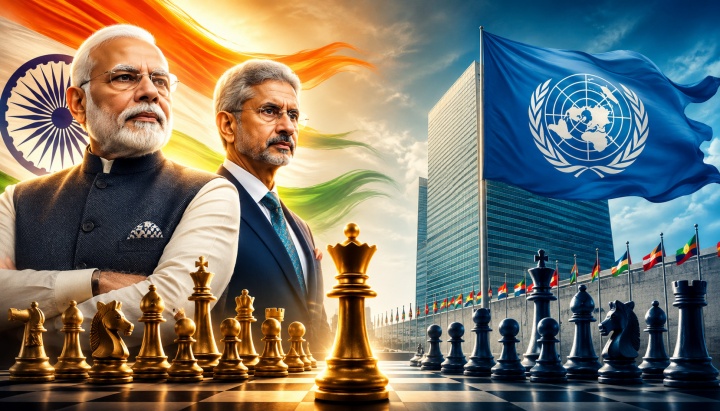
The High Power Demography Mission and the countrywide ‘Smart Border’ project, which India announced in May 2026, go well beyond conventional security upgrades. When combined, they form a complex civilisational security doctrine, a well thought out attempt to preserve India’s expanding economy, maintain its demographic balance, and facilitate the nation’s ongoing rise to prominence in the global arena. These two steps, which Union Home Minister Amit Shah revealed during the BSF Investiture Ceremony on May 22, 2026, are not reactionary actions motivated by fear. Rather, they are dynamic pillars of statecraft, technologically empowered instruments intended to safeguard the demographic dividend that is key to India’s goal of creating a Viksit Bharat (Developed India) by 2047.
Opindia shows how demographic resilience serves as a facilitator of Atmanirbhar Bharat by interpreting these pronouncements in the larger context of India’s BRICS Chairmanship in 2026, Indo-Pacific maritime conflicts, and the global semiconductor and AI race. The study comes to the conclusion that India’s strategy provides a model that other developing countries might follow, safeguarding borders and maintaining demographic continuity are actions of nation building in line with long term civilisational dharma and constitutional principles, not acts of exclusion.
A nation thinking ahead
At the Border Security Force’s (BSF) annual Investiture Ceremony on May 22, 2026, Union Home Minister Amit Shah stood in front of gathered officers. His remarks that day went well beyond the usual speech. He unveiled two revolutionary national initiatives, the setting up of a High Power Demography Mission specifically tasked with identifying and combating ‘artificial demographic changes’ brought about by illegal infiltration across India’s porous borders, and the deployment of Smart Border technology along India’s borders with Pakistan and Bangladesh within a year.
#WATCH | Delhi | Union Home Minister Amit Shah says, "Now the time has come to stop the infiltration program that has been going on for years without any restrictions… Many retired police officers told me not to undertake the Naxal-free campaign… They said the same to the… pic.twitter.com/qC6v6nYy4N
In order to fully understand the significance of these statements, one must be aware of the world that India is in as 2026 advances. The nation has become the de facto voice of the Global South and will serve as the BRICS Chairman in 2026. At the same time, it is manoeuvring through a hostile Indo-Pacific, where maritime competition between key nations has escalated. Its young population is largely regarded as its biggest strategic asset in the upcoming decades of AI, robotics, and advanced manufacturing, and its economy is developing at one of the quickest rates in the world, at over 6.5% annually.
The government has implemented both practical and innovative initiatives into this promising period. To construct an almost seamless digital border, Smart Borders use fiber optic sensors, drone surveillance, artificial intelligence based monitoring, and integrated command systems. The Demography Mission discusses a somewhat quiet but no less significant issue, the gradual, purposeful alteration of border districts’ demographics through organised infiltration, which eventually affects social harmony, national security, and election integrity.
Home Minister @AmitShah has made it clear that India’s borders are now moving towards a complete “#SmartBorder” system.
Advanced cameras, radars, surveillance equipment and integrated monitoring technology will be deployed across the India-Pakistan and India-Bangladesh borders,… pic.twitter.com/0NVDckS2hC
Both initiatives are not viewed as a controversial political decisions. Instead, it interprets them as strategic policy choices that represent an evolving Indian state that combines technological prowess, adherence to the constitution, and a clear-eyed awareness of its civilizational obligations.
Historical and civilizational context: Why demographics matter to India
India is more than just a nation-state in the sense of contemporary Europe. It is a civilizational state, a term used by political scientists to characterise nations whose identity is based on thousands of years of unbroken cultural, philosophical, and social history rather than just being civic or geographic. India, like China, Iran, and Egypt, has a rich national identity based on civilizational achievements, ethical frameworks, and social contracts that precede the contemporary state structure by millennia.
Rajdharma, or rulers’ ethical duty to safeguard and nurture their people, is an old notion in Indian culture. There has always been an understanding that a just and stable society depends on preserving the integrity of its social fabric, from the Arthashastra of Kautilya, which described complex theories of statecraft, border management, and population policy, to the constitutional vision of Dr BR Ambedkar and Jawaharlal Nehru. Economic self-sufficiency, cultural continuity, and demographic profile were all important factors in governance.
Resilience is at the core of India’s demographic narrative. The cultural and demographic core of the subcontinent has demonstrated remarkable continuity in the face of invasions, famines, colonialism, and partition. Today, this continuity manifests itself in a completely different but no less potent way: a population of almost 1.44 billion young, educated, and digitally connected individuals. India’s median age in 2026 is expected to be about 29 years old, according to demographic forecasts from NITI Aayog and the United Nations Population Division. This is a significant advantage in a world where the majority of major powers are ageing quickly.
When taking into account the fields of the future, this dividend becomes quite important. Large human labour resources are needed for artificial intelligence’s labelling, training, and supervision. Skilled engineers, technicians, and manufacturing workers are essential to the global semiconductor supply chain. Millions of installation, maintenance, and innovation experts are needed for the shift to green energy. India is ideally positioned to meet these needs both locally and internationally due to its demographic demographic profile.
However, this promise can only be achieved if the demographic basis is kept steady, consciously maintained, and shielded from disturbances that may interfere with public service delivery, social cohesion, or workforce planning. Since 2019, the Ministry of Home Affairs has documented the problem of illegal migration, especially from Bangladesh and Myanmar, and its localised effects on voter rolls, social services, land records, and border area demography in a number of papers and legislative communications. In this light, the Demography Mission is not discriminatory in nature. It is a constitutional, data driven endeavour to safeguard what India has painstakingly built.
Policy architecture: Smart borders and the demography mission
Consider India’s border problem as if your home had a very lengthy fence, thousands of kilometres in length. Some sections of this fence pass across rivers, forests, hills, and remote communities. A large number of armed patrolling troops had been working in harsh conditions, day and night, for decades to keep everything safe. There were gaps, of course. Now picture replacing a significant portion of that fence with a system that never gets tired, never sleeps, and can alert the closest patrol squad in a matter of seconds when it detects movement. The Smart Border project essentially aims to do that.
The Comprehensive Integrated Border Management System (CIBMS), which was piloted in stages along the borders of Bangladesh and Pakistan starting in 2018, is one of the earlier frameworks that the Smart Border projects build upon. With India’s increased drone manufacturing capability under the Production Linked Incentive (PLI) scheme and its growing domestic AI sector, the 2026 announcement streamlines this into a full national rollout within twelve months.
The suggested technology framework contains several layers. Real-time aerial surveillance is provided by unmanned aerial vehicles (UAVs), which can operate at night and in low visibility. Human movement causes ground vibration, which is detected by underground fibre optic sensors. Real-time data is fed into centralised command and control stations via thermal and infrared cameras mounted on smart poles along the fence line. All of this is processed by AI based pattern recognition systems that are more accurate at differentiating between human intrusion, animal activity, and weather related incidents.
Most importantly, this system is Aatmanirbhar, self-reliant. The Home Minister made it clear that the technologies used would be developed or modified indigenously. DRDO’s surveillance platforms and Indian drone manufacturers like Garuda Aerospace and ideaForge make up the hardware layer’s backbone. With integration paths built into the National Intelligence Grid (NATGRID) for backend data processing, the software layer takes advantage of India’s growing AI ecosystem.
The benefits from India’s Digital Public Infrastructure (DPI), particularly Aadhaar, are immense. Residents of border areas and registered migrants may be officially counted, their identities confirmed by biometric authentication, and their movements monitored within privacy norms and constitutional limits. This establishes a dependable data layer for the Demography Mission’s analytical functions, which include detecting demographic movements in real time, highlighting inconsistencies in voter rolls, land records, and school enrolment data, and enabling targeted administrative solutions before problems become developed.
Alongside the Mission, a zero tolerance deportation policy was announced, which is a reiteration of current law rather than an amendment to it. In general, India has long contended that illegal immigration poses a security and demographic threat. Historically, there has been a lack of institutional capacity to systematically apply this principle. That is exactly what the Mission seeks to provide, a uniform, transparent, and proportionate system of detection and deportation that is institutionally organised, supported by data, and established in law.
The human aspect of this approach must also be properly acknowledged. Anti-infiltration actions are sometimes confused by critics with an anti minority outlook. The distinction between legal residents and illegal immigrants is essential in any rule of law democracy, and it is backed by the constitutional framework that governs these measures. Unchecked infiltration strains local resources, alters land markets, and sometimes facilitates trafficking and organised crime networks, making Hindu and tribal groups in border regions of India among those most impacted. Protecting these communities is therefore a constitutional obligation rather than a communal project.
Linkages to geoeconomics and geopolitics
When you look beyond the demographic survey forms and the border fence, you find a more expansive picture of India, which is actively trying to establish itself as a stable civilisation in a world that is becoming more and more unstable. The period 2026-2030 is expected to be one of the most crucial in the post Cold War era. The strategic rivalry between the United States and China shows no signs of slowing down. The Indo-Pacific region has become a hotbed of aggressive maritime manoeuvring. Global energy and defence supply chains have been reshaped by the conflict in Ukraine, even though it may be entering a new phase. Middle East tensions are still high. In such circumstances, India’s domestic actions have a direct impact on its ability to project itself overseas.
The Reserve Bank of India (RBI) and the International Monetary Fund (IMF) predict that India’s GDP would grow at a rate of 6.5 to 7% per year until 2030, placing it among the top three economies in the world by the end of the decade. This expansion translates into geopolitical weight and is more than just a statistic. With platforms like BRICS, the India-Middle East Europe Economic Corridor (IMEC), and bilateral investment treaties, a larger, faster-growing Indian economy can finance a more capable military, make deeper investments in neighbourhood diplomacy, and provide Global South countries with credible development partnerships.
However, a steady, competent, and specifically developed workforce is essential to this trajectory. This vision is already being pursued by India’s PM Kaushal Vikas Yojana (PMKVY) skill development initiatives and its National Education Policy (NEP) 2020. The semiconductor mission, which is supported by investments in factories in Gujarat and Assam, needs a certain amount of skilled human capital in addition to capital. The implications for India’s growth story would be significant and quantifiable if demographic disturbances were to impact this planning, whether through unrestricted immigration altering the composition of the labour market or ethnic tensions in border regions diverting administrative attention.
India’s demographic management has a broader symbolic meaning in the context of the BRICS. India, the largest populated democracy in the world and the country with the fastest-growing major economy, is carefully observed by the Global South as a development model. The way it controls its borders, incorporates technology into governance, and strikes a balance between rights and security sends a message to dozens of developing countries facing comparable issues, including Peru, and Kenya. India is sending an optimistic message here, you can safeguard your demographic future without militarising your society, giving up on democratic principles, or erecting barriers that isolate your people from the outside world.
As a key component of Indo-Pacific security, essential technology supply chains have been highlighted more and more by the QUAD framework, which unites Australia, Japan, India, and the United States. The stability and targeted growth of India’s domestic workforce are essential to the country’s ability to consistently offer advanced manufacturing specialists, AI researchers, and skilled semiconductor workers to this supply chain. Demographic planning and border security are essential components of this calculation, not distinct from it.
There is also a direct connection to India’s neighbourhood policy. According to government comments, the Demography Mission and Smart Borders are accompanied by a persistent focus on development partnerships under the ‘Neighbourhood First’ ideology with Bangladesh, Nepal, Bhutan, and Sri Lanka. India wants to facilitate organised, legitimate and mutually beneficial cross-border migration rather than isolate itself from South Asia. Trade, cultural exchange, and legal migration are all encouraged. Illegal, undocumented, and frequently organised infiltration is what is being examined, this distinction is crucial to solid policy research but is easily overlooked in ideological debate.
Conclusion
In 2026, India is a country that acts with confidence rather than fear. Together, the Demography Mission and the Smart Border project mark a turning point in Indian statecraft as the largest democracy in the world starts to use the same long term strategic thinking that has traditionally defined the growth of great powers.
The essence of India’s approach is what sets it apart, instead of being militaristic, it is driven by technology and instead of being driven by ideology, it is supported by data.
The UK’s public broadcaster, the BBC, often defaults to peddling negative tropes about India even when reporting on the country’s successes. In a fresh push to the ‘All is not well in India’ bogey, the BBC framed the recent increase in Indian outbound acquisitions worth over $18 billion across 162 deals in 2025, which marked a 34% year-on-year increase, as a result of a slowdown in India’s economic growth.
The BBC article’s headline, “Indian billionaires buy foreign companies as growth slows at home”, is quite revealing of the underlying agenda of portraying even lucrative Indian mergers and acquisitions as more of an outcome of ‘domestic failures’ than strong balance sheets.
Author Nikhil Inamdar highlighted the April 2026 Sun Pharmaceuticals acquisition of New York-listed women’s health and biosimilars firm Organon & Co. for $11.75 billion. The article also mentions the Tata Motors’ $4.4bn acquisition of Turin-based vehicle maker Iveco, IT company Coforge’s $2.35bn purchase of Silicon Valley-based AI firm Encora and the Bajaj Group’s 2025 purchase of 23% stake in insurance company Allianz.
“These include Tata Motors’ $4.4bn acquisition of Turin-based vehicle maker Iveco, IT company Coforge’s $2.35bn purchase of Silicon Valley-based AI firm Encora and the Bajaj Group buying a 23% stake in global insurance giant Allianz SE earlier in 2025. Data from consultancy Grant Thornton shows that 162 Indian companies spent more than $18bn on outbound acquisitions in 2025 – a 34% increase from the previous year,” the BBC piece reads.
Comparing the difference in domestic scenarios during the 2000s acquisition boom and now, the BBC article argues that during the 2000s, “India was in the midst of a roaring bull market”, today however, the country is “grappling with a rapid exodus of foreign portfolio investors, a sharp slowdown in net foreign direct investment (FDI) and stubbornly weak private sector investment despite tax cuts and production-linked subsidies offered by the government.”
The article further attributed the foreign expansion of Indian companies in the form of acquisitions and stake purchase to “growing disaffection with the domestic business environment and better diversification and capability-building opportunities abroad.”
This entire narrative of ‘growth slowing at home’, ‘growing corporate dissatisfaction’, ‘weak domestic demand’, and ‘capital fleeing India despite Modi government’s invest-in-India pleas’ is a classic case of the BBC’s selective, negativity-biased framing involving cherry-picking context and ignoring the broader economic realities of India.
On one hand, the BBC portrays acquisitions by Indian companies, both big and small, as a result of FDI slowdowns, disaffection with the domestic business environment and better opportunities abroad; on the other, it cites experts to say that this fresh acquisition boom is driven by stronger balance sheets and improved access to global financing. How would these companies have a strong balance sheet if they weren’t thriving domestically? How would they thrive domestically if there weren’t a conducive business environment?
‘Stronger balance sheets’ do not emerge in a vacuum but from consistent profitability, operational efficiency, retained earnings, and most importantly, revenue growth. These overwhelmingly depend on domestic operations and/or foreign operations built on a robust home base.
Indian companies have faced and successfully deleveraged post-IL-FS to NBFC crisis and the Covid pandemic shock. The Indian corporate has also benefited from the Modi government’s policy measures like corporate tax cuts, PLI initiatives, insolvency resolution, etc. Obviously, India, like many other developing countries, is not an absolute Utopia, but the outbound M&As by Indian companies reflect maturity and confidence, not desperation or malaise. Foreign deals such as the ones done by Sun Pharma, Tata, and Bajaj often complement and do not replace domestic investment.
Undoubtedly, India’s private investment sector faces many challenges, including muted urban consumption in spots, global uncertainties and the China factor; however, linking a record surge in outbound acquisitions directly to supposed ‘slow growth’ is nothing but lazy causation.
India remains the fastest-growing major economy
India’s growth remains robust among top economies, with official data indicating a 7.6% GDP growth for fiscal year 2025-26, which is among the highest globally. Even amidst global energy shocks and tariffs, India’s growth projections by the IMF and others stand at around 6.5% for FY27. India remains the fastest-growing major economy globally.
In the recent quarters, India’s private consumption and investment have witnessed significant acceleration, maintaining a strong upward trajectory. India has also registered record Foreign Direct Investment (FDI) inflows in 2024-25, raking in $81 billion. This marked a 14% year-on-year increase.
Yes, the foreign portfolio investors (FPIs) exiting India is a challenge and the government needs to reform the tax architecture and bring it in sync with the rest of the major economies. However, to paint a gloomy picture of the Indian economy by conflation of FPI outflows with ‘FDI slowdowns’ to imply a hostile domestic business environment for outbound acquisitions, reeks of negativity bias.
In the past few months alone, Microsoft committed to investing Rs 1.5 lakh crore (US$ 17.5 billion) in India. In February this year, Google announced a $15 billion investment in India over the next five years. Apple is also expanding its presence in India. But for the BBC, India’s foreign investment attraction game is weak.
Notably, FDIs are a long-term game involving ownership stakes, tech transfer, management control, factories, operations and so on. FPIs, on the contrary, are short-term bets on stocks and bonds. This arena is highly volatile and is rooted in global liquidity, interest rate differentials, valuations, etc. Unlike FDIs, FPIs are driven by a deep sentiment of commitment to the Indian economy. The BBC, however, chose to blur the line between FDIs and FPIs to concoct a more general and alarmist ‘capital flight’ narrative and somehow link it to the outbound acquisitions by Indian companies.
It is also amusing that when American, British, or European firms expand abroad for diversification, Western legacy media frames it as ‘routine diversification’ but when Indian companies do it, the same media outlets throw headlines implying ‘domestic failure’.
Internet trolls BBC
Interestingly, many Indian social media users called out the BBC’s framing of the Indian companies’ foreign acquisitions and even highlighted how the BBC itself is in a financial quagmire.
In this vein, one X user wrote, “The article headline itself, is framed in a way that can subtly push readers toward a political conclusion & to build anti-government public opinion. Selection of Sun Pharma which earns most of its revenue internationally. Around 70% of its revenue comes from global markets.”
Another one wrote, “Dear BB Chee So r u implying that the global US companies that bought n invested in other foreign countries was because the US growth slowed. Please get some therapy, you r dying.”
Meanwhile, one X user had a rather interesting take on Sun Pharma’s Organon acquisition, and wrote, “Stupid post. Indian company bought American one because of Trump tariffs on branded imported drugs. If they have a American company then drugs can be manufactured and tariffs can be avoided. It is a strategic decision due to tariff levy not because of slow growth.”
Another one wrote, “India grew at 7.6 % last quarter while BBC itself is facing financial problems and cutting down 10% of its workforce.”
Notably, it was reported in April this year that the BBC is set to cut 2,000 jobs due to “financial pressures”. Earlier in February, the BBC announced a £600m cost-cutting plan, which included a reduction in the number of employees and the ending of some programming.
From the Indian economy to politics: BBC loves to paint a bad picture of India
In the recent months alone, the BBC has published biased and alarmist articles on Indian political, geopolitical and financial issues. Ahead of West Bengal elections, BBC peddled Muslim exclusion propaganda over the deletion of 90 lakh voter names in Special Intensive Revision.
In March this year, BBC Hindi published an article with a panic-inducing headline, claiming that amid the raging Iran war and the resulting energy crisis, India was left with only 5 days of oil reserves.
From the 2022 anti-Hindu Leicester violence, 2024 Islamist pogrom against Hindus in Bangladesh, propaganda documentary on Prime Minister Narendra Modi, attempt at inciting Indian Gen-Z to stoke Nepal/Bangladesh-like violent regime change, to perpetual villainization of Indian Hindus, OpIndia has consistently documented the BBC’s anti-Hindu and anti-India bias.
The Enforcement Directorate (ED) investigation into The Timothy Initiative (TTI) has opened a larger question about the foreign church ecosystem that is behind the conversion of hundreds of thousands of Hindus to Christianity in India. It is a well-known fact that a lot of missionaries, either individually or linked to a church, visit India on tourist visas and indulge in evangelism, which is against visa regulations. However, the way these churches function as a nexus is a whole other story.
TTI has itself admitted that it has planted lakhs of churches in India since its launch in 2007 as “The India Project”. OpIndia’s investigation into its operations revealed at least twelve high-profile foreign churches working with TTI hand in hand to convert Hindus and other communities.
Publicly available church documents, mission pages, newsletters, campaign updates and partner material show that TTI’s India work has not been limited to one foreign organisation operating in isolation. A wider network of international churches, denominational bodies and mission partners have announced their association with TTI’s church plantation projects publicly over the years.
OpIndia has identified at least twelve non-Indian entities with explicit India-linked references to TTI, including churches from the United States-based churches and one Canadian denominational network. These links were not limited to generic mission language. In several cases, the churches spoke of fundraising campaigns, pastor training, field visits, house church planting, India-linked giving pipelines and multi-year targets.
The names include Kensington Church, Mission Grove Church, Northwest Baptist Church, Wooddale Church, Rise City Church, Mission Hills Church, First Presbyterian Church of Hanford, Springbrook Community Church and the Baptist General Conference of Canada. Other networks and church-linked entities such as Liberty Church Network, All Access International, Saltbox Church and Woodside Bible Church also appear in the wider TTI-linked ecosystem.
TTI’s India roots and the ‘Project India’ beginning
The headquarters of TTI is in Raleigh, North Carolina. It operates as a global church planting organisation. Its roots, however, appear deeply connected to India. The conceptual origins of the organisation reportedly go back to David Nelms’ early exploratory travels to India in 1992, which OpIndia has reported in a previous article in the series. Its field operations formally began in 2007 under the internal name “Project India”.
The stated objective from the beginning was aggressive and sweeping. TTI wanted to establish at least one church in every village across India. In 2009, the organisation rebranded itself as The Timothy Initiative with the purpose of expanding its operations globally. However, India continued to remain one of its most important strategic regions.
TTI’s operational model is built around a reproduction structure based on 2 Timothy 2:2. The structure uses “Pauls”, “Timothys” and “Tituses”. “Pauls” are indigenous trainers who establish local training centres and train cohorts of students. “Timothys” are disciple makers and church planters who work at the grassroots level. “Tituses” are new converts who are brought into peer-level spiritual formation and can later be pushed into the pipeline as future workers.
What attracted Western churches towards TTI was its low-cost and high-replication model. The organisation promoted the idea that an indigenous church planter could be trained and a self-replicating house church could be established for around $240 to $400. This allowed churches and donor networks abroad to sponsor large church planting exercises in India while presenting the campaign in simple financial terms to their congregations.
To put things in perspective, ED stated that TTI withdrew Rs 95 crore in six months using foreign debit cards. Even if we estimate that only Rs 40 crore out of it was used directly for church plantation, while the remaining money may have gone towards paying pastors, organising prayer meetings, field travel, local coordination and other operational expenses, and assume that the exchange rate was Rs 88 against 1 USD, it still comes to around $4.54 million, enough to plant over 11,300 churches at TTI’s stated $400 per church model. This is only an estimate for six months. Imagine what this group could have done since its inception in 2007. Not to forget, according to their own claim, they have planted over 2,68,000 churches in 50 countries, and India is their top priority.
Source: TTI
Kensington Church and the northern India church planting trail
Kensington Church is a Michigan-based multi-site church. During our research, it appeared as one of the prominent foreign church entities linked to TTI’s India network. Its official TTI material referred to the “start of over 3,000 house churches in South Asia”. Other public church-linked material referred to over $2,00,000 being raised to plant churches in northern India.
Source: Kensington Church
Kensington was also linked to a wider coalition of eight churches that reportedly committed to raising $1 million for church planting in the same region. Its public material included not only partnership language, but also practical India trip infrastructure, including an India packing list. This indicates that the relationship was not merely symbolic or limited to prayer support.
According to its India page, the church recruits men and women for an intensive 2-year training programme to make them church planters and pastors. They are the ones who convert Hindus across India for this church. They have established hospitals, run medical camps, orphanages and more in the country.
Source: Kensington Church
By its own admission, its “Grace Children’s Home” provides “refuge” to 125 children at any given time. Its target is not only adults but also 11 million homeless children in India. The church has its next trip to India planned in the second week of November. While this particular event does not mention TTI, it must be investigated by Indian agencies as the church claims it has been indulging in such activities in India since 2000.
Source: Kensington Church
In effect, Kensington’s material shows a combination of three elements, fundraising, public mobilisation and practical field engagement. The northern India link is especially important because TTI’s India operations are now under regulatory scrutiny for alleged foreign fund movement outside the FCRA framework.
Mission Grove Church raised $1.6 million for church planting
Mission Grove Church in Cave Creek, Arizona, had one of the clearest public trails. A Mission Grove sermon page reportedly spoke of “planting 4,000 churches in northern India and Nepal in the next 4 years”. A later church transcription said that $1.6 million had been raised to plant over 4,000 churches in India and Bangladesh.
Pastor Jon Kragel was named in connection with the Mission Grove material. The public timeline suggests that the church first promoted a four-year India and Nepal target and later reported the campaign outcome in relation to India and Bangladesh. The $1.6 million was reportedly raised with the involvement of 81 individuals, churches and organisations in Arizona.
Source: Mission Grove Church
This makes Mission Grove a significant example of how TTI’s India linked operations were presented abroad as large, target based church planting campaigns.
Wooddale Church and the India, Nepal and Bangladesh training trip
Wooddale Church in Eden Prairie, Minnesota, also appears in the TTI linked trail. Its bulletin reportedly said that Pastor Dale and Richard Payne had returned from a “Timothy Initiative training trip to India, Nepal and Bangladesh”.
Wooddale’s annual report material from 2015 read, “In 2015, over 1,000 new leaders were developed and trained to plant over 600 new churches in Asia in partnership with The Timothy Initiative. #churchplanting”. In 2023, it claimed that they planted over 2,000 churches through TTI partnership.
Source: Wooddale Church
It is important to note that some of Wooddale’s numbers were Asia wide and not India specific. However, the India, Nepal and Bangladesh training trip establishes that the church’s TTI relationship had a direct South Asia component.
Rise City Church and visits to northern India
Rise City Church in Gresham, Oregon, described its TTI partnership in direct India terms. In 2021, it said it had partnered with TTI “to help train pastors and plant churches in India”. In 2022, it described TTI as “aggressively planting Churches in India”.
Its 2022-year end update also said that a representative had travelled to northern India to visit some of the churches the church had helped plant through The Timothy Initiative. This is important because it shows that the link was not restricted to remote fundraising. Rise City publicly described field level connection with churches planted in northern India.
Rise City’s Kingdom Builders fund had reportedly raised nearly $10,000 in the early phase, while a later planning page said its Kingdom Builders budget had grown to about $100,000. Its update also credited Kingdom Builders with 56 church plants across the world over two years, though that figure was global and not India specific.
Mission Hills Church and the 600 Indian pastors conference
Mission Hills Church in Littleton, Colorado, listed The Timothy Initiative as a global outreach partner. Its update said that in 2025, it would have helped fund 1,000 new churches. The same update also referred to helping a partner in India conduct a pastor conference for over 600 Indian pastors.
Source: Mission Hill Church
The 1,000 churches figure appears to be global, not India specific. However, the 600 Indian pastors conference is a clear India linked element. This shows another layer of TTI’s India ecosystem, not only church planting, but also pastoral training and leadership mobilisation.
BGC Canada and the $400 per church model
The Baptist General Conference of Canada, BGC Canada, provides another clear organisational link. Its official material said that it was partnering with The Timothy Initiative and stated that the cost to plant one church was approximately $400 USD.
Source: BGC
An August 2022 newsletter from India reportedly said, “BGC is partnering with TTI to plant house churches,” and added that donations to TTI could be given through the BGC office in Edmonton. The newsletter was linked to Kevin Schular, Executive Director of BGC Canada.
This reveals how foreign denominational structures could act as donor channels for TTI’s church planting projects. The $400 per church pitch also shows how the campaign was simplified for international Christian donors, reducing a complex India operation into an easily marketable unit cost.
Northwest Baptist, Hanford and Springbrook
Northwest Baptist Church in Bellingham, Washington, listed The Timothy Initiative through Converge and described it as focusing on planting a church in every village of India and Nepal. While the publicly available trail here is thinner than Kensington or Mission Grove, TTI still appeared as part of the church’s active international missions roster.
First Presbyterian Church of Hanford, California, appeared through a church newsletter. The newsletter said “Dan S.” was training leaders with whom he had established strong connections in India in how to implement TTI’s principles for church planting. The evidence points to a training conduit rather than a large visible fundraising campaign.
Springbrook Community Church was linked to a 2014 India vision trip. Pastor Rich’s India page reportedly said that the trip would be in partnership with The Timothy Initiative and Converge Worldwide. The trip was described as involving teaching, encouraging and learning from leaders and church planters in southern and northern India.
Liberty Church Network, All Access International and other linked entities
The wider TTI ecosystem also included other church linked entities and networks. Liberty Church Network reportedly aligned with TTI in 2011 and funded 780 house churches across India during the 2011 to 2012 cycle. It was also linked to 200 churches in Northeast India during the 2012 to 2013 operational year.
All Access International reportedly managed the “ACHIEVE South & Southeast Asia” portfolio for 2026 to 2027, with an allocation budget of $4,578,240. The plan was to train 1,050 “Pauls” and 19,000 “Timothys” to plant an estimated 11,000 house churches in unreached Indian and regional villages.
Saltbox Church reportedly linked TTI’s global church planting platform alongside Mission India within its international mission’s portfolio. Woodside Bible Church maintained a separate India footprint and deployed short term teams for theological training of 180 pastors and church planters from 28 Indian states.
Taken together, these entities show that TTI’s India related work was not a loose or one off arrangement. It was connected to a broad ecosystem of churches, networks, donors, trainers and mission bodies.
The caste linked field strategy
The foreign church network becomes more concerning when read with TTI’s field strategy. Internal training material and field manuals reportedly showed a methodical approach designed to penetrate Hindu majority rural communities while reducing local resistance.
One of the most controversial components was the caste linked intermediary strategy. Instead of general public preaching, TTI’s material reportedly instructed church planters to identify and convert key leaders from individual castes. The logic was simple. Since caste structures influence local social life, converting a leader from a particular caste could open the door to converting others from the same group.
Once such an influential figure was converted, he could be used as an intermediary to influence the wider community from within. This meant that existing social structures were not merely being observed but used as a pathway for religious conversion.
Targeting Hindu ideas such as karma and reincarnation
TTI’s curriculum also reportedly targeted core Hindu ideas such as karma and reincarnation. Its tenth manual outlined ways to reframe Hindu philosophical concepts before rural audiences.
Karma was reportedly presented as an inescapable cycle without forgiveness, while Christianity was positioned as offering immediate redemption and divine grace through Christ. Similarly, traditional understandings of sin were reframed as conscious moral disobedience that required external divine correction.
This was not merely theological discussion. It was part of a structured conversion oriented curriculum designed for field workers entering non-Christian communities.
Low profile tactics to avoid resistance
TTI’s field material also reportedly advised workers to avoid high visibility evangelism in areas where resistance was expected. Carrying physical Bibles, distributing tracts or screening religious films could attract suspicion, hostility or surveillance.
Instead, workers were instructed to memorise scripture and rely on oral communication, informal storytelling and gradual relationship building. The idea was to embed themselves into the daily social life of villages before slowly introducing Christian religious ideas in private residential settings.
This shows that the operational model was not only about funding and training. It also involved tactical adaptation to local resistance.
ED probe into alleged FCRA bypass
The Enforcement Directorate’s investigation has brought TTI’s India operations into the national spotlight. In April 2026, ED conducted raids at multiple locations linked to TTI operators. The agency found that TTI was not registered under the Foreign Contribution Regulation Act, FCRA, making it legally ineligible to receive or distribute foreign donations in India.
Investigators reportedly found that the alleged modus operandi involved international couriers and foreign nationals entering India through transit hubs. One key interception took place at Bengaluru International Airport, where immigration authorities intercepted an associate courier named “Micah Mark” or “Jose Bell”, who was allegedly operating under a Look Out Circular.
A search reportedly led to the recovery of 24 foreign bank debit cards issued by US based Truist Bank and linked to overseas accounts. Forensic tracking allegedly found that between November 2025 and April 2026, around Rs 95 crore was routed into India through structured high value ATM cash withdrawals across multiple states.
The money was reportedly tracked through a foreign controlled online billing and accounting database that recorded field utilisation and stipend distribution to local handlers.
Rs 6.5 crore allegedly tracked to sensitive regions
A major concern for investigators was the destination of part of the cash. Around Rs 6.5 crore was reportedly tracked to sensitive, tribal dominated and left-wing extremism affected regions, including Bastar and Dhamtari in Chhattisgarh and parts of Jharkhand.
This is significant because these regions are already vulnerable due to security challenges, tribal sensitivities and foreign funded missionary activity concerns. The alleged creation of a cash heavy parallel system outside formal FCRA channels in such regions raises serious questions about oversight and accountability.
Why the foreign church network matters
The international church links matter because they show that TTI’s India operations were not merely local or spontaneous. Foreign churches publicly raised funds, promoted church planting targets, sent teams or representatives, supported pastor training, and presented India as a strategic mission field.
Kensington’s northern India campaign, Mission Grove’s $1.6 million fundraising, BGC Canada’s $400 per church model, Rise City’s northern India visit, Mission Hills’ 600 Indian pastors conference and Wooddale’s South Asia training trip all point towards a structured ecosystem.
The deeper question is not whether TTI had foreign supporters. The public material shows that it did. The real question is how a foreign backed church planting ecosystem, supported by churches, networks and denominational channels abroad, allegedly created a cash-based India network that investigators now say operated outside FCRA scrutiny.
The evidence shows that TTI’s India footprint was not shallow. It had money, training systems, foreign church partners, denominational routes, field visits, public campaigns and village level ambitions. In other words, the network around TTI appears to have spread far beyond one organisation and into a wider international church infrastructure focused on India.
In a major development in the 2018 Attappady mob lynching case that sparked outrage across the country, the Kerala High Court on Monday acquitted Hussain, the first accused in the killing of Madhu, a mentally challenged tribal youth who was brutally assaulted by a mob over suspicion of theft of food items.
The verdict was delivered by a Division Bench comprising Justice Raja Vijayaraghavan V. and Justice K.V. Jayakumarwhile hearing appeals filed by the convicts, the State government and Madhu’s mother Malli.
The High Court refused to interfere with the acquittals of accused numbers 4 and 11, Aneesh and Abdul Kareem respectively. However, it upheld the convictions of Marakkar, Shamsudheen, Radhakrishnan, Aboobacker, Sidhique, Ubaid, Najeeb, Jaijumon, Sajeev, Satheesh, Hareesh and Biju.
The court also expanded the scope of criminal liability by holding the convicted persons guilty under Sections 3(2)(v) and 3(2)(va) of the Scheduled Castes and Scheduled Tribes (Prevention of Atrocities) Act, in addition to IPC provisions including Sections 304 Part II, 326, 367, 323, 324, 342, 143, 147 and 149. Accused number 16, Muneer, who was earlier convicted only under Section 352 IPC, was also found guilty under Section 3(2)(va) of the SC/ST Act read with Section 323 IPC.
A detailed judgment is awaited. The matter was later listed for hearing on modified sentences.
Hussain’s challenge before the Kerala HC
Hussain had challenged his conviction on the grounds that he was not part of the group that initially entered the forest area and brought Madhu to Mukkali, where he was assaulted.
According to the prosecution, Hussain later joined the crowd and stamped on Madhu’s chest, causing his head to strike a wall. Medical evidence had suggested that the injuries contributed to the victim’s death.
His legal team, however, argued that there was no evidence showing any prior hostility toward Madhu or any reason for him to be associated with the unlawful assembly. The defence had also highlighted that the trial court had not found him guilty under provisions of the SC/ST Act.
The High Court accepted his appeal and acquitted him.
Background of the case
The case dates back to February 22, 2018, when Madhu, a 27-year-old tribal youth from Attappady in Kerala’s Palakkad district, was lynched by an Islamist mob over suspicion of stealing food items, including rice, from a local shop.
Madhu, who was mentally challenged and maintained limited contact with his family, was living in and around forest regions in Attappady. According to investigators, he was found hiding near the forest area by a group of local residents who detained him and subjected him to severe assault before handing him over to police.
The prosecution stated that Madhu sustained serious injuries, including head trauma, fractured ribs and internal bleeding. He later collapsed while being taken to hospital and succumbed to his injuries.
The incident triggered widespread outrage after photographs from the scene surfaced online. Among the images that drew sharp public criticism was one showing Madhu visibly injured and distressed while a man, identified as Ubaid, stood beside him taking a selfie. Police later arrested Mukkali Thodiyil Ubaid Ummar and named him among the accused in the case. He was booked under provisions of the IPC, the SC/ST Act and Information Technology laws related to circulation of pictures and videos of the incident.
Reports at the time had also raised questions over alleged political links of some accused persons. Allegations emerged that Ubaid had connections with the Indian Union Muslim League. However, then-MLA N. Samsudheen denied any formal association and stated that Ubaid had only participated in election-related activities.
Trial delays and allegations surrounding prosecution
The case later witnessed repeated delays during trial proceedings, leading to criticism from the victim’s family and activists.
In January 2022, the Mannarkkad Special Court under the SC/ST Act reportedly questioned the repeated absence of the Special Public Prosecutor appointed to represent Madhu. The court had earlier postponed hearings after the prosecutor failed to appear on multiple occasions.
Advocate V.T. Raghunath, who had been appointed as the special prosecutor in August 2019, reportedly did not appear before the court during the proceedings and later resigned citing medical reasons.
The repeated absence of prosecutors contributed to delays in trial proceedings. Madhu’s family alleged that justice was being slowed down intentionally. Madhu’s mother Malli had publicly expressed frustration over the delay, stating that several years had passed since her son’s death while the trial itself struggled to move forward.
The Special Investigation Team constituted after the incident had prepared a nearly 3,500-page chargesheet in May 2018 naming 16 accused individuals. Despite facing charges under murder provisions and the SC/ST (Prevention of Atrocities) Act, all accused had secured bail during the course of proceedings.
Questions were also raised by critics over delays in appointing a permanent prosecutor in the case. Political controversy surfaced after reports that one of the accused, Shamsuddin, had been elected as a branch secretary of the ruling Communist Party of India (Marxist) in September 2021, though the decision was later reportedly withdrawn following opposition.
Sections of Indian laws slapped on the accused
The accused were charged under multiple provisions of the Indian Penal Code dealing with offences ranging from unlawful assembly to homicide. These included Section 143 (unlawful assembly), Section 147 (rioting), Section 148 (rioting while armed with deadly weapons), Section 323 (voluntarily causing hurt), Section 324 (causing hurt through dangerous weapons), Section 326 (grievous hurt), Section 342 (wrongful confinement), Section 352 (assault), Section 364 (kidnapping or abduction with intent to murder), Section 367 (kidnapping to cause grievous hurt), Section 368 (wrongful confinement of a kidnapped person), and Section 302 read with Section 149 relating to murder committed by an unlawful assembly with a common objective.
The accused were also booked under provisions of the Scheduled Castes and Scheduled Tribes (Prevention of Atrocities) Act including Sections 3(1)(d), 3(1)(r), 3(1)(s), 3(2)(v), and 3(2)(va), which deal with offences committed against members of Scheduled Castes and Scheduled Tribes, including humiliation, discrimination and aggravated punishment for crimes committed on the basis of social identity.
The fragility of the ‘Dalit-Muslim unity’ construct
The Madhu lynching case has once again exposed the fragility of the much-publicised “Jai Bhim–Jai Meem” construct that sections of the left-liberal ecosystem have projected as a natural social and political alliance. For years, this framework has been marketed as an organic partnership between Dalits and Muslims, often with the larger political objective of creating a consolidated counterweight to Hindu electoral mobilisation. However, events on the ground frequently appear more complicated than the idealised narrative crafted in television studios and social media platforms.
The brutal killing of Madhu, a vulnerable tribal youth accused merely of stealing food items, raises uncomfortable questions for those who have championed such formulations. If solidarity is presented as a lived social reality rather than a political strategy, incidents like these become difficult to explain away. The issue is not merely the identity of the accused individuals; rather, it is whether political slogans can genuinely overcome entrenched social realities and local tensions.
The criticism becomes sharper because Madhu’s case does not exist in isolation. Several incidents in the past involving Dalit victims and Islamist perpetrators highlight the notion of “Dalit-Muslim unity” functions more as a political slogan amplified within left-wing echo chambers than as a reflection of social realities on the ground.
United States Secretary of State Marco Rubio’s four-day visit to India has created a new political stir in the country. This is the first time in 14 years that a US Secretary of State has landed directly in Kolkata instead of the national capital, New Delhi. The last time a US representative landed straight in Kolkata was in 2012, when Hillary Clinton flew down to the city. But Rubio’s visit to Kolkata turned out to be highly controversial.
Upon reaching Kolkata, instead of attending any official or strategic event, he went straight to the headquarters (Mother House) of the Missionaries of Charity, founded by Mother Teresa.
Missionaries of Charity has been at the centre of intense Indian government surveillance, foreign funding restrictions, and serious allegations of violations of law over the past few years. Marco Rubio’s first visit to India upon his arrival and his closed-door meeting with the organisation’s officials do not look like mere diplomatic courtesy. In diplomatic circles, it is being seen as a concerted and strategic US effort to challenge India’s sovereignty and strengthen the global standing of the controversial Christian missionaries.
Let’s dive a little deeper to understand the entire incident and analyse the dark chapters and controversies associated with the Missionaries of Charity, which are echoing from the internet to the courts.
The controversy related to the government crackdown on funding, i.e., FCRA
The most significant administrative and financial conflict between the Missionaries of Charity and the Indian government emerged in December 2021. The Union Home Ministry completely halted the renewal of the organisation’s foreign funding license under the Foreign Contribution Regulation Act (FCRA). The Ministry had strong input that the large sums of money received by the organisation from abroad in the name of donations were being used for activities that were detrimental to the national interest.
Besides, the organisation failed to furnish the financial documents and account details required for the audit on time, which raised serious questions about its financial transparency. The administrative action sparked a major political storm within the country. The then-Chief Minister of West Bengal, Mamata Banerjee, and several opposition parties, including the Congress, baselessly accused the central government of targeting minorities.
The government took a firm stance on this matter, clarifying that it had not frozen any accounts, but the institution itself had submitted a request to the State Bank of India to freeze its accounts. Later, in January 2022, after being surrounded from all sides, when the institution submitted the necessary documents and clarifications to the government, its registration was reinstated.
Forced conversions under the guise of service and hurting Hindu sentiments
The organisation has long been accused of cunningly converting poor Hindus under the guise of ‘service’ and ‘help’. The case relating to one of the organisation’s children’s homes (shelter homes) in Vadodara, Gujarat, was the most vivid and horrifying example of its vile activities.
In December 2021, District Social Security Officer Mayank Trivedi and the Child Welfare Committee conducted a surprise inspection of a girls’ home in the Makarpura area. The findings shocked administrative officials as well as the entire Hindu community.
The investigation team found that destitute Hindu girls living in the orphanage were being forced to read Christian religious texts (the Bible). These innocent girls were also forced to participate in Christian prayers and wear crosses around their necks. An FIR was registered at the Makarpura police station under the Gujarat Freedom of Religion Act, 2003, for hurting Hindu religious sentiments and for allegedly using allurement to convert. This despicable scheme, operating under the guise of service, was exposed when officials discovered that the organisation was bent on eradicating all signs of the original religion of the girls.
The investigation committee’s report made shocking revelations, including an instance when a Hindu girl was given to a Christian family against her will. Furthermore, Hindu girls were forcibly served non-vegetarian food (meat) in an attempt to corrupt their religious beliefs.
While Missionaries of Charity spokespersons, as usual, dismissed all these allegations as baseless and false, a joint investigation team comprising several departments, formed by the police and the district collector, found these allegations to be true, leading to legal action.
The ugly face of human trafficking, involving the buying and selling of newborn babies
Forced religious conversions are not the only illegal activity that the Missionaries of Charity has been accused of; the organisation was also involved in inhumane acts of selling newborn babies for money. The organisation’s ugly face came to light in 2018 at one of its shelter homes in Ranchi, Jharkhand.
In Ranchi, the police arrested two Sisters (nuns) of the Missionaries of Charity red-handed while they were illegally trafficking newborn babies. This incident exposed the horrific network of child trafficking operating under the ‘holy’ and ‘compassionate’ facade of the organisation founded by Mother Teresa.
Considering the grave nature of the activities, the National Commission for Protection of Child Rights (NCPCR) directly approached the Supreme Court. The Commission urged the country’s highest court to establish a Special Investigation Team (SIT) under Supreme Court supervision to investigate the mysterious disappearances and sale of children from shelter homes run by these Christian missionary organisations.
The Commission alleged that the then government officials of Jharkhand adopted a very lax attitude in such a sensitive matter, and continuous efforts were made to suppress the investigation of this big racket.
The statistics revealed during the Commission’s in-depth investigation were horrifying and shocking. Between 2015 and 2018, approximately 450 destitute and impoverished pregnant women were admitted to this shelter home in Ranchi. However, when the records were examined, only 170 children were legally recorded.
The organisation had no information about the remaining 280 newborns, including where they went or what happened to them. Following this confirmation, the Supreme Court issued notices to the governments of nine states, including Jharkhand, West Bengal, Assam, and Bihar, and ordered an investigation into this human trafficking ring.
The Dark Truth of Mother Teresa – Deceit, Hypocrisy and the “Ghoul of Kolkata”
The Indian Constitution calls for the development of a scientific temper and a sense of rationality in every citizen. However, the entire process of Mother Teresa’s canonisation by the Vatican was based on blatant superstition, hypocrisy, and a direct insult to medical science.
To canonise Teresa, the Vatican made the ridiculous claim that simply touching her portrait cured people of incurable cancers and tumours overnight. Indian doctors and intellectuals denounced this as sheer sorcery for misleading people and promoting superstition.
Renowned British author Christopher Hitchens, in his acclaimed book “The Missionary Position,” blasted Mother Teresa’s hypocritical image. He directly referred to her as the “Ghoul of Kolkata”. Hitchens’s compelling argument was that Teresa’s institute was not dedicated to providing modern treatment to the suffering, but instead deprived the sick and the dying of modern medicine, leaving them to suffer. The sick were told that their suffering was divine punishment for their sins, and that they should endure it silently and without complaint.
The research of NRI Dr Arup Chatterjee is considered most significant in exposing the sordid truths of this organisation. He conducted on-ground research on the organisation’s operations for nearly 25 years and exposed all its dark deeds in his authoritative book, “Mother Teresa: The Untold Story.”
In the book, Dr Chatterjee stated that the organisation received billions and billions of rupees in donations from around the world, yet patients at its Kolkata centres lacked even basic medical facilities, clean needles, and painkillers. The Indian government was never given any account of where this vast sum of money disappeared.
Support from global powers and a controversial political nexus
Mother Teresa’s entire life was filled with controversies, radical statements, and stories of accepting donations from the world’s most notorious criminals and corrupt figures. When she was awarded the Nobel Peace Prize in 1979, she shocked the world by declaring in her speech that the greatest threat to global peace was not nuclear weapons or war, but abortion. This deeply conservative and anti-women statement was strongly condemned by modern society and women’s rights organisations worldwide, clearly revealing her narrow religious agenda.
In 1984, when the devastating gas tragedy struck Bhopal, India, killing thousands of innocent people, Mother Teresa went there to offer solace. But instead of fighting for justice, she offered the victims the suicidal advice of quietly forgiving the corporate culprit, Union Carbide.
Critics firmly believe that she consistently served as an agent of Western corporate powers and governments, such as Ronald Reagan and Margaret Thatcher. Furthermore, she accepted a $1.25 million donation from the notorious American financial fraudster Charles Keating and later defended him in court.
The US effort to provide oxygen to Christian missionaries
Despite all these murky controversies, lawsuits, and serious allegations of human trafficking surrounding the organisation, US Secretary of State Marco Rubio’s decision to visit the Missionaries of Charity as soon as he arrived in India appears to be a deliberate political plot. International affairs analysts believe that the US has consistently employed a devious policy of exerting strategic pressure on developing countries by using the false facade of “religious freedom” and “human rights.”
Rubio’s visit is actually an open attempt to provide oxygen to these missionaries who have been financially and socially weakened due to the tough stance of the Indian government, and revive them at the global level.
The US Secretary of State’s personal visit to an organisation facing serious legal charges in Indian courts for forced conversions, child trafficking, and financial fraud is tantamount to a flagrant disregard for India’s judicial system and internal security. Washington intends to convey the message through this visit that it stands as a shield for these Christian networks operating in India.
(This article is a translation of the original article published on OpIndia Hindi.)
Buying a home in 2026 is one of the most significant financial decisions an Indian family will make. Property prices have risen sharply across cities, driven by infrastructure expansion, urbanisation, and post-pandemic demand recovery. In metros like Mumbai, Bengaluru, and Pune, average residential prices have climbed 15–25% over the last three years alone. For most buyers, bridging the gap between savings and property cost means taking a home loan, and that is where careful, upfront planning becomes non-negotiable.
Before you approach a lender, before you shortlist a property, even before you set a budget, run the numbers. A housing loan EMI calculator is a free, instant tool that translates complex financial variables into a single, actionable monthly figure. Understanding your EMI in advance can prevent over-borrowing, protect your monthly cash flow, and help you negotiate better terms with lenders.
What is a Housing Loan EMI Calculator?
EMI stands for Equated Monthly Instalment – the fixed amount you pay your lender every month until the loan is fully repaid. An EMI has two components: the principal (the borrowed amount being repaid) and the interest (the lender’s charge for extending credit). In the early months of a loan, a larger share of your EMI goes toward interest. As the loan matures, the principal repayment increases – this is called an amortisation schedule.
A housing loan EMI calculator uses the standard EMI formula to compute your monthly outgo instantly:
EMI = [P × R × (1 + R)^N] / [(1 + R)^N – 1]
Where P = Principal loan amount, R = Monthly interest rate (Annual rate ÷ 12 ÷ 100), N = Loan tenure in months.
Rather than doing this manually, the online calculator handles everything instantly – which means you can test multiple scenarios in minutes.
Why every homebuyer needs a Housing Loan EMI Calculator
Home loan interest rates play a direct role in how much you pay every month. Even a difference of 0.5% per annum can translate into tens of thousands of rupees over a 20-year tenure. Planning your finances should never rely on rough guesses. The calculator gives you:
A precise monthly EMI figure, so you know exactly what to budget for.
Total interest payable over the full tenure – often a number that surprises first-time buyers.
Total repayment cost, combining both principal and interest, so you understand the true cost of the loan.
The ability to compare tenures side by side – see how a 15-year vs. 25-year loan changes both your EMI and your total outflow.
These insights protect you from taking on more than you can manage, and they help you walk into any lender’s office with clarity and confidence.
How the Calculator works: Step by step
Using a housing loan EMI calculator takes less than a minute. Here is what you input:
1. Loan Amount (Principal)
Start with a realistic figure. Subtract your down payment from the total property cost. Most lenders finance 75–90% of the property value; the rest comes from your own savings. Avoid borrowing more than necessary – every additional lakh adds to your monthly commitment.
2. Interest Rate
Enter the rate you expect to be offered, or the prevailing rate from your bank’s website. Home loan rates in India currently range from approximately 7% to 10% p.a. depending on the lender, your credit profile, and whether the rate is fixed or floating. Try multiple rates – this shows you the impact of even a small rate difference on your EMI.
3. Loan Tenure
Choose a repayment period, typically between 5 and 30 years. A longer tenure reduces your monthly EMI but significantly increases the total interest paid. A shorter tenure costs more each month but saves you substantially on interest. The calculator makes this trade-off visible immediately.
Once you enter these three inputs, the calculator instantly displays your monthly EMI, total interest outgo, and aggregate repayment amount. Use it multiple times – with different loan amounts, rates, and tenures – to map out scenarios and find the right balance.
EMI reference: Sample figures at 8.5% p.a.
The table below gives a quick reference for estimated EMIs at a rate of 8.5% p.a. (approximate average market rate). Your actual EMI will vary based on the lender’s offered rate and your credit profile.
Loan Amount
Tenure (Years)
Approx. EMI @ 8.5% p.a.
Rs. 30 Lakh
10
Rs. 37,190
Rs. 30 Lakh
20
Rs. 26,035
Rs. 50 Lakh
20
Rs. 43,391
Rs. 75 Lakh
25
Rs. 60,302
Even a tenure difference of 10 years on a Rs. 30 lakh loan reduces your EMI by over Rs. 11,000 – but adds several lakhs in total interest. The calculator makes this visible so you can decide consciously.
Benefits of using the Calculator before applying
Benefit Area
What You Gain
Cost Clarity
Understand the full loan cost before signing anything
Flexibility
Test different interest rates, loan amounts, and tenures
Confidence
Make decisions based on real numbers, not rough estimates
Budgeting
Plan your EMI comfortably within your monthly income
Risk Awareness
Spot over-borrowing risks before you commit
Using the calculator more than once is a sound habit. Try it with various loan amounts, rates, and tenures. Each variation offers a new perspective on affordability and helps you find the right balance between the amount you want to borrow and the EMI you can comfortably sustain.
Key factors that affect your home loan EMI
Credit Score
Your CIBIL score is one of the most influential factors in determining your interest rate. Borrowers with scores above 750 typically receive preferential rates, while those below 650 may find it difficult to secure approval at all. Even a 0.25% reduction in your rate due to a strong credit score can save lakhs over a 20-year tenure.
Fixed vs. Floating Interest Rate
A fixed rate remains constant throughout the tenure, giving payment certainty. A floating rate is linked to the RBI repo rate and market benchmarks (such as the lender’s MCLR or RLLR), and can go up or down. In a falling rate environment, floating rate loans benefit borrowers; in a rising rate environment, fixed rates offer protection. Run EMI calculations for both scenarios before deciding.
Down Payment Percentage
The more you pay upfront, the less you borrow – and the lower your EMI. If you can stretch your down payment from 10% to 20% of the property value, your EMI and total interest burden reduce significantly. Use the calculator to see exactly how much difference an extra Rs. 5 lakh in down payment makes.
Prepayments and Part-Payments
Most floating-rate home loans in India allow prepayment without penalty (as per RBI guidelines). Making even one or two lump-sum prepayments during the loan tenure – say, from a bonus or matured investment – can reduce your outstanding principal significantly and cut years off your loan. Many calculators allow you to model this scenario.
Practical tips to reduce your home loan EMI
Improve your credit score before applying. A score above 750 – ideally closer to 800 – positions you for the lender’s best rates. Pay off existing credit card dues and avoid multiple loan applications in a short period.
Opt for a longer tenure if immediate cash flow is a concern, but review it every 3–5 years. As your income grows, consider switching to a shorter tenure or making prepayments to reduce the interest burden.
Compare lenders, not just rates. Processing fees, prepayment charges, insurance bundling, and customer service quality all matter. The cheapest rate with the poorest service can cost more in the long run.
Check whether you qualify for any government subsidy. Under the Pradhan Mantri Awas Yojana (PMAY), eligible first-time homebuyers can receive an interest subsidy of up to 6.5% p.a. on a portion of their loan, which can lower the effective EMI considerably.
Use the EMI calculator for ongoing planning. Your financial situation changes – income rises, expenses shift, and interest rates move. Revisiting your numbers every year keeps you in control.
Standard home loan eligibility criteria in India
While eligibility criteria vary slightly across lenders, the following are the general benchmarks most major housing finance companies apply:
Nationality: Indian citizen residing in India.
Employment type: Salaried, self-employed professional, or self-employed non-professional.
Age: Typically between 23 and 67 years for salaried applicants; up to 70 years for self-employed applicants at loan maturity.
CIBIL Score: 725 or above is the usual minimum threshold; scores above 750 attract better rates.
Income: Sufficient net monthly income to support the proposed EMI, typically assessed using a fixed obligation to income ratio (FOIR) of 40–50%.
Documents required for home loan approval
Having your documents ready before applying speeds up processing significantly. Most lenders require the following:
Document Type
Details
KYC Documents
Identity proof and address proof
Income Proof
Salary slips (salaried) or P&L statement (self-employed)
Bank Statements
Last 6 months of account activity
Business Proof
Required for self-employed applicants only
Many lenders today offer doorstep document pickup, reducing the need for branch visits. Digital verification through DigiLocker and Aadhaar e-KYC has further streamlined the process at several banks and housing finance companies.
How to apply for a home loan: A step-by-step overview
Once you have used the housing loan EMI calculator and identified an affordable loan amount, the application process at most lenders follows these steps:
Step 1 – Research and compare lenders: Look at interest rates, processing fees, prepayment norms, customer reviews, and loan-to-value ratio offered.
Step 2 – Check your eligibility: Use the lender’s online eligibility calculator (separate from the EMI calculator) to get a preliminary sense of how much you qualify for.
Step 3 – Gather your documents: Compile KYC, income proof, bank statements, and property documents in advance.
Step 4 – Submit your application: Most lenders offer online application portals. Fill in your personal, income, and loan details, then upload documents and submit.
Step 5 – OTP verification and processing: Verify your identity digitally. The lender will then assess your application, run a credit check, and verify your documents.
Step 6 – Sanction and disbursement: Upon approval, you will receive a sanction letter detailing your loan amount, rate, tenure, and terms. After you accept and the property documents are verified, the loan is disbursed.
Many lenders now offer conditional approval within 24–48 hours of complete document submission, making the process significantly faster than it was even five years ago.
Start with a number you can trust
Planning is the single most important step in buying a home. It is not the property search, not the loan application – it is the financial clarity you build before either of those. A housing loan EMI calculator turns what feels like an overwhelming decision into a manageable plan. It shows you exactly what a home will cost you every month, how much interest you will pay over the life of the loan, and whether your income can comfortably support the commitment.
Use it before you fix a budget. Use it before you walk into a bank. Use it every time interest rates change or your income grows. The few minutes you spend with a calculator today could save you from years of financial strain tomorrow.
Ready to take the first step? You can use a housing loan EMI calculator to instantly estimate your monthly payments and explore home loan options with competitive interest rates, flexible tenures of up to 32 years, loan amounts up to Rs. 15 crore*, and fast approvals – all in one place.
*Terms and conditions apply. Interest rates and eligibility criteria are subject to change at the lender’s discretion.
On Thursday (21st May), US Senator Chuck Schumer announced the appointment of a Khalistani named Gunisha Kaur to the United States Commission on International Religious Freedom (USCIRF), which has a notorious history of spreading canards about India and its internal affairs.
A ‘physician’ by occupation and alleged specialist in human rights research, Kaur is being presented as the ‘first Sikh’ (while concealing her anti-India and pro-Khalistani stance) to be appointed to the Commission. She will serve as one of the 9 Commissioners of USCIRF for a period of 2 years.
“I am confident that she will bring her deep medical, academic, research, religious and leadership expertise to her service on the Commission,” Senator Chuck Schumer said in a statement.
Pro-Khalistani propaganda
Gunisha Kaur has been involved in peddling pro-Khalistani propaganda since at least 2009, under the guise of highlighting atrocities committed by the Congress party workers against Sikhs during the 1984 riots. To this effect, she published a book titled ‘Lost in History: 1984 Reconstructed.’
In the book, Kaur had described terrorist Jarnail Singh Bhindranwale as “a charismatic and influential leader of the Sikhs in the 1970s and early 1980s.” She also referred to him as a ‘religious leader‘, who was supposedly being framed as an extremist and secessionist by the Indian government.
In the book, the new USCIRF commissioner attributed anti-Hindu attacks, committed by Khalistanis under the supervision of Bhindranwale, to the Indian government.
Excerpt from the book ‘Lost in History: 1984 Reconstructed‘
“During this time, acts of violence that occurred against Hindus, whether staged by the government or perpetrated by independent parties, were generally attributed to Jarnail Singh,” Gunisha Kaur had claimed.
Further in her book, she alleged that the Indian government somehow ‘vilified’ Jarnail Singh Bhindranwale to gain political support of the Hindu population of northern India.
To shield the terrorist, Kaur wrote, “The charges against Jarnail Singh were minor – the most serious among them accused him of giving inflammatory speeches. This gives us a sneak peek into her radical mindset that rationalises a terrorist in every way possible.
Screengrab of her article in Huffpost
In June 2013, Gunisha Kaur published an article (archive) along the same lines on the Huffington Post Contributor platform. The website says, “Contributors control their own work and post freely to our site.”
Interestingly, the caption of the article’s featured image describes terrorist Jarnail Singh Bhindranwale as ‘Sant’ (saint) and ‘Sikh leader.’ At the same time, Khalistan has been referred to as “the name given for an envisioned independent Sikh state.”
Gunisha Kaur and her anti-India rhetoric
Fast forward to December 2020, the new Commissioner of USCIRF was busy peddling an anti-India narrative in foreign leftist publications like the Cable News Network (CNN). Gunisha Kaur co-authored an article (archive) falsely alleging that the 3 farm laws, which were enacted by the Modi government, somehow ‘hurt small farmers and benefit large corporations’.
Besides exaggerated accounts of ‘police brutality’, the agenda of the creation of Khalistan was rationalised as ‘a segment of Sikhs in Punjab engaged in a years-long armed uprising for self-determination.’ In an article supposedly meant to highlight farmers’ distress, the propagandist Gunisha Kaur managed to sneak in Khalistani propaganda.
Realising the inadequacies in the existing Agricultural Produce Market Committee (APMC)acts of various states to offer a proper marketing mechanism for the farmers to sell their produce, the Narendra Modi government in 2014 had announced a unified National Agriculture Market (NAM).
Screengrab of the article published by CNN
NAM is a pan-India electronic trading portal that seeks to connect existing APMCs and other market yards to create a unified national market for agricultural commodities. Continuing the reform agenda, the Modi government introduced three farm laws to promote easier trade in farm produce and to provide a competitive market for producers outside the existing APMC system.
The three bills introduced by the Modi government were – The Farmers Produce Trade and Commerce (Promotion and Facilitation) Bill, 2020, The Farmers (Empowerment and Protection) Agreement on Price Assurance and Farm Services Bill, 2020, and The Essential Commodities (Amendment) Bill, 2020. They were later withdrawn to ensure internal stability.
3 years later, in December 2023, Gunisha Kaur co-authored a malicious piece in The Time magazine in an attempt to tarnish the global image of India. The vicious article was titled, ‘Why India Is Targeting Sikhs At Home and Around the World.’
She peddled lies to propagate the Khalistani claims that the Indian government supposedly commits atrocities against Sikhs living abroad. Kaur reiterated the unfounded claims of India’s involvement in the assassination of the terrorist Hardeep Singh Nijjar.
Screengrab of the article published in Time Magazine
Interestingly, Nijjar, who ran terrorist camps as per The Globe and Mail, was referred to as just ‘a Canadian citizen’ by the new USCIRF Commissioner. Gurpatwant Singh Pannun, a wanted terrorist in India who runs the banned ‘Sikhs for Justice’ outfit, was also described as ‘a Sikh activist and American citizen.’
While batting for Khalistan, Gunish Kaur wrote, “Why does Modi’s government feel so threatened by calls for Sikh self-determination that they would risk relations with world superpowers like the U.S. and Canada?“
She did not fail to eulogise terrorist Jarnail Singh Bhindranwale here as well by referring him again as a ‘charismatic Sikh leader from a religious seminary.’
With a seasoned Khalistani cheerleader now appointed to the USCIRF, India can expect more anti-India rhetoric, interference in its internal affairs and attempt to malign its image as one of the fastest growing nations in the world.
Politics often has a short memory. But sometimes events unfold so quickly that a political attack returns to confront its author before the narrative has even settled. Congress leader Rahul Gandhi may now be facing one such uncomfortable moment.
In a significant bureaucratic development in Kerala, senior IAS officer Ratan U Kelkar, currently serving as the state’s Chief Electoral Officer (CEO), has been appointed secretary to Chief Minister V D Satheesan. The 2003-batch Kerala cadre officer has held several important administrative positions in the state and will now occupy one of the most influential positions within the Chief Minister’s Office.
On the surface, the appointment appears to be a routine administrative decision. Senior bureaucrats are often moved across departments and later entrusted with key responsibilities in governments. Yet what makes Kelkar’s appointment politically explosive is not the move itself, but the context surrounding it.
Just ten days ago, Rahul Gandhi launched a blistering attack after former West Bengal Chief Electoral Officer Manoj Agarwal was appointed Chief Secretary by the newly formed BJP government in the state.
Reacting sharply, Gandhi had alleged that the BJP and the Election Commission were operating a “chor bazaar” (market of thieves), declaring on social media: “The bigger the theft, the bigger the reward.”
The remark was not merely criticism of a bureaucratic reshuffle. It carried a far more serious implication — that a senior election official had allegedly been “rewarded” for facilitating electoral wrongdoing. Congress leaders and the broader opposition ecosystem amplified similar claims, portraying the appointment as evidence that electoral neutrality had been compromised.
The Trinamool Congress also joined the chorus. Party leaders argued that Agarwal’s appointment cast doubt over the integrity of the recently concluded assembly elections. Some went as far as alleging that the Election Commission had effectively aided the BJP.
Yet several facts complicated that narrative.
Manoj Agarwal had originally been selected as West Bengal’s Chief Electoral Officer from a panel sent by the Mamata Banerjee-led government itself. Under his supervision, elections were conducted without major controversy, and reports indicated that he had received praise from election authorities for overseeing the process smoothly.
The accusations therefore rested largely on insinuation rather than demonstrable evidence.
Now comes the obvious question.
If Rahul Gandhi’s principle is that a Chief Electoral Officer moving into a government role amounts to a suspicious “reward,” does the same logic apply in Kerala?
Kelkar’s appointment presents an awkward contradiction.
The Congress-backed alliance, having formed the government in Kerala, has chosen to elevate the sitting Chief Electoral Officer directly into the Chief Minister’s office. If the benchmark established by Gandhi and his allies is applied consistently, critics can now ask whether Kelkar too was being “rewarded.”
Of course, Congress supporters would likely argue that no such comparison exists and that Kelkar’s appointment is simply a normal bureaucratic decision based on experience and administrative competence.
But that response itself exposes the core problem.
If Kelkar’s appointment can be explained through routine administrative logic, then the same reasoning could equally apply to Manoj Agarwal’s case in West Bengal.
Bureaucrats in India frequently transition between electoral responsibilities and executive roles. The civil services system is built around such movement. Election officers are not independent political actors operating outside the administrative framework forever; they remain career bureaucrats who eventually return to government responsibilities.
The issue therefore is not necessarily the appointment itself.
The issue is selective outrage.
Rahul Gandhi’s criticism transformed a bureaucratic decision into alleged evidence of electoral manipulation without publicly presenting concrete proof. Such rhetoric may energise supporters and create dramatic headlines, but it also creates standards that become difficult to sustain consistently.
Political discourse in India increasingly suffers from a phenomenon where allegations become substitutes for evidence. Terms such as “democracy under threat,” “institutional capture,” and now “reward for theft” are deployed with increasing frequency. The problem arises when these phrases are selectively invoked depending on who benefits politically.
Because once the same circumstances emerge within one’s own political ecosystem, the narrative begins to collapse under its own weight.
Kelkar’s appointment has therefore created more than just an administrative reshuffle in Kerala. It has opened a mirror before Congress and Rahul Gandhi.
The question now is straightforward: was the allegation against Manoj Agarwal based on principle or politics?
If it was principle, consistency demands uncomfortable answers.
If it was politics, then the charge of “reward for theft” increasingly looks less like an evidence-based accusation and more like a convenient slogan aimed at shaping public perception after electoral defeats.
The contradiction becomes even more significant because this controversy is not merely about one bureaucratic appointment. It touches upon a larger pattern in contemporary political discourse. In recent years, repeated attacks on the Election Commission have increasingly become a recurring feature of Congress’s political messaging after electoral setbacks. Allegations of institutional bias, claims of democratic subversion, and assertions that the EC is operating in concert with the BJP have frequently surfaced whenever election outcomes have gone against the party.
Critics argue that such a strategy serves a clear political purpose. Rather than compelling introspection over organisational failures, weak state leadership, campaign shortcomings, or a disconnect with voters, the focus shifts outward. Accountability for electoral defeats can be deflected and a larger narrative can be constructed where the Centre, the Election Commission, and institutions of the state are portrayed as conspiring against democracy itself. The political utility of such a narrative is evident: supporters are given an external explanation for defeats rather than being forced to confront uncomfortable questions within the party structure.
The “reward for theft” allegation directed at Manoj Agarwal appeared to fit into this broader pattern. The charge carried a serious implication, that an election official had allegedly facilitated wrongdoing and was subsequently compensated for it. Yet no substantive evidence was publicly presented to establish such a claim. The accusation relied heavily on political insinuation and perception.
This is precisely why Ratan Kelkar’s appointment in Kerala places Congress in an uncomfortable position. If a Chief Electoral Officer moving into a key government role is automatically to be viewed as evidence of institutional compromise, then the same standard should logically apply irrespective of whether the appointment is made by the BJP or a Congress-backed government. If, however, Kelkar’s appointment is viewed as a routine administrative decision based on seniority and experience, then the question naturally arises: why was a similar standard not extended in West Bengal?
Ultimately, the issue is not about Ratan Kelkar or Manoj Agarwal. Bureaucrats routinely transition between election-related and executive responsibilities as part of India’s administrative framework. The real issue is whether allegations against constitutional institutions are being raised on the basis of evidence and principle, or whether they are becoming political instruments deployed selectively after unfavourable electoral outcomes. Repeatedly attacking institutions without substantiating claims may yield short-term political gains, but it also risks gradually eroding public trust in the very democratic structures that political parties claim to protect.
On Friday, 22nd May, US Director of National Intelligence Tulsi Gabbard announced her resignation from one of the most sensitive national security positions in the United States government. Gabbard said her resignation would take effect on 30th June.
In a statement posted on X, Gabbard revealed that her husband, Abraham Williams, had been diagnosed with an extremely rare form of bone cancer. She said she was stepping away from public office to focus entirely on caring for him and supporting her family during the difficult period.
In her resignation letter to US President Donald Trump, Gabbard thanked him for the opportunity to serve in the administration and said she was proud of the work done during her tenure.
I am deeply grateful for the trust President Trump placed in me and for the opportunity to lead @ODNIgov for the last year and a half.
Unfortunately, I must submit my resignation, effective June 30, 2026. My husband, Abraham, has recently been diagnosed with an extremely rare… pic.twitter.com/PS0Dxp5zpd
The White House later confirmed that Gabbard’s deputy, Aaron Lukas, would serve as acting Director of National Intelligence until a permanent replacement is announced.
Trump’s response on Truth Social
Gabbard, an Army veteran, former Congresswoman and former presidential candidate, had taken charge as DNI in early 2025 after joining the Trump administration. Her appointment had drawn massive attention because of her past criticism of US foreign interventions, especially wars in the Middle East.
Speculation grows over alleged fallout with the White House
Although Gabbard clearly stated that her husband’s health condition was the reason behind her resignation, there are some speculations of an alleged fallout with the White House, as there were growing tensions between her and parts of the Trump administration.
Tulsi Gabbard was frozen out of the planning to capture Nicolás Maduro and clashed with President Trump over Iran’s nuclear ambitions. Here are key moments from Gabbard’s difficult tenure as the top U.S. intelligence officer. https://t.co/gxjj1670uB
For months, there had been reports suggesting that Gabbard had increasingly found herself isolated within sections of Trump’s national security team because of her opposition to regime-change wars and military escalation against countries like Iran and Venezuela.
Several reports claimed that some senior officials in the administration were uncomfortable with Gabbard’s non-interventionist views, especially at a time when the White House was taking a more aggressive posture toward Iran and other geopolitical flashpoints.
Questions around her position became even stronger after reports emerged that she had been sidelined from sensitive discussions related to Venezuela and had publicly differed from Trump on Iran’s nuclear programme.
Even then, Trump publicly defended her at multiple moments. During one interaction with reporters, Trump said, “She’s a little bit different in her thought process than me, but that doesn’t make somebody not available to serve.” Still, speculation about internal tensions never fully disappeared.
Tulsi Gabbard’s disagreement with Trump over Iran and nuclear weapons
One of the biggest areas of disagreement between Gabbard and Trump emerged over Iran and the question of whether Tehran was actively building nuclear weapons.
In March 2025, Gabbard testified before Congress that the US intelligence community believed Iran was not actively developing a nuclear bomb. According to her assessment, Iran’s Supreme Leader had not authorised the revival of the country’s nuclear weapons programme, which US intelligence agencies believed had remained suspended since 2003.
During her testimony, Gabbard stated, “The intelligence community continues to assess that Iran is not building a nuclear weapon.” At the same time, she warned that Iran possessed an “unprecedented” stockpile of enriched uranium and that public discussions around nuclear weapons inside Iran had increased significantly in recent years.
Three months later, Trump publicly rejected her assessment while speaking to reporters aboard Air Force One. “I don’t care what she said,” Trump remarked bluntly. “I think they were very close to having one.”
The public contradiction created headlines across the United States because it was unusual for a president to openly dismiss the conclusions of his own intelligence chief on such a sensitive issue. The disagreement became even more politically explosive after the United States and Israel intensified military operations connected to Iran’s nuclear infrastructure.
At a Senate Intelligence Committee hearing after the conflict escalated, Gabbard submitted a written statement saying there had been “no efforts” by Iran to restart its nuclear-enrichment programme following attacks on several nuclear facilities. However, she reportedly chose not to read that section aloud during the hearing.
Later, according to a report by CNN, US intelligence assessments still believed Iran was not actively pursuing a nuclear weapon and remained years away from developing one. Israel, however, maintained that Iran was approaching a critical stage in its nuclear capability development.
Gabbard’s warning about nuclear war
The tensions surrounding Gabbard’s views became more visible in June 2025 when she released a video warning about the dangers of nuclear conflict. The video included footage from her visit to Hiroshima, one of the Japanese cities devastated by atomic bombing during World War II. It also showed simulated scenes of nuclear destruction, including visuals resembling an attack on the Golden Gate Bridge in San Francisco.
I recently visited Hiroshima, and stood at the epicenter of a city scarred by the unimaginable horror caused by a single nuclear bomb dropped in 1945. What I saw, the stories I heard, and the haunting sadness that remains, will stay with me forever. pic.twitter.com/TmxmxiGwnV
In the video, Gabbard warned that the world was moving dangerously close to catastrophe. “As we stand here today, closer to the brink of nuclear annihilation than ever before, political elite warmongers are carelessly fomenting tensions between nuclear powers,” she said.
The timing of the video surprised many inside the administration because it was released during intense internal discussions over military options involving Iran. Gabbard’s long-standing opposition to military interventions had always been central to her political identity. Even before joining the Trump administration, Gabbard had frequently criticised what she called “regime-change wars” carried out by the United States in different parts of the world.
Reports say Gabbard was sidelined during the Venezuela operation
Another controversy surrounding Gabbard involved reports that she had been excluded from planning discussions related to an operation which captured Venezuelan President Nicolás Maduro.
Absolute humiliation for Tulsi Gabbard. The White House literally excluded their own Intelligence Director from planning the illegal regime change in Venezuela. Aides openly mocked her, joking DNI stands for Do Not Invite.
According to multiple reports, senior White House officials had limited the number of people informed about the operation, and Gabbard was kept outside the core planning group despite serving as the country’s top intelligence official.
At the time, Trump’s national security team was discussing military and intelligence options linked to Venezuela, including operations involving intelligence gathering around Caracas.
Reports claimed that while final discussions were taking place in Washington, Gabbard was in Hawaii and was unaware of many operational details.
One senior administration official said Trump wanted to keep the circle very small and believed Gabbard “didn’t need to know” the full details. Secretary of State Marco Rubio was also among officials who preferred that Gabbard remain outside the inner discussions.
Still, administration officials publicly denied that there was any major division inside the national security team. Vice President JD Vance dismissed reports of deliberate exclusion and said the operation had simply been restricted to a small group of cabinet-level officials.
Gabbard had long opposed American intervention in Venezuela. Back in 2019, she publicly wrote, “The United States needs to stay out of Venezuela. Let the Venezuelan people determine their future.” Her past criticism of interventionist policies reportedly made some officials uneasy as the administration explored aggressive options against Maduro’s government.
Exit of a close ally added to speculation
Questions about internal disagreements inside the administration had already intensified earlier this year after Joe Kent, one of Gabbard’s close allies and the Director of the National Counterterrorism Centre, abruptly resigned in March.
Kent’s departure was widely viewed as one of the first public signs of internal discomfort within parts of the administration over America’s handling of the Iran conflict.
The resignation also renewed attention on Gabbard’s earlier criticisms of US military involvement in the Middle East.
A controversial but influential tenure
Tulsi Gabbard’s tenure as Director of National Intelligence remained controversial from beginning to end. Supporters viewed her as an independent-minded leader willing to challenge Washington’s foreign policy establishment. Critics, meanwhile, often accused her of taking positions that clashed with traditional US strategic thinking.
In 2019, in a speech criticising Trump, Gabbard had announced, “These powerful politicians dishonour the sacrifices made by everyone of my brothers and sisters in uniform, and their families. They pay the price for these wars. In fact, every American pays the price for these wars. These wars have cost us trillions of dollars since 9/11. Every dollar that we spend on regime change wars, the new cold wars, and this nuclear arms race is a dollar that comes out of our pockets, dollars that should be used to address the very urgent and real needs of our people and communities right here at home.”
Tulsi Gabbard’s 2019 campaign launch condemned regime-change wars — a stance she can’t disown without losing credibility pic.twitter.com/wpqnXLJn0g
Despite the controversies, Gabbard remained one of the most recognisable faces in Trump’s national security setup over the past year and a half.
Her resignation now leaves a major vacancy at the top of America’s intelligence structure at a time when the United States is dealing with rising tensions involving Iran, Russia, China and several global conflict zones.
For now, Gabbard says her focus is no longer politics or intelligence operations, but her family. “My priority now is to be fully present for Abraham and our loved ones during this difficult time,” she said in her statement announcing her resignation.