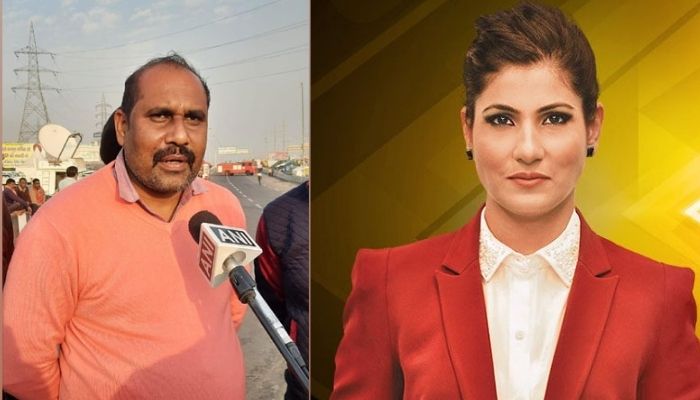
On November 2, Roshni Ali, the woman behind the PIL seeking a blanket ban on firecrackers in West Bengal, stated that she is trying to file another appeal for the same. Notably, on November 1, the Supreme Court of India had set aside the Calcutta High Court’s verdict of the blanket ban on firecrackers in West Bengal. In its judgment, the Supreme Court relied on its own orders that there should be no blanket ban on the firecrackers.
In a video on Instagram, Ali said, “Hi, I am at Calcutta High Court, as you can see. The fight is not yet over. I am going to make an appeal and still fight for our right to breathe. It’s not just the environmental health, but it’s all our individual health that is at stake with such a verdict. It’s not just Calcutta, but the entire nation is watching.”
Hearing a petition filed by the firecracker manufacturers, the Supreme Court found fault with this argument by the High Court. Moreover, the petitioners also stated that the matter of mechanism to verify green firecrackers was never raised during the hearing in the Calcutta High Court. The petitioners had also pointed out various orders by Supreme Court and the National Green Tribunal to argue that the complete ban is wrong.
Calling the High Court order ‘extreme’, the apex court said, “we are convinced that Calcutta High Court should have called upon parties to give an explanation before passing such an extreme order.”
The ban imposed by Calcutta High Court
On October 29, the Calcutta High Court had ordered a complete ban on all kinds of firecrackers throughout the state of West Bengal during Diwali/Kali Puja. Earlier the state government had allowed green crackers for the upcoming celebrations, but the court noted, “Keeping in mind the practical realities, we find that there is no mechanism in place to ascertain whether the crackers being sold/burst are only green crackers in compliance with the norms set in place by the relevant certifying body”.
Roshni Ali alleged she has allergies, and they have started to act up
According to a report in Zee Bangla, Roshni Ali, after the Supreme Court’s verdict, said during an interview with G24 Hour that she has “allergies” that have started acting up. Interestingly, she said so on November 1, three days before Diwali.
A training manual for teachers published by the NCERT has become the subject of much consternation. The training manual, which contained a series of bizarre recommendations, caused a furor on social media with people demanding answers from the government on how such a thing was ever approved.
Among other suggestions, the NCERT training manual suggested that teachers recommend puberty blockers for children. Puberty blockers are medicines that block the natural growth of children and inhibit the development of puberty. The effects are often permanent and it could very well lead to irreversible damage.
In this report, we shall take a look into the project team that came up with the training manual. Since the manual was published by the Department of Gender Studies, it is understandable that those leading the team are from the same department.
Team members from the Department of Gender Studies, NCERT
The Project Coordinator was Dr. Poonam Agrawal, former head of the department. Apart from her, Dr. Mona Yadav, head of the department, and Professor Mily Roy Anand were also members of the team. Needless to say, all three of them are highly experienced and have several degrees to boost their credibility.
According to the NCERT website, Dr. Poonam Agrawal has a specialization in Nutrition (Home Science), Bio-Chemistry, Bio-Technology, Women’s Studies, Vocational Education, International Relations, Educational Research. Dr. Mona Yadav, on the other hand, has specialization in “Girls’ Education and Science Education” while Dr. Mily Roy Anand has the same in History/Gender Studies.
External Team Members
There were 6 external team members for the project. Two among them are professors at Universities. Dr. Rajesh is a Professor at the Department of Adult and Continuing Education and Extension, University of Delhi while Dr. Bittu Kaveri Rajaraman is a professor at the Ashoka University.
Rajaraman appears to use ‘They/Them’ as their preferred pronouns.
Source: ashoka.edu
Apart from the two, there is L. Ramakrishnan, the Vice President of SAATHII. Ramakrishnan has a doctorate degree from the University of Texas.
As per the SAATHII website, “As of 2018, his portfolio includes support to the m-Maitri digital health initiative, to LGBTIQA+ inclusion programs Empower, Access and Vistaara, Project Sambhuya, and Project Svetana. He has previously led programs on mainstreaming and decentralization of HIV/AIDS services, legal and social protection for PLHIV, use of ICT to bridge information gaps, program evaluation, and capacity building of implementers of health interventions.”
It appears that SAATHII has contributed significantly to the publication of the training manual. Founder-president Sai Subhasree Raghavan said as much in a post on Linked.in.
Source: Linked.in
A SAATHII fellow also curates a blog with a racial slur in its name.
Source: SAATHII
The team member, however, who would raise the most eyebrows is Vikramaditya Sahai. He is an associate at the Center for Law and Policy Research (CLPR). After the controversy erupted on social media, several publicly available pictures of Sahai that was posted by “themself” on Instagram went viral on social media.
This is one of the “External Team Members” of the project that produced the woke NCERT training manual for teachers pic.twitter.com/lwbwDKqCUK
The pictures have been designated as “sensitive material” by Twitter, probably due to the extent of skin exposure. Sahai has locked their account on Instagram since then. The CLPR is co-funded by the European Union.
An individual who has posted photographs of “themself” on Instagram that are labeled “sensitive material” by Twitter was approached by NCERT to be part of a team that produced a Woke training manual for teachers. Embarrassing. pic.twitter.com/YgQaS8wgwQ
Dr. Manvi Arora is an independent researcher who was part of the team. The 6th external team member was Ms. Priya Babu, a managing trustee at the Transgender Resource Center.
A young woman who had converted to Islam at the Kozhikode Mukhadar Tarbiathul Islamic Center has made shocking revelations against the Muslim seminary. The woman has accused the head of the centre of inflicting torture and sexually exploiting women and girls under the pretext of ‘teaching’ them Islam.
In her interview with Janam TV, the woman said the chief of the Islamic seminary had sexually abused a large number of girls. The woman compared the centre with prison and said women and girls were proscribed from leaving the religious seminary.
According to the woman, the head of the Centre, a Muslim cleric, raped an 18-19 year old girl one day. The girl was then told that after taking a bath all her sins would be forgiven. Divulging details about how she got to know about the incident, the woman told Janam TV it was the victim herself who shared her ordeal with her.
The woman said the victim was taken away by her family on the same day. The woman provided a window into how the Muslim clerks targeted unsuspecting and vulnerable women and girls to join the religious centre, where they committed unspeakable atrocities against them. The women and girls were befooled into joining the religious seminary under the pretext of offering them a house to live in and money for their expenses.
The girls, the woman said, were asked to stay at the centre for 40 days, during which time the chief of the seminary sought a private audience with each one of them individually. In his room, he allegedly tortured the girls and sexually exploited them, the woman revealed. Talking about the sexual harassment faced by the 19-year-old girl, the woman said the incident took place on June 8 but no official complaint was lodged with the police as the girl was reportedly threatened by the perpetrator against reporting the incident with the police.
Former cricketer Yuvraj Singh in a late-night post on Monday hinted at a comeback in February 2022. The all-rounder had announced retirement from all forms of international cricket in 2019 at a press conference.
Sharing a video of his power shots, Singh wrote on Instagram, “God decides your destiny !! On public demand, il be back on the pitch hopefully in February! Ain’t nothing like this feeling! Thank you for your love and wishes mean a lot to me! Keep supporting it’s our team and a true fan will show his or her support in tough times #jaihind.”
The cricketer best known for smashing six sixes in an over did not clarify if he will be returning to Team India or play for an Indian Premier League (IPL) team. However, the video shared by him was of one of his legendary partnerships with MS Dhoni against England.
Yuvraj Singh, a cancer survivor, had left his fans dejected when he announced a sudden retirement. The former batsman garnered a huge fan following for his explosive and elegant style of batting, some slow left-arm orthodox bowling and swift fielding. His match-winning performances during the 2007 T20 World Cup and 2011 World Cup are still widely recalled.
Meanwhile, Team India is set to face Afghanistan on Wednesday in the ongoing T20 World Cup. After defeats against Pakistan and New Zealand, India’s chances to qualify for the semifinals are almost nonexistent.
The humanitarian catastrophe in Afghanistan is rapidly escalating since the Taliban seized power on August 15, halting most economic activities and plunging the country into a crisis. Poverty-stricken Afghan families are being left with no option but to sell off their young daughters in lieu of money and basic sustenance that would ensure the survival of the rest of the family members.
In recent months, many displaced Afghan families facing hardship and starvation have been forced to make the distasteful decision to sell off their barely adolescent daughters to men 4-5 times their age, as per reports.
Conflict has pushed Afghan families to force their daughters as young as 1.5 years old into marriage in exchange for money. pic.twitter.com/YUHUMcZ25w
One such disturbing story is that of a 9-year-old Afghan girl named Parwana Malik. According to a report by CNN, Parwana’s family sold her to a 55-year-old man named Qorban last month who paid 200,000 Afghanis (about $2,200) in the form of sheep, land and cash to Parwana’s father in exchange for the minor girl.
Parwana’s family of eight, who have been just scraping by at a camp for internally displaced people in the war-torn country’s Badghis district, said they had no choice since jobs were few and foreign aid had dried up since the Taliban took power on August 15.
Speaking to CNN, the distressed and regretful father Abdul Malik revealed that prior to selling off Parwana, he had sold another 12-year-old daughter a couple of months ago. Now he’s been forced to sell another daughter “in order to keep other family members alive.” This decision he said has left him “broken with guilt, shame and worry”.
CNN quoted Abdul Malik as saying: “We are eight family members. I have to sell to keep other family members alive.”
Malik said he had worked tirelessly to find a way to keep his girls from being sold. He went to the provincial capital city of Qala-e-Naw to look for jobs and even borrowed “a lot of money” from relatives, while his wife resorted to begging for food from other camp inmates. But, in order to feed his family, he felt he had no choice.
Parwana, meanwhile, revealed that she wished to study and become a teacher. However, due to her family’s severe financial situation, she is unable to pursue this opportunity. When asked about her impending “marriage,” she expresses concern that the “old man” will beat her and make her labour in his home.
Though extremely heart-breaking, Parwana’s situation is far from being unique. Many more Afghan families have been forced to endure similar anguish in order to survive under the Taliban regime.
Hunger and poverty
Last month ANI had reported how poverty and hunger had compelled an Afghan woman, who was displaced from the Baghlan province to Kabul after the Taliban take over, to sell her one and a half-year-old infant for treating her another 13-year-old daughter, who was very sick and needed immediate treatment. Lailuma, who used to live in a tent in Kabul had sold her baby for 30,000 Afghani (INR 24,850 approximately).
Meanwhile, another mother Fahima cried inconsolably after her husband was compelled to sell their six-year-old Faristehand 18-month-old Shokriya to withstand the poverty that has engulfed western Afghanistan since the emergence of the Taliban at the helm of affairs.
“My husband said if we don’t give away our daughters, we will all die because we don’t have anything to eat,” said Fahima, echoing the sentiments of many such impoverished Afghan families.
Though extremely disturbing, this woeful practice is not new in Afghanistan. In fact, it’s reminiscent of the Taliban rule in the 1990s (Taliban 1.0) when the poverty-driven Afghan families too, were forced to go through a similar ordeal in order to survive.
When the Taliban took over Afghanistan many women had come up to narrate their ordeal during the Taliban rule in the 1990s.
“Living under the rule of the Taliban regime is like being in an abusive relationship. At first, it’s good. They make lots of promises, they watch their steps, they even deliver on some of their promises. But while you are being lulled into a false sense of security, they are making their plans,” BBC quoted one Afghan lady Friba as saying.
Friba narrated her story of how her family were torn apart when her father disappeared during Taliban rule in 1999. “Life under the Taliban went from a living hell to a black hole of hopelessness. As we watch the news of the Taliban taking over Afghanistan again I fear that history will repeat itself. I am married now and live in England. But I am afraid for my mother, sisters and brother who are still in Afghanistan, and for the millions of families who will suffer pain and loss as we did. Their only crime, being born in Afghanistan,” Friba rued.
OpIndia has also reported extensively on how women are facing a tough time under the Taliban rule. In September, women in Afghanistan had again taken to the streets to demand fundamental rights be guaranteed to them under Taliban rule.
Former US President Donald Trump has claimed that Israel literally ‘owned’ the Congress ten to fifteen years ago in the Ari Hoffman Show. In a rant against the members of the squad of the Congress, specifically Alexandria Ocasio-Cortez (AOC) and Ilhan Omar, Trump said that the US congress is now being controlled by these left leaning democrats who hate Israel. He also mentioned that Israel is no longer a force within the US Congress.
Trump: 10 years ago, “Israel literally owned Congress” but now that’s changed with AOC and Ilhan Omar. “Israel had such power, and rightfully, over Congress.” pic.twitter.com/SXjZGYjpp0
The four US congresswomen including Ilhan Omar of Minnesota, Alexandria Ocasio-Cortez of New York, Rashida Tlaib of Michigan and Ayanna Pressley of Massachusetts, also known as the Squad joined the Congress in 2019 and have faced intense scrutiny and criticism from Trump and the Republicans along with the House Speaker Nancy Pelosi, for their attempt to move the Democratic Party leftward.
Trump told Mr Hoffman that “Israel literally owned Congress” for years but now it is no longer a force in the US politics. The former president said that he was surprised by this change and that he had witnessed nothing like that before.
Trump said, “It was so powerful, so powerful, and today it’s almost the opposite.” He added, “Between [Rep Alexandria Ocasio-Cortez] and [Rep Ilhan Omar], and these people who hate Israel … with a passion.”
Notably, Trump had announced earlier that he would be launching TRUTH social, his own social media application. He had mentioned in his statement that the new app would “stand up to Big tech” companies, including Twitter and Facebook. It should be noted that following the January 6 Capitol Violence, former President Trump was banned from social media platforms.
The world leaders and diplomats have been discussing ways to reduce carbon emissions during the Conference of the Parties 26 (COP26) at Glasgow, Scotland. Meanwhile, a report in Bloomberg showed how China is contributing to the increase of toxins in the air more than any country across the globe.
China Baowu, world’s top steelmaker released more carbon dioxide in air last year than Pakistan put together. Similarly, one of the subsidiaries of state-owned Sinopec Group contributed more to global warming than Canada.
Even as China’s President Xi Jinping has promised to zero out emissions by 2060, a study published by Rhodium Group in 2019 suggests that the Chinese companies emit greenhouse gases more than all developed companies combined. If China wants to keep the promise they have made, the major Chinese companies would have to make a major shift from dirty energy to clean energy.
One must keep in mind that the large Chinese companies would not be a party to the negotiations put on the table by world leaders and diplomats with the backing of the United Nations. In this case, the gigantic state-run companies that are playing a major role in global warming will keep adding greenhouses gases to the environment unless the Chinese government itself take some drastic steps to control it.
Lauri Myllyvirta, an analyst with the Centre for Research on Energy and Clean Air (CREA), said, “Emissions of numerous state-owned enterprises in the power, steel, cement, oil refining, and other major emitting sectors are equal to those of entire nations. Once these enterprises align their investments and business plans with the emissions-neutrality target, they can make an enormous contribution, if they choose to.”
Greenhouse gases emission by the manufacturing sector. Source: bloomberg
CREA, a Finland-based environmental research group, has noted down some of the largest emitters from China based on the available public data, including coal use and manufacturing capacity. The estimated CREA presented in their research also includes emissions from company operations and the amount of electricity they use.
The major polluters include many large companies. The biggest culprit is the petroleum industry in China. Petro China Company Limited is responsible for 881 Million Metric tons of CO2 emissions, while China Petroleum and Chemical Corp emit 733 Million metric tons of CO2, which is equal to Vietnam, South Korea, Spain and Canada combined.
Contribution of petrochemical industries in greenhouse emissions. Source: Bloomberg
Thermal plants in China are responsible for around 900 million metric tons of CO2 combined. The steel industry of China emits over 750 Million metric tons of CO2. Bloomberg noted, “China Baowu, the world’s top steelmaker, put more CO2 into the atmosphere last year than Pakistan.” With 158 million metric tons of CO2 emissions, SAIC Motor Corp’s CO2 emission is equal to that of Argentina.
While China says it is trying to curb the emissions, it does not look like the manufacturing giant would start controlling the emissions anytime before 2026. It is noteworthy that in China, solar and wind power are much cheaper compared to fossil fuels. While the world is adopting electric vehicles, China is the leader in both electric vehicle manufacturing and battery technology. But the emissions currently are on the rise instead of slowing down.
The six sectors that China must work on to reduce emissions
Power: China has to shut down thousands of coal-powered plants and dramatically increase the production of clean energy. While China is building a 100 GW solar plant in the desert, it must be kept in mind that the state-owned firms have proposed 43 new coal-based powerhouses. Some of the top polluters in the sector include Huaneng Group Co., Huadian Corp., China Energy Investment Corp., State Power Investment Corp, and Datang Co.
Steel: The report suggests that 21% of coal burnt in China is linked to the steel industry. In the last decade, the emissions by this sector have increased by 40% despite energy consumption to produce steel has significantly fallen. While Chinese companies are trying to shift to clean energy, it would take notable time to completely eliminate dirty energy from the sector.
Constructions: 30% of the total emissions come from this sector in China as the nation is building skyscrapers and expanding cities at a record pace. There are ways to control the emissions in the construction sector, but it will greatly impact the economy of the country.
Petrochemical: This sector is not only responsible for the onsite emissions but also off-site emissions as fuel produced by this sector are used in vehicles and power generation. As steps taken by companies alone would not be enough to control emissions, according to Luxi Hong of BloombergNEF, “China’s oil companies will also have to develop new business opportunities that help them shift away from fossil fuels.”
Transportation: China uses more than half of its oil in transportation. While passenger vehicles are easy to convert to electric, the main issue remains with the trucks, trains, aeroplanes etc.
Agriculture: As food processing is all mechanized, the energy consumption in the agriculture sector has surpassed the fertilizer industry. On the other hand, China is the world’s largest pork consumer.
According to CREA, the top five pig-breeding companies together raise over 45 million pigs that produce 14 million tons of CO₂ equivalent greenhouse gases, and this is only 10% of the total pigs raised across China.
For a country like China, reducing CO2 and other greenhouse gases emission is a big challenge. While China is struggling to reduce dirty energy consumption, the world is paying the price in the form of toxic air.
Actors Sara Ali Khan and Janhavi Kapoor recently visited the Hindu shrine of Kedarnath together. The pictures of the duo have gone viral on the internet in which the two actors could be seen performing a puja at the revered Kedarnath temple.
But Sara’s visit to Kedarnath has not sit well with Islamists, who took to reviling the actor for visiting the Hindu shrine despite being a Muslim. Earlier yesterday, actor Sara Ali Khan came under the firing line of the Islamists after she posted pictures from her visit to Kedarnath temple.
“Back to where it all began. #JaiBholenath #grateful #blessed,” Sara had posted on her Instagram account along with sharing an array of pictures of her visit to Kedarnath.
Sara was evidently referring to her debut movie ‘Kedarnath’ with which she commenced her Bollywood career. The movie was shot in and around Kedarnath shrine and was based on the devastating floods that wreaked havoc in Uttarakhand in 2016. Besides Sara, the movie had deceased actor Sushant Singh Rajput in the main lead.
However, Islamists on Sara’s Instagram comments section were evidently angry with the actor for being a Muslim and yet visiting a Hindu shrine. A barrage of despicable comments were made against the actor because she visited the hallowed shrine of Kedarnath, the abode of Hindu God Lord Shiva.
Source: Instagram
While many Islamists abused her with choicest of imprecations, others accused her of bringing disgrace to Muslims by visiting a Hindu shrine and praying in front of an idol. It is worth noting that idol worshipping or idolatry is considered as an unpardonable sin as per Islamic texts and carries strict punishment. The Qur’an considers shirk as a sin that will not be forgiven if a person dies without repenting of it.
One of the users who took offence at Sara for visiting Kedarnath suggested her to take lessons from her father Saif Ali Khan before paying a visit to a Hindu shrine. He further asked her to visit Hindu places if those visits are meant for shooting purposes but asked her to refrain from paying her obeisance to Hindu Gods.
Source: Instagram
Many other Islamists raised question on her religion, asking her if she is a true Muslim.
Source: InstagramSource: Instagram
Celebrities attacked by Islamists for not being ‘good Muslims’
This is not the first time that Muslim celebrities have come under attack from Islamists. Earlier this year, Bollywood superstar Shah Rukh Khan was subjected to online attack by Islamists after she shared a murti of Lord Ganesha ahead of visarjan following the Ganesha Chaturthi. What’s more? It was the fourth time in a row that Islamists had castigated the actor for partaking in Ganesh festivities.
Former Indian cricketer Mohammad Kaif has also often found himself at the receiving end of online attack by Islamists for supporting causes that ran counter to the worldview held by the Muslim fundamentalists. He was abused for urging haters to not spew venom over Ram Mandir. He was also denigrated for supporting PM Modi’s call for janta curfew to combat the coronavirus outbreak and for celebrating the International Yoga Day.
The relentless ban on firecrackers year after year, just ahead of Diwali has left the firecracker manufacturers and sellers in a lurch. Bypassing the hassle, an NGO in Vadodara has revived a 400-year-old technique to make eco-friendly firecrackers using clay.
Inspired by Prime Minister Narendra Modi’s call for ‘Vocal for Local,’ an NGO named Pramukh Parivaar Foundation has helped in the revival of this art which was being kept alive by some craftsmen in Kumharwada.
Talking about Kothis (clay-based firecrackers), Nital Gandhi, the president of Pramukh Parivaar Foundation said, “These firecrackers are 100 per cent indigenous. Kothis are made out of clay. A potter made them using clay. Chakri is made out of paper and bamboo.”
“Our aim is to provide as much employment to the local artists. These are eco-friendly. They dissolve after being used. Also, they are safe for children. Anyone can use these firecrackers. Our theme is ‘Vocal for Local’,” Gandhi said further.
“We can make more than 1 lakh Kothis”
The revival of the art has certainly made this Diwali happy for the local craftsmen who had given up on the art a few decades ago. Crediting Pramukh Parivaar Foundation for reigniting interest in Kothis, Raman Prajapati, a craftsman said, “It is a 400-year-old way of making crackers. Older people used to make Kothis. 20 years back I stopped because it was not profitable.”
“But then Nital bhai arrived and I showed him samples of a few Kothis. Then I arranged 2 tractors worth of clay and made them. I got to earn during this Diwali. We can make 1 to 5 lakh Kothis,” Prajapati added.
“Is it a celebration or mourning”
Troubled by the crackdown on firecrackers in the garb of controlling air pollution, the firecracker traders lashed out at the government for imposing a ban.
Harjeet Singh Chabbra, General Secretary of Firecracker Association in Delhi’s Sadar Bazar, in an interview to a local news channel had said, “If Diwali will not be celebrated in India then do we expect it to be celebrated in Pakistan?”
Chabbra further said that he has never witnessed such conditions and bans in his 20 years of career. “Are we celebrating a festival or mourning someone’s death? We have to beg the Supreme Court to allow us to sell crackers on Diwali living in India,” had said the visibly upset trader.
Manufacturers in the firecracker town of Sivakasi in Tamil Nadu, which produces over 90 per cent of firecrackers in the country, had predicted a loss of around Rs 500 crore this year due to the ban in these states.
Sivakasi-based T Kannan, Director of Sree Balaji Fireworks, in a statement to media had said, “The production this year is only 50 per cent of last year. Around Rs 3,000-crore worth of firecrackers were produced in 2020 and this year it would be around Rs 1,500 crore. After the ban, the impact would be around Rs 500 crore losses.”
The Indian cricket team and Star Sports India were on Tuesday at the receiving end of online criticism after the latter’s official Twitter account posted a promotional video of the upcoming series between India and New Zealand starting November 17.
The post talked about the epic rivalry between India and New Zealand and said it is time to settle scores with the Kiwis, referring to the number of defeats India had suffered at the hands of New Zealand.
Top two sides ? One EPIC rivalry ? Cricket comes back to India ❤️#HisaabBarabar – it’s time to settle scores with the Kiwis! ⚔️
However, the timing of the post raised the hackles of the Indian cricket fans on Twitter, who are still smarting from the embarrassing drubbing India suffered in its T20 match against New Zealand a couple of days ago.
Several social media users did not take Star Sports India’s promotional campaign for the upcoming India-New Zealand series kindly amidst the uncertainty over India’s qualification for the advanced stages of the ongoing T20 world cup.
Netizens mock Indian cricket team and Star Sports India for promoting upcoming series against NZ
One Twitter user was quite laconic in voicing what millions of Indian cricket fans are currently feeling.
— India’s Pace Attack At #T20WorldCup (@Testticket1) November 2, 2021
Yet another user derisively mocked the promotional video calling for revenge by tweeting India would avenge T20 world cup’s defeat by winning PayTM Pan Parag trophies.
ICC tournament? Nahi Bhai We Will take revenge by winning paytm Pan Parag trophies
Then there were others who poured scorn over the Indian cricket team and Star Sports India for promoting the upcoming series with New Zealand after losing a match against them in the T20 world cup.
On Sunday, October 31, 2021, India suffered another humiliating defeat, this time against New Zealand in their second match of the group stage of the T20 World Cup. India had lost its first against Pakistan a week ago on October 24. After India’s defeat against the Kiwis on Sunday, India is virtually out of contention for the semis. It, however, still has a small chance to qualify for the knockouts but that rests solely on other teams’ performance in the group stage.