Home Blog Page 3883

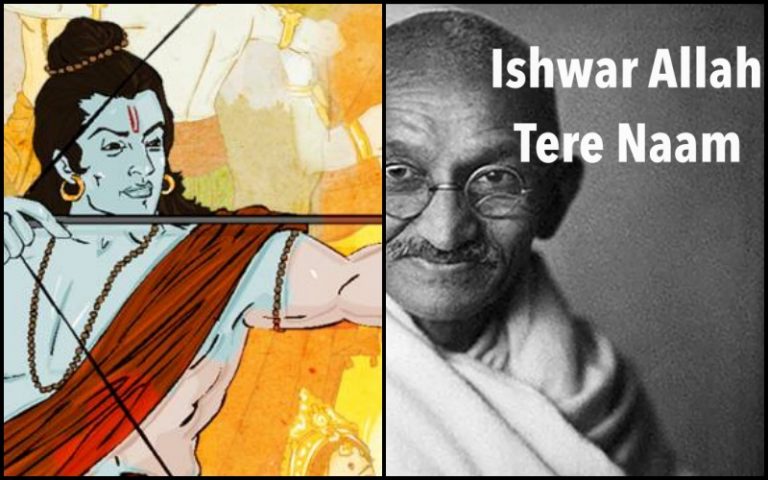
On Gandhi Jayanti, read how Hindu bhajan ‘Raghupati Raghav Raja Ram’ was corrupted to include ‘Allah’

2 October 2021 marks the 152nd birth anniversary of Mahatma Gandhi, also known in India as the ‘Father of the Nation. Born into a Gujarati Hindu Modh Bania family in the coastal town of Porbandar, Gandhi completed his education from England and from there went to South Africa to practice law.

He later returned to India and joined the country’s independence struggle against the oppressive British rule. Among other things, he experimented with the organisation of daily prayer meetings aimed at achieving reconciliation between different communities, most notably Hindus and Muslims. During these meetings, Gandhi encouraged community singing of popular bhajans and religious hymns and discussed at length their lyrics and content.

Gandhi tampered with the lyrics of a Hindu religious bhajan to appease Muslims

One of the hymns that became a common feature in Gandhi’s prayer meetings was “Raghupati Raghav Raja Ram”. The bhajan was first used by Gandhi during his 241 miles march to Dandi during the Dandi March in 1930 to oppose a new law that the British enacted to restrict Indians from producing or selling salt. It was during this movement that Gandhi popularised the use of “Raghupati Raghav Raja Ram” as the marchers sang to keep their spirits up.

However, contrary to the popular imagination, Gandhi was not the creator of the hymn. The lyrics were taken from Shri Nama Ramayanan, an old religious text penned by Sri Lakshmanacharya, and modified by Gandhi. Another myth that became popular with the growing popularity of the hymn was that it is a patriotic song aimed to project a secular composite image of the Indian society; however, original composition as it was sometimes referred to as Ram Dhun, could be best described as an ode glorifying and praising Lord Ram. The original lines went:

Raghupati raghava rajaram,
patita paavana sitaram.
Sundara vigraha meghashyam,
Ganga tulasi salagram.
Bhadra girishwara sitaram,
Bhagat janapriya sitaram.
Janaki ramana sitaram,
Jaya jaya raghava sitaram

Here’s a video composition of the original Hindu bhajan:-

Gandhi’s version, which was mainstreamed by him and his supporters during the Dandi march and later during his prayer meetings, runs:

Raghupati Raghava Rajaram,
Patita paavana sitaram,
bhaj pyaare tu sitaram
Ishwar Allah Tero Naam,
sabko sanmati de bhagwan.

This bastardised version of the religious hymn instantly became popular, partly because it was promoted by Gandhi himself and also because of its overtly secular connotation. The bhajan was composed into a tune by renowned musicologist Pandit Vishnu Digambar Paluskar, thereby making it ripe for mass consumption and in the process further popularising it.

Even Bollywood played its part in contemporising the adulterated version of the religious hymn, with Hindi films like Lage Raho Munnabhai and Kuch Kuch Hota Hai featuring the Gandhian edition of the devotional song. Besides, it was also the opening track on the Afrobeat band’s album Osibisa – Unleashed – Live in 1982.

With its lyrics manipulated, Muslims would have had no problems extending their support to Gandhi and joining him in his prayer meetings that were aimed at reconciling differences between the two communities and forging communal harmony. However, it was always the responsibility of the Hindu majority to accommodate the demands of the Muslim minority while expecting nothing in return.

Gandhi showed unmatched alacrity in distorting the lyrics of a Hindu religious song to address the reservations held by Muslims but never did he once denounce the verses in the Holy Quran that call idol-worshipping a sin and ordain capital punishment for idolatry.

The lyrics were distorted and the song bastardised by Gandhi to appease the Muslim community, who would have otherwise opposed the recitation of hymn during prayer meetings citing it to be a song extolling Lord Ram and therefore incompatible with the Islamic doctrine of the singularity of God.

Gandhi’s community praying rituals went so far as to include the chanting of the Muslim Kalma. But there are no reports or historical evidence that suggest Gandhi had tweaked Quranic verses to allay concerns of Hindus or fiddled with the Muslim Kalma to make it compatible with his avowed stand of mutual coexistence and communal harmony. It is perhaps because of this unabashed duplicity that Gandhi’s prayer meetings, in the run-up to the partition, became polarised as questions were being raised on his wisdom to include Muslim Kalma during the prayer meetings.

Gandhi’s repeated betrayal of Hindus to maintain the charade of composite unity

The adulteration of Ram Dhun was but one incident where Gandhi displayed little sensitivity towards the feelings of Hindus. For him, the sanctity of the Hindu scriptures and religious songs was a fair game, which could be violated if that helped in placating Muslim concerns. Of course, the opposite was not true as Gandhi studiously avoided asking Muslims to embrace modernism and shed their puritanical interpretation of Islam.

Similarly, there were other incidents too when Gandhi had displayed an abject lack of desire in upholding the interests of Hindus. In 1920, there was an uprising among Indian Muslims in support of the Islamic caliphate, in the wake of World War 1. Dubbed as the Khilafat movement, the aim was to establish Islamic dominion in India,l by destroying the British empire, with the support of the Ottoman Empire (which was eventually exterminated in late 1922). Despite its supremacist undertones, the Indian National Congress under the leadership of Gandhi backed the Khilafat movement in 1920, foreseeing it as a great opportunity to cement Hindu-Muslim ties.

Instead, it turned out to be the harbinger of destruction that followed in its wake. Due to Gandhi’s patronage, the Khilafat movement gained force in Malabar as well, which ultimately touched off the horrifying Hindu genocide in the region, also known as the Moplah riots 1921, one of the worst pogroms against Hindus recorded in the annals of Indian history.

At the time of partition, when Hindus and Sikhs were mercilessly butchered in Pakistan, Gandhi tried defending the massacre as fatalism and argued that Hindus who died in the attack had gained something since the killers were none other than their Muslim brethren.

He made similar comments to the Hindu refugees from West Punjab, asking them to return home, even if they die in doing so. Gandhi wanted Hindus who had successfully managed to escape their death by crossing over to India from Pakistan to return and embrace their fate. Thus, Gandhi’s application of ideals was not only patently unjust, radical, and misplaced, but also highly skewed, where Hindus were perpetually at the receiving end of communal bigotry, with atrocities committed against them either whitewashed or justified using moralistic explanations.

Gandhian secularism continues to afflict India even today

Unfortunately, this perverted version of secularism that Gandhi championed survived series of spectacular failures, most notably the country’s partition in 1947, and it continues to ail India even today. If anything, the perversion of secularism has only grown worse, with left-leaning intelligentsia going into overdrive to guilt-trip Hindus into believing that country’s pluralism is in danger because of their assertiveness of Hindu identity.

It is this farce of secularism that Gandhi’s bastardised version of a Hindu religious song is celebrated and glorified while a request for a frank discussion on Prophet Muhammad is met with calls of “sar tan se juda” or decapitation. Far from condemning people who issued such threats, the left-liberal secularists rationalised their intimidation saying they were provoked into doing so.

Similarly, earlier this year UP Shia Waqf Board chairman Waseem Rizvi had filed a petition seeking the removal of 26 verses from the Quran that he claimed supported terrorism. This triggered massive outrage, with hundreds and thousands of protesters gathering in the Jama Masjid to protest against the plea.

In a memorandum sent to the Centre and the State governments, Muslim participants demanded the ‘immediate arrest’ for his satanic act. They warned that inaction against Rizvi would imply that the current political dispensation was in support of the petition. “Waseem Rizvi has now indulged in insulting the Holy Quran, hence he is no more a Muslim in faith,” they emphasised. Furthermore, Muslim bodies demanded that he should not be appointed in any Muslim institution.

In this case, too, the self-appointed custodians of India’s secularism did not raise their voice in support of Waseem Rizvi or his demand for amending the Holy Quran. Instead, they passively watched over a large number of Muslims who took to the streets opposing the UP Shia Waqf Board chairman and calling for his arrest. For such pseudo-seculars, degradation of a Hindu religious hymn for accommodating minority concerns is a completely justifiable act but when it comes to supporting much-needed reforms brought about in Islam, they all lose their voice.

As the template set by Gandhi himself, secularism in India is a one-way street where the burden of preserving the pluralistic fabric of the nation rests solely on the shoulders of Hindus while the members of other communities are free to act as per their whims and fancies, having no obligation to uphold the ideals of communal harmony and societal unity.

‘May your reign continue’: Kangana Ranaut becomes ODOP ambassador, gifted silver coin from Ram Mandir Bhumi Pujan by Yogi Adityanath

0

On Friday (October 1), Bollywood actress Kangana Ranaut met the Uttar Pradesh Chief Minister Yogi Adityanath in Lucknow while shooting for her upcoming film ‘Tejas’ in the State.

During the meeting, Yogi Adityanath gifted a silver coin to Kangana Ranaut that was used during the ‘Bhoomi Pujan’ of Ram Mandir held on August 5, 2020. He also invited her to visit the Holy land of Ayodhya. The Uttar Pradesh Chief Minister also appointed the actress as the brand ambassador of the State government’s flagship programme, ‘One District One Product’ (ODOP). The scheme seeks to promote indigenous products like rice, black salt, zara zardozi that are native to each district of Uttar Pradesh.

In a tweet, Additional Chief Secretary wrote, “Famous Actress Kangana Ranawat met Yogi Adityanath, Hon’ble Chief Minister of UP, who presented her with an ODOP product. Kangna ji will be our Brand Ambassador for ODOP.”

The Bollywood actress also took to Instagram to share her appreciation for the UP CM. She had shared a muted video of her conversation with the caption, “He is exceptionally vibrant, genuine and motivating in person…. What a pleasure and privilege to have an audience with this young, fiery and one of the most loved and popular leaders of this nation.”

The leading Bollywood actress had also shared the picture of the silver coin that was offered during the Bhumi Pujan held last year. She appreciated the work undertaken by Yogi Adityanath and wished him luck for the upcoming 2022 Vidhan Sabha polls. She wrote, “I thanked Uttar Pradesh government for their cooperation in our film ( Tejas) shooting and wished Honourable Chief Minister best of luck in his upcoming election…I emphasised that we had a tapasavi Raja from Uttar Pradesh Shri Ram Chandra and now we have Yogi AdityaNath…May your reign continue Maharaj ji.””

Kangana Ranaut added that she is making a new film titled, ‘Aparajitha Ayodhya’ on the ancient city and the Ram Janmabhoomi dispute. “I am making a film called Ayodhya on Ram temple…This is a good omen aur how we call in Hindi Aashirwad…” she wrote on Instagram. Reportedly, the film on Ayodhya has been written by KV Vijayendra Prasad and will be directed by the actress herself.

In a statement, Ranaut said, “The plan wasn’t for me to direct the film. I started it as a project that I worked on from the concept level. I wanted to produce it and rope in another director for it. I was quite busy at that time to even think of a direction. However, the script that KV Vijayendra Prasad shared was that of a film set on a large canvas, somewhat on the lines of the history that I have directed before. My collaborating partners were also keen that I direct it. Eventually, even I felt that maybe it’s best if I helm this film. So, it all happened organically.” The actress is currently shooting for her film ‘Tejas’ and is directed by Sarvesh Mewara. It is based on the landmark decision of the Indian Air Force (IAF) in 2016 to induct women in combat roles.

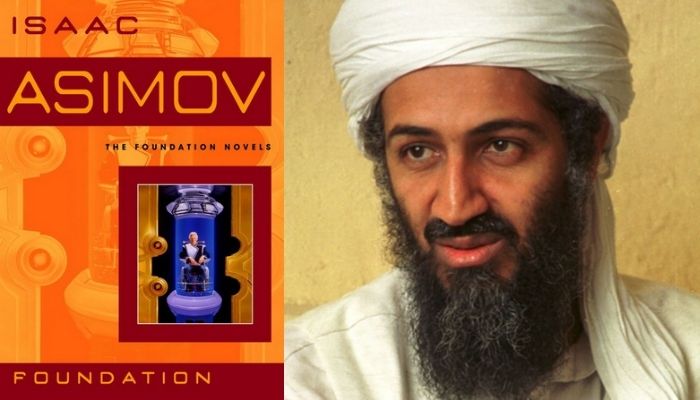
Did you know? Osama bin Laden may have gotten the name ‘Al-Qaeda’ from Isaac Asimov’s pathbreaking Sci-Fi saga ‘Foundation’

On September 11, 2001, a group of 19 Al Qaeda terrorists orchestrated a total of four terror attacks, killing about 3000 people during the incident. The terror attack, committed by Al Qaeda terrorists and led by Osama bin Laden, marked the dawn of a new era in American history. It embarked upon a series of regime change wars in the name of ‘War on Terror’. Accordingly, Osama bin Laden was executed on May 2, 2011, in Pakistan’s Abbottabad, by the US Navy Seals. After staying for an additional 10 years in Afghanistan, United States withdrew all its troops from the country by August 31.

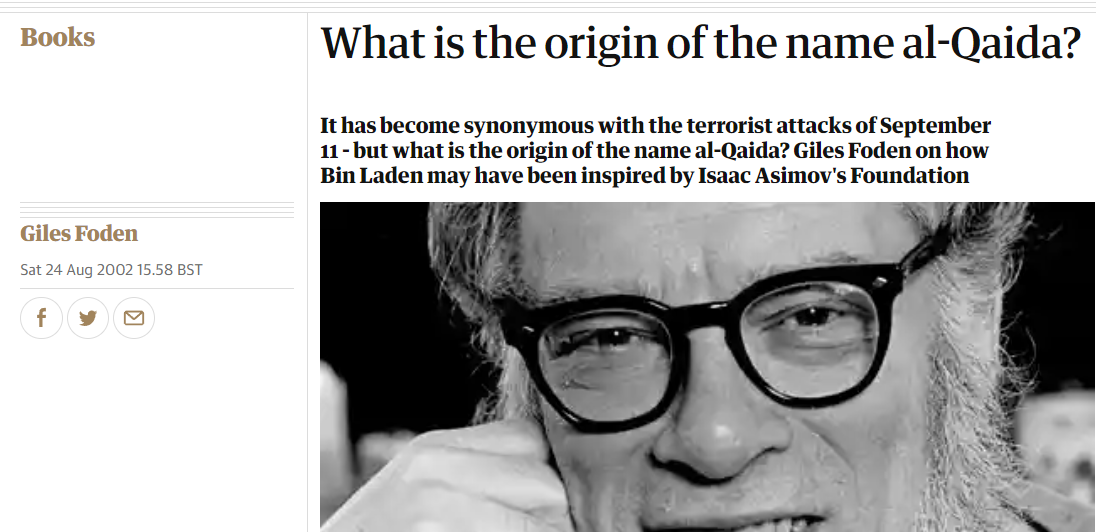
It has been 20 years since the deadly 9/11 attacks shook the conscience of humanity. However, it remains a matter of intrigue as to why Osama bin Laden chose to name his terror outfit as ‘Al-Qaeda’, despite not holding any significance in the Arabic/ Islamic context. An article published in The Guardian on August 24, 2002, sought to unravel the mystery behind the nomenclature. It was titled, ‘What is the origin of the name al-Qaida?’

Penned by Giles Foden, author of ‘The Last King of Scotland’ that inspired a critically acclaimed movie of the same name, the article claimed that the inspiration behind naming the terror organisation as ‘Al-Qaeda’ came from the groundbreaking 1951 sci-fi novel ‘Foundation’ by Isaac Asimov.

Screengrab of the article published by The Guardian

While attributing the findings to a scientist named Dmitri Gusev, the article claimed that the classic by Asimov was translated into Arabic and titled, ‘al-Qaida.’ Foden stated that the word ‘Qaida’ meant foundation/base or groundwork. Asimov (1920-1992) was a Russian author who lived a considerable part of his life in the States. He is regarded as one of the greatest science fiction writers. Dmitri Gusev argued that Laden not only borrowed the name of the book but the plot of the classic as well.

Plot of Isaac Asimov’s Foundation

The ‘Foundation’, which was eventually converted into a series, revolved around the supremacy of a 12000-year-old Galactic Empire. The protagonist, Hari Seldon, is the creator of a branch of science known as ‘psychohistory’. He is resolute in his mission of protecting future generations from ignorance, warfare and barbarism and predicted the fall of the Empire.

To accomplish this, Seldon created a group of scientists and scholars and named it ‘The Foundation’. “But soon the fledgling Foundation finds itself at the mercy of corrupt warlords rising in the wake of the receding Empire. Mankind’s last best hope is faced with an agonizing choice: submit to the barbarians and be overrun — or fight them and be destroyed,” read the summary in Goodreads.

Edward Gibbon’s ‘Fall of the Roman Empire’ exerted significant influence on the Sci-Fi saga.

The link connecting Osama bin Laden and the science fiction series

Foden said, “Science fiction has often featured “evil empires” against which are set utopian ideas whose survival must be fought for against the odds by a small but resourceful band of men.” The author Giles Foden argued that such ‘evil empires’ (supposedly under President Ronald Reagan who initiated the war in Afghanistan) can only be fought by intelligent idealists-cum-psychopaths (referring to Osama bin Laden), who might draw inspiration from fictional sci-fi characters such as Hari Seldon.

Just like the protagonist, Laden sent pre-recorded video messages to his followers and crafted his geopolitical strategy in a similar fashion. Seldon took into account the intergalactic megatrends and local reactions to them. The strategy bore uncanny resemblance to the one adopted by Osama bin Laden against the growing phenomenon of ‘globalisation’ and an interconnected world. “So did Bin Laden use Foundation as a kind of imaginative sounding-board for the creation of al-Qaida? Perhaps reading the book in his pampered youth, and later on seeing his destiny in terms of the ruthless manipulation of historical forces?” Foden inquired.

Plausibility of the ‘Foundation theory’ and its influence on the slain terrorist

Since his ‘pampered’ childhood, Osama bin Laden had access to Western media and products. His biographer Yossef Bodansky argued that he was born and raised in an affluent family. Bodansky pointed out that Laden steered away from the ‘Muslim lifestyle’ and spent time in bars, casinos and amongst women in Lebanon’s capital of Beirut. However, all of it changed after he met a radical Islamist preacher from Palestine named Abdullah Azzam. It is assumed that the slain terrorist perhaps read an English copy of the book during his time in Beirut or the US or Wembley in London.

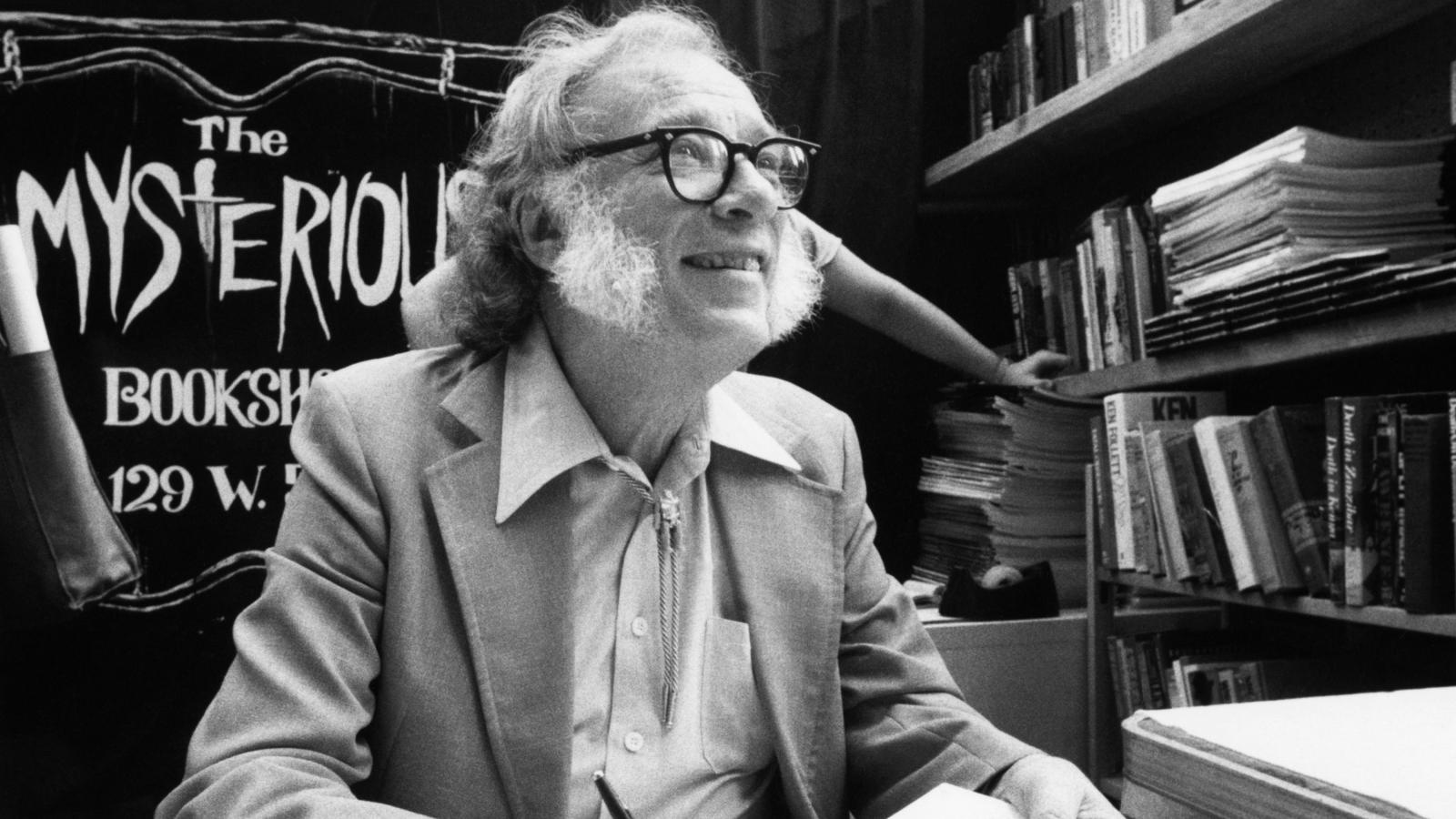
Russian author and Sci-fi novelist Isaac Asimov, image via QZ

Interestingly, the Arabic version of the Foundation was not reprinted after 1972 due to Asimov’s religious affiliation to Judaism. This brings back the spotlight on the timing of Laden’s potential exposure to the science fiction series. Citing an expert in Middle Eastern affairs, popular novelist China Miéville claimed that the ‘Foundation’ theory was the only plausible explanation behind naming the terror outfit ‘Al-Qaeda.’ He added that the word had no political precedent in Arabic and had continued to baffled experts.

The sci-fi writer, Isaac Asimov, died at the age of 72 in New York City in 1992. About 9 years later, Osma bin Laden engineered the most deadly terror attack of the 21st century in the same city. Foden noted, “One can’t blame Asimov for fueling the swollen fantasies of the murderous. It is the last thing this committed pacifist (“violence is the last refuge of the incompetent”) would have wanted. He may not be the only famous sci-fi author to have been taken up by lunatics, anyway.”

‘Foundation’ has influenced a great many others, in great positions of power. Tesla CEO Elon Musk and Amazon founder Jeff Bezos are two of the most prominent individuals that come to mind. Along with Frank Herbert’s Dune, ‘Foundation’ has been one of the ‘foundational texts’ of modern Sci-Fi. Apple TV has created a TV adaptation of the series, two episodes of which have been released so far, with the 3rd to be released on the 1st of October.

David Villeneuve has directed the most recent Big Screen adaption of Dune, to be released across theaters on the 22nd of October.

Other theories suggesting the origin of ‘Al-Qaeda’

Foden claimed that the term Al-Qaeda was first used by an American newspaper in 1996 to refer to terror outfit of Biden Laden (known as Islamic Salvation Foundation until then.) It alleged that the term gained prominence following the US embassy bombings in East Africa in 1998. At that time, the Federal Bureau of Investigation (FBI) and Central Intelligence Agency (CIA) also began using ‘Al-Qaeda’ as an ‘umbrella term’ for several terror outfits run by Laden.

According to researcher Rohan Gunaratna, the name of the terror organisation was derived from the concept of ‘al-Qaida al-Sulbah’ (loosely translated as the solid base). He stated that the concept featured in an essay authored by the ‘mentor’ of Osama Bin Laden i.e. Abdullah Azzam, who was killed in a car bomb attack in Peshawar (Pakistan) in 1989. Other theories include claims that the father of Osama bin Laden owned an estate named ‘al-Qaida’ in Saudi Arabia or Yemen. Another theory suggests that it was the name of a construction firm owned by the family. One of the other stories that gained prominence recently was that ‘al-Qaida’ was a ‘protected region’ in communist-ruled Afghanistan.

Shiv Sena MP Sanjay Raut promises to shut down Casinos in Goa if the party is voted to power

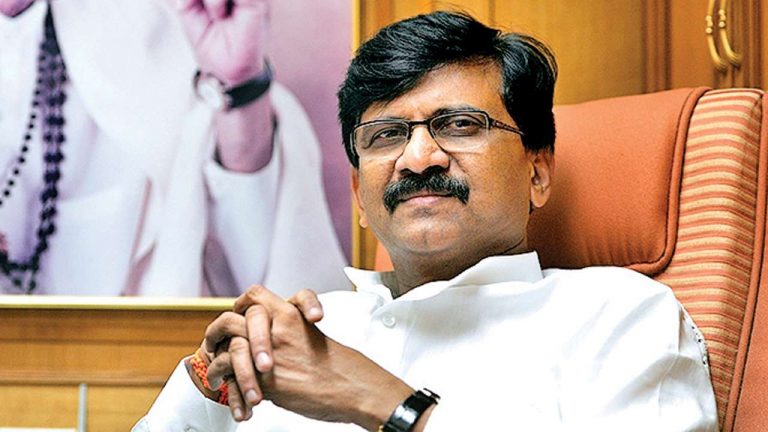
As Shiva Sena declared to field candidates in 22 to 25 seats in the upcoming Goa elections, MP Sanjay Raut, while addressing the press promised to shut down the casinos in the state if the party is voted to power.

With the 2022 Goa Assembly Elections, there are several smaller parties that have thrown their hat in for the electoral race. Shiv Sena is not the only regional party that has decided to contest in Goa with AAP and TMC also hoping the make a dent. Regarding AAP and TMC’s entry into the political scene in Goa and contesting elections, Raut said “Have heard that TMC is also fighting the polls in Goa. The political parties from Delhi and West Bengal are contesting in Goa. So many leaders are switching sides. What we are currently witnessing in Goa is a political carnival,” 

Sanjay Raut seemed optimistic about the chances of Shiv Sena and spoke about Shiv Sena’s emotional and cultural connection with Goa and its strong presence in the state, “We are emotionally and culturally connected to Goa. We have our own base and we are sure to win majority seats with it”.

Earlier this year, Sanjay Raut gave an interview to Aaj Tak where he had suggested that UPA should be led by Sharad Pawar to regain its dominance in national politics. He also added that UPA needed restructuring and support of all the regional parties to take the BJP head-on. The Shiv Sena MP Raut also sent a warning to the Kannadigas in Mumbai over the enduring linguistic disputes in Belagavi and the bordering districts that are a bone of contention between Maharashtra and Karnataka. He claimed that when Marathi-speaking people were attacked in the border district, Shiv Sainiks retaliated by vandalising transport buses belonging to Karnataka coming into their state.

Pakistan: Balochistan government orders govt officials to set ‘Pakistan Zindabad’ as ringback tone in their phones

On September 29, the Balochistan government in Pakistan issued an order directing the senior officials and heads of various departments to set their mobile phone ringback tone to “Pakistan Zindabad”, according to a Dawn report.

A copy of the order was available on the internet that said the decision was made under the Chairmanship of the Chief Secretary for the setting up of mobile ringback tone of administrative secretaries, additional secretaries and others to “Pakistan Zindabad”. Ringback tone or caller tune refers to the sound that telephone callers hear when the phone they are calling is ringing. Telecom operators allow customers to set custom tones to replace the default tone.

The order stated, “The Government of Balochistan, Science and Information Technology Department has conveyed that in pursuance to the decision made in the meeting held under the Chairmanship of worthy Chief Secretary, for setting of mobile Ring-Back Tone “Pakistan Zindabad” by Administrative Secretaries, Additional Secretaries and Deputy Secretaries and head of attached Departments on their cell/contact numbers.”

The order also requested strict compliance from all the concerned officers mentioned. According to reports, the additional secretaries of S&GAD were to ensure their subordinates also apply the same ringback tones on their mobile phone numbers.

The move by the Balochistan government to fix the ringback tones of senior officers triggered some strong reactions on Twitter.

A Human Rights Activist named Abdulla Abbas Baluch quoted Martin Luther King Jr. saying, “Nothing in the world is more dangerous than sincere ignorance and conscientious stupidity.”

Another user mentioned in her tweet that “Patriotism and religion is the last refuge of scoundrels.”

A user named Raja Ali Saleem questioned the motive behind the order and asked if the order would increase love for Pakistan or reveal traitors.

Saleem also claimed that the order would only antagonize the Balochs.

The order comes after a statue of Mohammad Ali Jinnah exploded in a blast in the port city of Gwadar last Sunday. According to reports, the statue, which was installed in June earlier this year at Marine Drive was blown up by placing an explosive device beneath it. The Baloch Liberation Front had reportedly claimed that they were behind the explosion.

Balochistan’s former home minister and current Senator Sarfraz Bugti had said, “The demolition of Quaid-e-Azam’s statue in #Gwadar is an attack on Ideology of Pakistan. I request authorities to punish the perpetrators in the same way as we did with those behind the attack on Quaid-e-Azam residency in Ziarat.” 

But on the other hand, Baloch people celebrated on social media and stated that they do not identify Jinnah as their leader.

While new Congress leader Kanhaiya Kumar claims he will do ‘Tukde-Tukde’ of BJP, RJD says he is another Sidhu who will destroy Congress

The new Congress entrant Kanhaiya Kumar has claimed that he will do ‘Tukde-Tukde’ of BJP. Speaking to NDTV, the former JNUSU president and the former CPI leader, who had failed to impress the people of his hometown of Begusarai in Bihar and suffered a humiliating defeat in the 2019 election at the hands of the BJP candidate Giriraj Singh, has claimed that he would not let BJP win the upcoming assembly elections in Gujarat.

“The BJP calls me ‘Tukde-Tukde gang.’ I am ‘Tukde-Tukde’ for the BJP, and I will do ‘Tukde-Tukde’ of BJP”, Kanhaiya Kumar told NDTV in an interview. Echoing the Congress party’s senior leader Rahul Gandhi’s sentiments, he added that “this party (BJP) considers Godse the father of the nation, not Gandhi. They only praise Gandhi in front of [US President Joe] Biden.”

Calling Prime Minister Narendra Modi and Home Minister Amit Shah a “Nathuram-banai jodi” in reference to Nathuram Godse, the assassin of Mahatma Gandhi, Kanhaiya Kumar claimed BJP’s ideology was openly against the father of the nation.

Kanhaiya Kumar could not stop gushing praises for Rahul Gandhi, his new boss. He called Rahul Gandhi an “honest and fearless leader” who wants the truth to prevail.

“My interactions with Rahul Gandhi made me feel that he is a compassionate leader… always asked me about my mother’s well-being, my father’s health. I really appreciate that about him and these are the qualities that attract me. He is sincere, there is sincerity in his fight. He is a fearless leader who wants the truth to prevail,” he said.

While Kanhaiya Kumar has taken it upon himself to help Congress re-establish its waning career, its allies are wary of betting on him.

RJD feels Kanhaiya Kumar is ‘another Sidhu’ who would ‘destroy’ the party

Bihar’s main opposition party RJD, which is also an ally of the Congress party, took a dig at the ex-CPI leader saying that Kumar is “another Navjot Singh Sidhu” who would “destroy” the grand old party.

Senior RJD leader Shivanand Tiwari mocked the Congress, calling it a sinking ship, and claimed that Kumar’s joining would make little difference to the party. “Kanhaiya Kumar’s induction won’t make any difference. He can’t save the party. Congress is a sinking ship and it has no future,” the RJD leader told reporters.

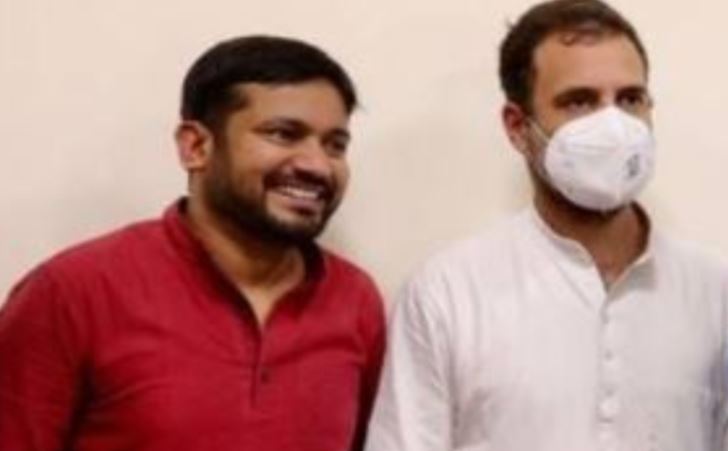
It may be noted, that Kanhaiya Kumar was welcomed into the Congress party with great fanfare by Rahul Gandhi. On September 28, when Kumar was inducted into the party, Rahul Gandhi was spotted celebrating with him at Shaheed-E-Azam Bhagat Singh Park, ITO, Delhi.

Almost unruffled by the crisis his Punjab unit was going through, Rahul Gandhi along with Kanhaiya Kumar, Jignesh Mevani and Hardik Patel were seen holding each other’s hands and lifting them in the air as they sought to celebrate the formal induction of Kanhaiya Kumar and Jignesh Mevani in the party fold.

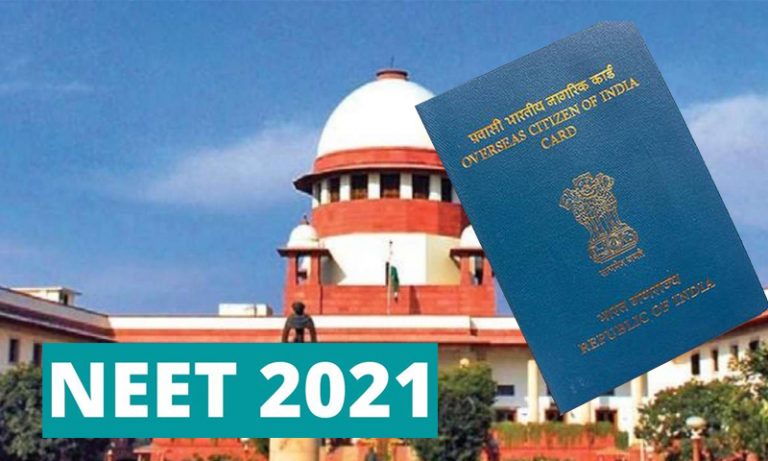
‘Why discriminate against OCIs when there’s CAA’, says SC while allowing OCI candidates to compete for medical seats in open category

0

A Bench of Justices S. Abdul Nazeer and Justice Krishna Murari of the Supreme Court on Thursday allowed Overseas Citizens of India (OCI) candidates to appear in the NEET-UG 2021 counselling in the general category.

Strangely, the court equated the case of OCI candidates with Citizenship Amendment Act (CAA). The bench said that if the central government can bring non-citizen from neighbouring countries to India and grant them citizenship under the CAA, then these OCIs are very much Indians. The court said that India is known for its spirit of inclusiveness.

“Look what your CAA does. It makes even a non-citizen as citizen of this country,” the bench further told additional solicitor general Aishwarya Bhati.

During the argument, ASG Aishwarya Bhati said that OCIs have a lesser threshold to become Indian citizens. They need to stay in India for 12 months and they will be recognized as full citizen of India. She asked why petitioners are not doing so and why they don’t act at par with Indian citizens. The Additional Solicitor General contended that OCIs are treated as foreigners since they have pledged their allegiance to a foreign state. She further pointed that if OCIs are treated at par with the general category, it will deny opportunity to Indian aspirants who aspire to work as doctors in India. She also pointed out that there was a high chance these successful OCIs candidates will return to their countries with their degrees after completing medical studies in India.

The Ministry of Home Affairs on March 4 had issued a notification keeping OCI candidates at par with Non-Resident Indians (NRIs) for the purpose all-India entrance examinations such as National Eligibility cum Entrance Test (NEET), Joint Entrance Examination (JEE) and others. By this order, this was ensured that OCIs will compete with NRI for a limited number of seats and they will have to pay a fee at par with the NRI. This notification was challenged by some OICs.

It may be noted that the CAA and the legal battle fought by OCIs are two different things. CAA 2019 was passed by the Indian Parliament to grant citizenship to six marginalized minorities communities who have been facing prosecution owing to their religion. The act has amended the definition of an illegal immigrant for Hindu, Sikh, Parsi, Christian, Jain and Buddhist immigrants from Pakistan, Bangladesh and Afghanistan who were forced to seek shelter in India due to their prosecutions on religious grounds. This Act fast tracks their citizenship to India from 12 years to 6 years.

India reciprocates to UK’s travel guidelines, imposes mandatory Covid-19 tests, 10-day quarantine for all travellers from the UK

The Indian government on Friday decided to impose reciprocal travel curbs on British visitors arriving in India from the UK, with effect from October 4. 

As per the new rules mandated by the government, all UK nationals travelling to India will have to compulsorily need to undertake RT-PCR test 72 hours prior to their departure. Besides, they will also be required to take COVID-19 test on arrival and 8 days after landing. 

In addition to this, a 10-day quarantine is also made mandatory for the flyers from the UK at home or the destination address, regardless of their vaccination status.

Earlier today, a senior official of the Home Ministry was quoted as saying by news agency ANI that the Indian government has decided on ‘reciprocal treatment’ to the applicants under new visa conditions. 

As per the decision, the visa facilitation will be incumbent on the applicant’s home country’s policy for Indian tourists. The official said that to settle issues arising out of such a situation, a meeting was convened last week that was attended by representatives from all concerned agencies.

“In the meeting, it was decided to provide reciprocal treatment to tourists visiting India. Many countries have opened for tourists from foreign countries but have posed several restrictions for Indian travellers. The issues have been raised with the diplomats of concerned countries to get issues resolved,” the official said.

The decision came in the wake of the United Kingdom’s move to not recognise vaccination certificates issued by CoWIN platform in India. Earlier, the UK govt had refused to consider Covishield at par with AstraZeneca’s COVID-19 vaccine, despite being the same vaccine made in India. After India lodged a strong objection, UK had later accepted Covishield as an approved Covid-19 vaccine. But the requirement of 10-day quarantine for travellers from India had remained even if travellers are fully vaccinated, as the UK had refused to accept the vaccination certificates issued by India.

As a result, as warned by India earlier, the Indian govt has introduced reciprocal measures for UK residents visiting India. India had said that it has the right to impose reciprocal measures if the UK does not address concerns over the new travel rules relating to Covid-19 vaccine certification.

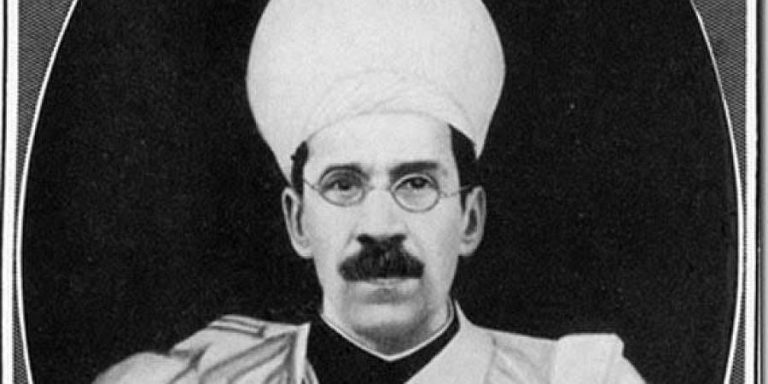
Great grandson asks PM Modi to stop BJP from ‘demonising’ Nizam of Hyderabad who is responsible for a genocide of Hindus

The great grandson of Mir Osman Ali Khan, the last Nizam of Hyderabad, has urged Prime Minister Narendra Modi to prevent BJP leaders from dragging the name of Khan during election campaigns. Himayat Ali Mirza, the great grandson, has also approached the Election Commission over the matter.

Mirza claims that the name of Mir Osman Ali Khan, who was the Nizam of Hyderabad when the Razakars committed a genocide of Hindus, is misused for electoral and political benefits. He told TOI, “When India became the Republic on January 26, 1950, the Government of India appointed him as the Raj Pramukh or governor of Hyderabad state. The Nizam held a constitutional post and no political party or politician can talk bad about him.”

“The Nizam saw Hindus and Muslims as his two eyes. He was the largest donor of grants to places of worship of all faiths. The Nizam gave special paid leave for employees visiting pilgrim centres like Banaras,” added Himayat Ali Mirza.

Mirza rued the fact that Mir Osman Ali Khan was “maligned during every election” in Telangana. During the independence era, the Nizam attempted to retain Hyderabad’s independence and wished to refrain from joining either India or Pakistan. However, there was pressure from Majlis-e-Itihadul Muslimeen (precursor of present-day AIMIM) to join Pakistan instead.

Fearing reprisal from the Hindu populace in his state, the Nizam sanctioned the formation of Razakars, who were to serve as the paramilitary wing of the MIM. Subsequently, the Razakars went on a rampage, slaughtering and raping Hindus in their wake in their bid to turn Hyderabad into a Muslim majority province.

Numerous atrocities were committed against the Hindu community, leading then Home Minister Sardar Vallabhbhai Patel to initiate Operation Polo to rid Hyderabad of the menace. It ended with Hyderabad joining the Indian Union.

Decades later, the Nizam’s grandson wants political parties to not “malign” the person who sanctioned the creation of the force that committed a genocide.

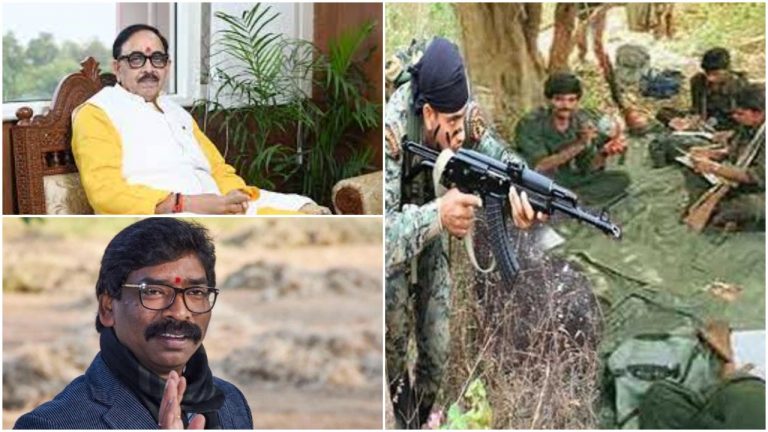
Naxalism on the rise, mineral reserves being looted in Jharkhand: Union Minister for Heavy Industries

Mahendra Nath Pandey, the Union Minister for Heavy Industries, has raised concerns about the surge in Naxal activities in the state of Jharkhand. He also expressed apprehension about the loot of mineral resources under the ruling dispensation of the Congress-JMM-RJD alliance in the state.

Pandey said on Thursday, September 30, that the development and growth achieved in the state under the former BJP government has been “shattered” by the Hemant Soren government.

The Union Minister was responding to a demand by Singhbhum Chamber of Commerce and Industry (SCCI) President Ashok Bhalotia to set up heavy industries in the state.

Expressing his keenness to develop Jamshedpur into an auto hub, Pandey added: “Extremism and Naxalism have started spreading its tentacles in the state, and freedom is also being granted to loot mineral reserves”.

He claimed that opposition parties, including the Congress, were geared around alliance and compromise politics, but the Narendra Modi government was delivering on people’s expectations and desires.

Naxalism has been a long-standing issue in Jharkhand. So far many civilians, tribals and even security personnel have lost their life in Jharkhand due to Naxal violence.

Notably, during a meeting on anti-Naxal operation chaired by Union Home Minister Amit Shah on September 26 in New Delhi, Jharkhand chief minister had claimed that Naxal incidents have declined in Jharkhand.

The Chief Minister had further claimed that the presence of Naxals (CPI-Maoist, PLFI, JJMP, TSPC and others) are now limited to Parasnath Pahar, Budha Pahar, tri-junction of Saraikela Kharsawan-Khunti-Chaibasa districts comprising parts of Kolhan and Chhotanagpur besides some parts sharing a border with Bihar.

Officer of Jharkhand Jaguar killed by Naxals days after Hemant Soren claims Naxalism has dipped in the state

However, only two days after Hemant Soren’s statement, a deputy commandant of Jharkhand Jaguar (an elite assault group of Jharkhand Police) Rajesh Kumar was martyred during an encounter with extremists of banned outfit Jharkhand Jana Mukti Parishad (JJMP) on the afternoon of September 28.

The incident took place in the forest of Salaiya village under Sadar police station of Latehar district which is barely 10 km from the district headquarters. Rajesh Kumar, originally from Border Security Force (BSF), was on deputation in Jharkhand Jaguar.