Home Blog Page 4032

Sher Mohammad Abbas Stanikzai: One of the top 7 Taliban leaders who had once served as Afghan army soldier and trained at IMA before joining Taliban

Afghanistan is once again in thrall to the Taliban after the terror outfit seized control of Kabul this Sunday, effectively taking control of the entire country following a rapid offensive. The terror outfit has displayed remarkable resilience in establishing its hegemony two decades after the US forces toppled its regime in what led to America’s longest war.

Despite its leadership being routinely eliminated in the US attacks, the terror group kept attracting terrorists from assorted backgrounds to continue its jihad in establishing an Islamic caliphate in Afghanistan. The group, which rose to prominence on the back of a swift offensive, is shepherded by a group of seven powerful leaders, one of whom is Sher Mohammad Abbas Stanikzai, the Head of Political Office of Taliban.

Stanikzai, an integral part of the Talibani leadership, had once served as a cadet at the prestigious Indian Military Academy in Uttarakhand’s Dehradun and was fondly called ‘Sheru’ by his course mates from the 1982 batch, who remember him as a moderate and not religiously inclined. He was 20-years-old when he travelled to India under the Indo-Afghan defence cooperation programme and became one of the 45 foreign gentlemen cadets of the Bhagat Battalion’s Keren Company at the academy.

According to a report in the Times of India, Stanikzai was “well-built, not too tall and never a hardliner”. Many of his batchmates at the Indian Military Academy remember him as a “likeable” person, a bit precocious than his age, and someone who enjoyed his time at the academy.

So, what transformed a content Afghan soldier who had his training at the IMA into a hardline Taliban leader? What precipitated his turn from military forces to the Islamist terror organisation Taliban?

Stanikzai’s early years in Afghan army and his training at the IMA

An ethnic Pashtun, Stanikzai was born in 1963 in the Baraki Barak district of Logar province of Afghanistan.

After completing his masters in political science, Sher Mohammad Stanikzai joined the IMA where he trained for 1.5 years after the Indian military institute was involved in training Afghan army officials in combat.

Major General DA Chaturvedi (retired), one of the IMA veterans who trained alongside Stanikzai, remembered him as a likeable guy who seemed a little older than the other cadets at the academy. Chaturvedi, in his interview with the Times of India, said Stanikzai had a striking moustache and had no radical views at the time. “He was simply an average Afghan cadet who seemed to be enjoying his time here,” Chaturvedi said.

For another batchmate, Colonel Kesar Singh Shekhawat(retd), Stanikzai was like “the kid next door”. He remembers an anecdote from their time during the training together when they went to Rishikesh and took a bath in the holy Ganges. Shekhawat even has a photograph of him in his swimming trunks from a day when they had gone to the river in Rishikesh and taken a bath there.

Yet another batch mate remembers Stanikzai as someone who was considerate of people around him, stating that even if he smoked cigarettes, he would do it away from the attention of others.

After completing his training at the IMA, Stanikzai went back to join the Afghan National Army as a lieutenant. He fought the Soviet-Afghan war, initially with Mohammad Nabi Mohammadi’s Islamic and National Revolution Movement of Afghanistan, and later with Abdul Rasul Sayyaf’s Islamic Union for the Liberation of Afghanistan, as commander of its south-western front.

Shift to the Taliban

After being associated with the Afghan Army and taking part in the Soviet-Afghan war, Stanikzai took a radical turn and joined the Taliban in 1996.

But his time with the Afghan forces and his international experience set him apart from the local Taliban fighters. In an article published in the New York Times, Stanikzai’s old friend said that he did not fit in well with the terror outfit initially. He cited instances when Stanikzai would go out to restaurants in Quetta, Pakistan with his wife, which led to gossip-mongering among the terrorists.

In the years between 1996 to 2001, when the Taliban ruled Afghanistan, Stanikzai served as deputy minister of foreign affairs under foreign minister Wakil Ahmed Muttawakil and later deputy minister of health. He often gave interviews to foreign media during the Taliban rule from 1996 to 2001 as he spoke English well.

In 1996, Stanikzai travelled to Washington DC as acting foreign minister to seek diplomatic recognition of Taliban-ruled Afghanistan from the Clinton administration.

He remained an important figure for the Taliban over the years but in 1998 his fortunes took a turn for worse after he ran afoul of the Talibani leadership. However, his close relationship with Pakistani military intelligence helped him in reconciling with the Taliban.

Ascendancy to the top leadership of the Taliban

Stanikzai later proved an invaluable asset for the terror organisation as the Taliban charted a path to regain its hegemony after being ousted and destroyed by the US forces in the aftermath of the 9/11 attacks. In January 2012, Stanikzai arrived in Qatar to facilitate the opening of the Taliban’s political office in the country. Three years later, in August 2015, Stanikzai was appointed as the acting head of the political office in Qatar following Tayyab Agha’s resignation.

In 2016, Stanikzai travelled to China and represented the Taliban for their talks with the Chinese officials. Then in August 2018, he led a delegation of Taliban officials to Uzbekistan. There, the delegation met Uzbekistan’s Foreign Minister Abdulaziz Kamilov and Uzbekistan’s special representative to Afghanistan Ismatilla Irgashev. In the same year, Stanikzai travelled to Indonesia for discussions with officials, meeting Indonesian First Vice President Muhammad Jusuf Kalla, Indonesia Foreign Minister Retno Marsudi and Hamid Awaluddin, Indonesia’s special representative for Afghanistan.

Stanikzai also served as deputy negotiator Abdul Hakim Haqqani, head of the Taliban’s negotiating team, on talks with Afghan government officials. In September 2020, Stanikzai was declared as the chief negotiator to discuss peace with the Afghan government. But, days before the meeting, it was announced that he would act as a deputy to Abdul Hakim.

For senior Afghan analyst Andrew Watkins, one word that aptly describes Stanikzai is “survivor”. Watkins, who works for the International Crisis Group – a Washington-based think tank, told in his interview with the Washington Post that Stanikzai has never been a big mover within the Taliban organisation. He remains up there in the shadows of the higher ranks and has managed to retain just enough heft to stay alive and active, Watkins said.

As the Taliban takes over Afghanistan, Stanikzai remains one of the linchpins of the terror organisations that are trying to portray a moderate face to the world, in their bid to earn global recognition and add legitimacy to their claim to rule the country.
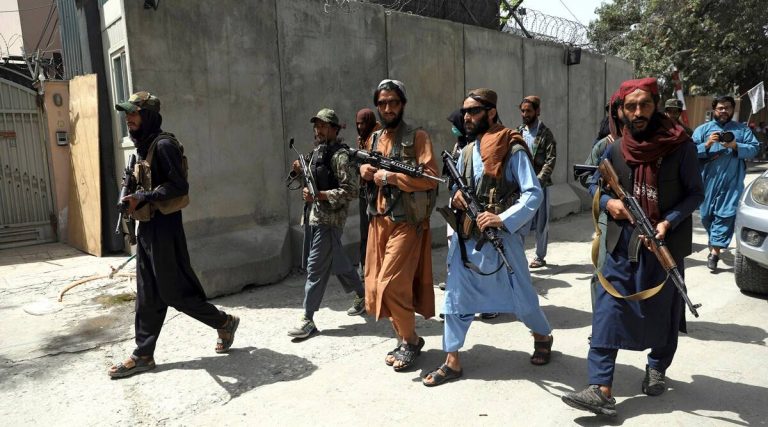
Afghanistan journalists claim 150 people, mostly Indians, have been kidnapped by Taliban in Kabul, Islamic outfit denies reports

Around 150 Indians have been allegedly kidnapped by the Taliban from outside the Hamid Karzai International airport in Kabul, local journalists in Afghanistan have claimed. There has been no official confirmation yet of the matter from the Indian Government or the US/NATO forces on ground. Indian Govt is reported to be monitoring the situation closely.

According to Rishikesh Kumar of Sputnik, those abducted included a number of Afghan Sikhs and citizens but most were ordinary Indians. The people, including women and children, had reached the airport at 1 a.m. but could not enter.

Kumar reported that soon after, Talibs came and thrashed some of them and took them all to Tarkhil, Kabul. Some managed to escape from the moving car, reported Kumar. According to those who had escaped, the Talibs told them that they were being taken inside the airport through another gate but it is not clear if they were indeed taken in or transferred to another location.

Taliban, however, has denied the allegations.

There have been hostage situations involving radical Islamic groups in the past. In 2014, a group of 46 Indian nurses were rescued from ISIS captivity in war torn Iraq. Then External Affairs Minister Sushma Swaraj had worked closely through diplomatic channels with countries in the region like Saudi Arabia and Iraq to secure their rescue.

MP: Crowd chants ‘Pakistan Zindabad’ during Muharram procession in Ujjain, six arrested

Madhya Pradesh police arrested six people and detained over ten on Friday for raising ‘Pakistan Zindabad’ slogans during a Muharram procession in Ujjain on Thursday evening. The video of the procession where the crowd can be seen cheering for Pakistan has gone viral on social media. 

Reportedly, the Muharram procession while crossing Geeta Colony in Ujjain was stopped by the police owing to Covid-19 norms and guidelines. This irked the crowd who began chanting slogans hailing Pakistan. 

The incident occurred at around 10:15 PM on Thursday when Zafar, Anees, Abdul, Ajeej and others began sloganeering. After this, a heavy police force had to be deployed with senior officers rushing to the spot. 

Superintendent of police (SP), Ujjain, Satendra Kumar Shukla said that ten persons had been identified on the basis of a video clip. “We have arrested four persons and detained some of the suspects. They are being interrogated. The rest of the accused are absconding. Police teams have been fanned and absconding accused will be arrested soon,” he said. The perpetrators are all in the age group of 20-25 years. 

As per a Dainik Bhasker report, SP Amrendra Singh confirmed the incident and informed that investigations are on. A case under sections 124A, 153B and 188 has been registered against the accused. 

Taking strong objection Chief Minister Shivraj Singh Chouhan warned that “Taliban culture won’t be tolerated in the country”.

“Indians are patriots, barring exceptions. But those who support the Taliban mentality or indulge in anti-national activities will be crushed,” he added. 

Terror group Haqqani network takes control of Kabul’s security, Khalil Haqqani, with a $5m bounty on his head, seen roaming the streets: Full details

A week after capturing Kabul, the seat of power in Afghanistan, the Taliban has delegated the security of Kabul to the members of the dreaded terrorist organisation – Haqqani Network, which has close ties with foreign Islamic terrorist groups, including a long-standing association with Al-Qaeda. 

According to the reports, Kabul, the capital city of Afghanistan, is currently taken control by nearly 6,000 jihadis of the Haqqani Network led by Khalil al-Rahman Haqqani, brother of Jalaluddin Haqqani, the founder of the network.

Following the capture of Kabul, Anis Haqqani, son of Jalaluddin Haqqani and brother of Sirajuddin Haqqani, the current head of the terrorist group and one of three deputy leaders of the Taliban, has been negotiating with Afghanistan’s National Reconciliation Council, comprising former President Hamid Karzai, Gulbuddin Hekmatyar, leader of the Hizb-e-Islami political and paramilitary group, and Abdullah Abdullah, the deposed administration’s chief peace envoy.

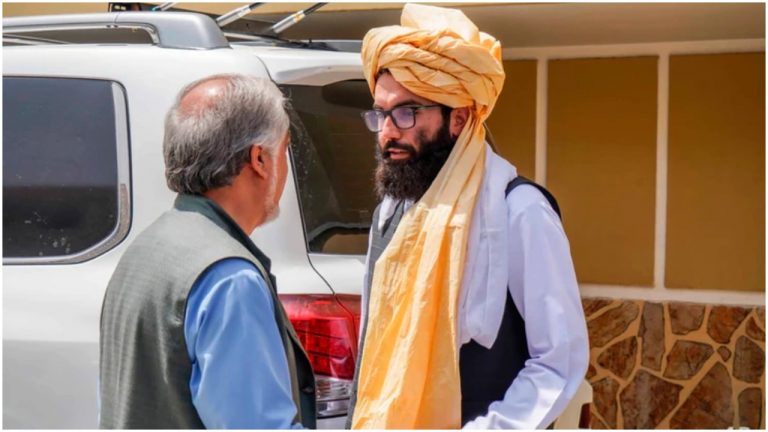
Senior Haqqani group leader Anas Haqqani speaks to Abdullah Abdullah, head of Afghanistan’s National Reconciliation Council in Kabul/ Image Source: VOANews.

On Thursday, after meeting the Haqqanis, Abdullah Abdullah had indicated publicly that the terror outfit would be overseeing security in the Afghan capital. He had said that the Haqqani network had provided assurances that they would “work hard to provide the right security for the citizens of Kabul.”

The Haqqani’s have reportedly restricted the movements of both Karzai and Abdullah.

Earlier reports suggested that the Taliban is currently holding talks to convince both Hamid Karzai and Abdullah to formally hand over power to the Taliban leader Mullah Abdul Ghani Baradar in the Presidential Palace in a staged event. Sirajuddin Haqqani is leading negotiations from Pakistan’s Quetta, where the Taliban’s council of leaders, the Quetta Shura, is based.

Khalil Haqqani, Anis Haqqani in-charge of Kabul

Besides Anis Haqqani, Khalil al-Rahman Haqqani is also leading negotiations with Afghanistan’s National Reconciliation Council for a “peaceful” transfer of power. The US Department of the Treasury designated Khalil al-Rahman Haqqani a global terrorist in February 2011, offering a $5 million reward for information leading to his capture. He is also included on the United Nations terrorist list.

Khalil Haqqani, one of the most wanted terrorists, took a stroll in the new Kabul as Haqqani took control of Kabul.

One of the key figures of the Haqqani Network, Khalil al-Rahman Haqqani, is responsible for the fundraising activities on behalf of the Taliban and provides support to the Taliban operating in Afghanistan.

Anis Haqqani, who was arrested in 2014, has played an important role in the Haqqani network’s strategy and fund-raising. Anis Haqqani is notoriously known for ordering murders, kidnappings etc., including his own girlfriend. In 2016, Anis Haqqani was sentenced to death but was released with his two commanders in 2019 in exchange for the release of two professors who were abducted while working for the American University of Afghanistan (AUAF).

Later, Anis was flown to Doha, where he joined the political group of the Taliban. Currently, he is back in Kabul to lead the negotiations with Afghanistan’s National Reconciliation Council. Anis is currently second in command of the Haqqani network.  

Taliban’s ties with Haqqani is viotion of Qatar peace talks

The handing over of Kabul by the Taliban to the Haqqani network, according to many western intelligence officials, is in direct violation of Qatar talks in which the Taliban had promised the United States not to engage or allow the country to become a safe haven for foreign terrorists, such as Al-Qaeda.

With the Taliban entrusting Haqqani’s with the security of Kabul, apprehensions are being raised regarding the prospect of Al-Qaeda being welcomed back to Afghanistan, which would break promises made by Taliban leaders during diplomatic talks in Qatar with the US officials last year.

During the Qatar talks, the then US President Donald Trump had struck a deal with the Taliban in February 2020, where the group’s leaders had agreed not to allow any of its members, other individuals or groups, including Al-Qaeda, to use the soil of Afghanistan to threaten the security of the United States and its allies.

The Haqqani Network

The Haqqani Network, an offshoot of the Taliban, is the Afghan Mujahideen group that emerged in the 1980s to wage ‘Jihad’ against the Soviet troops and later the US-led NATO forces. The terror outfit has more autonomy than other Taliban affiliates. However, lately, the network has become more integrated within the Taliban and coordinates closely with the terror outfit.

Sirajuddin Haqqani is also one of the Taliban’s deputy leaders and is the nephew of Khalil al-Rahman Haqqani, the man in charge of overseeing security in the Afghan capital.

The Haqqanis hails from southeastern Afghanistan, near the border with Pakistan. The network has been accused of some of the deadliest attacks in Afghanistan, including the 2008 assault on the five-star Serena Hotel in Kabul, the 2012 attack on a US base in Khost, and the 2017 truck bombing near the German Embassy in Kabul that killed 96 people.

During the anti-Soviet “Jihad” in the 1980s, the Haqqanis were the firsts to welcome foreign Muslim fighters. They had hosted Osama Bin Laden, who trained in a Haqqani-run camp. When Osama Bin Laden formed Al-Qaeda in the 1990s, the two groups formed an association and evolved together.

The Haqqani Network and Al-Qaeda also ran joint training camps in Pakistan’s North Waziristan region after the US invasion, and according to expert Peter Bergen, the Haqqani Network also helped Bin Laden to escape Afghanistan when American forces were closing in on him during the Battle of Tora Bora in 2001.

According to a US Treasury Department report in January, the Haqqanis continues to have close links Al-Qaeda despite the Taliban assurances, and the network had also considered forming a joint unit with Al-Qaeda. However, the Taliban officials have denied any association with Al-Qaeda.

Despite evidence to the contrary, Joe Biden claims that Al Qaeda is ‘gone’ from Afghanistan

Joe Biden, in an attempt to justify the hasty withdrawal of US forces from Afghanistan that facilitated the Taliban takeover, said, “Look, let’s put this thing in perspective. What interest do we have in Afghanistan at this point, with al Qaeda gone? We went to Afghanistan for the express purpose of getting rid of al Qaeda in Afghanistan as well as — as well as — getting Osama bin Laden. And we did.”

Palghar Tribal man, who had borrowed Rs 500, kills himself after being enslaved by a close aide of an NCP MLA: Details

0

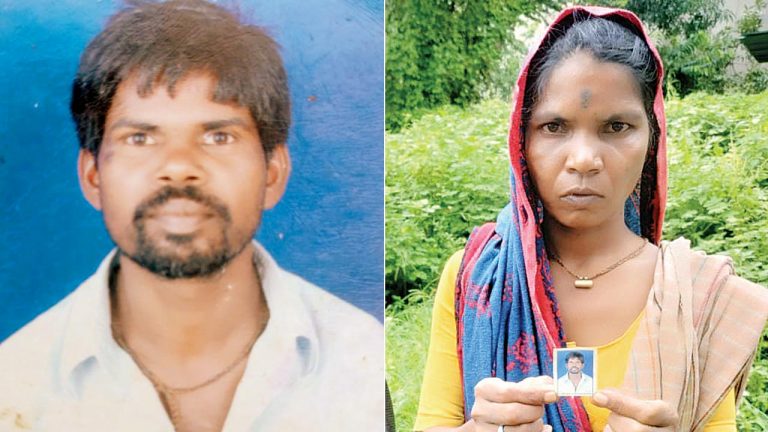
A case has been registered against NCP MLA Sunil Bhusara’s close aide Ramdas Ambu Korde for enslaving a tribal man for a mere Rs 500. Kalu Pawar, a tribal from Mokhada in Palghar district, fed up with harassment, died by hanging himself in the month of July. 

Pawar in November last year had borrowed Rs 500 from Korde to buy a kafan (cloth used to wrap a dead body) for the last rites of his 13-year-old son Dattu. Pawar’s son, a class eight student was found dead under mysterious circumstances in a nearby village after he went missing around Diwali. 

To repay this loan, Korde had been making Pawar work in his field for months. Pawar’s wife Savitra in her complaint revealed that Korde had been harassing her husband since the time he took the loan. Pawar was made to work in Korde’s field and take the cattle for grazing.

“After conducting Dattu’s last rites, my husband started working in Korde’s field, but no daily wages were fixed. He (Korde) would give my husband only one bhakhri in the morning and a meal at night. Whenever my husband would ask for wages, Korde would threaten him with harm,” Savitra informed further.

Pawar worked on and off at the field but was regular in the month of June and July this year. However, he could not report for work on July 10 and 11 as he fell sick. Reportedly, when Pawar went to the field on July 12, Korde humiliated him and even thrashed him. Unable to bear the humiliation and pressure, Pawar killed himself the next day.

The day Pawar hanged himself, his wife had gone to work in Bhiwandi while his daughters, Dhanashree, 16, and Durga, 12, had gone to their maternal uncle’s home. 

Pawar’s body was hanging for almost 12 hours before he was buried. Surprisingly, Korde on hearing of Pawar’s death had visited his village but did not bother to inform the police. 

Social activist fights for Pawar

Social activist Vivek Pandit, who has been fighting for the welfare of tribals in the state took cognizance of Pawar’s unfortunate demise. Taking up his case, Pandit forced the police to exhume Pawar’s body on August 04 to send it to J J Hospital in Mumbai for autopsy.

Social activist Vivek Pandit at Pawar’s village. Image Source: Mid-day

Pandit has levelled several allegations against Korde. “He (Korde) is also a tribal from Mahadev Koli Samaj but has been exploiting others in the area,” Pandit said about the accused who is a sub-contractor and owns a sprawling bungalow in the village. 

Reports suggest that Pandit tirelessly spent a full month trying to get the accused booked. 

MLA tries to shield Korde

Pandit, who is also the chairman of a panel appointed by the state government to check the status of tribal schemes, in an interview to Mid-day revealed, “Korde is the right-hand man of MLA Bhusara who had been mounting pressure on the police to not take action against his man.”

“Bhusara also called me to dissuade me from following the issue to get the FIR registered. Finally, after a month-long follow-up, the accused has been booked, but no arrest has been made yet,” he added.

On the other hand, MLA Bhusara has denied all allegations. “The FIR against Korde is fake. If such FIRs are registered, then a time will come when no tribal will be called to work in the field,” he claimed. 

Refuting accusations of pressuring the police to withdraw the case, Bhusara said, “I instead told police to thoroughly conduct an investigation before taking any action against Korde.”

Speaking on the matter, Mokhada police station in-charge Satish Gavai said, “We have registered an FIR under Section 374 (unlawful compulsory labour) of IPC and Sections 17 and 18 of Bonded Labour System (Abolition) Act against the accused Korde.”

However, no arrest in the case has been made as yet. 

Afghan national Noor Mohammed, deported from India last year after staying illegally for 10 years in Nagpur, joined Taliban: Details

Days after the Taliban took control of Afghanistan, it has now come to light that an Afghan man who was earlier deported from India had joined the radical Islamist organisation.

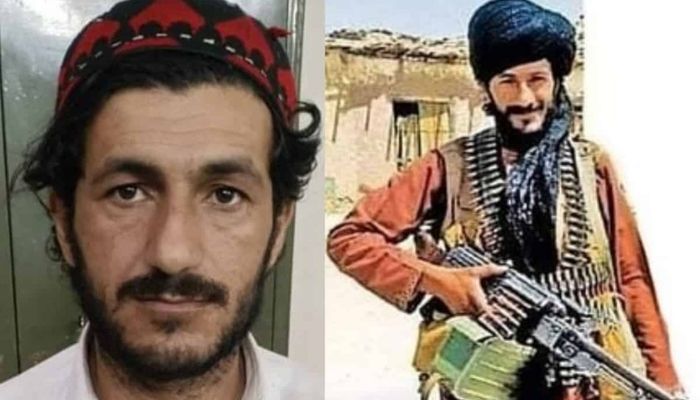
As per reports, the Afghan national has been identified as one 30-year-old Noor Mohammed Ajiz Mohammed. He was found illegally staying in Nagpur in Maharashtra for over 10 years and was deported from the country in June last year. He had come to India in 2010 on a 6-month long tourist visa. Later, he sought refugee status from the United Nations Human Rights Council (UNHRC) but his application and appeal were rejected. Thereafter, he began staying in India illegally.

Noor Mohammed was later nabbed by the police based on a tipoff on June 16 last year. The police had found gunshots wounds on his left shoulder. The cops discovered that he was following several terrorists, who had uploaded videos of gun firing on social media. He was then deported to his home country of Afghanistan on June 23, 2020. However, a picture of the illegal immigrant has now surfaced on social media wherein he could be seen brandishing a rifle. The development was confirmed by a senior police official.

In a statement to PTI, the cop informed, “The man, Noor Mohammad Ajiz Mohammad, 30, was found staying in Nagpur for the last 10 years illegally. He was living in a rented place in Dighori area of the city. Acting on a tip-off, the police had started keeping a watch on his activities. He was finally nabbed and deported to Afghanistan on June 23. After his deportation, he seems to have joined the Taliban and his photo holding a gun has emerged on social media”

Another police official emphasised that the real name of Noor Mohammed was Abdul Haque and that his brother was associated with the radical Islamist outfit. The accused had even posted a video on social media last year, where he was seen with a sharp weapon. “He was in the business of selling blankets and was unmarried. Police conducted searches at his rented accommodation but did not find anything suspicious. His call details are also under the scanner of the police,” he added.

ISIS terrorist Nimisha Fathima, other Keralites among 5,000 prisoners set free by Taliban

NBC News Foreign Correspondent Richard Engel on August 15 had shared a video of prisoners leaving Kabul jail after being freed by the Taliban. A Mathrubhumi report allegedly based on intelligence information has claimed that eight Keralites, who had left for Afghanistan to join ISIS, were also there among the released prisoners. After taking over the country, the Taliban broke open the jail to set free over 5,000 Taliban and Al-Qaeda terrorists from Badam Bagh and Pul-e-Charkhi jails in Kabul.

Reports suggest that Nimisha Fathima an ISIS bride from Kerala was also there among the released. As many as 21 Indians who had gone to join the Jihadi organizations were nabbed by the Afghan forces during a fight. Reacting to unconfirmed reports, Fathima’s mother Bindu who is awaiting her return said, “Came to know that was the intelligence report from Afghanistan. I don’t know the truth.”

Bindu further claimed that if the news is indeed true then it is nothing but divine intervention. She, however, is still awaiting the central government’s nod to reunite with her daughter and grandchild. In an interview with The Times of India, Bindu said that she will keep knocking the doors of the government and relevant authorities. The mother of the ISIS bride, while hopeful, is yet to receive official confirmation of her daughter’s release. 

FIR filed against Munawwar Rana for his rant likening Maharshi Valmiki to Taliban, case registered under SC/ST Act: Read details

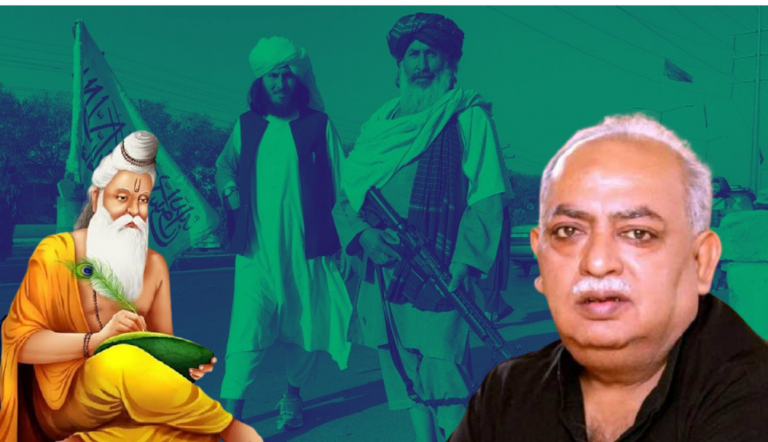
Controversial poet Munawwar Rana has been booked by the Uttar Pradesh Police for his derogatory comments against Hindus by drawing false equivalence with radical Islamic organisation Taliban that has captured Afghanistan.

According to the reports, a complaint has been registered against Munawwar Rana at the Hazratganj police station in Uttar Pradesh’s Lucknow for inciting religious feelings by comparing Maharshi Valmiki, the author of Ramayana, with the Taliban.

The FIR was registered against Rana on the complaint filed by PL Bharti, a leader of the Valmiki community, who accused Rana of hurting religious feelings by comparing Valmiki with the Taliban. In his complaint, Bharti said that Rana made obnoxious comments against Dalits.

The FIR has been registered under Sections 153A (Promoting enmity between different groups on ground of religion, race, place of birth etc.), 295 A (deliberate and malicious acts intended to outrage religious feelings of any class), 505(1)(B) (with intent to cause, or which is likely to cause, fear or alarm to the public) and the SC/ST atrocities prevention act, said the police.

A few days ago, Urdu poet Munawwar Rana, who has a history of making such Hinduphobic statements, had compared the Taliban with the Maharshi Valmiki as he defended the action of the radical Islamic organisation that has taken over Afghanistan.

In an interview with TV anchor Deepak Chaurasia, Munawwar Rana had claimed, “Valmiki became a God after he wrote the Ramayan, before that he was a dacoit. A person’s character can change. Similarly, the Taliban, for now, are terrorists but people and characters change”.

He further said, “When you speak about Valmiki, you will have to talk about his past. In your religion, you make anyone the God. But he was a writer. Okay, so he wrote the Ramayan, but we are not in competition here.”

Rana went ahead to make a dastardly metaphorical statement to defend the Taliban. “Valmiki became a God after he wrote the Ramayan, before that he was a dacoit. A person’s character can change. Similarly, the Taliban, for now, are terrorists but people and characters change,” exclaimed Rana. He further said, “When you speak about Valmiki you will have to talk about his past. In your religion, you make anyone the God. But he was a writer. Okay, so he wrote the Ramayan, but we are not in competition here.”

Glorifying the Taliban, Munawwar Rana referred to the Islamist fighters as “aggressive fighters” and not “terrorists”. The infamous poet claimed that the Taliban are also Afghanis, and they have simply freed their nation from foreign occupation. 

According to legend, Ratnakar, supposed to be born in a so-called low-caste, was renamed as Valmiki and given the status of Maharishi (great sage) and a great Brahmin by Narada Muni after Ratnakar performed tapasya (deep meditation). However, the Valmiki community, especially those living in Punjab, don’t like that part of the story that says that Maharishi Valmiki was any dacoit at any point in his earlier life. Repeating this portion can attract legal action. Earlier, a case was registered against Bollywood actor Rakhi Sawant for hurting the sentiments of the community under IPC 295 in 2017.

An FIR was registered against Munawwar Rana in November last year at Hazratganj police station on similar charges for allegedly defending the killings in France over a caricature of Prophet Muhammad.

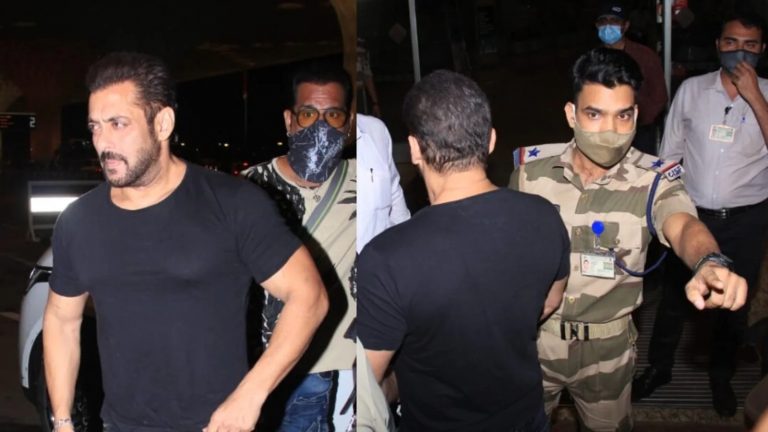
Watch: Young CISF officer stops Salman Khan at Mumbai Airport, asks him to complete mandatory security check first, Netizens hail ‘real hero’

A video of Bollywood actor Salman Khan has gone viral on the internet where he was stopped by a CISF officer to first complete the security check before entering the Mumbai airport. In the video, Salman Khan can be seen reaching the Mumbai Airport to reportedly leave for Russia for the shoot of his upcoming movie Tiger 3.

As he reaches the airport, Salman Khan tries to breezily walk inside the airport without completing the mandatory security check at the entrance. With photographers screaming at him for pictures, Salman Khan, with his entourage, shows paltry respect for the security check while others waited in line.

At this time, a young CISF officer is seen stopping Salman Khan from entering the airport, asking him to get in line and complete his security check first. While the CISF officer stopped Salman Khan and asked him to complete his security check, he was also seen asking the photographers to take a step back.

The video that has now gone viral was posted by celebrity Bollywood photographer Viral Bhayani. The video of Salman Khan and Katrina Kaif arriving at the airport has received over 88,000 views already.

As the video went viral, there was a slew of reactions from Netizens. While most hailed the CISF officer for doing his duty diligently and not getting starstruck, Salman Khan fans, who often live in their own bubble, like most other Bollywood fans, hailed Salman Khan for standing in line to complete the security check after the CISF officer stopped him.

One user saluting the officer said, “Reel super hero countered by real super hero.”

While another netizen claimed that the CISF officer is her ‘real hero.’

Several Twitteratis pointed out how every citizen is equal when it comes to national security and one cannot compromise with it, applauding the officer.

The actor on Friday left for Russia along with his co-star and team for the shooting of Tiger 3. According to an IANS report, the actor will be shooting for 45-days non-stop for his upcoming movie. This segment is reportedly filled with action sequences and will see the duo shoot in at least 5 international destinations including Austria and Turkey.

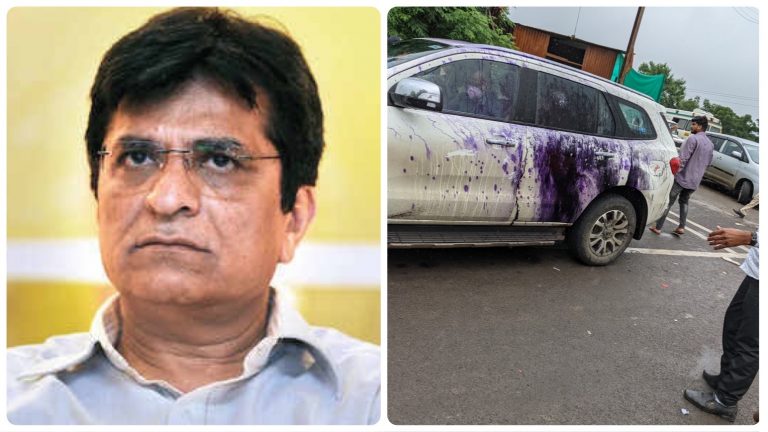
Convoy of BJP leader Kirit Somaiya targeted in Maharashtra, he accuses Shiv Sena goons of attacking him: Details

BJP leader Kirit Somaiya today took to Twitter to allege that his car was attacked by Shiv Sena party goons in the Washim district of Maharashtra. 

Somaiya also shared a video on his Twitter page wherein his car could be seen sprayed with black paint along with police officials, who were probably trying to bring the situation under control. 

The BJP leader said his convoy was attacked with stones and ink, adding that perpetrators belonged to the Shiv Sena party, although the identities of the attackers cannot be independently verified. 

Somaiya said he was being attacked because of his anti-corruption crusade and hinted that actions against MP Bhavna Gavli, Milind Narvekar, Yashwant Jadhav, MLA Yamini Yashwant Jadhav, Anil Parab & Pratap Sarnaik will reach a logical end in the coming days. 

In another tweet, Somaiya shared pictures of his ink-sprayed car, saying that three big stones and ink were hurled at him while he was in his visit to Washim. 

Some people were detained in the case but subsequently released later, a police official said. A case has been registered against the miscreants for attacking the convoy of Kirit Somaiya. 

Somaiya says Thackerays had land deal worth crores with late Anvay Naik’s wife

Somaiya has been at the vanguard of anti-corruption crusade waged again Shiv Sena leaders in Maharashtra. The BJP leader in November 2020 made a sensational claim that the Thackeray family had land deals worth crores with late Anvay Naik’s wife.

Somaiya had then said land records of Murud Raigad on the Maharashtra Government Website of Land Records suggest Uddhav Thackeray’s wife had a land transaction with Late Anvay Naik’s family. He has sent the concerned documents to SP and Collector. 

Anvay Naik was the same man in whose suicide case journalist Arnab Goswami was arrested and lodged in Taloja Jail. 

Somaiya alleges cheating, Sarnaik refutes allegations

Then in December, Somaiya trained his guns on Shiv Sena leader Pratap Sarnaik. He convened a press conference in which he accused Sarnaik of cheating middle-class home buyers, alleging that the building constructed in Thane by Sarnaik’s Vihang group did not have permissions to increase its floors from nine to 13 and that the Thane Municipal Corporation had given orders to demolish the structure. He also added that the construction at Thane’s Vihang Garden by Sarnaik’s Group is illegal. 

“TMC Declared Both Buildings illegal. In 2012, Thane Municipal Corporation ordered the demolition of 9 to 13 floors. However, no action has been taken till now. OC is not received till date,” he added. 

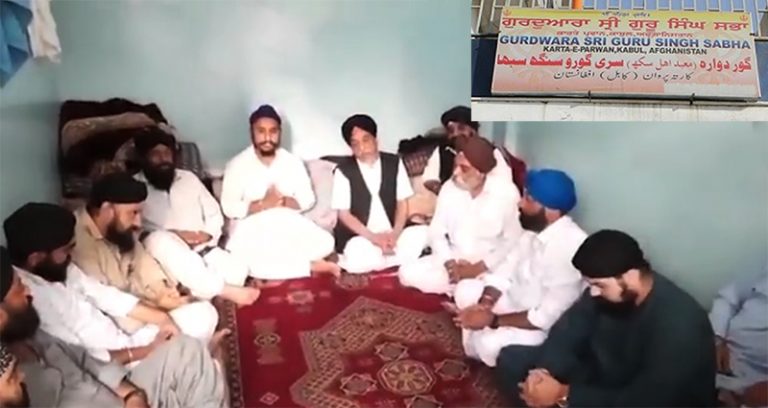
Sikhs staying at a Kabul Gurudwara, who wanted to be evacuated to USA or Canada, shifted to a safe place for evacuation to India

Around 60 Sikhs who had taken shelter in a Kabul Gurudwara have been shifted to a safe place by the Indian embassy officials. According to a report by the Times of India, they have been shifted from the Gurdwara Singh Sabha in Karte-Parwan in Kabul to the safe place before their evacuation to India. The Sikhs claim that Hindus are also included in the contingent.

Since the Taliban started to take over Afghanistan, around 285 people have taken shelter in the Gurudwara. The people who have been shifted include two members of the Afghanistan parliament from the Sikh community, Anarkali Kaur Honaryar and Narender Singh Khalsa. Narender Khalsa is the son of Afghan Sikh leader Awtar Singh Khalsa, who was killed in the 2018 Jalalabad terror attack.

Most of the people staying at the Gurudwara however do not want to be evacuated to India, and they prefer to go to the US or Canada. Around a dozen Sikhs taking shelter at the Gurdwara had issued a video message a couple of days ago, where they had requested that they should be rescued from Kabul and evacuated to either Canada or the United States.

They had said that the situation in Afghanistan is very bad and the future is uncertain. They had appealed to the Sikh organisations in Canada and the USA to help evacuate them to those countries. Although the Taliban had said that they will ensure the safety of Sikhs and other minorities, the minorities in Afghanistan are not willing to trust them. “A Taliban delegation came here and said they won’t harm our gurdwara. But there is no saying what will happen when their laws come into effect. We can’t trust the Taliban government,” a man staying at the Gurudwara had said.

These people don’t want to come to India as they feel that the condition of people who have been evacuated to India has not been good. They also say they don’t have any roots or connections with India now. Only around five Afghan Sikhs are willing to come to India as they have work and properties in the country, while the rest prefer shifting to Canada or the USA. “Most of the Afghan Sikhs and Hindus do not have any settlement in India and want to be evacuated to Canada or the US. Our first preference for evacuation is Canada and US, and not India,” a Sikh from Kabul told TOI over the phone.

The man added that officials had asked the people living in the Gurudwara to shift to a different place in batches of 50. He also alleged that the Gurudwara members ‘pressurised’ them to leave the premises, while they liked it or not. However, his name was not on the list of the first batch, hence he is still at the Gurudwara.

The Sikh mane also informed that the first group has been shifted to the basement of a building, which is considered a safe place, and they are likely to be evacuated to New Delhi. When asked why they don’t want to return to India, he said that some Afghan Sikhs were evacuated to India after the 2018 Jalalabad, and now they are living in miserable conditions. Fearing the same for them, they prefer to go to Canada or the USA instead.