Home Blog Page 4044

‘Article 25 does not give any immunity from taxation’: Kerala HC says nuns and priests are liable to pay taxes on their salary incomes

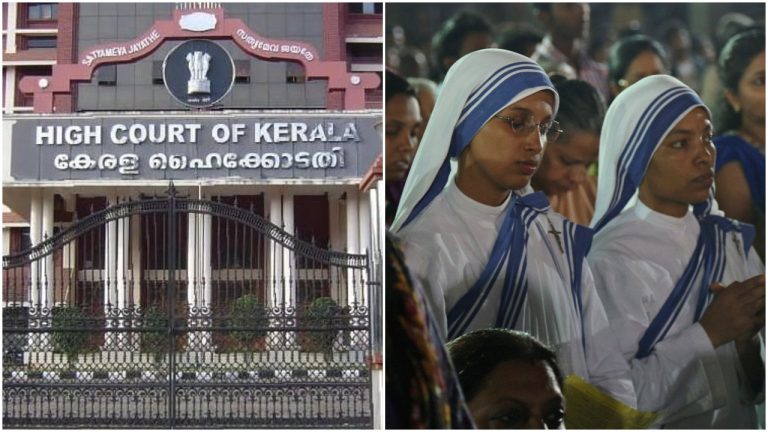
In a significant judgement, the Kerala High Court has held that salaries paid to nuns and priests of religious congregations working as teachers in government or government-aided educations institutions are liable for tax deduction at source (TDS).

According to the reports, the Kerala High Court pronounced an order saying that nuns and priests will have to pay income tax as their salaries are liable for tax deduction at the source.

Quoting the Bible verse – “Render unto Caesar the things that are Caesar’s and unto God the things that are God’s”, the Kerala High Court bench comprising Justice SV Bhatti and Justice Bechu Kurian Thomas dismissed the pleas of several priests and nuns who had opposed Tax Deduction at Source on the salaries they had been receiving while working in government and aided educational institutions.

The court observed that such a tax deduction does not violate freedom of religion under Article 25 of the Constitution.

“Article 25 does not provide any immunity from taxation on the basis of religion”. “If a valid law permits deduction of tax at source, we find ourselves at a loss to assimilate the scope of the contention that deduction of tax at source violates the fundamental right to freedom of religion,” the Court remarked.

Meanwhile, the applicants cited circulars issued by the Central Board of Direct Taxes (CBDT) in 1944 and another in 1977 to claim exemption from TDS. The government had also submitted that the CBDT circulars refer to the income earned by ‘missionaries’ as ‘fees’ and not as the salary earned by nuns or priests.

The appellants also contended that as per the canon law, once a perpetual vow of poverty is taken, the nun or priest undergoes a civil death, and thereafter, they are not ‘persons’ under the Act. The petitioners argued that Nuns and priests are not entitled to have any income or hold any property, and all their properties, assets including salary and pension, belong or accrue to the religious congregation.

However, the Court held that the concept of civil death is alien to the Income Tax Act, and the same cannot be incorporated into the statute book through any mode of interpretation. The court noted that the canon law cannot have predominance over the Income Tax Act under any circumstances.

The court observed that it is the statutory duty of the person paying any income as salary to another to deduct, at the time of making the payment, income tax at the rates in existence. The High Court noted that none of the provisions in the IT act gives an exemption for any category of persons based on their nature of vocation or occupation.

“The legislation enacted by the legislature gains primacy and supremacy over the personal laws,” said the court.

Golgappas are love, even Olympic gold medal winner Neeraj Chopra thinks so: Here’s what he said

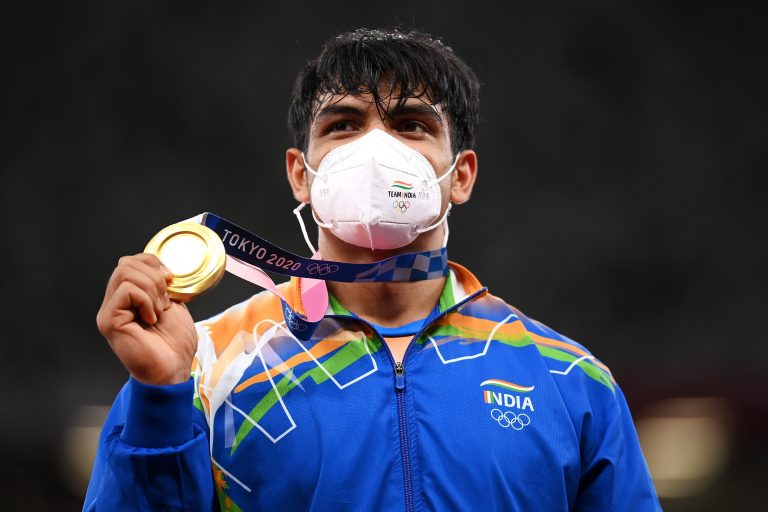
Olympic Gold Medalist Neeraj Chopra is the toast of the nation after securing the pole position in the Javelin Throw event on Saturday. He scripted history after winning Gold at the Tokyo Olympics, ending India’s century long wait for a medal in a track and field event.

With the Olympic medal in his kitty, interest in his tastes and opinions have peaked and people want to know more about the athlete. And here’s what we have discovered. Neeraj Chopra loves Golgappas and it is his favourite fast food.

Neeraj Chopra on Golgappas
Source: ESPNIndia/Instagram

Neeraj Chopra said, “I think there is no harm in eating golgappas. It’s mostly water and most of your stomach gets filled with water. The papri is quite big but the amount of floor is very little. It’s mostly water that’s going inside of you. There is some amount of spice but that’ another matter.”

He continued, “if you are talking about golgappas, there’s about as much flour as would be in a couple of rotis. Even if you think you are eating a lot, you are mostly filling yourself with water. Of course, I wouldn’t suggest you have them daily but I think it’s ok for an athlete to have a few golgappas once in a while.”

So there you have it, golgappas are so good that even Olympic Gold Medalists cannot let go of them. Old tweets of Neeraj Chopra had gone viral yesterday after his performance because they were supportive of Prime Minister Modi. He has donated to the PM CARES Fund and gave a ‘befitting reply’. Liberals ‘cancelled‘ him for it but it is unlikely he will come down from the top of the world anytime soon.

British Security agencies warn dissident Pakistani exiles living in Europe as Pakistan prepares a ‘Hit List’

As per a report published in The Guardian, Pakistanis living in exile in the United Kingdom who have criticised Pakistan’s military have a threat to their lives. British security agencies have raised fresh concerns that the authoritarian regime is possibly planning to attack dissidents in the UK. Pakistan is believed to be a strong ally of the UK, specifically on intelligence issues.

Some of the prominent names that have been warned by the security agencies include rights activists from Balochistan, journalists, groups representing ethnic Pashtuns and members of the Pashtun Tahafuz Movement.

Reportedly, in the month of June, agencies charged a man from east London along with others unknown in the Netherlands for conspiracy to murder Ahmad Waqass Goraya, Pakistani blogger and Political activist. The conspirator was identified as 31-years-old Muhammad Gohir Khan, resident of Forest Gate, east London.

Mark Lyall Grant, the former UK high commissioner to Pakistan, recently said that the British government would take the matter seriously if the Pakistani military has threatened persons from Pakistan in exile. He said, “If there is illegal pressure, in particular on journalists in the UK, then I would expect the law enforcement agencies and the British government to take notice of that and to make an appropriate legal and/or diplomatic response.”

Grant further said the British security agencies would not ignore evidence of intimidation on the behest of Pakistan’s Inter-Services Intelligence (ISI). “If British nationals or residents in the UK acting lawfully are being harassed or threatened by the ISI, or anyone else, then the British government would certainly take an interest,” he said.

The situation deteriorated after Imran Khan came to power

Reports suggest that since Imran Khan came to power in 2018 with military backing, there has been a notable decline in press freedom combined with the increase in violent attacks on journalists. Experts believe the Islamic republic, popular for suppressing dissent at its soil, is pacing towards targeting critics outsides its borders.

In March 2020, Journalist Sajid Hussain, best known for covering Human Rights violations in Balochistan, disappeared in Uppsala, Sweden. Two months later, he was found dead in a river. Karima Baloch, Hussain’s friend, was an activist best known for her campaigns for an independent Balochistan. Seven months after Hussain was found dead, her body was found in a lake in Toronto, Canada. Though the investigating agencies in Sweden and Canada rules out foul play in both cases, other activists are not convinced of the outcome.

Ordeals of journalists and activists in exile

Hammal Haidar, the husband of Karima Baloch, is a British resident. In a statement, he said he no longer feel safe in Europe. “Anyone critical of the Pakistan army is a potential target. The authorities in Europe must take these threats seriously,” he said.

Ayesha Siddiqa is a political scientist and commentator from Pakistan who is now based in London. She has received an Osman warning or “threat to life” notice from the Metropolitan Police. In a statement, she said, “The Met’s counter-terrorism command said that there was credible information of a threat to my life. It’s a life and death matter.” The situation is so grim that the officers even asked her husband if someone has approached him to offer money to get his wife to return to Pakistan.

Gul Bukhari is a Pakistan Youtuber and Columnist. She is an open critic of the military and had to flee the country to the UK after being abducted by the security forces in 2018 while living in Lahore. The UK Police have advised her not to share her personal details, including the address, with anyone. She said, “I feel threatened in London.”

Taha Siddiqui is a well-known Pakistani journalist. He escaped abduction in 2018 in Islamabad. Currently, he is living in Paris. In a statement, he said, “They have had multiple visits by people identifying as being from the ISI. They told my father that I should not think I am safe just because I live in France.” Sara Farid, Siddiqui’s wife and photojournalist said, “It feels there is no place or country safe for dissidents. Whenever I cannot reach Taha on his phone, the first thought is like it used to be in Pakistan – they got him.”

 Abdullah Abbas, Information Secretary, Human Rights Council of Balochistan, is exiled in Germany. He said he has to keep his head down, keeping in mind the recent deaths of Baloch and Hussain. “It has revived my old fears of being disappeared or killed, even in Europe,” he said while adding that he cannot take a walk alone in Berlin out of fear.

Aurang Zeb Khan Zalmay, editor, Pashtun Times, is exiled in Germany. Pashtun Times is an online portal that highlights human rights abuses in tribal areas of north-western Pakistan. He said, “Many of my friends are even unwilling to take a selfie with me and post it online out of fear of being watched or interrogated upon their return to Pakistan.”

In 2020, a memo of the Pakistani government got leaked in which they had accused several journalists of Pakistani descent, based out of the US and Europe, of publishing anti-Pakistan content in foreign media under pseudo-names. A journalist was quoted by Observer saying, “For the past six to eight months, I haven’t done any proper journalism because I have been threatened to a serious level that I had to step back.” The journalist in exile had allegedly received a warning notice from the intelligence agency of Pakistan’s army.

Pakistan government denies allegations

In a statement, the government of Pakistan denied the allegations. It said, “As a responsible state, Pakistan respects norms and principles of international law, and abides by legal and diplomatic frameworks that govern inter-state interaction including on community matters. There is no question of any threat being made to any national of any state, including Pakistan’s own nationals living anywhere on any pretext whatsoever. The unsubstantiated allegations appear to be part of the rather blatant on-going misinformation campaign against Pakistan to malign the country and its state institutions.”

Fact-check: Did PM Modi not speak to Olympic bronze medal winner Bajrang Punia because he supported ‘farmer protest’

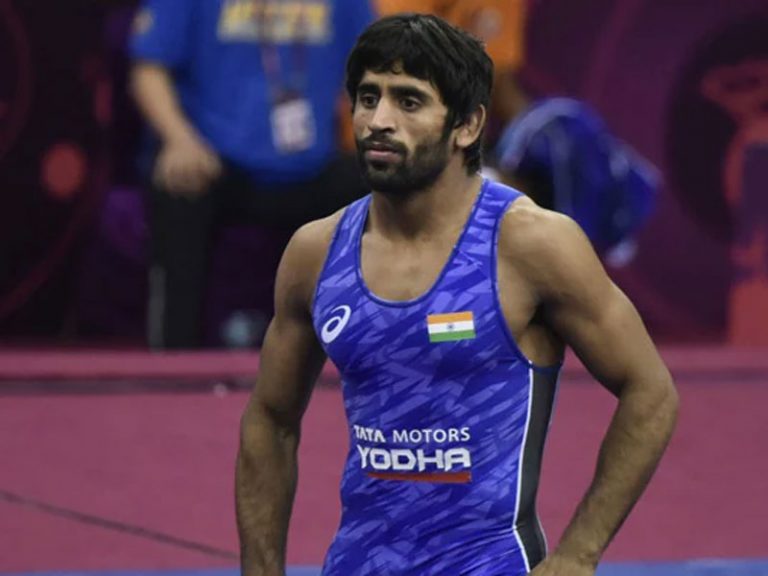
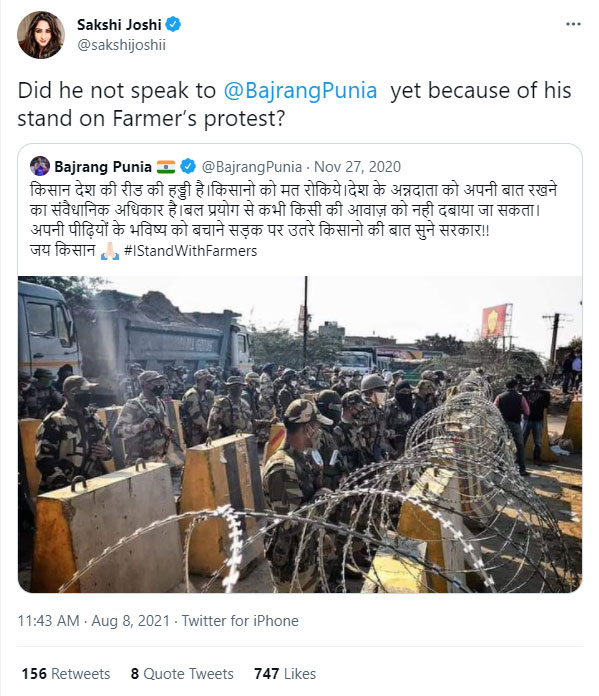
On August 8, alleged independent journalist Sakshi Joshi questioned if Prime Minister Narendra Modi has not talked to Bronze medal winner Bajrang Punia because he supported farmers protests. She said, “Did he not speak to @BajrangPunia yet because of his stand on Farmer’s protest?”

Misleading tweet by Sakshi Joshi. Source: Twitter

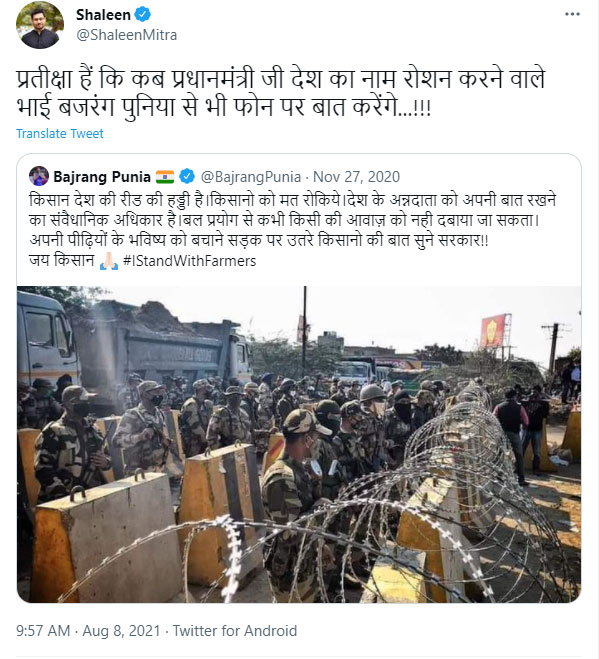
She was not the only one to make such allegations against PM Modi. Aam Aadmi Party’s Shaleen Mitra had raised similar concerns. He claimed, “We are waiting when Prime Minister would speak to Bajrang Punia who brought pride for India,” in Hindi.

Misleading tweet by Shaleen Mitra. Source: Twitter

However, if only they’d have bothered to pay attention they’d know that PM Modi has already spoken to Punia.

PM Modi’s conversation with Punia

On the contrary to the allegations made against PM Modi, he has already congratulated Punia over the call on August 7.

According to News Agency ANI, PM had spoken to Punia and congratulated him on winning the bronze medal. He also lauded Punia for the determination and hard work that led to the accomplishment.

Punia’s support for farmers protest has no impact on support from the government

Punia has been a vocal supporter of the farmer protests and published tweets in favour of the so-called farmers. He had urged the government to initiate talks with the farmers and end the blockade between the union government and farmer unions. However, his support for the protests did not stop PM Modi or other BJP leaders from supporting him or congratulating him for the win.

Punia has numerous photos and posts with former sports minister Kiren Rijiju.

After his win in the Olympics, Home Minister Amit Shah also congratulated him for the win.

Sports Minister Anurag Thakur also published a video where he was seen celebrating the moments when Punia won the match.

On the other hand, the ‘liberals’ have been cancelling Olympic gold medal winner Neeraj Chopra because of his support to the PM Modi.

Uttar Pradesh: Fake eunuch Sabir forcefully converts labourer Rahul after luring him into illicit relationship, got him circumcised

0

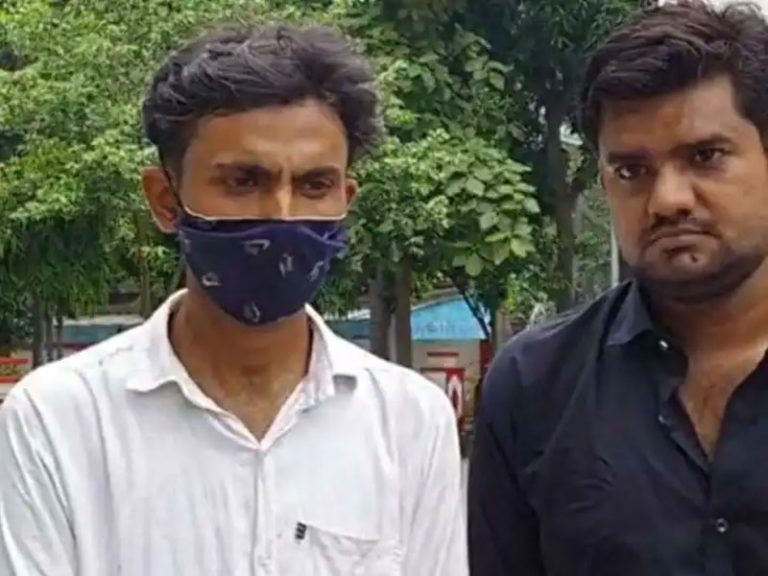
On August 6, a case of forced conversion came to light in the Rorawar Police station area of district Aligarh, Uttar Pradesh. As per reports, a fake eunuch identified as Sabir lured the victim into an affair and had an illicit relationship with him. He then forcefully converted him to Islam. The victim and his family have approached former Mayor Shakuntala Bharti for help in the matter. Bharti met the SSP and requested him to take action. The Police has registered a case against Sabir for forced conversion and took him into custody.

The victim met Sabir in a factory

Former Mayor Bharti said that the victim, identified as Rahul, resident of Lodha, came into contact with Sabir while working in a factory located in Shahjamal, a Muslim majority area. As time passed, Sabir lured him into an affair, and they became so close that they started having a physical relationship. Meanwhile, Sabir brainwashed Rahul and forcefully converted him to Islam. He also got the victim circumcised while he was under the influence of drugs. According to a report published in Hindi daily Jagran, the victim had tried filing a complaint at Rorawar Police station before but he was sent back with the eunuch.

Sabir wanted to convert the victim’s family

Two months after the alleged conversion, Rahul’s family came to know about their relationship and brought him home. In his complaint to SSP Aligarh, Rahul said, “A fake eunuch named Sabid who lives on Gonda Road of Rorawar Police station area, has forced me to convert to Islam on the pretext of a love affair. He wants to keep me forcibly with him and exploits me. As soon as I came back to my home, he followed me here and tried to take me forcibly back with him. He also wants to convert my family members by putting pressure on them.”

Station officer Raghvendra Singh said that the victim had filed a complaint in Rorawar Police station in which he has accused a eunuch of forcible conversion. Based on the complaint, the Police has registered a case, and further investigation has been initiated.

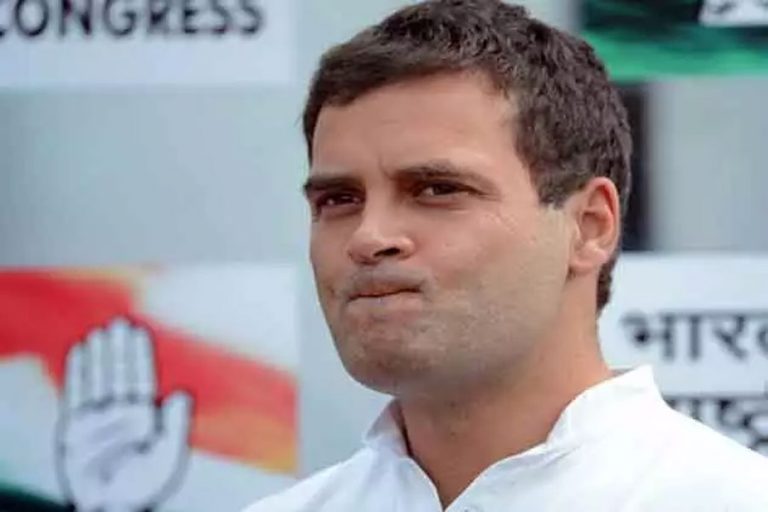
Twitter clarifies they did not suspend Rahul Gandhi’s account, refutes Congress’ claims

On August 7, while replying to Congress claims that Twitter has suspended the account of Congress leader Rahul Gandhi, a Twitter spokesperson denied the allegations and said the account was not suspended. The spokesperson further added that when an account gets suspended, it is removed from a global view. On the contrary, Rahul Gandhi’s account was visible to all. The company said it “continues to be in service.”

Rahul Gandhi tweet was removed by Twitter

Recently, a tweet published by Gandhi was removed by Twitter as it revealed the identity of the relatives of a minor victim who was raped and murdered. Gandhi had published a photograph on August 4 criticising the government over the case in which a nine-year-old Dalit girl was killed following an alleged rape. He wrote, “Parents’ tears are saying only one thing — their daughter, the daughter of this country, deserves justice. And I am with them on this path to justice,” in Hindi.

The National Commission for Protection of Child Rights (NCPCR) brought the tweet to Delhi Police and Twitter’s notice and asked them to take action against Gandhi as he had posted the photo of the girl’s family on the social media platform.

Gandhi’s actions violated the Juvenile Justice Act, and the Protection of Children from Sexual Offences (POCSO) Act that bars everyone from revealing the identity of a minor victim in any format, including print, television and online platforms. Acting on the notice issued by NCPCR, Twitter removed Gandhi’s tweet and locked his account for violation of its rules.

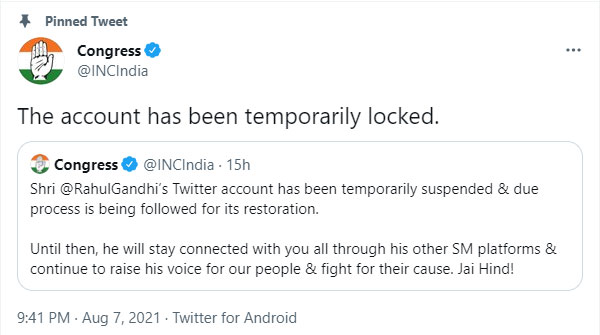
Initially, Congress claimed that Gandhi’s account was temporarily suspended by Twitter and they were trying to get it restored. However, his account was visible to all that raised questions over the said tweet. After the clarification by Twitter, Congress quoted its previous tweet in which they had alleged Twitter has suspended the account and said it has been “temporarily locked.”

Law against revealing the identity of the minor victim

According to Chapter 9, Other Offenses Against Children, Section 74, of Juvenile Justice Act, no report in any newspaper, magazine, news-sheet or audio-visual media or other forms of communication regarding any inquiry or investigation or judicial procedure, shall disclose the name, address or school or any other particular, which may lead to the identification of a child in conflict with the law or a child in need of care and protection or a child victim or witness of a crime, involved in such matter, under any other law for the time being in force, nor shall the picture of any such child be published. If any person is found guilty of revealing the identity, he or she can be punished with imprisonment of up to six months or a fine of up to rupees two lakh or both.

A similar law exist in POSCO Act as well. Sub Section (2) of Section 23 of Pocso Act states, “No reports in any media shall disclose, the identity of a child including his name, address, photograph, family details, school, neighbourhood or any other particulars which may lead to disclosure of identity of the child.” It holds the publisher and owner of the media liable for the acts and omissions of the employee. It further states, “Any person who contravenes the provisions of sub-section (1) or sub-section (2) shall be liable to be punished with imprisonment of either description for a period which shall not be less than six months but which may extend to one year or with fine or with both.”

Notably, under both laws there is a provision that allows such disclosure but only if such disclosure is in the interest of the child.

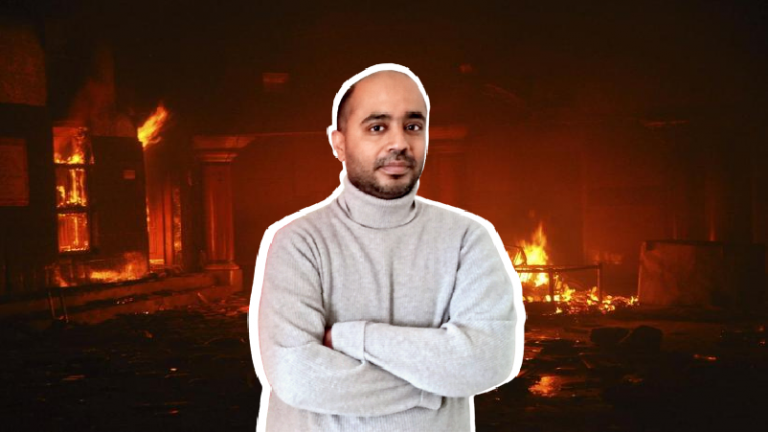
Hinduism will be finished in another century, columnist Abhijit Iyer Mitra predicts. Read why he thinks so

kuchh baat hai ki hasti miTti nahi humaari – there is definitely something special about us that our existence hasn’t been erased (when compared to ancient civilizations and religions like those of Rome, Iran, Egypt, etc.) – this line penned by Allama Iqbal that is part of the popular song ‘saare jahaan se achchha’ is often thrown around as reassurance that India, the only nation where Hindus exist in meaningful proportion, has survived for thousands of years and they will continue to survive so, and thus by corollary, Hindus and Hinduism will continue to survive.

The tragic irony is that Iqbal himself went on to virtually disown this song within years of writing it. He penned another one where he wrote ‘Muslim hain hum vatan hai saara jahaan humaara’ that went entirely in conflict with the line ‘Hindi hain hum vatan hai Hindustan humaara’ from the aforementioned song. And obviously, Iqbal later became a proponent of two-nation theory that resulted in the partition of India and the creation of an Islamic nation exclusively for Muslims. The land and Hindus of current-day Pakistan didn’t survive the philosophy of the guy whose lines are supposed to reassure the survival of Hindus and Hindustan.

The debate about the survival and future of Hindus and Hinduism is not new and the partition of India is shown as an example of how Hindus lost a substantial part of their land and heritage virtually overnight. In what was left as secular India after partition, the population growth rates are shown as proof of declining Hindu strength that could lead to another partition – something which the ‘liberals’ keep on rejecting as a conspiracy theory even though Hindus’ share in population indeed has been progressively going down in every census.

However, it’s not simple arithmetic projection of a declining graph showing share in population that can predict a time on the x-axis when Hindus become a minority in current India. Columnist and defence analyst Abhijit Iyer Mitra thinks that this process can soon reach an inflexion point from where there will be an irreversible decline leading to the ‘end of Hinduism’. And he believes that this can happen within a century, unless Hindus and Hindu leadership understand the forces at play.

Abhijit explains his doomsday prediction in a video talk that spans over an hour, hosted by podcaster Kushal Mehra, which can be watched here. Abhijit doesn’t put forward any grand conspiracy by some powerful lobbies at play to make Hindus minority in India, but draws from history to show parallels between what is happening in modern post-independence India and what happened to the religions of pre-Christian Europe and pre-Islamic Iran and Egypt, which are now relegated to museums.

He explains why the Islamic and later the Christian (colonial) invasions of India couldn’t wipe out the native religion of the land i.e. Hinduism, even though the native religions of Europe, Egypt, Iran, etc. were wiped out in the medieval ages by the same set of invaders and settlers. He also points out how the factors that led to wiping out of native religions in those lands in medieval times are at play, ironically, in modern India, and thus the risks of Hinduism vanishing are far more today than it was when India was under ‘foreign rule’ centuries ago.

Abhijeet argues that while Rome, Egypt, Iran, et al. had pre-Abrahamic religions that can be argued to be similar to Hinduism, Hinduism was better in the way that it had philosophical aspects about death and afterlife being part of the theology itself, as against those religions that kept it part of their ‘secular’ philosophy and not part of religion per se. This made Hinduism stronger, theoretically and theologically, to take on the challenges from the Abrahamic religions.

However, both Hinduism and those pagan religions erred, and the latter erred fatally, by not realizing the threat that monotheistic Abrahamic faiths and philosophy pose. Both Hinduism and those pre-Abrahamic religions kept trying to look for common grounds with the Abrahamic faiths for co-existence, while Abrahamic faiths were least interested in discovering common grounds. Instead, they looked for exclusive ground, literally, i.e. control of land. While theoretically, this is why Abrahamic religions can wipe out pagans – due to their exclusivist and fanatic streaks – the real wiping out happened due to economic, geographic and political reasons, Abhijit argues.

Much of the population in Europe were rapidly converted to Christianity due to excess poverty (Christianity projected suffering and poverty as one of the ways to get near to Christ or God) and excess population in more fertile parts of these countries (where invaders came not just as elite rulers but along with their population and livestock, as settlers), Abhijit points out by throwing various examples from pre-Christian Europe. The desire to have control on fertile land, and assets built around it, proved to be triggers for mass conversions, he says.

Further, in less fertile lands, while there was not a pressing incentive to control assets via mass conversions, the trigger proved to be the fact that conversions to Abrahamic faiths provided for soldiers who were primarily willing to die for the faith rather than for money. Hence for the rulers, raising and keeping an army of converted people was cheaper than earlier, Abhijit argues.

When it comes to India, Abhijit argues that both of these factors were not overwhelming. Firstly, only the elite military classes came with invasions, they did not bring their people or livestock in mass migrations, and thus there was no pressing need to control the local assets, which were around temples. Extracting taxes from local population – both by Islamic rulers, in shape of jaziya, as well as later by British rulers, as lagaan, etc. – was deemed a better option for the rulers than converting the masses and thus being forced to spend on their welfare. Furthermore, both the rulers – Islamic as well as British – didn’t feel the need to maintain a huge and ever-growing army as well, which would have been the reason to convert the entire population into their faith. Essentially, in India, there was no huge incentive either for the subjects or for the rulers to mass convert the local population.

However, this has changed post-1947, Abhijit says, where there is huge incentive for conversions to Christianity – because the secular constitution of India allowed only minorities to run schools and colleges freely as per their will – while Muslims feel the need to keep and raise an army (figuratively) for themselves as they are always ‘dara hua’ and secular politics has kept them in that mode for decades now. Thus the triggers for mass conversions today are far more active and relevant than earlier.

Abhijit says that the government nationalizing the temples, around which assets and an economic ecosystem of Hindus flourished earlier, removed the Hindu ability to provide or find a systemic response to these challenges. Thus what didn’t happen pre-independence and even during the medieval times is actually happening post-independence. Not only the threats are more pronounced, but the ability to push back has also been weakened, and that is why Abhijit doesn’t believe that Hinduism will survive for long.

“You will have nowhere to go,” Abhijit tells a person who asked him which country can provide safe refuge to Hindus when Hindus become a minority and start getting mass persecuted in India if his doomsday prediction comes true.

(this article paraphrases and summarizes Abhijit’s arguments, it’s not written by him. He can be found on Twitter @Iyervval)


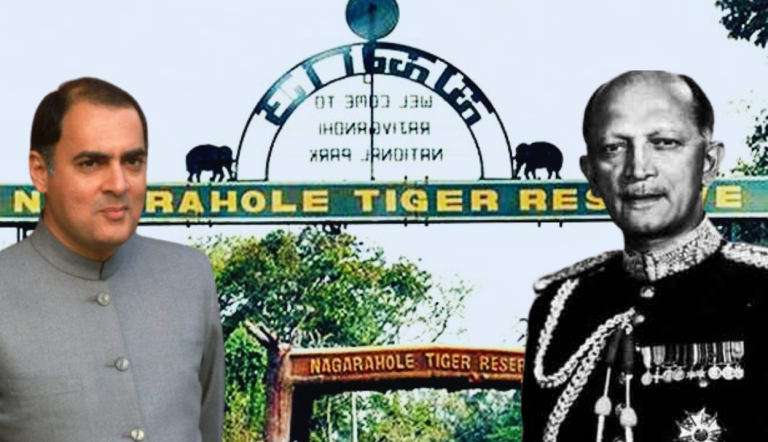
Karnataka: Kodagu residents start an online petition to rename Rajiv Gandhi national park at Nagarahole after Field Marshal Cariappa

After the centre announced that Indian’s tallest sporting honour – the Rajiv Gandhi Khel Ratna Award shall be known as the Major Dhyan Chand Khel Ratna Award henceforth, there is a growing demand in Karnataka for renaming Rajiv Gandhi National Park located at Nagarahole.

According to the reports, Vinay Kayapanda, a resident from Kodagu district, has initiated an online campaign on Change.org on Friday demanding that the Nagarahole national park be named after Kodandera Madappa Cariappa, who was the first Indian Commander-in-Chief of the Indian Army, a native of Kodagu. He was born on 28 January 1899 in Madikeri, Kodagu and had a distinguished military career spanning three decades.

The online petition has so far reached more than 5,200 signatures out of the target of 7,500. The petition has been tagged to Prime Minister Narendra Modi, Home Minister Amit Shah, Ministry of Environment, Forests and Climate Change and Karnataka Chief Minister Basavaraj Bommai.

The petition reads that the Nagarahole national reserve forest was renamed after former PM Rajiv Gandhi only to impress a particularly political family and the party and hence demands to rename the national park after Karnataka origin General Kodandera Madappa Cariappa and, if not at least to restore its previous name. The park was previously known as Nagarahole National Park before it was named after Rajiv Gandhi during his rule in 1988.

Several others from Kodagu have extended their support to the campaign to rename Nagarahole national park. Col CP Muttanna (retd), from Coorg Wildlife Society, said, “We have never called it as Rajiv Gandhi National Park. Everyone has been calling it Nagarahole. Suddenly, one day, we saw the board and the government order on it being renamed.”

The petition comes just days after Prime Minister Narendra Modi, in a surprising decision, had announced to rename the Khel Ratna Award after Hockey legend Major Dhyan Chand. The Khel Ratna Award is the highest sporting honour in India. Until now, it has been named after former Congress leader Rajiv Gandhi.

Major Dhyan Chand is one of the greatest sports personalities of the country who represented India at the Olympics in 1928, 1932, and 1936 and ensured Olympic medal to the country in hockey.

There had been calls by citizens for a significant period of time to name the award after a sporting legend instead of a politician. Rajiv Gandhi, after all, was not known for his sporting prowess.

Arjuna awardee athlete Anju Bobby George praises Modi govt for supporting and encouraging athletes, watch video

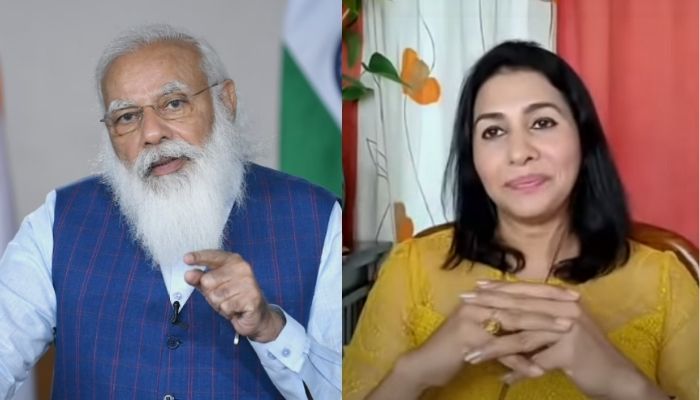
Former Indian athlete Anju Bobby George has heaped praise on the Modi government for the support provided to sportspersons, ahead of the Tokyo Olympics. George is the first and only world champion from India at the IAAF World Athletics Final and is a recipient of the prestigious Arjuna Award.

The highly accomplished athlete made the remarks during an interview with Indranil Basu on the Sony Sports channel. At about 8 minutes into the conversation, George emphasised, “Our Indian government is giving much priority (to the athletes). The Prime Minister is directly calling them after winning the medals. No one wants to leave (that opportunity).” She went on to explain the close involvement of the Sports Ministry and Sports Authority of India with the athletes participating in the Tokyo Olympics.

Video Courtesy: Youtube/ Sony Sports

“This is for the first time that it is happening like that. During our time, even our Sports Minister was a visitor in Olympic village. Even after winning the World Championship medal, India celebrated in a big way but the Ministry side nothing big. Yes, the Prime Minister (Dr Manmohan Singh) congratulated me, otherwise, nothing was there. This time, even before the games, the Prime Minister (Narendra Modi) is calling the athletes, interacting with them one to one, and encouraging them. Something big is happening in India. I am really missing out on fun and opportunities,” she added.

On being pointed out the active involvement of Kiren Rijiju, despite being an ex-sports Minister, Anju Bobby George further added, “He was very much into sport and he knows each athlete. Whenever we messaged or called, he was there. And he is ready to support. That is the kind of encouragement Rijiju sir was giving to our athletes. Even the new Minister (Anurag Thakur) comes from a sports background and he is also very good. So, this is the kind of support we are expecting from our Ministry and system. So, it’s not that they are celebrating only after the medal. They are there from the beginning.”

The retired athlete concluded, “They are supporting. They are behind us. The confidence they are giving to each athlete is showing the result. There is work (on the grassroots level). There are long-term plans. Sports Authority of India (SAI) is now planning for the 2028 Olympic Games and 2032 Olympic Games. This is how the system should work. And there are a lot of opportunities for the younger kids from the grassroots level. If you are talented enough, then, you will be noticed and will become a part of the system. Through this kind of support, (I am sure) India will be on the top one day.”

TOPS programme paved the path for India’s success at Tokyo Olympics

Adequate funding is crucial for a sportsperson to achieve professional success in the International arena. All sporting categories, with the exception of cricket, has suffered from neglect and lack of training facilities. The athletes are often faced with sponsorship challenges, thereby making it difficult for them to excel. Having understood the underlying reason behind India’s poor performance in Olympics Games, the Indian government launched the Target Olympic Podium Scheme (TOPS) in September 2014.

The programme was monitored by the Ministry of Youth Affairs and Sports, wherein it provided financial support and assistance to top athletes in the country. With the objective of helping sportspersons secure Olympic medals for the country, a TOPS Elite Altheltes’ Identification Committee and a Mission Olympic Cell were set up. The body was tasked to identify top athletes and parathletes and provide them with several benefits.

It includes training by reputed coaches at world-class facilities, purchase of equipment, supporting the services of physical trainers, sports psychologists, mental trainers and physiotherapists. At the same time, the athletes are provided with a monthly incentive of ₹50,000. The scheme covers sporting activities such as table tennis, tennis, weightlifting, wrestling, hockey, archery, athletics, badminton, boxing, shooting and para-sports.

Anju Bobby George’s achievements

Anju Bobby George is India’s first and only World Champion in the IAAF World Athletics Final. She won bronze in long jump at the 2003 World Championships in Athletics in Paris becoming the first Indian athlete ever to win a medal in a World Championships in Athletics jumping 6.70 metres. In 2005, gold medal at the IAAF World Athletics Final. She was awarded the Arjuna Award in 2002, Major Dhyan Chand Khel Ratna Award in 2003 and Padma Shri in 2004. She participated in 2004 Athens Olympics but remained in 5th position.