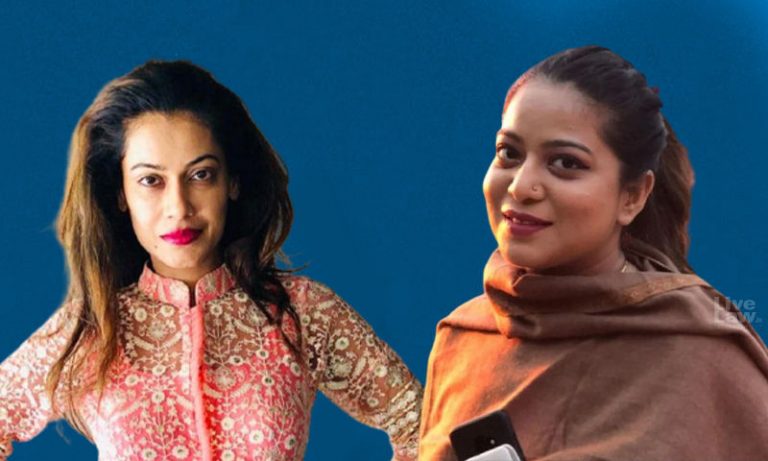
Actress Payal Rohatgi, who is known for her uncensored remarks on social media, has been embroiled in legal trouble for her last year’s Tweet against riot accused Safoora Zargar. Recently, an Andheri magistrate court ordered a police inquiry against actor Payal Rohatgi for her June 2020 Tweet against Jamia Millia Islamia student Safoora Zargar. It has ordered Mumbai police to find if there is sufficient material to proceed against actor Payal Rohatgi in a complaint filed by a city-based advocate, Ali Kaashif Khan Deshmukh, against her for her alleged communal tweets.
Metropolitan Magistrate Bhagawat T. Zirape, while ordering the probe, opined that prima facie the tweets show disregard for Muslim women and the community. The court said in his order that every community has the right to profess its religion and that no individual has the right to make fun of the customs or rites of another community.
It, however, noted that the complainant had not submitted a certificate as required under the Indian Evidence Act to decide the admissibility of electronic records. Magistrate Zirape said that technical investigation about the tweets is necessary to proceed against the accused and such investigation can be conducted only by the police and went on to order an inquiry.
The complainant, advocate Ali Kaashif Khan Deshmukh had approached the magistrate in end-December last year and said that the Amboli police station had failed to take action against Rohatgi for her tweet in June last year.
In June 2020, Ali Kaashif Khan Deshmukh had filed a police complaint at Amboli police station in Mumbai against the actor for her abusive tweets on Twitter against Safoora Zargar, the out on bail accused in the Delhi Anti-Hindu Riots. He had stated in his complaint that her tweet was ‘exceedingly derogatory’ to the people of the community and further that her post defamed its women.
Payal Rohatgi keeps landing herself in legal trouble for her statements on social media platforms
The same month, Twitter also suspended Payal Rohatgi’s account on the pretext of posting an abusive tweet.
In the last few years, Rohatgi had always landed herself in legal trouble for her controversial statements on social media platforms. Her activities on social media mainly revolve around current affairs. After actor Sushant Singh Rajput’s death, she had shifted her concentration towards the nepotism debate in the film industry and slammed several A-listers in Bollywood after Shushant Singh Rajput ended his life in June.
Safoora Zargar – one of the masterminds of Anti-Hindu Delhi riots, according to Delhi Police
Jamia Millia Islamia student Safoora Zargar was arrested under the Unlawful Activities Prevention Act (UAPA) for her involvement in the Anti-Hindu Delhi riots. She was reportedly the general secretary of the Congress-backed NSUI’s Jamia unit.
According to the reports, Zargar was among the first two coordinators of the Jamia Coordination Committee, which was set up in December last year to protest against the Citizenship Amendment Act. The sociology student from Kashmir was an active member in Congress and its student wing National Students Union of India (NSUI).
Zargar was arrested by the Delhi Police in the month of April for allegedly leading the anti-CAA protests at the Jaffrabad metro station of Delhi in February 2020. After being denied bail on two previous occasions, the Delhi High Court had granted her bail in June this year based on humanitarian grounds.
The Delhi Police had claimed that she was part of the conspiracy to “destroy, destabilize and disintegrate the Government of India in order to compel to withdraw the Citizenship Amendment Act (CAA) and the alleged National Register of Citizens”.
The movement for freeing Hindu Temples from government control has received a major boost in recent weeks after Sadhguru Jaggi Vasudev vouched for the same. Not too long after, retired IPS officer M. Nageswara Rao joined the ‘Free the Temples’ movement as well.
However, there are divergent visions regarding how Temples ought to be managed after freeing them from government control. Such visions are often in conflict with each other but there is agreement among the proponents that state management of Hindu Temples is not feasible. Here, we shall discuss three visions that have manifested as a consequence of the anguish over Temple management.
District management of Hindu Temples
There is a category of proposals that can be broadly classified under ‘community management’ of Hindu Temples. The earliest reference to this we are aware of was made by Rangesh Sridhar and Amar Govindarajan in an article on Swarajya Mag in July 2020. But their proposal is unique for the emphasis of Temple administration at the District level.
Sridhar and Govindarajan proposed a three-step mechanism for the management of Hindu Temples after they have been freed from Government control. First, they propose, the exclusive mandate of a Temple ought to be the propagation of the Hindu faith.
Second, the leadership of the Temple administration ought to be elected by Hindus in the district. However, they state that traditional custodians of the Temples would continue to preside over the religious affairs of the Temple.
“The point is not to show off egalitarian views but to ensure that leadership of temples is contested for, opening up space for discussion about how best to use temple resources and producing Hindu leaders who have the interests of the Hindus and temples at heart,” the authors said of the reason for elected leadership.
Third, the second tier leadership of the Temple would involve the major castes in the district. At the core of this proposal is the idea that “every Hindu in a district must be made a stakeholder in the temple.” The rest follows from that premise.
Community management of Hindu Temples
M. Nageswara Rao, who has been advocating for ‘inclusive management’ of Temples, appears to endorse the premise proposed by Sridhar and Govindarajan. Nageswarao Rao said in a statement following a controversy over a ‘private fiefdom of cliques’ comment, “If the entire Hindu demography of all castes is not included in this collective fight, how do we hope to achieve the purpose of freeing the Temples from Govt control to protect Dharma?”
The former interim-director of the CBI continued, “We have to realise that times have changed. There are myriad existential threats to our civilisation. It is the responsibility of all Hindus to protect and propagate Hinduism, which requires all sections of Hindus become equal partners. Exclusion of any class of Hindus would be self-destructive.”
“When India gained political independence, we did not return the country or its parts to the respective erstwhile rulers namely the Marathas, the Rajas and the Nawabs from whom the British seized it. Did we? So if it was unacceptable then, would the same logic not apply against handing over public Temples to trustees/people who managed them before Govt take them over? What is sauce for goose should be sauce for gander too!” Rao added.
Local management of Temples
A contesting vision for the management of Hindu Temples proposes devolving power from the state to village committees. Proponents of this category of thought include Sadhguru and Indic Collective.
TR Ramesh, president of Indic Collective and president of Temple Worshippers Society, said recently, “Till 1951, there were less than 1,000 temples which were under the control of the government. But since then, over a period, the State government has taken over around 44,000 temples during the past five to six decades. All those temples which have less than Rs. Two lakh income per annum can be handed over to the village level committees with representatives from all castes and communities.”
Sadhguru, too, argues that Temples must be freed from government control due to the rampant corruption and mismanagement that has contributed towards debilitating circumstances in Temples. His proposal is to turn over the Temples to devotees. It is evident that it would involve greater participation of the local communities.
This category of proposals includes divergent visions that could be seen in conflict with each other. However, there appears to be consensus that the government would be relegated to the position of only a regulating authority and would not be involved in the management of the Temples themselves.
Under this idea, Sampradayas can be seen to have the primary authority to manage and administer Temples.
A Board of Saints and Scholars
The Tamil Nadu unit of the BJP promised in its manifesto, “The administration of Hindu temples will be handed over to a separate board comprising Hindu scholars and saints.” But that has not found as much support as they party would have hoped.
TR Ramesh said, “The BJP is trying to appeal to the sentiments of the people. In reality, the BJP does not want to give up temple administration. So, they are trying to put the wine in the new bottle. That’s all.”
“Government having control over the temples is a wrong proposition. It should not continue. But promising that the temples would be handed over to a board of scholars and saints is an act of cheating as such a move is illegal. The Constitution has ensured the religious rights of individuals as well as denominations. For example, a protestant church and a pentecost church cannot be merged. So also, temples of different Sampradayas cannot be brought under a single board,” he added.
R Jagannathan of Swarajya Mag, while acknowledging that it was a step in the right direction, argued that it is not good enough. He said that the proposal leaves room for governments to pack such boards with scholars and saints of their own choice. He argued for legislation to enable government to move out of the business of administering Temples.
Convergence and Divergence between different proposals
There are really only three broad visions for the management of Hindu Temples that we have highlighted here as a state appointed board of Saints and Scholars does not really fall under the purview of ‘Free the Temples’ movement. Thus, we will point out in short where the three proposals converge and where they diverge.
The ideas converge on the proposition that all castes should be represented in the management of Hindu Temples. However, that is arguably where the convergence ends.
The proposal by Sridhar and Govindarajan envisages management of Temples at the District level while the local management proposal lays emphasis on management by village committees and other localised entities. Furthermore, the former also proposes elected leadership in the management of Temples, an idea that is worthy of note due to its uniqueness itself. Nageswara Rao’s vision leans towards the former but does not advocate elected leadership.
One could argue that both models could work simultaneously. While the Sridhar-Govindarajan vision could be made applicable for large Temples, the other could be used to manage small Temples with less than Rs. Two lakh per annum income.
However, despite the divergence of opinion, there is convergence among all sides that state administration of Temples is causing great harm to the welfare of Hindu Temples.
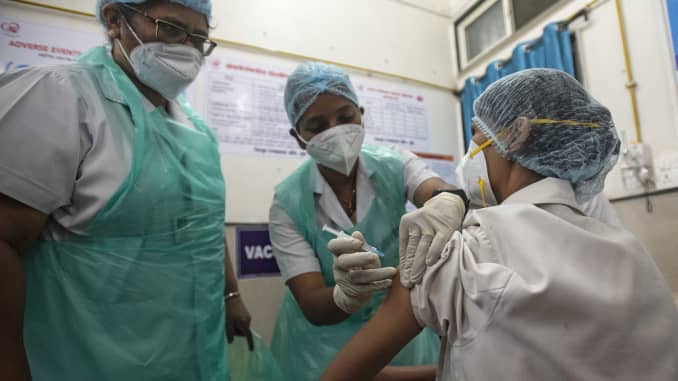
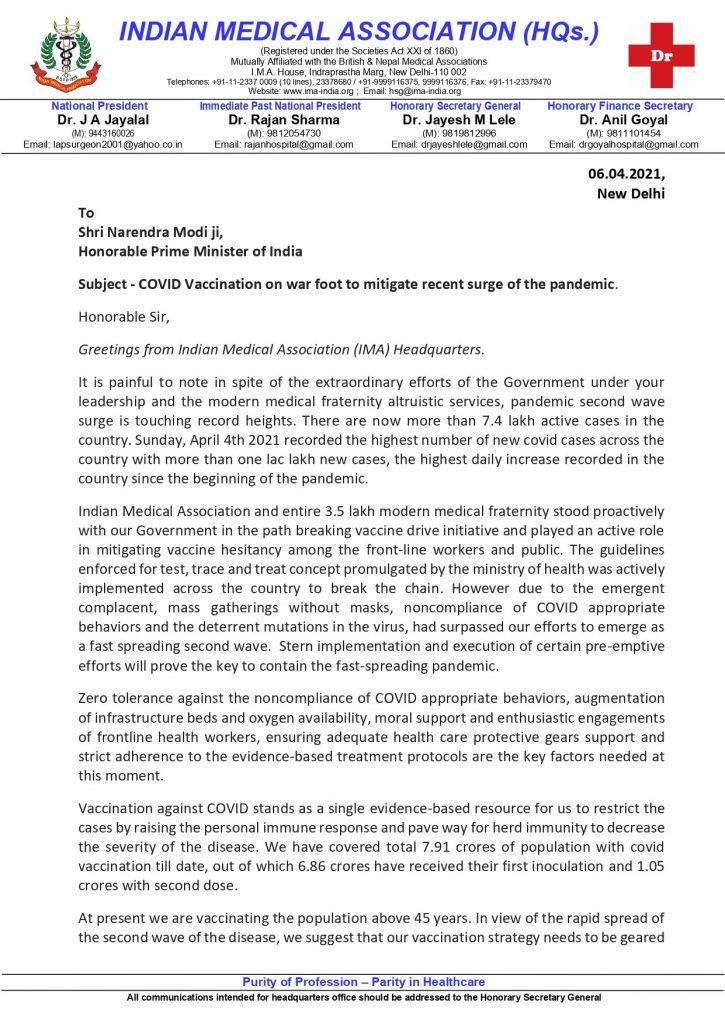
As India grapples with the second wave of coronavirus surpassing past records, the Indian Medical Association has written to Prime Minister Narendra Modi urging the government to include all age groups above 18 in the Covid vaccination drive.
Lauding the efforts of the government, the association at the same time expressed its concerns over the inability to curb the second wave due to the public’s noncompliance of Covid-19 appropriate behavior and rapid mutation of the virus.
Suggesting vaccine as the single evidence-based resource to restrict the virus, IMA in its letter stated, “At present, we are vaccinating the population above 45 years. In view of the rapid spread of the second wave of the disease, we suggest that our vaccination strategy needs to be geared up with immediate effect on a war footing. We request the following suggestions in the Covid Vaccination Drive. All citizens above 18 years of age shall be permitted to receive Covid vaccination.”
Indian Medical Association writes to Prime Minister Narendra Modi suggests “gearing up of COVID19 vaccination drive with immediate effect and permit those above 18 years to receive vaccine”. pic.twitter.com/1mMpfC5e4y
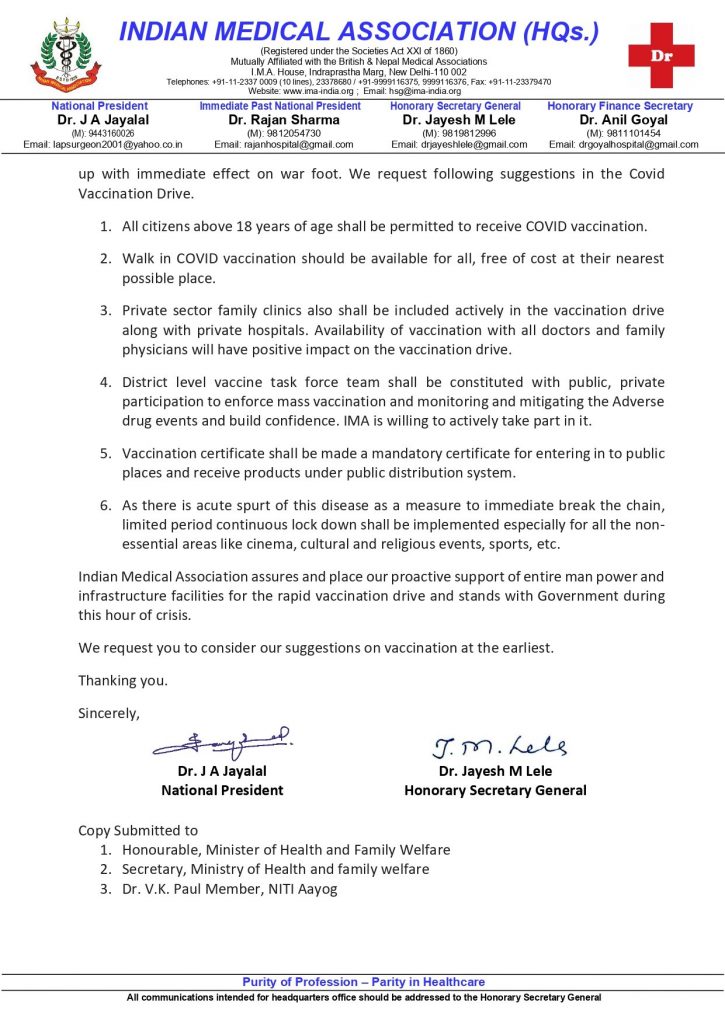
Summarising the recommendations in 6 points, the IMA, apart from requesting for vaccination for all, mentioned:
Covid vaccination should be available for all and free of cost
Private sector family clinics, along with private hospitals should also be included actively in the vaccination drive along with private hospitals
District level vaccine task force teams shall be constituted with the public, private participation, to enforce mass vaccination
A vaccination certificate shall be made a mandatory certificate for entering into public places
Indian Medical Association’s letter to Prime Minister Narendra Modi
The letter also proposed a limited period continuous lockdown of non-essential areas such as cinema, cultural and religious events, sports, etc.
Emphasizing on the need for a robust infrastructure, IMA added, “Zero tolerance against the non-compliance of Covid appropriate behaviours, augmentation of infrastructure beds and oxygen availability, moral support and enthusiastic engagements of frontline health workers, ensuring adequate health care protective gears support and strict adherence to the evidence-based treatment protocols are the key factors needed at this moment.”
More than 7.91 crore beneficiaries in India have been vaccinated for COVID-19 so far. On 04 April- 15,40,676 beneficiaries were given the first shot, while 97,788 people received their second doses as per the latest report released by the Union Health Ministry.
Prime Minister Narendra Modi had launched a nationwide vaccination drive early this year on January 16, with healthcare workers at the frontline of India’s COVID-19 battle getting their first dose.
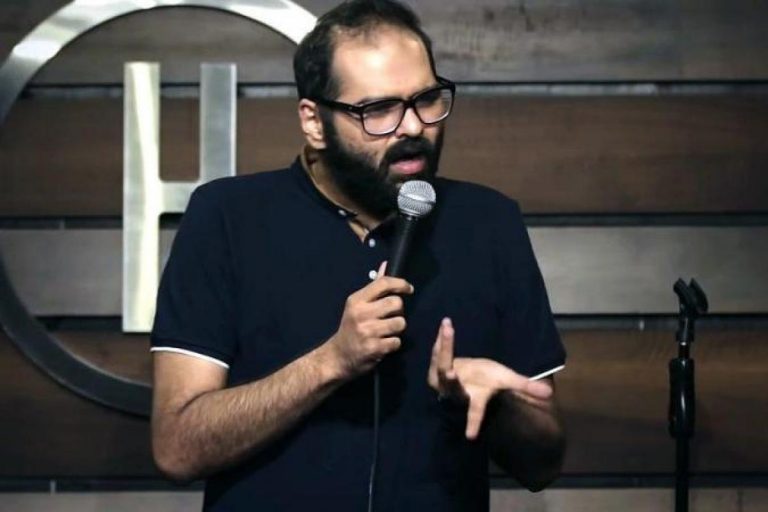
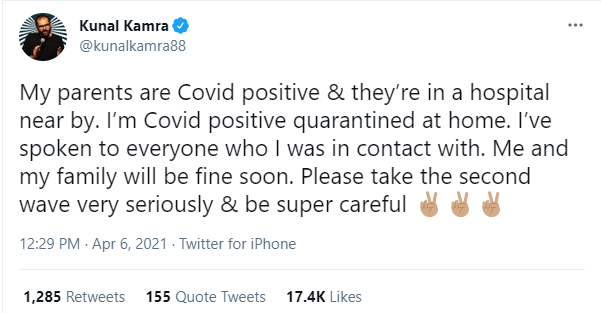
A year after mocking frontline workers, ‘comedian’ Kunal Kamra announced on Tuesday (April 6) that he and his parents have been diagnosed with the Wuhan Coronavirus infection.
In a tweet, Kamra wrote, “My parents are Covid positive & they’re in a hospital nearby. I’m Covid positive quarantined at home. I’ve spoken to everyone who I was in contact with. Me and my family will be fine soon.” He further emphasised, “Please take the second wave very seriously & be super careful.”
Screengrab of the tweet by Kunal Kamra
It must be mentioned that the stand-up comedian had earlier mocked India’s frontline workers (FLWs) during the onset of the pandemic in March last year. In his address to the nation last year, PM Narendra Modi called for a ‘Janta Curfew’ (public curfew) on March 22, 2020, from 7 am to 9 pm. He emphasised that it would mean a curfew imposed by the people on themselves in order to prevent the spread of the disease.
Young and old, rich and poor, people from all sections of society came out on to their balcony and verandahs to clap and ring bells and blow the conches in appreciation for those at the frontline battling the pandemic. However, that did not go down well with some as they riled against the people as the nation came together as one.
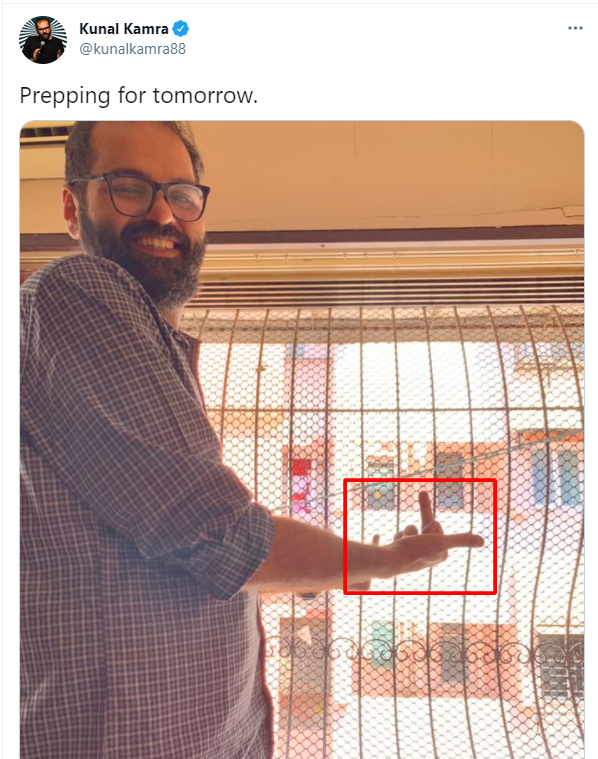
Screengrab of the tweet
Although his innate hatred for PM Narendra Modi is well-known, Kunal Kamra sought to humiliate the frontline workers to take potshots at the BJP. In a Twitter post, he wrote, “Preparing for tomorrow” and stuck out his middle finger to mock the front-line workers.
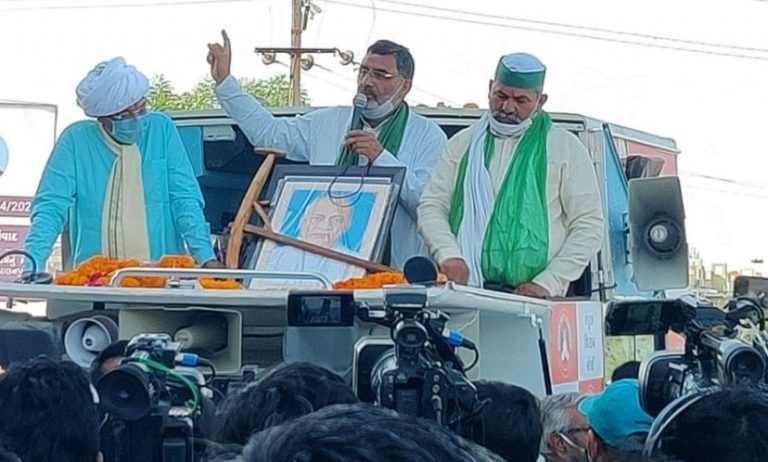
The months-long protest against the central government’s three farm laws spearheaded by Bhartiya Kisan Union (BKU) chief Rakesh Tikait seems to be dying its natural death. His latest two-day visit to Gujarat on April 4 and 5 received an extremely tepid response with only a handful of people attending his two days scheduled program, reports DeshGujarat.
The new report says that on the first day of his scheduled visit to Ambaji and Palanpur, only 100 odd people were present during the event and that too mostly onlookers.
Apart from this, Tikait was also left embarrassed when his other farce also did not work in his favour. Ahead of his entry in Gujarat, the BKU leader had made a major hue and cry, claiming that the BJP government in Gujarat would not allow him to enter the state. Before embarking on his journey, Tikait had reportedly shown his passport to the media persons and claimed that despite being an Indian citizen, the BJP government would impede his entry into the state.
However, this drama also backfired. DeshGujarat reported that the BJP government in the state was so disinterested and nonchalant about his scheduled visit that he was allowed smooth entry through the interstate check post of Abu Road, Ambaji. In fact, the state government also arranged police piloting for his convoy.
During the visit, the Bhartiya Kisan Union (BKU) leader threatened to start a farmers’ tractor agitation in Gujarat and said the time has come to gherao the state capital Gandhinagar and also break barricades if needed. Tikait claimed farmers in Gujarat were unhappy and suffering.
Tikait’s visit to Gujarat was announced in a press conference on March 26 this year in Ahmedabad called by various farmers’ rights organisation of the state.
Rakesh Tikait has been the face of the ongoing farmer’s agitation. He has been trying his best to milk the protest to kick start his political career. For the uninitiated, the FIR filed by Delhi police to probe a larger conspiracy and criminal design behind the violent tractor rally on January 26 in Delhi, mentioned Bharatiya Kisan Union(BKU) leader Rakesh Tikait for spearheading and inciting the mob that wreaked havoc in Delhi.
A video of Tikait asking protesters to carry sticks, flags during the tractor rally had gone viral on the internet. But as the tractor rally carried out by protesters devolved into chaos and disarray, with protesters resorting to violence and vandalism, Tikait refused to shoulder the responsibility of the violence and pushed the blame on the Centre and the Delhi Police for the Republic Day disruption.
In an interview on the Hindi news channel Aaj Tak in February 2021, the BKU leader had inadvertently admitted to his global links. Tikait confirmed that the organisation he is associated with has its branches in 73 countries and he has an alliance with the Indian branch.
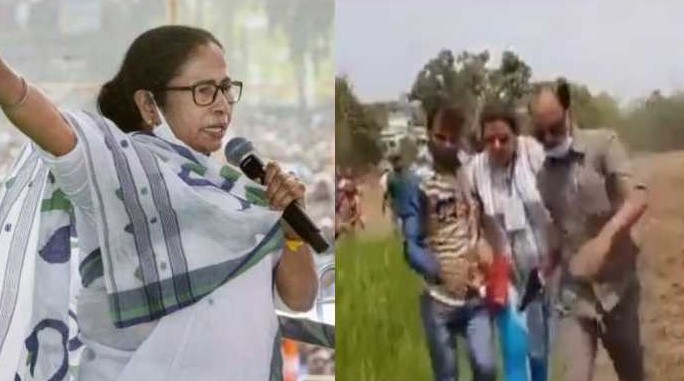
The Hindu appears to have discovered a rather unique way of spreading misinformation on the internet. The caption it has shared on its Twitter account tells a completely different story than the video the caption is for. The video is related to an incident involving Trinamool Congress (TMC) candidate from Arambagh Sujata Mondal Khan.
TMC candidate from Arambagh Sujata Mondal Khan was attacked by BJP supporters, and her security officer sustained injuries.
The caption says, “TMC candidate from Arambagh Sujata Mondal Khan was attacked by BJP supporters, and her security officer sustained injuries.” However, the video paints a completely different picture.
In the video, the reporter can be heard speaking in Bengali, saying that the TMC leader and her workers are accused of attacking villagers after entering their houses and injuring the hand of one of them. The reporter says the villagers have accused the TMC workers of breaking the hand of one of their own. And therefore, villagers came out in large numbers against the political leader.
The villagers can be seen chasing the Trinamool gang with sticks in their hands. The Hindu, instead, presents a completely different picture accusing the BJP of attacking the TMC candidate. One reason appears to be that the reporter speaks in Bengali. Therefore, those who do not understand the language would be easily misled by the caption. It is one of the factors that appears to have played a part in the manner in which the video was captioned.
Incidentally, it is not only The Hindu which has engaged in such mischief. Poulomi Saha, India Today journalist, shared the same video and failed to note the accusations against Sujata Mondal Khan.
TMC candidate from Arambagh in Hooghly district, Sujata Mondal comes under attack while going around her constituency
There appears to be a motivated campaign to trivialize the persistent political violence in West Bengal, committed by TMC goons against opposition workers and candidates. Multiple BJP candidates have been attacked during the course of these elections. The media, now, appears to downplay the toxic political violence by insinuating that the BJP is also engaging in it.
Amidst the 3rd phase of the ongoing West Bengal State Assembly polls, a Trinamool Congress (TMC) booth agent was thrashed by a group of women in Arambagh in the South 24 Parganas district. The attack comes days after TMC leader Mamata Banerjee urged women to attack security personnel with ‘Haatha kunthi‘.
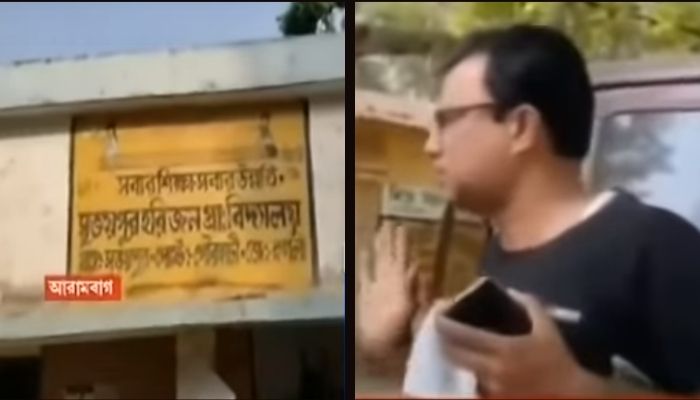
As per reports, the incident took place in Subhaypur Harijan Prathamik Vidyalaya (Polling station 230) in the Arambagh Vidhan Sabha constituency. A group of women reached the polling station and pulled the TMC agent Babar Ali Khan out of the booth. He was allegedly beaten with ‘haatha kunthi’ by the women in the presence of the central security personnel.
ABP Ananda reported that despite the efforts of the security forces to pacify the situation, the women continued to thrash the TMC agent. He then managed to escape and reach the van of the police authorities. On being asked to return back to the polling booth, he cited ‘personal safety’ to refrain from going back. The TMC booth agent then left the scene.
(Video Courtesy: Youtube/ABP Ananda)
While speaking about the matter, Khan said, “The police are protecting me here. But they (referring to the group of women) are thrashing me there in the presence of the central forces. They have failed to protect me. These cops have saved my life.” The third phase of the West Bengal State Legislative polls have so far witnessed violence, ISF bombing and obstruction of voters by the Trinamool Congress.
Mamata Banerjee advocated mob justice during election rallies
While perpetuating fear in the minds of people that the BJP could unleash a similar form of brutality, Mamata Banerjee said during an election rally, “Ek jot hoye berhoben…Ekta loker gayae haath dile, ekta mayer gaye haath dile, lokho maa hatha kunti niye berhobe (Leave your homes in groups. If they touch anyone, especially a woman, lacs of mothers will come out with kitchen utensils in their hand)”.
She further added, “If they attack any man, then, all the elderly must unite in groups.” While gloating over the idea of violence, the West Bengal Chief Minister stated, “Ami dekhte chai khela ke haare aar khela ke jeete (I want to see who loses this game (of violence) and who wins.)
During an election rally in Falakata in the Alipurduar district on Friday(April 2), Mamata Banerjee claimed that the central security personnel have been working in cahoots with the BJP as a part of a sinister conspiracy to defeat the Trinamool Congress. “Don’t listen to them. If they try to intimidate you, then, you must unite and chase them away with utensils, sticks and brooms,” the West Bengal recommended the people of Falakata to resort to violent means.
Yesterday, an 18-year-old girl from Pilkhuwa was thrown into the Gangnahar canal in Dasna Mussoorie after being stabbed with a knife by her estranged friend, as per a report in Amar Ujala. The accused—Amaan Malik, with the help of his friend Shaadab, kidnapped the girl at knifepoint and brought her from Pilkhuwa to Dasna—where after an altercation they stabbed the girl with a knife and threw her in Gangnahar.
She was reportedly stabbed before being thrown into Gangnahar. However, she was rescued after people in the vicinity heard her cries for help. As people started to gather near Gangnahar to pull her out, the accused escaped from the spot. She was subsequently rescued from Gangnahar and taken to the hospital where she is currently undergoing treatment.
थाना मसूरी क्षेत्र में कल दिनांक 05 -4- 21 में हुई घटना के संबंध में पुलिस अधीक्षक ग्रामीण की वीडियो बाईट। pic.twitter.com/ePChAX0GeV
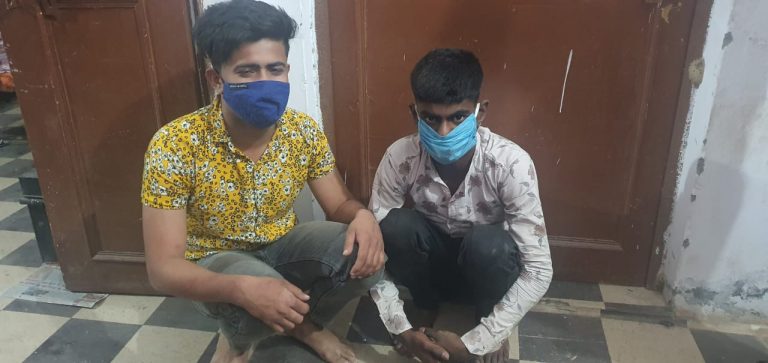
The police registered a case of attempt to murder after the girl’s mother filed a complaint against the accused. Hours after the incident, the two accused—Amaan and his friend Saadab—were arrested by the police.
According to the uncle of the 18-year-old student, about two years ago, the girl met Amaan Malik, who worked at a shop along the canal. Gradually the two became friends. Family members claim that the girl had stopped talking to Amaan for about two months. He had tried many times to approach the girl and talk to her, but she refused. Her uncle said Amaan and his friend Shaadab intercepted the girl when she had gone to the market on Monday.
The girl was then taken towards the railway road on the pretext of having a private conversation. There, Amaan talked to the girl for about 10 minutes. His friend, Shaadab also stood beside them during their conversation.
Amaan and Saadab had kidnapped the girl at knifepoint
Family members claim Amaan kept pressuring the girl to talk but she did not relent. Following this, Amaan gestured towards Shaadab who kidnapped the girl at the knifepoint. She was then taken to Dasna Gangnahar. The duo tried to have a conversation with the girl. However, before the girl could make sense of anything, Shaadab caught hold of her hand and Amaan started stabbing her with a knife. The student kept screaming for help, even as Amaan kept stabbing her.
The girl tried to get herself free from Shaadab’s grip, but could not succeed. Hearing the screams of the girl, a passer-by created a noise that spooked the accused. As people started gathering at the spot, Amaan and his accomplice Shaadab fled from the area, but not before throwing the girl into Gangnahar. The person who was in the vicinity rescued the girl from the canal with the help of passers-by, after which the police was informed. The police took the girl to Dasna CHC, from where she was shifted to the MMG District Hospital.
The family said their daughter had stopped talking to Amaan after she sensed his behaviour and actions to be suspicious. She, therefore, severed all ties with him and stopped talking to him altogether.
A year ago, she stopped talking to Amaan. At that time, the accused Amaan had threatened her that she and her family would face dire consequences if she did not resume her friendship with him. Cowed by his threat, the girl grudgingly started talking with Amaan again. However, a couple of months ago, the girl again stopped talking to him.
According to the medical examiners, there were several knife wounds on the girl’s body. She had knife marks around her arm, thighs and neck. She was transferred to the District MMG Hospital after her condition became critical. The family was informed about the incident and they quickly rushed from Pilkhuwa to Ghaziabad.
Ghaziabad Police have issued a video where they have informed that acting on the family’s complaint, the two accused have been arrested within a few hours.
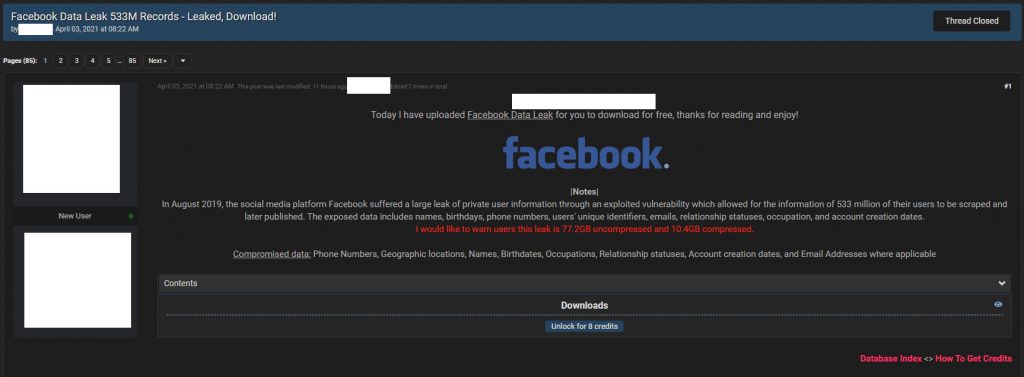
A massive data dump of 533 million global Facebook users has been leaked and making rounds on hacker forums. As per the posts by threat actors who leaked the data, it contains user names, birthdays, phone numbers, users’ unique identifiers, emails, relationship statuses, occupation, account creation dates and more.
Post by threat actor informing details of the data dump
The hacker also mentioned that the data was scraped from Facebook in August 2019 when the social media giant suffered a large leak of private user information, thanks to a vulnerability that was later fixed. The hacker said, “In August 2019, the social media platform Facebook suffered a large leak of private user information through an exploited vulnerability which allowed for the information of 533 million of their users to be scraped and later published.” In the comments, it was mentioned that the database was up for sale for $99 on another forum in March.
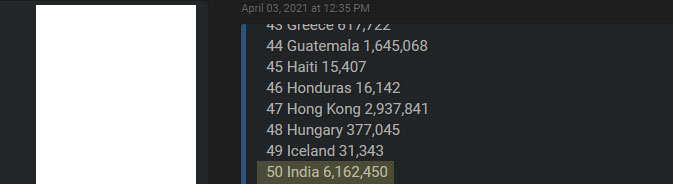
In comments, it was clearly mentioned that the data dump contained information of 61,62,450 Indian users.
The dump is divided in different files country-wise. Indian file has 61,62,450 records.
Experts’ views on Data Leak
The leak was reported by several experts, including Alon Gal, CTO of Israeli cybercrime intelligence firm Hudson Rock, Troy Hunt of haveibeenpwned.com and others. Gal also reported the leak in January 2021, where he said that the leak was underreported. At that time, Gal reported that a user had created a Telegram bot that allowed users to query the database for a low fee. “This obviously has a huge impact on privacy,” he said.
In early 2020 a vulnerability that enabled seeing the phone number linked to every Facebook account was exploited, creating a database containing the information 533m users across all countries.
It was severely under-reported and today the database became much more worrisome 1/2 pic.twitter.com/ryQ5HuF1Cm
— Alon Gal (Under the Breach) (@UnderTheBreach) January 14, 2021
On April 3, while quoting his January thread, Gal informed that the 533 million records were leaked for free. He further added that the bad actors would possibly use the information in the leaked data for scamming, hacking, social engineering and marketing.
Details include:
Phone number, Facebook ID, Full name, Location, Past Location, Birthdate, (Sometimes) Email Address, Account Creation Date, Relationship Status, Bio.
Bad actors will certainly use the information for social engineering, scamming, hacking and marketing.
— Alon Gal (Under the Breach) (@UnderTheBreach) April 3, 2021
Troy Hunt, founder at haveibeenpwned.com on April 4, wrote a long thread on the data leak. He said, in the first review, he found out that the database has extensive data set with one file per country. Though he could not find data of anyone from his family, he said, “I’m hearing from other trustworthy sources that the data is legit, and that seems a reasonable assumption to work on for now.”
On first review, it’s an extensive data set with one file per country and a header row as follows:
Hunt added that he would extract the data, which he was expecting to be around 10 million and not hundreds of millions, as reported by the hackers. Talking about the impact of such breach and data being freely available, Hunt said, “For a targeted attack where you know someone’s name and country, it’s great for mobile phone lookup. Much harder to do en masse as there’s no reliable key; I couldn’t make a big list of emails and resolve them to phone numbers as email is rare in the data.
So, I’ll extract those addresses, do some further verification then load the data. It won’t be hundreds of millions of records, I suspect it’ll be less than 10M, but obviously that’s still a substantial number.
After parsing, Hunt found 2,529,621 email addresses in the data dump. Anyone can check if their data was leaked based on the email addresses on the website haveibeenpwned.com.
Email parsing now done, found 2,529,621 unique addresses across the 108 files. Call it about 0.5% of all records having an email address.
Later on April 6, in reply to the thread, he said that the phone numbers are also being uploaded on haveibeenpwned.com, making it easier for the users to check if their information got leaked. By the time this report was published, it was still under process. He added that when there is a vacuum of information, people speculate. “Facebook needs to make a clear statement on the data that’s in broad circulation; when it happened, where it came from and what’s in it. Without that, confusion and speculation reign,” he said.
The Facebook phone numbers are now being loaded into @haveibeenpwned and will be searchable later today. Stay tuned, I’ll push out a short blog once it’s good to go (will be queryable via the existing API too ?).
Joe Tidy, Cyber Reporter for BBC, mentioned several Facebook breaches that affected more than one million users. According to his post on Twitter, in 2019 alone, there were four data breaches at Facebook affecting 600 million (March 2019), 540 million (April 2019), 419 million (September 2019), and 309 million (December 2019) users.
In case you’re lost, here’s all Facebook’s data breaches that affected more than 1m users.
– June 2013: 6m users – 2016: 90m (Cambridge A) – May 2018: 14m – Sept 2018: 50m – March 2019: 600m – April 2019: 540m – Sept 2019: 419m – Dec 2019: 309m
As there were several breaches in 2019, there was confusion over which data has been made available online. In another tweet, Tidy suggested that as per Facebook’s confirmation on the data, the available data dump was from September 2019, which was initially thought to be of 400 million users.
Confirmed by Facebook. These 2 breaches in 2019 were indeed separate. So there was one in April that led to 500m users data exposed and another in September (the one we are all taking about now) which was initially 400m users. ? https://t.co/vJu2NRl9YQ
While talking to OpIndia, Sunny Nehra, Admin at Hacks And Security, said, “Though the data is old but downplaying the leak is not the way to go. The dump has an enormous amount of data that bad actors can use for spamming, hacking and marketing.” He further added that security in Digital space is an illusion. All applications do suffer from some or other vulnerabilities. The better they are tested, the more vulnerabilities are found. Facebook has a proper bug-hunting program where anyone who finds some valid vulnerability can report to them and get fame & financial rewards. But malicious hackers prefer to misuse it rather than reporting it.
Facebook acknowledged a vulnerability in 2019 caused by their “view as” feature, potentially exposing its 50 mln users access tokens to hackers. This or other vulnerability that can let a hacker access private info could have been used to fetch this data. Nehra added, “any data breach should not be taken lightly. When users are informed about the breach, they can take the required steps to avoid any further damage.”
Tomasz Onyszko, Founder at Predica, called it a “truly global phone book”. He said, “If it confirms and it is not a random dataset scraped from other sources, then it might be first, truly global phone book.”
If it confirms and it is not a random dataset scrapped from other sources, then it might be first, truly global phone book. @troyhunt have you got this reported / checked already?
Several Facebook executives have taken the task to downplay the leak. Liz Bourgeois, Director, Strategic Response Communications at Facebook, said on Twitter that the data is old. She said, “This is old data that was previously reported on in 2019. We found and fixed this issue in August 2019.” However, the executives fail to acknowledge that even though the data is from 2019, it contains phone numbers and email IDs of the users, which do not change that often.
This is old data that was previously reported on in 2019. We found and fixed this issue in August 2019. https://t.co/mPCttLkjzE
The data breach has sparked worldwide outrage. As per reports, so far, Turkey, Ireland and the Philippines have initiated a probe into data leak. On April 5, National Privacy Commission, Philippines, said that they are currently investigating the large scale data breach. NPC said that it is validating the information that over eight lakh Facebook accounts of Filipino netizens have been “compromised as part of the large-scale breach affecting 533 million global users of the social media networking site.”
Turkey’s Personal Data Protection Authority (KVKK) also launched a probe into the data leak. As per reports, KVKK on Monday decided to initiate an ex-officio investigation into the data leak where information of 533 million Facebook users was shared on a hacker forum.
Ireland’s Data Protection Commission (DPC) initiated the probe despite Facebook’s claim that the data is old. Graham Doyle, deputy commission, DPC, said that the data dump appears to be from the previous leak, and it happened before the EU’s GDPR privacy legislation was in effect. “However, following this weekend’s media reporting, we are examining the matter to establish whether the dataset referred to is indeed the same as that reported in 2019,” he added.
Phone numbers and emails are a ‘blessing’ for spammers, scammers and marketers
Assuming the number of emails and phone numbers included in the data breach is not in hundreds of millions as suggested by the hacker, the possible use of such data dump is still a huge threat to privacy. It has to be noted that phone numbers and emails are not just for sending spam messages. Here are some potential vulnerabilities you may be exposed to if your information is leaked.
Hackers can send link with malicious code leading to financial losses. By clicking on the malicious link in a message or email, you may grant access to your computer or phone to the hacker without realizing it. One of the main concerns is phishing emails. Nowadays, many users who are on Facebook are not well versed with technology. They often fall for phishing attacks that may lead to identity theft and financial losses.
Phone numbers and emails are often sold online to marketers. These telemarketers may use your email or phone numbers to send spam emails. It does not matter if you are registered with the ‘Do Not Disturb’ service or not. In this case, the spammers will not consider the role of any government regulation.
Facebook has been facing criticism for data leak and malpractices
There have been several instances when Facebook was accused and, in some cases, fined for data breaches and malpractices. In 2019, Facebook signed a deal worth $5 billion with Federal Trade Commission after finding that the company was collecting user phone numbers on the pretext it would be used only for two-factor authentication.
During the investigation, it was found that Facebook was using the collected information for targeting Facebook users with additional advertising. At that time, FTC said, “Facebook violated the FTC Act by engaging in a new set of deceptive practices relating to the collection and use of consumer phone numbers provided by consumers to enable security features such as two-factor authentication.” After the said case, Facebook was permanently barred from using numbers gathered from two-factor authentication requests for advertising purposes.
In 2020, Canada’s independent Competition Bureau fined the tech giant with CAD 9 million penalties for improperly sharing data with third-party developers. The competition watchdog had said, “the company made false or misleading claims about the privacy of Canadians’ personal information on Facebook and (messaging app) Messenger”.
In 2019, Brazil fined Facebook $1.65 million for improperly sharing users’ data in a case linked to the global Cambridge Analytica scandal. Ministry of Justice had said that Facebook did not inform the users “about the consequences of the default privacy settings, especially in relation to the data of “friends and friends of friends.”
In February 2021, the Italian competition watchdog fined Facebook 7 million Euros for not complying with a request to correct improper commercial practices in its treatment of user data. The fine was imposed after it failed to publish the amended statement as ruled by the Italian watchdog in 2018 after it found that Facebook had not informed users properly about its collection and use of data.
At that time, the watchdog had fined Facebook with 5 million Euros and asked it to publish an amended statement on the homepage of its website for Italy, on the Facebook app, and on the personal page of each registered Italian user.
What can users do about the leaked data?
As the data leak happened around two years ago and since then the data has been sold and resold, there is nothing much you can do about it. However, there are some steps that you should take as the data is now freely available for hackers to download across the world.
Do not click on any link that you receive in email or SMS, especially from an unknown number or email ID.
If you receive an email or a message from your bank, any financial institute, any government institute, or receive an email claiming you have won some prize, prefer not to click on the links in the email or message. It will be better if you visit your bank website and check the claim that has been made in the email.
Inform your friends and family about the data breach. Tell them not to click any link in the messages or emails from unknown senders.
Prefer not to click on shortened links. It is a standard practice to save yourself from any potential hack or scam.
If you haven’t yet, please install a good antivirus on your computer and smart devices.
You can check if your information was leaked by entering your email id or phone number on https://haveibeenpwned.com/.
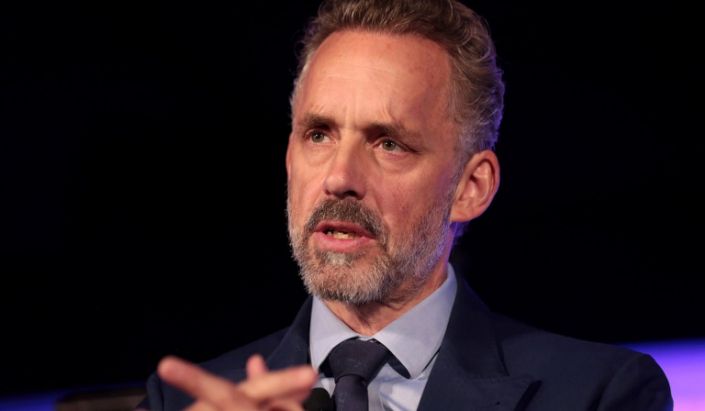
Jordan B Peterson appears to have discovered that a Captain America comic has been written where his ideas have been projected as part of the philosophy of the villain Red Skull. The clinical psychologist and author was rather shocked after he became aware of it.
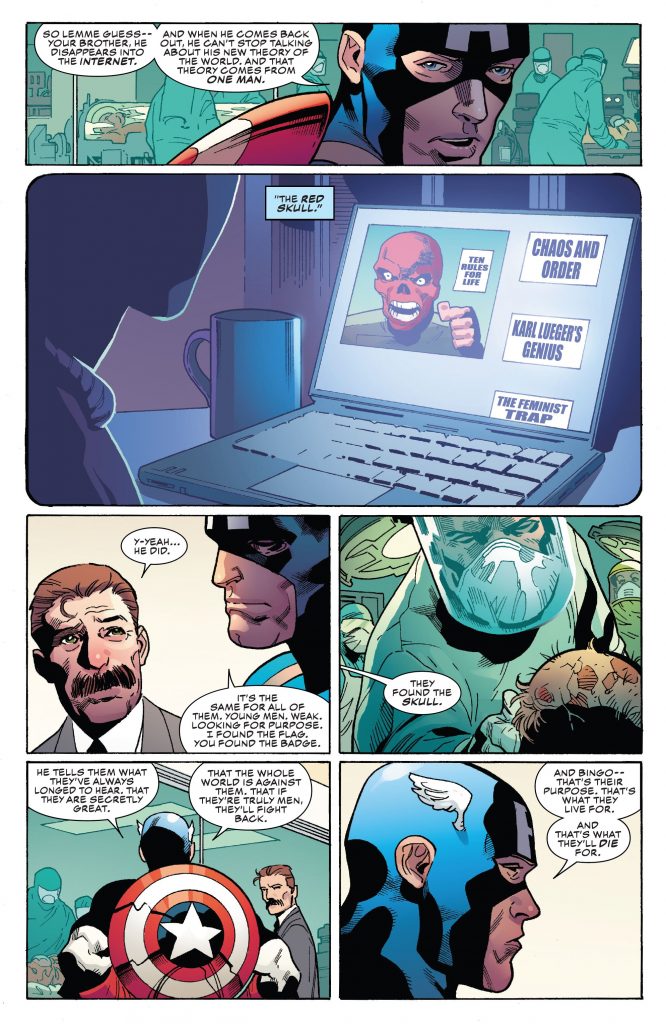
The Captain America comic in question was written by one Ta-Nehisi Coates, an African American author. A user on social media shared the image of one of the pages of the comic while replying to Jordan Peterson on Twitter. According to those on social media, the concerned image is from the 28th issue of the Captain America comic.
The controversial Captain America comic (Source: Social media)
The comic describes a conversation between Captain America and another individual. Red Skull can be seen on a laptop screen offering sermons on “Ten Rules for Life”, which is an obvious jibe at Jordan Peterson who has authored the popular bestseller “12 Rules for Life”.
Furthermore, Captain America’s words leave little room for doubt that Red Skull is based on the clinical psychologist. Red Skull is described as someone who offers lectures on the internet. “It’s the same for all of them. Young men. Weak. Looking for purpose. I found the flag, you found the badge. They found the Skull,” says the protagonist.
He continues, “He tells them what they’ve always longed to hear. That they are secretly great. That the whole world is against them. That if they’re truly men, they’ll fight back.” It is a gross oversimplification of Jordan Peterson actually teaches, to put it mildly.
Peterson said, after his initial “What the hell” reaction about the matter, “Do I really live in a universe where Ta-Nehisi Coates has written a Captain America comic featuring a parody of my ideas as part of the philosophy of the arch villain Red Skull?”
The Marvel Universe, which Captain America is a part of, has become increasingly ‘Woke’ in recent times with politics invading entertainment spaces in the United States. It is not the only one which has become overly politicised with the Star Wars franchise and others traversing a similar trajectory.