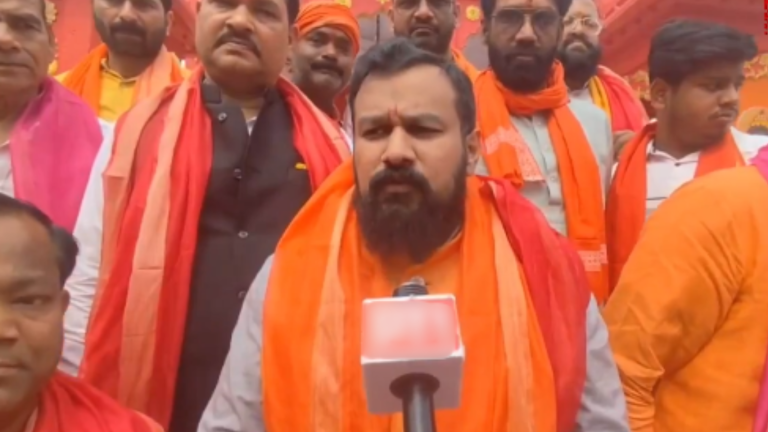
On the 2nd of April 2025, the Lok Sabha passed the Waqf (Amendment) Bill after 12 hours of fierce debate. Taking to X, BJP leader Amit Malviya explained two new insertions, 3D and 3E, in the Waqf Bill, which would protect historical monuments and tribal lands against arbitrary Waqf encroachments.
“Any declaration or notification issued under this Act or under any previous Act m respect of waqf properties shall be void, if such property was a protected monument or protected area under the Ancient Monuments Preservation Act, 1904 or the Ancient Monuments and Archaeological Sites and Remains Act, 1958, at the time of such declaration or notification,” point 3D states.
Highlighting the implications of this insertion, Malviya said that with the insertion of point 3D, monuments protected by the Archaeological Survey of India (ASI) would be excluded from the Waqf’s ambit.
Big insertions in the Waqf Amendment Bill.
3D. Any declaration or notification issued under this Act or under any previous Act m respect of waqf properties shall be void, if such property was a protected monument or protected area under the Ancient Monuments Preservation Act,… pic.twitter.com/r2ZLA7uGzP
“ASI-protected monuments have now been excluded from Waqf’s ambit. This decision was made because ASI is merely a custodian, and protected properties may not necessarily be government assets.
Similarly, insertion 3E states that land belonging to Scheduled Tribes could not be declared Waqf property.
“Notwithstanding anything contained in this Act or any other law for the time being in force, no land belonging to members of Scheduled Tribes under the provisions of the Fifth Schedule or the Sixth Schedule to the Constitution shall be declared or deemed to be waqf property,” point 3E reads.
Explaining its implication, the BJP functionary said, “Excluding Tribal land from Waqf’s purview will safeguard the interests of Tribal communities and curb land encroachment, which has been a significant issue in Jharkhand and other Tribal-dominated areas. This is a major step in protecting Tribal rights, benefiting Bengal’s Tribals and many others.”
Notably, the Waqf Amendment Bill passed in the Lok Sabha with 288-232 votes amid criticism from the opposition parties, including Congress, AIMIM, SP and others, The Opposition parties mounted an attack against the government, claiming that Waqf is an essential practice to Islam and therefore the Bill is against the Constitution. The government, in their strong reply, countered the charge. Pertinently, the Bill also does away with the draconian Section 40 of the Waqf Act 1995, which allowed the Waqf Board to claim properties overnight, including Hindu villages, temples, etc
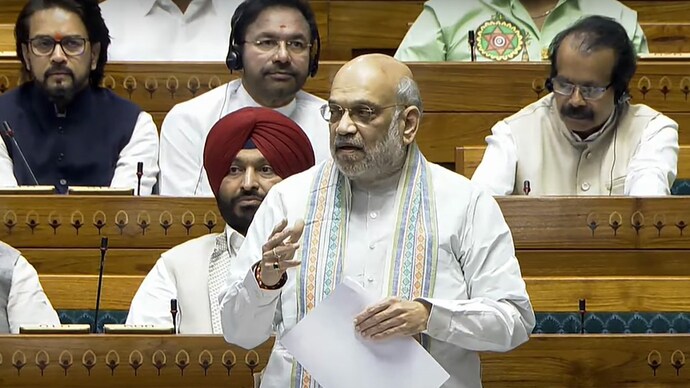
Accusing Congress of indulging in politics of “appeasement and casteism”, Home Minister Amit Shah on Wednesday said there is no provision in the Waqf Amendment Bill to include any non-Muslim among those who manage the religious institutions.
Participating in the debate in the Lok Sabha on the Waqf (Amendment) Bill, 2025, Amit Shah said a misconception is sought to be created that the legislation will interfere with the religious conduct of Muslims and interfere with the property donated by them.
“Waqf Act and Board came into effect in 1995. All the arguments about the inclusion of non-Muslims are about interference in the Waqf. First of all, no non-Muslim would come into the Waqf. Understand this clearly…There is no such provision to include any non-Muslim among those who manage the religious institutions; we do not want to do this…This is a huge misconception that this Act will interfere with the religious conduct of Muslims and interfere with the property donated by them. This misconception is being spread to instil fear among minorities for their vote bank,” he said.
“You (Opposition) would break this country…Through this House, I would like to tell Muslims of the country that not even one non-Muslim would come into your Waqf. This Act has no such provision. But what would the Waqf Board and Waqf Council do? To catch the people selling off Waqf properties and drive them out, to catch those who lease off their properties for 100 years in the name of Waqf. The income of Waqf is dropping, the income with which we have to do development for minorities and push them forward, that money is being stolen. Waqf Board and Council will catch that,” he added.
Amit Shah said that a person can donate only property that belongs to them and cannot donate property that belongs to the government or any other individual.
He said changes have been made only in provisions related to the Council and Board in the 1995 Act, which deal with administrative tasks.
“Where will non-Muslim members be included? In the Council and Waqf Board. What would they do? They won’t run any religious activity. They would only look after the administration of property donated by someone under Waqf Law, whether it is being done as per law, whether the property is being used for the intent with which it was donated,” he added.
Targeting Congress, he said the party-led UPA government handed over 123 VVIP properties in Lutyens Delhi to Waqf when Lok Sabha elections were just round the corner.
“Had Waqf not been amended in 2013, this (Amendment Bill) Bill would not have been needed. Everything was going well. But there were elections in 2014, and overnight in 2013, the Waqf Act was turned extreme for appeasement. As a result, the Congress government handed over 123 VVIP properties in Lutyens Delhi to Waqf when elections were just around the corner, just 25 days away,” he said.
He said 18 lakh acres were under the Waqf Board from 1913 to 2013, but from 2013 to 2025, an additional 21 lakh acres of land were added.
“Delhi Waqf Board announced Northern Railway’s land as Waqf land. In Himachal, illegal mosques were built after the land was named after Waqf land. In Tamil Nadu, the Waqf announced 400 acres of land from the 1500-year-old temple as Waqf land,” Amit Shah said.
Amit Shah also took a jibe at RJD supremo Lalu Prasad Yadav, whose party is part of the INDIA bloc.
“When amendments to the Waqf were introduced in 2013, Lalu Prasad Yadav stated that he wanted a strict law and wanted to put those in jail who were stealing. Narendra Modi has fulfilled Lalu Prasad Yadav’s wishes,” the Home Minister said.
He said the changes in the Waqf Board and the Waqf Council were aimed at better management of Waqf properties.
Amit Shah said that the bill would not be implemented with retrospective effect, and opposition members were trying to mislead and create fear among members of the Muslim community.
“I stand in support of the Bill introduced by my ministerial colleague. I have been carefully hearing the discussion going on since 12 noon…I feel that there are several misconceptions among several Members, either genuinely or politically. Also, through this House, attempts are being made to spread those misconceptions across the country,” he said.
Moving the bill for passing in the House, Minority Affairs Minister Kiren Rijiju said that the bill will not be applicable retrospectively and the Centre is not seeking more powers.
“When our country has the largest Waqf property in the world, why hasn’t it been used for the education, medical treatment, skill development, and income generation of poor Muslims? Why has no progress been made in this regard so far?” Rijiju said.
Along with the Waqf (Amendment) Bill, 2025, Rijiju also moved the Muslim Wakf (Repeal) Bill, 2024, for consideration and passing in the Lok Sabha. The bill was earlier presented in the Lok Sabha in August last year, and a Joint Parliamentary Committee, headed by BJP member Jagdambika Pal, examined it.
The bill seeks to amend the Act of 1995. The Bill seeks to improve the administration and management of waqf properties in India. It aims to overcome the shortcomings of the previous act and enhance the efficiency of Waqf boards, improving the registration process and increasing the role of technology in managing Waqf records.
(This news report is published from a syndicated feed. Except for the headline, the content has not been written or edited by OpIndia staff)
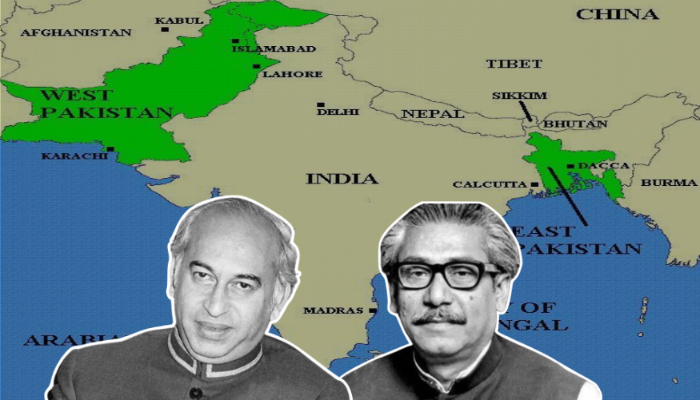
The struggle for freedom in Bangladesh is marked by the bloodshed of innocent individuals, particularly among the Hindu population. The Pakistani army executed a violent campaign against those involved in the liberation movement and targeted the minority solely based on their faith. The roots of the 1971 Indo-Pak war were established on 25th March 1971, when the Pakistan Army initiated “Operation Searchlight” to suppress the autonomy movement led by Sheikh Mujibur Rahman’s Awami League.
On the brink of losing its eastern half, which was distanced from the remainder of the country by over 1,600 kilometers (990 miles) of Indian land, a vengeful Pakistan unleashed a torrent of violence against the people in a last-ditch effort to preserve its waning grip on Bangladesh. The atrocities committed by Pakistan led to widespread killings and a critical humanitarian crisis, displacing over 10 million refugees into India, particularly in West Bengal, Assam and Tripura.
The full-scale war with India erupted swiftly and decisively after nine months of internal conflict and a military onslaught against Bangladeshi freedom fighters. Within 13 days, Indian forces secured a significant victory, compelling 93,000 Pakistani troops to surrender after a humiliating defeat. However, the nation endured numerous massacres, especially against the Hindu community, perpetrated by Pakistani forces, with their harrowing stories continuing to resonate in the chronicles of history.
A similar horror transpired on 2nd April when residents of Dhaka traveled to Keraniganj on the other side of the river. The Jinjira union and its surrounding areas were predominantly populated by Hindu families. After the violent crackdown and killings on 25th March, the East Pakistan army, which had seized control of Dhaka, designated Jinjira and its neighboring regions for military operations. The fatal event happened in the unions of Jinjira, Kalindi and Shubhadya in Keraniganj Upazila, across the Buriganga River from Dhaka.
Pakistan’s shocking betrayal
In January 1971, the Awami League emerged victorious as a single majority party, gaining 167 members in the 300-member National Assembly election that was held in December of previous year. Great hopes were held that power was finally within reach for the East Pakistanis. It was anticipated that Sheikh Mujibur Rahman would soon establish a cabinet as prime minister, thereby addressing the long-standing economic disparities and the deprivation faced by the Bengalis.
President General Yahya Khan’s decision to cancel the National Assembly’s scheduled meeting on 3rd March in accordance with the wishes of Pakistan’s Peoples Party leader Zulfikar Ali Bhutto crushed the dreams and ambitions of the Bangalis. Unsurprisingly, there was a tumult of protests and broad condemnation throughout East Pakistan. Sheikh Mujibur Rahman proclaimed a movement of nonviolent noncooperation against the martial law-imposing Pakistani government. There were angry rallies and protests every day in defiance.
However, the situation soon escalated. The Bengalis suffered significant losses in the sporadic clashes with the army. Admiral Ahsan, the governor general, and Lieutenant General Shahibzada Yakub Khan, the administrator of martial law, both resigned. Lieutenant General Tikka Khan and Lieutenant General Niazi, who were regarded as hawks, succeeded them. Tikka Khan was not sworn in as governor by Chief Justice BA Siddiqui. In a resounding address to the people on 7th March, Sheikh Mujibur Rahman stated that this time the fight was for independence and emancipation before a massive public gathering in Dhaka.
Conflicts arose in the port of Chittagong when the Pakistani army was prevented from disembarking weapons and ammunition aboard the ship “Swat.” Troops were reportedly moving to East Pakistan. The messages etched on the wall and the whispers in the wind foretold an approaching storm. The crucial moment was imminent. Soldiers from West Pakistan, disguised as civilians, started to land in East Pakistan.
Operation Searchlight
West Pakistan resorted to a cruel and violent armed campaign to stop the Bengalis from rebelling against the dictatorial authority of the country’s rulers. It was called “Operation Searchlight.” It aimed to capture or kill prominent Bengali intellectuals, student leaders and Awami League officials in East Pakistan’s major cities, including Dhaka. They sought to seize the armory, radio station and telephone exchange, disarm Bangali members of the military, paramilitary and police forces, as well as ruthlessly suppress the non-cooperation movement led by Sheikh Mujibur Rahman to take control of East Pakistan.
“Operation Searchlight” involved military actions in all of the province’s major towns from 11:30 pm on 25th March till mid-May. The planned launch time for Operation Searchlight was 1 pm on 26th March. However, on the evening of 25th March, Sheikh Mujibur Rahman, the leader of the Awami League, had a clarion call to the people to prepare themselves ready for a full-scale battle after his meeting with President Yahya Khan had produced no productive or promising outcome. Afterward, Bengalis formed a resistance in multiple locations that same evening.
According to Tikka Khan and Amir Abdullah Khan Niazi’s public relations officer, Major Siddique Salek, the Pakistani forces had to move the operation’s schedule one day ahead of time to reach different parts of Dhaka before the Bengalis could mount a serious defense. Subsequently, a widespread massacre and genocide targeting Bengali Hindus and freedom fighters ensued, aimed at instilling fear and forcing submission.
The Pakistani forces committed heinous acts against Bengali members of the East Pakistan Rifles and police, as well as students and educators from Dhaka University. They indiscriminately fired upon unarmed civilians, resulting in thousands of deaths, while also setting homes and properties ablaze and looting businesses. Sheikh Mujibur Rahman was wrongfully detained in his house on fabricated treason charges, as Pakistan’s barbaric action resulted in the loss of countless lives, with corpses strewn across the streets of the occupied territory.
“Thanks to God that Pakistan could have been saved,” Bhutto lauded the brutality as Pakistani personnel, including Yahya Khan, praised the same. Notably, “inevitable” was how the Pakistani government described the military action in its White Paper.
The Pakistani army carries out a massacre
“Pakistani soldiers broke into our house through the backyard. Sensing their presence, three of my nephews gathered in one room. Another managed to flee. The soldiers entered our house, firing indiscriminately, killing the 3 helpless boys. They fell on the floor just like logs,” a survivor of the Sarder family slaughter in Jinjira, Ershad Sarder, recounted his experience, according to a report by The Daily Star.
He disclosed, “In another room, I was hiding under a bed silently praying. There were so many pots and pans in front of me underneath the bed that the soldiers did not notice me. I was extremely thirsty. While waiting under that bed, the soldiers shot dead another of my nephews.” That day, he alone buried at least 20 bodies. The majority of the homes in the Jinjira, Kalindi and Shubhadda neighborhoods of Keraniganj experienced the same ordeals as the Sarder family on 2nd April 1971, during the Jinjira massacre.
The precise number of people killed there was never known. Witnesses stated that the Pakistani army slaughtered at least 5,000 civilians that day. These villages were regarded as Awami League strongholds and were primarily populated by Hindus. Several prominent Awami League leaders escaped Dhaka via Jinjira in the early days of Bangladesh’s Liberation War. Notable student leaders also found shelter there.
The Pakistani army proceeded to conduct a raid after learning of intelligence information indicating that the Awami League was being covertly organized in Jinjira by its student leaders. Brigadier General Jahanzeb Arbab, one of the masterminds behind Operation Searchlight, came up with the plan, which Brigadier General Rashid executed.
An eyewitness and Dhaka district commander of Mukti Bahini, Mostafa Mohsin Montu, revealed, “By that time, the military surrounded the area with barbed wire and bamboo fences so that nobody could escape the carnage. Some soldiers started firing at the village. Frightened, people were running to and fro, but they were surrounded from all sides.”
Pakistani forces with heavy weapons positioned themselves at Mitford Hospital according to the plan. The mosque of Pori Bibi was equipped with mortars and machine guns. Gunboats brought troops across the river and into the villages of Jinjira, Kalindi and Shubhadda unions. Brigadier Rashid signaled the forces to begin the raid with a flare at approximately 5:00 am. Afterwards, Pakistani soldiers began one of the most horrifying murders in Bangladesh’s history, using gunpowder to set buildings and bazaars on fire and indiscriminately murdering residents.
“After the massacre of 25th March, we started patrolling outside the village so that we could know beforehand when they would come. On that morning, I went to the riverbank and saw five gunboats full of Pakistani soldiers had just arrived. Some of the soldiers got down from the boat and asked me where Narikelbaria was. They also asked about the location of student leader Mostofa Mohsin Montu’s house,” Julhas Mian, a South Mandail local, recalled.
He hurried home and took his family to a mosque that was already packed with thousands of people. The Pakistani forces destroyed one of the houses next to it by setting it on fire. According to a man, the military there killed seven people. “I felt the mosque was not safe either. So, I decided to go back home through the paddy fields and found numerous dead bodies there. Reaching home, I found several dead bodies on the banks of our pond. We took the wounded to the Mitford hospital and buried the dead bodies,” he unveiled.
An East Mandail resident named Saiful Islam described how the Pakistani army slaughtered Hindus. “The situation was beyond description. Some of the people died on the spot, and those left injured were screaming for water. The entire Hindu block of our village was razed to the ground by the Pakistan army. Some of our neighbours hid in the jungle as they learnt about the incoming raid. When the soldiers left the village, we asked them to come out, but nobody responded. Later, we found their lifeless bodies in the thicket.” According to him, that day saw the killing of at least 5,000 individuals.
Hellish brutality in Jinjira
Saiful Islam’s story, “Hellish brutality in Jinjira,” appeared in the daily “Dainik Bangla” on 3rd April 1972. The eighth volume of the official historical records of the Bangladeshi Liberation War (Bangladesher Shadhinota Juddho Dalilpatra) contains that report. As the night dawned, inhabitants of Keraniganj were still sleeping. Suddenly, loud bangs of guns and mortars pierced through the silence of the dawn. The Pakistani soldiers started the killing spree. The whole area was filled with cries and people’s pleas to live. Frightened, shocked people tried to flee. Frightened people couldn’t decide what to do as they were surrounded,” it read.
It also stated that hundreds of mothers and sisters had been raped and that the homes of the Jinjira, Kalindi and Shubhadda unions had been looted and set on fire. All houses in three houses were targeted. As Brigadier Bashir finally put an end to the killing spree, survivors were only left with terrifying stories to remember. There is ample evidence of mass murders that occurred on that fateful day.
The Pakistani army lined up and shot down almost four hundred civilians in a single location known as Monu Miar Dhal on 2nd April. A memorial was later built there in honor of everyone who was killed in Keraniganj during the Liberation War. Additionally, 60 individuals lost their lives on the edge of a pond next to main route in Mandail. Eleven women were murdered by the army in one Kalindi village home.
“After the massacre of 25th March, I came to Keraniganj along with the national leaders and the leaders of Bangladesh Chhatra League. Although the national leaders left for the border, the leaders of Chhatra League were with me. Pakistani soldiers were informed about our presence in that area. On 1st April, a doctor of Mitford Hospital secretly informed me that some Pakistani officers were keeping close surveillance on Keraniganj using telescopes,” expressed Mostofa Mohsin Montu.
He added, “They were also amassing mortar shells and ammunition on the roof of the hospital. I conveyed this information to all my contacts without any delay. However, we could not realise that they would launch the raid within such a short time.” Around 2:00 am, Pakistani soldiers used gunboats to take up positions in the canals. Montu found out that Pakistani troops had crossed the river and arrived in Jinjira about three in the morning.
The soldiers received the signal from Pari Bibi’s mosque at 4:00 am. To ensure that no one could flee the slaughter, the military had by then erected bamboo barricades and barbed wire around the region. A few troops opened fire on the village. People were fleeing back and forth in fear, but they were surrounded from all sides. For three hours, they continued to fire at the village. They killed numerous people while conducting house-to-house searches till 11:00 am.
Bloodshed in the Shubhadda union
Shubhadda union was the target of the brutality of the Pakistani military after the Jinjira union. Poet Nirmalendu Goon, who sought refuge in a mosque in the village of Shubhadda during the slaughter, stated, “When I reached the mosque courtyard, it was overcrowded. I saw several dead and wounded bodies in the mosque courtyard. Some of them were lying, and some of them were upside down. It was hard to tell if they were still alive or not. They were bleeding profusely,” in his book “Jinjira Genocide 1971.”
“Pakistani army started firing arbitrarily as soon as they entered the village through the canal. That forced us to flee from our homes. Many of us got killed. We found several dead bodies when we returned home several days after the massacre. Some of the dead bodies were floated away through the canal and some were buried by the villagers,” stated Sahadeb Chandra Mondol of Madhya Shubhadda village.
According to Mohammad Almas, a resident of Shubhadda union’s Par Gendaria hamlet, he identified at least thirty dead bodies in his neighborhood. The Pakistani military started a propaganda campaign following this massacre. They claimed on 2nd April 1971, that the Pakistani army had defeated the separatist outlaws who sought refuge in Keraniganj, across the Buriganga river. “Action against miscreants at Jinjira” was the headline of the daily “Morning News,” the Pakistani army’s mouthpiece, on 3rd April.
“I was shocked to read the headline of the Morning News. It said, ‘Action against miscreants at Jinjira.’ I was hearing from the day before that Pakistani soldiers bombed the villages of Jinjira, and many people were killed there. So, were the apprehensions true?” author Jahanara Imam wrote in her book “Ekattorer Dinguli.”
The haunting memories
Everyone was frantically leaving Dhaka following the Pakistani Army’s merciless raid on 25th March. Reports of violent murders, such as the killing of 22 passengers in a minibus by non-Bengalis in Mirpur, further alarmed the terrified populace. There were accounts of the army making nightly rounds to apprehend youths, alongside information suggesting an upcoming coordinated search operation in homes along Elephant Road involving both the army and their associates. The morale of the people diminished, resulting in a loss of their commitment to stay.
Abdul Hannan, a former Press Counsellor, Bangladesh United Nations (UN) Mission in New York, who had travelled to Jinjara with his wife, kids and other family members after the events in Dhaka, also narrated his ordeal during the massacre. “On 3rd April, at dawn, we were awakened by the loud bursts of four mortal shells in quick succession falling in our area. Panicked, we ran helter-skelter. No sooner had we run half a quarter of a mile (in the opposite direction) than we heard shooting from the south. I changed direction and started to run towards the east, but after I covered some distance, I found that people were running towards the west as bullets were coming from the east. In utter desperation, we took to running towards the west,” he wrote in the Star Weekend Magazine.
Hannan added, “On our way to the west, we found a mosque and went to take shelter there, but it was full to the brim. Behind the mosque, there was a large graveyard, and people were hiding in graves. I hesitated for a few seconds. In the grave, there might be snakes and poisonous insects. I was between the devil and the deep sea. But snakes and insects were no more dangerous than the Pakistan army.” The Pakistani military hunted young men, even going so far as to search in mosques.
He further highlighted that “more than three thousand innocent civilians were killed and many injured in the army mayhem. The wife and son of Hamidullah, the then-governor of the State Bank, perished in that military campaign. This wanton killing was ranked genocide, an extermination campaign inspired by racial hatred against Bengalis and could only be compared with that of the My Lai massacre in Vietnam, Srebrenica in Bosnia, Cambodia and Rwanda.”
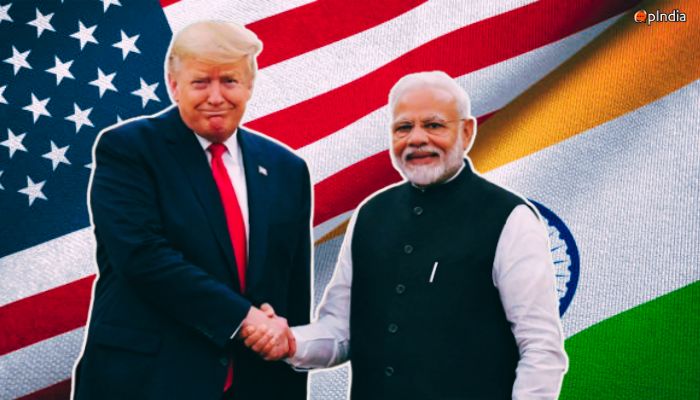
The Trump administration’s reciprocal tariffs against India will come into effect from 2nd April 2025. US President Donald Trump had earlier declared April 2nd as “Liberation Day” and promised to impose new tariffs, which could potentially trigger outrage within the global trade system. The fresh tariffs are expected to be announced by President Trump at a ‘Make America Wealthy Again’ event at the White House Rose Garden on Wednesday.
In March this year, Donald Trump announced that the US would impose reciprocal tariffs on countries it has a trade deficit. Justifying reciprocal tariffs, the US President said that other countries have been unfairly taxing the US, and therefore, now it is the turn of the US to tax them. “Other countries have used tariffs against us for decades, and now it is our turn to start using them against those other countries. On average, the European Union, China, Brazil, India, and countless other nations charge us tremendously higher tariffs than we charge them,” said Trump, accusing India of imposing unfair tariffs on the US automobile by over 100%.
However, on 1st April 2025, Trump claimed that India is planning to drop tariffs against the US ‘very substantially’. “I think a lot of countries will drop their tariffs because they have been unfairly tariffing the United States for years. I think I heard that India, just a little while ago, is going to be dropping its tariffs very substantially. I said why didn’t somebody do this a long time ago?” Trump said.
On Tuesday, Karoline Leavitt, the White House spokesperson, said that India imposes a 100 per cent tariff on American agricultural products. It is speculated that the agricultural, pharma, medical devices, precious stones, and machinery sector goods may get adversely impacted if Trump goes ahead with imposing reciprocal tariffs against India. There are high chances that the Trump administration may impose additional customs duties given the high tariff differential between India and the US import duties.
Sector-level impact of the US’s reciprocal tariffs on India
This differential is 8.6% for chemicals and pharmaceuticals, 5.6% for plastics, and 1.4% for textiles and clothing. The tariff gap between India and the US is 13.3% for diamonds, gold, and jewellery, 2.5% for iron, steel, and base metals, and 5.3% for machinery and computers. 7.2% for electronics, and 23.1% for automobiles and auto components.
The tariff differential between India and the US in labour-intensive, especially MSME-focused sectors is significantly high with it being 30.02% on animal products, 17.2% on footwear, 14.4% on transportation and 10.2% on chemicals.
Experts opine that the higher the tariff differentials, the worse the impact fresh tariffs will have on certain sectors in India. The analysis of the think tank Global Trade Research Initiative (GTRI) suggests that fish, meat, and processed seafood sectors would be hit the worst, with $2.58 billion in exports in 2024, facing a 27.83% tariff gap. Take shrimp, for example, India is a leading exporter of frozen shrimp with the US being its top importer, having imported 2,97,571 MT of frozen shrimp in fiscal year 2023-24; however, with additional tariffs, India’s seafood exports could suffer a major blow.
Various think tanks and trade experts suggest that India might lose $6 billion (0.16% of GDP) in exports if broad 10% tariffs are imposed. Meanwhile, if the tariffs surge to 25%, the loss could be a whopping $31 billion. It is pertinent to note that India and the US are major trade partners. In 2024, India exported goods worth $81 billion and imported goods worth $44 billion from the US. Meanwhile, the USA’s share in India’s total exports has surged to 17.7% in FY 2024. In January this year, the year-on-year Indian exports to the US surged by 39% to $8.44 billion, while imports also increased to 3.57 billion.
A Washington Post report claims that Trump and his tariff team have chalked out a plan to impose a 20% tax on most of the products imported by the US. The Trump administration is also reportedly planning on utilising this money to give a tax refund or dividend to the American taxpayers.
Notably, just last week, Donald Trump announced a 25% tariff on all auto imports and a similar tariff on steel and aluminium was imposed in March this year.
Speaking of electronics, which is India’s largest export category in the US and having earned $11.1 billion in fiscal year 2024, these include India-assembled Apple iPhones, which are shipped to the US. As per Emkay Global’s report, if the reciprocal tariffs are imposed, iPhones assembled in India would become costlier for American consumers. With China having 40% tariffs in place on Chinese-made iPhones, India emerged as an economic alternative for the tech giant, however, fresh tariffs could disrupt Apple’s supply chain shifts and make India a less preferred manufacturing hub.
In the gold and jewellery sector, India exported jewellery to US worth $9.9 billion in FY24 alone. This accounts for 30% of exports in this category. India imposes 20% tariffs on gold jewellery imports from the US, while the latter imposes 5.5% tariffs. If the US decides to impose reciprocal tariffs to match the existing tariff differential, the lustre of India’s gold and jewellery sector would be tainted.
Similarly, India faces the threat of additional tariffs in the textile sector, wherein it exported textiles worth around Rs 9.6 billion (28% of total textile exports) in FY24 to the US. In the US import market, India is behind China, Vietnam and Bangladesh, however, an unstable Bangladesh and its nearly destroyed once-thriving textile industry opened opportunities for India. If the US imposes additional tariffs on Indian textile exports, it would have a negative effect, however, India can benefit from diverted US orders if tariffs against Chinese textiles remain high.
In the automobile sector, while India is not a major car or bike exporter, the country exports auto components to the US, with Indian manufacturers like Forge Bharat, which earns 44% revenue from the US and Motherson Sumi at risk.
In the pharmaceuticals sector, India accounts for a massive 47% of the USA’s generic drug supplies. Last year, India’s pharma exports to the US were recorded to be worth $12.5 billion. India’s Sun Pharma, Lupin and Dr Reddy’s are key exporters to the US. Given the USA’s heavy dependence on Indian generic drug exports, the Trump administration is expected not to make any substantial increase in tariffs, as doing so would increase drug prices in the US and potentially disrupt the market, doing more harm than good for the country.
For dairy products, a 38.23% tariff increase on $181.49 million in trade would impact products like ghee, butter, and milk powder. For processed food, sugar, and cocoa, a 24.99% tariff increase on $1.03 billion in exports would negatively impact India’s snacks and confectionery exports. Meanwhile, there could be a 0.67% tariff increase on coconut and mustard oil. Besides, a tariff hike of 122.10% would affect $19.20 million in India’s exports of alcohol and wines. These, however, are estimated figures if sector-level tariffs are imposed by the Trump administration.
Impact of US reciprocal tariffs on Indian stock markets
Like in many other countries, uncertainty and turbulence prevailed in the Indian stock market initially with the benchmark BSE Sensex closing at a staggering 1,390.41 points, or 1.80 per cent, into the red, reaching 76,024.51 and the NSE Nifty going down by 353.65 points, or 1.5 per cent, into the red, reaching 23,165.70. However, on 2nd April, both Sensex and Nifty registered noticeable gains. The Sensex rose to 593 points, or 0.78 per cent, higher at 76,617.44, while the Nifty 50 settled 166.65 points, or 0.72 per cent, up at 23,332.35. As per Emkay Global, “Sensex touched intraday high of 76680.35 and intraday low of 76064.94. The NSE Nifty touched an intraday high of 23350 and an intraday low of 23158.45.”
Motilal Oswal analysis estimates minimal impact of US reciprocal tariffs on India
A report by Motilal Oswal suggests that its impact on India will be minimal. However, it adds that despite India having the highest tariff differential of 9 per cent with the US among major nations, the reciprocal tariff impact will be only on 1.1 per cent of India’s GDP, as India’s exports to US in the six most vulnerable sectors amount to only 1.1 per cent of its GDP.
The report says “With a tariff differential of 9 per cent and assuming that the elasticity of India’s exports to the US concerning tariffs is -0.5 (implying a 1 per cent rise in the tariff rate would reduce India’s exports to the US by 0.5 per cent), there will be a loss of USD3.6b in exports to the US, which is only 0.1 per cent of India’s GDP (-0.5*9, 4.5 per cent fall in India’s exports to the US).”
The report further asserts that items like agriculture and dairy products, which have a higher tariff differential value, constitute only USD 0.5 billion and are vulnerable but less likely to be affected because of their low value. Items like energy commodities, metals and auto, in which India has a trade deficit with the US, which means that India imports more than it exports, are less vulnerable to the tariffs as imposing higher tariffs on these items will hurt the US more than India.
Overall, the report believes that the impact of reciprocal tariffs (assuming full product-level reciprocity) on India will be limited when compared to its impact with nations like Mexico, Canada and China.
India’s plan of action to mitigate the impact of US tariffs
The Modi government has been taking proactive measures, including trader negotiations, tariff relaxations, diversification and sectoral analysis to mitigate the negative impact of the US reciprocal tariffs. It must be recalled that in February this year, during Prime Minister Narendra Modi’s US visit, India and the United States agreed to aim for a $500 billion bilateral trade by 2030 under ‘Mission 500’ with a Bilateral Trade Agreement (BTA) expected to be signed in late 2025. Last month, Commerce Minister Piyush Goyal visited the United States to seek clarity on the USA’s proposed reciprocal tariff plans and their impact on India. In addition, the Indian government is also mulling tariff cuts on $23 billion of US imports, which make up to 55% of total US goods. India has also proposed trimming tariffs on important US export items like almonds, cranberries, and bourbon whiskey.
Besides these measures, India is also looking forward to deepening trade relations with the European Union, Africa and Southeast Asia to counterbalance risks posed by the USA changing trade policies. India would also want to diversify its trade ties and seek new partners in the region while simultaneously boosting its ambitious Make in India initiative to curb foreign dependence.
Interestingly, while the threat of negative impact on US tariffs looms over India, there’s a silver lining in the Trump tariffs. Over the years, India has positioned itself as an alternative to China in terms in the global manufacturing arena. With the Trump administration imposing heavy tariffs on its commercial bête noire, China, companies wanting to avoid tariffs on Chinese goods may prefer expanding operations in India, especially in the auto, electronics and pharmaceutical sectors. For example, if the US imposes additional tariffs on Chinese cars, making them expensive in the US, Indian manufacturers like Tata, Mahindra, and Maruti Suzuki will have the opportunity to gain ground, especially when India is not a major exporter of cars to the US.
Conclusion
While the saga of Trump’s reciprocal tariffs is yet to unfold fully, India certainly stands at a critical juncture where the country is balancing its economic resilience with strategic adaptation. While the threat of immediate export losses worth billions of dollars looms, India’s insulated economy and the proactive government response, as well as PM Modi possibly leveraging a great personal equation with President Trump, offer a buffer. While the spectre of prolonged trade friction is indeed keeping Indian investors on edge, the Indian stock market’s cautious rebound demonstrates the underlying strength.
The Trump administration’s reciprocal tariffs have undoubtedly created some challenges for India, however, as India pivots towards new markets while also negotiating with the US, India in the coming times may turn the protectionist challenge into an opportunity for growth and self-reliance while demonstrating that in the global arena of trade, flexibility could be the ultimate ‘trump’ card.
As the West Bengal Police have cancelled the leaves of all police personnel ahead of Ram Navami celebrations to step up the security arrangements, the BJP leader and former national vice-president of the party, Dilip Ghosh, has accused the West Bengal Police of creating unnecessary panic among common people before the Hindu festival.
As per reports, to toughen up security arrangements for the upcoming Ram Navami celebrations, the West Bengal Police cancelled the leaves of its police personnel from 2nd April to 9th April. The decision implemented through an order signed by the Additional Director General of Law and Order Javed Shamim, came into effect on Wednesday (2nd April). The leaves will only be granted in cases of extreme emergency.
DCP Central Biswajit Mahato said that teams of police have been patrolling the “sensitive areas” as a “preventive action” before Ram Navami. He said that the move is aimed at gaining the faith of the people and assuring them that the police will maintain law and order during the festivities.
Howrah, West Bengal: DCP Central Biswajit Mahato, says, "This is a preventive action. Before Ram Navami, we conduct patrols to reassure people, especially in sensitive areas, that the police are with them and fully prepared to ensure a peaceful celebration…" pic.twitter.com/kPKAJivwzc
“There are plans to instigate people through different posters or posts. The police are on alert. There might be attempts to instigate tension among people from different communities, especially focusing on the occasion of Ram Navami. We requested people not to get instigated. There is no need to worry. But at the same time, we also request people to alert the local police in case they notice any suspicious activities in their respective areas,” Additional Director General (South Bengal) Supratim Sarkar said on 29th March.
Ghosh, however, lashed out at the West Bengal Police for the decision, terming it a “panic-driven decision”. He advised the police to keep an eye on the people who create trouble. The former member of Parliament added that Hindus perform their festivals peacefully. “Such panic-driven decisions are prompted only during Hindu festivals. The police should take care of those who create trouble. Hindus are well organised, and they perform their religious rituals peacefully. Lakhs of people participate in Durga Puja, and no tension is created. It has become a habit of the ruling party to create tension and panic,” said Ghosh.
What are the security arrangements?
As part of the security arrangements, the police stations have reportedly been put on high alert. Teams of police have been deployed in sensitive areas. Around 5000 police personnel will be deployed across Kolkata. CCTV and temporary cameras have been installed in several areas for all-around surveillance. Besides, drones will be used for aerial surveillance. All the Ram Navami processions will be mandatorily photographed and videographed by professional photographers. The police personnel will also be carrying body cameras for real-time monitoring.
The police administration is also holding meetings with religious leaders for security arrangements. The police will also be keeping a watch on social media. Rapid response teams will also be put on standby to deal with any law and order situation.
In an unfortunate incident, a 25-year-old German woman was allegedly raped by one Mohammed Abdul Aslam on Eid on Monday (31st March) in Mamidipally, Hyderabad. As per reports, the incident came to light after the victim filed a complaint with the police. The accused was arrested by the police on Tuesday evening (1st April).
According to police, the victim and her friend arrived in Hyderabad on 4th March to visit a friend who studied with them in Italy. On the day of the incident, around 6:20 pm, the accused, along with five of his friends who were minors, was roaming in a rented car. He noticed the victim with her friend and greeted them, asking them which places they wanted to visit. The accused then offered them a ride. The accused and his friends took the victim and her friend to different locations for about two hours after first refuelling their car in Chandrayangutta. They clicked pictures and had food.
Aslam threatened and raped the victim
Subsequently, the accused drove them towards Mamidipally in Pahadishareef. On reaching a secluded area, he asked his friends and the victim’s friend to get down and take selfies. He then drove with the victim alone in the car to a location about 100 metres away where he threatened and raped her. After raping her, he drove back to the same spot where the victim’s friend was. As the car slowed down a little, the victim jumped out of the car and reunited with her friend.
“In the car, there were five minor boys who were friends of the accused. All eight of them proceeded further in the car to different locations for a couple of hours, took photos, and had food. At a certain place, the accused asked everyone to get out of the car so that they could go a little ahead to take some photos. Surprisingly, the survivor’s male friend also got down. The accused, with the German woman in the car, drove ahead for about 150 m and sexually assaulted her. It was about 8 pm. After 15-20 minutes, they came back on the same route and the victim got out of the car, seeing her friend. The accused and his friends then fled the scene, “the police said.
Rachakonda Police said that the complaint was filed by Mangalgiri Sharath Chandra Chowdhury, the victim’s friend, who had come to visit in Hyderabad, at at Pahadishareef police station. The police have registered a case under section 64(1) of the BNS and an investigation is going on. The victim was sent for medical examination.
A case was registered under Section 64(1) of BNS and investigation is on. The police arrested Aslam on Tuesday evening. According to the police, Aslam had previously worked as a driver in Dubai but had been unemployed for the past year. On the day of the incident, he rented a Swift Dzire through the Long Drive app, picked up minors from his colony, and was roaming around when he spotted the victim and her friend in Meerpet.
The Enforcement Directorate (ED) has revealed that a Bengaluru-based firm named ASAR Social Impact Advisors has received a whopping ₹8 crores from the controversial US Agency for International Development (USAID) between 2022 and 2023.
According to a report by The Times of India, the matter came to light when the central agency was investigating funds totalling ₹25 crores routed from Soros Economic Development Fund to 3 companies in Bengaluru between 2021 and 2024.
ED has been probing the matter for potential violations of the Foreign Exchange Management Act (FEMA). ASAR Social Impact Advisors has reportedly justified USAID funding as ‘remittance’ for services provided to a think tank named ‘Council on Energy, Environment and Water’ (CEEW).
⚡️?? ED found that Bengaluru-based ASAR Social Impact Advisors received $935k from ??USAID in 2022-23.
They claim it was reimbursement for services to a Delhi think-tank focused on “understanding global challenges and implications for India development.” https://t.co/GGrKNk81QDpic.twitter.com/9dMKFwF69a
The Times of India reported that CEEW, in the meantime, have denied connections to George Soros or his Open Society Foundations (OSF). “
“ASAR Social Impact Advisors was contracted by CEEW to provide specific services for a USAID project related to cleaner air. This project has come to an end and does not exist anymore. CEEW is not related to ASAR any longer. CEEW has not received any queries or been subject to any investigation by any authority. We are committed to cooperating fully with any legitimate inquiries,”CEEW claimed.
The Enforcement Directorate is investigating the purpose behind the payments made by USAID. Coincidentally, the CEO of ASAR Social Impact Advisors, Vinuta Gopal, was seen endorsing the toolkit gang.
So this Asar Social Impact Advisors Pvt Ltd has received 82,197 USD from SOROS ECONOMIC DEVELOPMENT FUND.
On 8th March, the Enforcement Directorate (ED) raided 8 locations in Bengaluru linked with beneficiary entities of the Open Society Foundation (OSF), owned by far-left billionaire George Soros.
The entities whose premises were searched by the ED included some international human rights bodies and a company named Aspada Investments Pvt Ltd. Aspada Investments Pvt Ltd was reportedly set up by the OSF in Mauritius to channelise funds in India. It was set up in Bengaluru on February 4, 2013, to manage OSF’s investment in India.
The Soros Economic Development Fund (SEDF) transferred around ₹25 core between 2020-21 and 2023-24 to three Indian companies in violation of the FEMA guidelines.
The companies are named- Rootbridge Services Pvt Ltd (RSPL), Rootbridge Academy Pvt Ltd (RAPL) and ASAR Social Impact Advisors Pvt Ltd (ASAR). The SEDF reportedly provided funds to the tune of ₹300 crore to more than 12 companies in India.
The OSF was put under the Prior Reference Category (PRC) by the Ministry of Home Affairs (MHA) in 2016 which mandated the OSF to seek prior permission from the ministry before giving any donations to FCRA-registered entities in India.
However, the OSF had been trying to bypass the regulations and restrictions by bringing in funds through FDI and consultancy fees and using the money to fund certain NGOs in India, in contravention of Indian laws.
Soros’ Open Society Foundation is accused of engineering regime change operations around the world though civil society groups and activists. The OSF describes itself as the world’s largest private funding agency of groups supporting human rights, justice and accountable government.
Speaking to the media on Wednesday (2nd April), Advocate Vishnu Shankar Jain welcomed the Waqf Amendment Bill, 2024, tabled in the Parliament today calling it an important step in the right direction. Jain, however, pointed out that there is still scope for improvement in the Bill.
The Advocate offered prayers at a temple in Gorakshnath Math in Varanasi before the tabling of the Bill in the Parliament. He highlighted the positive changes that have been introduced in the amendment Bill. “Several provisions have been introduced to put a check on the arbitrary powers of the Waqf. There has been a change in the definition of Waqf, and the concept of ‘Waqf by the user’ has also been abolished; several checks have been introduced in the survey exercise and registration by Waqf. The composition of the Waqf Tribunal has been changed,” he said.
VIDEO | As Waqf Bill is to be tabled in Lok Sabha today, Advocate Vishnu Shankar Jain (@Vishnu_Jain1) says, "The Waqf Amendment Bill is being presented today, there are many provisions which has finished the unlimited rights of Waqf. There has been a change in the definition of… pic.twitter.com/b6VUrXSfdl
“Sections 40, 107, and 108 have been repealed. However, some things have been left unaddressed, which require a proper discussion. But this is a good initiative. I feel there is still scope for improvement, for example, there is no provision to reclaim the properties which have been declared erroneously as Waqf properties. There are still some draconian provisions like Sections 28, 29, and ‘person aggrieved’ in Section 6, which have not been removed. We presented our opinion in this regard in front of the JPC,” he pointed out.
The Waqf Amendment Bill, 2024, was tabled in the Parliament today by the Union Law Minister Kiren Rijiju. Explaining the ambit of amendments proposed in the Bill, Rijiju assured the Lower House that the Bill does not interfere with any religious system, any religious institution, or any religious practice in any way.
In Tamil Nadu’s Tiruchirappalli district, 70-year-old farmer Rajagopal was preparing to sell his 1.2-acre land to fund his daughter’s wedding. He had cherished this dream for years—to see his daughter get married with grandeur and send her off with pride. But when he arrived at the sub-registrar’s office to complete the sale, his world was turned upside down.
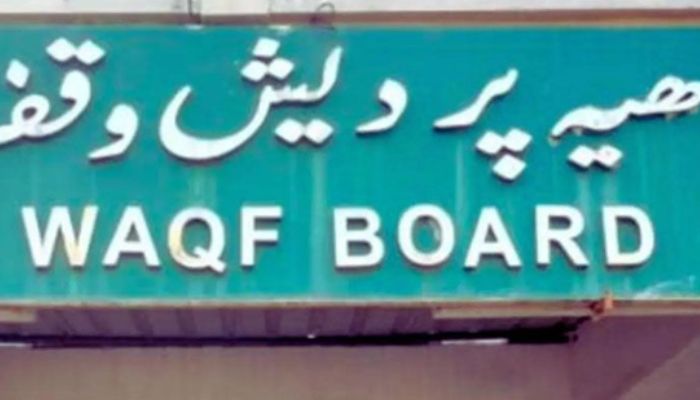
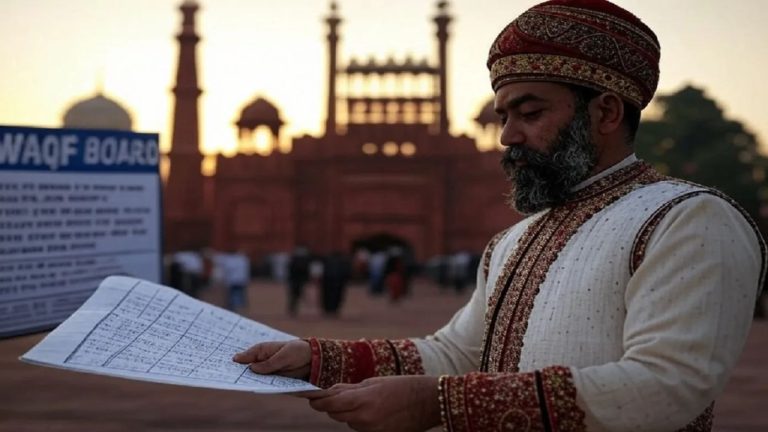
Officials handed him a 20-page document, stating that the land he and his ancestors had cultivated for generations was not his own—it belonged to the Tamil Nadu Waqf Board.
For Rajagopal, this was nothing short of a nightmare. But the shock didn’t end there. It wasn’t just his land—his entire village, Tiruchenthurai, home to the 1,500-year-old Sundareswarar Temple, had also been declared Waqf property.
The villagers were left stunned, outraged, and fearful. The news spread like wildfire, igniting a nationwide debate over Waqf laws. But this was not an isolated incident. Eighteen other villages in the region had also been marked as Waqf property.
This led to pressing questions: What exactly is the Waqf Board? How did it come to control such vast amounts of land? The shocking truth is that the Waqf Board today owns 9.4 lakh acres of land, covering approximately 3,804 square kilometers—making it the third-largest landowner in India, after the Indian Railways and the Indian Army.
What started in the 12th century with the donation of just two villages has now grown into a massive empire. With increasing concerns and rising public outcry, the central government is now preparing to introduce a Waqf Amendment Bill.
So, let’s dive deep into this controversy—What is Waqf? How did it come to India? And why has it become such a hot-button issue today?
What is Waqf?
The term “Waqf” comes from the Arabic word “Waqafa,” which means to stop or to hold. In Islamic tradition, Waqf refers to property donated for public welfare, essentially making it a permanent endowment. Once a property is declared as Waqf, it cannot be sold, gifted, or inherited. The person who donates the property is called a “Waqif”.
A Waqif can also specify how the property or its income should be used. For example, if someone donates land and declares that its revenue should only be used for the education of orphaned children, then that condition must be followed.
The Origins of Waqf in Islam
The concept of Waqf dates back to the time of the Prophet Muhammad. One well-known story involves Caliph Umar, who acquired a piece of land in Khyber and asked the Prophet about the best way to utilize it. The Prophet advised him: “Hold it, bind it, and use its benefits for the welfare of the people.”
Similarly, one of the earliest examples of Waqf was a date-palm orchard in Medina with 600 trees, which was dedicated to generating income for the poor.
Waqf in India
The concept of Waqf entered India with the advent of Islam and has existed for centuries as an essential part of Islamic tradition. In India, Waqf properties are meant for public welfare and religious purposes and, like in Islamic law, cannot be sold, gifted, or passed down as inheritance.
The Origins of Waqf in India
The concept of Waqf in India is believed to have arrived with Islam, introduced by Arab traders in the 7th century. However, its formal implementation at a state level began in the 12th century with Muhammad Ghori. Over time, rulers like Qutb-ud-din Aibak, Iltutmish, the Mughal emperors, the British colonial administration, and even Muhammad Ali Jinnah in the 20th century (through the Muslim Waqf Act) played key roles in shaping its development.
Now, let’s take a deeper look at its history.
Muhammad Ghori and the Establishment of Waqf
The formal introduction of Waqf in India is often credited to Muhammad Ghori, the Afghan invader and ruler from the Ghor province of present-day Afghanistan. A Turkic ruler, Ghori, launched multiple invasions into India in the late 12th century. In 1175, he defeated the Ismaili rulers of Multan, and in 1192, he won the Second Battle of Tarain against Prithviraj Chauhan, seizing control of Delhi and large parts of North India.
But Ghori’s ambitions extended beyond mere territorial conquest. He aimed to strengthen Islamic institutions in the region.
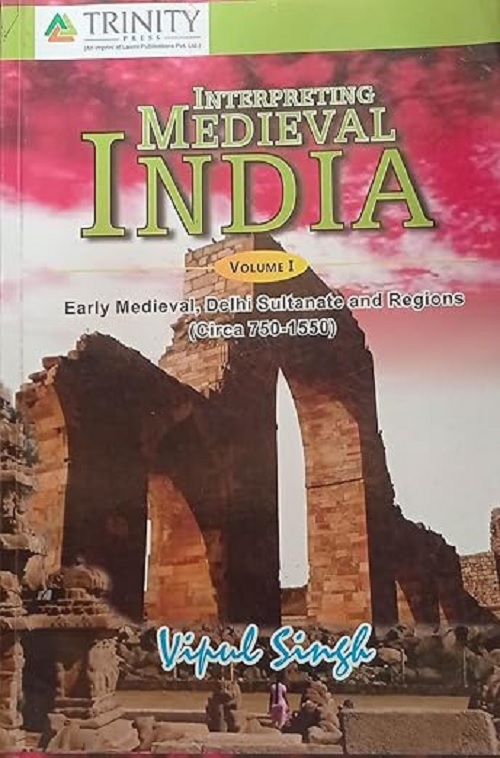
According to historian Vipul Singh’s book, Interpreting Medieval India, and the Persian text Insha-e-Mehru by Aynul Mulk Multani, Ghori donated two villages to the Jama Masjid of Multan in 1185. The administration of these villages was entrusted to the Sheikh-ul-Islam, a title given to prominent Islamic scholars of the time.
This is considered the earliest recorded instance of Waqf in India.
The Evolution of Waqf in India: From Ghori to the British Era
Muhammad Ghori’s Initiative: The First Step Towards Waqf
Muhammad Ghori’s introduction of Waqf in India was primarily aimed at religious and community welfare, ensuring funds for the upkeep of mosques and the education of Muslims. While some leftist historians, such as Professor Irfan Habib, argue that Waqf existed at a personal level before Ghori, he is credited with giving it official state recognition.
What began with just two villages in Multan eventually expanded into millions of acres of Waqf land. Though Ghori died in 1206, his slave and general, Qutb-ud-din Aibak, continued his legacy.
Qutb-ud-din Aibak and the Foundation of the Delhi Sultanate
Following Ghori’s death, Qutb-ud-din Aibak became the first Sultan of the Delhi Sultanate in 1206 and ruled until 1210. While no official records directly mention his formal implementation of Waqf, Aibak took significant steps to promote Islamic traditions, indirectly strengthening the Waqf system.
He initiated the construction of the Qutub Minar and the Quwwat-ul-Islam Mosque in Delhi, both of which later became Waqf properties. According to historian Ziauddin Barani’s Tarikh-e-Firoz Shahi, rulers of that era frequently donated land for mosques and madrasas, further embedding Waqf into governance.
Though Aibak’s reign was brief, he laid the foundation for Islamic legal structures in India, paving the way for the systematic organization of Waqf. His successor and son-in-law, Iltutmish, took this initiative even further.
Iltutmish: The Architect of Organized Waqf
The third Sultan of Delhi, Shamsuddin Iltutmish (1211-1236), is often regarded as the first ruler to truly consolidate Islamic rule in India. He not only strengthened the Delhi Sultanate’s administration but also played a key role in formalizing Islamic laws and traditions, including Waqf.
Under Iltutmish’s reign, donations of land for mosques, madrasas, and other religious activities increased significantly. A prime example is the Shamsi Mosque in Badaun, built during his rule and designated as a Waqf property.
Historian Vipul Singh notes that Iltutmish introduced local committees, called Mutawallis, to manage Waqf properties. These committees were responsible for maintaining Waqf lands and ensuring that their revenues were used for public welfare.
Since most land was under the control of rulers, the Sultans themselves became the primary Waqifs (donors). Many of the mosques and madrasas built during Iltutmish’s reign were legally protected as Waqf properties, creating a structured system that future rulers followed.
According to scholar Amir Afaq Ahmad Faizi, two notable Waqf properties from this period are:
Miran Mulhim’s tomb in Badaun
Khwaja Majd al-Din’s shrine in Bilgram
Iltutmish’s institutionalization of Waqf laid the groundwork for subsequent rulers, including the Mughals, who significantly expanded its reach.
The Mughal Era (16th-17th Century): The Expansion of Waqf
The Mughal Empire took the Waqf system to new heights, incorporating it into state policies and governance.
Babur and Humayun
Babur, the founder of the Mughal Empire (1526-1530), promoted Waqf by constructing mosques in Delhi, which later became Waqf properties.
Humayun’s rule was politically unstable, yet he continued the tradition of Waqf donations.
Akbar (1556-1605): Institutionalizing Waqf
Akbar gave Waqf a broader structure, donating land for religious activities and public welfare.
One of the most notable Waqf endowments during his reign was the Farangi Mahal in Lucknow, which became a major Islamic educational center.
He also established laws to regulate Waqf properties.
Shah Jahan (1628-1658): The grand Waqf benefactor
Shah Jahan made some of the largest Waqf contributions in Mughal history:
He dedicated 30 villages and an entire district (pargana) to fund the maintenance of the Taj Mahal.
According to Amir Afaq Ahmad Faizi, this was one of the most significant examples of Waqf during the Mughal period.
He also built Delhi’s Jama Masjid, which became a major Waqf property.
Aurangzeb (1658-1707): Strengthening religious Waqf
Aurangzeb expanded Waqf primarily for religious purposes, donating land for mosques and cemeteries across the empire.
How Waqf expanded under the Mughals
During the Mughal period, Waqf properties increased dramatically, fueled by:
State-sponsored endowments by emperors
Donations by wealthy individuals and landlords
The spread of Islam in rural areas, leading to more land being set aside as Waqf
By the end of the Mughal era, Waqf was a deeply rooted institution in India, eventually catching the attention of British colonial authorities.
The British era: Waqf becomes a legal Institution
During British rule, Waqf transitioned from a community-driven practice to a regulated legal system. Before this, Waqf properties were managed informally, but the British sought to control and organize them through legislation.
The First legal recognition: Waqf Board formation (1913)
In 1913, the British government introduced the Mussalman Waqf Validating Act, marking the first official government recognition of Waqf properties. The Act aimed to regulate Waqf lands and prevent their misuse.
The Waqf Act of 1923: Legal framework for Waqf
On August 5, 1923, the Mussalman Waqf Act was passed, giving Waqf a formal legal foundation.
This law mandated the registration of Waqf properties.
It also created management boards, comprising both community leaders and government officials.
According to Professor Irfan Habib, during British rule, landlords and nawabs frequently donated their surplus land as Waqf properties. Although this practice existed for centuries, the British administration sought to regulate and formalize it.
By this period, Waqf no longer consisted solely of mosques and graveyards—it also included buildings, cash endowments, and other assets.
How Waqf evolved over centuries
From its humble beginnings in 12th-century Multan to becoming a massive institution under the Mughals and the British, Waqf has played a significant role in India’s religious, social, and economic landscape.
Muhammad Ghori introduced the first recorded Waqf in India.
Iltutmish institutionalized its management.
The Mughals expanded Waqf on an unprecedented scale.
Jinnah’s Muslim Waqf Act: Origins and Impact
Why is Jinnah Associated with the Waqf Act?
The central government recently introduced the Waqf Amendment Bill in the Lok Sabha, sparking a heated debate between the ruling party and the opposition. During the discussion, BJP MP Nishikant Dubey brought up Muhammad Ali Jinnah’s role in the Waqf Act. In an interview, he claimed:
“Jinnah introduced the Muslim Waqf Act in 1911, and until 1954, it was referred to as ‘Jinnah Law.’ The existence of separate legal systems for Hindus and Muslims contributed to the partition of the country.”
But what exactly was Jinnah’s Muslim Waqf Act, and how did it come into existence?
Jinnah’s Role in the 1913 Waqf Act
In the early 20th century, Muhammad Ali Jinnah was a prominent leader in the Indian National Congress and a respected lawyer. At that time, his pro-Muslim stance was not as visible. However, between 1911 and 1913, Jinnah played a crucial role in the passage of the Muslim Waqf Validating Act, 1913, in the Imperial Legislative Council under British rule.
This Act was designed to resolve legal disputes related to Waqf properties and ensure their protection under Islamic law.
Why Was the 1913 Waqf Act Needed?
By the late 19th century, British courts, including the Privy Council, had questioned the legality of Waqf properties.
One of the most significant rulings came in 1894 in the Abdul Fata vs. Saidan case, where the Privy Council ruled that Waqf-alal-Aulad (family Waqf) was invalid under Islamic law. This decision alarmed the Muslim community, as family Waqf was a deeply rooted tradition.
To address this concern, Muslim leaders pressured the British government to pass a new law. Jinnah, then a member of the Imperial Legislative Council, strongly advocated for the cause.
On March 7, 1911, the bill was introduced.
After several amendments, it was finally passed in 1913 and officially came into effect on March 7, 1913.
The primary goal of this law was to grant legal recognition to family Waqf properties and overturn the Privy Council’s ruling.
Was It Really Called ‘Jinnah Law’?
BJP MP Nishikant Dubey claimed that the 1913 Waqf Act was referred to as ‘Jinnah Law’ until 1954. However, historical records do not support this claim.
While Jinnah was instrumental in passing the Act, it was never officially named after him. Instead, it has always been known as the Muslim Waqf Validating Act, 1913. The association with Jinnah exists due to his strong advocacy for the law, but the term ‘Jinnah Law’ was never formally recognized.
Further Developments: The 1923 and 1954 Waqf Acts
In 1923, the Muslim Waqf Act was passed, which focused on the management of Waqf properties.
After India’s independence, the government introduced the Waqf Act of 1954 to streamline the administration of Waqf assets.
Later, the Waqf Act was amended in 1995 and again in 2013 to further regulate and protect Waqf properties.
Now, in 2025, another Waqf Amendment Bill is being proposed to update the existing laws.
The historical roots of Waqf in India
Waqf in India is not just linked to rulers—it dates back to the 7th century, when Arab traders brought Islam to South India. The Malabar region saw some of the earliest examples of Waqf properties, including mosques and cemeteries.
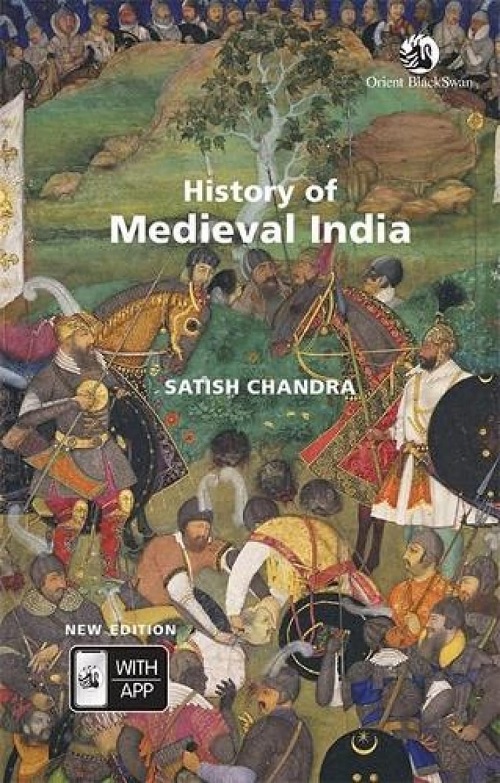
According to historian Satish Chandra’s book Medieval India, Waqf is mentioned in the Bahamani Sultanate’s interactions with the Vijayanagara Empire in the Deccan region.
Post-independence, Waqf laws were consolidated in 1954, revised in 1995 and 2013, and continue to be one of the largest land-holding institutions in India.
Today, the Waqf Board manages 9.4 lakh acres of land, making it the third-largest landowner in the country.
Expansion of Waqf and Rising Controversies
What started with just two villages has now expanded to 9.4 lakh acres, encompassing over 8.7 lakh properties. These include mosques, dargahs, cemeteries, and imambaras, which form a significant portion of Waqf assets.
However, with this expansion, controversies have also grown.
Historian Irfan Habib expresses concern:
“When a property has no clear owner, everyone claims ownership. This has happened with Waqf as well, leading to widespread misuse in many places.”
He also highlights doubts surrounding the recent amendment bill, with some fearing that the government might use it to take control of Waqf lands. According to him,
“Waqf was established for the welfare of society, and it should be managed with that same spirit.”
On the other hand, Maulana Khalid Rashid Firangi Mahali strongly refutes allegations of illegal encroachments on Waqf land:
“These accusations are baseless. Muslims have donated their lands voluntarily.”
He emphasizes the religious significance of Waqf:
“In Islam, Waqf is as important as Namaz and Hajj. It is a 1,400-year-old tradition.”
However, he also acknowledges that the intentions behind Waqf management have changed over time.
Today, the power of Waqf Boards and the disputes surrounding them pose a significant challenge for the government. Whether the proposed amendment will be effective remains to be seen, but for people like Rajgopal, their concerns and grievances continue to go unheard.
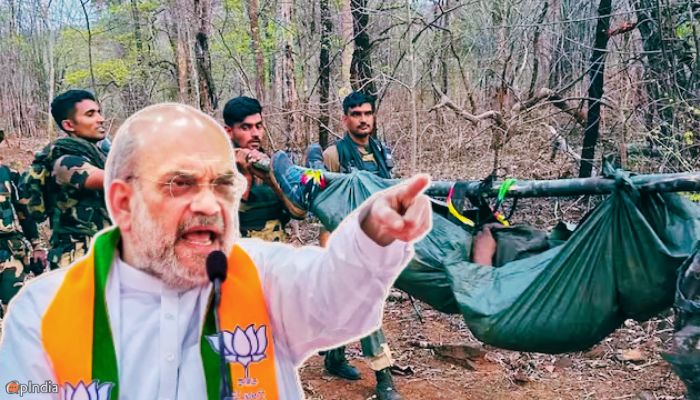
In a massive achievement for India and the Modi government, Union Home Minister Amit Shah announced that the number of districts affected by left-wing terrorism or Naxalism had come down from 12 to 6. While boasting the “giant stride”, Minister Shah also declared that India will be free from Naxal-Maoist terrorism within a year.
Taking to X, Home Minister Amit Shah said, “Taking a giant stride towards building a Naxal-free Bharat, today our nation achieved a new milestone by significantly reducing the number of districts most affected by left-wing extremism to just 6 from 12. The Modi government is building a Sashakt, Surakshit and Samriddh Bharat with a ruthless approach to Naxalism and relentless efforts for all-pervasive development. Bharat is determined to uproot Naxalism for good by 31st March 2026.”
Taking a giant stride towards building a Naxal-free Bharat, today our nation achieved a new milestone by significantly reducing the number of districts most affected by left-wing extremism to just 6 from 12. The Modi government is building a Sashakt, Surakshit and Samriddh Bharat…
From 106 Naxal-affected areas in 2015 to just 18 in 2025: The Modi government’s iron hand against Left-wing extremism yielding remarkable results
This is a massive leap and demonstrates the commitment of the Central government to end the deadly menace of Naxalism. It must be recalled that until 2015, around 106 districts in 10 states were marked naxal-affected. By 2024, this number came down to 38 and then to 18. Of these, 12 were most naxal-affected, however, this number has further dropped to just 6.
These 6 “most affected districts” include Bijapur, Kanker, Narayanpur, and Sukma in Chhattisgarh, West Singhbhum in Jharkhand and Gadhchiroli in Maharashtra.
Similarly, the number of “districts of concern” has also plummeted to 6 from 9. These 6 districts are: Andhra Pradesh (Alluri Sitarama Raju), Madhya Pradesh (Balaghat), Odisha (Kalahandi, Kandhamal, and Malkangiri), and Telangana (Bhadradri-Kothagudem).
In a press statement, the Ministry of Home Affairs said, “Due to persistent action against Naxalism, the number of Other LWE-affected Districts has also decreased from 17 to 6. These include districts from Chhattisgarh (Dantewada, Gariaband, and Mohla-Manpur-Ambagarh Chowki), Jharkhand (Latehar), Odisha (Nuapada), and Telangana (Mulugu).”
The Government of India provides financial assistance of Rs. 30 crore and Rs. 10 crore, respectively, to the most affected districts and districts of concern under a special scheme, Special Central Assistance (SCA), to fill the gaps in public infrastructure. Special projects are also provided for these districts as per need.
The rapid improvement in the LWE scenario in the last year is primarily due to the establishment of new security camps in the insurgency-affected core areas and development-oriented works such as expansion of roads, transport facilities, water, electricity and other welfare schemes of the government reaching the villagers.
From bolstering security infrastructure in former Maoist strongholds, including setting up numerous security camps to restrict Naxalite movements and enable development projects, to launching initiatives like Bastar Olympics housing under the Pradhan Mantri Awas Yojana, the central government and the security forces are working tirelessly to reintegrate the LWE-affected locals and crush Maoist appeal.
As the fight against left-wing terrorism intensifies, Naxalites surrendering in large numbers, Centre committed to bringing former Naxalites to the mainstream
A team of security forces recovered the body of a female Naxalite, carrying a reward of Rs 25 lakh, along with an INSAS rifle, ammunition and other items of daily use from an encounter site of Dantewada on 31st March 2025.
The security forces under the DRG area had gone on an anti-Maoist operation in the areas of Geedam police station of the Dantewada district and Bhairamgarh police station of the Bijapur border villages –
Nelgoda, Akeli and Belnar. The woman, identified as Renuka alias Banu alias Chaite alias Saraswati, a resident of Kadvendi district, Warangal, was shot in the firing that took place at the encounter site.
Notably, on 30th March, Union Home Minister Amit Shah announced that 50 Naxalites surrendered in Bijapur, Chhattisgarh. He assured them that they would be rehabilitated and integrated into the mainstream. “It is a matter of great joy that 50 Naxalites in Bijapur (Chhattisgarh) surrendered, abandoning the path of violence. I welcome those who leave violence and weapons and join the mainstream of development. Modi ji’s policy is clear that any Naxalite who leaves weapons and adopts the path of development will be rehabilitated and connected to the mainstream,” Amit Shah wrote on X.
Just a few days back, security personnel gunned down 16 Naxals and recovered a large cache of arms and ammunition in a what the police called “the biggest encounter” in the Kerlapal area of Sukma district. Sukma Superintendent of Police Kiran Chavan confirmed the recovery of 16 Naxal bodies from the site and said, “Two of our jawans sustained injuries during the operation and are being evacuated for medical attention.” He said that security forces also seized a large cache of sophisticated weapons, including AK-47 rifles, Self-Loading Rifles (SLRs), and INSAS rifles from the area.
Earlier in March 2025, 15 Naxalites surrendered before the Dantewada police. The local police said that all 15 individuals would receive the benefits provided by the state government under the rehabilitation policy. Similarly, in Sukma, 9 Naxals surrendered in the presence of Superintendent of Police Kiran Gangaram Chavan last month. The success of security forces and the Central government in ensuring surrenders from Naxalites willing to redeem and join the mainstream as well as eliminating the unrelenting terrorists, especially in Sukma, is an excellent achievement since Sukma is one of the worst-affected districts in Chhattisgarh’s Bastar region, which has seen several Naxal attacks in the past.
Notably, 30 Naxalites were neutralised by security personnel in two different operations in the Chhattisgarh districts of Bijapur and Kanker. OpIndia reported earlier that at least 19 Naxalites turned themselves in on 17th March in the Bijapur area, and nine of them had cash prizes totalling ₹28 lakh on their heads.
Last month, Union Home Minister Amit Shah informed Parliament that by March 31st, 2026, Naxalism will be eradicated from the country. The Union Home Minister stated that between 2004 and 2014, there were 16,463 violent incidents, but in the last ten years, this number has decreased by 53 per cent.
He mentioned that from 2004 to 2014, 1,851 security personnel were martyred, but in the past ten years, the number of security personnel killed dropped to 509, a reduction of 73 per cent. The number of civilian deaths decreased from 4,766 to 1,495, which is a 70 per cent reduction.
The Union Home Minister stated that from 2014 to 2024, 11,503 kilometres of highways were constructed in Naxal-affected areas. The minister added that 20,000 kilometres of rural roads were built. In the first phase, 2,343 mobile towers were installed, and in the second phase, 2,545 towers were set up. The work of installing 4,000 mobile towers is still ongoing. Shah mentioned that the entire Naxal-affected region will be equipped with mobile connectivity by December 1st.
In February this year, 4 Naxals were killed in an encounter with the security forces in Madhya Pradesh’s Balaghat district killed at least four Maoists, all of whom were women. Police found three rifles in their possession: an INSAS (Indian small arms system), a self-loading rifle and a 3o3 rifle. On 9th February, a well-planned intelligence-based operation in the Bijapur district of Chhattisgarh, around 400 kilometers south of Raipur, which borders Telangana and Maharashtra, eliminated 31 Maoists, including 11 women, in one of the largest strikes against Naxalism. On 1st February, security forces in the Bijapur district of Chhattisgarh conducted an anti-Naxal operation that resulted in the deaths of eight Maoists. Their hideouts yielded weapons, including a Barrel Grenade Launcher (BGL) Launcher and an INSAS rifle.
On 31st January, ten Naxalites, five of whom possessed a total reward of ₹6 lakh on their heads, surrendered in the district of Bijapur. At least 16 Maoists were slain in Chhattisgarh’s Gariaband area on 21st January and 12 of them bore a reward of over ₹3 crore. In another incident on the 12th of January, 5 Naxalites were shot dead by security troops in Bijapur’s Madded area. On 16th January, a violent clash with security forces in the Bijapur area of Chhattisgarh claimed the lives of at least 12 Naxalites. On 29th January, security forces and the CPI (Maoists) clashed in Jharkhand’s West Singhbhum district, killing two Maoists. Six Maoists, who were active in Karnataka surrendered before Chief Minister Siddaramaiah on 9th January.
Notably, on 26th March, Chhattisgarh Chief Minister Vishnu Deo Sai informed that more than 325 Naxalites have been eliminated and over 2,000 of them have either been arrested or surrendered in just one-and-a-half months in the state. These numbers are remarkably high, taking into account the short span of time. In October last year, the Home Ministry had said that around 94 Maoists were killed in the last nine months, more than 800 Naxals were arrested, while 738 surrendered.
It must be called that in an interview with IndiaToday earlier this year, Home Minister Amit Shah said that the Modi government devised a four-pronged strategy to “replace weapons and violence with development and trust in the so-called Red Corridor that extended from Pashupatinath in Nepal to Tirupati in Andhra Pradesh.”
This four-pronged approach included targeting and neutralising Naxal leaders, disrupting their funding, promoting development in LWE-affected areas, and encouraging surrenders. The effective implementation of this multi-faceted strategy has yielded positive results for the country, although this progress is not devoid of challenges and sacrifices. With the continued efforts of the government and security forces, the menace of Naxal/Maoist/Left-wing terrorism is most likely to end for good by 31st March 2026. A Naxal-free India will definitely be a game-changer, unlocking doors of development, education, trade, jobs for the local people and former Naxalites, offering them a peaceful and dignified life free from terrorism and fear.