Home Blog Page 4802

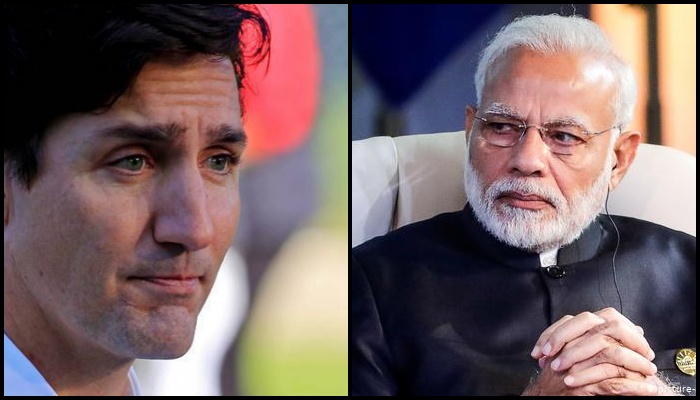
India summons Canadian High Commissioner after comments by Justin Trudeau on farmers’ protest: Here is what India told Canada

The Canadian High Commissioner has been summoned by the Ministry of External Affairs today. He was informed that the remarks by Canadian Prime Minister Justin Trudeau regarding the farmers’ protest and also the comments of some of the cabinet ministers was unacceptable interference in India’s internal matter.

Releasing a press statement, the MEA said that such actions, if continued, would have a damaging impact on ties between India and Canada. It further said that such comments have increased extremist gatherings in front of India’s High Commissions and Consulates. India said that it expects full security to its diplomats and also expects that Canada will refrain from ‘pronouncements that legitimise extremist activism’.
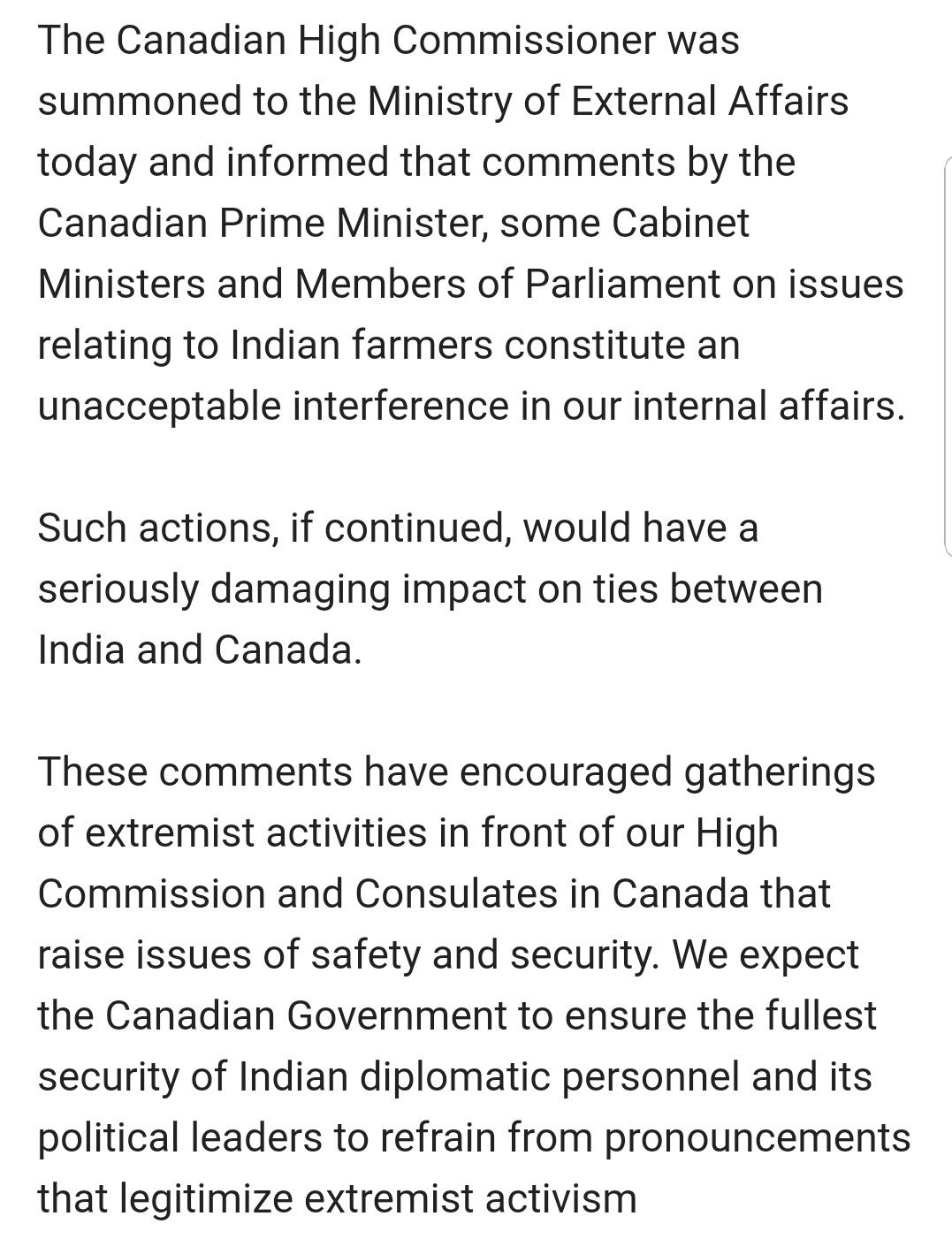
Statement by MEA

On the 1st of December, Canadian Prime Minister Justin Trudeau and his ministers had expressed concerns over ongoing farmers’ protests in India. During the virtual Gurpurab 2020 celebration, PM Trudeau, at the beginning of his address, talked about the protests in India. Ministers from the Sikh community, including Navdeep S Bains, Harjit Sajjan, and Bardish Chagger, joined him in the conversation.

While talking about the protests, Trudeau said, “I would be remiss if I didn’t start also by recognizing the news coming out of India about the protests by farmers. The situation is concerning. And we all are very worried about family and friends; I know that’s a reality for many of you. Let me remind you. Canada will always be ready to defend the right to peaceful protest. We believe in the importance of dialogue and that’s why we reached out to multiple means directly to Indian authorities to highlight our concerns.”

Not just Justin Trudeau, there were several other ministers too who had indulged in blatantly interfering in India’s internal affairs by commenting on the farmers protest.

After these comments, Ministry of External Affairs Spokesperson Anurag Srivastava had called the remarks ill-informed, saying, “We’ve seen some ill-informed comments by Canadian leaders relating to farmers in India. These are unwarranted especially when pertaining to internal affairs of a democratic country.”

Khalistanis hijack farmer protests

It is important to note that the farmer protests in India have been hijacked, to a large extent by Khalistani elements. OpIndia had reported that the Khalistan organisation SFJ, funded by Pakistan, had earlier declared a grant of $1 million for farmers in Punjab and Haryana in lieu of their support for Khalistan. On 23rd September, it was reported that the SFJ had attempted to capitalise on the ongoing protests by farmers and had declared that it would distribute $1 million among farmers who had defaulted on agricultural loans.

“From October 1 to October 8, any farmer — irrespective of his faith — can register 25 votes for the Khalistan Referendum 2020 and get a grant of Rs 5,000 as assistance to repay their agricultural loans,” SJF said. The security agencies have since received inputs on the latest offer by SFJ.

Further, in September itself, the banned pro-Khalistani group Sikhs for Justice (SFJ) had announced a door-to-door campaign for registration of voters supporting its separatist agenda called ‘Referendum 2020’.

The terrorist group had earlier tried to lure farmers of Punjab by offering Rs 3,500 to each farmer as grant ahead of Referendum 2020. The group had announced that it would be providing money on a monthly basis to farmers who could not pay their loans. The MHA had ordered the properties of SFJ leaders to be attached earlier this month on the recommendation of the National Investigating Agency (NIA).

The Ministry of Home Affairs had declared the SFJ an unlawful association under the Unlawful Activities (Prevention) Act. Its leaders including, Pannun, Najjar were also declared as terrorists under the Act.

During the ongoing protests, a few Khalistani terror sympathisers disguised as farmers were caught gloating over the assassination of the former Indian Prime Minister Indira Gandhi, who also threatened PM Modi with a similar fate if their demands went unfulfilled.

In one of the videos from the protests, one of the demonstrators can be seen threatening PM Modi with dire consequences if the solution is not reached in the upcoming meeting between the farmers and the Centre over the agriculture bills.

Further, the protests, apparently carried out by the farmers, were taken control by the Khalistani supporters, who raised pro-Khalistani slogans hailing the face of Khalistani movement – Jarnail Singh Bhindranwale.
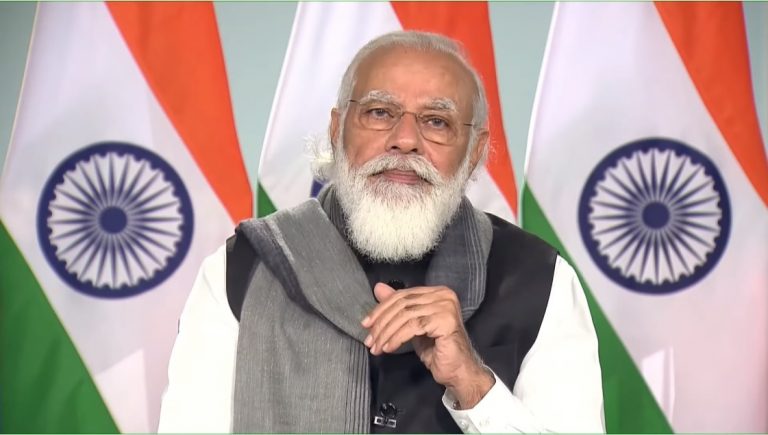
COVID vaccine will be ready in the next few weeks, elders and frontline health workers to get it first: Big takeaways from PM Modi’s all-party meet

Prime Minister Narendra Modi chaired an all-party meeting on Friday with the floor leaders of all political parties of the Lok Sabha and Rajya Sabha to discuss the COVID-19 situation in the country and vaccine development.

The floor leaders of different parties included Adhir Ranjan Chowdhury and Ghulam Nabi Azad of the Congress, Sudip Bandyopadhyay and Derek O’ Brien of the Trinamool Congress, Midhun Reddy and Vijayasai Reddy of the YSR Congress among others.

Union Health Minister Harshvardhan also briefed the leaders on the coronavirus situation in India at present. Union ministers Amit Shah, Rajnath Singh, Prahlad Joshi, V Muralidhar and Arjun Meghwal were also present at the meeting with the opposition parties.

Speaking at the virtual meeting, Prime Minister Modi hailed our scientists working on the development of the vaccine and added that Indian scientists are very confident of succeeding in their endeavour of making COVID vaccine. The world is keeping a watch on the cheapest and safe vaccine and that is why the world is watching India, the Prime Minister added.

“Nearly 8 vaccines are on different stages of trial with their manufacturing assured in India. Three vaccines from India are at different stages of development. Experts think that the vaccine isn’t too far away,” the Prime Minister said in the all-party meeting.

COVID vaccines will be ready in few weeks; health workers, elders to get first shot

The Prime Minister also said that experts believe that COVID vaccine will be ready in the next few weeks. Explaining the strategy of the government to inoculate vaccination to the citizens of the country, he said that as soon as scientists give a green signal, vaccination will start in India.

Importantly, during the all-party meeting, Prime Minister Modi also clarified that the healthcare, frontline workers and elderly person suffering from serious diseases will be given priority in vaccination.

He also said that the teams of Central and state governments are working together for vaccine distribution. He noted that India is better equipped in this regard compared to other countries, as the country has vast expertise and experience of nationwide vaccination programs. The country has a vast network for vaccine distribution, which will be utilised to the fullest extent, and for any additional requirements like cold-chain logistics, the same is being evaluated with the help of state govts.

“We have a very big and experienced network in the field of vaccination. We will fully exploit it,” the Prime Minister noted.

The PM also informed that India has developed a software for Covid vaccine, which will provide real-time information related to beneficiaries of the vaccine, available stock and its storage. For the research on Coronavirus vaccine, a special Group. This group is consists of technical experts and representatives from central govt ministries and state governments.

Vaccine will be affordable, pricing will be decided after consultation with states: PM Modi

During the meeting, Prime Minister Modi also apprised the opposition party leaders about the pricing of the yet to be launched coronavirus vaccine. There has been a lot of controversy over the issue of pricing and availability of coronavirus in the country.

Responding to the issue of pricing, PM Modi said that centre is in talks with state governments over the price of vaccine and decision regarding it will be taken keeping public health as the topmost priority.

Concluding his address, Prime Minister Modi said he would appeal to leaders of all political parties to send their suggestions in writing. I assure you that they will be considered seriously, Prime Minister Narendra Modi added.

Earlier, prior to the address of PM Modi, floor leaders of opposition parties too spoke on the issue of coronavirus vaccine and the strategy of the government to distribute it to the rest of the country. Each opposition leader, who was allocated sufficient time to put their views, gave suggestions to the government regarding the efficient ways to distribute and inoculate vaccination to the citizens of the country.

The first all-party meeting was held on April 20 amidst the nationwide lockdown to curb the spread of the virus.

Following the all-party meeting, the Modi government is expected to brief the parliamentarians about various steps it has taken in the last few months to deal the coronavirus pandemic and put forward government’s strategy regarding the vaccine development and distribution.

The speech of PM Modi can be watched below:

WSJ drags Brahmins in domestic policy subject, American Hindu Group demands immediate withdrawal of article: All you need to know

Nikunj Trivedi, president of the Coalition of Hindus of North America (CoHNA), has written to the editorial board of the Wall Street Journal calling them out for spreading Hinduphobia and going out of their way to target the Brahmin community. The article in question was penned by Dr. Zaid Jilani and was published on the 29th of November. It was titled “Canceling Student Debt Will Be a Brahmin Bailout”.

In a scathing criticism of the WSJ, Trivedi said, “It is a telling sign of our times that an Op-Ed lacking erudition and factual accuracy while reinforcing Hinduphobia and stereotypes of Hindus, is part of a newspaper such as the WSJ.” The letter states, “The callous usage of the word “Brahmin” amounts to blatant propaganda and a thinly veiled attack on the Hindu community and will promote hatred and animosity towards Hindus in the United States and worldwide.”

The WSJ was also slammed for addressing the elites of American society as ‘Brahmins’. “Mr. Jilani pejoratively uses words such as “Brahmin Left” and “Brahmin Bailout” to describe certain policies being considered by the Democratic party, deeming these policies as benefiting the elitist “upper class” of the American society. By using “Brahmin” as a disparaging label, Mr. Jilani falsely paints an entire community (completely unrelated to the issue being discussed) as greedy, elitist and oppressive and furthers a colonial and racist narrative even as he launches a hostile and prejudicial attack against Hindus.”

The letter also emphasised that “Describing the Brahmin Hindu community as part of the economic elites of the world is a cunning and malicious fairy tale that has no basis in reality and which leads to a reinforcement of colonial and racist prejudices against Hindus.” The letter also slammed the author himself and called him out on his biases.

Trivedi said that Jilani had targeted US Congresswoman Tulsi Gabbard as well due to her Hindu identity and maliciously accused Indian American organisations and community members of colluding with the Indian government. The letter also pointed out that “the paper would not tolerate devious characterizations of other religious and ethnic communities to drive across a political point.”

The CoHNA demanded that the word ‘Brahmin’ be removed from the OpEd immediately and an apology be issued to the global Hindu Community for straying away from “responsible journalism”.

What did the WSJ OpEd say?

The focus of the OpEd itself was not caste. It discussed the economic policies that are likely to be adopted by the Democratic party and the incoming Joe Biden administration. On that note, it provided a commentary on the proposal to cancel student loans and what it says about the changing face of the Democrat Party.

The message that Jilani essentially wanted to convey is that the Democrat was moving away from its traditional working class vote-base and becoming a party of the elites. It is a development that has not gone down too well with the progressive wing of the party. It is in this context that Jilani uses the term ‘Brahmin Left’ and ‘Brahmin Bailout’.

In recent times, caste has been discussed a lot in the USA. A book on the matter titled “Caste: The Origins of Our Discontents” was recommended by Oprah Winfrey herself.

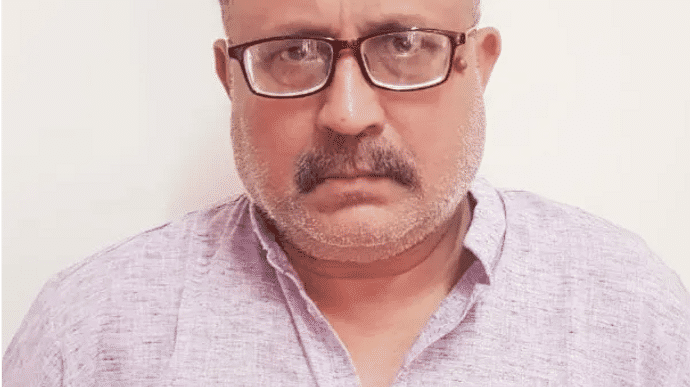
Delhi HC grants bail to journalist Rajeev Sharma, who used to write for Chinese papers, The Quint, etc, and was arrested for spying for China

On Friday, the 4th of December, Delhi High Court granted bail to journalist Rajeev Sharma, who was arrested after it was revealed that he was spying for China. He was arrested by Delhi Police in espionage case for allegedly passing sensitive information to Chinese intelligence.

Sharma was arrested by a special cell of Delhi police on September 14 under the Official Secrets Act. His Twitter account has been restricted following his arrest. Sharma has reportedly worked with The Tribune, Free Press Journal, Sakaal, etc. and for left-wing publications like The Quint, DailyO, etc. He also runs a YouTube channel. Sharma is also reported to have written for the Global Times which is the mouthpiece of the Communist Party of China for many years.

In September, informing about the arrests, Deputy Commissioner of Police (special cell) Sanjeev Kumar Yadav said, “Special Cell has arrested a freelance journalist Rajeev Sharma for passing sensitive information to Chinese intelligence. One Chinese lady and her Nepalese associate also arrested for paying him large amounts of money routed through shell companies. Chinese intelligence tasked the journalist for conveying sensitive information in lieu of large amounts of money. A large number of mobile phones, laptops, and other incriminating/sensitive material have been recovered.”

Along with Sharma, the Delhi police also arrested a Chinese woman and her Nepalese associate on the charges of paying huge amounts of money to Sharma through shell companies. 

The Chinese woman named Qing Shi is an intelligence official of the Ministry of State Security (MSS) of the Chinese government. The name of her Nepali Associate is Sher Singh.

Confusion over ballot marking: Telangana HC orders counting of ballots with ‘Swastik’ mark only in GHMC elections

0

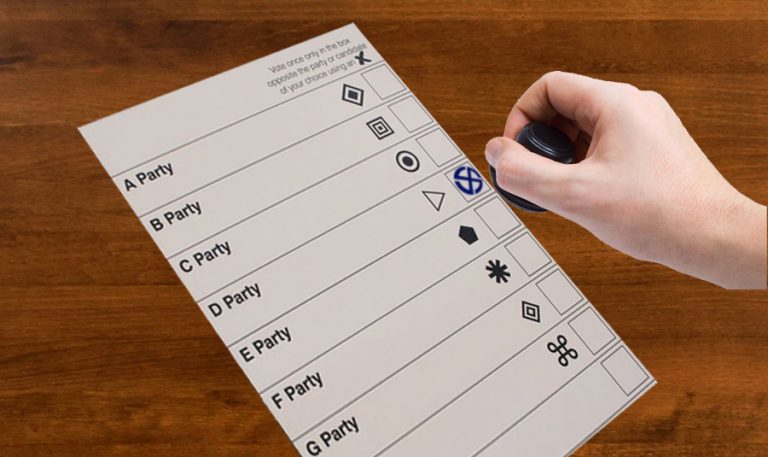
Ahead of the Greater Hyderabad Municipal Corporation elections results, the Telangana High Court on Friday asked the State Election Commission (SEC) to only consider votes with “Swastik” mark on the ballot papers used in the elections that were held on 1 December.

According to Swarajya report, Justice A Abhishek Reddy of Telangana High Court gave directions to the State Election Commission asking them to inform all the counting centres to consider only votes with “Swastik” mark.

Recently, a controversy had erupted after the SEC issued a notification stating that ballot papers with any clear marks on them can be counted during the process of counting votes. The SEC issued the notification after presiding officers in some of the polling stations issued “distinguished mark” in place of “Swastik” for marking the ballot papers.

The notification clarified that a vote should be considered valid if the voter has marked clearly for a particular candidate, who should not lose out because of a polling staff error.

However, Justice Reddy reiterated that if the markings other than the ‘Swastik” make a difference in the result, such results will not be declared and shall be subject to further process.

The Swastik stamp, with curved outer arms, is the official stamp used in elections in India using paper ballots. The arms also have arrowheads on its tips. The stamp with the arrows in the clockwise direction helps to distinguish the original mark from its impression which may appear on other parts of the ballot paper, if the paper is folded when the mark is still wet.

BJP candidates had moved the petition, sought cancellation of SEC notification on ballot markings

The High Court order came after the Bharatiya Janata Party (BJP) candidates – Puranapul K Surender and Anthony Reddy had moved a separate plea in the Telangana HC late last night, questioning the SEC clarification.

The court heard the petition that challenged the EC orders to consider votes with any mark on the ballot paper. Hearing the petition, the Telangana High Court suspended circular issued by the State Election Commission, which was issued on Thursday midnight.

The judge posted the matter for further hearing by the High Court on 7 December. The High Court has also asked the Telangana State Election Commission to file an affidavit regarding the circular issued by them with complete details.

BJP leading in GHMC elections

The Bharatiya Janata Party (BJP) has taken an early lead in the Greater Hyderabad Municipal Corporation elections, leading in 88 of the total 150 seats. According to the latest trends, the ruling TRS is leading in 34 seats. While Owaisi-led AIMIM has gained leads in 17 seats mostly in Muslim dominated seats, the Congress party has managed to lead in just one seat.

The results for the GHMC elections are set to be declared on Friday. The GHMC polls were conducted on December 1 amid much fanfare and loud campaigns by all parties.

The GHMC election was a battle for dominance and political prestige for the TRS, BJP and AIMIM. The BJP, which recently won the by-poll at Dubbaka assembly constituency, is trying to consolidate its position in the southern state.

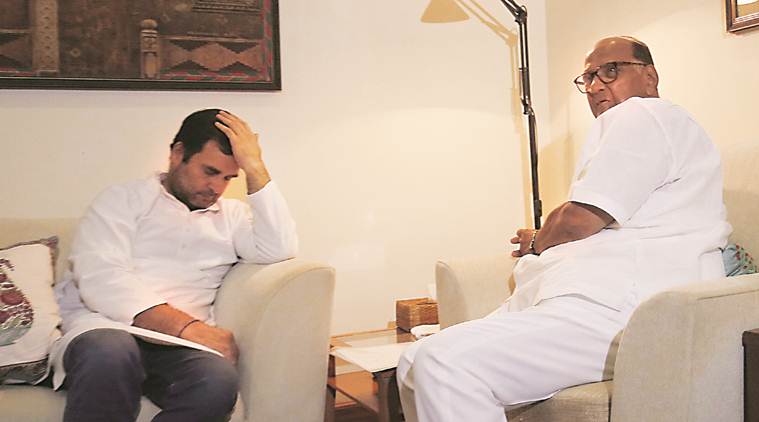
NCP Chief Sharad Pawar does not think ally Rahul Gandhi is fit to lead India: Here is what he said in a media interview

In a scathing indictment of former Congress president Rahul Gandhi’s leadership abilities, NCP chief Sharad Pawar said that the Gandhi scion lacks the consistency needed to be accepted by the country as its leader.

In an interview with Lokmat Media chairman and former MP Vijay Darda, Pawar said that there are issues with Rahul Gandhi’s consistency. When asked if the country is ready to accept the Wayanad MP as the country’s leader, Pawar responded, “There are some questions in this regard. There seems to be less consistency.”

It is pertinent to note that Sharad Pawar’s NCP is in alliance with the Congress party and Shiv Sena in Maharashtra and are part of the Maha Vikas Aghadi government that is currently governing the state.

Pawar slams Obama for crossing the “limit” of commenting on foreign leadership

However, Pawar was disapproving of Obama’s unfavourable view on Rahul Gandhi. Obama, in his recently published memoir, has said that the Congress leader appeared to be like a student eager to impress the teacher but lacking aptitude and passion to master the subject. Responding to Obama’s remarks, Pawar said that it is not important to accept everybody’s view.

Slamming Obama for his “presumptuous” remarks on Gandhi, Pawar said, “I can say anything about the leadership in our country. But I will not comment on the leadership in another country. One should maintain that limit….I think Obama crossed that limit,” he said.

When asked about Congress’ future and if Rahul Gandhi was becoming a “burden’ for the party, Pawar appeared to speak in defence of the Wayanad MP, saying that a hallmark of a leader is the acceptance he or she has within the organisation.

“I have differences with Congress chief Sonia Gandhi and her family but even today scores of Congressmen have a sense of affection towards the Gandhi family,” the NCP chief responded, implying that Gandhis are best to lead the Congress party.

Congress defends Rahul Gandhi after remarks by Sharad Pawar, says he is more consistent than any other opposition party leader

The Congress spokesperson Sachin Sawant was circumspect in giving a reaction on Pawar’s remarks on Rahul Gandhi. Sawant said, ” We don’t know in what context Pawar saheb has made the comments. However, to be specific, the Congress and our leader Rahul Gandhi has been more consistent than any other party in its opposition to RSS and the Modi government.

Rahul Gandhi is one of the very few politicians who have the uncompromising courage to speak against the current regime in the country, especially when it is shamelessly muzzling the voice of the opposition, trampling democratic norms while constitutional institutions are watching helplessly, having lost their independence and credibility.”

Mounting internal dissent within the Congress party against the Gandhis

Though Congress has come out in defence of Rahul Gandhi, there have been growing clamour within the party against the leadership. Rahul Gandhi, who quit the Presidency of the Congress party after a disastrous poll debacle in the 2019 General Assembly elections, has been facing dissent from party members as rumours of his return gathers momentum. Several party members, including senior party loyalists, shot of a letter to Congress President Sonia Gandhi in August 2020, demanding sweeping changes in the party. The rumblings have been bolstered by the embarrassing poll drubbing in the recently concluded Bihar elections.

According to several reports, 23 senior Congress leaders had written a letter to interim Congress President Sonia Gandhi demanding that an immediate CWC meeting be called to discuss the poll debacle in Bihar. They have reportedly also demanded organisational elections for the party president’s post be held at the earliest in the view of the electoral drubbing.

The letter reportedly points to the fact that at the peak of Bihar campaigning and even on result day, Rahul Gandhi and Priyanka Gandhi Vadra were holidaying in Shimla instead of being with the party and leading the way.

Study finds evidence of the first use of controlled fire in India 55,000 years ago at a site near Prayagraj: Report

0

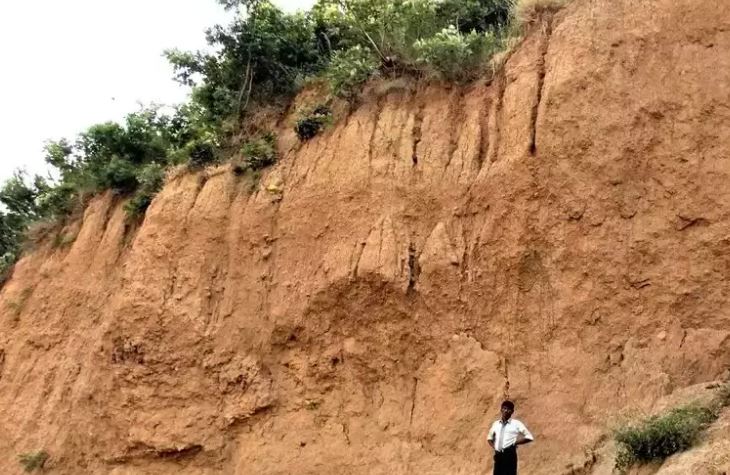
Latest studies have pushed back the use of controlled fire by humans in India by 30,000 years. Evolutionary scientists have discovered that the first use of controlled fire by human beings happened some 50,000 years ago in the Belan river valley, 80 km away from Prayagraj in Uttar Pradesh. Until now, studies suggested that the first reported use of fire in the Indian subcontinent was from 18,000-20,000 years ago.

As per a report published in The Times of India, the sedimentary deposits of the sites situated in the Belan river valley offered a unique opportunity to scientists to understand the linkage between the prehistoric human environment and fire events.

“Before this, the first reported use of fire in the Indian subcontinent was from 18,000-20,000 years ago. Hearths were found in the same valley, considered the first direct evidence of human use of fire,” Times of India quoted Prasanta Sanyal, co-author of the paper being published in Elsevier journal ‘Palaeogeography, Palaeoclimatology, Palaeoecology’, as saying.

The evolutionary scientists identify the discovery of fire as one of the greatest sparks of human intelligence. To study when exactly the use of controlled fire began in the Indian subcontinent, the scientists from IISER-Kolkata looked at macro charcoal (larger than 125 microns) from six archaeological sites in the valley — Deoghat, Koldihwa, Mahagara, Chillahia, Chopani-Mando and main Belan.

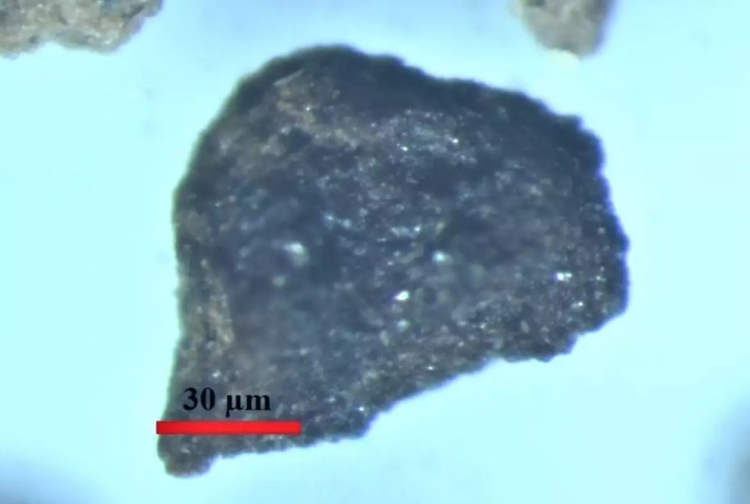
A charcoal sample from Belan Valley, source: TOI

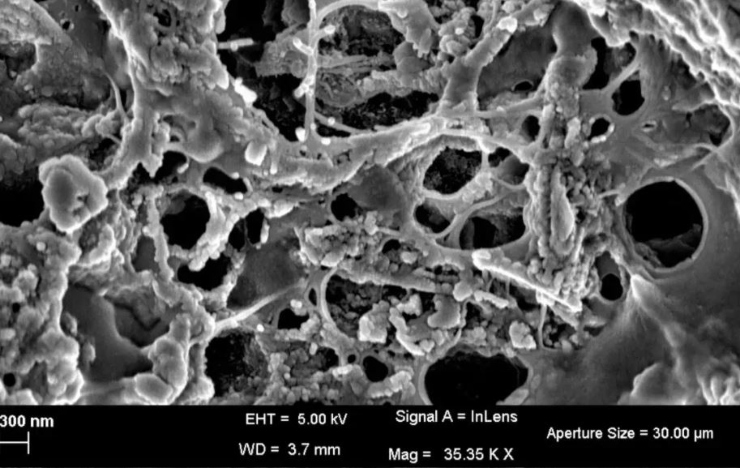
Prasanta Sanyal explained that it is possible to get charcoal from two sources — forest fires and human-made fires. Suppose, there was a forest fire in the Himalayas. It could have produced this charcoal, which was transported and deposited, said Sanyal, explaining how in man-made fire the charcoal cannot be transported. “But we found that the internal structure of these charcoal samples was still well-preserved, which could not have happened had they been transported.” Then, there was the topography. The paper says the “gentle slope of the Belan valley and its small catchment area make long-distance transportation unlikely.”

Microscopic image of a charcoal sample, source: TOI

Sanyal furthered that the scientists then reconstructed the climate patterns for the last 100,000 years. It turned out that the period the charcoal samples dated back to the period which had very high rainfall. “Besides, the vegetation was characterised by trees. Both factors are not very conducive to forest fires. You can have a natural forest fire only in dry and arid conditions,” Sanyal explained.

“We concluded that the charcoal in these archaeological sites came from human use of fire,” said Sanyal. This meant that at that time- around 50,000 years ago the human brains were developed sufficiently to control fire.

“This is the time that the cognitive abilities of prehistoric humans developed. This coincided with the period when they started creating different types of tools,” Deepak Kumar Jha, lead author, told TOI.

Once the knowledge of how to harness fire was acquired it was transferred. “The use of fire was persistent from Middle Palaeolithic to Neolithic (from 55,000 to 3,000 years ago)- from the earlier prehistoric populations to the later farming communities,” the paper says.

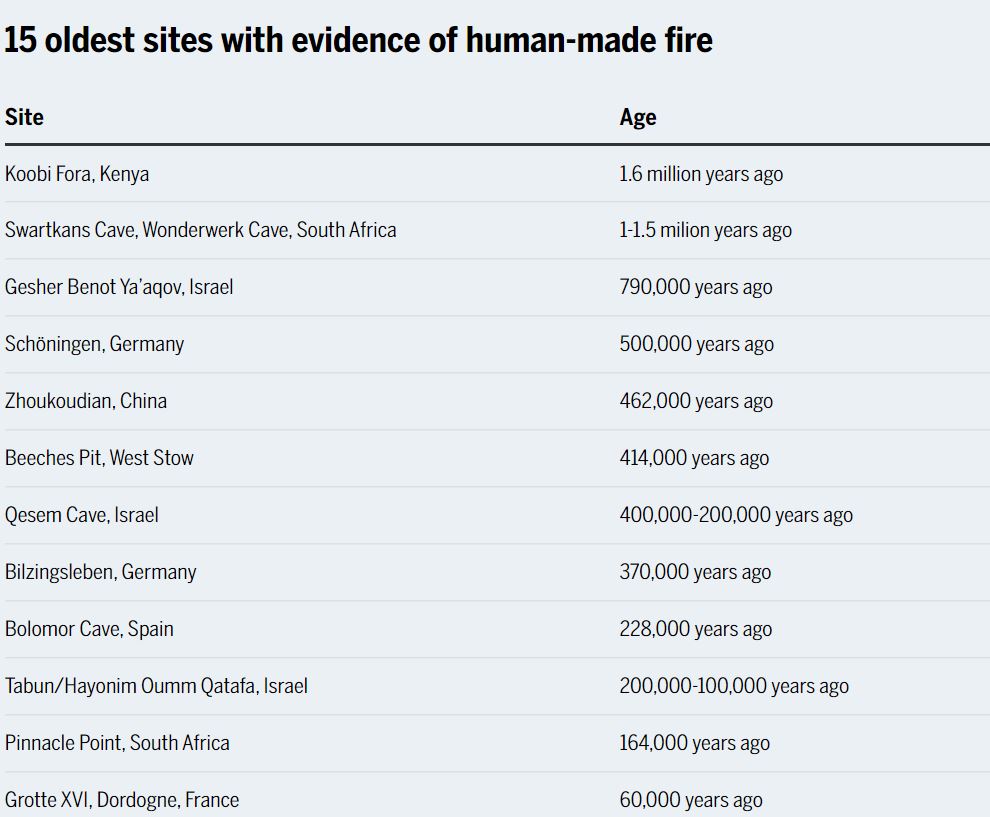
This recent study has made India move up to the 13th position amidst 15 oldest sites in the world with evidence of human-controlled fire. It is now the 13th oldest evidence of the use of fire in the world. The oldest is from 1.6 million years ago, at Koobi Fora in Kenya.

India has moved up to the 13th position in the table of 15 oldest sites in the world with evidence of human controlled fire, image via TOI

 “If you see China, human-controlled fire has been discovered from 400,000 years ago. Why this gap? Maybe we have not studied Indian sites enough”, maintained Prasanta Sanyal.

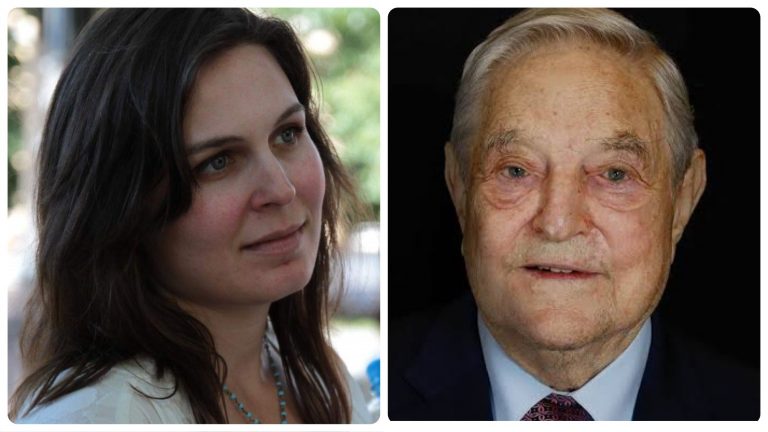
Russia cancels resident permit of George Soros linked ‘human rights activist’, gives her two weeks to leave: Details

0

Prominent human rights activist Vanessa Kogan linked to Hungarian-American billionaire investor George Soros is all set to be expelled by the Russian government after the former president Dmitry Medvedev claimed that there’s an organised campaign by international organizations to foment unrest in the world’s largest country.

Kogan, the director of the Stichting Justice Initiative project, admitted to the British newspaper The Guardian that the Russian authorities have informed her about the revocation of her resident permit. With Moscow cancelling her residence permit, Kogan has two weeks to leave the country.

The Stitching Justice Initiative project is an NGO which reportedly provides legal support to Russians who are victims of the human rights abuses. It has been cagey about its funding in recent years but back in 2010 and 2011, it was financially supported by the Dutch government and the Hungarian billionaire George Soros through his ‘Open Society’ pressure group, which was deemed as undesirable and banned by the Russian government.

Kogan’s organisation has been working in the North Caucasus region, helping people who have been allegedly victimised at the hands of the authorities. Its activities in the Muslim majority region has allegedly stoked tensions with local leaders, such as Ramzan Kadyrov, the head of the Republic of Chechnya.

Deputy chairman of Security Council of Russia says NGOs exploiting networks in Russia to foment unrest in the country

Medvedev, the deputy chairman of Russia’s Security Council on Thursday told reporters that well-funded foreign groups were exploiting networks in Russia to “exacerbate the internal political situation in certain regions, including through Russian non-profit groups they associate with”.

He further added that such NGOs went to the extent of depending on the internet media, using several dubious reasons to rewrite the events of our national history. He termed it a “large-scale information campaign, being conducted to discredit the leadership of some specific territories and Federal Subjects”.

Earlier last month, the country’s State Duma argued a new law that would expand the scope of what constitute foreign agents, allowing them to apply to not only to NGOs and media organisations but also to ordinary citizens. Two years back, the United States incarcerated a Russian citizen, Maria Butina, stating her to be a foreign agent working for the Russian intelligence agencies. The US authorities had then alleged that she had infiltrated into conservative-leaning organisations to advance better ties between Washington and Kremlin. She was incarcerated for 5 months, some of it in solitary confinement, before being repatriated to Russia.

Soros’s OSF has a history of funding highly biased political NGOs across the world and its interference in India

The link between Vanessa with Hungarian-American George Soros is particularly intriguing, given that the philanthropist’s Open Society Foundation (OSF) is well known for funding highly biased political NGOs worldwide. For instance, the list of grantees of the OSF includes a number of Israeli NGOs that also includes some beneficiaries that deny the legitimacy of Israel.OSF has also funded Palestinian NGOs Al-Haq and the Palestinian Centre for Human Rights, both of which have ties with the Popular Front for the Liberation of Palestine which has been designated as a terrorist organization by the US, EU, Canada, and Israel.

Earlier this year, speaking at the world economic forum, Soros had said he will commit $1 billion to start a global university to ‘fight nationalists’, whom he referred to as ‘authoritarian governments’. He accused the Indian Prime Minister of ‘creating a Hindu nationalist state’.

Soros’s OSF grasped stronghold in India during the Obama regime. Ever since its entry in India, it has tried to interlope in the internal affairs of the nation through the vast and interconnected network of organisations funded by him. These organisations play a vital role in manipulating the original narrative and take the help of the judiciary and media to hinder the national interest.

The Human Rights Law Network has been a chief campaigner against the Indian sedition laws and has even been providing legal aid to the Rohingya Muslims. The French NGO, Sherpa, that filed the complaint against the Rafael deal is also funded by the OSF. Another such organisation facilitating the agenda of George Soros is Amnesty International which is also funded by the OSF. The organisation also told the US lawmakers that the Citizenship Amendment Act stands in violation of not just the Indian Constitution but also international human rights law.

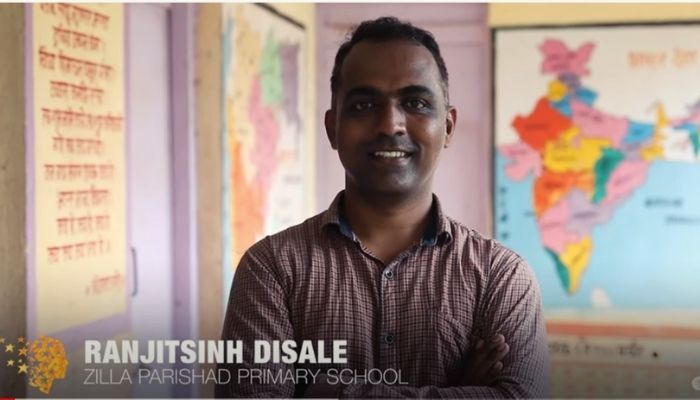
How a teacher from Solapur, Ranjitsinh Disale, won the coveted Global Teacher Prize and $1 million: Here is his story

On Thursday, a 32-year-old teacher named Ranjitsinh Disale was awarded the much anticipated Global Teacher prize and prize money of $1 million for his extensive work in the field of the girl child education and revolutionising textbooks in India. His massive feat drew praise internationally and exemplified how the resolve of one man, to make an impact, can change lives.

Ranjitsinh Disale hails from Paritewadi village in Solapur district of Maharashtra. He wanted to be an IT engineer and had enrolled in an engineering college. But when things did not work for him, he was persuaded to take up teacher training programme by his father. Although Ranjitsinh Disale was initially hesitant about the decision, his time at the teacher training college made him realise that teachers were the real change-makers in the world.

The story of Ranjitsinh Disale

His first assignment was at the Zilla Parishad Primary School in 2009. The school was located between a storeroom and cattle shed. He observed that most of the female students in the class hailed from tribal communities, where the underage marriage of girl child was prevalent and their education was not taken seriously. To add to the social challenges, Ranjitsinh found that the textbooks were not in Kannada, the mother tongue of the students, and it affected the learning outcome of students.

He then took upon himself to redesign the books from Std 1- 4 such that students can comprehend the subject better. Besides learning Kannada, Ranjitsinh helped re-design textbooks to include QR codes that would contain video lectures, assignments, stories and audio poems for better understanding. The innovation, on his part, helped his students develop problem-solving skills, creativity and better communication.

Video Courtesy: Youtube/ Global Teacher Prize

Ranjitsinh is also a part of ‘Let’s Cross the Borders’ project where he has connected with over 19,000 students from eight countries, including, India, Pakistan, Israel, Palestine, US, North Korea, Iraq and Iran.

The programme is aimed at building peace among students in conflict zones. Ranjitsinh also teaches students in schools from other parts of the world through Microsoft Educator community platform and takes them to virtual trips. He also demonstrates scientific experiments to students from his home laboratory to help them better understand concepts.

100% student attendance, no underage marriage

As a result of his efforts, the attendance of girl children in his school recorded 100%. Not only that, no teenage/underage marriages were reported in the village as well. Impressed by his innovative endeavours and a successful pilot scheme, the Maharashtra government had announced in 2017 that it would introduce QR-embedded textbooks for all grades in the State. Moreover, the Ministry of Human Resource Development (MHRD) had also announced in 2018 that all NCERT textbooks would include QR codes in the future.

Recognised by Microsoft CEO

Prior to receiving the Global Teacher’ prize, Ranjitsinh was recognised by Microsoft CEO, Satya Nadella, in his book ‘Hit Refresh.’ He was named 2016 Innovative Researcher of the Year by the Union government and was also awarded the National Innovation Foundation’s Innovator of the Year prize in 2018. He was among one of the top finalists, selected from over 12,000 nominations from over 140 countries. The Global Teacher Prize, established in 2014 by Varkey Foundation, will provide the prize money in equal instalments over a 10-year-period, besides financial counselling.

Ranjitsinh Disale leads by example, shares prize money with co-finalists

Ranjitsinh, who believes in revolutionising the education sector worldwide, has decided to share 50% of his prize money of $1 million dollars with 9 other finalists. As such, each of them will now receive a sum of over $55,000.

“The COVID-19 pandemic has exposed education and the communities it serves in a multitude of ways. But in this hard time, teachers are giving their best to make sure every student has access to their birthright of a good education. Teachers are the real change-makers who are changing the lives of their students with a mixture of chalk and challenges. They always believe in giving and sharing. And, therefore, I am very pleased to announce that I will share 50 per cent of the prize money equally among my fellow top 10 finalists to support their incredible work. I believe, together, we can change this world because sharing is growing,” he said.

Video Courtesy: Youtube/ Global Teacher Prize

He further added, “By sharing the prize money, you teach the world the importance of giving…I now encourage you to use this platform to give all teachers a voice. There is not a moment to lose as it will fall on young people to find solutions to problems that their parents and grandparents have lacked the will to solve, including climate change, conflict and global pandemics.”

With his prize money, he hopes to start an initiative that would help recruit 5000 students from war-torn areas to Peace Army. UNESCO Assistant Director-General (Education) Stefania Giannini, stated, “Teachers like Ranjitsinh will stop climate change and build more peaceful and just societies. Teachers like Ranjitsinh will eliminate inequalities and drive forward economic growth. Teachers like Ranjitsinh will save our future.”

Hyderabad GHMC elections: TRS takes lead again, BJP and AIMIM at 43 each

After gaining early leads the BJP had maintained its surprising performance in the Hyderabad GHMC elections. The party which had won only 4 seats in the last GHMC elections, has made a massive gain, all set to win 43 seats. The TRS is leading on 65 seats and the AIMIM leads in 43 seats, as per latest trends at 6.15.

BJP supporters were seen celebrating near party office, declaring that the gain in GHMC will set the tone for 2023 assembly elections in the state.

Latest news showed that TRS is leading in 65 seats, BJP in 43 and AIMIM in 43 seats. BJP has stated that the gains registered by the BJP are an indication that the people of Hyderabad are fed-up with the TRS and they want a change in leadership in the state.

TRS has already won 46 seats, AIMIM has won 41 seats and BJP has won 32 seats.

Congress has won only 2 seats. The GHMC polls were conducted on December 1 amid much fanfare and loud campaigns by all parties.

The counting was started at 8.30 am for the 150 seats under GHMC. The counting is going on at 30 locations and the Telangana State Election Commission has deployed over 8000 personnel.

The results will determine the fate of as many as 1122 candidates in 150 constituencies. The mayor’s post is reserved for a woman this year. As the elections were held on ballot papers and not EVMs, the final results will take time.

BJP leaders celebrate

As early trends pour in, BJP leaders, who had campaigned extensively in the elections, are positive that the party has remarkably improved its support base in Telangana. MP Aravind Dharmapuri has stated that in recent months, the BJP had gained a lot of support from the people in Telangana as was evident in the Dubbaka by-polls.

The GHMC election was a battle for dominance and political prestige for the TRS, BJP and AIMIM. The BJP, which recently won the by-poll at Dubbaka assembly constituency, is trying to consolidate its position in the southern state.

In 2016 elections, the TRS had contested in alliance with AIMIM and had swept the GHMC elections. TRS had won 99 of the 150 seats, while AIMIM had won 44 seats, and Congress 2. The BJP-TDP alliance had won 4 seats in 2016 GHMC elections.