Home Blog Page 4830

Arnab Goswami was served letter threatening action for approaching SC at insistence of Speaker: Maharashtra Assembly Assistant Secretary

0

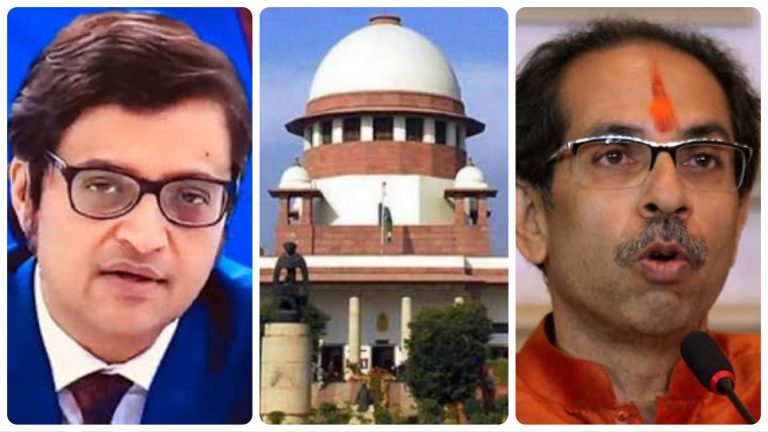
The Maharashtra Assembly Assistant Secretary, who is facing contempt proceedings for threatening Arnab Goswami for approaching the Supreme Court over the breach of privilege proceedings against the Republic TV Editor-in-chief, on Tuesday said that the contentious letter was issued at the instance of the Speaker.

On behalf of the Maharashtra Assembly Secretary, senior advocate Dushyant Dave argued before the bench of the Supreme Court headed by the Chief Justice of India that no contempt was made out as there was no attempt to obstruct the administration of justice in issuing a letter to Arnab.

Senior Advocate Harish Salve, representing Arnab Goswami, asked the apex court to issue a notice to the Speaker.

However, Dave opposed Salve’s submission while the Amicus Curiae Arvind Datar contended that the Speaker should be issued a notice as the Maharashtra Assembly Assistant Secretary was only acting on behalf of the Speaker.

“We don’t want the Speaker to say that he was not served,” said the CJI and adjourned the hearing for two weeks.

Supreme Court issued a contempt notice to Maharashtra Assembly Assistant Secretary

The Supreme Court, on November 6, much to the chagrin of the Maharashtra government, had issued a notice to Secretary of Maharashtra Legislative Assembly to appear before the top court and show cause as to why contempt proceedings should not be initiated against him for the threatening letter authored by him to Republic TV Arnab Goswami.

“How can someone be threatened like this? How can someone be stopped from approaching a court by extending him threats like this? We are only concerned about access to this court. You cannot threaten people indirectly in this manner by saying how can you produce this in court. Who are these people? We want an independent counsel who will assist us in this matter,” Chief Justice SA Bobde had said then.

An enraged CJI questioned the authority in the country who can penalise someone for moving the Supreme Court. CJI Bobde asserted that the letter was in the teeth of Article 32, stating that it’s “extremely difficult” for them to overlook this letter.

The bench had then appointed senior advocate Arvind Datar as amicus curiae and posted the matter for further hearing after two weeks.

CJI Bobde also observed that the letter amounted to direct interference in the administration of justice. The intention of the author of the letter seems to be to intimidate the petitioner because he approached this court and to threaten him with a penalty for doing so.

Maharashtra Assembly issued summons to Arnab Goswami asking him to appear

Continuing their witch-hunt against Arnab Goswami, Maharashtra govt headed by Shiv Sena had used all its political might to harass Republic TV chief Arnab Goswami. The Maharashtra Legislative Assembly had served four notices to Goswami and asked him to reach the assembly after he had criticised the Maha Vikas Aghadi government over its inaction in the Sushant Singh Rajput case.

On October 15 at 14:50, Arnab Goswami had got a notice from the Maharashtra Legislative Assembly asking him to appear, in person, at 15:00 hours. Essentially, the state government gave Arnab Goswami merely 10 minutes to make a personal appearance in the Assembly, saying that if he does not, action could be initiated against him. 

The Maharashtra legislature secretariat had earlier sought clarification from Arnab Goswami on September 16 over a breach of privilege motion against him during a two-day monsoon session of the state legislature for the alleged derogatory comments against Uddhav Thackeray and Sharad Pawar.
Fraud fact-checker accuses TrueIndology of lying, when caught, wants an HD-quality photo from 1904

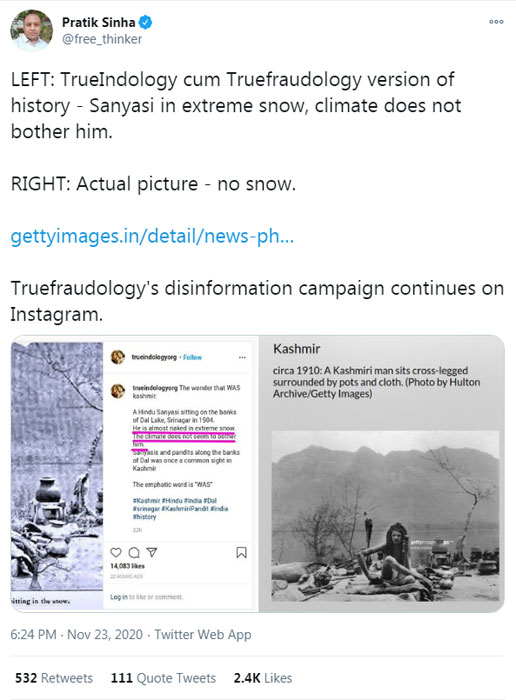
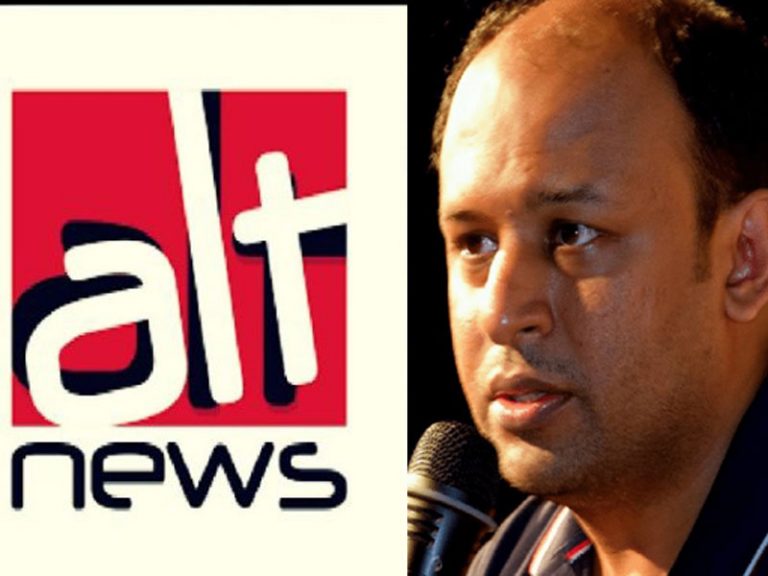
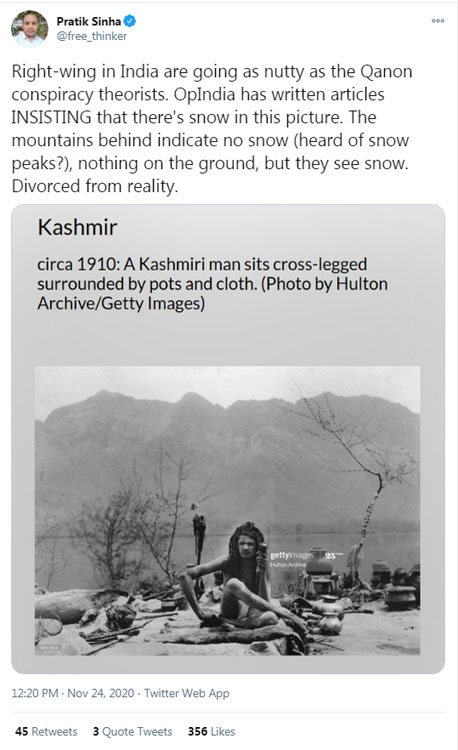
After a report by OpIndia called out lies peddled by self-proclaimed ‘fact-checker’ Pratik Sinha, he has become extremely irritated. He tweeted, “Right-wing in India are going as nutty as the Qanon conspiracy theorists. OpIndia has written articles INSISTING that there’s snow in this picture. The mountains behind indicate no snow (heard of snow peaks?), nothing on the ground, but they see snow. Divorced from reality.”

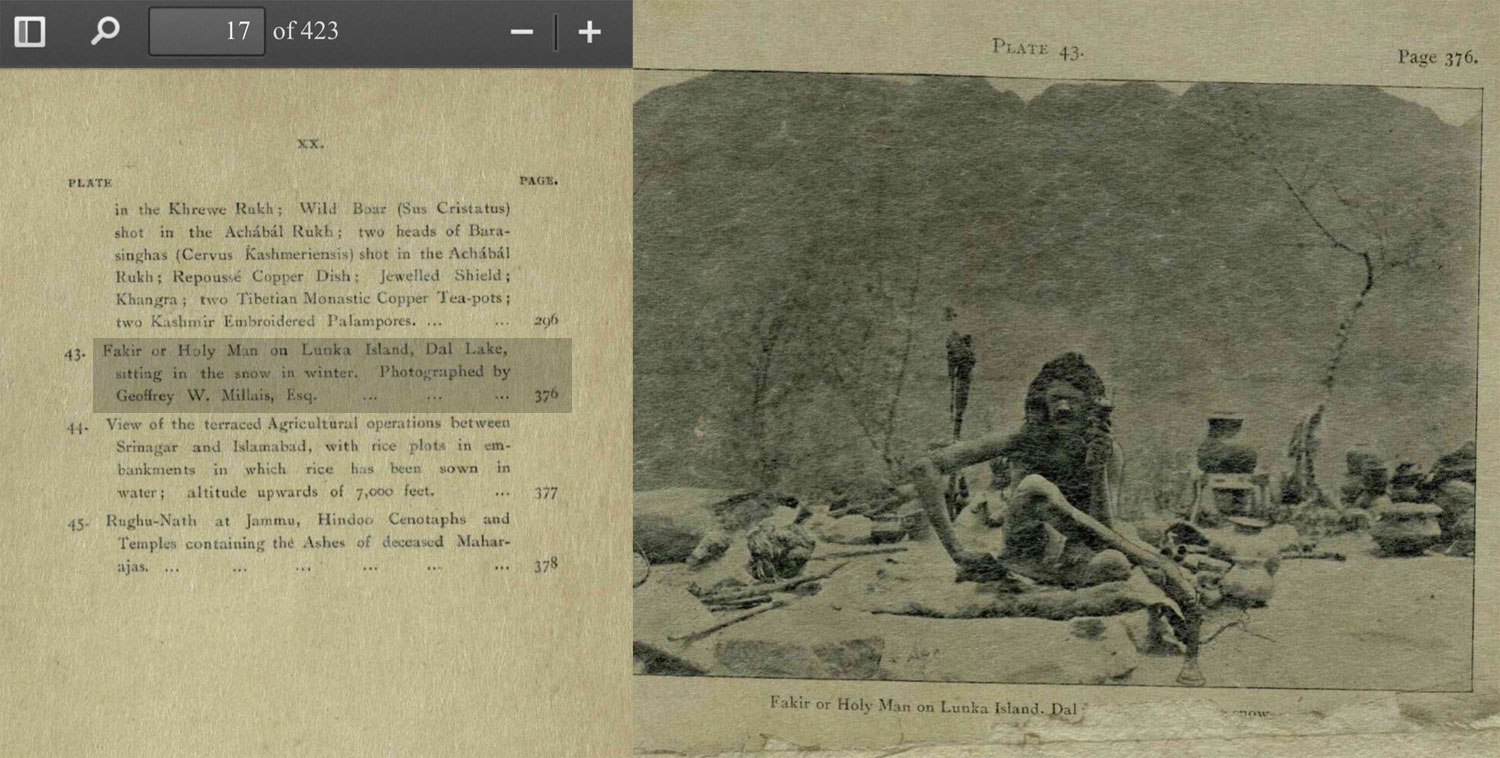
Sinha had reverse-searched an image shared by TrueIndology and had claimed that since the photo by Getty Images does not mention the word ‘snow’, TrueIndology’s claims are wrong. He had not bothered to verify the original source of the image. TrueIndology’s claim was based on the original image in the book “Kashmir: It’s New Silk Industry” by Sir Thomas Wardle, and it was published in 1904. In the book, on page 376, the title of the image reads, “Fakir or Holy Man on Lunka Island, Dal lake, sitting in the snow in winter.” The photograph was clicked by Geoffrey William Millais.

Tweet by Sinha after he read fact-check on him by OpIndia

The issue is NOT snow

The issue we had raised was not even about snow. The issue was that Sinha’s brainchild AltNews fails to fact-check things properly, especially when the news includes anyone from the Right Wing. Let it be an ordinary citizen of India or a news agency like OpIndia. The main aim of AltNews in such cases revolves around demeaning the citizen or the organisation and providing dubious sources while claiming to ‘fact-check’ them. Sinha not only tried to counter OpIndia’s fact-check with further misinformation but also got angry on netizens who replied to him stating he is wrong.

In this case, though Getty Images is the current owner of the photograph, they are not using the same caption provided in the primary source that is the 1904 book “Kashmir: It’s New Silk Industry” by Sir Thomas Wardle. Getty Image is a platform to buy and sell images. It is not a platform to fact-check the claims and source of any image. It is just like citing Wikipedia as a source in a research paper. A photographer or an agency may make a mistake in the caption while uploading the image. But that does not make the original photograph, its text, or context used on it fake.

The photograph by Geoffrey William Millais in a book published in 1904.

In the book, the caption of the image states, “Fakir or Holy Man on Lunka Island, Dal lake, sitting in the snow in winter.” We have provided genuine links and screenshots of the original book and photograph. Further, he needs to understand that we are talking about the 1900s. Photography was not that advanced at that time. Getting hold of a negative plate of the photograph to produce a high-quality image is next to impossible. One can only rely on the original sources where the photograph was used. The photograph’s quality in the book is not that great, and the caption clearly states there was snow.

Moreover, Pratik Sinha had accused TrueIndology of inventing details and sharing false information. But TrueIndology had done neither. His claim was based on the 1904 book published by Sir Thomas Wardle. Pratik Sinha had clearly failed to verify his facts from the original source, but had claimed he had done a ‘fact-check’ based on a Getty Images photo. Sinha, instead of acknowledging his mistake, or apologising to TrueIndology, has resorted to slander. When his lies were caught, he had brazened it out.

When his lies and his dubious methods of ‘fact-checking’ was called out on Twitter, Sinha started shifting the goalposts, trying to locate clear, white snow in a grainy photograph that is 116 years-old.

Chinese state media resorts to publishing blatant lies to convince themselves that ‘boycott china’ is not working

0

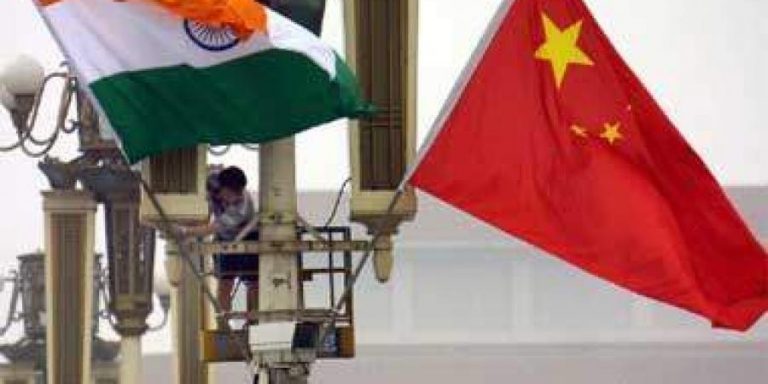
On the 23rd of November 2020, Chinese state media, The Global Times, published an article headlined “India isolates itself from regional growth opportunities”. In the article, China essentially claimed that Indian traders are finding it difficult to shun Chinese products because of the low quality of locally manufactured products.

At the very outset of the propaganda article, Global Times says, “China showed a relatively resilient pace, with its share increasing in India’s total imports during recent months despite the COVID-19 pandemic and India’s constant undermining of bilateral ties. According to India’s Department of Commerce, Chinese products took 18.3 percent of its total imports from April to September, up from 14.6 percent in the same period last year, contrary to the Modi administration’s intention to reduce reliance on its largest trading partner and be self-reliant”.

However, this assertion is factually incorrect on various counts. China’s share of imports is 11.8% between April-September 2020 versus 10.5% during the same period last year, said sources within the government. Furthermore, overall imports from China have fallen by 24.5% while Indian exports to China have increased by 26.3% during the same period.

GT further claimed in the propaganda article, “Indian traders and manufacturers are struggling to end reliance on Chinese goods, partly thanks to a lack of high-quality, locally made alternatives.” That appears inconsistent with developments on the ground. The Confederation of All India Traders announced a boycott of a host of Chinese goods but that did not affect them adversely at all.

During Diwali, the CAIT recorded sales to the tune of Rs. 72,000 crores, up by 10.8% compared to the previous year. At the same time, China was estimated to have suffered a loss of Rs. 40,000 crores. Thus, we see Indian traders recording a significant increase in sales despite an organised boycott of Chinese goods.

Of course, the Diwali developments are consistent with the reports that have been coming in since September. It was reported in September that India’s trade with Hong Kong and China had fallen by over 7% in fiscal year 2020, the steepest fall since FY13. Import substitution of electronics such as TVs, refrigerators, smartphones and washing machines resulted in a drop of $1.5 billion in Chinese imports.

Thus, China’s terrible handling of the pandemic combined with its aggressive military posturing has affected the ties between the two countries. Following the clash between India and China at Galwan, the Indian Government has made a deliberate effort towards curtailing the influence of China in the Indian economy. However, there was a trend in motion even prior to this. FY20 was the first time ever that trade with mainland China declined for two consecutive years.

Trade deficit between the India and mainland China has been on the decline as well. In 2017-18, it had hit a high of $63 billion but it is now under the $50 billion mark for the first time in five years. The monthly trade deficit shows a similar trend. In March, it was at $1.816 billion, the lowest ever since December 2010 when it stood at $183.7 million.

There’s a clear pattern here that is only likely to be exacerbated further going forward. Indicative of the fact, in FY19, Indian trade volume with the USA surpassed that with China. Between April-September 2020, Chinese imports have continued to fall.

A combination of government policy and popular demand to boycott Chinese goods, the impact was clearly profoundly felt during Diwali sales which went up by a significant margin despite a boycott of Chinese goods. With sustained effort over a period of time, the impact will be even more profoundly felt in the days to come.

Apart from banning Chinese apps, the Union Government also gave the call for ‘Atmanirbhar Bharat’ and initiated the ‘Vocal for Local’ campaign with an eye towards boosting domestic industries and also on denting Chinese imports. At the same time, the people of the country, roused by nationalist fervour, were also determined to boycott Chinese goods.

Praveen Khandelwal, national secretary general, CAIT, told Business Today in September, “Our target is by December 2021, we should reduce imports from China by upto Rs 100,000 crore ($13.3 billion),” before adding, “The Indian consumer does not want to buy Chinese goods anymore. He is concerned with the spread of the virus and its impact on the Indian economy as also with the transgressions by the Chinese army on our border. We support them in this cause and will encourage them to buy local products.”

China, quite obviously, is desperate to avoid such a scenario and therefore, it is resorting to what it does best, bullying. Despite its claims to the contrary, it’s clear that Indian traders and citizens are more than willing to endure hardships and pay more in the relative short-term in order to move away from Chinese products in the long-term.

China recognizes that it is not a knee jerk response due to its handling of the pandemic but a conscious policy approach that the Indian government is extremely unlikely to sway away from. The Galwan Valley clash further cemented the resolve of the Indian populace that had turned resolutely against China since the advent of the Coronavirus pandemic. Under such a scenario, with the significant threat of losing space in the Indian market, China has decided to settle for impotent rage channelled through its government mouthpieces.

J-K admin makes public list of beneficiaries under ‘illegal’ Roshni Act, names of former PDP minister, Congress leader, Farooq Abdullah etc emerge: Details

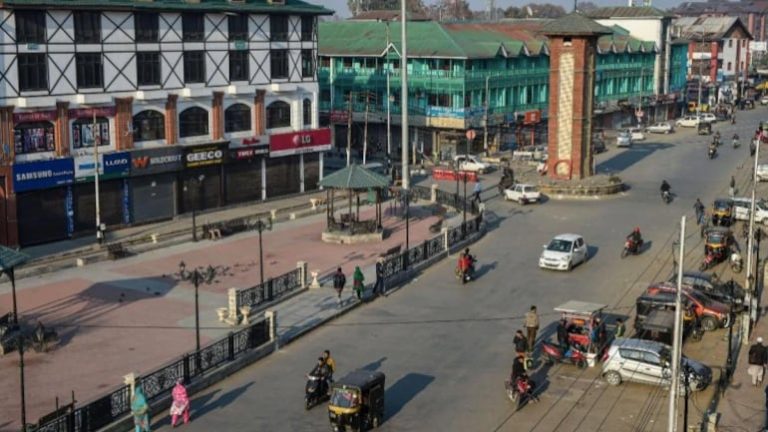
The Jammu and Kashmir administration on Monday made public on its website the list of land beneficiaries under Roshni Act. The list was published in accordance with the court order and the beneficiaries included former state ministers, retired civil servants and politicians.

The list names former J&K Finance Minister Haseeb Draboo, Congress leader and hotelier KK Amla, Business Tycoon Mushtaq Ahmad Chaya, retired IAS officer Mohd Shafi Pandit and several others as land beneficiaries of the ‘illegal’ Roshni Act.

Besides, the list which is prepared on the directions of the Jammu and Kashmir High Court also names former Congress minister and ex-Doda MLA Abdul Majid Wani and former chairman of J&K Bank M Y Khan.

As per reports, former J and K CM Farooq Abdullah has also been named as one of the beneficiaries of the Roshni Act where influential and politically connected people had received lands. Abdullah had encroached upon government land in Sunjawan in Jammu. His private residence is built upon government land, as per the details put by the J and K administration.

As reported by TOI’s Bharti Jain, in 1998, Abdullah had bought 3 kanals of land from private owners. However, while taking possession, he had also encroached upon 7 kanals of forest land and government land in the surrounding areas. The present worth of those lands is estimated at around 10 crores.

The Divisional Commissioners in Jammu and Kashmir, who regularly supervise the progress on the cancellation of mutations of land transferred under the Roshni Act in the districts, have asked the deputy commissioners to submit the details of the beneficiaries at the earliest. They have also asked their subordinates to carry out verification of influential people on the list so that the names can be published on the website. The list will be regularly updated on the Jammu and Kashmir website and some big political leaders might soon figure in the list.

The Jammu and Kashmir High Court pronounced the Roshni Act as “illegal, unconstitutional and unsustainable” and ordered a CBI probe into the allotment of land under this Act. The CBI had registered four cases in this regard so far. 

CBI files a fifth case in connection with the illegal Act

The Premier Investigative Agency had filed another case in connection with the now illegal Roshni Act, this time against the then-District Collector of Jammu and others for alleged illegal grant of ownership of land parcels.

The case was first set in motion by the then Vigilance Organisation in Jammu and Kashmir in 2014. The Organisation had then named District Collector Hirdesh Kumar Singh and one Bashir Ahmed as accused, along with unknown officials of the Revenue Department in Jammu. The Organisation had alleged irregularities in the implementation of the Jammu and Kashmir States Land (vesting of ownership to the occupants) Act, also known as Roshini Act.

Singh had reportedly ordered the bestowing of ownership to the beneficiary Bashir Ahmed in October 2020. Later, the land was transferred under Ahmed’s name under the agriculture category. During the investigation, the officials found that the land transferred to Ahmed did not belong to that category. Also, a part of land was not shown on paper.

The Jammu and Kashmir High Court deems the Roshni Act ‘Illegal’

The Roshni Act which was declared ‘null and void’ in October 2020 is pegged to be the biggest scam in the history of Jammu and Kashmir. Under the act, disproportionate concessions were extended for regularisation of land conversion at a substantially lower charge than the stipulated rates and the cut-off year kept getting shifted.

The Court issued an order on October 31, 2020, in which it alleged that thousands of acres of forest land and government land was illegally occupied, encroached and usurped by the influential politicians, businessmen, bureaucrats and judicial officers all over the State, under the Act that was passed by the Farooq Abdullah government in 2001.

The legislation introduced by the National Conference in 200 proposed that ownership rights be accorded to people who held State land till 1990 without having any authorised documents to claim their proprietary, on payment of the cost equivalent to the prevailing market rate in 1990.

The state government expected to rack up over Rs 25,000 crores as regularisation fee, which was to be used for generating electricity through hydro projects. This is where the Act derived its name ‘Roshni’ from. However, later, as the governments in the state changed, the cut-off dates from 1990 kept getting shifted. Initially, the PDP government in 2005 shifted the cut-off year to 2004 and later the Congress government pushed it even further to 2007.

As per the Comptroller and General, an Act which was supposed to generate about Rs 25,000 crore for the state government, ended up raising only Rs 76 crore from the transfer of encroached land from 2007 to 2013.

‘Petition rightly nipped in the bud by HC’: SC rejects petition of sacked BSF jawan who challenged election of PM Narendra Modi

0

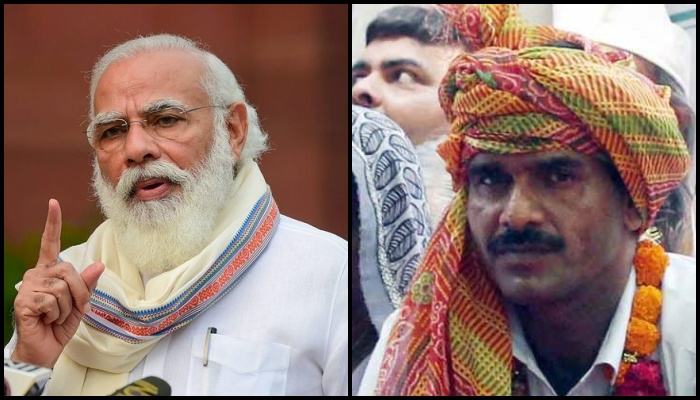
Delivering its verdict on Tuesday, the Supreme Court of India rejected the petition of sacked BSF jawan Tej Bahadur Yadav in a case challenging the election of Prime Minister Narendra Modi from Varanasi constituency in 2019 General Elections. Yadav had grabbed national headlines in 2017 after he had posted few videos on social media alleging poor quality food served at his Jammu and Kashmir camp.

The judgment was pronounced by a 3-Judge Bench comprising of Chief Justice SA Bobde, and Justices V. Ramasubramaniun and AS Bopanna. While rejecting the frivolous petition, CJI Bobde stated, “We are of the opinion that the petition was rightly nipped in the bud by the Allahabad HC. The Civil Appeal is hereby dismissed.” The apex court had reserved the verdict on November 18.

Reportedly, the advocate appearing for Yadav had sought several adjournments and pass overs during the hearing of the case. The Court noted that the issue concerned an important office of the country cannot keep the case pending indefinitely. CJI Bobde had observed, “We have already adjourned it many times. This is an important case which revolves around the unique office of the Prime Minister. We cannot keep it pending indefinitely.”

Observations made by Allahabad High Court

It is important to note that Yadav’s petition was earlier rejected by the Allahabad High Court in December 2019 as he had no locus standi in the case. The Supreme Court had upheld the judgement after the sacked BSF jawan had challenged it in Supreme Court. “The petitioner is neither an elector nor a candidate at the election which he seeks to challenge and would therefore have no locus to file election petition,” Justice Mohan Gupta of the Allahabad High Court had observed last year, relying upon Section 33 of The Representation of the People Act, 1951.

The Court had held that he was neither nominated nor deemed to have dominated and he could not have filed the election petition. Yadav in his plea to the Supreme Court had claimed that the High Court had failed to ‘appreciate misuse of provisions under Sections 9 & 33(3) of the Representation of the People Act, 1951 by the District Election Officer. He claimed that the High Court also wrongly rejected the plea based on only ‘technical grounds’ of Order VII Rule 11 of the Code of Civil Procedure and failed to judge it on its merits.

Nomination papers of Tej Bahadur Yadav rejected by EC in 2019

During the 2019 Lok Sabha polls, the sacked BSF jawan had filed his nomination papers against Prime Minister Narendra Modi as an SP candidate from Varanasi. His nomination was cancelled by the Election Commission. His nomination was then found ineligible under section 9 of the Representation of the People Act, 1951. According to this clause, if a candidate was a former government employee and was dismissed from the job due to corruption or disloyalty, such employees will be disqualified from contesting elections. As Tej Bahadur was dismissed in 2017, his candidature was found to be invalid by the EC.

Yadav was dismissed from BSF

Tej Bahadur Yadav had earlier alleged that senior officers were selling the ration provided to the camp in the market, and the soldiers were being served poor quality. The Home Ministry and PMO had ordered a detailed probe into the matter, and it was found that Tej Bahadur was making false allegations. Posting videos on social media instead of raising grievances on proper channel was also found to be a violation of rules. Moreover, he had a history of bad behaviour in the force, and he was jailed four times in the past for misbehaving with seniors and abusing and threatening them. After the conclusion of the enquiry, he was dismissed from service in April 2017.

Grooming Jihad in Jharkhand: Rahim becomes Arjun, tells the Hindu woman to first convert to Islam if she wants them to get married

The latest case of Grooming Jihad (Love Jihad) has emerged from village Behera in the Hazaribagh district of Jharkhand. A Muslim man got into a physical relationship with a Dalit Hindu widow. He hid his identity and portrayed himself as Arjun. When the woman asked him to get married, he told her the truth and said that he would marry the woman if she converted to Islam. The real name of the man is Mohammad Rahim.

A case has been filed against Mohammad Rahim based on the complaint of the woman. The police found out that the man is a resident of Muzaffarpur district of Bihar. The woman filed a complaint at Bahera police station. In the complaint, she mentioned that the man came in contact with her pretending to be a Hindu man named Arjun. They had arguments with each other several times, but Rahim kept in contact with her.

Rahim became Arjun to lure the Dalit woman

The woman got married 12 years ago. She has a 9-year old son. After her son was born, her husband died due to a lack of medical care. She works as labour in her village to meet with her daily needs. Around two months ago, she received a call from a stranger who identified himself as Arjun. The woman tried to stop talking to him many times, but Rahim, pretending to be Arjun, lured her on the pretext of marriage.

On November 15, Rahim came to her house and had physical relationships for five consecutive days. On November 20, when he was about to leave her house, she asked him to get married to her. Rahim told her the truth about his Muslim identity and asked her to convert to Islam if she wants to get married. He told her that his real name is Rahim and he will not marry her if she refuses to embrace Islam.

When she learned about his true identity, she started screaming. The villagers rushed to her help and caught Rahim. He was handed over to the police. Later, the woman gave her statement at the police station and said that Rahim was harassing her for two months. When she refused to talk, he lured her into marriage.

Increasing number of Grooming Jihad (Love Jihad) cases

Grooming Jihad (Love Jihad) has become a serious issue across India. While states are becoming more serious about dealing with Love Jihad cases, the number of such incidents is increasing exponentially. To make sure cases where the women got raped, injured or killed for refusing to get involved with the Muslim men, OpIndia has decided to use ‘Grooming Jihad’ instead of ‘Love Jihad’ moving forward. You can read the details about it here.

‘Band of liars’: Isha Foundation calls for a clean social media space, asks Twitter to take action against deliberate lies and slander

Despite the foundation putting up documents and records in public space, the accusations, vitriol against JV Sadhguru, the founder of the NGO has refused to cease. Taking to Twitter, the foundation wrote that since Twitter has become an indispensable and an important public forum in our society, it is important to keep it clean of abuse, slander and vitriol.

Slamming a band of motivated “liars” who have been making allegations against the organisation by spreading falsehood, Isha Foundation Tweeted that it was about “time that the Nation reclaims public forums from vested interests who will stoop to any level to spread false narratives and lies”.

It said that “public platforms like @TwitterIndia should assume responsibility for the manner in which they are (ab)used”.

Sharing screenshots of the abuse and hate it has been getting on Twitter, the foundation questioned Twitter India as to take why it does not take a stand against being a platform to peddle lies. “A new set of lies created by the same old band of liars. They periodically come up with fresh twists to a stale plot. But without a shred of truth or sense. Time to debunk these vested interests”, wrote Isha Foundation.

The Foundation shared the hashtag #EmptyTwitterTrash which gathered traction on Twitter after the Foundation’s tweet was retweeted by notable personalities like Kiran Mazumdar-Shaw, the Chairperson of Biocon and former Infosys director Mohandas Pai, among others.

The Isha Foundation welcomes the detractors to check available records and verify facts

The organisation also shared a video by Sadhguru JV, where he was seen stating that the foundation will welcome anyone who wants to check documents, land records and google map records of the land they had purchased to make their Ashram. Sadhguru, in a conversation with Telugu superstar Vijay Devarakonda in 2018, had explained the issues and had debunked the lies peddled against the Isha Foundation. The interview is available here.

Sadhguru had said that the land was barren before the Isha Foundation bought it and there was no elephant corridor or rainforests. However, after the foundation bought the land, plantations, forestations have occurred on a massive scale and the allegations of destroying forest cover made by the detractors are completely false.

It is pertinent to note here that Isha Foundation, had two years ago, in a publicly available document called “slander sans substance” put up their answers to all such allegations – from land grabbing accusations to the encroachment of forests to illegal constructions at the ashram or being present in an elephant corridor. Despite this, the left-wing liberal industry has not left a single opportunity to defame Sadhguru JV and the Isha Foundation by levelling a litany of ignominious allegations against him.

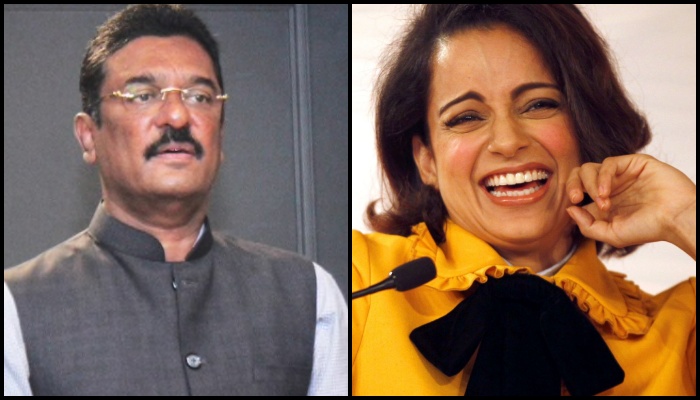
Shiv Sena MLA Pratap Sarnaik, who threatened to break Kangana’s mouth, raided by Enforcement Directorate in money laundering case

0

The Enforcement Directorate on Tuesday morning raided the residences and official premises of the Shiv Sena MLA Pratap Sarnaik. The search is being conducted at 10 places across Mumbai and Thane with the links to the aforementioned Shiv Sena leader.

The raids were carried out reportedly in connection with a money laundering case involving Shiv Sena MLA Pratap Sarnaik. However, the ED is yet to officially confirm that the raids are related to a money laundering case. 

Sarnaik, an MLA from the Ovala-Majiwada constituency in Thane, had recently demanded that actor Kangana Ranaut be booked under sedition charges for likening Mumbai to Pakistan-Occupied-Kashmir. 

Sarnaik had threatened to break Kangana Ranaut’s mouth

“MP Sanjay Raut issued a mild warning to Kangana. If she dares to come here(Mumbai), our brave warriors will break her mouth. I will demand Kangana to be booked for sedition for comparing Mumbai, the city which creates industrialists and film stars, to PoK,” Sarnaik had tweeted in Marathi.

Sarnaik’s tweet came after Kangana alleged that Shiv Sena leader Sanjay Raut had threatened her. With the Azadi graffiti defiling the streets of Mumbai, Kangana had posted a tweet, comparing the city to Pakistan-occupied-Kashmir which invited the wrath of Shiv Sena leaders. 

After his comments, NCW chairperson Rekha Sharma had demanded the arrest of the Shiv Sena MLA for allegedly threatening Kangana Ranaut.

Pratap Sarnaik, a vocal critic of Opposition parties and a staunch defender of Shiv Sena

Besides, Firebrand politician Sarnaik has also been vocal against the opposition in Maharashtra. He had vigorously defended the allegations made against Maharashtra Environment Minister Aaditya Thackeray and also asked for a drug probe against Kangana Ranaut for her earlier comment on rampancy of drug consumption in Bollywood. Sarnaik also brought in privilege motions against Kangana Ranaut and Arnab Goswami in the previous session of the Assembly.

Sarnaik is also known for holding considerable clout in the Thane region and for his long rivalry with NCP’s Jitendra Awhad, who is the currently a cabinet minister in the Thackeray government. However, after Shiv Sena and NCP joined hands to form Maha Vikas Aghadi government in Maharashtra, Sarnaik and Awhad had come together and were recently seen in a joint press conference over a housing scheme launched by the NCP leader.

Teenager threatens to ‘blow up’ UP CM Yogi Adityanath in message to state’s emergency service, arrested: Here is what happened

0

On Monday, the Lucknow police apprehended a minor boy in Agra for issuing death threats to Uttar Pradesh Chief Minister Yogi Adityanath via social media.

As per reports, the 15-year-old accused had sent a message to the Whatsapp number (112) of the emergency service of the Uttar Pradesh police on Saturday. He had threatened to ‘blow up the Uttar Pradesh CM’. The police were able to trace the threat message to Agra with the help of Surveillance and cyber team. Assistant Commissioner of Police (Gosaiganj) Archana Singh had confirmed the development in the case.

Following his threats, the Lucknow police got into action. A case was registered at the Sushant Golf City police station under several charges against the accused, including criminal intimidation. He was brought to Lucknow from Agra and was interrogated for issuing death threats to the CM. Station House Officer (SHO) Sachin Kumar Singh stated, “The boy was brought from Agra to Lucknow and later produced before the Juvenile Justice Board, which sent him to a juvenile home.”

Teenager miffed with closed schools, inability to play outdoors

During the interrogation, it was revealed that the teenager was angry at the government after schools were shut down, in the aftermath of the Coronavirus pandemic. He was miffed that the police would not allow him to play outdoors, following which he issued bomb threats to the Uttar Pradesh CM.

Reportedly, his father is a teacher at a primary teacher at the government school. The police had seized the accused’s mobile phone, which was used to send threatening messages. The cops are also trying to recover the threatening message deleted bu the minor boy. The police are now probing whether other minors are involved in the incident.

Yogi Adityanath had received bomb threats in the past

Earlier, the Uttar Pradesh police had received a threat message against CM Yogi Adityanath. In a Whatsapp message sent to the social media cell of UP Police’s integrated emergency response centre UP112, a person threatened to kill Cheif Minister Yogi Adityanath “with a bomb”. He has also warned of bomb blasts at 50 different places in Uttar Pradesh. In the written message on Whatsapp, an unidentified person had said that “we will blow up the entire state and the Uttar Pradesh government will keep watching.” The message was sent to the WhatsApp number of UP112.

Fraud fact-checking: AltNews co-founder Pratik Sinha spreads fake news while attempting to ‘fact-check’ old picture of a Hindu Sadhu

Pratik Sinha, the founder of the leftist portal AltNews, has been caught lying again on his social media account. On November 23, Sinha posted a tweet alleging that an image posted by popular Twitter user ‘TrueIndology’ on his Instagram account was fake. It appears from the tweet that Sinha reverse-searched the image and found the source as Getty Images, a stock image platform.

Without confirming first where Getty Images got hold of the picture, he made the allegation that True Indology is a fraud.

A 116-year old image

OpIndia dug into the source of the image and found some interesting facts about it. True Indology posted the caption as “The wonder that WAS Kashmir: A Hindu Sanyasi sitting on the banks of Dal Lake, Srinagar in 1904. He is almost naked in extreme snow. The climate does not seem to bother him. Sanyasis and pandits along the banks of Dal was once a common sight in Kashmir The emphatic word is “WAS”.”

According to Pratik Sinha, the image source, which, according to him, was Getty Images, did not mention ‘snow’ anywhere in the post. However, the image was first used in a book titled “Kashmir: It’s New Silk Industry” by Sir Thomas Wardle, and it was published in 1904. In the book, on page 376, the title of the image reads, “Fakir or Holy Man on Lunka Island, Dal lake, sitting in the snow in winter.” The photograph was clicked by Geoffrey William Millais.

The archive of the book is freely available on Indian Culture, a government of India website. A clearer version of the book is available on Google Books.

Rebuttal by True Indology

TrueIndology rebutted Sinha’s claims in a long post on Facebook. While providing the source of the image and the caption, True Indology wrote, “The fact is that Pratik Sinha has not read the book and does not know anything about history or climate of Kashmir. The fact that the Sadhu was sitting in extreme snow was attested by the original photographer who took the picture which was published 116 years ago in a book!”

Netizen’s reaction on Sinha’s fake post

Netizens were amazed by how Pratik Sinha, a self-proclaimed ‘fact-checker’, did not try to find more information about the image. Sinha had probably done just done a reverse-image search on Google and when he found the Getty Images file, had hurried to brand True Indology as a fake-news peddler.

However, several Twitter users did a better fact check than the self-proclaimed ‘fact-checker’ that is Pratik Sinha. They not only provided the links of the book and original image’s screenshots from the book but also replied with videos of Sadhus meditating in the snow without any woollen clothes.

The Hulton Archive

The image of a Sadhu sitting at the Lunka Island in Dal Lake in snow, clicked by Geoffrey William Millais over a century ago, was a part of Hulton Archive that was purchased by Getty Images in 1996. The Archive (Picture Post) is considered to be an important historical documentary source. It has over 30 million images within 1500 individual collections. The process of digitizing the images started in 2000. In 2003, Getty Images started migrating Hulton Archive in its parent website.

Self-proclaimed ‘fact-checker’ Sinha had based his fact-check on just a reverse-image search online, without bothering to check the original source of the image.

AltNews’s long history of fake news

This is not the first time AltNews, its founders and employees have been caught spreading blatant fake news while claiming to be ‘fact-checkers’. In September, Union Minister Piyush Goyal rebutted the claims made by AltNews that migrant workers died on Shramik Trains. Activist Ankur Singh had posted a series of tweets showcasing how AltNews co-founder Mohammed Zubair tried to spread fake news on social media platforms. In June, AltNews tried to save a Muslim accused while ‘fact-checking’ the death of the pregnant elephant story. After they were exposed, the article was quietly changed.

Off late, the self-proclaimed ‘fact-checkers’ have extended their whitewashing services to Chinese clients too.