Sonu Sood’s humanitarian works for migrant workers and poor people across the country has been creating a lot of buzz on social media. It is understandable if someone wants to award him for his excellent work. The same happened yesterday when several news portals covered claimed that he has been awarded the SDG Special Humanitarian Action Award by the United Nations Development Programme (UNDP).
News reports claiming that Sonu Sood received UNDP award for his humanitarian works
The confusion
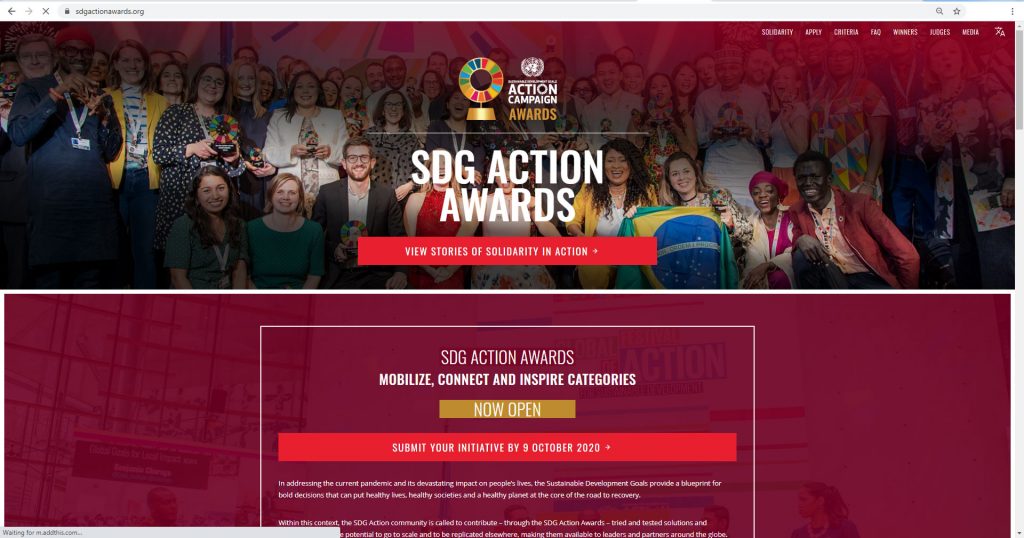
There have been two recent incidents (West Bengal’s so-called UNWPA recognition for Mamata Banerjee and the case of ‘Drone Boy’) when awards that people claimed to have won were either proved to be fake, or the name of the organization was misleading. When OpIndia tried to find any announcement about the said award on the UNDP website or SDG Action Campaign Awards website, there was no info about it. The social media accounts did not have any information on the award presented to Sonu Sood, either. SDG Action Awards are still accepting applications, and the last date is 9th October 2020. The previous winners’ list has winners from 2019 and none from 2020.
The statement by UNDP India
After so much noise in the media, UNDP India had to step in. Late on Tuesday, they published a statement on Twitter clearing all doubts about the awards. In their statement, the Indian arm of UNDP wrote that the award was presented to Sonu Sood by the Department of Planning of the Government of Punjab, with Sustainable Development Goals Coordination Centre. An independent jury recommended his name, and UNDP was not involved in the selection or conferring process.
There is no doubt that Sonu Sood has helped many people during the time of need, and we congratulate him on the award he got for his philanthropic work during the coronavirus pandemic. However, the United Nations body did not confer the ‘Special Humanitarian Action Award’ on Sonu Sood.
The Hathras gangrape victim was cremated late last night in her village. As per information received by OpIndia, the last rites were performed by her father and other family members.
As per reports, the victim’s mortal remains were taken to her native village in Boolgarhi in Hathras where the horrendous incident took place a fortnight ago. The SP, DM and Joint Magistrate, all accompanied the family. The administration has promised speedy justice to the victim.
Some media reports claimed that the cremation took place without the family’s approval. However, the victim’s father accompanied the police to the cremation ground where the rites were performed. The victim’s brother has alleged that the police forced them to take the body to the cremation ground.
As per police, the situation in the village is calm but security forces are deployed.
Hathras gang-rape
19-year-old girl in Hathras, Uttar Pradesh, succumbed to her injuries on Tuesday, 29th September, after a brutal attack by four men on 14th September 2020. On 14th September, the girl had gone to field with her mother to gather fodder where the four men tried to strangulate her. Based on his written complaint police registered an FIR on September 14 under IPS sections 307 and ST/SC Act. The official confirmed that then, Satyendra, the girl’s brother had just named one accused- Sandeep behind the alleged crime.
Sandeep was arrested on 19th September. The girl was critically injured and not in a position to give a statement. On 22nd September, she gave her statement wherein she said she was raped by Sandeep and three other men. Police swung into action and arrested three men named by the victim. Following the disclosure IPC section 376 D (charges for gang-rape) was included in the FIR, confirmed the Hathras police official.
On 28th September, she was shifted from Aligarh’s Jawaharlal Nehru Medical College to Delhi’s Safdarjung Hospital. Unfortunately, she could not survive and passed away a day later.
Hathras police deny social media reports of brutal gang-rape
After the death of the victim, IPC section 302 (punishment for murder) has also been invoked, said that police, furthering that under the SC/ST Act, the victim’s family has been given monetary compensation of Rs 10 lakh.
Dispelling the news which has been doing the rounds on social media, the police said that the girl’s tongue was not cut off by the perpetrators. When she was strangulated her tongue came between her teeth and that’s how it got injured.
In another byte, IG Piyush Mordiya said that during the medical examination of the victim, there were no signs of rape. He furthered that as suggested by the doctors, the details have been sent to the forensic science lab in Agra for further examination. The results of which are expected any time soon confirmed the IG.
The station house officer (SHO) of Chandpa police station in Uttar Pradesh’s Hathras district, under whose jurisdiction a 19-year-old Dalit woman was brutally gang-raped nearly a fortnight ago, has been transferred to the district police lines for his “failure to promptly act” on the case.
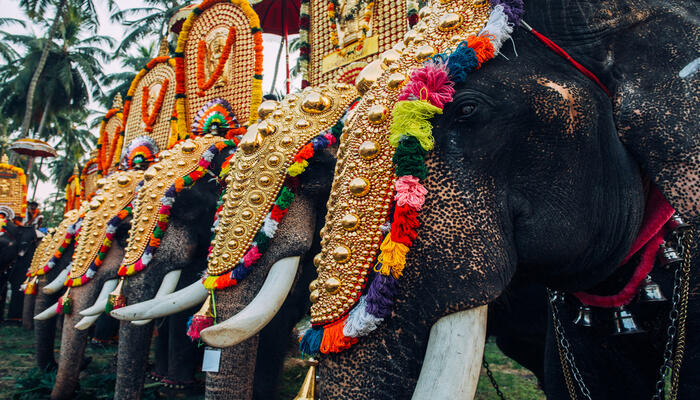
A unique scheme has been launched by the Madhya Pradesh Forest Department which will enable people to adopt old and retired elephants in the Bandhavgarh Tiger Reserve. Under the scheme, the retired elephants will be given in adoption for a day, week, month or year from Rs 500 for a day to Rs 1.50 lakh for a year. Two elephants Gautam (74-year old) and Toofan (69-year old) along with 13 other elephants in the Bandhavgarh Tiger Reserve are being given for adoption.
According to Principal Chief Secretary of Forest (PCCF), Wildlife, Alok Kumar, the Forest Department has initiated the scheme with the objective to reconnect the tourists and wildlife lovers with the elephants which take them on joy rides during sightseeing and also to generate funds for the maintenance of elephants amidst the pandemic.
Hathi Mahotsav
The week-long Hathi Mahotsav in the Bandhavgarh Tiger Reserve began this week on Monday. During the Hathi Mahotsav, the elephants in the Reserve will be provided a break from their routine work. “The rejuvenation camp for elephants began on Monday, giving them a break from their routine work. These elephants help us with patrolling, tracking and other routine works all the year round. Now, we will serve them throughout the week during Hathi Mahotsav”, said the Field Director of the Reserve, Vincent Rahim.
Vincent said that the Reserve has been affected by the intrusion of 35 elephants from Chhattisgarh and the visitors are concerned about the presence of wild elephants for over a year. He added that the adoption programme will enhance the connection with the 15 special elephants and will reduce people’s concern.
Special training programmes are also being conducted to train the forest guards, guides and villagers to deal with wild elephants and to pacify them without hurting.
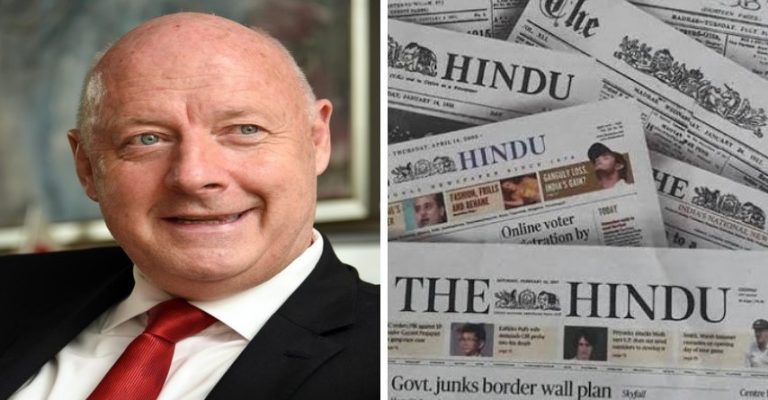
Ambassador of Denmark to India, Freddy Svane, has called a report by The Hindu “twisted news” where the newspaper alleged that the country had expressed “deep concern” over the Coronavirus crisis in India. He stated clearly that the claim made by the newspaper was not true. The comment in question was made at a virtual summit where India and Denmark agreed to elevate relations to a Green Strategic Partnership.
The Hindu report makes it obvious that the newspaper was desperate to twist a comment made by the Danish Prime Minister in order to cast aspersions on the Coronavirus situation in India. In fact, the report carries just one line by Mette Frederiksen on the pandemic. It quoted the Denmark Prime Minister as saying, “The situation is very very difficult for you.”
Quite clearly, the sentiment conveyed by the Danish Prime Minister is markedly different from what The Hindu tweet suggests. The comment was deliberately twisted in order to mislead the public about the intent of the comment, which was one of condolence. The Hindu is known to engage in deliberate propaganda to target the ruling dispensation. the current instance appears to be a situation where they decided to drag in the Prime Minister of Denmark to suit its agenda.
The opposition antics against several bills introduced during the recently concluded Parliament session including the Farm Bills have reached a whole new level in Mamata Banerjee’s West Bengal. Social media is flooded with videos where TMC leaders and cadres are seen adopting innovative ways to raise their disapproval against the farm bills, in various parts of the state.
In one such video, a TMC leader named Abdul Lalon was seen carrying a gun in one of the rallies organised by the Trinamool Congress against Farm Bills.
TMC leader Abdul Lalon carrying a Gun in a rally against Farm Bills. He is carrying it like an officer of @WBPolice. “Didi Ke Shashan mei, Gun batenge ration mei” pic.twitter.com/HouSdct2ep
With the festive mood setting in due to the much-awaited Durga Puja round the corner, the TMC cadres were seen dancing and singing to the tunes of a DJ. Huge speakers are also seen tied on a cart with a female dancer seen perched on it, to shake a leg. This so-called protest rally was being carried out in Bhangar, South 24 Pargana district, West Bengal.
In yet another video which has also been doing the rounds on social media, TMC cadres are seen cutting their hand and writing on posters during the protests against the farm bills organised near the statue of Mahatma Gandhi in Dufferin road maidan in Kolkata. The TMC cadres wear these posters around their neck as a mark of protest.
TMC supporters cut their hand and wrote on posters during continuing protests on the farmer’s bill at Gandhi Murti in Kolkata, after 2 of 8 TMC Rajya Sabha MPs were suspended on Mon @fpjindiapic.twitter.com/TdQpV3sR4c
The social media user who posted this video clip on September 25, claimed that this protest was being carried out to extend support to 2 of the 8 TMC Rajya Sabha MPs who were suspended on September 21 for a week for “unruly behaviour” that took place as the House passed two agriculture sector related bills on September 20 (Sunday). The two suspended TMC MPs were Derek O’Brien and Dola Sen.
TMC MP Derek O’Brien heckles and attacks Deputy Chairman Harivansh as Rajya Sabha passes agriculture Bills
For the uninitiated, Trinamool Congress’ Derek O’Brien had on Sunday, brazenly attempted to heckle the Deputy Chairman of the Upper House of Parliament Harivansh Narayan Singh on the floor of the Parliament during the discussion on a bill.
Derek O’Brien on Sunday, entered the well and climbed the dais of the Rajya Sabha Deputy Chairman in an attempt to halt the proceedings of the house. The Trinamool MP also tried to tear the rule book of the house on the floor of Rajya Sabha.
The Marshals of the house stopped the aggressive Trinamool MP, who kept on storming into the well and shouting against the Deputy Chairman.
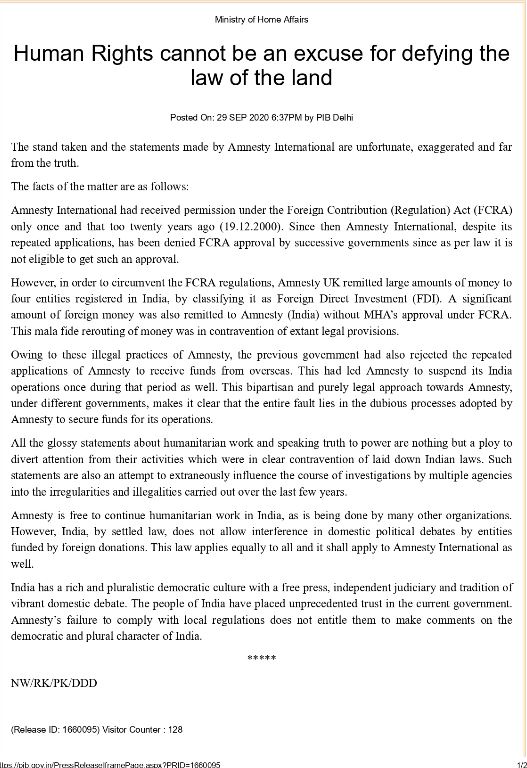
The Ministry of Home Affairs has issued a statement calling out the false allegations made by the dubious NGO Amnesty International India ever since it announced to halt its operations in India on 29th September 2020. Stating evidence and arguments, the Government of India said that the statements made by Amnesty International are unfortunate, exaggerated and far from the truth. It declared, “Human Rights cannot be an excuse for defying the law of the land.”
The statement released by MHA on Amnesty International
The statement revealed that the NGO had received permission under the Foreign Contribution (Regulation) Act (FCRA) only once and that too twenty years ago on 19th December 2000. “Since then Amnesty International, despite its repeated applications, has been denied FCRA approval by successive governments since as per law it is not eligible,” read the statement.
It is pertinent to note here that in 2009, Amnesty International was forced to halt its operations after the UPA government had refused to grant it permission to access funds from its London headquarters. The Home Ministry had rejected its application to seek overseas funds twice since 2006.
The MHA furthered that to circumvent the FCRA regulations, its UK branch remitted large amounts of money to four entities registered in India, by classifying it as Foreign Direct Investment (FDI). Stating that a significant amount of foreign money was also remitted to Amnesty (India) without MHA’s approval under FCRA, the ministry said that this dubious way to reroute money was a mala fide contravention of extant legal provisions.
It said that due to these illegal practises the NGO’s applications were rejected repeatedly by previous governments also. The MHA said, “All glossy statements about humanitarian work and speaking truth to power are nothing but a ploy to divert attention from their activities which were in contravention of laid down Indian laws. Such statements are also an attempt to extraneously influence the course of investigations by multiple agencies into the irregularities and illegalities carried out over the last few years.”
It was a royal dressing down that Amnesty International received and quite clearly, the government was not in the mood to play defensive. It stated further, “Amnesty is free to continue humanitarian work in India, as is being done by many other organizations. However, India, by settled law, does not allow interference in domestic political debates by entities funded by foreign donations. This law applies equally to all and it shall apply to Amnesty International as well.”
“Amnesty’s failure to comply with local regulations does not entitle them to make comments on the democratic and plural character of India,” it added.
Amnesty International shuts shop in India
Notably, the dubious NGO, which is known to have links to British govt and Islamist orgs, had accused the central government of a witch-hunt against ‘human rights organisations’ and blamed them for its decision to wrap up.
Recently, the Enforcement Directorate had frozen all bank accounts of the organisation. Amnesty has stated that it has now let all its staff members go, 150 of them. A statement by Amnesty has stated that they came to know of the freezing the bank accounts on September 10.
On the 24th and 25th of February, Delhi was gripped with unbridled violence and riots that was unleashed after an elaborate conspiracy was hatched by certain Muslim groups and Left groups. After the riots left 53 dead and over 530 people injured (including 106 police officials), the Delhi Police has till date filed 751 FIRs and several chargesheets pertaining to these FIRs have already been filed. 7 months after the gruesome riots, the Delhi police has filed the first chargesheet detailing the conspiracy that was hatched to unleash violence in the streets of Delhi.
There are 15 man accused in the chargesheet that speaks primarily of the conspiracy hatched. The accused are:
Abdul Khalid Saifi,
Ishrat Jahan,
Meeran Haider,
Tahir Hussain,
Gulfisha Khatoon,
Safoora Zargar,
Safa-Ur-Rehman,
Asif Iqbal Tanha,
Shadab Ahmad,
Natasha Narwal,
Devangana Kalita,
Taslim Ahmad,
Salim Malik,
Salim Khan and
Athar Khan
Three individuals, Mohammad Danish, Mohammad Ilyas, Mohammad Parwez Ahmad, have been named as suspects since the investigation is still on.
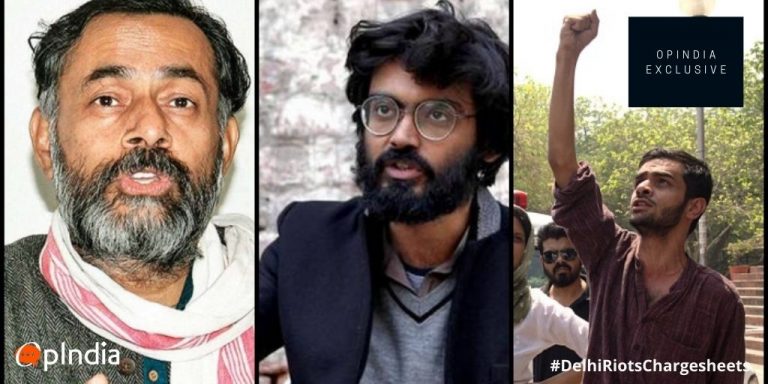
However, in the chargesheet filed, the story of the conspiracy goes far beyond the people who have been named as accused in the chargesheet. For example, Umar Khalid, who has been arrested under UAPA and a separate chargesheet pertaining to his actions would be filed soon. Others like Yogendra Yadav and Sharjeel Imam (already arrested and chargesheeted) also play an important part.
In the 2700 page chargesheet filed pertaining to FIR 59/2020, the Delhi Police dedicate almost 700 pages to the chronology of the conspiracy hatched. Confirming what OpIndia had already pointed out earlier, the February riots were inextricably linked to the December violence that was unleashed in various parts of the country such as Delhi, UP and other places.
What is interesting in the chargesheet, is that the Delhi Police have managed to piece together the conspiracy right from the 5th of December, a day after the Citizenship Amendment Bill was tabled in both houses of the parliament.
In this first part of this report, we will analyse how the hatching of the conspiracy was started, who were the players involved and how the December violence escalated on the 15th, 16th and 17th.
5th of December – WhatsApp group Muslim Students of JNU created by Sharjeel Imam
According to the chargesheet filed by the Delhi Police, after CAB was tabled in both houses of the parliament on the 4th of December, on the 5th of December a group called Muslim Students of JNU (MSJ) was formed by Sharjeel Imam who was the main member of the group and its creation was also his brainchild.
The chats that have been procured by the Delhi police after a perusal of the phones confiscated from Sharjeel and other accused, it was revealed that Sharjeel Imam and Arshad Warsi (student of Jamia) were in constant touch and Sharjeel was also in touch with “radical communal group” Students of Jamia (SOJ).
6th of December: Pamphlets distributed in Mosques
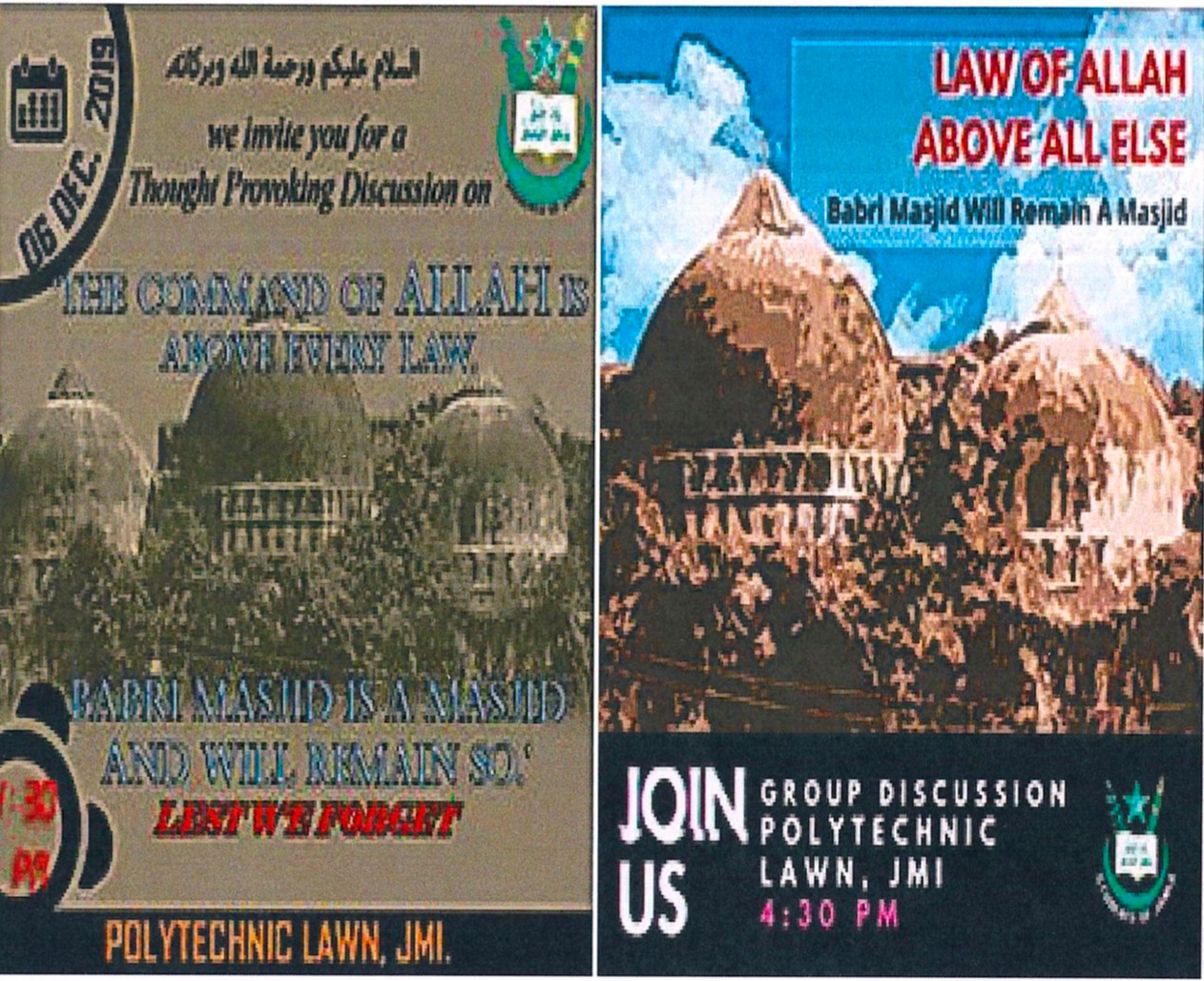
On the 6th of December, pamphlets which were written by Sharjeel Imam himself were distributed in the Jama Masjid area by the MSJ group. This fact was revealed by the chats recovered between Sharjeel Imam and Arshad Warsi. The pamphlets were communal in nature and essentially aimed to incite hate in the Muslim community by invoking the Supreme Court decision in the Ram Janmabhoomi case.
Some of the pamphlets read “Law of Allah above all else” and “The command of Allah is above every law”.
Pamphlets being distributed. This was also shared by Students of Jamia group on Facebook
The pamphlets that were distrusted in mosques on the 6th of December also had a call to join the protest called by ‘United Against Hate’ at Jantar Mantar in large numbers and to “mobilise mob”.
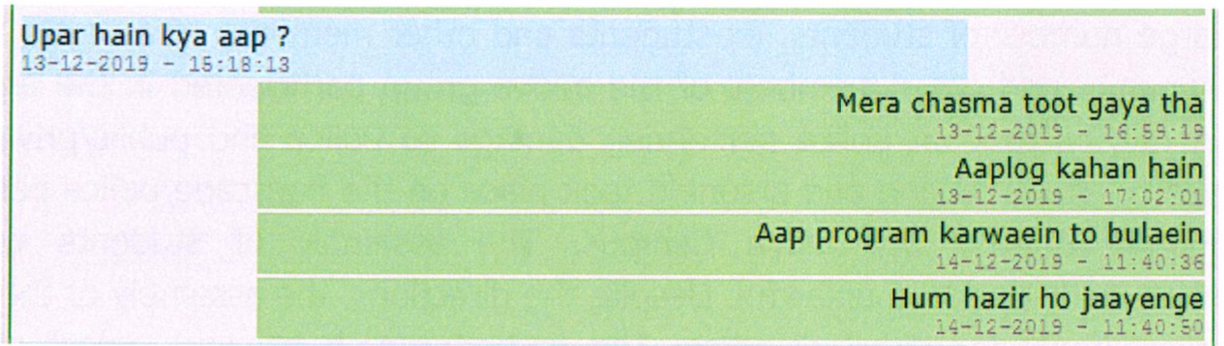
A sample of the conversation between Sharjeel Imam and Arshad Warsi on the 7th of December (produced verbatim from the screenshot of the WhatsApp conversation attached in the chargesheet):
Arshad: Hamne bhi babri ke hawale se kuch distribution kiye the. So wahin malum chala
Sharjeel: Parcha humne likha tha
Arshad: Alhamdulillah
Arshad: Sahi hai
Sharjeel: Aur 8000 copies baate aaj masajid main
Arshad: Mashallah. May Allah reward you all.
It is important to note that when Arshad says “Wahin malum chala” he means that it was Sharjeel who had started the ‘Muslim students of JNU’ group. This was revealed in the preceding chat where Sharjeel says that he had made this group on the 5th on an emergency after Muslim kids approached him.
7th December: ‘We have to do something big next week’, says Sharjeel Imam
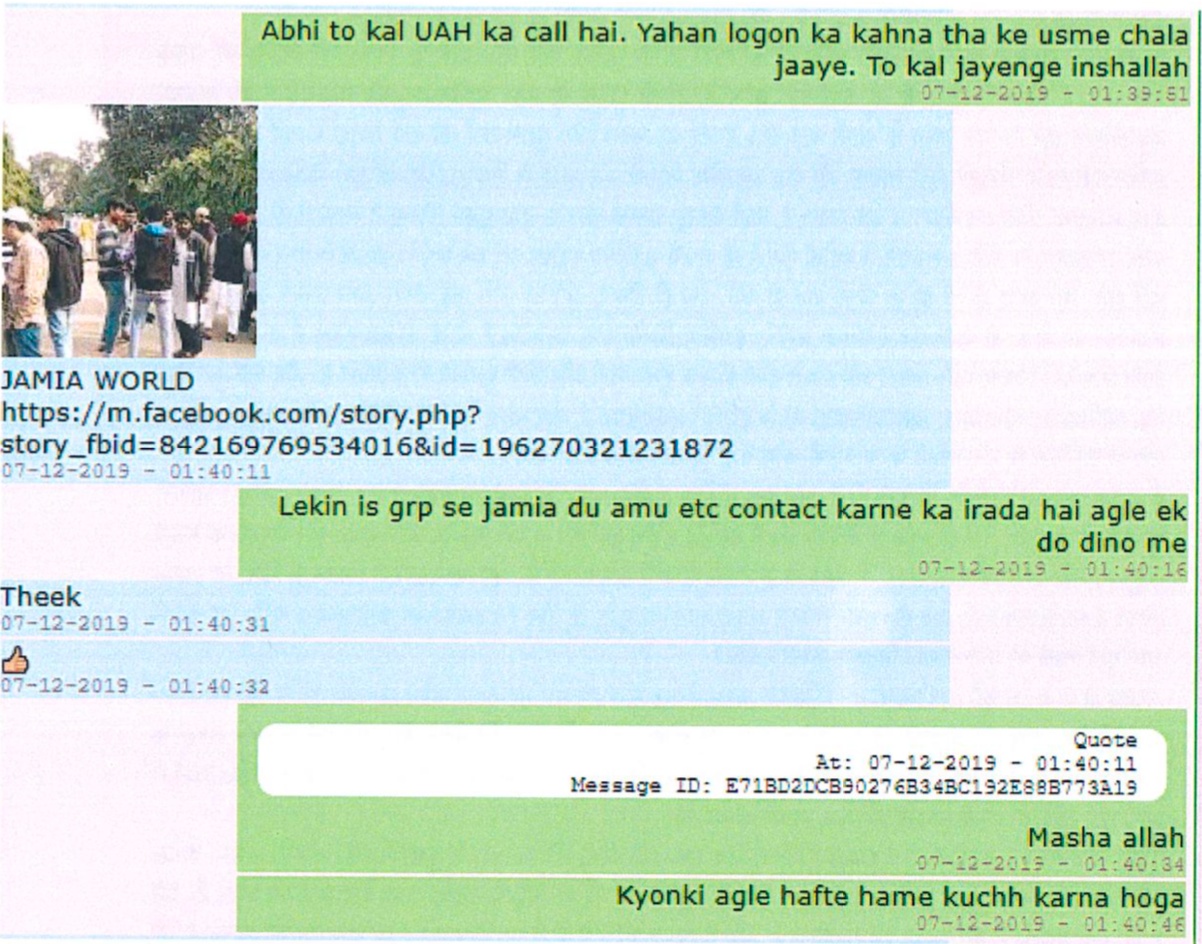
On the 7th of December, Sharjeel Imam said that he would be joining the protests called by United Against Hate. This fact was revealed by his WhatsApp conversation with Arshad Warsi. While joining a protest is not wrong in itself, here is the clincher – on the 7th of December, Sharjeel Imam categorically said that he was planning something big in the next week and for that purpose, he would mobilise students from DU, AMU etc with the help of MSJ members.
A portion of the chat between Sharjeel Imam and Arshad Warsi according to the Chargesheet is reproduced below:
Chat between Sharjeel Imam and Arshad Warsi
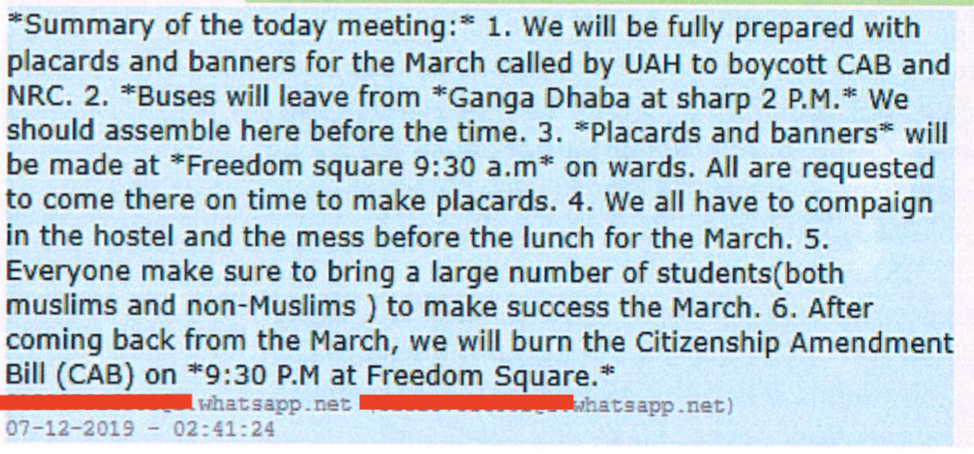
Subsequently, Arshad Wars put up the minutes of the meeting that was held at the Tefla Dhaba between the core committee members of the MSJ group. The aim of the meeting was rather simple – to make the UAH rally a resounding success and also, to ensure that both Muslims and non-Muslim students turn up at the protest.
Message by Arshad Warsi
The aim of getting Muslim and non-Muslim students both was rather evident and is a recurring theme in the chargesheet – to ensure that veil of secularism was maintained and it would not seem like only Muslims were protesting against the Bill. In fact, the farce of the exercise is evident since in one of the chats, it was said by the two that the aim of the MSJ was to ensure that Muslim students who wanted to coordinate and protest could come together and they did not want to be seen competing with other Muslim organisations like SIO.
It is important to note that it was the following week that the Jamia riots took place and violence broke out in several parts of Delhi and even Uttar Pradesh.
The violence began on the 15th of December when Muslim mobs rampaged through the national capital. Amanatullah Khan, a prominent MLA of the Aam Aadmi Party, and Delhi’s Sunni Waqf Board chief was spotted leading the riots in Jamia Nagar. Chants of ‘Hinduon se Azadi’ were raised in the same area that very day. Buses were also set on fire during those violent protests. On the same night, the Delhi Police cracked down on the Jamia Milia Islamia University and entered the campus to flush out the miscreants.
Two days later, massive riots broke out in Seelampur. Delhi turned into a war zone. A school bus was attacked and set on fire as well. The mob taunted the policemen to run after them following which stones were pelted. Peace returned at the national capital following the escalation on the 17th of December but it was an uneasy peace.
7th December: Enter Yogendra Yadav and Umar Khalid
On the 7th of December, at the protest organised by United Against Hate, the chargesheet says that Yogendra Yadav, Umar Khalid, Nadeem Khan, Sharjeel Imam, Ifat and Sai Balaji were also present. They delivered speeches against the CAA at this protest. Umar Khalid, who was his “senior and mentor” from JNU introduced Sharjeel Imam to Yogendra Yadav at this agitation.
Witnesses have told the police that earlier, Umar Khalid had already told Sharjeel Imam to make a group of “like-minded individuals” from JNU, Jamia, DU etc and had explained the concept of Chakka Jam to him. As an extension of that theme, at the meeting with Yogendra Yadav, he was told to “mobilise students of Jamia, DU and AMU”.
According to the chargesheet, two important things were decided in this meeting:
It was decided between Yogendra Yadav, Sharjeel Imam and Umar Khalid that social media would be used to indoctrinate Muslims and for the mobilisation of people for Chakka Jam.
Awareness campaigns should be launched in Muslim majority areas.
Attempts should be made to form an alliance with like-minded Muslim organisations for Chakka Jam.
Masjids should be the focal point for the starting of Chakka Jam and the help of Imams should be taken.
The entry of Yogendra Yadav in the conspiracy hatched, according to the chargesheet, dates back to the 7th of December 2019. This is only days before the Jamia violence erupted and several areas of Delhi saw violence. In fact, it is also days before Tahir Hussain admitted that he had started inciting people against CAA and pelted stones against the Hindus on the 17th.
8th December: The meeting, the plan and the way forward
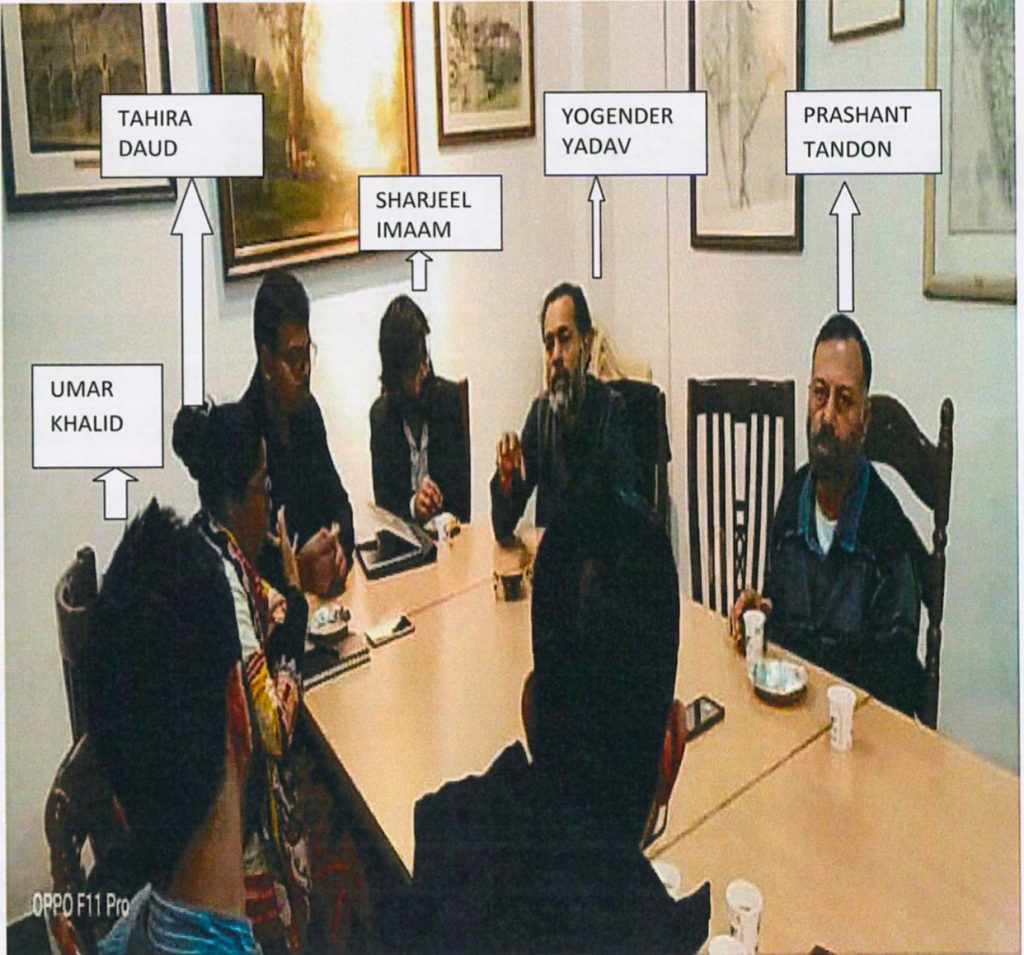
A meeting was held in the basement of a location in Jangpura (address withheld in this report) where the participants included Yogendra Yadav, Sharjeel Imam, Umar Khalid and others.
Meeting held on the 8th of December
It was in this meeting, that according to the chargesheet, a plan was hatched on how to implement the Chakka Jam. It was decided that it would be Sharjeel Imam who would organise and lead students from various universities and colleges in and around Delhi. It was, interestingly, also decided that organisations like United Against Hate and Swarajya Abhiyaan would help each other in every way possible. This has, according to the Chargehsheet, been revealed by a witness.
The fact that this meeting took place was also confirmed by the chats that were discovered between Sharjeel Imam and Arshad Warsi.
On the same day, a WhatsApp group was formed called the ‘CAB TEAM’. The core members of the team were following:
Yogendra Yadav
Umar Khalid
Sharjeel Imam
Nadeem Khan
Parvej Alam etc.
9th and 10th December: CAB becomes CAA, Yogendra Yadav’s ‘CAB TEAM’ organises its first protest and a secret meeting
On the 9th of December, CAB got passed in the Parliament and became an Act. The Muslim Students of JNU group that was started by Sharjeel Imam burnt a copy of the CAA in JNU campus. Further, a protest was called by the ‘CAB TEAM’ on the 10th. After the protest, on the night of 10th, a secret meeting was called at the Tefla Dhaba of the ‘CAB TEAM’.
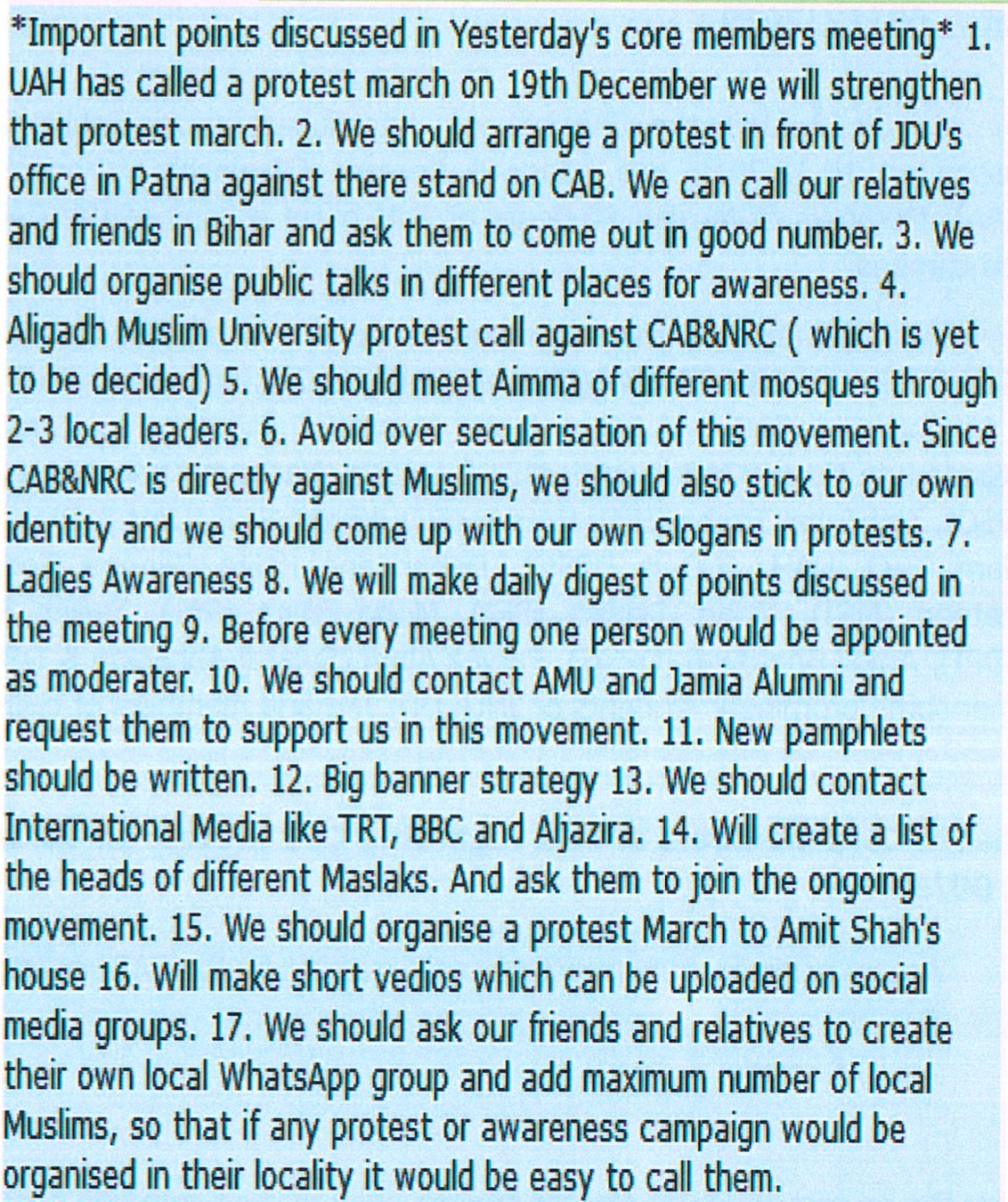
11th December: Minutes of the meeting out – Avoid over-secularisation of the protest, contact media like BBC, TRT and Al Jazeera
After the secret meeting on the 10th night, on the 11th December morning, the minutes of the meeting of the CAB core team was shared with the rest of the people.
WhatsApp message with minutes of the meeting
There were a few extremely points that must be highlighted. These were:
Avoid over-secularisation of this movement. They asserted that since the CAA is supposedly against Muslims, the nature and character of this movement should also have a ‘Muslim characteristic’.
Contact AMU and Jamia. It is pertinent to note that here is where the violence was triggered in December.
Contact international media like BBC, TRT and Al Jazeera.
Make contact with local mosques through 2-3 leaders.
United Against Hate called for a protest on the 19th of December, which was to be strengthened.
Interestingly, all these points had larger implications during not only the December violence but also the February riots. The fact that mosques were being mobilised and also international media which had sympathies with Islamists were getting involved were also factors that played a major role in perpetuating a false narrative after the February riots and also, helped in the coordination and execution of the riots.
On the 11th itself, Sharjeel Imam went to AMU in pursuance to the conspiracy hatched in the CAB TEAM. Sharjeel had gone to AMU for the mobilisation of students there.
12th and 13th December: ‘We know we will not be able to reach parliament, police will block us, we should then change route and block major roads’
From the 12th of December, Asif Iqbal Tanha who was a member of SIO, UAH and other Islamist organisations joined hands with Sharjeel Imam. A plan was then hatched to march to the Parliament to protest against CAA. At this point, another group called ‘Parliament March’ was created to coordinate the protest that was to take place on the 13th. In this group, even MSJ, the group started by Sharjeel Imam was present.
On the 13th of December, Sharjeel Imam was instructed to reach Jamia Milia Islamia. It must be remembered that it was in Jamia that the violence had erupted.
On the 13th, according to the conspiracy, Sharjeel Imam along with the others from MSJ reached Jamia for the march to the parliament. However, a sinister plan of Chakka Jam and impending violence was also taking shape.
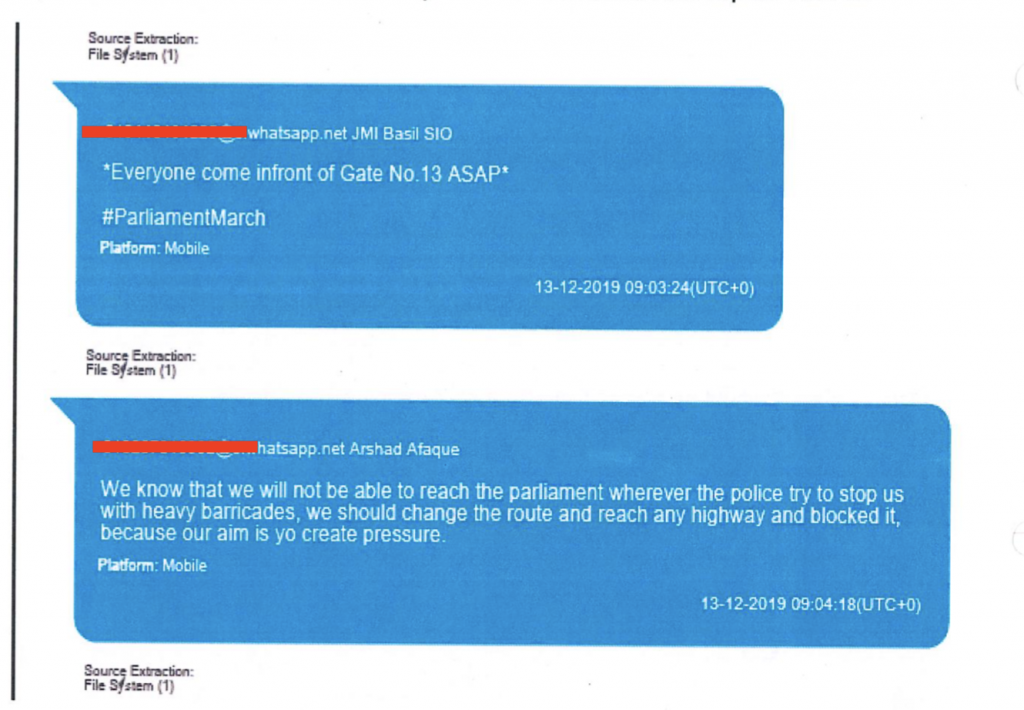
Chat on the 13th of December
According to the chat added in the chargesheet, it is clear that during the parliament march, the Islamists were rather clear on the fact that they will not be allowed to reach the Parliament and were bound to be intercepted by the police with barricades. In that eventuality, it was suggested that they should change the route, get to the highway and block the roads to “create pressure”.
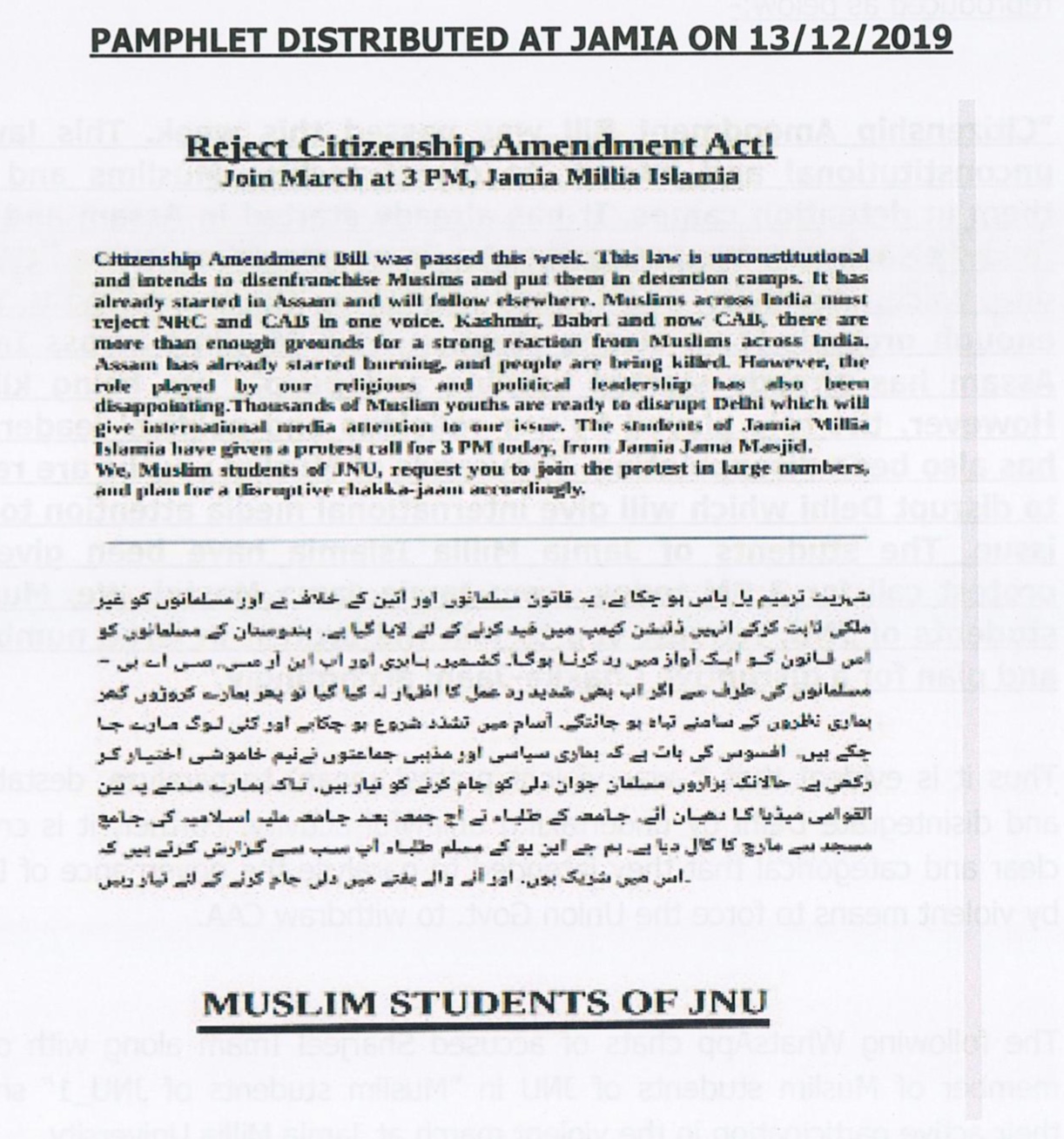
The pamphlets distributed for the 13th December march were also clearly to incite hate and violence.
Pamphlet distributed
It must be noticed that the pamphlet clearly says “There are more than enough grounds for a strong reaction from Muslims across India”.
After the violence erupted in Jamia, there are chats that showed the active participation of Sharjeel Imam in the violence. There were conversations where he was asking fellow Islamists if he and his people should reach the police station if the detained people have not been released. In fact, in one of the conversations, he even admits that his spectacles were damaged, probably during the violence on the 13th.
Messages of Sharjeel Imam
The 13th of December marked the first incident of violence in Delhi after Islamists and Leftists had gotten together in the name of their protest against CAA.
On the 13th of December, the protests against the Citizenship Amendment Act took a communal turn in Delhi after ‘students’ of the controversial Jamia Millia Islamia (JMI) University resorted to mob violence against the police officials and shouted Islamic slogans “Allah-o-Akbar” during their protests. Video had even surfaced where Jamia Millia Islamia University students can be seen raising ‘Allaho Akbar’ and ‘Nara-e-Taqbeer’ slogans. They are also heard saying, “Ye shahar zagmagaega, nur-e-la-illaha se, Ye desh zagmagaega, nur-e-la-ilaha se.Nara-e-takbir, Allahu Akbar”. The ‘students’ of the Jamia Millia Islamia University in Delhi were also seen abusing police with provocative words as they used tear gas to disperse the violent mob.
In another video that was shared by one of the radical Islamic groups called Tehzeeb Committee of Jamia Millia Islamia college, a ‘student’ can be seen making communal and provocative statements by claiming that ‘those who want to protect Muslims will have to protect Islam’. There were also several provocative statements that demanded Muslims to take to the streets. The “speech” was followed by a worrying slogan, “tera mera rishta kya, La ilahi illilah”. Similar statements were heard in Kashmir with respect to Pakistan by terrorists where they chanted “Pakistan se rishta kya, La ilahi illilah”.
As the police began to lathi-charge the students to calm down the situation, the protestors resorted to stone-pelting against these police officials.
According to the chargesheet, in this incident, 20 policemen were injured. The chargesheet says that this incident of violence was a direct result of the conspiracy being hatched since earlier in December and Sharjeel Imam, Asif Iqbal Tanha and others were directly involved. They also believe that Sharjeel’s spectacles were broken during the violence.
When the violence in JMI had erupted, several media houses and other motivated intellectuals alleged that the violence merely happened because the police were being high handed in the face of peaceful protests. However, with the entire chronology up until the 13th of December, it is rather clear that the Islamist students were prepared for the violence since they knew the police would stop them from reaching the parliament. It is also clear that the Muslim students did not come together organically but there was a deep-rooted conspiracy behind the coming together of these organisations in which, elements like Umar Khalid, Sharjeel Imam and Yogendra Yadav were equally involved.
It is important to note here that Umar Khalid, Yogendra Yadav and Sharjeel Imam were in the same group and had met each other personally on days before the violence at Jamia. Sharjeel had, in fact, also said on the 7th of December that in the next week, they were planning something big. Further, Yogendra Yadav and others had an elaborate secret meeting in a basement on the 8th of December and thereafter, Sharjeel was given the responsibility of mobilisation and also, there were all in the same team called ‘CAB TEAM’.
Under the circumstances, one would have to assume that Yogendra Yadav knew exactly the communal nature of the protest, what was being planned exactly and the pamphlets being spread.
However, Yogendra Yadav’s tweet on the 13th December almost attempted to show as if he had really no idea what was going on at Jamia or even what was planned.
Teargas and police lathi charge in Jamia University on anti-CAB protest. I guess the entire country is becoming normal!https://t.co/h2ZxadLAFf
Given the extent of his involvement that has now emerged in this chargesheet and will be revealed even further in the subsequent reports, this feigned ignorance is rather telling.
Amnesty International, one of the shadiest non-governmental organisations, was forced to shut down its operations in India on Tuesday after law enforcement authorities froze their bank accounts. It accused the central government of a witch-hunt against ‘human rights organisations’ and blamed them for its decision to wrap up.
As was only to be expected, the decision caused significant distress among ’eminent intellectuals’ and members of ‘civil society’. Soon, such individuals started concocting conspiracy theories regarding the whole matter. Quite erroneously, Amnesty’s decision to shut down operations was linked to a report that they had apparently published on the Anti-Hindu Delhi Riots in February. The organisation itself floated such rumours.
The Delhi Riots report by Amnesty was in itself extremely biased and presented an extremely partisan account of the communal violence that transpired. It accused the Delhi Police of committing human rights violations without taking into account the grave conspiracy by Radical Islamists to unleash chaos across the country. Its executive director also insinuated without any evidence that it was ‘state sponsored’ violence against the Muslim community.
Avinash Kumar, Executive Director of the NGO, said, “The continuing crackdown on Amnesty International India over the last two years and the complete freezing of bank accounts is not accidental. The constant harassment by government agencies including the Enforcement Directorate is a result of our unequivocal calls for transparency in the government, more recently for accountability of the Delhi police and the Government of India regarding the grave human rights violations in the Delhi riots and Jammu & Kashmir.”
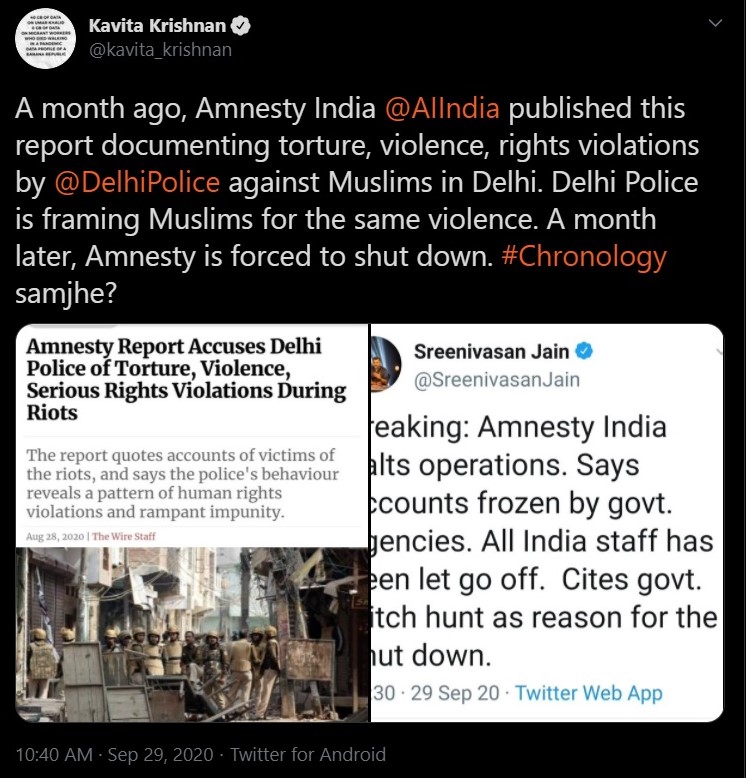
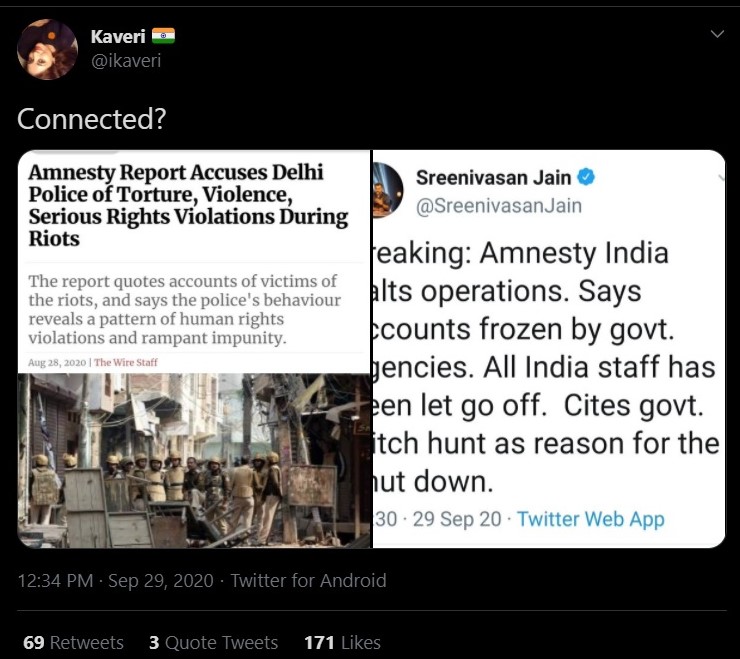
Prominent among its followers who floated the theory, Kavita Krishnan, a known Maoist sympathiser, said that the Amnesty International report on the riots documented “torture, violence, rights violations” by the Delhi Police and a month later, it was forced to shut its operations. In an effort to appear smart, she asked whether people understood the chronology of events, referring to an instance where Home Minister Amit Shah had implored people to understand the chronology of events.
Kavita Krishnan spreads conspiracy theory
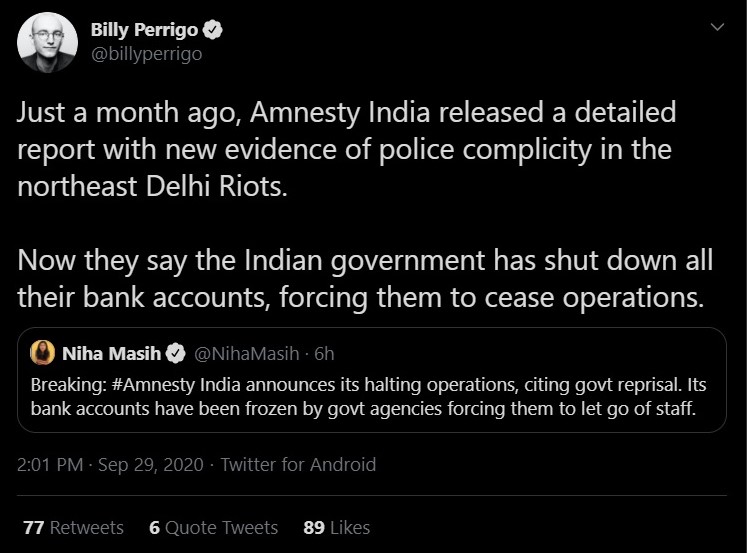
Billy Perrigo, a reporter with Time magazine, said, “Just a month ago, Amnesty India released a detailed report with new evidence of police complicity in the northeast Delhi Riots. Now they say the Indian government has shut down all their bank accounts, forcing them to cease operations.”
The Time reporter did not bother to verify facts
Then, there was another popular handle who asked people on social if the two events were connected.
Another individual spreads the conspiracy theory
Are the two events connected?
In reality, the bank accounts of Amnesty International were also frozen in October 2018 by the Enforcement Directorate after their offices were raided for violation of FCRA laws. “AIIFT was denied the permission/registration under FCRA, 2010 by MHA. They resorted to bypass the FCRA Act by floating commercial entity in the name of Amnesty International India Pvt. Ltd (AIIPL),” a statement issued by the ED nearly two years ago had said.
“This amount was immediately placed in FDs and another Indian entity, Indians for Amnesty International Trust (IAIT) had established an overdraft facility for Rs 14.25 crore keeping the said Rs 10 crore FD as collateral which means the receipt of FDI (foreign direct investment) by trust only,” it had added.
Consequently, Aakar Patel, then head of Amnesty India, had stated, “Amnesty India’s bank accounts have been frozen by the Enforcement Directorate, effectively stopping our work. Amnesty India is thus the latest target of the government’s assault on civil society in the country. The accounts of Greenpeace India were frozen earlier this month. Government authorities are increasingly treating human rights organizations like criminal enterprises.”
Thus, quite clearly, the freezing of its bank account had nothing to do with the its report on the Delhi Riots. Following the freezing of the bank account in October 2018, Amnesty international says that it was able to access its funds through an intervention by the Court. Subsequently, it came to know of the government’s decision to freeze its bank accounts again on the 10th of September.
Congress was not fond of Amnesty International either
In 2009, Amnesty International was forced to halt its operations after the UPA government had refused to grant it permission to access funds from its London headquarters. The Home Ministry had rejected its application to seek overseas funds twice since 2006. “We are extremely sorry to inform you that the AII Office is closing down… All the colleagues, working in the AII office will be relieved by March 31, 2009…This is because Government of India continues to deny the FCRA registration to AI India Foundation and our local resources are very insufficient for our survival,” the director of its India chapter had said then.
Thus, quite clearly, even the Congress party, which was extremely fond of NGOs and had stacked the extra-constitutional National Advisory Council with activists from foreign funded NGOs, was not fond of Amnesty International. It is also pertinent to note that the UPA Government, too, had blacklisted numerous NGOs while it was in power although its actions were hardly ever motivated by concerns over national interests.
The action against Amnesty International under NDA Government
The Bengaluru offices of the organisation was raided by the CBI in November 2019 due to alleged irregularities and violation of FCRA norms. The CBI raid on the alleged human rights organisation came just weeks after a show-cause notice was issued to the organisation by ED. The NGO was accused by ED of violations in borrowing and lending regulations of FEMA to the tune of Rs 51.72 crore for rendering civil society activities in the country by getting remittances from its parent body, Amnesty International UK, in the garb of export of services.
ED’s Bengaluru offices were searched by ED in October the previous year in connection with its probe in the alleged violation of FDI guidelines and remittances it had received from the parent body. Amnesty director Aakar Patel’s residence was also searched by ED at that time. Thus, the current action against the organisation is consistent with the approach towards it for a number of years and cannot be attributed towards the Delhi Riots report.
Amnesty’s history of anti-India activities
In a report published in OpIndia in 2019, we explored the connections between Amnesty International India, the British government, and radical Islamists. The organization has a history of meddling with the internal affairs of India. It has constantly been trying to falsely project India as a violator of human rights and ‘oppressor’ of Muslims.
On several occasions, Amnesty India and its former head Aakar Patel kept peddling blatant lies and fake news to portray India negatively. It also campaigned for the arrested Urban Naxals in the Bhima Koregaon violence case. Therefore, its actions clearly tantamount to foreign interference in the domestic issues of India and it is only appropriate that strict action is taken against it.
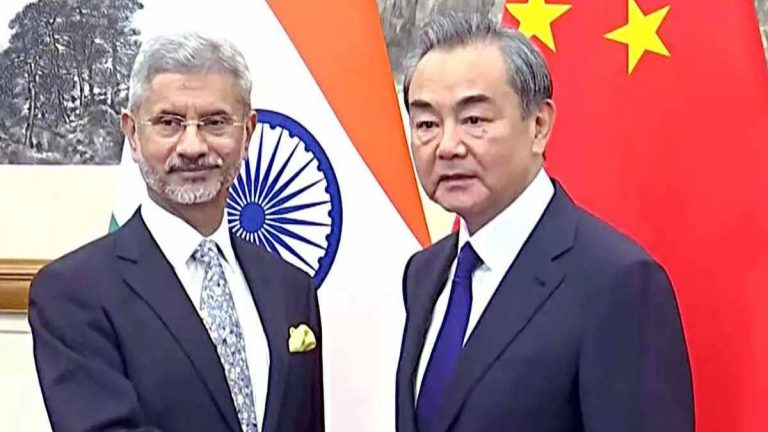
On Tuesday, the spokesperson of the Indian Ministry of External Affairs (MEA), Anurag Srivastava, has outrightly rejected the claim made by the Chinese Foreign Ministry with respect to the Line of Actual Control (LAC).
The development comes amidst the ongoing border standoff between the two sides in Eastern Ladakh. The 3,448 km-long LAC separates India from Chinese-occupied territory. The demarcation between the two sides extends from the Union Territory of Ladakh to Arunachal Pradesh. India has historically rejected the alignment of the LAC.
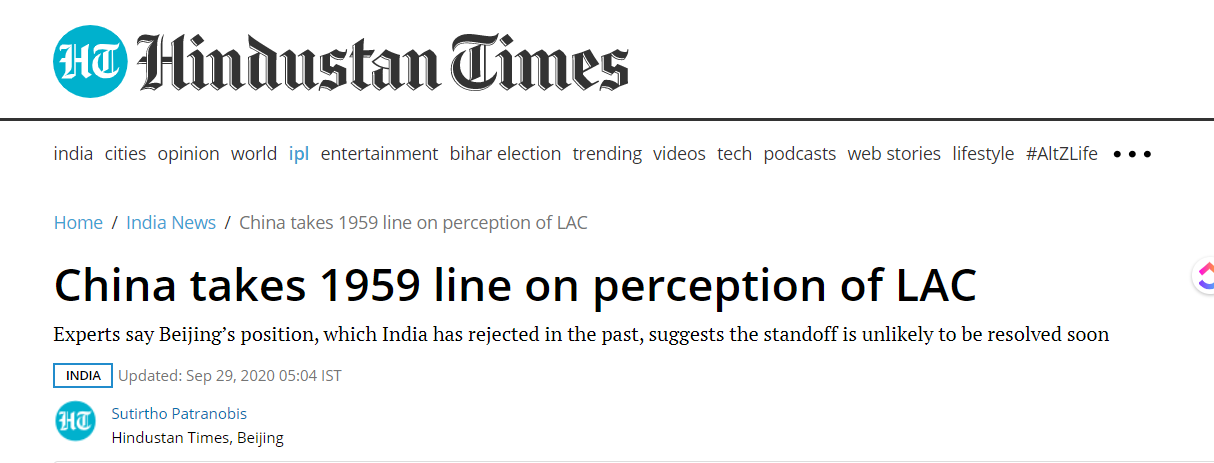
In an exclusive interview with the Hindustan Times, the Chinese Foreign Ministry has stated that it abides by the LAC, which was unilaterally proposed by the then Chinese Premier Zhou Enlai to PM Jawaharlal Nehru on November 7, 1959. It claimed, “Firstly, China-India border LAC is very clear, that is the LAC on November 7, 1959. China announced it in the 1950s, and the international community including India are also clear about it.”
The Chinese Foreign Ministry further blamed India for the escalated tensions at the border. Accusing India of ‘illegally’ crossing the border, it stated, “However, ever since this year, the Indian Army has continued to arrive and illegally cross the border, unilaterally expanding the scope of LAC. This is the source of tension on the border issues. The key to disengagement between the two armies is India’s withdrawal of all illegal cross-border personnel and equipment.”
Screengrab of the Hindustan Times report
The background of the LAC conflict
In his letter to PM Nehru on November 7, 1959, Zhou Enlai stated that for the sake of maintaining ‘tranquillity’ between the two sides, the armed forces of India and China must withdraw 20 km from the McMahon line. Rejecting his proposal, Nehru stated, “There is no sense or meaning in the Chinese offer to withdraw twenty kilometers from what they call ‘line of actual control. ” Later, Zhou Enlai defined LAC as, “basically the line of actual control as existed between the Chinese and Indian sides on 7 November 1959.”
MEA dismisses Chinese claims on the LAC
In a detailed statement, the MEA has rejected the claims made by the Chinese Foreign Ministry. Spokesperson Anurag Srivastava stated, “India has never accepted the so-called unilaterally defined 1959 Line of Actual Control (LAC). This position has been consistent and well known, including to the Chinese side.”
The Ministry of External Affairs cited various bilateral agreements such as the 1993 Agreement on Maintenance of Peace and Tranquility, 1996 Agreement on Confidence Building Measures (CBMs), 2005 Protocol on Implementation of CBMs and 2005 Agreement on Political Parameters and Guiding Principles for settlement of the India-China Boundary Question to ascertain India’s commitment to reach a common understanding on the LAC’s alignment.
“In fact, the two sides had engaged in an exercise to clarify and confirm the LAC up to 2003, but this process could not proceed further as the Chinese side did not show a willingness to pursue it,” the MEA spokesperson remarked. He added that the comments by the Chinese Foreign Ministry on the existence of ‘only one LAC’ ran counter to the bilateral agreements between the two sides.
Drawing reference from the speech of Union Defence Minister Rajnath Singh, the MEA spokesperson highlighted, “It is the Chinese side which by its attempts to transgress the LAC in various parts of the Western Sector, has tried to unilaterally alter the status quo.” He added that the Chinese side had assured of resolving escalated border tensions on the basis of the past agreements. “We, therefore, expect that the Chinese side will sincerely and faithfully abide by all agreements and understandings in their entirety and refrain from advancing an untenable unilateral interpretation of the LAC”, he reiterated.
India-China standoff
Clashes between the two countries have occurred along the Line of Actual Control raising fears of serious conflict breaking out between the two countries. Only recently, the Indian Army had made major breakthroughs and occupied six new heights along the LAC in Eastern Ladakh. This was after India had acted proactively to occupy heights in regions on the Southern Bank of the Pangong Tso lake and strengthened their positions. Talks between the two countries have been ongoing but without any major headway.
September 28 is celebrated as a day to mark the birth anniversary of revolutionary Indian freedom fighter Bhagat Singh, a leader whose rebellious attitude and daredevilry in confronting the British repression inspired a generation of young Indians and infused fresh energy in India’s independence movement.
The leftist ‘secular liberal’ cabal has often used Shaheed Bhagat Singh to peddle their propaganda. A number of fake claims, propaganda and fake news have been spread on several occasions by them regarding the revolutionary leader.
This year on the birth anniversary of Bhagat Singh, they got another opportunity to fill social media with spurious claims and unsubstantial assertions. Social media websites are awash with claims that a Muslim lawyer, namely Asaf Ali, who was also a prominent Congress member during that time, fought the case in the court defending Bhagat Singh and Batukeshwar Dutt in the court case after they had hurled bombs inside the Central Legislative Assembly in New Delhi to protest against unfavourable Bills.
Because top Barrister Asaf Ali was already there for Bhagat Singh (d. 1931). Neither M K Gandhi, nor Jawaharlal Nehru were top barristers of their day. In 1930 M A Jinnah had moved to London to practice after his wife had died in 1929. History is granular & not a WhatsApp binary. https://t.co/lYdk2wHYFd
Asaf Ali defended Bhagat Singh… He was one of the hotshot lawyers at that time. ( He was a prominent Congress member, and also a “Love Jihadi” as per your definition)! https://t.co/kYF3T8pWCn
Question of the day : Asaf Ali defended Shaheed Bhagat Singh & Batukeshwar Dutt as a lawyer, after they threw a bomb in the Central Legislative Assembly
— वैशाली पाटील ✍️ 12k ? (@Vaishaly_patil) July 19, 2019
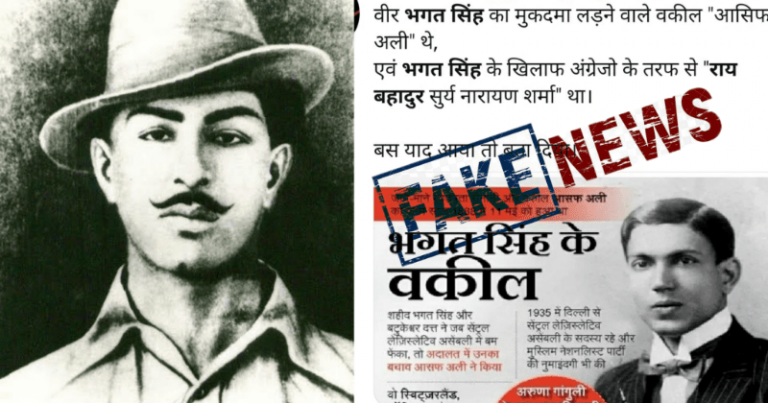
The other claim that is doing the rounds on the Internet is regarding a legal counsel that represented the British government against Bhagat Singh. The claim says that Rai Bahadur Suryanarayana Sharma represented the Crown against Bhagat Singh and Batukeshwar Dutt.
Many graphic posters and ‘forwarded’ messages from social media to WhatsApp groups claim that the ‘Brahmin’ lawyer who fought the case on behalf of the British to get Bhagat Singh hanged is one Rai Bahadur Suryanarayana Sharma, who was a close friend of Hedgewar, the founder of the Rashtriya Swayamsevak Sangh and also a member of the RSS.
Bhagat Singh and Batukeshwer Dutt were defended by Asif Ali.
The Crown was represented by Rai Bahadur Suryanarayan Sharma..#BhagatSingh
Such messages about Rai Bahadur Suryanarayana Sharma are being widely shared on Twitter. The aim for propagating such messages and forwards is twofold: To allege that the freedom fighter Bhagat Singh was represented by a Congress leader and a ‘Muslim’ lawyer and to vilify ‘Brahmins’ and RSS as an organisation whose member allegedly defended the British in the court of law against Singh.
What is the truth behind the claims being made on social media regarding Bhagat Singh’s legal counsel?
While the social media users are enthusiastically claiming that a ‘Muslim’ lawyer named Asaf Ali represented Bhagat Singh, the reality is in stark contrast to what the Congress IT cell members and left would have us believe.
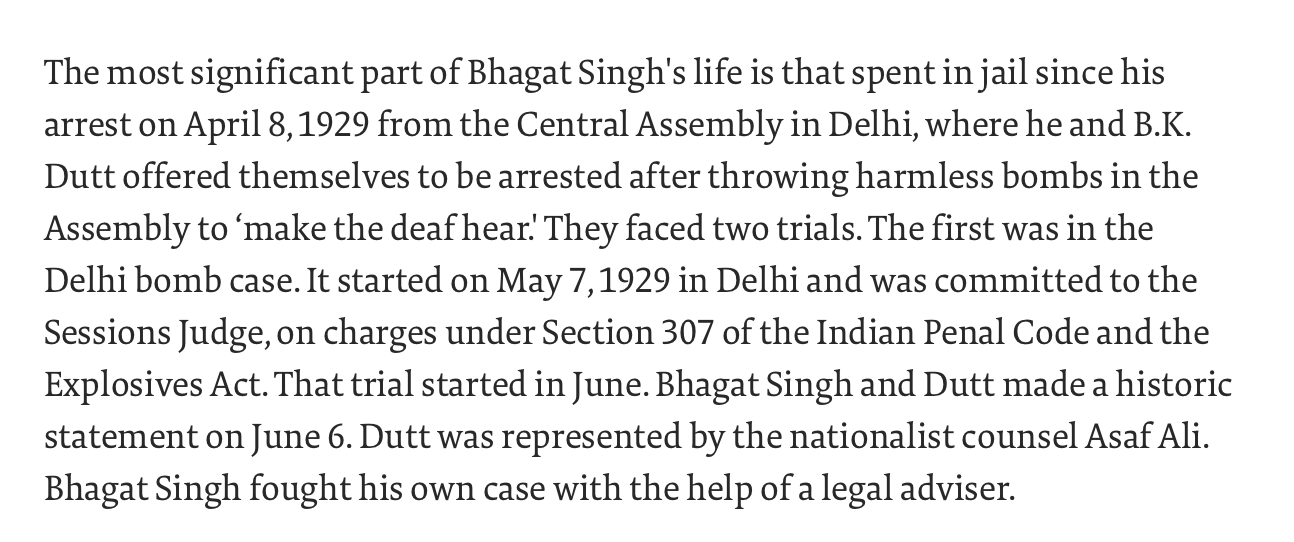
According to a report published in ‘The Hindu’, lawyer Asaf Ali represented Batukeshwar Dutt and Bhagat Singh fought the case on his own with a help of a legal advisor.
Relevant Section from the article published in ‘The Hindu’
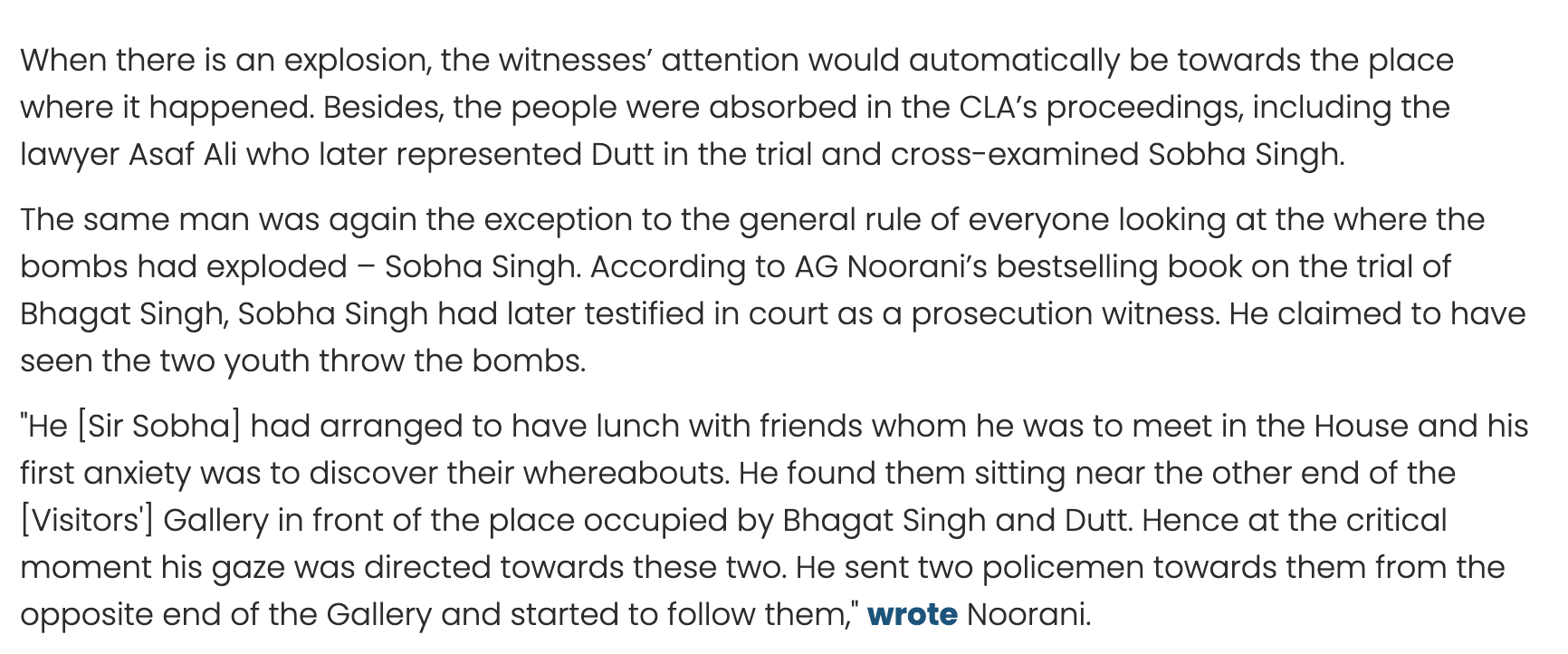
In another article published in the Outlook India about how Bhagat Singh’s sentence was based on the testimony of journalist Khushwant Singh’s father Shobha Singh, it categorically mentioned that Asaf Ali represented Batukeshwar Dutt. The mere fact that the article did not mention Asaf Ali fighting for both Bhagat Singh and Batukeshwar Dutt says that Singh was not represented by him.
Relevant Sections from the article published by ‘The Outlook India’
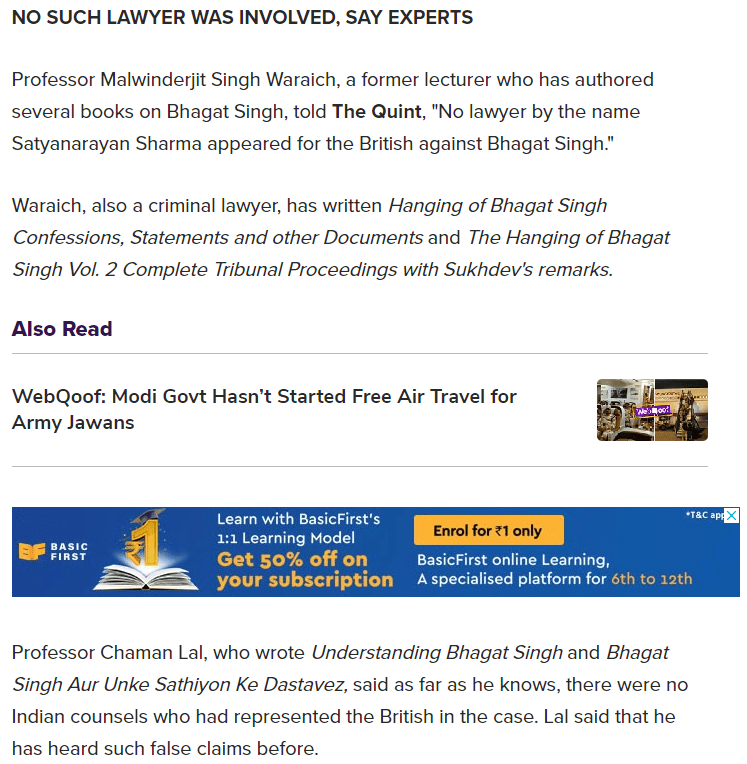
In addition to this, Professor Malvinderjit Singh Warich, who wrote several books on Sardar Bhagat Singh, also denied the claims that are bandied about that a lawyer named Satyanarayana Sharma had appeared for the British against Bhagat Singh.
Relevant sections of an article published in ‘The Quint’
Professor Chaman Lal of Jawaharlal Nehru University, who wrote ‘Understanding Bhagat Singh and ‘Documents of Bhagat Singh and his companions’, has also explicitly mentioned that no Indian counsel appeared for the British in the case against Bhagat Singh.
It is noteworthy to mention that Sardar Bhagat Singh and Batukeshwar Dutt threw bombs in the Central Legislative Assembly on April 08, 1929, to express their opposition to the bills being discussed in the Assembly. He also threw a few handwritten letters and pamphlets to explain their demands.
It was a low-intensity bomb that was not meant to kill or injure any member of the Legislative Assembly. As soon as the explosion took place, Bhagat Singh and Batukeshwar Dutt stood there and later surrendered themselves to the police.
The conclusion
Bhagat Singh was not represented by Congress member and lawyer Asaf Ali in the court. He fought his case on his own and with the help of a legal advisor. Asaf Ali had fought the case for Batukeshwar Dutt. Furthermore, the British government was not represented by any Indian lawyer, let alone Satyanarayana Sharma, and the claim that he fought against Bhagat Singh is false.