Home Blog Page 5127

The Communist betrayal of the Hindus on Direct Action Day and support for the Pakistan Demand

The movement for India’s independence was a protracted struggle that encapsulated varying ideologies and walks working towards attaining total deliverance from British rule. It was neither led by a single leader nor did it overhaul a single ideological hegemony. The Communist Party of India (CPI) was one such organisation that left an obtrusive footprint upon the history of the mass independence movement, for reasons good and bad.

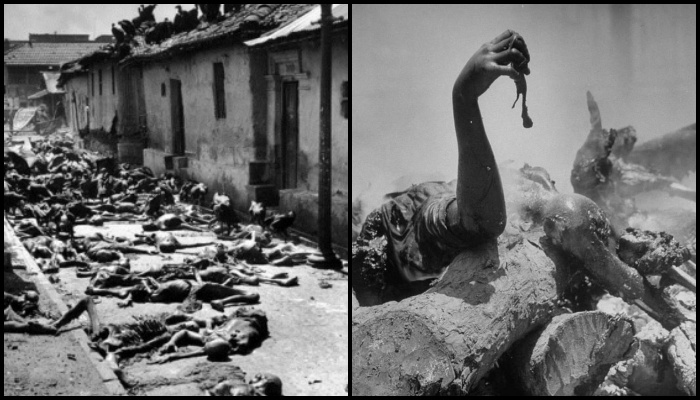
In this article, we shall revisit the nefarious role played by the Communist Party in the Pakistan movement which culminated in the horrific Direct Action Day of 1946, also known as ‘The Bengali Hindu Holocaust’.

Based on historical and anecdotal evidence one can decipher that the CPI for most of the time between 1942 and 1947, advanced a collaborationist attitude towards the British Raj and the Muslim League alike.

The CPI was opposed to India’s independence movement from day one. In the first World Congress of the Communist International held in Moscow in 1920, the Programme of the International called Gandhiism a philosophy that was fast emerging as a stumbling block in the way of a people’s revolution.

A motion in the sixth International held in 1928, also in Moscow, pointed out that it was the duty of all communists in India to expose the Congress in India, and to resist the efforts of Swarajists, Gandhians and Congressmen of all hues.

The clamour for Pakistan: Decoding the Gangadhar Adhikari Thesis

The communists implied independence as the deliverance of the working classes from bourgeois exploitation which could be attained by overthrowing of the capitalist order through a socialist revolution and substituting it with the ‘dictatorship of the proletariat’.

The Congress and the communists were always at ideological loggerheads with each other. The communists perceived the Gandhian movement as a bourgeois struggle and transfer of power as replacement of colonialism with that of neo-colonialism, where imperialist interests would be served better.

When the clamour for Pakistan by the Muslim League, on the basis of Jinnah’s two-nation theory was warming up, and Congress leaders were in jail following the uprising of August 1942, the CPI released a ‘thesis’, drafted by Gangadhar Adhikari. 

The substance of the thesis was that there was no such nation as India, that India was really a conglomeration of as many as eighteen different ‘nationalities’ and that each one of these nationalities had the right to secede from the conglomeration. The communist understanding was that Muslims would be oppressed by the Hindus in united India and that the League had become ‘progressive’.

Supporting Jinnah’s demand for Pakistan, the communists argued that secession, far from dismembering the country, would “lead to still greater and more glorious unity of India, the like of which India has not seen in her history.”

The Communist participation in the Direct Action Day

The Pakistan Resolution was passed in the Lahore Convention of the Muslim League in 1940. At this point, it is necessary to take a look at the role played by the Communist Party of India at this juncture and later. This is because, as will be seen, the Indian Communists, in order to secure political gains, wholeheartedly supported the demand for Pakistan voiced by the Muslim League.

When every street and corner of Bengal echoed with the cries of ‘Ladke Lenge Pakistan’, the Communist Party extended its full support to the Pakistan Movement and even betrayed Hindus during the ghastly Direct Action Day. They were adamant on maintaining that the demand for Pakistan was a precondition for the transfer of power. The maiden meeting of the Muslim League that was held in the Ochterlony Monument Ground in Calcutta on the Direct Action Day of 16 August 1946 resounded with inflammatory anti-Hindu sloganeering and speeches.

The meeting was attended by Jyoti Basu, Leader of the CPI in Bengal Legislative Assembly and two other communist MLAs. The communists adopted a uniquely dialectical position with regard to the Direct Action Day. The Muslim League gave a call for a bandh on that day in Calcutta and the League Chief Minister of Bengal, H S Suhrawardy declared a holiday in the State with the obvious intent of facilitating the bandh and all that comes with it. 

But the communists displayed a reverse sagacity that was hard to match, as the leader of the CPI in the Bengal Assembly, Jyoti Basu, in a press release declared — displaying the quintessential dialectical vision that eventually succeeded in duping many for decades — that “the CPI would try to keep the state peaceful on that day, with a strike where necessary and without a strike where necessary”. He appealed not to precipitate any clash between the ‘brothers’ (Hindu and Muslim workers) and ‘make a common stand against the common foe’ (Britishers and their ‘bourgeois collaborators’).

According to eye witness accounts, as the zealous Muslim fundamentalists resorted to arson, loot and all sorts of mayhem in the name of Muslim separatism, Jyoti Basu fled the meeting as the situation had by then gone out of control.  The protagonists of Pakistan pounced upon the Hindu citizens as they were presumed to be the votaries of undivided India.

The riot continued in full swing for five days – from the 16th to the 20th August 1946. According to The Statesman, over 4000 people were killed and over 15000 injured during the riots, and over 270 killed and 1600 injured in two days since the riots started.

As the Hindus of Calcutta started organising themselves and put up a gallant resistance to the Muslim rioters, Premier Suhrawardy was forced to call in the military on 17 August. The communist leaders were left aghast at the Hindu retaliation, and momentarily switched sides. To be on the safer side, few communist leaders including Jyoti Basu contributed to the ‘peace committees that took the work of restoring communal harmony. 

This was an ‘eyewash’ for many while for some this was sheer ‘damage control’. There was a feeling among the upper rungs of the CPI that further passivity would push the communists to the margins of political untouchability and alienation. It would have taken no longer to turn the repulsive Hindu tide against the vulnerable communists. Though the damage had already been done yet better late than never!

Communist trade unions’support to Muslim League

The non-League Trade Union that did join the Muslim League’s call for Direct Action Day was the CPI-controlled Tramway Workers’Union. The workers of this union had a four-hour-long session at the University Institute Hall with its Muslim comrade, Mohammed Ismail presiding. 

During the 1946 election campaign in Raipur, Central Provinces, the same Mohammed Ismail had drawn the mass attention to the Pakistan demand of the League and explained the stance of his party vis-a-vis the League demand. For Ismail, Pakistan demand was a ‘natural outcome of the freedom urge of the Muslims’.

Under him, the CPI decided to observe 16August as a strike to maintain Hindu-Muslim workers’solidarity. The communist trade union observed complete bandh in several petroleum, steel, iron and jute factories of Bengal. 

Communist leadership had advocated for Pakistan and handing over the entire Bengal to Pakistan, however, the grassroots workers were realising the folly of this stand. The industrialised localities of Calcutta had a strong presence of communist trade unions. 

Dr Kalyan Dutta, a communist ideologue and professor, noted in his autobiography that in the Khidirpur the Hindu communist workers were attacked by their Muslim party-comrades on the fateful day of 17 August 1946. The communist textile union leader Syed Abdullah Farooqui along with Muslim hardliner Elian Mistry led an armed Muslim band into the Kesoram Cotton Mills in the slums of Lichubagan, near Khidirpur in Calcutta. 

The Hindu workers were utterly perplexed. They did show their party membership card to their Muslim comrades and begged for their own lives. Their lives, however, were not spared. According to conservative estimates, not less than 400 (500-600 according to other reports) Hindu labourers, mostly Oriyas, were killed. This is the largest reported anti-Hindu massacre in the whole series of Great Calcutta Killings. 

It goes without saying that the Hindu members of communist trade unions had to face the brunt of Muslim fundamentalist fury that was offered a free hand by their party barons. The Khidirpur incident was a sordid chapter enunciating the totalizing effect of the Direct Action Day. The communist determinism of ‘class struggle’ could not restrain their Muslim members from taking up the cause of Pakistan- a call for ‘religious struggle’.

CPI’s support to the League Ministry in the No-Confidence Motion 

In 1946, the composition of the Bengal Legislative Assembly was as follows: Muslim League: 116; Congress: 62; Hindu Mahasabha: 1; Depressed Castes: 30 (including 24 Congress members) and; Communist Party: 3. 

The three communist MLAs were- Jyoti Basu from Syedpur; Rupnarayan Roy from Dinajpur and Ratanlal Brahman from Darjeeling. The communist legislators defied the united Hindu call for Suhrawardy’s resignation in the Bengal Legislative Assembly and voted in an unprincipled manner that facilitated the League. 

On 19 September 1946, the Congress moved two no-confidence motions against the Muslim League in the Bengal Legislative Assembly. One was against the ministry in general and another against Premier Suhrawardy in particular. 

Participating in this debate Syama Prasad Mookerjee, the Hindu Mahasabha Leader, gave the longest speech in the House on 20 September 1946 wherein he strongly attacked both the Government and the Premier. However, the role played by the Communist Party during the two-day long debate in the Assembly exposed the nefarious nexus between the communists and Leaguers.

Jyoti Basu, the CPI Leader who later became the Chief Minister of West Bengal, said before the House that the British Imperialists, who were looking after Indian administration, were the main criminals for the communal riots and pointed out the fact that while the Sindh Governor disallowed the declaration of holiday on 16 August, the Bengal Governor did the contrary in Calcutta. 

Basu and his party unquestionably played the role of a League collaborationist and a genocide apologist within the Assembly. In the guise of attacking the British Governor of Bengal for inciting Leaguers to riot freely, he preserved silence on the flagitious role played by Suhrawardy in orchestrating the anti-Hindu pogrom in the heart of the provincial capital. CPI legislator Rupnarayan Roy went to the extent of proposing a resolution to condemn the stridently anti-League stand Syama Prasad Mukherjee took in the floor of the House.

Both the motions were put to vote on 20 September 1946. The motion against the Premier was defeated by 130 to 85 votes, while the motion against the government was also defeated by 131 to 87. 

86 Congress members and 1 Hindu Mahasabha member voted in bloc against the Suhrawardy government. All the 3 communist members (Basu, Roy and Brahman) remained ‘neutral’; voting neither for nor against the Muslim League.

In spite of their failure in the face of the brute majority of the Muslims in the Bengal Legislative Assembly gifted by the Communal Award of 1932, the most striking thing about the no-confidence motion was how the opposition, irrespective of their political affiliations, spoke in one voice. Whether the Congress or Mahasabha, they all criticised the ministry in one voice for their failure to adequately police pickets and delay in calling the military. 

However, when the whole spectrum of Hindu opinion was consolidated against the League, the communist legislators played a dismal role by adopting ‘neutrality’. What was to be deciphered was that neutrality at all costs in such an abysmal situation implied silence and, silence inferred acquiescence to the ruthlessness of the League Ministry.

Needless to say, the communist members in the Assembly were not ignorant to the atrocious designs of the League government as its direct role in the masterminding of the communal pogrom was ascertained and revealed. Yet the communist neutrality during the voting and its despicable inaction to take a stand against the Muslim League in itself proved its commitment to the pro-Pakistan effort. 

Contrary to the Hindu opinion which was united against the League, the Communists backstabbed not only their electors who were largely Hindu but also quite notoriously jeopardized the unity and integrity of undivided India. The Communist Party posited the farcical excuse of ‘working-class unity’ to defend its position. In the veneer of class struggle, the communists did not dither to push the Hindu masses into the jaws of the League and henceforth jeopardise the national integrity of India.

Justifying their ‘neutral’ stand, the Communist Party’s General Secretary Puran Chand Joshi wrote to his fellow Bengali comrades on 27 August 1947, “We can vote against the Muslim League Ministry provided it does not affect our working-class base and we can carry it with ourselves through our extensive explanatory campaign… If we cannot keep up even our hold on existing organised working class, everything is lost, even for the future. Thus the best way possible to keep all in good humour was to stay neutral. Voting against the Muslim League will have other serious implications”.

Support to League’s observance of Rashid Ali Day

With the fall of Japan and subsequent Indian National Army’s surrender before the Allied Forces, the British government put Netaji’s men to trial. While three of the INA heroes: G.S. Dhillon, Prem Sehgal and Shah Nawaz (a patriotic Muslim who was taunted as ‘Pandit’ by Muslim League) were let off completely while another compatriot, Captain Abdul Rashid was sentenced to seven years.

This created a tremendous stir among the Muslims. This was the same Rashid who stated that the reason for his joining the INA was to arm himself sufficiently so as to safeguard Muslim interests in the event of a future INA invasion in India. He despised the ‘non-Muslim soldiers’ who were the moving spirits of the INA.

The Communist Party and its students’ wing immediately joined the Muslim cause and extended support to the Muslim League’s strike on 9 February 1946, observing it as ‘Captain Rashid Ali Day’. The communists hailed that day as ‘an anti-Imperialist expression of Muslim masses’. Jyoti Basu defended the communist position by arguing that they were with the anti-imperialist Muslim masses in general, rather than with the Muslim League in particular.

Assessing the CPI’s contribution in Pakistan Movement and their betrayal of Hindus during Direct Action Day

The communists rubbing shoulders with the Muslim fundamentalists can be aptly compared with Gandhi’s support to the Khilafat Movement. Justifying the anti-British stance of the Khilafat agitators, Gandhi did not hesitate to strike a Hindu-Muslim alliance. It was a Himalayan Blunder on Gandhi’s part as the Hindus had nothing to gain from this mischievous alliance. 

The deadly anti-Hindu genocide in Malabar exhibits the subtlety of the alliance. Gandhi had justified the massacre and blamed Hindus for the rise of Muslim fanaticism! Direct Action Day was nothing but the highest culmination of fanatical expression of the Muslim masses arising out of the Pakistan movement. 

The Hindus were the worst sufferers of the Pakistan movement. Henceforth, the Communist Party’s justification of a common Hindu-Muslim alliance was wholly inefficacious and only pushed the Hindus into the horrid dregs of Islamist frenzy.

The lame excuses of the communists for endorsing the Pakistan movement swarmed between ‘anti-imperialism’ and ‘workers’ unity’. They believed that Pakistan was a rightful demand of the Muslim working classes. Clinging on to the principle of ‘international unity of working classes’, they argued that the Hindu working classes should concur to the political bargaining of the Muslim working classes, even at the cost of their own existence.

The communists ardently believed that the Hindu and Muslim working classes were working for a common objective i.e., a socialist revolution. They further argued that the nature of the bourgeoisie was the same everywhere and that the Muslims would be worse off in a united India as they would be compressed between neoimperialist interests on one hand and Hindu repression on the other.

Even after independence, communist ideologues like Jyoti Basu and Manikuntala Sen left no stone unturned to whitewash Muslim League’s crimes. The CPI’s espousal of Pakistan did not stop here. CPI leaders, such as Sajjad Zaheer, B.T. Ranadive, P.C. Joshi and others, actively wrote and otherwise propagandized in favour of the ‘right of secession of the Muslims of India’. 

This was all before the partition actually took place. Probably the Communists expected that in the fledgling state of Pakistan they would be much better off as a party than they were in undivided India. Alas, this was not to be. 

The atheist Communists with Hindu names were treated no differently from their God-fearing Hindu brethren, and with the exception of very few like Moni Singh, they had all to leave their beloved Pakistan for which they had done so much clamouring. 

Acclaimed Bengali communists like Ganesh Ghosh and Kalpana Dutta- the two revolutionaries of the Chittagong Armoury Raid, and Ramen Mitra and Ilaa Mitra (organisers of the Nachole Tebhaga Uprising) had to flee Pakistan after independence. History bears testimony to the fact that the fallacious Hindu-Muslim worker’s unity was driven by a ploy to relegate Hindus into pawns at hands of Islamic fundamentalism.

Sources:

  1. Roy, Tathagata; Chapter 2 THE COUNTDOWN: POLITICS OF BENGAL BETWEEN THE TWO PARTITIONS, 1905-1947; My People Uprooted: The Exodus of Hindus from East Pakistan and Bangladesh; Published: 1 January 2015
  2. Chatterjee, Chhanda; Syama Prasad Mookerjee, the Hindu Dissent and the Partition of Bengal, 1932-1947; Publisher: Routledge; Published: 14 June 2020
  3. Fazlul Huq and Bengal Politics in the years before the Second Partition of Bengal (1947); https://shodhganga.inflibnet.ac.in/bitstream/10603/227519/18/18_chapter%206.pdf
  4. Sanyal, Sunanda and Basu, Soumya; The Sickle and the Crescent: Communists, Muslim League and India’s Partition; Published: 1 December 2011
  5. Ghosh, Amitabha; An eye-witness account of the ‘Great Calcutta Killing’ of august 1946; https://www.opindia.com/2018/08/eye-witness-account-of-direct-action-day-great-calcutta-killing-of-16-august-1946/; Published: 22 August 2018
  6. Gangopadhyay, Kausik; The Partition of Bengal: Supported by all sections of Bengali Hindus to protect their own lives and identity; https://www.opindia.com/2019/06/the-partition-of-bengal-supported-by-all-sections-of-bengali-hindus-to-protect-their-own-lives-and-identity/; Published: 20 June 2019
  7. Chaudhari, K.K.; The Quit India Revolution: The Ethos of Its Central Direction; Publisher: Popular Prakashan; Published: 1996
  8. Mahapatra, Sandeep; OPINION | Pride of Being Bharatiya Has Been Ridiculed by the Communists; https://www.news18.com/news/opinion/pride-of-being-bharatiya-has-been-ridiculed-by-the-communists-1799575.html; Published: 3 July 2018
PM Narendra Modi announces National Digital Health Mission, citizens to be provided with Digital Health ID: Read details

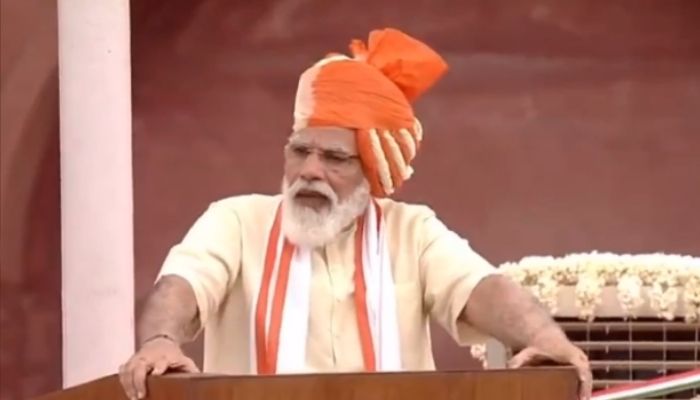
During his speech on the eve of India’s 74th Independence Day, Prime Minister Narendra Modi announced the National Digital Health Mission (NDHM) in the wake of the Coronavirus pandemic. The blueprint of the flagship scheme was laid last year and the scheme is likely to be at par with the Ayushman Bharat scheme.

PM Modi informed that a unique ID will be issued to citizens under a ‘One Nation One Health Card’ scheme. Individuals can use it to gain access to the system. For this purpose, a digital database will be created that will contain an individual’s medical history such as tests, diagnosis, and treatment. The information can be accessed from anywhere in India only by doctors and other authorised individuals.

National Digital Health Mission promises hassle-free medical treatment

Following the implementation of the scheme, individuals do not need to carry their medical records around, even if they need to travel to other parts of the country for treatment. Hospitals will also benefit from the scheme, apart from cardholders. The scheme will also be extended to medical stores and pharmacies in the future. There will also be an optional service to link hospitals, clinics, and doctors to a central server.

NDHM to be an optional service

As per reports, the scheme will be implemented in several phases and the patient data will be kept safe and secured. While the health card will bear a unique ID just like Aadhar, it will, however, be an optional service available to the public. The card will be in the form of a website or mobile app. The National Digital Health Mission will improve the transparency, effectiveness, and efficiency of the health service. Dr. Harshvardhan, Union Health Minister, stated that the Centre revolutionised the health sector through the introduction of schemes such as Ayushman Bharat, NISHAY, Reproductive Child Healthcare, etc.

NDHM to employ AI and machine learning

Speaking to Times Now, Dr. Harshit Jain said that NDHM will be a step towards digitisation in the Indian healthcare system. He stated that Electronic Health Records (EHR) can help transform the sector through the use of machine learning and artificial intelligence techniques. He added that such techniques can help in predicting seasonal outbreaks and learning about disease patterns. Jain emphasised that the scheme will help bridge the divide between rural and urban India.

Punjab: Pro-Khalistani elements hoist Khalistani flag on administrative building in Moga amid Independence Day celebrations

0

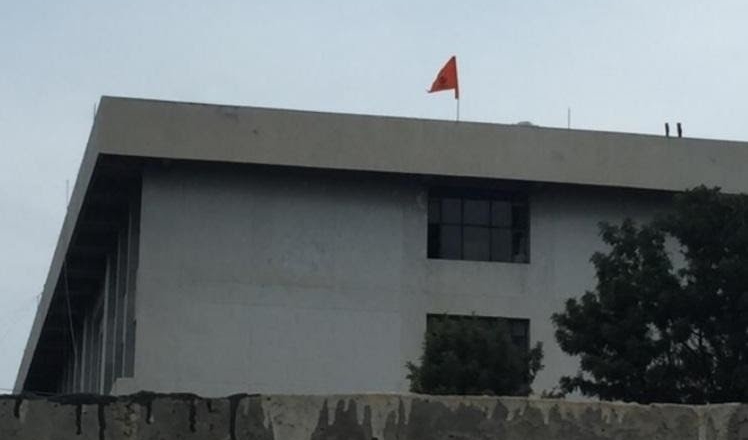
Amid Independence Day celebrations, two pro-Khalistani miscreants hoisted a Khalistani flag on the top of the administrative building in Moga in Punjab. They also removed the tricolour raised on the building. The Chief Minister of Punjab Amrinder Singh has ordered the state police to arrest the people behind the incident.

Rs.50,000 reward announced

The Punjab Police has announced a reward of Rs.50,000 for providing valid information that leads to the arrest of the duo behind hoisting the Khalistani flag. Chief Minister Singh has promised to teach a lesson to the anti-India pro-Khalistani elements like US-based Khalistani group “Sikhs for Justice” and terrorists like Gorpatwant Singh Panni. CM Singh warned Pannu and said, “You try to come to Punjab, and I will teach you a lesson.” He promised that any attempt to disturb peace in Punjab would be dealt with strong action. He also urged the youth to be careful and not to be misled by anti-India elements.

Miscearents entered with employees to avoid suspicion

Harmanbir Singh Gill, Superintendent of Police, Moga, said that the two youth entered the Moga administrative complex with the employees who were reporting for duty in the morning. They sneaked to the terrace of the building and hoisted a Khalistani flag. They removed the tricolour as well. He added that they have the photos of the accused captured by CCTV.

Case registered under several sections

Police have registered a case against the two under various sections of the Prevention of Insults to National Honour Act. Gill said that they would arrest the miscreants soon. Sandeep Hans, Deputy Commissioner, Moga called it an act of cowardice. He said they entered with the employees so that no one suspects them.

CM warns pro-Khalistani elements

CM Singh has directed DGP Dinkar Gupta to make sure the duo behind the incident are identified and arrested at the earliest. He also directed DGP to take strict action against them as per the law. CM Singh, in his official statement, said,” Some get emotionally swayed by such vicious propaganda.” He urged youngsters not to pay any attention to anti-India elements like Pannu and SFJ.

Pannu recently published a video in which he called for raising black flags on India’s Independence Day. CM Singh said every Punjabi in India are living in prosperity and they are not interested in indulging in any activity that is anti-India. He said, “Why should they (the people of Punjab) do it? If you have the guts, you come here and do it.” He added that Pannu does not even look like a Punjabi, and he is indulging in anti-India activities to extract money from anti-India elements.

Operation Polo: When India annexed Hyderabad from the Nizam and Razakars, the suppression of Hindus and the role of Nehru

On the midnight of August 15th 1947, India gained its independence from the British and was partitioned into two countries- Hindu-majority India and Muslim-majority Pakistan. The partition was created on the basis of religion, with the Muslim League demanding an independent Pakistan for India’s Muslim population.

Several parts of India such as North-West Frontier Province, Sindh, West Punjab and East Bengal were given to Pakistan while United Province, Bombay Presidency, North and Deccan India, Malabar, Madras, West Bengal, etc. were given to India due to them having a Hindu-majority.

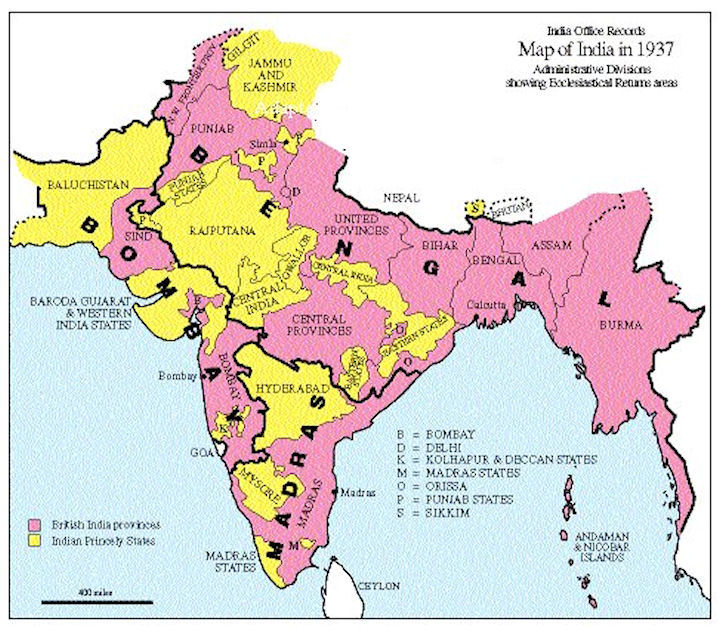
While leaving, the British permitted the princely states (who acted as agents of the British during the British Raj) to choose whether they’d like to remain independent or join either country’s territory. Raja Hari Singh of Jammu and Kashmir decided to accede his territory to India after he received aggressive hostility from the Pakistan side of the border, and signed the instrument of accession on 26th October 1947 with the Republic of India.

Like Hari Singh, the Nizam of Hyderabad Mir Osman Ali Khan was in a dilemma to choose which union he’d like his country to merge with and initially agreed to the ‘standstill agreement’ where the Republic of India would handle the external affairs and defence of Hyderabad but won’t interfere in the internal affairs. This was however violated by the state of Hyderabad when it secretly loaned 15 million pounds to Pakistan and raised a semi-private military (Razakars) in the country.

Suppression of Hindus

Under the rule of Nizams, Hindus were brutally suppressed by the rulers. Hindus were routinely discriminated due to their religion during their appointment to government posts and the state army. Of 1765 officers in the State Army, 1268 were Muslims, 421 were Hindus, and 121 others were Christians, Parsis and Sikhs. Of the officials drawing a salary between Rs. 600 and 1200 per month, 59 were Muslims, 5 were Hindus and 38 were of other religions. The Nizam and his nobles, who were mostly Muslims, owned 40% of the total land in the state, showing the vast inequality in the distribution of wealth.

In 1936, the Arya Samaj, Hindu Mahasabha and Hyderabad State Conference staged agitations against the Nizam and his nobles for the discrimination against Hindus while employment to government posts and social boycott by the Muslim population.

The Razakars, a merciless army that murdered hundreds of Hindus in Telangana

Frightened by the growing awareness amongst the Hindu population in Hyderabad, Nizam Khan ordered the formation of a semi-private army called ‘Razakars’ to suppress the agitations. The Razakars were a wing of the Majlis-e-Itihadul Muslimeen (MIM, or AIMIM as it is presently known). The Razakars managed to raise 1 lakh Jihadis in their army within a span of days. The army managed to suppress the Hindus by mass-murdering and abducting Hindus in urban Telangana.

Formation of Razakars

The Razakars were intended to be the armed wing of the MIM (which is a present day political party that goes by the name “AIMIM”), and upheld the Islamic domination of Hyderabad. By 1948, the Nizam didn’t want the growing public opinion of Hindus that Hyderabad should accede to India grow roots in the state, and ordered the Razakars to brutally suppress the Hindu population. Qasim Razvi was made the chief of the Jihadi force.

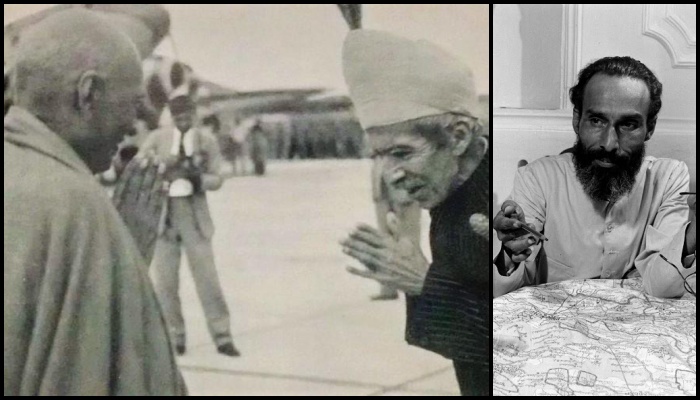
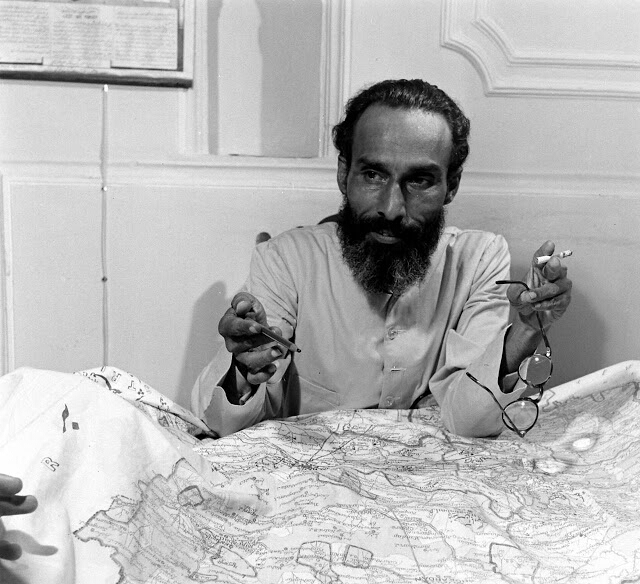
Qasim Razvi, the chief of Razakars, planning the strategy of Razakars during Operation Polo

The Razakars raised 2 lakh Jihadis in their force and raided Hindu-majority villages in Telangana.

Historian Frank Moraes records, “From the beginning of 1948 the Razakars had extended their activities from Hyderabad city into the towns and rural areas, murdering Hindus, abducting women, pillaging houses and fields, and looting non-Muslim property in a widespread reign of terror.”

In the book ‘Marathwada Under the Nizams’, historian P.V Kate records, “Some women became victims of rape and kidnapping by Razakars. Thousands went to jail and braved the cruelties perpetrated by the oppressive administration. Due to the activities of the Razakars, thousands of Hindus had to flee from the state and take shelter in various camps”.

Over 150 villages in rural Telangana were pushed to Islamic brutality, and over 40,000 civilians fled to the Central Provinces of India from Telangana for refuge. These refugees then proceeded to retaliate against the murderous Razakars through frequent raids to reclaim their land in the bordering areas of Central Provinces and Telangana.

Toothless-ness of Nehru and the wrath of Patel

After receiving the details of the exodus of Hindus by the Nizam of Hyderabad, India’s first Prime Minister Jawaharlal Nehru was afraid that any attack on the princely state would attract retaliation from West and East Pakistan. Nehru was hesitant to take the decision of storming into the state and annexing it.

On the insistence of Sardar Vallabhbhai Patel, Nehru hesitantly agreed to the annexure of Hyderabad and ordered the Indian Army to annexe the state of Hyderabad and storm into the state from all fronts.

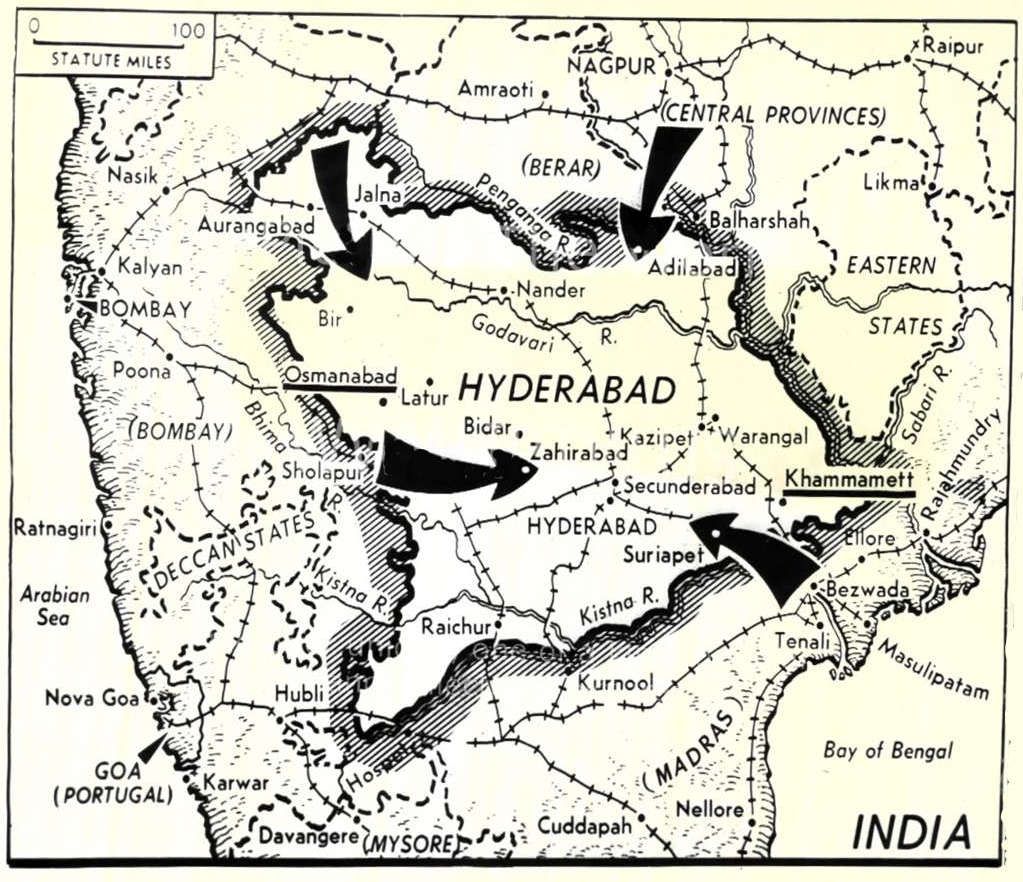
On 13th September 1948, the Indian Army launched an attack on Hyderabad; this operation was named ‘Operation Polo’. The Indian Army, in a 5-day battle, annexed Hyderabad from the Nizam and integrated it into the territory of India.

The route from which Indian army entered the princely state of Hyderabad

Despite the Indian Army having only 35,000 soldiers dispatched for this operation, it suffered only 35 casualties whereas the Hyderabad State suffered 5,738 casualties despite having an army of 2,20,000 soldiers. The Indian Army had a sweeping victory over the Nizam and annexed the state.

Aftermath and surrender of Nizam to India

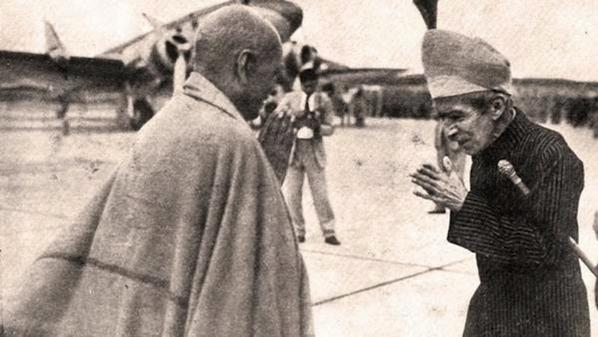
After the embarrassing defeat, the Nizam of Hyderabad surrendered to the Indian Home Minister Sardar Vallabhbhai Patel and agreed to accede Hyderabad to India. Qasim Razvi was jailed from 1948-1957 after which he took asylum in Pakistan.

Razvi gave the responsibility of the MIM to Abdul Wahed Owaisi, thus letting the Owaisi family run what remained of the MIM. The MIM was banned for a brief period in 1948, after which it changed its name to AIMIM (All India Majlis-e-Itihadul Muslimeen) and contests elections to this day.

References:

  1. Press Communique” (PDF). Press Information Bureau of India
  2. RIAF in Hyderabad” (PDF). Press Information Bureau of India
  3. Sherman, Taylor C. (2007). “The integration of the princely state of Hyderabad and the making of the postcolonial state in India (PDF)
  4. Official Indian army website complete Roll of Honor of Indian KIA”. Indianarmy.nic.in.
  5. Guruswamy, Mohan (May 2008). “There once was a Hyderabad!”. Seminar Magazine
  6. “Hyderabad Police Action”. Indian Army. Retrieved 13 September 2014.
  7. B. Cohen (2007). Kingship and Colonialism in India’s Deccan
  8. Mehrotra, S.R. (1979). Towards Indias Freedom And Partition

Price of freedom: How Beant Singh, now a rickshaw puller in Meerut, witnessed his mother and brother burn during partition in Rawalpindi

0

While India celebrates the 74th Independence Day, a generation of young Indians has forgotten the story of partition and the price of freedom. For Beant Singh, the horrors of partition are still afresh in his mind.

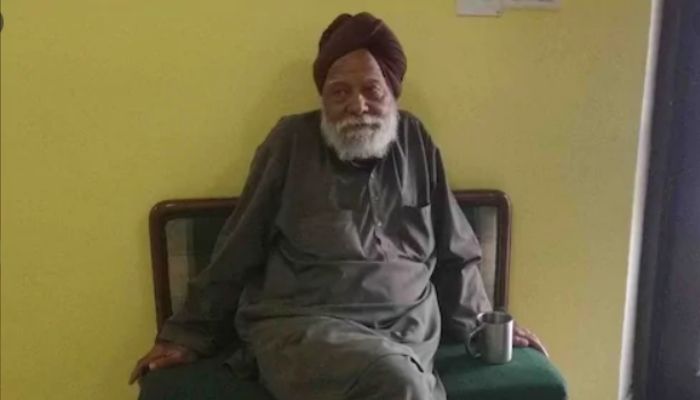
The 84-year-old rickshaw puller of Meerut was born in Kashmir, during the reign of Raja Hari Singh, on January 26, 1936. However, his family had to migrate to soon migrate to Rawalpindi owing to economic challenges and persecution of Sikhs at the hands of Islamists. In the wake of the bloodied partition of 1947, Singh was not only left homeless but also orphaned.

11 years old then, Singh saw his mother and brother burn to death. However, he was fortunate enough to escape the bloodied ordeal of his family. He remembered how a military personnel put him on a train, enroute to Amritsar, which was meant for refugees from Pakistan. An orphaned Singh thus lived through the tragedy of loss and separation to start a new life in ‘independent India’.

Started new life as a rickshaw puller in Meerut

Reminiscing the forgotten days of 1947, Singh said that Delhi was overcrowded with refugees from Pakistan who were scavenging for new means of livelihood in India. Since it was difficult to find work in India’s capital city, he made a conscious decision to shift to Meerut. He was however fortunate to meet his old classmates from Rawalpindi who had migrated to Uttar Pradesh, prior to the partition. According to Singh, they helped him with food, shelter, and purchasing a rickshaw.

Singh has no idea whether his family survived

Since he was underage and did not have a licence, he could only drive at night. “If I had not found that rickshaw, I would probably have not made it,” Singh was quoted as saying. The 84-year-old today survives on his hard-earned savings as a rickshaw puller in Meerut. He also lives in the same house that has sheltered him for decades. Singh has no memory of the whereabouts of his family and whether they survived during the riots of 1947. He now spends his evenings listening to old records.

Singh on ‘rising hate’ in India

He is one of the few survivors of partition that witnessed 2 million casualties and the displacement of 14 million people. Expressing his deep concerns about the ‘rising hate’ in India, he remarked, “This is not the ‘free’ India that my mother died for. From what I can see, we are still captive to the ghosts of the past. In conclusion, Singh said, “I started my life in the new India alone. Today as we are in yet another ‘New India’, I’m still alone.”

From self-reliant India to Coronavirus vaccine, Ram Mandir, warning to China: Here are 15 points made by PM Modi in his Independence Day speech

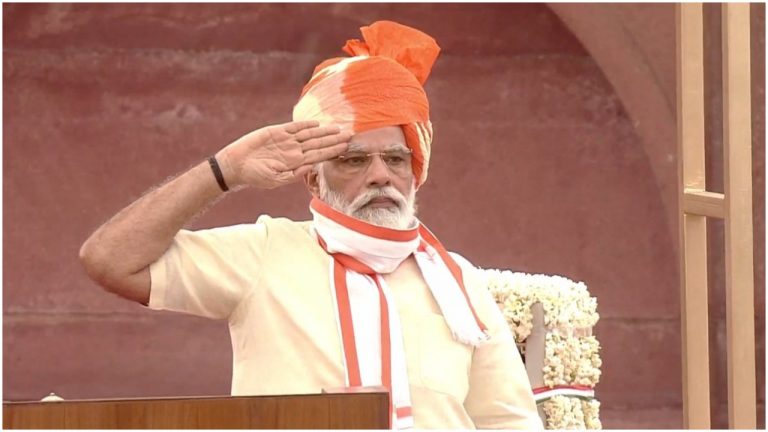
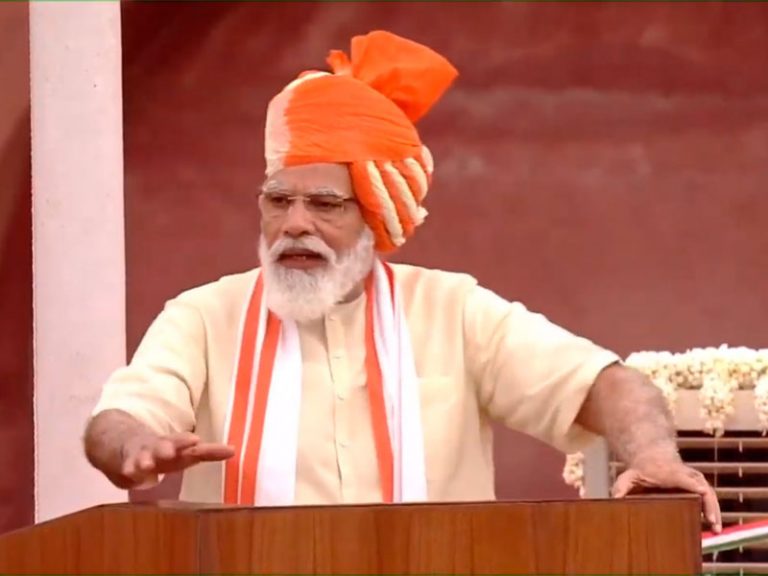
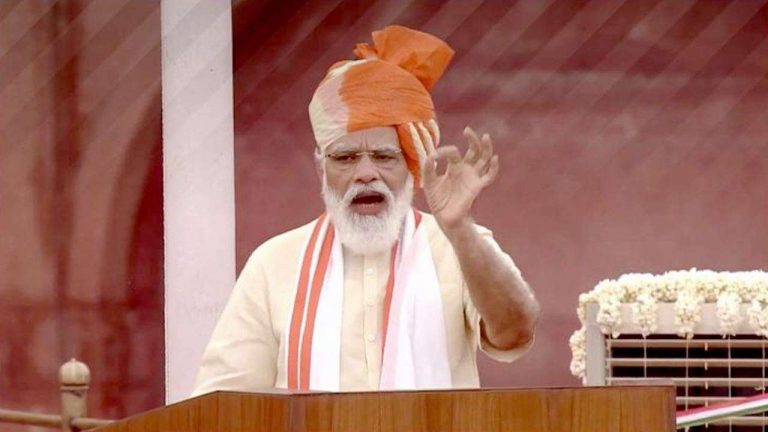
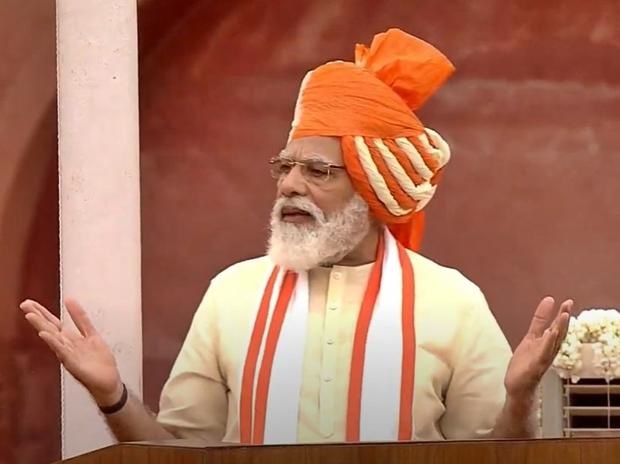
Prime Minister Narendra Modi addressed the nation on the occasion of India’s 74th Independence Day from the ramparts of the Red Fort. Prime Minister Modi inspected the guard of honour and also unfurled the tricolour to mark the occasion before his address to the nation. In this article, we will elaborate on the highlights of the speech made by PM Modi on Independence Day 2020 and the 15 most important points made by him.

Here are the highlights of the speech by PM Modi on Independence Day

The Prime Minister wished the 130 crore people of the nation on the 74th Independence Day. This was PM Modi’s seventh speech from the ramparts of the Red Fort as the Prime Minister of India. Earlier, he paid his respects to Mahatma Gandhi at Rajghat.

1. PM Modi salutes corona warriors

Prime Minister Narendra Modi began his Independence Day address by paying his tributes to freedom fighters, security forces and coronavirus warriors. ‘Seva Parmo Dharma’, said PM Modi as he remembered corona warriors who are at the frontline of fighting the deadly pandemic. 

“We’re going through distinct times. I can’t see young children in front of me today (at Red Fort). Corona has stopped everyone. In these times of COVID, Corona warriors have lived the mantra of ‘Seva Parmo Dharma’ and served the people of India. I express my gratitude to them,” said Prime Minister Modi.

Further, PM Modi said that the festival of independence is an opportunity for the country to remember the heroes of freedom and to energise new resolutions. “We have a huge event ahead of us”, said PM Modi as the country will be celebrating the 75th year of Independence next year.

“A day to remember the sacrifices of our freedom fighters. This is a day to remember the sacrifices of our freedom fighters. This is also a day to show gratitude to Security personnel including that of Army, paramilitary and police ensuring our safety,” said PM Modi.

2. PM Modi pitches ‘Atmanirbhar Bharat’, says it is another freedom struggle

Emphasising on the need of country being self-reliance, Prime Minister Modi said that ‘Atmanirbhar Bharat’ has become a ‘mantra’ for the 130 crore Indians.

“Amid COVID-19 pandemic 130 crore, Indians took the resolve to be self-reliant and ‘Aatmanirbhar Bharat’ is on the mind of India. This dream is turning into a pledge. Aatmanirbhar Bharat has become a ‘mantra’ for the 130 cr Indians today,” said PM Modi. 

The Prime Minister also said that he was confident that India will realise this dream and confident of the abilities, confidence and potential of fellow Indians. Once we decide to do something, we do not rest until we achieve that goal, the PM said. PM Modi also noted that if the country is facing a lakhs of challenges then it also has power which gives crores of solutions.

“I agree that there are lakhs of challenges for Aatmanirbhar Bharat and they increase if there is global competitiveness. However, if there are lakhs of challenges then the country also has power which gives crores of solutions, my countrymen who give us the strength of a solution,” PM Modi said.

3. India has always challenged expansionism, says PM Modi

India became a challenge to forces of expansionism with its freedom struggle, said the PM adding that all attempts were made to root out India’s cultures and traditions in past. He further assured full support to citizens affected by natural calamities and disasters.

Pointing out how Indian became self-reliant in producing PPE kits, masks during the coronavirus pandemic, PM Modi said that a few months back the country used to import N-95 masks, PPE kits and ventilators. Today India is not only meeting its own requirements but it has also stepped forward to help other countries, he added.

4. Vocal for local, says PM Modi

Prime Minister Modi also said that the mindset of free India should be ‘vocal for local. He added that the country should appreciate the local products. “If we do not do this then our products will not get the opportunity to do better and will not get encouraged,” he added.

“India’s share in the world economy should increase for which we have to be self-reliant,” said PM Modi while asking for how long India will export raw materials and import finished products. The country has to become self-reliant, said the PM adding that India has to go beyond reducing its imports.

“While we focus on economic growth and development, humanity must retain a central role in this process. India’s share in the world economy should increase for which we have to be self-reliant,” he said.

Self-sufficient India means not only reducing imports but also increasing our skills, our creativity, said PM Modi adding that the whole world is observing the reforms taking place in Indi due to which FDI has broken all records. 

5. ‘Make for the world’, PM Modi explains Atmanirbhar Bharat

He also said, “Last year, there was a record 18% increase in Foreign Direct Investment (FDI) to our country. The world has shown confidence in India as we have worked on our policies, democracy and strengthening of the foundation of our economy.”

We need to move forward with a mantra of ‘Make for the World’ along with ‘Make in India’, said Prime Minister Modi. He added that many big companies are turning towards India and time has come to move forward with the mantra to produce for the world. the Prime M

The Prime Minister said that the country cannot work in silos anymore and we need to focus on comprehensive and integrated infrastructure. We will now focus on multi-model connectivity infrastructure, he added. About 7,000 projects of different sectors have been identified to bring new revolution in infrastructure, the PM said. 

6. Atmanirbhar in Farm sector, rural development

An important priority of ‘Atmanirbhar Bharat’ is Atmanirbhar agriculture and Atmanirbhar farmer. To provide modern infrastructure to the farmers of the country, ‘Agriculture Infrastructure Fund’ of Rs 1 Lakh Crores has been created, PM Narendra Modi said in his speech. 

PM Modi said 6,000 villages will get Optical Fibre network in the near future. “Only 5 dozen village panchayats were connected with optical fibre before 2014. In the last 5 years, 1.5 Lakh village panchayats have been connected with optical fibre. In the coming 1000 days, every village of the nation will be connected with optical fibre,” he added.

Speaking on the need for revival in the farm sector, PM Modi said that our farm sector needs to evolve in line with requirements of the world and said value addition is required for our farm sector.

7. Equal opportunity for women: PM Modi

PM Modi also said he was determined to provide equal opportunities for self-employment and employment to women. Mentioning the contribution of women in the development of India, PM Modi said, “From working in coal mines to flying fighter planes, women are doing great today. Whenever women received an opportunity, they made India proud and strengthened it. Today, the nation is determined to provide equal opportunities for self-employment and employment to them”.

Prime Minister Modi said that the government will reconsider the minimum age for marriage of women. He said a committee has been set up to reconsider the minimum age for marriage of country’s daughters. We will take an appropriate decision after the committee submits its report, he added.

Breaking barriers, PM Modi also spoke about women’s hygiene. During his speech on Independence Day 2020, Prime Minister spoke about the importance of women’s hygiene and the importance of sanitary napkins. PM Modi said that over 5 crore sanitary pads have been given to poor women at ₹1 each through 6,000 Jan Aushadhi stores. 

8. National Education Policy has a key role in making new, prosperous India

PM Modi talked about the National Education Policy, said that education has a key role in the making of modern, new and prosperous India. He said the new education policy will instil new confidence in the country’s new youth.

“Education has a key role in the making of modern, new and prosperous India. So, we have brought the new education policy after three decades that has been welcomed throughout the country, which instils new confidence,” said PM Modi.

9. Prime Minister announces ‘National Digital Health Mission’

PM Modi also announced ‘National Digital Health Mission’ to bring revolution in India’s health sector. He said every Indian will now get a health identity card.

“Another big campaign is going to start in the country today. This is the National Digital Health Mission. National Digital Health Mission will bring a new revolution in India’s health sector,” said PM Modi.

10. Vaccine for coronavirus soon, assures PM Modi

PM Modi also disclosed that the government was working on a roadmap to bring corona vaccine to all Indians in shortest possible time.

Speaking about coronavirus vaccines, PM Modi said that three coronavirus vaccines are in various stages of trial in India and large-scale production will begin once we get the nod from scientists.

11. Elections in Jammu and Kashmir soon

In his independence day speech, PM Modi spoke about Jammu and Kashmir, a year after it was made a union territory and added that last one year is a year of a new journey of development for Jammu and Kashmir.

“This one year is a year of the new journey of development for Jammu and Kashmir. This one year is the year of the rights received by the women and the Dalits in Jammu and Kashmir. This one year is also the year of a life of dignity for the refugees in Jammu and Kashmir,” he said.

Elections should happen soon after delimitation is completed in Jammu & Kashmir, the Prime Minister added. Jammu and Kashmir will get its own Chief Minister and MLA said the Prime Minister. He also said, “Just as Sikkim has made its mark as an organic state, efforts are being made to make Ladakh a carbon-neutral region.

Prime Minister Narendra Modi also said that a special campaign with a holistic approach is also being worked out to reduce pollution in 100 selected cities of country.

12. No one can raise their eyes towards the sovereignty of our country: PM Modi

Sending a clear message to China and Pakistan, PM Modi said, “Today neighbour is not just the one with whom we share a border but also those with whom our heart stays connected, where there is harmony in relations. I’m happy that in past some time India has further strengthened its relations with all countries in ‘extended neighbourhood’.”

“From LoC to LAC, whoever tried to raise their eyes towards the sovereignty of our country, our soldiers responded to it in the same manner,” the PM added.

13. Developmental projects in Islands

Prime Minister said that work for new projects in some islands is already underway. “There are more than 1300 islands in our country. Keeping in mind their geographical location and their significance in the development of the nation, work to begin new projects in some of these islands is underway,” said PM.

He said that in the next 1000 days, Lakshadweep will also be connected to submarine optical fibre cable.

14. Ram Janmabhoomi issue resolved peacefully

Ram Janmbhoomi issue that prevailed for centuries, has been resolved peacefully, said PM Modi. PM Modi added that the construction of a grand Ram Temple in Ayodhya started ten days ago, the issue that prevailed for centuries, has been resolved peacefully.

The conduct of people of the country has been unprecedented and is an inspiration for future, he added.

15. Modi govt to expand NCC

Concluding his speech, PM Modi said that the government was decided to expand National Cadet Corps NCC, which will now be taken to 173 border and coastal districts of the country. Under this campaign, special training will be given to about 1 lakh new NCC Cadets, he added. In this, about one-third of the daughters will be given this special training.

The Independence Day ceremony at the Red Fort was attended by over 4,000 people, including ministers, diplomats, officials. The Defence Minister Rajnath Singh, Chief of Defence Staff General Bipin Rawat, Chief of Army Staff General MM Naravane, Chief of Naval Staff Admiral Karambir Singh and Chief of Air Staff Air Chief Marshal RKS Bhadauria were all present alongside the Prime Minister during the celebration.

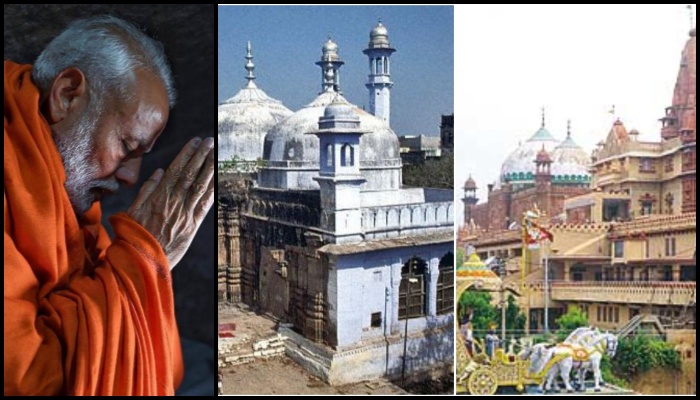
On its first Independence Day since the liberation of Ram Janmabhoomi, India must pledge to return Kashi-Mathura to its true inheritors

The 74th Independence Day celebrations are underway across the country and it is a momentous occasion for the country for more reasons than one. Prime Minister Modi has made it clear in the past that the year 2022 will mark the advent of a New India. Thus, between today and the 75th anniversary of the country’s independence, more decisions of monumental significance are to be expected.

Today is of particular import because the 74th Independence Day is the first since the resolution of the Ram Janmabhoomi dispute. It is the first Independence Day since Ram Janmabhoomi won its independence. Given everything that has happened in the second term of the NDA government thus far, with the abrogation of Article 370, the enactment of the Citizenship Amendment Act, the abolition of Triple Talaq, it can be safely said that New India will be a Hindutva-oriented country.

In that particular regard, one would hope that by the 75th anniversary of Indian Independence, Krishna Janmasthan and Kashi Vishwanath is also liberated from the clutches of Nehruvian secularism. Recently, in the aftermath of the clashes between the Indian Army and China at Galwan Valley in Ladakh, the Prime Minister had remarked that the age of expansionism is over. In that regard, ensuring the independence of Kashi-Mathura from Islamic expansionism is also important.

Seventy-five years is too long a time for the completion of the Reclamation Project with regards to Ayodhya-Kashi-Mathura but as they say, better late than never. It is also of significant import that the Pandit who officiated the Bhoomi Pujan ceremony at Ram Janmabhoomi demanded the liberation of Kashi-Mathura as his Dakshina. Thus, one tends to be hopeful that we will see some action on that front pretty soon.

There are reasons more than merely cultural for the reclamation of Kashi-Mathura. Seventy-three years have passed since the independence of our country and yet, we are not sure of our purpose as a nation. We do not have a Grand Narrative for our country. The Americans have their Exceptionalism, the Chinese have ‘Tianxia’ (All Under Heaven) and for the Japanese, it’s the royal line of Amaterasu which provides them with a grand narrative for their country.

What is India’s purpose in this world? What is the vision that India has for the world? What can India offer in terms of a vision for the world to aspire to? What is the direction that India should lead the world towards? The most obvious answer, which also happens to be the correct answer in this particular instance, is that the sacred duty of India is making the world a safe place for Hinduism and Hindus.

Consistent with that vision, it is of paramount importance that India first makes its own territory a safe place for Hinduism. Hinduism is the last major polytheistic tradition in the world and as the custodian of the Hindu Civilisation, it is India’s sacred duty to ensure its continued sustenance. The reclamation of Kashi-Mathura is one of the most fundamental steps towards that.

Narendra Modi has also made it clear in numerous speeches he has made since his reelection that the second term of the NDA government would seek the resolution of historical disputes that have raged on since independence. The mindset with which the government is working appears to be clear. Age-old disputes which have accumulated like cobwebs over the years have to be first resolved in order to usher in a new era for our country.

Kashi-Mathura are long-running disputes that ought to have been resolved within the first year of independence itself. And yet, here we are. New India cannot afford to carry the baggage of yesteryear. For the prosperity of our nation and the future of our civilisation, it is of principal importance that the sacred sites are reclaimed through government decree if necessary.

There are precisely two years left for 75 years of Indian independence. The vision of New India should be one that recognises that Hinduism is the core of India’s identity, that Hinduism is India’s past, present and future. Obviously, there are other actions that ought to be undertaken for India’s prosperity but the liberation of Kashi-Mathura is one issue that can no longer be ignored.

Concrete steps ought to be undertaken for the implementation of the National Registrar of Citizens as well. Massive land and labour reforms are long overdue to expedite the dream of an Aatmanirbhar Bharat. Reforms in education have to be made as well. All of this must go hand-in-hand and concrete measures will have to implemented now that there are only two years remaining on the clock.

During his speech at the Ram Mandir Bhoomi Pujan ceremony, Narendra Modi drew an equivalence between the Ram Jannmabhoomi Movement and the Movement for Indian Independence. Indeed, there was great truth in his words. If one was a movement for India’s political independence, the other was one for India’s spiritual liberation.

However, that spiritual liberation will not be complete until Kashi-Mathura has been reclaimed as well. Of course, the reclamation Project does not end there either. However, the next phase can begin only when one has been completed. Therefore, on the first Independence Day since the reclamation of Ram Janmabhoomi, India must homage to its spiritual heritage by restoring the rights of Krishna-Mathura to its true inheritors.

Made in India Coronavirus vaccine soon? Here is what PM Modi said in his Independence Day speech

During his address to the nation on the occasion of the 74th Independence Day, PM Modi said that three vaccines in India are being developed for the Wuhan Coronavirus. He said that scientists and researchers are working hard to complete the vaccine development. Once the scientists complete the trials, the mass production of the vaccine will begin. PM Modi in his Independence Day speech said that the government has already formulated the plan to ensure that the Coronavirus vaccine reaches to every citizen of India at the earliest.

In his Independence Day speech, Prime Minister Narendra Modi informed that three vaccines for Coronavirus were in different phases of testing in India and as soon as scientists give a ‘green signal’, the mass production of the vaccine would begin.

While talking about the situations arising due to pandemic, PM Modi said that when the pandemic hit the nation, there was only one lab capable of doing the tests. Now there is a network of 1400 labs for Covid-19 testing. He also informed the nation that in the initial days, India was capable of doing only 300 tests per day, but now the capacity has crossed 7 lakh tests per day and it is increasing as required.

PM Modi also mentioned about the 1500 Covid-19 winners who recovered from the disease and were attending the function as a symbol of the determination of the citizens of India to fight the pandemic and lead the nation as winners.

From Article 370 in 2019 to CAA and Ram Mandir in 2020: How PM Modi used his I-Day speech to talk about promises delivered

On India’s 74th Independence Day, Prime Minister Narendra Modi delivered his 7th speech from the ramparts of the Red Fort. As has been made a tradition by Prime Minister Modi, the Independence Day speech has been changed from a mere hailing of secularism and the spirit of India to talking about the ‘report card’ of the government in the past one year and a brief about what the government aims to achieve in the next one year. 

The Modi government, in general, has been mindful and has displayed utmost seriousness when it comes to delivering the promises that it made to its core voters in its manifesto. Two of the most important promises were the removal of Article 370 and the construction of the Bhavya Ram Mandir in Ayodhya.

In the year 2019, the Modi government delivered on its first promise by abrogating Article 370 and integrating Jammu and Kashmir completely with the rest of the country. In 2020, PM Modi performed the Bhoomi Pujan of Ram Mandir at Ayodhya.

In his Independence Day speeches, Prime Minister Modi often gives a brief about the work that has been done in the past one year and the promises that have been delivered by his government.

In his Independence Day 2020 speech, PM Modi spoke about the contraction of the Ram Mandir and how a long-standing demand had finally been resolved peacefully after centuries.

Prime Minister Modi, from the ramparts of the Red Fort, said, “10 days ago, construction of Ram Mandir work has begun in Ayodhya. A peaceful resolution to Ram Janambhoomi issue is unprecedented. The peace and understanding with which the Nation presented itself is evident and will become an inspiration for us in the future. Peace, unity and harmony are going to become the power of Atma Nirbhar Bharat. This devotion is the foundation of India’s future. It is with this harmony that we need to move forward”.

It is perhaps the first time that a persevering, pervasive and 500-year-long civilisational struggle saw resolution in modern India and was also mentioned from the ramparts of the Red Fort.

Along with talking about the Ram Mandir, PM Modi also spoke about the Citizenship Amendment Act and how, India was successful in forming a policy to give refuge to the persecuted minorities from neighbouring Islamic states.

While in 2020, PM Modi spoke about CAA and the resolution of the Ram Mandir dispute, in 2019, PM Modi had spoken about his government delivering on the promise of abrogating Article 370. PM Modi had underlined decisions like Triple Talaq Bill and abrogation of Article 370 from Jammu and Kashmir were long pending demands of the people which have been fulfilled. He had said Sardar Patel’s long-cherished dreams have been now been realised by his government’s path-breaking moves. “One Nation, one Constitution has now become a reality,” PM Modi said.

“It has been under ten weeks since the new Government was formed but several path-breaking decisions have been taken. This includes decisions for Jammu, Kashmir, Ladakh, the end of Triple Talaq, steps for the welfare of farmers and traders. The old arrangement in Jammu, Kashmir and Ladakh encouraged corruption, nepotism but there was an injustice when it came to rights of women, children, Dalits, tribal communities. The dreams of sanitation workers were incomplete. How can we accept such a situation”, PM Modi had said.

Further, in 2019, PM Modi had said, “We do not believe in creating problems or prolonging them. In less than 70 days of the new Government, Article 370 has become history, and in both Houses of Parliament, 2/3rd of the members supported this step. We want to serve Jammu, Kashmir, Ladakh. Those who supported Article 370, India is asking them – If this was so important and life-changing, why was this Article not made permanent? After all, those people had large mandates and could have removed the temporary status of Article 370. It is always India First for us. Politics comes and goes but steps in the interest of the nation are paramount”.

Every year, Prime Minister Modi and the government led by him deliver on important promises that were made in their election manifesto and the Independence Day speech is seen as an opportunity to speak directly to the nation. To tell the nation that this government believes in keeping its promise.

Breaking taboos from the ramparts of Red Fort: From speaking about open defecation in 2014 to the importance of sanitary napkins in 2020

On India’s 74th Independence Day, Prime Minister Narendra Modi delivered his 7th speech from the ramparts of the Red Fort. As has been made a tradition by Prime Minister Modi, the Independence Day speech has been changed from a mere hailing of secularism and the spirit of India to talking about the ‘report card’ of the government in the past one year and a brief about what the government aims to achieve in the next one year.

However, Prime Minister Modi seems to be using his Independence Day speeches for another crucial task: To break taboos. To talk about certain issues that are far from being drawing room conversations. The uncomfortable truths that hurt the Nation, but are seldom discussed in the corridors of power.

During his speech on Independence Day 2020, Prime Minister spoke about the importance of women’s hygiene and the importance of sanitary napkins. PM Modi said that over 5 crore sanitary pads have been given to poor women at ₹1 each through 6,000 Jan Aushadhi stores.

For a Prime Minister to talk about women’s hygiene and what the government has achieved on that front by ways of making sanitary pads available to rural and vulnerable women is certainly a first.

Menstruation is often regarded as a taboo subject in most homes in India. While it is not considered ‘impure’, as many would have us believe, but it is certainly not a subject that is discussed freely.

By extension, women’s hygiene also is a subject that is not a subject that has come up often in public discourse, especially when one talks about policy formation and government initiatives.

Prime Minister Modi, by talking about Sanitary napkins, the importance of women’s healthcare and what the government is doing to ensure that, has broken a crucial barrier and a taboo that will take India a long way into achieving standards of women’s healthcare that is at par with the rest of the world.

Interestingly, Prime Minister Modi had broken another norm in 2014, when from the ramparts of the Red Fort, the PM had spoken about the problem India faces with open defecation. He had declared that his government’s aim is to ensure that all districts in India become open defecation free.

“We are in the 21st Century and yet there is still no dignity for women as they have to go out in the open to defecate and they have to wait for darkness to fall. Can you imagine the number of problems they have to face because of this?” PM Modi had asked in his 2014 speech.

He further said, “People may criticise me for talking about toilets from the Red Fort. But I am from a poor family, I have seen poverty first hand. For the poor to get dignity, it has to start from here.”

The importance of cleanliness, the all-pervasive dirt in public spaces in India and the lack of basic amenities like toilets in poverty-stricken households was a subject that was seldom spoken about even though India saw decades of politicians promising to make India poverty-free. In a first, from the ramparts of the Red Fort, PM Modi had launched the Swacch Bharat initiative and declared his intention to make India a clean place to live.