Wednesday, April 15, 2026
Home Blog Page 5174

Twist in the tale: Tej Pratap Yadav’s sister in law Karishma joining RJD leaves him fuming

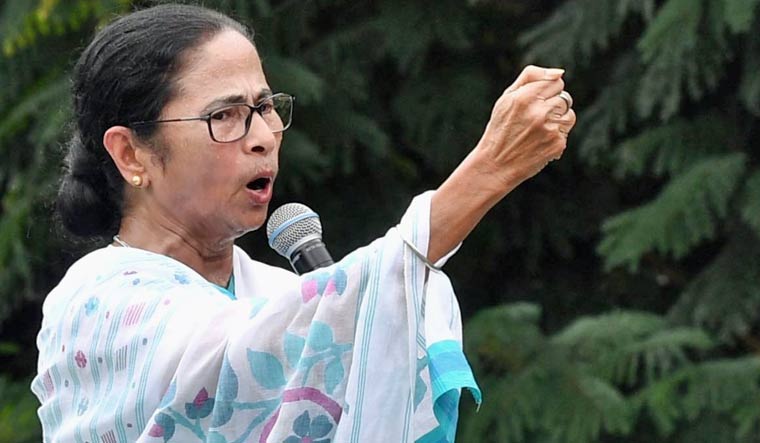
Rashtriya Janata Dal (RJD) supremo Lalu Prasad Yadav’s elder son Tej Pratap is upset after his sister in law Karishma, the sister of his estranged wife Aishwarya, joined RJD earlier today. Tej Pratap Yadav took to social networking site to say that he does not trust anyone from the family of those who ‘ruined his life’.

Karishma’s inclusion in RJD comes at a time when Tej Pratap is fighting a bitter divorce battle with his estranged wife Aishwarya Rai. Karishma is Aishwarya’s cousin. As per reports, this is a political move by Tej Pratap Yadav’s younger brother and RJD leader Tejashwi to try and create cracks within the Rai family. Karishma is niece of Chandrika Rai, Aishwarya’s father.

Karishma, like Tej Pratap’s sister Misa Bharti, is a doctor by profession. While joining RJD, Karishma reportedly said that they have old relations with the Yadav family. Speaking on the relationship between Tej Pratap and her sister Aishwarya, Karishma said that it is a personal thing. “Sometimes, marriage between two good people does not work out for reasons beyond control. No one can be blamed for it,” she said.

Tej Pratap Yadav reportedly said that the party’s decision is important. “There must be a reason why RJD gave her membership,” he told New18. However, moments later, he took to Twitter to say he does not trust anyone who is related to the family who ‘ruined his life’.

Troubled marriage of Tej Pratap Yadav and Aishwarya Rai

Tej Pratap Yadav and Aishwarya Rai got married on May 2018. But the couple filed for a divorce a few months after the wedding. In December last year, Aishwarya and Rabri Devi, her mother-in-law accused each other of torture and harassment. She also accused her sister in law Misa Bharti and Tej Pratap of harassing and assaulting her. Tej Pratap Yadav has claimed that he was made a scapegoat for the political benefits of his family members.

India’s TikTok ban may have caused losses worth 6 billion USD to Chinese parent company ByteDance, says China’s mouthpiece Global Times

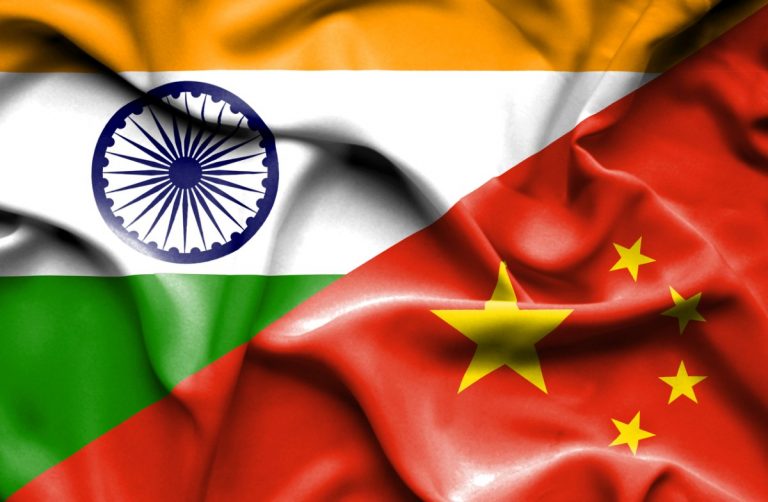
The Chinese media outlet The Global Times has reported that ByteDance, the parent company of TikTok, may lose $6 billion in revenue after India banned 59 Chinese apps. They tweeted, “The loss of Chinese internet company ByteDance – the mother company of Tik Tok — could be as high as $6 billion after the Indian government banned 59 Chinese apps including Tik Tok, following deadly border clash between Indian and Chinese troops last month.”

On 29th June, the Indian government announced a ban on 59 Chinese apps, including TikTok, Vigo, UC Browser, ShareIt, Baidu map, Shein, and Clash of Kings. It is not the only step India has taken against China after the violent standoff at Galwan Valley. State governments and state-owned entities, including Indian Railways, Haryana government, Maharashtra government, BSNL, and NHAI have announced cancellations of agreements with Chinese companies.

Though TikTok released a statement that they are working with the Indian government and sorting issues raised against the app, it is highly unlikely to see a comeback anytime soon. Meanwhile, Chingari, a TikTok alternate of Indian origin, has seen a massive spike in downloads.

India’s economic retaliation against China

Along with banning 59 apps, including TikTok, the Indian government has taken several steps against China to halt its penetration in the Indian economy. Union Minister Nitin Gadkari, on 1st June, announced that Chinese companies would not be allowed to take part in highway projects. They cannot take part in joint ventures as well.

The Maharashtra government has recently put a hold on three agreements with Chinese companies worth Rs.5,000 crore. The Haryana government has decided to cancel power project contracts with Chinese companies. National telecom giant BSNL has officially announced the cancellation of the agreement with a Chinese company for setting up 4G services in India. The Indian Railways had also recently terminated a contract worth Rs 471 crore with a Chinese company.

The Indian Federation of Working Journalists seeks probe into finances of PTI, accuses it of being mouthpiece of Congress

The Indian Federation of Working Journalists (IFWJ) has written to the Prime Minister of India and the Minister for Information and Broadcasting, demanding a judicial inquiry into the various funds, subsidies, loans and financial help made available to the Press Trust of India (PTI) by the Government of India during the past several years.

In the letter, the largest journalist organization has accused the PTI management of misappropriating the Government funds for anti-worker purposes like splitting its plant union, favouring only loyalists and denying employees their legal dues under various statutory wage awards. It said that the Press Trust of India not only received a huge sum of money through various Union Government over the years, it also got a subsidized land to build its office on the fabulous Parliament Street. And all this at the cost of state exchequer and the Indian taxpayer money.

Accusing the news agency to have become a “mine of nepotism”, the Indian Federation of Working Journalists wrote that PTI ran on a professional pattern so long as its management had working journalists like P. Unnikrishnan, N.D. Prabhu and K.P. Srivastava among others. But after the management changed hands and the “nefarious contract system of employment and the rule of supersession started, the news agency became a mine of nepotism”, read the letter.

IFWJ accused the PTI fo being Congress’ mouthpiece

IFWJ also accused the PTI management of always shamelessly turning itself into the mouthpiece of the ruling party, chiefly the Congress party.

PTI’s interview with the ambassador of China raises doubts about its hidden agenda: IFJW

Speaking of the recent interview by the PTI with the ambassador of China, IFWJ wrote that the interview was done at a time when the Chinese Communist Party had virtually declared a state of war through media. The PTI story thus raises doubts about its hidden agenda, read the letter signed by Vipin Dhuliya, the secretary-general of IFWJ.

PTI had come under great criticism recently after an interview with Chinese ambassador Sun Weidong. During the interview, the Chinese ambassador blamed India for the clash between the two countries at Galwan Valley. Journalists of other agencies were outraged by the fact that the PTI did not bother to counter-question the Chinese ambassador on his dubious claims. People have also pointed out that the ‘interview’ came across as a press release by the Chinese Communist Party rather than a genuine interview.

Indian Federation of Working Journalists (IFWJ)

For the uninitiated, the Indian Federation of Working Journalists (IFWJ) is the largest journalist organization, with over 30,000 primary and associate members, working for electronic media, news agencies and 1,260 journals of 17 languages in 35 states and Union Territories. It was founded in  New Delhi on 28 October 1950.

The letter also spoke of how the independent multilingual news agency, the United News of India (UNI) was being starved of govt aid, which was in stark contrast with what PTI has been receiving over the years. The UNI was left to die slowly. Most of the UNI employees have not been paid full wages for over three to four years. This sad state of discrimination between two national news agencies has only ruined journalistic independence and professional integrity, read the letter.

Prasar Bharti greatly displeased with the ‘anti-national’ reporting by PTI

IT was reported how, Prasar Bharti, India’s largest public broadcasting agency, had expressed deep anguish on the blatant anti-India propaganda, which it called “anti-national’ reporting, by PTI in recent times and was considering withdrawing financial support to the latter over their recent coverage.

PTI has apparently been receiving huge fees from the public broadcaster, the fees are said to be in crores and it has been going on since decades. Reportedly, Prasar Bharti pays PTI over RS. 9 crores annually, which is in addition to the amount paid by PIB. Now, sources tell us that PTI’s ‘anti-national’ reporting makes Prasar Bharti believe that it does not make it feasible to carry forward the said relationship.

Sources also tell us that PTI has been averse towards a review of the same since 2016-17. But in light of PTI’s recent coverage, Prasar Bharti has initiated a review of the relationship between the two. We are told that PTI will be informed of the decision soon.

Past Incidents of Fake News by PTI

There have been numerous occasions in the past when the PTI has peddled fake news, on certain occasions, even on communally charged matters. Earlier in April, PTI had claimed that one Mehboob Ali was lynched on suspicions of being infected with the coronavirus. However, later it turned out that he was alive.

The PTI has spread fake news on matters of politics as well. Prior to the Delhi Elections in February, PTI had claimed that only 25% of AAP candidates had serious criminal cases against them. But in reality, the number was upwards of 50%.

Pakistan fears new virus spread due to human-animal contact during Bakra Eid, India was infected earlier too

Pakistan’s National Institute of Health has expressed concerns over the increased risks of transmission of the Wuhan Coronavirus and another deadly disease named Crimean-Congo Hemorrhagic Fever (CCHF) due to increased human-animal interaction during the upcoming Eid al Adha or Bakra Eid. It has stated that the increased human-animal interaction during movement, purchase and herding of sacrificial animals ahead of Eid multiplies the risks of the CCHF. Eid al Adha

As per reports, Pakistan’s NIH, through its Field Epidemiology and Disease Surveillance Division (FEDSD), has issued an advisory alerting stakeholders, including healthcare providers to take timely steps to prevent widespread transmission of the above diseases.

The NIH advisory ahead of Eid

The 2-page advisory issued by the NIH states that the deadly disease that is spread by tick bites can be prevented by monitoring sacrificial animals at entry points at markets and making sure that every animal is treated by approved acaricides at least a week before they reach markets. It adds that people participating in slaughtering, butchering and handling tissues and skin should wear appropriate protective gear like gloves etc, even while doing it at home.

The NIH advisory further states that livestocks should always be examined for ticks and animal herders and sellers should take adequate precautions while examining and treating ticks on the body of animals. It added that ticks should never be crushed with fingers. It also called for proper handling, herding and burial practices.

The advisory stated that people visiting animal markets during Eid should wear full sleeves clothes, gloves and face masks. It advocated for the usage of insect repellents to avoid ticks, examining clothes and body for ticks and usage of proper hand wash and sanitisation techniques.

NIH, Pakistan’s advisory for public ahead of Eid

What is CCHF?

Crimean-Congo Hemorrhagic Fever is a deadly and infectious disease caused by a tick-borne Nairovirus of the Bunyaviridae family. The fatality rate of the disease is at a risky 10-40% and in severe outbreaks, can even go up to 90%. Ticks present on the body of domestic animals like cattle, sheep, buffalo and goats serve as both the reservoir and vector of the virus. WHO says that the virus can spread quickly and can cause dangerous hospital and health facility outbreaks. It also says that the disease is very difficult to prevent and treat.

CCHF has symptoms similar to dengue and causes, fever, headache and very low platelet count in humans.

India had also had a CCHF outbreak in 2011

In January 2011, NIV, Pune had confirmed India’s first CCHF outbreak in Gujarat’s Sanand. The patient zero was a woman named Amina Momin of the Kolat village near Sanand town, who had picked it up from ticks on domestic animals. Later, a doctor and a nurse treating her had contracted the disease. All three had died before a viral outbreak was suspected and NIV was contacted by the health authorities.

The NIV had confirmed the virus within 15 hours of getting the samples from Sanand. It had alerted the Gujarat government and the then state government had immediately begun screening of the entire area, covering some 16,000 villages. Due to strict measures and widespread screening, the outbreak was successfully contained. Many subsequent cases have also been reported, especially in the Gujarat region and among communities who herd and slaughter animals.

Tablighi Jamaat members tried to cheat the system when they entered India on a tourist visa: Here is what MHA affidavit says

10 Tablighi Jamaat members had approached the Supreme Court challenging the Modi government’s move to cancel their visas after the Coronavirus pandemic fiasco. 34 individuals from 34 different countries had challenged the Ministry of Home Affairs order blacklisting over 2,500 foreign nationals presently in India for a period of 10 years from travelling to India for their alleged involvement in Tablighi Jamat activities (Malana Ala Hadrami and ors. v. UOi and anr). Maulana Ala Hadrami is a french national who has approached the SC. Now, the Ministry of Home Affairs had responded to the queries posted by the Supreme Court in the case.

The French petitioner had invoked the Indian Constitution to challenge the MHA. “En masse blacklisting of the aforesaid more than 2500 foreigners of about 40 different nationalities, currently in India, without affording any opportunity to prima facie defend themselves, is an egregious and blatant violation of Article 21 of the Indian Constitution.”, the petition by Hadrami had stated.

The petitioners have urged the top court to quash the MHA orders blacklisting nearly 3,500 foreign nationals as it violates Article 21. They have sought the Court’s help to allow their travel back to their countries of citizenship. 

On Monday, a bench of A M Khanwilkar, Dinesh Maheshwari and Sanjiv Khanna sought to know if there was a general direction for cancellation of visas and blacklisting them or if an order was passed in each individual case.

The court also asked the Union government to clarify why these foreign attendees had not been deported if their visas were cancelled.

In response, the Union Government has clarified several points with regards to the cancellation of visas and deportation of members of Tablighi Jamaat.

Firstly, the government has unequivocally stated that foreigners are not entitled to getting an Indian visa and also, have no right to invoke Article 21 under these circumstances.

MHA response in the Tablighi Jamaat case

MHA stated that a foreigner has no fundamental right to get an Indian visa or to continue living here on a cancelled or rescinded visa. The grant of visa is not an enforceable right, let alone a fundamental right of any foreigner. MHA also states that the petitioners cannot claim a right under Article 21 of the Indian Constitution as it is always subject to the procedure established by law and thus, the petition is not maintainable.

The response of the MHA reveals that in the visa manual, specific provisions are cited that regulates “Tablighi work”. From 2003 to 2019, the MHA statement cited rules in the visa manual that spoke of the requirements of disclosures if a foreigner visits India for Tablighi work.

MHA response in the Tablighi Jamaat case

The MHA statement further revealed that the Tablighi Jamaat members were in India on a tourist visa and thus, they violated the norms set for the entry of anyone who wishes to get involved in Tablighi work.

MHA response in the Tablighi Jamaat case

“Keeping in view the fact that participation in Tablighi Jamaat activities on Tourist Visa is a serious violation of provisions of Visa Manual 2019 and is also a criminal offence punishable under sections 13 and 14 or The Foreigners Act, 1946, the Bureau of Immigration was directed on 02.04.2020 to blacklist these foreigners under Category A to prevent their future entry in India”, the response by MHA stated.

It is pertinent to note that according to The Hindu, after this fiasco, the MHA has included indulging in Tablighi activities” as a specific visa violation that will attract a penalty of $500 fine and has added a new category—“restriction on engaging in Tabligh activities” in the “general policy guidelines relating to Indian visa.”

Reportedly, The amended guidelines read, “foreign nationals granted any type of visa and Overseas Citizens of India (OCI) cardholders shall not be permitted to engage themselves in Tabligh work. There will be no restriction in visiting religious places and attending normal religious activities like attending religious discourses. However, preaching religious ideologies, making speeches in religious places, distribution of audio or visual display/ pamphlets pertaining to religious ideologies, spreading conversion etc. will not be allowed.”

From the response issued by MHA to the Supreme Court, it is evident that the members of the Tablighi Jamaat misrepresented the reasons for their visit to India. Under a tourist visa, one can move around in India for the specific purpose of visiting places only and not for indulging in any religious activity like that of the Tablighi Jamaat. Hence, to avoid issuing the necessary information for immigration, the Tablighi Jamaat members visited India on a Tourist Visa and thereafter, proceeded to indulge in religious activities by cheating the system.

The response by MHA further gave out the following information:

  1. Visa of 2679 foreigners, including 9 OCI card holders, have been cancelled so far on a case to case basis.
  2. No Tablighi Jamaat member has been deported so far as criminal proceedings against them are ongoing.
  3. Before the issuance of lookout notice and their blacklisting, 227 foreign Tablighi members were remaining in India.

Ever since the Tablighi Jamaat was busted and hauled up to quarantine facilities and hospitals, they have embarked on a Jihad against civility, decency and the laws of this country. Its members have sexually harassed nurses, made life difficult for healthcare providers and refused to cooperate with the administration even on the face of calamity.

Sopore: Liberal Indian media crosses frightening line

On June 19, merely days after the bloody clash with China at Galwan valley, engineers of the Indian Army completed a crucial 60 meter bridge over the Galwan river high in the mountains. This would give the Indian Army easy connectivity to the crucial air field at Daulat Beg Oldie.

That’s the Indian Army for us all. Forever vigilant along the LAC and the LOC. Ready to build a bridge in difficult mountain terrain, with the enemy almost staring them in the face.

Yesterday, the Indian liberal media crossed a very different sort of bridge. It was a moral bridge. They officially crossed the bridge from hostility towards Modi sarkar to openly siding with Pakistani propaganda.

It happened thus. Terrorists attacked a CRPF party in Sopore in Northern Kashmir. One CRPF man was killed as well as a civilian. The heartbreaking images of the dead civilian, a grandfather, went viral yesterday, showing his little grandson grieving over the lifeless body.

That’s what terrorism is. It’s purpose is to take innocent lives. How many more heartbreaking images do you want to see? From Kashmir, from Delhi, from Mumbai, from Paris, New York, Sydney or Madrid?

But then something surprising happened. After the Sopore attack, segments in the Indian liberal media started circulating the rumor that the civilian in question had been killed not by terrorists, but by the CRPF.

Sure, the Indian media kept up a veneer of deniability. Instead of accusing the CRPF directly, they said they were merely reporting the rumors that had been circulating. But the objective of giving widespread publicity to these rumors is completely clear. And whose propaganda this is serving.

The approach was simple. The “reputed” liberal newspapers reported it in monkey balancing fashion, as two competing accounts of the Sopore attack. The murky online liberal portals were bolder: they made headlines out of the allegation and included the CRPF’s official version as a footnote.

Some of them went ahead and “interviewed” a 3 year old child rescued by security personnel in Sopore attack as evidence to support their claims. It’s official. They have no morals.

And so it begins. The propaganda effort to show Indian security personnel as terrorists in Kashmir.

They had been preparing the ground on this for a while. For a long time now, terrorists neutralized by security forces have been hailed in our media as headmasters sons, cricket enthusiasts, video game players, math teachers and what not. Their personal stories, their hopes and dreams, were splashed all over mainstream and social media. Meanwhile, casualties sustained by Indian security personnel were reported as dry statistics: X killed and Y injured.

In other words, the terrorists were humanized, turned into people who seemed relatable. Indian security personnel were rendered nameless and faceless.

This instinct has been lurking in the Indian liberal mind for a while now, even before Modi sarkar. The Batla House encounter of Sep 2008, in which Inspector M C Sharma laid down his life, has repeatedly been described as a fake encounter. Even after the 26/11 attacks, a section of media quite eager to excuse Pakistan and somehow blame the RSS.

But secular parties were in power then. The parties and their cheerleaders were torn between ideology and votebank on the one hand and the basic responsibility of running the state on the other.

Then, 2014 happened. And then 2019. After Article 370 was removed in August last year, the media drive against India became turbocharged. The Indian state was routinely labelled as Nazi and fascist. Even Kashmiri Hindus celebrating the move were labelled as Nazis. Of course, this is exactly what Pakistan and China wanted to hear : India as the occupier in Jammu, Kashmir and Ladakh. The Pakistanis want Kashmir. The Chinese want Ladakh. The liberal media wants to get back its hold in the corridors of power in Delhi. Three forces, one objective.

In retrospect, it is surprising that it took the Indian media so long to cross this bridge.

Kolkata: Family stores dead body of elderly coronavirus patient in ice-cream freezer for 2 days after being turned away by mortuaries

In a shocking incident, a family-based in North Kolkata in West Bengal was compelled to store the dead body of their elderly family member, who later turned out to be Coronavirus positive, in an ice-cream freezer for two days after the doctor refused to issue a death certificate without the COVID-19 test results, urging the family to contact the health department or the police. Multiple city mortuaries also turned them away demanding a COVID-19 test report and the death certificate, citing protocols.

According to reports, the elderly visited the doctor after complaining of breathing distress. The doctor conducted a Coronavirus test on him, but the man died on Monday before the test results arrived. The test report came on Tuesday and confirmed that the septuagenarian was coronavirus positive.

Only after 48-hours, did the health department workers arrive to take the body away. The building in which the man lived was sanitised 50 hours after he died.

The family in Kolkata made distress calls to the health department, civic authorities, police and politicians, but to no avail

After the man died on Monday, the family called a doctor. The doctor said that the man probably died due to heart attack, but refused to issue a death certificate as his Coronavirus test result was not available yet. The doctor advised them to preserve the body til the report comes. Accordingly, the family carried the body to multiple morgues in the city, but all of them refused to keep the body in the absence of the test result.

After that, the family ran pillar to post, but to no avail. They allegedly made an endless number of calls. They first called the police, which directed the family to the local councillor, who reportedly didn’t respond. Calls to the health department, civic authorities, the police and politicians also did not help.

As the body started decomposing by the next day, the family decided to buy an ice-cream freezer to preserve it. “We even made several calls to the helpline given to us by a person when we called up the health department but nobody responded,” said a family member quoted by Press Trust of India. “Calls were not answered. That’s why decided to keep his body at home inside a freezer,” the family member said.

“In fact even after getting the test reports we kept on calling the state health department but there was no response. On Wednesday morning, health department finally called up and set the process in motion for removing the body for last rites,” he said.

According to reports, the man’s body was collected by health department workers after a full 48 hours for cremation.

This incident throws light on the casual approach adopted by the Mamata Banerjee-led West Bengal government to handle the coronavirus crisis and also highlights the complete lack of coordination among agencies dealing with COVID situations.

But the police have denied the allegations of non-cooperation, saying that they were just following the protocol for handling bodied of Coronavirus victims. They said that they were informed by the laboratory that the report will not be available on Monday, the day of the death, and they received the report and death certification only at 11 PM on Tuesday. Because of this, the body was collected on Wednesday only.

A senior official of the health department admitted to “miscommunication” that led to the family buying a freezer to preserve the body. The official added that the family should have insisted on admitting the patient at a hospital, considering his age. Another doctor said that even after the death, had the body been taken to a government hospital, the harassment could have been minimised, as the body would have been kept at the hospital morgue until the Coronavirus report arrived.

Ladakh standoff: India Inc steps up for India, industrialists rise to the occasion to move forward on path of self-reliance

After the unprovoked intrusion from the Chinese army at Ladakh border, there has been a great deal of anger in Indian citizens. While there have been call for boycott of Chinese products the Indian industrialists, too, have now stepped in to help us move forward on the path of self-reliance.

Parth Jindal, the managing director of JSW Cement, on Wednesday took to Twitter to slam China for its aggression against India along the Line of Actual Control (LAC) near Ladakh killing 20 Indian soldiers.

In a tweet, the Indian industrialist also said that the unprovoked attack by the Chinese on Indian soil on our soldiers was a huge wake-up call and a clarion call for action and pledged that JSW Group, which has net imports of $400 million from China, will bring it down to zero in next two years.

Image Source: Parth Jindal

Reportedly, the cement business of the JSW Group imports clinkers, the base rock of cement from China, which is then converted into usable cement by mixing fly ash supplied by JSW Steel to supply it to the domestic markets.

Anand Mahindra responds to Chinese aggression

Jindal’s tweet comes a day after businessman Anand Mahindra had also slammed Hu Xijin, the editor of English China daily Global Times, who had tried to mock India over the ban of 59 Chinese apps including TikTok.

Following the ban of Chinese apps, Hu Xijin had taken to Twitter to state that even if Chinese people wanted to boycott Indian products, they cannot do it as they do not find many Indian goods.

The tweet by Chinese media propagandist had angered Anand Mahindra, who responded to him by stating, “I suspect this comment might well be the most effective & motivating rallying cry that India Inc. has ever received. Thank you for the provocation. We will rise to the occasion…”

Image Source: Anand Mahindra

India bans Chinese app, infrastructure contracts

Recently, in the backdrop of India-China face-off in Galwan Valley, the Indian government banned 59 Chinese apps, including TikTok, citing that these apps possess threats to national security.

Earlier, the Indian Railways had also terminated a contract worth Rs.471 crore with a Chinese company. A few days back, BSNL had announced that they will terminate the contract with a Chinese company to set up 4G services. The Department of Telecom has also decided not to let Huawei to take part in 5G spectrum testing.

Taking a cue, on Wednesday, Union Minister Nitin Gadkari also stated that the Indian government will not allow Chinese companies to participate in highway projects. He had added that the companies would not be able to participate in joint ventures as well.

Nandi idol desecrated in Rajkot for “sensational” TikTok video, two people arrested

Rajkot Police have arrested two persons for desecrating a Nandi idol in a temple in Shapar Veraval industrial zone on Wednesday. Police have identified them as Jayesh Chudasma (27) and Dinesh Mahida (25), who work as laborers. They reportedly shot a video while kicking the idol, as they wanted to create “sensation” on the social media platforms.

According to the reports, after shooting the video, they uploaded it on TikTok, WhatsApp, and other social media platforms on 28th June, a day before India’s government imposed a blanket ban on 59 Chinese apps, including TikTok. Both of them were drunk while shooting the video.

In the video that went viral on the internet, Chudasma was seen kicking the idol. Mahida was behind the camera recording the video. The complaint against the video was submitted by one Karan Parmar, who is a resident of Metoda GIDC. When he inquired about the video in his circle, he discovered that they committed the alleged crime in Shapar Veraval industrial zone. He informed the police and filed an official complaint.

While talking to TOI, an official from Shapar Veraval police station said, “As soon as the complaint was lodged, we swung into action and traced the accused. The accused are also seen smoking in the temple premises in the video. Both the accused are laborers. They said they were looking for a subject to make a Tik Tok video and decided that the desecration of an idol in a temple would make a sensational video.” He added that they were drunk while committing the crime. They have apologized for their crime and made a video saying ‘sorry’ that was uploaded on WhatsApp and other social media networks.

This is not the first time someone has desecrated a Hindu idol to shoot a sensational video. On 21st January 2020, idols of Hindu Gods and Goddesses were desecrated in Andhra Pradesh. In August 2019, two Muslim youth destroyed Goddess Bhavani idol in Bijnor.

Indian Railways invites private players to operate passenger trains, a journey from Modi’s ‘vision’ to India’s reality

Union Minister Piyush Goyal announced on 1st July that Indian Railways had invited private players to submit “Request for Qualifications” for operating 151 passenger trains on 109 pairs of routes. This project will entail a private sector investment of Rs.30,000 crore in Indian Railways. The main objective of this project is to introduce modern technology with reduced maintenance, reduced transit time, improved safety, better job opportunities, and world-class travel experience for the passengers.

In the press release issued announcing the same, the Ministry of Railway stated that the majority of the trains running under this project would be made-in-India. It will be the private sector’s responsibility to finance, procure, operate, and maintain the trains. Railways have made it compulsory for the private sector to ensure these trains are designed to run at a maximum speed of 160 kmph to reduce transit time substantially. The passenger must have a comparable or faster speed than the current running train on the same route.

While the concession period for the project will be 35 years, the private entity will be responsible for paying haulage charges, energy charges, and a share in Gross revenue to the Indian Railways. One of the major concerns, whenever there are talks about the privatization of trains, is the jobs of drivers and other employees who run and maintain the trains. Indian Railways has put up a clause that only drivers and guards hired by Indian Railways can operate these trains.

Existing Privatisation in Indian Railways

Private passenger trains are already running on Indian Railways network, but they are not truly private, as the trains are owned by IRCTC, a subsidiary of the Railways. The Tejas Express trains run by IRCTC were the first step by the Railways to let others run passenger trains on its network. While the locomotives, coaches, drivers and guards are provided by the Railways, the onboard services, ticketing, catering and housekeeping are the responsibility of IRCTC. The trains also have airline-style trained hostesses and stewards, a significant difference from trains operated by Indian Railways. The Tejas Express project has provided important experiences for the Railways on letting others run passenger trains, which will be vital when actual private players start operating trains.

While passenger train services are being opened for private players, the corporate sector is already allowed to run private freight trains on the network of Indian Railways. In 2017, the govt had allowed the private sector to run freight trains, and the first such train was flagged off by Railway Minister Suresh Prabhu in April 2017. The private goods trains are run under the Special Freight Train Operations Scheme of the Railways. The Railways is also allowing the development of private freight terminals on Railway land for private freight trains.

CM Modi had a vision for Indian Railways; PM Modi is making it a reality

Before Prime Minister Narendra Modi was considered a candidate for the post in 2013, he shared his views about the privatization of Indian Railways. During India Today Conclave 2013, he had said that the government constructed railway tracks, roads, and airports. While roads and airports are open for the private sector, there is no provision of the private sector to take advantage of the elaborated web of railway tracks.

In less than two months after becoming the Prime Minister, Modi had discussed his vision of developing Railway stations on the line of Airports while flagging off the inaugural train from Katra in Jammu. At that time, he had already discussed his vision with the stakeholders and in the next few months, the change was practically visible.

Suresh Prabhu, the current Indian emissary to the G20, took charge of Indian Railways in November 2014 and took several steps to modernize the system. In 2017 after Piyush Goyal assumed charge of the ministry, he paced up the modernization and introduced several groundbreaking changes in the Railways, including modern and fast trains.

By the end of March 2019, Indian Railways already modernized more than 60 major railway stations. New Delhi Railway Station or NDLS was developed with modern amenities and facilities. The luxury hotel feel of the Mathura Railway Station became a hot topic of discussion after its inauguration. Naini Railway station Prayagraj has murals of artists, dance forms and more depicting the vibrant culture of India. Varanasi Railway Station’s new look was discussed largely on social media. Under the Swatchh Bharat Abhiyan, Indian Railways ensured clean railway stations across the country. Countless photos and videos have been shared by the delighted passengers praising the Railways’ efforts to keep the stations clean. Indian Railways is also working extensively to increase use of Solar Power for trains and stations to reduce its carbon footprint.

High-speed Wi-Fi, hygienic and fresh food, better trains, modern amenities, and above all, accident-free year are few things that kept the Indian Railways on the positive side of the news. The launch of Tejas Express and Vande Bharat Express in 2019 was termed as a major step towards privatization. From Madhubani paintings on the Madhubani station’s walls, beautiful artwork on Titwala Railway Station and mesmerizing artwork on a station in Agra, to breathtaking artwork and new look of the coaches, the face of Indian Railways has changed a lot in the last six years. Indian Railways is also working extensively to expand its reach to the extreme corners of the country.

The inevitable challenges

Though Railways has come a long way, the challenges are still there. Covid-19 has caused significant loss in terms of passenger revenue for the Railways. However, Indian Railways did find a silver lining and completed 200 long-overdue projects in the last three months. From deep-rooted corruption that slowed the Railways progress to incapable contractors and efforts to sabotage tracks by Naxals or anti-social elements, Railways has to deal with a lot of challenges. The privatization of the passenger trains will open better options for the Railways to deal with such challenges and it will open doors for more jobs and better infrastructure.