Home Blog Page 5375

Eid: No sweets exchanged between BSF and Pakistan Rangers, amidst escalated border tension

On Monday, the Indian Border Security Force (BSF) had reportedly not exchanged sweets with the Pakistan Rangers on the occasion of Eid, owing to the strained relations between the two countries. This marks a departure from the traditional practice of sharing sweets between Indian and Pakistani security forces, during festivals.

Officials attribute this change in India’s stance to increased incidents of cross-border terrorism on the western border. As such, no sweets were exchanged on the India-Pakistan international border that stretches from the Union Territory of Jammu and Kashmir to Gujarat.

Officials informed that while India maintained the tradition on multiple occasions such as Diwali, Republic Day, and on the Foundation Day of the BSF (December 1), positive reciprocation was not received from the Pakistani end.

BSF shares sweets with BGB

However, keeping up with its long-standing tradition, BSF exchanged sweets with the Border Guard Bangladesh (BGB). In a statement, the West Bengal Frontier of the BSF reiterated that the warmth in relations between the security forces of India and bangladesh has remained consistent and that they have celebrated on several occasions such as Eid. Moreover, the BSF officers also congratulated the BGB personnel stationed at the border.

EAM slams Pakistan at SCO

Earlier, Minister of External Affairs S Jaishankar hit out at Pakistan without taking its name in Shanghai Cooperation Organisation (SCO) meet with the foreign ministers of several countries. MEA Jaishankar emphasised that some countries are “busy” in spreading terrorism while the world is a fighting coronavirus. He said, “Even as the world fighting the COVID-19. Some are busy in spreading other viruses such as terrorism, fake news, doctored videos are also used to divide communities and countries.”

Is Hinduism a ‘religion’ or just a ‘way of life’? Depends on how one defines ‘religion’ itself

Hindus are often heard arguing that Hinduism is not a religion but a way of life. Others object and see Hinduism as a religion. But between the two arguments, which is true? Which one holds more water?

It depends on how religion is defined. Most people probably would say that religion is:

  • About believing in an invisible Supreme Being, which is the cause of our existence.
  • About methods and rituals to worship it.
  • About living according to its laws or will.

In this case, Hinduism is definitely a religion. In fact, it is the Mother of all religions, because the Indian Vedas had postulated already in very ancient times the existence of such a Supreme Being. They called it Brahman (from big, expanding) and declared it cannot be imagined by the human mind, but the best description is Sat-Chit-Ananda (means, it is true, knows itself and is blissful). It is all-pervading and therefore the essence (Latin: esse = to be) of everything, including us.

So why does the question arise whether Hinduism is a religion or not?

To discover this, we need to look at those religions where nobody has a doubt that these are religions. The term ‘religion’ was first used for the Catholic Church and later for Islam, too, and nobody has a doubt that these two are the main religions in today’s world.

These two religions also are about the three points mentioned above. Yet there are significant differences.

The Supreme Being (called God or Allah respectively) of these two religions is not the essence in all, but is a separate entity which has certain personal traits. One most important trait is that it is jealous of other gods and wants the whole of humanity to worship only Him (yes, the Supreme is clearly imagined as male by them). Both religions give out a dire warning: those who do not accept this truth will burn eternally in hell.

How do these religions know that this is the truth? Because they claim that the Supreme Being himself has revealed this truth to one person (in the case of Christianity to Jesus Christ some 2000 years ago and in the case of Islam to Prophet Mohammed some 1400 years ago).

Here is where another definition of religion comes in. It is often said that religion is a “belief-system”. It needs blind, unverifiable belief in what the ‘founder’ of the religion has said, which is written down in a book and which can never be verified by human beings.

Here Hinduism is clearly not a religion. Hinduism does not require blind belief. On the contrary, an open enquiry and an inner exploration into the truth, especially into the truth of one’s own being, is necessary to discover the Divine Essence in oneself, to discover that Atman (one’s own consciousness) is indeed Brahman, as the Vedas proclaim.

So is Hinduism a religion? It depends which definition for religion is more true.

We can find out when we look at the meaning of religion. Religare (Latin) means to bind. Bind to whom or to what? If we look at history, the Church (for which religion was first used) was very adamant that those followers which it had gained through (often forced) baptism must never leave the Church. Christianity had strict blasphemy laws with terrible punishment, like Islam even has today. So it can be safely assumed that religion meant to bind its followers to the doctrine of the respective religion. The followers must ‘religiously’ stick to the doctrine.

So in this sense, Hinduism is not a religion.

But it is also not just a “way of life”.

It could be said, it’s an ideal way of live, because it is based on Dharma, doing the right thing under the given circumstances.

However, since ‘religion’ in today’s world is mainly seen as connecting to a supernatural, supreme Intelligence, usually called God, Hinduism should not give up its place among religions and rather try to make the others see sense that some of their dogmas cannot be true and actually have harmed humanity in a big way over the centuries. History is proof.

Congress-friendly TV anchor expresses glee at coronavirus cases from Gujarat, mocks ‘Gujarat model’

In a vile display of sadistic pleasure, Congress-friendly tv anchor, Sumanth Raman, took to Twitter to express his glee over the large number of coronavirus cases reported from the state of Gujarat.

Known for harbouring pathological hatred from PM Modi, Raman, who is also a doctor and healthcare professional, used the grim occasion to mock the Gujarat Model, the developmental model which propelled Narendra Modi to the position of Prime Minister of the country.

Referring to the number of new coronavirus cases reported daily from Gujarat, Suman tweeted, “Daily cases reported in Gujarat from 20th May till 24th: 398,371,363,396 and 394. Gujarat model rocks.”

Raman could not hide his apparent elation at the number of coronavirus caseloads emerging from Gujarat as he followed it up with a smiling emoji. While he mocked the Gujarat model, many Twitter users reminded him of Maharashtra, a non-BJP ruled state which tops the list of daily new infections as well as the overall number of coronavirus cases in the country. However, facts do not deter committed Congress sympathisers like Mr Raman who promptly brazened out his stance saying that the number of cases in Maharashtra is higher than Gujarat because it is testing 3 times more than Gujarat.

He was called out by netizens for rejoicing over coronavirus positive cases in Gujarat.

Like the Twitter user pointed out, such glee states a lot more about them than anything else. Many senior Congress leaders like former Maharashtra Chief Minister Ashok Chavan and Sanjay Jha too have tested positive for coronavirus. He even brazened it out by saying how he was saying that the model of a developing state ‘failed’ to control the pandemic which has gripped the world.

Far from uniting with the government in the face of adversity, Congress supporters and sympathisers seem eager to exploit the raging pandemic as a means to get back at their nemesis—Modi government. Mr Raman, who routinely takes up the cudgel for the Congress party, has no qualms in displaying his schadenfreude even as the contagion sweeps through the country, leaving many sick and incapacitated.

Mob lynching and murder of vegetable vendor: Assam police arrest accused Faizul Ali and Yusuf, 3 more absconding

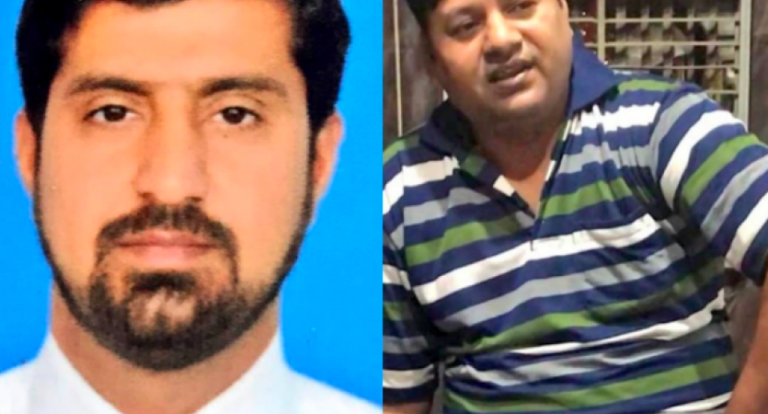
The Police in Hajo, Assam have reportedly arrested two accused, namely Faizul Hoque aka Dali, and Yusuf Uddin Ahmed, in connection to the gruesome mob lynching of a vegetable vendor named Sanatan Deka in Manahkuchi in Kamrup district of Assam.

A case was registered at the Hajo Police station under Indian Penal Code (IPC) Sections 302 (murder) and 120b (Criminal Conspiracy) over the brutal assault and murder of a poor vegetable vendor. The other accused, namely Jalil Ali, Firoze Khan, and Shabir Ali are still on the run from the law enforcement authorities. The case has sparked outrage in the State with several organisations and common citizens demanding justice for the vendor and strictly punishing the perpetrators.

The lynching of Sanatan Deka by Faizul Ali and his associates

Sanatan Deka who hailed from Teteliya villages used to work as a labourer in a factory. However, the factory had shut down due to the lockdown imposed in the wake of the Coronavirus outbreak. Deka had to sell vegetables on his bicycle to combat his financial difficulties. While roaming on the streets of Hajo selling vegetables, Sanatan’s bicycle had accidentally hit a bike where two persons Faizul Ali and Jalil Ali were travelling. The duo got infuriated and began assaulting the vendor. Soon, the other accused, Shabir Ali, Yusuf Ali and Firoze had arrived at the spot and joined the assault on the man. in the brutal thrashing. Sanatan was gravely injured and had died within an hour of being admitted to the hospital.

It was reported that the main accused Faizul Ali is the brother of an AGP leader.

Migrant workers coming to Maharashtra will need to take permission from ‘us’: MNS chief Raj Thackeray says UP migrant can vote only in UP

Firebrand politician Raj Thackeray on Monday took to Twitter to attack Uttar Pradesh chief minister Yogi Adityanath for over his decision of taking prior permission from the state government before employing migrant workers.

In a Twitter post, Thackeray said that if the Uttar Pradesh chief minister claims that state approval will be needed to avail the services of the workers of Uttar Pradesh, then the migrant workers coming to Maharashtra will need to seek permission from the state of Maharashtra and Maharashtra police before entering the state.

Urging the Maharashtra state government to take the matter seriously, Thackeray suggested that the migrant workers should be allowed in the state only if they had registered their personal details with identification proof with the police.

UP CM Yogi Adityanath mandates seeking approval for the return of state’s migrant workers

The MNS chief’s strong words came a day after UP CM Yogi Adityanath said that states will have to seek his government’s permission if they want Uttar Pradesh’s migrant workers back. He had said so in light of reports that migrant workers were not treated properly by some states.

On Sunday, Yogi Adityanath asked the UP officials to set up a migration commission and later said at a webinar that other states would have to acquire permission to hire workers from Uttar Pradesh as some of them had treated them badly. The commission is entrusted with the task of working on skill mapping and employment of migrant workers, along with fixing their wages and coming up with social security schemes such as insurances for them.

“The migrants’ commission will work for the betterment of the migrant workers. If any other state needs UP’s migrant workers, they cannot take them away just like that. The states will have to first seek UP government’s approval for obtaining UP’s manpower. UP government will now take in its own hands the responsibility of its migrant workers’ insurance and social security. The government aims to provide support to the migrant workers, whether they are in UP, other states or other countries to ensure that they are treated appropriately, ” UP CM said at a webinar.

Paatal Lok morphed image of Yogi, other leaders to show corrupt character in the story: BJP MLA files complaint against Anushka Sharma

Bollywood actor and producer Anushka Sharma’s new crime thriller web television series Paatal Lok, which premiered on Amazon Prime Video on 15 May 2020, has found itself surrounded by various controversies since the time of its release. In the latest, BJP MLA Nandkishore Gurjar from Uttar Pradesh has filed a complaint against Anushka Sharma, who is the producer of the show. The complaint states that she used his photo in the show without his permission.

Gurjar demanded that a case should be filed against Anushka under National Security Act, for causing a communal stir.

Besides, the BJP MLA from Ghaziabad also mentioned in his complaint about the show allegedly offending all communities of the Sanatan Dharma and showing Indian investigating agencies in a bad light. Seeking a ban on the web series the MLA accuses the makers of anti-nationalism. He also argued that it shows Gurjars as dacoits and people associated with malpractices.

He has submitted a written complaint in the Loni station and has also written a letter to the minister of Information and Broadcasting regarding the issue, demanding that web series should also be brought under there censor board.

The BJP MLA Nandkishore Gurjar’s has claimed that the makers of the series have taken a real image of a news article when UP CM Yogi Adityanath had inaugurated a highway project and had used it by morphing some faces, insinuating that the project was a scam.

Gurjar claimed that his photo and that of some other leaders were used in the web series as it is. He also shared the original picture in which Uttar Pradesh Chief Minister Yogi Adityanath can be seen too. He claimed it was an act to portray the party in a bad light.

The image used in the web series where CM Yogi’s image has been allegedly replaced with that of a corrupt character.
The original picture of the project inauguration shared by the BJP MLA

He also accused the makers of promoting a communal stir among the communities like his own Gurjar caste, Jaat and others.

The BJP MLA added that the web series has projected the Central Bureau of Investigation too in a bad light while ‘hurting India’s mission against terrorists’. accusing the makers of giving ‘clean chit’ to Pakistani agencies and trying to rid it of its ‘terrorist nation’ tag.

He also wrote that the series uses derogatory stereotypes against different Hindu communities and even indulges in blatant Hinduphobia by deliberately showing Hindus as the perpetrators of mob lynching incidents and other criminal activities.

Using the hashtag #ArrestAnushkaSharma, the MLA demanded that the show be pulled down immediately.

All Arunachal Pradesh Gorkha Youth Association complains against Paatal Lok

Prior to this, the series had managed to miff the Gorkha communities which had filed NHRC complaint against Anushka Sharma for ‘racial stereotyping’ in ‘Paatal Lok’. On May 18, the All Arunachal Pradesh Gorkha Youth Association took to Facebook to share a screengrab of their complaint along with a caption, detailing how the alleged sexist and racial slur malign their identity.

“We on behalf of the gorkha people and every Nepali speaking person had filed a complaint at NHRC regarding the discrimination and humiliation witness in an incident of insulting Nepali speaking women has come to light in the web series “Patal Lok” running on Amazone Prime. In one part of the series, a female police officer grabs an arrested woman by the thigh and says “Saali Nepali Ra..di. Foreigner log ko deti hai”. Gorkhali people are hurt with such direct insult to Nepali speaking people. The series seems to have hurt the community and there is a strong protest on social media by Nepali speaking people against this web series “Paatal Lok” for presenting such an insulting, demeaning and derogatory dialogue. It is learned that the producer of this web series “Patal Lok” is Anushka Sharma, a famous actress of the Indian film industry”, read the caption.

Additionally, the youth wing of the Bharatiya Gorkha Parisangh- Bharatiya Yuva Gorkha Parisangh, had also started an online campaign against the web series, alleging that in the second episode, a Nepali-speaking woman had been maligned by the maker and had demanded that the slur to be muted, subtitles blurred and that the video is uploaded with an apology.

Bollywood actress Anushka Sharma is yet to respond to the allegations meted out against her web series Paatal Lok

‘U will keep cleaning toilets’: Shokat Ali and Rashid use derogatory, casteist slurs against Dalit BJP leader Hari Manjhi

The former BJP MP from Gaya, Hari Manjhi has taken to Twitter on Monday to write to the Uttar Pradesh police, seeking action against one Shokat Ali for humiliating him using casteist slurs. Tagging the Uttar Pradesh police and chief minister Yogi Adityanath, Hari Manjhi, who belongs to the Scheduled caste community, sought action against Shokat Ali for targeting him over his caste and religion.

Manjhi mentions that previously another person named Rashid Mian had also humiliated him for being a Dalit, but he had forgiven him. But this time he sought action against his detractors, wrote the BJP MP.

Hari Manjhi had sought action against Shokat Ali for a Tweet in which Ali wrote in Hindi: “How much ever you wish you cannot become a priest, you will keep doing what you have been for all these years. No one can change your Karma and religion”, insinuating that he is a Dalit and no matter how hard he tries his destiny cannot change.

One Rashid Mian had referred to Hari Manjhi as a “toilet cleaner”

In a now-deleted tweet, a user named Rashid Chilawalia had written to Manji that he will forever remain a manual scavenger, an insult against his Dalit caste.

Replying to Rashid, the BJP MP had written that his ancestors may have been manual scavengers, but they never gave up their religion for the fear of sword. He added that Rashid’s casteist slur is a legal offence and can land him in jail but he is willing to forgive him.

NYTimes publishes name of murder victim among long list of coronavirus victims, corrects after being pointed out by netizens

On Sunday, the New York Times published a list of about 1000 people (roughly 1%), who died due to the Coronavirus outbreak in the US, on its front page, and 3 other inside pages. The list was a part of an article titled – “US Deaths near 1,00,000, An Incalculable Loss.”

Devoid of photographs, graphics, and advertisement, the international newspaper carried the stories of 1000 victims of the Chinese pandemic who have been reduced to mere statistics. The sub-heading read, “They were not simply names on a list. They were us.”

Homicide passed off as Coronavirus Death

A Twitter user (@timcrimmins) pointed out the curious case of one 27-year-old man named Jordan D. Haynes. His name featured in the list put out by the New York Times. The inclusion of his name suggested that Jordan died due to the Wuhan Coronavirus. The newspaper, in its story, described the person as a “generous young man with a delightful grin.”

Citing a news report, the Twitter user highlighted that Jordan was found murdered in his vehicle by the Rapids Cedar Police. According to his autopsy report, Jordan’s death has been ruled as a case of homicide. As such, the claim made by the New York Times is erroneous.

Response by the New York Times

Responding to Timothy, Brian Stelter, the Chief media correspondent of CNN conceded that the name of Jordan, published alongside the long list of coronavirus victims, was an error on the part of the newspaper. According to him, a representative from the New York Times told him that the error has been removed in the latest editions of the paper. Moreover, a corrected version of the list would also be running in print.

Allegations of shoddy journalism

Alert netizens were quick to uncover that the error was not a case of mere oversight. A Twitter user (@AltKurtis) asked, “Is the internet going to uncover that the New York Times just pulled a thousand random names without actually verifying that they died from Coronavirus?”

Another Twitter user, Patrick, conceded that it took about 5 minutes to realise that the said journalist who supposedly penned the stories of 1000 Coronavirus victims had picked it up from orbituaries using keywords for the Chinese virus. Another netizen also pointed out how one Davis Begaye’s obituary, who was mentioned in the NYTimes’ list of coronavirus casualties didn’t quite mention the virus, casting aspersions whether NYTimes mixed up more than one people.

New York Times lends space to Taliban

The reputation of the New York Times has been falling fast in recent years due to its questionable editorial standards. The falling standards of the ‘failing’ New York Times were once again on display when they provided a platform to an Islamic Terrorist from the Taliban. The liberal bias of the newspaper has led to a situation where it has sacrificed objective reporting of events for brownie points in liberal circles. In the opinion-editorial, the terrorist who happens to be the deputy leader of the Taliban proceeded to whitewash the crimes of his brethren.

Delhi: Tanker operators say AAP MLA Prakash Jarwal collected bribes up to Rs 60 lakhs a month

Trouble seems to be mounting for the Aam Aadmi Party MLA from Deoli, Prakash Jarwal, as investigations hint that he allegedly received bribes to the tune of Rs 60 lakh per month from the water tanker owners.

As per a report in Times of India, as many as 20 water tanker owners have come forward to claim that the AAP MLA had asked them to pay money. 4 of them testified before a magistrate saying that they had paid Rs 20,000 to get their file cleared and Rs 500 for each round of supply. The total amount sums up to Rs 60 lakhs per month.

Jarwal’s alleged involvement with the tanker mafias came to the light when one of the tanker operators, Dr Rajender Singh, committed suicide alleging harassment at the hands of the AAP MLA from Deoli and his aide Kapil Nagar. It was reported that Singh had paid Rs 10 lakh to Jarwal’s aide Kapil before having a dispute with Jarwal over the refusal to make further payments. The details of the payment made to Jarwal was submitted by the deceased doctor’s family members before the magistrate.

The tanker owners contended that if they failed in making payments, their tankers were delisted from supplying water. Furthermore, they were also barred from filling water from the DJB office.

According to Singh’s son, Hemant, the AAP MLA and his underlings were after his father from the last five years. He stated that his father had paid Rs 50 lakh to keep the tanker listed with the DJB office but more money was demanded from him. A couple of days prior to his death, Singh had allegedly made a payment of Rs 60,000 to Jarwal and had got an assurance from him that his tankers won’t be delisted. However, Jarwal purportedly got them removed.

Hemant further added that when he and his father went to the DJB office in GK-II, they were informed that Jarwal had got their payments stopped. Singh’s wife, Brahmwati, claimed that they had mortgaged her jewellery to pay Rs 1 lakh after the elections to re-enlist the tanker, which was bought for Rs 10 lakh, adding that they didn’t have money to pay the driver and cleaner.

Prakash Jarwal and the Suicide Case

The deceased doctor, identified as Dr. Rajendra Singh, was a resident of the Deoli neighbourhood in South Delhi and had committed suicide on the 18th of April. In his suicide note, he accused Prakash Jarwal and his associate Kapil Nagar of harassment and blamed them for his decision to take the drastic step. Consequently, the Police had registered an abetment of suicide case against the AAP MLA and his associate and others in the matter.

They were arrested on Saturday evening by the Delhi Police after the Saket Court issued a non-bailable warrant against him. According to police officials, a team of about 15 policemen including ACP Sudhanshu Dhama, Vijay Chandel, and Neb Sarai’s SHO Naresh Solanki raided the MLA’s residence in Tigri on Friday afternoon. Govindpuri, Rohini, and other areas of Delhi were also raided. During this time, the assistants and others found at the MLA’s house were also interrogated.

Mumbai Police issues prohibitory order, to take action against messages on social media: Here is how it curbs criticism against Uddhav Govt

The Mumbai police commissioner has on May 23rd, 2020 issued prohibitory orders under section 144 of the CrPC, valid through 00.15 hours on 25th May 2020 and ending at 24 hours on 8th June 2020, prohibiting any kind of ‘online hate’ on various social media platforms like WhatsApp, Twitter, Facebook, TikTok, Instagram, etc. Essentially, the order also indirectly bans all criticism of the Maharashtra government led by Uddhhav Thackeray as one of the clauses in the prohibitory order says that messages that incite “mistrust towards government functionaries and their actions taken to control Covid-19” will also be acted against.

The order issued by Deputy Commissioner of Police (Operations) Pranaya Ashok reads that the Mumbai police will hold the group admin of the social media and messaging platforms personally responsible for any such information being disseminated from a group administered by them and he or she would attract action under the relevant laws.

The order bans derogatory or discriminatory messages towards any community or causing panic and confusion among the people.

Order issued by Mumbai police on May 23rd, 2020.

The order also prohibits any attempts to incite mistrust against the government officials or their acts to prevent the spread of Coronavirus and such messages causing danger to public health or safety or public peace. Any person contravening this order shall be punishable under section 188 of the Indian Penal Code, warned the order issued by Mumbai police.

Essentially, this section makes it evident that any criticism that is shared on social media platforms including WhatsApp that criticises the Maharashtra government for their handling of the Coronavirus pandemic in the state can be held liable under relevant sections according to the order.

The order read that since this order cannot be served individually, it was issued ex-parte.

OpIndia reached out to the Deputy Commissioner of Police (Operations) to confirm if the order was authentic since at the time, the order had not been uploaded on the Mumbai Police website. Mumbai police spokesperson, DCP Pranaya Ashok confirmed that the order dated 23rd May was indeed authentic and it was a ‘regular order’ that is passed.

Mumbai police issued a similar order against ‘hate on social media’ in April

In April too, the Mumbai police had issued a similar order, prohibiting the dissemination of four types of contents on social media:

  • That which is found to be incorrect or distortion of facts
  • Which is derogatory or discriminatory towards any particular
  • Which causes panic and confusion among the people
  • Which incites mistrust against the government officials or their acts to prevent the spread of Coronavirus.

In this regard, the Mumbai police had registered 73 offences had arrested a total of 39 accused since March 22.

It is appaling how in a grim situation like this one when the total number of coronavirus cases has crossed the 50,000 mark in the state of Maharashtra, contributing to almost half of the total cases of coronavirus in the country, the state administration, instead of thinking on how to tackle the scourge has been putting all its efforts to penalise the social media detractors.

Aaditya Thackeray’s biggest concern is ‘hate on social media’

For MLA Aaditya Thackeray too, the most worrying aspect of the pandemic in Maharashtra is the ‘hate’ allegedly perpetrated on social media. In an interview with NDTV, the Shiv Sena scion had today expressed more concern about the supposed ‘online hate.’

Clueless Maharashtra Government

Earlier, in a classic ‘Heads I win, Tails you lose’ situation where Maharashtra Chief Minister Uddhav Thackeray said that the lockdown was needed in Maharashtra because it had spiralled out of control. At the same time, he mouthed mandatory criticism to play petty politics in complete contradiction to his previous statement.