Home Blog Page 5422

Islamists and ‘liberals’ use Rishi Kapoor’s demise as an excuse to wish death upon PM Modi

On Thursday, veteran Bollywood actor Rishi Kapoor passed away after battling cancer for two years. The actor was admitted to HN Reliance Hospital in Mumbai on Wednesday morning.

As reports emerged that veteran actor was nor more, netizens expressed shock and grief over his death. However, some section of netizens, including self-proclaimed ‘liberals’ and Islamists took to Twitter to shamelessly use the death of Rishi Kapoor to wish death upon Prime Minister Modi.

At a time when the entire nation is grieving for the loss of two Bollywood veterans – Irrfan Khan and Rishi Kapoor, Islamists descended on Twitter to display their hatred against PM Modi by wishing him death.

One Twitter user, who goes by the handle @mangokulfi asked when was PM Modi’s turn to die.

Another Islamist named Shahid jumped on to the scene to praise the social media user for wishing death of Prime Minister Modi.

As Journalist Nidhi Razdan shared the news of Rishi Kapoor’s death, a person named Syed Ateeb Bukhari replied to her by stating that he was waiting for PM Modi’s death.

A social media user, tweeting to a post of parody handle of ‘God’, asked him to take Narendra Modi as well, as he was a ‘good actor’. The death wish was made in reference to the death of two veteran actors of Bollywood.

Another Islamist from Kashmir asked the God to give Irrfan Khan and Rishi Kapoor back and in return take PM Modi.

‘Secular-Liberal’ hatred against PM Modi and Amit Shah

Notably, the unadulterated hatred against Prime Minister Modi from the secular-liberal intelligentsia has been displayed quite often. The left-liberal intelligentsia has often wished the death of Prime Minister Modi.

Just weeks back, Samiya Latief – a Kashmiri ‘journalist’ working with Times of India, had wished that Prime Minister Modi and Home Minister Amit Shah get infected with the deadly coronavirus which has infected more than 2 million people across the world.

Similar to Latief, former Chief Election Commissioner SY Quraishi had indirectly hoped that Prime Minister Modi be tested positive for the deadly coronavirus that has now become a global pandemic.

Islamists attack on deceased Irrfan Khan

Hours after cctor Irrfan Khan died on Wednesday in Mumbai’s Kokilaben Dhirubhai Ambani Hospital, few Islamists had taken to social media to shamelessly celebrate the Bollywood actor’s death.

Khan will not only be remembered for his magnificent acting career but also for his progressive ideas. Khan’s criticism of the practice of killing goats for ‘Qurbani’ and belief that faith is about introspection had earned him a lot of admonishment by the hardliners and Islamists, especially on Wednesday soon after his death.

Following his death, Islamists ganged up on Twitter to foul-mouth the fellow Muslim Irrfan Khan for his progressive views, some even stated that his death during the month of Ramzan is a ‘punishment’ for his statements.

Indian Mission in the UAE opens e-registration for the Indians wanting to travel back home

0

Indians who are wanting to travel back home to India from UAE during the Wuhan Coronavirus lockdown will be able to register themselves online with the Indian embassy in the United Arab Emirates. The Indian Mission in UAE has opened the e-registration platform for Indians who want to be transported back to India.

The Indian embassy in Dubai announced this on Twitter on Wednesday with the details of data collection through the website of the Indian consulate in Abu Dhabi.

The notice issued by embassy said, “All Indian nationals in the UAE are hereby informed that the Embassy of India, Abu Dhabi and the Consulate General of India, Dubai, have uploaded a form for [the] collection of data to create a database of Indians who wish to travel back to India under COVID-19 situation.”

It further added, “Register in database of Indians to travel back to India under COVID-19 situation. These can be entered by following the link www.cgidubai.gov.in/covid_register

As per reports, the form is to be filled by one person at a time. If a family wants to come back then each member will have to fill separate forms. In case of a company, a separate form has to be filled for each employee.

Purpose of the form to collect information to provided to the Indian government

The Indian mission had earlier clarified that the purpose of the form was regarding the collection of information of Indians to enable the Indian government to plan the return of Indians stranded in Arab.

The notice read as, “The main objective of the database is to estimate the number of people who wish to travel to different parts of the country so that appropriate planning could be done to receive them in India and take all the precautions to avoid the spread of Covid-19.”

The embassy has urged Indian community to not to visit the Indian embassy in view of novel coronavirus epidemic across the world to maintain social distancing.

The notice further said, “Any further updates on travel back to India will be made through the website and social media channels as and when decisions are made in this regard.”

Indians urged the government to fly them home

The Indian origin population stranded in UAE had earlier appealed to the Indian government to airlift them to India as soon as possible. It has been struggling for the employees on visit visa to live abroad amid the coronavirus epidemic.

Mostly Indians who wish to come back are mainly job seekers on visit visas, unemployed blue-collared workers, expats suffering job losses, sick and elderly persons, pregnant women, and separated families.

Kerala govt portal receives more than 3 lakh registrations

The Department of Non-Resident Keralite Affairs has also started registration of Keralites staying at foreign countries who want to come back to India. Till Wednesday more than 3 lakh persons from Kerala have registered on the NORKA portal, according to reports. People want to return to India due to various reasons, like loss of job, annual holiday, expiry of visas and being released from jail etc. Out of 3.20 lakh registrations, around 56,000 have cited job loss as the reason, according to Kerala CM Pinarayi Vijayan.

How Shashi Tharoor promotes himself while condoling the death of famous people

Senior Congress leader and Thiruvananthapuram MP Shashi Tharoor is quite often complimented for his way with words. He takes pride his English vocabulary. However, through his tweets, another interesting pattern has also emerged through the years. He likes to promote himself and throw names when he condoles death of famous people.

While condoling Bollywood actor Rishi Kapoor’s death, Tharoor pointed out how Kapoor was his senior in Mumbai’s Champion school where he had studied as well. Tharoor also studied in St Stephens and he was President of St Stephens Students Union. How do we know it? Well, he pointed it out while condoling former Finance Minister Arun Jaitley’s demise in August 2019.

He likes to talk about his own achievements when he is shocked and saddened over someone’s demise. Here is him condoling former External Affairs Minister Sushma Swaraj’s death in August 2019.

And how he was also at the United Nations. Tharoor took the passing of former Foreign Secretary to let people know how he had once transitioned from Palakkad to Thiruvananthapuram.

And while Shashi Tharoor playing a cameo in Andaz Apna Apna may be an old running Internet meme, did you know he acted some film called ‘Oliver!’ in 1968? Well, he let us know when adman Alyque Padamsee passed away.

And some more…

A bit of self promotion of books never hurt. Tharoor also likes to share post-condolence pictures with his fans.

And many, many more.

Modi govt and the Aarogya Setu app: Why the outrage over ‘Data Privacy’ in the times of Covid-19 does not make sense

The word Privacy basically means “freedom from unauthorized intrusion”, therefore when something is felt to be private by a person it means there are sensitivities involved and constitutes privacy. As a society, we tend to often get confused when on one side there are people fighting tooth and nail on privacy with government and on the other side we see people posting an avalanche of personal information including pictures and personal data online on social media platforms. The simple understanding for that would be that they are either too comfortable doing so with or without knowledge of privacy and technologies or do not see this as an intrusion of their private space. Some are also equally selective in their interpretation of privacy depending on the face of the person or organisation where such data is posted. It is this selectivity that has led to an outrage with regards to the Aarogya Setu app introduced by the government to arrest the spread of Covid-19.

Culturally the West and East have always differed on many things since most of the Eastern civilizations were far evolved in ancient times and were based on the concept of “collectivism” where the individual was part of the society and co-existence, teamwork, unity, mutual care and human relations approach were key attributes. Most of the Western models were built on “Individualism” where everything depended on the person, uniqueness and self- related issues were considered paramount. Both models have their pros and cons and like everything, a balance is necessary in the modern world and so does privacy because in times of crisis and disasters, saving human life far outweighs everything else. 

The concept of privacy is perceived to be of a western cultural origin since many Asian societies never had privacy defined and practised like the West which emphasized more around individualism. In ancient cultural civilizations like India, China and many Asian countries, privacy always existed in some form but the extent and interpretations differed widely from the way the West looked at it. People believed in the concept of their life being an open book and behaviourally had a tendency to interfere into everything by asking all the questions that a westerner may frown upon and consider as a great breach of privacy. In our villages and towns, everyone knew everyone and privacy was limited to certain personal sensitive issues only hence culturally different, but this also led to collectivism and people helping each other as a society, while in our cities today people do not even know the names or faces of their neighbours.

In the modern day world where everything seems to be moving into the digital online mode, more and more of people’s personal data has come online. Privacy and data protection are being spoken quite commonly although many do not even understand how it actually translates on ground since everyone is in a tearing hurry to consume the fruit and not bother about where it came from. With increasing number of people following the western concept of individualism and privacy, people are slowly getting aware of the concept of privacy and privacy warriors looking at everything with distrust and from the prism of individualism.

Enough has been written on data protection and privacy laws in India by many learned experts hence I would just summarise things as they stand today without elaborating on these regulations to avoid duplication. Many countries have come up with “data protection” and privacy regulations and India too is dabbling on the same. Privacy is currently covered through the Information Technology Act, 2000 along with the Information Technology (Reasonable security practices and procedures and sensitive personal data or information) Rules 2011. In 2017, the right to privacy was considered to be a part of our fundamental rights by the Supreme Court in the K.S. Puttaswamy v. Union of India case which was premised on the principle that “Privacy is the ultimate expression of the sanctity of the individual”. Subsequently, an expert committee headed by Justice Srikrishna was constituted and a report was submitted to the government after which the Personal Data Protection Bill, 2019 (PDP Bill) was introduced in the parliament and sent to a Joint Parliamentary Committee (JPC). Considering the sensitivity of health care data, the government has also proposed the Digital Information Security in Healthcare Act (“DISHA”) in 2018 that aims to establish a health information exchange, to regulate health data and personal information. 

In times of peace in a pre-Covid-19 world, it sounded to be important as well as fashionable for many to talk of privacy. It was also a strange paradox that the privacy warriors seemed to trust industry platforms more than governments, although right from birth to their movements in life, everything depended on government-issued documents and date. Faith in private platforms often fell when such platforms collaborated with governments.

Such positioning and narrative often led to confusion and people began to consider privacy as fashionable, while industry continued their journey to figure out how business interests they represent would be covered or not by regulations.

From a layman’s point of view when one looks at any phone, tablet, laptop or any communication device, there are a bundle of apps working on the hardware and apps front all of which are for free and people not only love them for the ease they bring into their lives but also give access to many things when they click on “I agree” due to which many things may come free and permissions may have been granted for access. 

Right from your microphone, camera, contacts, pictures, apps etc. today many devices may be listening, collecting and analysing information to enhance their offering to their customers’ thanks to the access already granted due to which the term privacy may have already shrunk. 

Even a few hardware devices have started dabbling with the software layers in the pretext of enhancing the performance of their devices through constant updates. Sometimes these enable them to control their devices and the apps in them which imaginatively may sound murky but these do not seem to be of concern for many. 

It is equally intriguing to see the enthusiasm with which folks in social media participation to an unknown creation of a post that made people to openly post their pictures with #MeAt20 and #20years recently or 10 years ago posts. If one were to build a facial recognition algorithm that had dependencies on age-related characteristics/progression such focused campaigns help create a free data-mine for facial recognition, artificial intelligence (AI) and Analytics tool for companies and surveillance agencies. The biggest rush to post things on social media is often the image people seek to maintain online to maintain self-worth, most people think its “cool” to post personal stuff while many are driven by their current psychological state of mind.

The technology companies are often blamed for monetising data of people while governments have been blamed for collecting data for surveillance in the name of security and when a technology company is seen to collaborate with the government it becomes worse. Most people end up sharing all their birthdays to wedding days in a feedback form in a restaurant and take product surveys where they share all their detailed interests without being concerned or scared that these could be used to target them since many of their personal data is used for authorisation in different places. Personally identifiable information that includes your name, address, email, mobile number, date of birth and other information relating to your family members, employment, and education can provide attackers with enough information to conduct identity theft and potentially compromise online accounts that rely on security questions being answered correctly. Even advertisers may serve themselves from this readymade platter.

The world is innovating and moving ahead quickly and in the process increasingly becoming more difficult for governments to administer. So what do governments do to safeguard national security or figure out whom to reach out to when and how simple they depend on a surveillance backbone which combines intelligence and information? Since it is common for adversaries to resort to attacks that may be physical, financial, cyber and may involve human lives, it becomes critical for them to acquire information that depends on human intelligence (HUMINT), signals intelligence (SIGINT), imagery intelligence (IMINT), measurement and signatures intelligence (MASINT) and open-source intelligence (OSINT). Hence a combination of all of these leads to the creation of a surveillance system that becomes an essential part of any government.

Globally almost all governments around the world have implemented mass surveillance programs that have been in place since the 1960s and have evolved over time to encompass the modern-day communication mediums. The list of such surveillance programs is endless and names have changed over time starting from ECHELON, INDECT, SIS, Golden Shield, IJOP, Carnivore, Project6, MUSCULAR, MYSTIC, ROOM641A, X-Keyscore, ONYX, BULLRUN, NDNAD, SORM, FRENCHELON, MTI, PRISM and so on (would request readers to search online). In democracies, mass surveillance was resorted to by many countries citing the need to counter terrorism, reduce crimes, promote national security and prevent social unrests while dictatorships and autocratic regimes were blamed for using it to violate privacy, civil and political freedom. 

In course of time, globally countries have moved beyond the basic objectives of security alone as surveillance was bringing benefits to not only help boost their economies through advance intel gathered but also helped them further their quests towards global dominance in business and trade. It leaves a bitter scenario where countries which do not have these in place may be left out in the global security and business race altogether. Hence privacy warriors and interests that constantly pull them down end up benefiting competitive countries in the process. The onus, therefore, is equally on regulators to bring in acceptable regulations that have well built-in mechanisms of addressing privacy concerns while balancing national needs.

There is nothing wrong in governments to engage in surveillance so long as the intent is to protect their country and their citizens while civil freedom continues to exist. As terrorism tries to push its agenda of reducing freedom enjoyed by citizens, governments get forced to protect their citizens by cutting down people’s freedom to ensure security. The freedom to move is curtailed through multiple security checks people need to undertake these days and the same is now translating into the digital world where surveillance has become a necessity at times to ensure safety. When a crime occurs including a financial or a cybercrime today people expect miracles from law enforcement agencies to catch the culprits which is possible only when some form of surveillance exists else we will continue to have devastated victims of fraud hoping for a miracle.  In most cases of financial cyber fraud on Indian citizens, governments do not even get access to data as most companies are incorporated outside, existing legal frameworks are long and arduous and traceability of data is not forthcoming from many platforms.

With all such work happening around data, Covid-19 made its appearance and has put governments, people and privacy warriors in a spot. No one can deny the fact that in times like these, raising privacy concerns and stalling governments from using information for saving lives is morally indefensible. During a pandemic when so many lives are at stake, surveillance, tracking and isolation have been the way many countries have effectively managed control the spread and prevented deaths. Before the pandemic, people were raising alarms on how surveillance is harmful and now people expect governments to enhance surveillance to save lives hence the privacy laws need to respond situationally as well when the veil can be taken off.

As countries and companies focus on tracking, tracing to fight the pandemic, privacy can be considered a casualty but depends on people if they still consider privacy over life. Fortunately, technologies are evolving today where mass surveillance is possible through contact-tracing systems that notify potentially exposed users without handing over personal data.

Facial recognition based surveillance has been widely deployed in China and according to various estimates, the facial recognition cameras deployed in china are currently around 630mn which have now been deployed with colour coding models to track people and guide them appropriately in their day to day activities and containment zone restrictions for Covid-19. Hong Kong mandates the use of an electronic wristband, accompanied by a smartphone app, in an effort to enforce the self-quarantine measures. All other countries like Singapore, South Korea have all deployed contact tracing as a means to track.

During a pandemic, surveillance, tracking and isolation are but a natural necessity unless people including government find some other Divine or extra-terrestrial means of getting information and have superhero eyes of scanning who is infected and who is not.

The government of India launched its own contact tracing app called Aarogya Setu. Interestingly this app was not built by the government but was evolved through a collaborative process where volunteers from industry, academia and government built it. Many industry experts, volunteers, engineers from companies like MakeMyTrip etc. were involved in the collective creation of this app.

The app uses GPS and Bluetooth to alert a user if they have come in contact with a COVID-19 positive patient. The Aarogya Setu app tracks the movement of the user through their smartphone and reports on the proximity to other users that have also downloaded the app. The app uses the permission to access a smartphone’s GPS/Bluetooth and to generate a status report about the phone’s user and its proximity to other users. States like Kerala and Karnataka have their own versions used for different purposes. While the Kerala app aims to track the location of individuals who are being told to self-quarantine for 14 days the Karnataka one expects the quarantined individual to take a “selfie” every hour giving a real-time status report. Few states have also used a combination of geofencing and facial recognition for quarantined individuals. 

The app which has been developed by the government in collaboration with the private sector seems to have taken care of the basic necessities that may raise privacy concerns. The app disassociates itself with the user in the initial stages and all personally identifiable information is securely uploaded onto a server that issues a DiD (Device ID number) which is a unique and randomly generated. This DiD becomes the basic identifier for all further interactions. When a user comes in contact with another, this DiD is sent to the other device but not to the name and phone number. Aspects such as the probability of infection are calculated by uploading this DiD on the server along with one’s contact history. Only when one gets tested does the DiD gets reconnected to the personal information. The data retention policies are stringent and any data is wiped out after 30 days, if stored in a central database after 45 days and for those tested positive after 60 days. The app policy further reads that the data of users will not be shared with any third-party apps, however, the data may be retrieved for necessary medical and administrative intervention. The stored data is anonymised and is used to generate necessary visualisations.

Aarogya Setu’s USP is that it can give you an early warning system if you have come in touch with or have been in close proximity of someone who has tested positive for COVID-19. When we step out for pharmacies and groceries, we might come in touch with someone who is not aware of them being positive. This app will then be helpful to track such instances as Bluetooth pinging and location monitoring is helping to arrive at this result. Collective information helps to drill down on a district level. The app will be most useful in contact tracing and when the lockdown is lifted partially or entirely, this will be even more impactful. The data is being used by the government only with the express purpose of medical interventions. The app can be deleted at will and once Covid-19 ends the app would be deleted. The fundamental purpose is to save lives. While the app is simple and has been hugely popular it continues to be treated with cynicism by privacy warriors. 

While pandemics like Covid-19 are disruptive, governments need to be conscious to focus their abilities to control effectively. Contact tracing has been recognized as one of the ways of improving situational awareness to manage this crisis. The Aarogya Setu app like all contact tracing technologies is people dependent and needs to be more participative to deliver the results aimed for. Hence if more people participate, the more effective it will be and vice-versa hence it is now being extended shortly to feature phones as well apart from smartphones.

I personally support and respect privacy, but we live in a real world and a democratic nation and elect a government, we expect the government to protect us and keep the nation safe whether from frauds, attacks, disasters and pandemics and without power of traceability. Putting ourselves in the seat of government is the best way to figure out what works and what does not to administer such a country. Hence it is common sense that in such cases surveillance is necessary tool required to compliment safety efforts. A nation of 1.3bn with a dense population like ours is an administrative nightmare. It cannot be safeguarded unless those entrusted with its running get to know “who exists where, when required” else we will have chaos. Hence while data protection is important and no law can be perfect in this emerging area where technology evolution will always be ahead of regulation and human mind will continue to use and misuse. Regulators and technologists will need to continue to evolve to figure out that unique way which will meet each sides requirement of security and privacy needs satisfactorily if not completely. Till then it is important for each side to respect each other views and limitations in this journey of privacy and work in a collective manner for the nation besides safeguarding privacy where necessary. Government, industry and privacy warriors need to join hands to ensure a policy that makes information request legitimate with necessary access to metadata frameworks with triggers to access data well defined under law and find solutions instead of firing cynicisms.

As Yogendra Yadav makes a virtue out of lying Prashant Bhushan apologizing, here’s the truth about his virtue

Self-proclaimed activist and psephologist, Yogendra Yadav has taken to Twitter to adulate lawyer-activist Prashant Bhushan equating him to a “satyagrahi”, for apologising to Yoga Guru Baba Ramdev through a tweet. Making a virtue out of lying Prashant Bhushan, apologising, the ultra-Left-wing activist Yogendra Yadav said: “This is what distinguishes a satyagrahi (truth seeker) from a troll. As soon as he finds a factual error, @pbhushan1 offers an apology. His scruples have earned him the respect he enjoys. Can we expect the same from all those celebrating his apology?

Yadav was so full of admiration for Prashant Bhushan, as the senior lawyer in one of his tweet’s apologised to Baba Ramdev for the misinformation he spread on Ruchi Soya’s acquisition by Patanjali, insinuating that the BJP has been helping its “capitalists friends” by writing off their loans. He said that he had shared a poster earlier which mentioned Baba Ramdev also as a defaulter whose loan has been written off. He claimed that the poster was based on a story by a portal which mentioned Ruchi Soya as a defaulter and linked it to him (Baba Ramdev).

This is, however, a lie. Today, after the Karnataka Congress posted a tweet claiming that a staggering Rs 2,212 crores of debt by the Ruchi Soya Industries, which belongs to Patanjali group, have been written off, insinuating that the BJP has been helping its “capitalists friends” by writing off their loans while turning a blind eye towards the miseries of the underprivileged people, the leftist lawyer Prashant Bhushan, who is notorious for spreading fake news, had also made the same claim as the Karnataka Congress and accused the govt of doing undue favour to the Patanjali group.

Although due to some reason, Prashant Bhushan accepted his mistake and offered an apology yesterday, he has a long list of lies, notoriously peddled by him, throughout his diffusive career, which he has not been tad bit apologetic about.

Peddled the ‘EVM tampering’ bogey to malign BJP

Prior to the Delhi elections, the senior lawyer had picked up the EVM ‘bogey’ yet again as he asked whether Home Minister Amit Shah was going to ‘tamper EVMs’ to win Delhi elections. Prashant Bhushan who has a habit of taking offence to every statement by BJP leaders took to Twitter in February 2020, to float his conspiracy theory.

Prashant Bhushan who claims to be a Supreme Court lawyer had not comprehended the contextual nature of Amit Shah’s statements then and had indulged in his usual act of spreading conspiracy theories and false propaganda, that too about a non-existent ‘EVM tampering’ bogey that has long been debunked as totally fake and fictional.

Booked for spreading fake news over EVM’s

In May 2019, Prashant Bhushan and few others were booked for circulating fake news over EVMs. A day ahead of the counting of votes for the Lok Sabha elections 2019, social media activists in Delhi, Anurag Sinha and Prateek Arora, filed a complaint against various Twitter account holders including Aam Aadmi Party leader and Delhi minister Savita Anand, ‘activist’ Prashant Bhushan and ‘journalist’ Swati Chaturvedi, among others for circulating misleading information about EVM manipulation.

Prashant Bhushan’s lies on the Rafale deal

Prashant Bhushan, who was also one of the founding members of Aam Aadmi Party before Arvind Kejriwal fired him, had submitted a rejoinder affidavit at the Supreme Court on May 9, 2019, in the review petition filed against the Rafale deal. He had then alleged that the government has misled the government in various aspects of the deal in its response which was submitted in a sealed cover. He also accused the government of suppressing information and said that the government obtained the judgement on the basis of fraud.

However, it was seen that in the rejoinder affidavit, Prashant Bhushan had not brought any new allegation, he had merely repeated the same complaints which had been comprehensibly rebutted already. 

Admitted ‘genuine mistake’ in Supreme Court

In March last year, the lawyer had to admit in the Supreme Court that forced to admit in the Court that he had committed a “genuine mistake” by claiming that the Central government had placed fabricated documents in SC on the appointment of M Nageshwar Rao as interim CBI director. Although he had refused to apologise for the false claim, he had accepted that he had made a false claim after the Attorney general KK Venugopal and the central govt had filed contempt of court cases against him for his tweets making the claim. Attorney general KK Venugopal had accused Bhushan of exercising vindictiveness and recklessness while tweeting about the appointment of interim CBI director M Nageshwar Rao. Venugopal had also contended that without applying to the court for the minutes of the meeting, Bhushan went ahead and chose to level serious allegations against the Attorney General for India and the Government of India and questioned the integrity of the AG.

Spreads false information about Mehul Choksi’s Antiguan citizenship

Citing an article by the leftist propaganda website, Scroll, which itself is caught spreading fake news and whitewashing crimes of barbaric Khilji, Bhushan had claimed that PNB scam accused Mehul Choksi became Antiguan citizen after Prime Minister Modi met Antiguan President in April that year, which again was a lie.

Prashant Bhushan lied on Alok Verma’s removal to malign BJP

Amidst the battle between two factions of the CBI in October 2018, the SC lawyer Prashant Bhushan had claimed that the BJP government removed Alok Verma from his office as he was pursuing corruption charges on Special Director CBI Rakesh Asthana. Bhushan also alleged Asthana’s involvement in the Rafale deal was the reason for the government’s alacrity to protect him from Verma’s investigation. If this wasn’t enough, Prashant Bhushan had insinuated charges of corruption against M Nageshwar Rao and called him a tainted officer. While he had defended Alok Verma when he was removed by the govt, earlier he himself had petitioned the Supreme Court against the appointment of Alok Verma as CBI chief termed it as ‘illegal’. The SC had then quashed Bhushan’s petition and refused to interfere in his appointment. Bhushan had also insinuated that Alok Verma was appointed by the Modi government to protect the corrupts.

Lied once again to Rafale

In 2018, Prashant Bhushan had shared ‘news’ from the dubious website ‘IndiaScoops’ to prove Rafale is a ‘scam’. Along with others, he shared an article from ‘IndiaScoops.com’ on September 25, 2018, in which claimed to have spoken exclusively to ‘two technical heads’ at Dassault Aviation (DA) regarding the Rafale deal for which he was too called out. What is more commendable here is that along with blatantly lying the senior lawyer was at that time also seen vociferously promoting a soft porn website for spreading fake news.

Blamed crime by Muslims on ‘Hindutva’

In another similar low, Prashant Bhushan had once taken to twitter to pass of a crime committed by Muslims on ‘Hindutva’. Despite all the information about the accused being in the public domain, the senior lawyer and activist Prashant Bhushan had deliberately decided to blame ‘Hindutva’ and Anti-Romeo squads of Uttar Pradesh for the gruesome Rampur Molestation which transpired on June 1, 2017.

So many instances one after the other would make one wonder, why would a Supreme Court lawyer spread false information, deliberately and also might be enough for Yogendra Yadav to re-phrase his words of appreciation.

Fake news paper clipping

In the year 2017, the SC lawyer had shared an unverified image with wrong information to accuse Modi and his ‘Bhakts’ of being selective in their approach. Prashant Bhushan had shared a fake newspaper clipping to claim that Reliance Jio was getting its phones made in China. He had a shared a clipping of a purported Hindi newspaper Dainik Ujala with the news report.

But no such newspaper exists, and the website mentioned on also does not exist. Moreover, while the ‘report’ said that it was “the biggest scam in the country” and claimed that Reliance Jio had betrayed India by buying 30 crore phones from China, it was not true. Because the Jio phones were made in Taiwan.

Apart from these, Prashant Bhushan is always at forefront in sharing fake news peddled by various media houses and political parties, if they show the Modi govt in poor light. Despite being such a habitual fake news peddler, the advocate-activist never apologised after his fake news was caught. Yesterday was a rare occasion when he apologised, but that does not make him a saint as Yogendra Yadav was claiming.

Air India may begin operation from mid-May, operations to begin in major cities once lockdown ends: Reports

As India is inching towards normalcy following the relaxations of certain restrictions imposed during the lockdown, preparations are being made to facilitate the movement of people across the country once the coronavirus lockdown ends.

With lockdown is expected to end in next few days, the national carrier Air India (AI) has asked its pilots and cabin crew details to be ready to resume operations once lockdown is over by mid-May this year, reports ANI.

According to an internal mail, accessed by ANI, which was sent to the operation staff, Air India has sought crew availability and details for transport security pass for domestic and international operations.

“Dear All concerned, There is a probability to commence 25 per cent to 30 per cent operations post-lockdown in mid-May 2020. You are requested to ensure and provide the following: Total No. of Cockpit / Cabin Crew residing outside municipal limits of the bases,” the communication read.

Further Air India has also asked the Executive Director (ED) to ensure necessary arrangements and curfew passes for the crew.

“Ensure crew transport for all crew at all stations, domestic as well as International. The data at bullet 1 may be provided on priority, to enable this office to intimate ED (Security) to arrange for their curfew pass,” the AI letter said.

Limited operation of airports in Tier-1 cities: AAI

Meanwhile, the Airport Authority of India has also released a set of guidelines for the resumption of service post-lockdown. The guidelines stated that once restrictions on passenger flights are lifted, airports will facilitate limited domestic and international scheduled flights in phases at 30% capacity to facilitate social distancing.

Further, it added that the flight operations are likely to be scaled up in a gradual manner in the upcoming months. Similarly, airlines are likely to operate between tier-I cities initially.

“Initially it is presumed that airline operations will be limited to Tier-I cities i.e. Metros and some of the state capitals and major Tier-II cities. The flights’ schedule may be cleared on City Pair basis, so the origin and Destination Airports are open fully from lockdown situation,” the standard operating procedure for recommencement of operations at AAI Airports post lockdown read.

The SOP also stated that at initially only one terminal shall be used in airports with more than one terminal. The larger terminal will be reduced to ensure proper sanitation considering the limited availability of material resources. Strict social distancing norms will be introduced inside the planes to ensure space between two passengers.

India has suspended international flights since March 22 while domestic flights were prohibited from March 25. The current lockdown period is scheduled till May 3 for now.

MHA to allow movement of migrants, students, etc

Earlier, the Union Home Ministry had allowed the states to facilitate the movement of people stranded in various states, including migrant labourers. This move will allow students, migrant workers, tourists etc to go to their homes from their current locations.

The order issued by the Home Ministry had guidelines for movement of migrant workers, pilgrims, tourists, students who are stranded at different places due to the lockdown. The centre had asked the states and union territories to designate nodal authorities and develop standard protocols for sending and receiving such persons. The movement of people will happen only by road.

Persons willing to move will be screened and only those having no symptoms will be allowed to move. Both the sending and receiving states will have to coordinate on the movement, and the states that fall in the route will allow the transit of such buses, the MHA had added in its communique.

This move will bring huge relief for lakhs of people who are stranded in different states due to the lockdown. As migrant workers have no work, and students have no classes to attend, all of them want to go home to be with families. 

Relaxations to certain districts

The government may give relaxations to many districts after May 4 and will issue new guidelines to fight the coronavirus. The Home Ministry has informed regarding the steps that are being considered after the scheduled lifting of the lockdown.

The Ministry of Home Affairs (MHA) stated that the fresh guidelines will give considerable relaxations to many districts. The details regarding the relaxations will be “communicated in the days to come”. The MHA held a comprehensive review meeting on the lockdown situation concluding that there have been tremendous gains and improvement in the situation due to lockdown till now. 

Assam: Thousands of pigs die of African Swine Fever, suspected to have come from China, sale of pork banned in 6 affected districts

0

At a time when the country is battling out the Chinese pandemic coronavirus, the eight north-eastern states are staring at another new threat – African Swine Fever (ASF), which is suspected to be behind the mysterious deaths of thousands of pigs, reports Nagaland Post.

According to the animal resource experts in North East, the highly contagious ASF came to the region from Tibet in China through Arunachal Pradesh. Apart from Assam and Meghalaya, other states governments have also sounded a high alert and asked people, especially owners of piggeries, to refrain from transporting pigs across the states.

Assam Agriculture and Veterinary Minister Atul Bora said that more than 2,260 pigs have died in state’s six districts due to suspected ASF. The authorities have sent samples to the National Institute of High-Security Animal Diseases in Bhopal and are waiting for confirmatory reports.

Bora said, “The pigs are dying of a foreign virus and we guess that it may have come from Tibet in China.”

According to animal resource experts, pigs generally are affected by Classical Fever, Porcine Reproductive and Respiratory Syndrome (PRRS), besides the ASF.

Assam bans pork sale in affected districts, closes slaughter houses

Minister Bora stated that the ASF is being reported in the Dhemaji, Sivsagar, Lakhimpur, Jorhat, Dibrugarh and Biswanath districts. From 1964 on April 25, the death toll has reached 2262 in Assam in just three days.

The state of Assam has now banned the purchase and sale of pigs and pork in the affected districts, closed slaughterhouses and has banned movements from pig farms.

Meghalaya bans transportation of pigs

The Meghalaya government has already banned the transport of pigs from outside the state after the deaths of pigs in some districts of Assam and Arunachal Pradesh.

On Wednesday, Meghalaya’s Deputy Chief Minister Prestone Tynsong said that the state issued a notification to ban ferrying of pigs from other states. A notification has been issued to all government and private pig farms and pig owners to take adequate and strict measures for hygiene and bio-security and restrict outsiders’ entry to pig farms.

“We have advised people to consume adequately cooked pork only (above 70 degrees celsius for at least 20 minutes),” the Deputy Chief Minister, who is in charge of Animal Husbandry and Veterinary Department said.

Tripura, Nagaland on high-alert

Meanwhile, Tripura’s Animal Resources Development Department Director and Additional Secretary Dilip Chakma said that after ASF outbreak in six districts of Assam and nine districts of Arunachal Pradesh, his department has alerted all government and private pig firms and pig owners to take adequate measures to prevent the disease.

Even Nagaland, in view of the reported outbreak of African Swine Fever, the state government has imposed a ban on import of pigs from outside the state with immediate effect. 

Rahul Gandhi attacks North Indian states for taking power away from Panchayats

Former Congress President Rahul Gandhi has said that North Indian states are not empowering people as much as the South Indian states, because the North Indian states believe more in centralisation of power while South Indian states believe in ideas like Panchayati Raj.

The Gandhi family scion made this comment during his interaction with former RBI governor Raghuram Rajan, which was part of his newly announced series of interactions with experts around the coronavirus pandemic. The series is being seen as another coming of age of Rahul Gandhi, post which he will be ready to lead India globally.

“If you look at the southern states, they are doing a better job because they are actually more decentralised. And the northern states are centralising power, and they are taking away power from the panchayats and grassroot organisations,” Rahul Gandhi said during his interaction.

The comment was made after Rahul Gandhi asked Raghuram Rajan if there was a “crisis of centralisation” that was hampering the fight against the virus. Rajan agreed with the need of decentralisation. He also credited Rahul’s father, former Prime Minister Rajiv Gandhi for bringing back Panchayati Raj, which helped in decentralisation of power.

The Panchayati Raj Act

Panchayati Raj Act, which was enacted it via the 73rd Constitutional amendment in 1992, when P.V. Narasimha Rao was the Prime Minister. However, Rajiv Gandhi is widely credited for it, because he had tried to pass such an act earlier but failed.

Congress party has been accused to fan this North vs South debate in India earlier too. The Congress supporting ecosystem has earlier branded North India a burden on South India due to higher population and allegedly lower tax contribution, while a Congress spokesperson had blamed lack of education among North Indians for Narendra Modi coming back to power in 2019.

Apart from the issue of decentralisation, Rahul Gandhi and Raghuram Rajan discussed various other topics too in the half an hour long discussion that included cost of providing relief to the poor, social harmony, and other challenges around fighting the Wuhan coronavirus pandemic.

Bollywood actor Rishi Kapoor dies

Bollywood superstar Rishi Kapoor passed away on Thursday.

Rishi Kapoor was admitted to H N Reliance hospital on Wednesday where he breathed his last.

Rishi Kapoor, the actor

Kapoor was suffering from cancer and was admitted to the hospital after he developed breathing problems. He was undergoing treatment for cancer in the US and had returned to India in September 2019. In February, he was admitted to hospital twice. Kapoor’s death comes a day after Bollywood actor Irrfan Khan breathed his last.

Tributes pour in for Rishi Kapoor

Bollywood superstar Amitabh Bachchan took to Twitter to announce Kapoor’s passing and grieve.

Lyricist Prasoon Joshi too expressed his grief.

Kapoor is survived by his wife Neetu Singh and two children, daughter Riddhima and son Ranbir, who is also an actor.

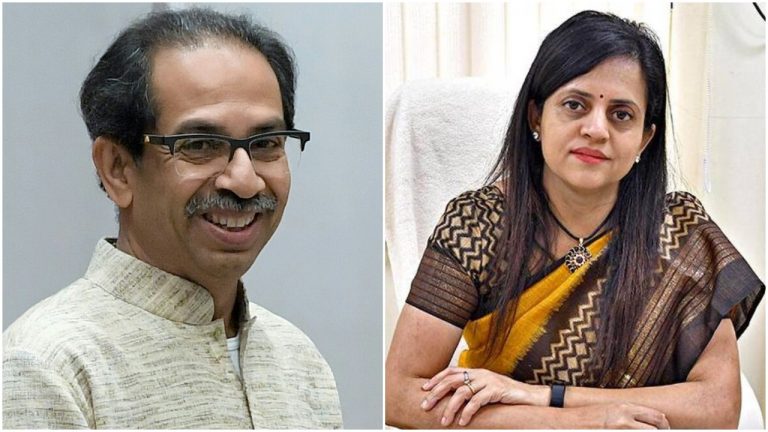
Uddhav Thackeray calls PM Modi, seeks his help to save his CM post as 6-month tenure nears completion

As the decision to appoint Maharashtra Chief Minister Uddhav Thackeray to the legislative council as governor’s nominee still faces uncertainty, the CM reportedly called Prime Minister Narendra Modi on Wednesday pleading him to intervene to end the political crisis, reports ANI.

According to the reports, Thackeray spoke to Modi on phone about his nomination to Maharashtra legislative council and sought help to save his government. Pleading for help, Uddhav Thackeray reportedly said that if it does not get nominated to the upper house, he will have to resign from the post of Chief Minister. PM Modi has reportedly stated that he will look into the matter.

Attempts to create political instability in the state: Uddhav

Uddhav Thackeray also said to PM Modi that attempts were being made to create political instability in the state. Earlier, Thackeray could not get elected to the council through biennial polls as the elections were postponed due to coronavirus outbreak. As Thackeray is not an MLA, he will have to gain membership of the legislative council by May 28 in order to save his post.

The telephone call to Prime Minister Modi came after leaders of the ruling Maha Vikas Aghadi (MVA) met Governor BS Koshyari with a fresh cabinet recommendation to nominate Thackeray to the Legislative Council through the governor’s quota. The first recommendation of the state cabinet had been made on April 9.

Maha Vikas Aghadi delegation meets Governor Koshiyari

A delegation of MVA leaders led by deputy chief minister Ajit Pawar met the governor on Tuesday and handed over the cabinet decision’s copy to him. According to one senior cabinet minister privy to the discussion with the state governor, Koshiyari has been non-committal in assuring the ministers of Thackeray’s nomination to the council. 

Thackeray, who is not a member of either house of the state legislature, was sworn in as chief minister on November 28, 2019. He has to become a member of either of the house of the state legislature by May 28 when he completes six months in office. He will cease to the chief minister if he fails to be a member.