Home Blog Page 545

USAID, Soros, ECI and DY Qureshi: Deep dive into how ECI in 2012 partnered with Soros backed agency for ‘voter turnout’ in India

On 16th February, the Department of Government Efficiency (DOGE), United States, published a post on X announcing a list of funding initiatives that were recently stopped or cancelled. In the list, one particular funding allocation raised eyebrows in India. According to DOGE’s post, $486 million was given to the Consortium for Elections and Political Process Strengthening (CEPPS), which included $21 million for ‘voter turnout’ in India—equivalent to Rs 182 crores as per today’s USD to INR value.

What is CEPPS?

Established in 1995, according to CEPPS’s About Us page (now pulled down), it is a coalition of nonprofit, nonpartisan, and nongovernmental organisations dedicated to promoting democratic institutions and governance worldwide. The organisation claims to bring together the expertise of three leading international organisations: the International Foundation for Electoral Systems (IFES), the International Republican Institute (IRI), and the National Democratic Institute (NDI). These three serve as fronts through which CEPPS operates in different countries.

It further claims to support democratic development by collaborating with political parties, election management bodies, parliaments, civil society groups, and democracy activists. The organisation has been active in over 140 countries and provides extensive democracy, rights, and governance (DRG) programming, often partnering with USAID and other donors to deliver large-scale initiatives tailored to diverse political landscapes.

CEPPS is primarily funded by USAID. It also receives support from other international donors to carry out its mission worldwide. Over the years, CEPPS claims to have facilitated election monitoring, civic engagement, and institutional development, reinforcing democratic norms in regions spanning Asia, Africa, Eurasia, Europe, Latin America, and the Middle East. Notably, during our research, we noticed that CEPPS has received over $2 billion in funding from USAID since its inception.

Interestingly, CEPPS’s website is no longer functional. An organisation that received millions of dollars in funding from USAID and has been active since 1995 pulled down its website after 23rd January 2025. We mention 23rd January because it was the last time CEPPS’s website was archived on archive.org.

How CEPPS interferes in elections worldwide

We accessed a document titled Review of the Fiscal Year 2024 United States Agency for International Development Budget, dated 26th April 2023, which categorically mentioned that USAID has paid $2 billion in funding to CEPPS for Elections and Political Processes (EPP) programmes. Interestingly, CEPPS received 66% of USAID EPP funding in the Financial Year 2021. Furthermore, information gathered about Democratic Elections and Political Processes sheds more light on how billions of dollars have been used to directly interfere in elections worldwide under the guise of providing support to strengthen democracy.

With just a glance at these documents, it is evident that while CEPPS presents itself as an organisation dedicated to strengthening democracy, its actual role raises serious concerns about foreign interference in elections. CEPPS is primarily funded by USAID, which is part of the US government. CEPPS has received over $2 billion since 1995 to work on election-related projects across more than 140 countries. This level of funding and influence suggests that CEPPS is not just an observer of democratic processes but an active player in shaping them.

One of the biggest red flags is that CEPPS does not just assist election commissions. It clearly states that it directly engages with political parties, civil society groups, and even election monitoring bodies. This means it has the ability to influence political dynamics in the countries where it operates. The Democratic Elections and Political Processes (DEPP) programme, under which CEPPS works, is structured in a way that allows the US to provide funding and support to selected groups, potentially tilting election outcomes in their favour, if required.

Additionally, a 2019 USAID Inspector General report pointed out that relying on one organisation like CEPPS for political party assistance exposes USAID to major risks, including loss of credibility and allegations of foreign interference. Despite this warning, CEPPS continued to receive a dominant share of USAID’s funding, with 66% of USAID’s election-related budget in 2021 alone going to this single entity. This shows a clear pattern of funnelling massive resources to a small group of US-backed organisations that influence elections globally.

CEPPS presence in India

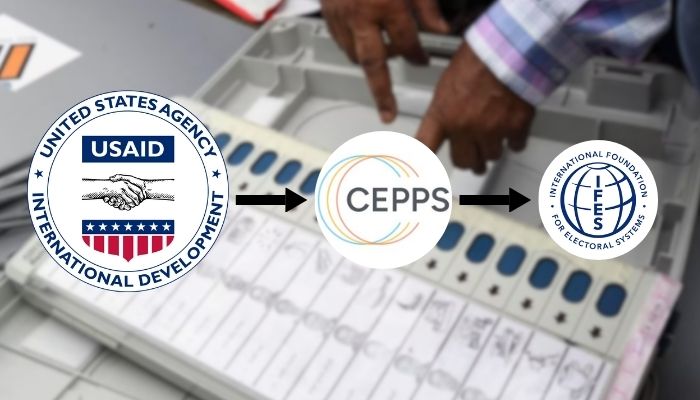
As mentioned above, CEPPS operates via three fronts: the International Foundation for Electoral Systems (IFES), the International Republican Institute (IRI), and the National Democratic Institute (NDI). To make it evident that USAID has had a significant financial influence in Indian elections for years, it should be noted that CEPPS spent $318,614 in India in FY 2018, as clearly stated in its audit report.

CEPPS’s funding in India came through IFES.
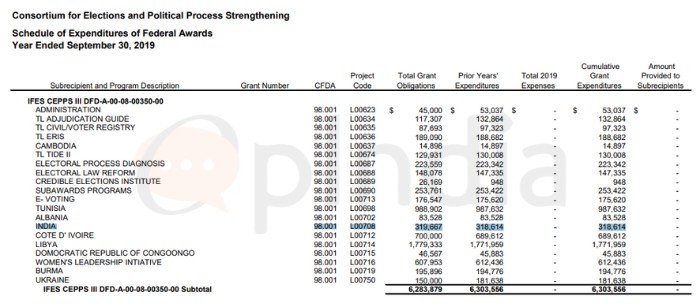
Source: CEPPS

Now comes the shocking part. IFES, which signed an MoU with the Election Commission of India (ECI) in 2012 under then-Election Commissioner SY Quraishi, is not just funded by USAID but also by several private entities with questionable motives.

In May 2012, the Election Commission of India (ECI) signed a Memorandum of Understanding (MoU) with the International Foundation for Electoral Systems (IFES) in New Delhi to develop and strengthen democratic institutions and electoral processes. According to the then-issued press release, the MoU aimed to facilitate knowledge exchange, joint training programmes, research, and capacity-building initiatives through ECI’s India International Institute of Democracy and Election Management (IIIDEM). The agreement was signed by SY Quraishi, the then Chief Election Commissioner of India, and William Sweeney, President and CEO of IFES.
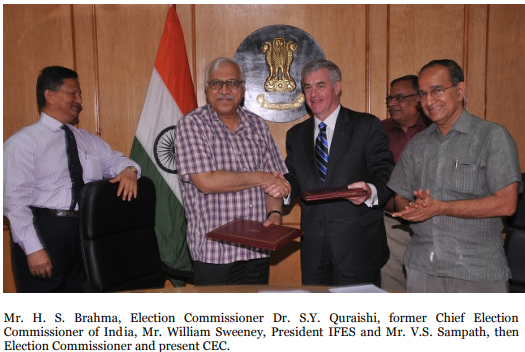
Source: ECI

Considering the fact that IFES is heavily funded by USAID via CEPPS, other sources of its funding also need to be scrutinised. According to IFES’s “Our Partners & Donors” section, the Election Commission of India itself is listed as a funder alongside major public entities like USAID, the U.S. Department of State, and Australian Aid.

Source: IFSC

However, the real concern arises with IFES’s private funders, which include Google, Meta, Microsoft, and Open Society Foundations (OSF). Notably, OSF is owned by George Soros, a figure widely accused of funding anti-India activities. The fact that an organisation receiving funding from Soros has had a formal agreement with the Election Commission of India raises serious concerns about the extent of foreign influence over India’s electoral processes. This makes it imperative to question IFES’s real role and motives in India and how deeply it has interfered in Indian elections under the guise of collaboration.

Source: IFSC

The Election Commission of India’s (ECI) partnership with IFES did not end with the 2012 MoU—it continued under IIIDEM (India International Institute of Democracy and Election Management) and International Idea, a global intergovernmental organisation. IIIDEM, an ECI-established body, was founded in 2011—the same time when SY Quraishi signed the MoU with IFES. It is important to note that ECI is an autonomous body. This means that while the Government of India is not directly working with IFES, it is engaging with IIIDEM.

OpIndia is still investigating USAID’s possible role in election interference via CEPPS. As more information emerges, additional reports will follow.
Remembering Meghnad Saha, the Indian scientist who revolutionised the world of astrophysics through his Thermal Ionisation Equation

On this date 16th February) in 1956, India bid farewell to the great scientist and patriot Meghnad Saha who gave the world the path-breaking Thermal Ionisation Equation. Saha was born on October 6, 1893, in a humble Bengali family in a small village of Seoratali in Dacca district which, back then, was a part of the Bengal Presidency.

His early life

Meghnad Saha was born to a humble shopkeeper Jagannath Saha and Bhubaneshwari Devi. Saha was the fifth child out of their eight children. The family struggled to make ends meet due to which his siblings had to drop out of school. But seeing Saha’s interest his education, his elder brother arranged for his education. After completing primary school, Saha was facing difficulty continuing his education as the nearest secondary school was 10 km away from his house. Saha’s brother found a sponsor named Ananta Kumar Das for his education who funded his lodging and boarding expenses. Das was a doctor who agreed to keep Saha in his house on the condition that he would help in the housework.

Saha joined a city collegiate school in Dhaka in 1905 where his brother financially supported him. After clearing his intermediate exams in 1911, Saha joined the President College, Kolkata where he was taught by kinds of Prafulla Chandra Ray and Jagadish Chandra Bose. After graduating in Mathematics, he completed his master’s in Applied Mathematics from Calcutta University in 1915.

His career

Meghnad Saha started his career by joining as a lecturer in the Department of Applied Mathematics in the Calcutta University College of Science in 1916. He joined the physics department later but struggled to get his papers published in journals due to the insufficient budget of the college.

Fortunately, in 1919, Saha received the Premchand Roychand Scholarship for his dissertation in the ‘Harvard Classification of Stellar Spectra’. With the scholarship, he was able to stay in Europe for two years which allowed him to work in labs of scientists like Alfred Fowler and Walter Nernst.

After returning to India, Meghnad Saha joined Allahabad University as a professor in 1923 and taught there till 1938. In 1927, he became a Fellow of the Royal Society in 1927. He also presided the 21st session of the Indian Science Congress in 1934. Subsequently, he joined the University of Calcutta and became Dean of the Faculty of Science. He taught there till his death in 1956.

In 1916, under the visionary leadership of Vice-Chancellor Sir Ashutosh Mukherjee, the University of Calcutta appointed Meghnad Saha and his classmate Satyendra Nath Bose as lecturers in the Department of Mathematics. Both had been students of the eminent scientist Sir Jagadish Chandra Bose.

His revolutionary Thermal Ionisation Equation

In 1920, Meghnad Saha made a revolutionary contribution to the world of astrophysics by formulating the Thermal Ionisation Equation also known as ‘Saha Equation’ which was later perfected by the British astrophysicist Edward A. Milne. The Thermal Ionisation Equation is a mathematical equation that explains the relation of the ionisation of a gas with its temperature and pressure. It shows how the Ionisation of a gas changes as it approaches thermal equilibrium.

The equation is applied in astrophysics to classify the stars and study their spectrum. Since the equation links the composition and appearance of the spectrum with the temperature of the light source, it helps in determining the characteristics of the chemical composition of light like a star and also in determining its temperature.

His thesis on the ‘Origin of Lines in Stellar Spectra’ won him the Griffith Prize of Calcutta University.

His other contributions

Meghnad Saha took several initiatives to promote academics in India. Saha was responsible for designing India’s first ever nuclear physics syllabus in MSc. in 1940. He also built a a cyclotron which was a first in the country. He was instrumental in the establishment of the Indian Science News Association in 1935 and the Insitute of Nuclear Physics in 1950.

In 1952, Saha successfully contested Parliamentary elections as an independent candidate from the North-West Calcutta constituency. As an MP, he ensured that the Saka Calender is adopted as the national calender in 1956.

Confusion between Prayagraj Express and Prayagraj Special led to the stampede in New Delhi railway station, says Police after initial probe

0

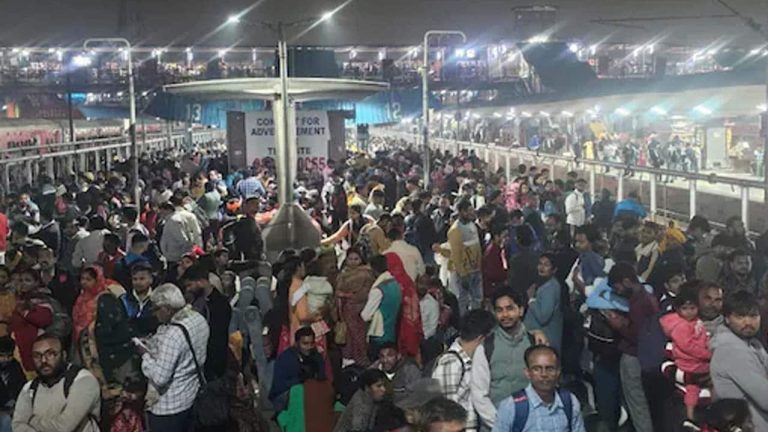
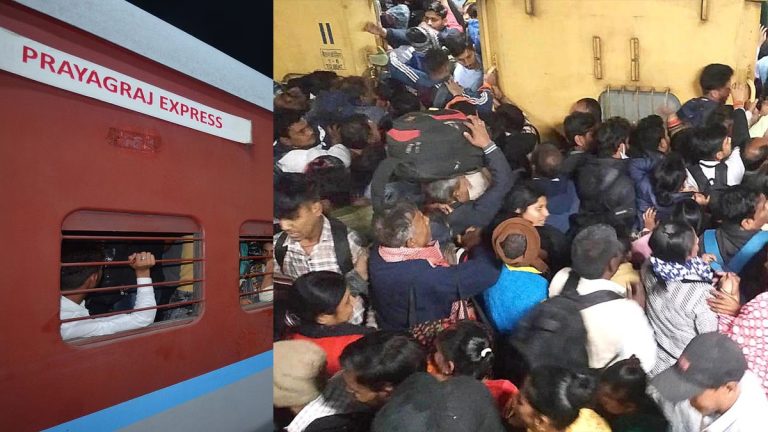
The Delhi Police on Sunday stated that confusion over the identical names of two trains–Prayagraj Express and Prayagraj Special– led to confusion and triggered the stampede at New Delhi Railway Station on Saturday, Delhi Police said.

According to officials, the announcement that the Prayagraj Special would arrive at Platform 16 created panic among passengers who were waiting for the Prayagraj Express at Platform 14.

The passengers, in confusion, who couldn’t board their train at platform 14, assumed their train was arriving at platform 16, leading to overcrowding and the subsequent stampede. Passengers holding general tickets started rushing towards platforms 12, 13 and 14, leading to chaos and congestion.

The stampede at the New Delhi Railway Station on Saturday night claimed the lives of 18 people. The incident happened around 10 pm when thousands of devotees were heading to Prayagraj for the Maha Kumbh 2025 festival, causing severe overcrowding at the station.

Additionally, four trains were scheduled to depart for Prayagraj, three of which were delayed, causing an unexpected surge of passengers at the station. Those unable to board Prayagraj Express at Platform 14 started moving towards Platform 16, which further led to chaos, the Delhi Police said.

At the time of the stampede, the train placement at New Delhi Railway Station was as follows: Prayagraj Express at Platform 14, Magadh Express at Platform 12, Swatantrata Senani Express at Platform 13, and Bhubaneswar Rajdhani at Platform 15, with the latter three trains running delayed via Kumbh.

Earlier today, Delhi Police held a high-level meeting to discuss the initial inquiry report on the New Delhi Railway station stampede and initiated an inquest proceeding headed by a DCP-rank officer.

Meanwhile, a two-member committee has been formed, which has initiated a High-Level Inquiry (HAG) into the stampede investigation.

The Indian Railways has announced a compensation of Rs 10 lakh by the Indian Railways was announced to the families of the deceased who lost their lives in the stampede at the New Delhi Railway Station.

A compensation of Rs 2.5 lakh has been announced for the seriously injured and Rs 1 lakh for those with minor injuries.


(This news report is published from a syndicated feed. Except for the headline, the content has not been written or edited by OpIndia staff)

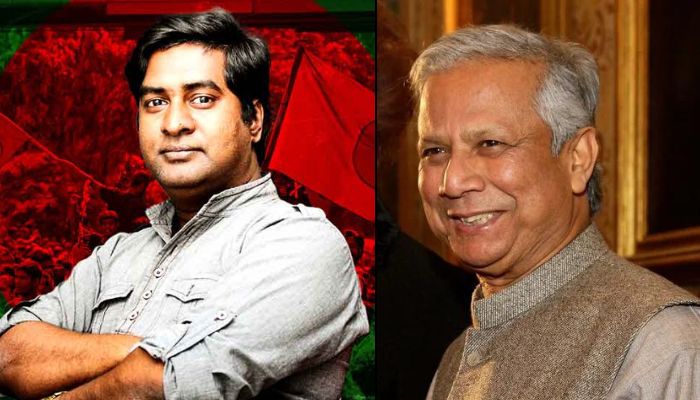
Is Bangladesh turning into Pakistan? Poet arrested on allegations of ‘insulting’ Prophet Muhammad, High Court had earlier recommended death penalty for blasphemy

Bangladesh, under the reign of Muhammad Yunus-led interim government, is gradually following the footsteps of Pakistan in terms of radical Islamisation.

On Thursday (13th February), the detective branch of the Dhaka Metropolitan Police (DMP) arrested poet Sohel Hasan Galib on allegations of ‘insulting’ Prophet Muhammad. He was thereafter taken to the office of the Detective Branch for questioning.

Galib was produced before the Dhaka Metropolitan Magistrate court on Friday (14th February), following which he was sent to jail. The poet’s only mistake was that he wrote a satirical poem on the antics of the radical Islamic outfit ‘Tawhidi Janata.’

His bail application was rejected and the Detective Branch of the Dhaka Metropolitan Police sought his 10-day custody for interrogation. The targeting of the poet is just based on one social media post.

The police have, however, claimed that the arrest of Sohel Hasan Galib was based on his ‘derogatory comments’ about Prophet Muhammad in a poem, which is part of the collection ‘Amar Khutbaguli’. The poet was booked under Section 54 of CrPC.

Growing intolerance in Bangladesh

The book was also available at the Amar Ekushey Book Fair in Dhaka, which also coincidentally came under the attack of a radical Muslim book for selling another book by author Taslima Nasreen.

Nonetheless, 105 academics came forward on Saturday (15th February) to appeal to the Muhammad Yunus-led-interim government to release Sohel Hasan Galib. However, it fell on deaf ears.

It was rather expected, given that Yunus had been jailing people for criticising his regime while pandering to the Islamists at the same time.

Bangladesh had fallen into the hands of Islamists since the undemocratic ouster of Sheikh Hasina as Prime Minister. They want to penalise ‘blasphemy’ which concerns insult to Quran, Islam and Prophet Muhammad.

When Bangladesh High Court recommended death penalty for blasphemy

In November 2024, OpIndia reported how the High Court of Bangladesh recommended strengthening the Cyber Security Act to make ‘blasphemy’ punishable by life imprisonment and death penalty in the country.

“There should be a provision of punishment like death penalty or life imprisonment for such unnecessary, unconscionable, obstinate and provocative speech and conduct against the Quran and Muhammad (Pbuh), which the parliament may consider,” a 2-Judge Bench of Justices MR Hassan and Fahmida Quader stated.

They further declared, “To discourage any such inflammatory speech or act which is likely to offend the minds of people of any religion, or to cause fear, terror, discomfort or apprehension in any of them, enhancing the punishment for such offences and to make them non-bailable must be considered.“

The Bangladesh High Court added, “If the offenders who are involved in the respective links of the charge sheet are not brought under the law, in every case the main culprit or the main conspirator or the main source will remain out of touch. Hence, there needs to be an appropriate order in this regard.“

Currently, the maximum punishment imposed by the blasphemy law in Bangladesh is 2 years imprisonment and a fine of 5 lakh Taka. The country’s High Court now recommends increasing the maximum punishment to non-bailable charge, life imprisonment and death penalty.

Woman says she has given birth to Elon Musk’s 13th child, read who Ashley St. Clair is and how Musk reacted to her claim

Business tycoon and the head of the US government’s Department of Government Efficiency (DOGE) has reportedly become a father for the 13th time. The news came out after author and conservative political commentator Ashley St. Clair posted on X on 15th February that she gave to birth to Elon Musk’s baby five months ago. In her post, Clair wrote that she did not disclose the fact before to protect the child’s privacy. She urged the media to ‘refrain from evasive reporting’.

”Five months ago, I welcomed a new baby into the world. Elon Musk is the father. I have not previously disclosed this to protect our child’s privacy and safety, but in recent days is has become clear that tabloid media intends to do do, regardless of the harm it will cause. I intend to allow our child to grow in a normal and safe environment. For that reason, I ask that the media honor our child’s privacy, and refrain from evasive reporting,” wrote Clair.

The same day she posted on X announcing that she would be taking a break from X for some time to spend time with her family.

A day later Clair reportedly urged Musk to finalise their co-parenting agreement. As per reports, the 25-year-old author had expressed frustration over Musk’s lack of response in a now-deleted post on X. In the post, she reportedly claimed that she and her team have been trying to reach Elon Musk for days but he did not acknowledge their messages.

Musk has not yet made any official statement regarding the matter. However, he responded to a post on X alleging that Clair plotted for years to trap Musk. “Ashley St. Clair plotted for HALF A DECADE to ensnare Elon Musk,” wrote an X user to which Musk responded by writing “Whoa”.

As per reports, a statement was issued by Clair’s representative, Brian Glicklich, confirming that Clair and Musk had been in private discussions regarding a co-parenting agreement but the efforts were disrupted by media reports.

“It is disappointing that a tabloid reporter who repeatedly ambushed Ashley and her family, made it impossible to complete that process confidentially,” he said. “we are waiting for Elon to publicly acknowledge his parental role with Ashley, to end unwarranted speculation, and Ashley trusts that Elon intends to finish their agreement quickly, in the best interests of the well being and security of the child they share,” he added.

In an exclusive interview with The New York Post after the revelation, Clair said that she met Musk for the first time at Twitter’s headquarters in San Francisco. At that time she was working for the satire site Babylon Bee. The relationship between the two grew, leading to her pregnancy, she said.

Clair claimed that Musk wanted her to keep their baby a secret “for everyone’s safety.” She said, “I was told to keep it secret. I was being asked to keep it a secret forever.” She added that she decided to not keep it a secret anymore because tabloids had started to snoop around.

New York Post also claimed that Musk provided St Clair with a lavish apartment but no romance. She was put up in a glitzy apartment in Manhattan’s Financial District and given a security detail. However, Clair said that despite these facilities, she had to spend her pregnancy alone. “I was completely isolated during my pregnancy. Every part of my career and everything I used to do I couldn’t do anymore. I was told not to tell anybody,” she claimed.

During the pregnancy, she went away from the limelight and social media, until she posted a photo from President Trump’s inauguration on 20th January.

The report said that the NY Post viewed texts between  St. Clair and Musk’s money manager Jared Birchall, showing that Musk wanted his name not to be mentioned in the birth certificate, to which she agreed. Clair said that some people suspected that she had given birth to Musk’s child, and began stalking her and then started to threaten the child.

“There was a cohort of very violent stalkers who started threatening my toddler, they would send me photos of him with blood and that I would witness his blood splattering death and saying I was Elon’s whore,” she claimed. She added that she still decided to remain silent, until one tabloid started snooping around.

Clair said that before the post on Musk owned X, she had informed Musk’s team that she was revealing the matter. “He ignored it,” she claimed.

Ashley St. Clair is a conservative political commentator and influencer known for her outspoken views and media presence. She authored the children’s book “Elephants Are Not Birds,” which reflects her advocacy for conservative ideologies. St. Clair has appeared at events alongside prominent right-wing figures and has been active in conservative media circles.

If the claims of Clair are true, it will be the 13th child of Musk with the fourth woman. The CEO of SpaceX and Tesla has fathered 12 children with three different women before this.

With his first wife, Canadian author Justine Wilson, Musk had six children. Their first son, Nevada Alexander, born in 2002, tragically died of sudden infant death syndrome at 10 weeks; they then welcomed twins, Griffin and Vivian Jenna, in 2004, and triplets, Kai, Saxon, and Damian, in 2006. Musk and Wilson divorced in 2008.

In 2020, Musk and Canadian musician Grimes (Claire Boucher) had a son who was named X Æ A-Xii by Musk, followed by a daughter, Exa Dark Sideræl, born via surrogacy in 2021. In 2023, they welcomed another child.

Additionally, Musk has three children with Shivon Zilis, an executive at Neuralink: twins born in 2021, Strider and daughter Azure, and another child born via surrogacy in early 2024.

Railways forms two-member committee to investigate the stampede at New Delhi Railway Station, high-level inquiry begins

A two-member committee has been formed to investigate the stampede at the New Delhi Railway Station on Februray 15, in which 18 people died and several sustained injuries. The committee comprises Narsingh Deo, Northern Railway’s Principal Chief Commercial Manager (PCCM), and Pankaj Gangwar, its Principal Chief Safety Commissioner (PCSC), the railways said on Sunday.

The committee has initiated a High-Level Inquiry (HAG) into the incident, the Railways said. As part of the investigation, the committee has ordered securing of all video footage from the Railway Station to aid in the probe.

The stampede at the New Delhi Railway Station took place at 10 pm on Saturday as lakhs of devotees were heading to Prayagraj for the Maha Kumbh 2025 festival, causing significant overcrowding at the station.

The deceased were identified as Aaha Devi, 79; Pinky Devi, 41; Sheela Devi, 50; Vyom, 25; Poonam Devi, 40; Lalita Devi, 35, Suruchi, 11; Krishna Devi, 40; Vijay Sah, 15; Neeraj, 12, Shanti Devi, 40, Pooja Kumar, 8, Sangeeta Malik and Poonam, both aged 34, Mamta Jha, 40, Riya Singh, 7, Baby Kumari, 24, and Manoj, 47.

The Indian Railway has announced a compensation of Rs 10 lakh for the families of the deceased who lost their lives in Saturday’s stampede. Additionally, as per the release, a compensation of Rs 2.5 lakh has been announced for the seriously injured and Rs 1 lakh for those with minor injuries.

The Indian Railways Northern CPRO told ANI that the tragedy unfolded at New Delhi Railway Station when a passenger lost balance and slipped on the stairs leading to platforms 14 and 15, resulting in several others getting injured.

“A two-member high-level committee has been formed to investigate the matter…The situation is under control, and the passengers have been sent by special train… Train movement at the railway station is normal now,” Dilip Kumar, Executive Director of Information & Publicity (ED/IP), Railway Board.


(This news report is published from a syndicated feed. Except for the headline, the content has not been written or edited by OpIndia staff)

Uttar Pradesh: Woman injected with HIV-infected needle over dowry demands; FIR registered after court order

0

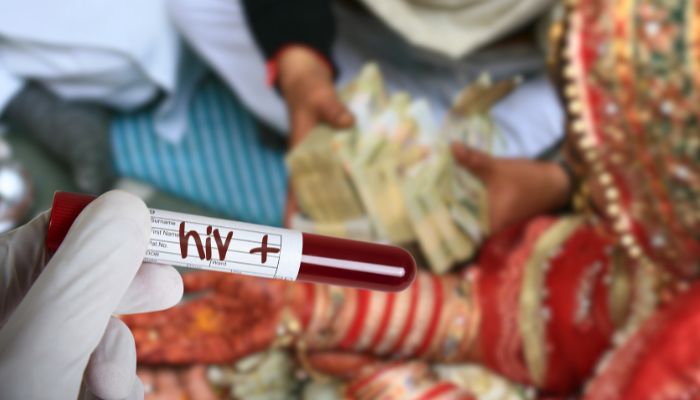
On 11th February, Gangoh police (Saharanpur) in Uttar Pradesh filed an FIR against a man and his family for dowry demands, assault, and injecting the wife with an HIV-infected needle. The FIR has been registered against Abhishek alias Sachin on the complaint of the victim’s father following a court order under Sections 498-A, 323, 307, 328, 326, and 406 of the Indian Penal Code and Sections 3 and 4 of the Dowry Prohibition Act. OpIndia accessed FIR and court orders directing police to register the case.

Escalating dowry demands post-Marriage

According to the complaint filed by the victim’s father, the victim got married to Abhishek on 15th February 2023 in Haridwar, Uttarakhand. The bride’s family gave a car and ₹15 lakh in cash as dowry, alongside gold and silver jewelry, household appliances, and other valuables amounting to ₹42 lakh. However, the in-laws were not satisfied and soon demanded an additional ₹25 lakh and an SUV.

When the victim’s parents refused to meet the demands, her husband, along with family members, started to taunt, harass, and assault her. Within a month of marriage, she was thrown out of her marital home and returned to her parental house.

Attempts at reconciliation and continued abuse

For the next three months, the victim stayed at her parental house, and her in-laws made no effort to bring her back. In July 2023, her father and some relatives called for a “panchayat” (gathering of elders) at her husband’s residence in Jasvawala, Haridwar. Following pressure from the elders of the society, the in-laws agreed to take her back, but the harassment allegedly continued. She was again assaulted and told that Abhishek would remarry.

In October 2023, she was again thrown out of the house, and another panchayat was held where relatives tried to resolve the matter. The in-laws, however, refused to accept her this time unless their dowry demands were fulfilled. Eventually, the panchayat forcefully left her at the in-laws’ house. The complainant told the police that the torture continued after that.

In November 2023, yet another episode of dowry-related violence took place, and she was beaten before being thrown out of the house again. Another panchayat was held. The accused family apologised but insisted that they would accept her only on their terms. A written agreement was drafted in April 2024 to settle the matter, and the victim went back to her in-laws’ house. However, upon returning home, she was informed that she would never be accepted and that Abhishek would remarry as revenge for the humiliation faced in the panchayat.

Injected with HIV-infected needle

When the victim refused to leave, her in-laws allegedly started giving her harmful medicines, leading to internal organ damage. The complainant alleged that the victim’s husband and sister-in-law later administered an HIV-infected injection to weaken her further. She was confined inside the house, prevented from seeking medical help, and not allowed to contact anyone.

Despite the restrictions, she managed to contact her father and brother. In May 2024, her brother visited her and learned about the abuse. He messaged their father, who arrived the next day. Seeing her condition, they rushed her to the hospital. Medical reports confirmed that her internal organs were damaged due to the forced consumption of drugs, and she was found to be infected with HIV. When her husband was tested, he was found to be HIV-negative, strengthening suspicions that she had been deliberately infected as part of a premeditated conspiracy.

Police inaction and legal intervention

After her diagnosis, the family approached the police to file a complaint. However, the police dismissed it as a “family matter” and refused to register the case without senior officers’ approval. The victim’s father approached the Senior Superintendent of Police (SSP), Saharanpur, but no action was taken.

Left with no alternative, the complainant filed a petition in the local court seeking legal intervention. On 6th February 2025, the court ordered the Gangoh Kotwali police to register an FIR against Abhishek, his family members, and other accused individuals under relevant sections.

The investigation into the matter is underway.

14-year-old boy killed and five people wounded in knife attack by Syrian asylum seeker in Austria

0

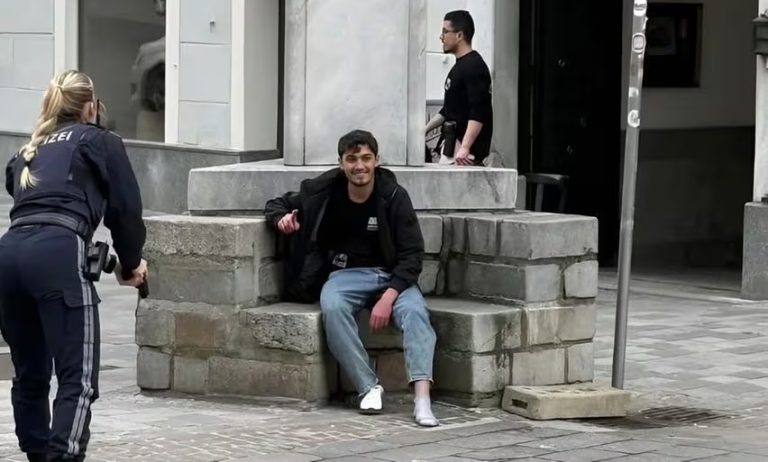
A 23-year-old man allegedly stabbed five passersby in southern Austria’s Villach on Saturday, leaving a 14-year-old dead and four others injured, the police said, CNN reported.

Following the incident, the suspect was detained in the city of Villach, police said. The suspect was a Syrian national with legal residence in Austria, they said.

As reported by CNN, the police spokesperson Rainer Dionisio said a motive was not immediately known. He added that police were investigating the attacker’s personal background. “We have to wait until we get secure information,” he said.

A 42-year-old man who works for a food delivery company witnessed the incident from his car, police said.

As reported by CNN, the victims were all men, with two seriously injured and two sustaining minor injuries, police said.

The governor of the Austrian province of Carinthia, Peter Kaiser, expressed his condolences to the family of the 14-year-old victim.

“This outrageous atrocity must be met with harsh consequences. I have always said with clarity and unambiguously: Those who live in Carinthia, in Austria, have to respect the law and adjust to our rules and values.”

On Sunday, authorities planned to establish a zone in the city center for those who want to grieve.

Police said it wasn’t clear whether the suspect acted alone and continued to search for potential additional suspects. It wasn’t immediately known whether there was any connection between the attacker and the victims.

According to the Interior Ministry, 24,941 foreigners applied for asylum in Austria in 2024. The largest group of applicants was from Syria, followed by Afghanistan.

In Austria, migration was a prominent topic leading up to last year’s election, which resulted in the far-right Freedom Party securing its first national election victory since World War II.

Over the past two years, the number of asylum seekers has decreased significantly. In 2022, applications peaked at over 100,000, while approximately 59,000 individuals sought asylum in 2023.

In a sharp reaction, far-right leader Herbert Kickl said on the X social media platform that he is “appalled by the horrific act in Villach” and wished the family of the 14-year-old victim who was killed in the attack “much strength.”

“At the same time, I am angry–angry at those politicians who have allowed stabbings, rapes, gang wars and other capital crimes to become the order of the day in Austria. This is a first-class failure of the system, for which a young man in Villach has now had to pay with his life,” Kickl said.

“From Austria to the EU–the wrong rules are in force everywhere. Nobody is allowed to challenge them; everything is declared sacrosanct,” he said, adding that his party had outlined what he viewed as necessary changes to immigration laws in his party’s election platform.


(This news report is published from a syndicated feed. Except for the headline, the content has not been written or edited by OpIndia staff)

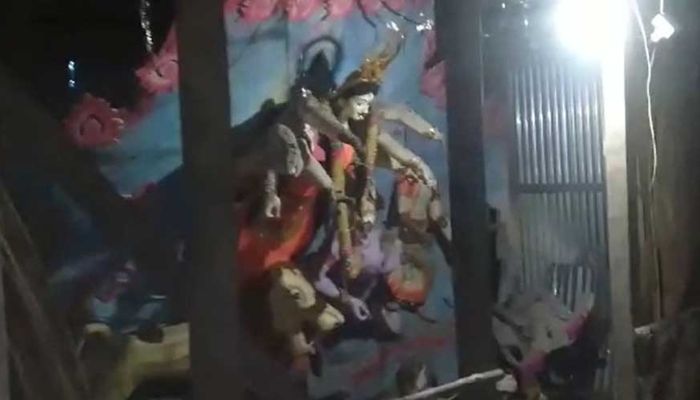
Bangladesh: Muslim mob attacks Hindu shop, vandalises Durga Mandir, injures locals on resisting

On Friday (14th February) night, a Muslim mob launched a scathing attack on a Hindu family and a nearby Durga Mandir in Nazirpur upazila in the Pirojpur district of Bangladesh.

The mob comprising 15-20 extremists attacked the shop of Rebati Gayen and looted his belongings. They also assaulted his wife Bithi Gayen. When local Hindus intervened, the Muslim mob also attacked and injured 8 of them.

Two of the victims include Durga Mandir Committee President Milan Gayen and his wife Irani Gayen. The 10 victims were later admitted to a local hospital.

The attackers were identified as Chabbir Sheikh, Mustaqin Sheikh and Nayan Sheikh. Others involved in the attack are yet to be identified. The Muslim mob also targeted the Durga Mandir and vandalised the idol of the Hindu deity.

They were reportedly armed with rods and pipes. According to victim Rebati Gayen, he had a heated argument with Chabbir Sheikh, Mustaqin Sheikh and Nayan Sheikh over their prolonged use of his shop’s WIFI.

The extremists had threatened the Hindu businessman with physical harm and left the scene. They did not show up at an ‘arbitration meeting’ which was organised on Friday morning. Instead, they came to attack Gayen’s shop and the nearby temple at night.

Following a complaint filed by Rebati Gayen with the police, the cops swung into action and arrested Chabbir Sheikh, Mustaqin Sheikh and Nayan Sheikh.

In the meantime, Durga Mandir Committee President Milan Gayen confirmed that work has begun to restore the temple to its original condition.

Bangladesh: Mirajuddin barges into temple and vandalises idol of Goddess Saraswati

On 31st January, a Muslim man barged into a Kali temple in Faridpur city of Bangladesh and vandalised an under-construction idol of Goddess Saraswati.

According to reports, the accused was identified as 32-year-old Mohammed Mirajuddin. He was caught red-handed attacking the Hindu place of worship, following which the accused was handed over to the people.

Mirajuddin was subsequently arrested and produced before a court. He was thereafter remanded to custody. According to the temple committee members, the Kali temple is protected by a 4-foot brick wall and the main gain is made of rods.

This facilitated the easy entry of Mohammed Mirajuddin into the temple premises. The idol which was vandalised was being prepared for Saraswati Puja, scheduled to be held on 3rd February.

Mirajuddin was previously involved in the destruction of the idol of Saraswati idol at the Faridpur ISKCON temple in February last year. Despite his arrest at that time, he was released on grounds of ‘mental instability.’

New Delhi railway station stampede leaves 18 people dead and several injured: What caused the tragedy

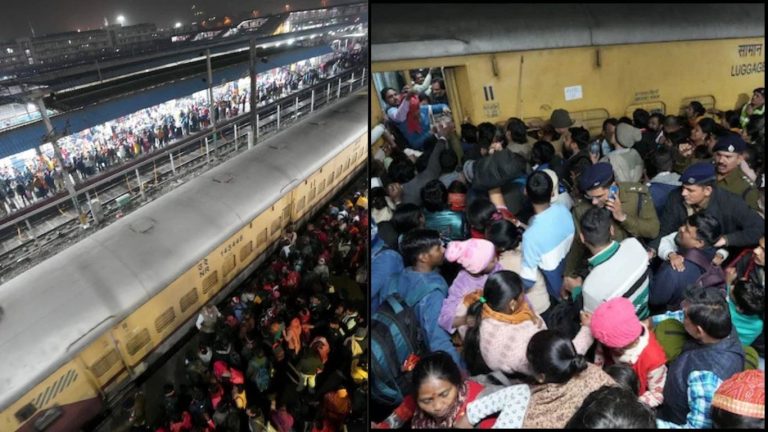
A fatal stampede occurred at the New Delhi railway station on Saturday (15th February) night leaving 18 people dead, including 11 women and 4 children. The stampede reportedly happened between 9 and 10 pm because of crowding of passengers due to delayed trains.

The crowd of passengers included a large number of devotees heading to attend the Mahakumbh Mela in Prayagraj. The injured were taken to Lok Nayak Jai Prakash Narain Hospital.

Deputy Commissioner of Police (DCP) Railway, KPS Malhitra, explained the reason for the stampede as the delayed schedule of two trains that led to a massive number of passengers gathering at the platforms.

“When the Prayagraj Express was standing at platforms no. 14, a lot of public was present at the platform. Swatantra Senani Express and Bhubaneshwar Rajdhani were delayed and passengers of these trains were also present at platform no. 12, 13 and 14. As per the information, 1500 general tickets were sold – that’s why the crowd became uncontrollable,” the DCP said.

Expressing grief on the stampede, Railway Minister Ashwini Vaishnaw said that a high-level inquiry has been ordered into the incident to be conducted by a two-member committee.

As soon as the stampede happened, teams of Delhi Police and Railway Police Force (RPF) swung into action and the situation was brought under control. Four special trains were deployed at the railway station to evacuate the passengers as confirmed by the Railway Minister.

What happened at the platform

As per reports, delay in the schedule of two trains – Swatantra Senani and Bhubaneswar Rajdhani led to crowds at platform number 13 and 14 of the New Delhi Railway station. As the passengers of the delayed trains were already waiting at the platforms, the arrival of the Prayagraj Express, a special train for Mahakumbh, at platform number 16 was announced. The passengers waiting at the platform started gathering to board the Prayagraj Express which resulted in an unmanageable crowd at the platform.

According to the report of an immediate inquiry ordered into the into the incident, the delay in the schedule of two trains, the announcement of a special train to Prayagraj and the unexpected surge in the sales tickets led to the tragic incident.

Besides, the railway authorities were issuing 1500 general tickets every hour for Prayagraj. “Considering the increasing crowds and continuous ticket sales, at around 10 pm, the railways authorities announced a special train to Prayagraj from platform 16. Upon hearing this announcement, the passengers with general tickets, who were waiting on platform 14 rushed towards 16 by crossing the foot overbridge. In doing so, they trampled over passengers who were sitting on the overbridge, while a person also slipped and fell, which led to the stampede,” the inquiry report said.

Nothern Railway’s Chief Public Relations Officer, Himanshu Shekar Upadhyay said that stampede occurred as some passengers slipped and fell on the other passengers due to heavy crowd.

“At the time of the incident, the Magadh Express heading to Patna was standing on platform 14, while the Jammu-bound Uttar Sampark Kranti was on platform 15. A passenger coming from 14 to 15 slipped and fell on the stairs, and many passengers standing behind him were hit. The stampede occurred due to this. This is being investigated by a high-level committee,” he said.

Delhi police launches Probe into the stampede

An investigation has been launched into the stampede by the Delhi Police. The police are examining the CCTV footage to find out the causes that led to the tragedy. “Our main target is to investigate the main cause which caused the stampede. We will collect all data to ascertain what exactly happened before the tragedy unfolded,” the police said.

In the aftermath of the unfortunate incident, ADG Railways Prakash D called for special vigilance on railway platforms for all the special trains bound for Prayagraj. He advised strict coordination for controlling the hike in the number of devotees at the railway stations.

What eyewitnesses said

As per reports, one of the coolies working at the station said that a massive crowd of people had gathered at platform numbers 12, 13, 14 and 15. “ As the stampede broke out, our colleagues rushed to help people. There was a huge commotion. We helped pull people from under others. We even pulled out a few bodies,” the coolie said.

A passenger named Pappu, who lost his mother-in-law in the stampede, said that there was no police present when the stampede occurred. “Around 9 pm, the stampede broke out. There was not police presence there. The situation was so bad that no one was able to help anyone else. People were just trying to pull out those who were crushed under the crowd,” he said.