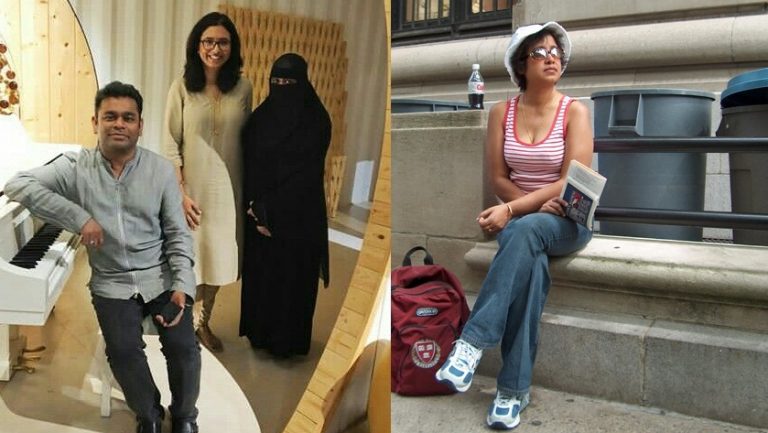
Oscar-winning music maestro AR Rahman’s daughter Khatija Rahman took to her official Instagram handle to slam the controversial Bangladeshi author Taslima Nasreen for calling her burqa ‘depressing’.
The music composer’s daughter took to the social media site to write that it was her choice to wear what she wants and that she feels empowered by wearing a burqa.
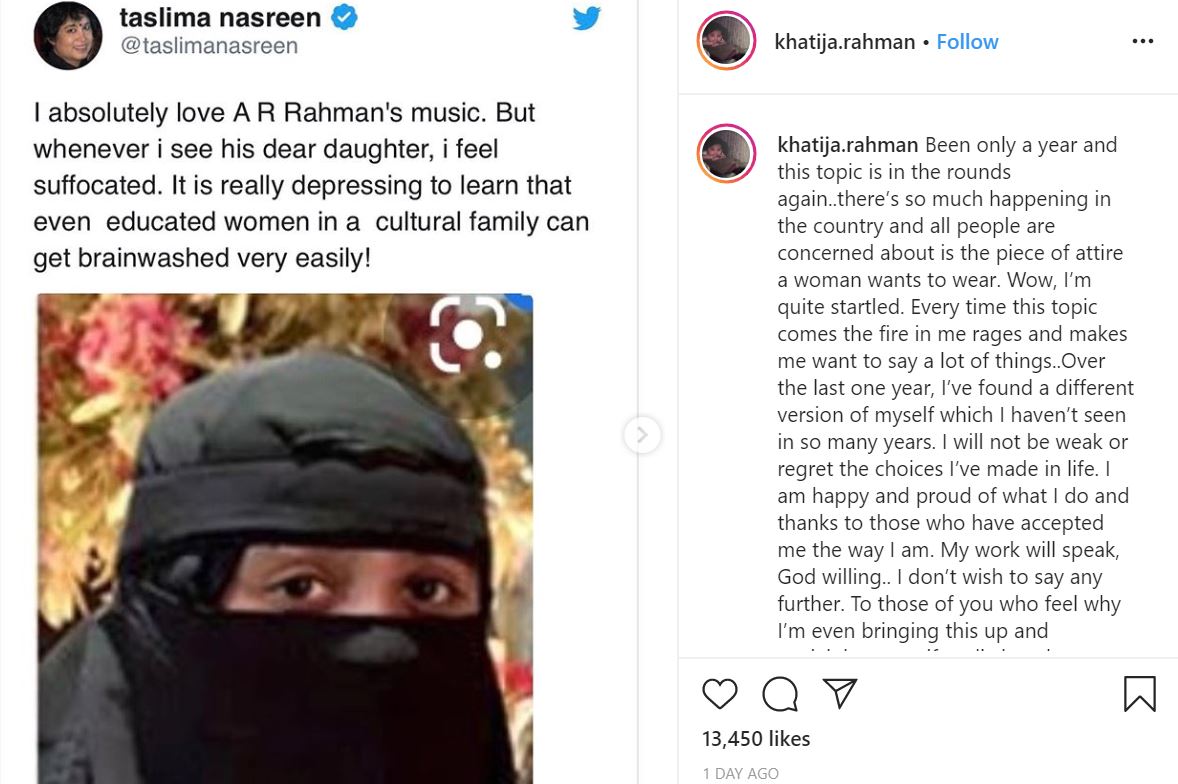
Her post reads: “Been only a year and this topic is in the rounds again..there’s so much happening in the country and all people are concerned about is the piece of attire a woman wants to wear. Wow, I’m quite startled. Every time this topic comes the fire in me rages and makes me want to say a lot of things…Over the last one year, I’ve found a different version of myself which I haven’t seen in so many years. I will not be weak or regret the choices I’ve made in life. I am happy and proud of what I do and thanks to those who have accepted me the way I am. My work will speak, God willing… I don’t wish to say any further”.
“To those of you who feel why I’m even bringing this up and explaining myself, sadly it so happens and one has to speak for oneself, that’s why I’m doing it. Dear Taslima Nasreen, I’m sorry you feel suffocated by my attire. Please get some fresh air, cause I don’t feel suffocated rather I’m proud and empowered for what I stand for. I suggest you google up what true feminism means because it isn’t bashing other women down nor bringing their fathers into the issue. I also don’t recall sending my photos to you for your perusal”.
Khatija Rahman took to Instagram to reply to Taslima’s tweet.
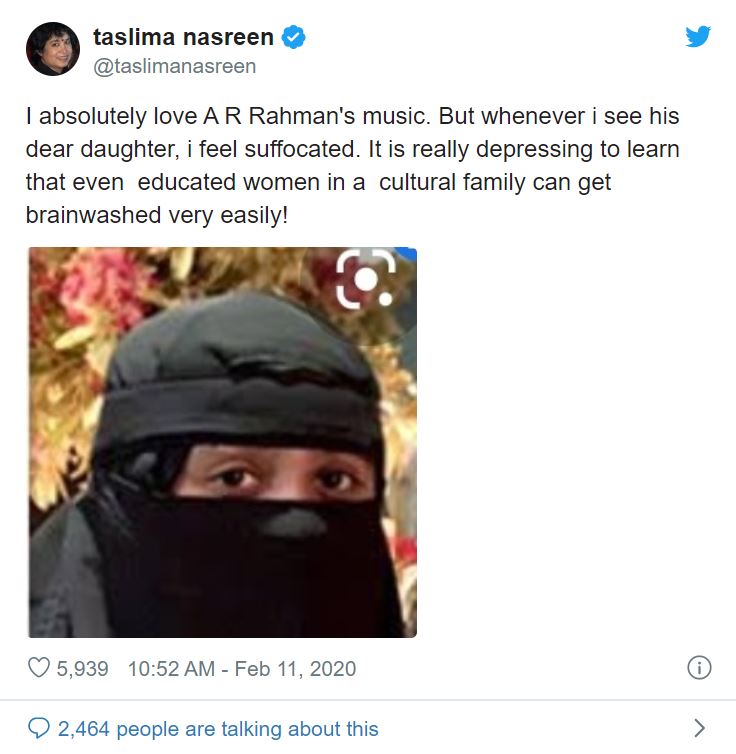
Khatija Rahman’s strong response came after Taslima Nasreen took to Twitter to share a photo of Khatija and her thoughts on Khatija wearing a burqa. She wrote that she feels suffocated when she looks at Khatija Rahman wearing a burqa. “I absolutely love A R Rahman’s music. But whenever i see his dear daughter, i feel suffocated. It is really depressing to learn that even educated women in a cultural family can get brainwashed very easily,” wrote Taslima on February 11.
Taslima Nasreen’s Tweet dated February 11th
This is, however, not the first time Khatija Rahman’s attire has come under fire. A year ago, A R Rahman was trolled by social media users after Khatija had appeared in an even with him wearing a burqa. However, then the composer had explained that the women in his family are free to wear whatever they want.
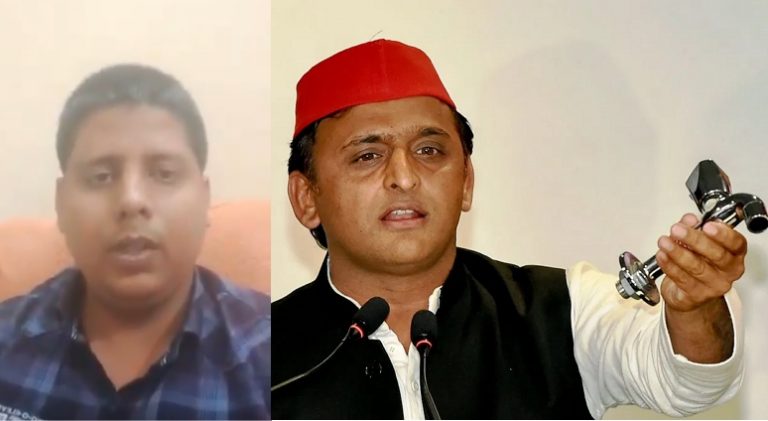
Akhilesh Yadav had recently posted the screenshot of texts he had received on his phone that called him a ‘toti chor’ (faucet thief). In doing so, he had revealed the phone number from which he had received the said texts. Now, the person to whom the number belongs is receiving death threats from the workers of the Samajwadi Party. Journalist Swati Goel posted the video on Twitter that the said person, Prashant Singh, shared with her.
Akhilesh Yadav had shared a screenshot of WhatsApp message Twitter that he had received, the message had said, “Bharatiya Janata Party Zindabad, Amit Shah Zindabad, Modi Ji Zindabad, Toti Chor.” The number of the sender Prashant Singh was visible on the screenshot.
After losing the Assembly elections in UP, Akhilesh Yadav was accused of vandalising the CM’s bungalow and taking away several items like expensive tiles, electrical fittings, bathroom and kitchen fittings, decorative items etc. After the bungalow turned into ruins was discovered by the administration under new CM Yogi Adityanath, BJP had given Yadav the moniker ‘Toti Chor’, meaning faucet thief. However, Yadav had denied the allegations, and accused officials of doing it on the instructions of newly elected BJP government.
In the video, Prashant Singh mentions that his phone number was leaked by Akhilesh Yadav on social media and it was claimed that he had given him death threats. Singh also said that the texts had been sent on the 16th of January and yet, it was shared much later by the Samajwadi Party supremo. He accused Akhilesh Yadav of leaking his phone number online, as a consequence of which, his party workers have become thirsty for his blood.
Look at the kind of messages that your party members and cadre are sending him, @yadavakhilesh
At least put out a tweet saying Prashant never gave you a death threat and only called you tonti chor! pic.twitter.com/tV5sHwdExF
Singh also says that he is receiving death threats and Samajwadi Party workers are also on the hunt for him because of which he and his family are worried for their lives. He also expressed regret if his language offended Akhilesh Yadav in any manner. Singh also says that Yadav should not have done it and he is unable to go anywhere due to the threats he is receiving.
“What did I message you? Every person should do Zindabad of the one who is doing good work,” Singh says in the video, before continuing, “Modi ji is doing good work, Yogi ji is doing good work. Their Zindabad should happen. If you do good work in the future, then your Zindabad will happen too.” Singh also says that if Akhilesh Yadav can prove that he has given him a death threat, then he will do whatever Yadav asks of him.
Singh also said that if any harm comes to him or his family, Akhilesh Yadav will be responsible. He also said that he liked the policies being implemented by the Modi Government. He spoke of how the Samajwadi Party was misguiding people on the Citizenship Amendment Act. Singh also said that the workers of Akhilesh Yadav’s party address Yogi Adityanath with crass names including ‘Chillum Wale Baba’ (The Pothead Monk) and yet the Chief Minister of Uttar Pradesh has never pursued vendetta politics against them. “This is his greatness,” Singh says of Yogi Adityanath and tells Akhilesh Yadav that he has made his party workers thirsty for his blood.
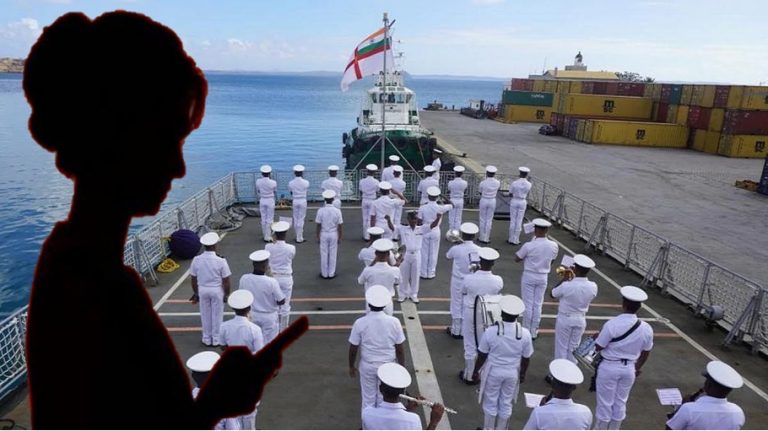
The Andhra Pradesh police jointly with the Naval intelligence have arrested thirteen people, including eleven Navy personnel and two civilians, in connection with an alleged espionage case. It has been revealed that they were honey-trapped by the Pakistani ISI operatives on social media after which these men had leaked sensitive information related to the Indian Navy through their social media profiles.
“The 11 Navy personnel and the two civilians have been apprehended in connection with the espionage case so far while a large number of social media profiles of service personnel are under the scanner for being in touch with the suspicious profiles,” Navy sources told ANI.
The Navy personnel apprehended by the police are from the different naval bases including Mumbai, Karwar (Karnataka) and Visakhapatnam.
The investigation began after the Andhra Pradesh Police, Naval Intelligence and Central Intelligence Agencies in a joint operation arrested seven navy personnel who have been allegedly involved in espionage.
After the misuse of social media by the naval personnel came to light, the Indian Navy imposed a strict ban on the use of smartphones and social media applications such as Facebook by its personnel.
Pakistan intelligence is increasingly using social media for spying activities. It has long been trying to lure the armed force personnel for carrying out espionage against India.
Last month it was revealed that one Army jawan named Sepoy Somveer Singh, who was arrested four months back on charges of espionage in Jaiselmer, got in touch with one ‘Anika Chopra’ over Facebook and was chatting regularly with her and exchanging details and information about the armoured unit including its movement. Following this, multiple accounts of officers and jawans are under probe with whom ‘Anika Chopra’ was in touch with. Now, as many as 50 jawans are under investigation.
A few months back, an Engineer at Brahmos facility in Nagpur, Nishant Agarwal, was arrested for alleged spying and passing on sensitive information to his ISI handlers. Even then Pakistani handlers had used social media accounts of women to honeytrap Agarwal.
In October last year, an Indian Army soldier of Meerut Cantonment was caught and several others detained by the Uttar Pradesh Anti-Terror Squad on the charges of espionage activities carried out on the directions of the infamous ISI. The arrested jawan was stationed in the Army’s Signal Regiment in Meerut Cantonment.
In September last year, Uttar Pradesh ATS team had arrested a BSF Jawan, Achutanand Misra, a resident of Madhya Pradesh’s Rewa district, for sharing vital information about India’s defence preparedness with ISI lackeys. He was “honey-trapped” by a woman claiming to be a journalist into sharing information about unit operational details, police academy and training centre. Prior to that, a person named Ramesh who worked as a cook in an Indian diplomat’s house was arrested by the Jammu and Kashmir military Intelligence Unit and the Uttar Pradesh police from Pithoragarh for bugging the house and passing off the information to the ISI.
Recently, a suspected Pakistani spy was arrested from Arunachal Pradesh border who had allegedly passed sensitive information about Army deployment and location, weapons information and number of Artillery installations in Kibithu to his Dubai based handler.
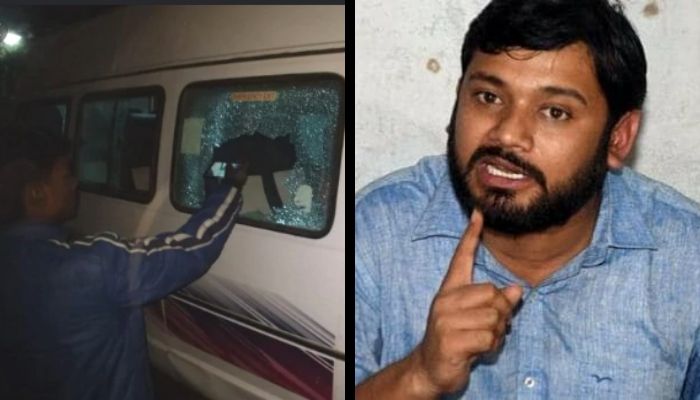
The Bihar police have apprehended three people, including a Shiv Sena party worker for allegedly attacking the convoy of the Communist Party of India (CPI) leader Kanhaiya Kumar on Friday. Two motorbikes had also been seized from the crime scene.
The incident took place in Bihar’s Arrah district where Kanhaiya Kumar’s convoy was damaged by stone-pelting by a group of bikers. Kanhaiya Kumar was on his way to address a gathering against the Citizenship Amendment Act (CAA). He escaped unhurt and was escorted by the cops in another vehicle.
It was alleged that to escape the stone-pelting, Kumar’s convoy had hit some bikers, after which the villagers got agitated and the attack on the convoy had intensified. Several bikers were injured after being knocked down by vehicles in the convoy. This was the 8th time that his convoy was attacked. Kanhaiya Kumar also claimed that the stage built for his rally was damaged by some unidentified people.
Araah SP Sushil Kumar stated, “An FIR on the statement of an ASI, who was assigned with the task of escorting the convoy, was lodged under relevant sections named against 10 and 15 unknown persons.”
Kanhaiya Kumar has embarked on a statewide “Jana-Gana-mana” yatra since January 30. The CPI General Secretary D Raja had written a letter addressing the State Chief Minister Nitish Kumar to provide adequate protection to Kumar.
Kumar never leaves an opportunity to make headlines for the wrong reasons. Last month, a research scholar accused him of publishing his research paper in a predatory journal.
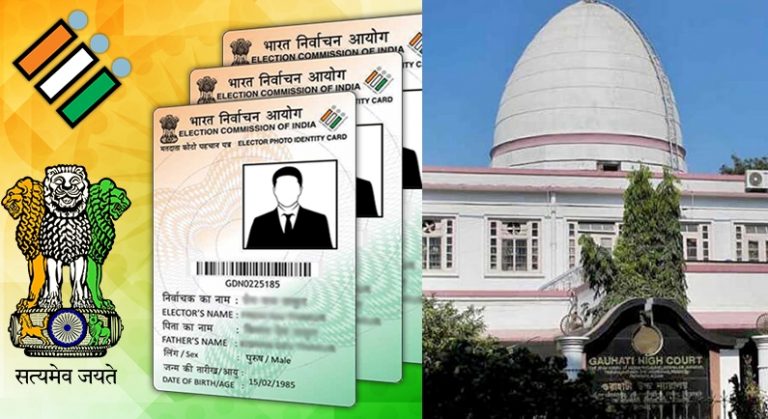
While the debate on citizenship in the country rages on with the ongoing protests against CAA, NPR and NRC, two completely opposite judgements have come from two courts in the country on proof of citizenship in the same week. While a court in Mumbai has said that the Voter Identity Card issued by the Election Commission is a proof of citizenship, the Gauhati High Court has said that it is not.
According to reports, a Magistrate court in Mumbai has said that Voter Identity Cards are valid proof of citizenship while acquitting a couple accused of illegal immigrants from Bangladesh. Ruling that the, Abbas Shaikh (45) and Rabiya Shaikh (40), who were arrested in 2017, were able to prove that they are Indian citizens, the court said, “the birth certificate, domicile certificate, bonafide certificate, passport, etc can be relied upon to establish the origin of any person.” The court then added that, “even the election card can be said to be a sufficient proof of citizenship as while applying for the election card or voting card, a person has to file declaration with the authority in view of Form 6 of Peoples Representation Act to the authority that he is citizen of India and if the declaration is found false, he is liable for punishment.” The court said that the couple had submitted original documents, and the prosecution could not prove that they were obtained fraudulently and they were not genuine.
Although the court clarified that Aadhaar card, PAN card, driving licence and Ration Card are not valid proofs of citizenship.
On the other hand, in an order issued on February 12, the Gauhati High Court has ruled that the Voter Identity Card is not a valid proof of citizenship. Saying that petitioner Munindra Biswas can’t be termed as Indian citizen based on Voter ID and name on Voter list, the High Court has said that supporting evidence is needed to prove citizenship.
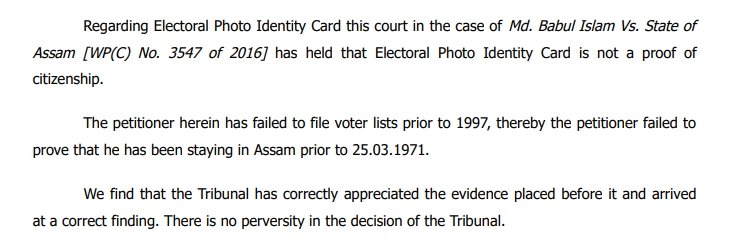
The Gauhati High Court judgement on Voter ID
Quoting an earlier judgement of the same court, the division bench of Justice Manojit Bhuyan and Justice Parthivjyoti Saikia said, “Regarding Electoral Photo Identity Card this court in the case of Md. Babul Islam Vs. State of Assam [WP(C) No. 3547 of 2016] has held that Electoral Photo Identity Card is not a proof of citizenship”.
The 2016 judgement had said that the Electoral Photo Identity Card is a post 25.03.1971 document. Besides, merely producing such an identity card in the absence of supporting evidence would not be proof of citizenship, the Gauhati High Court had ruled. Like the Mumbai Court, the Gauhati High Cort had also ruled that documents like PAN card, Driving licence are not proof of citizenship.
The petitioner had also submitted a voter list from 1997 containing his name and two sales deeds from 1964 and 1970, but the court said they are not enough evidence. The judgement said that the sale deeds are private documents, and their execution has to be proved by admissible evidence, which was not done. The court also ruled that a voter list from 1997 is not a proof that the petitioner has been staying in Assam prior to 1971, a requirement as per the Assam Accord 1985 for claiming citizenship in Assam.
Although both the judgements contradict each other completely, both have logic behind them. In general, the Electoral Photo Identity Card (EPIC) should be the proof of citizenship, as holding an EPIC and having the name listed in voter list means that one can vote in Indian elections, and only Indian citizens are allowed to vote in elections in India. While others like Aadhaar, PAN, driving licence etc can be issued to foreigners legally living in India, that is not the case for Voter ID, and that’s why it is a valid proof of citizenship.
But the Gauhati High Court is also correct that voter ID is not enough to prove citizenship in the context of Assam. Citizenship in Assam has separate criteria than the rest of the country. According to section 6A of the Citizenship Act, 1955, which was inserted as per the provisions of Assam Accord, those foreigners who came to Assam on or before 25th March 1971, will be considered Indian citizens. As the voter cards are issued after that date, and the voter list with the petitioner’s name was from 1997, they don’t prove that he came to Assam before the cut-off date.
Moreover, the Assam Accord was signed after the six-year-long agitation demanding the deportation of illegal immigrants from Bangladesh. The agitation was started after a large number of suspected voters were found to be included in voter lists for a byelection in 1978. The agitation had three Ds as the demands, detection, deletion and deportation. Means the illegal voters have to be detected, their name deleted from electoral rolls, and they should be deported. It is alleged that a large number of illegal immigrants from Bangladesh has managed to get themselves registered as voters in India, giving them the power to change political arithmetic in several constituencies in Assam. Due to that reason, having Voter Identity Card or having name listed on a voter list after 1971 is not enough to prove that on is Indian citizen in Assam.
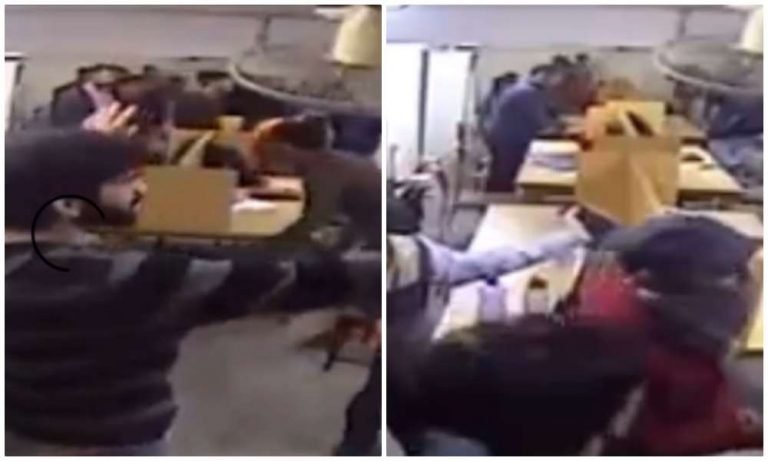
A new video has now surfaced from the night of 15th December 2019 that shows ‘students’ of the Jamia Milia Islamia University entering the library with stones in their hands before the Delhi Police took action against those present in the room. Earlier, a 49-second video was released that showed men in police uniforms caning ‘students’ ‘studying’ in the library. The first video was released by the Jamia Coordination Committee (JCC), which includes students and alumni of the Jamia Millia Islamia.
[youtube https://www.youtube.com/watch?v=tn_dHbSJnfc]
After the first video was released, the entire anti-BJP ecosystem had jumped in to defend the Jamia students and portray the Delhi Police in poor light. Even in that video, the ‘students’ could be seen sitting with closed books on the desks when the police personnel are seen entering the library. One student suddenly put up a handkerchief mask on his face just before the police entered the library. Another student was also wearing a handkerchief across his face while standing against a wall.
In the new video that has surfaced, it can be clearly seen that a student with a stone in his hand is urging ‘students’ from outside to enter the library and thereby, providing shelter to other students who are entering the library from outside where violence had ensued between the ‘students’ and the Police. The new video appears to depict events that occurred prior to police action in the library.
This video busts the propaganda of the liberal camp that the Police had no justification to enter the library. It also busts their claim that the ‘students’ in the library were just ‘studying’ when the Police barged into the room. The new video does lead one to believe that the ‘students’ were taking shelter in the library after indulging in violence outside.
The University Administration also came out to disassociate itself from the release of the first video. “It has come to our notice that some video regards to police brutalities in Dr Zakir Hussain library are in circulation. This is to clarify that the video has not been released by the university,” Jamia Millia Islamia University administration said in a statement.
The controversial Jamia Millia Islamia University in Delhi had emerged as one of the epi-centres of the anti-CAA agitations being perpetrated in the name of ‘peaceful protests’. The students and Muslim mob associated with the Jamia Millia Islamia University had unleashed violent protests against the Citizenship Amendment Act.
In December, the protests against CAA and NRC had turned violent amidst chants of Allah-o-Akbar and Naara-e-Taqbeer. The Muslim mobs had burnt four DTC buses, 100 private vehicles and 10 police bikes and pelted stones, injuring several policemen.
Following the riots, the Delhi police had registered an FIR against six people including four local politicians and a former Congress MLA was also named as suspects related to Jamia violence. The Delhi Police had named former Congress MLA Asif Khan as one of the accused in its FIR.
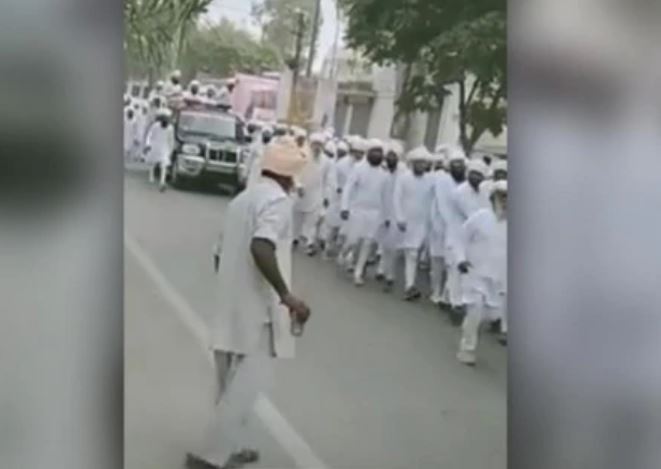
A video of a Sikh procession was shared widely on social media claiming that they were heading towards Delhi’s Shaheen Bagh to support Muslims against National Register of Citizens and Citizenship (Amendment) Act.
One Facebook user ‘Mohammad Javed’ posted the video along with a caption in Hindi which translates to ‘Sikh brothers reach Delhi’s Shaheen Bagh, say they too are with Muslims. No NRC, No CAA’.
This video which was posted on February 4, has received 17 lakh views and over 1,26,000 shares.
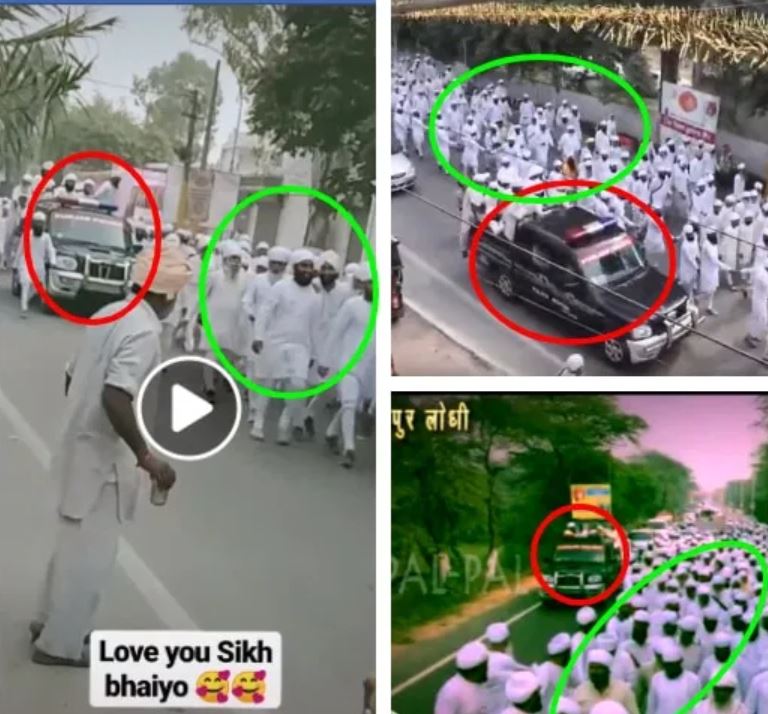
However, according to a report by India Today, this video is three months old and from Sultanpur Lodhi in Punjab. Taking a closer look at the video, the registration code of a motorbike passing by exhibits the RTO quantity (PB08BA 8747) of Punjab’s Jalandhar. A car of Punjab Police may also be seen.
According to Jalandhar police that procession was of Namdhari Sikhs, an India sect of Sikhism, who mostly wear white turbans, kurtas and pyjamas. It turned out that these Sikhs were participating in a Nagar Kirtan, a Sikh custom involving processions by the community.
The stills from claimed Sikh procession reaching Shaheen Bagh (L) is same as that of Nagar Kirtan (R)
When searched with related keywords, some YouTube videos were found from November last year which showed a similar procession and a police vehicle as seen in the viral video.
The details of these YouTube videos show that it is a procession by Namdhari Sikhs on the 550th birth anniversary of Guru Nanak Dev in Sultanpur Lodhi, a holy town in Kapurthala district of Punjab.
Another such video from the same event could be seen here.
While DSP of Sultanpur Lodhi, Sarwan Singh Bal confirmed to India Today that the viral video is of a procession led by Namdhari Sikhs in the town on the 550th birth anniversary of Guru Nanak Dev in November 2019, Sultanpur Lodhi MLA Navtej Singh Cheema also confirmed that the video was from his constituency and was shot in November last year.
The MLA divulged that he had organised the celebration in the city, and the procession seen in the video was going to Gurudwara Ber Sahib, a famous holy spot for Sikhs in Sultanpur Lodhi.Incidentally, this incident was reported by Punjab Kesari on November 2, 2019.
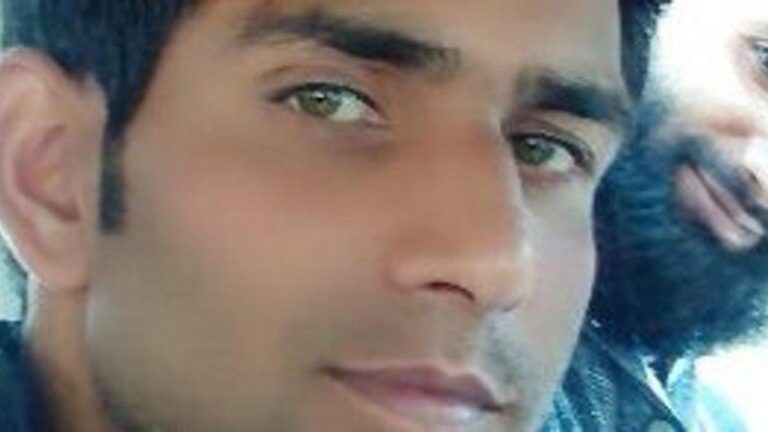
The National Investigation Agency shifts the investigation spotlight from tainted Jammu and Kashmir police officer Davinder Singh to a lawyer Irfan Shafi Mir. Mir was arrested along with Singh and two Hizb-ul-Mujahideen terrorists on January 11. Post interrogation the NIA has revealed that DSP Davinder Singh was a mere “mercenary”, the key man behind the operation was one lawyer Irfan Shafi Mir.
According to an India Today report, NIA revealed that Irfan Shafi Mir, a resident of Diaroo in Shopian, was the common link between Davinder Singh and dreaded Hizbul leader Naveed Babu. Mir had reportedly arranged for the militants to be transported to Jammu and subsequently to be exfiltrated to PoK.
However, Davinder Singh, who was paid a huge sum for conducting the high-risk assignment, reportedly told NIA that he wanted to extract money from the module and later would have earned brownie points with Jammu and Kashmir Police after tipping them off and getting them eliminated.
Irfan’s phone book also gave away contacts of two-dozen numbers of various terrorists and over-ground-workers. Some of them are said to be ‘most wanted’ in NIA cases. Also, his social media profile shows that he was following an array of journalists, Bollywood actors and the official account of the Jammu and Kashmir Police.
Agencies divulged that Irfan was the one who travelled to Pakistan at least five times. His passport showed that he had travelled via the legal route during which time he visited the Hizb office and met the top leadership of the terrorist organisation.
Mir, whose father was once a police constable with J&K Police, was arrested back in 2019 but was reportedly let off. Mir’s father had reportedly joined the terror network Hizbul Mujahideen back in 1990s and was close to the current Hizbul chief Syed Salahuddin. He was later on killed by the security forces.
Officer Davinder Singh was arrested on January 11 in Kulgam while ferrying Naveed, Asif, and lawyer Irfan Mir to Jammu in his car. A team led by DIG Atul Goel had flagged the car (Hyundai i10) based on intelligence inputs. Sources said agencies learned about Naveed’s movement through Irfan’s phone, which had been put on surveillance. “Conversations revealed Naveed’s plan to leave for Jammu in an i10 car on January 11. Davinder was a chance arrest, albeit not shocking,” officers investigating the case had revealed.
He was involved in multiple operations of trapping and killing militants or forcing their arrest or surrender. Due to his successful anti-terror operations in the Special Operations Group, he had got an out-of-turn promotion as DSP and later was awarded a President’s Police Medal.
But his stint in Jammu and Kashmir was not clean. Singh was removed from SOG after there were allegations of extortions against him, and he was suspended from services for some time.
Davinder Singh was currently posted at the Srinagar International Airport. Earlier he was in the anti-hijacking squad of J&K police and before that a part of the special operations group when the elite force was established. His case has been handed over to NIA.
In a new twist to the ongoing controversy over the release of edited CCTV footages of police action against anti-CAA rioters inside Jamia Millia Islamia University, the university administration has now released a statement distancing itself from the leaked CCTV footage.
“It has come to our notice that some video regards to police brutalities in Dr Zakir Hussain library are in circulation. This is to clarify that the video has not been released by the university,” Jamia Millia Islamia University administration said in a statement.
#Breaking | Jamia Millia Islamia University releases a statement distancing itself from the CCTV footage that was leaked.
‘The video has not been released by us,’ says Jamia Millia Islamia University.
Interestingly, the official statements by the Jamia Millia Islamia University come at a time when the so-called CCTV footage released by the Jamia Coordination Committee was found edited out and morphed, leaving the anti-CAA protestors at Jamia hugely embarrassed.
Earlier in the day, the Jamia Coordination Committee (JCC), which includes students and alumni of the Jamia Millia Islamia and is not officially associated with the university, had released a purported CCTV footage in which some people with police uniforms were seen caning students allegedly in the library on December 15 during the anti-CAA riots that took place inside the university campus.
The 49-second video purportedly shows some seven to eight people alleged to be police personnel entering the Old Reading Hall and beating ‘students’ with lathis. The video was released by the JCC in the early hours of Sunday.
The video released by Jamia coordination committee has too many discrepancies and has been edited out to portray Delhi police as the perpetrators of the attack. However, with careful observation, it can be seen that the Muslim mobs who had unleashed violence had taken refuge in the library to escape from the police action.
One of the ‘students’ who took refuge in the library was seen setting a bike on fire near Jamia University campus during the anti-CAA riots.
Interestingly, the JCC which released the video on twitter is not even an officially elected body. It was formed after the December 15 riots and has been forefront at organising anti-CAA protests inside the university campus as well as at Shaheen Bagh, Khureji and other places.
The controversial Jamia Millia Islamia University in Delhi had emerged as one of the epi-centres of the anti-CAA agitations being perpetrated in the name of ‘peaceful protests’. The students and Muslim mob associated with the Jamia Millia Islamia University had unleashed violent protests against the Citizenship Amendment Act.
In December, the protests against CAA and NRC had turned violent amidst chants of Allah-o-Akbar and Naara-e-Taqbeer. The Muslim mobs had burnt four DTC buses, 100 private vehicles and 10 police bikes and pelted stones, injuring several policemen.
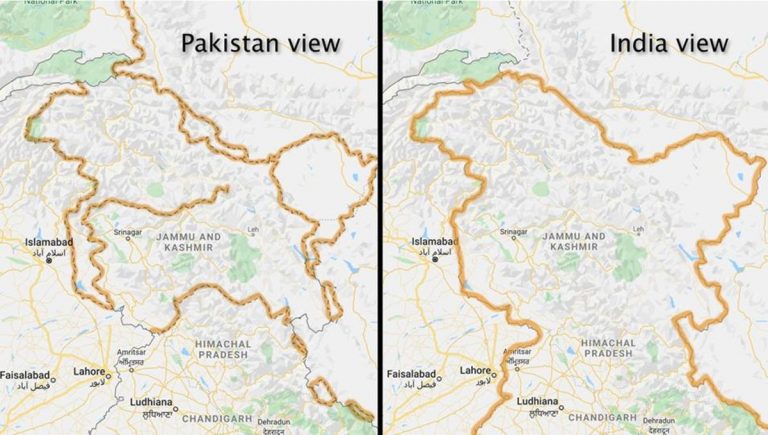
The popular search engine, Google maps have redrawn Kashmir’s borders which appears different when searched from outside India. It shows Kashmir’s outlines as a dotted line acknowledging “dispute” when it is viewed from outside India.
According to a report by the Washington Post, the borders on Google’s online maps display Kashmir as an integral part of India when viewed from India, contrary to what it appears when seen from elsewhere. For example, when viewed from Pakistan, the Kashmir region would appear disputed marked with dotted lines.
“From Pakistan, Kashmir appears disputed while from India, it appears as a part of India”, the Washington Post report said, adding that “Google Maps changes disputed borders based on what country you search from”.
Reacting to the report, a company spokesperson said, “Google has a consistent and global policy to depict disputed regions and features fairly, showing claims made by the disputed or claiming nations on its global domain.
“This does not endorse or affirm the position taken by any side. Products that have been localised to the local domain, such as maps.google.co.in, depicts that country’s position as per the mandate of the local laws”.
“We’re committed to providing our users with the richest, most up-to-date and accurate maps possible. We do border updates based on data from our providers as new or more accurate data becomes available from authoritative sources or geopolitical conditions change. As we did for the state of Telangana in 2014,” the Google official told PTI.
In 2016, the microblogging site Twitter came under sharp criticism by many Indian users for showing Jammu & Kashmir in China and Pakistan when users used the website’s location services while composing their messages.
Earlier in 2013, Google Maps had come under criticism for showing PoK and Aksai Chin (and parts of Arunachal Pradesh) outside the Indian map, and the then government had asked it to correct it.