Home Blog Page 5821

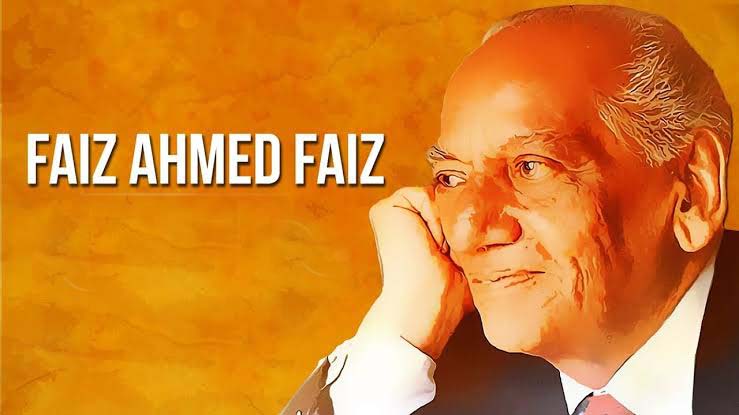
Faiz Ahmed Faiz – the poet, the poem, and the new battle

I discovered Faiz years ago, around 18-19 years ago, as a young man exploring his interest in music and poetry. As could be the case with most guys of my generation, you are drawn towards this genre of poetry due to Jagjit Singh, whose selection of ghazals were simple and not too difficult to understand. Jagjit Singh makes ghazals easy for you with his effortless style of singing and his velvety voice. Once initiated by Jagjit Singh into this genre, you start discovering other singers like Ghulam Ali and Mehndi Hassan, and finally, you start noticing the ones who wrote those beautiful, mostly romantic, ghazals.

I loved “gulon mein rang bhare” in the voice of Mehdi Hassan, though that was not enough to discover Faiz. I discovered more about him when someone who had better knowledge and deeper interest in poetry revealed to me that the famous classic Bollywood song “teri aankhon ke siwa duniya mein rakkha kya hai” – sung by Mohammad Rafi and Lata Mangeshkar (but not as a duet) – was actually a line borrowed from a nazm originally written by Faiz.

Both “gulon mein rang bhare” (as written by Faiz Ahmed Faiz) and “teri aankhon ke siwa” (as written by Majrooh Sultanpuri) are deeply romantic poems, but when you read the nazm of Faiz – mujhse pahle si muhabbat mere mehboob na maang – from where the latter line was borrowed by Majrooh, you discover the “revolutionary” poet Faiz. Or in modern lingo, the “woke” Faiz.

The woke Faiz appeared more attractive. I loved the aforementioned nazm and its intensity. I also loved his other nazms like “chand roz aur meri jaan”, “bol ke lab aazaad hain tere”, and obviously, “hum dekhenge”. He had also written a nazm titled subah-e-aazaadi that said “woh itnezaar tha jiska yeh woh sahar toh nahi” (this is not the morning that we awaited) in August 1947 when India and Pakistan got independence post partition, hinting that he did not like partition based on religion, and thus I always believed that he couldn’t be an Islamist.

I was told by my learned friend that Faiz was not happy with Zia’s Pakistan, and at one point in time, he apparently had even considered moving to India after Zia captured power through a military coup. However, he chose Lebanon for asylum because had he taken refuge in India, rest of his “revolutionary” poets or relatives would have been targeted by the Zia regime after being branded as people who secretly loved India, the eternal enemy of Pakistan.

With such background and history, when the controversy regarding the recitation of “hum dekhenge” at IIT Kanpur campus broke, my first reaction was the same as that of the “liberals”. This is going to be embarrassing, I thought, and I asked Nupur, OpIndia Editor, not to make herself a laughing stock by painting Faiz or his poetry as some Islamist project, even though on Twitter I continued to provoke the liberals, which is my favourite pastime.

However, I didn’t put any veto either on the topic. Earlier, during the BHU controversy, when many even on the ‘right’ side of the ideological divide were castigating the students for allegedly opposing a Muslim teacher, my first reaction too was that ‘maybe the students are being unreasonable’. However, OpIndia’s reporting on the issue was really good and it forced me to change my initial stand. Basically, I was proven wrong, and I thought that what if I’m wrong again about Faiz too?

After almost two weeks, do I now think that I was wrong about Faiz? Do I now think he was an Islamist? If media reports are to be believed, a panel at IIT Kanpur has been formed apparently to decide if Faiz was anti-Hindu.

First of all, that is fake news. The panel at IIT Kanpur has been formed to investigate administrative issues around the event where Faiz’s poetry was recited. The panel will analyse if proper permissions were taken if any rules were broken by the organisers or the participants if some indiscipline took place, and if at all some action needs to be taken, etc. It has not been constituted exclusively to psychoanalyze Faiz or his poetry.

However, why not do that only now that the media has imagined that to be the case? Why not be truly liberal and start questioning our long-held beliefs? Why not dig a little about Faiz beyond his poetry?

Faiz and his politics

Faiz is supposed to be a Marxist and leftist poet. He has been a recipient of the Lenin Peace Prize that was awarded by Soviet Russia, the erstwhile communist superpower. For someone who had seen how Indian Marxists and left behave, perhaps this itself could appear as a proof that Faiz was anti-Hindu, for communists in India are indeed anti-Hindu. However, Faiz was a leftist in Pakistani setup, not in the Indian setup. There is nothing really that can prove that he was anti-Hindu.

In fact, a leftist in an Islamic society should be sympathetic towards Hindus, as they are the marginalised and persecuted community there. Take for example the Pakistan born author and commentator Tarek Fatah. Fatah is a leftist in a Pakistani setup and he is anything but anti-Hindu. Similarly, many left-leaning activists and journalists in Pakistan have been highlighting the plight of Pakistani Hindus, even as the Indian secular ecosystem is rioting in the streets against CAA that awards citizenship to a handful of Pakistani Hindus who could escape to India by December 2014.

Honestly, I am not aware of any activism by Faiz in support of minority Hindus of Pakistan.

I don’t think he ever wrote anything revolutionary highlighting their plight. I will be happy to be proven wrong, but the “revolutionary” Faiz appears to be faltering on such activism. Forget Hindus, there is no recorded activism – if not writing poems in support of the cause, then at least stuff like award wapsi or at least sitting on some dharna – by Faiz even in support of Ahmediyas, a Muslim sect.

Contrary to the popular belief that Ahmediyas were declared non-Muslims by the military dictator Zia-ul-Haq, it was actually the democratically elected government of Zulfiqar Ali Bhutto that declared Ahmadis non-Muslims via a constitutional amendment in 1974. Zia just improved that constitutional amendment via an ordinance 10 years later and made the life of Ahmediyas even worse. The original sin was committed by Zulfiqar Ali Bhutto, and guess what; Faiz Ahmed Faiz was an aide of Bhutto. In fact, Faiz worked in various ministries in Bhutto government in advisory and senior roles. He did not resign to protest what Bhutto did to Ahmediyas. A revolutionary poet should have done at least that, no?

His activism similarly appears absent when the Pakistan Army was involved in a virtual genocide in East Pakistan (now Bangladesh).

However, an article in The Hindu published in 2018 tries to argue that Faiz was not so bad with activism during wartime. It says, “Faiz consistently refused to write ‘patriotic’ poems to boost the morale of the Pakistani army.” That is too long a rope given to a “revolutionary” poet, no? An act of revolution actually will be to write poems against injustices, even if done by your own army. Woke Indian fans of Faiz never shy away from attacking Indian army, but don’t expect Faiz to attack an army that killed and raped millions? Just his assumed “refusal” (who had asked him, where is the proof?) to write poetry is seen revolutionary enough?

Unfortunately, Faiz’s revolutionary streak appears limited to opposing Zia-ul-Haq only, and one can argue that it could be triggered by a selfish reason because Zia had ousted Bhutto, a friend and patron of Faiz, from power. If Faiz were in principle opposed to Islamism, he should have opposed his friend Bhutto for his law against Ahmediyas and if he were religiously opposed to the tyranny of those in power, he should have opposed what was done to people in East Pakistan. I couldn’t find any record of active or vocal opposition by him on either of these two fronts. And obviously, nothing where he spoke up for Hindus of Pakistan.

Still, this does not make Faiz anti-Hindu. At worst, he can be accused of being blind to the Hindu plight and sentiments, and that’s precisely what people are opposing in “hum dekhenge” because it uses metaphors where Islam prevailing over idolatry is being equated with an act of revolution.

Poem and the poet

Regardless of what the politics of Faiz was, a poem becomes independent of the poet over time. People who are taunting “illiterate Sanghis” of not knowing Faiz should definitely know this. Don’t the same people justify the adoption of the poetry of Allama Iqbal by Indians, even though Iqbal was an Islamist and a key person who worked towards the creation of Pakistan?

Iqbal was someone who went from “Hindi hain hum, watan hai Hindustan humaara” to “Muslim hain hum, watan hai saara jahaan humaara”, but that doesn’t invalidate either of his poems. They essentially become independent of him and are used by people who believe in the inherent meanings and respective sentiments as understood by them.

A 1994 Italian language movie named Il Postino (The Postman) has a dialogue that beautifully expresses this thought. The movie is a fictional tale where a young postman gets to regularly meet poet Pablo Neruda and becomes interested in his poetry. He later passes off some of Neruda’s poems as his own to impress a local girl whom he loved and wanted to marry. When Neruda comes to know of it and confronts the postman, the young man justifies his deed saying “Poetry doesn’t belong to those who write it, it belongs to those who need it.”

Indeed. When Iqbal says “kuchh baat hai ki hasti mitati nahi humaari” (there is something that has kept Hindustan alive), this line doesn’t belong to him anymore as he had morphed into someone who wouldn’t care about existence of Hindustan but belongs to those who need it as assurance that their nation will survive despite all odds.

Basically, words of an Islamist Iqbal can be used by a “Sanghi” to reassure himself that Hindustan – the land of Hindus – is going to survive even when contemporary civilizations have vanished. And similarly, words of a ‘revolutionary’ Faiz can be used by an Islamist to reassure himself that Ghazwa-e-Hind is waiting to happen.

(update: incidentally, Sharjeel Imam – who is being seen as one of the architects of anti-CAA protests and is currently in jail – had praised those exact lines by Faiz for being inspired from The Holy Quran and argued that Faiz wasn’t some atheist Marxist poet, but a ‘believing Muslim’ who subscribed to core Islamic thoughts like infallibility of Prophet Mohammad rejection of other gods and deities. It is not tough to guess why such elements love the expression ‘sab but uthwaye jayenge’. Imam’s article, which he wrote in 2017, lamented Faiz being painted as atheist or a Marxist poet, which ironically is the exact defense being offered by liberals.)

Faiz’s words use the metaphor of Islam prevailing over idolatry. It uses the imagery of pre-Islamic idols at Kaaba being destroyed and supremacy of Allah being established. How exactly are they appropriate when used for anti-CAA protests? Remember that such protests have witnessed crowds that shout “tera mera rishta kya, la ilaahi illallah” and “kaafiron se aazaadi”, apart from the fact that an idol of Lord Hanuman was destroyed in Patna – that is the context that is relevant here, not Faiz.

One may argue that the poem was recited at IIT Kanpur, where the crowd did not shout such slogans. However, that becomes irrelevant in the “liberal” scheme of things. Let me explain. These days groups like Ambedkar-Periyar Study Circle (APSC) and such are gaining a foothold in campuses like IITs. They oppose events like celebrating Ramayana just because they think it’s offensive to their sentiments, irrespective of what is felt or believed by those celebrating it.

The imagery of Ravana being burnt is also a metaphor of victory of good over evil, it can be argued to be similar to the metaphor of idols being removed from Kaaba. But groups like APSC oppose this imagery as in their worldview, Ravana is a Dravid/Dalit king and the whole thing is not about good over evil but about the supremacy of Aryans/Upper Castes. They would rather burn Ram’s effigy. It doesn’t matter to them that those celebrating Ravana’s fall don’t even consider him as Dravid or Dalit (he was, in fact, a Brahmin) character but see him just as a villain.

Such opposition to religious imagery has attracted support from “liberals” and “wokes”. Similar thought process and arguments have been employed to worship Mahishasur and oppose Durga Puja on campuses like JNU. The liberals have supported such stuff in the name of “alternate history” and various intellectual sounding claptrap. However, what they have done is to essentially normalise opposition to an event or idea regardless of what is believed by those celebrating or organising it.

So why should those opposing Faiz’s poetry care about what the poem means or who Faiz was or beliefs of those who organised the event? Their own sentiments and beliefs against the imagery of idols being destroyed and only Allah’s name prevailing should be enough to oppose it. Or liberals should declare that some sentiments are more important than others.

Beyond Faiz

It is rather tragic that Faiz has been caught in all this, but it is not a fight against Faiz. It is a fight against an old entrenched establishment, which demands that “jaahil” people must submit fully to what it prescribes them to read, how it prescribes them to think, act only when it prescribes them to act, and not question anything that is being fed to them despite glaring double standards. They don’t realize that the jaahils have now decided to take note and speak up. They have decided to push back. They are not ashamed of their assumed “jahiliyat”. Or in words of Faiz, jaahils have declared that:

ham paravarish-e-lauh-o-qalam karte rahenge,
jo dil pe guzarati hai raqam karte rahenge
CAA: 4 Goa Congress leaders quit, slam Congress for ‘misleading people, creating fear in minorities for political mileage’

Showing resentment on their party’s anti-CAA and anti-NRC stand, four Goa Congress leaders resigned from the party on Thursday. Later it was reported that three of them joined the BJP.


Former Panaji Congress block committee president Prasad Amonkar, former block committee secretary Dinesh Kubal, former youth leader Shivraj Tarkar and North Goa minority cell chief Javed Sheikh quit the party in the morning, saying they were in favour of the recently amended Citizenship Law.

Amonkar, Kubal and Tarkar later joined the BJP, ahead of the party working president J P Nadda’s public awareness rally on the Citizenship Amendment Act here on Friday.

Read: Congress wants Yogi Adityanath to resign because he would not let Islamists and politicians burn UP during anti-CAA riots

Talking to reporters, Amonkar accused the Congress of trying to ‘mislead the public, especially minorities,’ on the new citizenship law.

“We oppose the wrong stand taken by the Congress on CAA and NRC. As an opposition, we need to be critical and not just oppose something for the sake of opposing. The Citizenship Amendment Act needs to be welcomed,” he said.

The Congress should stop “misleading people and creating fear in the minds of minorities for political mileage”, Amonkar said. “We all were part of the Congress’ protest held last week against the CAA and NRC. But, we realised that the leaders, through their speeches, were trying to create fear in the minds of minorities. This is not right,” he said.

Read: Rahul Gandhi embarks on his deranged rant against NPR, NRC and CAA again: Here are 10 questions that he must answer

Goa is a peace-loving state and the Congress is trying to instigate the minorities, Amonkar alleged. The Citizenship Amendment Act has been enacted through a democratic process and seeks to give citizenship to refugees who have had centuries of cultural affinity with the Indian ethos, he said.

“The CAA addresses concerns of minorities in Pakistan, Afghanistan and Bangladesh. Members of the majority community in those countries, who want to apply for Indian citizenship, will still be able to so as per the existing provisions,” Amonkar added.

Read: After Congress, AAP leaders booked for anti-CAA violence, ‘protestors’ question absence of Rahul, Priyanka and Kejriwal at Shaheen Bagh, Jamia

Congress has been opposing the Citizenship Amendment Act while terming it “unconstitutional”.

We had reported how these coordinated protests all across the nation in the pretext of the newly inducted Citizenship law have been a part of a well-planned conspiracy spearheaded by Congress and NSUI representatives who have been working relentlessly to put through the task but without coming in the forefront so that the entire treason can be given an organic look.

Congress first releases booklet in Bhopal claiming Veer Savarkar had ‘physical relationship’ with Godse, then mocks the freedom fighter

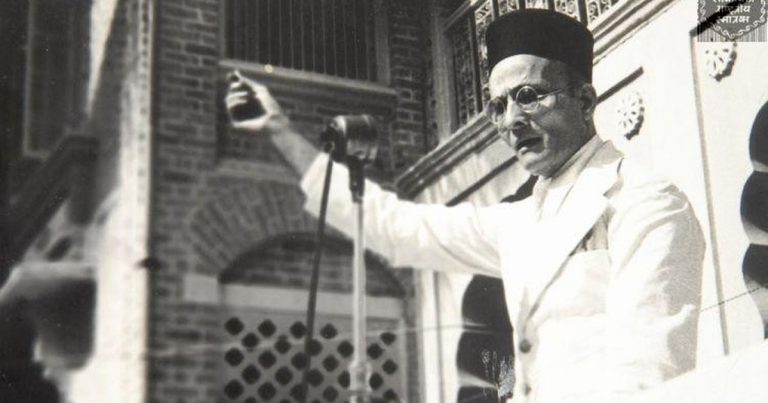
Congress Party today touched a new despicable low by spreading lies about freedom fighter Veer Vinayak Damodar Savarkar. A booklet titled ‘How brave was Veer Savarkar’ released by All India Congress Seva Dal training camp run by the Congress in Bhopal, Madhya Pradesh has claimed that co-founder of Hindu Mahasabha Veer Savarkar had a physical relationship with Nathuram Godse, Mahatma Gandhi’s assassin.

Congress frontal organisation Seva Dal chief Lalji Desai, defended the writer of the Congress’ booklet saying that he has written it on the basis of evidence. Mocking Savarkar, Desai furthered: “But that’s not imp for us. In our country today, everyone has legal right to have their own preferences”.


The booklet mentions and talks about several incidents, questions and controversies surrounding Savarkar.

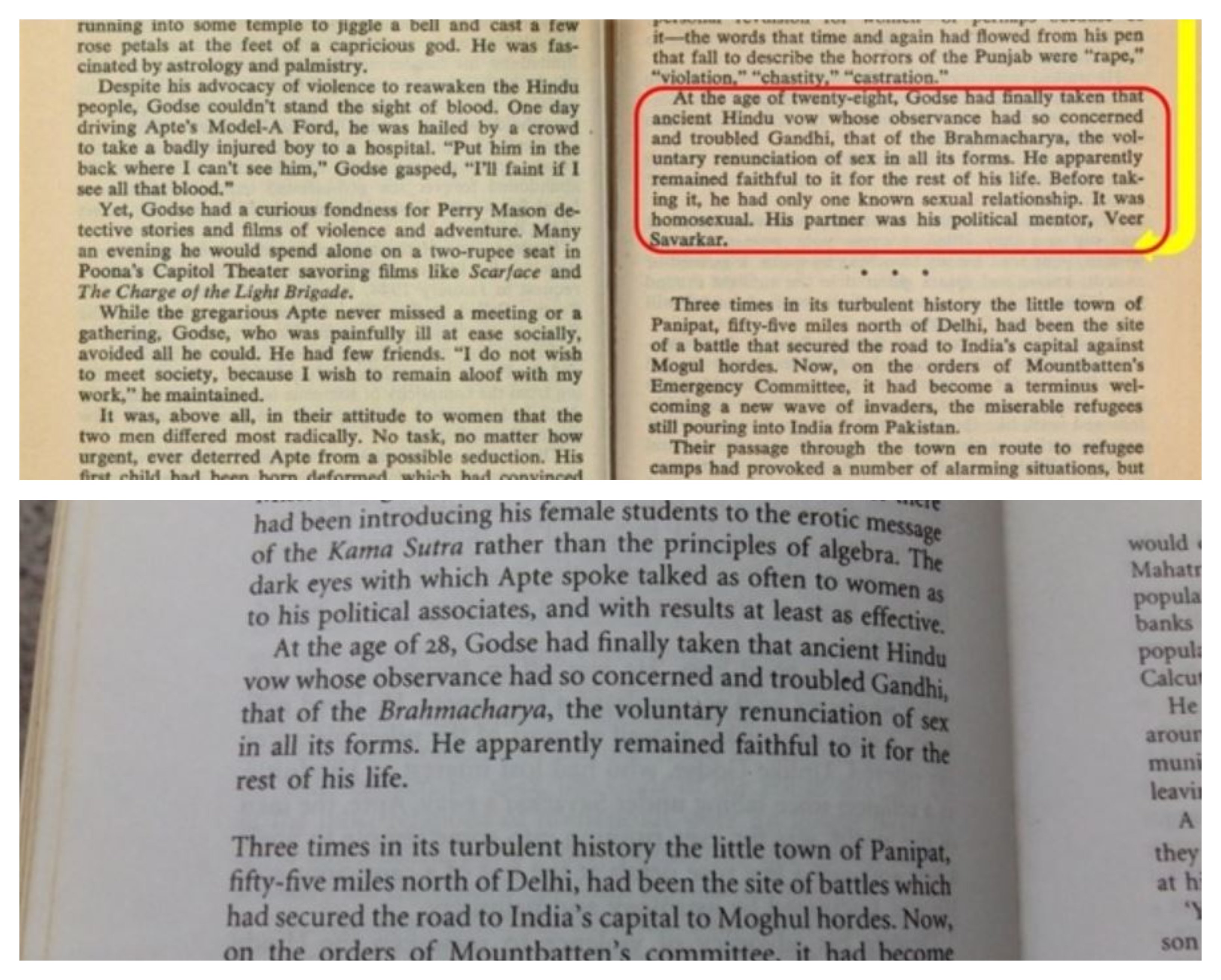
Referring to an incident mentioned in Dominique Lapierre and Larry Collins’s ‘Freedom at Midnight’, the Congress booklet said, “Before adopting brahmacharya, there is only one mention of Nathuram Godse’s physical relationship. His [Godse] partner in his homosexual relationship was Veer Savarkar.”

Read: “Beat Rahul Gandhi in public”: Savarkar’s grandson tears into Congress MP for his Savarkar remark

For the uninitiated, after the publication of edition one of ‘Freedom at Midnight’, Gopal Godse, younger brother of Mahatma Gandhi’s assassin Nathuram Godse, had slammed the authors for their “false, defamatory and libellous allegations”.

According to an article published in The Indian Express in 1976, Gopal Godse had asked Dominique Lapierre and Larry Collins to provide proof substantiating their claims, failing which, he demanded a ban on the controversial book. He had then said that the book was full of “damaging distortions”.

Read: Partition, Savarkar and Citizenship Amendment Bill: The lies, the conjectures and history whitewashed by Congress

Godse said he would sue the authors in the Bombay courts for falsely quoting him that he gave the slanderous information of Veer Savarkar having homosexual relations with Nathuram Godse.

Later, edition two of the same book was published with the particular content omitted.

Edition 1 (above) and 2 (below) of the book ‘Freedom at Midnight’

The other controversial questions mentioned in the booklet include: ‘Did Savarkar encourage Hindus to rape of minority women?’… and the answer to this question as mentioned in the Congress booklet is a ‘yes’.

It further humiliates Savarkar by saying he pelted stones at a mosque when he was 12 years of age.

The booklet also described RSS as a “Nazi and fascist” organisation and that it took inspiration from Hitler’s Nazism and Mussolini’s fascism.

Read: Rajasthan University declines permission to Indian Council of Historical Research for a seminar on Veer Savarkar

Congress has on several occasions attempted to malign Veer Savarkar’s contributions to India’s freedom by branding him as a “loyal colonialist”. Recently, Ranjit Savarkar, Vinayak Damodar Savarkar’s grandson, tore into Congress’ Wayanad MP, Rahul Gandhi over his Savarkar jibe during the ‘Bharat Bachao’ rally in Delhi.

While addressing the Bharat Bachao rally last month, Congress leader Rahul Gandhi had attacked the BJP for demanding an apology for his “rape in India” remark and said, “My name is Rahul Gandhi, not Rahul Savarkar. I will never apologise for speaking truth.”

Furious at Rahul Gandhi over his outrageous remark, Ranjit Savarkar had said that he should be beaten in public by the Shiv Sena chief Uddhav Thackeray for his offensive comment.

Pakistan formed on basis of religion, Congress won’t speak against Pak but will rally against persecuted minorities: PM Modi

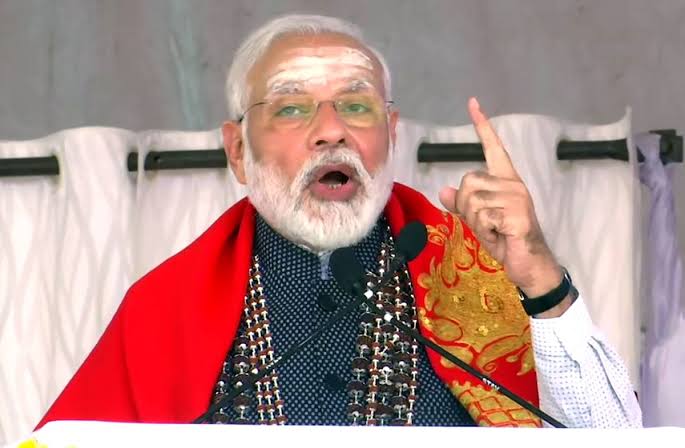
Prime Minister Narendra Modi is on a two days visit to Karnataka. While addressing at Shri Siddhaganga Mutt in Tumkur today the speaks on the government historic decision to impose the newly amended Citizenship Act.

Greeting everyone present at the Mutt, he asked the nation to remember how the last decade began. In contrast, he said, the third decade of the 21st Century has started on a strong footing of expectations and aspirations.

“This aspiration is to see India as a prosperous, capable and all-encompassing world power. It has now become the psyche of every Indian that the problems we have inherited have to be solved. This message emanating from the society also inspires, encourages our government,” said the PM.

Read: Congress wants Yogi Adityanath to resign because he would not let Islamists and politicians burn UP during anti-CAA riots

Modi slammed Congress and its allies, saying they are against giving relief to those who have been brutalised and victimised in Pakistan. “Pakistan was formed on the basis of religion, religious minorities were being persecuted there. The persecuted were forced to come to India as refugees. But Congress and its allies don’t speak against Pakistan, instead, they are taking out rallies against these refugees,” PM Modi said.


Strongly defending the amended Citizenship Act Modi asked anti-CAA protesters rioting at the behest of Congress and other Opposition parties, to raise their voice against Pakistan’s atrocities of the past.

Read: After Congress, AAP leaders booked for anti-CAA violence, ‘protestors’ question absence of Rahul, Priyanka and Kejriwal at Shaheen Bagh, Jamia

To those who are agitating against the Parliament of India, Prime Minister said, “If you have to agitate, raise your voice against the exploits of Pakistan in the last 70 years. Now the need is to expose this action of Pakistan at the international level. If you have to raise slogans, then raise slogans related to the way minorities are being tortured in Pakistan. If you have to take out a procession then take out a procession in support of Hindu-Dalit-victim-exploited from Pakistan”.


Our Govt is working tirelessly to solve the problems that have persisted in India for decades. We’re working to ensure that every poor has a house, a gas connection, clean drinking water, healthcare, insurance cover, and every village gets broadband service, said PM Modi addressing the programme at Shri Siddhaganga Mutt in Tumkur, Karnataka.


Talking about the schemes which had been introduced by the government for farmers, Modi said that the BJP government had done all these keeping in mind the welfare of the agricultural community in India. Modi ended his speech at the Tumkur Farmers rally with the slogan ‘Jai Jawan Jai Kisan’.

Curious case of Justice Madan Lokur, his flip flop on detention centres and his membership of a shady foreign funded NGO

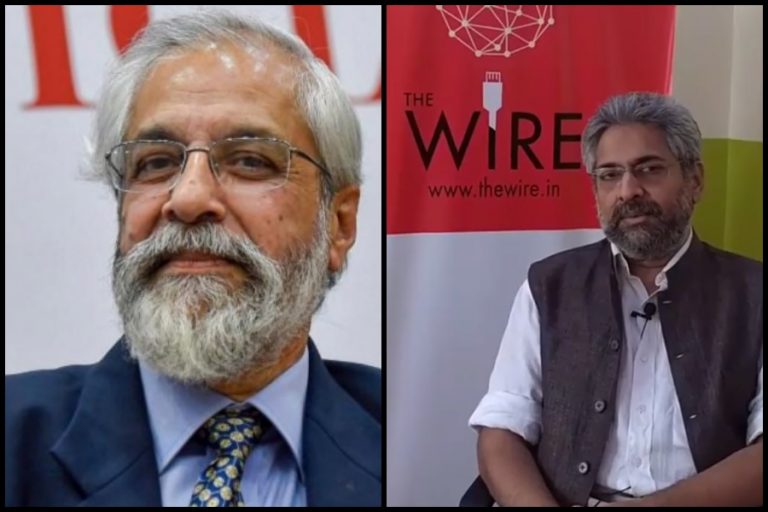
The Citizenship Amendment Act, that provides citizenship to persecuted religious minorities from Pakistan, Afghanistan and Bangladesh, has seen numerous political parties change their stands on it over the years. The Congress party, and even the CPI(M), which were all for providing Hindus from Pakistan and Bangladesh Indian Citizenship suddenly changed their stance over the matter. As it turns out, it’s not only political parties that are undergoing a change of heart on the matter of CAA, NRC and detention centres. Retired Justices of the Supreme Court are suffering the same. Retired Justice Madan B Lokur had recently said that the proviso to the definition of “illegal migrant” inserted in the Citizenship (Amendment) Act is ‘clearly unconstitutional’.

Justice Lokur here has a rather interesting past. He was one of the four judges who had held a press conference against then CJI Dipak Misra in 2018. Now, he is a non-resident judge at the Supreme Court of Fiji. The most interesting development, however, came when as a member of CHRI, he had signed a statement along with other so-called ’eminent citizens’ against the ongoing process of NRC and detention centres.

The statement read, “As concerned citizens, we look to the Supreme Court to reaffirm India’s constitutional and international obligations to rights on sensitive issues. That is why we are disappointed by recent statements by the Chief Justice of India on a complex matter relating to illegal detention and deportation, without heeding India’s own constitutional and international obligations.”

“While advocating greater detention of suspected ‘foreigners’, the Chief Justice brushed aside the Assam Chief Secretary with a stinging admonition for proposing a methodology for the release of a handful of foreign prisoners who had been in detention beyond their term of sentence for illegal entry. This was especially of concern for the case concerned the willful violation of the human rights of hundreds of detainees who were languishing in what the court itself accepts are “inhuman conditions”.  We regard these remarks as unfortunate,” it added.

However, as a Justice in the Supreme Court, he had reprimanded the government of Assam for not speeding up the construction of detention centres. In an order dated September 12, 2018, Justice Lokur had said, “We are not at all surprised that not a single State has set up detention centre/holding centre/camp. Unfortunately, this includes the State of Assam, which has a very large number of illegal immigrants/foreign nationals. Be that as it may, we expect the State of Assam, particularly to expedite the construction of detention centre since the amount of Rs 46.51 crores has been sanctioned by the Union of India.”

The judge recorded this statement and added in his order: “We expect the State of Assam to ensure that the construction is carried out at the earliest.” “We have also requested learned Additional Solicitor General (Mr Tushar Mehta) to explore the possibility of converting the earlier jail premises in Guwahati into a detention centre,” the statement by the bench further said.

News18 further notes, “On October 31, 2018, Justice Lokur noted in his order about the construction of a standalone detention centre at Matia in Goalpara with a capacity of 3,000 inmates, and sought “the broad details of the tender as well as time for construction”. The bench also took on record submissions regarding the reunion of detenue families and other amenities in the detention centres, including the one at Goalpara.”

The News18 report adds, “Justice Lokur’s bench, on November 2, 2018, again recorded in its order that the new detention centre in Goalpara is expected to be completed with Pre-Fab Technology by August 31, 2019. “We expect the State of Assam to adhere to the timeline, more particularly since the executing agency is the Assam Police Housing Corporation Ltd,” his bench had then directed.”

“It is thus intriguing to note that when Justice Lokur was a serving judge before whom the issues of illegal migrants and detention centres had come up, he did not raise any of these concerns about criteria of those who were being detained as suspected foreigners or illegal migrants. He, as a matter of fact, sped up construction of detention centres, in particular, the one at Goalpara,” the report observed.

Justice Lokur’s association with the Commonwealth Human Rights Initiative (CHRI) may provide some clue into the reasons behind his flip flop on the matter of detention centres and his comments on the CAA. He is a member of the Executive Committee of the CHRI. As per its website, “CHRI’s work is split into two core themes: Access to Information and Access to Justice, which includes Prison Reform, Police Reform, and advocacy on media rights and the South Asia Media Defenders Network (SAMDEN). CHRI additionally monitors the human rights situation across the Commonwealth through its International Advocacy and Programming (IAP) unit.”

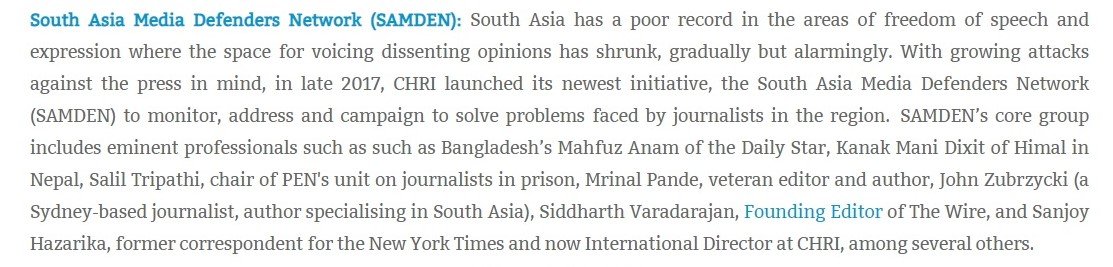
The SAMDEN is particularly interesting. CHRI’s website states, “SAMDEN’s core group includes eminent professionals such as such as Bangladesh’s Mahfuz Anam of the Daily Star, Kanak Mani Dixit of Himal in Nepal, Salil Tripathi, chair of PEN’s unit on journalists in prison, Mrinal Pande, veteran editor and author, John Zubrzycki (a Sydney-based journalist, author specialising in South Asia), Siddharth Varadarajan, Founding Editor of The Wire, and Sanjoy Hazarika, former correspondent for the New York Times and now International Director at CHRI, among several others.”

SAMDEN details

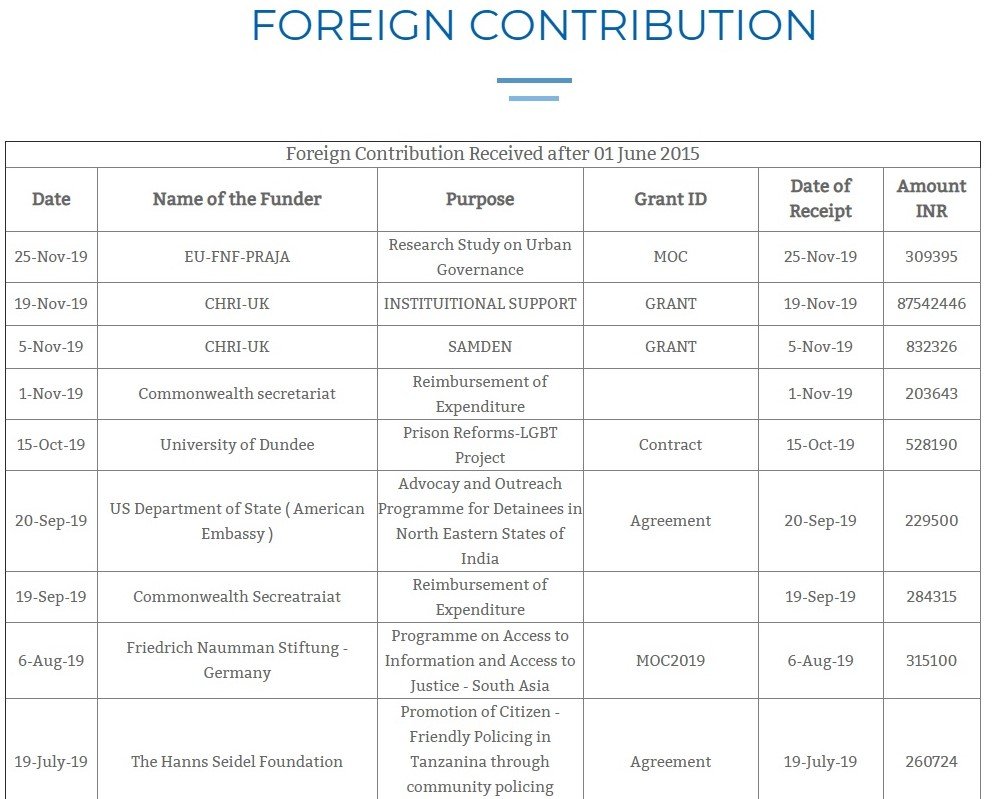
The ideological inclinations of Salil Tripathi, Siddharth Varadarajan of The Wire, and the New York Times are well known. These are compulsive contrarians who have a problem with anything and everything that the Modi government does. There are more troubling aspects to the CHRI than meets the eye. For instance, the CHRI had received Rs. 2,29,500 on the 20th of September, 2019 from the United States’ Department of State for the purpose of “Advocacy and Outreach Programme for Detainees in the North Eastern States of India”. This clearly amounts to foreign interference in India’s internal affairs by elements in the United States.

Source: CHRI website

In this context, it is important to highlight the creation of the Global Engagement Center under the US Department of State whose mission it is to “direct, lead, synchronize, integrate, and coordinate efforts of the Federal Government to recognize, understand, expose, and counter foreign state and foreign non-state propaganda and disinformation efforts aimed at undermining or influencing the policies, security, or stability of the United States and its allies and partner nations.” It is basically the propaganda wing of the United States government.

The CHRI has also received huge amounts of money from the Oak Foundation, a shady globalist organization. It received Rs. 1,56,62,639 from the Oak Foundation for the purpose of “Reducing Arbitrary Detention in India 2016-2019” on the 12th of July, 2019. A year ago, the CHRI received Rs. 1,28,89,915 from the same foundation for the same purpose. Quite clearly, these are huge amounts of money that are coming in from abroad in order to meddle with the internal affairs of India.

The Oak Foundation is particularly shady. The Washington Examiner notes in an April 2019 report, “While its 2017 Annual Report says “Oak Philanthropy Limited” is located at an address in Geneva, a search of Swiss corporate records does not identify any entities registered in Switzerland under the names “Oak Foundation” or “Oak Philanthropy.” An archived page posted by the Oak Foundation states “Oak Philanthropy Limited” as being incorporated in Jersey, part of the Channel Islands located off the French coast of Normandy. That’s odd.”

It adds, “The foundation’s 2018 annual report says Oak Philanthropy Limited is wholly owned by Oak Holdings Limited, but there’s another Jersey entity that was formed on Sept. 1, 1997, and registered to the same address in Jersey as Oak Philanthropy Limited.” In USA and Canada, the Oak Foundation is involved in a rather crazy campaign against fossil fuel companies. The CHRI also receives crores of funds from dubious sources that appear hell-bent on undermining the sovereignty of India. According to Influence Watch, a project of the Washington-based Capital Research Center, it has also funded projects supporting the Chinese state-backed infrastructure scheme the Belt and Road Initiative.

Under such circumstances, Justice Lokur’s comments on the CAA and the CHRI’s statement on the matter of detention centres appear particularly sinister. It appears to be a clear attempt to undermine India’s sovereignty. Furthermore, the role of SAMDEN appears particularly concerning as it appears to be hand in gloves with international organizations dedicated to working against Indian national interests.

Shaheen Bagh protests: The Wire columnist Sharjeel Imam pulls out to prepare for ‘Hong Kong style’ round 2, women say ‘chakkajam’ still on

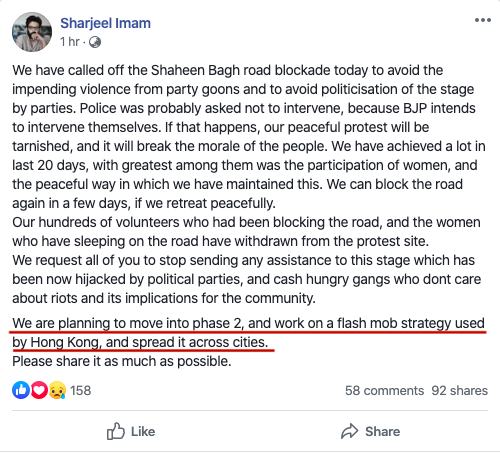
The Shaheen Bagh ‘chakkajam’ (blocking road and creating traffic jam) seems to have hit a roadblock of its own. One of the organisers, Sharjeel Imam, a columnist with leftist propaganda website The Wire and The Quint, today took to Facebook to ‘announce’ that the Shaheen Bagh ‘protests’ have been called off today.

Sharjeel Imam’s Facebook post calling off the chakkajam at Shaheen Bagh

He said that despite non-intervention of the Delhi Police, they have decided to ‘call off’ the ‘protests’ so that they can plan the ‘second phase’ of protests, that would be Hong Kong style flash mob strategy.

The ‘Hong Kong style’ strategy was also discussed by Reetam Singh, NSUI National RTI Cell Coordinator, in his WhatsApp group for ‘anti-CAA protests‘ coordination. NSUI is the National Students Union of India which is a Congress Students arm.


Sharjeel Imam, who studied Computer Science at IIT Bombay, is currently pursuing Modern History at JNU. A WhatsApp conversation of Sharjeel and some of his acquaintances accessed by OpIndia had revealed how after the pronouncement of Ram Janmabhoomi verdict he wanted to burn the Constitution on JNU campus.

Sharjeel Imam was also found inciting Muslims to take to streets and bring the cities across north India to a standstill.

In his Facebook post, Sharjeel mentions that hundreds of volunteers and women have withdrawn from the protests at Shaheen Bagh. However, other supporters of the ‘chakkajam’ seem to be still protesting.


The woman recording at Shaheen Bagh could be heard saying how ‘some people’ are spreading rumours that the protests are called off.


Other conflicting messages on social media also say that the road blockade is still on. According to CNN News 18 journalist SaahilMurli Menghani, Imam has ‘called off’ the blockade ‘under pressure’ as one of them is named in an FIR.


One faction which is continuing the blockade reportedly believe it is ‘divide and rule’. Imam, in his inciting speech outside Jamia Millia Islamia campus on 14th December, 2019, a day before violence broke out, had urged fellow Muslims to be ready for taking blows of the lathis of police for the Quran as the constitution is fascist.

In his Facebook post, Imam had alleged that the ‘movement’ was being hijacked by political parties and those who want to mint money out of it. While one can only speculate who could be these thugs, amongst those who visited Shaheen Bagh to ‘express solidarity’ are Congress veteran leader Salman Khurshid, daughter of former Censor Board member and Bollywood entertainer Swara Bhasker, controversial journalist Barkha Dutt and ‘stand-up comic’ Sanjay Rajoura who gets quite easily riled up when criticised.

On 15th December, a day after Imam called for bringing India to a standstill, Delhi Traffic Police put up an alert on Twitter that traffic movement was closed from Sarita Vihar to Kalindi Kunj due to protests at Shaheen Bagh. On 15th December is when the violence escalated in Jamia and Police had to use force to contain the rioting mob. Shaheen Bagh is in close proximity to Jamia Millia Islamia.

Police have maintained that the rioting mobsters entered Jamia premises and they had to enter the varsity to flush the rioters. Highly placed sources in the intelligence agencies tell that the agencies believe the protests at Shaheen Bagh are being held to protect some of the miscreants who may be hiding there. The women and children ‘leading the protests’ is just a cover so that should the police use force, they get painted as monsters. The intelligence agencies are keeping a tight vigil on these demonstrations. Now, one of the main ‘organisers’ have pulled out of the ‘protests’.

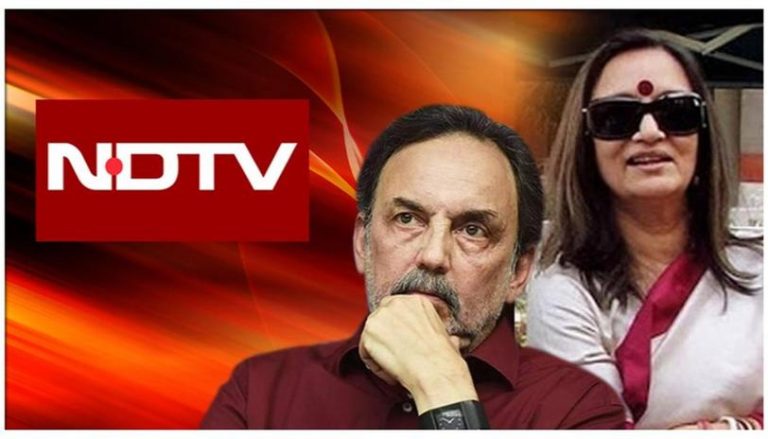
Accused NDTV promoters Prannoy and Radhika Roy move HC challenging SEBI show-cause notice for insider trading

The promoters of controversial left-wing media NDTV – Prannoy Roy and Radhika Roy have moved the Bombay High Court, challenging a show-cause notice issued to them by the Securities and Exchange Board of India (SEBI) in 2018 for alleged violation of insider trading regulations.

According to reports, the High court stated that it will pass orders on January 6. The court also said the accused husband-wife duo could “face the notice” and attend hearings before SEBI.

The petition filed by accused Prannoy Roy and Radhika Roy sought that the court set aside the notice and direct SEBI to allow them to inspect all the documents, records and internal files and notings on which the regulator had relied before issuing the same.

Read: SAT upholds SEBI penalty of ₹2.10 crore on NDTV, ₹3 lakhs each on 3 directors for not disclosing tax demand on time

The SEBI had issued the notice on August 31, 2018, accusing both Prannoy Roy and Radhika Roy of trading shares of NDTV while in possession of “unpublished price sensitive information”. The notice accused them of violation of the “Prohibition of Insider Trading Regulations”.

However, Roys petition said the notice was “arbitrary, unreasonable and issued in gross abuse of power”.

Earlier in August, NDTV founders Prannoy Roy and his wife Radhika Roy were prevented from leaving the country by the CBI officials.

Read: Here is why Prannoy Roy and Radhika Roy were stopped at the airport and were not allowed to leave the country: Read details about the ICICI-NDTV loan fraud

In recent times, NDTV has been embroiled in controversies over alleged financial irregularities. NDTV is facing multiple cases related to violation of FDI norms, Income Tax violation, and non-compliance with disclosure norms.

The central investigative agency CBI is probing a case against NDTV in relation to a Rs 375 crore loan from ICICI Bank and a corresponding wrongful loss of Rs 46 crore to the bank. There is a chain of borrow, repay and borrow where Roys took a series of loans in 2008 as they sought to buy back a large chunk of NDTV shares from the market, allegedly violating foreign direct investment (FDI) rules in a 2007-09 investment, a charge denied by the company.

Read: Read full details of the new FIR filed by CBI: Prannoy Roy, Radhika Roy and Vikram Chandra accused of criminal conspiracy, cheating and corruption

An FIR was filed against Prannoy Roy, Radhika Roy, NDTV, RRPR Holdings Pvt Ltd and unknown officials of ICICI Bank by a company called Quantum Securities Limited in June 2017. The charges levelled were those of criminal conduct, conspiracy and cheating. QSL is a shareholder both in NDTV and ICICI and filed the FIR as an aggrieved party of the alleged misdeeds.

In August this year, the Securities Appellate Tribunal (SAT) had upheld a SEBI order imposing a penalty of Rs 2.10 crore on NDTV and Rs 3 lakhs each on 3 directors for violation of disclosure norms. It is alleged that the company and its directors failed to inform the stock exchanges about a tax demand of Rs 450 crore served by the income tax department.

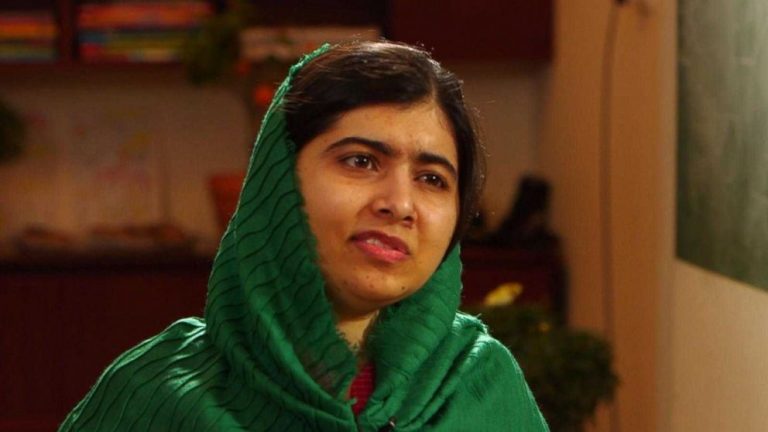
After outrage, HRD ministry deletes tweet promoting Malala Yousafzai, who had spread fake news against India on article 370

On Wednesday, Minister of Human Resource Development led by Ramesh Pokhriyal Nishank committed a gaffe after it tweeted a post glorifying controversial ‘activist’ Malala Yousafzai who had spread fake news against India after the abrogation of Article 370 in Kashmir.

The HRD ministry had posted an infographic on micro-blogging site Twitter asking the social media users to recognize who he/she was. The infographic, part of the quiz “identify the author series” read, “Guess Who?”, while the post gave a hint to the users by glorifying Malala as a “famous female author, a Nobel Prize winner and an activist defending the right to education for women”.

The tweet Posted by MHRD.

It is important to note that Malala Yousafzai had indulged in propagating terrorist state of Pakistan’s false propaganda on Jammu and Kashmir soon after Modi government had scrapped Article 370 that gave special status to the erstwhile state.

Malala Yousafzai had resorted to fear-mongering and attempted to incite Muslims by falsely claiming that the precautionary restrictions placed in the state were impeding girl child education and also peddled lies in the process.

Read: Malala Yousafzai spreads fake news, claims girl from Kashmir missed her exams on August 12 which was an Eid holiday

She had also parroted fake Pakistan propaganda after she attempted to sell ‘fiction’ stories as the reality of the state of Jammu and Kashmir following the revocation of special status in the state. In doing so, ‘Nobel laureate’ Malala was caught peddling lies by social media users and was also schooled for her ignorance on the ongoing issue.

The act of Ministry of HRD to glorify controversial pro-Pakistan activist Malala Yousafzai earned the ire of Twitter users on Thursday. Social media users called it ‘shameful’


One user also called out HRD ministry’s ignorance regarding local heroes and accused the ministry of carrying public relation activity for Malala.


Another user asked why is HRD ministry approving and mainstream haters of India and also urged the BJP leadership to focus on the HRD ministry. Others expressed disappointment over the handling of such an important ministry in a bad manner for the past six years.


As social media users condemned the glorification of Malala Yousafzai, the HRD Ministry realised its mistake and deleted the tweet.

Read: Malala Yousafzai tries to mouth off platitudes on Kashmir, gets called out by Netizens

This is not the first time that a govt handle has made such gaffes. It may be recalled that during the anti-CAA riots at Jamia Millia Islamia University, the official twitter account of PIB had posted in favour of Jamia’s violent protesters, which was later claimed as an “error by an employee”.

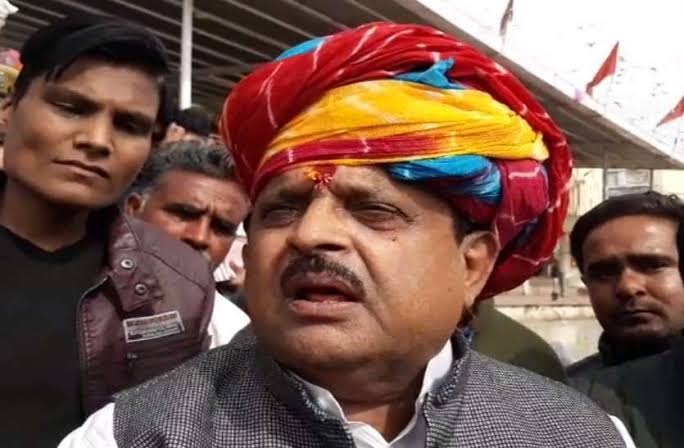
‘Main kuch nahi keh sakta’: Rajasthan health minister dodges questions on Kota infant deaths, walks off when anchor persists

In a major public health system tragedy in Congress-ruled Rajasthan, more than 100 children had died in JK Lon Hospital, Kota last month. While Rajasthan Chief Minister Ashok Gehlot had stoked a controversy by trivialising the incident, now the Rajasthan health minister Raghu Sharma has been seen dodging questions asked to him on the incident in a debate.

The news anchor on ABP News questions the Congress minister on the Rajasthan government’s apathy towards the family of the children who died in the government hospital last month. He asked as to why the Ashok Gehlot government in Rajasthan is not meeting the family’s of the children who died and why aren’t they paying any compensation to them. He questions why the Congress government has remained silent over the deaths of 100 children in government-run hospital in Kota, Rajasthan.

On one instance when the Health Minister tries to pin the blame on the previous BJP government, the anchor cuts him short by saying whatever happened during the previous government’s regime is passed, now why doesn’t his government show some affinity.

To this, the minister is heard saying: “mein kuch nahi keh sakta” (I cannot comment in this regard), before taking out the microphone and walking away.

The news anchor is seen repeatedly coaxing the minister to answer. He says that the ministry is answerable and cannot shrug off their responsibility. He says that these questions will be asked repeatedly unless the public does not get a satisfactory answer to their queries over the Congress Government’s apathy towards the case but the minister refuses to take any question.

The news anchor reminds the minister that he is the health minister of Rajasthan and it is his moral responsibility to answer to all the public grievances, but since Raghu Sharma, takes off the microphone he remained oblivious to what was being asked to him.


This apathetic response coming from the health minister did not go done well with people on Twitter who blamed the Congress ecosystem for the insensitivity shown by its ministers.

As 9 more infants died in the last two days of December in government-run JK Lon Hospital, the total count reached 100. Refusing to take responsibility, the hospital superintendent had claimed that the deaths of these newborns are due to the low weight at birth. The hospital had given a clean chit to itself by forming a committee to investigate the deaths, which has now ruled out any negligence saying resources and equipment were functioning properly.

Rajasthan CM Ashok Gehlot while speaking to media on the death of children in the state had also said that children die, there is nothing new in it. “Poore pradesh ke andar, har hospital ke andar, 3-4-5 mautein hoti hai. Prati din. Koi nayi baat nahin hai” (In the entire state, in all hospitals, 3-4-5 children die every day. There is nothing new in it), said the CM.

Bahujan Samaj Party chief Mayawati had also taken to Twitter to call out Congress General Secretary Priyanka Gandhi’s hypocrisy over silence over the deaths of these 100 children in Congress-ruled Rajasthan.

Following the deaths of the children, the National Commission for Protection of Child Rights (NCPCR) had issued a show-cause notice to the Chief Medical And Health Officer of Kota District, BS Tanwar, to look into these deaths. The NCPCR also observed that pigs were found roaming inside the campus.

The Commission has directed Tanwar to appear in person on January 3 to explain reasons for not sharing the report on action taken with the Commission.

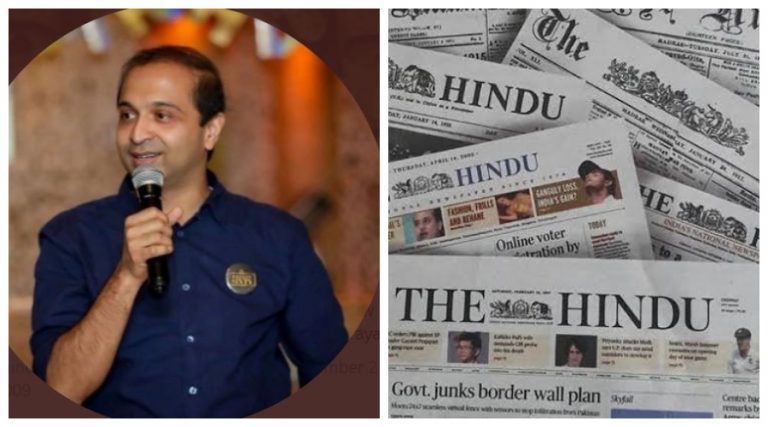
Associate Editor of The Hindu gets schooled after he cries ‘Hindi imposition’ over ISRO mission names, Gaganyaan and Chandrayaan

The associate editor of The Hindu, Narayan Lakshman, took to Twitter to scrutinize how the names associated with the ISRO mission, Gaganyaan and Chandrayaan are named in Hindi. He cries about how Hindi is being forcefully imposed outside the ‘cow belt’ by the Modi-led government.


However, netizens responded promptly to this moral science lecture and tried to knock basic sense into The Hindu associate editor, which he clearly seems to be deprived of.

Read: Hindi is a beautiful language, as is Tamil, Kannada etc: ‘Imposition’ narrative must be quashed and Sanskrit used for national integration

Twitter user Vinaya Pai briefed the editor that these words ‘Gaganyaan’ and Chandrayaan’ are actually derived from Sanskrit, a language of ancient India with a 3,500-year history which is also the oldest known languages in the world. She advised the journalist to ‘ditch this sectarianism’.


Other Twitter users also pointed it out to him that even outside of ‘cow belt’, these are commonly used terms.


Cow-belt is the region of India spread over Rajasthan, Uttar Pradesh, Haryana, Bihar and Madhya Pradesh which is largely rural and animal husbandry is a very common profession.


People were also surprised at The Hindu Associate Editor’s attempt to divide Indians by forcefully trying to fit the ‘Hindi imposition’ narrative.