

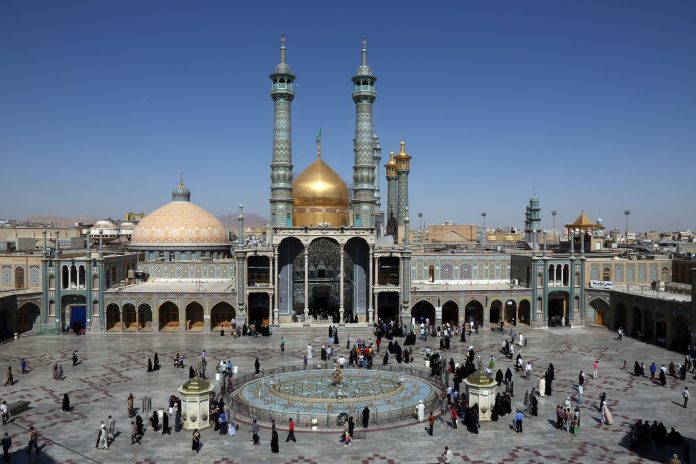
The apex court of the country has issued a notice to the central government, directing it to respond to plea that seeks directive be issued to the Government to evacuate 850 Indian Shia pilgrims marooned in the city of Qom, the Iranian epicentre of coronavirus outbreak. Amidst the nationwide lockdown in the wake of rising coronavirus cases in India, the Supreme Court on Friday conducted a hearing on video-conferencing on the immediate evacuation of the stranded Indian Shia pilgrims.
#Breaking | SC has issued a notice to the Centre for immediate evacuation of around 850 Indian Shia pilgrims from city of Qom, the Iranian epicenter of Corona outbreak.
— TIMES NOW (@TimesNow) March 27, 2020
Listen in. | #CoronaHarega pic.twitter.com/9ANAEAMhqA
A bench presided over by Justices D.Y. Chandrachud and Surya Kant issued a notice to the Centre to respond to the plea that sought the evacuation of pilgrims from Iran, one of the worst-hit Asian countries by COVID-19 with more than 2300 fatalities. The petition filed in the top court asserted that the pilgrims, who hailed mostly from a poor financial background, were scheduled to return weeks ago but because of the coronavirus onslaught in the central Asian country, got stranded there indefinitely.
The bench ordered the next hearing in the case on March 30.
A plea was filed by one Mustafa M.H whose three relatives are stuck in Iran. The petitioner was represented by Senior advocate Sanjay Hegde who contended before the court that devotees were trapped in Iran without any health/medical facilities and food supplies. He also claimed that most of the pilgrims have run out of funds and are dependent upon the generosity of the locals.
“In addition, they have been sheltered in hotel rooms in groups of 4-5. It is worth noting that the situation in Iran with regards to the spread of the virus has been extremely critical. There are about 250 people within the group of pilgrims who could be tested positive for corona and thereby pose a grave health hazard and could lead to deleterious consequences,” the petition read.
The petition read, “The petitioner (Mustafa) is constrained to move this court in extreme exigency under Article 32 of the Constitution of India praying inter alia for issuance of an appropriate writ, order or direction including the writ of mandamus for the immediate evacuation of the citizens of India who are stranded in Iran, in view of the situation arising out of the spread of Coronavirus (COVID-19).”
Furthermore, along with seeking direction from the apex court on the evacuation of pilgrims immediately, the petitioner, in his plea, also asserted that till the time pilgrims are not evacuated, the Central government should provide adequate health and medical support. The petition which was filed through advocate Ashish Virman also said, “The Centre be directed to ensure that the passengers are quarantined in a manner prescribed by the WHO.”


