

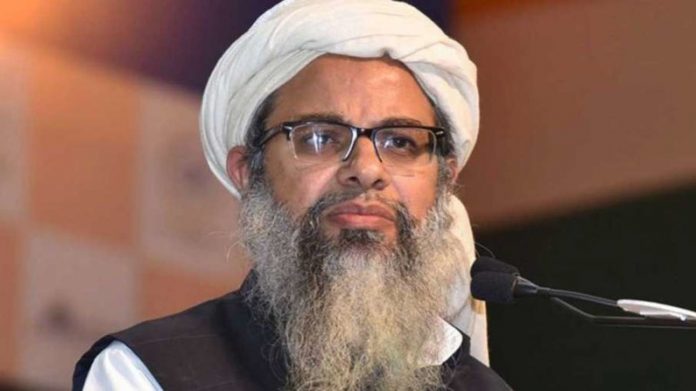
On Tuesday, the Islamic outfit Jamiat Ulema-e-Hind sought “exemplary punishment” for suspended BJP MLA T Raja Singh for words reportedly directed at the Islamic prophet, as well as a law to safeguard the integrity of religious icons. Raja’s remarks were called “very shameful” and “shocking” by Jamiat president Maulana Madani.
Maulana Madani released a statement alleging that the governing party’s members were repeating such awful actions. Madani hailed the party’s move against Raja Singh as strictly necessary. However, he stated that it is insufficient, and that such “perpetrators” should face “exemplary punishment.” He stated that he has been advocating for the adoption of legislation to safeguard the dignity of religious leaders.
Telangana Police arrested suspended BJP leader Thakur Raja Singh again on Thursday for allegedly making ‘blasphemous’ statements about the Islamic prophet. The former BJP leader was arrested at his home in Hyderabad. This comes only two days after he was detained and freed on bail in connection with the Prophet remarks case.
According to Hyderabad Police, Raja Singh has been detained under the Preventive Detention Act on the instructions of the Commissioner of Police, Hyderabad City, and is being held at the Central Prison in Cherlapally. According to a press statement released by the Hyderabad Police Department on Raja Singh, he has been giving provocative and inflammatory comments and pushing a rift between groups, resulting in public unrest.
Hyderabad has been witnessing massive protests against his bail, with Islamists raising slogans demanding to behead him. According to the reports, the Islamists took to the streets and held demonstrations throughout the night and also raised slogans continuously demanding the beheading of T Raja Singh.
It is worth noting that Jamiat’s demand for a special law is not the first time an Islamic organisation has made such a request. In June of this year, Maulana Mufti Abul Qasim, the VC of Darul Uloom Deoband, an Islamist organisation located in Uttar Pradesh, released a statement seeking a special law that sternly punishes people who disrespect Islam, concerning the Nupur Sharma controversy.
When the booklet Rangeela Rasool was released in the early 1920s, similar demands were made amid shouts of “Allahu Akbar” and “Sar Tan Se Juda.” The as remarks made by Nupur Sharma and Thakur Raja Singh have led to demands for a new law to safeguard the Muslim community’s delicate emotions, realizing that Islamists genuinely think their own Islamic rules are superior to national laws produced by Kafirs living in a Kafir state is crucial.


