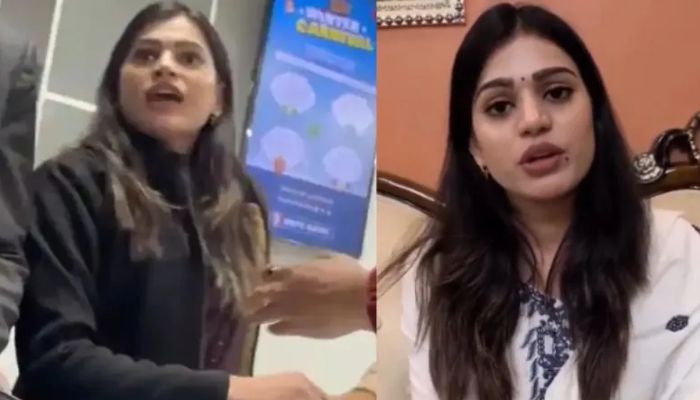
A short video clip of Aastha Singh, an employee of HDFC Bank, has gone viral on social media and triggered a heated debate around caste, identity and online judgment. In the video, Aastha is heard saying, “I am a Thakur… don’t do this nonsense.” Soon after the clip spread, many users began accusing her of promoting casteism.
An HDFC branch employee in Kanpur said –
"I am Thakur; don’t mess with me. B*****i mat karna mere saath"
Aastha Singh later responded, saying the video being shared online is incomplete and shows only her reaction, not what led to the confrontation. She said she is being targeted based on a cropped clip and repeated that she is a Thakur and is proud of her identity.
Strong backlash on social media
After the video started circulating, Aastha Singh faced intense criticism online. Several users accused her of showing caste pride inside a bank and labelled her actions as caste arrogance. Some comments went beyond personal criticism and targeted the entire upper caste community, including Brahmins and Thakurs.
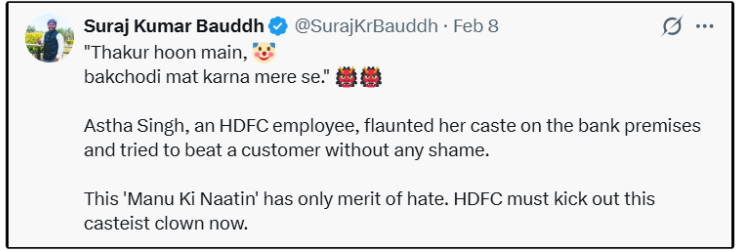
An X user, Suraj Kumar Bauddh, wrote that Aastha had flaunted her caste inside the bank and called for strict action against her.
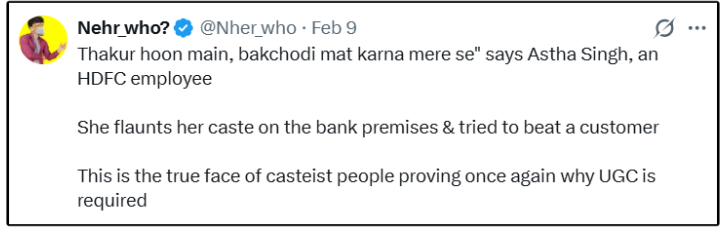
Another user, Nher, claimed the video showed the “real face of casteists” and linked the incident to the need for new UGC rules.
Other users made crude and abusive remarks, with some even demanding reservations in the private sector.
The outrage did not stop at individual comments. Some verified and official social media handles also shared the clip with sharp remarks. In many posts, Rajputs, their history, and even Thakur women were insulted, all based on a short, edited video of about 10 seconds.
The context of the UGC regulations adds fuel
The video gained even more attention because it surfaced during ongoing debates around University Grants Commission (UGC) regulations. While many from Brahmin, Thakur, and other upper caste communities claim they are being sidelined by the new rules, lower caste groups have long accused upper castes of discrimination.
In this atmosphere, the clip of Aastha Singh was quickly framed as an example of caste arrogance by some users, even though the full background of the incident was not clear at that time.
Many netizens come out in support of Astha
Amid the backlash, several users also spoke in support of Aastha Singh. They pointed out that the viral clip was incomplete and accused people of jumping to conclusions without knowing the full story.
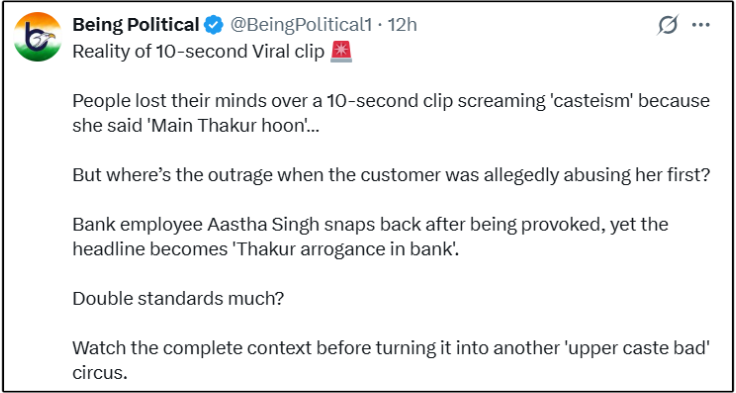
An X user, Being Political, said people were quick to label her casteist just because she mentioned her caste, but ignored the possibility that she was provoked first. The user questioned why the narrative quickly turned into blaming the “Thakur community” instead of looking at the full incident.
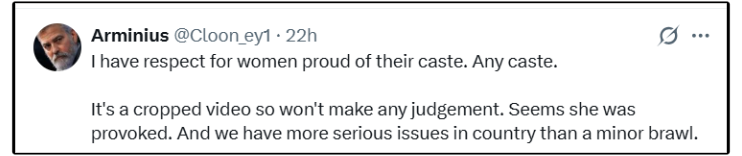
Another user wrote that they respect women who stand up for themselves, regardless of caste, and added that the clip was too short to judge what really happened.
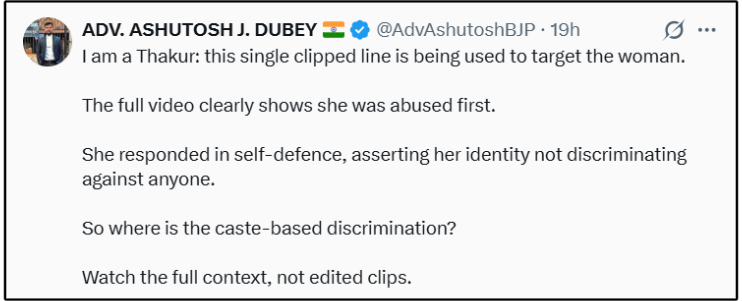
Advocate Ashutosh J Dubey also defended Aastha, saying the complete video shows she was abused first and only reacted in self-defence, not discrimination.
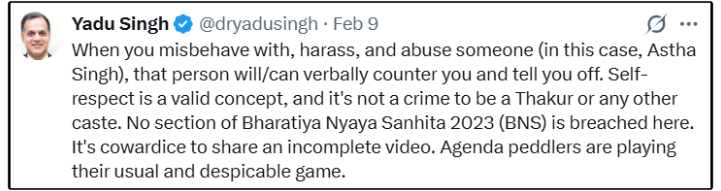
Yadu Singh, another user, said that responding to harassment is not a crime and that no law under the IPC 2023 (BNS) was violated. He also criticised the sharing of edited clips, calling it an attempt to push an agenda.
Aastha Singh explains the full Incident
After days of outrage and online attacks, Aastha Singh herself came forward to explain what actually happened. She said the viral clip was incomplete and did not show what led to her reaction.
मै ठाकुर हूँ आस्था सिंह के वायरल वीडियो की पूरा सच मै अभी भी अपने स्टेटमेंट पर कायम हूँ मुझे अपने ठाकुर होने पर गर्व है! क्या मीडिया ट्रायल करने वाले लोग माफी मांगेंगे? pic.twitter.com/IIvTHPIyYM
According to Aastha, the incident took place on 6th January at her bank branch. On that day, a fellow employee, Ritu Tripathi, had submitted her resignation and requested to be relieved the same day. Ritu’s sister-in-law was present at the branch since morning, and a minor argument took place during the process.
Later, Ritu informed her husband, Rishi Tripathi, who arrived at the branch after closing time. Aastha said he behaved rudely and came to her desk, where he asked her caste and made threatening remarks like, “I will take away your arrogance and anger.”
She explained that the viral video only shows her response to those comments and not the provocation she faced before that.
“I am a thakur, and I am proud of it”
Aastha Singh said she stands by her statement and has no regret in asserting her identity. She said the issue was wrongly projected as casteism when it was actually about self-respect.
“If anyone speaks rudely to me, I will not tolerate it. I am a Thakur, and I am proud of it,” she said, adding that being proud of one’s identity does not mean insulting others.
She also said that the edited video was used to target her personally and turn the matter into a caste-based controversy.
Rape threats and abuse after the video goes viral
The controversy took a darker turn when Aastha revealed that she had been receiving rape threats and threats of violence after the video went viral. Speaking to the media, she said she was shocked by the level of hatred directed at her.
“Everyone wants to be famous, but not in the wrong way. I am becoming famous in the wrong way,” she said. She added that such threats have caused mental stress and fear, and no one deserves this kind of abuse over a misrepresented video.
Company response and legal options
Aastha said she has informed her seniors and sent internal emails explaining the full situation. According to her, the management is aware that she is not at fault, which is why no immediate action was taken against her.
However, she also said that if the harassment continues, she will consider filing a defamation case against those spreading false narratives using edited clips.
As the debate continues online, the incident has once again raised questions about social media trials, edited videos, and how quickly narratives are formed without full context.
At the foothills of the sacred Girnar mountain, regarded as a land of penance for yogis, a nurturing refuge for sages and saints, and a place that offers devotees supreme peace and spiritual bliss, the Bhavnath Fair has been held for centuries. This grand confluence of devotion, faith, and spiritual splendour begins on Maha Vad Nom and continues till Mahashivratri. Sadhus, saints, mahants, and devotees from across Gujarat and the rest of India gather here for satsang and the worship of Lord Shiva.
This year, the Bhavnath Fair is being held from 11 February and on a much grander scale than usual. Considering the scale of preparations and magnificence, the fair is being described as a “Mini Kumbh.” This year, the administration of the Bhavnath temple is also under the government, which is making special efforts to preserve the sanctity of the fair and give it recognition at the national and global level. Final touches are currently being given to the arrangements and preparations.
The fair is organised at the highly sacred Bhavnath Mahadev Temple, situated on the banks of the Suvarnarekha River at the foothills of Girnar. The Shiva Linga in the temple is self-manifested (swayambhu). The name “Bhavnath” means the “Lord of Bhava” (the manifested world), that is, Lord Shiva, the creator and master of worldly existence.
What are the legends associated with the temple?
According to legend, during the time of cosmic dissolution (Pralaya), the entire creation merged into Rudra, and the day of Brahma came to an end. At dawn, Brahma, Vishnu, and Rudra manifested again in the forms of Sattva, Rajas, and Tamas. During Pralaya, Lord Shiva was in deep meditation within the waters. A dispute arose among the three about who was supreme. Shiva intervened, assigned Brahma the task of creation, Vishnu that of preservation, and Rudra that of destruction, and thus resolved the conflict.
Brahma, the father of the world, then requested Shiva to reside in the world and help resolve the joys and sorrows of human beings. Lord Shiva surveyed the earth, and his gaze fell upon the forest-clad Ujjayant mountain (Girnar), where he chose to reside. Meanwhile, in Kailash, Parvati could not find Mahadev and began searching for him.
After hearing from the other gods, she set out in anger to find Shiva and, along with the deities, reached Girnar. On that day, Lord Shiva manifested here in the form of Bhavnath, it was the full moon day of Vaishakh Shukla Paksha. Parvati came to reside on Girnar in the form of Ambika, Vishnu took the form of Damodar and stayed at Damodar Kund, and other gods, yakshas, and gandharvas also made different places on Girnar their abode, such is the popular belief.
The story of Mrigi Kund, located beside the temple of Lord Mahadev, is equally fascinating. It is said that King Bhoj of Kanyakubja was told by his attendants that in the forests of Revatachal (Girnar) there roamed a being with the face of a deer and the body of a woman. After much effort, King Bhoj brought her to his palace, but scholars could not solve the mystery. Finally, the king went to an ascetic practising severe penance at Kurukshetra.
The sage granted the “deer-faced woman” the power of human speech. She narrated her past life: earlier, King Bhoj was a lion, and she was a doe. While being hunted, her head got stuck in a bamboo thicket, and her body fell into the Suvarnarekha River. By the sacred waters of the river, her body assumed a human form, but her face remained that of a deer.
On the sage’s instructions, the king retrieved the skull of the doe from the thicket and immersed it in the waters of the Suvarnarekha. As a result, her entire body became human. King Bhoj then married her, and at her suggestion, built this kund at the foothills of Girnar, hence it came to be known as Mrigi Kund. This is a legend based on popular belief, and even today, on Shivratri, sadhus take a ritual bath here.
Why is this place called “Vastraput Kshetra”?
This region is also known as “Vastraput Kshetra.” According to a story mentioned in the Skanda Purana, Lord Shiva and Goddess Parvati were once travelling in a celestial chariot when one of Parvati’s divine ornaments fell at this spot. Since then, the place came to be known as Vastraput Kshetra. This story is also mentioned in the Gujarat government’s Information Department publication “Gujaratna Lokotsavo ane Mela” (Folk Festivals and Fairs of Gujarat).
The special significance of the sadhus’ bath at Mrigi Kund
The central focus of this fair is not householders but sadhus and saints. On the day of Nom, the fair is formally inaugurated by hoisting the flag at the Bhavnath temple, in the presence of sadhus who come from all over the country. The administration takes responsibility for arranging their camps and accommodations. On one side are the ascetics’ camps, and on the other, service organisations set up tents. Religious stalls come up, and for four days, the entire foothill area becomes immersed in devotion to Shiva.
Although the fair has been held for centuries and has seen some changes over time, its essence remains intact, the ritual bath by sadhus in Mrigi Kund. Just as the Shahi Snan is significant at the Kumbh Mela, the bath at Mrigi Kund holds special importance at this fair.
The midnight processions of sadhus on Shivratri are the main attraction
The biggest attraction of the fair is the chariot processions and ceremonial parades taken out by sadhus at midnight on Shivratri. Naga sadhus, Aghori sadhus, and ascetics from various akhadas ride on horses, carriages, or elephants, proceeding with conch shells and bands playing music, on their way to take a ritual bath at Mrigi Kund. Along the way, they also display feats like physical exercises, swordplay, and staff-fighting.
The Shahi Snan is led by the Panchdashnam Juna Akhada, along with mahants, mandaleshwars, and thousands of sadhus from other akhadas. These processions reach Mrigi Kund one after another, and the saints and Naga sadhus take turns bathing.
It is believed that Naga sadhus who live in the caves of Girnar also join these processions, and there is a popular belief that some sadhus disappear after bathing and are never seen emerging from the kund again. After the sadhus complete their bath, aarti and maha puja of Lord Shiva are performed at the Bhavnath temple. By morning, the fair comes to its conclusion.
Speaking to OpIndia, Mahant Ramjubapu of Ambika Ashram said, “This fair is as sacred and purifying as the Kumbh. Here, on Mahashivratri, thousands of Naga sadhus and Aghoris take the Shahi Snan in the kund, but they do not come out after bathing. To this day, no one knows where these sadhus come from and where they disappear after taking a dip in Damodar Kund.”
Social organisations engage in service activities
On the land of Saurashtra, such a religious congregation cannot happen without service activities. At the Bhavnath Fair too, social organisations and donors from across Gujarat and India arrive in caravans from as early as the fifth day to serve the sadhus and devotees. Their camps and lodgings are pre-decided, such as Jerambapa’s Girnari camp, Toraniya’s camp, Parab’s camp, Bhurabhagat’s tent, Laxman Barot’s camp, Khodiyar Ras Mandal’s tent, and others.
At these places, arrangements are made for meals three times a day and for overnight stay. Continuous bhajans, satsangs, and saintly discourses go on. Some well-known artists also arrive and participate in devotional performances. Devotees keep coming and going throughout the day, and all arrangements are made so that they can partake in both food and worship.
The Bhavnath Fair held at the Bhavnath temple is not merely a festival; it is a unique confluence of devotion, penance, service, and satsang, where the soul experiences union with Shiva.
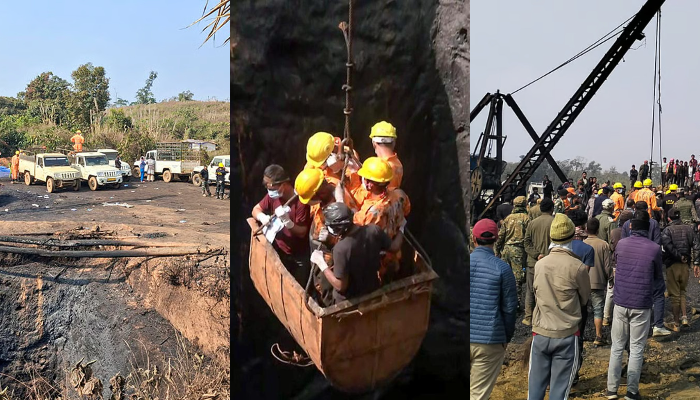
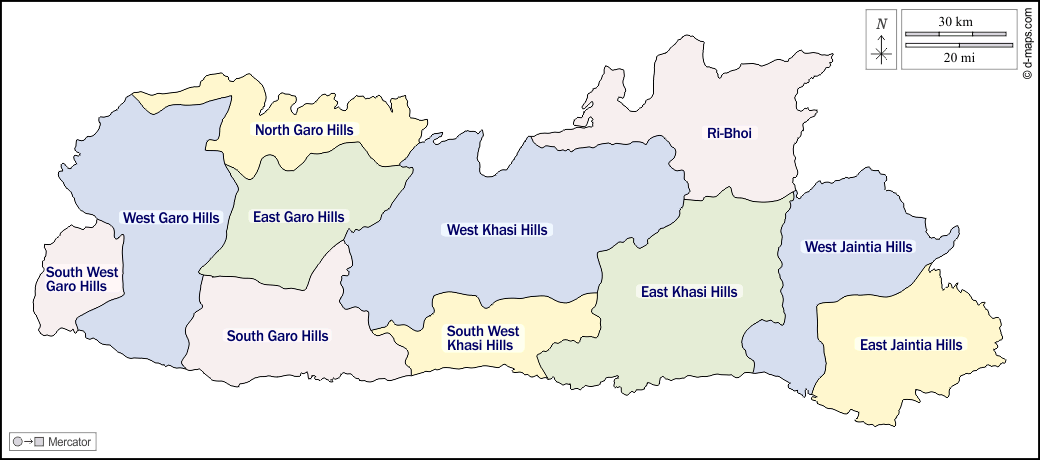
On 5th February (Thursday), an explosion took place in an illegally run rat-hole coal mine in the East Jaintia Hills area of Meghalaya, which resulted in 30 fatalities. The figures also include those who succumbed to their wounds. The tragedy happened at an unlawfully operated coal mine in the remote Thangsku neighbourhood of Mynsngat village. According to reports, 8 individuals are admitted at the Shillong hospital with three more at the Silchar hospital.
This ranked among the most significant mishaps since July 2012, when a flooded mine in the South Garo Hills district of the state claimed the lives of 15 miners. Afterwards, the dangerous mining technique was outlawed by the National Green Tribunal (NGT).
Image via d-maps.com
Meghalaya High Court heard testimonies from the East Jaintia Hills district’s Deputy Commissioner Manish Kumar and Superintendent of Police Vikash Kumar regarding the matter and sought a thorough report on the actions taken by the authorities to put an end to such illicit activities. They were told to “furnish reasons as to why the situation has been allowed to continue.”
The Division Bench of Justices HS Thangkhiew and W Diengdoh also voiced grave concerns over the blast and the state’s persistent unsanctioned coal mining instances. They severely criticised the state apparatus for its inability to prevent prohibited rat-hole coal mining in the East Jaintia Hills area, describing the situation as “distressing” and warning to impose responsibility if the violations continued to exist.
“The report is distressing and reflects dereliction in the discharge of duties by the authorities concerned,” the court stated. The district administration’s status report informed that two arrests were carried out and a criminal case had been filed but it also mentioned a lack of manpower.
The Meghalaya Human Rights Commission (MHRC) took suo motu cognisance and demanded a detailed report from the government. Search and rescue efforts involving the National Disaster Response Force (NDRF), State Disaster Response Force (SDRF), Special Rescue Team (SRT), police and district administration were officially concluded at 5 pm on Monday. 24 bodies were found in the 100-foot-deep chain of low and narrow tunnels.
How the Meghalaya government reacted
Chief Minister Conrad K Sangma declared that the state government would launch a judicial inquiry commission to probe the occurrence, determine the cause of the catastrophe and assign accountability. The district administration similarly increased its efforts against unauthorised mining in the wake of the disastrous event.
#WATCH | Meghalaya's East Jaintia Hills coal mine incident | Rescue operations underway at the blast site to rescue the trapped mine workers.
25 people died in the blast that took place in an illegal rat-hole coal mine on 5th February. pic.twitter.com/zR8qzMKLP2
Nearly, 38 metric tonnes of coal that had been mined were confiscated from multiple areas, including the villages of Lumshyrmit–Cham Cham, Mukhaialong, Mutong and Pynthorsale by joint teams of Executive Magistrates, police officers and representatives from the Directorate of Mineral Resources (DMR).
Furthermore, authorities located and destroyed temporary camps associated with these perilous mining ventures while First Information Reports (FIRs) have been lodged and additional legal action is ongoing. The families of 8 victims have already received ₹24 lakh (3 lakh for each next of kin) in compensation from the government. According to officials, payments are set to resume once the documentation of the remaining families has been confirmed.
Assam has likewise offered ₹5 lakh to each victim from the state. Prime Minister Narendra Modi also conveyed that the Prime Minister’s National Relief Fund (PMNRF) would grant ₹2 lakh for the departed and ₹50,000 for the wounded.
Image via The Assam Tribune
All magistrates in Thangkso were tasked by the district administration to carry out inspections, seize cars, machinery and equipment employed in this forbidden work, as well as locate and apprehend financiers, mine owners, operators and “any people involved in illegal mining activities.”
The district magistrate has issued prohibitory orders under Section 163 of the Bharatiya Nagarik Suraksha Sanhita (BNSS) in the impacted regions to maintain public safety alongside law and order. It mentioned “serious likelihood of obstruction to law enforcement by certain individuals or groups during operations against illegal mining activities.”
The government has encouraged the citizens to assist authorities, abstain from illegal mining and stay out of dangerous or restricted areas. The police earlier submitted a suo motu FIR at the Khliehriat (district headquarters) police station with pertinent provisions of the Bharatiya Nyaya Sanhita, Mines and Minerals (Development and Regulation) Act, along with the Explosives Substances Act.
What is rat hole mining?
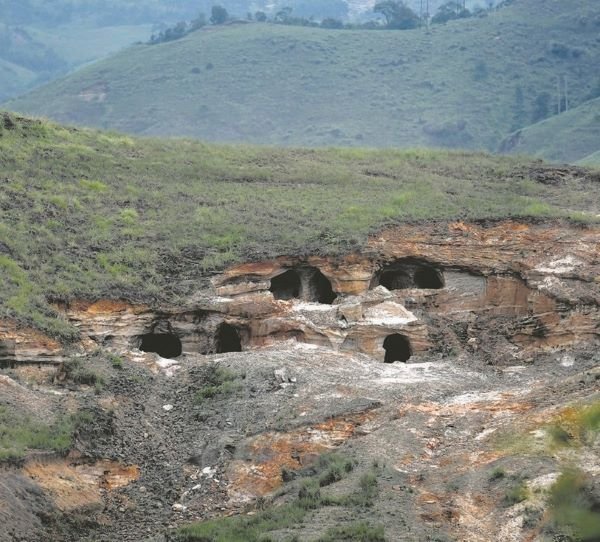
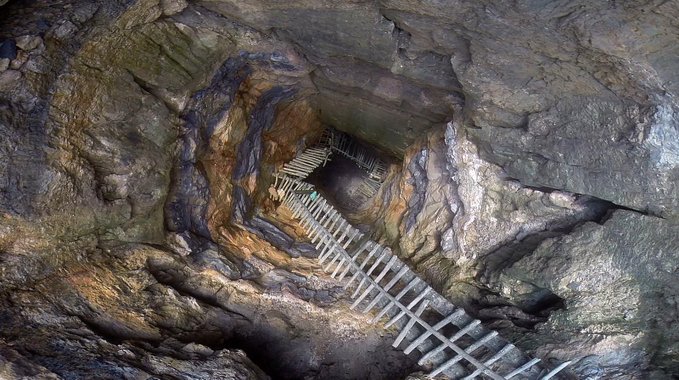
Rat hole mining is an archaic and unscientific technique for removing coal from slender and horizontal seams in Meghalya. The land is cleared by chopping and removing the vegetation, after which pits are created to access the coal seam. A coal seam is a visible, dark brown or black-banded coal deposit formed inside rock layers.
Image via Centre for Science and Environment
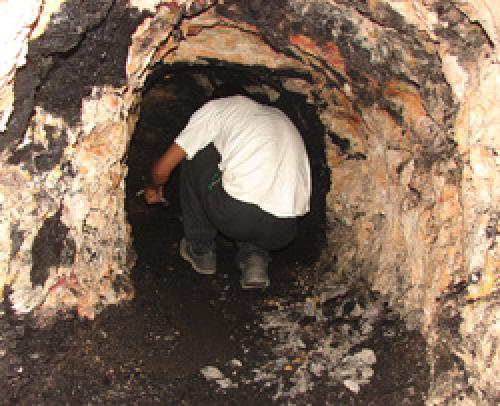
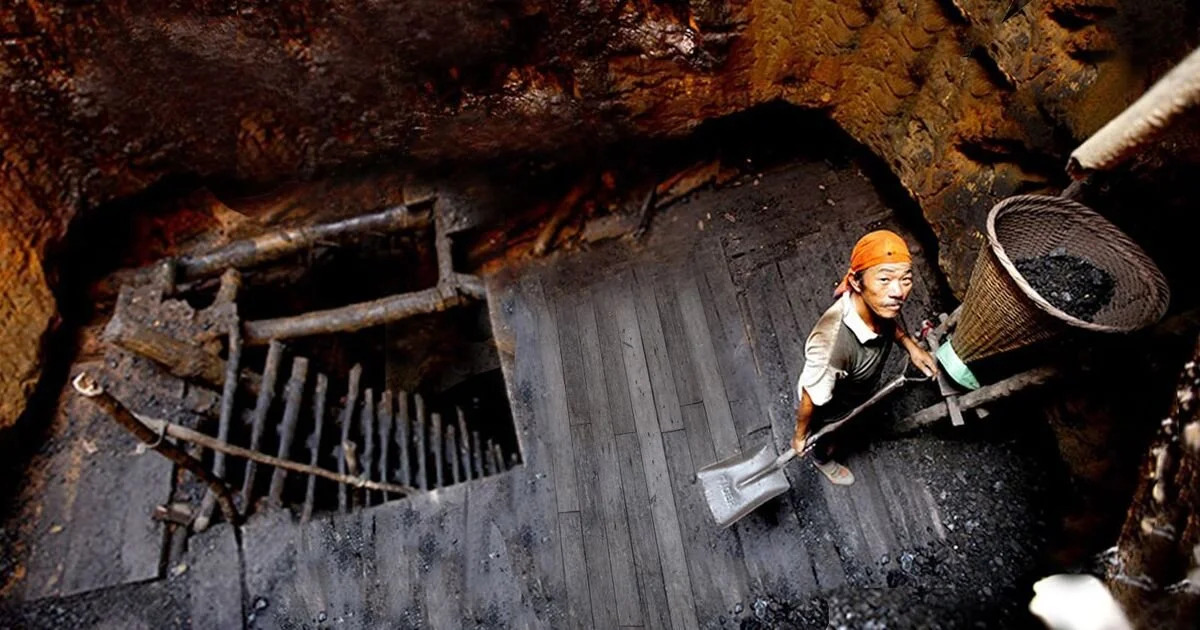
The narrow trenches that are excavated into the ground are usually only big enough for one person to descend and retrieve coal. These are referred to as “rat holes.” Miners utilise bamboo ladders or ropes to navigate the coal seams when the pits are dug. The coal is manually removed using equipment like baskets, shovels and pickaxes. The mining is executed via two methods known as the side-cutting procedure and box cutting.
People enter the narrow tunnels built on the hill slopes, merely 3-4 feet deep, usually only big enough for one person to crawl inside and out, and proceed until they reach the coal seam, which is less than 2 metres thick, as part of the side-cutting procedure. They must squat to extract coal.
Image via PTI
Box-cutting involves carving a rectangular opening that is between 10 and 100 square meters in size and then making a vertical pit that is between 100 and 400 feet deep. Workers can extract coal by digging horizontal tunnels through the coal seam after it has been located. They go down with the help of rope-and-bamboo ladders or improvised cranes. The tunnels are constructed from the pit’s edge in all directions.
NGT slaps a ban in light of serious concerns
The Coal Mines Nationalisation Act of 1973 does not apply in Meghalaya, a Sixth Schedule State and the government has limited authority over the land. Therefore, the minerals underneath are also owned by the landowners. After Meghalaya became a state in January 1972, coal mining took off. However, mine owners did not adopt sophisticated drilling equipment due to the terrain and associated costs. Thus, people primarily from Assam, Nepal and Bangladesh began to enter the mines for better income.
However, these are prone to the risk of asphyxiation from inadequate ventilation, collapse from a lack of structural support, like side-wall protections and engineered roofs, as well as flooding. Moreover, uncontrolled mining resulted in soil degradation, deforestation, water with high concentrations of sulphates, iron and hazardous heavy metals, low dissolved oxygen, along with high biochemical oxygen demand, in addition to safety and health fears. The Lukha and Myntdu rivers became too corrosive to support aquatic life.
A worker looks up in a rat-hole coal mine near the Lad Rymbai area in the Jaintia Hills in Meghalaya. (Source: Jamhoor)
These concerns were first presented 20 years ago. The problem of child labour and human trafficking in these mines also surfaced. According to reports, kids were employed there owing to their small size. Hence, NGT introduced a blanket ban on rat hole mining in Meghalaya almost 2 decades ago in 2014 and reaffirmed it in 2015.
Likewise, illegal mining, transportation and storage are also prevented under the Meghalaya Minor Minerals Concession Rules and the framework related to Mines and Minerals Development and Regulation (MMDR) Act.
Why does rat hole mining continue despite the ban?
Rat-hole mining is a regular feature for unapproved setups and never ceased to exist despite the firm actions due to a significant local reliance on coal revenue, fragmented ownership and contractorships that disperse accountability and patronage. Their operators also avoid disclosing accidents and keep workers off official records because deaths make headlines, but injuries from child labour and contaminated water, acid drains, unstable terrain and deteriorated roads do not.
A major reason is the absence of economic opportunities, which compels the locals to pursue such jobs. This business is allowed to flourish in the northeastern states as it yields far more than the Mahatma Gandhi National Rural Employment Guarantee Act (MGNREGA) and other government-run programs. Furthermore, it is very challenging to separate illegal coal from legacy or auctioned coal after it has entered the supply chain.
On the other hand, the Meghalaya High Court assigned Justice (Retd) BP Katakey to serve as a one-man committee to oversee prohibited coal mining in the state since 2022 in response to a suo-motu Public Interest Litigation (PIL) and he drew attention to the fact that “no one in the state, except the high court, is taking it very seriously” despite repeated warnings of massive unlawful extraction in Meghalaya, especially in the East Jaintia Hills.
The court observed that the Justice Katakey committee had identified East Jaintia Hills as the district hardest hit where these forbidden activities are prominently prevalent alongside other incidents in its report submitted on 17th January.
It is evident that the rat hole mining continues because of institutional enforcement shortcomings, the huge demand for coal and the serious issue of poverty. Additionally, the problem is exacerbated by inadequate imposition of law and regulation, which are aided by the inept or vested political and administrative sectors.
However, the Justice Katakey committee suggested that the recurring problem could be resolved if the state and the central governments took decisive measures to effectively enforce mining constraints. Moreover, state-owned companies must be taken into account for the temporary management of mining operations. Mineral processing, value addition and related industries should be utilised to generate alternate sources of income for the populace.
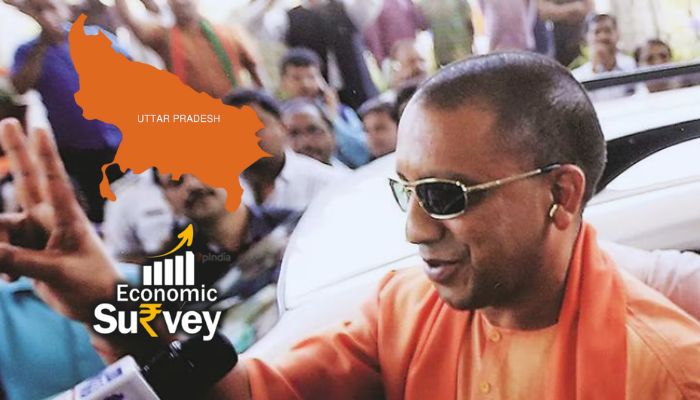
The economy of Uttar Pradesh has doubled in the last eight years, growing from Rs 13.30 lakh crore in 2016-17 to Rs 30.25 lakh crore in 2024-25. This revelation was made by Uttar Pradesh’s Finance Minister Suresh Khanna on 9th February 2026, as he presented the Economic Survey 2025-26 in the state assembly. The state government also presented its investment plan to posit Uttar Pradesh, India’s most populous state, as a $1 trillion economy over the medium term.
Uttar Pradesh’s economy more than doubled in eight years, set to expand to Rs 36 lakh crore in 2025-26
The Economic Survey tabled before the state legislature of Uttar Pradesh on Monday is the first such annual economic document, similar to the Central government’s practice. The UP government’s Economic Survey provides a data-based view of the state’s macroeconomic performance, sectoral trajectory, and overall financial health.
As per the survey’s findings, Uttar Pradesh’s Gross Domestic Product (GDP) grew at a compound annual growth rate of 10.8%, surging from Rs 13.30 lakh crore in 2016-17 to Rs 30.25 lakh crore in 2024-25. In the fiscal year 2025-26, Uttar Pradesh’s economy is estimated to expand to Rs 36 lakh crore.
On the opening day of the Budget session, Uttar Pradesh Finance Minister Suresh Khanna said, “The Economic Survey is not merely a compilation of data but a living document reflecting the state’s progress, people’s aspirations and future possibilities.”
Indicating an increased domestic and global investor interest, the Minister said that the state is set to attract over Rs 50 lakh crore in industrial proposals.
Speaking about per capita income, Minister Khanna said that it has doubled from Rs 54,564 in 2016-17 to Rs 1,09,844 in 2024-25. For the year 2025-26, the per capita income is projected to reach Rs 1.20 lakh. On a GSDP per capita basis, income has surged from Rs 61,142 in 2016-17 to Rs 1,26,304 in 2024-25.
During his speech in the state assembly, Khanna pointed out that while Uttar Pradesh’s per capita income was equivalent to the national average at the time of India’s independence, it declined to 50.2% of the national average by 2014-15.
However, in 2024-25, a reversal of the downward trend was recorded as the ratio improved to 53.5%.
Meanwhile, Uttar Pradesh’s own tax income has surged 2.5 times to Rs 2.09 lakh crore. The debt-to-GSDP ratio is 28%, which is reportedto be lower than the national average.
Agriculture remains the driver of Uttar Pradesh’s economic growth
The key drivers of Uttar Pradesh’s economic growth have been agriculture and allied services, contributing 25.8% to the state’s economy. As per the Economic Survey 2025-26, the industry’s share was 27.2% and services 47%. Uttar Pradesh continues to be India’s largest foodgrain producer with output of 737.4 lakh metric tonnes in 2024-25. Between the years 2017-18 and 2024-25, Uttar Pradesh’s total foodgrain production increased by 28.5% while productivity enhanced by 11.8%, increasing Uttar Pradesh’s share in national foodgrain output from 18.1% to 20.6%.
Between the years 2017-18 and 2024-25, gross value added per hectare of crops rose from Rs 0.98 lakh to Rs 1.73 lakh. Paddy and wheat continue to be the state’s largest agricultural output. Higher productivity and acreage have been recorded in both Rabi and Kharif seasons. The Economic Survey also indicates notable crop diversification as the area under oilseeds and pulses expanded significantly.
Uttar Pradesh is transforming into an infrastructure and investment hub
Highlighting the global investor perception improvement, the survey mentioned Memorandums of Understanding (MoU) worth Rs 2.94 lakh crore signed at the World Economic Forum 2026.
The survey further highlighted Uttar Pradesh’s improving infrastructure. It mentioned the state is becoming a national expressway hub, with 22 expressways, including three under construction and seven operational ones.
Besides, Uttar Pradesh also has India’s largest rail network and is widening its aviation ecosystem. The BJP government in Uttar Pradesh has set a target of 24 airports, including five international airports. The survey made a mention of the Jewar International Greenfield Airport, touted to become a key logistics and cargo gateway for North India.
In recent years, the number of factories registered has doubled, crossing the 30,000 mark. Fastest among major states, the industrial gross value added has grown by 25% in Uttar Pradesh. The Yogi government has strategically picked cities to transform them into specialised industrial hubs, with state capital Lucknow as an artificial intelligence hub, Kanpur as a drone manufacturing and testing centre, and Noida as a major Information Technology and electronics manufacturing base.
Emphasising that clean energy is the future, the Economic Survey 2025-26 states that the share of solar power in installed capacity improved from 23% to 27%. To manage urban growth, around 100 new townships are planned. The survey estimates that by 2046, the state’s urban population will reach 35.8%.
The Yogi government prioritises healthcare; the budget was raised to Rs 46,728 crore
As per the Economic Survey 2025-26, Uttar Pradesh has witnessed a significant expansion in medical infrastructure and public health spending. In the state’s latest budget, around 6.1% of the total budget has been allocated to health, which is higher than the national average. The state government allocated Rs 46,728.48 crore to the health budget. According to the survey’s findings, improved government spending on healthcare has boosted affordability and access to public health services.
Due to improved coverage of maternal health programmes, institutional deliveries have increased significantly, with 96.12% deliveries in 2024-25 being institutional and the number of non-institutional deliveries falling to 1.66 lakh.
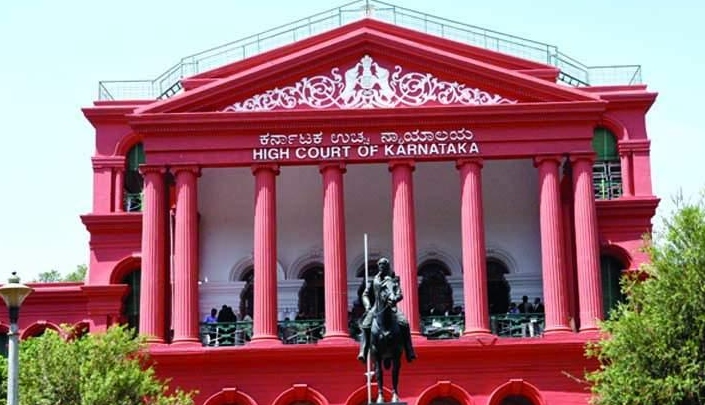
On Friday (6th February), the Karnataka High Court stayed all investigations into a suo motu FIR filed by the Doddaballapur Rural police inspector Sadiq Pasha, against the Newspace Research and Technologies Pvt Ltd. The case was registered against the centrally regulated aerospace and research company on the charges of criminal trespass after a drone landed in a ‘Muslim-majority area’ beyond the green zone.
The incident occurred on 29th January after the drone underwent a battery malfunction. The bench comprising Justice M. Nagaprasanna heard the petition filed by the Bengaluru-based company on Friday and issued an interim order putting a stay on all further probe into the matter till the next hearing.
“There shall be an interim order of stay of all investigation pursuant to the registration of the crime till the next date of hearing,” Justice Nagaprasanna said.
Drone landed in residential area due to low visibility
On 29th January 2026, the New Space Research and Technologies Private Limited was conducting routine research and development testing within the leased premises, when a lightweight research drone suffered a battery malfunction. Due to this, the drone glided beyond the leased premises and landed in Bengaluru’s Doddaballapura ‘Muslim area‘ . The centrally regulated company could not initially trace the drone due to a poor Global Positioning System (GPS) signal. The company officials did not undertake an immediate search activity since it was dark.
Later, the police arrived there after receiving information via the 112-emergency helpline, and took the drone into possession.
Inspector Sadiq Pasha registered a suo motu FIR, made drone company officials sit for six hours, refused to give FIR copy
After confiscating the drone, Inspector Sadiq Pasha registered a suo motu FIR against “unknown” persons under Sections 125 (an act endangering life or personal safety of others) and 329(3) (criminal trespass) of the Bharatiya Nyaya Sanhita.. The police served a notice to the drone company officials on 30th January. The officials from the New Space Research and Technologies Private Limited arrived at the police station and explained to the police the circumstances leading to the drone landing in a residential area.
They also informed the police that New Space Research and Technologies Private Limited is a licensed drone research and training agency operating under the control of the Director General of Civil Aviation, adding that testing is a legally allowed activity under the Drones Rules, 2021 and other relevant laws.
Notably, Newspace Research and Technologies supplies drones to the Indian armed forces and has its testing centre on 48 acres of leased land in Doddaballapur.
However, Inspector Sadiq Pasha violated a basic procedural requirement and refused to hand the copy of the FIR to the officials of the petitioner drone company. The police contended that since the drone landed on private land, it was perceived to be endangering life and physical safety.
Inspector Sadiq Pasha, who reportedly holds a law degree, argued that only the informant was entitled to receive the FIR copy.
However, the FIR copy was given only after the company’s counsel said that they would file a complaint with the Lokayukta.
During the court hearing, the counsel appearing for Newspace Research and Technologies said that the drone in question weighed 6kg and was powered by a Chinese battery. The counsel informed the court that the drone company supplies equipment to the Indian Army, adding that the drone in question was also showcased during the recent Republic Day parade. The counsel further stated that the company had been conducting research and development trials at the site for the last 4 to 5 years.
The counsel further emphasised that the police had no jurisdiction in the matter since the operation was conducted in a green zone under a R&D license, adding that the company could have been questioned only by the DGCA under the Drone Rules.
Inspector Sadiq Pasha showed “excessive interest”, Karnataka HC asks him to file an affidavit
The court noted the allegation levelled by the petitioner’s counsel that Inspector Sadiq Pasha took excessive interest in the case despite valid licenses and documents being shown. Inspector Pasha wanted the Managing Director of the Newspace Research and Technologies to arrive at the police station and disclose details of the number of employees working at the company, revenue, turnover, and other information. The police officer made the drone company’s officials sit for six hours.
Taking note, the court ordered Inspector Sadiq Pasha to file an affidavit to the averments made in the petition. The court said that failing to follow the direction will invite necessary action. The bench directed Pasha’s explanation via the Station House Officer (SHO) of the Doddaballapur Rural police station by the next date of hearing in the case. Until then, all coercive action against the petitioner has been halted by the court, providing a temporary reprieve to the Bengaluru-based company.
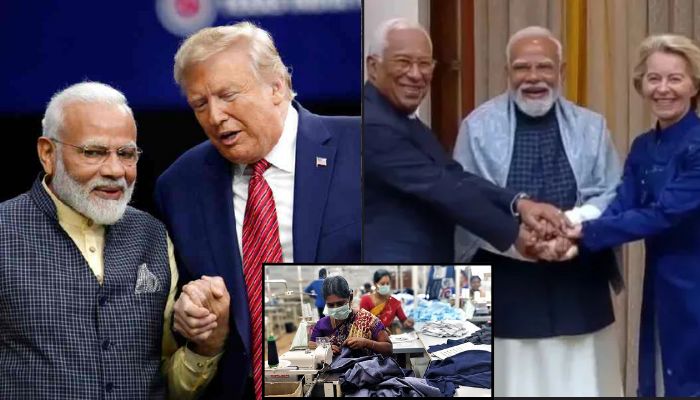
India’s textile and apparel industry is set for a great boost with the finalisation of the first phase of the India-US trade agreement. The framework for the recently announced agreement is centred on reducing import taxes on various goods to enhance trade between the two nations.
India-US Trade Agreement, major boost for Textile Industry
Currently, the USA is the largest export market for Indian textiles and textile products, with exports valued at $10.5-11 billion annually. Close to 28% of total textile and textile product exports from India in FY25 were meant for exports to the USA alone. Now, with the USA agreeing to reduce customs duty on Indian textile products to merely 18%, Indian textile exports are expected to gain a strong edge over other competing countries such as Bangladesh (20%), Vietnam (20%), Pakistan (19%), and China (30%).
On Saturday, 7th February, the Union Ministry of Textiles has said that the agreement opens up access to a massive $118 billion US import market for textiles, apparel and made-ups. This means Indian exporters will now find it easier and more cost-effective to sell their products in the US. The ministry believes that this deal will play a key role in helping India reach its ambitious target of $100 billion in textile and apparel exports by 2030, up from $37.7 billion in FY25.
A big opportunity for the textile hub of Tiruppur, Tamil Nadu
Tamil Nadu, especially Tiruppur, which is a hub for the textile industry, is likely to gain significantly from the India-US agreement. Tiruppur is a city situated about 450 km from Chennai and is also referred to as India’s knitwear capital. It has over 1,100 exporters across the city under the Tiruppur Exporters’ Association (TEA).
According to TEA president K M Subramanian, currently, the export of garments from Tamil Nadu to the US has been valued at ₹15,000 crore. This figure, he mentioned, is expected to double to ₹30,000 crore within the next three years following this new agreement. The agreement, says Subramanian, has great significance; the city will gain tremendous growth momentum within the next five years.
The employment impact could be equally impressive. At present, around 10 lakh people work in the textile and knitwear sector in Tiruppur and nearby areas. With increased exports and fresh orders from the US, another five lakh jobs could be created over the next three to five years. For a labour-intensive industry like textiles, this could bring major social and economic benefits to the region.
Entrepreneurs in Tiruppur are already optimistic. M Rathinasamy, founder of Starrlight Exporters, said that earlier, many US orders were shifting to countries like Bangladesh. Now, with the improved tariff position, more orders are expected to come back to India. Exporters believe that within the next three months, the impact of the deal will begin to show in higher shipment volumes.
This renewed growth is particularly important because Tiruppur had reportedly suffered losses of nearly ₹15,000 crore in 2025 due to tariff disadvantages in the US market. The new agreement could help factories run at full capacity again and restore confidence among exporters.
The EU deal: “Mother of all deals”
If the US agreement is a big step forward, the India–EU free trade agreement is being described as even bigger. This deal has been described as the “mother of all deals” for the subcontinent. India and the European Union have signed a wide-ranging agreement after nearly two decades of negotiations, which enables duty concessions on almost all goods and services traded between India and the European Union.
The European Union is a very large market in the world. The European Union imports goods worth $6.5 trillion every year. Commerce and Industry Minister Piyush Goyal described this agreement as a ‘game-changer’ for India’s textile industry, as it removes the initial imposition of customs duty of 9 to 12% on Indian textiles and apparel. Under the new agreement, there will be zero customs duty on 90% of Indian imports immediately, and the remaining 7% will be raised to 93% in seven years.
For a long time, Indian exporters complained about a large differential in the EU market with Bangladesh, which benefited from the duty-free market under the “Everything But Arms” facility. Bangladesh ships nearly $30 billion worth of textiles to the EU duty-free, while India’s $7 billion exports faced tariffs of up to 12%. With the new FTA, India will finally compete on equal footing.
India can now ramp up textile exports to compete with Bangladesh in Europe
"India can boost textile exports to Europe from $7 billion to $30-40 billion quickly. We were always asked how Bangladesh exports so much to Europe. They had zero duties and captured a $30 billion share" pic.twitter.com/HK6HtrJvTX
Industry experts believe India’s share in the EU textile market, currently about $5.5 billion or 6%, could double to over $11 billion in the next five years. Given that textiles are India’s second-largest employer after agriculture, employing around 40 million people, the job potential is huge. Estimates suggest that better access to the EU market could generate 6 to 7 million additional jobs in the coming years.
India already has a strong presence in home textiles such as bed linen, towels and curtains. With zero-duty access, European buyers are expected to increase sourcing from India. This means better pricing stability for retailers and long-term business security for Indian manufacturers.
Bangladesh faces growing pressure
While these deals are positive news for India, they present serious challenges for Bangladesh. The EU-India FTA significantly reduces the tariff advantage Bangladesh has long enjoyed as a Least Developed Country (LDC).
Bangladesh’s economy is heavily dependent on textiles and apparel, which account for nearly 94% of its exports to the EU. The EU absorbs about 44% of Bangladesh’s total exports. With India now enjoying zero tariffs, Bangladesh risks losing market share, especially in basic, price-sensitive apparel segments.
Bangladesh is set to graduate from least-developed country (LDC) status in 2026. Its duty-free access under the EU’s EBA scheme will effectively expire by November 2029. After that, unless it secures special GSP+ benefits, it could face tariffs of around 12% on apparel exports. If India continues to enjoy zero-duty access while Bangladesh faces double-digit tariffs, the competitive gap could widen sharply.
This situation could lead to trade diversion. European brands, looking to diversify supply chains under the “China+1” strategy, may prefer India because of tariff advantages, better regulatory predictability, and a strong cotton-to-garment supply chain.
For Bangladesh, this is a wake-up call. It will need to focus on compliance with international labour and environmental standards to secure future trade benefits. But for now, India’s improved tariff position gives it a strong edge in both the US and EU markets.
A turning point for India’s textile ambitions
Taken together, the India-US and India-EU trade deals mark a turning point for the country’s textile and apparel industry. They not only reduce tariff barriers but also improve India’s image as a reliable sourcing destination.
The deal also comes at a crucial time. In November 2025, US imports of textiles and apparel from India had dropped sharply by over 31% compared to the previous year. The new tariff structure is expected to reverse this decline and restore India’s competitiveness in the American market.
With access to two of the world’s largest consumer markets on better terms, Indian exporters could expect to benefit from more orders, expanded factories, and employment generation. States such as Tamil Nadu, Gujarat, Maharashtra, and Punjab could also see fresh investments and employment generation.
But if the momentum continues and the reforms in the domestic market are favourable to these industries, India’s dream of accomplishing $100 billion in textile exports by the year 2030 doesn’t seem to be a distant dream after all. For the industry, these trade deals promise to greenlight the coming decade.
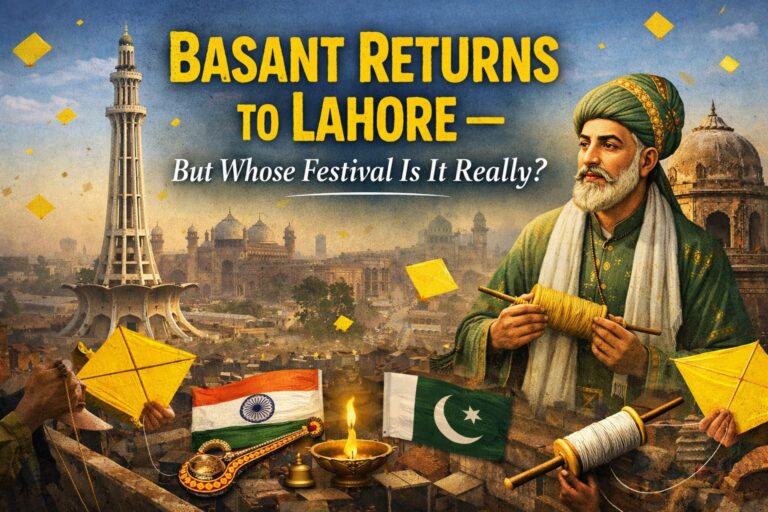
After over two decades of prohibition, Punjab in Pakistan has formally reinstated Basant. Lahore’s skyline is once again streaked with kites. The state has gone all in to oversee what it now refers to as a “Punjabi cultural festival,” deploying surveillance drones, enforcing QR-coded kite lines, registering rooftops, and applying stiff penalties. But as Basant returned to the skies, an old justification campaign resurfaced online, with several users on X insisting that the Basant celebrated in Pakistan is entirely different from India’s Basant Panchami, and claiming that it was started in Lahore by Amir Khusro as a Muslim, kite-flying spring ritual, supposedly unconnected to Hindu tradition or Indian civilisational history.
Framed as historical nuance, this claim is anything but. It reduces centuries of civilisational continuity to a single Sufi anecdote, deliberately blurs the line between cultural participation and cultural origin, and functions as a textbook case of cultural chori, retaining the festival, its symbols, and its economic value, while quietly stripping it of its Indian roots to make it ideologically palatable.
A quarter century on, Basant proved Lahore’s spirit was only paused, never broken.This wasn’t the end of Basant; it was the return of Lahore 🩷 pic.twitter.com/y0wBO49XD5
Before Islam, before Khusro: Basant’s civilisational lineage
Basant is not an abstract “seasonal celebration” that evolved naturally in medieval Punjab. It is a vernacular continuation of Vasant (spring) observances that date back to Indic culture, predating Islam’s arrival in the subcontinent. Classical Sanskrit literature, temple calendars, and regional folk traditions all celebrate spring as a time of agricultural renewal. Basant marks the preparation for the arrival of spring. The colour yellow, central to Basant, is not a decorative coincidence; it reflects ripening mustard fields, the changing agrarian cycle, and springtime fertility across North India.
These symbols existed independently and coherently centuries before any Sufi engagement with local culture. By the time Muslim rule entered Punjab and Delhi, Basant was already a social fact, not a ritual in search of meaning, but a lived seasonal rhythm. What followed was not invention but adaptation. This distinction is crucial. When Muslim invaders, elites or common people participated in Basant, they were entering an already-established cultural space. Participation did not retroactively convert the festival’s origin, just as celebrating a harvest does not rewrite the origin of agriculture.
What Amir Khusro actually did and what is being falsely attributed to him
Amir Khusro’s relationship with Basant is real, but what is deceptive is the scale and significance that are now being retroactively built around it. The historical record places Khusro’s Basant observance squarely within the precincts of Delhi’s Nizamuddin dargah, not Lahore, and ties it to a specific, symbolic episode rather than the creation of a new festival. Following the death of his young nephew, Hazrat Nizamuddin Auliya is said to have withdrawn into grief. Among them was Amir Khusro, whose poetry blended Persian court culture with local vernaculars.
According to dargah tradition, Khusro encountered a group of Hindu women dressed in yellow, carrying flowers, on their way to the Kalkaji Mandir to celebrate Basant. Khusro adopted the colour yellow and brought the symbolism back to the dargah, where it briefly lifted his mentor’s sorrow. It is in memory of this act that Basant continues to be ritually observed at the Nizamuddin shrine.
This is not just a ‘Heeramandi’ song. Watch till the end to discover the rich history behind Khusrau’s ‘Sakal Ban’. Centuries ago, on Basant Panchami, when grief silenced a Hazrat Nizamuddin, his disciple chose the colours, rhythms, and beauty of a Hindu festival to heal him. pic.twitter.com/BvNCONRibF
This episode explains why Basant is commemorated at one specific Sufi shrine in Delhi. It does not explain the origins of Basant itself, nor does it support the claim that Khusro “started” Basant as a Muslim festival, introduced it to Muslims at large, or founded a kite-flying tradition in Lahore. There is no contemporaneous Persian chronicle, tazkira, or historical account that makes such a claim. What is being projected today is not history, but retrospective myth-making.
Why this rewriting is convenient for Pakistan
Pakistan’s relationship with its pre-Islamic past has always been uneasy. Hindu temples are neglected, Indian history is marginalised in textbooks, and ancient cultural continuities are treated as ideological liabilities. Yet Basant poses a problem: it is too deeply embedded in Punjabi social life to be discarded altogether. The solution has been to retain the festival while rewriting its provenance. By framing Basant as a “Punjabi” festival rather than an Indian one, a Muslim cultural practice rather than a Hindu seasonal observance, and a Khusro-origin tradition rather than a pre-Islamic continuity. Pakistan gets to enjoy the celebration without confronting the civilisational inheritance it comes from.
That is the essence of cultural theft, keeping the practice, erasing the source.
Conclusion: You can celebrate, but you cannot erase
There is nothing illegitimate about Punjabis in Pakistan celebrating Basant. After all, Culture survives borders and outlives states. But there is something deeply dishonest about celebrating a festival while denying its origins. Basant does not need Islamic validation. Amir Khusro does not need to be turned into a civilisational founder. And Punjabi culture does not need historical amnesia to survive. You can fly the kites. You can paint the city yellow. But you cannot cut the string that ties Basant to its Indian, Hindu, civilisational roots, no matter how many times the story is rewritten.
On 2nd February, a sessions court sentenced two individuals to 10 years of imprisonment each, related to cow slaughter and the unlawful possession of beef in Godhra, Gujarat. The father and son duo have been identified as Mehboob Abdullah Saburiya and Farhan Mehboob Saburiya, while another person, Salim Siddiqui, was acquitted due to a lack of sufficient evidence.
This case dated back to 9th July 2024, and the pair has been convicted under sections 5(A), 6(B), 8(4) and 10 of the Gujarat Animal Preservation Amendment Act and a fine of Rs 2 lakh each was also imposed on them.
On 9th July 2024, officers from the Godhra B Division police station were conducting a routine patrol when a suspicious vehicle was observed near the Ali Mosque along the Godhra-Hamirpur road. The cops halted and interrogated the occupants, but several of them fled the scene. After this, two men were apprehended, and the vehicle was searched, leading to the discovery of cow meat.
The authorities also confiscated several weapons. During the interrogation, they revealed their identities and disclosed that Salim Siddiqui and Faisal Maqsood had summoned them to Hamirpur and provided them with the consignment. They were taking it to their place to sell.
The police then called a veterinarian to the location to inspect the meat, which weighed approximately 53 kilograms. The samples were sent to the Surat Forensic Science Laboratory (FSL) for testing, and the report arrived the next day, confirming that it was beef. The police then registered a case against the accused under the Gujarat Animal Preservation Act and took them into custody.
The police launched an FIR (First Information Report) against three individuals in total. Mehboob and Farhan were nabbed at the spot with beef, while Salim was reported to have supplied the beef to them. Subsequently, the case was brought before the Sessions Court, where the charge sheet was submitted on 19th November of that year. It established the charges on 20th February 2025 and commenced the trial, as the verdict was delivered a year later.
The court called and cross-examined numerous witnesses, including police officers, panches and veterinary officers. Furthermore, the prosecution introduced evidence such as the panchnama (witness statement), the veterinary report and the Forensic Science Laboratory findings.
The court’s judgment
The court noted that both the veterinary and FSL reports clearly substantiated that the seized meat was beef in its ruling. Cow slaughter alongside the storage, transportation and sale of beef are completely prohibited in Gujarat.
The court further mentioned that both perpetrators were caught at the scene with the beef. On the other hand, they failed to prove any official permission for the slaughter or carriage of the meat during the trial. Furthermore, the pair argued that they had been falsely implicated by the police, but the court rejected these arguments, outlining that the seizure, sample testing and other procedures were conducted properly and convicted them.
The court, however, acquitted the third accused, stating that he was not found with beef and the prosecution’s assertions relied exclusively on the statements of the co-accused. It is remarked that such statements lack independent verification, cannot be deemed definitive and cannot serve as the foundation for convicting anyone in a criminal trial. Hence, he was granted the benefit of the doubt.
The court highlighted that the father and son acquired beef on a significant scale with the intent to sell it at retail from their residence despite the legal ban, thereby committing deception. It was observed that in light of the amendments made to the law by the government in 2017, imposing a sentence would reinforce the original intent of the law, deter such criminal activities in society and impose legal restrictions on those who engage in such offences.
The court eventually sentenced the two Muslim males and mandated that their prison terms would be prolonged by an additional two years if the penalty was not paid.
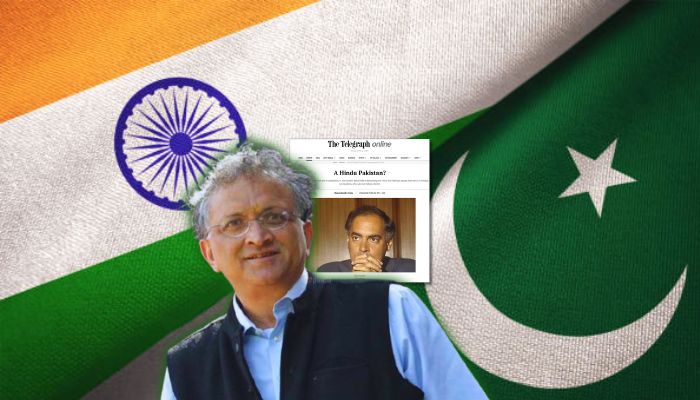
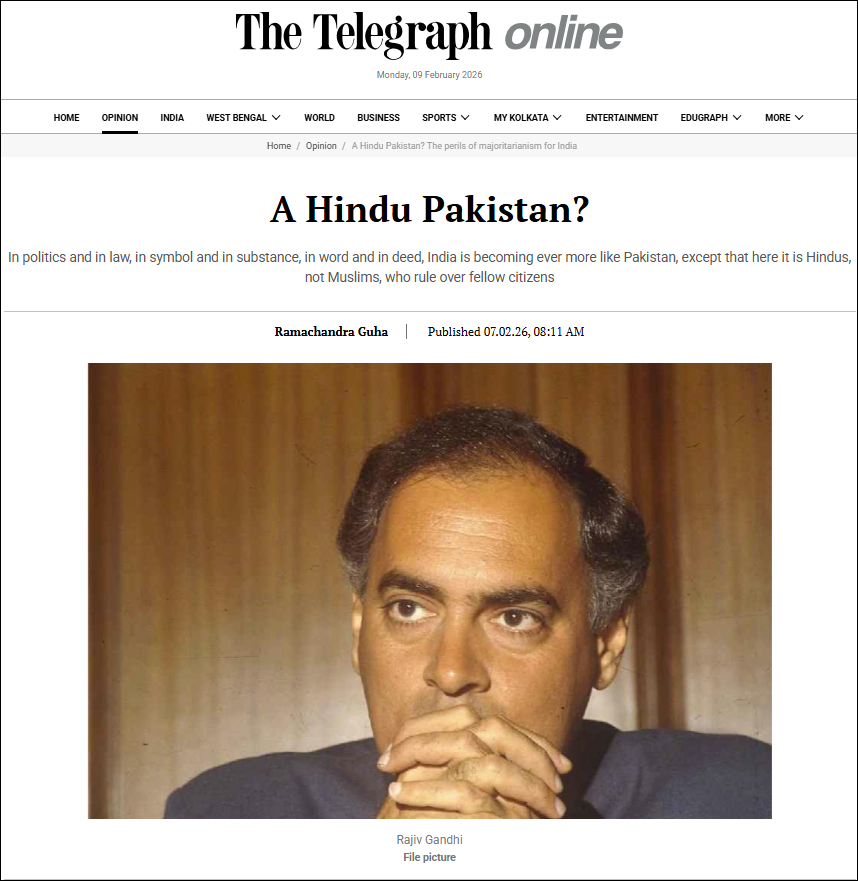
Equating India with Pakistan, be it in terms of economy, military, governance or religious freedom, is essentially an insult to India and an utter contempt of basic facts. However, in its pursuit of adding melodramatic, dishonest and alarmist chapters to the Muslim victimhood, or rather, atrocity literature, the Indian left-liberal cabal keeps doing it, again and again. In this vein, leftist ‘historian’ Ramachandra Guha wrote an opinion piece in The Telegraph India on 7th February, wherein he contended that a supposed ‘Hindu majoritarianism’ is turning India into a ‘Hindu Pakistan’.
Secular India mirroring Islamic Pakistan? Ramchandra Guha recycles the ‘Not the India I grew up in’ trope
At the very onset of the propaganda piece titled “A Hindu Pakistan?”, Guha invokes India’s first Prime Minister, Jawaharlal Nehru, to contend that contrary to the initial envisioning of India as an inclusive nation, unlike Pakistan, India under the Modi government is “coming ever closer to Pakistan with regard to the merging of faith and State.”
Ramchandra Guha wrote that while Nehru worked “assiduously to marginalise the forces of Hindutva”, despite a significant section of the Congress party’s leadership not agreeing with him, it is drifting away from inclusivity to majoritarianism.
“Nehru’s commitment to secularism and equal rights for minorities was not universally shared even within his Congress Party, which had its fair share of conservative Hindus. However, as prime minister, he himself worked assiduously to marginalise the forces of Hindutva as represented in the Rashtriya Swayamsevak Sangh and the Jana Sangh. It was only in the decades after his death that the RSS and the Jana Sangh’s successor, the Bharatiya Janata Party, grew rapidly in influence. As a result, our nation, which after August 1947 hoped to chart a different, more inclusive, path from its neighbour, is now coming ever closer to Pakistan with regard to the merging of faith and State,” Guha wrote.
The leftist propagandist cited Nehru’s letter, written two months after India’s partition, to the chief ministers. In this letter, Nehru wrote, “Whatever the provocation from Pakistan and whatever the indignities and horrors inflicted on non-Muslims there, we have got to deal with this minority in a civilized manner. We must give them security and the rights of citizens in a democratic State.”
It is not a secret that Jawaharlal Nehru was an idealist. However, idealism is suicidal when the adversary is immoral, violent, intransigent, and bigoted. PM Nehru’s idealism has done irreversible damage to India. What Nehru overlooked, Sardar Patel saw clearly.
The Muslim ‘minority’ Nehru committed to give security and equal rights, but did not even choose India. Of all, 87% of seats in the 1946 provincial elections were won by the Muslim League in undivided India. The Mohammed Ali Jinnah-led Muslim League’s core agenda and demand was the carving out of a separate nation for Muslims, Pakistan. This essentially means that 87% of Muslims in undivided India in 1946 wanted, supported, and voted for Pakistan. In fact, it was the Nehru-Liaquat Pact of 1950 that scuttled the de facto population exchange.
The point of discussing this chapter of history was important because to this day, Islamo-leftists attempt to guilt-trip the Hindu majority for hailing the loyalty of Indian Muslims whose ancestors chose’ a secular India over an Islamic Pakistan. In fact, a subtle objective of Ramchandra Guha’s op-ed is also to instil guilt within the Hindu majority that by voting and supporting ‘Hindutva’ nationalist parties like the BJP, they are essentially victimising Muslim ‘minorities’ and turning India into a ‘Hindu Pakistan’.
Basically, Ramchandra Guha wants Nehru’s ‘secular India’ where reconstruction of Somnath Mandir was deemed ‘Hindu revivalism’, and decries Modi’s ‘Hindu majoritarian’ India where Muslims are ‘victimised’ despite enjoying the rights and freedom, Pakistani Hindus can only dream of.
Guha’s contention that India under Modi is becoming a ‘Hindu Pakistan’ triggers a question: if the Bhartiya Janata Party is such a Hindu extremist and anti-Muslim party, why, despite being in power for over has it not amended the constitution to declare India a Hindu Rashtra?
In the last three general elections, not one of the 800 BJP MPs elected is Muslim: Does BJP not giving tickets to Muslims amount to the latter’s political erasure?
Ramchandra Guha lamented that the ‘majoritarian’ cast on today’s India is evident in the fact that of more than 800 MPs elected on a BJP ticket in the last three general elections, not one is a Muslim. Guha insinuated that by not giving tickets to Muslims, the BJP is essentially attempting an erasure of the ‘minority’ community from the Indian political landscape.
This is not a unique contention. Islamo-leftists have long been decrying the BJP for the supposed deliberate avoidance of Muslims as its electoral candidates. This claim of exclusion has been pushed over the years to set a narrative that Muslim ‘minorities’ are marginalised despite making up the largest population of the country after Hindus.
Guha ignores the basic fact that there is no law in India that stops Muslims from contesting, winning an elections and holding constitutional positions. His desire is that the BJP, since it has won elections, should ideally ensure that some of its MLAs and MPs are Muslims. But that is not how an electoral democracy works at all.
However, they never discuss the fact that Muslims, despite getting a large portion of the central government’s benefits, Muslims do not vote for the BJP government. In fact, the Muslim voting pattern is generally rooted in the agenda of voting for any party or candidate that can defeat the BJP. If the likes of Guha actually cared about secularism and inclusivity, they would have questioned the Muslim community about why their voting pattern revolves around their religion.
“Under Narendra Modi and Amit Shah, the BJP has sought to create a Hindu vote bank, fighting and often winning elections on the basis of the support of Hindus alone. Once a Hindu-first politics propelled them to power, the Sangh Parivar has consolidated its dominance socially, through harassing and demonising Indian Muslims (and on occasion Indian Christians too),” Guha wrote.
It is amusing that when so-called secular political parties like Congress appease the Muslim community, often by crushing the rights and interests of Hindus, why no one from the liberal ‘intelligentsia’ raise alarm that Muslim ‘minorities’ have become a religious votebank. There are political parties like the Samajwadi Party and All India Majlis-e-Ittehadul Muslimeen (AIMIM) that have been fighting elections on the basis of the support of Muslims largely, if not alone.
However, when political parties manage to rally the Muslim votebank, they are deemed secular and inclusive but if the BJP garners support of a significant section of the otherwise fragmented Hindu voters, then liberals cry that India is becoming a Hindu majoritarian state, Muslims are being excluded, marginalised, erased, and whatnot.
The political erasure of Muslims argument would have had some merit if Muslims were disenfranchised by law. This, however, is not the case; voter turnouts have consistently been high, indicating that they are partaking in elections and exercising their rights. While many Muslim caste groups have made their way into OBC reservations, Pakistani Hindus getting to breathe without being forcibly converted to Islam, discriminated against, humiliated, raped, and killed, is still a luxury.
Guha further attempted to villainise the Hindu ‘majority’ and portray the Muslim ‘minority’ as victims, by arguing that once Muslims “held important cabinet posts, ran major government departments (including the diplomatic corps and the Intelligence Bureau), headed the Supreme Court and the Indian air force”, but are missing from posts of prominence in public life.
This is such a juvenile argument. What is Guha even trying to suggest? Has the Modi government expelled Muslim diplomats or Muslim officials in intelligence agencies? Has the Modi government impeached any Muslim Supreme Court judge? Or has the BJP-led government barred Muslims from joining the Indian Air Force? That is not the case. Being a Muslim alone does not make one entitled to running government departments, heading the Supreme Court or the Indian Air Force.
Guha also claims that Muslims are subjected to discrimination in housing and to routinised taunting and humiliation, which quite often takes the form of targeted violence (as in lynchings and house demolitions).
This was supposed to evoke sympathy for Muslims, but rather, Guha’s claim raises several questions. There is no evidence of any widespread discrimination or acts of taunting or humiliation against Muslims in housing or at the workplace. Guha selectively highlighted lynchings and house demolitions to suggest that Muslims are randomly cornered by Hindus and beaten to death for being Muslims, and that the BJP governments first mark houses of Muslims and then get them bulldozed. The leftist author chose not to make any mention of the incidents of Muslims attacking Hindus, or the fact that the demolition of Muslim houses in several-ruled states is not due to their religion but has been a part of anti-encroachment drives or action against illegal properties of rioters.
Guha also chose not to discuss why Hindus and other non-Muslim communities must be growing fearful of renting their house or rooms to Muslims. When even educated doctors like Umar Un Nabi can be as hateful and intolerant of non-Muslims that they resort to carrying out Fidayeen attacks and even make videos to justify the killing of innocent people, is it not natural for non-Muslims grow fearful or even intolerant?
Moving further, what is even an Indian leftist meltdown without the mention of the Citizenship Amendment Act (CAA) and the abrogation of Article 370 in Jammu and Kashmir? Ramchandra Guha suggested that the CAA and the removal of Article 370 were anti-Muslim decisions of the Modi government.
“Hindu majoritarianism is also manifest on the legal front. The Citizenship (Amendment) Act clearly discriminated against Muslims, and the abolition of Article 370 was not unrelated to the fact that Jammu and Kashmir was India’s only Muslim-majority state,” Guha wrote in The Telegraph India.
Notably, the CAA only accelerated citizenship for persecuted non-Muslim minorities from Pakistan, Bangladesh and Afghanistan, who fled persecution at the hands of Muslims in these Muslim-majority countries. The CAA expedited Indian citizenship for Hindu, Sikh, Christian, and other non-Muslim minorities, and did not strip Indian Muslims of their citizenship.
Contrary to the narrative pushed by Islamo-leftists, the exclusion of Muslims from CAA was not driven by any anti-Muslim bias or hatred, but rather by common sense. How can Muslims be persecuted for being Muslims in Muslim-majority or Islamic countries? Shias and Ahmadiyyas are indeed subjected to violence and discrimination in Pakistan; however, these sects continue to identify as Muslims, making their case sectarian and not religious persecution.
On Article 370, Guha writes that Article 370’s abrogation was somehow related to Jammu and Kashmir being India’s only Muslim-majority state. It is amusing that liberals loathe Hindu ‘majoritarianism’ but want decisions of Muslim-majority regions or states to be contingent on the will and whims of the majority community. Basically, Hindu majoritarianism is bad, but Muslim majoritarianism is good.
Only if Indian liberals tried to understand and call out the relation between terror attacks by Jihadis and the Islamic motivations behind it, instead of finding a link between Article 370, a temporary provision, and the religious demographics of Jammu and Kashmir, they would have comprehended why Pakistan exists, and why a Hindu-majority India can never become a ‘Hindu Pakistan’.
It is criminal to even think that there is any equivalence in the situation of Indian Muslims and Pakistani Hindus. In Pakistan, Hindu, Sikh and other non-Muslim minor girls are abducted, forcibly converted to Islam, and married off to their Muslim abductors twice or thrice their age, almost on a daily basis. Even their police and courts side with the Muslim criminals in most cases. In Pakistan, non-Muslims are barred from the presidency and prime ministership by a constitutional fiat, and in India, on the contrary, Muslim politicians give open threats of eliminating Hindus if the police are removed for 15 minutes.
In Pakistan, most of the Hindu population lives in poverty, while in India, Muslims have legal or illegal control over land and properties via Waqf Boards. While Pakistani Hindus struggle to have their dignity intact, Indian Muslims are active in all fields, be it sports, movies, government jobs, politics, or even crime. Indian Muslims make up to 14% of India’s population as per the last census, and since 1947, their number has risen and risen exponentially. In Pakistan, the population of Hindu and Sikh minorities has reduced to just 2%.
Ramchandra Guha also targeted the West Bengal BJP leadership and Assam Chief Minister Himanta Biswa, who has been vocal about the attempt by illegal Muslim immigrants to alter the local demographics. Though Guha did not make any specific mention, the hint was clearly towards CM Sarma’s ‘Miya Muslims’ remark, even as the Assam Chief Minister used that term for Bangladeshi Muslim infiltrators and not Indian Muslims.
Guha also argued that while Nehru strove to keep state and religion separate, Prime Minister Narendra Modi presided over the consecration of the Ayodhya Ram Mandir. Firstly, this European concept of separation of state and religion did not originally suggest that the state had to be religion-less. But let’s not get too deep into that detail for now. Even if we go by the popular understanding of this concept, it can never fully be applied in a country like Bharat, which has the Hindu civilisation and consciousness in its soul. PM Modi’s presence at the Ram Mandir consecration ceremony did not amount to disrespect of other religious communities, or his abandonment of duties towards all citizens of India, irrespective of socio-religious, regional or linguistic backgrounds.
To appear balanced, Ramchandra Guha criticised former PM Rajiv Gandhi for betraying the Shah Bano Case and for appeasing Muslims and opening the Babri structure, for what he calls ‘Hindu appeasement’.
Leftists don’t hate Pakistan, they just hate Hindus
Equating India with Pakistan, Guha presented a role reversal in India, to suggest that while in Pakistan, the Muslim majority rules over Hindus, in India, it is Hindus ruling over Muslims. “In politics and in law, in symbol and in substance, in word and in deed, India is therefore becoming ever more like Pakistan, except that here it is Hindus, and not Muslims, who rule over fellow citizens who are of other faiths,” Guha writes.
It is essential to mention that an Indian liberal fearmongering that a secular India is somehow becoming a Hindu Pakistan, should not be misread as their condemnation of the Islamic Pakistan. In fact, leftists love Pakistan, Muslims, and everything Islamic or Islamised. It is Hindus, Hindu civilisation, and Hindu assertiveness that is called ‘Hindutva’, which the leftists hate.
The whole excuse of ‘don’t become Pakistan’ is hollow; the leftists never question totalitarian Islamic laws and mandates to render non-Muslims as second-class citizens, but their only problem is that “majority” Hindus who are winning through a secular democratic process are not “leaving” their share of seats/power for Muslims.
Despite suggesting that India should not become Pakistan, leftists cling to the wretched ‘Aman ki Asha’. The Indian leftists have time and again targeted the Modi government for shutting the doors of dialogue and diplomacy with Pakistan for the latter’s refusal to stop cross-border Islamic terrorism against India. All this despite ‘believing’ that Pakistan is governed by Islamic majoritarianism that crushes the rights and dignity of religious minorities.
Indian leftists do not want India to become like Pakistan, but when movies like Dhurandhar show the true face of Pakistan, this same lot outrages the most and cries ‘anti-Pakistan propaganda’ and ‘Islamophobia’ peddled by a ‘Sanghi’ director. No wonder Ramchandra Guha wrote in his article in The Telegraph India that Hindutva has also penetrated popular culture, with Bollywood, once a bastion of secularism, now increasingly prone to showcasing films that portray non-Hindus in poor light.
Apparently, all was well when Bollywood romanticised Islamic terrorists, villainised Hindus, mocked Hindu beliefs, promoted stereotypes against Brahmins, but when some filmmakers decided to show Muslim characters with a spectrum of nuances, such as Mughal tyrant Aurangzeb in Chhaava, Pakistani terrorists in Dhurandhar, or Jihadis in the Kashmir Files and the Islamist conspiracy of religious proselytisation in The Kerala Story, things suddenly turned bad.
India can never become a Hindu Pakistan because Hinduism lacks the genocidal feature that Islamists have
Guha concludes his article with the argument that “Making the religion of the majority central to the public identity of a nation, designing laws, policies and institutions according to the wishes of mullahs, priests, monks or rabbis, has had disastrous results in countries that are variously Sunni, Shia, Buddhist, or even Jewish. There is no reason to suppose that Hindus are somehow exempt from this rule.”
Hindus are essentially exempt from the ‘rule’ that making the majority community’s religion central to national identity, policies, laws, and institutions yields disastrous results. One would wonder why. How can it be said that India can never become a Hindu Pakistan? The answer lies in the core difference between Islamism and Hindu Dharma.
Leftists and other propagandists look at Hindus through an Islamic prism. Muslims in the majority act as Islam mandates them to. Can quote Quran verses about killing non-believers. Islamists commit genocide of Hindus and other non-Muslims because that’s a core tenet of their faith. The anti-Hindu pogrom in Bangladesh by the Muslim majority serves as an example of how Islamists can exploit any opportunity to attack Kafirs.
The only thing standing between Muslims and the realisation of that religious mandate is numbers. In Bangladesh, burning Hindus alive has become a new normal. Pakistan is witnessing a systemic erasure of Hindus. Hindus in these countries are not powerful, not Sanghi, not even in numbers strong enough to even pose a resistance and yet Islamists cannot tolerate them. The higher the Muslim population, the stricter the practice of Islam, which essentially means no tolerance of ‘Kufr’ and ‘Kafirs’. This is why Pakistan is what it is. Bharat will not become “Hindu Pakistan” till Hindus are in the majority because that behaviour isn’t a feature of Hinduism, like it is of Islam.
India, under Modi’s ‘Hindutva’ or ‘Hindu-majoritarian’ leadership, has achieved significant economic growth, enhanced national security, bolstered its position as a key leader of the global south, and its democracy is flourishing even as the opposition continues to peddle lies about it. India owes its secular character to the Hindu majority. As long as Hindus are inthe majority, India will remain a secular country rooted in Hindu consciousness. If ever Hindus are outnumbered by Muslims, forget Hindu Pakistan or Muslim India, the entire Indian subcontinent will be Islamised.
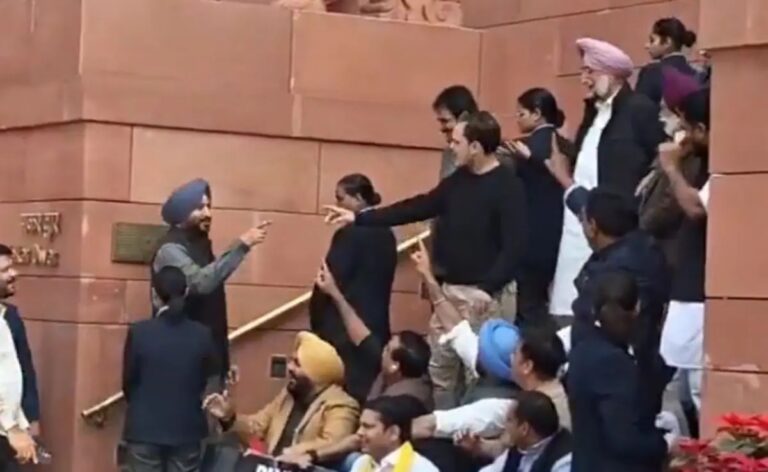
When the Leader of Opposition, Shri Rahul Gandhi, chose to brand a sitting Member of Parliament and a respected Sikh leader, Shri Ravneet Singh Bittu, as a “traitor”, inside the campus of the Indian Parliament, it was not merely a political jibe gone wrong. Such language crosses the boundaries of civility and dignity and strikes at the very identity of a community whose patriotism has been written in blood and sacrifice. For Sikhs, words like “traitor” are not casual insults, they echo a long and painful history of state-backed persecution under Congress rule.
This incident is not an aberration. It is a reminder of a pattern. For decades, the Indian National Congress has oscillated between using Sikh identity for electoral arithmetic and vilifying Sikh assertion when it challenged Congress power. Punjab’s history with the Congress party is scarred by repression, betrayal, and delayed justice. The casual slur of today draws its moral lineage from the brutal actions of yesterday.
Emergency: The first great betrayal
During the Emergency imposed between 1975 and 1977, civil liberties across India were suspended, but Punjab and the Sikh community faced a particularly harsh crackdown. More than 40,000 Sikhs, including prominent Akali leaders and grassroots workers, were imprisoned. Torture, arbitrary detention, and forced sterilisation were not excesses; they were policy tools. Sikh political mobilisation was deliberately broken because it represented a challenge to Congress’s centralisation. The message was unmistakable, dissent from Congress would be crushed, even if it meant trampling on constitutional rights and human dignity.
1984 anti-Sikh pogrom: Organised, not spontaneous
What followed Indira Gandhi’s assassination later that year was even darker. The anti-Sikh violence of 1984 was not a spontaneous outburst of grief. It was an organised pogrom. Senior Congress leaders, including Sajjan Kumar, Jagdish Tytler, H K L Bhagat, Kamal Nath, Balwant Khokkar, and Mahender Yadav, were repeatedly named by survivors. Sikh homes were marked. Voter lists were used to identify targets. Mobs were supplied with iron rods, clubs, petrol, and diesel. Over three days, thousands of Sikhs were butchered in the national capital and beyond.
Journalist Sanjay Suri later confirmed that Kamal Nath was seen leading a mob at Rakab Ganj Sahib, where two Sikh men were burnt alive. Witnesses recalled that a single signal from Nath either incited or restrained the mob. This was power exercised over life and death, in full public view.
State complicity and institutional cover-up
Investigations later revealed what victims had long known. The Central Bureau of Investigation found that the violence was backed by both the Congress government and sections of the police. Law enforcement looked away or actively assisted rioters. Transport and logistical support were arranged. Curfews were selectively enforced. Justice was not merely delayed; it was deliberately derailed.
Congress governments perfected the art of postponement and obfuscation. Inquiry commissions were set up late, under-resourced, and politically constrained. The Misra Commission, instead of delivering accountability, shielded Congress leaders, destroyed crucial evidence, and effectively exonerated the Rajiv Gandhi government. Each delay ensured that witnesses aged, memories faded, and perpetrators remained protected.
Truth acknowledged, justice denied
Even leaders within Congress could not entirely suppress the truth. Captain Amarinder Singh, while serving as a Congress Chief Minister, publicly named Sajjan Kumar and others, acknowledging that victims consistently identified Congress leaders as responsible. Yet institutional accountability never followed.
It took over three decades for a measure of justice to arrive. Sajjan Kumar was convicted only in 2018, more than 34 years after the crimes. Jagdish Tytler’s trial began as late as 2024. Many accused died without ever facing a courtroom. The Nanavati Commission in 2005 confirmed organised violence and the involvement of Congress leaders but noted that years of delay and evasion had foreclosed meaningful justice.
The Delhi High Court went further, describing the 1984 pogrom as a “crime against humanity” and observing that the accused enjoyed political patronage and escaped trial. Yet as an institution, the Congress party has never accepted responsibility. No formal apology. No accountability. Only periodic amnesia.
From violence to verbal vilification
Against this backdrop, Rahul Gandhi’s slur is not merely offensive; it is revealing. To call a Sikh leader a “traitor” without basis is to trivialise the sacrifices of a community whose Gurus laid down their lives to protect faith and freedom. Sikh valour in India’s armed forces, their role in nation-building, and their unshakeable patriotism stand in stark contrast to Congress’s historical record in Punjab.
Words matter because they carry memory. For Sikhs, Congress’s words have too often preceded violence, and its silence has followed injustice. The remark highlighted in the image is thus not an isolated lapse. It is part of a continuum that stretches from the Emergency to the streets of 1984 to the corridors of delayed justice.
A call for accountability, not amnesia
India’s democracy demands that political debate be fierce but fair. It also demands that parties confront their past honestly. The Bharatiya Janata Party believes that reconciliation begins with truth, accountability, and respect. Congress, by contrast, continues to evade institutional responsibility while allowing its leaders to demean communities it once brutalised.
Punjab and the Sikh community do not seek privilege. They seek dignity and justice. Calling a Sikh a “traitor” is not just an insult to one individual; it is an affront to a community that has repeatedly proven its loyalty to the nation, even when the nation failed it. Until Congress acknowledges its historical sins and reforms its political culture, such incidents will continue to reopen wounds that have never truly healed.