Home Blog Page 158

Tejashwi Yadav is the face of the RJD on all 243 seats in the Bihar Vidhan Sabha election: Here is why this ‘political strategy’ may backfire

Bihar will go to the polls by the end of the year. It’s the season of political rallies and meetings. There’s a deluge of statements, and from this deluge has emerged a statement of Tejashwi Yadav. He claims that his face will be contesting on all 243 seats in Bihar.

Addressing a public meeting, Tejashwi Yadav said, “This time, Tejashwi will contest 243 seats. Whether it’s Bochahan or Muzaffarpur, he will contest. I appeal to all of you to vote for me.

Lalu Prasad Yadav’s dynastic party, the Rashtriya Janata Dal (RJD), wants the INDI alliance to field Tejashwi Yadav as its chief ministerial candidate in the upcoming assembly elections in Bihar. The Congress, the Left and other RJD allies are shying away from this.

Why is the INDI alliance afraid of Tejashwi Yadav’s name?

One of the reasons for the Congress’s reluctance to make Tejashwi Yadav the chief ministerial candidate is the party’s apprehension that it might lose the meagre upper-caste votes it receives in Bihar. Another possible reason might be that by not endorsing Tejashwi Yadav, the RJD allies want to increase pressure on the party to give him a greater share of seats.

Failing to receive approval from his allies, Tejashwi Yadav went on to boast, “Tejashwi will contest all 243 seats in Bihar”. However, in chasing his political ambitions, he forgot that a name or a face is not just a few words or a picture. Names and faces can form an inseparable part of history and public memory.

The name and face that gave Tejashwi Yadav the reins of the RJD have a history so deeply etched in the minds of the people of Bihar that the same may become a burden for him. His statement not only highlights the ongoing conflict within the INDI Alliance but also revives the fear in the people of Bihar, which took them years to overcome.

Tejashwi Yadav’s name and face haunt Bihar

In his book ‘How India became Modimay’, Senior journalist Santosh Kumar, who is from Bihar, cited a presentation from the period before the 2019 general elections, and writes, “The question in this presentation was: If you mention the names of two big industrialists (one is a fugitive and the other has been in jail for a long time, it would not be appropriate to disclose their names), what image comes to your mind? The answer was: fraud. But what is the response when Narendra Modi’s name is mentioned? A leader who can take any major decision, whether on the development agenda or related to national security.”

Similarly, if you were asked what image comes to mind when you hear the name Tejashwi Yadav or see his photo, you would undoubtedly recall the Jungle Raj of the Lalu-Rabri regime. Despite RJD being out of power for years, and Tejashwi being projected as a ‘young leader of a new era’, the fear of Jungle Raj is so fresh in the minds of people that they believe if Tejashwi Yadav comes to power, the Jungle Raj will return.

  • Tejashwi Yadav’s face reminds the people of Bihar of a time when crimes like kidnapping became the norm, when people were forced to migrate to different parts of the country, and when other states were joining the race for development, Bihar was grappling with casteism and corruption.
  • Tejashwi Yadav’s politics hinge on the “MY equation.” This not only limits his political base but also creates a sense of insecurity among the majority of the population.
  • Tejashwi Yadav hasn’t reached his current political stature through hard work. He is a product of dynasty politics. He was imposed on the people of Bihar by the RJD. In his journey from cricketer to politician, he has nothing concrete to show that could change the image conjured by his name and face.

In contrast, Nitish Kumar, though he has changed political allies from time to time, has broadly established his image as a leader who has freed the people of Bihar from crime and fear, and has provided basic amenities like electricity, roads, and education. People cannot separate Tejashwi Yadav’s name and face, the legacy and family he is associated with, from crime and corruption. This is why, even though Tejashwi Yadav occasionally addresses issues like employment and development in his speeches, the public considers him a successor to the same old political system.

The partnership of Prime Minister Narendra Modi and Chief Minister Nitish Kumar has created new aspirations for development in Bihar. The presence of Tejashwi Yadav’s name and face instils fears that these aspirations may be stifled.

There’s a saying in Bihar: “एक बेर साँप काटलक, दोसर बेर रस्सी देखिते कँपलौं।” (Once bitten, twice shy), which means people who have endured horrific experiences tremble at the mere mention of a similar situation. In reality, Tejashwi Yadav is that “rope,” which reminds the public of the “snake.” His boastful statement about having his name and face on all 243 seats is reminiscent of that horrific past, the mere thought of which makes Bihar shudder.

No ‘Hydrogen Bomb’ as of now: Rahul Gandhi accused CEC of protecting ‘vote chors’, claims ‘someone’ using software to add-delete voters

0

On 18th September, Congress leader Rahul Gandhi launched a fresh attack on the Election Commission of India (ECI) and accused Chief Election Commissioner (CEC) Gyanesh Kumar of shielding “vote chors” (vote thieves). Addressing a press conference, Gandhi claimed that voters from Dalit, OBC and minority communities were being systematically targeted for deletion through a “centralised software-based mechanism”.

‘I have 100% proof’, claimed Rahul Gandhi

Calling the revelations “solid proof” of large-scale voter fraud, Gandhi said he was exposing the matter out of his “love for the Constitution and democratic process”. He claimed, “I am saving my country and democracy,” while stressing that he had “100% proof” of what he described as an orchestrated operation to manipulate electoral rolls.

Karnataka’s Aland case

Gandhi cited the example of Aland constituency in Karnataka where during the 2023 elections, 6,018 deletion applications were filed in the names of voters who never submitted them. According to him, these applications were “fraudulently” made through impersonation, using mobile numbers from different states, and aimed specifically at Congress supporters.

He claimed that the incident came to light by coincidence when a Booth Level Officer (BLO) noticed her own uncle’s name missing from the rolls. When she questioned a neighbour, whose credentials had been used to file the deletion, he flatly denied having done so. Gandhi claimed the entire exercise was a “part of a planned action and not isolated mistakes”.

‘Centralised operation using software’

“This deletion of votes was not done by individuals, but in a centralised manner using software,” Gandhi claimed. He insisted that it was not just about Karnataka but also Maharashtra, Haryana and Uttar Pradesh, where “mass deletions” of Congress-leaning voters had been carried out.

In Maharashtra’s Rajura, he said, at least 6,850 voters were targeted, with both deletions and additions being manipulated.

EC shielding those ‘destroying democracy’

Gandhi accused the Election Commission of “protecting the people who have destroyed Indian democracy” by not providing details of deletions sought by the Karnataka CID. “The EC is defending the murderers of democracy,” he said, demanding that the CEC immediately publish all details of voter deletions within a week.

“This is another example of vote chori through deletion of votes,” Rahul Gandhi asserted, warning that unless corrective measures were taken, the credibility of India’s democratic process itself would remain under question.

While answering questions from the media, Rahul Gandhi claimed that people from inside the Election Commission are “secretly” helping Congress to uncover these discrepancies in the electoral roll. He further claimed that this system has been followed for over 10-15 years, which could put the target on Congress itself as the party had won the general elections under the banner of UPA in 2009.

This is a developing story. Reply from Election Commission of India is awaited.

Executive arm of EU targets India for purchasing Russian oil, conveniently forgets about its own $70 billion trade with Moscow: Details

At a press conference in Brussels on Wednesday (17th September), European Commission’s High Representative for Foreign Affairs, Kaja Kallas, made a sharp comment about India’s growing relationship with Russia. 

Kallas, who is also a vice president of the Commission, argued that “Ultimately, our partnership is not only about trade, but also about defending the rules-based international order.” 

She made it clear that while the EU is keen on building closer ties with New Delhi, India’s continued engagement with Russia is something that “stands in the way of closer ties.” The remarks came at the launch of a new EU strategy that talks about strengthening relations with India, particularly in areas like defence and security.

Speaking alongside EU trade chief Maros Sefcovic, she said “the EU is India’s largest trading partner, after a growth of over 90% over the past decade.”

For the unversed, European Commission is the executive arm of the European Union

Kallas also pointed out India’s purchases of oil and military exercises

Kallas specifically pointed to India’s participation in the Zapad joint military drills with Russia and Belarus this month, and its decision to keep buying Russian oil despite the ongoing war in Ukraine.” Participating in military exercises, purchases of oil, all these are obstacles to our cooperation when it comes to deepening the ties,” she said. 

The contradiction in her statement, however, lay in the fact that at the very same event, EU leaders were speaking about taking the EU-India partnership “to the next level” and finalising a free trade agreement by the end of 2025. On the one hand, the EU wants stronger relations with India, but on the other, it continues to pressure India over its energy policy with Russia.

India pushes back against Western hegemony

This is not the first time India has faced such attacks. Western countries, including the US, have been urging India to cut down its Russian oil imports since the Ukraine war began. 

India has defended itself repeatedly, saying that it has a sovereign right to make decisions in its national interest, and that its energy needs are too large to be compromised by political demands from other countries. 

Indian officials have pointed out that even the US encouraged India to buy Russian oil in the early months of the war, to help stabilise global prices. Despite this, US President Donald Trump raised tariffs on most Indian exports to 50% in August over the continued purchases of Russian oil. 

EU’s own trade with Russia runs deep

While all this pressure continues, the trade numbers reveal a different picture. Europe speaks of isolating Russia and even pressurising India to do the same. But in reality, its own trade with Moscow remains almost as large as India’s, and in some areas, even bigger. 

In 2024, the EU’s total trade with Russia was valued at $70.3 billion, nearly equal to India’s $72 billion. This is despite the EU being at the forefront of global calls to cut off Moscow from world markets.

The EU in 2022 paid over $120 billion to Russia for fossil fuels. India’s total payment in the same period was around $50 billion. And yet, India is the one being attacked with sanctions and criticism.

Europe buys chemicals, metals, food and machinery from Russia 

The difference lies in what each side is trading. Out of the $72 billion, about $59.5 billion came from crude oil and other fuels, which made up more than 80% of the total. Europe, on the other hand, has reduced its direct imports of Russian oil, which stood at $24.2 billion in 2024. But it continues to import other goods from Russia in large volumes. 

For example, Europe’s chemical imports from Russia reached $17.6 billion in 2024, which was more than six times India’s $3.1 billion. The EU also imported $6.7 billion worth of metals, compared to just $0.9 billion by India. 

On top of that, the EU bought nearly $5 billion worth of food and $4.4 billion worth of machinery and electronics from Russia. These numbers clearly show that while Europe criticises India for its oil purchases, it is keeping many of its own trade doors with Russia wide open.

Europe exports more to Russia than India ever did

The imbalance is even more obvious when we look at exports. In 2024, the EU exported around $34 billion worth of goods to Russia, while India exported only $4.9 billion. Europe’s exports included $14.6 billion in chemicals, $5 billion in food, and $3.7 billion in machinery and electronics. 

That is more than seven times India’s total exports to Russia. These figures suggest that Europe is not only buying heavily from Russia but also earning significantly by selling to it. India, meanwhile, is mostly buying energy and not exporting nearly as much.

Double standards weaken EU’s criticism

This pattern underlines the hypocrisy in Europe’s position. Its leaders publicly scold India for continuing energy imports from Moscow, but quietly maintain their own trade flows across multiple sectors. 

Europe’s chemical and metal trade with Russia is not only larger than India’s, it dwarfs it. If the goal is to punish Russia economically, Europe’s numbers show that it is far from cutting ties.

Divine or ‘bovine’: Justice Nariman makes another anti-Hindu comment while talking about ex-CJI Chandrachud’s ‘prayed for guidance for Ram Mandir verdict’ remark. Read details

0

In yet another incident that seem to solidify judiciary’s anti-Hindu bent, former Supreme Court judge Rohinton Nariman courted controversy with his recent comments where he needlessly referenced bovine, animals that are considered sacred by Hindus, while criticising former CJI Chandrachud for turning to faith during the momentous Ram Mandir verdict. Nariman stated that allowing divine or any other form of intervention to influence judgments would amount to a violation of a judge’s oath to the Constitution.

He made the remark while responding to a question during the KM Bashir Memorial Lecture organised by the Press Club of Thiruvananthapuram on September 1. An audience member had asked his views on former Chief Justices of India speaking about divine intervention in delivering judgments, in reference to ex-CJI DY Chandrachud’s statement that he had prayed for guidance during the Ram Mandir-Babri Masjid verdict in 2019.

“Whether with divine or bovine intervention or any other kind of intervention, if a judge delivers a judgment, he is violating his oath to the Constitution. You (judges) have to live only by your oath to the Constitution and the laws. And when you live by your oath to the Constitution and the laws, you certainly bring in your own morality. That’s about as far as it goes,” Justice Nariman said.

His comments, both his disapproval of former CJI Chandrachud for leaning on faith to arrive at an important verdict and his reference to bovine, considered sacred by Hindus, underscore the deep-seated anti-Hindu bias that appears to have taken root in the higher judiciary. The timing further accentuates this perception, coming just a day after another controversial episode: Chief Justice of India BR Gavai, while dismissing a plea for the restoration of a mutilated idol of Lord Krishna in Khajuraho desecrated by Mughal invaders, mocked the petitioner with a sarcastic remark, saying, “Go and pray to God instead.”

Delivering his lecture on the theme Fraternity in a Secular State: The Protection of Cultural Rights and Duties, Justice Nariman underlined that secularism is essential to achieving fraternity, a fundamental value of the Constitution.

He added that secularism was already present in the Constitution before the word was explicitly added to the Preamble through the 42nd Amendment. “It’s a misnomer to say that secularism was introduced only by the 42nd amendment. Some part of it was always already there… Now secularism according to me is an absolute must as a stepping stone towards achieving fraternity. You cannot have fraternity in a theocratic state,” he said.

Justice Nariman also spoke about his latest book An Ode to Fraternity, which explores world religions, and noted that he had studied various religious texts while working on it.

Retired Supreme Court judge Rohinton Nariman labelled Hindus demanding temple as ‘dictators-tyrants’

In December 2024, former Supreme Court judge Justice Rohinton Nariman criticized the 5-judge bench that delivered the Ayodhya Ram Janmabhoomi verdict in 2019 and said that the verdict was nothing but a ‘mockery of justice’ that violated the basic principle of secularism.

Addressing an Ahmadi Foundation event, Nariman said, “We find today, like hydra heads popping up all over the country, there is suit after suit filed all over the place. Now not only concerning mosques but also dargahs. All this can lead to communal tension and disharmony, contrary to what is envisaged in both our Constitution and the Places of Worship Act. This very Constitution Bench spends five pages on it and says that in secularism, which is a part of the Basic Structure, you cannot look backwards, you have to look forward… Every religious place of worship is frozen until 15th August 1947. Now, anybody who tries to change this, those suits will stand dismissed.”

The former judge declared Hindus seeking legal remedy to reclaim their encroached and destroyed temples, as “hydra heads”. Law abiding Hindus seeking legal recourse were villainised by a former judge, the court delivering verdict in favour of the Hindu side based on evidence and merit was deemed ‘travesty of justice’ to Muslims, by the same judge.  Nariman advocated stringent implementation of the controversial Places of Worship Act, so that no more lawsuits seeking reclamation of their temples could be filed. His rhetoric suggested that to uphold ‘secularism’ Hindus should have abandoned their claim and remained silent.

CJI Gavai makes a sarcastic jibe while denying restoration of Lord Vishnu’s idol in Khajuraho: Read 5 stark instances that exposes judiciary’s entrenched anti-Hindu bias

0

Judiciary is tasked with dispensing justice without bias; however, in India, the judiciary feels entitled to, at times, mock the faith of the Hindu majority. When petitioners from other religious communities approach courts with their grievances, they get justice. However, when Hindus move court in hopes of justice, they receive judicial activism, blame and outright mockery.

In a latest display of the blatant anti-Hindu prejudice of the judiciary, the Supreme Court of India mocked Lord Vishnu while dismissing a petition seeking restoration of a seven-foot mutilated idol of Lord Vishnu at the Javari temple in Khajuraho, Madhya Pradesh. The idol, part of the UNESCO-protected Khajuraho group of monuments, had been beheaded centuries ago during the Mughal invasions, left desecrated and dishonoured ever since.

On 16th September 2025, a Supreme Court bench headed by Chief Justice of India (CJI) B.R. Gavai and Justice Augustine George Masih heard the matter.

The petitioner, a devotee named Rakesh Dalal, argued that restoring the idol was not merely about archaeology but about faith, dignity, and the fundamental right of Hindus to worship their deities in wholeness.

The devout Hindu petitioner must have believed that the apex court would either rule in his favour and direct the Archaeological Survey of India (ASI) and relevant authorities to repair the idol and revive the sanctity of the temple, or reject his plea citing relevant reasons. However, instead of simply telling the petitioner that the matter falls under the purview of the ASI as an archaeological conservation issue and not judicial intervention, CJI Gavai made unnecessary oral remarks against the Hindu faith by blending sarcasm and mockery.

“This is purely publicity interest litigation. Go and ask the deity itself to do something now. You say you are a staunch devotee of Lord Vishnu. So go and pray now,” the CJI told the petitioner.

Such is the state of affairs in a Hindu-majority secular India that a sitting judge, that too, the Chief Justice finds it right to throw sarcastic jibes at a devout Hindu and his faith in his God. CJI Gavai, who very casually said that “Go ask your God to do something about it”, would never have asked a Muslim petitioner who sought restoration of a mosque or Dargah, to go and ask Allah to rebuild it. Perhaps, CJI Gavai should answer that if he was on the five-judge bench that heard the Ayodhya Ram Janmabhoomi land dispute case, would he have told the Muslim side that if you are such staunch devotees of Allah, go and ask Allah to rebuild Babri Masjid?

This episode of the judiciary resorting to dismissing a Hindu petitioner’s faith, trivialises centuries of historical desecration and the emotional wound of the ‘beheaded’ idol, came across as a shocker for Hindus. However, this incident is not isolated rather emblematic of a sinister pattern where Hindu religious sentiments are treated as expendable in judicial discourse.

While the judiciary is assigned the role of the protector of the constitutional right of freedom of religion, it has increasingly been demonstrating a subtle yet pervasive anti-Hindu bias. In the recent years, this percolation of anti-Hindu bias in the judicial system has become evident.

The judicial activism and interference in practice of Hindu religion began in 1954 with the Shirur Mutt case by paving way for state intervention in Hindu institutions, and it goes on even now, as seen in the Sabarimala verdict of 2018, invalidating the Hindu traditions. The courts have had a penchant for reformulating Hinduism and imposing a ‘rational’ form of it by distinguishing “sacred” from “secular”.

From deciding the height of Dahi-Handi to volume of DJ music systems in Hindu religious processions, Hindu traditions and beliefs have been subjected to persistent judicial scrutiny. After scrutinising, modernising and rationalising Hinduism, the courts laid bare their anti-Hindu bias open in recent years.

When the Supreme Court blamed Nupur Sharma for Muslim mob violence and vindicated ‘Sar tan se Juda’ brigade

Nothing exemplifies the judiciary’s anti-Hindu bias and tendency to pander to those empowered with street veto and political patronage, better than the Supreme Court’s oral observations on the Nupur Sharma case, where it held her singularly responsible for “setting the country on fire.”

In May 2022, then BJP spokesperson, Nupur Sharma was appearing as one of the panellists on the Time Now show along with Taslim Ahmed Rehmani on the Shivlinga found at the Gyanvapi disputed structure site. During the debate, Rehmani used derogatory language against Bhagwan Shiv that irked then-BJP spokesperson Nupur Sharma. Sharma countered her and questioned how would he react if she used the same language for Islam and the Prophet.

Regardless of the fact that what Sharma said about the Prophet’s marriage to the 9-year-old Ayesha, which is mentioned in multiple Islamic hadiths, Nupur Sharma was branded as a ‘blasphemer’, with Islamic organisations openly declaring that she should be murdered. ‘Sar tan se juda’ calls were given by Islamists across the country. Islamists ran riots in several states; FIRs were filed not only against Sharma but also against those who supported her. In fact, Kanhaiya Lal, a Hindu tailor from Udaipur, Rajasthan, and Umesh Kolhe, a businessman from Maharashtra’s Amravati, were brutally murdered by Islamists for simply supporting Sharma.

In July 2022, when Nupur Sharma approached the Supreme Court for clubbing of the multiple FIRs filed against her, the two-judge bench that heard the matter seemed to have already formed an opinion against her based on the disinformation and misleading propaganda running in media and on social media. Justice Surya Kant, in his oral observations, blamed Nupur Sharma for what was happening in the country.

Blaming Nupur Sharma for the Islamist mob violence across the country as well as killing of Kanhaiyalal and Umesh Kolhe, for stating something even Muslim scholars and scriptures state, the Supreme Court judge had said, “You have ignited the whole country. You possess a loose tongue. Power has gone to your head. You should apologise to the nation.”

Who blatantly mocked Hindu religious sentiments? Tasleem Rehmani. Who quoted facts about Islamic prophet’s marriage as mentioned in the Islamic scriptures and often cited by Islamic scholars? Nupur Sharma. While genuine Hindu sentiments were hurt given Rehmani’s comments were deranged and devoid of scriptural accuracy, the Islamists were offended simply because a Hindu woman stated the facts mentioned in the Islamic text. Who unleashed mob violence and sar tan se juda calls? Islamists. Who killed Kanhaiyalal and Umesh Kolhe? Islamic Jihadis.

But for the apex court, somehow Nupur Sharma ignited the country. Forget rebuking rioting Muslims with similar aggression and intensity, the court did not even deem Tasleem Rehmani as the root cause of the matter, let alone reprimanding him. The court ignored the context and blamed Nupur Sharma, effectively vindicating Sar Tan Se Juda brigade running amok and calling for her beheading. The court’s approach in this case, not only validated Muslim mob violence but also ended up shifting culpability to the speaker rather than the perpetrators.

Compare this to the case of ‘comedian’ Munawar Faruqui, who during his stand-up performance in 2021, made outrageous remarks about Lord Ram and Goddess Sita. He was arrested after Hindus protested, however, Faruqui was eventually granted bail and was not subject to even half of what criticism Sharma received from the court. However, it seems that even if had Hindus also issued beheading threats and rioted across the country like Islamists did in Sharma’s case, the courts would have defended Faruqui and blamed Hindus for not tolerating a ‘joke’.

Haryana judge Fakhruddin incited Muslims to shoot Hindu adversaries

Back in 2019, a Haryana court judge, Fakhruddin while hearing a case which came up in his court, instigated Muslim petitioners against their Hindu adversaries by making hateful and violent comments against Hindus. During the hearing, the judge chided the witnesses by saying that they were a blot on the Muslim community for getting beaten up by members of the other (Hindu) community. Angered to see them been beaten up the judge questioned them as to why didn’t they shoot their adversaries (which in this case were Hindus).

Spewing acrimony at Hindus, the presiding judge, Fakhruddin asked the witnesses to bring a pistol when they come to the court next time.

Regarding Hindus, the judge said that they didn’t have any power in front of the Muslims. “You come with a pistol. I am here. I will take care of everything,” the judge said, sparking outrage.

This was not even a case of anti-Hindu bias but outright hatred for Hindus. A letter by the District Bar Association to the Punjab and Haryana High Court demanded his transfer. However, no significant action followed. Perhaps there is judicial impunity even when violence against Hindus is encouraged by a sitting judge.

Retired Supreme Court judge Rohinton Nariman labelled Hindus demanding temple as ‘dictators-tyrants’

In December 2024, former Supreme Court judge Justice Rohinton Nariman criticized the 5-judge bench that delivered the Ayodhya Ram Janmabhoomi verdict in 2019 and said that the verdict was nothing but a ‘mockery of justice’ that violated the basic principle of secularism.

Addressing an Ahmadi Foundation event, Nariman said, “We find today, like hydra heads popping up all over the country, there is suit after suit filed all over the place. Now not only concerning mosques but also dargahs. All this can lead to communal tension and disharmony, contrary to what is envisaged in both our Constitution and the Places of Worship Act. This very Constitution Bench spends five pages on it and says that in secularism, which is a part of the Basic Structure, you cannot look backwards, you have to look forward… Every religious place of worship is frozen until 15th August 1947. Now, anybody who tries to change this, those suits will stand dismissed.”

The former judge declared Hindus seeking legal remedy to reclaim their encroached and destroyed temples, as “hydra heads”. Law abiding Hindus seeking legal recourse were villainised by a former judge, the court delivering verdict in favour of the Hindu side based on evidence and merit was deemed ‘travesty of justice’ to Muslims, by the same judge.  Nariman advocated stringent implementation of the controversial Places of Worship Act, so that no more lawsuits seeking reclamation of their temples could be filed. His rhetoric suggested that to uphold ‘secularism’ Hindus should have abandoned their claim and remained silent.

Udhayanidhi Stalin called for eradicating Sanatan Dharma, Supreme Court stayed proceedings

Back in 2023, DMK leader and state minister in Tamil Nadu, Udhayanidhi Stalin, publicly gave calls for ‘eradication’ of Sanatan Dharma or Hinduism and equated it to “dengue and malaria”. Despite FIRs and nationwide outrage for slandering the religion of the Hindu community, the Supreme Court stayed fresh FIRs against him. While the Madras High Court deem Stalin’s anti-Hindu remarks against constitutional values, it dismissed petitions seeking quo warranto writs against him.

The Supreme Court also pulled up Stalin, saying that he is holding constitutional office and should not have made such remarks. However, Stalin was not subjected harsh critique was seen in the case of Nupur Sharma. Apparently, the reaction and extent to which the offended community goes to ensure punishment for the alleged offender decides the extent of anger and disapproval courts would express. The bias is evident.

Hindu practice of animal sacrifice (Bali) is dogmatic and non-essential, Islamic ‘Qurbani’ is not: Tripura HC one-sided quest to rid Hinduism of cruelty and superstition

Animal sacrifice in Shakti temples in Tripura is prohibited by the Tripura High Court, citing ‘cruelty’ and non-essentiality to devotion, but no such ban is imposed on animal sacrifice on Bakrid.  “Which religion or community mandates infliction of unnecessary pain or suffering on an animal? Which religion prescribes that physical or mental pain or suffering should not be eliminated in the pre-slaughter stage? Which religion would want its followers not to treat animal with compassion, care or a humane approach?” the court asked back in 2019.

If the court actually wanted to end cruelty against animals, it would have banned slaughter of animals for food. It would have banned the practice of Halal slaughter, a certified Islamic manner of killing that involves torturing an animal to death. The courts never question this torturous Islamic tradition, but take delight in declaring Hindu tradition as ‘dogmatic’, ‘superstitious’ and whatnot. Perhaps, Hindu practice of ‘Bali’ amounts to cruelty but Islamic ‘Qurbani’ stands for compassion.

Conclusion

There are numerous examples of the Indian judiciary’s anti-Hindu bias. CJI B.R. Gavai’s “Go and ask Lord Vishnu to do something”, Justice Suryakant’s “Loose tongue” and “Singlehandedly ignited the country” victim-blaming remarks, judge Fakhruddin’s incitement against Hindus, to Rohinton Nariman’s labelling of Hindus as “hydra heads” for approaching courts to reclaim their temples, and the persistent scrutiny of Hindu beliefs and traditions mirror the entrenchment of the bias against India’s Hindu majority, in the judicial system. The law-abiding and peaceful Hindu community gets mockery when demanded Nyay (justice), while the often violent and perennially offended Islamists get Ati-Nyay (over-accommodation and pandering in the name of justice).

EU announces new strategic agenda to raise bilateral relations to a higher level to boost trade, defence cooperation, and tackle global challenges together

Despite U.S. President Donald Trump pressurising European Union to impose 100% tariff on India for buying Russian oil, the EU continues to strengthen its ties with India. While talks are going on for an India-EU Free Trade Agreement, the EU today proposed a new strategic agenda to raise bilateral relations with India to a higher level to boost shared prosperity, strengthen security, and tackle major global challenges together.

The initiative, titled EU-India Strategic Agenda for Prosperity and Security, seeks to elevate cooperation between the two democracies amid shifting global dynamics, placing trade, investment, security, and global challenges at the core of the relationship. A press release issued by the EU said, “Amid shifting geopolitical realities, closer EU–India relations are increasingly vital for strengthening economic growth and security, and diversifying supply chains in response to today’s uncertain global order. Beyond the bilateral dimension, the new strategic agenda highlights EU-India joint engagement on global issues and with third partners, reflecting India’s growing global influence.”

A joint communication on a new strategic EU-India agenda to the European Parliament and the European Council has also been published [PDF] by the union. It states that the both sides are committed to raising the Strategic Partnership to a higher level to boost shared prosperity, strengthen security, and tackle major global challenges together.

It proposes structuring the new strategic EU-India agenda around five pillars: Prosperity and Sustainability, Technology and Innovation, Security and Defence, Connectivity and Global Issues, and Enablers Across Pillars.

The agenda outlines commitments to accelerate progress on a free trade agreement, enhance investment flows, and expand joint projects in infrastructure, clean energy, and digital innovation. Brussels emphasized India’s role as a key partner in global supply chains and the need to build resilience against disruptions.

The new strategy proposes deepening tech cooperation, including a potential EU-India Startup partnership, and invites India to associate with Horizon Europe programme. Climate change and green technologies feature prominently, with both sides expected to step up cooperation on sustainable energy and emissions reduction.

Moreover, EU has highlighted opportunities to jointly strengthen food security, and health, climate and disaster resilience.

On security, the EU stressed closer coordination with New Delhi on crisis management, counter-terrorism, maritime security, cyber-security, and the fight against disinformation. This will also enhance defence industrial cooperation, focusing on boosting production and technological capabilities, securing supply chains, and driving innovation.

EU and India are also expected to join hands to exchange intelligence information, as the statement said that “Launching negotiations for a Security of Information Agreement to facilitate classified information exchange will support closer security and defence cooperation.”

Closer cooperation on the Indo-Pacific, addressing hybrid threats, space security, and intensifying engagement on Russia’s war against Ukraine, shadow fleets, and sanctions are other areas of focus.

The Joint Communication further emphasises strengthening regional connectivity initiatives, such as the India-Middle East-Europe Economic Corridor (IMEC) and advances Global Gateway and EU-India trilateral cooperation with and in third countries. It aims to enhance cooperation with India in multilateral forums and encourage India to advance international law, multilateral values and global governance.

It prioritises maximising interaction and strengthening EU-India coordination at all levels.

The statement added that EU is ready to work with India to develop a joint comprehensive strategic agenda that is driven by shared priorities and delivers mutual benefits. It seeks to complement the engagement of EU Member States, with adoption of Council Conclusions foreseen at the Foreign Affairs Council in October.

The Officials also highlighted the importance of safeguarding democratic values and a rules-based international order.

European Commission President Ursula von der Leyen said the move was a “natural step” in aligning Europe and India more closely at a time of geopolitical uncertainty. She underlined that the partnership is not just about economics but also about shared responsibility in tackling global crises.

She said, “Now is the time to focus on reliable partners and double down on partnerships rooted in shared interests and guided by common values.  With our new EU–India strategy, we are taking our relationship to the next level. Advancing trade, investment and talent mobility. Strengthening our joint economic security. Advancing the clean transition and driving innovation together. Deepening our industrial cooperation in defence. Europe is already India’s biggest trading partner and we are committed to finalising our Free Trade Agreement by the end of the year. Europe is open for business. And we are ready to invest in our shared future with India.”

Kaja Kallas, High Representative for Foreign Affairs and Security Policy/Vice-President of the European Commission, said, “India is one of the most important players in the world today and a natural partner for the European Union. There are many areas where our interests, strengths and political will align. Boosting our collaboration – which we are proposing today – will benefit the security and prosperity of citizens and businesses on both sides. There are areas where we disagree. Ultimately our partnership is about defending a rules-based international order. Our negotiations will address these challenges.”

The new strategy has been announced at a time when EU and India are close to finalise a Free Trade Agreement. The 13th round of talks for the FTA was recently held at New Delhi, and the 14th round is scheduled to be held in Brussels from October 6 to 10. Both sides have said that the FTA will be finalised by the end of this year, and is expected to be operational by early next year.

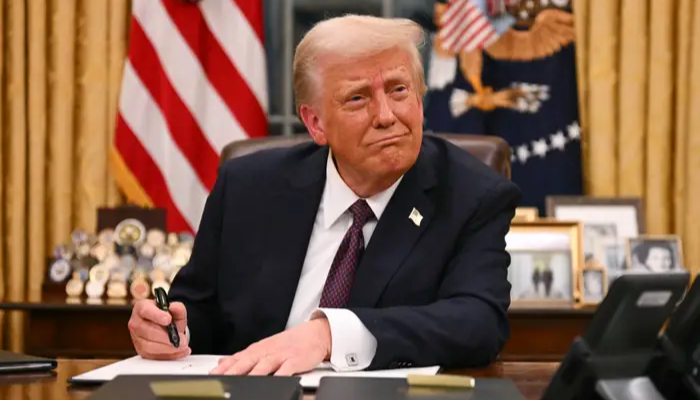
This development has shown that Donald Trump’s pressure tactics on other nations are not working after he angered the entire world with his trade and tariff policies. While he has been asking EU to impose 100% tariff on India, EU has made it clear that is not happening, and instead deepening its ties with India.

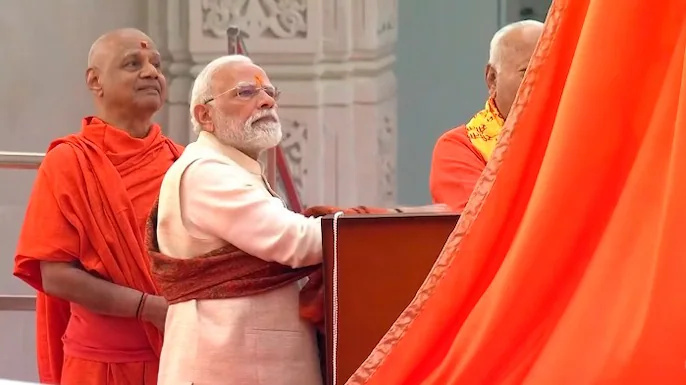
Bohra Muslim community in Colombo offer special prayers on PM Modi’s 75th birthday, wishes him long life and good health

Prime Minister Narendra Modi’s 75th birthday on Tuesday turned into a day of prayers, rituals, and heartfelt wishes, resonating far beyond India’s borders. From Colombo to Varanasi, communities marked the milestone with devotion and celebration, while leaders, celebrities, and citizens across the globe sent their greetings.

In Colombo, members of the Bohra Muslim community gathered at their mosque to offer special prayers for the Prime Minister. A video from the ceremony showed the faithful praying in unison for Modi’s good health, long life, and continued service to India. The gesture highlighted the community’s warmth and goodwill, transcending national boundaries.

Back home, Varanasi, PM Modi’s parliamentary constituency, witnessed a day of religious fervor and civic activity. At the sacred Dashashwamedh Ghat, City South MLA Dr. Neelkanth Tiwari led a grand ritual with 108 Vedic scholars from the Annapurna Rishikul Brahmacharya Ashram and Shastrarth Mahavidyalaya. Together, they performed a dugdhabhishek(milk offering) to the Ganga, chanting Vedic mantras for the Prime Minister’s long life and India’s prosperity. Later in the evening, a special Ganga aarti was scheduled at Namo Ghat, adding to the spiritual grandeur.

Celebrations also reached Jayapur village, the first adopted by PM Modi under the Sansad Adarsh Gram Yojana in 2014. Villagers paid homage by garlanding his portrait and cutting a cake at the panchayat bhawan, reflecting the local community’s deep connection with their representative.

The Varanasi Municipal Corporation marked the day with developmental initiatives worth ₹111 crore. According to Mayor Ashok Tiwari, these included road construction and repair spanning over 65 km, drainage projects across all Assembly segments, renovation of 75 wells, and the launch of a 30-bed shelter home. Other civic projects—such as pet dog registration and mobile animal capture vehicles—were also rolled out.

Seers at the Kashi Vishwanath Temple held elaborate ceremonies, including the sahastraarchan with 1,100 lotus flowers and a maharudrabhishek, praying for Modi’s health, unity in the nation, and global peace. Fruits were distributed across hospitals, orphanages, and old-age homes to spread joy among the underprivileged.

Meanwhile, greetings poured in from across the world. Several global leaders extended their best wishes to Modi, praising his leadership on the international stage. Bollywood icons including Shah Rukh Khan, Akshay Kumar, Anupam Kher, and Alia Bhatt joined in, posting warm tributes on social media. Sporting legends and cultural figures also celebrated the occasion, underlining the Prime Minister’s wide influence across diverse sections of society.

Bihar: Christian pastor from Nepal claims to cure people of all diseases with ‘magical water’, locals accuse him of luring people to convert to Christianity

0

A case of illegal missionary activities has come to light in Saran, Bihar, where a Christian pastor reportedly lured people to convert to Christianity by offering them ‘magical water’ to solve all their problems.

As per reports, locals have accused the Christian pastor, named Paniya Baba, who is also known as Vaidyaji, of enticing people into converting to Christianity. The Christian pastor offered the locals ‘magical water’, claiming that it would cure them of all diseases. The pastor is said to be from Nepal.

Locals allege pastor getting funding for conversion

A local accused Paniya Baba of deceiving him. He said that he drank the magical water given by the pastor for seven days, but did not see any improvement in his health. Several people in the area have shared similar experiences of being deceived by Paniya Baba. Locals alleged that the pastor was part of a Christian conversion network and had been receiving funding for carrying out conversion activities.

Pastor claims to cure any disease within three months

Speaking to the media, Paniya Baba, whose real name is Vikas Choudhary, claimed that he can cure any disease, including cancer, with his magical water. The pastor added that his magical water, which has the blessings of Jesus Christ, can completely cure any person of any disease, in a period of 3 months. “Even if someone is on the verge of death or unable to walk, they will recover within three months by the grace of Lord Jesus,” he claimed.

The pastor denied the allegations of insulting Hindu gods and claimed that he respected all religions. He said that, being a Christian preacher, he has only been spreading the message of Jesus Christ. However, locals alleged that the pastor claimed that demons lived in temples.

What the police said

Saran Police said that since the allegations against the Christian pastor are of a serious nature, the Superintendent of Police (Rural) and the Sub-Divisional Officer, Madhaura, have been ordered to investigate the matter. According to police, a religious gathering was reportedly held last Wednesday (10th September) in Madarpur, Bheldi police station area, with the permission of the SDO. Police have issued orders to ban such gatherings with immediate effect.

Former IAS probationer Puja Khedkar’s family absconds after Navi Mumbai road rage spirals into kidnapping case, police trace victim to Pune bungalow

0

The family of former IAS probationer Puja Khedkar has once again landed in controversy, this time in a serious kidnapping case. Three days after police rescued a truck cleaner from the Khedkar family’s Pune bungalow, officials revealed that her parents and their bodyguard have gone missing. According to the Navi Mumbai police, all of their phones have been switched off since Sunday, 14th September, and there have been no online transactions linked to them in the last three days.

“We are trying to trace the family, but they have switched off all their devices and are off the grid. We are now scanning CCTV footage around the bungalow to check which vehicle was used to escape,” a police official said.

The Navi Mumbai police have booked Puja’s father, mother, and their bodyguard in connection with the kidnapping, while Pune police have filed a separate case for obstruction of duty after Puja’s mother stopped officers from entering their house.

The kidnapping fiasco: Minor incident turned into heated exchange

The series of events began on 13th September when a concrete mixer truck brushed against a Land Cruiser SUV on the Mulund-Airoli road in Navi Mumbai. The SUV, police later confirmed, belonged to the Khedkar family.

The minor incident soon turned into a heated altercation involving the truck driver, Chandrakumar Chavan, his 22-year-old cleaner, Prahlad Kumar, and the two men in the SUV. The two men were later identified as Puja’s father, Dilip Khedkar, a retired Maharashtra government official and political candidate, and his bodyguard, Praful Salunkhe.

According to the police complaint, the two men forcibly dragged Prahlad into their SUV, telling the driver they were taking him to the police station. But instead of doing so, they drove him all the way to Pune, to the family bungalow owned by Puja’s mother, Manorama.

When Prahlad stopped answering calls from his colleague Chavan and the truck owner. But there was no reply; a kidnapping case was registered at Rabale police station based on a complaint by Vilas Dherange, the truck owner.

Obstruction at Khedkar bungalow

Using technical surveillance, police tracked the SUV to Pune and rushed to the bungalow. But when they reached, they faced unexpected resistance.

According to the officers, Manorama Khedkar came out of the house when they rang the bell, but refused to open the gate. She assured them she would bring the accused to the police station by 3 pm, but later refused to cooperate. By the time police returned, the SUV involved in the crime had vanished.

“A Rabale (Navi Mumbai) police officer rang the bell and asked the watchman to call someone from the house. Manorama Khedkar came out but didn’t open the gate. Police explained the purpose of their visit and sought her cooperation in tracing the two individuals and the car involved in the abduction case. However, she refused to open the gate,” the officer said.

Officials said Manorama Khedkar had helped her husband and his bodyguard to escape from their family bungalow in Pune and set ferocious dogs on a police team that had gone to rescue Kumar.

“Since no one was present to open the main gate, police personnel jumped over the iron gate and entered the premises. However, Manorama Khedkar was not found inside,” said Uttam Bhajanawale, senior police inspector of Chatushringi police station.

Police have now filed an FIR against Manorama for obstructing officers and aiding the accused in fleeing. Similarly, Navi Mumbai Police filed a case against Dilip Khedkar and his bodyguard under relevant sections of the Bharatiya Nyay Sanhita (BNS) on charges of kidnapping. “We have launched a joint investigation, and the accused are likely to apply for anticipatory bail. Until then, they may try to remain underground,” a senior official said.

Puja Khedkar gained nationwide limelight in 2023

This appalling incident is merely the latest among a series of controversies involving the Khedkar family. Puja initially gained national attention in 2023, not for her accomplishments but for controversy surrounding her eligibility to join the Indian Administrative Service (IAS) after her UPSC exam in the year 2022.

As a probationary officer, Puja created outrage in Pune when she insisted on a separate cabin, personal staff, and even travelled in a private luxury car equipped with a beacon light, even though she was training. But the storm gained momentum only when questions were raised over how she had joined the civil services in the first place.

Probes showed that she had availed herself of benefits under the Other Backwards Classes (OBC) non-creamy layer quota as well as disability criteria. Critics accused her of presenting false facts to get a berth in the high-profile examination.

The matter snowballed soon after RTI activists and the media raised the huge wealth shown by her parents, which was much higher than the income threshold necessary for availing the OBC non-creamy layer quota.

Gun-wielding mother was seen threatening farmers

The scandal over Puja also focused unwelcome attention on her parents. Her mother, Manorama Khedkar, was shown brandishing a licensed pistol in an argument with farmers at Mulshi tehsil in Pune district in June 2023.

In the video, Manorama was accompanied by private bouncers and was seen threatening farmers during a land ownership row. Police later registered a case of rioting, intimidation, and violation of the Arms Act against her and several others, including Dilip.

Manorama was arrested in July 2023 from a lodge in Raigad district after evading the police for weeks. Authorities also initiated proceedings to review and possibly revoke her firearm license.

Dilip Khedkar under lens for wealth

Meanwhile, Puja’s father, Dilip Khedkar, who had served as a state government official, also faced scrutiny. He had contested elections unsuccessfully from Ahmednagar and declared assets worth around ₹40 crore in his poll affidavit.

This figure drew attention because the eligibility ceiling for non-creamy layer OBC quota is ₹8 lakh annual family income. Activists said that Dilip and his family owned far more wealth than what was permissible under the quota benefits his daughter claimed.

RTI activist Vijay Kumbhar pointed out that the family owned 110 acres of agricultural land, six commercial shops covering 1.6 lakh sq ft, seven flats, nearly a kilo of gold, diamonds, luxury cars, and even a gold watch worth ₹17 lakh. Puja herself, he claimed, owned property worth ₹17 crore.

The Anti-Corruption Bureau (ACB) also began probing allegations of unaccounted wealth against Dilip, with reports that an open inquiry was underway into his assets.

A family mired in scandals

The Khedkar series shows a picture of a family repeatedly in conflict with the law. From abuse of caste and disability pensions to purported harassment of farmers, suspicions about unexplained wealth, and now a kidnapping, the family has made controversy their middle name.

The most recent case, however, is most severe. Kidnapping a young cleaner of a truck after a small road accident, keeping him hidden in their bungalow, and thwarting police officials indicates a clear escalation. With police from Navi Mumbai and Pune working together, several FIRs filed, and the family now on the run, Puja and her parents are in the limelight once again.

‘Jailing a few may deter others’: Supreme Court pushes for tough action against farmers for burning stubble

0

To reduce air pollution, the Supreme Court on Wednesday (17th September) suggested adopting penal measures against farmers in Punjab and Haryana practising stubble burning to reduce air pollution. The observation came during the hearing of proceedings initiated suo motu by the top court earlier this year over the failure of the National Capital Region (NCR) States to comply with the court’s direction to complete recruitment to the respective Pollution Control Boards and Committees.

A bench of Chief Justice of India BR Gavai and Justice Vinod Chandran said that stricter actions, including arrest, may be taken against erring farmers to deter them from burning stubble. CJI Gavai suggested that if some people engaging in stubble burning are jailed, it would send a message to others. “Why don’t you think of some penalty provisions? If some people are behind bars, it will send the correct message. Why don’t you think of some penalty provisions for the agriculturists? If you have a real intention of protecting the environment, then why shy away? I had read in newspapers that this (stubble left behind by crops) can also be used as biofuels. We cannot make this a five-yearly exercise,” the CJI said.

Clarifying that farmers are important for the country, CJI Gavai said that it did not mean that they would be allowed to burn stubble. “Farmers are special and we are eating because of them, but it does not mean that we cannot protect the environment,” he added.

The Apex Court took notice of activities contributing to air pollution in the Delhi NCR and surrounding states. Last year in October, the Court summoned the Chief Secretaries of the Punjab and Haryana governments and expressed strong disapproval for the lack of proper action against the problem of stubble burning. It also noted that the central government did not take any punitive action to curb stubble burning. The court directed the authorities to amend the existing laws and increase the penalty against stubble burning. Thereafter, the fines were increased.

Senior Advocate Rahul Mehra, appearing for the state of Punjab, informed the court that efforts are being made by the state government to reduce air pollution in the area. “It came down last year and will go further down now. In 3 years, a lot has been achieved…And we will achieve much more this year,” Mehra said.

However, amicus curiae Aparajita Singh countered by saying that little has been achieved in terms of reducing stubble burning despite government incentives and equipment for farmers to avoid stubble burning. Singh apprised the court that farmers revealed that they were asked to burn stubble in periods when satellites did not pass over their fields. “But farmers have the same story. Last time, farmers said that they were asked to burn at a time when the satellite does not pass over that area. I am sorry to say that since 2018, the Supreme Court has passed extensive orders, and they only plead helplessness before you,” Singh submitted.

Emphasising the need for stricter measures to discourage stubble burning, CJI Gavai said that the top court could pass necessary orders if the states were hesitant to act. “You take a call, otherwise we will issue a mandamus,” the CJI said. Responding to the statement, Senior Advocate Rahul Mehra reminded the court that small farmers or those tending to small farms may be affected by the orders. “Earlier arrests were made and actions were taken… but most of these are small farmers. Some are only tilling a small land, and if you pick them up and put them behind bars, then what happens to the dependents?” Mehra submitted. Explaining his suggestion, the CJI said that he meant the penal action as a deterrent and not as a routine. “Not as a routine but to send a message,” the CJI explained.

The hearing was adjourned after Additional Solicitor General Aishwarya Bhati requested the court to take up the case next week after some status reports are submitted before the court.