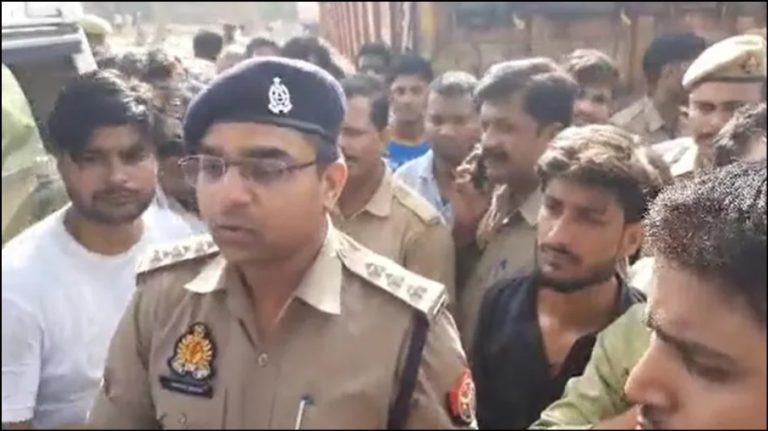
In a shocking incident, a driver identified as Amzad mowed down a passenger named Rajesh Dubey with his car and crushed him to death because the latter reportedly praised PM Narendra Modi and UP CM Yogi Adityanath. The incident happened today (Monday, June 12) in Uttar Pradesh’s Mirzapur district. The police are on the lookout for the accused Amzad who fled after committing the crime.
According to reports, the deceased victim Rajesh Dubey, a resident of Kolahi village had gone to Mirzapur to attend his nephew’s wedding on Sunday, June 11. On Monday, June 12, he was returning from the marriage function in the shuttle taxi being driven by Amzad. Amzad is also said to be a resident of the Vindhyachal police station area in Mirzapur.
During the journey, Rajesh Dubey and other passengers engaged in a political discussion. During the course of the discussion, Amzad started hurling abuses at PM Narendra Modi and Uttar Pradesh CM Yogi Adityanath. Rajesh Dubey interjected and allegedly raised objection over him insulting PM Modi and CM Yogi. This infuriated Amzad who got into an argument with Rajesh Dubey. The other passengers sitting in the car intervened and pacified the duo.
After a while, as each passenger’s destination arrived, they began leaving the vehicle one at a time. Rajesh was the only passenger left behind. Amzad reportedly stopped the car in the middle of the road and asked Rajesh to get down from his car.
It is alleged that after getting down on the road, when Rajesh Dubey was going towards his house on foot, Amzad rammed his speeding Bolero car into him from behind. Rajesh was knocked to the ground by the impact. However, Amzad continued to drag Rajesh for another 200 metres or so before crushing him beneath his car and running away. Rajesh Dubey died on the spot.
The incident incensed the villagers, who blocked the Mirzapur-Prayagraj route and demanded that the perpetrator be caught and brought to book. Almost three hours later, after receiving assurance from the authorities, villagers finally dispersed and traffic on the highway resumed.
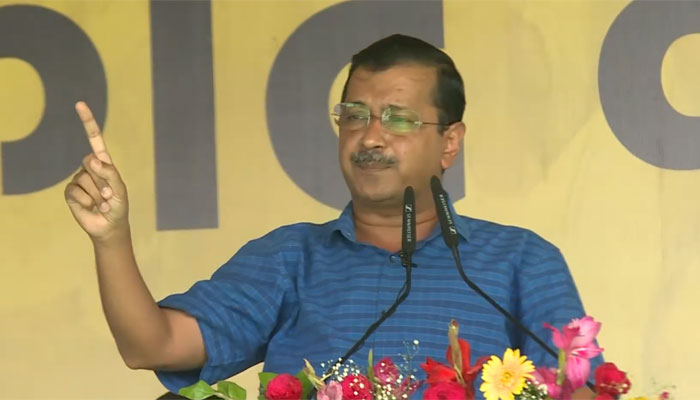
On June 11, Delhi Chief Minister Arvind Kejriwal stooped to another low by insinuating that Balasore train tragedy happened because Bhagwan Shiv opened his third eye after seeing what had been happening to the country after people elected Prime Minister Narendra Modi. Kejriwal is currently roaming across the country to gather “support” from the opposition leaders against the Union Government’s ordinance against the Supreme Court’s directive giving power to Delhi Government to appoint and transfer bureaucrats.
मोदी से नाराज़ होकर शिव जी ने अपनी तीसरी आँख खोली और बालासोर ट्रेन दुर्घटना में 280 लोगों को मार दिया ~ अरविंद केजरीवाल
During his Ramlila Maidan speech, Kejriwal was visibly frustrated and agitated against the Government of India. He recalled the agitation that started under the leadership of now-sidelined Anna Hazare against the Congress-led UPA-2 government and claimed this is the second such agitation urging his followers to participate. Calling PM Modi an egoist and dictator, he claimed to have launched a campaign to remove BJP from power at the centre.
Kejriwal’s misleading claims about the ordinance
During his address to the public, Kejriwal claimed this was the first time a Prime Minister in India brought an ordinance to overturn Supreme Court’s judgment. He further claimed this was a sign of the end of democracy in the country. Just because an ordinance was passed, he insinuated that democracy ended in Delhi. He further claimed PM Modi changed the constitution of India by tabling the ordinance.
Though Kejriwal claimed this is the first time a judgment passed by the Supreme Court has been overturned, there have been several instances when the Government of India has overturned Supreme Court’s orders.
One of the notable instances was of Shah Bano case of 1986 when the government of India led by Congress under Rajiv Gandhi passed the Muslim Women (Protection of Rights on Divorce) Act, 1986 that nullified the Supreme Court’s 1985 judgment that upheld Muslim women’s rights to alimony even after the ‘iddat period’ of the waiting period a woman must observe after her husband’s death or divorce.
If Kejriwal had studied the history of India and how ordinances were brought to overturn the apex court’s judgments, he would have known about the very first instance of such an ordinance that was passed in 1961. Reports suggest that in 1951, the apex court held that the State could not reserve seats for providing admission to candidates based on religion, caste, or race. However, in 1961, under the First Amendment of the Constitution of India, the Parliament inserted clause (4) under Article 15, giving the government the power to reserve seats in state-run or state-aided institutions for backward classes.
Under the Modi government, the Parliament brought an ordinance in 2018 overturning the apex court’s judgment in Kashinath Mahajan vs State of Maharashtra, where the court said no arrests under the SC/ST Act could be made without prior permission from the appointing authority in case of public servants, and the Senior Superintendent of Police (SSP) for others. The court said the FIR should be registered only after a preliminary inquiry. The Modi government overturned the judgment in August 2018 by an amendment inserting Section 18A in the 1989 Act.
Kejriwal claimed he works 24×7, but he does not hold any office
After saying he works nonstop, Kejriwal informed the public that he visited multiple states and talked to leaders of all parties. He claimed all 140 crore Indians were against the ordinance. Just because an ordinance was passed, Kejriwal stopped all the work and went on a country tour to talk to CMs and leaders of other parties. Something he could have done from his office.
Interestingly, Kejriwal does not hold any department in the Delhi government. It is unclear which work he does 24×7 if other ministers are running all the departments. Earlier, Manish Sisodia had the highest number of ministries and departments under him. After he was arrested, ministries and departments held by Sisodia and Satyendra Jain were divided between Saurabh Bharadwaj and Atishi Marlena. Kejriwal skipped holding any office in the Delhi government.
Kejriwal invoked an “inside” source
Kejriwal claimed he got information from “inside” that a similar ordinance would be passed in Rajasthan, Punjab, Madhya Pradesh and Maharashtra, among other states. Kejriwal claimed that because PM Modi cannot do any work at the centre, he is not letting Kejriwal do any work. He claimed PM Modi had stopped the construction of schools, hospitals and mohalla clinics.
Notably, Delhi is not a full state. As it is the capital of the country, a lot of offices and powers are held by the LG, and the Union Government plays a vital role in the functioning of the national capital. The case is not the same with states like Rajasthan, Punjab, Madhya Pradesh and Maharashtra, among other states. The centre cannot and does not interfere in the states’ matters unless the State asks it or there has been an incident that forced the government to impose President’s Rule in the State.
Furthermore, no one is sure how trustworthy Kejriwal’s internal or IB sources are as they told him AAP would win Gujarat, UP, Goa, and other states. Everyone knows what happened to AAP in these states.
The ‘fourth pass king’ rhetoric
Kejriwal again started the same old “Fourth pass king” rhetoric and claimed PM Modi does not know how to run the country as the prices of everything, including petrol, diesel, milk, vegetables, and LPG, have increased. He claimed that one day, PM Modi brought Rs 2,000 notes, and then after five years, he canceled the notes. “He cannot decide what to do,” claimed Kejriwal.
He further asked his followers to compare PM Modi’s work since 2002, when he became CM of Gujarat, to date as PM of the country, to Kejriwal’s work as CM of Delhi. He claimed though PM Modi tried to stop the work in Delhi, he established many schools and hospitals. In August 2022, it was revealed in an RTI no new hospital was built by the Kejriwal government.
The Sisodia and Jain Saga
He also accused PM Modi of sending Satyendra Jain and Manish Sisodia to jail as he wanted to hinder the work being done by the Delhi government. Contrary to his claims, Jain was found to be allegedly involved in money laundering, and Sisodia has been named as the key conspirator in the alleged liquor policy scam.
Kejriwal asked people to propagate the “fourth pass king” story
Kejriwal said, “Many years ago, a child was born in a poor house. An astrologer told the child’s mother that her son would become a king. The child grew and left the school after the fourth class as he did not develop an interest in education. He started selling tea at a railway station near his house. The kid was a great orator. He used to gather children and give speeches for hours. Soon he became famous for his orator skills.”
Further, he added, “As the astrologer said, the child became the King. But the King was uneducated. Officers would come and get his signs on anything. Being an egoist, King did not ask anything about what he was signing on. He thought it would hurt his reputation. When people started to find out about his qualifications, he arranged a fake degree of MA.”
एक चौथी पास राजा की कहानी। इसे ज़्यादा से ज़्यादा सुनें, सुनाएँ और शेयर करें… pic.twitter.com/UZzgUAeNiL
“One day someone told him to demonetise 500-1000 rupee notes, which would end black money, corruption and terrorism, and he did. But it brought the country to its knees. Businesses closed down, people died while standing in front of the banks, employment ended, and industries closed down. As the King was uneducated, he followed the suggestions of the people to bring Rs 2,000 notes and cancel them. He was stupid. One day people asked him to bring agriculture laws. All farmers across the country protested, and he had to take back the laws”, Kejriwal continued
“When the country was going through a pandemic, someone told him the country would heal if he got everyone to bang ‘thali’. He did the same. But the pandemic stayed. Then someone came and told him that doctors and medicines could cure people. The King had many friends. One of them looted 10,000 crores; King helped him escape the country. The second one looted 20,000 crores; King helped him run the country. One friend was close to him. He sold all the airports, seaports and ships to him. One more friend harassed international players, but the King did not act. Another friend killed farmers by mowing them down, but the King did not take any action”, he added.
Then Kejriwal came to his controversial comment about Lord Shiv. He said, “The King jailed everyone who drew cartoons of him or wrote against him. The King also took action against judges who spoke against him. Devtas were looking at the earth, seeing what was happening. They approached Bhagwan Shiv to end the misery. Bhagwan Shiv opened his third eye, and strange things started happening in the country. Strong winds tore down large and heavy statues of Sapt Rishis. A train accident took place, killing 288 people. One day, rains came down from the heavens, and Akashvani told people to gather and stand against him. The public woke up and removed the King in one year.”
Concluding his story, he said, “It is a holy story. Listening to it and telling others this story will bring prosperity to your home and country.”
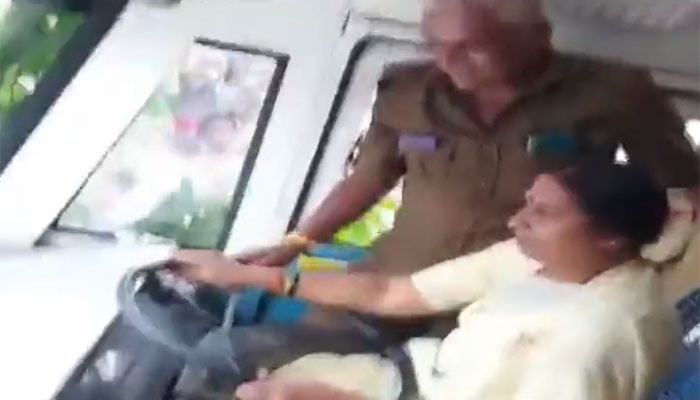
On June 11, the Siddaramaiah-led Karnataka Government launched a free bus service for women in the state. Congress MLA Roopkala drove the bus herself in her constituency to start the service. However, in the process, she accidentally put the vehicle in reverse gear, and the bus hit the vehicles parked behind, damaging them. The driver, standing next to the MLA, immediately took control of the bus and averted further damage. It is unclear if Roopkala has a license to drive the bus or if she was driving it without a license.
#BREAKING#Congress MLA damages several vehicles as she crashes a bus into them while participating in the free bus passes for women event in #Karnataka. – WATCH
Free bus ride for women under the ‘Shakthi’ scheme is one of the poll promises of Congress. Under this service, women and transgender people will get free rides in government-run buses. CM Siddharamaiah, Deputy CM DK Shivakumar, and transport minister Ramalinga Reddy launched the scheme and issued smart cards to a few beneficiaries. Interestingly, the smart cards issued to women were only replicas. The actual smart cards will be published in the next three months, the government said.
Meanwhile, it is up to the bus conductor to ensure free rides to the women as they will issue free tickets. One such ticket was flaunted by General Secretary of Media and Communications and spokesperson of Karnataka Congress Lavanya Ballal Jain. “Here’s my zero fare ticket in the free bus service launched for women in Karnataka by the Congress Government,” she wrote.
Here’s my zero fare ticket in the free bus service launched for women in Karnataka by the Congress Government #Shakthipic.twitter.com/cqpGnHG1IS
— Lavanya Ballal Jain (@LavanyaBallal) June 11, 2023
Netizens pointed out that this scheme might create similar issues for women in the future as it has created in Delhi, where bus conductors show reluctance in taking female passengers as they would not pay. In May 2023, it was reported that conductors were not stopping the bus for female passengers in Delhi. A conductor was suspended over a similar matter.
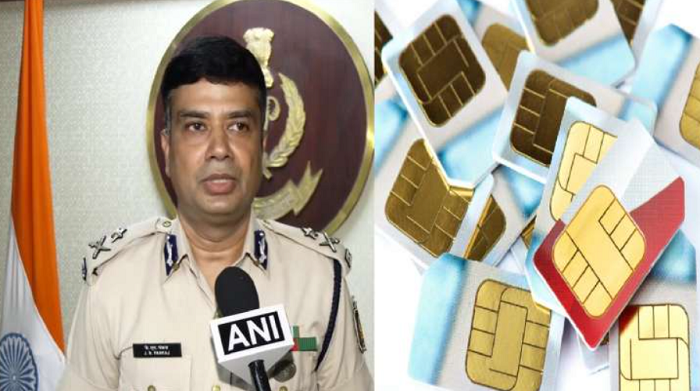
One more suspect in the OTP sharing fraud has been detained by Special Task Force in the state of Odisha. The accused person has been identified as Pritam Singh. According to ANI, four persons were previously detained in connection with the case. “They used to generate OTPs using pre-activated SIM cards and sold the OTPs to cyber criminals including Pakistani Intelligence Operatives (PIOs) and ISI agents,” Jai Narayan Pankaj, IG, Special Task Force Odisha was quoted as saying by ANI.
Additionally, Pritam also is said to have provided the SIM and debit card used by the primary suspect in the Mangalore auto blast last year. He also has ISI links and has obtained money from them in the OTP fraud case. “It is also learned that the SIM and debit card used by the main accused in last year’s Mangalore auto blast was given by this person (Pritam). He was also in direct touch with at least two Pakistani ISI agents and met them physically and received over Rs 1.5 lakh for selling OTPs/mule accounts/digital wallets,” Pankaj further said.
It is also learned that the SIM and debit card used by the main accused in last year's Mangalore auto blast was given by this person (Pritam). He was also in direct touch with at least two Pakistani ISI agents and met them physically and received over Rs 1.5 lakh for selling… pic.twitter.com/ZikQezkkrQ
According to authorities, three people were arrested by the STF of the Odisha police last month for fraudulently obtaining a large number of SIM cards and sharing one-time passwords (OTP) with criminals and anti-national elements, including some Pakistani Intelligence Operatives (PIO) and ISI operatives in Pakistan as well as in India.
As per the reports, during raids, numerous incriminating items were taken from the possession of the accused, including laptops, 19 mobile phones, 47 pre-activated SIM cards, 61 ATM cards, and 23 SIM covers.
These OTPs were then used to set up numerous channels and accounts on social media sites including Facebook, Instagram, WhatsApp, Telegram, and online retailer websites like Amazon and Flipkart. Additionally, these are required to open email accounts. People presume that these accounts are Indian-owned when they are actually being operated from Pakistan.
These social media platforms could be utilised for a variety of anti-Indian operations, such as sextortion, communicating with terrorists, radicalisation, spreading anti-Indian propaganda, fostering anti-Indian/divisive emotions on social media, and honey trapping, among others. People further regard such accounts to be trustworthy because they are registered and connected to Indian cell numbers.
Additionally, the profiles created on online marketplaces are used to supply goods to terrorists, anti-Indian groups, etc. Besides, they were making and selling mule accounts on social media sites, which are utilized in a variety of crimes.
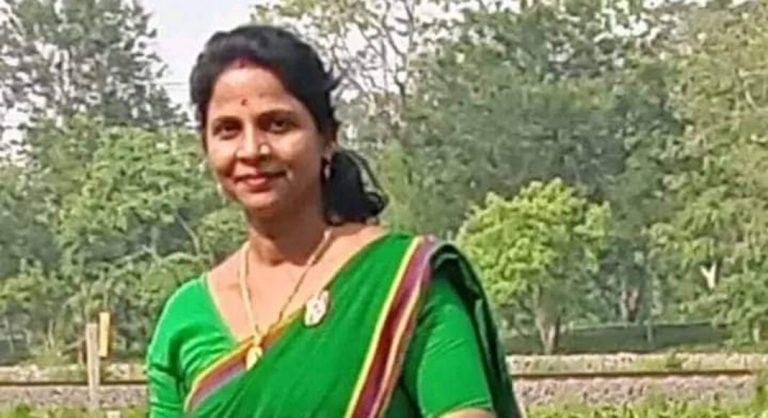
On Sunday, June 11, Jonali Nath, a prominent woman political leader in Assam, was found dead in the Goalpara district. Nath held the position of district general secretary for the BJP in Goalpara. Local media reports claim that Nath was last seen on Sunday afternoon at a market.
According to media reports, some unidentified miscreants murdered the BJP politician and dumped her body along National Highway 17.
Locals found her body and reported it to the police. The police reached the spot and started probing the matter. The body of the BJP leader was sent to Goalpara Civil Hospital for postmortem, which they said is being conducted under videography.
The police said that the female leader was viciously assaulted before being killed, as evidenced by the numerous injury marks found on her body and head. The Police officials suspect that Jonali Nath was killed in a planned manner somewhere else and her body was later dumped by the side of the national highway.
According to Nath’s family members, she left for Islampur on Sunday at 4:30 pm for some personal work. Around seven o’clock, her husband tried to call her, but she did not pick up the call. The family later approached the police. The BJP leader’s body was discovered later at around 12 am.
Local news channel The Sentinel Assam reported that the police have detained one person for questioning.
Several BJP leaders took to Twitter and expressed condolence over their colleague’s untimely demise.
The spokesperson for Assam BJP, Jury Sharma Bordoloi said Nath was known for her “unwavering commitment and tireless efforts”.
“We are filled with sorrow, yet we remain hopeful that a thorough investigation will be conducted to shed light on the circumstances surrounding her untimely demise,” Sharma tweeted.
Deeply pained by the tragic and enigmatic passing of Smt. Jonali Nath baidow, District President of the @BJP4Assam Goalpara district, who was known for her unwavering commitment and tireless efforts. We are filled with sorrow, yet we remain hopeful that a thorough investigation… pic.twitter.com/2V2A9uwbgd
— Dr. Jury Sharma Bordoloi (@jury_sharma) June 12, 2023
Assam Minister Bimal Borah also took to Twitter and expressed “deep anguish” upon the “tragic demise” of Jonali Nath. Borah further promised that “the individuals responsible for this atrocious act will face the consequences and justice will be served”.
Deeply anguished and shocked upon hearing the devastating news about the untimely and tragic demise of Jonali Nath, the Goalpara District secretary of @BJP4Assam.
The individuals responsible for this atrocious act will face the consequences and justice will be served.
The Assam unit of BJP has urged the state police to investigate the matter properly and sought action against the culprits if it’s found to be a case of murder.
Muslim women in India are facing harassment by their community members for allegedly violating the rituals and customs of Islam or roaming around with their Hindu friends. Several such videos have gone viral in the recent past over the internet in which the Muslim men could be seen wrongly alleging Hindu persons of ‘trapping’ the Muslim women under ‘the Bhagwa Love Trap’. Apart from this, the community seems to monitor the activities of Muslim women in general under the guise of protecting Islam.
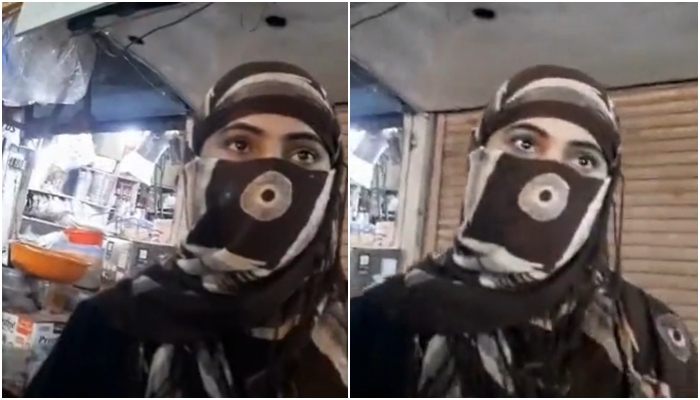
In one such recent video that is going viral on the internet today, a Muslim woman in the Muzzafarnagar district of Uttar Pradesh could be seen being harassed by Muslim community members for purchasing alcohol from a licensed shop. The Muslim members who happened to block the way of the Muslim woman also threatened her for allegedly going against Islam.
“How can you purchase alcohol being a Muslim? Don’t you have some shame? You are defaming the Muslim community. Is this what Islam teaches us? I’ll slit your throat if you are again seen buying alcohol,” the Muslim man could be heard saying. He further indicated that it was common among Hindu women to buy alcohol but that it is not allowed in Islam.
According to the reports, the incident is said to have happened on Sunday, June 11. A Muslim woman was buying some bottles of beer from a licensed shop in the Novelty chowk region of Muzzafarnagar district. One of the Muslim community members kept on following the woman and blocked her way in the Bakra Market area. He also then gathered a crowd to defame the woman publicly.
As the mob gathered, the Muslim man who was following the woman said that the latter was defaming the entire community by violating the laws of Islam for women. He also reiterated his threat saying that he would slit her throat if she is seen again buying alcohol.
Moral policing of Muslim women in the garb of fighting ‘Bhagwa Love Trap’
Recently, OpIndia compiled 42 such incidents from all over India in which Muslim men could be seen following and harassing Muslim women under the guise of ‘protecting’ them from Hindus. In a few cases, Muslim men have also hurled abuses at Muslim women for roaming around with their Hindu friends.
We compiled 42 recent videos of moral policing by Muslim men. More videos exist. More cases exist where videos are not available. Complete silence of all those who support "interfaith" relations only as long as the girl is Hindu is probably the real story. pic.twitter.com/9laYXh1Z3S
In the given case also, the Muslim man first followed the woman and then threatened her for allegedly violating the rules of Islam. As if following, abusing, and defaming women in public and threatening them in public is moral and permitted in Islam. The viral video was posted by journalist Sachin Gupta and UP Tak media channel.
The Enforcement Directorate (ED) has unearthed a ‘cash for jobs scam’ in West Bengal while investigating the teacher recruitment scam in the State.
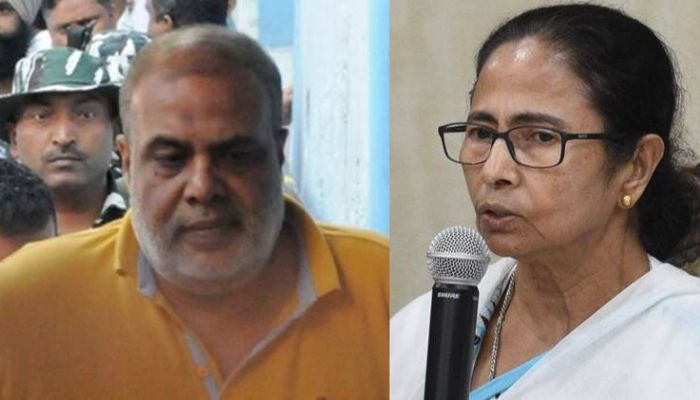
As per a report by News18, the central agency raided the offices of a businessman named Ayan Sil between March 19-20 this year. It must be mentioned that Sil played a significant role in the teacher recruitment scam as the Director of a company named ABS Infozone Pvt Ltd.
He was responsible for the printing and designing of Optical Mark Recognition (OMR) sheets of fraudulent candidates and manipulated them to ensure their illegal appointment as teachers. While investigating his offices, ED found the digital and paper trail of another high-profile ‘cash for jobs’ scam.
ममता दीदी के राज में परिश्रम और प्रयास का महत्व नहीं है बल्कि, यहां ग्रुप D और C की नौकरियों के लिए ₹4-6 लाख तक का रेट तय कर युवाओं के सपनों को छला जा रहा है।
TMC के शासन में "C" का असली अर्थ करप्शन है, जो बंगाल के अंदर आज चरम पर पहुंच चुका है।https://t.co/zjVkg6swVe
The accused had collected a whopping ₹200 crores from other candidates to facilitate their appointment in other jobs across municipalities in the State of West Bengal. Besides Ayan Shil, the Enforcement Directorate found the involvement of private persons, public servants and the ruling political dispensation.
The central agency informed that such fraudulent appointments for various jobs were made across municipalities such as Titagarh, Baranagar, Halisahar, Kanchrapara, New Barackpur, Kamarhati, and Dum Dum among others.
The jobs ranged from sweepers to sub-assistant engineers. Interstingly, the Enforcement Directorate also found the ‘rate card’ that Ayan Shil and his co-accused charged the fraudulent candidates.
Bribes ranged from ₹4-6 lakhs per candidate
News18 reported that for securing the job of a peon, labour, sweeper, mason, dumper operator, sanitary assistant and ambulance attendant, the scamsters charged candidates a whopping ₹4 lakh rupees.
The bribe for getting a job as an assistant cashier, pipeline inspector, and clerk was around ₹5 lakh rupees. And it was around ₹6 lakh for sub-assistant engineers.
In this way, 6000 vacancies for 17 Group C and Group D positions across 60 municipalities in West Bengal were filled from 2014-2015. The Enforcement Directorate has recovered list of agents and fraudulent candidates who accepted and paid the bribes respectively.
While speaking about the matter, a senior official told News18, “The kickbacks were received by the chairpersons of respective municipalities and several senior government officers. We have details of the agents who collected the cash and the candidates who paid for jobs.”
Action taken by the Enforcement Directorate
In March this year, the Enforcement Directorate arrested businessman Ayan Shil and filed an affidavit in the Calcutta High Court a month later about the ₹200 crore ‘cash for job’ scam.
On April 22, a First Information Report (FIR) was registered by the Central Bureau of Investigation (CBI). ED had asked the central agency to intervene since the victim in both the ‘teacher recruitment scam’ and ‘cash for job’ scam are the same.
The Enforcement Directorate said, “It has been noticed that several persons including Ayan Sil, other agents and political persons have obtained the bribe money both in the illegal recruitment of teachers in the education sector as well as for securing various employments in various municipalities.”
“And even the proceeds of crime of Teachers Recruitment Scam and Municipality Recruitment Scam have got intermingled on account of common agents and common beneficiaries,” it further added.
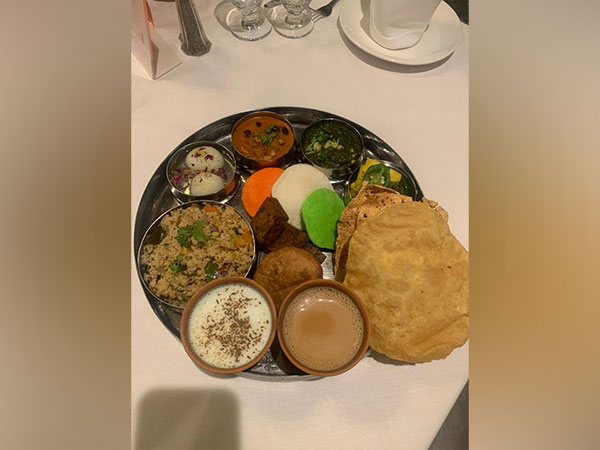
Indian Prime Minister Narendra Modi is set to visit the United States of America later this month. Ahead of his visit, a New Jersey-based restaurant has launched “Modi Ji Thali” as a tribute to the Indian PM.
Restaurant owner Shripad Kulkarni’s video sharing details of his specially curated thali has since gone viral.
#WATCH | A New Jersey-based restaurant launches 'Modi Ji' Thali for PM Narendra Modi's upcoming State Visit to the US. Restaurant owner Shripad Kulkarni gives details on the Thali. pic.twitter.com/XpOEtx9EDg
The Thali is a colorful mix of Indian food items from different states. It includes the pan India favorite khichdi, rasgulla, sarson ka saag, dum aloo Kashmiri, idli (in Tricolour), kothimbir wadi, dhokla, chaach, and papad.
Notably, “Modi Ji Thali” is a mix of a variety of millets. India’s Millet Mission has gathered pace under the leadership of Prime Minister Narendra Modi who also coined the term “Shree Anna” for millets.
It is under the leadership of PM Modi that the United Nations declared 2023 as the “International Year of Millets” following the recommendation of the Indian govt in 2019.
The restaurant also reportedly plans to launch a Thali dedicated to External Affairs Minister S Jaishankar.
PM Modi’s much-anticipated U.S visit
The Prime Minister will embark on a State visit to the United States this month at the invitation of President Joe Biden. The U.S President and First Lady Jill Biden will also host Modi at a state dinner on June 22.
From cultural events to meetings with entrepreneurs and marking International Yoga Day, PM Modi’s U.S trip is going to be a very busy affair.
PM Modi had thalis dedicated to him previously as well
In 2022, on account of PM Modi’s birthday, a Delhi-based restaurant launched the famous 56-inch Narendra Modi Thali, a name drawn from the idiom “56-inch chest” used to describe PM Modi’s bold leadership.
The Thali has 56 items with customizable vegetarian and non-vegetarian options.
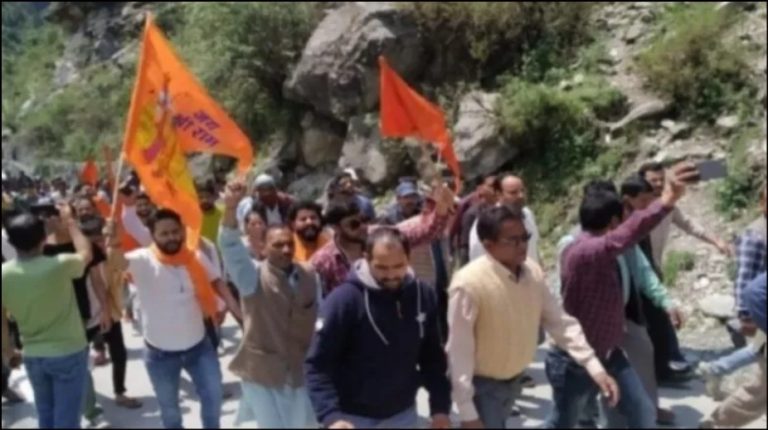
The Uttarkashi region of Uttarakhand is currently the topic of conversation throughout all media outlets and social media. This happened after an alleged love jihad case was reported from the hilly town of Purola in Uttarakhand’s Uttarkashi district. Uved Khan, who was accused of trapping a minor Hindu girl and then attempting to abduct her, was taken into custody on Friday (26 May 2023) from Purola.
While the local Hindus agitated as several similar cases of love jihad continued to emerge in Uttarakhand, Islamists and Leftists yet again made an attempt to whitewash the love jihad cases and instead painted the Muslims as victims.
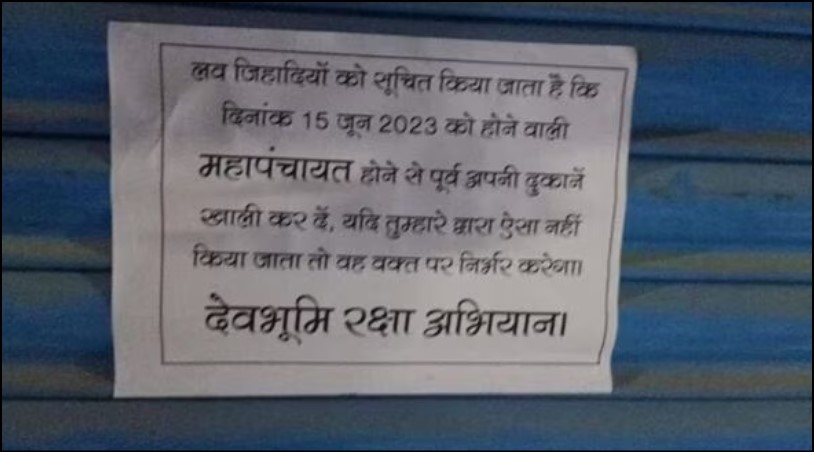
Many media outlets like Times of India, Zee News, News 18, etc furthered the ‘Dara Hua Musalman‘ narrative by claiming that Muslim traders are being forced to vacate their shops and leave Purola following protests and demonstrations and ultimatums by right-wing Hindu organisations. They further reported how threatening posters have been pasted on shops owned by Muslim traders in Purola town of Uttarkashi district of Uttarakhand, asking them to vacate the place immediately.
The basic premise of the ‘dara hua Musalman’ narrative is that the individual Muslim is scared to profess his religion in Modi’s India and is under attack for no other reason but because they are Muslims. That the Muslim community is docile and powerless in front of the Majority Hindu population that has turned fascistic after the Prime Minister came to power.
The Purola police had, however, denied several media reports claiming that members of the minority communities have left the city. “Nobody has left the town as it is not that easy to just leave businesses and homes behind in one night. The situation is completely under control. The accused, who were arrested, were produced before the local court which later sent them to jail,” V Murugesan, additional director general of police (law & order) was quoted as saying.
Though the Police had debunked the media reports, OpIndia also went to the Purola town in Uttarkashi, Uttarakhand, to investigate the facts in order to dispel the ‘secular’ narrative being peddled by the leftist media in the wake of the May 26 incident which involved the attempted abduction of a minor Hindu girl by accused Uved Khan.
यह वो फोटो है, जिसे वामपंथी मीडिया घुमा-घुमा कर हिंदुओं के खिलाफ यूज कर रहा।
बुरका समर्थक चंटू-मंटू भी रो-रो कर सोशल मीडिया पर इसे वायरल करने में लगे हैं।
When OpIndia inquired about this issue with certain individuals connected to Hindu organisations in Uttarkashi, the situation turned out to be contrary to what had been reported. Hindu organisations alluded to the Hindus of Uttarakhand as being the victims of the rapid demographic changes and land, business and love jihad happening in the state, rather than the Muslim migrants whom the leftist media and the ‘liberal’ coterie are busy projecting as victims.
The OpIndia team also examined the so-called ‘threat’ posters that these leftist media outlets have extensively reported about. According to various media reports, posters asking Muslim shopkeepers to leave or “prepare for consequences” were found pasted on shops of Muslim traders. They were given a deadline of June 15 to flee or “face action”. The posters mentioned the name of an organisation- Devbhoomi Raksha Abhiyan which warned ‘Love Jehadis’ to vacate their shops by June 15. It also read that a ‘Mahapanchayat’ on the issue has been called by Hindu outfits on the same date.
Nevertheless, the name of the printing press from where these posters were printed was not mentioned on it.
Another person who latched on to the opportunity was Arfa Khanum, a “journalist” who works for the ultra-leftist propaganda news portal The Wire. She uploaded a heavily edited video to YouTube, wherein she added cherry-picked portions of local Hindus protesting in Purola to carefully craft a ‘Muslims under attack’ narrative.
When OpIndia spoke to the locals, we learned that contrary to the narrative that was being peddled, the local Hindus in Devbhoomi were the ones who were truly terrified. The Uttarakhand police also denied that Muslims in Uttarkashi town were under any sort of threat.
Posters in Purola, Uttarkashi put up by ‘victim card’ users
Swami Darshan Bharti, the founder of the Devbhoomi Raksha Abhiyan Sangathan, spoke with OpIndia. He confirmed that he was in Purola on the day of the incident, but neither he nor anybody else he knows of had put up those posters. Swami Darshan Bharti termed the posters as a conspiracy by some individuals who want to project themselves as the victims.
It becomes imperative to note here, that after the news of the poster being pasted on shops of Muslim shopkeepers emerged, the Purola Police investigated the same but could not identify the culprits. They had also registered a case against unknown persons under relevant sections of the IPC for trying to disturb social and communal harmony.
Speaking on the matter, Uttarkashi Superintendent of Police IPS Aparna Yaduvanshi said that the person who put up the posters will soon be identified. He said that the law and order situation in Purola, Uttarkashi is completely under control.
पुरोला घटना क्रम में पुलिस अधीक्षक उत्तरकाशी, श्री अर्पण यदुवंशी द्वारा सभी से कानून एवं शान्ति व्यवस्था बनाए रखने की अपील की गई। #AppealForPeacepic.twitter.com/HukDpzOXjg
— Uttarkashi Police Uttarakhand (@UttarkashiPol) June 7, 2023
‘Roti (food/ businesses), beti (daughters) and choti (peak)’ all three are at risk: Swami Darshan Bharti
Raising concerns about the radical problem plaguing the state of Uttarakhand due to the influx of Muslim migrants in the state, Swami Darshan Bharti, a veteran saint and founder of the Devbhoomi Raksha Abhiyan Sangathan, lamented how the Jihadis have set their evil eyes on Devbhoomi. Uttarakhand is popularly called Devbhoomi (the land of the gods) because of the number of Hindu pilgrimage sites present here.
Darshan Bharti exclaimed, “These Muslim migrants had come here begging for food and now they are abducting our daughters.”
Concerned that the large influx of Muslim migrants in Uttarakhand will lead to a significant demographic imbalance in the state, the Hindu saint bemoaned that there is an impending threat looming over the peak (Devbhoomi) in the days to come.
Notably, Uttarakhand or Devbhoomi as it is popularly called is often also referred to as Nanda Devi Peak. The Nanda Devi Peak, named after the presiding Goddess of Uttarakhand, is the second-highest peak in India and is at Chamoli in the Garhwal District of Uttarakhand. It is also the highest mountain in the State of Uttarakhand with a towering altitude of 7,816 meters. This is why Uttarakhand is often referred to as the ‘peak’ or Nanda Devi Peak.
The significance of the peak, Darshan Bharti said is connected to the Sanatan culture. Saying so, Darshan Bharti worried how at present, out of all the states in India, Uttarakhand is most impacted by the menace of love jihad. He stated that the innocent Hindu girls who are being abducted by Muslim youths in the state are mainly employed as slaves in the human trafficking industry.
Hindu student killed
Another local Purola resident, Anil Aswal, spoke with OpIndia. Anil described a three-year-old incident in which his Hindu friend was killed by a Muslim student over a petty dispute shedding light on how Hindus have traditionally taken the brunt of Muslim hostility in Purola town in Uttarkashi, Uttarakhand.
He stated that in the Inter College in the Mori village in Uttarakhand, which is around 40 km from Purola and close to the Himachal Pradesh border, a Muslim student murdered his Hindu friend about three years prior.
A minor altercation between the two students led to the brutal murder. The local Hindus were extremely enraged after the tragic incident. Yet, they all chose to remain silent, he said, adding that the reason behind this was that the Mori village is predominantly dominated by Muslims.
Frequent incidents of theft reported in Purola
Anil Aswal informed how incidents of theft continue to occur frequently in Purola and the neighbouring areas due to the Muslim immigrants who have relocated here from elsewhere. He said that the police, however, try to hush up the incidents which, in turn, further raises the discontent amongst the local Hindus.
Minor Hindu girl held hostage for 5 days
While claiming to be aware of the recent incident of love jihad which happened in Purola, Rakesh Uttarakhandi, a native of Dehradun, told us about an incident that happened last year. He recounted how a minor Hindu girl, age 15, was held captive in Purola for five days.
Rakesh asserted that all of the accused in the above case were members of the Muslim community who worked as junk dealers in the town. The minor girl who was held captive was repeatedly denied food and water. The girl was eventually rescued and the accused were sent to jail, Rakesh said, lamenting how the punishment awarded to the accused was not enough and that they should have been subjected to harsher punishment for the atrocities they perpetuated on the minor girl.
Anil Aswal shared another instance of a Hindu woman being victimised by a Muslim immigrant in May of this year. A Muslim youth had allegedly kidnapped the mother of two Hindu children from the village of Sharanour near the town of Purola.
Sanju, a Purola resident, acknowledged while talking to OpIndia that the menace of love jihad has created an atmosphere of terror amongst Hindus. He added that the continuous subjugation of their sisters and daughters by the Muslims in the area in the primary cause of the growing resentment amongst the Hindus.
Minor Hindu girl was raped for a year
Anil Aswal told us about the minor girl whose kidnapping by Uved Khan led to the uproar in Purole, Uttarkashi. He said that the girl was originally a resident of the Mori development block, about 40 km away, but she had come to live with her maternal uncle in Purola after the death of her parents.
Anil Aswal asserted that Uved Khan, the accused person, had been raping the young victim for about a year. During this time, the accused also took obscene pictures and made videos of the young girl.
Recalling what happened on May 26, 2023, Anil Aswal said that the accused had taken the victim to the market on foot and then made her sit in a car parked near a petrol pump. He was ready to take her to some remote place, but his plans were foiled when a local youth recognised the victim.
He caught the girl and the accused, Uved Khan, with the help of the local residents. The victim and the accused were then handed over to the police.
The girl’s maternal uncle is a well-known local person, so the Hindus who had up until now stayed silent could not control their anger and took to the streets to protest, Anil Aswal said.
Muslim community in Purola led by Bale Khan
Anil Aswal further said that Bale Khan was the leader of the area’s Muslim community. He migrated and settled in Purola in 1978. Back then he owned a flour mill, however, over time, he did many businesses. Currently, he owns a huge clothes store in the main market area, Aswal said, adding that while Bale Khan’s kept flourishing over time due to assistance from Arab nations, many Hindu businessmen had to shut their businesses due to the heavy losses they incurred because of Bale Khan.
Anil Aswal further said that Bale Khan used to treat the Hindus with the utmost respect when he first moved into the market, but that his behaviour has since altered. He added that now because of his behaviour towards the Hindu community, most of the anger of the local Hindus is directed against Bale Khan.
Bale Khan gathers the whole Muslim population who frequent the market at his home and arranges namaz and other religious functions for them on his terrace, Anil said, adding that since Bale Khan is now ageing his elder son, Ashraf, has been tasked to carry on his father’s legacy. Currently, Ashraf is helping his father in running the business.
Incidents of love Jihad continue even after the Purola incident
Rakesh Uttarakhandi, who informed us of the abuse meted out to a young girl in the hamlet the previous year, lamented that despite the fact that residents were out in the streets denouncing the May 26 incident, love jihad episodes continued to take place with impunity. In reference to the most recent occurrence, Rakesh stated that on June 8, 2023 (a Thursday), around 3 am, he had saved two young Hindu girls from Chakrata town in Uttarakhand.
According to Rakesh, the victims were originally from Nepal. A Muslim youth was taking these two girls with him somewhere. The girls were trapped through social media. One of the accused, he said, was identified as Nawab alias Guddu and he was a resident of Muzaffarnagar in Uttar Pradesh. The other one was identified as Shahrukh, a resident of Saharanpur in Uttar Pradesh.
In the complaint filed by the mother of one of the victims, she accused Nawab of engaging in lewd chats with her daughter which he recorded and threatened to make viral. Rakesh Uttarakhandi alleged that the Uttarakhand Police is avoiding taking any action in this case.
Funds provided to Muslim immigrants by Barelvi and Deobandi clerics affecting businesses of Hindus
Rakesh Uttarakhandi further spoke on how, what he termed as ‘Business Jihad’, has impacted the lives of the Hindus in Purola, Uttarkashi. He said that the Muslim immigrants who have settled in and around Purola are getting financial aid from the Deoband and Barelvi clerics, which is why, Muslim traders in several districts of Uttarakhand, as well as the Purola Market, rent the spaces that a Hindu dealer occupies for Rs 5,000 at a rate of Rs 10,000.
He exclaimed that Hindu merchants are struggling to make ends meet and are being driven to shut down their businesses because of the money Muslims are receiving from overseas. Because of this, Muslims in the area are now taking over industries traditionally controlled by Hindus, such as salons, fruits and vegetables, mechanical work, etc.
Rakesh lamented how a few local Hindus are only renting out their shops to these Muslim immigrants, but it is impossible to make everyone understand the impact, he said.
A pregnant cow is slaughtered and her unborn calf thrown away
Rakesh recalled a cow slaughter incident that occurred in the Dehradun district in March 2021. The cow was carrying a calf inside of her. The cow was killed, and her unborn calf was thrown. The Vasant Vihar police had arrested four accused in connection with the case.
Impact of the protest by Hindus in Purola
Rakesh stated that due to the resentment of the Hindus who are suffering in Uttarakhand, several Muslims have been asked by their landlords to leave their businesses however, there are still a lot of Muslim businessmen there, such as barbers and scrap dealers, etc.
Rakesh said he is a member of the group assisting the police in maintaining law and order in the town. He asserted that while the war against people who harm Uttarakhand’s environment will continue in accordance with the laws of the land, the Hindus, except for a few early instances, have not engaged in any unlawful act.
The Uttarkashi-based journalist Dinesh also informed us that the area’s Hindu businessmen are concerned for their future due to the extent of Muslim interference in their businesses. He, however, also confirmed that the majority of the shops in Uttarkashi have been given on rent to Muslims by Hindus.
Anil Aswal told us how certain market brokers were attempting to open the shut market with the assistance of the police, adding that the opening of the market could make the issue worse given the existing circumstances. Anil has also said that the protests being carried out by the Hindus in Purola are mostly peaceful in nature, with the exception of a few instances.
SDM पुरोला एवं CO बडकोट की अध्यक्षता मे आज थाना पुरोला पर पीस कमेटी व सीएलजी ग्रुप की मीटिंग कर पुरोला की शान्ति एवं कानून व्यवस्था के सम्बन्ध में बातचीत की गयी।व्यापार मण्डल व सभी वर्ग के प्रबुद्ध नागरिको द्वारा गतिरोध/तनाव को जल्द खत्म करने का आश्वासन दिया गया।#PeaceMeetingpic.twitter.com/yXCIwDb9dj
— Uttarkashi Police Uttarakhand (@UttarkashiPol) June 8, 2023
No exodus of Muslims has taken place, in fact, they are doing ghar wapsi: Purola resident explains
Anil Aswal explained why the current situation in Purola, which the media is constantly referring to as a Muslim exodus should rather be dubbed as ghar wapsi. He said that the situation in Purola is such that the Hindu shop owners are hesitant to rent out their shops to Muslim shopkeepers, as a result of which a handful of Muslim shopkeepers have had to vacate the shop, but this should be termed as ‘Ghar Wapsi’ instead of exodus, said Anil.
He explained that the Muslims had migrated from their native homes in western Uttar Pradesh, such as Muzaffarnagar, Meerut, etc., and were presently temporarily employed in Uttarkashi. According to Anil, the Muslims who moved from various regions of UP are now returning to their respective homes. This he said is ‘ghar wapsi and not an exodus.
Demographic imbalance haunting Purola
Rakesh said that the demographic imbalance caused by the rampant influx of Muslim migrants in Purola in Uttarkashi, Uttarakhand has become a cause of concern. Urging the CM of Uttarakhand to adopt stricter methods to verify the credentials of the people migrating into the state, Rakesh said that many Muslims have not only created fake documents but have illegally encroached, in some cases purchased, land in and around Purola because of the state government’s sloppy rules and surveillance.
Further explaining these Muslim migrants’ modus operandi, Rakesh said that initially, one person will come in search of work. Gradually, he gathers his entire clan. They then illegally encroach on land, take over businesses and start spreading their dominance, making the Hindus feel like minorities in their own native place. This is how they are conspiring to convert Devbhoomi into a Jihadi territory, Rakesh exclaimed, urging the Uttarakhand government to come up with stricter rules to stop the unprecedented influx of Muslim migrants in Uttarakhand.
Speaking about how the migrant influx is triggering a rapid demographic shift and its impact on local Hindus, Anil Aswal said that in 1978 there were only three Muslim families in Purola and today the situation is such that more than 40 shops in the Purola market belong to Muslims.
Anil further said that many Muslim migrants have transformed these shops into their permanent homes. He lamented how these 40-odd Muslim families have together made the lives of the locals Hindu miserable.
The protests are not being carried out by any particular political party or Hindu organisation
Anil Aswal also told OpIndia that the protest against the widespread Love Jihad incidents in response to the attempted kidnapping of a young Hindu girl, the daughter of a local shopkeeper from Purola Bazar, on May 26, was not limited to the Purole village but has been happening across many districts in Uttarakhand.
He, however, maintained that no particular Hindu organisation has organised these demonstrations. Instead, the Hindus have drawn on their collective strength, taken a stand against what they perceived as a threat to their community, and dealt with the matter head-on.
Anil added that on June 8, the Peace Committee met in the presence of the police in the hope that the administration and police would assist in resolving the crisis, but there is little hope that their appeal will have much impact.
It was Hindus who had struggled during Uttarakhand Movement not Muslims: Purola locals
Rakesh Uttarakhandi demanded that the Muslims who claim Uttarakhand as their own explain how many sacrifices they made during the formation of the state. He bemoaned that Hindus had put their lives in danger to preserve their culture and now they are having to witness their native land gradually converting into a Jihadi territory.
Police say shutting of shops cannot be termed ‘exodus’
SHO Purola explained to OpIndia that the police take stern action after receiving any complaint. Speaking about the closure of shops owned by Muslim traders he said that they were shut during the protests. He denied claims of any Muslim exodus. The Station in charge, meanwhile, said that positive discussions are underway between all the concerned parties and soon all the problems will be resolved.
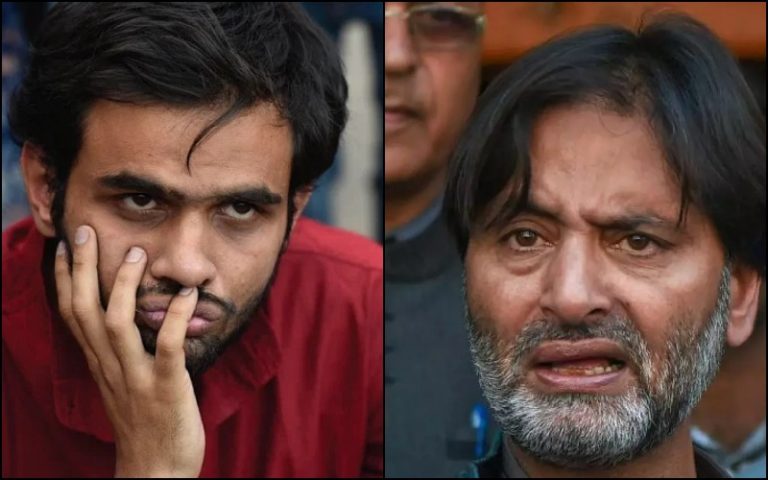
Umar Khalid, one of the chief instigators and conspirators of the Delhi anti-Hindu riots, has now spent 1,000 days in jail. On this momentous occasion, the liberal-Islamist ecosystem launched a coordinated campaign to whitewash the charges against Khalid, talk about the injustice being meted out to the Islamist and essentially, humanising the man who is accused of conspiring to burn Delhi.
There were several articles and tweets, based purely on conjecture and falsities, that tried to paint Umar Khalid as an innocent student activist who had nothing to do with the riots. In fact, most reports went so far as to claim that he was fighting for the rights of Muslims – rights which were never being taken away from them in the first place, considering CAA had nothing to do with Indian Muslims and there was no nationwide NRC to begin with (there still isn’t one). In fact, even if there was a nationwide NRC, it would still not take away the rights of Indian Muslims given that it would aim to identify illegal infiltrators, an exercise that is carried out by every nation in the world.
In the campaign to paint a Jihadi as a humanist, ‘journalist’ Srishti published a nauseating article in the Times of India and accompanied that with an equally nauseating thread about how much Umar Khalid’s girlfriend misses him, how much she loves him, how they met and started dating, how they meet in jail, so on and so forth. Srishti, it must be mentioned, is the same journalist who had abused Bhagwan Krishna earlier and was booked for it. For someone for whom Lord Krishna was a ‘womaniser’, it comes as no surprise that Umar Khalid would be a ‘lover’ worth eulogising.
How much Bano misses Umar has really nothing to do with the charges against him, however, this is the article that Times of India, one of the leading newspapers in the country, thought appropriate to publish. One really cannot be surprised at the lack of editorial standards of the Times of India, but for this drivel to pass editorial muster is a new low that the publication seems to have discovered.
One would imagine that one of the leading newspapers in India would focus on what the charges against Umar Khalid are as he completes 1,000 days in jail. In fact, even if they wanted to whitewash Umar Khalid and his role as a Jihadi, one would expect TOI to at least try and puncture holes in the chargesheet that has been filed by the Delhi Police and is now being heard in the court of law. Instead, TOI, which is often rife with semi-porn news items, chose to interview Banojyotsna Lahiri, a woman who calls herself the ‘partner’ of Khalid.
In the interview, if one cuts through the clutter of emotional garbage, there are several lies that his ‘partner’ spews. For example, claiming that the protest against CAA was ‘peaceful, colourful and vibrant’. There was nothing peaceful or colourful about the protests. Right from December 2019 to the culmination of Delhi’s anti-Hindu riots in February 2020, almost on a daily basis, there were violent attacks against Hindus. Slogans like Jinnah Waali Azadi, Hinduon ki Kabar khudegi etc could be deemed colourful for those who wish to “teach Kafirs a lesson” (something Tahir Hussain confessed to), but certainly can’t be furthered as peaceful without even a counter by the journalist – but that is exactly what happened.
Further, she claims that Umar Khalid has been incarcerated by the police in the UAPA case only on the basis of a 40-second clip that was tweeted by Amit Malviya. Interestingly, this claim, that Umar Khalid has been thrown in jail over UAPA charges merely for his speech is a lie that has been countered before. He has been thrown in jail under UAPA for planning and orchestrating the riot, not only for a speech. There are grave allegations against Umar Khalid, one that cannot and should not be whitewashed by talking about the pining of his girlfriend. Details on the charges against Umar Khalid can be read here.
In the interview, the girlfriend goes on to talk about how much she misses travelling with Umar Khalid, talking to him, and screaming at him (Nobody can blame her for this, frankly, anyone would want to consistently scream at someone like Umar Khalid), and how when he was out on bail, they enjoyed joking, laughing and eating non-vegetarian food together. She claims that Umar Khalid has PTSD from an ‘assassination attempt’ and that their life became exponentially difficult after the 2016 sedition case. It is pertinent to note that Umar Khalid was rusticated from JNU for one semester after an internal inquiry and the Delhi Govt itself, after much delay, gave a nod for hearing in the case – Umar has not got a clean chit yet in the case and is unlikely to get one, given that his involvement in the seditious slogans being raised in JNU was clear as day.
A theme in the interview of Umar’s partner is that she wishes to reiterate over and over again that Umar Khalid is ‘educated’. She first says that the campaign against Umar Khalid (which was basically holding him accountable for the Jihad he had unleashed) was unleashed because people wanted to silence him and what he represented – the educated Muslim. Later in the interview, she claims that people in Tihar respected Khalid and her, perhaps because they were educated.
One has to wonder, what the point of this Times of India article was. The interview did not shed light on any of the charges against Umar Khalid, not even a factual refutation of them. As mentioned earlier, even if the aim was to whitewash Umar Khalid’s role in the Delhi anti-Hindu riot, one would expect some details as to how the ‘partner’ thinks, factually, he is being wrongly incarcerated. None of that was added. It was merely about how much she loves and misses him, how much he liked to travel, how he gets her chocolates when they meet in prison, etc.
While one could laugh and dismiss these shenanigans, humanising terrorists is a potent tool that has been used by the media and their Islamist-Leftist brethren innumerable times before to ensure that the world disbelieves the facts against the terrorist presented to them because their vision would be coloured by just how likeable and relatable the terrorist it.
The expectation is simple – when one reads this interview, one would imagine oneself in such a situation. What if my husband was thrown in jail? I would feel the same, one would think. I would miss him too, he would get me chocolates too, he would be traumatised as well and you would fight for his release, just like so many people are. The aim is to establish an emotional connection to the average citizen who gets emotionally blinded into supporting a hardened terrorist, ignoring the facts of the case, based purely on emotions and how relatable the terrorist and his friends and family seem. With such articles, the media hopes that Umar’s girlfriend’s cause would become the cause of the average citizen, with the facts being suppressed and summarily ignored – it would not matter what Umar did. It would only matter that he is your average boy next door with people who love him, and he deserves to be freed. The emotionally coloured lens would then result in people not only ignoring the facts but refusing the belief in them altogether.
Another interesting aspect is how the girlfriend harps on how educated Umar Khalid is. This too, adds to the charade of innocence. For the average citizen, violence is the business of the uneducated, the louts, and the goons – why would someone pursuing a PhD be involved in such unspeakable crimes? These articles play on the long-held stereotypes of the ‘educated’ that are generally harboured by people. The fact, that Islamists and Jihadis are very often educated folks is forgotten because the media, which is supposed to remind people of the truth, brushes it under the carpet themselves.
Not just Umar Khalid, Yasin Malik whitewashed and humanised by Hindustan Times
While Umar Khalid was being humanised by the Times of India, Yasin Malik, a Kashmiri terrorist responsible for the death of several Hindus, was being eulogised by the Hindustan Times. In the article, before HT even recounted the charges against him, they spoke about how Yasin had turned to non-violence – this – after the ethnic cleansing and genocide of Kashmiri Hindus of which he was actively part.
“In 1994, after spending four years in prison in Delhi and Uttar Pradesh jails, he not only announced a unilateral ceasefire for the JKLF but also gave up arms, which led to a split in the organisation that had hundreds of armed cadres on the ground in Kashmir. Malik later started pursuing non-violence and used to hold hunger strikes as he said he was influenced by Mahatma Gandhi and Nelson Mandela. He also developed communications with civil society members across the country and outside”, HT wrote.
This immediately gives people the impression that while now there is a clamour to give him the death penalty, Yasin Malik was a man who was fighting for “freedom” but had then turned to non-violence because he idolised MK Gandhi, just like any political leader of India, however, the truth is far from it, His history is violence and laden with Jihad against the Kafirs – who he contributed in the genocide of.
Humanising terrorists – Not just Umar Khalid, but a pattern oft repeated by the media
This emotional blackmailing is almost a pattern with the media, every time Jihadis are caught on the wrong foot – especially those who they wish to project as the voice of the voiceless Muslims. There have been several such incidents in the past where hardened Jihadis and terrorists were humanised so people would forget their crimes and only remember what nice, average, relatable folks they were.
In 2019, after the jihadi terrorist head of Ansar Ghazwat-ul-Hind, Zakir Musa was killed by the Armed Forces, there were some media outlets which tried to whitewash his crimes and humanised him. In a report published by News 18 on the slain terrorist Musa, prosaic information about him was used to project as if he was a rock star or movie actor. The report highlighted inconsequential information like how Musa’s father Abdul Rasheed Bhat, an engineer by profession, had received a packet containing an iPhone, iPod, and three debit cards in 2013. Zakir Musa’s decision to become an armed terrorist has been represented in the report as a father’s sorrow of his son ‘sacrificing’ luxury. The report quoted the terrorist’s friends saying how Musa loved hair gels, expensive deodorants, new clothes and shoes. The report also attempted to find the ‘trigger’ that ‘made’ the so-called “Young boy who loved sports bikes and cigarettes” join terrorists. In Musa’s case, the report says it was probably because of the incident when he was ‘slapped by a policeman’ and falsely accused of stone-pelting.
Perhaps, the most brazen attempt to whitewash the crimes committed by a terrorist was done by none other than ‘illustrious journalist’ Barkha Dutt. Soon after Burhan Wani, then Hizbul Commander in Kashmir was neutralised by the Armed Forces in an encounter in 2016, Dutt lost no time in putting out a tweet describing Wani as a “headmaster’s son” instead of calling him simply what he was- a wretched terrorist. The murderous Islamist tendencies exhibited by Wani held no significance but his father’s profession as a headmaster of a school was considered as an important nugget of information to be used to characterise him. This is a classic case of how Indian journalists provide fodder to Pakistan and separatists based in Jammu and Kashmir. Once the terrorist is described in humanising terms, all his egregious sins perpetrated by him are whitewashed while the Armed Forces and the state that ordered his elimination are subject to incessant vitriol for killing “a headmaster’s son”.
In fact, in the aftermath of the Pulwama attack, several of the mainstream media organisations proceeded to rationalise the dastardly act of Adil Dhar, the terrorist who rammed an explosive-laden car into one of the vehicles of the CRPF convoy, killing 40 CRPF personnel. Dhar’s parents were interviewed by many mainstream media channels where they were seen diminishing their son’s terror act. India Today interviewed Dhar’s parents who reasoned that his son became a terrorist after Armed troops beat him up while he was returning from his school. Very cunningly, Dhar’s parents pass the buck on to the Security Forces by asserting that their son chose the path of terrorism only because he was thrashed by the Armed Forces, which again is an unsubstantiated claim.
The Hindustan Times also carried the interview, solidifying the attempts made to humanise Dhar and provide a justification for the monstrous act perpetrated by him. The HT too published the parents’ version of their son’s humiliating encounter with the Army which pushed him into joining Jaish-e-Muhammad.
In fact, since we are talking about Umar Khalid, one only needs to look at how Jihadis during the Delhi anti-Hindu riots were humanised and whitewashed. Remember Shahrukh Pathan? The man who pulled a gun at a police officer? The media had tried their best to note only prove he was a Hindu, but then whitewash him after it was proved he wasn’t.
In his show ‘Prime Time’ on 26th February 2020, Ravish Kumar resorted to spreading half-truths and full lies about the horrifying spate of violence that had engulfed the national capital. In pursuance of what appeared as his agenda to tarnish Hindus and portray them as the aggressors of the riots, Kumar identified Mohammad Shahrukh alias Shahrukh Pathan, who fired at Delhi Police personnel on February 24, as one ‘Anurag Mishra’.
When that agenda failed, The Quint stepped in and tried to humanise Pathan. In August 2021, 18 months after the 25-year-old Delhi anti-Hindu riots accused Shahrukh Pathan was arrested for brandishing a gun at the police and threatening them, The Quint published a white paper on him watering down his crime and making him appear like a cherubic saint. The Quint started by describing his menacing march as ‘brazen confidence in his gait’. Then the writer of the ‘Shahrukh Pathan fan page’ romanticised his criminal act. “Unfazed by the policemen in riot gear, he shot bullets in the air while media persons captured his acts in astonishment. The fact that the gym enthusiast, who was also a local, did not wear a mask to hide his identity, made his ‘bravado’ seem peculiar and odd,” the author wrote.
The Quint then went on to explain how his friends described Shahrukh as someone who was into grooming and was interested in his appearance. He was characterised as someone who was a biryani-lover, liked to put gel in his hair, blow dry them, wear crisp, ironed shirts, good shoes and well, make TikTok videos. The author interviewed Pathan’s mother, who obviously had glowing views about her son. She said her son was innocent and ‘simple-minded’. Shahrukh’s mother also highlighted counterfactual scenarios in order to water down her son’s criminality. She told his fans at The Quint that she often wonders, “What if she had given him food when he asked? What if the timing was a few minutes before or after namaz?”
The Quint essentially painted Shahrukh Pathan as a boy-next-door, interested in grooming, who perhaps would not turn into a Jihadi and participate in the anti-Hindu riots if only his mother had fed him on time – a ridiculous proposition, but one that is used effectively by the media to humanise Muslim criminals.
A privilege only reserved for Muslim accused
For the liberal media, the privilege of being seen as cherubic saints is only reserved for hardened criminals who work against the interest of India, murder Hindus and Jihadis who actively work towards ‘teaching Kafirs a lesson’. When a Hindu is brutally murdered by these very jihadis, they not only proceed to humanise the murderer but dehumanise the Hindu victim.
During the Delhi anti-Hindu riots, IB official Ankit Sharma was brutally murdered. He was stabbed so many times that his intestines lay outside his body. On the other hand, Dilbar Negi, another Hindu, was murdered mercilessly. His hands and legs were chopped off while he was alive and then he was burnt to death. In both these cases, the accused were humanised and the victims, dehumanised.
In the case of Ankit Sharma, where Tahir Hussain was involved, The Wire, AltNews and others tried to paint Hussain as the victim of the riots who was trying to call for help. These assertions were debunked summarily, but one can’t underscore the effort by these portals. On the other hand, Ankit Sharma’s murder was whitewashed. The Wire wrote in its report that Ankit Sharma was “stabbed to death”, as if, it was a normal murder during the course of communal tension and not a well-thought-out, planned murder by Tahir Hussain and a mob who stabbed him over 40 times. In the case of Dilbar Negi too, the brutal details were carefully hidden as The Wire wrote that Negi died of ‘burnt injuries’.
Again, this phenomenon of dehumanising Hindu victims is not a new one. A few years back, Rajdeep Sardesai exposed his own hypocrisy when he asked others to stop politics over dead bodies. It is a bit rich coming from someone who rose to prominence in the journalism arena by politicising charred dead bodies of innocent people in a train burning incident in Godhra in 2002 and the ensuing communal riots. Rajdeep had also written a moving piece when journalist Shujaat Bukhari was brutally murdered. What is interesting, is that when Hindu Activist Prashant Poojari was murdered, Rajdeep had written a piece trying to whitewash the crime and assert that his murder had a “political context”.
Shujaat Bukhari’s murder was tragic, however, the fact remains that Bhukhari harboured terribly anti-India views which were expressed quite freely. While he was eulogised, a Hindu victim, Prashant Poojari was dehumanised by giving his murder by Jihadis a ‘political context’, as if being murdered for political reasons is less heinous and therefore, should be ignored.
I have, in fact, written extensively about the onslaught which was unleashed after I had reported a little boy missing after the Hauz Qazi communal incident. In Hauz Qazi, a temple was desecrated by a jihadi mob even urinating on the murtis, according to local Hindus. As the mob went on a rampage, a 14-year-old Hindu boy went missing. With the parents of the boy threatening to kill themselves while clutching the FIR, it was but the duty of a journalist to report the news. The mainstream media kept silent, in fact, the journalist on the ground simply walked away from the wailing parents. When the news was reported by me, Newslaundry claimed that it fanned communal tension. When the boy was found post our report, Newslaundry claimed that OpIndia was fear-mongering because the boy was found alive. Essentially, for the liberal media, Hindu lives are so cheap that they deserve a cursory report only if Hindus turn up dead. Otherwise, a little boy missing is not news because it outraged the Muslims further. If this was a Muslim child who had gone missing, the response would be different. Just like the Liberal media tried to whitewash the Jihadi mob during Hauz Qazi, they would work overtime to demonise the Hindus as a Muslim boy went missing.
There is no low, it would seem, that the liberal, corporate media and their paymasters would not fall to. The mandate has been clear for decades and what we see with Umar Khalid and the Delhi anti-Hindu riots is merely a repeat of it – humanise terrorists and Jihadis, dehumanise their victims and always.. always blame the Hindus while shielding the Muslims. There is no mandate greater. There is no treachery more sinister.