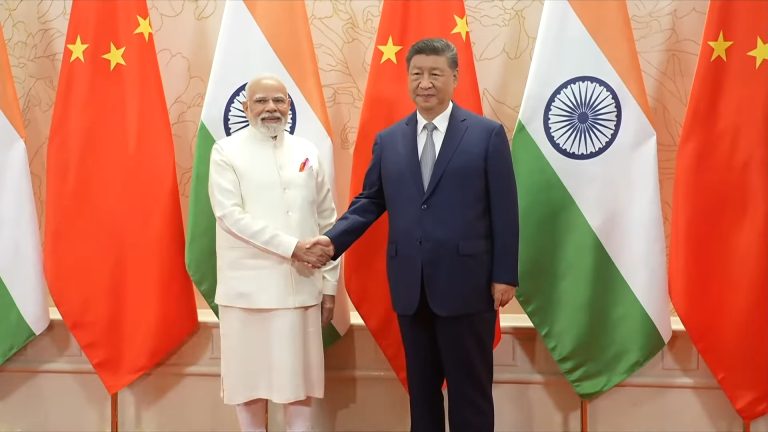
On July 30, 2025, US President Donald Trump announced that that starting August 1, Indian goods would be hit with a 25% tariff citing India’s high tariff and non-monetary trade barriers. He also announced additional penalty on Indian exports to US for India’s continued purchase of defence equipment and oil.
However, he framed it as a punishment on India, saying: “INDIA WILL THEREFORE BE PAYING A TARIFF OF 25%.” At face value, this sounds like a financial penalty that India will pay to the United States. But that’s not how tariffs work, and the statement oversimplifies the mechanics of tariffs and their economic implications. And understanding who actually pays the tariff, and how Indian exporters might still be impacted, requires a closer look at the mechanics of global trade.
In practice, a tariff is a tax imposed by a country on imported goods. When the US government slaps a 25% tariff on Indian imports, the money doesn’t come out of India’s treasury or the pockets of Indian exporters. Instead, the cost is paid by American importers, typically wholesalers, distributors, or manufacturers based in the US. These companies will be required to pay the 25% duty when Indian goods land at a US port. It is the import duty or the border tax collected by US Customs and Border Protection.
For example, if an Indian company exports $100,000 worth of textiles to a US retailer, the retailer would pay an additional $25,000 in tariffs to the US government upon import. The importer may handle this additional cost in various ways. They can absorb the cost and reduce their profit margins it that is possible, or they can pass the cost onto American consumers through higher prices. The importer can also seek to negotiate lower prices with Indian exporters to offset the tariff.
The choice depends on market dynamics, including demand for the product and the availability of alternatives.
Therefore, India does not pay the higher tariff, it is the importer and the end consumer that pays the Trump’s higher tariff. Therefore, while Trump is boasting about higher tariff collections, the money is coming from American consumers, not countries from where the goods were imported.
However, this doesn’t mean Indian businesses will remain unaffected. Higher price of the product due to higher tariff makes the product unattractive for the American importers and the end consumers. It the importer absorbs the full 25% markup, it cuts into its revenues, and if they raise prices for consumers, the sale may go down due to higher prices, as the customers will look for cheaper alternatives.
As a result, the American importer will look for alternative suppliers who don’t face the same tariff. This will lead to a decline in export volumes for Indian businesses. To maintain the export volume, Indian exporters might lower their prices to absorb some of the tariff burden.
This is where Indian exporters feel the squeeze, not because they are writing a check to the US government, but because their products become less competitive in the American market. Similarly, if the exporter agrees to reduce the export price to keep the price in US same as before after adding the tariff, this will cut into the revenue of the exporter.
This is how tariffs impact an exporting country indirectly. There’s no direct penalty or payment from India itself, as Trump’s claim suggest, but still the disruption to trade can be substantial.
The extent of the tariff’s impact on India depends heavily on whether the US buyers can source similar products from other countries without similar tariffs. Trump has threatened higher tariff on every country in the world, forcing them to enter into trade deals with US to avoid the higher duty. At present, US has signed such deals with some countries. Moreover, Trump has imposed different tariff rate for different countries, even on countries that have signed trade deals with the US.
For example, textile is a major product exported from India to US. Two other leading sources for textile are Bangladesh and Vietnam. Trump has announced 35% tariff on Bangladesh and 20% on Vietnam. Therefore, Bangladesh will not be a profitable alternative to Indian imports even with 25% tariff, but Vietnam will be.
Interesting to note that, 20% tariff on Vietnam was imposed after a trade deal with the country.
Even if there are sources will lower tariff, it may not be possible to shift from India to that country entirely due to various issues. For example, Apple makes its iPhones in China, India and Vietnam, which are sold worldwide including India. Tariff on China is at present 35%, higher than India’s announced 25%. Apple has already started to increase iPhones made in India for the US market due to the higher tariff on China, and even with 25%, it will be lower than China’s 35%. Although it is lower in Vietnam, the capacity there won’t be enough to shift production from India.
Moreover, finding alternative sources isn’t always straightforward, and it depends on whether American buyers can actually find those alternatives. If Indian goods are unique in quality, scale, or regulatory compliance, American companies may continue to source from India despite the added cost.
For example, India is a major supplier of generic pharmaceuticals, a sector where quality and regulatory compliance are critical. Switching to new suppliers involves costs, such as re-establishing supply chains or meeting US Food and Drug Administration standards. For specialised goods, India may retain its market position despite tariffs. However, for standardised products, the US may be able to turn to other nations, which will hit Indian exporters.
To conclude, while higher tariff will impact Indian exports to the US, Donald Trump’s claim that “India will be paying a tariff of 25%” misrepresents how tariffs work. Similarly, the penalty that he announced for buying Russian weapons and oil will also be paid by importers and end consumers, not the Indian govt.
The tariff plus penalty will be paid by American importers, who may handle it differently. Ultimately, it will impact India’s exports to the US for most products, but there will be no direct payment from India to US.
US President Donald Trump has been on an unhinged rant through his social media and official announcements. Yesterday on July 30, he announced 25% tariff on India and an alleged penalty for continuing to import Russian oil. In a subsequent post, Trump went ahead to claim that Pakistan has oil reserves. He suggested that the USA is working on a deal to develop those oil resources, and maybe one day India will have to buy Pakistani oil.
Trump’s post on Truth Social
Unrealistic as it may sound, the US president has been displaying a bizarre proclivity to issue loudmouth, boastful self-praise wrapped with a rather evident desire to be called the greatest leader of the world, ‘The peacemaker’. However, facts do not align with what he’s trying to project.
First, let’s examine the claims of ‘massive oil reserves in Pakistan’.
Claims Vs reality of Pakistan’s ‘oil reserves’
Pakistan’s proven crude reserves are estimated at around 540 million barrels, primarily in onshore fields like the Potwar Plateau and Lower Sindh. That is rather modest, nowhere near ‘massive’. For a general comparison, Saudi Arabia has 260 billion barrels and Iraq has an estimated 140 billion barrels.
Some seismic surveys on the offshore Indus Basin, suggest significant hydrocarbon potential, with some estimates claiming up to 9 billion barrels of oil equivalent in untapped resources, especially near the Murray Ridge.
However, those ‘estimates’ are technically not ‘reserves’. There is no commercial viability as of now. No recoverability estimates have been done, no plans exist as of yet for ‘development’.
Report about the 2019 exploration off the coast of Karachi
In the past, some exploration was done. The Kekra-1 exploration yielded no results.
-Trump: #USA & #Pakistan will work together on developing massive Oil Reserves, they’ll be selling Oil to India Fact: -$30Bn for exploration, who will fund -Shell sold Paki business stake to Saudi Aramco -15 oil & gas blocks got no international bidders -Serious security concerns pic.twitter.com/sXZpO1b6fq
Pakistan is a failed state. Economically, demographically, geopolitically and almost in every other parameter. It has an $126 billion external debt and $17.5 billion energy import bill limit. Unless the US bankrolls the entire operation, that too on a whim and dream, provided that ever happens, Pakistan lacks the means to fund large-scale exploration, infrastructure, such as pipelines and refineries.
The much-touted China-Pakistan Economic Corridor, with billions of dollars and years spent, has made no difference to Pakistan’s economy yet. Moreover, owing to the instability and security challenges in Pakistan’s North-West, West, and that big, 347,190 square kilometers of territorial bomb called ‘Balochistan’, which makes 44% of what Trump and Pakistan’s government are still assuming as Pakistan, will not allow any more foreign powers to take control and exploit its natural wealth, not without considerable violence.
If Donald Trump, witnessing firsthand how the US fared in Afghanistan, thinks he will just swoop in and ‘develop’ oil wells in the offshore Indus basin and Baloch rebels will sit by and watch, he is either day dreaming, or taking his own citizens for a ride.
Trump’s sudden Pakistan romance, and the Brahmos strikes by India
India hit Pakistan’s military bases like playing ‘Call of Duty’ during the Operation Sindoor. The Nur Khan airbase, which is close to Pakistan’s Strategic Plans Division, it’s nuclear command arm, and less than 10 km from Pakistan’s military headquarters, was hit by the Brahmos missile. Later, reports emerged that the Nur Khan base was under US control, and there was not much clarity on what US had there.
I don’t know why I’m reading this as proof that India did something between May 7-10 that only Trump, Modi, Air Chief AP Singh, DGAO Bharti & a fighter pilot know about.
India’s precision strikes during Operation Sindoor were more than unprecedented; they not only rendered Pakistan’s ‘China-made’ air defence completely useless, and dug craters on their runways, they imposed heavy military damage and destroyed a significant chunk of Pakistan’s military assets, not limited to multiple fighter jets, the Saab 2000 AEW&C aircraft and the Erieye radar systems.
Donald Trump was unhinged before, but something seems to have snapped in him after Operation Sindoor. First came the baseless, almost compulsive claims of having negotiated a truce by using trade as a leverage. But literally nobody is buying that. Because, for starters, he has no trade deal to show, and India demonstrated its military capability to the whole world. Nobody with an ounce of brain is ever going to believe that India just meekly ‘obeyed’ Trump after destroying Pakistan’s bases, and blowing up their military assets at will.
NDTV’s Vishnu Som joked if the Brahmos that India used to dig a crater at the Rahim Yar Khan base ‘found oil’.
With Trump’s disturbed, bizarre rants that are rather unusual for a world leader, even when he is Donald Trump, Indian Twitter is now rife with speculations whether the rattled, berserk reactions are a result of India’s unexpected, spectacular strikes on Pakistan during the Operation Sindoor.
Conclusion
Trump has been making loud promises, boastful claims, ‘Trump-eting’ his imaginary glories and peddling grandiose visions of MAGA to a world that is very well aware of the new multipolarity, especially in the Global South. Trump’s threats have not deterred China, Russia, and they won’t deter India either.
India is new to neither threats, nor sanctions. It has seen far worse and has emerged as a rapidly growing, the world’s fourth biggest economy, while maneuvering a complex world.
Haters may call it a joke, but maybe the Brahmos missiles indeed made craters so deep that Pakistanis and their new daddy Donald Trump have found oil.
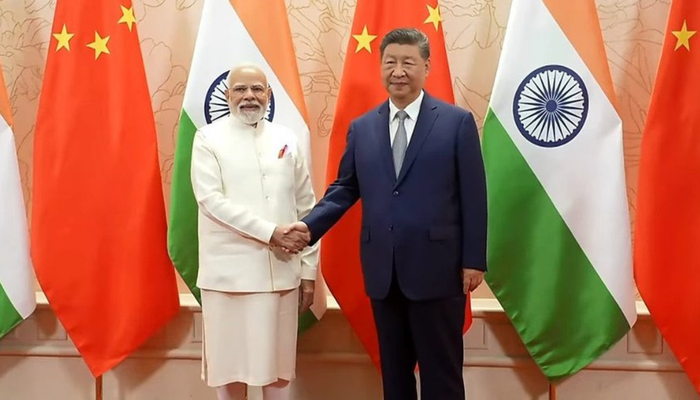
On 30th July, President of the United States, Donald Trump, announced a 25% tariff on imports from India, which will come into effect on 1st August 2025. In a statement on the social media platform Truth Social, he added that the tariff would be coupled with an unspecified penalty tied to India’s defence and energy imports from Russia.
Source: Truth Social
Trump accused India of imposing “among the highest tariffs in the world” and maintained “the most strenuous and obnoxious non-monetary trade barriers” despite being declared “a friend” of the US. He also stated that India “has always bought a vast majority of their military equipment from Russia” and remains “Russia’s largest buyer of energy, along with China”.
Notably, the tariff announcement came just ahead of 25th August, when US trade representatives are set to visit New Delhi for the next round of negotiations on a bilateral trade agreement. According to reports, White House adviser Kevin Hassett said that Trump has been “frustrated with the progress of trade talks with India and believed the 25% tariff announcement would help the situation”.
What these tariffs entail and who bears the cost
According to US trade practice, tariff revenues benefit the federal government. However, the economic burden is carried by American importers, who pass higher costs to consumers or absorb reduced profits. While Indian exporters do not directly pay these duties, the tariffs diminish the competitiveness of their goods in the US market.
The 25% tariff applies to a wide range of sectors, including textiles, smartphones, marine products, gems and jewellery, automotive components, steel, electronics, marine products, processed foods, tea and dairy. Notably, pharmaceuticals, semiconductors and critical minerals are temporarily exempt.
In April 2025, a baseline tariff of 10% was introduced by the Trump administration. It is unclear if the 25% rate will replace it or is cumulative. The 25% rate places India above the 20% imposed on Vietnam and 19% on Indonesia, though lower than the tariff proposed for Bangladesh (35%) and Thailand (36%). White House documents had initially floated a potential 26% reciprocal tariff on India earlier this year.
Scale of US-India trade and impact on India’s GDP
In 2024, US imports from India totalled around US $87.4 billion. On the other hand, US exports to India stood near US $41.8 billion. This resulted in a trade deficit of around US $45.7 billion. It means total bilateral goods trade amounted to roughly US $129 billion. Although India’s trade with the US represents only 1% to 2% of India’s GDP, economists have warned that the tariffs could shave 0.2% to 0.5% points off GDP growth, which may reach 0.7% under harsher penalty scenarios. Rating agency ICRA has already downgraded its GDP forecast to 6.2% for FY2026, citing possible weak exports and deferred capital expenditure.
Penalty linked to Russian imports reflects geopolitical strategy
For the first time, the US has announced a secondary penalty tied to a country’s external relations, in this case, India’s purchases of Russian crude oil and military hardware. Trump’s Truth Social post placed heavy emphasis on India being a leading buyer of Russian energy and equipment. Western powers, including the US, have attempted to stop India from buying oil from Russia for years since the Russia–Ukraine war broke out. However, India has stood firm and placed the interests of Indians first while deciding where to buy oil from.
Notably, India’s dependency on Russian crude has increased from less than 1% before the 2022 invasion to 35% to 40% by mid-2025. Russia is now India’s primary oil supplier. In contrast, US goods imports from Russia remain marginal. In 2024, the US imported $3 billion worth of Russian goods, a 34% year-on-year fall, and roughly $2.3 billion during January to May 2025.
While small in volume, US imports from Russia include palladium and enriched uranium. Both of these commodities are critical for industrial and nuclear sectors. These strategic elements underpin Washington’s framing of the penalty.
Sector-specific consequences and market reaction
Labour-intensive sectors including textiles, gems and jewellery, particularly from Rajasthan and Gujarat, and electronics and auto components are most vulnerable. MSMEs from Tamil Nadu, Maharashtra and Karnataka may face a decline in orders or have to renegotiate contracts at a lower price. However, industry groups have urged exporters to remain calm and stated that the tariff might be a negotiating tactic and that the final rates would likely be adjusted after the sixth round of trade talks in August.
India’s broader economic resilience and negotiation posture
Despite pressure, India’s economy remains fundamentally anchored in domestic consumption. Around 70% of GDP is driven by internal demand, which provides resilience to external shocks. Indian government policies have focused on tax incentives, capital expenditure, and interest rate relief to sustain growth. Furthermore, India’s external reserves are robust and the rupee has remained relatively stable, which has insulated the Indian economy.
Following the announcement by Trump, New Delhi has reiterated its commitment to securing a “fair, balanced and mutually beneficial” trade deal. The Government of India has emphasised its duty to protect livelihoods, especially for farmers, micro and small businesses, and to preserve policy autonomy, as seen in its negotiations with the UK on the Comprehensive Economic and Trade Agreement.
Geopolitical backdrop and strategic calculation
The tariff and penalty should be seen as a calibrated negotiating gambit by the US, linking commerce and diplomacy to put pressure on India to reduce tariffs on sectors including agriculture, dairy, digital services and intellectual property. Not to forget, India has already rattled the US by refusing to allow “non-veg” milk in the Indian market.
The current proposed 25% tariff on imports from India is significant and ranks above rates agreed with ASEAN countries. The move has come amid broader US efforts to diversify supply chains and reduce reliance on China. Interestingly, Trump is also pushing US-based companies to set up their manufacturing in the US rather than in countries like China or India, where labour costs are low.
There is visible friction between India and the US, especially following the recent announcement. However, India is restraining itself from making any sudden moves and is calculating the impact of the tariff announced by Trump. Furthermore, despite the recent developments, both sides appear to retain interest in continuing negotiations. India and the US have shared interests in defence, climate, technology and Indo-Pacific strategy, and their engagements go beyond tariffs.
Conclusion
President Trump’s decision to impose a 25% tariff and a Russia-linked penalty shows that the US is trying to use trade as leverage to push its geopolitical objectives. While bilateral goods trade between India and the US represents only 2% of India’s GDP, there will be some impact on sectors including textiles, jewellery, electronics and automobiles. MSMEs and export hubs may face some notable disruptions, but these can be controlled by exploring other international markets.
India has a large internal market. Its policies offer strength in resisting external economic blowbacks. Domestic resilience, along with ongoing negotiations, means the worst-case macroeconomic effect may be limited. However, the firm-level strain in export-reliant industries is unavoidable unless exemptions or rollbacks emerge.
The Panama Canal which is one of the most important trade routes in the world, became a major diplomatic firestorm late last year when current US President Donald Trump warned to reassert US control over the canal as he accused Panama of levying “exorbitant charges” to utilize the passage. However, it looks like he is losing to China over the control of the critical trade route.
However, contrary to Trump’s hopes, China is set to gain even greater influence over the Panama Canal following the collapse of a proposed deal between US-based BlackRock and Hong Kong’s CK Hutchison. Notably, BlackRock is so worried about Chinese snooping on them that they don’t even allow their employees to carry phones and laptops to China.
The original agreement was to transfer dozens of international ports, including the two key ports in Panama, to a consortium involving BlackRock (World’s largest asset management company). Donald Trump welcomed the deal and talked about reducing Chinese influence over the canal and even floated the idea of the US “taking back” the strategic waterway.
In fact, Trump demanded that the canal be returned to US control and lambasted Panama’s handling, telling Panamanian officials to “be guided accordingly.”
However, it looks like the critical canal just south of USA will remain in Chinese control as CK Hutchison announced that the exclusive negotiation window with BlackRock had expired.
US President Donald Trump had declared, “China is operating the Panama Canal, and we didn’t give it to China — we gave it to Panama — and we’re taking it back.” However, it looks like Trump is set for a massive disappointment.
CK Hutchison has operated both critical Panama ports since 1997, and it is owned by the wealthiest man in Hong Kong, Li Ka-Shing, and just like everything in China, everyone knows this is approved by the communist Chinese government.
This once again highlights the growing influence of China in global south as they continue to defy US President Trump.
The Panama canal was completed in 1914, and is one of the world’s major trade routes. The canal was handed over to Panama in 1999.
In an explosive announcement on Truth Social, US President Donald Trump declared that India would be slapped with a 25% tariff plus additional penalties starting August 1, accusing New Delhi of maintaining “obnoxious” non-monetary trade barriers, buying energy and military hardware from Russia, and resisting U.S. pressure during trade negotiations.
While the message was delivered in characteristic Trumpian flair, the underlying reality it betrays is far more significant: India stood its ground, refused to buckle under pressure, and prioritised strategic sovereignty and national interests over economic subservience.
Tariffs as a signal of failed coercion
Let’s be clear: the tariffs are not a punishment for bad behaviour, they are a testament to India’s refusal to surrender to Washington’s coercive tactics. At a time when the US was offering exceptions in its tariff regime to compliant allies like Japan, New Delhi walked away from the table rather than sign a one-sided deal. Negotiations were ongoing, and a waiver could have been on the cards had India agreed to allow unrestricted access to U.S. agricultural products and dilute its protective framework for domestic industries. It did not.
Instead, the Modi government held firm, valuing long-term national interest over the short-term gains of a skewed deal. Trump’s tariffs, therefore, are not a mark of failure on India’s part; they are a clear admission that India refused to yield.
Trump’s frustration exposes his lies about brokering a ceasefire between India and Pakistan during ‘Operation Sindoor’
This development also punctures Trump’s earlier claims that he brokered de-escalation during Operation Sindoor, the Indian military operation that not only avenged the Pahalgam terror attack but also exposed Pakistan’s role in cross-border terrorism as pictures of Pakistani Army officials attending funerals of UN designated terrorists surfaced online. India pounded 11 Pakistani airbases and over 9 terror camps, effectively establishing a new military doctrine: that it will no longer put up with Pakistan’s continued support to terrorism against India. A cowered Pakistan immediately pleaded for ceasefire as Indian missiles struck with precision even as its Chinese air defences were caught napping.
However, Trump fell over himself to appropriate credit for brokering a ceasefire between the two countries. He had since repeated the claim ad nauseam despite the fact that India had long maintained that there was no third party intervention between the two countries and India decided to stop only after Pakistan’s persistent begging to stop the attacks. If India had truly followed US diktats and deferred its decisions to Trump’s wisdom, it would hardly be facing trade penalties now. Trump’s fresh outburst clearly demonstrates that India made independent strategic choices, not ones choreographed from Washington.
Trump’s frustration over India’s continued purchase of Russian oil and arms exposes another inconvenient truth for the US, India is not playing by America’s Cold War-era geopolitical templates anymore.
Russian energy: A rational economic choice
India’s decision to buy Russian oil at discounted rates was a pragmatic economic move, not a political provocation. With global energy prices soaring, and Western sources often coming with geopolitical strings attached, Russia offered a cost-effective and reliable option. This helped India save billions in energy bills and keep inflation in check, a crucial factor for a developing economy with a massive energy appetite.
To expect India to shun affordable fuel just to please American optics on Ukraine is utterly unrealistic, especially when European nations themselves continued buying Russian gas well into the conflict.
Defence ties with Russia: A legacy, not a loyalty
Trump’s gripe about India’s arms purchases from Russia ignores decades of history. From Nehru and Indira Gandhi to Vajpayee and Manmohan Singh, India’s defence relationship with Moscow has been one of necessity and reliability. During the Cold War, the U.S. actively courted Pakistan to fight its Mujahideen war in Afghanistan, shutting India out of its defence markets. It was Moscow that supplied India with critical military systems through thick and thin, including during the 1971 Bangladesh Liberation War.
For Trump, or anyone in the U.S. establishment, to now expect India to junk decades worth of operational compatibility, training protocols, and logistical chains just to appease American whims is not just strategically tone-deaf, it’s logistically absurd and economically foolish.
India chooses sovereignty over subservience
At its core, this episode is not about trade. It is about sovereignty. In choosing not to bow before Trump’s aggressive style of transactional diplomacy, India has sent a message to the world: it will not become a vassal state of any global power. Be it military decisions, energy sourcing, or trade policy, India will act in its own national interest, not in the service of another nation’s foreign policy agenda.
In standing up to Trump, New Delhi has shown that it is willing to bear economic costs to preserve strategic independence—a stance that aligns with its broader vision of a multipolar world where nations are not forced into binary alliances.
Tariffs today, respect tomorrow
While the tariffs may sting certain sectors of India’s export economy in the short run, they are, in the larger scheme, a small price to pay for long-term autonomy. Trump’s imposition of punitive trade barriers is not a diplomatic defeat, but a diplomatic declaration that India won’t sell its sovereignty, even to the most powerful nation on Earth.
As India charts its path as a rising power with an independent foreign policy, economic resilience, and deepening partnerships with multiple poles of power, the message is clear: India is no one’s satellite. It is a sovereign civilisation-state, making decisions on its own terms.
In a landmark initiative for the horticulture sector, Adani Agri-Fresh has launched the country’s first digital apple market platform in Bithal near Rampur, about 120 km from Shimla.
Designed to directly benefit apple growers across Himachal Pradesh, the project is currently being implemented as a pilot phase, but farmers are already expressing strong support for its transparency, convenience, and profitability.
Speaking to ANI, Mahinder Pal, an apple grower associated with Adani Agri since 2006, said that this digital market will benefit the small farmers.
“This new digital market is excellent. Today is the first day, and it already seems promising. Earlier, there used to be rejections in grading at Adani stores, but now farmers can sell directly, and even payments are processed online,” he said.
“Today, my apples sold for Rs 2200 per crate, which will benefit small growers significantly,” Pal added.
The platform enables farmers to digitally participate in transparent auctions, avoid middlemen, and ensure assured payment. The apples are graded, packed, and marketed under the Adani brand, ensuring uniform quality and higher bargaining power for growers.
Elderly progressive farmer Harichand Roch also welcomed the digital reform.
“This is a market reform that gives bargaining power to farmers. If ten farmers’ apples go into one batch, the grading, colour, and size will be uniform, packed with Adani branding. Farmers can now decide whether to sell or store. This empowers even small growers,” he said.
“Progressive farmers are now demanding tissue culture labs and stone fruit plant material as well. This initiative is truly welcome. With transparent grading, uniform branding, and storage options, small growers are no longer being exploited and are marketing directly from their homes,” Roch said.
He further urged Adani Agri-Fresh to set up tissue culture labs in the region.
“Without good planting material, we can’t produce international-grade apples. If Adani adopts tissue culture, similar to Reliance’s approach with mangoes in Jamnagar, our cherries, apricots, and other stone fruits can access global markets, including Europe and the Arab world. Tissue culture is not rocket science; this will uplift small farmers and benefit the company too,” he said.
Gopal Singh Thakur, another farmer, said the idea for such a digital marketplace came from the farmers themselves.
“We had discussions with Adani officials and suggested this regional model. The fruit that comes from controlled atmosphere stores during peak market months creates price distortion. This digital platform will keep farmers informed about national market prices and ensure quality assurance through Adani’s systems,” he said.
“I’ve been associated with Adani since 2006. Payment is assured within 7 to 12 days. Unlike outside markets, where some farmers wait for years, here, there is 100 per cent payment assurance,” he added.
Traders are also expanding a very good business ahead from this first digital Mandi of the country.
Girish Anand, a private trader, also expressed optimism about the model.
“This digital platform is beneficial for both buyers and growers. Bidding can be done from anywhere. Though the rollout will take time across Himachal, this initiative has great potential. Controlled atmosphere storage has already been successful, we believe this model will be too,” Anand said.
Manish Agarwal, Business Head, Adani Agri Fresh Ltd., highlighted the motivations behind the platform.
“For the past 20 years, we’ve run controlled atmosphere storage in Himachal, but only high-altitude growers benefited. Traditional mandis were not transparent. Now, this digital system ensures transparency, from grading to auction, and eliminates the hassle of manual packing,” he added.
“Buyers can view their purchase digitally through our mobile app. Each apple is pressure-tested, colour-graded via optical sorters, and photographed. There are no hidden charges, only packaging fees, which are transparently disclosed,” Agarwal said.
“We’re building a digital agricultural infrastructure. If this model is successful in apples, we’ll extend it to other commodities as well,” he emphasised.
Agarwal added that farmers have full control in the market.
“If a farmer is unhappy with the auction price, they can withdraw their lot after paying the packaging charge. The entire process is SMS-tracked for updates on unloading, grading, auction, and payment,” he added.
Himachal Pradesh boasts 11 lakh hectares of cultivable land, with two lakh hectares under fruit cultivation. Of this, over one lakh hectares are dedicated solely to apple orchards, making apples 50 per cent of the state’s fruit-growing area. The state produces nearly 5.5 lakh metric tons of apples annually, contributing over Rs 5,500 crore to the economy. So far, Adani Agri-Fresh accounts for around 8 per cent of this production, a share expected to rise with the launch of the digital mandi.
With the success of this pilot platform at Bithal, Adani Agri-Fresh aims to expand the digital mandi model across apple-producing regions in Himachal, transforming the way fruit is marketed and sold in India.
(This news report is published from a syndicated feed. Except for the headline, the content has not been written or edited by OpIndia staff)
After successfully preventing the auction of the ancient Piprahwa gems, the Indian government has been able to bring back the sacred relics associated with Lord Buddha. The Piprahwa relics were discovered in 1898, but were taken out of the country during the British rule. Now, the relics have returned to India 127 years after their discovery.
Prime Minister Modi on Wednesday (30th July) informed about the return of the gems to India. “A joyous day for our cultural heritage! It would make every Indian proud that the sacred Piprahwa relics of Bhagwan Buddha have come home after 127 long years. These sacred relics highlight India’s close association with Bhagwan Buddha and his noble teachings. It also illustrates our commitment to preserving and protecting different aspects of our glorious culture,” PM Modi wrote on X.
A joyous day for our cultural heritage!
It would make every Indian proud that the sacred Piprahwa relics of Bhagwan Buddha have come home after 127 long years. These sacred relics highlight India’s close association with Bhagwan Buddha and his noble teachings. It also… pic.twitter.com/RP8puMszbW
“It may be recalled that the Piprahwa relics were discovered in 1898, but were taken away from India during the colonial period. When they appeared in an international auction earlier this year, we worked to ensure they returned home. I appreciate all those who have been involved in this effort,” he added.
It may be recalled that the Piprahwa relics were discovered in 1898 but were taken away from India during the colonial period. When they appeared in an international auction earlier this year, we worked to ensure they returned home. I appreciate all those who have been involved…
An announcement about the gems being put on auction was made in February this year by Sotheby’s, a global auction house. The date of the auction was set as May 7, 2025, in Hong Kong. But, the news of the auction of the relics attracted the scorn of historians, archaeologists, and the followers of Buddhism worldwide, which soon turned into a global movement leading to the intervention of the Indian government.
On May 2, 2025, the Director General of the Archaeological Survey of India (ASI) wrote to the Consulate General of Hong Kong, requesting to halt the auction with immediate effect. A bilateral meeting took place the same day between Culture Minister Shri Gajendra Singh Shekhawat and Rt Hon Lisa Nandy, UK Secretary of State for Culture, Media and Sport, for the prevention of the auction of the gems.
This was followed by a legal notice being served to Sotheby’s by the Indian government in May 2025. On May 6, 2025, a high-level Indian delegation led by the Secretary, Ministry of Culture, including the Joint Secretary (East Asia Division, MEA) and the Consul General of India to Hong Kong, held discussions with Sotheby’s representatives.
During the discussions, the Indian delegation highlighted the significance of the relics for Buddhists globally and said that they rightfully belonged to India as they were taken away in an unauthorised manner during the colonial period. The same day, Sotheby’s confirmed the postponement of the auction.
What are Piprahwa gems
The Piprahwa gems are a collection of ancient jewels, dating back to the 3rd century BC. These were buried along with the cremated remains of Buddha at Piprahwa, a village alongside the Indo-Nepal border in Uttar Pradesh. In 1898, a colonial landlord named William Claxton Peppé ordered the excavation of a Stupa on his estate in Piprahwa. During the excavation, five reliquaries were found containing bone fragments, ash, and gemstones, including amethysts, corals, garnets, pearls, rock crystals, shells, and gold.
Piprahwa Excavation site (Image via The Hindu)
An inscription in Brahmi script on one of the excavated caskets confirmed that the relics were deposited by the Sakya Clan and belonged to Buddha. The excavation marked a significant discovery in Buddhist history. Out of over 1800 excavated items, some were gifted by Viceroy Lord Elgin to King Rama V of Siam. Parts of the items were allocated to temples in Burma and Ceylon. The remaining items were divided between the Indian Museum, Kolkata and Peppé.
Relics excavated at Piprahwa on display at National Museum, New Delhi (Image via The Hindu/V.V. Krishnan)
The excavated items are of immense religious significance for Buddhists, who consider them as Sharirk Dhatu (corporeal relics). According to Naman Ahuja, professor of Indian Art and Architecture at Jawaharlal Nehru University, Buddhism recognised three main types of relics, the most precious being Sharirik Dhatu or the remnants from the physical body of the Buddha himself.
Buddhists believe that the items buried along with the cremated ashes of Buddha in the original caskets of Buddha comprise Sharirik Dhatu. According to Buddhist belief, the bodies of great masters turn to crystal over time. These are said to transform into quartz, rock crystal, amethyst, and other such forms. This is the reason that the auction of these sacred relics invoked opposition by Buddhists worldwide.
The Congress government in Telangana, led by Chief Minister Revanth Reddy, is looking at a proposal to fix some long-pending issues in reservations for backwards Muslim communities. According to a report of The Indian Express, the plan is to give proper benefits to 14 Muslim groups, including around 3 lakh Shia families, under the Backwards Classes (BC) category based on how socially, economically and educationally backwards they are.
Right now, these groups have 4% reservation under a special category called BC (E), but due to legal complications and poor awareness within the community, this quota has not really worked as it should have. Many people in these Muslim communities are not getting the benefits they are entitled to, say government sources.
Earlier this year, the Telangana government made public the findings of a large-scale social, educational, economic, political, and employment (SEEPC) caste survey. According to the report, Muslims make up about 12.58% of the state’s population. Out of this, about 10.08% are listed as BC Muslims while around 2.5% fall under the OC (Other Castes) category. Interestingly, this is slightly lower than the 2011 Census figure of 12.69%.
However, officials believe that the Muslim population might have been under-reported by 1-2%, especially in parts of Hyderabad’s Old City, where many women didn’t feel comfortable sharing details without male family members present during the survey.
The survey of the castes revealed that the BC population within the state, comprising Muslim BCs, is approximately 56.33%.
Following the survey’s conclusions, the Telangana Assembly legislated two significant pieces of legislation in March 2024. These pieces of legislation enhanced the overall BC reservation in government employment, education, and local body polls from 27% to 42%. The Bills were referred to Governor Jishnu Dev Varma, who has referred them to President Droupadi Murmu for approval.
Mohammed Ali Shabbir, who advises the Telangana government on SC, ST, OBC, and minority welfare, said that 2.5% of the Muslims in the state are doing fairly well and are above the poverty line. But a large chunk around 10.08% are very poor and need support in education, jobs, and political participation.
He pointed out that communities like the Saiyyeds, Mughals, Pathans, Arabs, Kojja Memons, Agha Khanis, and Bohras are not included in the existing quota benefits. According to him, the BJP is creating a false narrative that this is about religion-based reservation. “These are occupational caste groups, just like other BC communities, and they need help based on their condition, not their religion,” Shabbir said.
He also explained why this proposal is different from earlier failed attempts. “Earlier, courts and governments always asked, ‘Where is the data?’ Now we have it. The caste survey tells us exactly how many people belong to which group and what their condition is. Most of the Muslims living below the poverty line are fruit and vegetable vendors, scrap collectors, and auto drivers, just like other BCs. They deserve the same benefits.”
He added that the government is seriously thinking about extending the same welfare schemes to these 14 Muslim groups as it is offering to other backwards communities.
Karnataka has already taken similar steps through its caste survey
Telangana is not alone in trying to address the needs of its backwards Muslim communities and politics around them. Karnataka has already made headlines with its caste census, which has created a lot of political showdown in the state.
The report of the Karnataka caste survey was leaked recently and created a furore, particularly among the ruling classes. Several prominent leaders within the ruling Congress party have condemned the report as “unscientific” and demanded that the government reject it.
But the leaked report has made a strong recommendation: increase the total reservation for backwards castes from 32% to 51%. It specifically points out that Muslims make up about 12.6% of Karnataka’s population, based on data from 2015. The report says the Muslim community should get 8% reservation under Category IIB, double the 4% they currently get.
It’s not just Muslims. The report also recommends changes for other communities. For example, under Category III(A), which includes the Vokkaligas and two other dominant groups, the total population is 73 lakh, and the recommended quota is 7%. Under Category III(B), consisting of Veerashaiva-Lingayats and five other large groups, the total is 81.3 lakh, and the proposed reservation is 8%.
According to five women who were assaulted by grooming gangs consisting of primarily Pakistani Muslim males, police officers also violated them during their childhood, in Rotherham of United Kingdom. Notably, one victim reported that two South Yorkshire Police (SYP) officers abused her and named PC Hassan Ali as one of them, reported BBC.
Ali passed away after being struck by an automobile in January 2015. Due to an inquiry into his suspected role in the abuse scandal, he was placed on restricted duty on the day of the crash. He was never taken into custody. Additionally, both policemen supplied narcotics, based on the victim’s statement.
According to a SYP, the police had received complaints against Hassan Ali that were about “allegations of persistently asking a victim on a date, sharing information, and failure to safeguard victims” rather than drug-related offences.
Garry Harper worked for two years on “Operation Linden” for the Independent Office for Police Conduct (IOPC), which examined how SYP handled reports of child sexual abuse in Rotherham from 1997 to 2013. “There were several complaints that he had supplied and taken drugs, as well as sexually abused some of the survivors,” he noted.
He added that SYP had permitted the other cop to retire at the time, despite the fact that the IOPC and SYP were aware of his actions. “At best it was a reputational covering exercise. That’s me being incredibly generous to them. At worst, it was out and out corruption to let him go,” Harper stated.
Grave allegations, no accountability
According to the witnesses, they were exploited and even physically assaulted by active police officers for years between the mid-1990s and the beginning of the 2000s alongside the Rotherham grooming gangs. Majority of them were teenagers but some were as little as eleven.
One woman voiced that a youth worker called social services and the police after she was forced into an illegal abortion by the grooming ring after she was repeatedly raped by hundreds of men as well as two cops for many years when she was only 11.
Later, she was interviewed by one of the officers who had been sexualy assaulting her. She added that no further action was taken as the same officer tore up her statement in front of her a few days later and tossed it in the trash.
Another stated that a SYP officer in a marked police vehicle sexually assaulted her when she was 12 years old. She highlighted that if she failed to comply he would threaten to return her to the rapists.
Only 17 of the 30 women who provided statements consented to the police utilising their testimony. Some of the last witnesses have pulled out of the SYP probe, declaring they no longer believe in the police or the legal system.
Another woman who was in foster care in the late 1990s and frequently escaped from children’s homes recounted that a police officer would rape her in a squat after discovering her. He preyed on the children in care and took advantage of their fear because he knew they were vulnerable.
“He knew we wouldn’t be missed, he knew we wouldn’t be reported. He knew we wouldn’t be able to say anything. He knew that he had the upper hand,” she expressed. Garry Harper acuused that SYP “managed to evade almost any accountability,” calling the eight-year probe “an abject failure from beginning to end.”
43 allegations against specific officers were upheld by the watchdog. Eight of them were charged with misconduct and six with gross misconduct. However, no officers were charged with a crime or lost their employment.
An IOPC representative disclosed that 91 investigations were part of the operation. “We concluded in 2022 that SYP fundamentally failed in its duty to protect vulnerable children and young people during that time.”
Due to suspicion of prior sexual offences such as attempted rape, indecent assault and misconduct in a public office, three former cops have been arrested since December 2024. The offences occurred between 1995 and 2004 while the officers were on duty as police constables (PCs) but they are not charged.
A new criminal inquiry into the participation of police personnel in the Rotherham grooming crisis is now being launched by SYP’s major crime section, under the purview of the police watchdog.
In 2014, Professor Alexis Jay’s investigation showed that between 1997 and 2013, at least 1,400 children in Rotherham suffered abuse by men. “From the evidence we read and heard, the majority of victims identified their perpetrators as being of Pakistani heritage,” she mentioned.
The United Kingdom has been rocked by several cases of Pakistani grooming gangs that targeted young British girls, even those who were underage, inflicting physical abuse, rape and torture for decades. The government, authorities and media have also been accused of attempting to underplay the severity of these offenses to avoid being branded as racists.
Caste-based violence and ‘honour killing’ have been a persistent issue in Tamil Nadu. In a recent case, a 27-year-old software engineer, Kavin Selva Ganesh, belonging to the Scheduled Caste, was hacked to death by the brother of his girlfriend, who belongs to the Most Backward Classes (MBC).
On 27th July 2025, the woman’s brother, S Surjith, allegedly attacked Kavin near the Siddha hospital in KTC Nagar, Tirunelveli. The woman, Subashini, works as a consultant. Surjith is the son of two police sub-inspectors, Saravanan and Krishnakumari. Named as co-accused in the FIR, Saravanan and Krishnakumari allegedly instigated the accused to attack the deceased victim. The duo also threatened Kavin, who worked at Tata Consultancy Services (TCS) in the past, over his relationship with their daughter.
Reports say that Kavin and Subashini have been in contact since their school days. However, the woman’s family was opposed to their relationship due to their caste differences. While the woman belongs to a Most Backward Classes (MBC), the victim and his family belong to a Scheduled Caste (SC). The deceased victim’s family has alleged that the co-accused had threatened them several times in the past.
Kavin went to KTC Nagar on Sunday to speak with Subashini about his grandfather’s failing health. Surjith allegedly went up to him there and claimed their parents wanted to talk to him. Trusting Surjith, Kavin then headed on a bike with him towards Astalakshmi Nagar.
However, as per the complainant and the deceased victim’s mother, S Tamizhselvi, the accused Surjith suddenly stopped the bike and confronted Kavin, asking him aggressively how the victim dared to love a girl from a different caste. Subsequently, the accused allegedly took out a sickle hidden on his back and attacked Kavin continuously.
As per eyewitnesses, a severely injured Kavin tried to flee the spot, however, Surjith chased him and hacked him to death. The Palayamkottai Police have arrested Surjith and his parents. The trio have been booked under relevant sections of the Bharatiya Nyaya Sanhita (BNS), in addition to the provisions from the Scheduled Castes and Scheduled Tribes (Prevention of Atrocities) Act, 2015.
The deceased victim’s body has been sent for postmortem examination. The police have also found CCTV footage that serves as key evidence in the case.
The parents of the deceased victim have reportedly refused to accept his body until stringent legal action is taken against the co-accused police officers and the parents of the main accused, Surjith. “They objected to the relationship from the beginning and repeatedly harassed my son. Even now, they may use their positions to influence the case,” Tamizhselvi said in her complaint.
Meanwhile, locals are outraged over the incidents, and there have been protests in parts of Tirunelveli and Thoothukudi district, seeking justice and suspension of the accused police officers.
Beyond the façade of reforms and progressiveness, caste-based murders are a stark reality of Tamil Nadu, where calling casteism ‘Brahminism’ is a dishonest but politically convenient trend
Kavin Selva Ganesh’s killing is one of the many cases of caste-based murders in Tamil Nadu. These caste-based ‘honour killings’ remain a grim reality of the state. Often rooted in the rigid enforcement of caste endogamy, these cases expose the deep-seated casteism that festers across the various caste groups, not only in rural but also in semi-urban and urban areas of the state.
In Tamil Nadu, the narrative around casteism is often concocted by political parties that thrive on widening caste fault lines to divide Hindus, Periyarists who hate Hindus, especially the so-called ‘upper caste’ people like Brahmins, and the liberal cabal. While they collectively have framed casteism as ‘Brahminism’, equating caste oppression and discrimination with the ‘influence’ of Brahmins, the caste-based ‘honour’ killings in Tamil Nadu point to a pattern that defies the equivalence drawn between Brahminism and casteism and the idea that Brahminism is synonymous with casteism.
Even as the anti-Brahmin narrative around casteism is entrenched in Tamil Nadu’s socio-political discourse, far from being synonymous with Brahminism, casteism in Tamil Nadu often finds manifestation in violence and killings perpetrated by non-Brahmin castes, as seen in the case of Kavin Selva Ganesh, an SC man killed by a man belonging to the MBC group.
Caste-based conflicts and killings are rampant between backward castes and Dalits as well as within sub-castes. What fuels them further is the political environment of the state, certain regional political parties doing caste politics, exploiting caste ‘pride’ and divides.
Back in 2013, Ilavarasan, from the Pallar (SC) community, and Divya, from the Most Backward Classes (MBC) Vanniyar community, were found dead after their inter-caste marriage. The duo braved all odds, threats and the opposition from Divya’s family, and tied the knot after eloping from their houses. Their intercaste marriage triggered riots in Dharmapuri, MBC Vanniyars torching Dalit homes. In 2014, after a habeas corpus petition was filed by the mother of Divya, she returned to visit her mother and eventually stayed there. She also stated that she would not return to live with Ilavarasan.
Ilavarasan was later found dead on a railway track. While his death was eventually declared a suicide, his family reports and several activists suggested foul play, pointing to a possible honour killing. Local casteist political parties took sides and escalated tensions in the area at that time.
In a similar case from 2016, V Sankar, a Pallar Dalit youth, was hacked to death in broad daylight by individuals hired by the family of his wife Kausalya, who belonged to the Thevar (MBC) community in Udumalpet. The couple’s inter-caste marriage provoked Kausalya’s parents, who opposed their union. Kausalya somehow survived the attack and testified against her family in he court. Her testimony led to a 2017 lower court conviction of six people, including her father, Chinnasamy, sentenced to death. However, in 2020, the Madras High Court overturned most convictions. The case remains pending in the Supreme Court.
In 2020, a 24-year-old youth, M Sudhakar, who belonged to the Oddar caste (a sub-caste of MBC), was hacked to death by his girlfriend’s father, Moorthy and cousin Karthiravan, who belonged to Vanniyar (an MBC sub-caste). Sudhakar was murdered in the Thiruannamalai district of Tamil Nadu. Sudhakar’s killing sparked communal tensions in Arani Taluk.
In 2018, eight Dalit people belonging to the Pallar community were attacked with knives and sickles by members of the Agamudaiyar (MBC, part of the Thevar group) community in Kachanatham village during a temple festival. The violence stemmed from a dispute after a Dalit, Prabhakaran, was abused for allegedly not offering temple honours (Kalanji) of the Karuppanasamy Temple to the Agamudaiyar youths. Three Dalits—Arumugam, Shanmuganathan, and Chandrasekaran—were killed, and five others were severely injured. In this case, a special court in 2022 imposed life sentences on 27 convicts.
In the 2019 Varshini Priya (16) and K Kanagraj (22) case reported from Tamil Nadu’s Mettupalayam, an inter-caste couple, Varshini Priya (Arunthathiyar, a Dalit sub-caste) and Kanagaraj (Valayar MBC sub-caste), was killed over caste differences. In January 2025, Vinothkumar, the brother of K Kanagraj, was found guilty of murdering his brother and wife. Vinothkumar was booked under the Scheduled Castes and Scheduled Tribes (Prevention of Atrocities) Act. The court acquitted three other accused in the case.
Kanagraj, a daily wage labourer, was in love with Varshini Priya, but his brother Vinothkumar, also a daily wage labourer, was opposed to their relationship. Vinoth and Kanagraj often quarrelled over this issue. Kanagraj then sought help from his father, Karrupswamy, who advised him to live separately for the time being and promised to arrange his marriage with Varshini Priya. Thus, Kanagraj and Varshini Priya moved to a rented house in 2019 in the Sri Rangarayan Odai area. After finding out about this, Vinothkumar conspired with his friends and three co-accused. In June 2019, they arrived at Kanagraj’s rented accommodation and attacked the couple with a sickle. While Kanagraj died on the spot, Varshini succumbed to her injuries two days later in a hospital.
In June 2024, a man named Azhagendran from the Arunthathiyar community was beheaded over his relationship with a woman named Rudrapriya from the Devandra Kulla Vellalar community. While both of them belonged to the Scheduled Caste (SC) group, Devandra Kulla Vellalars believe that they rank ‘higher’ in the caste hierarchy than Arunthathiyars. The deceased victim’s head was found buried separately on the bank of an irrigation tank nearby in the Kalligudi town in Tamil Nadu’s Madurai district.
Earlier, the couple reportedly tried to get married at a Murugan temple in Thiruparankundram; however, Rudrapriya’s family found out. They arrived at the temple and allegedly attacked Azhagendran and took the woman away.
One K. Kavita from the Gounder community was killed by her family in 2015 after she married M. Murugan, who belonged to the Scheduled Caste community.
In Theni, a woman named K. Prema from the Gounder community was killed by her family after she married a man from the Scheduled Caste community in 2010.
One of the most noted cases of caste-based honour killing was the 2003 Kannagi and Murugesan double murder case. Kannagi, a MBC Vanniyar, had married her lover Murugesa,n who was a Dalit and a chemical engineer. The duo hailed from the Puthukkooraippettai village in Tamil Nadu’s Cuddalore district. The inter-caste couple got married on 5th May 2003 against the wishes of the girl’s family.
Murugesan and Kannagi, who were poisoned to death in 2003 (Image source: TheHindu)
The two were murdered in the most horrific manner as they were forced to drink poison in broad daylight on 7th July 2003 by Kannagi’s brother, Maruthupandian and other family members. Their bodies were later burned. As Murugesan’s father alleged a shoddy investigation in the case, the Madras High Court handed the case to the Central Bureau of Investigation (CBI).
In this case, a Cuddalore special court sentenced Maruthupandian to death and sentenced life imprisonment to a serving inspector and a retired DSP and 10 others. Eventually, the Madras High Court commuted Maruthupandian’s death sentence to life imprisonment and sentenced Kannagi’s father, C Duraisamy and 8 others. In April 2025, the Supreme Court dismissed the plea moved by the convicts against the high court order and upheld their sentences.
Notably, in his 2022 research journal titled: Analysis of Caste-Based Honour Killings with Special Reference to Tamil Nadu, advocate Kavin Castro states that beyond the ‘upper caste vs lower caste’ honour killings, such crimes take place even across the sub-castes of Dalits, MBCs and BCs. The journal states that the concept of graded inequality in the caste hierarchy remains relevant, along with the preservation of family property, caste purity and family honour.
Conclusion
From Kannagi and Murugesan’s brutal killing to Kavin Selva Ganesh, honour killing with non-Brahmin or the sub-castes of Dalits, MBCs, and BCs is prevalent in Tamil Nadu. The cases discussed above are just a few of the numerous such incidents reported in the state over the past few years. Many such cases go unreported. The caste dynamics in these cases indicate that, unlike the narrative pushed by the usual suspects, casteism is not solely a product of supposed ‘Brahmin supremacist’ influence. Rather, it is a broader societal issue perpetuated by various caste groups forcing their own supposed superiority, hierarchies and notions of ‘honour’.
While vilification of Brahmins as the sole enablers and perpetrators of casteism may serve a political purpose for Dravidian parties who yearn to eradicate Sanatan Dharma, the issue remains largely persistent and unaddressed. Many factors perpetuate casteism even within Dalit sub-castes, such as child marriage, caste-based housing segregation, economic disparities, caste-based pride and biases, caste-based politics and polarisation among others. Casteism and related violence and murders transcend the Brahmin-non-Brahmin binary narrative entrenched in the state’s socio-political discourse. Yet, Brahmins are made the scapegoats and vilified as the root cause of everything problematic about caste.
Using the terms casteism and Brahminism interchangeably is dishonest and sinister. If a Most Backward Class individual kills an SC person over caste, if an OBC threatens an SC person over an inter-caste relationship, if a Dalit Christian is attacked or discriminated against by non-Dalit Christians, it cannot be mindlessly called Brahminism, as most adherents of the ‘Dravidian’ ideology do.
It is like the outrageous notion of ‘good terrorism’ and ‘bad terrorism’, creating a narrative that casteism is bad when Brahmins are involved in it. In contrast, other manifestations of casteism displayed by non-Brahmins or by those belonging to Dalit sub-castes are not as bad or not worth the outrage and scrutiny that Brahmins and ‘Brahminism’ are subjected to.
The caste-based killings, exemplified by cases like Kavin Selva Ganesh’s murder and others, expose the fallacy of calling casteism ‘Brahminism. Caste-based honour killings and violence also involve people from caste groups dominant in their areas. Ironically, calling casteism Brahminism itself is a reflection of a casteist mindset.