Home Blog Page 2807

‘Agar kheera utha lun to poori plate dustbin mein daal dete hain’: Hindu woman narrates religious discrimination she faces in Pakistan

0

Hindus, a minority in the Islamic country of Pakistan, are frequently targeted with hatred, kidnappings, rapes, forced marriages, and death. In one such recent incident, a Hindu girl was mentally tortured after being inducted into a company in Karachi, Pakistan. She said that she was being treated miserably for being a Hindu.

The incident was brought to light by Narain Das Bheel, the founder and chief organizer of a Hindu organization named the ‘Hindus Organization of Sindh’. He said that the victim girl was his friend and that she was being tortured in a company in Karachi for being a Hindu.

“I have a Hindu friend who got a job in a new company in Karachi. Today she told me about her pain”, Bheel said sharing the screenshot of his Whatsapp conversation with the victim girl. The girl in the conversation said that nobody in the office talked to her because she was a Hindu. “I was crying yesterday. My dishes in the office are kept separate and nobody touches them”, the girl informed during the conversation.

She also said that the Islamists in her office were treating her like animals. “..Jaise mai janwar hu. Agar mai plate me se kheera utha ke kha lu to puri plate dustbin me daal dete hai (.. As if I am an animal. If I eat a cucumber from their plate, they throw away the entire food)”, she said.

A local political worker Sarman Brohi (as per Twitter bio) also took to social media to post about the incident on October 13. He stated that the woman had joined in the company as a textile designer and was tortured for belonging to the Hindu religion. The girl further said that she would leave the job and that she was looking for a better opportunity.

Hindu people residing in Pakistan have been facing adversities and severe institutionalized discrimination in Pakistan. Hindus in the country are targeted with hatred, forceful conversion, kidnappings, rapes, and even death. Recently amid the floods that erupted in the Sindh province of Pakistan, a young girl was gang-raped by two Pakistani Muslims in the flood-hit area on the pretext of providing grocery items and food. The two accused have been identified as Khalid who is an auto-rickshaw driver and Dilsher. The duo who belong to the Macchi caste allegedly drugged the victim woman and raped her brutally for two days.

Also, on August 31, a video from Pakistan had gone viral over social media where a man could be seen complaining of attempted rapes of their women by the Pakistani goons. Further, in September this year, a heart-wrenching incident was reported from Sindh where an 8-year-old Hindu girl was gang-raped amid the devastating floods. The suspects scratched her entire face and also gauged out her eyes.

Later a journalist was also arrested from Ghotki for covering the plight of Pakistani Hindus trapped in the floods in the Sindh province of Pakistan. He had covered the heart-wrenching story of Pakistani Hindus belonging to the Bhagri community in Mirpur Mathelo of Sindh. The journalist reported that the local administration had expelled the Bhagri community people from the flood relief camp for being Hindus.

To note, many of the Hindus living in the Sindh province of Pakistan are among the poorest sections of Pakistani society. They face human rights violations in cases regarding land grabbing, abduction, and conversion. They have fewer employment opportunities and many still live as bonded laborers under Muslim landlords. Hindus also suffer routine exploitation which they dare not report to the police.

Pakistan’s courts have continuously failed to provide justice for Hindus in Pakistan. A 2019 field investigation report by the Human Rights Commission of Pakistan has reaffirmed an unpleasant reality that is already known for far too long—minorities in Pakistan live under constant fear of persecution as their perpetrators enjoy court sanctions, support from the influential and affluent section of the society and patronage from political leaders.

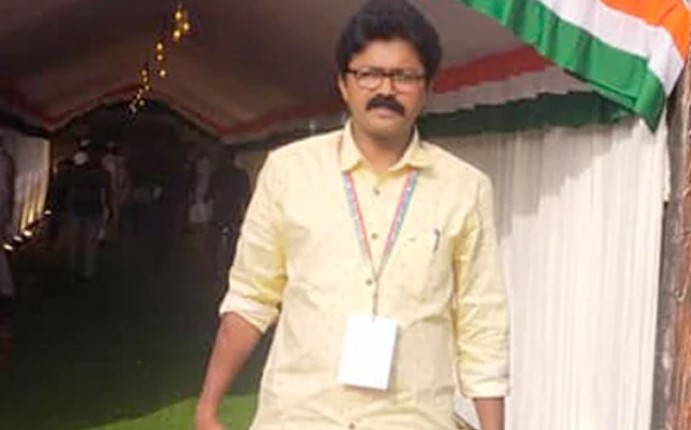
Kerala police add non-bailable charges against Congress MLA Eldhose Kunnappilly for sexually assaulting a woman: Details

0

On Thursday, October 13, the Kerala crime branch filed fresh rape charges against Congress MLA Eldhose Kunnappilly, who was previously being probed for kidnapping and assaulting his estranged girlfriend.

The case against Kunnappilly was registered by Kovalam police in Thiruvananthapuram, Kerala. The MLA has been hiding since being booked in a physical assault case on Tuesday. The district crime branch, that took over the probe and launched a manhunt to locate the Congress MLA informed that both the mobile phones of the MLA have been switched off since he has been on the run.

As per reports, Kunnappilly, MLA from Ernakulam’s Perumbavoor constituency, was charged with rape on false marriage promises, insulting womanhood, kidnapping, trespassing, and assault based on the complaint of the same woman, who had earlier alleged that the MLA had abducted and manhandled her.

The rape charges were added when the victim told the investigating police that the Congress MLA had raped her multiple times in different locations after promising to marry her.

In her statement, recorded before the Magistrate under CRPC 164, the victim further alleged that the MLA abducted her from her home on September 14.

She also said that on one occasion, the Congress MLA assaulted her inside his car while drunk and threatened to kill her.

She added that the MLA later offered Rs 30 lakh to settle the matter, alleged the victim, also levelling serious allegations against the Kovalam police. She said that the police asked her to withdraw and settle the complaint against the MLA. The victim accused the SHO of asking her to write down that she had no complaints.

The victim said that she had all of the evidence against the wrongdoings of the MLA and the police trying to hush the case.

The Kovalam police rejected the allegations and said the teacher didn’t come to the police station for a statement. They claimed that the victim had filed a complaint with the city police commissioner on September 28, and there was only an accusation of physical assault.

Later, however, based on her allegations, the CI was transferred, and the case was given to the Crime Branch.

Meanwhile, in a social media post, the MLA stated that he has done nothing illegal and that he will defend the lawsuit lawfully. On Tuesday (October 11) he applied to the sessions court for anticipatory bail, and his petition has been scheduled for hearing on Saturday, October 15.

Questioned about the case, Congress has said that it would not protect the two-term MLA. Leader of Opposition in the state Assembly V D Satheesan said that KPCC has a clear stand on the issue and the party has never tried to protect him as usually done by the ruling CPI(M) when allegations would crop up against its leaders.

Notably, Eldhose Kunnappilly is the same Congress MLA who had apologised to the Muslim community for donating to the construction of Ram Mandir.

He also claimed he was ‘tricked’ into donating to the Ram Mandir by the RSS. Kunnappilly alleged that some people had come to collect donations for the construction of the temple but ‘did not reveal’ that they were associated with the RSS and that the donation was for the Ram Mandir in Ayodhya. He claimed that ‘out of his innocence’, he donated Rs 1,000 for the temple construction.

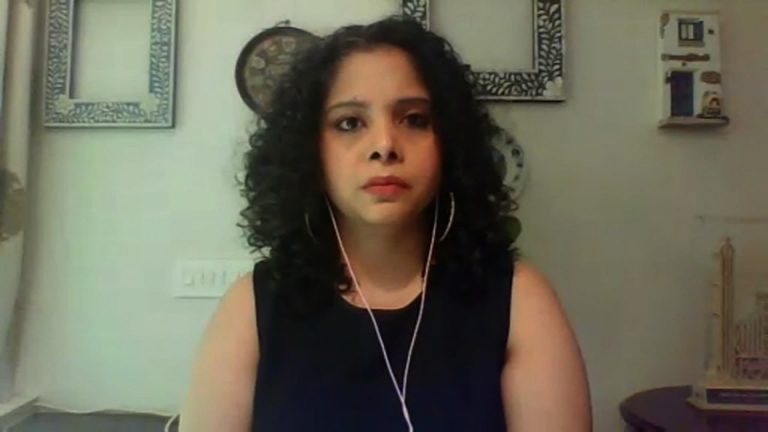
Rana Ayyub pulls the usual victim card after ED files a chargesheet against her, refuses to offer an explanation

‘Journalist’ Rana Ayyub played victim after the Enforcement Directorate filed a chargesheet against her in connection with a case alleging that she illegally acquired funds in the name of charity.

In a statement released on Twitter after ED charge sheeted her, Ms Ayyub called the agency’s action ‘against an alleged ‘motivated’ and abuse of PMLA—the Prevention of Money Laundering Act, under which she has been charged. However, Ms Ayyub did not proffer facts and explanations countering the allegations levelled against her. 

Instead, Ms Ayyub relied on rhetorics to declare herself a victim of “the abuse of PMLA law” for her attacks against the central government.

“The chargesheet filed by the ED is yet another desperate attempt to target and intimidate me for my work, and yet another example of the abuse of PMLA law and misuse of law enforcement agencies to silence me, a voice that questions and critiques the ruling regime,” Ayyub said in a statement released on Twitter.

Ms Ayyub has often raised aspersions on the integrity of the judiciary, particularly on occasions after it has issued verdicts that have run counter to her beliefs. But in her statement after being charge-sheeted by ED, Ms Ayyub oozed confidence in the judiciary, stating that she feels confident that “abuse of process” will not stand judicial scrutiny. And if it does, she always has the fallback card of accusing the Modi government of compromising the judiciary.

ED files charge sheet against donation fraud accused Rana Ayyub

On Wednesday, October 12, the Enforcement Directorate filed a prosecution complaint against alleged journalist Rana Ayyub in a money laundering case. The complaint was filed under Section 8 of the Prevention of Money Laundering Act, 2002 in a special court in Ghaziabad, in relation to the three fundraising campaigns that Ayyub ran on Ketto but didn’t utilise most of the collected money for stated purposes.

In the prosecution complaint, the ED stated that it had initiated a money laundering investigation on the basis of an FIR registered on 07.09.2021 by the Indirapuram Police Station, Ghaziabad, U.P, under various sections of IPC 1860, Information Technology Amendment Act 2008 and Black Money Act against Rana Ayyub alleging that she illegally acquired funds from the general public in the name of charity by launching fund-raiser campaigns on the online crowdfunding platform ‘Ketto’.

ED also stated that Rana Ayyub is a journalist by profession and received foreign contributions without registration under FCRA. According to the statement issued by ED, the investigation revealed that Rana Ayyub launched 3 fundraiser campaigns on ‘Ketto platform’ starting in April 2020, and collected funds totalling Rs. 2,69,44,680/-, namely: 

  • Help in raising funds for slum dwellers & farmers
  • Relief work for Assam, Bihar and Maharashtra 
  • Help Rana Ayyub & her team to help those impacted by Covid19 in India.

The ED probe has found that all the money transferred to her personal bank accounts, Rana Ayyub used only around 10.8% of the fund she collected for relief work, and the bulk of the money was kept in bank accounts. The statement said, “Investigation by ED revealed that the funds raised on the online platforms were received in the accounts of her father and sister and subsequently transferred to her personal accounts. Ms Rana Ayyub utilized these funds to create fixed deposits of Rs. 50 lakhs for herself and also transferred Rs. 50 Lakhs in a new bank account. ED investigation revealed that only approx. Rs. 29 lakhs was used for relief work.”

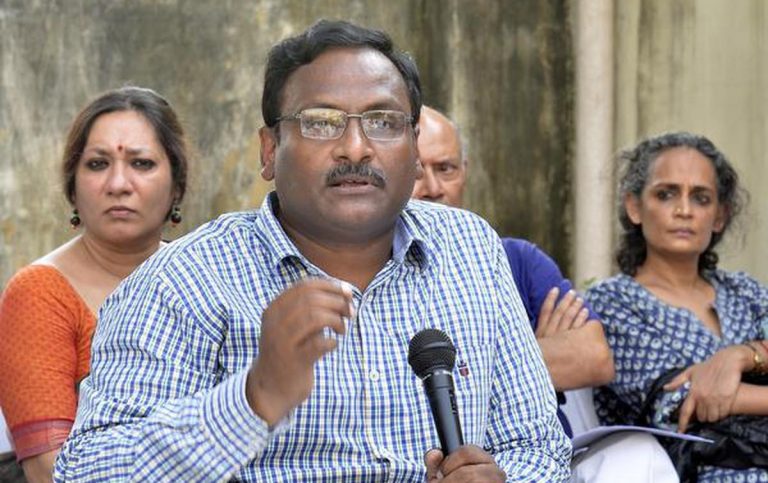
Bombay HC acquits former DU professor GN Saibaba over a technicality, not merits, says he was charged under UAPA without govt sanction over Maoist links

0

The Bombay High Court on Friday acquitted former Delhi University professor Gokarakonda Naga Saibaba in a case for his links with Maoists. However, he has been acquitted by the court for procedural lapses by the prosecution, and not on the merits of the case.

GN Saibaba, a former professor of English in Ram Lal Anand College of Delhi University, was acquitted by a division bench of Justices Rohit Deo and Anil Pansare based on the fact that the session court had framed charges against him under the Unlawful Activities (Prevention) Act without sanction from the central government, which is required under Section 45(1) of the act.

The bench said that even though the charges against the accused are serious and terrorism poses a great threat to the country, a civil democracy can’t bypass procedural safeguards available to the accused. The bench said that “every safeguard, however miniscule, legislatively provided to the accused, must be zealously protected.”

The court also said that the argument that the end justifies the means and procedural safeguards can be ignored to prosecute and punish the accused can’t be accepted. “The Siren Song that the end justifies the means, and that the procedural safeguards are subservient to the overwhelming need to ensure that the accused is prosecuted and punished, must be muzzled by the voice of Rule of Law,” the judgement read.

The court further added that any such diversion from the law will be counterproductive, as it will give the vested interests. The bench said, “any aberration shall only be counter productive, since empirical evidence suggests that departure from the due process of law fosters an ecosystem in which terrorism burgeons and provides fodder to vested interests whose singular agenda is to propagate false narratives.”

The court held that the trial against the accused in the session was null and void due to the said procedural lapses.

However, the division bench accepted the request of the prosecution that if the appeal is granted on the basis of the matter of sanction and not on merits, they may be given permission to try the accused after obtaining the necessary sanction. The bench said that as the trial has been declared null and void due to the absence of the trial, the principle of double jeopardy does not arise here, and the police can reopen the case after obtaining sanctions.

The court said, “In view of the well entrenched position of law, that the rule against double jeopardy has no application if the trial is held vitiated due to invalidity or absence of sanction, we see no reason to dilate any further on the said submission”.

GN Saibaba and several others were convicted and sentenced to life by the sessions court of Gadchiroli in March 2017 for association with the Revolutionary Democratic Front (RDF), an affiliate of CPI(Maoist). Saibaba and the others were found to be posing Naxal literature, and the court had said that they intended to circulate the literature among people in Gadchiroli to incite people to join the Naxals.

Most of the material both in physical and electronic form was found with Saibaba, and allegedly he had introduced others accused in the case with the Maoist organisation.

They were charged under Sections 13, 18, 20, 38 and 39 of the UAPA and Section 120B of the Indian Penal Code. The others charged in the case were agriculturists Mahesh Kariman Tirki (22) and late Pandu Pora Narote (27), professor Hem Keshavdatta Mishra (32), journalist Prashant Rahi Narayan Sanglikar (54) and labourer Vijay Nan Tirki (3). GN Saibaba was arrested later, and their trials were clubbed with his trial.

On February 2014, Additional Chief Secretary Amitabh Ranjan had granted sanction to prosecute the other five under the UAPA, but the sanction was not granted for GN Saibaba who was arrested in May 2014.

However, the High Court stated that the sanction to prosecute the other five was also granted without following the procedure, and therefore declared the sanction invalid. The court said that the sanction was granted without proper application of mind, and that the sanctioning authority only paid lip service to the requirement of considering the report of the appointed authority. As the sanction order didn’t contain any summary of the review of the report, the bench held that the authority had sought the report only for formality and didn’t consider it properly. Therefore, the sanction granted to prosecute the other five was declared invalid by the court.

“Having so observed, and as recorded supra, the sanction given is none-the-less invalid in view of the infraction of the legislative safeguard of the requirement to consider the report of the appointed authority. The purported report contains the conclusion sans reasoning,” the bench said.

As a result, the entire trial against all the six accused has been declared null and void, and the session court’s order has been set aside. The court ordered the release of all the accused in the case from jail, except Vijay Nan Tirki who is already out on bail and Pandu Pora Narote who died during the hearing of the appeal. Court also discharged Vijay’s bail bond.

Earlier, the High Court had rejected a plea by GN Saibaba to suspend his conviction on medical grounds. Saibaba is bound to a wheelchair due to paralysis caused by polio, and had said that he has multiple ailments.  

Pakistan: Hundreds of human corpses found abandoned, decomposing at the Nishtar Hospital in Multan, probe ordered

0

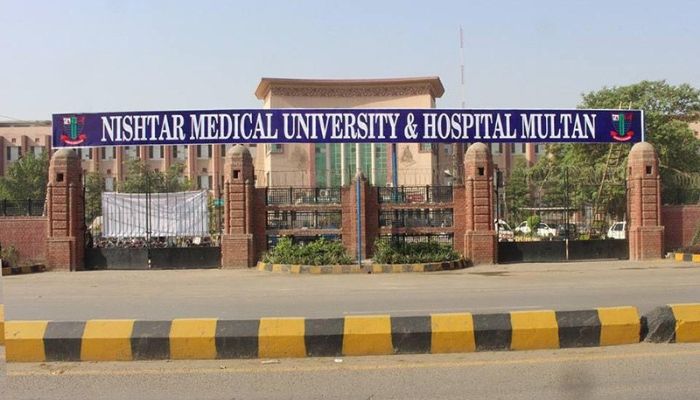
Several unclaimed corpses that had been dumped were discovered in a hospital in Multan, Pakistan, in a disturbing incident. The event has been noted by the Pakistani government, which has begun an investigation.

Abandoned dead bodies are shown decomposing in the open in the disturbing footage from Nishtar Hospital, a teaching facility of Nishtar Medical University. The decayed remains were dumped on the top floor. According to reports, the number of dead bodies is feared to be more than 500.

A section officer wrote a letter to the medical superintendent of Nishtar Hospital in this regard. In this letter, it is said, “An appalling incident of decaying dead bodies on the rooftop of Nshtar Hospital, Multan has surfaced causing public outcry. A competent Authority has taken serious note of this terrible incident and asked for a detailed inquiry into the matter.”

It is further said in this letter, “In view of the above, you are requested to carry out an in-depth investigation into the matter and prepare an inquiry report on the matter which may be shared with this office within three days positively. This matter may be treated as most urgent.”

Horrific visuals of the corpses are doing rounds on social media. Viewer discretion is advised.

Chaudhry Pervaiz Elahi, the chief minister of Pakistan’s Punjab province, has taken notice of the situation and ordered an investigation. He also promised to take strong action against anyone found guilty.

A six-person team was constituted by the South Punjab Health Department on Thursday to look into the corpses that were found at Multan’s Nishtar Hospital.

Reports mentioned that most of the bodies have their chest cavities opened and organs removed.

According to a report by The Dawn, when Chief Minister’s Adviser Chaudhry Zaman Gujjar visited the hospital, he saw numerous putrefied bodies on the roof of the mortuary. He instructed the health authorities to take action against the concerned staff and ordered the cremation of the abandoned bodies.

Muzamil Bashir, the Specialised Healthcare Secretary, was also tasked with investigating the event by Additional Chief Secretary retired Capt Saqib Zafar. He also assembled a six-person team to investigate the matter.

The committee is headed by Bashir, and its members include Dr Muhammad Arfan Arshad, senior medical officer at Nishtar Medical University, Dr Shafiqullah Chaudhry, assistant professor of anatomy, and one representative from each of Multan’s deputy commissioner and municipal police officer. The committee will present its report within three days.

A student at Nishtar Medical University said, “The bodies were being used for medical experiments by the students.”

Switzerland to impose $1,000 fine on those violating ‘Burqa Ban’

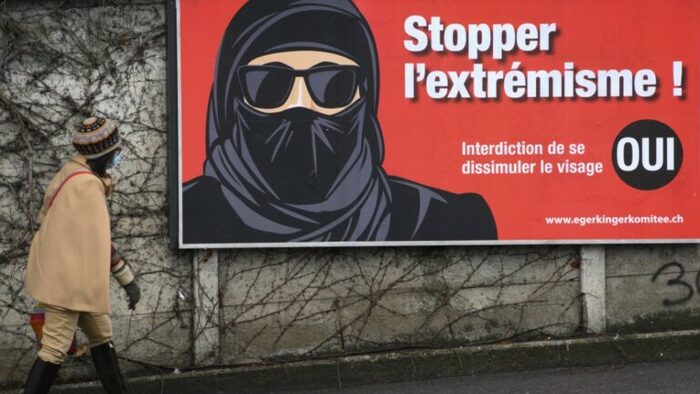
On Wednesday, the Swiss government sent a draft law to parliament seeking to levy fines up to $1000 (Rs 83,000) from people who violate the national ban on face veils in an effort to implement the ‘Burqa ban’ in Switzerland.

Notably, the proposal to ban face veiling in public was passed in a referendum last year. The right-wing Swiss People’s Party (SVP) members who constitute the Egerkinger Komitee, which claims to organize “resistance against the claims to power of political Islam in Switzerland”, are behind the initiative to outlaw face veils.

Contending that “free people show their faces” and “the burqa and niqab are not normal clothes,” the group amassed the necessary 100,000 petition signatures in 2017 to push a referendum on the issue. 51.2% of Swiss voters approved the proposed ban.

The draft law, which was sent on October 12, comes after a 2021 referendum on banning face coverings. Following deliberation, the cabinet softened earlier demands to include the ban in the criminal code and impose fines of up to $10,000 on violators. 

Despite the fact that the cabinet’s proposed sanctions did not directly mention Islam and also aimed to prevent violent street protesters from donning masks, local MPs, the media, and activists refer to the measure as the “burqa ban.” According to a formal statement, face coverings are prohibited in the community to maintain peace and safety, while punishment is not the main focus.

A number of legitimate exceptions were also included in the draft. Aircraft, diplomatic locations, and religious sites may all be exempt from the ban. Health, safety, climatic, and regional customs coverages would remain in effect. It would not apply to commercials or artistic acts.

Except for Switzerland, facial coverings are outlawed in France, which made wearing a full-face veil in public illegal in 2011. In Denmark, Austria, Bulgaria, and the Netherlands, facial coverings are either completely or partially banned.

Muslims make up about 5% of the Swiss population, with the majority having roots in Turkey, Bosnia, and Kosovo.

Egerkinger Komitee

The Egerkinger Komitee proposed a ban on minarets in 2009 on the grounds that they are a manifestation of political Islam. Despite the opposition of domestic Muslim organisations, it was approved by 57.5 percent of Swiss voters.

The SVP first sought to outlaw full-face coverings through a parliamentary initiative to amend the Federal Constitution in December 2014, claiming that burqas pose a threat to national security. However, in March 2017, the Swiss Council of States rejected it.

Varanasi Court rejects plea for a scientific evaluation of Shivling inside Gyanvapi mosque: Details

0

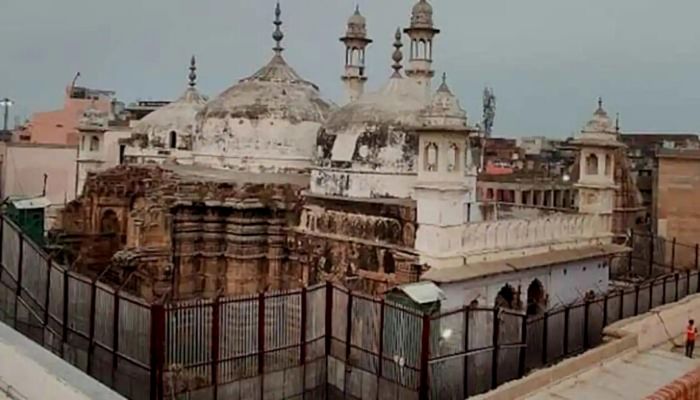
On Friday (October 14), the Varanasi district court turned down the petition of the Hindu side, which demanded the a scientific evaluation of the Shivling found inside the Gyanvapi mosque complex.

The verdict was pronounced by District Judge AK Vishvesh. It must be mentioned that the Anjuman Intezamia Masjid Committee Varanasi had earlier objected to the Hindu side’s request on the grounds that it is located in a ‘prohibited area’.

The development was also confirmed by journalist Gaurav C Sawant of India Today. “No to Carbon Dating of the Shivling (the Muslim side claims it is a fountain). Wazukhana with Shivling to remain sealed: Court,” he tweeted.

“Supreme Court had also said the ‘Shivling’ should not get damaged. Plea rejected on the basis of Supreme Court order,” he added.

On May 17 this year, the Supreme Court of India ordered that the Shivling found inside the Gyanvapi mosque should be protected.

Justice DY Chandrachud had pronounced an order extending that the Varanasi DM should ensure that the area where the Shivling is found should be duly protected. It also maintained that the order in any manner should not restrict or impede the right of the Muslims to use the Mosque for religious purposes. 

The Varanasi court relied on the apex court verdict to reject the petition of the Hindu side. It argued that if carbon dating or ground penetration radar is employed, it may harm the Shivling and go against the verdict of the apex court.

The district court also claimed that an order to allow scientific study can affect the religious sentiments of the masses. A Shivling was discovered inside the Wazookhana of the mosque compound on May 16, 2022, during a survey by the court-appointed panel.

The Hindu side said that this was major proof that the mosque was erected by razing Lord Vishweshwar’s temple in Kashi.

OpIndia spoke to Hindu side lawyer Vishnu Shankar Jain who told that they will now approach the Supreme Court on this matter.

Elon Musk says he is just following Ukrainian diplomat’s recommendation to ‘f*ck off’, informs US govt that he can no longer provide free Starlink

0

On Friday, October 14, Elon Musk’s SpaceX informed the US government that they may no longer be able to provide the Starlink satellite internet services to Ukraine for free. US media reported that SpaceX had informed Pentagon about it last month.

The letter had reportedly asked the US government to take up funding the Starlink services for Ukraine. It is notable here that Musk had provided Starlink services to Ukraine worth millions of dollars per month after the war with Russia affected communications. Starlink services are considered ‘critical infrastructure’ in Ukraine and have been used extensively by the Ukrainian military.

Following the news, there were wide speculations if Musk has taken the decision after the barrage of rude responses and insults he received for proposing a peace plan to resolve the war.

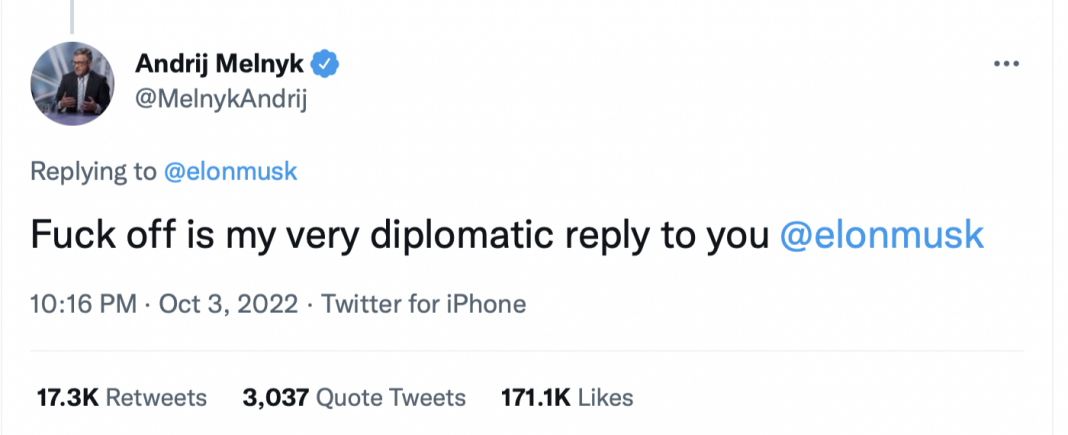
Jason Jay Smart, a journalist working for the Ukrainian media outlet Kyiv Post reminded people that Ukrainian diplomat Andrij Melnyk had recently asked Elon Musk to “f*ck off”.

Elon Musk, in his usual humour, responded by tweeting that his company was simply carrying out the directions issued to him by the Ukrainian Ambassador to Germany. That is, they are ‘f*cking off’.

Apparently, the war of words began earlier this month, when Musk’s peace proposal was met with fierce insults and mockery by Ukrainians and many Americans. Ukraine’s ambassador to Germany Andrij Melnyk had asked Musk to “F*ck Off”.

Ukrainian diplomat’s response to Musk’s peace proposal

On October 3, 2022, in a tweet, Musk put forward a plan to restore peace in Eastern Europe and end the Russia-Ukraine conflict. He wrote, “Redo elections of annexed regions under UN supervision. Russia leaves if that is the will of the people. Crimea is formally part of Russia, as it has been since 1783 (until Khrushchev’s mistake). Water supply to Crimea assured. Ukraine remains neutral.”

The Tesla CEO also sought the opinion of Twitterati through a poll, with the Westerners voting en masse against his proposal. “This is highly likely to be the outcome in the end – just a question of how many die before then…Also worth noting that a possible, albeit unlikely outcome from this conflict is nuclear war,” he tweeted.

On being quizzed about providing satellite Internet access coverage in Ukraine through Starlink, Elon Musk responded, “The will of the people should decide whether they are part of Russia or Ukraine, but Russia invaded areas that would unequivocally choose to be part of Ukraine.”

Ukrainian president Volodymr Zelensky also retorted echoing Melynk’s sentiment with his own Twitter poll. Zelensky Tweeted: “Which Elon Musk do you like more?”

His followers were then able to chose between two options: “One who supports Ukraine” and “One who supports Russia?”

Besides, several westerners also lambasted the Tesla CEO on Twitter for supposedly “siding with Russia” and ‘legitimising’ the annexation of Ukrainian territories by Vladimir Putin.

Elon Musk, who had patiently responded to his critics until then, lost his composure. “We gave Starlinks to Ukraine & lost $80M+ in doing so while putting SpaceX & myself at serious risk of a Russian cyberattack. What have you done besides tweet?” he asked.

Days after this verbal spat on Twitter, now reports have emerged confirming that Elon Musk’s SpaceX will no longer pay for critical Starlink satellite services in Ukraine.

Musk’s SpaceX states it will no longer be able to pay for critical satellite services in Ukraine

Notably, Musk had previously granted Ukraine access to his Starlink satellite network in order to defend Ukraine’s digital infrastructure and avoid internet outages. Elon Musk’s SpaceX’s Starlink satellite internet terminals have been a critical source of communication for Ukraine’s military, allowing it to fight and stay linked even while cellular phone and internet networks have been devastated in the country’s war with Russia.

Recently, however, SpaceX warned the Pentagon that it may discontinue sponsoring the service in Ukraine unless the US military contributes tens of millions of dollars every month.

According to CNN, SpaceX sent a letter to the Pentagon stating that it can no longer pay the Starlink service as it has been. The letter also asked the Pentagon to take over funding for Ukraine’s government and military usage of Starlink, which SpaceX believes will cost more than $120 million for the rest of the year and might cost close to $400 million in the next year.

The decision came months after billionaire Elon Musk said on Twitter that the former head of Roscosmos (Russian Space Agency), Dmitry Rogozin, threatened him with consequences for providing ground-based subscriber equipment of Starlink to the militants of the Nazi Azov Battalion and the Marines of the Armed Forces of Ukraine using military helicopters in Mariupol.

Recently, Musk and several other experts have expressed concerns that the possibility of a nuclear war has increased significantly as the Russia-Ukraine conflict worsens.

Vishnu Shankar Jain talks to OpIndia about the Gyanvapi case, the Places of Worship Act and Hindu symbols found during the survey

The Shringar Gauri-Gyanvapi complex case has been heated, with the first action demanding the right to pray at the Gyanvapi disputed site. Advocate Vishnu Shankar Jain and Senior Advocate Hari Shankar Jain are representing five female petitioners in the lawsuit, which aims to restore the devotees’ right to pray. OpIndia interviewed Advocate Vishnu Shankar Jain, who made some thrilling revelations concerning the case and the underlying concerns.

How did the plan for the case come up? As it was a dispute that persisted for a long but what made the petitioners stand up for the cause and why now?

First of all, we need to understand that a deity is permanent. If at a place, a deity or a form of energy is consecrated, that remains and exists at the same place in time. Therefore, instead of this question, I’d rather ask why the Places of Worship Act was enacted in 1991 and why it is now facing opposition. Why was the nation sleeping for 30 straight years?

There are a whole lot of things which come to be known over a period of time. I came into my profession in 2010. When I studied this case, got the opportunity to be involved in the Ram Mandir case, and studied the rights of Hindu deities, I came to know that Hindus in this country have faced a lot of injustice. One of them is the case pertaining to the Shringar Gauri temple in Kashi Vishwanath, where devotees were allowed to worship till November 1993, but the Mulayam Singh Yadav-led Samajwadi Party Government in Uttar Pradesh stopped them and seized their rights.

So, when I came to know about all this and found that the law allows me to contest this in a court of justice, I decided to go with it. If the law allows me to do this, it doesn’t matter when and how I raise this issue. Timing is not at all important. What is important is that Hindus awakened and decided to correct the injustices done to them through courts of justice and not the streets.

As you mentioned the Places of Worship Act 1991, what do you want to say about that? Do you think it should be repealed?

According to me, the Places of Worship Act is a poorly drafted and vaguely crafted legislation that is susceptible to many interpretations and is such a legal mess that it has a significant impact on Hindus’ legal rights. Whether it be the rights of the deities, or the rights of Hindus to reclaim and restore their religious sites, the bad drafting of this Act has played a vital role in hampering the rights of Hindus. I feel this act should get repealed by the central government.

Are there loopholes in the Places of Worship Act which can be used to advantage of Hindus?

That has already been done. The Act allows deciding the religious character of a site and we have applied it in trial courts in both Kashi and Mathura cases and we have had verdicts on our side.

As the merits of the Shringar Gauri case are also known to everyone including the history of Islamic tyrants destroying Indian heritage and specifically Hindu temples, what do you want to say regarding the progress of the case?

I just want to say that all the Islamic organisations are going with the narrative of the debates that occurred during the legislation of the Places of Worship Act. They need to understand that the drafting of the Act is very poor and all the promises and discussions are irrelevant if we get to see the drafting of the Act. Those are empty promises. Section 3 of the Act says that no character of a religious place will be changed but even after the law is in place, it has been violated like in 1993 when Hindus were thrown out of the Shringar Gauri temple where they had been worshipping for centuries. There was a violation of Section 3 and Section 6 has provisions for punishment but not a single person has been punished to date.

Secondly, in Kashmir after August 15 1947, or in almost every state in India, many Hindu temples have been broken and converted into Islamic sites, resulting in no action and punishment under Sections 3 & 6. Also, this needs to be understood clearly that we are not saying that we want to convert the religious character of a site, we are not saying that if a mosque is constructed at a place through proper legal ways and we want to encroach on it or convert it to a temple. This is the reason I have challenged the constitutional validity of Section 4 and not Section 3. We just want that if a place or a mosque was earlier a Hindu temple, it must be restored and reclaimed so that Hindus are able to exercise their rights. There is nothing else that we need. The Places of Worship Act 1991 does not hamper this but still, the act is open to various interpretations and can be used in different ways. I think the central government should repeal this act as a whole so that Hindus are able to exercise their rights properly. Even if this act does not exist, people will file their cases as legal suits and civil suits in civil courts and get judgments based on merits and facts. There is no point in having such a badly drafted act in place in this country.

About the Shivling, the findings of the court-ordered survey, the sealing and the Wuzukhana

First of all, when the court-commissioned survey of the premise took place on 14, 15, and 16 May, a whole lot of things were discovered from the site and I would like to put it boldly with OpIndia that this is the reason the survey was opposed at such a scale. The Secretary of the Masajid Committee openly threatened and stated that the survey can only be conducted on his dead body. This was just to conceal the truth.

Now coming to the findings, the alleged Masjid has more than substantial proof of it being a Hindu temple. Under the domes of the mosque, there are Shikhars of a Hindu temple. We have seen them and it has been recorded and submitted to the court too. The Shikhar of the Hindu temple has been damaged and it has been covered with the domes of the mosque. There are small windows in the domes through which we can clearly see the semi-broken Shikhar.

After this, several signs and emblems of Hindu culture and tradition have been found on the walls of the disputed structure. Signs like Trishul, Damru, Swastik and many others are clearly visible on all the walls of the disputed structure. There is a Gyanvapi calendar below the central dome and behind that is a Swastik symbol engraved on the wall. This shows how efforts were made to conceal the truth. There are Sanskrit Shlokas written on the pillars and the walls of the mosque.

There are also semi-destroyed statues of deities on the walls. In the basement, there are sub-shrines all around. During the survey, we came across the Wuzukhana and found a well-like structure in the centre of the Wuzu pond. I told Aijaz Bhai, the caretaker of the premise, to drain the water so that we can check what is inside. They kept denying giving various reasons but we insisted on our demand. Finally, they drained it and what we found was astonishing! A huge Shivling came up to be visible in the centre of that pond which they claimed to be a fountain.

So, we filed an application to get that Shivling tested scientifically. They are even opposing this move. If they say that this is a fountain then why get worried? Let the truth come out.

This is so disgusting to find that the Shivling was concealed in a Wuzukhana where Muslims went to wash their feet and rinse their mouth. This is how they played with the emotions of Hindus. They even went to the Supreme Court insisting that they should be allowed to do Wuzu in the same pond. I am very much thankful to the Solicitor General and the Union government who stated in the court that if someone even touches the Shivling, it will be a law & order problem.

This is ludicrous to find that Aurangzeb did not make a single original structure during his reign and constructed this fountain that too adjacent to a millennia-old temple! Aurangzeb did not make a single mosque during his reign and just demolished temples and converted them into Islamic places of worship.

All the threats being issued from the Muslim side are just to ensure that the truth doesn’t come out in the public domain. The truth can only come out through a scientific evaluation of the site and through expert opinion, and not through public opinion or plebiscite. This is a matter of justice, and it cannot be decided in any parliament. This can only be decided in a court of justice, in a court of law. These people are even threatening courts, which is just out of imagination. I feel that the administration should come heavily on them.

Coming to the scientific evaluation thing, why has carbon dating been demanded from the side of Hindus?

I have much to explain regarding this. The fact around carbon dating has been peddled as a misnomer by the other side. There has been a very big conspiracy to derail the entire case from the track. Before answering this question, I’d like to lay emphasis on the background of this case.

On May 5 this year, we met with all five petitioners in Varanasi and the route map for the survey was decided. However, on May 8, a representative of Rakhi Singh, one petitioner among five, filed an application in the court that she wants to withdraw the case. Then, the other four petitioners stated that they will not withdraw the case at any cost and if Rakhi Singh wants, she can withdraw from her side.

Later, all four petitioners were invited to a hotel room by the representative of Rakhi Singh and they were told that if they withdraw the case, they will be benefitted in a way. All four petitioners denied the proposal and stated that they will not withdraw the case even if they are forced to consume poison. Following this, the court ordered a survey and it was completed on 14, 15, and 16 May 2022. Rakhi Singh made numerous efforts to derail the functioning of the commission and made unwarranted statements in the media even after the admonition of the administration to make no public remarks.

Following all this, frivolous campaigns were run in the media that I and my father were removed as the counsels of the Hindu side from this case. This was all being done as part of a controversy. The Muslim side is well aware that they cannot win this case until we represent the petitioners. I and my father received multiple death threats to abandon the case and save our lives. But we were adamant. We are adamant and we will win this case for sure with the blessings of Mahadev.

Now coming to carbon dating, we, as the Hindu side, never asked for it. We never asked for this in court. We asked for a scientific evaluation of the site but as per a conspiracy, it was peddled in the public domain that we were demanding carbon dating. We never ever demanded carbon dating, and I want this to reach the masses through OpIndia.

As per a conspiracy, it was insinuated in the public domain that we wanted carbon dating of the Shivling and it would result in harming the Shivling physically. It should come to public notice that the affidavit of Rakhi Singh and the Muslim side was completely the same and both of them opposed the scientific evaluation of the site. Rakhi Singh is compromised. We only want a scientific evaluation of the site and it is up to the court to decide what kind of tests are needed to be done to evaluate the age of the Shivling.

(This interview of lawyer Vishnu Shankar Jain was taken before the judgement by the Court on the carbon dating of the Shivling found in Wuzukhana)


Hijab debate: Muslim panellists misquote Rigveda to make derogatory remarks against Sita, Lakshmana, exposed when asked to cite Shloka

Months after a Muslim leader Taslim Rehmani incited Nupur Sharma by provocative remarks against Shivling found at the Gyanvapi structure, Muslim panellists in a News 18 debate recently misquoted revered Hindu scripture Rigveda to make derogatory remarks against Goddess Sita and Lord Lakshmana.

Speaking in favour of the veil following the Supreme Court’s split verdict on hijab, Syeda Falak, a Muslim co-panellist in a debate hosted by journalist Amish Devgan, said that Hindus have corrupted their religion and that Hindu scriptures have long endorsed the concept of hijab or purdah.

“The concept of hijab is not exclusive to Islam. Hinduism had it too. Why is it that Lakshamana always saw Sita wearing a purdah?…but, Hindus have long forgotten their religion. They have allowed their faith to be corrupted. But we will not. Islam is immutable and we will resist all efforts to change it.”

It is worth noting that while Syeda Falak felt no qualms in making derogatory references against Goddess Sita and Lord Lakshamana, she had been at the forefront to spew venom against former BJP spokesperson Nupur Sharma, who cited Islamic Hadiths to remark on Prophet Muhammad after Taslim Rehmani mocked Shivling discovered at the Gyanvapi site. She had also shared the picture of Nupur Sharma with shoe marks on her face, indirectly egging on the Islamists to hound her for her remarks on Prophet Muhammad.

Maulana Sajid Rashidi cites Rigveda to claim Goddess Sita wore purdah in front of Lord Lakshamana

The controversy spiralled further when another panellist, Maulana Sajid Rashidi, a Muslim cleric who has a history of making controversial remarks and who had in the past justified mocking Hindu Gods, threw his weight behind Falak’s baseless claims and cited Rigveda to contend that Goddess Sita always wore a purdah so that Lord Lakshamana cannot see her directly.

“Rigveda states that Sita wore purdah in the presence of Lakshamana. The mantras in Rigveda talk about the practice of purdah,” Maulana Sajid Rashidi said.

Rashidi’s remarks drew strident objections from Shubhrastha, an activist and an observant Hindu, who challenged the Maulana to quote the page number and the shloka number where Rigveda talked about Goddess Sita wearing a veil in the presence of Lord Lakshamana.

Finding himself between a big rock and a hard place, Rashidi tried to skirt the challenge, beating around the bushes and resorting to what a person without a response usually does: hurling recriminations.

Shubhrastha and Amish Devgan take Maulana to the cleaners, slam him for misquoting Rigveda

“Maulana shloka bata (Tell me the shloka, Maulana),” Shubhrastha thundered even as Rashidi kept blabbering senselessly but cunningly avoiding divulging the page number and the shloka that said Goddess Sita wore a veil in front of Lord Lakshamana.

Anchor Amish Devgan, moderating the debate, too, chimed in, schooling Rashidi on misquoting the Hindu scripture and taunting him that he is a Whatsapp Maulana who may have fallen for fake claims made on the popular social media app.

Citing Valmiki Ramayana, Shubhrastha stated that there is no reference to Goddess Sita wearing a purdah in front of Lord Lakshamana. On the contrary, as a mark of respect toward his sister-in-law, Shubhrastha added, Lord Lakshamana regarded Goddess Sita as his mother and always spoke to her with his eyes fixed on her feet.

After being incessantly probed about the shloka from Rigveda, Maulana Rashidi finally relented, stating that he read about Goddess Sita wearing a purdah on Page no. 833 and Shloka numbers 19-20.

Shubhrastha instantly flipped to the aforementioned page number and read the Shloka the Maulana was referring to. Shubhrastha said the Shloka was meant to invoke Agni Deva, the demigod of Fire, and had no reference to Goddess Sita, Lord Lakshmana, or the imaginary veil that Syeda and Maulana had bastardised in the Hindu scripture.

While citing nuggets of information from authentic and time-honoured Islamic hadiths can result in political banishment and a looming spectre of death with a murderous mob of Islamists chanting ‘Sar Tan Se Juda‘ against one, distorting holy scriptures of Hinduism do not attract the same fate, which is why such instances keep repeating on live television by usual suspects.

Maulana Rashidi’s anti-Hindu antics

Earlier this year, Rashidi stated in an interview in May that the Hindu religion is no religion in the first place and that people were unnecessarily being happy over the Shivling discovered in the disputed structure of Gyanvapi Masjid. He blatantly termed the Shivling as a ‘fountain’ and made several attempts to demean the Hindu culture and belief.

Maulana Sajid Rashidi is known for his ‘scholarly’ opinions that mostly are anti-Hindu and difficult for the civic society to acknowledge. On January 8, he had passed several warnings that Ayodhya’s Ram Mandir might be demolished by some Mohammad Bin Qasim in future. He had tried to articulate the mythical fantasy that leftists in India continue to peddle in order to whitewash the crimes of tyrannical Muslim rulers who invaded India.

Rashidi had said that Muslim kings who ruled India in the past were benevolent and secular rulers, who not only built mosques for their Muslim subjects but also built temples and generously donated for the upkeep of existing Hindu religious places. He had made similar controversial remarks during the Bhumi pujan of the Ram Temple in August 2020. 

He had then said that a mosque will be rebuilt after demolishing the Ram Mandir. He also claimed that Prime Minister Modi had ‘violated the constitution’ by visiting the Ayodhya temple event. A complaint was later filed against the Islamic cleric for making provocative statements against Hindus and for issuing threats to demolish the under-construction Ram Mandir at Ayodhya.

Supreme Court’s split verdict on hijab ban in educational institutes

On October 13, the two-judge bench of Justices Hemant Gupta and Sudhanshu Dhulia of the Supreme Court of India delivered a split verdict on the Karnataka hijab case. While Justice Gupta upheld the ban on Hijab in education institutes and dismissed the appeals challenging the Karnataka High Court order, Justice Dhulia allowed it. 

As a result of the split ruling, the case will now be sent to the Chief Justice of India for suitable directions.

The implication of the split verdict meant that the Karnataka High Court’s ban on hijab will hold until the CJI issues an order in the case.

The Karnataka High Court declared on March 15 that wearing a headscarf does not constitute an essential Islamic practice as the petitioners failed to provide evidence in that regard. The Karnataka High Court dismissed all petitions contesting the hijab ban in Karnataka schools and decided that the rules for the uniform dress were fair and that students can not object to respective dress codes mandated by educational institutions.

A Full Bench of the High Court comprising Chief Justice Ritu Raj Awasthi, Justice Krishna Dixit, and Justice JM Khazi pronounced the decision. The Bench ascertained that the petitioners’ basic rights were not violated by a uniform dress code at educational institutions.