During the recent visit to Greece, the Indian Air Force Chief Marshal VR Chaudhari met with his Greek counterpart. According to a local Greek media report, both nations have signed an agreement on defence cooperation. The agreement reportedly included potential deal for India to supply its Long-Range Land Attack Cruise Missile (LR-LACM) to Greece.
Turkish media outlet TR Haber has reported that India has extended an offer to supply the missile, which has been developed by the Defence Research and Development Organisation (DRDO). While no official confirmation has been made by India or Greece regarding the missile transfer, TR Haber claimed that India has offered a cruise missile with a range exceeding 1,000 kilometres to Greece, citing various Greek media sources.
This probably missile transfer has reportedly triggered unease in Türkiye. This development has reportedly raised an alarm over the possibility of Greece acquiring such strategic weapons from India.
The missile is capable of targeting major sites like airbases, a defence system, radar installations, and other high-value targets with precision. This raises a serious concern in Ankara. The speculation comes amid already tense India-Turkey relations, especially following Turkey’s excessive military support and cooperation with Pakistan during India’s “Operation Sindoor”, where Turkish drones and weapons were reportedly supplied to Pakistan.
Growing tension in Turkey
India-Greece agreement has raised tension within Turkish defence circles. If Greece acquires the Indian LR-LACM, it could carry out major strikes on Turkish airbases. Then this will be similar to how India allegedly targeted Pakistani bases during Operation Sindoor. The LR-LACM is said to be developed along similar lines at the BrahMos missile, known for its low altitude, high speed flight path that makes interception extremely difficult.
The LR-LACM has a range exceeding 1,000 Km and is capable of carrying both conventional and unconventional warheads. It is developed by India’s Defence Research and Development Organisation (DRDO), the LR-LACM underwent its maiden test flight in 2024
Turkish media reaction: “Targeting Ankara”
The Turkish media has responded firmly to the speculation. A TR Haber article titled “India brings 1,000-km range cruise missiles to the Aegean! They will target Turkey!” suggests that Greece may have sought operational insights from India’s Operation Sindoor to prepare for potential strikes on Turkey. The article also claimed that Greece has gathered specific performance data on India’s Rafale fighter jets.
Historical hostility between Greece and Turkey
Tensions between Greece and Turkey are not new. The two NATO members have had a long-standing rivalry marked by military conflicts and territorial disputes over the Aegean Sea, airspace violations, the Cyprus issue, and, more recently, competition over energy resources in the Eastern Mediterranean. Despite being part of the same military alliance and sharing certain EU cooperation frameworks, the relationship remains fragile.
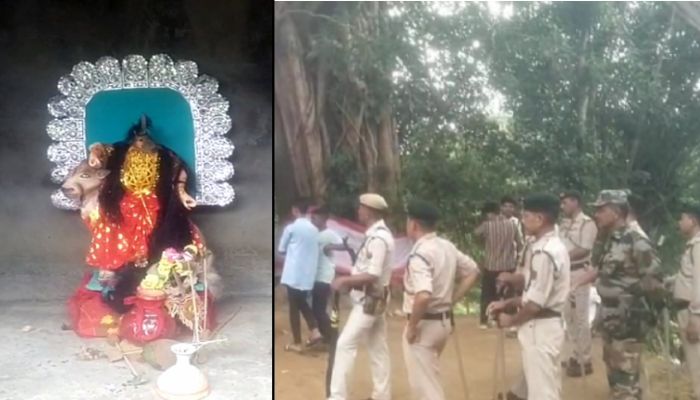
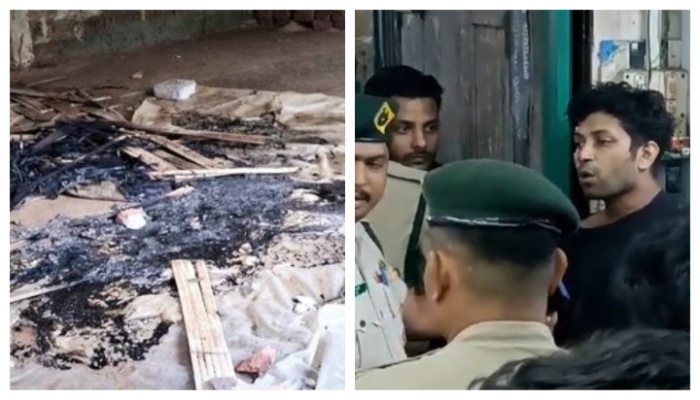
On Wednesday (2nd July) night, a violent Muslim mob desecrated a Hindu temple and beheaded the idol of Goddess Shitala. The incident occurred in Tatuatilla locality in Udaipur in the Gomati district of Tripura.
According to reports, the matter came to light only on Thursday (3rd July) morning. Local Muslims in the area have been raising objections against Hindus performing Puja at the temple since 29th June.
They claimed that the timing of the Hindu rituals coincided with that of Azaan. Three days later on Wednesday, they vandalised the Hindu Mandir to hurt religious sentiments of the Hindu community.
On learning about the matter, the police reached the spot and pacified the situation. A large contingent of security forces, including CRPF and TSR, was deployed to avert any untoward incident.
The visarjan (immersion ceremony) of the broken idol of Goddess Shitala was arranged and conducted by local Hindus in their presence.
According to Hindu residents, the area is home to illegal Bangladeshi Muslims. It has come to light that a temple of Goddess Shani was demolished in a similar fashion a few days earlier.
In the meantime, Udaipur SDPO Nirman Das claimed, “We are treating the matter with utmost seriousness. Additional forces have been deployed to ensure peace and prevent any escalation.” So far, none of the accused have been arrested.
Islamic extremists fomenting trouble in Tripura
This is not the first time that violent Muslim mobs have resorted to creating communal tension in the State of Tripura.
Over the past 1.5 years, Islamic extremists have resorted to multiple acts, aimed specifically to hurt the religious sentiments of the Hindu community.
These include cow slaughter in public, violent agitation in the name of Waqf protests, targeting of Hindu homes and shops, multiple cases of temple vandalism and idol desecration, and even co-opting the national ‘Hijab movement’ to destroy peace and harmony in the Northeastern State.
1. Public Cow slaughter on BakriEid
In June 2025, Muslims publicly slaughtered a cow on BakriEid to hurt the religious sentiments of the Hindu community. The police in the Gomati district of Tripura arrested four people in connection with the case.
The case is from Chanban area of Udaipur subdivision. After receiving the information, Tripura Police reached the spot and confirmed the violation of rules related to animal sacrifice.
Soon after, arrangements were made to bury the remains of the cow in the ground. Seeing the tension rising in the area, adequate security forces were deployed to prevent the repetition of cow slaughter in the open.
2. Violence in the name of Waqf
In April this year, Muslims protesting against the newly enacted Waqf Amendment Act attacked police personnel on the Kailashahar highway in Unakoti district of Tripura.
According to reports, several people including police personnel were injured during the attack. The Muslim mob targeted the law enforcement authorities after being told to stop their rally owing to security concerns.
They were scheduled to take out a procession from Tilabazar to SDM’s former office. A Muslim man anonymously admitted to attacking the police after their plans were thwarted.
Muslims attack police in Kailashahar, image via North East Today
“Everything was going peacefully until we were stopped at Kubjar. We were only raising our democratic demand. Suddenly, the police intervened, and in the confusion, a scuffle broke out,” he said.
The police resorted to a lathi charge in defence. The Muslims continued their attack, injuring police constable Debjit Das and SDPO Kailashahar Jayanta Karmakar in the process. The cops arrested 7 attackers in connection with the case.
With the help of DIG Rathiranjan Debnath, the situation was brought under control. A team of TSR, CRPF and BSF were deployed in the area to prevent any untoward situation. A local Congress leader named Badruj Jaman was leading the protest march against the new Waqf law.
3. Riots and targeting of Hindu homes and shops
In October 2024, violent clashes broke out in the Kadamtala block area of North Tripura after a Muslim mob attacked Hindu houses and members of a local club over the collection of paid subscriptions (chanda) for Durga Puja.
The attack comes 3 days before the commencement of the annual Hindu festival. According to a report by Tripura Chronicle, a local club organising the Durga Puja sought a contribution of ₹5000 from a Muslim driver named Jahar Mia.
He was reportedly travelling to Assam with some of his relatives. Mia refused to pay, leading to a heated argument and confrontation between him and the club members.
Later, a Muslim mob siding with the driver broke into the houses of the Hindu club members and attacked their families.
They did not spare women and children during the targeted attack. The victims sustained injuries and an atmosphere of tension gripped the entire neighbourhood.
During the orgy of violence, the Muslim mob vandalised two homes and a beauty parlour. In visuals that have surfaced on social media, scared Hindu residents were seen narrating their ordeal and showcasing the extent of damage caused to their property.
Went to Kadamtala (Tripura) this evening to talk to victims of communal violence.
But the destruction I witnessed will stay with me forever.
Burning houses, goods dumped on the streets and shops on fire.
— Dibakar Dutta (দিবাকর দত্ত) (@dibakardutta_) October 7, 2024
An arson attack was also carried out in the Kadamtala Bazar area. Muslim mobs, armed with machetes, terrorised Hindus and looted shops in the market area. One man was brutally killed and 17 others were injured during the onslaught on the Hindu community.
The attack triggered retaliatory measures, prompting the law enforcement authorities to intervene. A large contingent of police and paramilitary forces, including Tripura State Rifles (TSR), was deployed to pacify the situation.
Following the incident, the local administration imposed Section 163 of the Bhartiya Nyay Sanhita (BNS) in the area for 3 days, preventing the assembly of 5 or more people.
4. Multiple cases of temple vandalism
In the same month, extremists vandalised a Shiva temple in Pekucherra village in Panisagar block in North Tripura district. This led to communal clashes in the area.
Communal clashes erupt in North Tripura after unknown miscreants vandalise Shive Temple (Source: ENews Time and Northeast Herald)
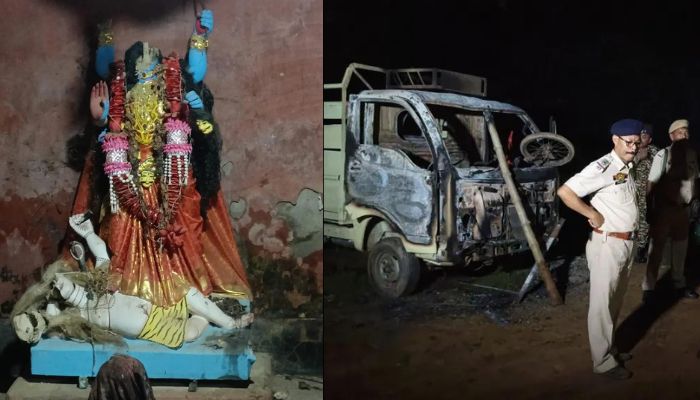
In August 2024, an idol of Goddess Kali was found beheaded in Katraibari village in Ranirbazar area of Tripura. The incident sparked communal tension in the area over the desecration of the 30-year-old temple.
Idol of Goddess Kali vandalised, car burns after arson attack, images via East Mojo
5. Hijab row in Tripura
The debate over the wearing of hijab by female Muslim students, in complete disregard to existing school uniform rules, reached the northeastern State of Tripura in August 2023.
Muslims students, studying at the government-run Koroimura Higher Secondary School in the Sepahijala district courted controversy after they flouted school norms and attended classes in hijab.
The headmaster of the Koroimura Higher Secondary School, Priyatosh Nandi, intervened in the matter and urged all students to wear school uniforms irrespective of religion.
He told the media, “After a meeting with teachers, I recently directed all students to attend school wearing proper uniform. However, girl students from the minority community said they cannot follow this directive as wearing hijab is a religious belief.”
A group of Hindu boys thereafter wore saffron-coloured kurta to the school in protest. They however assured to wear school uniform if every student, irrespective of their religion, followed it.
In the meantime, a 10th Std Muslim student (studying at the same school) vandalised the room of the headmaster in ‘protest’. He was thereafter thrashed by a group of people.
For years, South Calcutta Law College’s student union room was not a space for debate or leadership training. Instead, under the control of Monojit “Mango” Mishra, it transformed into an unauthorised bar a nightly hub for alcohol, intimidation, and criminal activity that foreshadowed the horrific gang rape of a 24-year-old student on 25th June. Multiple sources, including students and faculty, describe a reign of terror enabled by systemic inaction despite Manojit’s extensive criminal history.
The union room: From campus hub to ‘Monojit’s bar’
Speaking to NDTV, a batchmate of Manojit said, He seized the union room for his personal fiefdom. Every evening, Monojit and his associates used to drink alcohol in the union room, turning it into a de facto bar and party spot. The union room became synonymous with harassment, where female students were photographed, their images allegedly morphed and circulated in WhatsApp groups. Manojit reportedly threatened to shoot staff over minor issues and once brutally assaulted a security guard.
A decade of impunity: Complaints ignored, crimes unchecked
Monojit’s ability to operate freely stemmed from a shocking pattern of institutional failure. At least 11 criminal cases were filed against Monojit across Kolkata police stations since 2013, including assault, molestation, theft, and vandalism. A 2019 complaint accused him of tearing a woman’s clothes on campus and molesting a woman in Swinhoe Lane in March 2022.
In 2023, he was rusticated for stabbing a guy. Despite the fact that he was readmitted in 2017. In 2024, he was inexplicably hired as a contractual clerical staff member, earning ₹500 daily. As a former Trinamool Congress Chhatra Parishad (TMCP) functionary, Manojit wielded political influence. Though TMCP claims he was removed in 2021, his ties allowed him to bypass accountability for years.
The 25th June attack: A crime enabled by negligence
The rape inside the college guard room was a culmination of this unchecked culture. On Manojit’s order, security guard Pinaki Banerjee allegedly locked the campus gate and ignored the victim. He is now in arrest. Police suggest he may turn approver, confirming Manojit’s control.
In the hope of silencing the survivor. Co-accused Pramit Mukherjee and Zaib Ahmed recorded the assault. Apart from that, Monojit reportedly entrapped the victim by promising a union position, a hollow offer since no official student body existed for years.
Fallout and reckoning
In the aftermath, authorities have taken belated action: • Mishra was fired, and payments made to him were ordered recovered. The Bar Council of West Bengal cancelled his membership. • Co-accused students were expelled, and campus security was overhauled, including restricted hours and female guards. • A 5-hour crime scene reconstruction with the accused aimed to solidify evidence.
Institutional soul-searching: Who enabled “Mango’s Bar”?
As investigations continue, critical questions remain unanswered. Why did college leadership ignore a 2022 anonymous letter warning of Monojit’s danger? How did police fail to act on seven FIRs? And why did teachers stay silent after being threatened with violence?
The union room’s transformation from campus space to criminal enclave symbolizes a profound governance failure. For students and faculty, justice requires not only punishing Mishra but also holding accountable those who allowed his “bar” to operate with impunity.
The long-running dispute between Shahi Jama Masjid and Harihar Mandir in the Chandausi zone of Sambhal district, Uttar Pradesh, has again gained prominence. A new petition has been filed in the Chandausi court demanding a temporary ban on Namaz in the mosque and seal the site. Notably, Hindu organizations say that the Shahi Jama Masjid was initially the Harihar Mandir.
The court has accepted this petition and fixed the date of 21 July 2025 for hearing. The petition was filed by one Simran Gupta, asking to ban the offering of namaz in the mosque until the survey and legal status of the disputed site is cleared. It has been claimed in the petition that this site was a part of the temple complex and archaeological evidence is also present there.
Simran Gupta argued in the petition that until it is decided whether the place is a temple or a mosque, no religious activity should be allowed. He has also demanded that the mosque be sealed and put under the supervision of the DM till the ASI survey and the court cases are settled.
In the meanwhile, the Allahabad High Court has delivered a crucial verdict allowing survey of the disputed site. The High Court has rejected the petition moved by the Muslim faction, thus affirming the order of the lower (trial) court to survey the controversial site. This ruling allows the way for a new survey of the mosque compound.
Keeping in view the sensitivity of the matter, the local authorities and police are alert. Arrangements are being made for the next court-ordered survey, and officials have averred they are determined to keep the process peaceful and unbiased.
Violence during previous survey
The issue made national news last year when riots erupted during the second round of court-ordered survey of the Masjid. A massive crowd had amassed at the location during the process, and tensions rapidly mounted into fighting. Five people lost their lives in the altercation, and a number of police officers were severely injured.
After the violence, 96 individuals were detained, and FIRs were registered against 2,750 unidentified individuals. A Special Investigation Team (SIT) that was established to investigate the case has now filed a 1,100-page chargesheet in court, identifying 22 individuals as the main accused. Among them is Samajwadi Party MP Ziaur Rahman Barq, who has been made the principal accused. Another individual, Suhail Iqbal, has been removed from the chargesheet.
Background of the case
The case initially emerged in December 2023, when a civil suit was lodged in Sambhal Court by four Hindu petitioners, Shankar Giri, Indresh Kumar Gautam, Ramashankar Giri, and Harishankar Giri. They alleged that the Shahi Jama Masjid is erected on the site of a temple dedicated to Lord Shiva, which was traditionally referred to as Harihar Mandir.
The petitioners prayed for permission to hold regular worship of gods at the location, a ground survey of mosque premises, and an injunction against Islamic religious activities there. They alleged that traces of Hindu religious architecture, such as stone carvings, idols, and temple-type structures, were apparent within the mosque.
The Civil Judge (Senior Division), Sambhal, in January 2024, ordered a local survey of the site by a court commissioner. But the mosque’s management committee, Anjuman Intezamia Committee, opposed this in the High Court as being illegal and provocative. The court initially ordered a stay on the survey.
This has evoked a call from Hindu factions for the location to be identified as a temple, while the Muslim population insists that the location has been a mosque for centuries. With the court now permitting a fresh survey, all attention is focused on the developments to come and the next hearing.
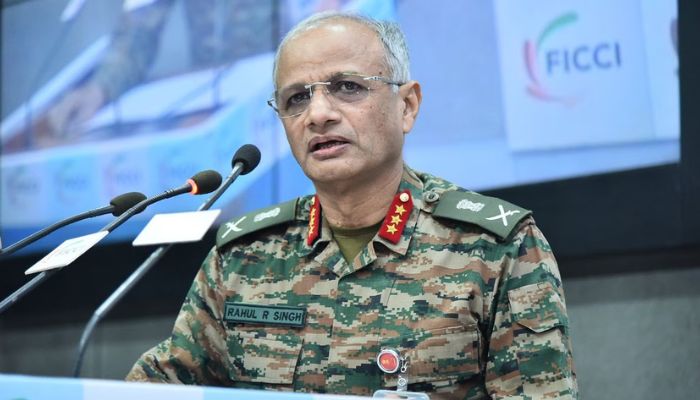
Lieutenant General Rahul R Singh, Deputy Chief of Army Staff, has said a few things concerning the contributions of China and Turkey towards Pakistan during the Operation Sindoor, India’s four-day military operation against Pakistan in May. Speaking at an event hosted by FICCI in Delhi, General Singh said that China provided Pakistan with real-time information about India’s military movements during the operation, which began after the Pahalgam terror attack on 22nd April that left 26 people dead, mostly tourists.
As per General Singh, Pakistan was in the forefront, but it wasn’t alone. He described how China was backing Pakistan behind the scenes, providing crucial intelligence throughout the conflict. Pakistan received live feeds on India’s “important vectors”. While speaking at a military level, Pakistan informed India that they knew of a particular vector being “primed” and “ready for action,” patently displaying that they were receiving live feeds, quite possibly from China.
#WATCH | Delhi: At the event 'New Age Military Technologies' organised by FICCI, Deputy Chief of Army Staff (Capability Development & Sustenance), Lt Gen Rahul R Singh says, "Air defence and how it panned out during the entire operation was important… This time, our population… pic.twitter.com/uF2uXo7yJm
General Singh indicated this was not surprising. He noted that 81% of all Pakistan’s hardware over the last five years has been from China, and, as a result, it is not surprising that China can play with a kind of “live testing ground” in Pakistan. He likened it to being like a laboratory, where China gets to observe how its equipment functions when put into real war-like situations without actually joining the battlefield.
Taking a swipe at Beijing, General Singh mentioned one of the Thirty-Six Stratagems, an influential Chinese essay on tactics employed in war and politics. He pointed to the strategy of “killing with a borrowed knife,” citing that China was employing Pakistan to harm India, rather than getting directly involved. “China, the old victim nice, would prefer to have the neighbour harm and not soil its own hands,” he said.
The general also mentioned Turkey’s role, which, he said, supported Pakistan diplomatically and perhaps in other ways during the operation. Post-conflict, Pakistani PM Shehbaz Sharif visited Turkish President Recep Tayyip Erdogan, who pledged complete support for Pakistan. Erdogan also demanded greater cooperation in counter-terrorism and intelligence sharing.
Operation Sindoor was initiated by India on 7th May, in response to the ghastly terror strike in Pahalgam. India held Pakistan-based terrorists responsible for the murder of 26 individuals, most of them were tourists, and a local who tried to help them. India responded by carrying out pinpoint strikes against nine terror camps in Pakistan and Pakistan-occupied Kashmir (POK). More than 100 terrorists were said to have been killed in the operation.
Pakistan retaliated by carrying out drone strikes across India’s border states, particularly in Jammu and Kashmir’s Rajouri and Poonch districts. At least ten Indian civilians were killed, and various areas were damaged as a result of the strikes.
A ceasefire was agreed on 10th May, but Indian authorities later asserted that Pakistan had contacted them for de-escalation only 48 hours into the operation, demonstrating the pressure they felt.
In the case of sexual exploitation of Hindu girls by Mohsin Khan in Indore, victims have made new revelations about the coach who was arrested in Indore on charges of rape and sexual harassment. The victims told how Mohsin Khan used to call Muslim girls his sisters and he had deliberately targeted Hindu girls.
The Hindu girls were so enamored with him that in general conversations, they would even say that ‘for sir I am ready to be locked in a suitcase.’
This revelation has been made by a victim herself who was trapped in Mohsin Khan’s trap in a conversation with Organiser’s journalist Subhi Vishwakarma. In Subhi’s ground report, the girl can be clearly heard saying all these things.
MP Grooming Jihad
"Sir ke lie mai suitcase me pack ho jaungi.." told woman trapped by a Muslim teacher.
I visited Indore last month to investigate a highly controversial case involving Mohsin Khan, a shooting academy operator who trapped over 30 Hindu girls and has over 100s of… pic.twitter.com/GNAJqfZPdE
According to the ground report of Organiser, the victim said that Mohsin used to make lewd comments about Hindu girls and also used to have video calls with the girls on ‘Omegle App’ while being naked.
As per the victim, Mohsin used to say that all Muslim girls are his sisters, but Hindu girls are his target. He also used to ask Hindu boys to ‘use and throw’ the girls.
Mohsin used to stop Hindu girls from wearing Kalawa or applying Tilak. Mohsin Khan used to feed meat to those girls who did not eat it. This included Jain and Rajput girls.
‘I can eat beef, I can get it packed in my suitcase’
Mohsin used to give pills to girls in the name of helping them gain power and pills to boys in the name of stamina. The victim told that a girl started praying at 4 in the morning under the influence of Mohsin. That girl started saying ‘Assalam Aleikum’ or ‘Allah Hafiz’.
Another girl studying in the coaching even jokingly said that she could ‘eat beef for Mohsin or even let him pack her in a suitcase.’
Married women used to go to Mohsin’s flat by telling lies
Mohsin used to call several Hindu girls to his flat. His friends also used to bring married Hindu women to the flat. Many girls used to stay at his flat on the pretext of going to coaching or college.
Mohsin especially targeted minors aged 12 to 15 years. This also included a Dalit receptionist. The victim said that Mohsin even talked to a 12-year-old girl about her breasts.
The victim further said that Mohsin used to openly talk about his naked video calls in front of them.
Diatribe against Hindu leaders like PM Modi and UP CM Yogi
The victim further said that Mohsin would tell the girls to recite Kalma once and told them it is very holy. Mohsin also used to speak ill of leaders like PM Narendra Modi and UP CM Yogi Adityanath.
Mohsin would also stop the girls from going to the temple and would say, “You offer water to God, it is better to give that water to the poor.”
Mohsin used to compare himself to Virat Kohli. Mohsin used to make fun of things related to Hindu religion. Some students had told Mohsin that instead of offering chaadar, one should help the poor, but after that, Mohsin used to get angry.
The victim said that slips of paper were found in water bottles in Mohsin’s flat. Something was written on these slips.
Mohsin also opposed Israel. He would tell the girls not to eat certain chips or snacks because they were associated with Israel.
The Additional Commissioner of Police said that Mohsin has been charged under rape, POCSO Act, SC/ST Act and Madhya Pradesh’s anti-conversion law. The police are giving priority to the case and are committed to providing justice to the victims.
Officials say they are conducting awareness campaigns to prevent repeat of such cases..
What was the entire matter
Mohsin Khan, the coach of Dream Olympic Shooting Academy in Indore, used to trap Hindu girls, rape them and convert them by blackmailing them. Objectionable videos of 30 women were found on Mohsin Khan’s phone.
Mohsin had confessed to deliberately targeting Hindu girls in a video. Police have so far registered 8 FIRs in this case. These include charges of rape, POCSO Act and fraud.
In a recent post on X, Karnataka Chief Minister Siddaramaiah made controversial remarks regarding the COVID-19 vaccine, sharing what many believe to be misleading information. In his post, he specifically mentioned the Hassan district in Karnataka and claimed that more than twenty people had died due to heart attacks. He attributed these deaths to what he described as a “hasty action” during the pandemic.
In the past month alone, in just one district of Hassan, more than twenty people have died due to heart attacks. The government is taking this matter very seriously. To identify the exact cause of these series of deaths and to find solutions, a committee of experts has been…
Invoking global health bodies like the World Health Organization and other regulatory agencies, Siddaramaiah asserted that these institutions themselves had acknowledged that vaccines were approved without long-term data, calling it a “calculated risk” in response to the global emergency.
As Chief Minister, I have a duty to respond to the genuine concerns of people who have lost loved ones unexpectedly. When parents lose their young children or families lose breadwinners without warning, seeking clarity is not misinformation; it is an act of governance rooted in… https://t.co/JjssvDhNeV
Expressing sympathy for the public, he added that a government that truly values every life has a duty to investigate such incidents thoroughly. According to him, both the government and other responsible stakeholders must strive to uncover the truth, act upon it with integrity, and ensure the protection of citizens through transparency and genuine care.
To address the situation, he constituted a committee of experts under the leadership of Dr. C.N. Ravindranath, Director of the Jayadeva Institute of Cardiovascular Sciences and Research. It’s important to note that the study by this expert panel is still underway to determine whether COVID-19 vaccines have any possible adverse effects. However, despite the investigation being in progress, Siddaramaiah directly blamed the BJP without providing substantial evidence and strongly disapproved of what he perceived as the party’s attempt to politicize the issue for electoral gain.
Continuing his criticism, he stated that the quick approval and mass distribution of the COVID-19 vaccine to the general public may have contributed to the sudden deaths, citing several international studies that have allegedly pointed toward a potential link between vaccines and a rise in heart attacks.
This is not the first time congress have claimed fake allegations like this. Previously, it has been found spreading baseless claims, and rumors about Covaxin. Congress and Rahul Gandhi had tried to castigate the Serum Institute of India and its CEO Adar Poonawalla as greedy corporates who are looting the public. In April 22, 2021, the party claimed that the Serum Institute has fixed three different prices for the Covishield vaccines for supplying to the Central government, state governments, and private hospitals.
What Kiran Mazumdar Shaw said?
In response, Kiran Mazumdar-Shaw, the Executive Chairperson and Founder of Biocon Limited and Biocon Biologics Limited, countered Siddaramaiah’s claims. She stated that India’s COVID-19 vaccines were developed and approved under the Emergency Use Authorization (EUA) framework, following rigorous clinical trials and safety protocols aligned with international standards. Shaw emphasized that suggesting these vaccines were “hastily” approved was factually inaccurate and contributed to the spread of public misinformation. According to her, while vaccines, like all medications, can have side effects in a small number of individuals, they have been instrumental in saving millions of lives. She urged that people recognize the robust scientific and data-driven processes behind vaccine development instead of engaging in retrospective blame games.
COVID-19 vaccines developed in India were approved under the Emergency Use Authorisation framework, following rigorous protocols aligned with global standards for safety and efficacy. To suggest that these vaccines were ‘hastily’ approved is factually incorrect and contributes to… https://t.co/uMEcMXzBV0
It’s also worth highlighting that during the height of the pandemic, swift action was vital to saving countless lives. India, despite resource constraints, not only vaccinated its own population but also sent vaccine supplies to other nations in the spirit of global solidarity. It is disheartening that such a nation is now being questioned and blamed based on unverified claims by its own leaders.
Study reports highlights
Extensive studies conducted by Indian health agencies including the Indian Council of Medical Research (ICMR) and the National Centre for Disease Control (NCDC) have categorically found no proven link between COVID-19 vaccinations and sudden cardiac arrests. These findings directly contradict the speculative assertions made in the tweet.
Before attributing deaths among individuals aged 18 to 45 to the vaccine, it is necessary to evaluate whether those cases were the result of other underlying health conditions, post-COVID complications, environmental factors such as extreme heat, or lifestyle choices including substance abuse. Making baseless accusations against the government without sound scientific backing is not only misleading but also harmful to public trust in healthcare systems.
The Chief Minister claimed that the state government is fully committed to uncovering the true causes behind the sudden deaths reported in Hassan and elsewhere in Karnataka. In this context, the government has launched initiatives like Hridaya Jyothi and Gruha Arogya, aimed at enhancing public health surveillance and ensuring timely intervention. Siddaramaiah also advised individuals experiencing symptoms such as chest pain or difficulty breathing to immediately visit the nearest health center for medical evaluation.
Further reinforcing the safety of the vaccines, a 2023 study conducted by ICMR’s National Institute of Epidemiology, along with a prospective study currently being undertaken by AIIMS, concluded that India’s COVID-19 vaccines are both safe and effective. These institutions have strongly warned against spreading unsubstantiated claims linking vaccines to sudden deaths, labeling such statements as false, misleading, and devoid of scientific merit.
What’s more troubling is that certain opposition leaders appear to be using this sensitive issue to generate political attention, thereby creating panic among the public. Initially, these very leaders cast doubt on the credibility of India’s pharmaceutical industry, thereby weakening public confidence in homegrown vaccine development. Now, they are attempting to associate unrelated deaths with the vaccine, despite conclusive evidence to the contrary.
Criticizing the government’s policies and performance is a legitimate part of a functioning democracy. However, spreading misinformation and inducing fear among citizens, while simultaneously discrediting India’s scientific and economic foundations for political mileage, is both irresponsible and unethical. The government’s commitment to evidence-based policymaking and transparency in public health ensures that science, and not speculation, guides its decisions for the well-being of every citizen.
Power Tussles within the Congress in karnataka
Beyond the vaccine controversy, these statements can also be interpreted through the lens of intra-party power struggles. The timing of the tweet coincides with intensifying political rivalry between Chief Minister Siddaramaiah and Deputy Chief Minister D.K. Shivakumar. Although the Congress party in Karnataka presents a public image of unity, internal factionalism appears to be on the rise.
In July 2024, this conflict became more evident when Vokkaliga seer Chandrashekar Swamiji publicly urged Siddaramaiah to step down in favor of D.K. Shivakumar. During the Kempegowda Jayanti event, where both leaders were present, the seer declared, “Everyone has enjoyed power. Our D.K. Shivakumar hasn’t become the Chief Minister yet. Please hand over power to him.” The uncomfortable body language between the two leaders on stage only intensified speculation about a brewing power struggle.
With caste-based loyalties being invoked and multiple factions within the party seeking greater influence, Shivakumar appears increasingly cornered. His repeated public denials about wanting the top post only seem to underline the reality of an internal crisis. The question now is not whether the power struggle will erupt, but when.
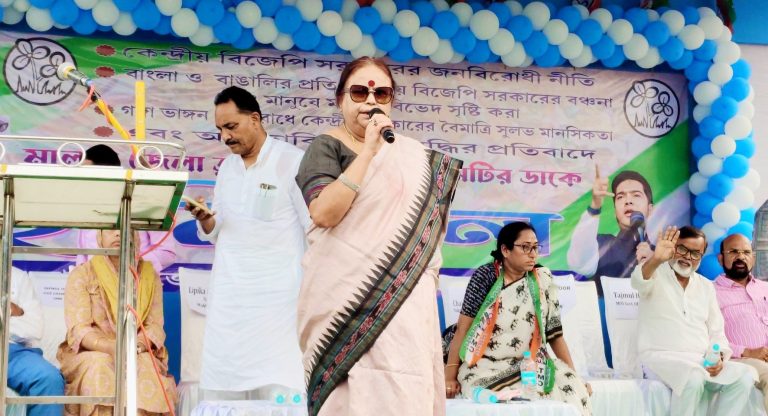
Trinamool Congress MLA Savitri Mitra has created a massive controversy in West Bengal by claiming that Muslims don’t do politics on religion, only Hindus do that. The Manikchak MLA made the controversial comments while addressing a preparatory meeting for the 21 July TMC Martyrs’ Day on 3rd July in Malda. She also said that TMC likes Muslims the most because they don’t protest.
Savitri Mitra said, “BJP is seeking votes in the name of Ram. If we can say Jai Shri Ram, why can’t we say Jai Jagannath? Are Ram and Jagannath different? We like Islam the most. Muslims don’t protest. But Hindus are doing politics over religion.”
The TMC MLA also mentioned that Hindus don’t have a system of learning about their religion, but Muslims can learn Arabic and Quran. She said, “We don’t teach Bhagwat Gita anywhere. But there is a system for Muslims to learn Arabic and read the Quran. BJP will not get votes in the name of Hindutva.”
BJP has slammed the TMC MLA over her open appeasement of Muslims. BJP West Bengal posted on X, “Openly mocking Sanatan Dharma, belittling the Gita, and pandering to vote-bank politics, this is the real face of TMC.” They further stated, “This isn’t just an insult to Hindus, it’s a direct attack on our culture, our traditions, and our identity,” adding that TMC will pay the price for this in 2026 assembly elections.
"Our favourite religion is Islam. Muslims don’t protest. But Hindus are doing politics over religion. Nowhere are we taught the Bhagavad Gita, but Muslims have provisions to learn Arabic and study the Quran."
BJP’s Amit Malviya said that Savitri Mitra is Mocking the Bhagavad Gita, targeting Hindus for “doing politics”, and openly favoring one religion over another, adding that this is not secularism, this is institutionalised Hindu hatred.
South Malda BJP General Secretary Amlan Bhaduri said that Trinamool leaders are repeatedly insulting Hindus in an attempt to appease the minorities. However, the TMC MLA defended her comments, saying that TMC is a party of Muslims. When asked about BJP’s criticism of her comments, she said, “BJP says Trinamool is a party of Muslims. We are Muslims. And BJP is a party of Hindus.”
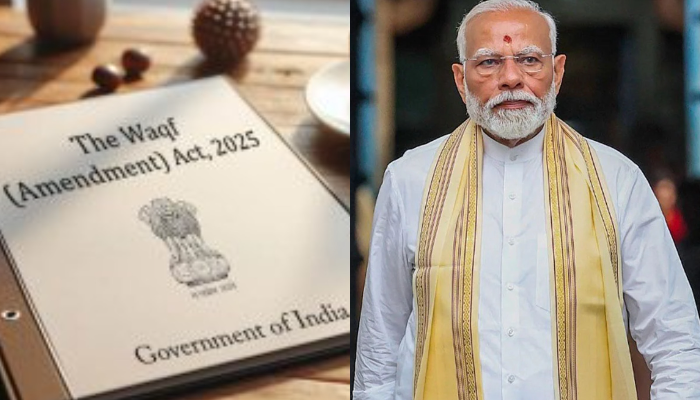
The centre notified the “Unified Waqf Management, Empowerment, Efficiency and Development Rules, 2025” on 3rd July in relation to the recently updated laws, pertaining to portal and database of the properties, audit and account maintenance, among others. The guidelines have been formulated under the powers conferred by Section 108B of the Waqf Act, 1995, which was introduced through the Waqf (Amendment) Act 2025 and went into force on 8th April.
Section 108B permits the centre to set up regulations for the waqf asset management system, registration, accounts, audit, and other similar matters along with the process for paying maintenance to widows, divorced women and orphans as well as other issues. An important highlight is that Waqf properties will be uploaded and updated on the site.
Unified online platform
The Central Waqf Management System (CWMS) is an online platform where all waqf property, encroachment, development and financial data will be recorded and made publicly available. It must be shared in compliance with the new regulations to guarantee that information is easily accessible in digital format rather than being restricted to files in State Waqf Boards.
The oversight and management of the portal and database would fall under the purview of the Joint Secretary to the Government of India in the Ministry of Minority Affairs who helms the waqf division. The database and gateway will automatically generate a unique identification number for every waqf and each asset owned by the board for records that are genuine. It can be utilised to guarantee surveillance and monitoring of waqf and its properties in every state, as well as for all future references.
Each state government is also directed to designate a Nodal Officer who has a position at least equivalent to that as Joint Secretary. A central support unit must be set up in consultation with the centre to help streamline the uploading of waqf and property details, registration, account maintenance, audit and other related activities.
Accountability of Mutawallis
Every mutawalli (managers of waqf estates) must register on the portal and database using their email address and mobile number. He will then be able to access the portal and database alongside file information about his waqf and waqf-designated property. He will receive a one-time password via email and mobile for authentication.
The appointed government officer has one year from the date of the District Collector’s referral to conclude the investigation into the incorrect declaration of any property as Waqf. Following survey completion, the state government will provide the auqaf list, which will include:
the recognition and delineation of waqf properties
their occupancy and utilisation
information about the creator, the creation method and the creation date
the waqf’s objective
their current management and mutawalli
All mutawallis are now required to provide financial and administrative reports to the relevant Waqf Boards. Stricter tools for monitoring and provisions for suspending or removing irresponsible mutawallis have been reaffirmed.
Within 90 days of the list’s publication in the Official Gazette, the state government, through its nominated officer must upload the notified list of auqaf and each waqf’s details to the portal and database. After the Waqf (Amendment) Act, 2025 (14 of 2025) came into effect, a waqf must apply to the board within three months of its inception to be recognised under section 36 of the act.
Mandatory registration, audit and public disclosure
It is now mandatory for every Waqf Board to guarantee prompt registration and geotagging of waqf properties. Through the use of satellite mapping and digital land records, unregistered properties or those with unclear boundaries are to be brought under the official system in cooperation with state tax departments.
Another main features of the new regulations is audit reform. Every Waqf Board is now required to submit yearly audited accounts by a certain date. Audit delays will draw attention and even lead to disciplinary action. Additionally, a defined format for account maintenance has been announced in an effort to encourage consistency and prevent anomalies.
The regulations require that listings of encroached waqf properties be posted on the central portal, along with information about their recovery or legal status. It is anticipated that this will guarantee aggressive measures by Waqf Boards and serve as a public deterrent against unauthorised occupation.
Other provisions
The guidelines also outline how widows, divorced women and orphans should obtain maintenance. Furthermore, measures have been enacted relating to the method in which accounts are kept, audits are conducted registers are stored, etc.
The central government’s primary goal of reforming religious endowments and insuring that religious charitable properties are utilised for the benefit of the community, particularly the impoverished, is in conformity with the development. The 2025 regulations seek to immediately address the anomalies and encroachments in waqf management that have been brought to light by numerous audit reports and parliamentary committees over the years.
The portal will be used by the Central and State Waqf Councils as an instrument of surveillance in addition to being a digital record. Data such as maps, asset prices, lawsuit status and occupancy statistics would be made available to stakeholders and regular citizens.
Notably, the Union Minority Affairs ministry handed the proposed regulations to the Union Law Ministry for the execution of the Waqf Amendment Act, 2025. This is expected to be discussed during the next Parliamentary session during the monsoon session.
In India, waqf properties are administered under the Waqf Act of 1995. The main purpose of these religious endowments was to support charity or religious activities for Muslims but it has been plagued by widespread corruption. Hence, the centre has been advocating for more transparency and control through policy changes and amendments.
The Waqf Rules 2025 aim to prevent mismanagement and maximise community benefit by replacing previous frameworks with a data-driven, digitally controlled system. Meanwhile, the Supreme Court has reserved its decision in response to pleas filed by multiple petitioners including veteran Congress leaders to halt the Waqf Amendment Act 2025’s implementation.
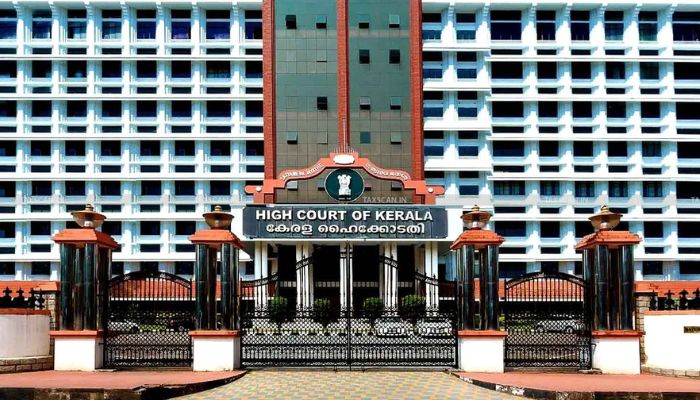
The Kerala High Court has issued a stern directive to the state government to immediately fill critical vacancies in forensic science laboratories (FSLs), citing severe delays in narcotics and child protection cases that are undermining Kerala’s fight against a spiralling drug epidemic in educational institutions.
Court order targets systemic failure
A bench comprising Chief Justice Nitin Jamdar and Justice C. Jayachandran ordered the State and Kerala Public Service Commission (KPSC) to “coordinate and ensure vacancies are filled without delay,” warning that “continued inaction would affect Kerala’s criminal justice system”.
The court demanded a report from the District Judiciary Registrar on pending criminal trials, especially under the Narcotic Drugs and Psychotropic Substances (NDPS) Act and Protection of Children from Sexual Offences (POCSO) Act, linked to forensic staff shortages. The Kerala State Legal Services Authority (KeLSA) petition highlighted how unfilled posts of scientific officers and assistants cripple lab operations, delaying forensic reports essential for trials.
Forensic vacancy crisis: A justice system bottleneck
In 2024 alone, over 24,517 NDPS cases were registered. It is a 330% surge since the year 2021, yet thousands languish in limbo as understaffed labs fail to process evidence. The Calcutta High Court recently allowed FSL reports to be sent directly to trial courts to bypass investigative delays, underscoring nationwide forensic inefficiencies. Kerala’s FSLs operate “far beyond capacity,” with samples backlogged for years, forcing courts to release accused persons on bail in serious cases, including murder.
Drug menace grips campuses
Schools and colleges in Kerala are facing an unprecedented drug crisis, exacerbating the urgency for functional forensic labs. Studies from various organisations indicate that 17-60% of college students are using drugs, with engineering and medical students being most affected. Ernakulam district alone hosts 70 drug-selling points near educational institutions, as per a report by The Hindu.
In early 2025, 30 murders were linked to drug abuse. This drug-fueled violence includes student gang fights and matricide. A Pathanamthitta couple committed suicide because of their son’s substance addiction. The drug gangs are using superbikes for rapid deliveries, and for payments, they are using cryptocurrency, and the dark web transactions. They are camouflaging drugs as candies to target minors.
Why forensic delays derail justice
NDPS cases require forensic verification of seized substances to prove guilt, but vacancies stall analysis. The Supreme Court is weighing “default bail” for NDPS accused if FSL reports miss deadlines, fearing “irreversible consequences” for fair trials. Kerala’s conviction rate of 98.19% (exceeding the national average) is threatened by forensic delays, as trials cannot proceed without lab reports.
Reactions and next steps
The KPSC cited “procedural requirements and inherent time lag” in appointments, but the court dismissed this as insufficient justification. Apart from that, experts are demanding to adopt international models like Iceland’s youth engagement programs or Portugal’s decriminalization approach for users, alongside fast-track NDPS courts. The state government launched a 2025 anti-drug campaign, allocated ₹40 lakh for campus surveillance drones, and requires anti-drug affidavits from students during admissions.
The path ahead
With Kerala reporting India’s highest drug-case rate (78 per lakh people) and 7.5 lakh adult users, including 75,000 children, the High Court’s intervention spotlights a make-or-break moment for the state’s criminal justice system. The government must now prioritise forensic recruitment to prevent the drug crisis from overwhelming Kerala’s future.