Home Blog Page 348

One-fourth of castes enjoying 97% of reservation – What is the Rohini Commission report that is in the news again after caste census announcement

Prime Minister Narendra Modi-led central government has announced a caste-based census. The Cabinet Committee on Political Affairs approved it on 30th April 2025. Since then, speculations regarding the census have intensified. On the sidelines of the discussion about the upcoming census, the Rohini Commission is again making headlines. There is an ongoing discussion about the suggestions and recommendations made by the Rohini Commission that could be implemented after the census.

Before discussing the Rohini Commission in detail, it is essential to understand how often, and when, caste-based censuses have taken place in India. Interestingly, the first-ever caste census was conducted during British rule, and the last caste-based census was also conducted during British rule. For the first time since independence, a caste-based census will be conducted at the national level.

When was the first caste census conducted

The first caste-based census took place in India in 1881. At that time, the total population of India was 25.38 crore. After that, the caste census has been conducted every ten years. In 1901, for the first time, castes were classified based on profession and varna. A total of 1,642 castes were recorded. The last caste census before independence was conducted in 1931 under which 4,147 castes were recorded.

In 1941, a caste census was conducted, but due to the Second World War, the survey could not be completed and was never made public.

After independence, the first census was conducted in 1951. The government decided that only data on Scheduled Castes (SCs) and Scheduled Tribes (STs) would be collected. The decision was taken in the interest of national unity.

In 1991, all states were allowed to conduct surveys to prepare lists of Other Backward Classes (OBCs). It was done to empower castes socially and economically. However, no national-level caste census has been carried out to date.

The last census in India was conducted in 2011. The next census was scheduled for 2021 but did not take place due to the COVID-19 pandemic. Even then, the demand for a caste census was raised by the opposition. At that time, the ruling Bharatiya Janata Party (BJP) and Rashtriya Swayamsevak Sangh (RSS) opposed the idea of a caste census.

Notably, in 2011, when the national census was conducted, the Congress government outright refused to fulfil the promise to conduct a caste census. Senior Congress ministers, including Pranab Mukherjee and P. Chidambaram, stopped the Manmohan Singh government from carrying it out. However, later, under pressure from OBC and Dalit leaders, the then government of India conducted a caste-based socio-economic survey between 2012–13 for appearance’s sake. It was not part of the national census, and its report was never made public.

When the Bihar caste census report was released on 2nd October 2023, Congress MP and Leader of Opposition Rahul Gandhi once again declared on behalf of his party that a caste census would be conducted at the national level if the Congress Party comes back to power.

From ‘No’ to ‘Yes’

Until recently, PM Modi used to say that he recognised only four castes: the poor, youth, women, and farmers. RSS leaders have always maintained that they consider everyone Hindu and that the idea of a caste census is flawed. The government too stated in Parliament that a caste census would promote casteism in society.

However, on 30th April 2025, the Modi government suddenly announced the decision to conduct a caste-based census. For the first time since 1931, a caste census will be conducted alongside the national population census.

The announcement made by the Modi government has triggered intense political debate. It is believed that the census will significantly influence electoral calculations and strategies. The survey could also reshape the direction of reservations, resource allocation, and social policies.

Why the Rohini Commission is being discussed

In 2023, a caste census was conducted in Bihar. Even before the data was made public, the Modi government constituted the Rohini Commission on the lines of the Kaka Kalelkar and Mandal Commissions. On 2nd October 2017, a commission was formed under the chairmanship of retired Delhi High Court Chief Justice G. Rohini. The commission was formed under Article 340 of the Constitution of India. The purpose of the commission was to sub-categorise OBCs. It is known as the Rohini Commission.

Article 340 of the Indian Constitution enables the government to appoint a commission to investigate the conditions and backgrounds of socially and educationally backward classes. Under this, the President can order the appointment of such a commission. So far, three commissions have been formed under this article.

Before the Rohini Commission, the Mandal Commission was formed in 1979, which recommended reservation for the OBC category. The recommendations were kept on hold by the governments of Indira Gandhi and Rajiv Gandhi from 1980 to 1989. In 1990, the V.P. Singh government implemented them.

Before the Mandal Commission, the Kaka Kalelkar Commission was formed in 1953 by India’s first Prime Minister, Jawaharlal Nehru. This commission submitted a report on backward castes to the government. However, the recommendations were not accepted by the Nehru government.

Recommendations of the Rohini Commission

Since its formation in 2017, the tenure of the Rohini Commission was extended 13 times. Eventually, on 31st July 2023, the commission submitted its 1,100-page report to the President. According to the report, there are 2,633 OBC castes in India. Out of these, 983 castes – around 37% – have not received the benefits of reservation yet.

In 2018, the commission studied data on 1.3 lakh government jobs allocated to OBCs by the Centre over five years, and admissions into institutions like IITs and IIMs over three years.

Media reports suggest that the commission found that only 25% of OBC castes were availing 97% of OBC reservation benefits in jobs and education. The remaining 75% of OBC castes had only a 3% share. For 983 OBC castes, the share was ZERO.

Some reports suggested that the Rohini Commission has suggested dividing the 3,000 OBC castes into four categories. These categories could be based on full beneficiaries, partial beneficiaries, those not benefiting at all, and completely deprived castes. These could be allotted 10%, 5%, 8%, or whatever quotas the data suggests.

If the Rohini Commission’s recommendations are implemented, quotas for some powerful OBC castes may reduce. On the other hand, those castes that have received no or very limited reservation benefits so far will see their quota increase.

What would be the effect of implementation of Rohini Commission report

The implementation of the Rohini Commission’s recommendations and caste census could benefit many deprived groups. The report would help identify which castes are the most deprived in education, employment, and healthcare. This could make welfare schemes more effective.

With these recommendations, it would be easier to implement reservation policies in a new manner and distribute resources more equitably.

In addition, the identities of communities that have always faced inequality and marginalisation would be brought to light. This would give the government an opportunity to work on their issues. If a particular caste has education and income levels lower than the national average, steps could be taken for improvement, and new policies could be formed.

Supreme Court has also upheld ‘reservation within reservation’

On 1st August 2024, a seven-judge bench led by Chief Justice DY Chandrachud ruled 6–1 that states may prioritise certain castes within SC-ST reservations if they are more socio-economically backward. Creamy layers can be identified even within SC-ST groups, and those who have already benefited can be excluded.

Following this judgement, on 14th April 2025, the Telangana Government implemented classification within the Scheduled Caste reservation system. The existing 15% SC quota was divided into three sub-groups to ensure reservation reaches the truly needy.

Accordingly, the 15 most backward communities received 1% reservation, 18 moderately benefited communities got 9%, and 26 relatively better-off groups were given 5%.

What political challenges may arise

The Rohini Commission’s recommendations could cause political upheaval. If accepted, a large OBC voter bloc may fragment into several categories.

For decades, Congress and regional parties across the country have engaged in politics over OBC reservations. Be it Samajwadi Party, Bahujan Samaj Party, Rashtriya Lok Dal, Apna Dal, or SubhaSP in Uttar Pradesh; or JDU, RJD, and VIP in Bihar; or INLD and other Jat-Patel outfits in Haryana, all these parties may now appear agitated over the division of reservation among sub-castes, since they have long benefited from the absence of a separate column for sub-caste data in the census.

This report was first published on OpIndia Hindi which can be checked here.

Revenge, conspiracy, and ₹5 lakh blood money: Abdul Safwan, Muzammil, Rizwan among 8 arrested in Hindu activist Suhas Shetty’s murder

In a shocking development from Mangaluru, Karnataka, police have arrested eight individuals in connection with the brutal murder of Hindu activist Suhas Shetty. The killing, reportedly orchestrated by the Abdul Safwan gang, was not a spur-of-the-moment crime — it was a well-planned conspiracy, complete with a contract killing deal worth ₹5 lakh.

On May 3, 2025, Karnataka Home Minister Dr. G Parameshwara addressed the media, shedding light on the case. He revealed that the accused were apprehended from different parts of Mangaluru district and are currently being interrogated.

Police Commissioner Anupam Agarwal shared further disturbing details: the conspiracy involved a group of eight, with the prime accused identified as Abdul Safwan, a driver by profession who hailed from Shantigudde. Among the others were Mohammed Muzammil, a recently married salesman working in Saudi Arabia, and Mohammed Rizwan from Jokatte, also employed in Saudi.

Additionally, Kalandar Shafi from Kulshekar, Ranjit Nagaraj, and Adil Mahroof, the brother of deceased Fazil (whose murder Suhas’s killing was allegedly meant to avenge), were also implicated.

The roots of this crime trace back to an attack on Safwan in 2023. Since then, he had been plotting revenge, eventually recruiting Mahroof to the plan. They struck a deadly deal — ₹5 lakh for Suhas Shetty’s life, with ₹3 lakh paid in advance.

According to police, this was more than just a financial transaction. It was a vengeance-driven mission, intended as retribution for Fazil’s death. Safwan and Mahroof, united by a common motive, meticulously executed the plan.

A chilling video of the murder has gone viral on social media, in which two burqa-clad women — relatives of one of the accused — can be seen. Police have taken them into custody for questioning as well.

It all unfolded on May 1, 2025, when Suhas Shetty was attacked by a group of assailants who arrived in a Swift car and a pickup truck. Armed with swords and sharp weapons, they launched a relentless and savage assault, continuing even after he fell. His murder sent shockwaves across Mangaluru, triggering protests by Hindu organizations.

The BJP has announced ₹25 lakh in financial support to Suhas Shetty’s family, while slamming the Congress government for allegedly failing to stand with Hindus in the aftermath of such targeted killings.

Shimla: Municipal Corporation court orders demolition of entire structure of Sanjauli mosque, rules it illegal after Waqf Board failed to prove ownership

In a significant development in the case of a mosque in Shimla’s Sanjauli area, the municipal corporation court has ordered the demolition of the entire 5-storey structure. The court ruled that the entire mosque is unauthorised, and therefore, the entire building has to be bulldozed.

MC commissioner Bhupender Kumar Attri ruled that the mosque had been built without the necessary permissions. It didn’t have a building permit, a no-objection certificate, and a sanctioned map. The court ordered demolition of the lower two floors of the mosque, apart from the demolition of the upper three floors as per an order issued in October last year.

As per reports, the Waqf Board was not able to present the papers of ownership of the mosque land. While the board has been claiming ownership of the land, it could not present the requisite no-objection certificate (NOC) or any revenue record proving its ownership.

“The MC commissioner has ordered the demolition of the mosque as the mosque committee or the Waqf Board failed to provide records pertaining to the ownership of the land on which the mosque has been built,” said advocate Jagat Pal, representing local residents of Sanjauli.

In the earlier hearing, the court had ordered the demolition of the upper 3 floors and submission of records for the lower floors. But when the court heard the matter today, the Waqf Board had no documents to back its claims. The board claimed that the mosque had existed at the place before 1947, which was demolished and reconstructed.

But the court asked if the mosque is so old, why didn’t they obtain maps and other necessary permissions from the Municipal Corporation for demolishing the old mosque and constructing a new one. After considering the arguments, Municipal Corporation Commissioner Bhupinder Atri ruled that the entire structure is illegal and ordered its demolition.

Notably, the High Court had instructed the Municipal court to complete the matter in six months, which was ending in 8th May. However, the court delivered the verdict ahead of the deadline.

On October 5 last year, the Municipal Commissioner Court had ordered the demolition of the top three floors of the Sanjauli Mosque. After that, the demolition work of the mosque started but it is progressing at a very slow pace. So far, only the roof of the mosque and the walls of the third and fourth floors have been removed.

Now that entire building has been declared illegal and its demolition has been ordered, the Waqf Board and Sanjauli Mosque Committee will have to bring down the entire structure. As the detailed court order is not available yet, it is not known if the court set any deadline to complete the demolition.

Pakistan set to lose millions after Western airlines reroute their flights to avoid Pakistani airspace after the country banned Indian flights

After Pakistan closed its airspace for Indian airlines amid simmering tensions between the two countries in the aftermath of the Pahalgam terror attack, European and British airlines have reportedly rerouted their flights to avoid Pakistan’s airspace. Pakistan closed its skies for Indian carriers on 24th April, in response to which India also imposed a reciprocal ban on Pakistan’s aircraft, including commercial and military flights.

Notably, while Pakistan has closed its airspace specifically for Indian aircraft, Western airlines are voluntarily opting for longer routes to avoid using the country’s airspace. Several major airlines such as the Lufthansa Group, Air France, British Airways, ITA Airways, and LOT Polish Airlines have readjusted their flights, as claimed by Flightradar24, a flight tracking site.

“Air France, British Airways, & Swiss flights are adjusting, routing since yesterday to avoid crossing through Pakistan. Some airways in northern Pakistan are NOTAM’d unavailable through May, leading to adjusted routings with Pakistan as well,” Flightradar24 posted on X on 1st May. On 2nd May, the Lufthansa Group, which includes SWISS and Austrian Airlines, IT Airways and LOT, also reportedly rerouted their flights around Pakistan.

The routes affected as a result of the detour are Lufthansa flights from Munich to Delhi, Frankfurt to Mumbai and Hyderabad, and Bangkok to Munich. LOT Polish Airlines’ Warsaw-Delhi route, ITA Airways’ Rome-Delhi route, and British Airways’ London-Mumbai flights have also opted for alternative routes.

However, KLM Royal Dutch Airlines and Middle Eastern carriers like Emirates and Qatar Airways continue to use Pakistani airspace. “In conducting its operations, KLM always prioritises the safety of passengers and staff. Selecting safe and optimal routes is a standard part of our daily practice, and we continuously assess the safety situation…Based on current safety information, KLM and other airlines are currently flying over Pakistan,” a statement by KLM said.

Airlines conduct their own risk analysis for declaring a route as risky or safe. For the risk analysis, they refer to security agencies in the aviation industry and international organisations such as the European Union Aviation Safety Agency (EASA). The airlines in question implemented precautionary detours without receiving a NOATM from Pakistan prohibiting them from using its airspace. NOATM, or Notice to Airmen, is a notification issued to pilots about potential risks on a flight route, including military activities or other threats. Even though longer flight routes result in increased travel time, more fuel consumption, longer crew hours, and maintenance costs, leading to an overall hike in the cost of a flight, the airlines are rerouting considering simmering military tensions between India and Pakistan.

Pakistan to lose millions because of Western airlines’ rerouting

With the decision of Western Airlines to reroute around Pakistan’s airspace, the country’s civil aviation authority might lose millions of dollars in overflight charges every month. An overflight charge is the fee levied by a country on airlines for using its airspace without landing. Annually, this could amount to the loss of hundreds of millions of dollars.

Notably, in February 2019, Pakistan’s civil aviation authority reportedly lost at least $100 million in 5 months after an airspace ban following the Balakot air strike by India.

Gujarat High Court upholds dismissal of 9 cops, says Godhra incident, where Hindus were massacred by Muslim mob, could have been prevented

On 24th April this year, the Gujarat High Court upheld the dismissal of 9 police officers for dereliction of duty in the 2002 Godhra carnage.

For the unversed, a total of 58 Hindu pilgrims (including 27 women and 10 children) who were travelling in the S-6 coach of the Sabarmati Express were burnt alive by a Muslim mob on the morning of 27 February 2002. The carnage took place near the Godhra railway station in Gujarat.

The court noted that the tragic incident could have been averted if the dismissed police personnel had not been negligent and careless.

If the petitioners had departed in the Sabarmati express train itself to reach Ahmedabad, the incident that occurred at Godhra could have been prevented. The petitioners (displayed) derelict negligence and carelessness towards their duty. The said charges stand proved,” the Gujarat High Court observed.

The dismissed police personnel include Gulabsinh Devusinh Jhala, Khumansinh Jitsinh Rathod, Nathabhai Dhulabhai Bhabhi, Vinodbhai Bijalbhai, Jabir Hussain Rasul Miya Sheikh, Rasikbhai Rajabhai Parmar, Kishorbhai Devabhai Parmar, Kishorbhai Balubhai Patni, and Punabhai Motibhai Bariya.

The court observed that the 9 personnel of the Railway Police Force (RPF) were supposed to board the Sabarmati Express from Dahod on that fateful day, but they did not. Instead, they made false entries in the register and returned to Ahmedabad by the Shanti Express

The Gujarat High Court ruled that the removal of the police personnel from service in 2005 was justified. It added that their presence in the Sabarmati Express could have made a difference to what unfolded on 27th February 2002.

The 9 cops were previously charged with abandoning their assigned duty, falsifying the duty register, and failing to travel with the train they were supposed to escort.

“The petitioners, admittedly having been assigned such important duty, have casually thought it fit, not to travel by the assigned train and travelled by Shanti Express,” the Gujarat High Court observed.

Muslims responsible for burning the Sabarmati Express near Godhra railway Station

A total of 31 Muslims were found guilty of setting the Sabarmati Express on fire, which claimed the lives of 59 Hindus (mostly women and children).

11 of them were handed the death penalty by a special fast-track court on March 1, 2011.

Their names include Abdul Razzak Kurkur, Ismail Suleja, Jabbir Binyamin Behra, Ramzani Binyamin Behra, Mehboob Hassan, Siraj Bala, Irfan Kalandar, Irfan Patadia, Hassan Lalu, Mehboob Chanda, & Salim Zarda.

Their death penalty was later commuted to a life sentence in October 2017. Among the convicted, the other 20 were awarded life sentences.

They included Suleman Ahmad Hussain, Abdul Rehman Abdul Majid Dhantiya, Kasim Abdul Sattar, Irfan Siraj Pado Ghanchi, Anwar Mohmmad Mehda, Siddik, Mehboob Yakub Mitha, Soheb Yusuf Ahmed Kalandar, Saukat, Siddik Mohmmad Mora, Abdul Sattar Ibrahim Gaddi Asla, Abdul Rauf Abdul Majid Isa, Yunus Abdulhaq Samol, Ibrahim Abdul Razak Abdul Sattar Samol, Saukat Yusuf Ismail Mohan, Bilal Abdullah Ismail Badam Ghanchi, Farook, Ayub Abdul Gani Ismail Pataliya, Saukat Abdulah Maulvi Isamail Badam, Md Hanif.

As evident from the names, the extremists who burnt the train and charred 59 Hindu pilgrims to death belonged to the Muslim community. The conviction of the 31 extremists will continue to show the mirror to all conspiracy theorists who try to trivialise the planned killing of the Hindu pilgrims.

Pakistan link exposed: Amreli maulvi under investigation for being a part of suspicious WhatsApp groups, fails to produce ID proof

A startling revelation has emerged from the Dhari region of Amreli, Gujarat, where a Maulvi from a local madrasa has come under the police scanner for alleged links to Pakistan. The man in question, Mohammad Fazal Abdul Aziz Sheikh, was found to be part of eight WhatsApp groups connected to Pakistan, Afghanistan, and Bangladesh. The content of these groups, mostly in Arabic, raised red flags due to the nature of the conversations.

Adding to the suspicion, the Maulvi could not produce any proof of residence or Indian citizenship when questioned by police. His phone has since been seized by the Special Operations Group (SOG), and a deeper investigation is underway to trace the origin and intent of these communications.

This discovery comes amid an ongoing crackdown in Amreli, where police have been conducting a five-day operation targeting illegal residents from Bangladesh and Pakistan. During a search in the remote area of Himkhimdipara, the authorities found the Maulvi conducting religious classes at a madrasa. A detailed probe into his mobile phone revealed the presence of the eight groups, which are suspected to be operated from across the border.

Investigators also uncovered that the Maulvi had deleted several messages around the time of the recent Pahalgam terror attack—raising even more concerns. Additionally, no documents confirming his Indian citizenship were found, sparking fears about his true identity and intentions.

Preliminary investigations suggest that the Maulvi is originally from Juhapura, a locality in Ahmedabad. He had reportedly been teaching at the Himkhimdipara madrasa for the past month, where only four children were enrolled. Police are now interrogating his family, who confirmed his Juhapura roots.

Authorities are also translating Arabic conversations found in the chat groups to determine if any of them relate to anti-national activities. Simultaneously, the origins of the madrasa itself, established before 2018, are being scrutinized.

The Maulvi has since been taken into custody and transported to Ahmedabad for further questioning. His arrest is part of a broader investigation, as police teams across Amreli continue probing several madrasas for possible foreign links.

This case has sparked serious concerns about security lapses and the potential for radical influence through religious institutions. Authorities are treating the matter with high urgency and have launched a full-scale investigation into all possible angles.

CBDT issues new Income Tax Return Form 5 for the Assessment Year 2025-26 with key updates in reporting capital gain and loss

The Central Board of Direct Taxes (CBDT) has issued Notification No. 42/2025, dated May 1st, 2025, unveiling the new Income Tax Return (ITR) Form 5 for the Assessment Year 2025-26, the Income Tax Department said on its official X (formerly known as twitter) page.

The income tax department highlighted various changes, one of the most notable revisions in ITR Form 5 is the introduction of a split within the Schedule-Capital Gain. This new structure mandates taxpayers to report capital gains before and after July 23rd, 2024.

The form now allows the reporting of capital loss incurred on share buybacks. However, this allowance is conditional upon the corresponding dividend income from these buybacks being declared as “income from other sources,” particularly for transactions occurring after October 1st, 2024.

Furthermore, ITR Form 5 has a new addition of a specific reference to the section 44BBC of the Income Tax Act.

Another key update is the requirement to specify the Tax Deducted at Source (TDS) section code within Schedule-TDS.

Recently, the Income Tax Department has introduced the ‘e-Pay Tax’ feature on its official online portal to facilitate the taxpayers by easing various processes, according to the CBDT.

Additionally, in the July 2024 Budget, the government proposed a comprehensive review of the Income-tax Act of 1961. The purpose was to make the Act concise and lucid, thereby reducing disputes and litigation.

Meanwhile, on March 25, Union Finance and Corporate Affairs Minister Nirmala Sitharaman said that the new Income Tax Bill will be taken up for discussion in the monsoon session of Parliament.

Earlier on March 18, the government encouraged the stakeholders to submit their suggestions on the newly introduced Income Tax Bill 2025. The Bill is currently under examination by the Select Committee for detailed consideration.


(This news report is published from a syndicated feed. Except for the headline, the content has not been written or edited by OpIndia staff)

Day after Harvard awarded Ibrahim Bharmal who assaulted a Jew, Trump announces removal of Harvard’s tax exempt status: Read why US President and Ivy League University are at odds

On 2nd May (local time), United States President Donald Trump announced that his government would take away Harvard University’s tax-exempt status. In a post on the social media platform Truth Social, Trump said, “We are going to be taking away Harvard’s Tax Exempt Status. It’s what they deserve!”

Source: Truth Social

The strong message from the US President came a day after Harvard Law Review awarded a $65,000 fellowship to Ibrahim Bharmal, a university student who assaulted a Jewish student in 2023 during an anti-Israel protest.

Earlier, on 15th April, Trump hinted his administration might take away the tax-exempt status of the university if it keeps pushing political, ideological, and terrorist-inspired/supporting sickness. He had said, “Perhaps Harvard should lose its Tax Exempt Status and be Taxed as a Political Entity if it keeps pushing political, ideological, and terrorist inspired/supporting ‘Sickness?’ Remember, Tax Exempt Status is totally contingent on acting in the PUBLIC INTEREST!”

Source: Truth Social

Harvard had already sued the Trump administration in March this year over its decision to freeze federal funding. The suit, according to the Wall Street Journal, argued that the government had violated the university’s constitutional rights and imperiled its academic independence by freezing the funding.

Notably, the funding was frozen as, according to the Trump administration, Harvard and other universities failed to adequately protect Jewish students during anti-Israel and pro-Hamas (posed as pro-Palestine) protests on the campuses.

Speaking to the WSJ, the university’s president, Alan Garber, claimed that Trump’s move to remove tax-exempt status would be “highly illegal”. He said, “Trump’s decision to revoke the school’s tax-exempt status is highly illegal, unless there is some reasoning that we have not been exposed to that would justify this dramatic move. Tax-exempt status is granted to educational institutions to enable them to successfully carry out their mission of education, and for research universities, of research.”

Garber added that in case the university loses its tax-exempt status, it would deeply damage Harvard. He added, “Obviously, we would be severely impaired if we were to lose our tax-exempt status. And I should add, it would be destructive to Harvard, but the message that it sends to the educational community would be a very dire one — which suggests that political disagreements could be used as a basis to pose what might be called an existential threat to so many educational institutions.”

Since Trump came to power for the second time as the US President, he has launched a nationwide crackdown against campus administrations that promoted antisemitism. On 11th April, the Trump administration recommended that Harvard University limit campus activism and stop antisemitism, as it is against American values. The government also recommended changes to its curriculum, including Middle Eastern Studies, Diversity, Equity, and Inclusion initiatives in various departments, and more.

Who is Ibrahim Bharmal

Ibrahim Bharmal is a Harvard student who, according to a blog post written by him on the university’s website, was raised in a close-knit immigrant and Muslim community in Southern California. He claimed that his community “survived” the wave of “Islamophobia” post 9/11. His aim to become a lawyer was to serve his community.

Bharmal was one of two students charged with assault and battery in May 2024 after they were seen assaulting Israeli Harvard Business School student Yoav Segev during the October 2023 die-in protest at HBS. The charges against him and Elom Tettey-Tamaklo, the second student charged with assault and battery, should have resulted in more than a year of jail time. However, on 28th April (local time), Boston Municipal Court judge Stephen W. McClenon ruled that Bharmal and Tettey-Tamaklo would not face trial.

The decision came despite the fact that the video of the assault had gained attention across the US. Segev was filming the protest when the duo approached him and blocked his camera. They escorted him away from the protest site. Segev was heard saying repeatedly, “Don’t touch me.”

Bharmal and his fellow accused pleaded “not guilty”. The court ruled that both of them would have to complete anger management programming, a Harvard course on negotiation, and 80 hours of community service. The District Attorney’s office had requested a court-mandated apology from the duo, but the court ruled against it.

According to Harvard Law Review’s website, the fellowship will support recent Harvard Law School graduates with a demonstrated interest in serving the public interest through their work and scholarship. Ibrahim will be able to spend a year working in a public interest-related role at a government agency or non-profit organisation.

Interestingly, Bharmal has chosen the California chapter of the Council on American-Islamic Relations, or CAIR, where he will serve for one year in “public interest”. For those who are unaware, CAIR is an Islamist outfit based in the US. It is known for its anti-India stance and has spoken against India and Hindus on several occasions. CAIR also has links with the Palestinian Islamic fundamentalist terror organisation Hamas, which is responsible for the deadly 7th October 2023 attack on Israel that claimed the lives of over 1,300 Israelis and foreigners, after which Israel launched a military operation against Hamas with the aim of wiping out the terrorist outfit completely. The Israel-Hamas war is still ongoing.

Nainital Rape Case: Minor victim was traumatised and stopped going to school after the incident, 65-year-old accused Muhammad Usman arrested

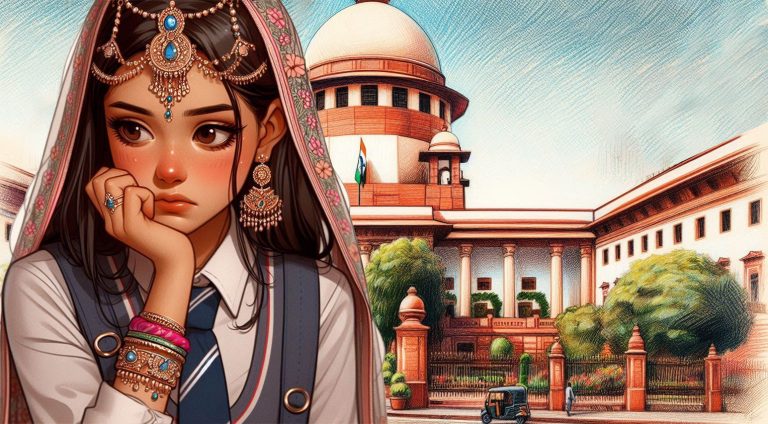
The hill town of Nainital in Uttarakhand has been witnessing massive protests since the incident of sexual abuse of a minor school-going girl has come to light. The heinous incident sparked outrage among locals, who took to the streets to express their anger and demand justice. Schools, shops, and markets remained shut as protestors took out protest rallies. On Wednesday (30th April), the police arrested the accused, Muhammad Usman, a 65-year-old contractor with the Nainital Public Works Department, after the minor victim told her family about the incident. He was booked under relevant provisions of the BNS and the POCSO Act.

Accused Usman threatened her

On 12th April, the 12-year-old victim had gone to the local market to buy some groceries. That’s when accused Usman allegedly lured her by offering ₹200 and took her to his house. He raped her in his garage and threatened her not to disclose the incident to anyone. Sacred of his threat, the victim did not tell her family about it for days. Finally, she told her mother about the incident, who filed a complaint at Mallital Police Station on Wednesday (30th April).

The victim stopped going to school

As per reports, the minor victim lives with her elder sister in Nainital and the two sisters studied in a private school. For some time, the minor victim had been acting strangely. She stopped talking to anyone and refused to go to school. When her elder sister noticed her behaviour, she called their maternal grandmother. The victim still did not tell anyone about the rape as the accused had threatened her. Eventually, both sisters stopped going to school, and their maternal grandmother got their names removed from the school on 16th April.

Uttarakhand government to sponsor the victim’s education

Uttarakhand Chief Minister Pushkar Singh Dhami said that the state government will sponsor the education of the victim and her sister. Besides, the victim will be provided financial assistance through welfare schemes. District Magistrate Vandana Singh said that the government will provide ₹4000 per month to the victim under the sponsorship scheme, and she will also receive financial assistance from the State Legal Services Authority.

In a statement issued by the CM Office, the Chief Minister assured that the culprit will not be spared. “The Chief Minister said that the culprits will not be spared under any circumstances, and they will be given the strictest punishment. He talked about ensuring a quick investigation and speedy justice in the case,” the statement read.

Speaking to the media, DGP Uttarakhand, Deepam Seth, said on Saturday (3rd May) that the investigation in the case will be conducted speedily. ”On 30 April, an incident of rape with a minor girl in Nainital came to light. Immediately, an FIR was registered in the matter. The accused had been held and sent to jail. Police have taken all measures to protect the victim and her family. We will ensure that the probe is conducted in a time-bound manner and the accused gets a harsh punishment,” said DGP Seth.

Madhya Pradesh: Sameer Khan pretends to be Hindu to lure and entrap married woman, forces her to eat meat and convert to Islam

A case of grooming jihad has emerged from Chhatarpur in Madhya Pradesh, wherein a 28-year-old Hindu woman named Nisha Dubey was lured and entrapped by a Muslim youth named Sameer Khan, reports Organiser.

Dubey, who was married at the time, met the accused at her younger brother’s wedding in December 2023. Khan (who pretended to be ‘Tiwari’) convinced her to dissolve her 8-year-old marriage and get into a relationship with him.

He hid his religious identity and married Dubey in Jatashankar Dham in August 2024. Later, the victim learnt that the accused is a Muslim. She was forced to do a Nikkah (Islamic marriage) with him in December 2024.

Thereafter, Sameer Khan subjected the Hindu woman to domestic violence, force-fed her meat and took away all her valuable items. His family members also mistreated her and demanded gold ornaments and ₹3 lakh cash.

Nisha Dubey was stopped from performing Hindu rituals and coerced into buying luxury products such as iPhone, bike, TV and a cooler for the accused. She was also forced to convert to Islam.

The victim informed that the accused’s mother had threatened her multiple times with a knife. Khan also vowed to chop her into pieces if she took action against him. The accused also denigrated her for being a Hindu.

Victim escaped from the captivity of Sameer Khan

The matter worsened on 26th April this year when the victim was locked inside a room by Sameer Khan. Dubey managed to escape and walked barefoot in tears for 14 km.

When she narrated her ordeal to the locals, they dialled the police helpline and brought her to the City Kotwali police station.

“I have always been worshipper of Laddoo Gopal, he forced me to stop worshiping him, he made me leave him..how am I supposed to live now,” she told Organiser.

Police action in the Chhatrapur case

Following the complaint of Nisha Dubey, a case was lodged at the Chhatrapur police station on Thursday (1st May). A probe has been initiated into the case. The accused Sameer Khan has been arrested.

He was booked under BNS sections along with Sections of the Madhya Pradesh Freedom of Religion Act

The victim is a native of Jabalpur. Her first marriage took place in 2015. She has a son and a daughter from her first husband. Dubey used to work at the office of a property dealer in Jabalpur.

In a statement, Kotwali Police Station in-charge Arvind Dangi informed, “The complainant says that the accused told her that he would kill her and stated that he wants to get married again. We are taking the issue seriously and appropriate action is being taken”

Notably, the woman claims she has been threatened to be chopped if dared to take any action. Sameer abused her saying, she being a Hindu was a mere “Keep” for her and that her work is now done; he does not need her anymore.