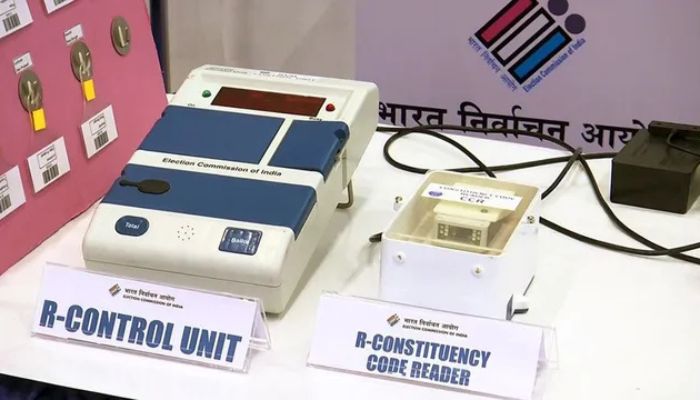
The results of the much-anticipated assembly bypolls conducted in five key constituencies in Punjab, Kerala, Gujarat, and West Bengal were declared on Monday (23rd June). These elections are being viewed as an initial reflection of public sentiment ahead of larger state polls shortly.
The count of votes for the Election Commission of India started early morning, and by now, a few major leads and some actual results have already been announced.
Congress clinches Nilambur in Kerala
In Kerala’s Nilambur, Congress candidate Aryadan Shoukath won in a comfortable manner, beating CPI(M)’s M. Swaraj by 5,448 votes. The win is being construed as a big morale booster for Congress before the 2026 Kerala Assembly election.
Congress General Secretary and Wayanad MP Priyanka Gandhi Vadra congratulated Aryadan Shoukath on winning the Nilambur by-election in Kerala.
She also thanked the people of Nilambur for showing faith in the United Democratic Front’s (UDF) vision. Priyanka said the voters’ support means a lot and will help the party stay strong and move ahead with confidence.
We worked as a team, each one with commitment and single pointed focus, that is the most important lesson of this success.
Heartiest congratulations to Aryadan Shoukath whose dedication and service has shone through and to all the leaders and workers of the UDF whose efforts…
— Priyanka Gandhi Vadra (@priyankagandhi) June 23, 2025
AAP wins two seats: Ludhiana West & Visavadar
AAP registered an impressive show by winning two seats—Ludhiana West in Punjab and Visavadar in Gujarat.
In Ludhiana West, AAP’s Sanjeev Arora won against senior Congress leader Bharat Bhushan Ashu. The victory is important for the party, which was criticised over the governance of Punjab. This victory once again proves AAP’s presence and reach in the urban areas of the state.
In Gujarat’s Visavadar, AAP won by surprise, defeating the BJP and Congress contenders. This victory proves the party’s increasing reach in Gujarat’s politics, which has been BJP and Congress-dominated traditionally.
BJP holds Kadi (SC) in Gujarat
BJP held on to the Kadi (SC) seat in Gujarat, as the party candidate Rajendra Chavda won against Congress’s Rameshbhai Chavda by more than 39,000 votes. The win consolidates the BJP’s hold on its stronghold, even though the party lost no other bypoll seat today.
TMC takes Kaliganj in West Bengal
Trinamool Congress (TMC) candidate Alifa Ahmed has won the Kaliganj Assembly by-election in West Bengal by a huge margin of 50,049 votes, according to the Election Commission’s website. Ahmed received a total of 1,02,759 votes. Her closest competitor, Ashish Ghosh from the BJP, got 52,710 votes. Congress candidate Kabiluddin Shaikh came in third, securing 28,348 votes.
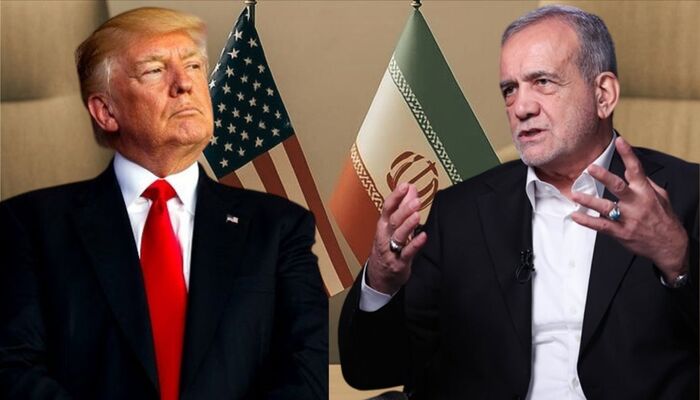
The entry of the Unites States in the Israel-Iran conflict, which entered its 10th day, has aggravated the tensions in the Middle East and has further pushed the region into a perpetual war. What was described by US President Donald Trump as a “spectacular military success” has been a humiliating experience for Iran which has avowed to retaliate against the US. The US targeted Iran’s most critical nuclear sites—Natanz, Fordow, and Arak, using bunker-busting bombs dropped from B-2 bombers. The strikes have prompted the Shia country to declare, in a face-saving effort, that it will take revenge on the US despite knowing that it stands nowhere before the military might of the US.
Iran’s resolve to retaliate against the US became clear when subsequent to the US attack, Ali Akbar Velayati, advisor to Iran’s Supreme Leader Ayatollah Ali Khamenei, said that Iran could attack the US bases in response to the strikes on its nuclear facilities. “Any country in the region or elsewhere that is used by American forces to strike Iran will be considered a legitimate target for our armed forces,” Velayati was quoted as saying on 22nd June. However, a head-on approach with US does not appear to be the most viable option available to Iran, therefore, the country might opt for an indirect response, one of which is closing down the strait of Hormuz, which, of course comes with a huge economic cost for Iran itself. The Iranian Parliament has approved the closure of the strait of Hormuz, but the final decision will be taken by the Supreme National Security Council.
Closing down the Strait of Hormuz
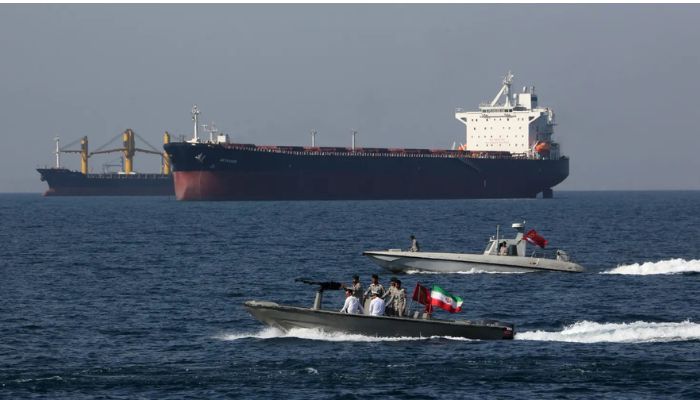
The Iranian Parliament has approved the closure of the Strait of Hormuz, but the final decision will be taken by the Supreme National Security Council. This comes after Iran’s Islamic Revolutionary Guard Corps (IRGC) has threatened to completely shut down the Strait of Hormuz, through which almost one-fifth of the world’s oil flows, hours after Trump confirmed the US strikes on Iran. The strait of Hormuz is one of the most significant trade routes as about one-fifth of global oil and gas supply flows.
It is a narrow sea channel between Iran and the Musandam Peninsula of Oman, connecting connects the Persian Gulf to the Gulf of Oman. The narrowest point in the strait is around of 30 miles wide. Completely shutting down the strait of Hormuz is easier said that done as considering its vastness. Iran controls only a part of the strait, i.e. only the northern half. The southern half is controlled by Oman. This restricts Iran’s capability to entirely shut down the route without picking fight with its neighbouring Islamic countries, which does not seem favourable to Iran in the current scenario. Besides, the US Navy’s Fifth Fleet in Bahrain maintains a permanent presence in the region with the aim of the Fleet is to prevent such disruptions in the Strait of Hormuz.
US bases and assets in the region
Another option before Iran is to target the US military bases and assets in the region, which comes with the possibility of further and more aggressive US military action. The US has assets and military bases in around 19 locations in different countries in the Middle East. It has stationed more than 40,000 troops on its bases and warships in the region, falling under the US military’s Central Command (CENTCOM). The US forces are majorly concentrated in Qatar, Bahrain, Iraq, Syria, Kuwait, and the UAE. Iranian officials have reportedly warned the Gulf States that the US military bases and assets on their territory could be targeted.
Bahrain: This US military base is the headquarters of the US Navy’s Fifth Fleet at Mina Salman in Bahrain. It houses America’s four anti-mine vessels and two logistical support ships. The country also has the US Coast Guard vessels. The US has been using the base since 1948, when it was operated by the British Royal Navy. However, Iran might be reluctant to directly target this US Navy base and might instead target other relatively isolated US bases in Iraq or Syria using its proxies there.
Qatar: America’s largest military base, Al Udeid Air Base, lies in Qatar. The air base reportedly accommodates the forward components of CENTCOM, its air forces and the special operation forces in the region. It also houses the rotating combat aircraft of the US, along with 379th Air Expeditionary Wing.
Iraq: This Middle-Eastern country houses various US troop installations, including the Al Asad Air Base in Al-Anbar Governorate and Al Harir Air Base in Erbil. Notably, Iraq is an American ally since 2003 and Iran’s arch rival. Around 25,000 US troops in Iraq as part of the international coalition against the Islamic State jihadist group. The Al Asad Air Base was targeted by Iran in 2020 after eliminating Quds Force leader Qasem Soleimani. The Al Harir Air Base has also been attacked in the past by Iran’s proxies.
Syria: Several US military installations have existed in Syria for years as part of international efforts against the Islamic State group. The Al Tanf Garrison of the US is located in southern Syria, close to the borders of Iraq and Jordan.
Kuwait: Many US bases are present in Kuwait, including the Ali al-Salem Air Base, around 20 miles away from Iraq’s border. The air base accommodates the members of the US Air Force’s 386th Air Expeditionary Wing. It acts as a primary centre for airlifting and delivering combat power to joint and coalition forces in the region. Camp Arifjan, which is the forward headquarters for the US Army component of CENTCOM, is located in this airbase.
UAE: US’s Al Dhafra Air Base is located in the UAE. It houses US Air Force’s 380th Air Expeditionary Wing, which operates F-22 Raptor fighter jets and several types of surveillance planes and drones, including MQ-9 Reapers. It also hosts Gulf Air Warfare Centre for air and missile defence training.
A direct attack on the US assets of bases not appear to be preferred strategy of Iran to avenge the US attacks on its soil, considering the disparities in the military strengths of the two countries. In such a situation, it is possible that Iran might use asymmetric warfare tactics against the US.
Iran’s asymmetric war tactics
Iran’s Axis of Resistance, which a network of terrorist groups like Hezbollah, Hamas, and Houthis, formed with the intention of reducing the influence of the US and Israel in the region might have been weakened due to Israeli military action, but it still holds some capacity to cause disturbance in the region. Israel’s military action following the October 7, 2023 terrorist attack eliminated the key leaders of Hezbollah as well as Hamas, significantly reducing their strength. However, Houthis in Yemen can pose a threat in the Red Sea. Iran also reportedly had links with Shiite proxy groups in Iraq, which have targeted the US assets in the region in the past.
The asymmetric warfare tactics are part of Iraq’s ‘forward deterrence’ policy which is backed by the Iranian regime under the Supreme Leader Ayatollah Ali Khamenei, who said in 2019 that Iran should not limit itself to borders and should recognise and confront threats beyond its walls. Under this strategy, Iran created proxies in the region, including non-state actors, armed groups, criminal networks, to indirectly target its rivals, similar to what Pakistan does with respect to India.
Despite the meek possibility of Iran directly attacking the US with its current military strength, not retaliating might make the Iranian regime look weak, which it would not want. In such a situation, asymmetric warfare might be the preferrred option of the Iranian regime to avenge the US strikes on its soil.
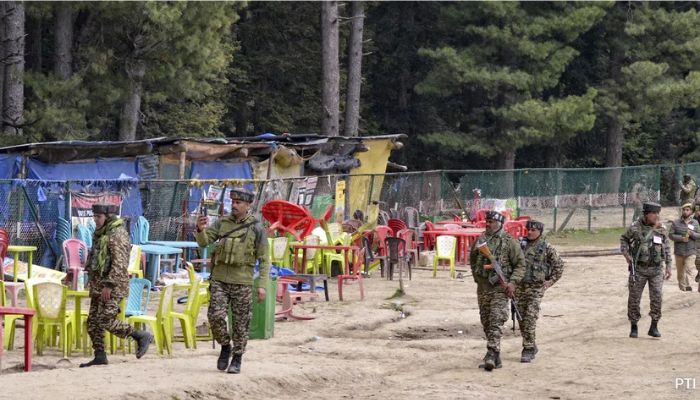
In a decisive breakthrough that exposes Pakistan’s direct involvement in one of Kashmir’s deadliest terror attacks, the National Investigation Agency (NIA) has arrested two local operatives who sheltered the Lashkar-e-Taiba (LeT) terrorists responsible for the April 22 Pahalgam massacre. The arrested individuals have identified the three attackers as Pakistani nationals, shattering Islamabad’s longstanding denials of cross-border terrorism.
Key developments in the investigation
The NIA apprehended Parvaiz Ahmad Jothar (Batkote) and Bashir Ahmad Jothar (Hill Park, Pahalgam) after confirming their role in providing food, shelter, and logistical support to the attackers at a seasonal dhok (mountain hut) in Hill Park prior to the assault. Both have been charged under the stringent Unlawful Activities (Prevention) Act (UAPA). During interrogation, the duo disclosed the identities of the three terrorists and confirmed they were Pakistani natonals trained and deployed by the Pakistan-based terror outfit Lashkar-e-Taiba. This aligns with intelligence linking the attack to handlers across the border.
Initial police sketches released on April 24 identified three suspects: Hasim Musa (described as a Pakistani ex-SSG commando), Ali Bhai alias Talha (a Pakistani national), and local Kashmiri Adil Hussain Thoker. However, the NIA’s conclusive findings on June 22 have overturned this assessment. Forensic evidence and interrogations confirm the actual perpetrators were Pakistani Lashkar-e-Taiba operatives, including Suleiman Shah, a known mastermind of the 2024 Z-Morh tunnel attack, and two other unidentified Pakistani nationals. Critically, the NIA has ruled out local involvement in the execution of the attack, confirming all three gunmen were Pakistani nationals.
NIA Arrests 2 for Harbouring Pak Terrorists in Pahalgam Terror Attack Case, Gets Identities of the LeT Attackers pic.twitter.com/Pf9OrCE3KZ
The attack: Brutal religious targeting and India’s response
On April 22, the terrorists invaded Baisaran Valley in Pahalgam, separating Hindu tourists from muslims and executing 26 civilians (25 tourists, 1 local) at point-blank range. The NIA emphasized this “selective killing based on religious identity” marked it as a calculated act of communal terror. The Pahalgam attack triggered Opration Sindoor (May 7) – India’s precision airstrikes destroying 9 terror camps in Pakistan-occupied Kashmir and killing over 100 terrorists. Subsequent strikes on Pakistan’s Noor Khan airbase forced Islamabad to seek a ceasefire on May 10. India has warned of “more severe responses” to future provocations.
What lies ahead
The two accused will face custodial interrogation in a Jammu special court. During this process, the agency is re-examining ballistic evidence from past attacks to build a solid case and probing Suleiman Shah’s links to the 2023 Kulgam and 2024 Poonch attacks.
While the arrests validate India’s stance on cross-border terrorism, the failure to neutralize the attackers after two months underscores operational challenges in Kashmir’s rugged terrain. Families of the 26 victims await justice, even as India signals zero tolerance for terror safe havens in Pakistan.
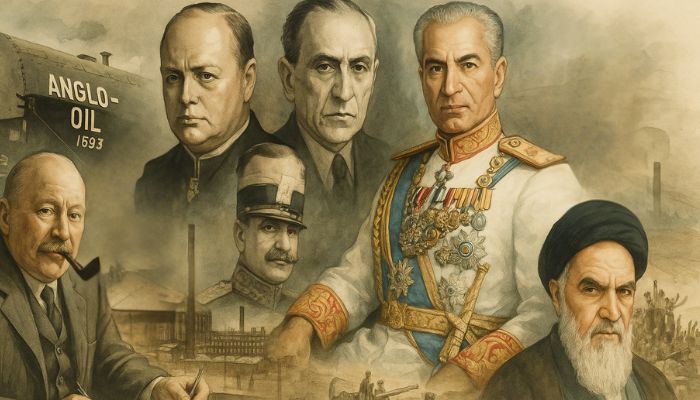
On 21st June, Donald Trump announced that the United States had carried out attacks on three nuclear sites in Iran amid the ongoing conflict with Israel. The strikes, for many, are not just a military escalation; they represent a return to a century-old pattern of Western intervention, resource control, and regime destabilisation in Iran.
From the 1901 D’Arcy oil concession to the 1953 MI6-CIA coup that overthrew Mossadegh, and the British-fuelled rise of the Shah, Iran’s modern history has been repeatedly shaped by foreign powers seeking control over its strategic assets, primarily oil and gas. Today, as Iran faces renewed pressure over its nuclear programme, the echoes of that legacy remain unmistakable and unresolved.
Origins of APOC in Iran and the D’Arcy oil concession (1901–1909)
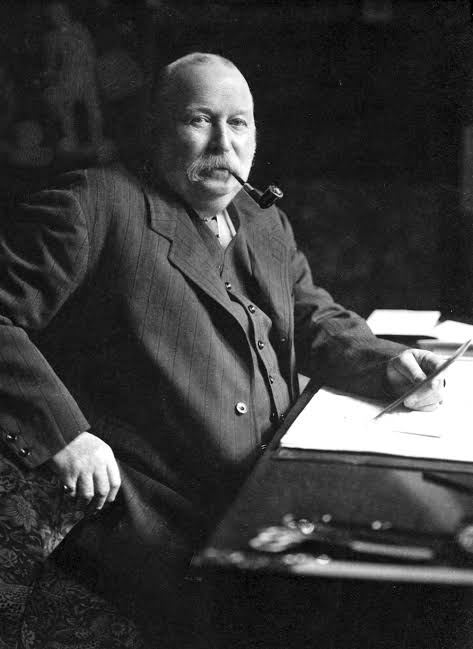
In the early 1900s, the British took hold of Iran’s vast oil wealth under astonishingly one-sided terms, all thanks to a British speculator, William Knox D’Arcy. In 1901, he secured a 60-year petroleum concession from Persia’s Qajar monarch. The exclusive rights were granted to explore and extract oil across most of Iran. To get such access, Iranian officials were bribed to negotiate the deal.
William Knox D’Arcy. Source: Turtle Bunbury
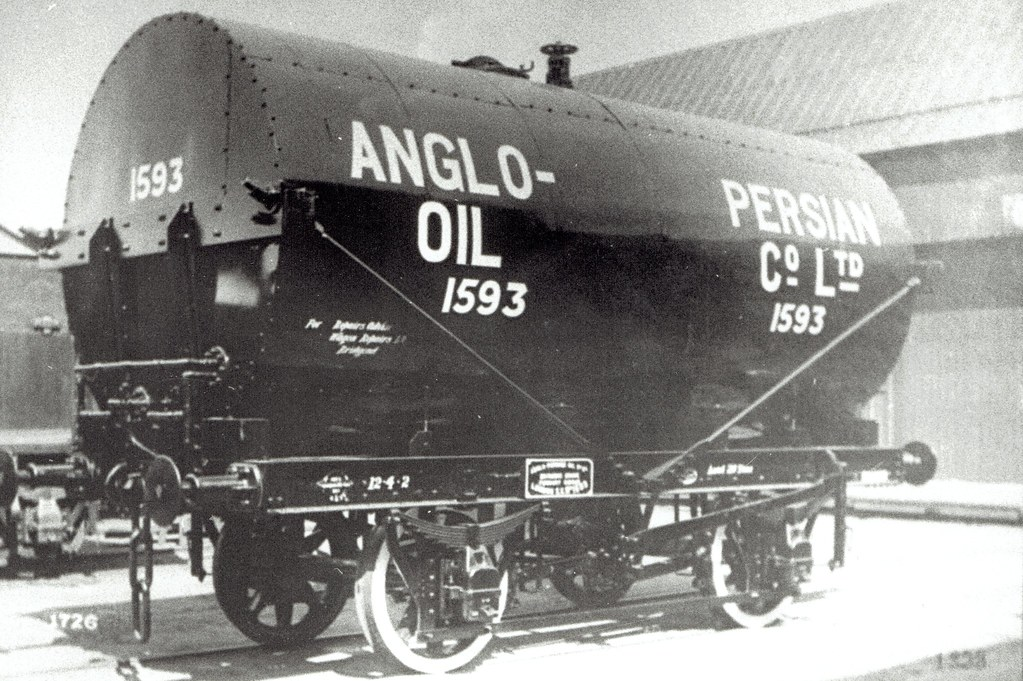
The concession allowed D’Arcy to keep ownership of any oil he found, and Iran got only a 16% share of the profits. Notably, the Iranian government was not even allowed to inspect the accounts. In 1908, D’Arcy finally found oil at Masjed Soleiman, and it turned out to be one of the world’s largest deposits. In 1909, a syndicate of British investors formed the Anglo-Persian Oil Company (APOC) to exploit what became known as the D’Arcy concession. APOC became the sole owner of the vast reserves of oil located underneath Iran’s soil. The deal that was done in 1901 did not allow anyone else to drill, refine or sell Iranian oil other than APOC.
Source: Flickr
Britain secures control of Persian oil (Churchill’s 1914 deal)
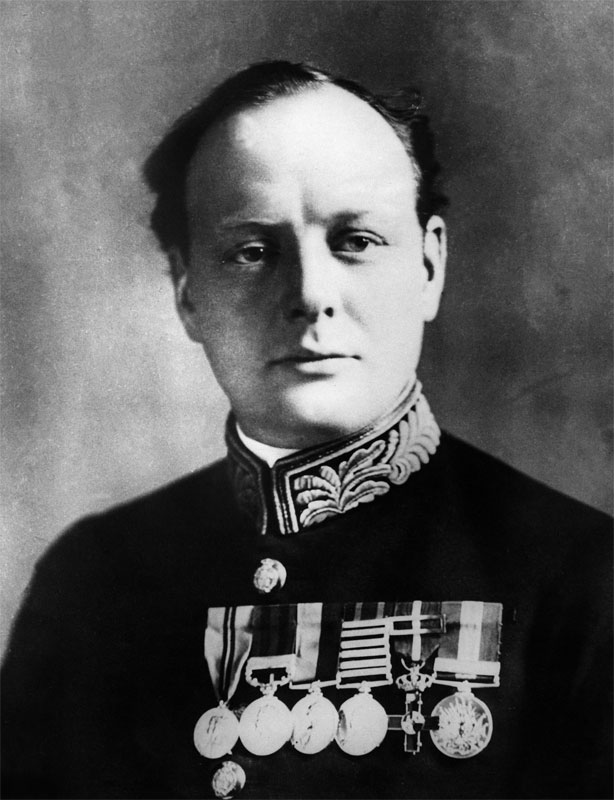
By 1914, the Royal Navy had shifted from coal-powered ships to oil. Furthermore, the British government was fully aware of the strategic importance of Persian oil by then. It was essential for them to take full control of Iranian oil. On the eve of World War I, the First Lord of the Admiralty, Winston Churchill, pushed the government to purchase a 51% stake in APOC. The deal effectively nationalised the company under British control.
Winston Churchill. Source: Wiki
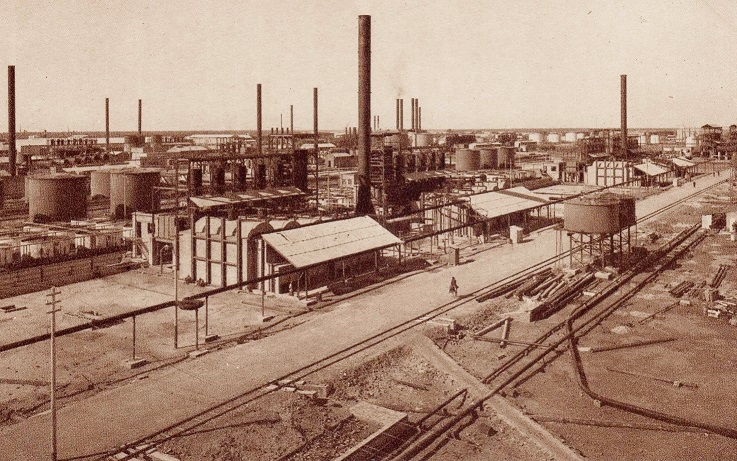
Churchill called the Iranian oil bonanza “a prize from fairyland beyond our wildest dreams”. With backing from the British government, APOC built the world’s largest oil refinery at Abadan on the Persian Gulf and expanded production severalfold. By the 1920s and 1930s, Iranian oil had become the backbone of Britain’s industrial economy and global military power.
British factories, ships, and motor vehicles were running on cheap Iranian oil, pushing Britain’s economy to new levels, and yet, Iran itself hardly saw any benefit. APOC’s royalty payments to Iran were considerably low. For example, Iran was paid merely £47,000 in 1920 while the company made millions in profits. The British were good at cheating on profit calculations and because Iran could not independently audit the books, they had to believe what the British told them.
Abadan Refinery. Source: stanmore tourist board
The imbalance allowed Britons to enjoy a rising standard of living while Iranians remained in poverty. Oil workers at Abadan were paid just a few shillings a day and lived in squalid shanty towns with no running water or electricity.
Colonial influence and the rise of the Pahlavi dynasty (1919–1941)
Britain’s stronghold on Iran’s oil was not the only issue at that time. Britain was consistently meddling in the internal politics of Iran. The Qajar monarchs had been selling off Iran’s patrimony to foreigners for decades, leading to anger among the public. In 1919, after World War I, London tried to formalise its dominance through the proposed Anglo-Persian Agreement. If it had been signed, it would have given Britain control of Iran’s army, treasury, transport and communications, effectively making Iran a British colony. However, the proposal faced backlash from the nationalists.
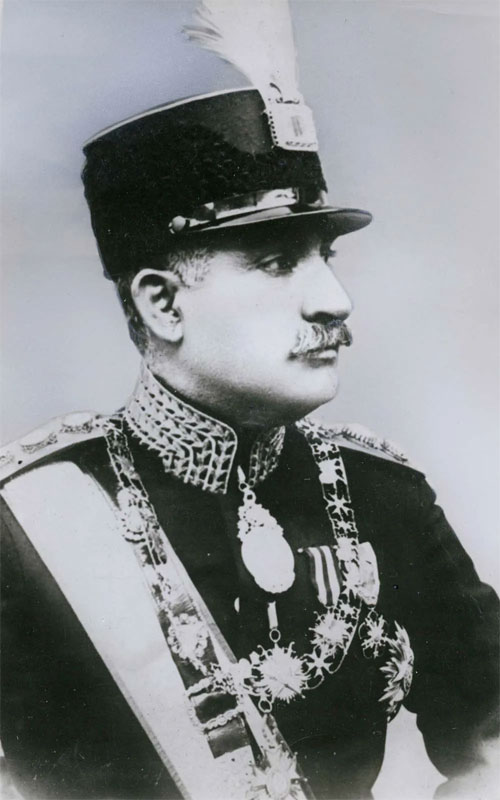
Iranians had already forced the Qajars to accept a constitution in 1906, and now the nationalist Iranians were against the corrupt monarch who was perceived as one who bartered away the region’s sovereignty. In 1925, Iran’s parliament (Majlis) deposed the last Qajar Shah and transferred the throne to Reza Shah Pahlavi, who was a military officer. Reza promised order and an end to foreign humiliation.
Reza Shah Pahlavi. Source: Britannica
He established a strong central government. Although he was an autocrat who brooked no dissent or free press, he did seek to revise Iran’s oil deal with APOC. In 1928, he demanded fairer terms from APOC, stating that Iranian oil increased British wealth while Iranians remained poor.
APOC dragged its feet for four years. In 1933, after Reza threatened to cancel the D’Arcy concession, APOC finally agreed to pay a minimum royalty and cede a bit more territory. The company was rebranded as the Anglo-Iranian Oil Company (AIOC) to placate the Shah’s dislike of the old name “Persian”. Despite the new deal, the influence of Britain remained strong.
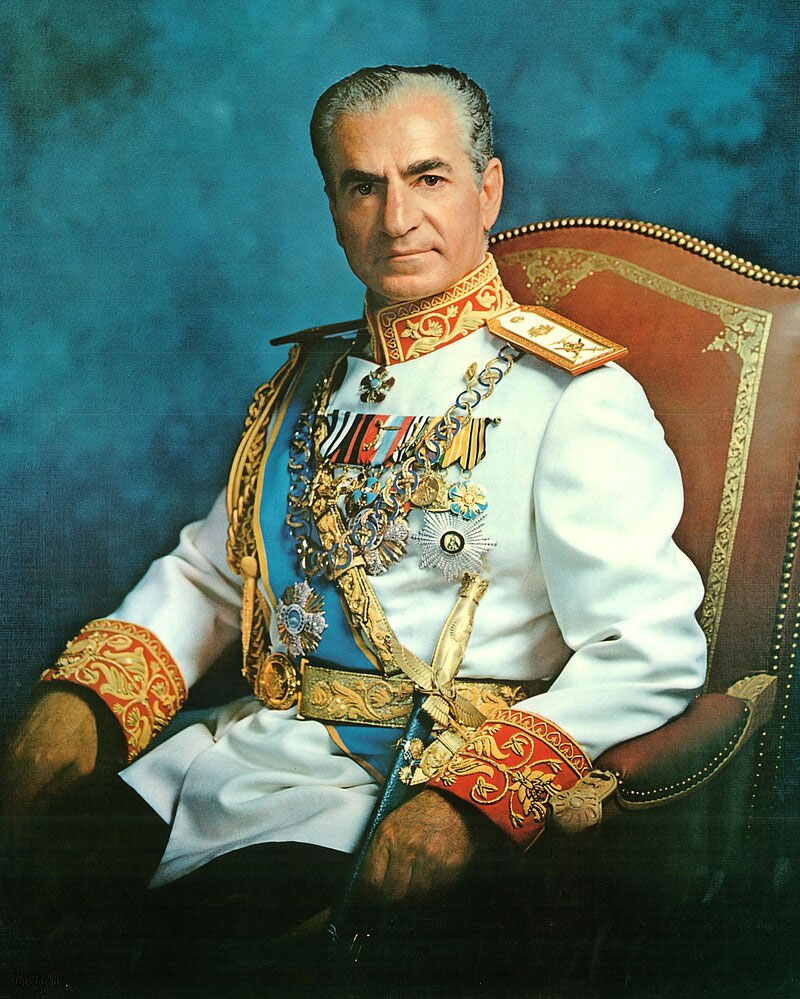
During the 1930s, Germany showed sympathy to Iran and Reza continued to revolt against the British, which alarmed London. During World War II, Britain feared Iran might slip from its stronghold. In 1941, British and Soviet forces jointly invaded Iran, forcing Reza to abdicate. He was exiled and replaced with his pliant 21-year-old son, Mohammad Reza Pahlavi. The British orchestrated regime change, securing a friendly monarch in the middle of the war. However, removing Reza Shah had consequences of its own. Iran’s pro-democracy movement flared up and the demand for a truly independent nation without any involvement of foreign powers grew louder.
Mohammad Reza Pahlavi. Source: Wiki
Nationalisation and Mossadegh’s challenge to British oil (1940s–1951)
After WWII, an anti-colonial wave was at its peak throughout the developing world. In Iran, nationalists increasingly focused on a single goal, reclaiming the oil from the British. AIOC was being seen as an “imperium in imperio” in Iran, which means an empire within an empire. The public no longer wanted Britain to dominate Iran’s economy while its profits flowed to London.
By 1950, AIOC’s oil revenues far outstripped Iran’s own state revenues, making it clear that Iranians were facing injustice. Popular outrage mounted at how Britain’s AIOC controlled Iran’s main source of income and kept Iran impoverished. Even the then ambassador of Britain in Tehran, Sir Francis Shepherd, acknowledged the colonial mindset at play and wrote in 1950 that “the Persians” must not be allowed to run their own oil industry, as “they cannot do it”. According to him, Iran’s role was merely to “profit from the technical ability of the West”. This condescension only hardened Iranian resolve to end British exploitation.
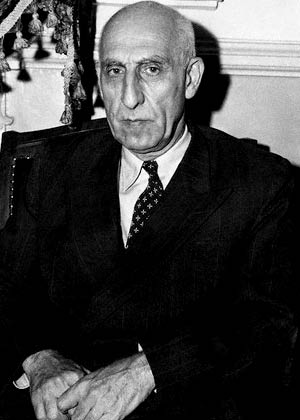
By the late 1940s, a broad coalition of pro-democracy liberals, secular nationalists, and leftists was formed under the leadership of Mohammad Mossadegh, who was a veteran politician known for his integrity. Public anger over AIOC’s abusive labour practices was at its peak. There was a notable strike by the oil workers at Abadan in 1946, which was crushed only after the British Navy intervened. Momentum built for Iran to nationalise its oil industry and use the wealth for its own development.
Mohammad Mossadegh. Source: Wiki
In March 1951, the movement reached its climax. The Majlis, with overwhelming public support, voted unanimously to nationalise AIOC’s assets and create the National Iranian Oil Company. Within weeks, the Shah, who had then become a figurehead, bowed to public pressure and appointed Mossadegh as Prime Minister on 28th April 1951. Iranians celebrated Mossadegh as a national hero for standing up to Britain. Time magazine called him “the Iranian George Washington” for his defence of his country’s sovereignty.
While Iranians were celebrating, London was outraged, as it had lost control of Iran’s oil. The British government and AIOC refused to accept Iran’s nationalisation of the oil industry. The British elites hated Mossadegh’s move. For them, AIOC was the most lucrative British enterprise anywhere on the planet, and they saw its expropriation as an intolerable affront to the established (colonial) order.
British officers came up with a hardline strategy – no mediation, no compromise, no acceptance of nationalisation in any form. Britain immediately took a series of aggressive steps to strangle Iran’s economy and destabilise Mossadegh’s government. AIOC withdrew all British managers and technicians from the Abadan refineries, hoping it would cripple oil production.
The Royal Navy blockaded Iran’s oil exports, and the company organised an international boycott of Iranian oil to prevent Tehran from selling it elsewhere. The sterling assets of Iran in London banks were seized, and the export of key goods to Iran, including steel and sugar, was banned. It even seized foreign vessels carrying Iranian oil. The economic warfare went on for two years, between 1951 and 1953, and devastated Iran’s finances, leading to an economic crisis.
However, Mossadegh did not bow to Britain’s pressure. He managed to keep Iran solvent through strict measures and rallied nationalist sentiments against Britain’s bullying. In the international arena, he scored a public relations victory. Mossadegh travelled to New York in late 1951 and defended Iran’s case at the United Nations, outshining Britain’s representatives. He won support from the global public, especially in emerging post-colonial nations. He argued that Iran had a right to control its own resources. Mossadegh’s victory on the international platform further angered Britain and hardened their resolve to remove him.
Initially, Britain considered military options. Then-Prime Minister Churchill was far more hawkish on Iran than his predecessor Attlee. Churchill railed against the “weak” response of the previous government and had no qualms about using covert action. British Intelligence (MI6) had long cultivated a network of agents inside Iran. It was now time to step up plans to oust Mossadegh by any means necessary. Mossadegh pre-empted one early MI6 plot by expelling all British officials and closing the UK embassy in late 1952, after discovering British spies conspiring with royalist dissidents. With another defeat on the ground, Britain turned to the one power capable of helping orchestrate Mossadegh’s downfall, the United States.
The MI6-CIA coup of 1953 (Operation Ajax)
By 1953, Britain was determined to remove Mossadegh and reclaim its dominance over Iranian oil. British officials framed the crisis in Cold War terms to win over hesitant Washington and argued that inaction could result in a communist takeover in Iran. Notably, Mossadegh was neither a communist nor Soviet-aligned. The election of US President Dwight Eisenhower presented an opportunity. His top foreign policy appointees, John Foster Dulles and Allen Dulles, were staunch anti-communists willing to collaborate with London.
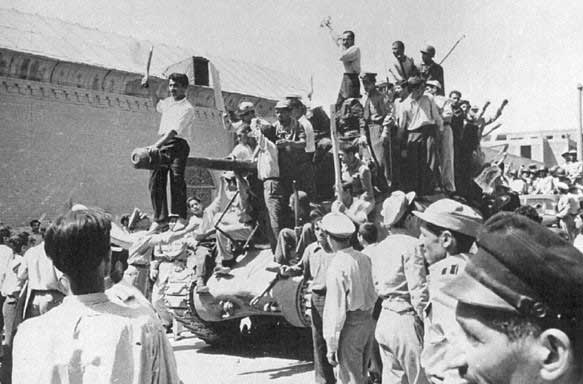
1953 Iranian coup d’état – Source: Wiki
The declassified files confirmed that Britain was the instigator and prime force behind the coup plan. The codename given to the operation was Operation Boot by MI6 and Operation Ajax by the CIA. MI6 and CIA coordinated closely to orchestrate the removal of Iran’s democratically elected government in August 1953.
British intelligence was not only equipped with a plan but had deep networks of local contacts and colonial-era tactics. AIOC, still majority-owned by the British state, effectively funded the entire covert operation. British agents in Tehran worked closely with their American counterparts. The objective was clear: install a regime that would “settle the oil question” on Western terms.
London and Washington agreed to restore the young Shah, Mohammad Reza Pahlavi, as an authoritarian ruler with expanded powers. General Fazlollah Zahedi, a pro-British military officer, was chosen as the new prime minister. Ironically, Zahedi had been detained by the British during WWII for his pro-Nazi leanings. Between the spring and summer of 1953, MI6 and CIA systematically bribed Iranian officials, military commanders, newspaper editors, and underworld figures to turn against Mossadegh.
There were ample funds, thanks to the profits made by AIOC. They paid off members of parliament, senior clergy, and street gangs to fuel the plot. They also exploited social divisions as one of the key parts of the strategy. They saw a potential ally in Ayatollah Seyyed Abol-Ghasem Kashani, once a Mossadegh supporter, who now commanded a strong base among traditional merchants and devout masses.
In February 1953, a mob of Islamist militants funded by Kashani and British agents stormed Tehran and attacked Mossadegh’s residence, calling for his execution. At the same time, MI6 orchestrated false-flag operations. The provocateurs paid by the British posed as Communist Tudeh Party members and attacked mosques and clerics to discredit Mossadegh. Later, a CIA agent admitted that the British had “sent the people we had under our control into the streets to act as if they were Tudeh. They threw rocks at mosques and priests”.
There was an attempted coup in early August 1953, but it failed. A second coup was orchestrated on 19th August 1953, which succeeded. Pro-Shah military units bribed by MI6 and CIA entered Tehran. British and American-financed mobs clashed violently with Mossadegh supporters. The Shah, who had briefly fled, returned and formally dismissed Mossadegh. The Prime Minister’s residence was stormed, and he was arrested, effectively ending Iran’s democratic experiment.
Churchill hailed the outcome. Mossadegh was imprisoned. General Zahedi became Prime Minister. However, the real power rested with the Shah. He dismantled checks on his authority and signed a new oil deal. In 1954, a Western consortium gave AIOC, which later became British Petroleum (BP), a 40% share in Iranian oil. American firms received another 40%. The rest of the profits went to the European partners.
In Iran, the coup was widely seen as a betrayal of sovereignty by imperial powers. Though Britain won control in the short term, the 1953 coup planted the seeds of anti-Western resentment that would ultimately bring down the Shah himself.
The Shah’s authoritarian rule and growing anti-Western sentiment (1953–1970s)
Following Mossadegh’s removal, Britain and the US secured a loyal regime in Tehran that protected their oil interests. For the next 25 years, the Shah ruled as an autocrat closely aligned with London and Washington. He received unwavering Anglo-American military and political support, including arms, advisors, and intelligence. In return, all he had to do was to keep Iranian oil flowing West and resist Soviet influence. British diplomats saw him as a compliant “asset” who would serve their agenda.
However, inside Iran, his rule grew increasingly repressive. His secret police, SAVAK, backed by Western intelligence, jailed, tortured, and executed opponents, including nationalists, leftists, and intellectuals alike. Political opposition was outlawed. While oil enriched the elite, ordinary Iranians remained poor. To many, BP and other foreign firms appeared to be continuing colonial-era exploitation under new names.
The Islamist clergy, who were once allies of Britain, emerged as the fiercest critics of the Shah’s regime. In 1963, Ayatollah Ruhollah Khomeini was arrested after denouncing the Shah’s pro-Western policies. Though once opposed to Mossadegh’s secular nationalism, Khomeini now became a leading voice against foreign domination. By the 1970s, opposition had united Iranians from all walks of life, including secular students, merchants, democrats, and conservatives, against the Shah’s authoritarianism and Western backing.
The support from Britain and America for the regime deepened the suspicions. “The British hand” became a shorthand for foreign manipulation. The legacy of 1953 and decades of oil plunder became rallying cries. By 1978, mass protests erupted. Demonstrators carried portraits of Mossadegh, calling him the symbol of lost sovereignty. The message was clear: Iran once had a path to democracy, until Britain and the US crushed it. Now, a new generation wanted reclaim it.
Iranian revolution – the fall of the Shah and the 1979 anti-Western backlash
The Iranian Revolution reached its climax in January 1979. The Shah, seeing no way to quell the tidal wave of protests, fled the country. The monarchy collapsed in his absence. Ruhollah Khomeini stepped in to fill the void and was welcomed as a hero. Khomeini had become the unifying figurehead of the revolution. Islamists and a broad spectrum of Iranians who were fed up with tyranny and foreign dominance were impressed by Khomeini.
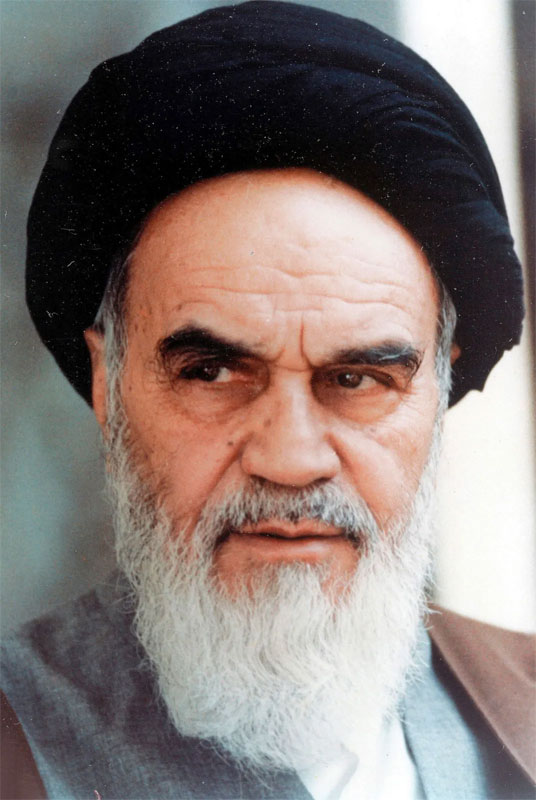
Ruhollah Khomeini. Source: britanicca
This was the time when Khomeini’s hardline Islamist supporters quickly sidelined moderate and secular elements, including those who had been close to Mossadegh’s camp. It was a crucial moment, as the revolution’s ideological atmosphere was intensely anti-Western, and specifically anti-British and anti-American. Decades of resentment towards the Anglo-American role in propping up the Shah fuelled the rhetoric of the new regime. Khomeini denounced the United States as the “Great Satan” and Britain as an insidious culprit in Iran’s suffering. The US is still being called the “Great Satan” by Iranian leaders.
One of the revolutionaries’ first dramatic acts was directly inspired by the memory of 1953. In November 1979, radical students stormed the US Embassy in Tehran and took 52 Americans hostage. They declared that they were pre-empting another “CIA coup” like the one that had occurred 26 years earlier on the very spot.
Khomeini’s supporters justified the embassy takeover by pointing to 1953’s Operation Ajax, which had been planned in the US Embassy with British collusion. This hostage crisis continued for 444 days, leading to a complete break in US–Iranian relations. It also marked the point at which Iran’s Islamic revolutionaries firmly consolidated power and crushed liberal moderates.
Khomeini established an Islamic Republic that was completely hostile to the West and to any hint of outside interference. British diplomats were expelled or left of their own accord. The new regime saw the UK as equally complicit in past crimes. The long shadow of AIOC and the 1953 coup thus hung over the revolution. The Islamists gained power on a wave of popular anger at exactly the kind of foreign domination that British Petroleum had come to symbolise in Iran.
There is a famous Iranian revolutionary slogan that says “Na sharq, na gharb – Faqat Jumhuri-e Islami” (Neither East nor West – only Islamic Republic). It encapsulated Iran’s desire to be free of both Soviet and Western influence.
Legacy of British intervention – a century of mistrust and conflict
A century after William D’Arcy’s oil deal, Iran’s relations with Britain and the West remain marked by a deep history of exploitation and betrayal and distrust. The 1979 revolution was not an endpoint but the beginning of a more assertive, ideologically driven resistance. In today’s time, Iran’s clerical regime still frames its policies as a defence of sovereignty against Western imperialism, while drawing inspiration directly from the memory of the 1953 coup and the oil nationalisation struggle.
Ali Khamenei, Supreme Leader of Iran, regularly cites Mossadegh’s ouster as a warning and equates Iran’s nuclear ambitions with the earlier battle to reclaim oil. Iran views both as essential to preserving its independence. This narrative resonates across Iranian society, where schoolbooks recount Britain’s monopoly over oil and its role in crushing the country’s economy.
For the West, especially Britain and the US, the long-term consequences of 1953 have been deeply damaging. By destroying Iran’s elected government and reinstating the Shah’s dictatorship, they helped create the very revolution they later feared. The Islamic Republic, far more anti-Western than Mossadegh ever was, has resisted foreign influence and pursued policies that challenge Western interests, especially in the Middle East.
The nuclear dispute is a direct extension of this mistrust. Tehran sees Western demands as modern-day colonialism; Britain, the US, and Israel view Iran’s nuclear ambitions as a threat shaped by its revolutionary hostility. The result is an impasse that has persisted for decades.
Conclusion
For nearly a century, Iran’s destiny was shaped by British oil interests, beginning with the 1901 concession to the Anglo-Persian Oil Company, now BP. From World Wars to the 1953 coup that overthrew Prime Minister Mossadegh, British-backed interventions secured control of Iranian oil, often through compliant monarchs and covert operations. But these actions sowed the seeds of nationalist and Islamist backlash.
The 1979 Islamic Revolution, fuelled by memories of British and Western betrayal, ousted the Shah and brought to power a regime hostile to the West. Today’s tensions, with Israel, the US, and over nuclear ambitions, stem from this legacy. Iran’s leaders still invoke Mossadegh’s defiance, rejecting Western pressure in favour of sovereignty. For Iran, Britain remains a symbol of colonial manipulation. The legacy of APOC endures in Iran’s deep mistrust of the West, continuing to shape regional politics through a lens of historical grievance and resistance.
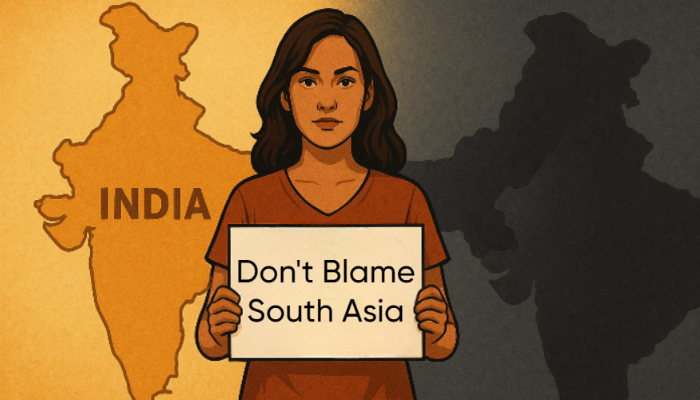
The Indian subcontinent was replaced by the word “South Asia” which was purposefully popularized in the 1940s and 1970s by policy-making entities in the United States, such as the American State Department to allegedly serve as overarching term for all countries within the region, including India.
However, in reality, the objective was to negate the Indian heritage and roots of the entire territory, thereby dissociating it from its Sanatan history. It is needless to say that this agenda continues to gain momentum over time. Hence, Diwali has turned into a South Asian festival and Neeraj Chopra is dubbed as a South Asian Olympian.
The bitter pill of compromising Indian identity and, by extension, Hindu culture, would have been swallowed had the infamous agenda stopped there. Nevertheless, the situation was quite the opposite. As if this gross appropriation was insufficient, the designation was subsequently used to disguise the heinous offences of a specific group belonging to a particular religion, country and ideology, with the blame for their actions being unjustly assigned to the whole area, especially India.
Emboldened by the abuse of the expression “South Asia,” which was possibly created for a similar reason, and notwithstanding vocal protests from many Indians, there appears to be no cessation to this outrageous practice. This was clearly demonstrated when the Pakistani grooming gangs in the United Kingdom were exposed for raping, violating and brutalizing minor British girls over multiple decades. However, they were introduced with the same broad term to obscure the truth of their origin and background.
Therefore, it is imperative for all Indians to come together and assert ourselves, for enough is enough. How long can any self-respecting nation withstand the exploitation of its identity, which was initially snatched and then corrupted into something so repulsive and unrecognizable?
I, for my part, can not tolerate being subjected to such a breach of my identity by those whose predominant concern is not the shocking crimes perpetrated by their favored demographic, but to mask them under the umberalla of “South Asia” in the interest of political correctness. Meanwhile, any decent act by a Pakistani, no matter how rare or trivial, will be associated with them by virtue of their name, nation and faith.
On the other hand, an Indian who is convicted of even a small infraction is never afforded the same privilege. Their identity or nationality does not fade into the shadows as “South Asia” takes precedence. On the contrary, their nativity and ethinicity are highlighted to ensure public awareness as political correctness often takes a convenient back-seat in these matters.
Likewise, any accomplishment by an Indian or India is not exclusively recognized for the country but is instead attributed to “South Asia” as if other nations also played a part in the success. The largest democracy in the world is basically employed to shoulder blame and share credit with the likes of Pakistan and Bangladesh. Some jokes, as distasteful as they could be, truly write themselves.
British-Indians furious at Prime Minsiter Keir Starmer
Much like myself and several other Indians, British Indians too seem to have reached their limit and directed their anger towards the United Kingdom Prime Minister Keir Starmer who opted to use “Asian grooming gangs,” akin to his government and the media as he defended his performance as Director of Public Prosecutions (DPP) from 2008 to 2013, which sparked more criticism of the word.
It reached such an absurd level that even Elon Musk had to call out the British government for its relentless tiptoeing around the cases. He also blasted Starmer for failing to deal with systematic problems concerning the grooming gangs when he was in office. Moreover, Sikh and British Indian leaders contended that such language unjustly stigmatizes whole Asian groups, including Sri Lankans, Indians and others for acts mostly associated with people of Pakistani descent.
The UK’s Hindu Council chair, Krishna Bhan, expressed his disappointment that the prime minister decided to use the term “Asian” to cover up the horrible incidents. “Our Hindu and Sikh girls were also victims of these grooming gangs, and using this vague term insults all Asians,” he pointed out.
“Why should we be classified as part of these gangs? When it comes to grooming gangs, we are Asian. When it’s about Kashmir, we’re Indian. This inconsistency is deeply offensive,” Jay Shah, spokesperson for Friends of India Society International UK also outlined the glaring hypocrisy.
Leaders in the community additionally emphasized how damaging such language is in fostering prejudice and eroding interethnic trust. Politicians were chastised by the Sikh Federation UK for their political correctness and for ignoring the underlying roots of the problem. Unfortunately, the UK government and British media have consistently declined to address the issue directly, despite the severity of these crimes and the unambiguous involvement of Muslim Pakistani males.
Journalist Mehdi Hasan of “non-Muslims are animals” fame, sticking to his track-record, rushed to the defense of the Pakistani rapists and cried “demonisation.” He also charged the Tesla CEO with appeasing the racist far-right following a confrontation over the H1B visa issue, during which the latter supported the influx of highly skilled Indian workers into the US.
While referring to Pakistani offenders by their actual identity seems to be totally unacceptable, holding “South Asia” or “Asia” responsible for the crimes committed by them is apparently a shining example of secularism and peaceful coexistence. Furthermore, anyone who chooses to deviate from this script is swiftly labeled as an Islamophobe or a bigot.
More importantly, the mainstream media continues to overlook facts and shield the rapists while damaging the reputation of an entire continent in the new distorted sense of political correctness. “Asian grooming gangs” remain to be in use, disregarding various reports and multiple UK city councils citing the role of Pakistani men, which is untrue and unfairly targets a whole continent.
It is noteworthy, that the government and authorities of the United Kingdom were reluctant to take action against the accused as they did not want to appear racist. Superficial concerns took precedence over justice, truth, safety and the lives of young girls.
Minimizing India’s milestones as South Asia’s
The Indian Space Research Organisation in 2023 successfully executed the third phase of its lunar exploration initiative, Chandrayaan 3. It later achieved a soft landing on the uncharted southern pole of the Moon. This accomplishment marked a significant milestone for India and while the nation rejoiced, its citizens were soon reminded of the reality of having a parasitic neighbour.
“Chandrayaan 3 is expected to land on the moon on 23rd August at around 5:47 pm IST. A huge moment for South Asia and countries regarded as third world,” Pakistani sports journalist Farid Khan wrote on social media drawing an angry reaction from the Indian netizens who slammed him and even made memes on his outrageous statement.
Interestingly, the Islamic Republic and its leaders including Fawad Chaudhry, who was a minister in the Imran Khan government at that time, ridiculed ISRO, Prime Minister Narendra Modi and the space mission when Chandrayaan 2 did not arrive at its intended destination. Despite the failure of their own space program, Pakistanis derided India, only to claim credit when ISRO succeeded.
To draw inspiration from William Shakespeare’s Hamlet, Shamelessness, thy name is Pakistan.
What could serve as a more fitting example to illustrate the duplicity of such narratives where India bears the burden of its losses while there are many proponents of its successes, particularly the terrorist state of Pakistan which labels the Indian Republic as an “enemy nation” and wants to “bleed it by a thousand cuts” using terrorism. However, there are several takers for this propaganda globally, who persistently spread such disinformation as is observed repeatedly.
Pakistanis have significantly contributed to the severe racism directed towards Indians which is increasingly evident on the internet these days. They subject Indians to various slurs, attack Hindus based on their faith and propagate the most derogatory lies against them. This behavior has become a norm for the Pakistanis.
They stereotype India, blame Indians for the crimes they commit and are essentially devoted lackeys of neo-Nazi elements on social media who are unable to accept the astonishing growth of Indian Americans and India itself. Pakistanis then have the audacity to react negatively when someone points out their true character.
Conclusion
The term “South Asia” was primarily coined by American academics as a “politically neutral term” to describe the Indian subcontinent and to enable Western institutional power centers, such as politicians, policy makers, academics and others, to discuss the area theoretically without compromising the “sensibilities” of other, non-Indian, nations in the region, or to “talk about the region in an inclusive manner.”
It should come as no surprise that Pakistan is at the forefront of the list of “countries” whose “sensibilities” would be harmed if the area was still referred to as the Indian subcontinent. Now, the term has achieved greater recognition among global communities aided by the diaspora of Pakistan in places like the United States and the United Kingdom.
Predictably, an unusual sense of FOMO has gripped the Pakistanis who desire to be linked with the positive news emerging from India while simultaneously envying and hating the neighbour. Pakistan and the international machinery commemorate every achievement of India as a South Asian success and similarly blames the region and even the entire continent for the offenses committed by Pakistanis.
Hence, I have come to terms with the fact that the use of “South Asia” will only increase due to the obsession of the international community with protecting a specific religious group and nationality at the expense of another. Pakistan clealrly wants to have its cake and eat it too.
Yet, as Indians, it is essential that we raise our voices against this blatant violation of our identity by the Pakistanis and their liberal ecosystem. The vilification of “South Asia” or “Asia” for the actions of Pakistan cannot be tolerated any longer, regardless of the political support these individuals receive from their media, political parties or ecosystems in other countries under the banner of political correctness, countering Islamophobia or anti-racism, which, interestingly, is never an issue when it comes to providing the same courtesy to Indians.
Indeed, we find ourselves regrettably sharing the continent, region and even borders with the rogue nation, however, this does not imply that we should be held responsible for its actions.
Preparations are in full swing for the upcoming Lord Jagannath Rath Yatra in the sacred city of Puri in Odisha. The grand 9-day long Rath Yatra or Gundicha Yatra takes place once year and is attended by lakhs of devotees from across the country and the world. As per Drik Panchang, a Hindu almanac, the Rath Yatra is held on the Dwitiya Tithi (second day) of the Shukla Paksha in the Ashadha month of the Hindu calendar. This year’s Rath Yatra will begin on 27th June and conclude on 5th July.
#WATCH | Puri, Odisha | Preparations underway at the Jagannath Temple ahead of the Lord Jagannath’s Rath Yatra in Puri. pic.twitter.com/omDPx5zuGP
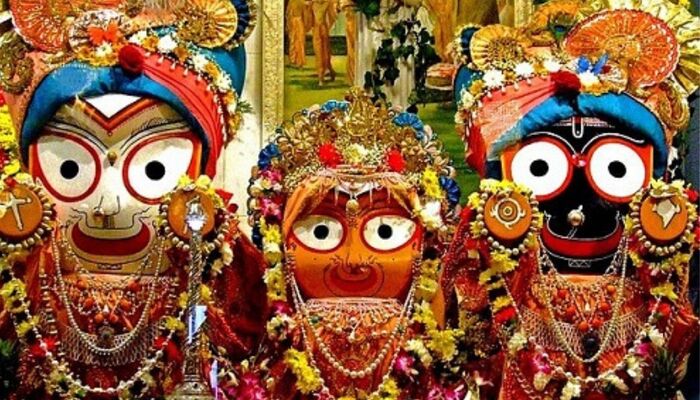
Lord Jagannath, along with his brother Lord Balabhadra and sister Devi Subhadra, is worshipped in their child form in the Jagannath Temple in Puri, alternatively known as the Puri Jagannath. The temple, housing three mesmerizing vigrahas of the three deities made of a sacred wood, is a part of the Char Dham Yatra. Puri Jagannath organises its own annual rath yatra in which Lord Jagannath and his siblings travel to Gundicha temple to meet their aunt to fulfill their promise as mentioned in the Skanda Purana.
VIDEO | Odisha: Here's what Gajapati Maharaja Dibyasingha Deba said on Puri Jagannath Rath Yatra.
During the Rath Yatra, the three deities are placed on three gigantic, decorated chariots pulled by devotees through the streets of Puri in a grand procession. The chariots travel to Gundicha Temple, located about 3 km away from the Puri Jagannath. However, due to massive number of devotees attending the procession, the chariots take hours to reach the Gundicha temple. After reaching the Gundicha temple, the deities stay with their aunt for a week, where devotees flock to visit them.
As per the tradition, the celebrations stretch across nine days beginning with Anavsara, a period of rest, and ending with Niladri Bijay, which marks their return to the Puri temple.
Anavasara – started on 13th June, ends on 26th June
Gundicha Marjana – 26 June 2025
Rath Yatra – 27 June 2025
Hera Panchami – 1 July 2025
Bahuda Yatra – 4 July 2025
Suna Besha – 5 July 2025
Niladri Bijay – 5 July 2025
Mythological tale behind Lord Jagannath’s illness
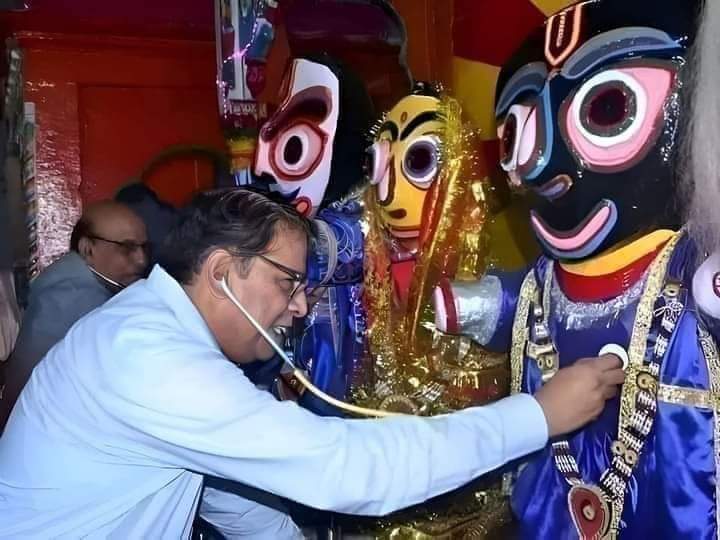
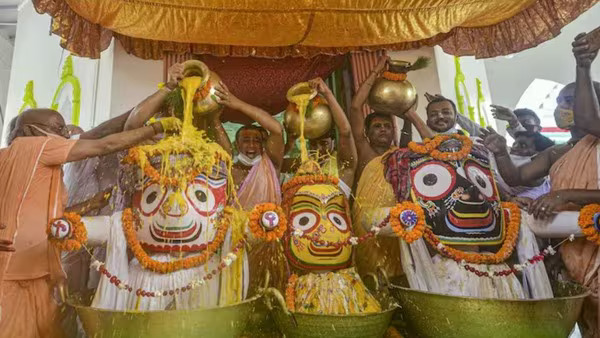
There is an interesting mythological story associated with the Anavasara period, when Lord Jagannath and his siblings rest for about 14 days before the beginning of the Rath Yatra. It is said that the three deities fall ill roughly 14 days before the Rath Yatra and therefore, are provided rest for around 14 days to recover from the illness. During this time, the devotees are not allowed to visit the deities. The Anavasra period ends on the new moon day, when the deities are said to have healed from the illness and regained their energy. This occasion is celebrated as Naba Jaubana Darshan and this is when the devotees get the first glimpse of the three deities after their recovery from the illness before they set out on their journey.
Image via X
There is a folklore associated with the sickness of Lord Jagannath and his siblings. As per the story, Madhav, an ardent devotee of Lord Jagannath fell sick one day. When Lord Jagannath came to know about his sickness, he himself appeared to serve him. Surprised by his presence, a curious Madhav asked him as to why the Lord himself came to serve him while he could have cured him. To this Lord Jagannath replied that there is no short-cut or by-pass to one’s destiny and that one has to endure it. If one cuts it short or tries to avoid it, he will have to suffer it in the next birth. Lord Jagannath told Madhav that his sickness will last 15 days but he offered to endure his pain. The Lord explained that if he endured the pain on Madhav’s behalf, his destiny will be destroyed. Since then, Lord Jagannath has been falling sick for the said period every year before the Rath Yatra.
via PTI
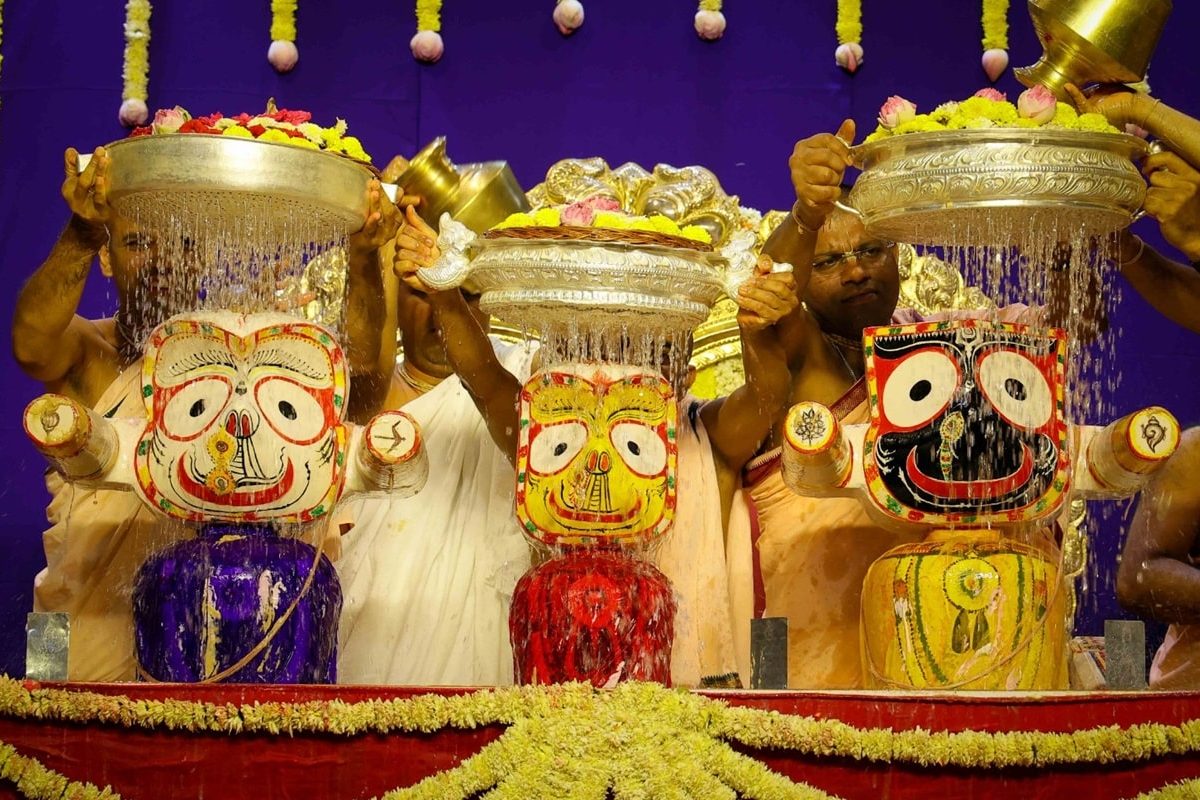
Before setting out for the Rath Yatra, Lord Jagannath, Lord Balabhadra and Devi Subhadra are bathed with 108 kalash of water on Snan Purnima, which an annual bathing ritual. By another account, it is said that the deities fall sick after bathing during Snan Purnima ritual. The water used for bathing them is drawn from the Suna Kuan or the golden well within the temple premises.
via ISKCON
This is followed by Anavasara period, during which the deities recover from the sickness to prepare for the yatra the subsequent stay with their aunt at the Gundicha temple. During Anavasara period, the deities are treated by the temple Baidya (physician) with traditional herbal medicines and concoctions to help them recover.
There is a profound underlying meaning to the story of Lord Jagannath enduring Madhav’s pain. The story explains how one is bound by his destiny and cannot escape it. The only way one can dissolve his karmas or get rid of his destiny is through devotion. The symbolic re-enactment of the events during the Rath Yatra reminds the devotees the about this universal truth. In Sanatana Dharma, deities take human forms or appear as Avatars to guide humans about the right conduct or right path to be followed through various situations of life.
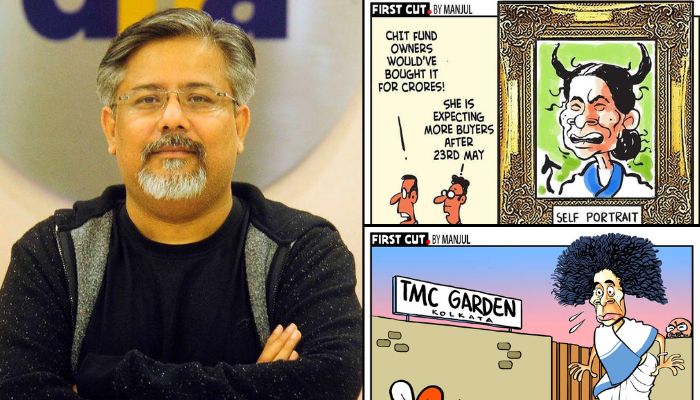
Popular anti-Modi propagandist, Manjul, has received a taste of ‘censorship’ from the West Bengal police for cartoons on Chief Minister Mamata Banerjee that were posted on social media about 6 years ago.
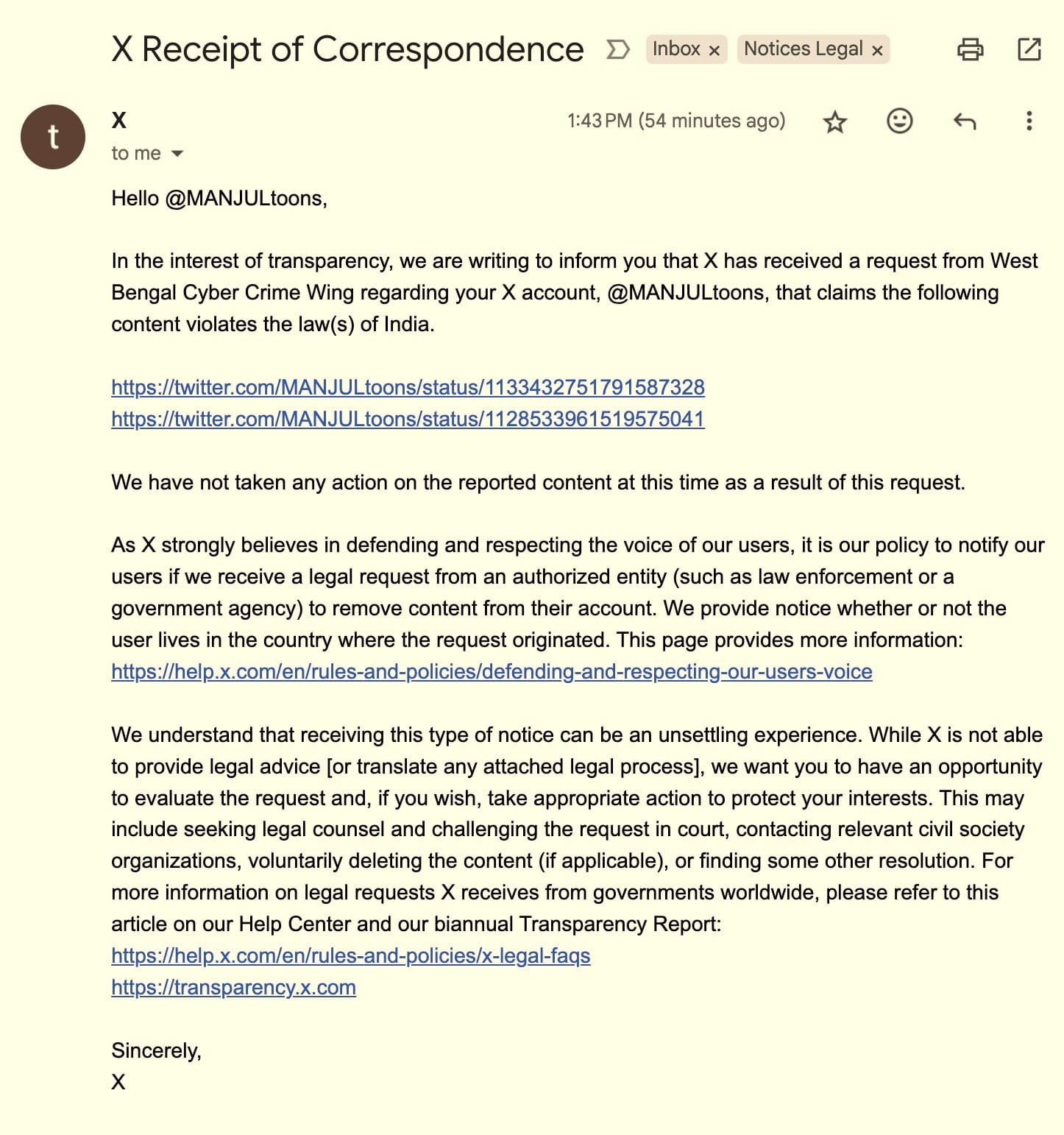
Manjul, who goes by the username ‘MANJULtoons’ on X (formerly Twitter), received an email on Wednesday (18th June) from the social media platform.
He was informed that the West Bengal police had flagged 2 of his tweets, dating back to May 2019, as violative of Indian laws.
Screengrab of the email received by Manjul
“In the interest of transparency, we are writing to inform you that X has received a request from West Bengal Cyber Crime Wing regarding your X account, @MANJULtoons, that claims the following content violates the law(s) of India,” the email read.
“We have not taken any action on the reported content at this time as a result of this request. As X strongly believes in defending and respecting the voice of our users, it is our policy to notify our users if we receive a legal request from an authorised entity (such as law enforcement or a government agency) to remove content from their account,” it added.
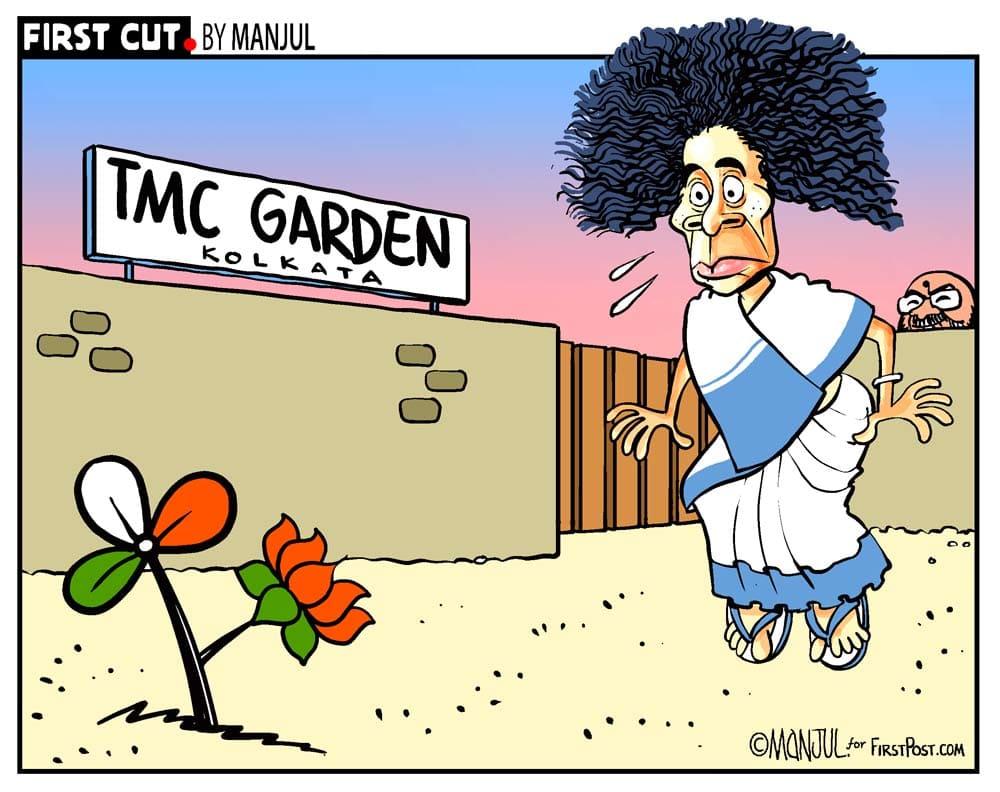
Manjul posted one of the tweets on his X (formerly Twitter) handle on 28th May 2019, following the exodus of 2 TMC MLAs and more than 50 municipal councillors to the BJP.
Screengrab of the cartoon posted by Manjul on his X account
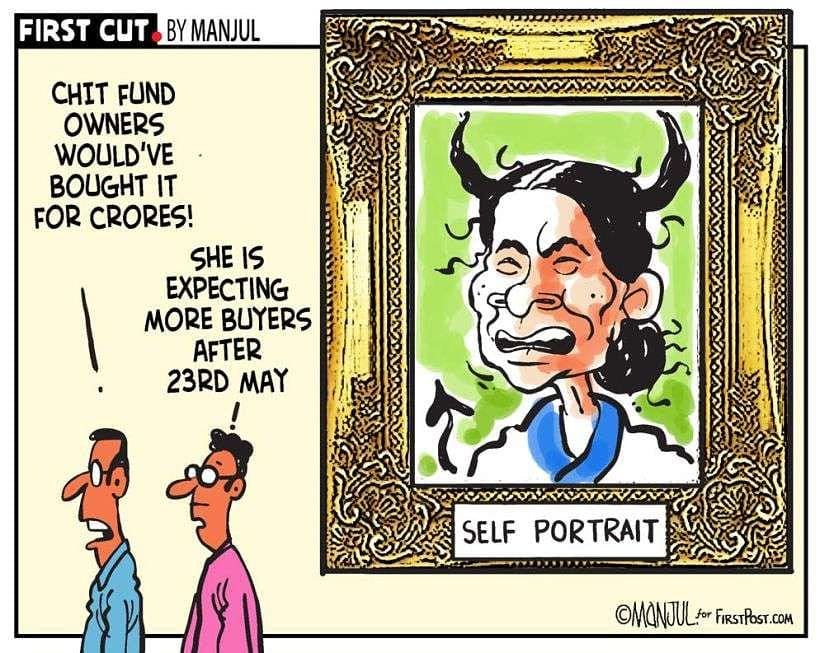
He made caricatures of TMC supremo Mamata Banerjee on that occasion. Manjul also posted another cartoon of the West Bengal Chief Minister in connection to the chit-fund scam in the State on 15th May 2019.
Screengrab of the cartoon posted by Manjul on his X account
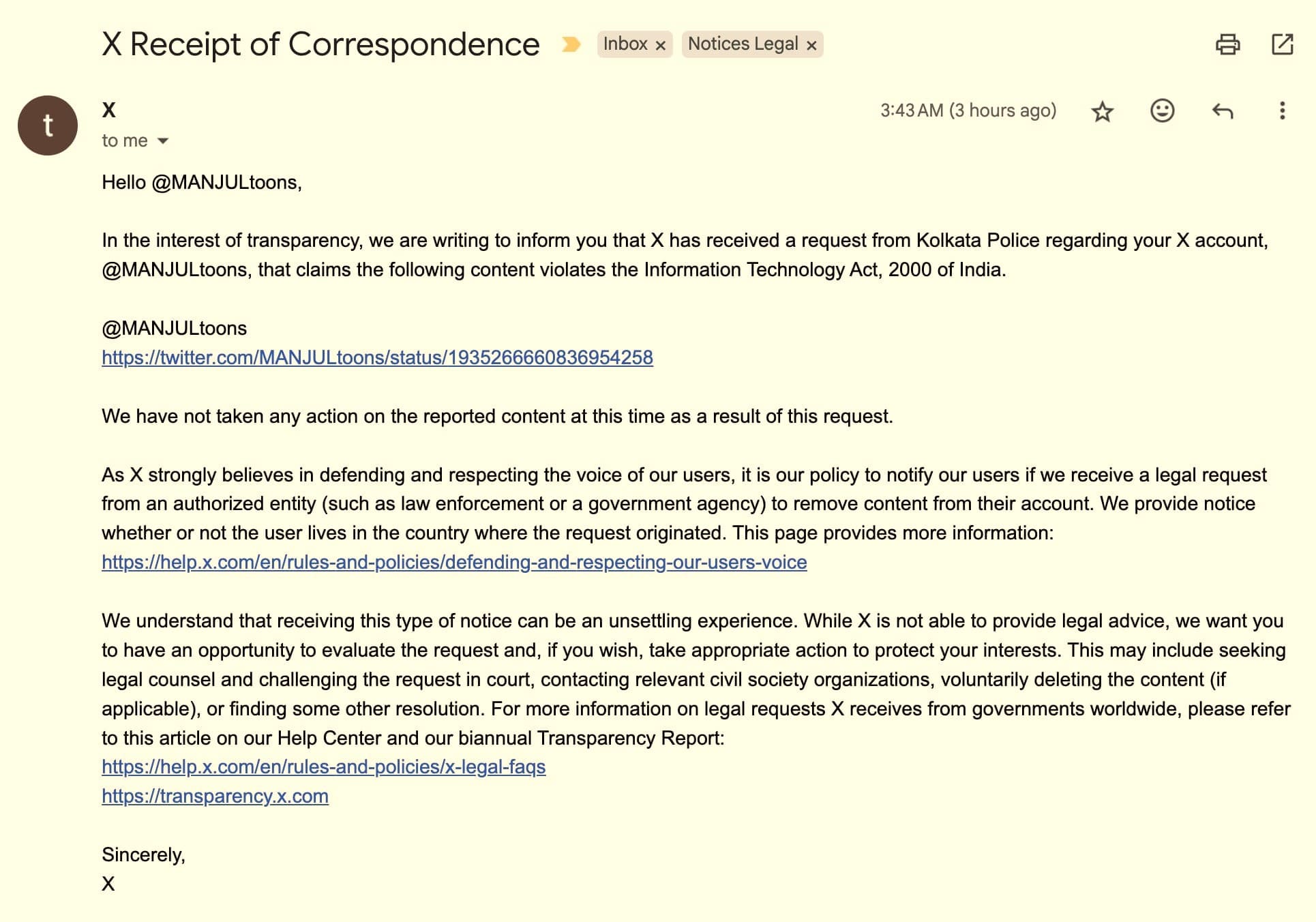
On Sunday (22nd June), Manjul received yet another email from X (formerly Twitter), informing him that the Kolkata police has now flagged both of his tweets.
Screengrab of the email received by Manjul
“It seems the Kolkata Police have no other work now. They’ve sent yet another notice to X for the same 6-year-old cartoon, claiming it violates the law,” the disheartened anti-Modi propagandist tweeted.
Cartoonist Manjul shares fake news, uses image from 2017 to criticise Indian healthcare system. pic.twitter.com/6jMagSzdT3
OpIndia had previously reported how Manjul had been involved in peddling fake news to tarnish the image of the Modi government and had belittled the legacy of freedom fighter Subhas Chandra Bose for his political vendetta.
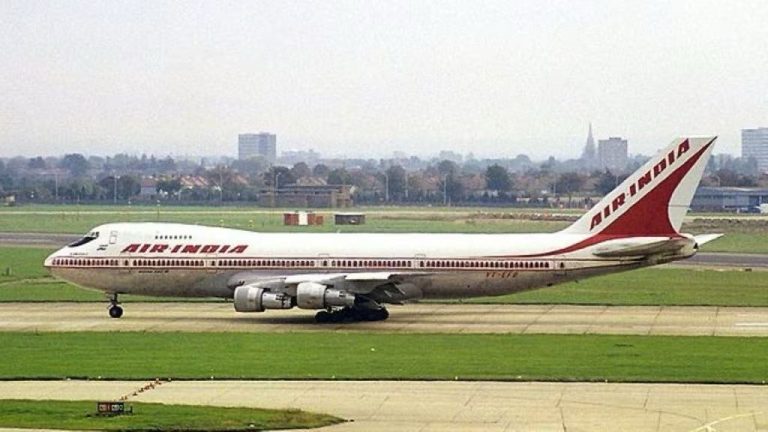
Almost four decades after the devastating Air India Flight 182 bombing, the Royal Canadian Mounted Police (RCMP) have cracked a key piece of the puzzle identifying the elusive ‘Mr X,’ a man involved in testing the deadly bomb weeks before the attack that killed 329 people.
But in a frustrating twist for families seeking closure, authorities revealed that ‘Mr X’ died recently, never held accountable for his role.
The announcement came just ahead of the 40th anniversary of the June 23, 1985, bombing, the worst act of terror in Canadian history and a haunting reminder of Khalistani extremism. The attack, orchestrated by Khalistani terrorists, brought down the Montreal-to-Mumbai flight off Ireland’s coast, claiming the lives of hundreds, most of them Canadians of Indian origin.
RCMP Assistant Commissioner David Teboul, speaking at a memorial event attended by grieving families, confirmed ‘Mr X’s’ death but declined to disclose his name, citing privacy laws. Teboul, who leads federal policing in British Columbia, explained that despite key suspects being acquitted in 2005, investigators relentlessly pursued loose ends in the case.
Their efforts finally uncovered the identity of ‘Mr X,’ a man who had travelled with Babbar Khalsa leader Talwinder Singh Parmar to Duncan, British Columbia, on June 4, 1985. The duo met with Inderjit Singh Reyat — the only person ever convicted in the case and tested an explosive device in nearby woods, under the watch of Canadian intelligence agents.
Shockingly, although agents from Canada’s Security Intelligence Service (CSIS) heard the blast, they misinterpreted it as gunfire and failed to intervene, a misstep that haunts the case to this day.
While Parmar was killed by Punjab Police in 1992 and Reyat served time for bomb-making and perjury, ‘Mr X’ slipped through the cracks, his true identity under wraps until recently.
Teboul admitted the likelihood of fresh trials is slim but stressed Canada’s responsibility to honour the victims. “The Kanishka bombing remains the darkest chapter in Canada’s fight against terrorism,” he said, pledging that the RCMP will never let the tragedy fade from memory.
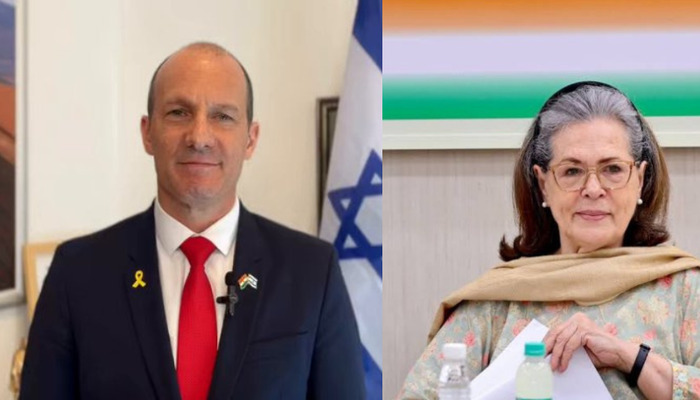
Israel’s ambassador to India, Reuven Azar, has reacted strongly to the opinion piece written by former Congress president Sonia Gandhi in The Hindu newspaper in favour of Iran. In the article, Sonia Gandhi extended support to the Islamic Republic of Iran amid the ongoing conflict with the Jewish State of Israel. She said that India should support Iran against Israel and blamed the Modi government for not choosing sides and maintaining diplomatic balance.
Acknowledging Gandhi’s right to express her views, the Israeli ambassador added that leaders like her should be aware of the regional (Middle East) situation. He emphasised that three decades of Iranian aggression in this region cannot be ignored.
Delhi: On Congress leader Sonia Gandhi writing a piece in a newspaper supporting Iran and urging the Indian government to do the same, Ambassador of Israel to India, Reuven Azar, says, "I think politicians should be informed. We were disappointed to see that the person you… pic.twitter.com/zU0KnIwDub
He said, “We are disappointed to see that the one you mentioned (Sonia Gandhi) did not condemn the attacks of 7 October 2023 (Hamas attack) as should have been done. Ignoring the aggression carried out by Iran for the last three decades is completely unacceptable.”
In her article, Sonia Gandhi portrayed Iran as the victim of Western hegemony and Israeli aggression. She talked about taking Iran’s side in the ongoing conflict between Iran and Israel. Gandhi advised the Modi government to ‘speak in a responsible and loud voice’ and also raised questions about India’s alleged silence. Gandhi said that Iran has been India’s long-time friend while strategic relations with Israel are recent.
Additionally, she also accused the Modi government of abandoning the foreign policy supporting the two-nation theory that envisioned an independent Palestine. She accused Israel of violating Iran’s sovereignty and taking unilateral action. She also accused Israeli PM Netanyahu of constantly disturbing peace and promoting terrorism. Advocating for Iran, she wrote, “In 1994, Iran helped block a resolution critical of India at the UN Commission on Human Rights on the Kashmir issue.”
Indian government has maintained a neutral stance during the Israel-Iran conflict and has urged for peace in the region.
India has always been a supporter of peace. Be it the Ukraine-Russia war or the Israel-Iran war, India has talked about peace. In his recent visit to Cyprus, Prime Minister Modi reiterated that war cannot solve any problem in this century and that every problem can be solved through peace only.
Iran is considering blocking the Strait of Hormuz after the U.S. airstrikes targeted its nuclear facilities within Iran. Iran’s national parliament has already approved the closure of the Strait. It is a move that could send global oil markets into chaos—but India seems to be reacting to the developments with calm. Turns out, years of deliberate planning under Modi’s government have paid off. They didn’t just talk about diversifying oil supplies; they actually did it, methodically spreading their sources far and wide.
Petroleum Minister Hardeep Puri put it plainly that India is sitting on weeks’ worth of reserves, and imports are still trickling in through other channels. It is a quiet reassurance in a noisy crisis. While the world watches Israel and Iran trade blows, India’s earlier groundwork—those unglamorous, behind-the-scenes deals and routes, is proving its worth. Not bad timing, honestly. You don’t just luck into energy security like this. It is what happens when you look at the map, see the risks, and decide not to put all your eggs in one basket. Especially when that basket’s a narrow strait everyone’s fighting over.
UAE-India local currency settlement & CEPA: Bypassing the Dollar and Hormuz
The landmark August 2023 rupee-dirham settlement mechanism enabled India’s first rupee payment for UAE crude – 1 million barrels purchased by Indian Oil Corp from ADNOC. This followed the May 2022 UAE-India Comprehensive Economic Partnership Agreement (CEPA), which slashed tariffs on 80% of goods and enhanced market access across 11 sectors. The agreement facilitates non-dollar transactions, reducing costs and dependency on Hormuz-transited shipments. Bilateral trade, standing at $84.5 billion in 2022/23, now flows through resilient financial channels, with a real-time payment linkage further shielding transactions from global volatility. This framework ensures continued access to UAE oil even if Hormuz closes.
Russian oil surge: The sanctions-driven safety net
India’s big bet on discounted Russian oil after the Ukraine invasion has really paid off. Fast forward to June 2025, and they’re bringing in more than ever – a whopping 2 to 2.2 million barrels every single day. That’s actually more than what they get from Iraq, Saudi Arabia, the UAE, and Kuwait combined. Think about that! Before 2022, Russian oil was barely a blip on the radar, under 1% of India’s imports. Now? It makes up over a third, sometimes nearly half, of their total crude intake, which averages around 5.1 million barrels daily.
But the real strategic win isn’t just the price or the volume. It’s how it gets there. Russian oil, like Urals and ESPO, completely sidesteps the Hormuz Strait. Instead, tankers take the long way round – through the Suez Canal, around Africa’s Cape of Good Hope, or across the Pacific. This physical separation from the usual Middle Eastern shipping lanes is a huge deal. As analysts point out, when things get messy in the Middle East, this Russian supply offers India something crucial: reliable barrels at manageable prices, acting like a vital buffer.
Angola: Beyond oil to strategic partnership
India’s top African oil supplier Angola exported $2.5 billion worth of crude to India in 2023-24 (approx. 110,000-130,000 bpd). Its exit from OPEC in 2023 over quota disputes unlocked new opportunities for flexible, non-cartel supplies. During President Lourenço’s historic May 2025 visit – the first by an Angolan head of state in 40 years ties expanded beyond energy. A $200 million defence line of credit for Indian equipment and training complements oil access, while Angola joined the International Solar Alliance. This diversification into security and renewables deepens energy ties and reduces vulnerability to single chokepoints like Hormuz.
Latin American imports: Emergency reserves at scale
In early 2025, Indian refiners increased their sourcing from Latin American nations. Imports risesd 60 % month on month to 453,600 bpd in february 2025, capturing 9% of India’s import basket – the highest since 2021. Key companies include Brazil’s Tupi, Mexico’s Maya, and even debut cargoes of Argentina’s Medanito oil. Though costlier due to freight, these volumes provide immediate alternatives during Middle East crisis. Combined with African supplies (330,000 bpd in Feb 2025), they form a rapid-response option detached from Hormuz risks.
Since 2022, India’s oil import landscape has undergone a revolutionary transformation, fundamentally reducing the dependence on Middle East. Once dominated at 65% of imports (nearly all transiting Hormuz), Middle Eastern suppliers’ share has dropped by 26 percentage points to just 39% (2 million bpd) by June 2025. The most dramatic shift came from Russia, previously a minor supplier at under 1% – which now delivers a staggering 2.2 million bpd (44% of total imports), marking a 40-fold increase. Latin American imports simultaneously hit record volumes at 453,600 bpd (9% share), a near-doubling from their 2022 baseline of 5%. U.S. shipments have also surged dramatically, jumping 57% monthly to reach 439,000 bpd. Complementing these diversified flows, India’s strategic petroleum reserves now hold 9-10 days of supply – a critical buffer against regional disruptions. This multi-continent sourcing strategy has slashed Hormuz-transited oil from over 60% to just 40% of total imports in three years.
Geopolitical resilience in action
Minister Puri emphasized that “a large volume of supplies do not come through Hormuz,” crediting Modi’s leadership for this strategic repositioning. Only 40% of india’s oil transits the strait today, down from over 60% in 2022. Kpler analysts confirm that even a short Hormuz closure (24-48 hours) would see India pivot harder to Russian, US, African, and Latin American crudes, supported by strategic reserves. While higher freight costs remain a challenge, India’s multi-vector oil policy – blending currency diplomacy, sanctions opportunism, and Global South partnerships –has transformed vulnerability into resilience, ensuring fuel stability for 1.4 billion citizens as West Asia erupts.