Home Blog Page 397

Anti-India academician Nitasha Kaul rants against GoI for cancelling her OCI card: Read why it was cancelled and how OCI card is a privilege, not right

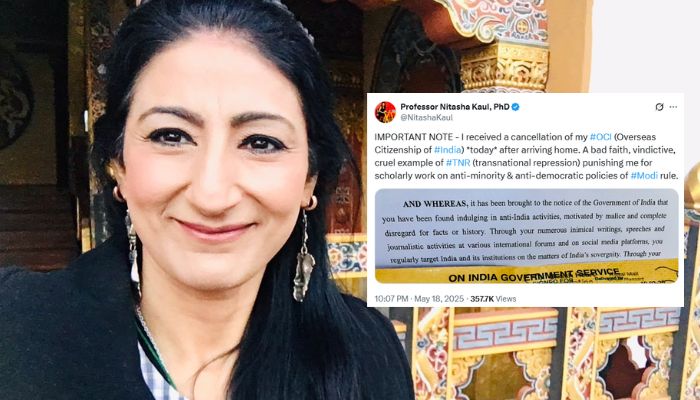
On 18th May (local time), anti-India propagandist and British academician Nitasha Kaul took to X to rant against the Government of India for cancelling her Overseas Citizen of India card. In her post, she wrote, “I received a cancellation of my OCI (Overseas Citizenship of India) today after arriving home. A bad faith, vindictive, cruel example of TNR (transnational repression) punishing me for scholarly work on anti-minority & anti-democratic policies of Modi rule.”

In a follow-up post, she recalled how she was denied entry into India when she came to speak on democratic and constitutional values, invited by the Congress-led Government of Karnataka. She wrote, “Modi BJP govt humiliated themselves & insulted non-BJP Karnataka state govt that invited me last year by ill-treating me & in spite of my 20,000 word response to their ridiculous inanity about ‘anti-India’, they have chosen to do this by a rigged process.”

She added, “Will overseas PR delegations of GOI say why ‘mother of #democracy’ denies me access to my mother? This is thin-skinned, petty insecurity with no respect for well-intentioned dissent that arrests/imprisons citizens in India & bars access to family for overseas citizens of India.”

OCI is not a right

OCI is not a right but a privilege. OCI is basically a long-term residential visa granted to persons of Indian origin (PIOs) who were citizens of India on 26th January 1950 or thereafter, or are eligible to become citizens from the said date. It is also granted to those who have family members in India, for example, someone who is married to an Indian. Notably, citizens of Pakistan, Bangladesh or such other country, as notified by the Government of India, are not eligible for OCI privileges.

Furthermore, the Government of India has the right to revoke an OCI card in case the card was obtained by means of fraud, if factual information is concealed, if the person shows disaffection towards the Constitution of India, may have engaged in unlawful trade or communication with the enemy state, or acted against the sovereignty and integrity of India.

Nitasha’s OCI card revoked because of her anti-India activities

In Nitasha’s case, the part of the document that she shared read, “AND WHEREAS, it has been brought to the notice of the Government of India that you have been found indulging in anti-India activities, motivated by malice and complete disregard for facts or history. Through your numerous inimical writings, speeches and journalistic activities at various international forums and on social media platforms, you regularly target India and its institutions on the matters of India’s sovereignty.”

The GoI categorically stated that her OCI card was revoked because of her anti-India activities. Nitasha has a long history of propagating anti-India narrative.

In May 2024, she shared a fictional story to cast aspersions on the integrity of Electronic Voting Machines (EVMs). She claimed she had dreamt about EVMs not counting votes in India. She conjectured a make-believe story to lend credence to the conspiracy theory mainstreamed by the Congress party about the EVMs. She claimed, “Recently, at a workshop lunch, I was telling a British colleague that I’d not slept well prev night due to dreams where people were voting on EVMs but votes were not being counted. A Turkish colleague overheard & said he too used to have troubled dreams during Erdogan’s elections in Turkey!”

In February 2024, she was deported upon arrival at Bengaluru airport based on a preventive lookout circular issued against her as Indian agencies had flagged her “pro-separatist” comments and statements and anti-India line stand on Kashmir taken on various public forums. Kaul said she was detained at the airport by the immigration officials who cited “orders from Delhi” to not allow her entry into the country. She said that she possessed all the necessary documentation for her visit but faced a challenging situation. She claimed she would continue to advocate “democracy and civil liberties” despite the “adversities faced”. She ranted on X following the deportation just the way she has done now after OCI card was revoked.

She had previously spread falsehoods about the Rashtriya Swayamsewak Sangh (RSS), and participated in events organised by radical Islamic outfits such as ‘Stand With Kashmir (SWK)’, ‘Kashmir Solidarity Movement (KSM)’, and ‘Indian American Muslim Council (IAMC)’.

Kaul had been at the forefront of cancelling PM Modi’s address at the Wharton School of Business. The anti-India propagandist also mocked the death of former Chief of Defence Staff (CoDS) Bipin Rawat in December 2021.

Nitasha Kaul seemed to justify his untimely death by presenting him as an ‘enemy of Kashmiris’.
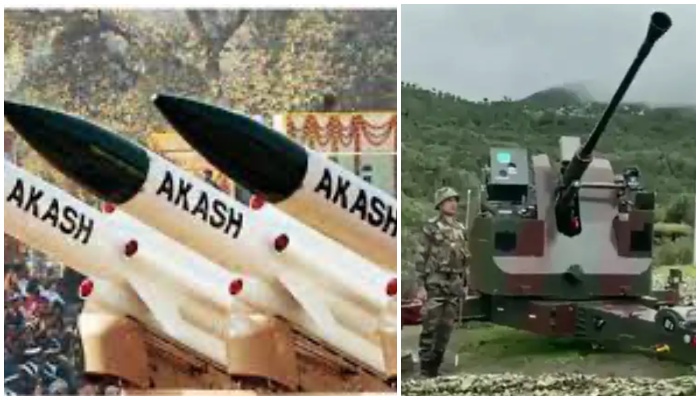
Indian Army demonstrates how our Air Defence Systems protected Golden Temple in Amritsar and other cities in Punjab from Pakistani attacks

In clear acts of bravery and valour, the armed forces safeguarded many cities in the border states of India during the recent conflict with Pakistan, which witnessed drone attacks and other form of air assault that was intercepted and destroyed before it could cause destruction in civil establishments.

The Indian Army’s Air defence systems played a critical role in repelling Pakistan’s misadventures. The Army on Monday showcased a demonstration of how Indian Air Defence systems, including AKASH missile system, L-70 Air Defence Guns, saved the Golden Temple in Amritsar and cities of Punjab from Pakistani missile and drone attacks.

Major General Kartik C Seshadri, GOC (General Officer Commanding) 15 Infantry Division, said that the Indian army had anticipated Pakistan’s move to target its military installations along with civilian establishments here, including religious places such as the Golden Temple, which was the prime target according to information received from the intelligence.

“Knowing that the Pak Army does not have any legitimate targets, we anticipated that they would target Indian military installations, civilian targets, including religious places. Of these, the Golden Temple appeared to be the most prominent. We mobilised additional modern air defence assets to give a holistic air defence umbrella cover to Golden Temple,” Major General Seshadri said.

He stated that Pakistan engaged in an air assault with aerial weapons, including drones and long-range missiles, targeting the Golden Temple, which was “thwarted” by the army personnel, who remained prepared for such situations and attacks.

“On 8th May early morning, in the hours of darkness, Pakistan carried out a massive air assault with unmanned aerial weapons, primarily drones and long-range missiles. We were fully prepared since we had anticipated this, and our braveheart and alert army air defence gunners thwarted Pakistan Army’s nefarious designs and shot down all drones and missiles targeted at the Golden Temple. Thus, not allowing even a scratch to come on our holy Golden Temple,” Seshadri said.

The GOC 15 Infantry Division explained in detail the consequences of the Pahalgam terror attack, which prompted the launch of Operation Sindoor, where India attacked nine terror camps deep inside Pakistan’s territory, resulting in aggression from the Pakistani side.

“Consequent to the Pak Army-sponsored dastardly terrorist attack on innocent tourists, both domestic and international, the nation’s anger under able leadership took the form of Operation Sindoor, wherein befitting punitive strikes were carried out on exclusive terror targets. Nine targets were hit. Of the nine targets, seven were exclusively destroyed by the Indian Army,” Major General Seshadri told ANI.

The Major General said that the armed forces targeted many places with “absolute precision” during Operation Sindoor, striking areas like Muridke and Bahawalpur, which house the headquarters of terrorist organisations.

“Of these (nine) targets, Muridke, which is in proximity to Lahore, houses the Lashkar-e-Tayyaba headquarters and also the Jaish-e-Mohammed (JeM) headquarters at Bahawalpur, which were struck with absolute precision. Soon after the strikes, we issued a statement clarifying that we intentionally did not target any Pakistani military or civilian infrastructure,” he added.

India’s Air Defence Systems proved their prowess at the height of the tensions between the two neighbours, intercepting numerous drones, missiles, micro UAVs, and loitering munitions, emerging as a globally actionable defence asset.


(This news report is published from a syndicated feed. Except for the headline, the content has not been written or edited by OpIndia staff)

Another Haryana man named Arman arrested for allegedly leaking sensitive information to Pakistan during recent India-Pakistan conflict

0

In a crackdown on anti-national elements, the Haryana police have arrested a man on charges of espionage for allegedly leaking sensitive information to Pakistan during the recent conflict between India and Pakistan.

The accused, identified as Arman, was apprehended by the Nagina police on May 16 following actionable intelligence inputs.

Speaking to ANI, Nuh Deputy Superintendent of Police (DSP) Ajaib Singh said, “A man named Arman was arrested on May 16 based on the intelligence that the Nagina police had. He was found to be passing sensitive information to the Pakistani side during the conflict between India and Pakistan.”

“He is on remand, and we are collecting the information. We have the evidence, and we are furthering our investigation,” he said.

<blockquote class=”twitter-tweet”><p lang=”en” dir=”ltr”><a href=”https://twitter.com/hashtag/WATCH?src=hash&amp;ref_src=twsrc%5Etfw”>#WATCH</a> | A man named Arman from Haryana&#39;s Nuh has been arrested for passing information to the Pakistani side, during the recent Indo-Pak conflict.<br><br>Nuh DSP Ajaib Singh says, &quot;A man named Arman was arrested on May 16 based on the intelligence that the Nagina police had. That… <a href=”https://t.co/TGZ2Fc4Db3″>pic.twitter.com/TGZ2Fc4Db3</a></p>&mdash; ANI (@ANI) <a href=”https://twitter.com/ANI/status/1924022886009835909?ref_src=twsrc%5Etfw”>May 18, 2025</a></blockquote> <script async src=”https://platform.twitter.com/widgets.js” charset=”utf-8″></script>

In a similar incident, a travel vlogger and YouTuber who was arrested by the Haryana Police on suspicion of spying for Pakistan was sent to five days of police remand by a local court, officials said.

According to police, “suspicious things” were found after the police recovered her laptop and mobile.

Additionally, the Deputy Superintendent of Hisar, Kamaljeet, said that the vlogger was in “continuous contact” with a Pakistani citizen.

“Yesterday, based on inputs that we had, we arrested Jyoti, daughter of Haris Kumar, under the Official Secret Act and BNS 152. We have received some suspicious things after we recovered her mobile and laptop. We have taken her on a five-day remand, and further investigation is on. She was in continuous contact with a Pakistani citizen,” DSP Kamaljeet said in a self-made video on Saturday.

Apart from the Official Secrets Act, Jyoti is being held under Bharatiya Nyay Sanhita (BNS) Section 152, which is regarding acts endangering the sovereignty, unity, and integrity of India.

As per an official memorandum issued by the Standing Committee on Information Technology Branch, “Post terror attack in Pahalgam on 22 April, 2025, some social media influencers and social media platforms in the country seem to be working against the interest of the country, which is likely to incite violence.

The committee requested the Ministry of Electronics and IT and the Ministry of Information and Broadcasting to provide the contemplated action taken to ban such platforms under the IT Act 2000 and ‘Information Technology (Intermediary Guidelines and Digital Media Ethics Code) Rules, 2021 by May 8.

The terror attack in Pahalgam, Jammu and Kashmir, resulted in the tragic loss of 26 lives, most of them tourists.

The Indian Armed Forces under Operation Sindoor launched strikes at nine terror hideouts in deep areas of Pakistan and Pakistan Occupied Jammu and Kashmir (PoJK) in the morning hours of May 7.

Operation Sindoor was India’s decisive military response to the April 22 Pahalgam terror attack.

Launched on May 7, Operation Sindoor led to the death of over 100 terrorists affiliated with terror outfits like the Jaish-e-Mohammed, Lashkar-e-Taiba, and Hizbul Mujahideen.

After the attack, Pakistan retaliated with cross-border shelling across the Line of Control and Jammu and Kashmir as well as attempted drone attacks along the border regions, following which India launched a coordinated attack and damaged radar infrastructure, communication centres, and airfields across 11 airbases in Pakistan.

After this, on May 10, an understanding of the cessation of hostilities between India and Pakistan was announced.


(This news report is published from a syndicated feed. Except for the headline, the content has not been written or edited by OpIndia staff)

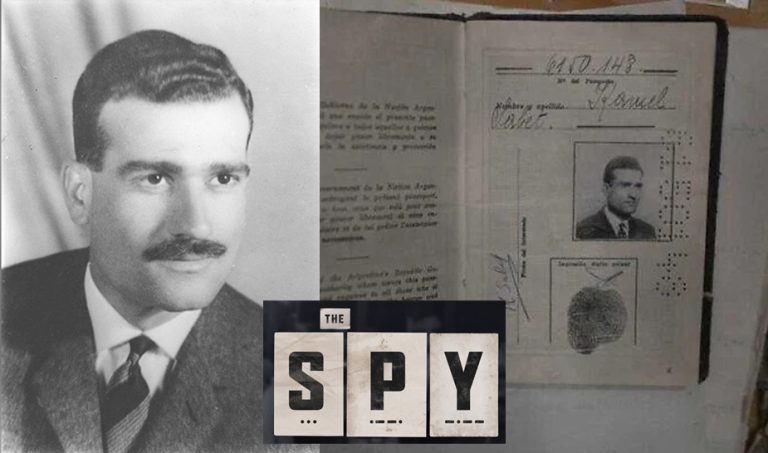
Thousands of items of legendary Mossad agent Eli Cohen, who operated in Damascus before being executed, brought to Israel from Syria in covert Mossad operation

Israeli spy agency Mossad has brought the official archive on Eli Cohen, the legendary Mossad spy who operated in Syria before he was exposed, to Israel from Syria. As per statement by the Israeli PM’s office, thousands of findings that were held for decades by the Syrian security forces in a highly compartmentalized manner, were brought to Israel in a covert and complex Mossad operation. The statement added that the mission was completed in cooperation with an allied foreign intelligence service, without naming it.

The announcement comes on the 60th anniversary of Cohen’s execution in Damascus, on May 18, 1965.

The special archive includes approximately 2,500 original documents, photographs and personal items, most of which have been revealed for the first time. As per the PM’s office, this is the entirety of the Syrian archive on Eli Cohen.

The items recovered include handwritten letters from Cohen to his family, proof of communications between the Israeli spy and senior Syrian officials, and photos taken during his years spent undercover in Syria. Among the documents is the original will, written by Eli Cohen himself, hours before his execution, only a copy of which had been shown openly up until now.

At a special meeting held on Sunday, with Prime Minister Benjamin Netanyahu and Mossad Director David Barnea, several original documents and personal items of Cohen were presented to Eli Cohen’s widow Nadia.

The materials were collected by Syrian intelligence after Cohen’s capture in January 1965. This include recordings and documentation from the files on Eli Cohen’s investigation and on those with whom he had been in contact, letters in his own handwriting to his family in Israel, photographs of his activity during his operational mission in Syria and personal objects that were taken from his home after his capture.

Some of the items included he keys to his apartment in Damascus, passports and false documentation he had used, and many photographs from the period of his covert activity in Syria.  Also found among the many documents was the original sentence and the decision to execute him.

A file entitled ‘Nadia Cohen’ show that Syrian intelligence service reviewed all of Nadia Cohen’s efforts to secure her husband’s release from Syrian prison.

“Bringing this historic material to Israel was the result of a decades-long effort by Mossad intelligence, operations and technology operatives to locate every bit of information about Eli Cohen in an effort to shed light on his fate and place of burial,” said the statement by the PM’s office. It added that over the years, the Mossad has worked together with partners in the intelligence and security communities in Israel and around the world, and has carried out dozens of actions and operations, including in enemy countries.

Prime Minister Netanyahu said, “Eli Cohen was a legend. In the test of time, he has been revealed as the greatest intelligence agent in the annals of the state; his heroism and his activity contributed to our historic victory in the Six Day War. The Eli Cohen archive, which was brought in a special effort, will educate generations, and expresses the unwavering commitment to bring back home all of our missing, captives and hostages.”

Dr. Yechiel (Michael) Leiter, Israel’s Ambassador to the United States, said that the historic material, held in secret for decades by Syrian intelligence, offers a rare and moving glimpse into the life, mission, and final days of a man whose extraordinary bravery helped shape Israel’s security and resilience in the face of existential threats.

He added, “Cohen’s insights and actions, gained at immense personal risk, contributed to Israel’s strategic readiness ahead of the Six-Day War and laid the groundwork for deterrence that changed the region’s balance of power. As we confront the challenges of our own time, his legacy continues to inspire a national ethos of excellence, sacrifice, and unwavering commitment to safeguarding our future.”

It is expected that most of the recovered items will be displayed at a museum to be set up in the name of Eli Cohen, as majority of the over 6 decades old items could be declassified.

Eli Cohen, the Egyptian-born Israeli spy, moved to Damascus in 1962, after posing as a Syrian businessman living in Argentina and befriending numerous contacts in the Syrian expatriate community in Argentina. From Damascus, he began to transmit information about Syrian military plans to Israel.

When the Syrian Ba’ath Party seized power in Syria, Cohen’s espionage activities saw a boost, as he was close to several top leaders of the party. He became so close to the government that he was even considered for the post of deputy minister of defence. His intelligence proved vital in Israel’s victory in the six-day war.

Eli Cohen was caught in January 1965 when Syrian counter-intelligence officials used Soviet-made  equipment to detect radio communication. Observing complete radio silence, they successfully detected radio transmissions and were able to triangulate the transmitter used by Cohen. Syrian officials claimed they caught him when he was still transmitting to Israel.

Cohen was found guilty of espionage by a military tribunal and sentenced to death under martial law. He was publicly hanged in the Marjeh Square in Damascus on 18 May 1965, after Israel’s international campaign for clemency was rejected by Syrian authorities.  

Popular Netflix show The Spy is based on Eli Cohen’s activities as a Mossad spy.

Jairam Ramesh accuses centre of ‘cheap politics’ for picking Shashi Tharoor in all-party delegation and rejecting 3 out of 4 names suggested by Congress party

0

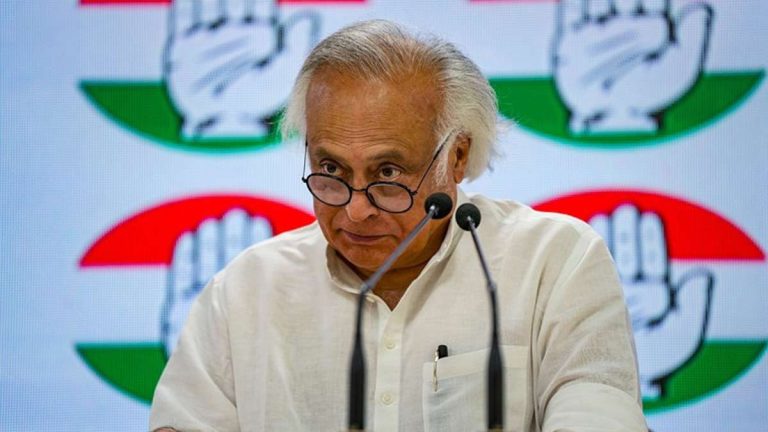
Congress General Secretary in charge of Communications Jairam Ramesh on Sunday accused the Central government of playing “cheap politics” and indulging in “politicisation” by not including all the names recommended by the Opposition for the all-party parliamentary delegation which is set to visit key partner countries to highlight India’s ongoing fight against cross-border terrorism and Operation Sindoor.

Jairam Ramesh alleged that despite formally submitting four names on request, the government ignored most of them, undermining parliamentary conventions and trust between the Opposition and the ruling party.

Speaking to ANI, Jairam Ramesh said, “On May 16, Union Minister Kiren Rijiju reached out on behalf of the Central government to Congress President Mallikarjun Kharge and Lok Sabha Leader of Opposition Rahul Gandhi and requested four names from the party to join the multi-party parliamentary group.”

“Responding promptly, Rahul Gandhi submitted a list comprising senior leaders Anand Sharma, Gaurav Gogoi, Nasir Hussain, and Raja Barar, before noon the same day,” he said.

Ramesh said the government picked only one name from the list–Anand Sharma–and arbitrarily replaced the others with names not suggested by Congress.

“We gave the names they asked for, yet only one was included. This shows that the government’s intention was already a mischievous one and this game was being played so that the formality of asking us ends,” he alleged.

Ramesh claimed that the whole exercise appeared to be a formality to claim that talks were held, but in reality, it was mere damage control.

“I believe this was politicisation, which should not have been done. They should have sincerely done this. There should be trust between the Opposition and the ruling party. There is a parliamentary system, there is a tradition that when you want to choose MPs of a party, you have to speak to the concerned leaders of the party,” he said.

“Why did Kiren Rijiju come and ask for names from Rahul Gandhi and Kharge ji. Well, this narrative has been lost. This is just damage control. The way they have behaved with Congress is cheap politics, mischief. When you asked us for names, why did you not include them? We sat and deliberated for two hours, then gave the names,” said Ramesh.

Adding further, he said, “The names suggested by the Congress were good MPs, influential. They were not just seasoned lawmakers but also influential voices in Parliament with significant contributions. When you request names from the Opposition, there is a parliamentary convention to respect that.”

“Everyone can see that Operation Sindoor is being politicised. US President Donald Trump’s repeated claims–made at least seven times–that the conflict was de-escalated due to US mediation. Yet, PM Modi has not responded. The EAM is silent.” Ramesh said.

Ramesh also condemned recent statements made by two ministers from Madhya Pradesh, which he described as “deeply insulting” to armed forces personnel and to Colonel Sofiya Qureshi, who led troops during Operation Sindoor.

He reiterated that the Congress party has always prioritised national interest over politics, and called for the government to do the same.

“The Centre has done as per their wish, included only one name from the list given by us, the four other names were chosen by them. They aren’t representatives of the party. Let the MPs go, even those from the Congress, we will not stop them, we will not boycott this delegation. We do not politicise it. We should end the discussion here. There are other important issues too,” he added.

“The real issue is terrorism. The mastermind of terrorism is Pakistan. The way Pakistan’s deep state is behind terrorism is the issue. Kashmir is not the issue, it will be discussed only in the Parliament,” said Ramesh.

The all-party delegations will project India’s national consensus and resolute approach to combating terrorism in all forms and manifestations. They would carry forth to the world the country’s strong message of zero tolerance against terrorism.

According to Congress, the party had submitted four names to the Minister of Parliamentary Affairs by May 16, but the final list released late on May 17 included only one of the suggested names.

The list includes MPs from multiple parties, divided into seven groups of 8-9 members. A leader has been assigned for each group, who will lead the delegation at a global level.

Union Minister Kiren Rijiju, while posting the list on Saturday, also highlighted how the Members of Parliament have shown a united stance of “One mission. One message. One Bharat.”

The all-party delegation will project India’s national consensus and resolute approach to combating terrorism in all forms and manifestations. They would carry forth to the world the country’s strong message of zero tolerance against terrorism.

The Members of Parliament from different parties, prominent political personalities, and distinguished diplomats will be part of each delegation.

This came after India’s decisive military response to the April 22 Pahalgam terror attack. Operation Sindoor, launched on May 7, targeted terror infrastructure in Pakistan and Pakistan-occupied Jammu and Kashmir, leading to the death of over 100 terrorists affiliated with terror outfits like the Jaish-e-Mohammed, Lashkar-e-Taiba and Hizbul Mujahideen.

After the attack, Pakistan retaliated with cross-border shelling across the Line of Control and Jammu and Kashmir as well as attempted drone attacks along the border regions, following which India launched a coordinated attack and damaged radar infrastructure, communication centres and airfields across 11 airbases in Pakistan.


(This news report is published from a syndicated feed. Except for the headline, the content has not been written or edited by OpIndia staff)

Telegram founder says he rejected a Western European country’s request to silence right wing voices in Romania amid presidential elections, uses emoji as hint of the country

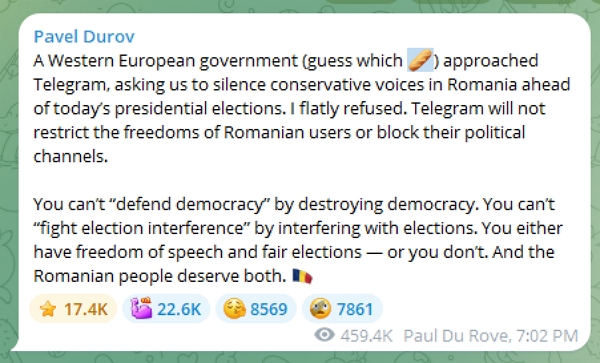
Pavel Durov, founder of the Telegram messaging app, has said that a West European country asked him to silence conservative voices in Romania, which he rejected. He said that the request came ahead of the presidential elections in Romania today.

Durov posted on the Telegram app, “A Western European government approached Telegram, asking us to silence conservative voices in Romania ahead of today’s presidential elections. I flatly refused. Telegram will not restrict the freedoms of Romanian users or block their political channels.”

He also added “guess which ?” after the words Western European government, including an emoji of baguette. This is enough indication that he was probably referring to France, as the baguette is a long, narrow French loaf.

Pavel Durov further added, “You can’t “defend democracy” by destroying democracy. You can’t “fight election interference” by interfering with elections. You either have freedom of speech and fair elections — or you don’t. And the Romanian people deserve both.” He ended the post with the emoji of Romanian flag.

The Romanian presidential election is seeing a close contest between far-right anti-EU George Simion and centrist pro-EU Nicușor Dan, the current Bucharest Mayor. Notably, in November last year, far-right independent candidate Calin Georgescu had won the first round of the election. But Romania’s constitutional court annulled the election, alleging irregularities in the financing and organisation of the leading campaign, including allegations of  Russian influence. Georgescu was also banned from contesting the election.

As per reports, George Simion is well placed to win the elections, resulting in the installation of a right-wing government in the country. Notably, Simion wants to merge Moldova, along with some parts of Ukraine inhabited by ethnic Romanians, with Romania, to create a united Romania.

The election in Romania is important because it is a member of both the European Union and NATO. As it borders Ukraine, it is in very important position in the current geopolitical situation.

Bangladeshi actress Nusraat Faria, who played Sheikh Hasina in Bangabandhu biopic ‘Mujib: The Making of a Nation’, arrested at Dhaka Airport

0

Bangladeshi actress Nusraat Faria, known for her portrayal of Sheikh Hasina in the Bangabandhu biopic, ‘Mujib: The Making of a Nation’, has been arrested at Dhaka’s Hazrat Shahjalal International Airport, local media outlets reported on Sunday.

The Dhaka Tribune reported that Nusraat was arrested for her alleged involvement in an attempted murder case linked to anti-government protests.

A case was filed against 17 actors, including Nusraat, for the alleged attempted murder of a student in the capital’s Vatara area during the July uprising last year, according to Dhaka Tribune.

Inspector Sujan Haque of Vatara Police Station said she was arrested this afternoon, as reported by bdnews24.com.

“Our team went to the airport to get her based on information from Immigration Police,” he said. “A few days ago, a court approved an attempted murder case against her. She has been shown arrested in that case,” as per the outlet.

The case was filed at the police station during the Anti-discrimination Student Movement’s protests in 2024, the police said, according to bdnews24.com.

The website of the local news outlet Prothom Alo reported that the actress was arrested at the immigration checkpoint at the airport this morning as she was about to travel to Thailand.

Nusrat made her acting debut with the film Aashiqui (2015), where she played the lead role opposite Ankush Hazra. The film was a commercial success.

She also worked in several other hits such as Hero 420 (2016), Badsha – The Don (2016), Premi O Premi (2017) and Boss 2: Back to Rule (2017).

She essayed the role of Sheikh Hasina in ‘Mujib: The Making of a Nation’, which was released in 2023. It was based on the life of Sheikh Mujibur Rahman, the founding father and first president of Bangladesh, who is popularly known as Bangabandhu. It was a co-production between Bangladesh and India, the film was directed by Shyam Benegal and stars Arifin Shuvoo in the titular role.

According to bdnews24.com, Faria said at the time that she could not believe she had the opportunity to portray the Awami League leader.

The actress said, “When I learnt of it, I felt like the luckiest person in my country. Because, no one has ever played her role onscreen before. I don’t know if anyone will do it in the future.”

“I feel that even if I never act again in the future, I have got the opportunity to play this role, which is the ultimate achievement for me,” as per the bdnews24.com.


(This news report is published from a syndicated feed. Except for the headline, the content has not been written or edited by OpIndia staff)

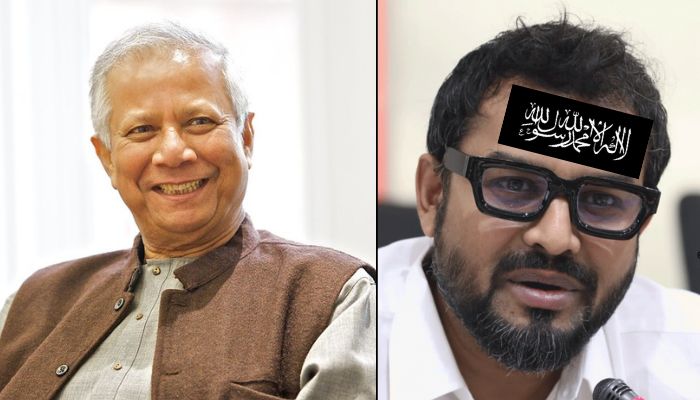
Dhaka administrator, appointed by Yunus regime, turns out to be ‘Hizb ut-Tahrir’ terrorist: Read how Bangladesh has been encouraging jihadists since the ouster of Sheikh Hasina

The interim government of Bangladesh, led by ‘chief advisor‘ Muhammad Yunus, has appointed a Hizb ut-Tahrir terrorist named Mohammad Azaz as the administrator for the Dhaka North City Corporation (DNCC).

The controversial appointment was made on 12th February this year. According to a circular issued by the Ministry of Local Government, Rural Development and Cooperatives, Mohammad Azaz was roped in for a full-time position of 1 year term.

“I’ll start my work by visiting the mass graveyard of the mass uprising of 2024 in Mohammadpur first. I want everyone’s cooperation while doing my duties. My primary aim is to reduce discrimination in this city. I don’t view Dhaka as everyone else views it. I want to carry out my activities in a democratic way,” he had told the media soon after his appointment.

However, it has now transpired that Mohammad Azaz had been associated with ‘Hizb ut-Tahrir’ since 2002. The revelations were made by journalist Zulkarnain Saer on Friday (16th May).

He had uploaded 4 documents (written in Bengali), which showcase the link between Azaz and the terror outfit. ‘Hizb ut-Tahrir’ has now found a political space under the Yunus regime.

The organisation was peviously banned by the Sheikh Hasina-led-Awami League government in October 2009 due to security concerns.

“The organisation has been banned as it has been carrying out anti-State, anti-Government, anti-people and anti-democratic activities for long in the country,” the government had said back then.

Journalist Zulkarnain Saer pointed out that the new administrator for the Dhaka North City Corporation (DNCC) aka Mohammad Azaz has been a member of Islami Chhatra Shibir (the student wing of Jamaat-e-Islami Bangladesh).

He stated that Azaz was arrested atleast twice for working for ‘Hizb ut-Tahrir’. In his defence, the new administrator for DNCC claimed that some terrorists from the outfit were arrested in 2015 from a building (owned by him).

Azaz alleged that his name cropped up in the case for virtue of being a landlord.

A statement by DNCC claimed, “These claims appear to be part of a broader pattern of targeting individuals who have been vocal critics of previous regimes’ human rights violations and environmental degradation.”

Needless to say, no action has been taken against Azaz despite overwhelming evidence furnished by journalist Zulkarnain Saer.

Rise of Jihadis and Islamo-fascists under the Yunus regime

Bangladesh is witnessing a drastic rise in Islamism since the undemocratic ouster of Sheikh Hasina. After coming to power, Muhammad Yunus revoked the ban on the radical Islamist outfit ‘Jamaat-e-Islami.’

He also released the leader of the radical outfit ‘Ansarullah Bangla Team (ABT)’ Muhammad Jasimuddin Rahmani.

At the same time, Muhammad Yunus began discounting the religious angle in the targeted attacks on the Hindu community.

He has gone on record from lamenting about attacks on Hindus to saying that the claims of atrocities are ‘exaggerated‘.

Under the watch of Muhammad Yunus, Bangladesh is witnessing a drastic rise in vigilante Muslim mobs, unleashing violence under the pretext of protecting the tenets of Islam.

These mobs are largely unorganised but they call themselves ‘Tawhidi Janata (meaning Revolutionary People).’ They have come under the spotlight over recent acts of vandalism and harassment of people.

In January 2025, the Yunus regime introduced new textbooks for primary and secondary students, which falsely claimed that the first declaration of independence of Bangladesh was made by Ziaur Rehman (a favourite icon of Muslim hardliners in Bangladesh).

The situation had become so grim that Bangladeshi ambassador to Morocco Mohammad Harun Al Rashid was forced to slam the Muhammad Yunus-led interim government in a scathing Facebook post in March this year.

“Under Muhammad Yunus’s regime, the media has been both servile and silenced. Brutalities have unfolded daily—hidden from the world. The extremists have convinced Bangladeshis that the West no longer takes Islamic terrorism seriously—giving radicals free rein. And so far, they have been proven correct,” he pointed out.

Rashid added, “Minorities and secularists live in constant fear, while Hizb ut-Tahrir, IS, and Al-Qaeda flaunt their red and black flags, openly demanding Islamic theocracy. The July–August terrorists came straight from their ranks. But Yunus didn’t just shield them—he empowered them.“

Given that India is a perceived as a ‘Hindu nation’ by Bangladeshi Muslims, Yunus set out to antagonise the neighbouring country as well. He first attempted to ban the export of Hilsa fish to India but it was in vain. He then strategically downplayed the crucial role played by India in the 1971 Bangladesh Liberation War.

In October 2024, a top adviser in Bangladesh’s interim government issued a “threat” to the government of India, stating that if India tried to refuse the extradition of ousted former Prime Minister Sheikh Hasina, the country would launch a “strong protest.” Law adviser Asif Nazrul cited provisions of the extradition treaty and claimed that India is bound to follow it.

A Bangladeshi Islamist identified as Sarjis Alam, who rose to prominence during the ‘student protests’ and the undemocratic ouster of Sheikh Hasina, issued veiled threats to PM Modi on Vijay Diwas (16th December 2024).

During his speech, Alam was heard saying, “I want to let Mr Modi know that is not Gujarat. This is Bangladesh.” He was jeered on by his radical supporters.

“Aggressive communalism does not thrive here… You cannot come to power here by spreading rumours and killing people,” he claimed.

According to media reports, the Islamist had additionally threatened to ‘gouge the eyes out’ of anyone who raises his eyebrows at Bangladesh.

Earlier, Sarjis Alam had repeatedly threatened India and demanded the handover of former Prime Minister Sheikh Hasina. Owing to his anti-Indian rhetoric, the Islamist was made the chief organiser of the Jatiyo Nagorik Committee.

Around the same time, Mahfuz Alam, who serves as an ‘adviser’ to the Muhammad Yunus-led interim government of Bangladesh, threatened to capture India.

The Islamist posted a map of Bangladesh, which spread deep into the Indian States of West Bengal, Assam and Tripura. Mahfuz Alam later realised that his open admission of the sinister territorial expansion of Bangladesh could lead to diplomatic issues.

Within 2 hours of sharing his fantasy of annexing India, he quietly deleted his tweet. Mahfuz Alam had previously served as a ‘special assistant’ to Muhammad Yunus.

In January this year, Border Guard Bangladesh (BGB) commander Lt. Col Golam Kibria issued threats to India’s Border Security Force (BSF).

“I am standing here with all the forces. You (villagers) do not need to come here. I am alone enough to cut down BSF to size. Was I able to make you understand?” he was heard saying in a viral video.

The BGB commander declared that he would call upon the villagers to ambush the BSF when the need arose. “When it becomes necessary, I will give a call to villagers to come with me and cut down BSF to size,” he threatened.

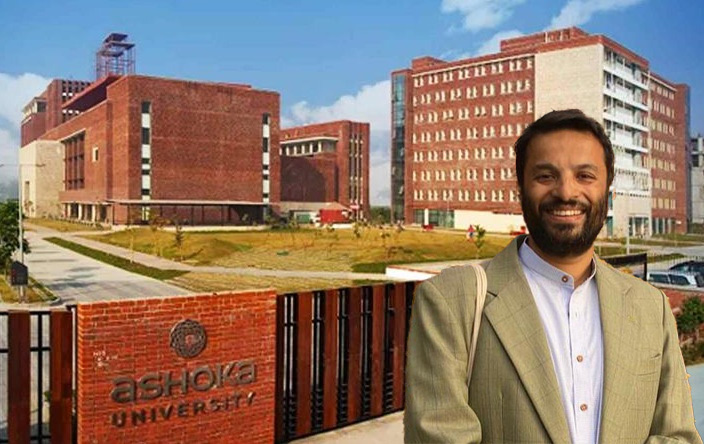
Woke epidemic, anti-Brahmin slogans, fake claims of EVM manipulation, and now arrest of a professor for his remarks on Operation Sindoor: What is wrong with Ashoka University

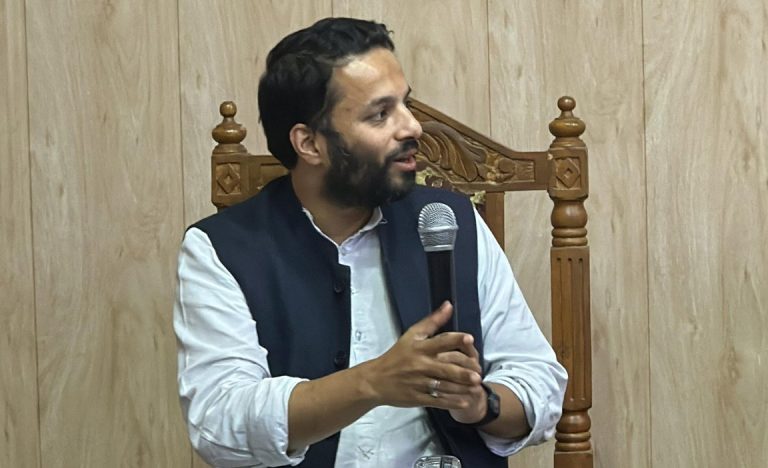
On 18th May, associate professor at Haryana’s Ashoka University, Ali Khan Mahmudabad, was arrested for allegedly making derogatory remarks against women officers in the armed forces and for promoting communal disharmony. The controversy erupted after he questioned the press briefing by Colonel Sofiya Qureshi and Wing Commander Vyomika Singh during Operation Sindoor.

In his comments, he called their representation of the armed forces “optics and hypocrisy” unless reflected through so-called real justice for “marginalised” citizens, pointing towards Muslims living in India. He used the women officers for his propaganda to set a narrative that Muslims, who are the second-largest contributors to the population, are somehow oppressed in India.

The Haryana State Women’s Commission issued a notice to him on 12th May, stating that his posts disparaged women in uniform and misrepresented the armed forces by invoking words like “genocide” and “dehumanisation”. The panel accused Mahmudabad of attributing communal motives to the state and armed forces, thus disturbing internal peace.

Mahmudabad took to X to defend his remarks, claiming his statement was misinterpreted and was not misogynistic. He claimed to have applauded the choice of women officers and called on right-wing supporters to extend equal concern towards common Indian Muslims. Terming the notice “a new form of censorship,” he questioned the Commission’s jurisdiction and dismissed the allegations.

Ashoka University swiftly distanced itself from the remarks, reiterating its support for India’s armed forces and clarifying that the professor’s views were his own.

This is not the first time Ashoka University has come under the radar for anti-India, anti-Hindu or anti-social activities or remarks.

Pro-Palestine placards at convocation

In May 2024, students of Ashoka University displayed pro-Palestine placards during their convocation ceremony. A video of the ceremony went viral on social media platforms showing students dressed for receiving their degrees holding placards that read “Free Palestine” and “Stop Genocide” above their heads. Notably, the student union of Ashoka University (Ashoka University Student Government or AUSG) were demanding to cut ties with Israel-based Tel Aviv University.

Anti-Brahmin slogans at campus

In March 2024, the students of Ashoka University raised Hinduphobic slogans “Brahmin-Baniyawaad Murdabad” inside the University premises. Videos of the students raising slogans like “Brahmin-Baniyawaad Murdabad” went viral on social media. Apart from abusing Brahmin and Baniya communities, they raised slogans including “Jai Bheem-Jai Meem” and “Jai Savitri-Jai Fatima”. They also demanded caste census and reservation at Ashoka.

Anti-Israel protests

In February 2024, AUSG (AU Student Government) issued a statement condemning the military action of Israel in Gaza and “demanded” the “genocide” in Gaza must stop. The post on social media described the horrifying terror attack on 7th October by Hamas terrorists in Israeli territory as “events taking place on 7th of October 2023”. There was no mention of 1,300 Israeli and foreign nationals being murdered, women being raped and hostages being taken to Gaza. All the atrocities of Hamas were thrown under the rug very conveniently.

Fake claims of EVM manipulation

Not only students, but the professors of the University have faced backlash for their irresponsible research work and behaviour. In August 2023, Professor Sabyasachi Das’s research paper claiming Bharatiya Janata Party (BJP) did election manipulation went viral on social media after Congress leader Shashi Tharoor amplified it. The research was full of flaws and following the scrutiny faced over the research paper, Das resigned from his post. Interestingly, AUSG came out in support and claimed the research work done by professors at the University is “cutting-edge”.

False claims about portrait of Netaji at Rashtrapati Bhavan

In November 2021, professor Neelanjan Ircar of Ashoka University made false claims that the portrait of Netaji Subhas Chandra Bose at Rashtrapati Bhavan was that of Bengali actor Prosenjit Chatterjee. Sircar used the narrative to mock Bhagwan Ram under the pretext of criticising the BJP. Sircar, who works as an Assistant Professor of Political Science at the university, in a now-deleted tweet wrote, “Totally amazing! This isn’t Netaji Subash Chandra Bose, it’s a picture of famous Bengali actor Prosenjit Chatterjee playing Netaji in a movie. “

While his tweet, until this part reeked only of falsehood, he then decided to take a jibe at Hindu beliefs. “And this after yelling ‘Jai Shri Ram’ at a Netaji event. The bankruptcy of political appropriation of independence-era leaders,” the faculty member of Ashoka University added.

The arrest of Ali Khan Mahmudabad is just the latest in a long list of problems coming out of Ashoka University. From students holding pro Hamas and pro Palestine placards at their convocation, to shouting anti Brahmin slogans on campus, the university seems to be turning into a space for anti Hindu, anti India and divisive ideas. Whether it was a professor spreading false claims about election results, another mocking Netaji’s portrait, or now this case where women officers were dragged into a communal narrative, these are not isolated cases. There is a clear pattern, and it cannot be brushed aside as free speech anymore. The real question is, what is Ashoka University doing to stop this growing wave of propaganda in the name of education?

Ashoka University Professor Ali Khan Mahmudabad arrested for controversial remarks on Operation Sindoor after Women’s Commission filed complaint

0

Ashoka University Professor Ali Khan Mahmudabad was arrested on Sunday by Delhi Police for making controversial remarks through a social media post about Operation Sindoor. He was taken into custody from Greater Kailash in South Delhi and later handed over to Sonipat Police.

According to officials, he is currently being questioned at the Rai police station in Sonipat. Two FIRs have been filed against him. The police will take him in remand after presenting him in court.

Sonipat Police DCP Narendra Singh held a press conference regarding the arrest. The action was taken on the complaint of Women’s Commission Chairman Renu Bhatia.

The professor Ali Khan Mahmudabad did not appear despite being summoned by the Women’s Commission in the matter, and the commission has taken a tough stand and registered an FIR against him.

Ashoka University has also issued a statement regarding the matter, “We have been made aware that Prof. Ali Khan Mahmudabad has been taken into police custody earlier today. We are in the process of ascertaining details of the case. The University will continue to cooperate with the Police and local authorities in the investigation, fully.”

Following the Pahalgam terror attack in which 26 people, including a Nepali national, were killed, India launched Operation Sindoor on May 7, in which precision strikes destroyed terror infrastructure in Pakistan and Pakistan-occupied Kashmir (PoK) and eliminated nearly 100 terror operatives at key bases in Pakistan.

Earlier, Prime Minister Narendra Modi said that Operation Sindoor has carved out a benchmark in India’s fight against terrorism and has “set a new parameter and new normal.”

Addressing the nation, PM Modi also referred to India conducting a surgical strike in 2016 at terror launch pads along the Line of Control in Jammu and Kashmir and to the air strikes at a terror camp in Pakistan in 2019, and said that after the two operations, Operation Sindoor is India’s policy against terrorism.

Prime Minister said the Indian Air Force, Army, Navy, Border Security Force, and India’s paramilitary forces are constantly on alert.


(This news report is published from a syndicated feed. Except for the headline, the content has not been written or edited by OpIndia staff)