Home Blog Page 398

Travel vloggers, visitors using the Kartarpur corridor, to tailor in an Army camp: Read about the list of arrested people who are accused of spying for Pakistan

India, via “Operation Sindoor” has illustrated its formidable ability to penetrate deep into Pakistan, successfully eliminating both terrorist infrastructure and destroying military installations in retaliation of Pakistan’s attacks. While the armed forces have been delivering a powerful message to the terrorist state, a critical effort is underway to identify and nab internal foes.

A systematic nationwide crackdown on individuals engaged in espionage for Pakistani intelligence agencies is currently in progress, resulting in the apprehension of multiple individuals, including social media influencers and YouTubers.

Shehzad Wahab

On 18th May, the Anti-Terrorist Squad (ATS) of the Uttar Pradesh Police nabbed a man who was reportedly smuggling commodities across the India-Pakistan border and spying for Pakistan’s intelligence services. The accused was identified as Shehzad Wahab from Tanda in the Rampur district. The arrest was made following information that a local was implicated in illegal operations with the aid of Pakistan’s Inter-Services Intelligence (ISI). He was tracked and taken into custody in Moradabad.
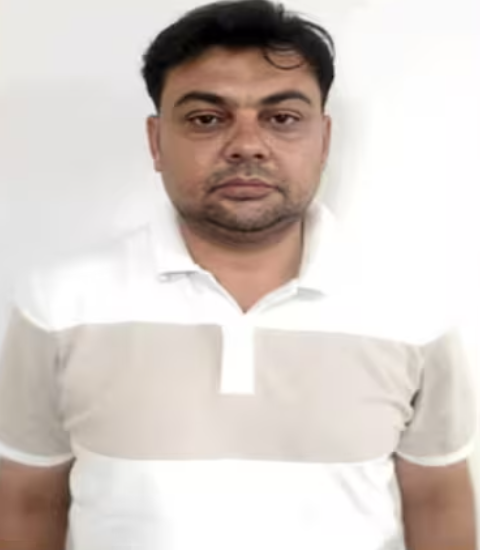
Image via Moneycontrol

After compiling evidence, the ATS brought forth a case on actions that compromise the sovereignty, unity and integrity of India, among other issues. According to the police, they discovered that he had been traveling secretly to Pakistan for years, illegally smuggling clothing, cosmetics, spices and other goods across the border, throughout their investigation.

Shehzad had been monitored after reliable intelligence reports indicated he was involved in smuggling under the protection of Pakistan’s intelligence establishment. He worked for ISI during these visits and was in regular contact with several ISI agents and provided them with private and sensitive information pertaining to the security of India.

According to officials, Shehzad was aiding ISI operations in India in addition to disseminating intelligence. A later inquiry revealed that he had sent money to Islamabad’s agents working in India on their orders. Additionally, he is charged with recruiting and facilitating the transport of individuals from Rampur and other regions of Uttar Pradesh to Pakistan to enlist them for ISI-related activities.

Police stated that ISI agents helped in arranging these people’s visas and travel documents. Furthermore, it is reported that he purchased and provided Indian SIM cards to ISI agents which enabled communication for subversive objectives.

The ATS police station in Lucknow has filed a case against in accordance with sections 148 and 152 of the Bharatiya Nyaya Sanhita (BNS). Shehzad has been presented before a magistrate in Moradabad. He is currently under police remand as additional legal actions are ongoing.

Notably, multiple Pakistani spies in india have been exposed as tensions with Pakistan escalate in the wake of the Pahalgam terror attack and Operation Sindoor.

Sukhpreet Singh and Karanbir Singh

Two men have been taken into custody by the Gurdaspur police in Punjab for providing Pakistan’s Inter-Services Intelligence (ISI) with classified military intelligence pertaining to “Operation Sindoor.” Sukhpreet Singh and Karanbir Singh were reportedly involved in providing Islamabad with classified information, including troop movements and important strategic locations in Punjab, Himachal Pradesh and Jammu & Kashmir, the Punjab Police informed, citing reliable intelligence inputs received on 15th May.

The intelligence inputs were validated by forensic analysis of their mobiles. Moreover, authorities found eight live .30 bore cartridges and three cell phones in their possession. According to preliminary findings, the accused had communicated vital information about the Indian Armed Forces and had direct contact with ISI handlers. A formal complaint has been filed at the Dorangala police station under the Official Secrets Act.

Mohammad Tarif

A resident of Kangarka village in Taoru tehsil of Mewat district, Mohammad Tarif, was arrested on the evening of 18th May as part of the ongoing investigation into the Pakistani spy network. He has been transmitting sensitive information concerning the Indian Army and defense strategies to Pakistan for a long time. He often asked others to secure visas to visit Pakistan.

His mobile device has also been confiscated. The investigation uncovered suspicious conversations. It was discovered that his mobile contained WhatsApp numbers from Pakistan. He attempted to delete some conversations from his mobile device upon noticing the police team. Additionally, some data appeared to have been erased.

The examination of Tarif’s mobile phone disclosed chats, images, videos and documentation of military operations that he had sent to a person in Pakistan. He maintained continuous contact with Pakistani numbers using two separate SIM cards.
Image via The Tribune

During interrogation, the perpetrator revealed that he had been sharing information regarding Indian military operations and intelligence with Asif Baloch, a staff member at the Pakistan High Commission in Delhi in exchange for money. After the latter was moved from the embassy, he met another employee named Jafar, in Delhi. Likewise, he disseminated the vital information to him as well.

Nuh police has registered a case under the relevant section of Indian Penal Code and Official Secrets Act against Mohammad Tarif and the two Pakistani High Commission officials at the Taoru Sadar police station.

“I went to the Pakistan Embassy in 2018 for my Visa. A Pakistani officer interviewed me. He took my number and said he would tell other details on Phone. He called me after three-four days and said, if you want a visa, give me two new Sims. I bought two new Sims from Nuh, and then I went to that Pakistan Embassy and met that officer. He issued me the Visa after I gave him the sims,” he professed in a video confession.

“Then I left for Pakistan. When I returned from Pakistan, he again called me. He said that send some people who need a Pakistani Visa then we will distribute the money among us. Then I referred 8-10 people to him for visas. We shared the money among us,” he added.

He further revealed, “He called me in 2024 and said, you have work here, come to the Pakistan embassy. He then introduced me to another officer named Jafar and said I may get transfer soon so get in touch with him. Then Jafar took my number and contacted me after a few days. He also asked me to get two new Sims. Then he called me and said, you have to do something for us and we’ll pay you in lakhs. He asked me to go to Sirsa airbase and click pictures and videos and send them to them.”

Armaan

On 17th May, Armaan (26), a Class XII dropout was apprehended from Firozpur Jhirka in the Nuh district on the night of 15th May. He lives in Rajaka village of the Nagina block. He regularly communicated with Pakistan via a staffer of its high commission in New Delhi about the Indian Army and the country’s military operations.
File Photo

“A man named Armaan was arrested on 16th May based on the intelligence that the Nagina police had. He was found to be passing sensitive information to the Pakistani side during the conflict between India and Pakistan. He is on remand, and we are collecting the information. We have the evidence, and we are furthering our investigation,” Nuh Deputy Superintendent of Police (DSP) Ajaib Singh declared.

The police stated that a tip from central investigative agencies led to his capture. He distributed the information through social media and WhatsApp for an extended period of time. “When his mobile phone was searched, conversations and photos and videos shared with Pakistani numbers were discovered,” they outlined.

Jyoti Malhotra

33-year-old Hisar-based travel blogger Jyoti Malhotra was taken into custody after she admitted to providing critical information to a Pakistani agent. She was charged under section 152 of the Bharatiya Nyaya Sanhita Act and sections 3 and 5 of the Official Secrets Act. Malhotra had been placed under police remand for five days.

According to the FIR (First Information Report), she met Ehsan-ur-Rahim, also known as Danish, a staff member at the Pakistan High Commission (PHC) in New Delhi, on her 2023 visit there. Danish has since been expelled by India. The government had deemed the Pakistani mission staffer “persona non grata for engaging in activities not in keeping with his official status in India,” according to a statement from the ministry of external affairs.

Image via News18 Hindi

The FIR read, “The woman revealed that she remained in touch with Ehsan-ur-Rahim alias Danish and during her Pakistan visit in 2023, she met Ali Ehwan, who ensured my staying and travelling in Pakistan. Ehwan introduced her to Pakistani security and intelligence officials, where she also met with Shakir and Rana Shahbaz.”

It added, “The vlogger had saved Shakir’s name with ‘Jatt Randhawa’ so that no one could create doubt on her. After returning from Pakistan in 2023, she remained in touch with all the operatives on encrypted platforms like WhatsApp, Telegram and Snapchat.” She made two trips to Pakistan in 2023.

She met several Pakistani Intelligence Operatives (PIOs) via Danish. She ran the YouTube channel ‘Travel with Jo’ and was actively utilized to promote a positive image of Pakistan on social media and disclosed sensitive information about places in India.

“Certainly, they were developing her as an asset. She was in touch with other YouTube influencers. They were also in touch with PIOs. This is also (a kind of) warfare, in which they try to push their narrative by recruiting influencers,” Hisar Superintendent of Police Shashank Kumar Sawan stated.

Devendra Singh Dhillon

26-year-old Devendra Singh Dhillon of Mastgarh Cheeka hamlet in Haryana’s Kaithal was caught on 12th May for providing sensitive intelligence to the Pakistani army and ISI during the recent India-Pakistan conflict. According to reports, he is a post graduate student of political science at Khalsa College in Patiala.
Image via @LokmatTimes_ngp/X

He entered Pakistan through the Kartarpur Corridor last November and started exchanging private information with Pakistan’s ISI officers, including pictures of Patiala’s military cantonment. He made contact with Pakistani intelligence officers during the visit and maintained that communication following his return.

The initial investigation was prompted by his Facebook activity, which featured images of illegal weapons. Pakistani operatives had made significant investments in him. The espionage and money trail is now being followed via forensic analysis of his bank and phone records.

Nauman Ilahi

A security guard was apprehended by the Panipat police on 10th May for disclosing private information to a handler headquartered in Pakistan. According to authorities, the man was identified as 24-year-old Nauman Ilahi, who was employed as a security guard at a nearby industrial facility in Kairana, Uttar Pradesh’s Shamli district.
Image via Anshul Saxena/Facebook

During questioning, it came to light that he had connections to people in Pakistan with whom he was exchanging critical and sensitive information. He used to provide pictures, videos, and maps of train stops. He charged between 4,000 and 5,000 rupees for each picture shared on social networking platforms like WhatsApp.

According to SP Gangaram Poonia, he did several jobs while residing in Panipat. He used to monitor all movements under the guise of these jobs and informed Islamabad about the same. His aunts reside in Pakistan, according to the investigation. He was also attempting to obtain a passport from Pakistan.

Raqeeb Khan

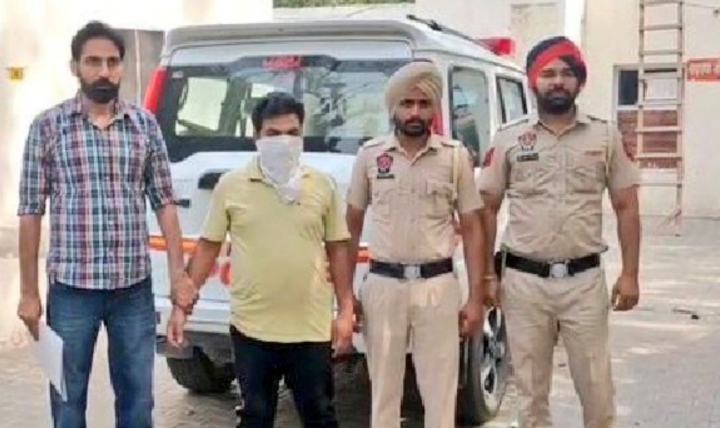
Raqeeb Khan (32) had been taken into custody by the Punjab Police from the Bathinda army base. He was employed there as a tailor. Pakistan-based phone numbers were discovered on his phone, leading to his detention on suspicion of espionage for Pakistan. He is a native of Roorkee in Uttarakhand and has been working in the region as a tailor for the army camp staff.
File Photo

Raqib’s mobile phone reportedly included sensitive photos and cantonment-related information. His device has been transferred for forensic examination by the police. He was placed under three days of police remand after being turned over to the Bhatinda police and appearing in a local court.

Guzala and Yameen Mohamad

The Punjab police arrested two individuals including a 31-year-old woman and seized an explosives cache close to the border as it busted espionage and arms smuggling operations associated with Pakistan. They have been identified as Guzala and Yameen Mohamad, both residents of Malerkotla.

They were arrested over supplying a handler stationed in Pakistan with confidential military intelligence, based on Punjab Director General of Police (DGP) Gaurav Yadav. According to Malerkotla Senior Superintendent of Police (SSP) Gagan Ajit Singh, she admitted to providing an official at Pakistan’s high commission in New Delhi information about military movements in return for Rs 30,000 transferred over UPI.

The man was arrested on the basis of her disclosures. They were in frequent contact with the handler and were involved in channelling funds to other local operatives as per his instructions. The authorities confiscated two cell phones from them. Police filed a complaint in accordance with the Official Secrets Act and BNS provisions. The FIR also included the Pakistani diplomat’s name.

Palak Sher Masih and Suraj Masih

Two individuals were arrested by the Punjab Police on 4th May for their role in providing Pakistani intelligence agents with private information and images of Army cantonment locations and Amritsar Air Bases. Suraj Masih and Palak Sher Masih were being directed by Harpreet Singh, also known as Happy or Pittu, who is presently incarcerated in Amritsar Central Jail, according to preliminary investigations.
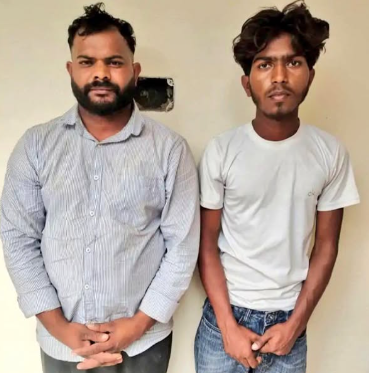
Image via DGP Punjab Police/ Facebook

Officials stated that the accused compromised national security by exchanging strategic information and high-security images. Maninder Singh, the Senior Superintendent of Police (SSP), stated that they were in communication with the Pakistani intelligence operatives.

“They had one more partner, Harpreet, who brought them in touch with the ISI, and we will bring him from Amritsar Jail on a production warrant. One NDPS case was already registered against him,” he added. Their activity increased following the tragic Pahalgam attack in Jammu and Kashmir.

Mohammad Murtaza Ali 

Mohammad Murtaza Ali, a suspected spy for Pakistan’s ISI intelligence organization was nabbed by Gujarat Police. He was captured during a raid in the Bhargav Camp neighborhood of Jalandhar. Three SIM cards and four cell phones had been confiscated from him. According to officials, he was staying in a rented home in Gandhi Nagar while surreptitiously conducting espionage missions.

Preliminary investigations indicated that he continued to watch Indian news channels and provided the ISI with sensitive information during the recent period of rising hostility between India and Pakistan when Pakistani citizens were prohibited from accessing Indian news websites and television channels. The culprit accomplished this via a mobile app that he had developed.

He shared updates from Indian news broadcasts with Pakistan’s intelligence officers using the app. According to investigators, he even sought huge amounts of money from ISI operatives to gain access to the app and the data it contained. He recently purchased a 25 marla plot where he was constructing an opulent residence at a cost of Rs 1.5 crore.

The police investigation into his bank account revealed a transaction of Rs 40 lakh occurring over the course of one month. He had been regularly providing the ISI with important information about news coverage and other internal events in India throughout the previous few weeks. The police transported him to Gujarat for additional questioning.

Odisha YouTuber under inquiry

Meanwhile, a 21-year-old YouTuber from is also being probed for working with Jyoti Malhotra. She came under scrutiny after it was revealed that, soon after the Malhotra’s visit to Puri Jagannath Temple on 21st September of last year, she had visited the Kartarpur Corridor, a border crossing that leads to Gurdwara Sri Darbar Sahib without a visa.

Jyoti Malhotra, who spent three days in Puri, met her while there, according to police sources. The young woman claimed that the two became friends online about eight months ago after they discovered a mutual passion for travel blogging. Puri Superintendent of Police (SP) Vinit Agrawal informed, “Haryana Police and other security agencies are in touch with us. We have questioned the YouTuber and shared details with them.”

The police are also attempting to ascertain “where she stayed, whom she contacted, and any possible suspicious activities” in addition to “examining the objective” of her trip to Puri. “We are in touch with various central agencies and the Haryana Police. We will share details with the media after field verification,” the official conveyed.

“My daughter came in contact with Jyoti Malhotra as both are YouTubers. As a friendship developed between them, she visited Puri. As it is a matter of the nation’s security, a proper investigation should be carried out. We will cooperate with the police. My daughter visited Kartarpur in Pakistan with another friend, not Jyoti Malhotra, three or four months ago for a pilgrimage. She has no involvement in anti-national activities and was unaware of her alleged espionage,” the Odisha YouTuber’s father maintained.

Conclusion

This list is certainly not exhaustive, as numerous additional names are expected to emerge as agencies work to uncover the Pakistani spy network in India, which presents a significant security risk to the nation, particularly in the current situation. A desperate Pakistan, following its humiliation at the hands of India, could likely attempt to orchestrate another cowardly attack akin to Pahalgam and the information provided by these moles could be utilized for this purpose. The recent initiative to identify and expose them is therefore crucial for the nation’s security and safety.
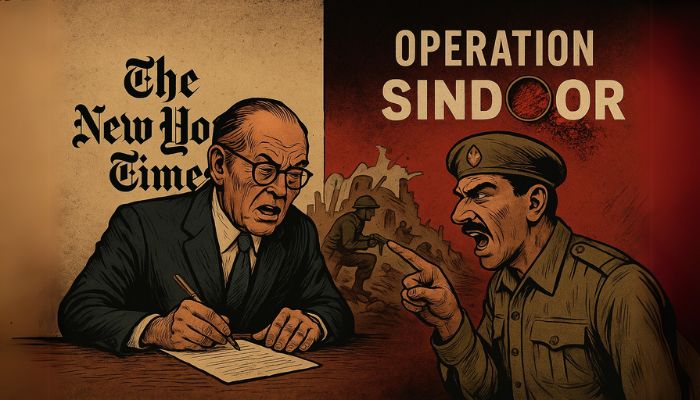
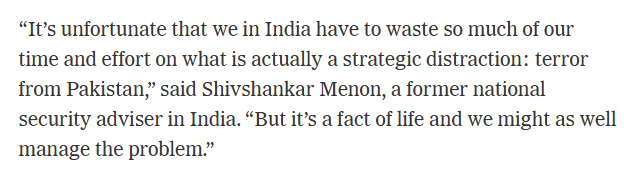
NYT comes up with verbal diarrhea to bat for Pakistan and denounce Operation Sindoor, quotes Shivshankar Menon to insinuate how doing nothing after terrorist attacks is best response

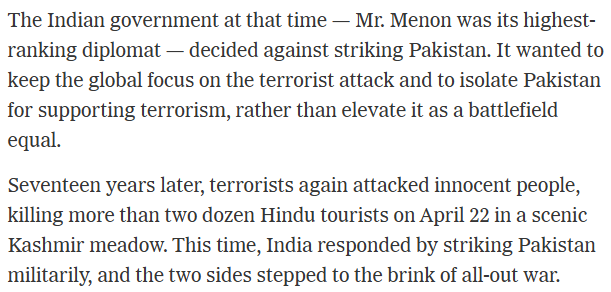
It takes a special kind of journalistic acrobatics to watch a rogue nation like Pakistan getting pounded ruthlessly by India, its air defence humiliated, and its terror camps destroyed, and still declare it a draw. This is what The New York Times (NYT) has done. Basically, NYT did not let facts get in the way of defending Pakistan or mocking India’s right to self-defence.

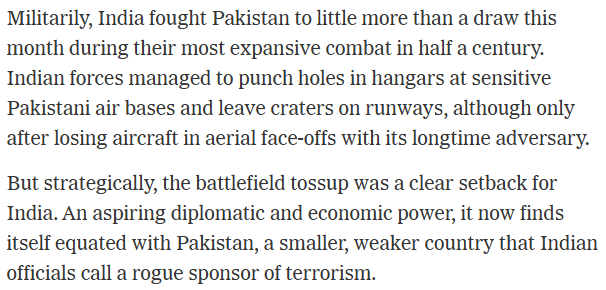
In their latest piece of verbal diarrhea titled “Why There’s No Battlefield Solution to India’s Perpetual Pakistan Problem,” NYT correspondents Mujib Mashal and Alex Travelli conveniently repackaged strategic passivity as wisdom and suggested that India should simply accept terrorism as a fact of life.

Source: NYT

Their source? None other than Shivshankar Menon, the same Foreign Secretary during 26/11 who presided over the strategic doctrine of “let us light candles and move on”. India failed to take revenge for the murder of over 160 people by the terrorists sent and sponsored by Pakistan. NYT wants India to repeat the same again. Why? Because, according to them, it is evidently the right thing to do.

Source: NYT

NYT conveniently skips who started the violence

Interestingly, NYT cunningly hid the basic chronology of the India Pakistan conflict. India’s initial response to the 22nd April Pahalgam terrorist attack was limited and specific. It targeted only terror camps in Pakistan occupied Jammu and Kashmir and Pakistan. No civilian or military Pakistani targets were touched. India gave Pakistan an option to step back and accept the destruction of multiple terror camps and the death of over 100 hardcore terrorists.

However, Pakistan decided to escalate and launched military attacks on Indian civilians, religious sites and defence infrastructure. Only then did India answer with full force and destroyed 11 Pakistani air bases, turned two radar systems into dust and crippled Pakistan’s war machinery. While doing so, India managed to jam the air defence system of Pakistan, making it possible for India to strike strategic locations to inflict the most damage in the least time.

Pakistan sent drones and nuclear capable missiles, one of which was headed towards New Delhi, but all were intercepted and destroyed by the advanced air defence system of India. Over time, India has developed its own version of “Iron Dome” that saved it from the vicious Pakistani attack. While Pakistan tried to use civilian airlines as a shield by letting them fly during the conflict and fired missiles from civilian locations, as shown in videos shared by Pakistanis, India maintained restraint to ensure the least collateral damage.

And yet, according to NYT, this is still “a draw.” By that logic, what would defeat look like? Pakistan no longer existing?

The 26/11 peace fantasy

The NYT bizarrely suggested that India’s restraint post 26/11 brought peace for 17 years. This is such a laughable claim. Just a few years after 26/11, the 2010 German Bakery attack happened. Over the years, Mumbai in 2011, Hyderabad in 2013, Pathankot and Uri in 2016 and Pulwama in 2019 were targeted by Pakistan sponsored terrorism. The idea that not retaliating somehow created peace is not analysis, it is wilful ignorance.

Source: NYT

Since Prime Minister Narendra Modi rose to power in 2014, he attempted to bring peace between India and Pakistan, which failed. After Uri and Pulwama, India struck Pakistan’s terror camps, following which there was silence for some time. Notably, post abrogation of Article 370 in Jammu and Kashmir, which was condemned by Pakistan, incidents of terror attacks and stone pelting drastically dropped in the Valley.

Pakistan does not like peace. It is a fact. This is why every few years it drinks some Thums Up and decides to do something “toofani”. However, India’s strategy has changed and when it hits back, Pakistan runs to find shelter, like it did this time by running to the United States seeking mediation for ceasefire.

NYT either does not understand what has been going on between India and Pakistan or it chose to ignore it. By not acting post 26/11, India bled quietly, with no strategic gain, as terrorists kept striking. The same Menon they quote today was part of that silence.

Comparing India with Pakistan is dishonest

In its classic style, the NYT placed India and Pakistan on the same moral and strategic pedestal. The only way to describe it is purely lazy journalism. It is deliberate misinformation aimed at confusing the readers. India is a democracy with rising global influence. On the other hand, Pakistan is a crumbling state run by unelected generals and radical proxies. Moreover, the way it runs around with a “katora” in its hands seeking bailouts is yet another example why it stands nowhere close to India. However, NYT’s correspondents, instead of discussing how Pakistan’s military establishment openly breeds terrorism as a state policy, decided to spend a lot of time blaming “Hindu nationalism”.

The Modi government is not like its predecessors. The situation has shifted away from the appeasement driven paralysis. It has shown that India will not absorb terrorism as a fact of life. If you kill Indians, there will be consequences, and not just on Twitter or in UN speeches. As PM Modi clearly said, nuclear blackmail is not going to work.

Operation Sindoor was not a reckless decision

If NYT is to be believed, Operation Sindoor will sound like a reckless decision. But in reality, it did not have much effect on India but destroyed the reputation of Pakistan and its weapon suppliers Turkey and China. In India, businesses remained open during the day with blackouts in some border states. Life carried on. There was no panic buying. There were no complete shutdowns.

In contrast, Pakistan had to eventually shut down its airspace and scramble for damage control. Reports suggest it is planning to shift its military establishments from where it controls all operations, as the current ones were hit by India without much resistance from Pakistan’s air defence system.

India does not want war. Operation Sindoor was not a reckless war. It was a calibrated response with clear objectives. Every major country faces threats and distractions. That does not mean you let your people be bombed and keep chanting peace.

Nuclear fear is not strategy

The NYT also played the nuclear card. It suggested India cannot act against Pakistan because it might escalate. This cowardice is what let Pakistan build its entire asymmetric terror model. Every time it feels there is a threat in response to its terror activities, the leaders and military chiefs of Pakistan start threatening, “We are a nuclear nation,” with an unsteady voice masked with false courage. The Modi government has rightly called the bluff. Retaliation does not mean escalation, and targeted strikes do not mean nuclear war.

Ajit Doval’s doctrine is not warmongering, it is deterrence with clarity. If you sponsor terror, you will bleed. Not through big wars, but through strategic, invisible cuts, and sometimes, visible ones like Operation Sindoor.

The NYT article is not analysis, it is spin. It is an attempt to lecture a democracy for defending itself, glorify passivity as wisdom, and subtly suggest that India is no better than a terror exporting failed state. It is dishonest, insulting and exactly the kind of narrative that lets Pakistan hide behind nuclear excuses while exporting death. Moreover, the West must not forget how many wars it has initiated and is still fighting worldwide. And yes, please remind us, the Indians, how many wars the United States, the biggest military power in the world, has won since 1947. What happened in the Korean war, the Vietnam war and the war in Afghanistan?

Let the West moralise from the comfort of distance. We choose to fight back.

For the first time in history, Sikkim gets a stadium that can host day-night Cricket matches with HD broadcast

0

The Sikkim Cricket Ground in Mining marked a major milestone in the state’s sporting history with the installation of state-of-the-art high-mast LED floodlights, officially inaugurated on the evening of May 18 by Sikkim Chief Minister Prem Singh Tamang.

This development makes the venue capable of hosting day-night matches and high-definition live broadcasts for the first time in Sikkim.

The project, worth Rs 12.2 crore, was fully funded by the Government of Sikkim and executed by the Sikkim Cricket Association (SICA). The work commenced in December 2024 and was completed on April 18. The lighting system features four 44-meter-high masts, each equipped with 64 high-powered LED floodlights, totalling 256 lights. Each light has a capacity of 1.2 kW, and the system provides an impressive 2800 lux illumination at the pitch well above the required standard for televised cricket.

Justice Biswanath Somadder, Chief Justice of the High Court of Sikkim, along with Cabinet Ministers, MLAs, the Chief Secretary, the Chief Administrator-cum-Cabinet Secretary, and senior department officials, were present at the grand inauguration.

SICA President Tika Subba expressed his gratitude to both the state government and the BCCI (Board of Control for Cricket in India) for making this dream a reality.

“Thanks to the government, with the help of the government as well as the BCCI, today we are able to install this historic floodlight,” he said.

Subba also pointed out the longstanding issue of poor lighting at the ground, which hindered match scheduling and overall gameplay.

To commemorate the occasion, a friendly match was held between the SICA President XI and the Chief Secretary XI. Batting first, the Chief Secretary XI posted 121/9 in their allotted 20 overs. In response, the SICA President XI chased down the target in 19.4 overs, winning the game with five wickets in hand.

The LED floodlights, built to meet international standards, come with a five-year manufacturer’s warranty and promise low maintenance, ensuring that Sikkim cricket takes a giant step forward in infrastructure and visibility.

Chief Minister Tamang also confirmed that preparations are underway for a potential visit from Prime Minister Narendra Modi.

“The Sikkim government has received confirmation regarding PM Modi’s visit. Several meetings have taken place…29th May is the tentative date, though it is not 100% confirmed yet,” Tamang said.

(This news report is published from a syndicated feed. Except for the headline, the content has not been written or edited by OpIndia staff)

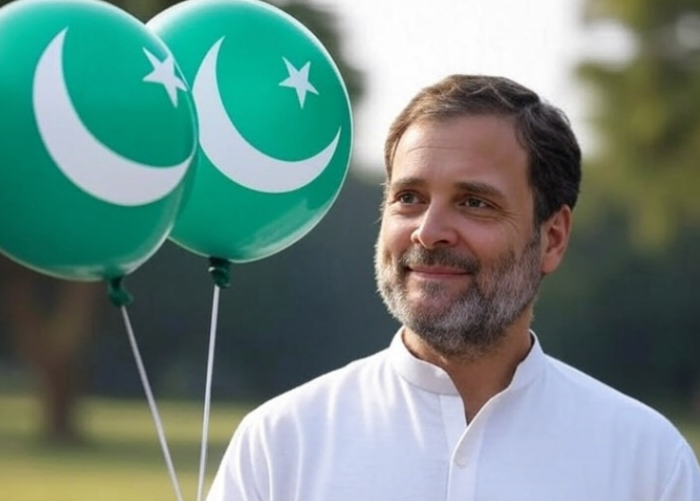
Rahul Gandhi’s misleading allegations against EAM S Jaishankar picked up by Pakistan, Congress MP helps the enemy propaganda, again


Rahul Gandhi’s misleading attacks against EAM S Jaishankar, and his statements questioning the Operation Sindoor have again been picked up by Pakistan. When the nation stands united with the armed forces after their brave retaliation against Pakistan’s terrorist designs, the leader of the Opposition Rahul Gandhi has again allowed the enemy to benefit from his petty political mud-slinging.

“EAM Jaishankar’s silence isn’t just telling — it’s damning. So I’ll ask again: How many Indian aircraft did we lose because Pakistan knew? This wasn’t a lapse. It was a crime. And the nation deserves the truth”, posted Rahul Gandhi today. This was posted quoting his May 17 post where he had attacked EAM Jaishankar by giving a wrong twist to his statement about notifying Pakistan.

Rahul Gandhi’s post was immediately picked up by the Pakistani media, claiming their false victory and trying to peddle the Operation Sindoor as a loss for India.

“Informing Pakistan at the start of our attack was a crime. EAM has publicly admitted that GOI did it. Who authorised it?” Rahul Gandhi had posted on May 17.

Rahul Gandhi had distorted what the EAM said and tried to twist it to peddle a sinister narrative.

The EAM had said, “At the start of the operation, we had sent a message to Pakistan saying we are striking at terrorist infrastructure. We are not striking at the military. So, the military has an option of standing out, and not interfere in this process. They chose not to take this good advice.”

Nowhere in this does Jaishankar admit that Pakistan was informed “before” the strikes began. In fact, the timeline confirmed by Indian defence authorities and fact-checked by the Press Information Bureau (PIB) proves that by the time the message reached Pakistani officials, the operation was already over. This is not “informing Pakistan in advance”; this is a classic post-strike diplomatic move—intended to prevent escalation by clarifying intent and scope.

Further, There is no official report or credible evidence of India losing any aircraft during Operation Sindoor. Yet, Pakistan’s military establishment—embarrassed by its inability to stop or even detect the strike—has floated unverifiable claims of shooting down Indian jets.

In fact, the diplomatic move of telling Pakistan about India’s strike on terror infrastructure was also mentioned in the press briefing done by the armed forces.

“…Even though we did attempt to reach out and communicate our compulsion to strike at the heart of terror to my counterpart in the immediate wake of Operation Sindoor, the request was brusquely turned down, with an intimation that a severe response was inevitable and in the offing. We were, of course, prepared…” DGMO Lt General Rajiv Ghai had told media on 11 May, much before EAM Jaishankar repeated the same.

Rahul Gandhi has been a useful tool for Pakistan to spread its propaganda after the Balakot airstrike too

Even after the Balakot airstrikes where Indian planes entered enemy territories and destroyed terrorist camps. Rahul Gandhi was making himself helpful for Pakistani propaganda.

In 2019, Pakistan’s anti-India dossier to the UNHRC featured former Congress President Rahul Gandhi and other opposition leaders over the abrogation of Article 370. Pakistan’s national radio had used Rahul Gandhi and other opposition leaders’ statements over the Balakot surgical strike to peddle lies against India. Former Pakistan PM Imran Khan used to quote Rahul Gandhi regularly and repeatedly to peddle his anti-India claims.

Rahul Gandhi’s and Congress’ political statements against the Modi government have been used multiple times by the Pakistani establishment to target India. Pakistani politicians love quoting Rahul Gandhi. They even use his and his party’s statements to validate their rantings against India in international platforms.

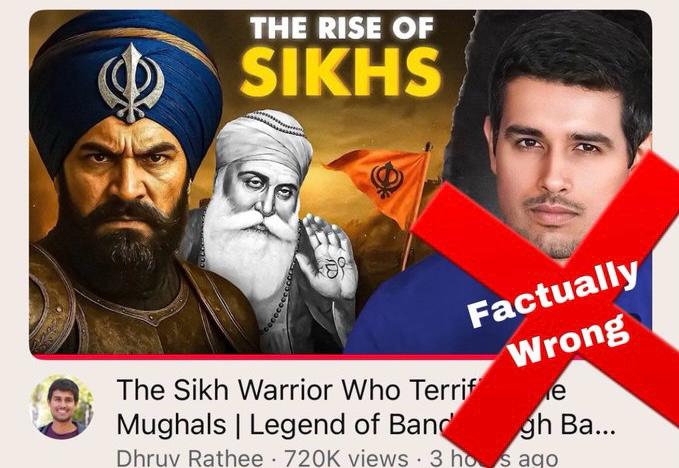
Sikh community angry with propagandist YouTuber Dhruv Rathee for distorting Sikh history and sharing AI generated images of their revered Gurus

On Sunday, May 18, propagandist YouTuber Dhruv Rathee, a German national who often peddles agenda against Indian interests, uploaded a video on his YouTube channel titled “The Sikh Warrior Who Terrified the Mughals | Legend of Banda Singh Bahadur”. However, this attempt by Rathee to try and act like an expert on Sikh history, like he pretends for every other topic, has not gone down well with Sikh community.

Shiromani Gurdwara Parbandhak Committee (SGPC) member Gurcharan Singh Grewal lashed out at Dhruv Rathee for distorting the Sikh history & Grewal added that Rathee has no right using AI for distorting Sikh History. He further added that Sikh history and Gurus should be treated with the utmost respect, free from commercialization.

President of Delhi Sikh Gurdwara Management Committee (DSGMC) Harmeet Singh Kalka posted, “DSGMC strongly condemns YouTuber Dhruv Rathee’s video titled “The Sikh Warrior Who Terrified the Mughals”, in which he has irresponsibly used AI-generated visuals to depict the revered Sikh Gurus. This act is not only culturally insensitive but deeply offensive to Sikh sentiments and traditions.”

Kalka further added, in an attempt to educate Dhruv Rathee, “Moreover, the video spreads historical inaccuracies and distorts key facts about Sikh history — particularly the martyrdom of Guru Tegh Bahadur Ji and the legacy of Baba Banda Singh Bahadur Ji. Such misrepresentations are misleading, disrespectful, and unacceptable.”

Apart from the SGPC and DSGMC members, several other Sikhs have also voiced their anger at Rathee distorting Sikh history and using Artificial Intelligence to depict their revered Gurus.

A user Gagandeep Singh wrote, “In the video, Dhruv included AI-animated depictions of Guru Gobind Singh Ji and other Gurus, which is highly inappropriate. Even in high-budget films approved by the SGPC, only still images and a jyot (divine light) are used to represent Guru Sahib animated movements are strictly avoided out of reverence. Additionally, he portrayed Guru Gobind Singh Ji as a child (Baal Gobind Rai) crying after witnessing the martyrdom of his father, Guru Tegh Bahadur Ji. This is a deeply sensitive moment, and the depiction lacked both historical accuracy and reverence.

Akashdeep Thind wrote that Rathee has no knowledge of Sikh History, beliefs & ethos despite being from a state next to Punjab.

Another user Pritpal Singh said to Dhruv Rathee, “You have no right to use AI to recreate visuals of Guru Sahib Ji. This is a direct insult to Sikh traditions & sentiments.”

However, Dhruv Rathee refused to take the video down and posted another video in which he said that he can blur some parts of the video which are deemed offensive by Sikhs, and it won’t be possible for him to make such a video without using AI-Generated animation.

The video was still online in its original form when this report was published.

Mumbai: Drunk Hamid Sheikh reached Ram Naval’s shop, got into an argument which escalated; 3 people including Ram and Hamid were killed, 4 others injured

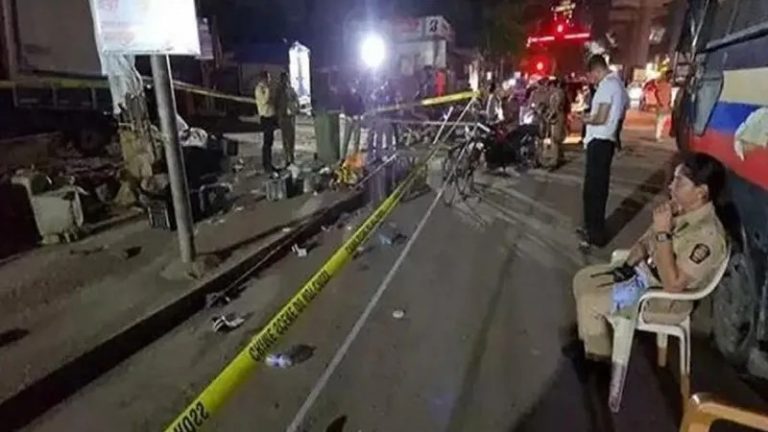
A bloody conflict between two families in Ganpat Patil area of Dahisar, Mumbai, has left 3 people dead and 4 injured. The families of Hamid Sheikh and Ram Naval Gupta, who live in Ganpat Patil’s slums in Dahisar West area, attacked each other after an argument broke out between them.

As per reports, on May 18, 2025, at around 4:30 pm, after an altercation between Ram Naval Gupta and Hamid Sheikh, there was a fierce fight between their sons. During this, knives and other sharp weapons were used. Ram Naval Gupta, his son Arvind Gupta, and Hamid Sheikh died in the scuffle. Two sons of Ram Naval and two sons of Hamid Sheikh were also badly injured during the fight. They have been admitted to a nearby hospital. The police have sent the bodies of the deceased Ram Naval Gupta, his son Arvind Gupta, and Hamid Sheikh for post-mortem.

Both the families live in the slum of Ganpat Patil Nagar and there was enmity between them since 2022. Both the families have also filed a case against each other.

what is the entire matter

On Sunday (18 May 2025), Hamid Sheikh reached in front of Ram Naval Gupta’s shop in lane number 14 in an inebriated condition. Ram Naval Gupta had a coconut shop where some other people were also present. Hamid was inebriated so he started talking about old disputes and an argument started between the duo.

In the midst of the argument, both called their children. On one side were Ram Naval Gupta and his sons Amar Gupta, Arvind Gupta and Amit Gupta, while on the other side were Hamid Sheikh and his sons Arman Sheikh and Hasan Sheikh. The argument escalated and weapons like knives and sharp edged weapons were used. During the fight, Ram Naval Gupta, Arvind Gupta and Hamid Sheikh lost their lives.

Giving information about the incident, the police said that a case of murder has been registered from both sides. The accused sons have been admitted to the hospital in critical condition, so they have not been arrested yet.

News of Joe Biden’s aggressive stage prostate cancer fuels old questions regarding his capabilities: Was he fit to remain in Oval Office for 4 years?

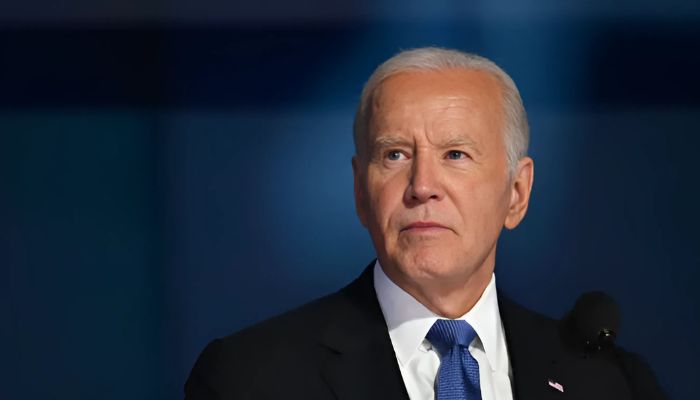
On 18th May, the reports of former US President Joe Biden suffering from an aggressive stage of prostate cancer that has already metastasised to his bones shocked the world. His office issued a statement about his health on Sunday. The revelation, coming months after he stepped down from office on 19th January this year, has triggered a renewed debate about his medical fitness and honesty during his presidency.

The official statement from his office read, “Last week, President Joe Biden was seen for a new finding of a prostate nodule after experiencing increasing urinary symptoms. On Friday, he was diagnosed with prostate cancer, characterized by a Gleason score of 9 (Grade Group 5) with metastasis to the bone. While this represents a more aggressive form of the disease, the cancer appears to be hormone-sensitive which allows for effective management. The President and his family are reviewing treatment options with his physicians.”

82-year-old Biden was diagnosed on 17th May after experiencing urinary symptoms. His team stated that while the cancer is advanced, it remains hormone-sensitive and “can be effectively managed”. However, the Gleason score, an indicator of cancer aggressiveness, rated the disease at a worrying 9 out of 10.

Reactions flood after news about Biden’s illness

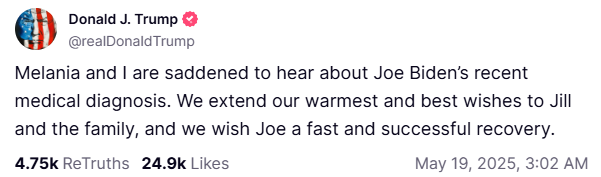
In a post on Truth Social, US President Donald Trump said, “Melania and I are saddened to hear about Joe Biden’s recent medical diagnosis. We extend our warmest and best wishes to Jill and the family, and we wish Joe a fast and successful recovery.”

Source: Truth Social

Physician and scientist Dr Steven Quay questioned why his cancer was not diagnosed earlier as according to him, “Prostate cancer is the easiest cancer to diagnose when it first starts and to watch it progress to bone metastases. The PSA blood test shows the rate of cancer cell growth. For even with the most aggressive form, it is a 5-7 year journey without treatment before it becomes metastatic.” He further argued that it would be “malpractice for this patient to show up and be first diagnosed with metastatic disease in May 2025”. Dr Quay further asserted Biden might have carried a “diagnosis of prostate cancer throughout his White House tenure and the American people were uninformed”.

Questions arise again, allegations of lying and covering up resurface

Several people have pointed out that in July 2022, Biden had said he has cancer. However, it was brushed off suggesting he was referring to skin cancer lesions, which he had got removed in March 2023. People are now questioning if he had been suffering from prostrate cancer for over three years and people of America were kept in dark.

A disease that progresses slowly but has been hidden for years?

Prostate cancer, no matter how aggressive it is, is known to develop slowly. According to experts, even metastatic cases can allow patients to live for years. Furthermore, such a diagnosis does not occur overnight. That means Biden likely lived with serious health concerns while continuing to occupy the office of the President of the United States. He did not stepped down and his supporters like actor and producer Michael Douglas defended him by calling Biden “sharp as a tack”.

That statement now appears less about confidence and more about damage control.

Media silence and deliberate deception?

The Western liberal media long painted Biden as cognitively sound and medically fit. However, the liberal media is now under the spotlight for failing to investigate or question evident signs of his declining health. Not to forget, he abruptly ended his 2024 re-election bid after a visibly faltering debate performance. It was, however, dismissed by pro-Biden liberal media as a “one-off”.

Now, as the truth has been exposed, it is clear that not only Biden, as the President, was battling a debilitating disease, but his team also continued to shield the information from the public. Journalistic complicity ensured that the narrative about Biden remained clean, that he was perfectly fine and any doubts about his faculties were merely conspiracy against him.

Democratic miscalculation and public backlash

An interesting admission had come hours before the cancer diagnosis was revealed. Democrat Senator Chris Murphy had acknowledged that the party erred in pushing Biden as the 2024 nominee despite persistent public scepticism over his age and capability. Polls conducted by different agencies throughout 2023 showed most Americans, including Democrats, believed he was too old to serve another term.

However, those who defended Biden argued that he was a fighter, invoking his tragic loss of son Beau to brain cancer and highlighting his revival of the Obama-era Cancer Moonshot programme. Contrary to what his supporters say, it was not just an issue about the illness but about transparency, honesty and responsibility to the people.

The US mainstream media not only continued to assert that Biden was in excellent health, they even labelled all concerns and questions regarding his fitness and ability as conspiracy theories.

A presidency built on concealment and media management

Joe Biden’s diagnosis is not the problem, millions battle prostate cancer with courage. The problem is that a man suffering from such a serious illness occupied the Oval Office, took decisions regarding wars and weapons and energy supplies around the world, while his team and the press pretended all was well. It was not. And if voters and lawmakers had known the truth earlier, decisions may have been very different.

The question now – Was this merely a health issue, or a historic deception?

India’s port restrictions to cost Bangladesh over $770 million: How Yunus govt’s hostile behaviour with India is costing the poor country billions of dollars

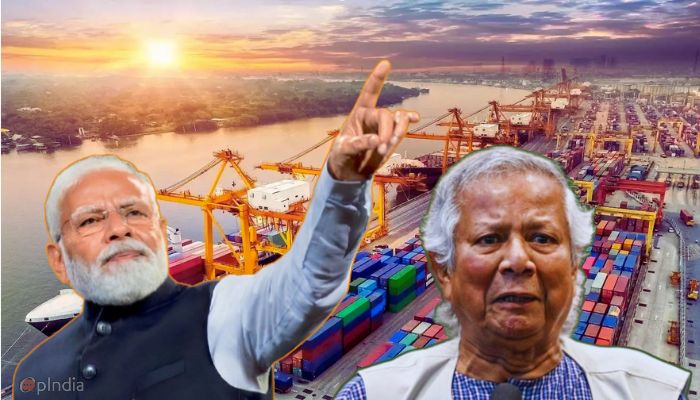
Bangladesh is likely to lose around $770 million after India imposed port restrictions on Bangladeshi goods, as per reports. The impact will particularly be seen in garments and processed goods. This comes at a time when Bangladesh, under its Islamist government, is grappling with economic challenges and internal turmoil.

India goes into ‘give hostile statement, lose millions of dollars’ mode against Bangladesh

As per the Global Trade Research Initiative (GTRI) report published on 18th May 2025, a trade think tank, India’s decision to impose port restrictions may restrict imports worth $770 million from Bangladesh, nearly 42% of total inbound shipments. This would happen by stopping several goods from land routes and limiting them to a few seaports.

Union Ministry of Commerce and Industry on Saturday imposed immediate port restrictions on the import of several categories of goods from Bangladesh, following a directive issued by the Directorate General of Foreign Trade (DGFT). After this decision, key goods like garments, processed foods, and plastic items are now limited to select sea ports or barred from land routes entirely. Under the new policy, Bangladeshi garments, which are valued at USD 618 million annually, can now enter India only through two designated seaports, effectively barring access via land routes that previously served as primary trade arteries.  

The port restrictions have been imposed on import of all kinds of Ready-Made Garments, Fruit/ Fruit flavoured and Carbonated Drinks; Processed food items; Cotton and Cotton Yarn Waste; Plastic and PVC finished goods and Wooden Furniture.

The detailed notification states that Import of all kinds of Ready-Made Garments from Bangladesh shall not be allowed from any land port. However, it will be allowed only through Nhava Sheva and Kolkata seaports.

Import of Fruit/ Fruit flavoured and Carbonated Drinks, Processed food items like Baked goods, Snacks, Chips and Confectionery, Cotton and Cotton Yam Waste, Plastic and PVC finished goods, and Wooden Furniture will not be permitted through any Land Customs Stations (LCSs)/ Integrated Check Posts (ICPs) in Assam, Meghalaya, Tripura and Mizoram; and Land Customs Stations of Changrabandha and Fulbari in West Bengal.

India budget boost for textile industry to gain edge over Bangladesh’s once thriving now in shambles textile industry

Notably, the Indian textile manufacturers have long voiced concern over what they describe as unfair advantages enjoyed by Bangladeshi competitors, who benefit from duty-free imports of Chinese fabric and substantial government export subsidies. These factors reportedly give Bangladeshi exporters a 10-15 per cent pricing edge in the Indian market. The GTRI added in its report that these trade measures did not emerge in isolation.  

“The restrictions look like India’s response to Dhaka restricting imports from India on a large number of items and diplomatic pivot towards China the GTRI report added.  

In February this year, the Union Budget presented by Finance Minister Nirmala Sitharaman gave a big boost to the textile industry announcing a 19% increase in the Budget Estimates for AY 2026-27. The BJP-led government allotted Rs 5272 crores to the Ministry of Textiles this year as compared to Rs 4417.03 crores in the Financial Year 2024-25. Additionally, the government has decided to boost cotton production and has announced a five-year Cotton Mission.

Bangladesh used to be the second largest exporter of garments but the sector in the neighbouring country is looking at uncertainties amid a financial crisis, power crisis and violence. After the fall of the Sheikh Hasina-led government, India has scope to enhance increased cotton exports to the USA, UK, France, Spain, Italy, Netherlands, among others. India is thus, taking all measures to use advantage as businesses try to move away from Bangladesh.

India’s strict response came after Bangladesh pivoted toward China and restricted imports from India

Incidentally, India’s decision to imposed port restrictions is also being seen as a response to outrageous remarks by Bangladesh’s interim chief advisor, Muhammad Yunus regarding India’s northeast.

During a speech in China, Bangladesh’s Chief Adviser Yunus had earlier described India’s north-eastern states as a “landlocked region with no access to the ocean”. This comment has sparked diplomatic friction, with Indian officials viewing it as undermining the region’s connectivity and status.

Highlighting Dhaka’s increasing proximity with China, the GTRI report adds that the fall of Sheikh Hasina’s pro-India government in mid-2024 and the rise of an interim administration under Muhammad Yunus have brought a willingness to align with Beijing.

Yunus’s visit to China in March 2025 yielded USD 2.1 billion in new investments and cooperation agreements. All these developments, along with infrastructure projects like the Teesta River development, have posed a significant threat to India’s position in the region.

Since late 2024, Bangladesh has imposed a series of restrictions on Indian exports. These include an April 2025 ban on Indian yarn imports through five major land ports, tighter curbs on rice shipments, and import bans on dozens of Indian goods–from paper and tobacco to fish and powdered milk. Adding to the friction, Dhaka introduced a transit fee of 1.8 taka per tonne per kilometre on Indian goods moving through its territory.

The report added that these cumulative actions, along with operational delays and tightened port inspections, have hampered Indian exporters and triggered calls for a calibrated response.

Earlier on 9th April, Indian govt announced the withdrawal of the transhipment facility previously extended to Bangladesh, citing logistical challenges and congestion at Indian ports and airports. Under this facility, Bangladesh was allowed to send container trucks from the Petrapole Land Port located on the India-Bangladesh border, the largest land port in South Asia, to Kolkata port, Kolkata Airport’s air cargo complex, Nhavasheva Port in Maharashtra, and Delhi airport. Similarly, Bangladeshi exporters could ship their products from Petrapole Land Port, Gede Land Port or Ranaghat Land Port using freight trains to Nhavasheva Port, also known as Jawaharlal Nehru Port. From the ports and airports in India, the cargo was then shipped to their final destination countries.

Just days after India discontinued transhipment facility for Bangladesh, the neighbouring country suspended the import of yarn from India through land ports citing loss to local textile millers. The land ports of Benapole, Bhomra, Sonamasjid, Banglabandha, and Burimari were the main entry points of Indian yarn into Bangladesh.

Besides economic challenges, especially the downfall of the textile industry, Bangladesh has also been struggling for electricity due to non-payment of dues to India’s Adani Power. Months after halting power supply to unrest-hit Bangladesh over non-payment of dues, Adani Power resumed electricity supply to the neighbouring country.

Both the units of Adani Power’s plants in Godda increased supply earlier this month after Bangladesh began clearing dues. It was reported that Adani Power is receiving $80- 90 million regularly from Bangladesh. This amount also covers payment for current consumption. The dues are estimated at around $820-830 million, which is expected to be paid in the coming months. Adani Group’s decision to resume power supply to Bangladesh came after the interim government in Bangladesh, led by Muhammad Yunus, requested that Adani Power resume ‘full supply’ from its plant in Jharkhand in February 2025.

ISIS module busted: Sameer and Siraj arrested for plotting bomb blasts in Hyderabad, were gathering explosives

Two Islamic State of Iraq and the Levant (ISIS) sympathisers were apprehended by Telangana and Andhra Pradesh counter-intelligence agencies, successfully thwarting a cross-border terror plan that targeted Hyderabad, on 18th May. During a search, explosives such as powdered aluminum, sulfur and ammonia were also recovered.

Saeed Sameer (28) of Bhoiguda in Hyderabad and Siraj-ur-Rahman (29) of Andhra Pradesh’s Vizianagaram were captured on suspicion of planning bombings at the direction of the Al Hind Ittehadul Misilena, an ISIS offshoot that is reportedly headquartered in Saudi Arabia.

According to reports, Siraj purchased explosives in Vizianagaram and even tested dummy bomb trial in the Rampachodavaram forest to gauge its impact. Afterward, he came to the conclusion that more potent explosives would be required to wreak greater havoc on Hyderabad.

After receiving information, the counterintelligence (CI) cell notified the Vizianagaram police, who took Siraj into custody. He admitted to his involvement during questioning, revealed the specifics of his scheme and revealed the identity of his aid, Sameer. Police conducted an operation and retrieved explosive items based on the information. No explosives were uncovered at Sameer’s home, but he was later nabbed in Hyderabad.

Siraj apparently engaged with the AHIM module and obtained instructions for the planned assaults in Hyderabad during his two trips to Saudi Arabia in the previous six months. According to senior police officers, the two had not disclosed the number of locations surveyed or their intended targets. The entire scope of their plans is under inquiry.

During interrogation, it emerged that they were planning a terrorist strike, although they had not yet decided on the time or location,” reported The Times of India. “They are self-radicalised with no known affiliations, although they were intent on executing subversive actions,” the source added.

Police unveiled that Siraj played a crucial part in the scheme with Sameer believed to have assisted him further their plot to take part in subversive actions. The former recently purchased explosive materials and bomb precursors from a number of online retailers. As part of their strategy, the materials were stored at his home. They planned to use them for a test explosion on the outskirts of Vizianagaram. Intelligence officers acted swiftly after learning about the deadly conspiracy.

It is reported that a handler based in Saudi Arabia brought the two together. The accused’s equipment are presently being scrutinized by authorities in an attempt to retrieve their correspondence with the handler. It is speculated that they connected on social media after participating in closed online groups with similar interests.

The perpetrators will shortly appear in court. Additionally, officials asked the people to continue being watchful and cooperative.

Anti-India academician Nitasha Kaul rants against GoI for cancelling her OCI card: Read why it was cancelled and how OCI card is a privilege, not right

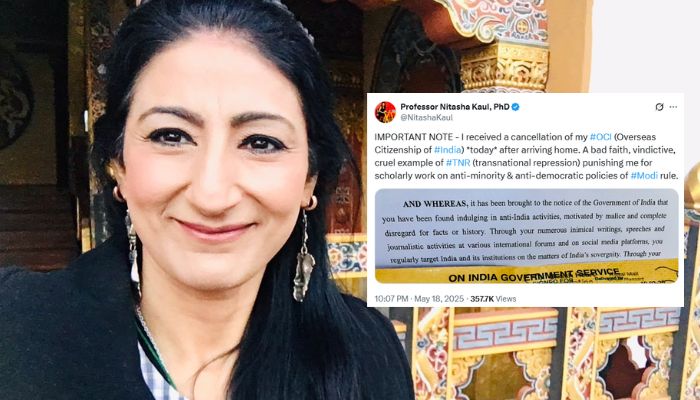
On 18th May (local time), anti-India propagandist and British academician Nitasha Kaul took to X to rant against the Government of India for cancelling her Overseas Citizen of India card. In her post, she wrote, “I received a cancellation of my OCI (Overseas Citizenship of India) today after arriving home. A bad faith, vindictive, cruel example of TNR (transnational repression) punishing me for scholarly work on anti-minority & anti-democratic policies of Modi rule.”

In a follow-up post, she recalled how she was denied entry into India when she came to speak on democratic and constitutional values, invited by the Congress-led Government of Karnataka. She wrote, “Modi BJP govt humiliated themselves & insulted non-BJP Karnataka state govt that invited me last year by ill-treating me & in spite of my 20,000 word response to their ridiculous inanity about ‘anti-India’, they have chosen to do this by a rigged process.”

She added, “Will overseas PR delegations of GOI say why ‘mother of #democracy’ denies me access to my mother? This is thin-skinned, petty insecurity with no respect for well-intentioned dissent that arrests/imprisons citizens in India & bars access to family for overseas citizens of India.”

OCI is not a right

OCI is not a right but a privilege. OCI is basically a long-term residential visa granted to persons of Indian origin (PIOs) who were citizens of India on 26th January 1950 or thereafter, or are eligible to become citizens from the said date. It is also granted to those who have family members in India, for example, someone who is married to an Indian. Notably, citizens of Pakistan, Bangladesh or such other country, as notified by the Government of India, are not eligible for OCI privileges.

Furthermore, the Government of India has the right to revoke an OCI card in case the card was obtained by means of fraud, if factual information is concealed, if the person shows disaffection towards the Constitution of India, may have engaged in unlawful trade or communication with the enemy state, or acted against the sovereignty and integrity of India.

Nitasha’s OCI card revoked because of her anti-India activities

In Nitasha’s case, the part of the document that she shared read, “AND WHEREAS, it has been brought to the notice of the Government of India that you have been found indulging in anti-India activities, motivated by malice and complete disregard for facts or history. Through your numerous inimical writings, speeches and journalistic activities at various international forums and on social media platforms, you regularly target India and its institutions on the matters of India’s sovereignty.”

The GoI categorically stated that her OCI card was revoked because of her anti-India activities. Nitasha has a long history of propagating anti-India narrative.

In May 2024, she shared a fictional story to cast aspersions on the integrity of Electronic Voting Machines (EVMs). She claimed she had dreamt about EVMs not counting votes in India. She conjectured a make-believe story to lend credence to the conspiracy theory mainstreamed by the Congress party about the EVMs. She claimed, “Recently, at a workshop lunch, I was telling a British colleague that I’d not slept well prev night due to dreams where people were voting on EVMs but votes were not being counted. A Turkish colleague overheard & said he too used to have troubled dreams during Erdogan’s elections in Turkey!”

In February 2024, she was deported upon arrival at Bengaluru airport based on a preventive lookout circular issued against her as Indian agencies had flagged her “pro-separatist” comments and statements and anti-India line stand on Kashmir taken on various public forums. Kaul said she was detained at the airport by the immigration officials who cited “orders from Delhi” to not allow her entry into the country. She said that she possessed all the necessary documentation for her visit but faced a challenging situation. She claimed she would continue to advocate “democracy and civil liberties” despite the “adversities faced”. She ranted on X following the deportation just the way she has done now after OCI card was revoked.

She had previously spread falsehoods about the Rashtriya Swayamsewak Sangh (RSS), and participated in events organised by radical Islamic outfits such as ‘Stand With Kashmir (SWK)’, ‘Kashmir Solidarity Movement (KSM)’, and ‘Indian American Muslim Council (IAMC)’.

Kaul had been at the forefront of cancelling PM Modi’s address at the Wharton School of Business. The anti-India propagandist also mocked the death of former Chief of Defence Staff (CoDS) Bipin Rawat in December 2021.

Nitasha Kaul seemed to justify his untimely death by presenting him as an ‘enemy of Kashmiris’.